
PODCAST · religion
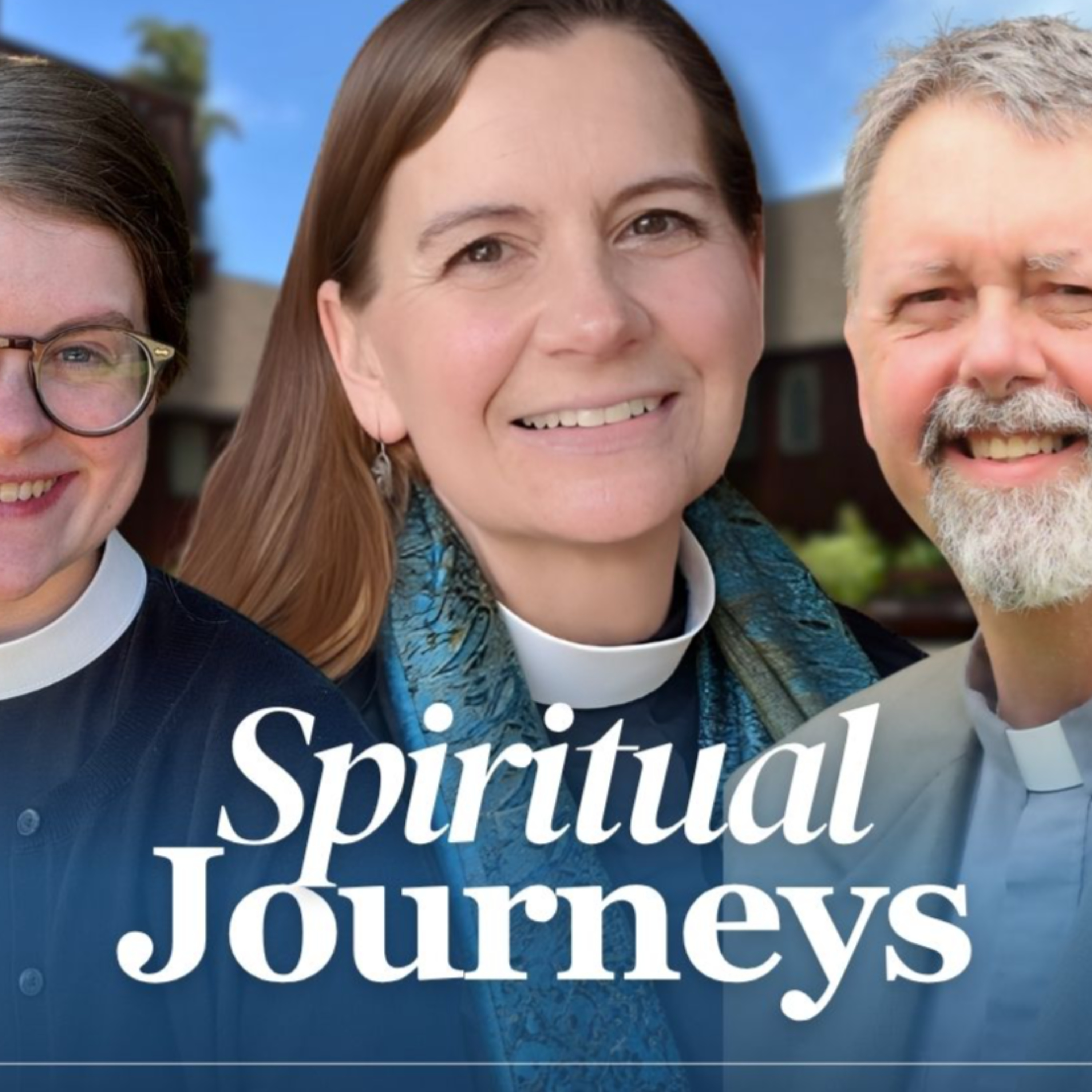
Spiritual Journeys: Weekly Messages from St. Peter's Episcopal Church
by St. Peter's Episcopal Church
Welcome to "Spiritual Journeys: Weekly Messages from St. Peter's Episcopal Church." Each episode delves into inspiring sermons that offer guidance, hope, and a deeper connection to the divine. Join us as we embark on a journey of spiritual growth, discovering insights that nourish the soul and illuminate the path of faith. Whether you're seeking solace, inspiration, or a deeper understanding of spirituality, "Spiritual Journeys" provides a sacred space for reflection and enlightenment. Tune in and let the transformative power of these sermons enrich your spiritual life.
-
160
The Exodus, the Red Sea, and the God Who Sets You Free
You are not stuck. You are not forgotten. And you are not alone in the water.That's the energy Rev. Madeline brings to this week's sermon, and here's why it matters to you, right now, today.Rev. Madeline takes you back to one of the most famous stories ever told — the Israelites, trapped between Pharaoh's army and the Red Sea, terrified, exhausted, and out of options. And then the water parts. That's the moment everyone remembers. But the real teaching? It's about everything that happens after.Because freedom isn't just a one-time event. It's a practice. It's a choice you have to keep making.Liberation is God's whole thing. Not a side project. Not a bonus feature. Rev. Madeline makes the case that a God who frees people from bondage is the core identity of the divine — not an isolated miracle.This story didn't stay in the Bible. It became fuel. Harriet Tubman was called "Moses" for a reason. Dr. King stood in a pulpit in 1956 and said the Supreme Court just opened the Red Sea. Rev. Madeline traces how this story has been showing up in real human courage for centuries.Ask yourself: where are you in the story right now? Are you on the far shore, singing? Are you mid-crossing, with freedom in sight but danger still breathing down your neck? Or — and this is the uncomfortable one — are you still in Egypt?Here's the plot twist that keeps this honest: sometimes you're not the Israelites. Sometimes you're Pharaoh. Rev. Madeline doesn't let you off the hook — she points out that the oppressed can become the oppressors the second they forget the point was never just their own freedom. It was freedom for everyone.The celebration is allowed — and it's complicated. When the Israelites sing about their enemies drowning, Rev. Madeline doesn't sanitize that discomfort. She sits in it. Because real liberation stories aren't clean. They're human."God's dream is to free people from the bonds of oppression."Not your bonds. Not "some people's" bonds. Everyone's.Whatever you're pinned against right now — a situation, a fear, a system, a version of yourself that's keeping you small — Rev. Madeline is telling you: the water can part. It has before. And the people who believed that hardest were usually the ones who had the least reason to.Ask yourself one question this week: Am I still standing at the edge of my own Red Sea — or am I ready to walk?00:00 Opening Prayer00:22 Setting the Exodus Scene02:07 Red Sea Deliverance03:10 Exodus as Liberation Story04:29 Exodus in Black History08:09 God of Liberation Today08:47 Who Are You in the Story10:10 Wrestling with Violence11:29 Go Down Moses
-
159
It’s About Time: What If the Moment You’re Waiting For Is Already Here?
What if the moment you’ve been waiting for isn’t coming? What if it’s already here?In this sermon, we explore what the Bible means when it talks about “the right time”—and why following Jesus may have less to do with waiting for the perfect moment and more to do with recognizing that this moment matters.Drawing from Romans 13 and Matthew 18, we’ll look at the difference between chronos—the ordinary passing of time—and kairos—a moment that is ripe with possibility, meaning, and purpose.And that raises a powerful question:What would change if you lived today as though God is already present in the middle of it?From Harry Potter and the end of summer to Dolly Parton’s music and the surprising power of hope, this sermon invites us to wake up to the sacred possibilities already around us.How to recognize a “kairos” moment when life gives you oneWhy fear doesn’t get the final wordWhat it means to love your neighbor in real lifeHow to approach conflict without losing sight of one anotherWhy Christian hope is more than wishful thinkingHow to live as though Jesus really is in our midstMaybe you’ve been waiting for the right time to change something, repair something, begin something, or simply pay attention.It’s about time.The question is: What will you do with this moment?Romans 13:11–14Matthew 18:15–20St. Peter’s Episcopal Church is a welcoming Episcopal community in Del Mar where curiosity, compassion, and community come together.Whether you’re deeply rooted in faith, asking questions, or somewhere in between, there’s room for you here.What You’ll Take AwayScriptureFrom St. Peter’s Episcopal Church00:00 Opening Prayer00:14 Its About Time02:15 Love Fulfills Law03:05 Jesus in Our Midst05:10 Fear Versus Faith05:42 Summer Music Reflections06:28 Harry Potter and Dolly08:31 Light of Clear Morning09:26 Sacred Hope Forward
-
158
What If God Is Trying to Get Your Attention? – Rev. Madeline Preaches on the Burning Bush
What if God is already trying to get your attention?Moses wasn’t looking for a life-changing encounter. He was simply doing his job, tending sheep in the wilderness, when something strange caught his eye: a bush on fire that wasn’t burning up. Moses could have kept walking. Instead, he turned aside. He paid attention. And that moment changed everything.In this sermon, we explore the story of Moses and the burning bush and what it can teach us about recognizing God in our own lives. God may not speak to us through flames on a mountainside. Sometimes the invitation comes through a conversation we can’t stop thinking about, a moment of unexpected beauty, a growing sense that something needs to change, or a quiet tug on the heart asking us to take the next step.The question isn’t whether we have everything figured out. Moses certainly didn’t. His first response was, “Who am I?” But God wasn’t asking Moses to feel completely ready. God was asking him to be open.What might happen if we started treating ordinary moments as possible encounters with the holy? What might we notice if we were curious enough to turn aside? And when God calls us toward something new, could we find the courage to answer: “Here I am”?Sometimes one small yes can change the direction of a life—and sometimes, by God’s grace, it can change far more than that.00:00 Opening Prayer00:21 Moses Grows Up01:10 The Burning Bush02:58 God Shows Up03:32 I Am Who I Am05:26 Ready For The Call05:53 Moses Hesitates07:07 Saying Yes Changes Everything08:16 Here I Am Lord
-
157
What Happens When You Stop Hiding? | Knowing God & Being Known
What if the parts of yourself you’re tempted to hide are the very parts God can use?This week, we find an unexpected connection between the women who saved Moses, Paul’s call to “be transformed,” Peter’s imperfect faith—and yes, KPop Demon Hunters.At the heart of all these stories is one powerful idea: transformation begins when we allow ourselves to truly know God and be known by God. Not the polished version of ourselves. Not the person we think we’re supposed to be. Our real, imperfect, gifted selves.Shiphrah, Puah, and Miriam use their courage and their voices to stand against a power determined to destroy. Paul reminds us that belonging to Christ doesn’t require becoming someone else. And Jesus looks at the wonderfully imperfect Peter, knows exactly who he is, and still says, “On this rock I will build my church.”That same theme runs through KPop Demon Hunters: hiding who we are weakens our connection, while truth, authenticity, community, and offering our unique gifts can become forces for healing.The invitation for this week is simple: begin each day by offering your truest self to God. Pray the Collect for Purity, write your own prayer, or simply ask God to help you know—and be known—more deeply.Because God isn’t waiting for a perfect version of you.God is ready to work through the real you.00:00 Opening Prayer00:40 Purity and Renunciation02:03 Exodus Women and Moses02:26 Bible Study Ark and Names04:03 Romans Living Sacrifice06:00 Matthew Who Is Jesus08:00 Peter the Rock09:34 K Pop Demon Hunters11:33 Authenticity Heals the World12:54 Closing
-
156
The Table Is Bigger Than You Think: Deacon Pete Preaches on Matthew 15
What if the biggest obstacle to seeing God at work isn’t a lack of faith—but the lines we’ve drawn around who belongs?In this sermon, we encounter one of the more uncomfortable moments in Matthew’s Gospel. Jesus challenges the Pharisees’ obsession with religious rules and reminds us that holiness isn’t about looking right on the outside. It’s about what comes from the heart.Then a Canaanite woman shows up.She’s an outsider by nearly every standard of her time. The disciples want to send her away. But she refuses to disappear. She asks for mercy, keeps asking, and demonstrates a faith no one expected.And Jesus sees her.That encounter forces us to confront a question that still matters today: Who have we decided is on the outside?We all draw lines—political, racial, economic, religious, cultural. Sometimes we don’t even realize those lines are there until someone crosses them. But the Gospel keeps reminding us that God’s mercy is bigger than the boundaries we create.Holiness isn’t measured by how many Bible verses we know, what denomination we belong to, or whether we get every religious practice exactly right. It shows up in what flows from our hearts: mercy, compassion, humility, forgiveness, love, and faith.The Canaanite woman came asking for a crumb. She discovered there was room at the table.Maybe the question isn’t, “How did they get in?”Maybe it’s:“Why did we ever think they were outside?”Listen and discover why God’s table may be much bigger than you think.00:00 Opening Prayer00:30 Meet the Theologians01:43 Pharisees and Food Laws03:35 What Defiles the Heart05:01 Canaanite Woman Appears06:38 Crumbs and Great Faith09:53 Who Is Really Outside11:54 Gods Mercy Beyond Lines13:02 Holiness From Within13:59 Bigger Table Conclusion
-
155
Say This in When Life Gets Hard: Mother Paige Preaches on Matthew 14
What do you do when the storm is bigger than you are?In this sermon, Mother Paige explores the unforgettable story of Jesus walking on water—and Peter doing the unthinkable: stepping out of the boat to meet him.At first, Peter walks on the water. Then he notices the wind. Fear takes over. He begins to sink. And suddenly, his whole prayer comes down to three words:“Lord, save me.”Jesus immediately reaches out and catches him.That moment reveals something important about faith. God never promises us a life without storms. Faith doesn’t mean we’ll never be afraid, overwhelmed, exhausted, or unsure of what comes next. Instead, God promises to meet us in the middle of it all with grace, mercy, and love.And sometimes, the storms we would never choose become the places where our deepest transformation happens.Think about the lessons that have shaped your life. Did you learn them when everything was comfortable and predictable? Or did some of the most important lessons come through uncertainty, disappointment, loss, change, or fear?From Peter stepping onto the raging sea to Joseph enduring years of hardship, Scripture reminds us that God is present even when life feels out of control.When the waves rise, God is there.When you’re exhausted, God is there.When your courage disappears and all you can manage is “Lord, save me,” God is there.You don’t have to be able to walk on water. You just need to remember who reaches for you when you begin to sink.This sermon was preached at St. Peter’s Episcopal Church in Del Mar, California.Scripture: Matthew 14:22–33In this sermon: Jesus walks on water • Peter steps out of the boat • faith and doubt • finding God in difficult times • transformation through adversity • grace, mercy, and love • trusting God • Christian discipleship00:00 Opening Prayer00:11 Louis Crew Story01:17 Pentecost Season Theme02:24 Stormy Sea Setup03:17 Get In The Boat04:54 Fourth Watch Arrival06:17 Peter Steps Out06:48 Lord Save Me08:24 Lessons From Storms09:40 God With Us
-
154
From Scarcity to Abundance: The Feeding of the 5,000
Rev. Madeline reflects on the feeding of the 5,000, the only miracle recounted by all four Gospel writers, urging listeners not to gloss over its familiar details. She invites the congregation to imagine the scene: Jesus, grieving John the Baptist’s murder, retreats to the wilderness but is followed by thousands who arrive hungry and unprepared. When the disciples worry there is “nothing” but five loaves and two fish, Jesus gives thanks, breaks the food, and the disciples distribute it as it multiplies into an abundant feast with leftovers. The sermon highlights the story’s tangible focus on God meeting physical needs, challenges the myth of scarcity, and emphasizes that the disciples actively participate in the miracle, calling believers to trust God’s provision and join in caring for others’ material needs.00:00 Opening Prayer00:24 Why This Miracle Matters01:29 Imagine The Wilderness Crowd03:32 Hunger And The Disciples Doubt04:45 Bread Broken Abundance Appears06:08 A Tangible Human God07:38 Scarcity Myth To Abundance08:45 Disciples Do The Feeding09:45 Invitation To Trust And Serve00:10 Final Amen
-
153
Nothing Can Separate Us: Divine Empathy and the Transforming Power of Love
Mother Paige reflects on empathy as a divine superpower, pointing to the incarnation as God’s ultimate act of empathy and focusing on Romans’ promise that nothing can separate us from the love of God in Christ—hardship, distress, death, powers, or anything in creation. She rejects messages that claim people can be separated from God’s love as lies, emphasizing God’s relentless, indelible love and God’s invitation for us to partner in transforming the world through the reign of God. Turning to Matthew’s “parablepalooza,” she explores the surprising, subversive images of the mustard seed, hidden yeast, hidden treasure, priceless pearl, and dragnet, inviting listeners to locate themselves in these stories as seekers or as what God has found. She urges embracing transformation through the sacraments at the altar.00:00 Opening Prayer and Welcome00:12 Empathy and the Incarnation01:26 Romans Nothing Separates Us04:34 Relentless Love and Our Role05:15 Power of Love and Parablepalooza07:10 Mustard Seed and Yeast Surprise09:15 Treasure Pearl and Dragnet10:54 Audience Favorites and Reflection13:30 Transformation Through Sacraments14:06 Final Assurance and Amen
-
152
Groaning Creation, Wheat and Weeds: Hope in the Midst of Suffering
Rev. Madeline reflects on Romans’ claim that present sufferings cannot compare to coming glory, highlighting Paul’s vivid imagery of creation in bondage and “groaning in labor pains” within an apocalyptic hope for God’s transforming redemption. She connects this to Matthew’s Parable of the Weeds, cautioning that parables carry an “irreducible surplus of meaning” and using Tom Long’s reading—“in gathering the weeds, you would uproot the wheat”—to face the moral messiness of a world where beauty and pain are intertwined. While God is the ultimate redeemer and creation cannot heal itself, believers are invited into an active journey of transformation, witnessing glimpses of God’s kingdom through reconciliation, generosity, beauty, and birth. Hope, aided by the Spirit’s “first fruits,” calls Christians to be God’s hands and feet, trusting God can use their lives for good.00:00 Opening Prayer00:26 Romans Hope and Suffering03:21 Matthew Parable of Weeds04:56 Parables Tell It Slant06:26 Wheat and Weeds Together07:53 Adoption and Active Hope09:00 Glimpses of the Kingdom11:01 First Fruits
-
151
Every Seed Is a Win: Finding Grace in the Parable of the Sower
Rev. Martha reflects on preaching the same lectionary readings first on July 12, 2020 during pandemic Zoom worship and now in person, using the parable of the sower to argue that no seed is truly wasted. Drawing on her tradition of planting sweet peas and on birds’ “caching,” she suggests seeds on the path still nourish birds and may be replanted elsewhere; seeds on rocky ground still offer real moments of God’s joy; and seeds among thorns can lead to repentance and changed choices. She notes that perfect “good soil” is impossible for humans, but building God’s kingdom daily is. Connecting this to Romans 8, she describes eternal life as a way of being in the Spirit, illustrated by experiences of awe, joy, caregiving, and prayer—especially during a service in Kilauea, Hawaii that linked her to churches of her childhood and the faithful across time.00:00 Invocation And Welcome00:17 Pandemic Flashback02:13 Parables New Lenses02:39 Sweet Pea Seeds03:26 No Seed Wasted04:50 Birds And Caching06:17 Rocky Ground Grace07:05 Thorns Yet Change08:15 Good Soil Not Perfect09:14 Romans Eight Eternal Life10:23 Everyday Eternity Moments11:32 Hawaii Confession Memory13:02 Seeds In Our Bones
-
150
Don’t Sit at the Gate: Taking Up Jesus’ Easy Yoke
Father Frank Munoz opens with a prayer and a parable about a man who waits his whole life to enter a gate meant only for him, warning that many people spend a lifetime waiting for others to act. He contrasts reactions to John the Baptist and Jesus—criticized as too ascetic or too worldly—and notes that even cities that witnessed Jesus’ deeds rejected him. He cautions against a consumerist, market mindset toward church and urges letting God and God’s people form us, remembering generations who handed on faith at great cost. Over Fourth of July weekend and using Saving Private Ryan, he stresses responsibility to “earn” sacrifices through lives of service. Explaining Jesus’ “yoke” as discipleship, he says everyone carries a yoke and must choose wisely; Jesus promises rest, shared strength, and refreshment for the weary who trust him.00:00 Opening Prayer00:24 Parable of the Closed Gate01:56 Rejecting the Real Savior03:43 Hope and Duty for Our Generation04:20 Gospel Context and Rejection05:39 Consumer Faith vs Formation06:37 Passing the Faith Forward08:19 Earn This Sacrifice10:49 The Yoke of Discipleship12:41 Rest for the Weary13:24 Trust God
-
149
Redefining Fatherhood: Sacrifice, Division, and God’s Perfect Love
Deacon Pete reflects on a difficult Father’s Day sermon prompted by Jesus’ harsh words about setting family members against each other, concluding that Jesus is not condemning fatherhood but redefining it under the kingdom of God, where even the sacred institution of family is subordinate. He explains that in Jesus’ time family meant economic survival, inheritance, and religious community, so following Jesus entailed profound social upheaval and sacrifice. He offers three examples: God’s care for sparrows and counting hairs portrays the reassuring, protective love of a good father; “losing life to find it” parallels a father’s sacrifices that bring deeper joy and purpose; and loving God above parents liberates believers from idealizing human fathers, opening a truer relationship with God. He acknowledges gratitude, grief, and pain associated with fathers, noting broken homes, and points to God as the perfect Father. He connects this to Eucharist, honoring fathers and forgiving shortcomings.00:00 Opening Prayer00:13 A Tough Fathers Day Text01:38 Family Then and Now02:39 Example One Gods Care03:51 Example Two Sacrifice04:34 When Fatherhood Hurts05:53 Example Three Loving God First07:41 Losing Life Finding Love
-
148
Splagchnizomai: Compassion in Action
Mother Paige focuses on compassion in the lectionary readings, highlighting the Greek word “splagchnizomai,” Jesus’ gut-wrenching compassion for people “harassed and helpless like sheep without a shepherd,” an indictment of failed leadership. She describes Jesus commissioning the twelve to proclaim that the kingdom (or empire) of heaven has come near, contrasting this “good news” with Rome’s imperial “euangelion.” Noting that Matthew’s Missionary Discourse spans three weeks and that Matthew never actually narrates the apostles being sent, she emphasizes discipleship as compassion in action—healing, restoring, and caring for those failed by systems. She points to the diverse community of disciples (including Matthew the tax collector and Simon the Zealot), the initial focus on the lost sheep of Israel, and the boundaries of compassion (offering peace, leaving when necessary). Reading Romans through compassion, she stresses God meets suffering with transforming love that produces endurance, character, and hope through the Holy Spirit.00:00 Opening Prayer00:06 Choosing Compassion00:40 Splagchnizomai Explained01:53 Sheep Without Shepherd02:38 Commissioned to Heal03:01 Good News vs Rome04:47 Missionary Discourse Setup05:58 Discipleship in Action06:42 A Diverse Apostle Team08:01 Start With Our Own09:04 Boundaries of Peace09:47 Romans Hopeful Ending
-
147
All Are Welcome: Jesus’ Banquet
Rev. Madeline opens with prayer and situates the sermon in the season after Pentecost and the lectionary’s journey through Matthew, where Jesus teaches the Kingdom of God through stories and metaphors. She imagines the Kingdom as a banquet or rowdy party already underway: after the Sermon on the Mount, Jesus welcomes the poor, mournful, hungry, persecuted, and others through healings that restore both bodies and social belonging. In Matthew 9, Jesus calls Matthew the tax collector to the table, heals a woman who has hemorrhaged for 12 years and been cast out as unclean, and risks becoming unclean to bring life to a synagogue leader’s dead daughter—“risks marginalization for resurrection.” The sermon emphasizes mercy, inclusion, and a holy banquet with a vast guest list where all are welcome.00:00 Opening Prayer00:20 Season After Pentecost01:37 Kingdom Party Image02:25 Healings Before Matthew03:12 Matthew Joins Table03:57 Hemorrhaging Woman Healed04:56 Raising The Daughter05:52 Healing And Inclusion06:45 We Are Invited Too07:33 All Are Welcome
-
146
Tegan Inns’ Faith Journey at St. Peter’s
Graduating senior Tegan Inns reflects on growing up at St. Peter’s from infancy, first experiencing faith through church community and activities like Easter egg hunts, Advent candle-making, children’s sermons, and praying nightly with her sister. As an acolyte, she began paying closer attention to services and saw Mother Paige’s teachings as life lessons, while youth group discussions with Madeline, Joseph, and Gabriel helped her form her own understanding of faith. Tegan describes faith as something that grows in daily moments and became especially meaningful amid high school stress and disappointment. She shares how unexpectedly committing to the University of Washington ultimately felt guided and comforting, shifting her faith from routine to trust in God’s presence in good and bad times. She thanks St. Peter’s, its leaders, choir, and her parents, and closes with Scripture affirming Jesus’ continuing presence.00:00 Growing Up at St Peter's00:23 Childhood Faith and Traditions01:20 Serving as an Acolyte01:49 Youth Group and Personal Belief02:26 Faith Through High School Stress02:39 Finding My Path to UW03:22 Gratitude to the Community03:50 Carrying Faith Forward04:01 Scripture Farewell
-
145
Memorial Day Homily: Greater Love, Sacrifice, and Bearing Lasting Fruit
Deacon Pete delivers a Memorial Day homily that contrasts the holiday’s cultural start-of-summer tone with the church’s solemn remembrance of those who made the ultimate sacrifice, honoring veterans present and especially fallen service members and their families. Centering on John 15—“No one has greater love than this, to lay down one’s life for one’s friends”—he explains that Jesus speaks on the eve of his crucifixion, describing love that is concrete and costly, and he connects this to military service, loyalty to comrades, and the grief of Gold Star families and veterans living with physical injuries, moral injury, PTSD, and loss. He highlights Jesus’ call to “bear fruit that will last,” urging veterans to honor the fallen by living for freedom, peace, and justice and by keeping the baptismal covenant to strive for justice, peace, and respect for human dignity. He closes with a prayer for comfort, gratitude, and a future of peace.00:00 Opening Prayer00:14 Memorial Day Meaning01:24 Greater Love Verse01:41 Jesus Calls Us Friends02:37 Veteran Sacrifice03:32 Wounds and Grief04:12 Bear Fruit After Loss04:45 Living the Covenant05:36 Final Gospel Charge06:16 Closing Prayer
-
144
Pentecost Sunday: Peace, Wounds, and the Spirit That Sends Us
Deacon Pete reflects on Pentecost as the celebration of God’s divine indwelling through the Holy Spirit, recalling an childhood conversation with Father Boyd about connecting with God in ourselves and others. He contrasts this with the disciples’ fear behind locked doors, noting that fear can be physical, emotional, or communal, and that resurrection does not deny suffering but enters and transforms it, echoing Richard Rohr’s idea that untransformed pain is transmitted. In John’s account, Jesus greets the disciples with “Peace be with you,” shows his wounds as proof that scars remain yet do not block resurrected life, breathes the Spirit as in Genesis, and commissions them for mission: being God’s hands and feet and embodying Christ’s peace. He emphasizes forgiveness—especially self-forgiveness—as freedom from guilt and shame, concluding that Eucharist gathers people behind locked doors and sends them out to do holy work and offer peace.00:00 Opening Prayer00:51 Pentecost Explained02:35 Locked Doors and Fear05:11 Peace and Scars07:15 Breath of the Spirit08:14 Sent on Mission09:11 The Challenge of Forgiveness10:30 Four Things Jesus Does11:38 Eucharist Sending Forth
-
143
The Ascension: The Love Stays with Us
Bishop Susan preaches at St. Peter’s on the Ascension, describing the disciples’ in-between moment after 40 days of the risen Jesus teaching about new creation before ascending from the Mount of Olives. Drawing on trips to Israel, she portrays Jerusalem as holy yet conflicted, both today and in Jesus’ time, and imagines Jesus ascending with a clear view of the Temple, Golgotha, Roman power, and ordinary life. She explains the Ascension as completing Jesus’ earthly mission and offers two perspectives: looking up, Jesus ascends still marked by crucifixion, carrying wounded human humanity into God’s presence and interceding for us; looking down, the angels redirect disciples from staring upward to witnessing in widening circles. Christians are called to be Jesus’ hands and feet, living sacrificial love that seeks justice, peace, and dignity, returning to forgiveness and trying again amid division and fear.00:00 Welcome and Context00:14 Ascension Mystery01:30 Jerusalem Then and Now04:15 Mount of Olives View07:16 What Ascension Means07:59 View Up Wounded Healed10:04 View Down Our Mission12:31 Love as Witness13:39 Final Amen
-
142
Seeking the Unknown God: It's All About Love
Mother Paige reflects on Paul in Athens using the Temple of the Unknown God to meet people where they are and proclaim that God is not far from us: “in Him we live and move and have our being.” She asks the congregation and those worshiping at home why they came—praise, community, peace, guidance, love, even donuts—and says that whatever we seek, the answer is love. Turning to Jesus’ farewell address on the night of the Last Supper, she recalls foot washing, Judas’ betrayal, Peter’s denial, and the mandatum novum: “Love one another as I have loved you.” This sacrificial, chosen love is how Christ abides with us, how we keep his commandments, and the message the world needs: “If it’s not about love, it’s not about God.”00:00 Opening Prayer00:08 Paul in Athens01:17 Why We Came02:32 The Answer Is Love02:49 Last Supper Night04:16 New Commandment05:29 Abiding in John06:30 If Not Love07:36 Love Is A Choice08:14 Closing Charge
-
141
Lament and Hope in God’s Hands: Reflections on Psalm 31
Rev. Madeline reflects on discipleship and faith by lingering in Psalm 31, describing the Psalms as ancient prayers spanning the full range of human experience. She notes Psalm 31’s distinctive intertwining of lament and hope—pleas for rescue, fear under persecution, and tentative trust in God existing at once—and connects this pattern to Acts’ account of Stephen’s stoning and Luke’s crucifixion narrative. Centering on Psalm 31:5 (“Into your hands, I commend my spirit”), she highlights its echo in Stephen’s final words and Jesus’ last words on the cross, showing trust in God amid desperate circumstances. She names the Christian paradox of “already, but not yet,” where resurrection hope persists alongside ongoing suffering, and closes with Frederick Buechner’s reminder that God is with us in a beautiful and terrible world.00:00 Opening Prayer00:20 Following The Way01:08 Why The Psalms Matter02:04 Hearing Psalm 3103:37 Lament And Hope Together04:50 Stephen And The Cross06:51 Already But Not Yet08:52 Hanging Your Heart On God10:01 Final Blessing
-
140
Instructed Eucharist on Good Shepherd Sunday: Walking Through the Liturgy
Mother Paige leads an instructed Eucharist on the Fourth Sunday of Easter (Good Shepherd Sunday), offering three brief teaching addresses instead of a single sermon to help confirmation/reception candidates and the congregation understand the service’s history and theology. She explains liturgy as “the work of the people,” with God as the audience, then walks through the entrance rite (Easter acclamation, Collect for Purity, Gloria, Collect of the Day and the congregation’s “Amen”), the lectionary readings (including Acts in Easter), and Gospel customs. Using John 10 and the man born blind, she highlights belonging and the Good Shepherd’s call, connecting this to baptismal vows. She describes the creed’s fourth-century origins, the required themes and flexibility of the Prayers of the People, confession/absolution options, and the ancient Peace. She outlines the Eucharist’s four actions—take, bless, break, give—emphasizing thanksgiving, real presence, transformation, multilingual Lord’s Prayer, communion options, post-communion mission, and Easter dismissal.00:00 What Is Instructed Eucharist01:17 Easter Acclamation And Sacraments02:56 Entrance Rite Explained03:26 Collect Gloria And Amen05:18 Scripture Readings And Gospel07:07 Sermon Prayer And Purpose08:44 Good Shepherd Belonging12:50 Creed History And We Believe16:04 Prayers Confession And Peace20:16 Four Eucharist Actions22:37 Real Presence And Lords Prayer24:41 Communion Sending Forth
-
139
Good Shepherd Sunday: Belonging, the Creed, and the Peace
Mother Paige opens with her sermon prayer—asking that God’s word be spoken and heard—and reflects on preaching with humility and trust in the Holy Spirit. On Good Shepherd Sunday she connects John 10 to the healing of the man born blind in John 9, describing how the expelled man is offered belonging as Jesus speaks of being the gate into beloved community where the shepherd calls sheep by name. She links this belonging to Acts’ devotion to apostles’ teaching, fellowship, breaking bread, and prayers, echoed in the baptismal covenant, as life in the Body of Christ and abundant life. She then explains the Nicene Creed as a communal “we” shaped by fourth-century Trinity debates after Constantine, allowing grace for doubt and ongoing questions. She outlines the Prayers of the People, confession and absolution (including private confession and seasonal omission), and the ancient practice of the Peace as reconciliation before communion.00:00 Sermon Prayer01:23 Breaking Open Scripture01:49 Good Shepherd Context03:33 Belonging and the Gate04:40 Acts and Baptismal Vow05:41 Why We Say the Creed07:29 We Believe Together08:55 Prayers of the People10:17 Confession and Absolution10:47 The Peace Is Ancient12:20 Forgiveness Before Communion
-
138
Peace Be With You: Resurrection Hope and NAMI Walks Support
Guest speaker Rick Ochocki reflects on Luke 24:36 and the disciples’ struggle to recognize the risen Jesus, noting that it was Jesus’ actions—taking, blessing, breaking, and giving bread—that opened their eyes, and emphasizing Christians’ call to receive and practice peace. He shares personal grief after learning that FDNY Lt. Kevin Pfeiffer, a paramedic mentor, was killed on September 11, 2001, and parallels it with meeting a distraught father whose daughter was hospitalized for psychiatric care. Speaking as Chief Development Officer for NAMI San Diego and Imperial Counties and as a family member of someone with mental illness, he describes connecting the father to NAMI resources including Family-to-Family education, a local helpline/warm line, support groups, and NAMI Walks. He invites St. Peter’s to join and support next Saturday’s NAMI Walks at Liberty Station and thanks the church for partnering with NAMI.00:00 Opening Prayer00:16 Scripture and Grief01:57 Emmaus Recognition03:51 Why Peace Matters05:19 A Father in Crisis06:13 NAMI Resources Offered07:59 What NAMI Walks Means08:57 Join the Walk09:51 Thanks and Sending
-
137
Beyond Doubt: Faith, Mystery, and How Now Shall We Live?
Rev. Madeline challenges the common “Doubting Thomas” framing, arguing that Thomas’s skepticism after Jesus’ brutal crucifixion was reasonable and shared by other disciples, including Mary Magdalene and Peter. Drawing on Barbara Brown Taylor, she highlights how resurrection upends what seemed certain about death and power, making the disciples’ need for proof and understanding deeply human. She presents resurrection as a central mystery of Christian faith, echoed in Eucharistic Prayer A, and contends that doubt should not be shamed or treated as the opposite of belief but seen as wonder-filled engagement with God’s work beyond human logic. Citing Rev. Ethan Lowry, she shifts the focus from intellectual certainty to trusting that death does not win and asking, in light of Christ’s death and resurrection, “How now shall we live?”00:00 Opening Prayer00:24 Rethinking Doubting Thomas01:43 Trauma And Disbelief03:46 Resurrection As Mystery05:41 Doubt Without Shame07:21 Belief And Wonder Together08:09 How Then Shall We Live09:21 Closing Doxology
-
136
Walking with Jesus Through Holy Week | The Rev. Susan Astarita
Mother Susan invites listeners to “walk with Jesus” through Holy Week, drawing on John’s Gospel and the spiritual “I Want Jesus to Walk with Me.” Reflecting on the passion narrative written decades after Jesus’ death, she emphasizes that the crucifixion was not a surprise but the completion of Jesus’ steadfast mission amid the clash between Roman violent power and a covenant of love. She recounts Jesus’ purposeful entry into Jerusalem alongside Pilate’s intimidating military display, Jesus’ arrest and abuse, and Pilate’s role in the death sentence. Citing “God so loved the world” and Jesus’ words “It is finished,” she presents the cross as a paradox: a horrific death that becomes a sign of God’s overflowing love, reconciliation, forgiveness, and the opening to eternal life, urging silent vigil on Holy Saturday and reflection on how to live this gift.00:00 Opening Prayer00:32 Choosing Jesus to Walk With01:28 John’s Passion Lens03:13 Jesus’ Mission and Purpose04:40 Palm Sunday Clash of Powers07:01 Arrest and Pilate’s Trial08:37 The Cross and It Is Finished10:39 Paradox of the Cross11:35 Holy Saturday Silence11:58 What Will We Do
-
135
Maundy Thursday: Entering the Story Through Foot Washing and Eucharist
Rev. Madeline reflects on Maundy Thursday readings from 1 Corinthians and John, highlighting Paul’s words of institution for the Lord’s Supper and Jesus washing his disciples’ feet. She explains Paul’s correction of Corinthian abuses where the wealthy feasted while the poor went without, emphasizing the Eucharist as remembrance of Jesus’ sacrifice and unity in the body of Christ. She describes foot washing as a shocking, menial act of love and service that the church reenacts, along with sharing bread and wine and stripping the altar, to enter Jesus’ final night. Sharing her own journey into the Episcopal Church, she stresses worship that engages head, heart, and body, praying these rituals immerse believers in Christ’s service, suffering, and love so resurrection glory can be known deeply at Easter.00:00 Opening Prayer00:18 Eucharist Remembered01:50 Foot Washing Love02:44 Rituals Shape Worship03:34 Becoming Episcopalian05:49 Entering Holy Week06:55 Service and Grace07:25 Becoming What We Receive08:04 Stripping the Altar09:21 Invitation to Participate
-
134
Hosanna Means Save Us: Palm Sunday as Protest and Promise
Mother Paige explains why this Palm Sunday lingers on Jesus’ entrance into Jerusalem instead of rushing from palms to Passion and Eucharist, arguing that “Hosanna” means “save us,” not simply praise. She describes the scene as street theater and protest: Jesus’ humble ride on a young donkey fulfills Zechariah’s image of a peaceful king contrasted with Rome’s simultaneous procession of warhorses and chariots, representing the oppressive “Pax Romana.” The crowd’s cry “Hosanna to the Son of David” is a political threat not only to Caesar but also to religious authorities aligned with oppression. She urges continued reading in Matthew, noting Jesus then cleanses the temple, heals, and children repeat the chant, provoking leaders’ anger and helping spark the plot to kill him. Though Holy Week brings denial, betrayal, suffering, and death, she emphasizes these will not have the last word; God answers with love, mercy, grace, new life, and hope.00:00 Opening Prayer00:10 Why Palm Sunday Feels Different01:19 Hosanna Means Save Us02:40 A Protest in the Streets02:50 Donkey Symbolism Explained04:08 Two Processions Clash05:13 Hosanna as Political Threat06:17 Temple Cleansing Fallout07:26 Holy Week Pain and Promise
-
133
Jesus Wept: Grief, Divine Empathy, and New Life in Lent
Jesus Wept: Grief, Divine Empathy, and New Life in LentMother Paige reflects on John’s account of the raising of Lazarus as a Lenten Gospel that reveals Jesus as fully human and fully divine and teaches about grief. She notes how the story reverses John’s usual pattern by placing extended discourse before the sign, highlighting Martha’s theology of resurrection and the sisters’ anger that Jesus did not prevent Lazarus’s death. Emphasizing that “Jesus wept” in Greek conveys gut-wrenching sobs, she argues this shows divine empathy as part of God’s nature and that Jesus does not prevent people from facing death and grief. Moving toward Holy Week, she urges listeners to give themselves space to mourn personal and collective traumas (including September 11 and the pandemic), to identify “tombs” and “valleys of dry bones,” pray with Psalm 130, and invite God’s breath and Spirit for healing, grace, freedom, and new life.00:00 Opening Prayer00:14 Why Lazarus Matters01:01 John’s Gospel Clarity02:09 Grief and the Sisters02:47 Discourse Before the Sign04:26 Jesus Wept Ugly Cry06:17 Divine Empathy in Bethany08:28 Learning to Grieve08:53 Collective Trauma Unprocessed10:56 Preparing for Holy Week12:26 Valleys of Dry Bones13:03 Breath of God and Freedom
-
132
Once I Was Blind: Seeing Ourselves as God Sees Us
Father Frank Munoz, a San Diego Sheriff’s chaplain, recalls responding to a missing three-year-old who was later found asleep in an SUV, using the incident to illustrate human blind spots and the difficulty of seeing ourselves as God sees us. He connects this to the Gospel story of Jesus healing the man born blind, noting that the disciples and Pharisees miss the miracle’s meaning by focusing on blame, credentials, and rules rather than healing. He argues that many are spiritually blinded by distorted religious messages portraying God as vindictive and the author of tragedies, rejecting phrases like “acts of God” or calling suffering “God’s will.” He affirms that the miracle stories reveal a loving God who desires healing, abundant life, and transforming grace, accessed through simple childlike faith.00:00 Missing Child Callout01:10 Found Safe and Sound02:05 Our Spiritual Blind Spots02:44 Childlike Faith and Prayer04:11 Gospel of the Blind Man04:42 Pharisees and Misread Miracles06:31 Bad News Religion Critique07:46 Rejecting Tragedy as Gods Will09:07 The God I Don't Believe In10:09 Good News God Heals11:41 Grace and Healing Within12:54 Embrace Faith to Heal13:44 Final Blessing Amen
-
131
Jesus Breaks Barriers | The Rev. Madeline Polhill
Rev. Madeline reflects on Jesus’ encounter with the Samaritan woman at the well, emphasizing how culturally transgressive it was for a Jewish leader to speak publicly with a woman—especially a Samaritan amid longstanding animosity between Jews and Samaritans—and noting the well’s scriptural associations and the disciples’ astonishment. She highlights that John’s Gospel frames the meeting as necessary (“he had to go through Samaria”), not for geography but for Jesus’ boundary-crossing mission. In this encounter the Samaritan woman and Jesus come to know one another, and she recognizes him as the Messiah in John’s first unmistakable “I am” statement, echoing God’s revelation to Moses. The sermon challenges human-made barriers that prevent connection and teaches that God knows no boundaries, revealing glory in every person, comforting and challenging believers to find Jesus where they think he isn’t supposed to go.00:00 Opening Prayer00:19 Why Encounters Matter01:58 A Scandalous Meeting04:03 Why Samaria Matters05:36 Messiah Revealed06:46 Breaking Human Boundaries09:03 Comfort and Challenge09:54 Closing Blessing
-
130
Choose Light and Love: Faith in Action
Mother Paige reflects on John 3:16 and God’s love for the whole world, paired with the call of Abram and Sarah to be blessed in order to bless every family on earth. She emphasizes that faith is an active verb shown in lived action, not merely intellect, doctrine, or a formulaic prayer, and that Jesus is the light that shines in the darkness. Noting the broader context of Jesus’ conversation with Nicodemus, she highlights the choice people make to love darkness rather than light and invites listeners, especially in Lent, to examine how their lives reflect God’s love and to “pivot” practices when needed. She urges gentleness with questioning Nicodemus, whose arc includes continued inquiry, later defense of Jesus, and presence at his burial, and encourages ongoing questions and repeated choosing of love and light.00:00 Opening Prayer00:12 God Loves the World01:02 Abram Called to Bless01:50 Faith as Action02:46 Light Versus Darkness03:59 Lent as a Pivot05:12 Nicodemus Questions05:49 Born From Above06:53 Choosing Love and Light
-
129
Choosing Love in the Wilderness: Resisting Empire and Embracing Change
Kathy Wilder, Executive Director of Camp Stevens, thanks St. Peter’s for ongoing support and shares a story from the 2007 Camp Stevens fire, including meeting a firefighter who had once been a camper through a foster care partnership and whose experience at camp helped shape her life and career after incarceration. Wilder connects the story to Jesus’ wilderness temptations, framing the temptations as reflections of power and empire, and relates them to current realities including ICE raids, genocide in Palestine, antisemitism, school shootings, and attacks on transgender people. Citing the Rev. Canon Stephanie Spellers, she contrasts Empire’s fear with God’s love and urges choosing love. Wilder offers three practices: “revolutionary patience” (attributed to the Rev. Carter Heyward and discussed after the 2024 election), “see no stranger” (from Valerie Kaur and a Sikh tenet) with a call to stay curious and seek common ground, and embracing change—an ethic she learned from Peter Bergstrom and that helped Camp Stevens rebuild after the fire and adapt through the pandemic, leading to a new vision statement, “envisioning a world of wholehearted belonging.” She shares personal news that she and her wife, the Rev. Hannah Wilder, are moving to Reno where Hannah will serve as rector of St. Paul’s Episcopal Church in Sparks, and she offers gratitude and a farewell to St. Peter’s, closing with a traveler’s prayer about being swift to love and to be kind.00:00 Welcome and Camp Stevens00:52 The 2007 Camp Fire02:03 A Firefighter’s Transformation04:28 Jesus in the Wilderness05:26 Empire vs Love Today06:50 Stephanie Spellers Quote08:45 Three Practices for Courage08:54 Revolutionary Patience10:29 See No Stranger11:30 Embrace Change at Camp12:49 Moving to Reno Goodbye14:22 Traveler’s Prayer Closing
-
128
Get Up and Do Not Be Afraid: Coming Down the Mountain
Rev. Madeline Polhill reflects on Jesus’ Transfiguration and Moses’ mountaintop encounter with God as moments of divine mystery and glory. Rather than explaining the spectacle, she focuses on what follows: the disciples’ fear and Jesus’ gentle reassurance, “Get up and do not be afraid,” connecting it to repeated “do not be afraid” moments throughout Matthew’s Gospel. She emphasizes that Jesus leads the disciples back down the mountain to continue the work of love and ministry that will culminate in the cross, and invites listeners, especially as Lent approaches, into a journey of self-examination, repentance, service, and discipleship. Centering the voice from the cloud—“This is my Son, the beloved… listen to him”—she calls the faithful to follow Jesus, take refuge in God’s glory, and return to the world to do the work Jesus calls them to do.00:00 Opening Prayer & Welcome00:22 The Transfiguration: Awe, Mystery, and Mountaintop Glory01:30 Moses on the Mountain: Exodus and Divine Mystery02:32 What the Transfiguration Confesses: Radiance in Jesus04:30 From Majestic to Mundane: What Happens After the Vision05:10 Fear and the Gentle Command: “Get Up, Do Not Be Afraid”06:08 “Do Not Be Afraid” Across Matthew’s Gospel07:57 Back Down the Mountain: Returning to Ministry and the Cross08:52 Lent Invitation: Following Jesus into Repentance and Service09:27 Listen to Him: The Voice from the Cloud and the Call to Follow10:20 Closing Charge & Blessing: Held by God, Sent into the World
-
127
Stay Salty, Be Bright: Embodying the Beatitudes
In this Sunday sermon, Mother Paige reflects on the teachings of Jesus, particularly focusing on the message of 'Stay Salty, Be Bright,' derived from the Sermon on the Mount and the Beatitudes. She emphasizes the importance of understanding Jesus' words about being 'the salt of the earth' and 'the light of the world.' The sermon encourages living out these virtues by aligning one's heart with God's righteousness and acting mercifully, justly, and lovingly in the world. This message also ties into the broader context of Christian practice and tradition, urging believers to genuinely embody their faith and enact positive change in a world filled with needs and injustices.00:00 Opening Prayer and Introduction00:12 The Beatitudes: Foundation of Jesus' Teachings04:41 Understanding 'Salt of the Earth'06:57 The Light of the World: Letting Your Light Shine08:14 Aligning Rituals with True Faith10:37 Call to Action: Stay Salty, Be Bright11:19 Conclusion: Embrace Your Unique Blessedness
-
126
The Light of Christ: Reflections on the Feast of the Presentation
Mother Susan discusses the tradition of presenting Jesus at the temple, the symbols of light and purity, and the roles of Mary and Joseph as faithful parents. The sermon also touches on the importance of senior witnesses like Simeon and Anna, who recognized Jesus as the light for revelation. Mother Susan encourages the community to embody the light of Christ in their lives and reflects on the collective journey of faith, culminating in the annual church meeting to celebrate past achievements and future aspirations.00:00 Introduction and Opening Prayer00:13 Groundhog Day and Its Significance01:46 The Feast of the Presentation03:43 Jesus' Infancy and Presentation in the Temple07:35 Simeon and Anna: Witnesses to the Light10:36 The Struggles of Early Christians11:48 Jesus as the High Priest and Pioneer13:13 Living as the Body of Christ14:50 Conclusion and Final Blessing
-
125
Embracing Unity and the Power of the Cross in Divisive Times | David M. Bailey
In this sermon, guest speaker David M. Bailey from Richmond, Virginia, discusses the importance of unity within the Christian community amid contemporary divisions and conflicts. Drawing from Paul's letter to the Corinthians, Bailey emphasizes the need for Christians to look beyond human wisdom and cultural differences. He stresses the significance of the cross of Christ as a symbol of ultimate strength and unity, revealing God's power through what appears as weakness. Bailey encourages the congregation to find hope in the transformative power of the cross and to embody a cross-shaped gospel that reconciles and disarms the forces of division and oppression. The sermon concludes with a prayer for guidance and strength in navigating the challenges of today's world.00:00 Opening Prayer and Welcome00:37 Personal Reflections and Ministry Background01:53 Challenges of Christian Nationalism03:12 Paul's Plea for Unity07:26 Building Bridges Through Language13:40 The Power of the Cross17:32 Encouragement and Closing Prayer
-
124
The Lamb of God: Understanding Jesus' True Power
Rev. Madeline Polhill discusses the significance of epiphanies during the season after Epiphany, focusing on John the Baptist recognizing Jesus as the Messiah. The sermon delves into Jesus being identified as the 'Lamb of God,' exploring the implications of this metaphor and how it contrasts with worldly notions of power. Rev. Polhill emphasizes Jesus' role in transforming the world through sacrifice and service, and highlights upcoming gospel themes about hope, servanthood, and the ultimate triumph of love.00:00 Opening Prayer and Invocation00:19 John the Baptist's Epiphany02:43 The Lamb of God04:00 The Servant Songs and Jesus07:07 Jesus' Ministry and Teachings08:16 The Journey to the Cross09:05 Conclusion and Invitation
-
123
Be Bold, Be Brave: Becoming God's Love in the World | The Rev. Paige Blair-Hubert
In this sermon, Mother Paige reflects on the significance of the Baptism of Jesus and its implications for us. On the feast of the Baptism of our Lord, she discusses Jesus' baptism by John the Baptist and why, despite being sinless, Jesus submitted to a baptism of repentance. This act is presented as a model for vulnerability, surrender, and alignment with God. Mother Paige encourages us to see our own baptism as a commissioning to be God's presence in the world, especially during challenging times. She calls us to be brave and to show up in the world as God's people, serving in various ways from providing shelter to the homeless to supporting those navigating immigration court. The sermon emphasizes the power of God's presence with us, even when it feels more disruptive than graceful, and calls for embracing our role as bearers of God's love.00:00 Opening Prayer and Introduction00:12 Reflecting on Jesus' Baptism01:56 The Significance of Baptism03:02 Jesus' Baptism and Its Implications06:53 The Holy Spirit and Our Commission09:28 Living Out Our Faith11:04 Community and Service12:55 Conclusion and Final Blessing
-
122
Awaken Your Purpose: Lessons from the Magi | Madeline Polhill
In this sermon, Madeline Polhill reflects on the biblical story of the magi, who followed a star to find and pay homage to the Christ Child. The tale involves themes of wonder, anxiety, and joy, highlighting the magi's journey from the East and their unexpected arrival in Bethlehem. By understanding the signs from God and allowing themselves to be guided by divine light, the magi exemplify faith and surrender. Madeline encourages us to heed God's signs in our own lives, embracing the journey towards encountering the divine, much like the magi did. The sermon concludes with a prayer from the Book of Common Prayer for Epiphany, invoking guidance and faith as we move into the new year.00:00 Opening Prayer and Introduction00:19 The Story of the Magi01:22 Journey to Jerusalem01:50 Encounter with King Herod02:26 Arrival in Bethlehem03:47 Significance of the Magi06:39 The Magi's Understanding and Worship08:18 Lessons from the Magi's Journey10:01 Closing Prayer and Reflection
-
121
Live with Intention: How the Christmas Story Changes Everything | The Rev. Paige Blair-Hubert
Mother Paige delivers a sermon reflecting on the prologue to John's Gospel, emphasizing the eternal nature of God's love through the incarnation. She recaps previous sermons on the origins of Jesus as depicted by different gospel writers and delves into the profound understanding that God's intention is to be in relationship with humanity. Highlighting the enduring light of Jesus that shines in darkness, Paige urges the congregation to let this divine reality transform how they live and perceive others, especially during the Christmas season. She challenges listeners to embody this understanding and apply it to their daily interactions and self-awareness.00:00 Opening Prayer and Introduction00:11 Reflecting on John's Gospel Prologue01:07 Recap of Previous Sermons02:05 The Eternal and Incarnate Word04:09 God's Desire for Relationship06:12 Paul's Frustration with the Galatians07:14 Living Out God's Love08:19 The Inclusive Light of Christ
-
120
The Eternal Light of Christmas | The Rev. Paige Blair-Hubert
In this Christmas sermon, Mother Paige discusses the significance of Christmas morning, emphasizing the sense of relief and joy symbolized by the birds' songs after a storm. She reflects on the different Gospel writers' perspectives on Jesus' origin story, with a focus on John’s profound prologue that links Jesus to the very beginning of creation. Mother Paige underscores the message of hope and enduring light brought by Jesus' birth, reminding us that God's love and presence have always been with us, no matter the world's darkness. She encourages everyone to let the light of Christ shine through them, spreading love and transforming the world, well beyond the twelve days of Christmas.00:00 Opening Prayer and Welcome00:16 Morning Reflections and Birdsong01:06 Gospel Writers and Jesus' Origin Story01:57 John's Unique Perspective03:17 The Eternal Nature of Jesus04:55 The Light Shines in the Darkness07:35 Living the Christmas Message09:12 Final Blessings and Merry Christmas
-
119
The Eternality of God's Love: A Christmas Eve Sermon by Mother Paige
In her Christmas Eve sermon, Mother Paige reflects on the eternal nature of God's love, framed by the story of Jesus as told by different gospel writers. She emphasizes the theme of 'in the beginning' from both Genesis and John's Gospel, highlighting humanity's separation from God and God's unwavering love through the Word made flesh in Jesus. Mother Paige encourages the congregation to continue listening to Christmas carols throughout the 12 days of Christmas, using them to remind themselves of God's love and light shining in the darkness. The sermon concludes with a prayer asking for the grace to fully experience the light of Christ.00:00 Opening Prayer and Reflection00:29 Different Gospel Writers' Perspectives01:08 The Eternality of God's Love02:34 Manifestation of God's Love in Jesus04:37 The Light Shines in the Darkness05:56 Closing Prayer and Blessing
-
118
The Miracle of Christmas: Finding Peace Amidst Chaos | Madeline Polhill
In this Christmas Eve sermon, Madeline Polhill reflects on the significance of God coming to us as a human and being present in our lives. Through the story of Jesus' birth in a humble and messy environment, she emphasizes the offer of peace and joy that God brings into the chaos of our world. Madeline highlights the continuous presence of God offering hope and peace amidst the pain and suffering prevalent in our lives and the world. She prays that everyone experiences this divine peace during the holiday season. Merry Christmas.00:00 Opening Prayer00:12 The Significance of God Becoming Human00:33 The Birth of Jesus: A Humble Beginning01:17 God's Presence in Our Messy Lives01:52 The Promise of Peace02:29 The Miracle of Christmas02:46 A Christmas Prayer and Blessing
-
117
Ignite Your Faith: Embrace the Waiting Game of Advent | The Rev. Susan Astarita
Mother Susan delivers a sermon on the fourth Sunday of Advent, emphasizing the importance of preparation and contemplation during the Advent season. She reflects on the significance of living in a time of dissonance and the need to practice restraint as Christmas approaches. Through personal anecdotes and biblical references, she highlights the story of Joseph and Mary, exploring their roles in the birth of Jesus. She calls on the congregation to prepare a dwelling place for the Christ child and to seek God's mercy and power to revive their souls. The sermon concludes with a call for quiet contemplation and readiness for the coming celebration of Christ's birth.00:00 Opening Invocation00:21 Welcoming the Fourth Sunday of Advent01:01 Reflecting on the Advent Season02:08 Personal Christmas Traditions04:48 Scriptural Readings and Reflections07:28 The Story of Joseph and Mary12:51 Joseph: The Patron Saint15:02 Preparing for the Christ Child17:34 Closing Thoughts and Benediction
-
116
Finding Joy in Transformation: A Roadmap for Life | The Rev. Paige Blair-Hubert
This episode explores the profound difference between happiness and joy within a Christian context. It begins with a reference to 'Wicked For Good Part Two,' using it as a springboard to discuss how happiness is situational while joy is rooted in the transformative journey with God. The sermon delves into Biblical passages, particularly from Isaiah, Psalms, and James, to illustrate the transformative power of faith and the importance of active patience in spiritual growth. The reflection emphasizes living out one's baptismal promises, highlighting the journey towards making God's dreams come true as the true source of joy.00:00 Opening Prayer and Introduction00:12 Illustration from Wicked for Good01:09 Happiness vs. Joy03:13 Transformation in Isaiah07:35 Transformation in Psalms08:50 Patience and Transformation in James10:47 John the Baptist's Question12:45 Renewing Our Baptismal Covenant14:31 Conclusion: The Journey of Transformation
-
115
Bearing Fruit: A Transformative Advent Message
In this sermon delivered by Madeline Polhill at St. Peter's, the message delves into the transformative power of Advent and the call to 'bear fruit worthy of repentance.' Drawing insights from John the Baptist's bold proclamations and the teachings of Jesus in the Gospel of Matthew, Madeline emphasizes the importance of personal transformation and aligning our lives with God’s love and justice. She encourages us to embrace the radical changes that come with true repentance and peacemaking, framing these actions as essential to welcoming the kingdom of heaven into our midst.00:00 Opening Prayer and Introduction00:27 John the Baptist: A Startling Messenger02:47 The Call to Bear Fruit Worthy of Repentance04:32 The Wilderness as a Place of Transformation06:05 The Radical Nature of God's Kingdom08:13 Invitation to Personal Transformation08:49 The Challenge of True Peace Making09:48 Conclusion and Sending Forth
-
114
Awaken to Advent: A Call to Wage Peace and Reconciliation | The Rev. Paige Blair-Hubert
In this inspiring sermon, Mother Paige of St. Peter's Church in Del Mar, California, welcomes us to the season of Advent and emphasizes the importance of 'waking up' in the Christian faith. Drawing from Apostle Paul's message and readings from Isaiah and Matthew, she delves into the true meaning of apocalyptic literature and challenges common misinterpretations. With a focus on personal and communal peace-making, Mother Paige encourages us to actively participate in spiritual activities, anticipate hope amidst life's challenges, and stay committed to being agents of mercy, grace, and love. This powerful message calls on us to see Advent as a time to celebrate Jesus in history, mystery, and majesty while working towards reconciliation and justice.00:00 Opening Prayer and Welcome01:01 Understanding Apocalyptic Literature04:28 Isaiah's Vision of Peace05:59 Waging Peace in Our Lives09:18 Hope and Anticipation in Romans10:22 Interpreting Matthew's Gospel13:57 Living in Advent: History, Mystery, and Majesty15:37 Conclusion: Staying Awake and Hopeful
-
113
The Two Thieves: Reflections on Christ the King Sunday
In this sermon, Deacon Pete reflects on the gospel reading of Jesus's crucifixion alongside the two thieves. He explores how these two thieves holds up a mirror to different aspects of human nature—selfishness and selflessness. He emphasizes understanding Jesus's final interaction with the second thief, who recognizes Jesus's innocence and asks to be remembered in His kingdom. The message highlights the significance of Christ the King Sunday, urging us to choose the mirror reflecting God's intended path for us. 00:00 Opening Prayer and Introduction01:49 The Gospel Reading: Jesus on the Cross02:50 The Two Thieves: A Deeper Meaning07:24 Christ the King Sunday: Its Significance08:34 Closing Prayer and Reflections
-
112
You Can Help: Understanding Apocalyptic Literature and Our Role as Christians
This week, we explore themes of endurance, hope, and action within the context of pre-Advent readings from the Bible. Mother Paige provides insights into apocalyptic literature, explaining its purpose and relevance, emphasizing that such literature is not about predicting the future but offering hope and calling for action. She highlights passages from Isaiah and Luke, reminding us how their teachings commission us through our baptism to be agents of God’s love and transformation. We're called to actively participate in God’s work, because ultimately, love wins.00:00 Opening Prayer and Welcome00:10 Advent is Coming01:14 Understanding Apocalyptic Literature02:23 Hope Amidst Dark Times02:55 Isaiah's Prophetic Vision05:17 Jesus' Teachings on End Times06:56 Call to Action and Baptismal Covenant08:17 Final Encouragement and Conclusion
-
111
Faith in Resurrection: Exploring the Gospel's Provocative Questions | The Rev. Susan Astarita
In this sermon, Mother Susan delves into the concept of resurrection through a critical analysis of a gospel reading, focusing on a confrontation between Jesus and the Sadducees as depicted in Luke. She asks the question, 'are we a resurrection people,' exploring the theological viewpoints of the Sadducees and Pharisees, and discusses Jesus' responses to their queries. She encourages believers to expand their understanding of the resurrection beyond earthly concerns and emphasizes the power of faith to transform how we live our lives. Mother Susan concludes with reflections on eternal life and a call to live courageously and lovingly as children of the resurrection, punctuated by the words to Isaac Watts' hymn, 'Oh God, Our Help in Ages Past.'00:00 Introduction and Provocative Gospel01:05 The Backstory of Luke's Gospel01:57 Sadducees and Their Beliefs06:04 Jesus' Response to the Sadducees07:11 Implications of Resurrection for Christians09:56 A Light-Hearted Reflection12:34 Imagining the Future Beyond Death14:25 Living as Children of the Resurrection15:26 Conclusion
We're indexing this podcast's transcripts for the first time — this can take a minute or two. We'll show results as soon as they're ready.
No matches for "" in this podcast's transcripts.
No topics indexed yet for this podcast.
Loading reviews...
ABOUT THIS SHOW
Welcome to "Spiritual Journeys: Weekly Messages from St. Peter's Episcopal Church." Each episode delves into inspiring sermons that offer guidance, hope, and a deeper connection to the divine. Join us as we embark on a journey of spiritual growth, discovering insights that nourish the soul and illuminate the path of faith. Whether you're seeking solace, inspiration, or a deeper understanding of spirituality, "Spiritual Journeys" provides a sacred space for reflection and enlightenment. Tune in and let the transformative power of these sermons enrich your spiritual life.
HOSTED BY
St. Peter's Episcopal Church
CATEGORIES
Loading similar podcasts...
Frequently Asked Questions
How many episodes does Spiritual Journeys: Weekly Messages from St. Peter's Episcopal Church have?
Spiritual Journeys: Weekly Messages from St. Peter's Episcopal Church currently has 50 episodes available on PodParley. New episodes are automatically indexed when they're published to the podcast feed.
What is Spiritual Journeys: Weekly Messages from St. Peter's Episcopal Church about?
Welcome to "Spiritual Journeys: Weekly Messages from St. Peter's Episcopal Church." Each episode delves into inspiring sermons that offer guidance, hope, and a deeper connection to the divine. Join us as we embark on a journey of spiritual growth, discovering insights that nourish the soul and...
How often does Spiritual Journeys: Weekly Messages from St. Peter's Episcopal Church release new episodes?
Spiritual Journeys: Weekly Messages from St. Peter's Episcopal Church has 50 episodes. Check the episode list to see recent publication dates and frequency.
Where can I listen to Spiritual Journeys: Weekly Messages from St. Peter's Episcopal Church?
You can listen to Spiritual Journeys: Weekly Messages from St. Peter's Episcopal Church on PodParley by clicking any episode. We provide an embedded audio player for direct listening, and you can also subscribe via your preferred podcast app using the RSS feed.
Who hosts Spiritual Journeys: Weekly Messages from St. Peter's Episcopal Church?
Spiritual Journeys: Weekly Messages from St. Peter's Episcopal Church is created and hosted by St. Peter's Episcopal Church.
URL copied to clipboard!