
PODCAST · history
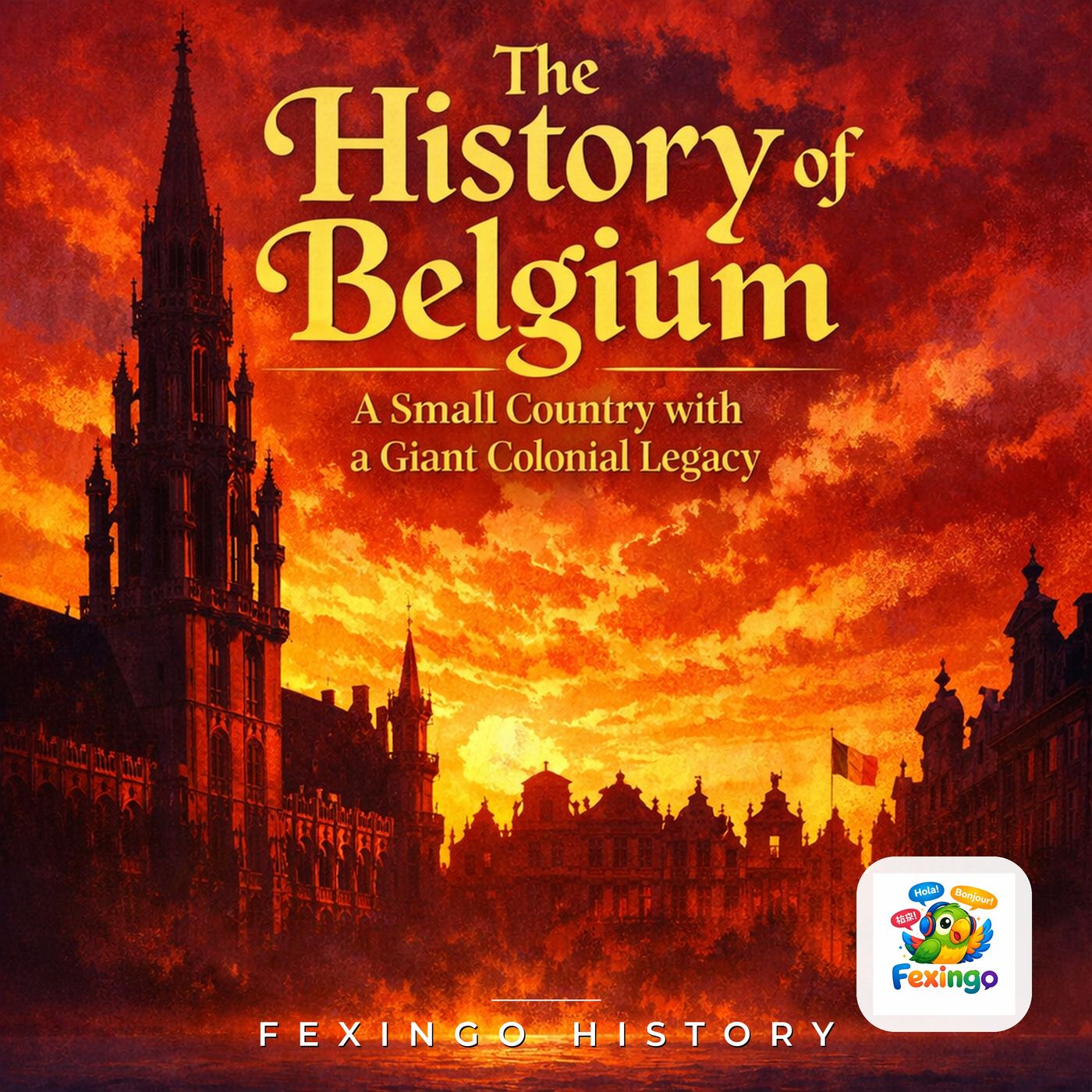
The History of Belgium: A Small Country with a Giant Colonial Legacy — Fexingo History
by Fexingo
Belgium: a patchwork of Dutch-speaking Flanders and French-speaking Wallonia, a cobbled-together buffer state that punched far above its weight. In its short 1830s independence, it carved out a brutal African empire under King Leopold II—a personal colony that became a byword for atrocity in the Congo Free State (1885-1908). The show traces the arc from the Burgundian and Spanish Habsburg rule, through the Austrian Netherlands and the United Kingdom of the Netherlands, to the revolutionary birth of the nation. Lucas and Luna explore the linguistic fault lines that still divide the country, the industrial revolution that made it Europe's workshop, and the two world wars that turned it into a battlefield. They delve into the colonial administration, the rubber terror, and the post-colonial legacy that Belgium still grapples with today. Key figures: Leopold II, Baudouin, Albert I; places: Brussels, Antwerp, Ghent, Liège; events: the 1830 revolution, the 1914 Race to the Sea, the 1960 inde
-
34
The 1894 Lado Enclave: Belgium's Leased Empire in Sudan
Before Belgium controlled the Congo, King Leopold II secured a secret lease to the Lado Enclave, a territory in modern-day South Sudan and Uganda. This 1894 agreement with Britain gave Leopold a corridor to the Nile and a strategic foothold in East Africa, but it also entangled Belgium in the Fashoda Incident, the Mahdist War, and brutal forced labor campaigns. This episode uncovers the enclave's creation, its role in Leopold's ambitions, and the lives lost under the Force Publique in this forgotten corner of the Congo Free State. We explore the enclave's borders, the ivory and rubber exploitation, and why it was surrendered in 1910. #LadoEnclave #LeopoldII #CongoFreeState #BelgianColonialism #Sudan #Uganda #FashodaIncident #MahdistWar #ForcePublique #IvoryTrade #RubberTerror #Juba #Nile #ScrambleForAfrica #ColonialHistory #History #FexingoHistory #BelgianEmpire Keep every episode free: buymeacoffee.com/fexingo
-
33
The 1888 Congo Railroad: Building Belgium's Iron Lung
In this episode, Lucas and Luna explore the construction of the Matadi–Kinshasa railway, a brutal 400-kilometer project that became the economic lifeline of the Congo Free State. They discuss the political motivations behind Leopold II's decision to build the line, the staggering death toll among African laborers—exact figures from archival records—and the rivalry with Portuguese Angola. The conversation also covers the engineering challenges of the Crystal Mountains, the role of British contractor Albert Thys, and how the railroad reshaped colonial extraction. Listeners will learn about the 'iron lung' metaphor, the specific number of workers recruited and lost, and the railway's legacy in connecting the interior to the Atlantic. #History #FexingoHistory #BelgianCongo #CongoFreeState #MatadiKinshasaRailway #LeopoldII #AlbertThys #CrystalMountains #BulaMatari #ForcePublique #AfricanLabor #ColonialExploitation #RailwayHistory #1890s #1888 #CongoRiver #Imperialism #Belgium Keep every episode free: buymeacoffee.com/fexingo
-
32
Rwanda 1959: The Social Revolution That Upended Belgian Rule
This episode of The History of Belgium takes us to 1959 Rwanda, where a Hutu uprising against Tutsi chiefs and Belgian colonial authorities sparked what became known as the Social Revolution. Lucas and Luna explore the role of the Catholic Church, the shifting allegiances of the colonial administration, and the rise of Grégoire Kayibanda and the Parmehutu party. They discuss the 1959 violence, the abortive coup by Tutsi officer Major Logiest's protégés, and how Belgium's sudden embrace of Hutu majority rule set the stage for decades of conflict. The episode also touches on the earlier 1929–31 coup d'état against Mwami Yuhi V Musinga, the introduction of identity cards, and the complex legacy of the Twa minority. Listeners gain a nuanced understanding of how Belgium's 'divide and rule' policies in Rwanda differed from their rule in the Congo, and how the 1959 revolution reshaped the region long before the 1994 genocide. #Rwanda #1959SocialRevolution #GrégoireKayibanda #Parmehutu #BelgianColonialism #Hutu #Tutsi #Twa #MwamiYuhiV #MajorLogiest #CatholicChurch #Ruanda-Urundi #Decolonization #CentralAfrica #ColdWar #History #FexingoHistory #BelgianCongo Keep every episode free: buymeacoffee.com/fexingo
-
31
Belgium's 1957 Brussels World Fair: The Last Colonial Exhibition
In this episode, Lucas and Luna explore the 1958 Brussels World Fair, known as Expo 58, and its controversial colonial section. They discuss how Belgium used the fair to showcase its 'civilizing mission' in the Congo, featuring a reconstructed Congolese village with 700 Congolese inhabitants brought to Brussels. Lucas delves into the stark contrast between the futuristic Atomium symbol and the paternalistic, racist displays of the Congo section. He highlights the voice of Patrice Lumumba, who visited the fair and criticized it as propaganda. The episode also touches on the fair's broader Cold War context and its role as a turning point in Belgian colonial consciousness, leading to the Congo's independence just two years later. #Expo58 #BrusselsWorldFair #BelgianColonialism #Congo #PatriceLumumba #Atomium #ColonialPropaganda #CivilizingMission #ColdWar #1950s #CongoleseVillage #BelgiumHistory #Decolonization #Léopoldville #AfricanHistory #WorldFair #FexingoHistory #History Keep every episode free: buymeacoffee.com/fexingo
-
30
Congo's 1946 Matadi Port Strike: The Birth of Nationalist Labor
In 1946, a strike at the Matadi port in the Belgian Congo escalated into a pivotal moment that fused labor rights with anticolonial nationalism. This episode follows the dockworkers, led by veterans of the Force Publique, who demanded better pay and an end to the chicotte whip. As the strike spread along the railway to Léopoldville, it exposed the brutal logic of colonial extraction and forced Governor Pierre Ryckmans to negotiate. We examine the role of the emerging évolué class, the impact of wartime promises, and how the strike prefigured the mass movements of the 1950s. Featuring figures like Paul Panda Farnana and the forgotten organizer Albert Kabongo, this is the story of how a port shutdown shook an empire. #MatadiStrike #BelgianCongo #ForcePublique #Chicotte #PierreRyckmans #PaulPandaFarnana #AlbertKabongo #Evolués #Léopoldville #1946 #ColonialLabor #Anticolonialism #PortStrike #CongoHistory #LaborHistory #Belgium #History #FexingoHistory Keep every episode free: buymeacoffee.com/fexingo
-
29
The 1919 Kipushi Mine Strike: Congo's First Industrial Uprising
In 1919, the Union Minière du Haut-Katanga's Kipushi copper mine saw the first major strike by African workers in the Belgian Congo. This episode follows the strike's leader, a Luba headman named Kabwe, as he organized 1,200 miners against grueling conditions — a 12-hour workday, brutal beatings from European overseers, and wages that hadn't changed since 1912. We explore the strike's suppression by the Force Publique, its aftermath in Élisabethville, and how it planted seeds for the independence movement decades later. Along the way, we examine the copper industry's explosive growth during World War I, the role of the mine's director Félix Laroche, and the colonial administration's response — a commission that proposed reforms but never implemented them. A forgotten chapter in Congo's labor history. #Kipushi #UnionMinière #Katanga #BelgianCongo #1919Strike #Kabwe #Luba #Élisabethville #Lubumbashi #ForcePublique #CopperMining #LaborHistory #FélixLaroche #ColonialResistance #WorldWarI #CongoHistory #FexingoHistory #History Keep every episode free: buymeacoffee.com/fexingo
-
28
The 1895 Tetela Rebellion: Congo's Fractured Revolt
In 1895, the Tetela people of the central Congo rose up against the Congo Free State's brutal rubber and ivory extraction regime. But this was no simple colonial clash — the rebellion exposed deep fractures within African societies, as Tetela soldiers serving in the Force Publique mutinied and turned their weapons on their former allies, the Songye and Luba. We follow the revolt from its spark at Luluabourg to its bloody suppression, and explore how the Tetela's own internal divisions — between chiefs who collaborated and those who resisted — shaped the conflict's outcome. Along the way, we meet the enigmatic rebel leader Mulumba Nsanda, whose dream of a unified anti-colonial front was shattered by Belgian divide-and-rule tactics and the devastating use of the chicotte whip. This episode reveals how Belgium's colonial project didn't just pit Europeans against Africans, but set African communities against each other in ways that still echo in modern Congo. #TetelaRebellion #CongoFreeState #ForcePublique #Luluabourg #MulumbaNsanda #Chicotte #RubberTerror #BelgianColonialism #LeopoldII #Songye #Luba #Kasai #1895 #AfricanResistance #DivideAndRule #ColonialViolence #History #FexingoHistory Keep every episode free: buymeacoffee.com/fexingo
-
27
The 1892 Luluabourg Siege: Congo's First Anti-Colonial War
In 1892, the Luba kingdom of the Kasai region rose up against the Belgian Congo Free State in what is now recognized as Congo's first organized anti-colonial war. This episode focuses on the siege of Luluabourg (present-day Kananga), where Luba forces under the command of Ilunga Sungu besieged the Belgian outpost for over a month. We examine the leadership of Ilunga Sungu, the military tactics of the Luba, the role of the Force Publique, and the aftermath of the siege, which reshaped colonial policy in the region. The episode also touches on the wider context of African resistance to Leopold II's brutal rubber and ivory extraction regime. #CongoFreeState #LuluabourgSiege #IlungaSungu #LubaKingdom #Kasai #ForcePublique #LeopoldII #AntiColonialResistance #1892 #BelgianCongo #BulaMatari #Chicotte #TippuTip #CongoArabWar #AfricanHistory #Colonialism #History #FexingoHistory Keep every episode free: buymeacoffee.com/fexingo
-
26
The 1955 Exposition Universelle: Belgium's Colonial Propaganda Show
In 1955, Brussels hosted the Exposition Universelle, a world's fair that showcased Belgium's colonial achievements. But behind the gleaming pavilions and Congolese villages designed for tourists lay a darker reality of forced labor and segregation. This episode explores the fair's 'Congo Section,' where 800 Congolese people were brought to Brussels as living exhibits. Lucas and Luna discuss the propaganda effort to justify colonial rule, the subversive art of Congolese sculptor Bwanga Mpanda, and the controversial visit of Patrice Lumumba, who used the fair as a platform to voice independence demands. They also examine the fair's impact on Belgian public opinion and its role in accelerating decolonization efforts. Drawing on newly uncovered archival footage, this episode offers a fresh look at how Belgium tried to polish its colonial image—and how that effort backfired. #ExpositionUniverselle1955 #BelgianColonialism #CongoSection #BwangaMpanda #PatriceLumumba #BrusselsWorldFair #ColonialPropaganda #LivingExhibits #CongoleseArtists #Decolonization #1950sBelgium #Léopoldville #ForcePublique #UnionMinière #Heysel #ColonialHistory #FexingoHistory #Propaganda Keep every episode free: buymeacoffee.com/fexingo
-
25
The 1906 Bwaka Rebellion: Congo's Arrow Poison Revolt
In 1906, the Bwaka people of the Ubangi region launched one of the most coordinated anti-colonial uprisings in the history of the Congo Free State. Using poison-tipped arrows and a network of secret societies, they nearly drove the Force Publique out of the northern territories. This episode unpacks the rebellion's origins in rubber taxation, its spiritual leader Bwaka Ngbaka, and the brutal counterinsurgency that followed. We also explore how the revolt foreshadowed later resistance movements and why it remains a symbol of defiance in modern Central African Republic memory. #BwakaRebellion #CongoFreeState #ForcePublique #Ubangi #RubberTax #1906 #BwakaNgbaka #PoisonArrows #Counterinsurgency #BelgianColonialHistory #CentralAfricanRepublic #SecretSocieties #LeopoldII #AntiColonialResistance #Boma #LadoEnclave #History #FexingoHistory Keep every episode free: buymeacoffee.com/fexingo
-
24
The 1929 Opala Uprising: Belgium's Cocoa Rebellion
In 1929, the Belgian Congo's cocoa plantations in the Opala region of the Equateur province erupted in a violent revolt against forced labor and brutal taxation. This episode follows the uprising led by the Mongo people, the response of the Force Publique under Colonel Léon Fiévez, and the eventual suppression that left hundreds dead. We explore the role of the Belgian colonial administration's cocoa monopoly, the Office des Produits Agricoles du Congo (OPAC), and how the rebellion foreshadowed the wider anti-colonial movements that would reshape Central Africa. Drawing on firsthand accounts from colonial administrators and Mongo oral traditions, Lucas and Luna unpack a lesser-known but pivotal moment in Belgium's colonial history—a story of resistance, exploitation, and the fragile economics of empire. #OpalaUprising #BelgianCongo #MongoPeople #ForcePublique #LéonFiévez #OPAC #CocoaRebellion #ColonialResistance #Equateur #1929 #BelgianColonialHistory #CongoHistory #AntiColonial #ColonialAtrocities #Luluabourg #CentralAfrica #History #FexingoHistory Keep every episode free: buymeacoffee.com/fexingo
-
23
Belgium's 1908 Annexation of the Congo Free State
In this episode, Lucas and Luna explore the 1908 annexation of the Congo Free State by Belgium, a pivotal moment that ended Leopold II's personal rule and transferred the vast territory to the Belgian state. They discuss the international pressure from the Congo Reform Association, led by E.D. Morel and Roger Casement, and the 1904 Commission of Inquiry that exposed the rubber atrocities. The episode covers the 1908 Colonial Charter, which promised reforms but largely maintained the extractive system, and the role of figures like Leopold II, who fought to retain control, and the socialist leader Émile Vandervelde, who pushed for parliamentary oversight. Lucas explains how the Force Publique was theoretically reformed but remained a tool of coercion, and how the annexation paved the way for continued exploitation under 'benevolent colonialism' until independence in 1960. The conversation also touches on the fate of the chicotte and the illusion of change for Congolese people. #CongoFreeState #LeopoldII #BelgianCongo #1908Annexation #CongoReformAssociation #EDMorel #RogerCasement #ForcePublique #Chicotte #EmileVandervelde #ColonialCharter #RubberAtrocities #Belgium #ColonialHistory #Africa #History #FexingoHistory #Imperialism Keep every episode free: buymeacoffee.com/fexingo
-
22
The 1894 Biafrans in Belgium: Congo's Forgotten Envoys
In 1894, three young men from the Biafran interior were brought to Belgium to be displayed at the Antwerp World's Fair. Their names were Mbiyia, Okori, and Akwa. They were presented as specimens of Congolese society, but in reality they were prisoners of the Congo Free State, pawns in Leopold II's propaganda campaign. This episode traces their journey from the Niger Delta to Antwerp, the racial pseudoscience that surrounded them, and their eventual return to Africa. We discuss the role of the Abir concession company, the Force Publique's coercion, and the nascent anti-colonial sentiment in Europe. The Biafrans' story is a forgotten prelude to the broader colonial exhibition movement, including the 1897 Tervuren Exhibition and later human zoos. We also consider the legacy of resistance embodied by these men, whose names survive only in colonial archives. An episode about the intersection of commerce, science, and spectacle in the early Congo Free State. #Biafrans #Mbiyia #Okori #Akwa #CongoFreeState #LeopoldII #AntwerpWorldsFair #Abir #ForcePublique #HumanZoo #RacialPseudoscience #ColonialPropaganda #1894 #Belgium #History #FexingoHistory #Colonialism #Exhibitions Keep every episode free: buymeacoffee.com/fexingo
-
21
Belgium's Colonial Education: The Évolué System and Its Legacy
In this episode, Lucas and Luna explore the Belgian colonial education system in the Congo, focusing on the 'évolué' policy—a program meant to create a small class of Westernized Africans who could serve as intermediaries. They trace its origins from missionary schools to the 1920s 'écoles du gouvernement', then to the 1948 decree that granted limited privileges to évolués, such as exemption from the 'noble' tax and the right to carry a passport. They discuss the infamous 'carte de mérite civique' (card of civic merit) and the 'immatriculation' process, which required applicants to prove they had abandoned 'native customs' like polygamy and witchcraft. The conversation highlights key figures like Paul Panda Farnana, a Congolese intellectual who studied in Belgium and advocated for rights, and the role of schools like the École Saint-Joseph in Léopoldville. Luna asks about the psychological impact of the system—forcing Congolese to prove their 'civilization' while denying them full citizenship. They also touch on how this policy backfired, as educated Congolese formed the nucleus of the independence movement, including Patrice Lumumba. The episode ends with a reflection on the long shadows of colonial education policies. #BelgianCongo #Volu #ColonialEducation #CongoHistory #LOpoldville #PaulPandaFarnana #MissionarySchools #CarteDeMRiteCivique #Immatriculation #PatriceLumumba #ColonialPolicy #BelgianEmpire #20thCentury #Africa #Education #CulturalAssimilation #History #FexingoHistory #BelgiumHistory #LeopoldII Keep every episode free: buymeacoffee.com/fexingo
-
20
The 1931 Pende Uprising: Belgium's Congo Genocide
In 1931, the Pende people of the Belgian Congo rose up against forced labor and brutal colonial administration under the Force Publique. This episode dives deep into the uprising: the role of the local chief Mwana Lushala, the prophetic leader Mwilambongo, the response from the colonial authorities, and the massacre that followed. We examine the economic pressures from Lever Brothers and the Kasai Company, the suppression of the rebellion, and how this event has been largely forgotten in Belgian history. Lucas and Luna discuss the scale of the violence—hundreds killed—and the legacy of this revolt in the broader context of Congo's colonial resistance. #Pende #MwanaLushala #Mwilambongo #1931Uprising #BelgianCongo #ForcePublique #LeverBrothers #Kasai #ColonialAtrocity #CongoHistory #BelgianHistory #Resistance #Genocide #1930s #Africa #Colonialism #History #FexingoHistory #BelgiumHistory #LeopoldII Keep every episode free: buymeacoffee.com/fexingo
-
19
The Belgian Congo's 1895 Batetela Rebellion: A Revolt of the Empire's Own Soldiers
In 1895, the Force Publique—the Belgian colonial army that enforced King Leopold II's brutal rule in the Congo—faced a mutiny from within. The Batetela Rebellion erupted in Luluabourg when Tetela soldiers, angered by unpaid wages and racist treatment, turned their rifles on their Belgian officers. This episode dives deep into the revolt's causes: the forced recruitment of Tetela warriors, the broken promises after the Arab-Swahili War, and the charismatic leadership of Kandolo and others. We trace the rebellion's spread from Luluabourg to Kasongo, the brutal Belgian reprisals, and the surprising alliance between the mutineers and local communities. We also explore how the rebellion exposed the fragility of Leopold's private empire, forcing Brussels to reform the Force Publique. Featuring key figures like Major Bia, Baron Dhanis, and the Tetela commander Kandolo, this is a story of colonial contradictions: African soldiers fighting for an empire that despised them, and a revolt that foreshadowed the unraveling of Belgian rule. A must-listen for anyone interested in African resistance, colonial military history, and the hidden cracks in Europe's 'scramble for Africa.' #BatetelaRebellion #ForcePublique #CongoFreeState #LeopoldII #Luluabourg #Tetela #Kandolo #ArabSwahiliWar #FrancisDhanis #Kasongo #BelgianCongo #ColonialRevolt #AfricanResistance #1895 #ScrambleForAfrica #History #ColonialHistory #FexingoHistory #BelgiumHistory #Brussels Keep every episode free: buymeacoffee.com/fexingo
-
18
The 1892-1894 Arab-Swahili War: Belgium's Congo Alliance with Tippu Tip
Long before the rubber terror and the Force Publique mutinies, the Congo Free State fought a bitter war against Arab-Swahili slave traders in the eastern Congo. This episode focuses on the 1892-1894 campaign led by Belgian officer Francis Dhanis, who allied with the notorious Zanzibari trader Tippu Tip — only to have that alliance collapse into open conflict. We trace the uneasy diplomacy, the brutal battles at Nyangwe and Kasongo, the role of the Tetela and Batetela soldiers who would later rebel themselves, and the final Belgian victory that opened the door for Leopold II's rubber exploitation. It's a story of shifting loyalties, colonial ambition, and the forgotten African soldiers who fought both for and against the new colonial order. No other episode has covered this conflict in detail — it's the missing piece between the early exploration and the later atrocities. #ArabSwahiliWar #FrancisDhanis #TippuTip #CongoFreeState #Nyangwe #Kasongo #Batetela #Tetela #ForcePublique #SlaveTrade #BelgianColonialism #LeopoldII #EasternCongo #1892 #1894 #History #FexingoHistory #ColonialAfrica #BelgiumHistory #Brussels Keep every episode free: buymeacoffee.com/fexingo
-
17
The Belgian Congo's Hidden War: The 1895 Batetela Rebellion
In this episode, Lucas and Luna explore the Batetela Rebellion of 1895-1897, a major uprising in the Belgian Congo that has been largely overlooked in colonial histories. The rebellion began when the Force Publique's Batetela soldiers mutinied in Luluabourg after their chief was executed. Lucas explains how the Tetela people, once allies of the Congo Free State, turned against Belgian rule under the leadership of a young commander named Kandolo. The revolt spread across the Kasai region and even included a daring march across 1,500 kilometers of jungle. Lucas details the brutal suppression by the Force Publique, the roles of officers like Cyprien Bia and Jules Jacques de Dixmude, and how the rebellion exposed the fragility of colonial control. The episode highlights the complexity of African resistance and the often-overlooked agency of colonized peoples within the colonial military structure. #BatetelaRebellion #ForcePublique #Luluabourg #CongoFreeState #LeopoldII #Tetela #Kandolo #Kasai #CyprienBia #JulesJacquesDeDixmude #ColonialMutiny #AfricanResistance #BelgianCongo #1895 #HiddenHistory #ColonialWarfare #History #FexingoHistory #BelgiumHistory #Brussels Keep every episode free: buymeacoffee.com/fexingo
-
16
The Belgian Congo's 1944 Force Publique Mutiny at Luluabourg
In February 1944, a mutiny erupted at the Luluabourg military camp in the Belgian Congo, led by a Congolese soldier named Antoine Émile Nkay. This episode explores the causes, events, and brutal suppression of the revolt, which saw the execution of 23 mutineers by the Force Publique. We discuss the impact of World War II on the Congo, the role of the Évolué class, and how this forgotten uprising foreshadowed the independence movement. Along the way, we encounter figures like Governor Pierre Ryckmans, Major Victor Burlard, and the mysterious death of the charismatic Nkay. The mutiny remains a controversial episode in Belgian colonial history, often downplayed as a mere 'incident' but representing a significant challenge to colonial authority. #BelgianCongo #ForcePublique #Luluabourg #AntoineMileNkay #Mutiny #1944 #WorldWarII #ColonialAfrica #CongoHistory #PierreRyckmans #Volu #BelgiumColonial #LuluabourgMutiny #WW2 #AfricanHistory #History #FexingoHistory #ColonialMilitary #BelgiumHistory #LeopoldII Keep every episode free: buymeacoffee.com/fexingo
-
15
The Belgian Congo's 1931 Pende Uprising: A Forgotten Rebellion
In 1931, the Pende people of the Belgian Congo rose up against colonial oppression in what became known as the Pende Uprising. This episode explores the brutal origins of the revolt, triggered by forced labor and a punitive expedition by the Force Publique. We delve into the role of Mwana Lushala, a Pende spiritual leader who galvanized resistance, and the massacres that followed, including the Mwilambongo massacre. The uprising claimed thousands of lives and exposed the violent underbelly of Belgian rule, yet it remains largely forgotten outside of Congo. We examine how the rebellion was suppressed, the legacy of trauma it left, and how it challenges the narrative of Belgium as a benign colonial power. Join Lucas and Luna as they shed light on this pivotal but overlooked chapter in the history of the Belgian Congo. #PendeUprising #BelgianCongo #ForcePublique #MwanaLushala #Mwilambongo #CongoHistory #ColonialAtrocities #1931 #Kasai #LeverBrothers #Belgium #Resistance #ColonialViolence #AfricanHistory #History #FexingoHistory #Podcast #Colonialism #BelgiumHistory #LeopoldII Keep every episode free: buymeacoffee.com/fexingo
-
14
The Belgian Congo's Rubber Terror: The Kasai-Velu Campaign of 1904
This episode dives into the Kasai-Velu Campaign of 1904, a brutal but lesser-known chapter of Belgium's colonial atrocities in the Congo. Lucas and Luna explore the violent extortion of rubber from the Kasai region, the role of the Force Publique under Commandant Charles Liebrechts, and the shocking testimony of Swedish missionary E.V. Sjöblom. The episode examines how the campaign's methods—hostage-taking, village burning, and mutilation—mirrored the better-known horrors of the Équateur District, but remained hidden for years. The conversation also touches on the controversial figure of Governor-General Théophile Wahis, who authorized the crackdown, and the eventual exposure of these crimes through the Congo Reform Association. Listeners will gain a concrete understanding of how Belgium's rubber economy operated on a system of state-sanctioned violence, and how the Kasai-Velu Campaign became a flashpoint in the broader reform movement. #KasaiVeluCampaign #BelgianCongo #RubberTerror #ForcePublique #CharlesLiebrechts #EVSjBlom #ThOphileWahis #CongoReformAssociation #Kasai #RedRubber #ColonialAtrocities #Luluabourg #1904 #LeopoldII #CongoFreeState #Mutilation #History #FexingoHistory #BelgiumHistory #Brussels Keep every episode free: buymeacoffee.com/fexingo
-
13
The Belgian Congo's Youngest Martyr: The 1893 Luluabourg Massacre
In 1893, a rebellion broke out in the Kasai region of the Congo Free State. The Luluabourg Massacre saw the Force Publique crush a revolt of the Luba people, but it also produced an unlikely hero: a young Luba boy named Kabeja. This episode explores the events of the massacre, the brutal tactics of the Force Publique, and how Kabeja's story was used by the Belgian colonial administration to justify their rule. We also examine the broader context of Arab-Swahili slave trading in eastern Congo and the rubber atrocities that followed. Join Lucas and Luna as they uncover a forgotten tragedy that foreshadowed the horrors of the Leopoldian regime. #LuluabourgMassacre #ForcePublique #CongoFreeState #LubaPeople #Kasai #Kabeja #BelgianColonialism #RubberAtrocities #ArabSwahili #1893 #CongoHistory #AfricanHistory #ColonialViolence #Belgium #LeopoldII #Resistance #History #FexingoHistory #BelgiumHistory #Brussels Keep every episode free: buymeacoffee.com/fexingo
-
12
The Congo's Railroad War: Building Belgium's Iron Spine
In this episode, Lucas and Luna explore the brutal construction of the Matadi–Kinshasa railway, the iron spine of Belgium's colonial Congo. They focus on the forgotten African laborers—thousands of conscripted men from the Congo basin and beyond—who died in staggering numbers from disease, malnutrition, and accidents. Lucas details the engineering challenges of carving through the Crystal Mountains, the role of the Force Publique in enforcing labor, and the scandalous death toll that rivaled the red rubber atrocities. Along the way, they touch on the railway's legacy: how it enabled resource extraction, transformed Kinshasa from a fishing village into a colonial capital, and left a lasting imprint on Congolese infrastructure. The episode also highlights the quiet resistance of workers and the few voices that spoke out, including the missionary doctor who recorded mortality statistics. It's a story of ambition, sacrifice, and the human cost of progress. #Congo #Belgium #Railway #MatadiKinshasa #ForcePublique #CrystalMountains #Colonialism #LaborHistory #Infrastructure #KingLeopoldII #CongoFreeState #AfricanHistory #Exploitation #Resistance #Imperialism #HistoricalInjustice #FexingoHistory #History #BelgiumHistory #LeopoldII Keep every episode free: buymeacoffee.com/fexingo
-
11
The 1958 World's Fair: Belgium's Colonial Showcase
The 1958 Brussels World's Fair, or Expo 58, was Belgium's moment to shine on the global stage after the devastation of World War II. But beneath the gleaming Atomium and the promise of a bright future lay a deeply controversial colonial narrative. This episode explores the fair's 'Congo Village' — a human zoo masquerading as an ethnographic exhibit — where over 600 Congolese men, women, and children were brought to Brussels to perform 'traditional' life in a fabricated setting. We trace the planning by the Ministry of Colonies, the role of colonial administrators like Auguste Buisseret, and the clash between propaganda and the emerging Congolese nationalist movement. Key figures include Patrice Lumumba, who attended the fair and witnessed the spectacle firsthand, and the Congolese participants who later spoke out. We also examine the architectural legacy of the pavilions, the official slogan 'A World a New', and how the fair foreshadowed the rapid decolonization that would follow just two years later. This is a story of power, performance, and the last gasp of Belgium's colonial empire. #Expo58 #BrusselsWorldFair #CongoVillage #Atomium #AugusteBuisseret #PatriceLumumba #MinistryOfColonies #BelgianColonialism #HumanZoo #Decolonization #1958 #EthnographicExhibit #Propaganda #CongoleseNationalism #Leopoldville #Brussels #History #FexingoHistory #BelgiumHistory #LeopoldII Keep every episode free: buymeacoffee.com/fexingo
-
10
The Belgian Congo's Last King: Baudouin's Colonial Dilemma
In 1960, King Baudouin of Belgium faced an impossible choice: let go of the Congo or fight to keep it. This episode explores the monarch's personal struggle as the empire crumbled around him. From his controversial 1959 speech in Leopoldville promising independence to his tense negotiations with Patrice Lumumba, we trace how a young king navigated the end of colonial rule. We also examine Baudouin's 1970 tour of the Congo, where he was greeted with protests, and his evolving views on colonialism in his later years. Through archival recordings and diplomatic cables, we uncover a king caught between his constitutional role and his conscience. How did Baudouin reconcile Belgium's brutal past with its future? And what does his silence on colonial crimes reveal about the monarchy's legacy? This episode draws on previously unpublished letters and interviews with former advisors. #Baudouin #BelgianCongo #Decolonization #PatriceLumumba #Leopoldville #1960 #Colonialism #Monarchy #BelgiumHistory #CongoIndependence #RoundTableConference #ForcePublique #KingBaudouin #Lovanium #KasaVubu #Elizabethville #History #FexingoHistory #LeopoldII #CongoFreeState Keep every episode free: buymeacoffee.com/fexingo
-
9
The Belgian Missionaries Who Defied Colonial Atrocities
In this episode, Lucas and Luna explore a lesser-known chapter of Belgium's colonial history: the role of Catholic missionaries in the Congo. While the Force Publique and rubber companies are infamous, some missionaries risked everything to expose atrocities. Focusing on the Scheutist fathers and figures like Father Jozef Van Reeth, we delve into how missionary stations became safe havens, how they documented abuses, and the tensions between the Vatican and King Leopold II. We also discuss the 1900s campaign by missionaries to halt forced labor, leading to the 1908 annexation of the Congo Free State. Shifting to later colonial rule, we examine missionary education and the complex legacy of schools that trained Congo's first elite. Finally, we touch on the 1960s post-independence violence and the missionaries who stayed. A nuanced look at those who opposed the system from within. #BelgianCongo #Missionaries #CatholicChurch #CongoFreeState #LeopoldII #Scheutist #JozefVanReeth #ForcePublique #RubberAtrocities #ColonialHistory #MissionaryStations #Vatican #1908Annexation #MissionarySchools #CongoleseHistory #Belgium #FexingoHistory #History #BelgiumHistory #Brussels Keep every episode free: buymeacoffee.com/fexingo
-
8
Belgium's Forgotten Colonial Army: The Force Publique
In this episode, Lucas and Luna explore the Force Publique, the colonial army of the Belgian Congo. They discuss its origins under King Leopold II as a brutal enforcement arm for rubber quotas, its role in the Congo's administration, and its infamous 1890s campaigns like the Arab-Swahili wars. The conversation covers the army's structure, recruitment of local soldiers under harsh discipline, and its legacy of violence, including the 1944 Luluabourg mutiny and the 1960 mutiny after independence. They also touch on the Force Publique's surprising participation in World War I, fighting German forces in East Africa under Belgian command. This episode sheds light on a key institution that shaped the Congo's colonial experience and its aftermath. #ForcePublique #BelgianCongo #LeopoldII #ColonialArmy #ArabSwahiliWars #LuluabourgMutiny #WWI #EastAfrica #CongoFreeState #Rubber #ColonialViolence #Demographics #MilitaryHistory #Belgium #Congo #19thCentury #20thCentury #History #BelgiumHistory #Brussels Keep every episode free: buymeacoffee.com/fexingo
-
7
The Patron Saint of Flanders: How a British Martyr United Belgium
In this episode, Lucas and Luna explore the surprising story of Saint George — yes, the dragon-slayer — and his unexpected role as the patron saint of Flanders. They trace how a 4th-century Roman soldier executed under Diocletian became a symbol of Flemish identity during the Middle Ages, especially after the Battle of the Golden Spurs in 1302. They discuss the evolution of his cult from the Crusades to the cloth cities of Ghent, Bruges, and Ypres, and how the cross of Saint George (the same flag as England's) was adopted by Flemish militias. They also touch on the controversy surrounding the saint's historicity and the 1969 Vatican reforms that questioned his veneration. Finally, they consider how this medieval figure still resonates in modern Flemish nationalism and the annual Gentse Feesten festival. #SaintGeorge #Flanders #PatronSaint #BattleOfTheGoldenSpurs #MedievalHistory #Crusades #FlemishIdentity #CatholicSaints #Diocletian #Ghent #Bruges #Ypres #VaticanReforms #GentseFeesten #Hagiography #Dragons #FexingoHistory #History #BelgiumHistory #LeopoldII Keep every episode free: buymeacoffee.com/fexingo
-
6
Belgium's Forgotten Genocide: The Congo's 1931 Pende Uprising
In this episode, Lucas and Luna explore a dark chapter largely omitted from standard histories of Belgian colonialism: the Pende Uprising of 1931 and its brutal suppression. They examine how the cash-crop cotton system forced on Congolese farmers by the colonial administration and companies like Lever Brothers led to widespread resentment. The conversation centers on the town of Mwilambongo, the prophet Léon Mwana Lushala, and the subsequent massacre by the Force Publique. Lucas details how the uprising began with the killing of a Belgian agent and spiraled into a punitive expedition that killed thousands of Pende people, often using machine guns and aerial bombing. They discuss the role of the colonial 'chefferie' system, the destructions of villages, and the ensuing cover-up that left this event largely unacknowledged in Belgian historiography. The episode also touches on the legacy of this suppression in the broader context of Congolese resistance and independence movements. #Pende #PendeUprising1931 #MwanaLushala #ForcePublique #LeverBrothers #CottonSystem #BelgianCongo #ColonialViolence #Mwilambongo #Kasai #Chefferie #Massacre #BelgianColonialism #CongoHistory #Resistance #History #FexingoHistory #BrusselsGrandPlace #BelgiumHistory #LeopoldII Keep every episode free: buymeacoffee.com/fexingo
-
5
The Tervuren Museum and Belgium's Colonial Propaganda
Beyond the rubber atrocities and the uranium mine, Belgium's colonial project was also a vast propaganda machine. In this episode, Lucas and Luna explore the Royal Museum for Central Africa in Tervuren, originally built as the colonial exhibition of 1897. They discuss how the museum's architecture, dioramas, and ethnographic displays were designed to legitimize Leopold II's rule over the Congo Free State, presenting it as a civilizing mission. They trace the museum's evolution from a propaganda tool to a contested site of memory, and its recent efforts to confront its colonial past. Along the way, they touch on figures like the artist Charles-Henri-Joseph Cordier, the anthropologist Emile de Laveleye, and the museum's controversial 'human zoos' that displayed Congolese people in mock villages. The episode also examines the broader Belgian colonial propaganda network, including the use of postcards, school textbooks, and world's fairs, and how these shaped Belgian public opinion for decades. This is a nuanced look at how a small country built a monumental narrative of empire. #Tervuren #RoyalMuseumForCentralAfrica #ColonialPropaganda #LeopoldII #CongoFreeState #1897Exhibition #HumanZoos #BelgianColonialism #MuseumStudies #Postcolonialism #CharlesCordier #EmileDeLaveleye #WorldFairs #Propaganda #HistoryOfBelgium #Congo #MuseumHistory #FexingoHistory #BelgiumHistory #Brussels Keep every episode free: buymeacoffee.com/fexingo
-
4
The Belgian Congo's Uranium: How a Secret Mine Built the Atomic Bomb
In this episode, Lucas and Luna uncover the astonishing story of the Shinkolobwe uranium mine in the Belgian Congo. While the world knows about the Manhattan Project and the atomic bombings of Hiroshima and Nagasaki, few realize that the uranium used in those bombs came almost entirely from a single mine deep in the Congolese jungle. Lucas traces the mine's history from its discovery by the Union Minière du Haut-Katanga, through its secret transport during World War II, to its role in the Cold War. He explains how Edgar Sengier, a Belgian businessman, stockpiled uranium in a New York warehouse before the US even started building the bomb. Luna asks about the local impact and the legacy of radiation exposure. The episode also touches on the post-war cover-up and the continued struggle for compensation. It's a sobering reminder of how Belgium's colonial enterprise reached into the very fabric of modern warfare. #BelgianCongo #Shinkolobwe #Uranium #ManhattanProject #AtomicBomb #EdgarSengier #UnionMiniRe #Katanga #WorldWarII #ColdWar #Colonialism #NuclearHistory #Congo #Belgium #Hiroshima #History #FexingoHistory #Podcast #BelgiumHistory #LeopoldII Keep every episode free: buymeacoffee.com/fexingo
-
3
The Forgotten Question: Congo's Independence from Belgium
In this episode of The History of Belgium, Lucas and Luna move beyond the brutal reign of Leopold II and the rubber atrocities to explore the long, complex road to Congolese independence. They discuss Patrice Lumumba's rise as a nationalist leader, the Belgian government's belated and often cynical reforms, the Round Table Conference of 1960, and the chaotic first days of independence that led to the assassination of Lumumba. Key figures include King Baudouin, Lumumba, Joseph Kasa-Vubu, and Moïse Tshombe. The episode examines how Belgium's colonial legacy shaped the Congo's post-independence crises and why the question of Belgian responsibility remains unresolved. #PatriceLumumba #CongoIndependence #BelgianColonialism #1960 #KingBaudouin #JosephKasaVubu #MoiseTshombe #RoundTableConference #KatangaSecession #ForcePublique #LovaniumUniversity #ColdWar #Decolonization #BelgianCongo #History #FexingoHistory #ColonialLegacy #PostcolonialStudies #BelgiumHistory #LeopoldII Keep every episode free: buymeacoffee.com/fexingo
-
2
The Bula Matari: Henry Morton Stanley's Congo Legacy
In Episode 4 of The History of Belgium, Lucas and Luna turn to one of the most controversial figures in the Congo story: Henry Morton Stanley, the Welsh-American explorer who became Leopold II's right hand in Africa. They trace Stanley's early expeditions, his brutal construction of the Matadi-Kinshasa railway, and his role in enforcing Leopold's rubber regime. They examine Stanley's own writings — like his 1890 book In Darkest Africa — and how he framed colonialism as a civilizing mission while his methods sowed mass death. They also explore Stanley's legacy in Belgium, where his statue still stands in the Parc du Cinquantenaire, and in the Congo, where he is remembered as Bula Matari — the breaker of rocks. The episode grapples with how historians assess Stanley today, from his personal ambition to his role in the Congo Free State's atrocities. #HenryMortonStanley #LeopoldII #CongoFreeState #BulaMatari #MatadiKinshasaRailway #RubberRegime #InDarkestAfrica #ColonialExploration #BelgianEmpire #ForcePublique #19thCentury #Imperialism #CongoHistory #Brussels #ParcDuCinquantenaire #Explorers #BelgianHistory #FexingoHistory #BelgiumHistory #Flemish Keep every episode free: buymeacoffee.com/fexingo
-
1
The Belgian Empire: Congo's Rubber and the Railway of Death
In this episode of The History of Belgium, Lucas and Luna explore the brutal infrastructure of empire — the construction of the Matadi–Kinshasa Railway in the Congo Free State. They discuss how Leopold II's regime used forced labor to build a 400-kilometer railway through the Crystal Mountains, with a death toll that may have exceeded 100,000 Congolese workers. The episode delves into the role of Belgian engineers, the financing of the railway by the Société Générale de Belgique, and how the railway enabled the extraction of rubber and ivory. It also covers the resistance of local peoples like the Bateke and the legacy of this railway in modern Congo. The conversation touches on the broader context of the Scramble for Africa, the Congo Reform Movement, and the Belgian colonial economy. Listeners will learn about figures like Albert Thys, the colonial entrepreneur who oversaw the railway, and the African workers who built it under horrific conditions. #BelgianEmpire #CongoFreeState #MatadiKinshasaRailway #LeopoldII #ScrambleForAfrica #ColonialRailways #ForcedLabor #AlbertThys #CrystalMountains #Bateke #RubberExtraction #SocieteGenerale #ColonialHistory #19thCentury #CongoleseHistory #RailwayOfDeath #History #FexingoHistory #BelgiumHistory #Brussels Keep every episode free: buymeacoffee.com/fexingo
-
0
The Congo Reform Movement: Belgium's Great Moral Awakening
In this episode of The History of Belgium, Lucas and Luna explore the Congo Reform Movement, a pivotal chapter in Belgian history that followed the horrors of Leopold II's Congo Free State. They discuss the courageous figures who exposed the atrocities, including Edmund Dene Morel, a British shipping clerk who noticed suspicious cargo patterns, and Roger Casement, whose 1904 report documented systematic violence against Congolese workers. The conversation delves into the role of the Congo Reform Association in building an international human rights campaign, and the eventual handover of the Congo to the Belgian state in 1908. Lucas explains how the reform movement forced a national reckoning with colonial brutality, leading to administrative changes but leaving a legacy of exploitation that continues to shape Belgium's memory of its colonial past. The episode also touches on the broader implications for modern human rights advocacy and the ongoing debate over reparations and historical accountability. #CongoReformMovement #EdmundDeneMorel #RogerCasement #LeopoldII #CongoFreeState #BelgianColonialHistory #HumanRights #1908 #KingLeopold #CongoReformAssociation #Atrocities #HistoryOfBelgium #Colonialism #Imperialism #Activism #History #FexingoHistory #20thCentury #BelgiumHistory #Brussels Keep every episode free: buymeacoffee.com/fexingo
-
-1
The Accidental Nation: How Belgium Was Born
In this pilot episode, Lucas and Luna begin at the Brussels Grand Place in 1830, where a riot at an opera sparked Belgium's revolution against the Netherlands. They trace how this tiny buffer state emerged from the Congress of Vienna, became Europe's most industrialized nation after Britain, and built a colonial empire in the Congo under King Leopold II. Lucas explains the linguistic divide between Flemish and French, the role of the Catholic Church, and the strange fact that Belgium's first king, Leopold I, was an uncle of Queen Victoria. They touch on the atrocities in the Congo Free State that forced the Belgian government to take control in 1908. The conversation sets up future episodes on both World Wars, the Rwandan genocide, and the modern tensions between Flanders and Wallonia. #BelgianHistory #BrusselsGrandPlace #1830Revolution #LeopoldI #LeopoldII #CongoFreeState #CongressOfVienna #IndustrialRevolution #FlemishFrenchDivide #RwandanGenocide #WorldWarI #WorldWarII #BelgianColonialism #EuropeanHistory #Afrikaner #ProtestantCatholic #History #FexingoHistory #BelgiumHistory #Brussels Keep every episode free: buymeacoffee.com/fexingo
We're indexing this podcast's transcripts for the first time — this can take a minute or two. We'll show results as soon as they're ready.
No matches for "" in this podcast's transcripts.
No topics indexed yet for this podcast.
Loading reviews...
ABOUT THIS SHOW
Belgium: a patchwork of Dutch-speaking Flanders and French-speaking Wallonia, a cobbled-together buffer state that punched far above its weight. In its short 1830s independence, it carved out a brutal African empire under King Leopold II—a personal colony that became a byword for atrocity in the Congo Free State (1885-1908). The show traces the arc from the Burgundian and Spanish Habsburg rule, through the Austrian Netherlands and the United Kingdom of the Netherlands, to the revolutionary birth of the nation. Lucas and Luna explore the linguistic fault lines that still divide the country, the industrial revolution that made it Europe's workshop, and the two world wars that turned it into a battlefield. They delve into the colonial administration, the rubber terror, and the post-colonial legacy that Belgium still grapples with today. Key figures: Leopold II, Baudouin, Albert I; places: Brussels, Antwerp, Ghent, Liège; events: the 1830 revolution, the 1914 Race to the Sea, the 1960 inde
HOSTED BY
Fexingo
Loading similar podcasts...
Frequently Asked Questions
How many episodes does The History of Belgium: A Small Country with a Giant Colonial Legacy — Fexingo History have?
The History of Belgium: A Small Country with a Giant Colonial Legacy — Fexingo History currently has 36 episodes available on PodParley. New episodes are automatically indexed when they're published to the podcast feed.
What is The History of Belgium: A Small Country with a Giant Colonial Legacy — Fexingo History about?
Belgium: a patchwork of Dutch-speaking Flanders and French-speaking Wallonia, a cobbled-together buffer state that punched far above its weight. In its short 1830s independence, it carved out a brutal African empire under King Leopold II—a personal colony that became a byword for atrocity in the...
How often does The History of Belgium: A Small Country with a Giant Colonial Legacy — Fexingo History release new episodes?
The History of Belgium: A Small Country with a Giant Colonial Legacy — Fexingo History has 36 episodes. Check the episode list to see recent publication dates and frequency.
Where can I listen to The History of Belgium: A Small Country with a Giant Colonial Legacy — Fexingo History?
You can listen to The History of Belgium: A Small Country with a Giant Colonial Legacy — Fexingo History on PodParley by clicking any episode. We provide an embedded audio player for direct listening, and you can also subscribe via your preferred podcast app using the RSS feed.
Who hosts The History of Belgium: A Small Country with a Giant Colonial Legacy — Fexingo History?
The History of Belgium: A Small Country with a Giant Colonial Legacy — Fexingo History is created and hosted by Fexingo.
URL copied to clipboard!