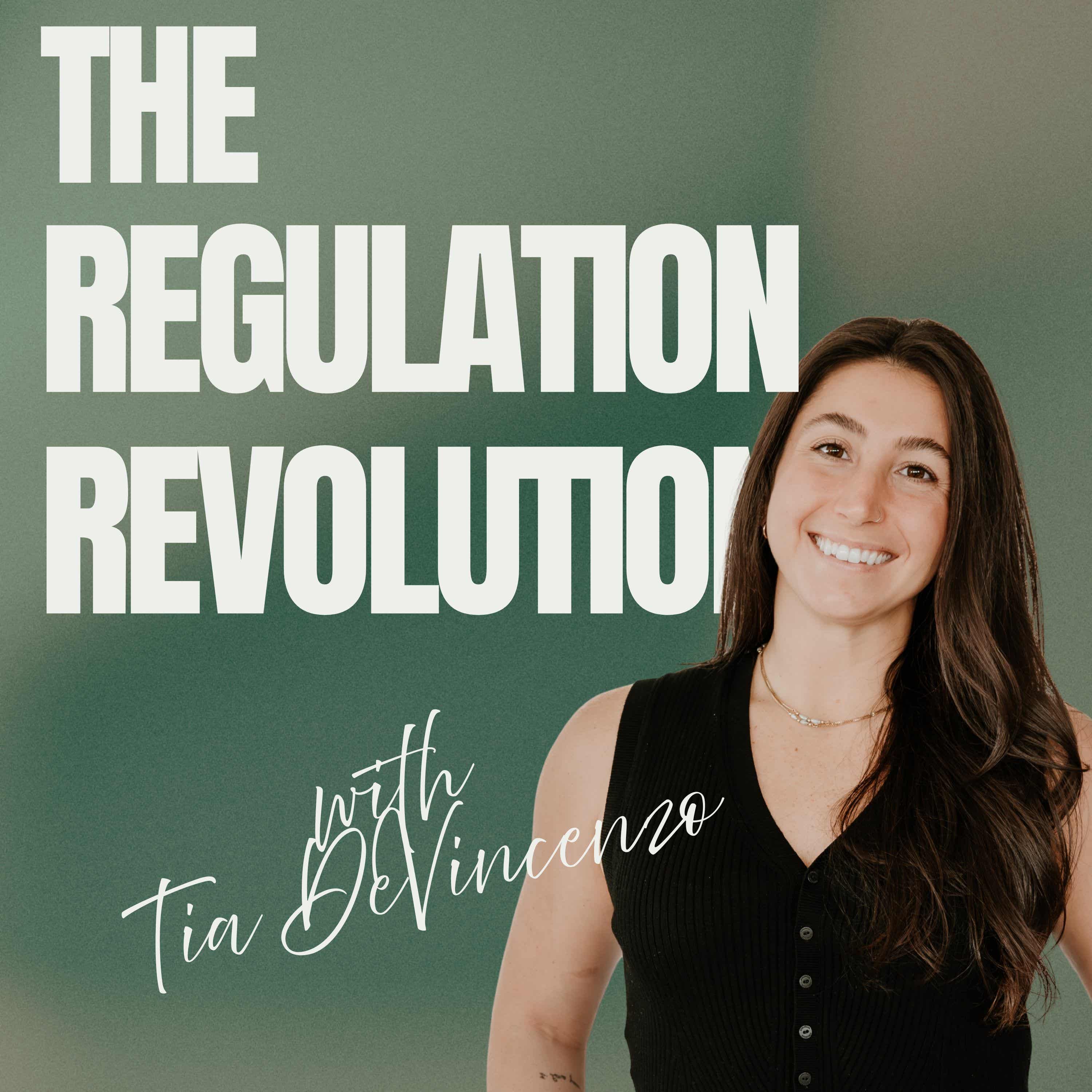
PODCAST · health
The Regulation Revolution
by Tia DeVincenzo - Nervous System Regulation Expert
A place to regulate your nervous from one human to another. tiadevincenzo.substack.com
-
18
Stop Spiraling When Your Schedule is FULL
Last week I spent a good chunk of my time staring at my screen saying “what the f** am I supposed to do next??”My schedule was beyond packed. I work full time. I take on 1:1 clients (come work with me! Your life will transform.) I plan epic retreats. I teach classes outside of my full-time job in the mornings and evenings. I speak in other people’s co-horts and on stages. I’m building a women’s collaborative network in Boston. And, I think the most important component, I really want to be an attentive wife.After I taught a yoga class on Wednesday night I was WIRED laying in bed. Luckily my husband let me brain dump and just speak my truth. By Thursday morning, I had a plan of action. I moved some meetings around. I cancelled some things on myself, one of which was filming this podcast twice a week and making it weekly instead. I gave myself grace and didn’t let myself fall into the pit of despair and paralysis that it will never grow because I am not grinding into the ground.When I started The Regulation Revolution, I did it because I realized I wasn’t the only one who has a full life that sometimes can get ahead of themselves. It is hard to not spiral into your own mind. And your body will respond in ways that drag you down if you don’t intervene.I know in my heart of hearts that it is hard out there, but with the right tips and tricks - life can be pretty fucking epic. What REALLY Is Overwhelm??Overwhelm isn’t just having too much to do. It’s what happens when your nervous system hits capacity and your brain can no longer triage effectively. The result is that frozen, screen-staring, what the f** am I supposed to do next feeling. This is a physiological state, not a personal failure. So shut up and compliment yourself right now. When your system is overloaded, your prefrontal cortex - the part responsible for planning and decision-making - goes offline. You’re not being weak or disorganized. You’re dysregulated and good news is, we can fix that. The Overwhelm Reality CheckYour Nervous System Cannot Plan From Threat Mode Research in cognitive neuroscience consistently shows that chronic stress impairs executive function - the brain’s ability to prioritize, sequence, and make decisions. When your cortisol is elevated and your system is in a threat response, you are biologically less capable of organizing your workload.What does that mean??? You are not failing at time management, your brain is essentially short circuiting.That distinction matters, because the solution isn’t to push harder. It’s to bring yourself down to baseline regulation first, then plan.And when you understand the pattern of this coming up, you will be able to catch yourself from the spiral and recalculate.So here is exactly what I did to stop myself from the spiral of ~despair~.Step 1: Reframe to the Big PictureI stopped looking at the week as a massive pile of tasks and asked myself one question: what is my actual goal by the end of this week? Not everything on the list NEEDED to be completed. I just needed one north star. Step 2: Move the Things That Don’t Serve the Goal I looked at what was on my calendar that week and asked whether it was moving me toward that goal or further away from it. A few things were not. I didn’t delete them and moved them to the following week. Out of the week, not out of my life. That difference matters for your nervous system because it likes structure and plans. This can be confused with procrastination, but it is not. It is delegating time for a project where you can focus on itStep 3: Ask Yourself What You’re Making Harder I kept asking myself: I can do hard things but what am I making harder for myself? This is recognizing your ego. Was I really going to let a podcast about nervous system regulation wreck me?! No. Not around here partner. We practice what we preach. This will bring your prefrontal cortex back online and interrupt the threat loop.Step 4: Move Your Body for 20 Minutes Not a full workout. Twenty minutes. Some days it looks like 10 Min. That’s it!!! Research from Princeton University found that exercise actually reorganizes the brain to reduce stress reactivity, meaning movement doesn’t just feel good in the moment, it trains your nervous system to respond to threat differently over time. Twenty minutes or ten minutes isn’t nothing. Sometimes regulation looks like slowing down and breathing. But sometimes, especially when you’re anxious and activated, you need to shake it out. Movement metabolizes the stress hormones your body has been producing. It is not optional when you’re this activated. It is the medicine.Step 5: Give Yourself Grace OUT LOUD I forced myself to say one thing I was proud of accomplishing that day. I said one thing I was grateful for. And then I let the rest go.Not forever. Just for that day.This is not toxic positivity. This is a deliberate pattern interrupt that signals to your nervous system that you are safe, that something went right today, and that you do not need to stay in alert mode tonight.The Permission Slip Nobody Gives You Delegation isn’t failure. Cancelling something isn’t giving up. Moving a task to next week isn’t falling behind.It is how you protect your capacity so you can show up for the things that actually matter. Like your friends, the work your love, your kids, your family. Overwhelm lives in the gap between what your schedule demands and what your nervous system can hold. The goal isn’t to do everything. The goal is to stay regulated while doing the important things well.That’s it. That’s the whole point.Lots of love, Tia I LOVE doing one to one work and if this interests you, shoot me a message! Let’s have a genuine conversation about things you may be struggling with and the life you want to live. This is a public episode. If you would like to discuss this with other subscribers or get access to bonus episodes, visit tiadevincenzo.substack.com
-
17
Someone Else's Wins Triggered Me.
I’m going to be very real here. I recently caught myself judging someone for talking about their accomplishments.I was sitting at lunch and the person I was with was going on and on about all these amazing things, and I was getting more and more agitated with what she was saying. At one point I looked over to my husband and with the, “alright, I get it” look. And his response checked me back into reality.I was being unkind.I took a step back and asked myself: was I actually annoyed with her? Was I jealous? Or was I overstimulated and just not in a very open state?It was the latter.I am not here to tell you to never be annoyed with someone if they are genuinely being overbearing, but I wasn’t being kind, and I had to ask myself: is this a me problem?Truthfully, it was. It was totally a me problem.Because this person was simply talking about something she was proud of. And I wasn’t doing the same. I was having a low day because my tasks felt unfinished, I had no new news to share, I didn’t get much sleep and so I didn’t want to celebrate anyone because I couldn’t celebrate myself.But here’s the thing: I can still be proud of myself even when nothing monumental happened that week.I was being triggered socially and that shit is not cool.What Is Social Triggering?Social triggering is when another person’s words, energy, or behavior activate your nervous system’s threat response, even when there’s NO actual threat. It doesn’t always look like a blowup.Sometimes it looks like quiet irritation, a tight jaw, or a voice in your head saying I get it already.This type of dysregulation is common and not often acknowledged as a nervous system problem. It’s usually a “YOU” problem instead of a “ME” problems.Why It MattersResearch in interpersonal neurobiology shows that our nervous systems are constantly co-regulating. This means it is picking up on the emotional states of the people around us.Think about how you meet an anxious human and then their dog is also always somehow anxious. We pick up on the energy around us.But when someone is in a high-energy, expansive state and we’re depleted, that gap can register as a threat. Not because they’re doing anything wrong, but because our system may already be running on low and not have the capacity to work with theirs.This isn’t a character flaw in us on how we exist, it’s just information we can use to understand ourselves and how we exist in society.While a large part of nervous system regulation is getting yourself out of fight or flight, another huge part is learning to exist with other people, even when they aren’t your people, even when they’re having a bigger day than you.This is how we stop the breakdown of relationships, networking opportunities, and simply existing with others.Now when you check yourself in this judgmental state, this is how we shift back into regulation.Step 1: Remove Yourself - Even for 60 SecondsI politely excused myself, said I needed the bathroom, stepped away, and took a couple of deep breaths. That’s it. You don’t need a 20-minute reset. You need a pause to recalibrate and ask yourself a few questions.Step 2: Run the Reality CheckI came back to these four questions:* Is she insulting me? No.* Am I being reactive right now? Yes.* Do I need to contribute, or can I allow her to just speak? I can allow.* Do I have enough energy for that? Yes.Step 3: Release the Expectation That You Need to PerformSometimes when we’re in conversations, we think we need to match someone’s energy, answer every question, contribute something meaningful.You don’t.Most of the time, people just want to be heard. Letting someone else take up space is not a loss for you, we just need to differentiate between “am I needed as a contributor?” or “can I just be their cheerleader?”Step 4: Come Back With Curiosity Instead of JudgmentWhen I returned to the table, I shifted from why is she like this to she’s really excited about her life right now. This reframe changed how the rest of the lunch felt for me, and I am sure for her.Remember - co-regulating.The Regulation Moments Nobody Talks AboutThis is what gets swept under the rug in conversations about regulation: it doesn’t always look like screaming or a full body breakdown. Sometimes it looks like quiet resentment over lunch. A forced smile. An internal eye roll and then self judgment.These small moments are where regulation actually lives, and where it actually matters.When you take the reaction out of it, you allow yourself to experience. The conversation and the person fully.And yourself, more honestly.That’s the work.Lots of love,TiaPS. If this feels like a pattern in your life, this is the work I do with people and organizations to re-establish stability and growth in your life. Please reach out and let’s talk!Email: [email protected]: intuitivelytia.comFrequently Asked Questions Why do I get irritated when people talk about their accomplishments? Irritation around others' success is often a nervous system response, not a character flaw. When your system is depleted, someone else's high energy can register as an unconscious threat — especially if it contrasts with how you're feeling about your own life in that moment.What does nervous system dysregulation look like in social situations? It doesn't always look dramatic. Social dysregulation can show up as quiet irritation, impatience, wanting to leave, or an inability to be genuinely happy for someone else. These are all signals worth paying attention to.How do I regulate my nervous system around difficult people? Start with a physical pause — even 60 seconds alone to breathe. Then run a reality check: is this person actually a threat, or is my system just overwhelmed? From there, release the pressure to perform or match their energy. Presence, not contribution, is often all that's needed. This is a public episode. If you would like to discuss this with other subscribers or get access to bonus episodes, visit tiadevincenzo.substack.com
-
16
Are You Living for Others or Yourself?
I was listening to the Joe Rogan podcast and Dr. Gad Saad was the guest. Dr. Saad is an evolutionary psychologist who coined the term, suicidal empathy. And to be honest, it is definitely a controversial stand - but it’s also something I agree with.Dr. Saad describes suicidal empathy as a dangerous, hyperactive form of altruism where emotional compassion for ostensibly marginalized groups overrides rational decision-making, common sense, and self-preservation.Dr. Saad described a case in Norway where a man was sexually assaulted by an immigrant. The perpetrator served his sentence and was set to be deported. The victim fell into a deep depression — not because of the crime itself, but because he felt responsible for the consequences. He was terrified of being judged. Of being seen as the problem. Of what people would think.Once I heard his terminology and multiple stories, it made me realize that this isn’t just applicable when it comes to marginalized people.This can be seen everywhere.What Is Suicidal Empathy?Suicidal empathy is when your fear of social judgment, or your empathy for how others might feel, overrides your own needs, truth, and wellbeing. It’s not just people-pleasing. It’s self-erasure in service of social acceptance.We have gone so far in the direction of “I can’t say or laugh at that because it might hurt someone’s feelings” that people aren’t actually saying anything anymore. They’re not living. They’re performing.I see this constantly in my work - people making decisions in their careers, their relationships, where they go to school - not because it’s what they want, but because they’re terrified of what everyone else will think.Neuroscience note: Research on social conformity shows the brain’s threat-detection system (the amygdala) responds to social rejection in the same way it responds to physical danger. This means fear of judgment isn’t weakness, it’s a wiring that has been built overtime.Why It MattersThis pattern doesn’t just show up one day. It develops over time and becomes so ingrained you stop noticing it. You’re not making free choices anymore, or thinking freely, you’re operating inside an invisible cage built from other people’s opinions.People are quite literally stopping themselves from enjoying their lives because they are afraid of offending someone who isn’t even in the room.In RelationshipsWhen I started dating my now-husband while living in London, he was NOT your proper, put-together Brit. He isn’t even British. He was a drainlayer. I lived with some posh roommates and when he showed up after work in grungy clothes my roommates were like, “ew, why are you with him?”Completely ignoring the fact that he was coming from a LONG day at work to simply spend time with me.He didn’t fit the mold. And I LOVED that about him.The guy who did fit the mold with fancy clothes and taking me out to expensive dinners, was so boring I actually dreaded seeing a text from him. No real connection. If I had listened to everyone’s commentary on who I should be dating, I wouldn’t be with the man who makes me coffee every morning and isn’t afraid of hard work.In Your Social LifeI recently went to see Shane Gillis, a comedian who is absolutely not politically correct. One of my yoga students was there and saw me as we were entering the stadium. When she came to class a couple weeks later, she told me, “I almost felt bad laughing.”I asked her: did you think the jokes were funny? “Yeah, hilarious.” Do you think he’s a bad person? “No, absolutely not.” Then why not laugh at something that made you laugh?For context, Gillis also runs a coffee shop for people with down syndrome and actively donates to Special Olympics and veteran organizations.Comedians are meant to walk the line. That’s literally their job. The people telling you to stop laughing aren’t necessarily doing more good in the world. They’re just louder and making you feel guilty for enjoying yourself.Reclaiming Your Own DecisionsThe most liberating thing I ever internalized was this: no one gives a fuck.I know that can sound depressing. But unless you’re in a real downward spiral and the people who love you are genuinely worried, most people are not spending their days consumed by your choices.They’re thinking about their own lives and what to do with them. I say this with love and radical acceptance.So when you’re facing a decision and feel the weight of everyone’s opinions pressing in, here’s what I work through with clients:* Check the source.When someone offers an opinion, ask yourself: is this coming from love or from judgment?“I would never do it that way” = judgment.“Do you think this is the best way to go about things?” = love.One is information. The other is noise.* Expand the timeline.If you make this decision, how will it impact your life tangibly?Can you picture yourself in that future?Is it a future you’d actually want to exist in?We can’t predict the future, but there are absolutely indicators for if we could see ourselves there or not in the distant future.* Check your body, not just your brain.Is this a full-body yes? I know, I KNOW this is a bit corny, but it is something I work on with clients and myself somatically. Sometimes we are overjoyed with the YES and sometimes….You are doing it because it’s the “right” thing to do. Learning how to discern this is life changing. Your nervous system knows before your mind does.* Name whose voice it is.When the thought “what will people think?” shows up, ask yourself whose voice is that? Is it yours, or is it an old fear you inherited from someone else?* Decide from your future self.The version of you who already made the leap isn’t afraid of the judgment you’re currently dreading. Make the decision from that place.Suicidal empathy is not a character flaw. It’s wiring. And wiring can change. The work I do with clients isn’t just about mindset — it’s somatic. It’s nervous system regulation. Teaching people to feel the difference between a fear-based choice and a values-based one — in their body, not just their head.Ready to Stop Living in Someone Else’s Story?I work with individuals and organizations on nervous system regulation, fear-based patterns, and embodied leadership. If this resonated, I’d love to connect - whether through 1:1 coaching, a workshop, or a speaking engagement - I love it all.Frequently Asked QuestionsWhat is suicidal empathy and how does it affect decision making? Suicidal empathy is a term coined by evolutionary psychologist Dr. Gad Saad to describe the pattern of suppressing your own needs, trauma, or truth to avoid social backlash. It affects decision making by putting you into a fear-based state where choices are driven by others' perceptions rather than your own values.How does fear of judgment affect the nervous system? Chronic fear of judgment activates the nervous system's threat response, keeping you in a low-grade state of stress. Over time this becomes a default mode — making it hard to distinguish between genuine danger and social disapproval. It's not weakness. It's a survival pattern your brain developed to keep you safe.How do I stop making decisions based on what others think? Start by identifying whether feedback is coming from love or judgment, expand your decision-making timeline, and check in with your body's response — not just your mind. Working on nervous system regulation at a somatic level — not just cognitively — is what actually rewires fear-based patterns. This is a public episode. If you would like to discuss this with other subscribers or get access to bonus episodes, visit tiadevincenzo.substack.com
-
15
How to Find Confidence in the Unknown
There’s been this ongoing conversation lately between me and one of my co-workers. She is a bit younger than me and is going through that mid-20’s (or maybe always?) low-grade existential crisis.The kind where you stare at your coffee for a little too long and ask yourself:How do I know I’m actually moving forward?How do I feel confident in the decisions I’m making when I can’t fully see where they’re leading me?AM I DOING ANYTHING RIGHT?!Although this is deeply personal, I do believe so many people are silently carrying similar thoughts right now.We want certainty before we take “the” leap.We want proof before we trust ourselves.We want the five-step plan, the guaranteed outcome, the perfectly mapped timeline.But life rarely works like that. SORRY. One of the biggest conversations I have with my clients is around letting go of rigid timelines. Because somewhere along the way, many of us learned to measure our worth by how quickly things happen rather than who we are being while we wait for the thing.If the relationship hasn’t arrived yet.If the career shift feels messy.If healing is taking longer than expected.We automatically assume something is wrong with us.But what if the process itself is the point?One of my favorite Abraham Hicks quotes is:“This is happening for you, not to you.”That quote has carried me through difficult seasons because it reminds me that even the experiences I wouldn’t choose are still shaping me into someone wiser, stronger, and more aware. They have forced me to live with more intention, as well as to never take anything for granted. Most of the time growth isn’t glamorous.Sometimes it looks like realizing what you never want to tolerate again and shifting around that. What the Nervous System Teaches Us About ConfidenceFrom a nervous system perspective, our brains are constantly gathering evidence to keep us safe.You touch a hot stove once, your brain remembers:Don’t do that again.The physical connection there is quite simple. It’s why we allow children to get hurt ~safely~. Our words don’t always land, but that experience will. Emotional experiences work similarly.If you’ve experienced disappointment, rejection, instability, or failure, your nervous system may start associating uncertainty with danger. And all your brain wants to do is keep you safe. Which means even positive change can feel threatening to the body.That’s why so many people stay stuck in situations that no longer align with them.Not because they’re lazy.Not because they’re incapable.But because the unknown feels unsafe and your brain would rather keep you tucked away in a space it knows how to handle.Think of it as the devil you know. And when your day-to-day life feels unsatisfying or unclear, it becomes incredibly easy to spiral into the belief that nothing is working. You don’t know what you’re doing. Or everything you are doing is wrong. There are ways to shift our mind around disruption. Your Conscious Mind vs. Your Subconscious BeliefsYour conscious mind holds everything you’ve learned:The expectations.The conditioning.The stories you absorbed from family, culture, school, relationships, and social media. The “shoulds” I call them. It is your programming. But your subconscious mind holds your deeper beliefs about what you think you deserve.And sometimes those two things are completely disconnected.You can consciously want success, love, peace, or confidence while subconsciously believing those things aren’t available to you.That internal disconnect creates resistance, which causes stress, which causes stagnation and no moving forward.Because, remember, your brain struggles to move toward something it doesn’t perceive as safe or possible.Which is why self-talk matters so much more than people realize. And I’m not just talking about affirmations in the mirror. Why Celebrating Yourself MattersOne of my clients’ homework assignments this week was incredibly simple, yet some may find very hard to do.At the end of the night, tell yourself:“Well done., _____”And actually believe it.How you believe it is you build evidence. You find three things in the day that you are truly proud of accomplishing. It’s massively important that you give yourself little reminders throughout your life (daily) that you are moving forward and doing the best you can to survive. Not after you hit the massive milestone.Not once your life looks perfect.Not when everyone else validates you first.Now.Because confidence is not built through punishment.It’s built through evidence of safety, consistency, and self-trust.The nervous system responds to repetition. The more often you acknowledge yourself with compassion instead of criticism, the safer it becomes to keep growing.And the less resistance you have to “failing forward” or what I like to call - trying. How to Build Confidence When the Future Feels Unclear1. Stop treating uncertainty like failureNot knowing what comes next does not mean you are doing life wrong.2. Look for evidence of growth, not perfectionEvery experience teaches your nervous system something. Even the painful ones.3. Pay attention to your internal dialogueYour subconscious is always listening to the way you speak to yourself.4. Create safety in the present momentConfidence is not always loud. Sometimes it looks like taking the next small step anyway.5. Celebrate yourself dailyYou are far more likely to trust yourself when you stop withholding your own approval.Why This MattersResearch on neuroplasticity shows that repeated thoughts and behaviors shape neural pathways over time. The way you speak to yourself quite literally impacts how your brain interprets safety, capability, and possibility.Your thoughts become patterns.Patterns become beliefs.Beliefs become behaviors.Which means confidence is not something you magically wake up with one day.It’s something you practice.Maybe confidence isn’t about knowing exactly where you’re going.Maybe it’s about believing you can handle yourself no matter what happens next.This is just another muscle to build, but an important one at that. This is also the stuff I love working with my clients on - so if any of this resonated with you, please reach out and I would love to hear your story! Lots of love, Tia You’d be my bestie if you shared this with people.It’s be even cooler if you subscribed. This is a public episode. If you would like to discuss this with other subscribers or get access to bonus episodes, visit tiadevincenzo.substack.com
-
14
When Life Swings from Calm to Chaos
This past weekend was the deep exhale I needed for a while.Friday night run, steak dinner, slow conversations with my husband. Saturday morning looking at multi-families, getting our hands messy in a pottery class I had been dying to try for a while. Sunday was welcomed with another run in our favorite town and coffee from our new cute spots. We finished the weekend with lunch with my mom, a nap on the couch and meal prep finished and in bed by 9 PM.Nothing extravagant, just grounded, connected, and easy after a wild few weeks on my end. When my husband put his head down on Sunday night he said “Wow, I feel rejuvenated.”And then Monday hit.6 AM I was walking out the door and when I hopped in my car, something felt OFF.Flat tire. We had hit a glass bottle on Saturday less than a mile from my house and didn’t realize it shredded my tire until I left for work on Monday morning.Within an hour, the day truly unraveled. I took my husband’s car for the day and then I got a call saying I needed to come home because he broke the jack trying to fix mine.I had to turn around, call out of work, and rearrange my entire day.And the wild part?Didn’t even panic for a second.What Nervous System Regulation Actually Looks Like in Real LifeWhen I was growing up, I had a tendency to slightly overreact. We all do as you’re trying to navigate the world, learn about yourself and constantly figure out what the bigger picture of life is.My dad coined this term when he saw my tendency to implode.“Our number 1 rule is never panic.”I followed along, but I didn’t always truly get it because when I had my dad backing me up, I didn’t need to panic. He handled everything.Then I got older and I was like fuck. How do I truly NOT panic in situations.Nervous system regulation isn’t about creating a life where nothing goes wrong. It’s about building a body that can hold steady when things do.Because stress isn’t the problem, your capacity to process it is.Years ago, a morning like that would’ve sent me spiraling. It would have created urgent, frantic energy of “everything is falling apart and I need to fix it NOW.”But when you’ve spent time actually learning your body… supporting it… creating intentional calm…You respond differently. Not perfectly. But differently.The Shift: From Reacting to RespondingHere’s how I moved through that Monday without tipping into chaos:1. I got honest about where I was actually neededThere was a moment where I tried to make everything work. All the meetings. All the commitments. All my jobs AND fix my tire.But I paused and asked:Where am I essential today and where am I not?OOF. This is where ego comes in. I am not actually NEEDED everywhere all the time. There are many aspects of my life that will function just fine without me there for ONE day. And I know yours will too. Fixing the tire and supporting my home life mattered more than forcing productivity and showing up for my students that day.2. I stopped treating everything like it was urgentWe’ve been conditioned to believe everything is time-sensitive, especially with social media. Well… it’s not.A few things needed attention, yes. But most of it? Could wait until today or even next week. So I communicated with my co-workers and clients, I told people what was going on.And you know what I got back?“Don’t worry about it.”That alone is a reminder:Most of the pressure you feel… isn’t actually coming from other people, it’s coming from your self importance.3. I respected my human capacityThis one is big.There’s this unspoken expectation that we should be able to handle everything, all at once, without dropping a ball.It’s not true. And instead of overriding your body literally telling you to chill out, I let myself acknowledge: This is what today looks like. And that’s enough.You can do a lot in 24 hours.But you don’t have to do everything.According to research from Cleveland Clinic, chronic stress keeps your body in a prolonged fight-or-flight state, impacting everything from digestion to heart health to emotional regulation to systemic inflammation.This is why nervous system work isn’t a luxury.It’s foundational.Because when your system is constantly activated, even small disruptions feel like emergencies but when you build regulation intentionally - through rest, movement, somatic connection, and self-awareness - you create space between the trigger and your response.And in that space you get your power back. Life is always going to throw a spanner in the mix.Plans will break. Schedules will shift. Things won’t go how you mapped them out.The goal isn’t to control every instance in your life, the goal is to become someone who can move through it without losing yourself completely.Because that’s real stability and how you build confidence in moving forward. If reading the beginning of this gave you anxiety, I have recently opened up 1:1 work. Let’s connect and I would love to hear your story. Lots of love, Tia I understand we don’t need more emails, but if you share this I will love you forever.This one will make us become best friends. This is a public episode. If you would like to discuss this with other subscribers or get access to bonus episodes, visit tiadevincenzo.substack.com
-
13
Is Trauma Stored in the Body or Brain?
This morning I watched the internet do what it does best. Pick a side and go to war.A doctor posted that trauma isn’t “stored” in the body, only in the brain.Cue the chaos. (which she was looking for by the way)On one side, people yelling “finally, some science.”On the other, somatic practitioners feeling like their life’s work just got dragged through the mud. Honestly I sat there thinking… yeah, I see both of you. There’s a lot of noise out there in the wellness space and a lot of black and white in a part of the world that is gray.There are people selling surface-level solutions, snake oil, and calling it healing.And there are also people dismissing lived, physical experiences because they don’t fit neatly into a clinical box of what they think is “the way.”Both can exist at the same time.The Real Problem: We Want Certainty Where There Isn’t AnyWe have overcomplicated everything and turned healing into a checklist of “optimization” routines.Do this.Not that.This is “right.”That is “wrong.” And if you don’t listen to me, you’re going to get stuck in the same loop forever and just miserable until the end of your days. Also pay me $15,000 for a Canva template “Guidebook” please and thank you. We’ve taken nuanced, evolving practices and tried to crown them as the single holy grail to health and how dare you disagree if it didn’t work for you. But your body doesn’t work like that.There is no universal formula for nervous system regulation.What works for me might do absolutely nothing for you. And the thing that saved you, could inhibit me from healing.The second we start speaking in absolutes, we lose the plot.Terrifying? Maybe.But if you zoom out… it’s actually freeing. Because there are an infinite number of possibilities on how you could heal your body and mind. If one thing doesn’t work, you’re not broken forever. It just means you haven’t found your thing yet.Our body is one big science experiment. We just have to keep playing. Brain vs Body: A False DivideThe idea that trauma lives only in the brain ignores something pretty obvious:Your body is always in the conversation.Your brain perceives a threat.Your body responds instantly.Muscles tighten.Heart rate spikes.Breath shortens.That’s not theoretical, that’s happening in real time and we don’t even recognize it. Think about those prank videos where someone jumps out from behind a door.The reaction isn’t just mental. It’s explosive, physical and usually a yelp escapes out of someones mouth. Even though your brain will recognize quite quickly that it was a joke and not an actual threat - the body doesn’t always return to baseline just because the threat is gone.The tension and physical response may exist in our body for weeks, even months afterwards. Not because your body is “storing trauma” like a file cabinet but because it hasn’t been shown that it’s safe to let go yet.If you don’t know where to start with somatic understanding - check out this article. What Science Actually SupportsIn a 2023 interview, Dr. Robert Sapolsky spoke about stress as one of the most damaging long-term forces on the body.Not just the mind. The body.Sapolsky’s work focuses on glucocorticoids (stress hormones like cortisol) and how they impact the entire system.Stress hormones are essential for survival in the short term, but damaging when they stay elevated too long.Think of it this way - a little stress = good and a lot of stress = bad. This means:* Stress is not just a thought → it’s a chemical cascade* That cascade affects brain and body* And when it becomes chronic, it creates real physical consequencesSapolsky’s research consistently shows that prolonged stress exposure can:* Disrupt immune function* Alter cardiovascular health* Increase muscle tension and inflammation* Damage brain structures like the hippocampusSo no, this isn’t just a brain conversation.But he also makes another critical point:You won’t stick to a modality that you don’t like DOING. So if you hate meditation - you won’t do it every day. If you don’t like lifting weights in the Crossfit style - you won’t show up to class three times a week. Which means…Why “One Method” Healing Falls ApartWe want the one thing to be THE thing that heals us. The breathwork.The dance.The mindset shift.The protocol.But regulation doesn’t work like a light switch. It’s adaptive and personal to how our body responds. Every new experience may require a different response.And yeah… that can feel exhausting.I finally figured myself out and now I have to do it again?I get that. I have been there SO many times before but this is the part of life we need to build resilience around. There was a time when every setback felt personal.Injuries. Breakups. Stress. It all felt like proof something was wrong with me. I was like WHAT could I possibly be doing so poorly that karma is kicking me down this much. When I was so beaten down I decided I needed to shift my mentality so I made a promise to myself. Every doctor’s appointment became a lesson. Every hard moment became data for how I could improve. Not “why is this happening to me?”But what is this teaching me about how I work?My dad used to say after heartbreak:“The next one will be even better because now you know what you don’t want.”I would come to him crying and be like “this is not helpful” BUT the man had a point. Because now it’s not failure.It’s refinement on my processes.Both Sides Are Missing ThisWhen I see the internet go wild, I sometimes imagine myself in the center of it as a mediator. If I could sit both sides down - the doctors and the somatic practitioners - I’d ask two simple questions:To the skeptics:Have you ever danced at a wedding and felt joy ripple through your entire body?To the practitioners:Have you ever had a conversation so deep it literally shifted how you think?We get so black and white that we forget both ways can be so easily accessible to see their point of view. Sometimes you move the body to reach the mind.Sometimes you work with the mind to release the body.It’s not either/or.It’s both.Messy. Nuanced. Human.How to Start Regulating Your Nervous SystemNot perfectly, just honestly:1. Get curious, not rigidNotice what actually shifts how you feel - not what you think should.2. Track your body’s responsesEnergy, tension, breath, sleep - your body is constantly giving feedback.3. Experiment without attachmentTry things. Keep what works. Drop what doesn’t.4. Build your own toolkitMovement, stillness, conversation, rest—there’s no single path.The second you believe there’s only one “right” way to heal… You start overriding your own signals.And that’s the exact opposite of regulation.We need less gatekeeping and more curiosity.Less “this is the way” and more “let’s figure out what works for you.”Because your body is a system to understand.I’m opening a limited number of 1:1 sessions where we explore this together your patterns, your responses, your toolkit.Just a conversation to see if it feels aligned and also a moment to connect human to human. There is hope for you, pinky swear. Lots of love, Tia I understand if you don’t want anymore emails but spread the word on how to feel good! This is a public episode. If you would like to discuss this with other subscribers or get access to bonus episodes, visit tiadevincenzo.substack.com
-
12
You Can't Do It All: The Four Burners Theory
I was out with my sister and one of our chosen sisters. The one where we were all raised together by single moms and know every detail of each others lives. This was the kind of dinner where the food becomes irrelevant because the conversation takes over. We hadn’t seen each other since CHRISTMAS because ya know, life. Non sister sister has been going through some health things and my husband asked “Have you heard of the four burner theory?” and I haven’t stopped thinking about our conversation that followed since.So, what is the Four Burners Theory?The Four Burners Theory compares your life to a stove with four burners:* Career* Friends/Family* Relationship* HealthThe idea is simple but uncomfortable: You can’t run all four burners on high at the same time. We just don’t have the capacity for it as a human. If you try, something will eventually blow, and in human form the thing that blows is you. Sitting there at dinner, I looked around the table.My friend is an epic mom to two littles ones and works full time. My sister is building her own life with an incredibly successful career. I’m running a business, teaching, speaking, creating, trying. And we were all, in our own ways, trying to keep every burner on high. Grateful for our lives but looking for support in one way or another on how to handle the juggling act.Be everything. Show up everywhere. Do it all well. And don’t look tired. And if you’ve ever felt that guilt in the back, the one that whispers “you should be able to handle this” or “why aren’t you grateful for this grind?” you know exactly what I’m talking about.But here’s the truth that landed in my body, not just my brain: It’s not a time management problem. It’s an energy problem.Your nervous system isn’t designed for constant, high-output across every area of your life.When you stretch yourself across too many priorities, your system shifts into stress states. You SORE into fight or flight and eventually a dormant state where it all shuts down.Research on cognitive load shows that the brain performs best when focused on fewer high-priority domains rather than juggling everything at once.So no, you are NOT failing at balance.You’re operating beyond what your system can sustainably hold for long periods of time.How do we work with the four burners?Instead of asking, “How do I do it all?”Start asking, “What actually matters right now?”1. Identify Your Active BurnersWhich 1–2 areas of your life need your full attention in this season?If you’re a mom, I would say your family and your romantic relationship. We need to remember why the kids are there in the first place and your relationship impacts them. The reality is, sometimes you have to choose which one of the burners you are going to suck at - even just for a moment.2. Turn Down the Others (Without Shame)Not forever. Just for now. I am in the season where my rest and restore is not as a long as I would like it to be, and I’m okay with that because I KNOW when I need to input moments of intentional rest. My health is good, could be better, but we are cruising. 3. Communicate Your CapacityLet people in your life know what season you’re in.You do not need to fill your weekends or your day of with social interactions. If someone asks you to go to coffee and your immediate reaction is “Ugh, that’s my one morning off to myself” then I would recommend you schedule it out a month or two. Just say it - MOST people will empathize with you. Disclaimer: you can’t cancel everything though. Reschedule with the intention of showing up in a better mental state. Remember, we can’t become so selfish with our time that we stop showing up for others. 4. Support Your Nervous SystemBuild in regulation practices so your energy can actually sustain what you’re prioritizing.There’s no gold medal for running yourself into the ground trying to prove you can “handle it all.”There is, however, a quiet kind of power in choosing intentionally.In saying:This matters most right now and that’s enough.We are only human. Give yourself some grace and choose which burner you need to turn WAY down. We aren’t meant to go 100% all the time. If you are having trouble with deciding where in your life you need to slow down, this is exactly what I do with my clients. I help them audit their lifestyle and implement ways to start living FULLY again. Your life is meant to be loved. Lots of love, Tia If you don’t subscribe, that’s cool but I will love you forever if you share this! This is a public episode. If you would like to discuss this with other subscribers or get access to bonus episodes, visit tiadevincenzo.substack.com
-
11
Why Nervous System Regulation Matters at Work
I spent last week at a conference full of HR professionals. “Why?” you’re probably asking - well because I am trying my best to get my name out there to help people.And honestly? I was impressed.The people were kind. Thoughtful. You could feel that they genuinely care about employees and the environments they’re shaping. Session after session circled the same themes: connection, communication, conflict resolution. How to speak so people actually listen. How to rebuild trust when it’s broken. How to navigate difficult dynamics without blowing everything up.On paper, it was everything we want more of in the workplace.But I kept having the same thought on repeat in the back of my mind:None of this works if your nervous system is fried.The Missing Piece in Workplace CommunicationI started talking to people between sessions. And almost every single person hit me with some version of: “I know all of this… I’m just already at capacity.”That right there is the gap.We’re teaching people what to say before their body even feels safe enough to say it.Because connection doesn’t start with words. It starts with regulation.What Happens When You’re Stuck in Stress ModeWhen your system is under constant stress, your emotional regulation starts to drop offline.Your amygdala, your brain’s threat detector, takes over. It’s fast, reactive, and built to keep you safe, not to help you have thoughtful, nuanced conversations.That’s where your prefrontal cortex, the part responsible for logic, empathy, and decision-making, gets overridden.So even if you know how you want to show up… you can’t exactly access it.And this doesn’t always look explosive. Flipping desks like you see in The Wolf Of Wall Street type rage. Sometimes it looks like:* Shutting down in meetings* Avoiding conversations you know you need to have* Replaying interactions in your head but never actually addressing them (hello 1 am nightmares)* Pulling back instead of leaning in to networking eventsEmotional isolation is still a stress response.Why “Just Speak Up” Doesn’t WorkOne of the biggest pieces of advice I kept hearing was:“Speak up even if you feel annoying.” “Keep asking the hard questions.”And I get the intention. I really do.But let’s be honest for a second - Have you ever had to say something that you knew might land wrong? Whether it was in a personal relationship or professional. Ask a question that could trigger someone?Bring something up without having the perfect words?Your body doesn’t interpret that as a casual moment. It reads it as risk.And when your system already feels overwhelmed, that moment can feel like too much.So instead of speaking, you freeze. Or avoid. Or say nothing and then beat yourself up later because you missed an opportunity.That’s not a communication problem.That’s a nervous system problem.How to Support Your Nervous System Before Hard ConversationsThis is where we shift out of frustration and into something more useful.Because you’re not stuck, you just need a different entry point.1. Create clarity before the conversationWrite down what you need to say. Then write it again. And again. And then in a different way than you have already explained. Push yourself to find multiple ways to express the same thing until it actually feels clear in your body, not just in your head. Clarity reduces perceived threat. Our brains LOVE to be able to predict. 2. Close the “power distance” gapThere’s a concept called the power distance gap. Basically, the idea that someone’s title makes them feel untouchable.But the truth is, they’re human too. They miscommunicate. They get things wrong - even iff they don’t want to admit it. But no one is perfect and you NEED to remind yourself of that. This isn’t about losing respect, it’s about removing intimidation so you can show up honestly. 3. Regulate before you communicateBefore the conversation, take a minute. Not to rehearse or spiral over the million different possible directions the conversation could go. Just to settle your system.That might look like:* Slowing your breathing* Taking a short walk* Physically shaking out tension* Letting your shoulders drop for the first time all dayYou don’t need to be perfectly calm. You just need to not be in survival mode to understand the conversation that is being held.You can’t build real connection from a dysregulated state.You can’t access empathy, curiosity, or clear communication when your body is focused on protection.This isn’t a mindset issue. It’s physiology and science. And once you start working with your body instead of against it, everything about how you show up begins to shift.We keep telling people to communicate better without giving them the tools to feel safe enough to do it.This is where frustration, burnout, and silence start to build.When you support the nervous system first, communication stops feeling like a performance and starts becoming something real.So the next time you catch yourself holding back, avoiding, or overthinking what you want to say…Ask yourself this:Is it that I don’t know how to speak… or is my body not ready to be heard?I’ll love you forever if you subscribe. And I get it - we are over emails! Sharing helps me out too. This is a public episode. If you would like to discuss this with other subscribers or get access to bonus episodes, visit tiadevincenzo.substack.com
-
10
Burnout Isn’t Inevitable But It IS Predictable
Yesterday, I had a very honest conversation with an entrepreneur who was deep in it. The kind of exhaustion you don’t fix with a nap or a day off your phone.She told me she needed to step away for a day just to feel like herself again.And then she asked me, straight up:“Can we really prevent burnout? Or is it inevitable?”I didn’t answer her right away because I’ve been there too. I’m actually in a season right now that would chew someone up if they didn’t know how to hold themselves through it. It’s giving me a run for my money…. but I promise. This isn’t a doom-and-gloom story. It’s a reality check.Because most people don’t burn out overnight.They slide into it… quietly… until one day everything feels heavy, getting out of bed makes them want to cry, and joy has slipped away.What Burnout Actually Is (And Why It Feels Inevitable)Burnout is a state of emotional, mental, and physical exhaustion caused by prolonged stress without adequate recovery.But here’s the part people don’t truly understand:Burnout isn’t just about how much you’re doing.It’s about how long your body stays in survival mode while doing it.There will always be seasons where life piles on. Deadlines stack up. Your kids have five national championships in a week. And then your refrigerator conveniently breaks. Unfortunately these weeks aren’t optional and no one is immune to them. But staying in a constant fight-or-flight response while navigating it?That’s where things start to break down.The Difference Between Burnout and Pushing YourselfWhile I deeply emphasized with her, I had to gently push back on something she said.She told me entrepreneur burnout is worse than a typical 9–5 job.I get why it feels that way but burnout doesn’t care about your job title.I’ve seen corporate teams spiral over one email. One small mistake, and suddenly the entire room feels like it’s on fire. I’ve also seen people handling million-dollar mistakes (literally) whose nervous systems react the exact same way. And I’ve seen a mom have a mental breakdown over a chicken not being taken out of the freezer like asked. Your body doesn’t measure stress logically.It responds to perceived threat.Whether it’s:* Losing money* A packed calendar* Or an inbox that won’t quitYour system can interpret all of it as “not safe.” But we can train this. I promise. The Moment That Changes EverythingWhat actually stood out in that conversation wasn’t her exhaustion.It was what she did next.She took a few hours off to reset. Not because everything was handled. Not because the work disappeared. But because she recognized she was on the brink.And that right there? Is burnout prevention in real time. So while she was faltering morally if she was selling a lie, I reminded her she was embodying the work she promotes. How to Prevent Burnout (Without Avoiding Hard Work)Let’s be clear: burnout is preventable, but hard seasons are not.There will be weeks where you feel stretched thin in every single direction of your life, and then something happens that you never even knew existed. One thing we know for sure is life will test you. You don’t avoid burnout by eliminating those seasons.You prevent it by interrupting the pattern before your system crashes.Here’s what that actually looks like:1. Learn your early warning signsBurnout doesn’t start at rock bottom.It starts with subtle shifts:* Shorter patience* Brain fog* Feeling wired but exhausted* Snapping at things that normally wouldn’t touch youThis is where understanding your triggers and responses is INVALUABLE. You cannot prevent unless you are honest with yourself where your exhaustion shows. If you’re reading this and am like “Tia, what the actual f*** is a response???” I wrote about that here. 2. Stop waiting until you “deserve” restMost people only rest when they’ve hit a wall.That’s too late.Regulation has to happen before the breakdown. And if “deserving” is your hard part, let’s talk. I have a LOT of experience in this. 3. Build recovery into the plan, not as an afterthoughtI knew April and May were going to be big for me. I knew they were gonna take everything out of me. I knew I could handle it, but I also knew I would crave a reset. So I planned a weekend away with my husband ahead of time.Not as an escape from my reality (because she is a beaut) but as a strategy.4. Regulate your nervous system in real timeThis isn’t always meditation and silence.Sometimes it’s:* Stepping away for an hour* Moving your body* Changing your environment* Letting yourself reset before pushing againCheck out some of my nervous system hacks here!Why Nervous System Regulation Matters at WorkIf you’re operating in a constant stress response, your:* Decision-making drops* Emotional reactivity increases* Energy becomes inconsistentAnd over time, that’s what leads to burnout, not the workload itself.Have you ever seen a person do EVERYTHING and they are also just really chill? Yeah. They have the secret sauce of nervous system regulation. Regulation is what allows you to sustain high performance without losing yourself in the process.Here’s the thing.Burnout isn’t some unavoidable end point waiting for you.But it will happen if you ignore the signals long enough.The goal isn’t to avoid hard work.It’s to stop abandoning yourself while doing it.We don’t need more people who can push through anything.We need people who know when to pause before pushing costs them everything. I am so tired of seeing people’s lives collapse around them because they don’t know how to regulate themselves. You don’t need to wait until everything falls apart to take care of yourself. But you do have to be honest enough to notice when you’re getting close.Life can be beautifully chaotic without the constant stress. If you have been reading this and am like YES YES YES but HOW?! That’s where a coach is a beautiful thing. Reach out to me and let’s chat. I promise, you can love being alive again. Lots of love, Tia If you’re like “she’s pretty cool.” Every subscription makes me do a little dance! This is a public episode. If you would like to discuss this with other subscribers or get access to bonus episodes, visit tiadevincenzo.substack.com
-
9
Environment? Or is it me? Nervous System Truth
I was on the phone with one of my best friends the other day.She’s in a bit of a rut but she’s climbing her way out!! Hallelujah.She’s living at her mom’s house right now, along with her sister and her sister’s four-year-old. Truly a cherub among us but… in the background of our call?Absolute chaos. Noise, movement, energy coming from every direction. Constant calling of Auntie while a bike was being built in the background.I’ve known her forever. I’ve seen her in every version of herself. But this version was struggling.I could feel the anxiety through the phone.“I can’t wait to have my own place.”All I could do was agree because, I get it. I really do. I’ve been there not that long ago.How Your Environment Impacts Your Nervous SystemYour environment matters more than we like to admit and the reason is simple.Your nervous system is constantly scanning for safety—noise levels, tension in conversations, how much space you have to breathe, think, just be. A place where you can exist without fear or judgement. When your surroundings feel chaotic or overwhelming, your body doesn’t just “deal with it”… it reacts. And quite poorly I may add.Sometimes that reaction looks like:* irritability* exhaustion* snapping at people you love* feeling like you need to escape your own lifeThere are moments when the environment is the problem.I remember when my now-husband and I moved back from the UK and into my childhood bedroom at 27. He was pretty much an illegal immigrant while waiting for his green card and I was a lost puppy after my masters.My sister had just moved home too. So suddenly, for the first time in over a decade, we were all under one roof again. My mom, my step dad, me, and my sister.Plus my 250-pound husband.Oh, and did I mention our two spastic adopted pit bulls?At first, it felt nostalgic. Almost fun. Like a temporary reset. Woohoo! We were on holiday.And then… it wasn’t.My family was going through a hard season of life and emotions were extremely high. Tension lived in the walls. And somehow, I became the emotional anchor for everyone.Meanwhile, my husband and I were in our first year of marriage, fighting more than we ever had. He had moved across the world for me, couldn’t legally work yet, and we were both carrying way more than we knew how to hold.It wasn’t exactly the honeymoon phase I had imagined.The anger in my body?The exhaustion?The constant edge I felt?That was my stemming from my existence in my environment.Signs It’s Your Environment (Not You)There’s a difference between internal dysregulation and environmental overload.Here’s how you know your environment is playing a major role in your emotions state:* You dread going home or to work or insert space here* You feel like you have zero space to breathe* You take the long way just to avoid your own space* Your body feels constantly “on edge” in a specific place* Relief hits almost immediately when you leaveWhen that’s the case, changing your environment - even temporarily - isn’t avoidance. It’s necessary. It is the space you need to bring yourself out of your fight or flight and into a space to be able to make rational decisions to move forward.When I was living back at home, in my childhood bedroom - we couldn’t afford to move at the time, so we got creative.We’d go camping for a night or two. Cheap, simple, but it gave our nervous systems a break. Or sometimes we would literally just go sit in our car in a parking lot.Existing together. Regulating.Not a permanent solution, but enough to reset.When It’s Not Your EnvironmentThis is the part people don’t always want to hear.If you’re constantly:* exhausted no matter where you are* snapping at everyone* feeling disconnected or out of place* asking “what am I even doing with my life?”…it might not be your environment. I’m gonna hold your hand as I say this…It might be you.And not in a shameful way. In an honest, grounding way. In a way that is really hard to look in the mirror and admit that you aren’t doing everything for yourself that you could to respect yourself.I used to think a new place would fix everything.After every breakup, I’d run to a new country, convinced this time would be different.And you know what I found?The same thoughts.The same patterns.The same unresolved emotions, just in a different timezone.Nervous System Regulation Starts With YouReal nervous system healing asks a different question:Are you actually supporting your body?* Are you nourishing yourself - or just coping through food?* Are you prioritizing sleep - or running on empty?* Are you building moments of regulation into your day - or waiting until you crash?Because you can’t out-run dysregulation.You can only meet it where it’s at.Now, when I feel myself tipping into overwhelm, this usually shows up physically for me and my body aches, my patience is thin—I don’t immediately look for an escape. I pause and evaluate.Sometimes that looks like stepping away.But more often now… it looks like staying and sitting with my emotions. Allowing myself the time and grace to discern what the root cause of my stress is.Because I’ve done the work to understand what’s actually underneath it. And TRUST me, if I can do the work, you can too.Why This Matters (Neuroscience Insight)Your nervous system isn’t just reacting randomly, it’s shaped by repeated patterns.Research shows that chronic stress strengthens neural pathways associated with reactivity, while intentional regulation practices (like breathwork, movement, and mindfulness) can rewire the brain toward calm and resilience.In other words:what you practice, your body remembers.Your Body Keeps the Score is a FANTASTIC book on this subject matter.How to Tell the Difference (Step-by-Step)* Change your environment temporarilyTake a day, a weekend, even a few hours away. Notice what shifts.* Scan your bodyDo you feel immediate relief—or does the tension follow you?* Audit your habitsSleep, food, movement, pauses. Be honest.* Look for patternsIs this feeling tied to a place—or showing up everywhere?* Respond accordingly* If it’s environmental → create space or change it* If it’s internal → it’s time to do the deeper workThe Bottom LineSometimes you need to leave the environment.Sometimes you need to meet yourself.The work is knowing the difference—and being honest enough to act on it.If this hit something for you, this is exactly the work I bring into corporate spaces and retreats—helping people understand how they operate under pressure and how to actually regulate in real time.If you’re ready to bring this into your team or your life, let’s talk.Lots of love,TiaCan changing my environment fix burnout?Temporarily, yes. But long-term burnout requires internal regulation and habit shifts.How do I regulate my nervous system quickly?Simple tools like deep breathing, movement, or stepping outside can help signal safety to your body.Why do I feel the same even after moving somewhere new?Because unresolved internal patterns travel with you. Location doesn’t override your nervous system. This is a public episode. If you would like to discuss this with other subscribers or get access to bonus episodes, visit tiadevincenzo.substack.com
-
8
Nervous System Regulation Isn’t Always Zen
I found myself sitting at a red light the other day, completely calm, speaking my future into existence… like this is what regulation is supposed to look like, right?And then the next day, I was scream-singing Sofi Tukker, doing my best dance moves in the car thinking waittttt this is also what regulation can look like.Both felt equally grounding.Both were regulation.And that’s when it dawned on me that I have been hiding a specific type of “chill out” mentality to you; we’ve been sold a very one-dimensional version of what it means to “calm down.”What Nervous System Regulation Actually Looks LikeWhen I was 16, I was sitting on a stiff couch under fluorescent lights in my one and only traditional therapy session.I didn’t want to be there.Now did I have the language for what I was going through yet.All I knew was I hated my body and my mind was severely disoriented.I was undernourished, overstimulated and living in a constant state of fight-or-flight.And when I was asked to explain “what was wrong,” my body shut down immediately. My first thought was “aren’t you supposed to tell me???”So when my session was over I matter of factly told my mom “never again.”Not because I didn’t need support, trust me I REALLY did, but because my body wasn’t ready to process things that way. I didn’t have the words or knowledge to understand the disconnect.What did help though?Dancing around my room to my favorite song usually did the trick.At the time, I didn’t have the science for it.Now I do.The Science: Why Movement and Music WorkYour nervous system isn’t just listening to your thoughts, it’s constantly scanning your environment for cues of safety.That includes sound, rhythm, and vibration.* Research shows that music can directly influence dopamine release, improving mood and motivation* Studies from Harvard Medical School found that dance movement therapy significantly reduces symptoms of depression and anxiety* Humming, singing, and vocal vibrations stimulate the vagus nerve, which helps shift your body out of stress modeIn simple terms:You don’t always think your way out of stress, sometimes you move your way through it.Why “Calm” Isn’t Always the GoalSometimes your system doesn’t need stillness.Sometimes it needs release.Trying to force yourself into meditation when your body is buzzing with energy can feel like putting a lid on a boiling pot. It doesn’t solve the problem, it just builds pressure.Regulation isn’t about suppressing energy. It’s about giving it somewhere to go.Somatic Tools for When You Feel OverstimulatedHere are a few ways to regulate when journaling and deep breathing just aren’t cutting it:1. Step Outside for 5 MinutesNo phone. No distractions.Let your body recalibrate through fresh air and natural light. The outside world produces negative ions that POSITIVELY charge you.2. Find Your AnthemYou already know the song. The one that shifts your mood within seconds. The one you couldn’t possibly frown while listening to.Play it loud and sing at the top of your lungs. Think back to your late teens, early 20’s when you were at the club with your best friend you met in the bathroom loud.3. 100 Mini JumpsSimple, effective, underrated. If you can’t do 100, do 50. If you can’t do 50, do 10. I don’y care - just disrupt the pattern.* Supports lymphatic drainage* Improves bone density and joint stability* Releases built-up stress energySmall, repetitive pulses. Nothing fancy.4. Rewrite Your Inner NarrativeWrite down five moments that prove you’re capable, bold, resilient.Not the “I handled that situation well” but the “I rerouted my entire trip 24 hours before because the guy I was supposed to meet screwed me over. So instead of letting him win, I went on an epic adventure and met new friends.”The messy, gutsy decisions that remind you who you are and that you are a badass.Why This MattersIf the only tools you have are “sit still” and “calm down,” you’re going to feel like you’re failing when they don’t work. When your chest is still tight, you’re not sleeping.You’re not failing.You’re just using the wrong tool for the state your body is in.How to Start Regulating Differently* Notice your current state (wired, shut down, restless)* Match the tool to the state (movement vs stillness)* Let the body lead before the mind tries to make sense of itA Simple Truth to Sit WithWe love meditation. We love journaling. We love the red light therapy and stillness. Because sometimes you need more calm than action.But sometimes? Sometimes you need to turn the music up, move your body, and let the energy out instead of trying to quiet it. Think a dog with zoomies.Nervous system regulation isn’t one-size-fits-all.Sometimes it’s quiet.Sometimes it’s loud, messy, and full-body.Both are valid. Both are necessary.If you’re someone who’s been trying to “calm down” but still feels stuck, there’s nothing wrong with you, you just need a different entry point.This is the work I guide people through in my sessions and retreats: learning how to read your body and respond in a way that actually works.Lots of love,TiaIs dancing really a form of nervous system regulation?Yes. Movement combined with rhythm helps discharge stress and signals safety to the brain.How does humming calm the body?Humming stimulates the vagus nerve, which activates the parasympathetic nervous system (your “rest and digest” state).What if I can’t sit still to meditate?Start with movement-based regulation first. Stillness becomes more accessible after energy is released. This is a public episode. If you would like to discuss this with other subscribers or get access to bonus episodes, visit tiadevincenzo.substack.com
-
7
Why You Snap When You’re Overwhelmed (And How to Catch It)
I Snapped And It Wasn’t About HimI had to check myself on Saturday.Last week took everything out of me. I’m talking full-body exhaustion. The kind where you sit down “just for a second” and an hour later you realize you’re still in your coat, barely able to form a sentence just kinda staring at the wall.By Friday night, I was tapped out. Final round, couldn’t muster up the energy to do much more than lay.So Saturday morning rolls around, and my husband, who has the energy of an overexcited golden retriever, came flying into the bedroom after waking up early for a Liverpool game and jumps on me.Now I am not stupid. I LOVE this energy. I love the way he loves me but remember, Friday night I was already at the end of my rope.We had planned to go for a run.(Which… already felt like a personal attack, because I don’t run.)My husband had a come to Jesus moment a couple weekends ago at a mindset event we went to together and decided he wanted to take his health into his own hands. So he is now challenging himself to 90 days sober and signed *us* up for two fun runs in the upcoming months to test himself.I prayed for this, but on Saturday morning I resented every single one of those prayers.I dragged myself out of bed, walked into the living room, and the first thing he said was:“Hey, we need to put our clothes away from our trip. It’s been almost a week.”And just like that I snapped.Immediate. Sharp. Defensive.“Eamon, have you NOTICED how much I’ve been working? When exactly do you think I’ve had time to do that?!”Cue the war.The Moment It ClickedWhat followed was a few tense, clipped exchanges before I told him to just go for a run without me. (the drama)But he didn’t.He paused, looked at me, and said:“What’s actually your problem?”And that question hit harder than anything else. It wasn’t the f*** you tone, he was genuinely confused what happened.Because deep down, I knew, and he knew, this wasn’t about laundry.I was exhausted.I was overwhelmed.And if I’m being honest I was anxious as hell about this whole “becoming a runner” thing.It felt like pressure. It felt like something I’d be bad at.And when you’re someone who’s used to doing things well… being a beginner can feel like failure.Why We Become Emotionally ReactiveHere’s the truth most people skip over: Emotional reactions are rarely about the moment, they’re about accumulated overload.When your nervous system is fried, your capacity shrinks.Chronic stress weakens the prefrontal cortex (your logical, decision-making brain) and strengthens the amygdala (your threat detector), making you more likely to react impulsively instead of responding thoughtfully.In simple terms:When you’re overwhelmed, everything feels like a threat, even your partner asking to do a collaborative chore.The Questions That Change EverythingInstead of continuing the argument, I went silent for a bit. (not the BEST communication skills, but we are all a work in progress!)I took a step back and asked myself a few simple questions:* Was he actually trying to target me?→ No. He said we. Not TIA, but my brain heard “Tia, you’re a failure for not cleaning sooner.”* Have I been taking care of myself this week?→ Absolutely not.* Have I been following through on things I said I would do?→ Also no.* Have I created any structure or space to breathe for myself this week?→ Not even close.That was the real problem.Not him.Not the run.Not the laundry.Me, running on empty letting life feel like a chore.The Root Cause Most People MissThis is where it gets uncomfortable but necessary.I hadn’t cooked dinner in weeks. I don’t do any of the laundry. He’d been picking up the slack at home while also working full-time.And I was so deep in my own stress that I couldn’t even see how much he was doing.That’s the sneaky part about burnout:It pulls you into “me mode” so hard that you lose awareness of everything, and everyone else.And when that happens, even small things feel unfair.Even supportive people feel like obstacles.A Simple Reset for Emotional TriggersIf you find yourself snapping, shutting down, or overreacting, start here:1. Pause the storyNot everything is a personal attack.2. Scan your stateAre you tired? Overstimulated? Undernourished? Literally treat yourself like a toddler. That’s who we become when we react.3. Check your inputsSleep, food, movement, downtime - where are you depleted?4. Take one small corrective actionNot a full life overhaul. Just one shift.You don’t need a perfect routine, you need enough support to stay regulated.Why This MattersWhen you don’t take care of yourself, your world shrinks.Your patience disappears.Your reactions get sharper.And the people you care about feel it.This is the hard pill to swallow but it’s NOT just about you. You exist with other humans, and while being selfish is important in the sense of taking care of yourself - you don’t get to be rude to others because you haven’t taken on that autonomy.But when you do take care of yourself?It takes a lot more to shake you. You are more resilient to the shifts. And life genuinely feels easier.The Truth I Keep Coming Back ToI always say there are two things we can control, and that’s really it:* How we treat ourselves* How we treat othersAs a over-achiever, perfectionist, it’s hard to admit that these are the only two things, but it’s true. Sorry not sorry.The reality is you can’t separate the two either.When you’re not treating yourself with respect, you won’t have the capacity to treat others with it either.So take a step back today and ask yourself - where have I been reactionary? And where have I taken time to fill my cup?Even with all this, I want to remind you it’s OKAY to have a moment.Life will test you, it does to all of us.But don’t skip the part where you check yourself.That’s where everything shifts.This is exactly the work I do—helping people find small, realistic ways to take care of themselves so they can show up better in their lives, relationships, and work.If you’re feeling stretched thin and know something needs to change, let’s talk.Lots of love,TiaWhy do I snap at people when I’m stressed?Because your nervous system is overloaded, making it harder for your brain to regulate emotional responses.How can I stop overreacting in the moment?Pause, assess your physical and emotional state, and address the root cause (fatigue, hunger, overwhelm) before reacting.Is emotional reactivity a bad thing?Not inherently—it’s a signal. The key is learning how to respond to that signal instead of letting it control your behavior. This is a public episode. If you would like to discuss this with other subscribers or get access to bonus episodes, visit tiadevincenzo.substack.com
-
6
How to Recognize Fight-or-Flight in Real Time
What Your Body Is Trying to Tell You (And Why You’re Missing It)The other morning, I was driving to work at 6 AM in pouring rain.Pitch black. Low visibility. And for whatever reason, the highway was packed with 18-wheelers. Fate was testing me.You know that moment when you’re about to pass an 18-wheeler, and you know the exact second your windshield is about to get blasted with water and lose all sight?Yeah. That.I gripped the wheel a little tighter. Shoulders up near my ears. Breath shallow.I pushed through, passed the truck, and the second I got ahead of it everything dropped.My shoulders softened. My hands loosened. I exhaled.And just like that, I was back to bopping my head to music like nothing happened.That’s when it hit me that I have been preaching to you about monitoring your reactions, but you don’t even understand your responses.The Subtle Signs of Fight-or-FlightThat moment with the truck is obvious and we have all felt it at some point.But most of the time? It’s not that clear.Your body is constantly responding to stressors, and if you don’t understand your unique signals, you’ll miss them and stay stuck in a loop of tension.Common fight-or-flight response symptoms:* Tight shoulders, jaw, or neck* Shallow or restricted breathing* Sweating or nausea* Headaches* Sudden fatigue or burnout* ShakingHere’s the truth most people don’t want to hear:Sometimes you don’t need more sleep.You need a nervous system that actually knows how to down regulate and chill the f*** out.Why Body Awareness Is the First Step to Nervous System RegulationBefore you can “fix” anything, you have to feel it.And for a lot of people that’s the hardest part. Mainly because they haven’t felt anything but stress in so long.We live in a world that rewards disconnection. “Push through. Keep going. No pain, no gain”Until your body forces you to pay attention.Research shows that practicing body awareness (interoception) strengthens neural pathways between the brain and body, improving emotional regulation and reducing chronic stress patterns. One study published in Frontiers in Psychology found that increased interoceptive awareness is linked to better nervous system regulation and resilience under stress.In simple terms:The more you feel, the more control you have.How to Start Reconnecting to Your Body1. The Mental Body ScanSit in stillness.I know you don’t want to. Especially if you’re someone who avoids being alone with your thoughts.But we don’t do this because we want to.We do it because it works and the results that come afterwards are beautiful.Start at your toes and slowly move upward.Ask yourself:* Where am I holding tension?* What feels relaxed?* Where is my breath sitting?Common tension hotspots:* Quads* Shoulders* Neck* JawNow deepen your breath into your belly.With each inhale, imagine creating space where you feel tight.For some of you, this will be the first time you realize your body has been clenched… everywhere.Do this daily.You cannot shift your emotional state without understanding your physical state.2. Look at Your Patterns (Not Just the Moment)Your reactions didn’t come out of nowhere. They were learned. Sometimes from generational trauma, sometimes from childhood trauma, sometimes from practiced behaviors.For me, stress doesn’t always look like yelling or shutting down.It looks like passing out when I see blood.When I was 7, I watched my mom get blood drawn. Next thing I knew, I woke up draped over bleachers with people staring at me.And my body said, “Cool. This is how we handle stress now.”That pattern stuck. Like it still happens to me now.Not because something is “wrong” with me but because my body is trying to protect me.When Protection Becomes OverreactionYour nervous system is designed to keep you alive. It doesn’t care if you are happy or sad. Sorry.Sometimes… it just does a little too good of a job.There are responses we want:* Pulling your hand away from something hot - evolved from when a wound got get infected and kill you. We like this one. It helps us.* Reacting quickly to real danger - running from a bear. Adrenaline is a GOOD thing in these situations.And then there are responses that don’t actually serve you anymore:* Shutting down when someone shares they are unhappy with you* Crying or panicking when you get an email from your boss about a mistake* Freezing, shaking, or avoiding discomfort so you never speak in front of anyoneYour body and brain don’t always know the difference between discomfort and danger.That’s the work.Learning to separate the two.Why This MattersIf you don’t understand your body’s stress responses, you’ll keep trying to “fix” your life from the outside.More routines. More discipline. More control.Meanwhile, your nervous system is running the same loop underneath it all.Real change happens when you stop overriding your body and start listening to it.How to Start Today* Spend 5 minutes in a body scan* Notice one physical stress signal you usually ignore* Track one recurring reaction pattern from your past* Practice deep, intentional breathing when tension shows upSmall awareness → creates massive shifts over time.The Bottom LineYour body is not working against you.It’s trying to protect you.But protection without awareness can turn into patterns that keep you stuck.The goal isn’t to eliminate your responses.It’s to understand them so you can choose differently.Ready to Go Deeper?If this is the work you’re craving—understanding your body, regulating your nervous system, and actually feeling at home in yourself—this is exactly what I guide people through in my work.Reach out or explore ways to work together.What is your body doing in stressful moments… that you’ve been brushing off as “just the way you are”?Lots of love,TiaWhat does fight-or-flight feel like?It can feel like tension, rapid heartbeat, shallow breathing, or sudden fatigue. It varies from person to person.Can you be in fight-or-flight without knowing it?Yes. Chronic stress often shows up in subtle physical ways that people normalize over time.How do you calm your nervous system quickly?Deep breathing, body awareness, and grounding practices can help signal safety to the body. This is a public episode. If you would like to discuss this with other subscribers or get access to bonus episodes, visit tiadevincenzo.substack.com
-
5
I Spent 3 Days on Mindset; Here’s What Actually Works
I just got back from a three-day mastermind focused on shifting consciousness and mindset. I did this to better support my clients and learn some new tips and tricks for myself. We are all constantly growing, I have to practice what I preach. It was incredible in its own way and I don’t want to take anything away from that.I even brought my husband, who works in tech sales now but used to be a drain layer before moving to the U.S. He’s a huge part of my nervous system story, but this kind of event?Completely new for him.Let’s just say it was an experience and I was 50/50 on how he would respond. Luckily he loves me and put in good effort to be actively engaged during our time in Texas. What I Gathered (That Took Three Days to Teach)David Bayer is a legendary salesperson. Think next level. He studied under Tony Robbins, so, you get the picture. He understands human psychology. He knows how to push people forward. He knows how to tap into fear and use it as fuel.I do believe his intentions are good. He clearly cares about his clients success. But here’s the thing…He stretched three days of content into something I can summarize pretty simply:* Your brain and body are deeply connected* Your mind lies to you… a lot* You can rewire it* And there is hope, even if you feel stuckSounds simple, right?It is… and it isn’t. But the beautiful thing is, it’s not impossible when you have a little help. The First Step: Awareness (The Part Most People Skip)You have to become aware that something isn’t working.Sometimes this manifests physically. Other times is feels like chaos within your mind. You have to be aware that you’re unhappy with the state you are in before you can change anything.And the truth is… A lot of people aren’t.They think this is just how life feels.My husband and I jokingly call this being an “NPC”—a non-playing character.Not in a harsh way. Okay, maybe it’s a little harsh, but I would rather a moment of harsh to kick me into a lifetime of happiness, wouldn’t you? A NPC is someone who is “just going through the motions to survive” kind of mentality.The thing is we’ve all been there.But the moment you start questioning it?You’re no longer stuck in it. And if you are here, then you are already questioning it. So congratulations, you have gotten out of the matrix of NPC.Now, there is a key part of stepping even further away from the NPC life and into a life that is enriching. That is neural rewiring. What Is Neural Rewiring?Neural rewiring is the brain’s ability to change its structure and thought patterns based on repeated behaviors and beliefs.This concept, known as neuroplasticity, means your brain is not fixed. Again, there is hope! Research published in the journal Nature Reviews Neuroscience shows that repeated positive thoughts and behaviors strengthen neural pathways, making those patterns more automatic over time.In simple terms: What you practice, your brain keeps.The Second Step: Implementation (Where Change Actually Happens)Awareness is step one.But change?That comes from action and I wish I could tell you it works like this:You wake up one day and say,“I’m happy. I feel enough. Life is amazing.”And boom, you’re fixed. No more problems. No more self doubt. Yeah… no. It takes time. But luckily the more time you focus on this, the easier it gets! If you’ve spent years building certain thought patterns, it’s going to take some repetition to build new ones. Think about it the same way we focus on the gym. We gotta put the reps in to lift heavier. But here’s the good news: It can actually be fun.Small Shifts That Actually WorkYour brain loves:* tasks* completion* evidence of progressSo instead of overhauling your entire life… Start small.Like really small.Examples:* Tell yourself: “Good things happen to girls like me.” Or boys lol I say this in the most ridiculously positive manner. The thing is your brain cannot dictate reality from a thought. So if you say it, you will eventually believe it. Sometimes we have to be delusional. * Ask: “If they can do it, why can’t I?” Then back it up with proof from your own life. What is something you did recently you’re proud of? What is something you did in your lifetime you didn’t think you could do, but pulled it off? That is evidence.The Power of Small ActionsWhen I am having a particularly disbelieving day, I remind myself of how small one shift can transform your life. The one that works for me because it’s mind boggling when you think about it: Start with 10 push-ups a day.That’s less than 30 seconds.By the end of the year?3,650 push-ups.That’s how change happens.Now imagine if we applied this to our brain?! The things that could shift within our lives and emotional intelligence?! The Third Step: Do One Thing That Scares You DailyFear is usually the thing holding you back.And fear, at its core, is a lack of belief in your own capability.So the only way to change that?Prove to yourself that you can.Not in massive ways. In small ones. Remember, bite sized. For me? Running. My arch nemesis. I’m fit, but running still intimidates me.So when I get anxious about even starting, I don’t go run miles.I jog to the end of my street. It’s not even a quarter mile. I wouldn’t even say it’s 1/8 BUT it’s more than not doing the thing. That’s it.And now? I’m someone who runs.The Real WorkThe science behind this is deep.But it doesn’t have to be complicated.Sometimes what actually moves you forward mentally and emotionally is:* one small action* one new thought* one moment of choosing differentlyRepeated over time.This is exactly the work I facilitate, helping people understand their mind, their nervous system, and how to actually create change that sticks.Whether it’s through retreats, speaking, or immersive experiences, I create spaces where this work becomes real, not just something you read about. (although reading about it is a GREAT start, yay to growth!)If you’re ready to feel different in your daily life, not just inspired for a moment, reach out or explore how we can work together.You deserve to enjoy your life.Lots of love, Tia I understand subscribing isn’t always the jam, so if you could share I would appreciate it! Let’s change the world together :) This is a public episode. If you would like to discuss this with other subscribers or get access to bonus episodes, visit tiadevincenzo.substack.com
-
4
This is What Emotional Growth Actually Looks Like
Sometimes growth doesn’t look like big, dramatic change; it looks like choosing not to be petty when you easily could be. This is a real moment where I caught my own reaction, sat with it, and then consciously chose a different response. Because emotional maturity isn’t about never having the thought that isn’t cute … it’s about what you do next.The Thought I Didn’t Love HavingAn old friend of mine got engaged a little white ago.She told me through an Instagram “close friends” story.And the funny thing is… the night before, I had been talking about how our friendship had kind of fizzled. No anger, no disagreements, just life happening as it does.I met my now husband while living in London.He introduced me to his friends.Those friends got girlfriends.I became friends with the girlfriends. It is a time I look back on fondly. Then we moved to the U.S. and decided to get married because he needed a green card to stay and I needed my best friend.The Moment That Stuck With MeThis particular friend was invited to our very impromptu wedding.We gave them three weeks notice.I expected a no.And she responded exactly how you’d hope someone would:Kind. Supportive. Happy for us.She just couldn’t make it work on such short notice.Totally fair.But her boyfriend—one of my husband’s best friends growing up—had a different response:“I don’t believe in marriage.”Ouch.I expected a no.I didn’t expect… that.But again, I’m reasonable.I understood his past. I understood the why.So I let it go.Four Years Later…They’re engaged.And if I’m being honest?My first reaction wasn’t pure joy.It was a little… snarky.Internally, of course.I can be petty. I’ll call myself out every single time.I mean—I’ve basically built a career on rewiring this exact pattern because it’s just not a great way to move through life and I recognize that.So instead of pretending the thought didn’t happen…I paid attention to it.What Is Emotional Regulation?Emotional regulation is the ability to notice your initial reaction and consciously choose how you respond instead of acting on impulse.Research published by the National Institutes of Health shows that practicing emotional regulation strengthens activity in the prefrontal cortex—the part of the brain responsible for decision-making and self-control—while reducing reactivity in the amygdala.In simple terms:You can train yourself to pause, respond, instead of react.if you think my life connections to the nervous system are funny, keep up to date bc this shit happens all the time! How I Chose to Respond1. I Made It About Reality, Not EgoSo I went back to my yoga teacher training. One of the first things you learn is to let go of your ego.I asked myself:How would I feel if I shared something deeply personal and someone ignored it?I don’t have to guess.It’s happened to me and that shit did not feel good.So why would I recreate that experience for someone else?It’s like pranks - I’ve never understood the ones that people do to make you feel dumb. The goal is to lift each other up people. 2. I Checked the OutcomeWhat does being snarky actually get me?Do I win?No.There is no winning in quietly putting someone down in your own head.There’s just… more negativity.And I’m not interested in carrying that.3. I Chose My ResponseThis is the part that matters most.I chose to be excited for them.Not because I had to.But because I wanted to.Because the truth is:They’re not bad people.What they said years ago didn’t come from a place of resentment toward me or my husband.It came from where they were in life at that moment and the trauma they were holding from their family experiences.I mean, my parents had an awful divorce and I still got married.People are allowed to change. Actually, I hope that everyone shifts in their lift.We all deserve that ability to grow.The Rewiring ProcessHere’s what I’ve learned:Your first thought is often your conditioning.Your second thought is your choice.Neuroscience research from Harvard Medical School suggests that repeated thought patterns strengthen neural pathways, meaning the more you choose a certain response, the more automatic it becomes over time.That’s the rewiring.Not perfection.Just repetition.This is the work I care about most—helping people understand their reactions so they can move through relationships, conversations, and life with more clarity and intention.If you’re looking to bring this into your organization, your team, or your own life on a deeper level, this is exactly what I teach through my speaking and immersive experiences.I’d love to work together.Lots of love,Tia This is a public episode. If you would like to discuss this with other subscribers or get access to bonus episodes, visit tiadevincenzo.substack.com
-
3
How to Handle Difficult Coworkers Calmly
When One Person Changes the Entire RoomI’m sure we’ve all had a coworker who makes group interactions just a little more… complicated than they need to be.As a high school teacher, I expect my students’ emotional regulation to be all over the place.It’s kind of part of the job description.But the adults?I’d like to think we’ve got a bit more control.Recently… that has been proving otherwise.The Setup: A Room Full of Very Different PeopleI’ve been attending a mandated (sorry—“offered”) class my district requires in the first few years of teaching.Same group. Same room. For three years.We know each other… enough. I wouldn’t say we are besties but you start to learn a thing or two about each other with forced interaction.In one session, we were split into groups based on being as different from each other as possible.Think:North. South. East. West.All for “diverse perspectives.”I respect the intention… but let’s be honest. It was kind of asking for friction.The Dynamic: Energy Matters More Than WordsThere was one person in my group who had something to say about everything.We’ll call them Art Teacher.And then there was someone who genuinely just wants everyone to be happy.Like… grew the principal a marigold with his students kind of energy and then put it on his desk with a poem and instructions on how to care for it.We’ll call him Science Teacher.The best vibes this one. Never met anyone more pure. Honestly, I talk about him more than a married woman should.The Moment Everything ShiftedWhile I was on the receiving end of questions about my classroom, Science Teacher asked a simple, harmless question.Completely innocent.But Art Teacher didn’t like it.What followed was a 10-minute, high-intensity debate that escalated quickly.* Art Teacher became more visibly upset* Science Teacher started apologizing… repeatedly* The energy became extremely awkwardThere were four of us:* One escalating* One apologizing* One (Spanish Teacher) trying to quietly redirect {she’s great, we love her too. VERY regulated}* And me… trying to diffuseWhat Was Actually HappeningHere’s the thing most people miss in moments like this:It wasn’t about the question the art teacher asked.Earlier that day, there had already two other interactions where Art Teacher seemed on edge. One with our professor and one with another teacher. By the time Science Teacher spoke? Art Teacher’s nervous system was already overloaded.He was just in the way of the firing squad.When someone is operating from a fight-or-flight response, their perception shifts.Their brain isn’t asking:“What’s actually happening?”It’s asking: “Am I safe?”And it reacts accordingly.In defense.The Hardest Part to WatchAfter everything settled, Science Teacher came up to me and apologized. Meekly and ashamed.He said he had been nervous that something like that might happen. That part stuck with me. It broke my heart.Because now it wasn’t just one person reacting…It was another person walking on eggshells to avoid it.So… How Do You Handle Someone Like This?Honestly? It ain’t easy.But there are a few things that matter more than anything else in these moments.1. Stick to the FactsWhen emotions rise, facts ground you.Not:* how you feel* not assumptionsJust what is actually true in the moment.This keeps the situation from spiraling further.2. Validate Without AgreeingIn this situation, it was clear Art Teacher was having a high-stress day.And when someone’s nervous system is dysregulated, their reality feels very real to them.Validation sounds like:* acknowledging stress* acknowledging frustrationNot agreeing with behavior.3. Try (Even When It’s Hard) to See Their PerspectiveThis is the hardest one.Because when someone is coming in hot, your instinct is to protect yourself.But underneath most reactions is:* stress* overwhelm* or something that has nothing to do with you4. Regulate Yourself FirstThis is everything.Because the moment you match their energy?It’s over.The situation escalates.Trust me—I wanted to meet that intensity.But instead:* I slowed down* I chose my words carefully* I redirected us back to the task* I suggested revisiting the conversation laterAnd that de-escalation matters more than being right.Remember, we are all figuring out how to be human for the first time. Lots of love, Tia This kind of situation isn’t rare—it’s happening in workplaces everywhere.If your team struggles with communication, stress, or reactive dynamics, this is exactly the work I bring into organizations through speaking and on-site experiences.I teach people how to understand their nervous system so they can communicate clearly, lead effectively, and handle pressure without blowing up the room.If that’s something your workplace needs, I’d love to connect.Thanks for reading The Regulation Revolution By Tia DeVincenzo! I love helping people feel less shitty, so if you like that too - please share! This is a public episode. If you would like to discuss this with other subscribers or get access to bonus episodes, visit tiadevincenzo.substack.com
-
2
You Don’t Have to React (Even If You Think You Do)
Why We React When We’re OverwhelmedAll day long, life is broken into a series of choices.When you’re calm, cool, and collected, those choices feel clear.You understand how you’re moving through the world and you feel confident in your steps forward.But when you’re exhausted…When your brain has been swimming in sensory overload all day…Sometimes those choices leave you looking back at your day thinking:“What the f* did I just do?”**I can’t be the only one who has snapped at my husband after a long day and immediately thought:“This is NOT how I wanted my night to go.”Or even straight up embarrassed by my response.That moment right there?That’s the difference between a reaction and a response.What Is a Nervous System Reaction?Let’s be real… It’s the same thing as any reaction but specifically when your brain moves into survival mode.The amygdala, the part of the brain responsible for threat detection and fight-or-flight responses, takes OVER.When this happens:* Logic takes a backseat* Survival instincts move to the front* Your brain prioritizes safety over rational thoughtYour brain doesn’t care if you are happy.It cares if you are alive.For hundreds of thousands of years, that system protected humans from threats like:* wild animals* hostile tribes* starvation* environmental dangerAnd it worked beautifully.The problem?Your brain hasn’t evolved as quickly as your environment.Why Modern Stress Confuses the BrainToday, most people aren’t fighting lions.But your brain doesn’t know the difference between:* a predator in the wild* or walking into the kitchen after a 12-hour day and seeing a bigger mess than when you leftMaybe your partner promised they would clean it.Maybe you were already at your emotional limit.Your brain registers a broken expectation + exhaustion as a threat.And suddenly…Kaboom. Reaction time.Research shows that the brain processes emotional threats up to five times faster than logical reasoning, according to research cited by the American Psychological Association.Which means your reaction often happens before your rational brain catches up.Why This MattersBecause I don’t know about you…But I don’t want to fight people all the time.I don’t want my days spent putting out little emotional fires that turn into full-blown infernos.I want to enjoy the one life I’ve been given.And that requires learning how to interrupt the reaction loop.How Do We Interrupt the Reaction Cycle?1. Remove the Emotion for a MomentI’m sorry.I really am for saying this.Because I used to get SO mad when people told me to “take the emotion out of it.”But once you understand the neurons firing in your brain, you can return to the root cause of your reaction.Ask yourself:* Am I actually mad about this situation?* Or was it a series of events, and this is simply the catalyst?2. Ask One Simple QuestionIs this life-threatening?If the answer is no, you likely don’t need a survival reaction.It might sound dramatic, but remember:Your brain doesn’t always know the difference.3. Take Three Cleansing BreathsTry it right now.Inhale through your nose.Then exhale forcefully through your mouth.Do that three times.This breathing pattern activates the parasympathetic nervous system, which tells your body it is safe to relax.In other words:You give your brain time to catch up with reality.4. Choose the Second ThoughtThis one changed everything for me.Usually the first thing that pops into your mind is the reaction.But after you pause…A second thought shows up.That second thought is almost always more thoughtful, more grounded, and far less destructive.So when in doubt?Choose the second thought.From one sassy human to the next.Lots of love,TiaIf the work I do interests you, reach out and we can speak about coaching goals. You deserve to have a peaceful life. Thanks for reading The Regulation Revolution By Tia DeVincenzo! Subscribe for free to receive new posts and support my work and your nervous system ;)Don’t wanna subscribe? That’s cool but if this resonated with you, feel free to share it! This is a public episode. If you would like to discuss this with other subscribers or get access to bonus episodes, visit tiadevincenzo.substack.com
-
1
From Reactivity to Awareness: My Nervous System Journey
A raw reflection on growing up reactive, the moment everything cracked open during a fight at 22, and how that single thought—“this is not who I want to be”—led to a decade-long journey into understanding the nervous system, human behavior, and self-awareness.What This Piece ExploresGrowing up labeled as “argumentative” and always in conflictThe difference between being reactive vs self-awareA defining moment that sparked changeThe illusion of peace vs real-life integrationLearning that you are not always the victimThe long, non-linear path of personal growthKey TakeawaysAwareness often starts in the middle of a moment you’re not proud ofExperiencing peace once gives you a reference point for what’s possiblePersonal growth requires recognizing when you are part of the problemNot every reaction directed at you is about you—but some areLearning the difference is where real growth happensMemorable Lines“This is not who I want to be.”“Peace is easier to recognize once you’ve experienced it.”“Sometimes it’s not about you. And sometimes it is.”What ChangedShift from constant reaction → intentional reflectionDeeper study of:nervous systemsomatic movementfunctional neurologyLearning to pause instead of immediately respondingBuilding a life centered around clarity, not chaosTopics You’ll Hear More AboutNervous system awarenessEmotional reactions and triggersCommunication and relationshipsCreating a life that feels good in the presentReflectionWhen was the last time you reacted in a way that didn’t feel like you?Can you remember a moment where you realized you wanted to change?Do you know what peace actually feels like in your body? This is a public episode. If you would like to discuss this with other subscribers or get access to bonus episodes, visit tiadevincenzo.substack.com
We're indexing this podcast's transcripts for the first time — this can take a minute or two. We'll show results as soon as they're ready.
No matches for "" in this podcast's transcripts.
No topics indexed yet for this podcast.
Loading reviews...
ABOUT THIS SHOW
A place to regulate your nervous from one human to another. tiadevincenzo.substack.com
HOSTED BY
Tia DeVincenzo - Nervous System Regulation Expert
CATEGORIES
Loading similar podcasts...