
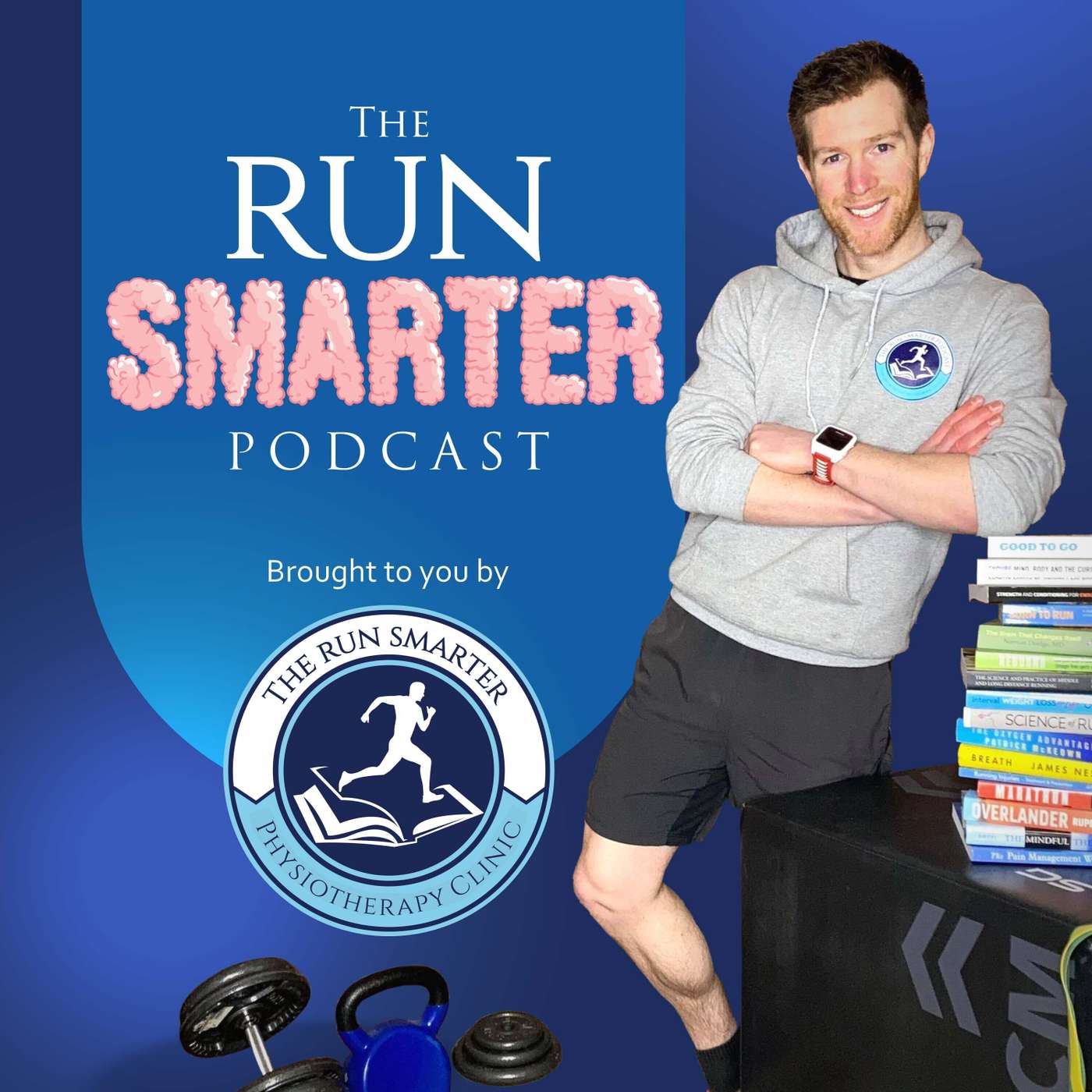
PODCAST · sports
The Run Smarter Podcast
by Brodie Sharpe
Expand your running knowledge, identify running misconceptions and become a faster, healthier, SMARTER runner. Let Brodie Sharpe become your new running guide as he teaches you powerful injury insights from his many years as a physiotherapist while also interviewing the best running gurus in the world. This is ideal for injured runners & runners looking for injury prevention and elevated performance. So, take full advantage by starting at season 1 where Brodie teaches you THE TOP PRINCIPLES TO OVERCOME ANY RUNNING INJURY and let’s begin your run smarter journey.
-
441
Re-Run: Becoming a Sustainable Runner with Tina Muir (Aug, 2023)
CLICK HERE to learn more about the Run Smarter Database 📄🔍For MORE Run Smarter Resources 🏃♂️📚- Including Free Injury Prevention Courses 🩹🎓- The Run Smarter Book 📖- Access to Research Papers 📄🔍- & Ways to Work with Brodie 🤝👟👉 CLICK HERE! 🎉✨
-
440
Re-Run: When Acute Pain Turns Chronic with Kevin Maggs (Mar, 2023)
CLICK HERE to learn more about the Run Smarter Database 📄🔍For MORE Run Smarter Resources 🏃♂️📚- Including Free Injury Prevention Courses 🩹🎓- The Run Smarter Book 📖- Access to Research Papers 📄🔍- & Ways to Work with Brodie 🤝👟👉 CLICK HERE! 🎉✨
-
439
Re-Run: Glute Activation Myths with Rich Willy (Jan 2023)
CLICK HERE to learn more about the Run Smarter Database 📄🔍For MORE Run Smarter Resources 🏃♂️📚- Including Free Injury Prevention Courses 🩹🎓- The Run Smarter Book 📖- Access to Research Papers 📄🔍- & Ways to Work with Brodie 🤝👟👉 CLICK HERE! 🎉✨
-
438
Re-Run: 5 Myths About Getting Scans with Marc Surdyka (Nov, 2022)
CLICK HERE to learn more about the Run Smarter Database 📄🔍For MORE Run Smarter Resources 🏃♂️📚- Including Free Injury Prevention Courses 🩹🎓- The Run Smarter Book 📖- Access to Research Papers 📄🔍- & Ways to Work with Brodie 🤝👟👉 CLICK HERE! 🎉✨
-
437
Re-Run: The Importance of Iron for Runners with McKale Montgomery (Aug 2022)
CLICK HERE to learn more about the Run Smarter Database 📄🔍For MORE Run Smarter Resources 🏃♂️📚- Including Free Injury Prevention Courses 🩹🎓- The Run Smarter Book 📖- Access to Research Papers 📄🔍- & Ways to Work with Brodie 🤝👟👉 CLICK HERE! 🎉✨
-
436
Re-Run: Run like a pro, even if you’re slow with Matt Fitzgerald (May, 2022)
CLICK HERE to learn more about the Run Smarter Database 📄🔍For MORE Run Smarter Resources 🏃♂️📚- Including Free Injury Prevention Courses 🩹🎓- The Run Smarter Book 📖- Access to Research Papers 📄🔍- & Ways to Work with Brodie 🤝👟👉 CLICK HERE! 🎉✨
-
435
Re-Run: A Deep Dive into Load vs Capacity with Chris Bramah (May, 2022)
CLICK HERE to learn more about the Run Smarter Database 📄🔍For MORE Run Smarter Resources 🏃♂️📚- Including Free Injury Prevention Courses 🩹🎓- The Run Smarter Book 📖- Access to Research Papers 📄🔍- & Ways to Work with Brodie 🤝👟👉 CLICK HERE! 🎉✨
-
434
Re-Run: When to get medical scans with Paul Ingraham
CLICK HERE to learn more about the Run Smarter Database 📄🔍For MORE Run Smarter Resources 🏃♂️📚- Including Free Injury Prevention Courses 🩹🎓- The Run Smarter Book 📖- Access to Research Papers 📄🔍- & Ways to Work with Brodie 🤝👟👉 CLICK HERE! 🎉✨
-
433
Podcast Update: Goodbye for now...
Learn more about Brodie's Research Database & AI Assistant 📄🔍For MORE Run Smarter Resources 🏃♂️📚- Including Free Injury Prevention Courses 🩹🎓- The Run Smarter Book 📖- Access to Research Papers 📄🔍- & Ways to Work with Brodie 🤝👟👉 CLICK HERE! 🎉✨
-
432
Latest Research: Streaking, Sub 2hr Mara Insights, Preventing Knee Injuries
Learn more about Brodie's Research Database & AI Assistant 📄🔍For MORE Run Smarter Resources 🏃♂️📚- Including Free Injury Prevention Courses 🩹🎓- The Run Smarter Book 📖- Access to Research Papers 📄🔍- & Ways to Work with Brodie 🤝👟👉 CLICK HERE! 🎉✨
-
431
How Mentally Strong Runners Navigate Injury & Races with Claire Bartholic
How Mentally Strong Runners Navigate Injury & Races with Claire BartholicLearn more about Brodie's Research Database & AI Assistant 📄🔍For MORE Run Smarter Resources 🏃♂️📚- Including Free Injury Prevention Courses 🩹🎓- The Run Smarter Book 📖- Access to Research Papers 📄🔍- & Ways to Work with Brodie 🤝👟👉 CLICK HERE! 🎉✨ Mental strength is one of the most overlooked aspects of running performance. Most runners spend countless hours improving their fitness, strength, and nutrition, yet rarely dedicate any time to training their mindset. In this episode, Brodie sits down with running coach and host of The Planted Runner podcast, Claire Bartholic, to discuss the science of cognitive conditioning and how runners can develop greater confidence, resilience, and emotional control.Whether you're struggling with race-day anxiety, negative self-talk, fear of re-injury, or the emotional challenges of a long-term setback, Claire shares practical strategies that can help you train your brain just as deliberately as you train your body.In this episode, you'll learn: What cognitive conditioning is and why it matters for runners How your self-talk influences performance and confidence Why race-day nerves aren't necessarily a bad thing The difference between mental strength and simply "thinking positive" How to stop spiralling after a missed workout Practical techniques to manage anxiety before races Why confidence is built through action, not waiting to feel ready How runners can better cope with injury setbacks Strategies to overcome fear of re-injury The importance of focusing on what you can control Why your identity as a runner can become problematic during injury How small wins build self-trust and long-term resilience The science behind repetition, neuroplasticity, and mindset training Key Takeaways Your brain believes what you repeatedly tell it. Mental strength can be trained just like fitness. Confidence isn't something you wait for—it's something you build. Injury recovery becomes easier when you focus on what you can do rather than what you can't. Race-day anxiety often reflects how much you care, not a weakness. The way you respond to emotions matters more than the emotions themselves. Resources & LinksLearn more about Claire and her work:The Planted Runner InstaBegin With 10 ProgramThe Planted Runner Website
-
430
What to Focus on When You Can’t Run
Episode 444: What to Focus on When You Can't RunLearn more about Brodie's Research Database & AI Assistant 📄🔍For MORE Run Smarter Resources 🏃♂️📚- Including Free Injury Prevention Courses 🩹🎓- The Run Smarter Book 📖- Access to Research Papers 📄🔍- & Ways to Work with Brodie 🤝👟👉 CLICK HERE! 🎉✨ Being sidelined by injury can feel like a double blow. Not only are you dealing with pain and frustration, but you've also lost one of your biggest outlets for stress relief, fitness, and social connection. In this episode, Brodie shares a practical framework to help injured runners stay proactive, maintain perspective, and come back stronger than before. In this episode, you'll learn: Why injury often impacts your mental health more than you expect The "double whammy" effect of losing both running and your stress-relief outlet How to identify the true causes behind recurring injuries Common patterns that keep runners trapped in injury cycles Why injuries can be valuable opportunities to uncover weak links How to use rehab to build resilience rather than simply become pain-free The importance of addressing strength deficits, imbalances, and movement control Cross-training options that can preserve fitness while recovering How to tailor cardio alternatives based on your injury type Brodie's favourite injury-friendly VO₂ max workouts Why many runners benefit from keeping cross-training in their routine long after recovery The overlooked role of strength training for injury prevention, bone health, and long-term performance How muscle mass acts as "metabolic currency" for health and longevity Practical ways to improve sleep, stress management, and recovery during injury The importance of maintaining social connection when you're unable to run Nutrition strategies that can support healing and future performance Why injury can be the perfect time to improve habits that often get neglected during heavy training Key TakeawayAn injury doesn't have to be wasted time. By shifting your focus toward rehabilitation, fitness maintenance, strength development, sleep, nutrition, stress management, and social connection, you can emerge from injury healthier, more resilient, and better prepared for future training than before.
-
429
Re-Run: The Most Effective Calf & Achilles Management with Luke Nelson (Nov, 2021)
Learn more about Brodie's Research Database & AI Assistant 📄🔍For MORE Run Smarter Resources 🏃♂️📚- Including Free Injury Prevention Courses 🩹🎓- The Run Smarter Book 📖- Access to Research Papers 📄🔍- & Ways to Work with Brodie 🤝👟👉 CLICK HERE! 🎉✨Luke is a Sports & Exercise Chiropractor who has a particular interest in the management, treatment and prevention of calf and achilles injuries. I interview Luke and explore the common causes for this injury and the most common mistakes runners make in their recovery plan.Luke also provides his checklist if calf strains are a regular occurrence in your training. We also go through your patron questions including:Is collagen supplementation effective for achilles tendinopathy?What is the best plyometric exercise to perform?Can pain behind the knee come from the calf?Be sure to follow luke on instagramFind Luke's website here
-
428
Latest Research: Performance Gains, Shockwave Debate, Arch Support Science
Learn more about Brodie's Research Database & AI Assistant 📄🔍For MORE Run Smarter Resources 🏃♂️📚- Including Free Injury Prevention Courses 🩹🎓- The Run Smarter Book 📖- Access to Research Papers 📄🔍- & Ways to Work with Brodie 🤝👟👉 CLICK HERE! 🎉✨Latest Research: Performance Gains, Shockwave Debate, Arch Support ScienceIn this month’s research roundup, Brodie breaks down three fascinating new papers covering running performance, Achilles rehab and plantar fasciitis management.First, a large systematic review investigates what actually predicts better running performance in non-elite runners — from 5K athletes through to ultramarathoners. The findings reveal how the demands of performance dramatically change depending on race distance, highlighting the importance of physiology, training consistency, psychology and fueling strategies.Next, Brodie unpacks a controversial new systematic review and meta-analysis on shockwave therapy for Achilles tendinopathy. Does shockwave actually improve outcomes, or has the treatment become overhyped within sports medicine? The findings may surprise clinicians and runners alike.Finally, a new plantar fasciitis paper explores whether arch supports genuinely help reduce pain and — more importantly — why. Using imaging, biomechanics and computational modeling, the researchers attempted to uncover the mechanical effects of orthotics and how they may redistribute stress through the foot.Papers discussed in this episode1. Performance predictors in recreational runnersA systematic review examining the factors associated with performance in non-elite runners across distances ranging from 5K to ultramarathons.Topics discussed: VO₂ max and running economy Strength training and plyometrics Weekly mileage and consistency Emotional intelligence and pacing Fueling strategies in ultramarathons Environmental impacts on performance 2. Shockwave therapy for Achilles tendinopathyA systematic review and meta-analysis investigating whether shockwave therapy improves outcomes for midportion and insertional Achilles tendinopathy.Topics discussed: Radial vs focused shockwave Placebo effects and sham treatment Exercise vs shockwave outcomes Why exercise-based rehab still remains the gold standard Whether shockwave is worth the cost 3. Arch supports and plantar fasciitisA prospective study exploring the effects of arch-support insoles on pain, foot alignment and heel stress distribution in plantar fasciitis patients.Topics discussed: Orthotics and pain reduction Foot alignment changes on imaging Heel pressure redistribution Finite element biomechanical modeling Why orthotics may help symptoms without restoring tissue capacity Key takeaways The predictors of running performance depend heavily on race distance. Strength training continues to show benefits for running economy and shorter-distance performance. Marathon success is strongly linked to consistency and uninterrupted training. Ultramarathons rely increasingly on pacing, fueling and race management rather than pure physiology. Current evidence for shockwave therapy in Achilles tendinopathy remains inconsistent and underwhelming. Exercise-based rehab continues to have the strongest evidence for tendon recovery. Arch supports may reduce plantar fascia stress and improve symptoms short-term, but should not replace progressive loading strategies.
-
427
The Missing Link In Rehab You’re Probably Ignoring
Learn more about Brodie's Research Database & AI Assistant 📄🔍For MORE Run Smarter Resources 🏃♂️📚- Including Free Injury Prevention Courses 🩹🎓- The Run Smarter Book 📖- Access to Research Papers 📄🔍- & Ways to Work with Brodie 🤝👟👉 CLICK HERE! 🎉✨ The Missing Link in Rehab You’re Probably IgnoringPain isn’t always just about tissues, load, or biomechanics.In this episode, Brodie explores one of the most overlooked contributors to prolonged running injuries: the psychosocial side of pain. Drawing from both research and years of working with chronic injury cases, he introduces a 20-question “Pain & Wellness Score” designed to uncover the emotional, cognitive, and social factors that may be quietly influencing your recovery. You’ll learn why some runners continue to struggle despite doing all the “right” rehab exercises, how hypervigilance and fear can amplify symptoms, and why recovery should be approached through a biopsychosocial lens rather than purely mechanical thinking. Brodie also breaks down the science behind chronic pain, nervous system hypersensitivity, catastrophisation, fear of movement, and the powerful role attention plays in symptom intensity. Throughout the episode, Brodie walks listeners through the full questionnaire so they can assess themselves in real time. He explains how low scores may reveal missing pieces in recovery and shares practical interventions that can help calm the nervous system, reduce fear, and improve recovery outcomes. Topics include: Hypervigilance and constantly monitoring symptoms Fear of movement (kinesiophobia) Catastrophisation and emotional amplification of pain The role of social support in recovery How stress, trauma, anxiety, and perfectionist tendencies influence chronic pain Why distraction, enjoyable movement, and positive coping strategies can help The importance of resilience, optimism, and confidence in movement Why scans and conflicting diagnoses can sometimes worsen recovery outcomes Brodie also discusses research on chronic pain neuroplasticity and highlights therapies shown to help regulate the nervous system, including: Cognitive behavioural therapy (CBT) Mindfulness practices Guided meditations and breathing exercises Gradual exposure to feared movements Active coping strategies versus passive coping behaviours If you’ve been stuck in an injury cycle, feel emotionally exhausted by pain, or feel like your rehab is missing something despite doing the exercises correctly, this episode may provide an entirely new perspective on recovery.Resources & Links:Click here to learn about Brodie's Chronic Pain Reset Course
-
426
Exclusive AMA Release: Physio vs Dr / Back-to-Back Runs / Running with Back Tightness
Learn more about Brodie's Research Database & AI Assistant 📄🔍For MORE Run Smarter Resources 🏃♂️📚- Including Free Injury Prevention Courses 🩹🎓- The Run Smarter Book 📖- Access to Research Papers 📄🔍- & Ways to Work with Brodie 🤝👟👉 CLICK HERE! 🎉✨ In this exclusive AMA release, Brodie answers three practical listener questions that many runners quietly struggle with. From deciding whether to see a physio or doctor for persistent knee pain, to knowing when it’s safe to introduce back-to-back running days during rehab, to understanding why your lower back tightens on longer runs… this episode is packed with evidence-based guidance and real-world rehab insights.If you’ve been stuck in an injury cycle, unsure whether your rehab is working, or second-guessing your training decisions, this episode will help you simplify the process and run smarter.In this episode, Brodie discusses: How to tell when persistent knee pain needs professional assessment The difference between seeing a physio vs a doctor for running injuries Why accurate diagnosis matters more than chasing random rehab exercises Practical advice for pes anserine tendinopathy and bursitis management The hamstring curl exercise Brodie personally used during his own rehab When it’s appropriate to reintroduce back-to-back running days Why symptom response matters more than arbitrary mileage milestones How to safely structure consecutive run days during Achilles rehab The role of “trial and error” in successful injury management Why recovery runs should stay genuinely easy Common reasons runners develop lower back tightness during long runs How cadence and impact forces may influence spinal muscle fatigue Why overthinking posture and “activating your core” can sometimes backfire The importance of running relaxed and naturally economical Lower back strengthening strategies that improve running durability Lumbar hyperextensions and how Brodie uses them himself Key Takeaways: Persistent injuries that worsen over time deserve professional assessment. Rehab should produce gradual week-to-week improvement, not months of frustration. Back-to-back running should start conservatively and be guided by symptom recovery. Easy recovery runs reduce the risk of overload accumulation. Many runners unknowingly create unnecessary tension through posture overcorrection. Strong postural muscles help reduce compensatory tightness during longer runs. Running relaxed is often more efficient than trying to “hold perfect form.”
-
425
Re-Run: The Masters Running Masterclass with Claire Bartholic (Oct, 2021)
Learn more about Brodie's Research Database & AI Assistant 📄🔍For MORE Run Smarter Resources 🏃♂️📚- Including Free Injury Prevention Courses 🩹🎓- The Run Smarter Book 📖- Access to Research Papers 📄🔍- & Ways to Work with Brodie 🤝👟👉 CLICK HERE! 🎉✨ Coach Claire Bartholic wasn’t always a runner. She started running in her mid-30s simply to get in shape for her high school reunion. She caught the running bug and finished her first marathon at age 38 in a respectable 4:02 and was immediately hooked. With dedicated coaching and training, she successfully lowered her marathon PR to 2:58, remarkably without injury, and entirely plant-based. Today, we talk about all things masters running, including the common mistakes and misconceptions Claire often sees working with masters athletes. We also answer all your patron questions, including ways to best prepare in your younger years, how to adjust your goals, how to increase mileage safely and how to recover from long runs.Follow The Run to the Top podcast by RunnersConnectHead to Claire's website to receive your free download about the ultimate fuel plan for runners Follow @theplantedrunner on insta
We're indexing this podcast's transcripts for the first time — this can take a minute or two. We'll show results as soon as they're ready.
No matches for "" in this podcast's transcripts.
No topics indexed yet for this podcast.
Loading reviews...
ABOUT THIS SHOW
Expand your running knowledge, identify running misconceptions and become a faster, healthier, SMARTER runner. Let Brodie Sharpe become your new running guide as he teaches you powerful injury insights from his many years as a physiotherapist while also interviewing the best running gurus in the world. This is ideal for injured runners & runners looking for injury prevention and elevated performance. So, take full advantage by starting at season 1 where Brodie teaches you THE TOP PRINCIPLES TO OVERCOME ANY RUNNING INJURY and let’s begin your run smarter journey.
HOSTED BY
Brodie Sharpe
Loading similar podcasts...
Frequently Asked Questions
How many episodes does The Run Smarter Podcast have?
The Run Smarter Podcast currently has 17 episodes available on PodParley. New episodes are automatically indexed when they're published to the podcast feed.
What is The Run Smarter Podcast about?
Expand your running knowledge, identify running misconceptions and become a faster, healthier, SMARTER runner. Let Brodie Sharpe become your new running guide as he teaches you powerful injury insights from his many years as a physiotherapist while also interviewing the best running gurus in the...
How often does The Run Smarter Podcast release new episodes?
The Run Smarter Podcast has 17 episodes. Check the episode list to see recent publication dates and frequency.
Where can I listen to The Run Smarter Podcast?
You can listen to The Run Smarter Podcast on PodParley by clicking any episode. We provide an embedded audio player for direct listening, and you can also subscribe via your preferred podcast app using the RSS feed.
Who hosts The Run Smarter Podcast?
The Run Smarter Podcast is created and hosted by Brodie Sharpe.
URL copied to clipboard!