
PODCAST · news
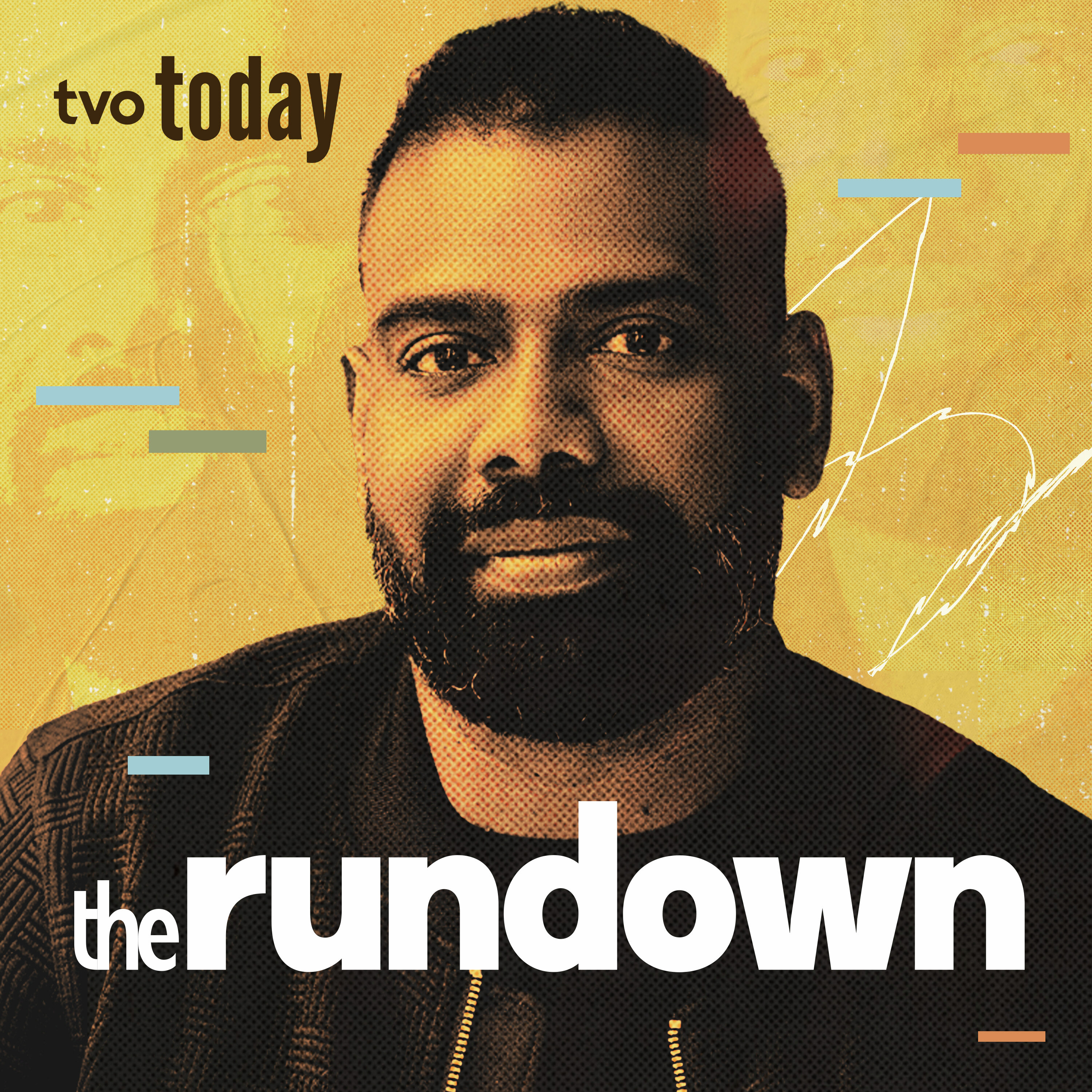
The Rundown
by TVO
Hosted by Jeyan Jeganathan, The Rundown delivers original journalism and in-depth analysis of the social, political, cultural, and economic issues that shape life in Ontario. Each episode focuses on one topic that’s making headlines, examining it from different angles and through diverse points of view — providing the context you need to understand what’s happening in the province and around the world.
-
100
Is Social Media Fueling Human Trafficking?
Human trafficking is often associated with the online world, where social media has created new ways for traffickers to target and exploit young people. Could platforms be doing more to protect kids and teens, and what impact would measures such as social media bans have? Host Jeyan Jeganathan speaks with Julia Drydyk of the Canadian Centre to End Human Trafficking and Marissa Kokkoros of Aura Freedom International. Then, following the largest human trafficking investigation in Halton Regional Police history, Anna Morgan of SAVIS of Halton discusses the realities of trafficking in local communities and the supports available to survivors.Donate Today : https://tvo.me/See omnystudio.com/listener for privacy information.
-
99
"Lake America"? What's Happening to Canada-U.S. Relations?
From tariffs and annexation rhetoric to "Lake America" appearing on digital maps, Canada-U.S. relations are facing new strains. What does the renaming of Lake Ontario say about Canada's digital sovereignty? And as political, economic, and cultural tensions grow, are Canadian leaders responding effectively to a rapidly changing relationship with our closest ally? Host Jeyan Jeganathan discusses the state of Canada-U.S. relations with John Michael McGrath, Globe and Mail feature writer Shannon Proudfoot, and essayist and cultural commentator Stephen Marche. Editorial,credit: Andrew Harnik/Getty Images NewsDonate Today : https://tvo.me/See omnystudio.com/listener for privacy information.
-
98
Can Canada Break Its Dependence on the U.S.?
As Canada looks for ways to reduce its economic dependence on the United States, what options are on the table? The Rundown examines efforts to remove interprovincial trade barriers and improve labour mobility across the country, with Ryan Manucha of the C.D. Howe Institute and Sarah Watts-Rynard of Polytechnics Canada. Then, could a proposed east-west oil pipeline help strengthen Canada's energy security and economy? Oil market researcher Rory Johnston breaks down the potential benefits, costs, and challenges of a project being championed as a nation-building initiative by Premiers Doug Ford and Danielle Smith.Donate Today : https://tvo.me/See omnystudio.com/listener for privacy information.
-
97
What Could Shape the School Year Ahead in Ontario?
As students head back to class, what changes could shape the school year ahead? With teacher labour negotiations underway between education unions and the provincial government, where do talks stand and what could the outcome mean for students, parents, and educators? Kristin Rushowy, education reporter with the Toronto Star, breaks down the latest developments. Then, how will new school transportation guidelines affect families whose children may no longer have access to bus service? Nancy Daigneault, executive director of School Bus Ontario, and Kaylie Fanning, whose brother Joshua has lost access to school bus service, discuss the impact on students and parents as the new school year begins.Donate Today : https://tvo.me/See omnystudio.com/listener for privacy information.
-
96
What's Behind Canada's Romance Book Boom?
Romance novels have become one of Canada's fastest-growing publishing genres, with print sales soaring, ebook readership growing, and dedicated romance bookstores opening across the country, raising questions about what's fueling the boom. Amy Lea, author of romantic comedies including "The Bodyguard Affair," joins Jeyan to discuss how shifting reader tastes have created new opportunities for Canadian voices in romance and why she now feels more confident setting stories closer to home. Then, Kaitlynd Carmichael of Indigo Canada and Kearston Bergeron, co-owner of Toronto's Hopeless Romantic Books, explore the factors behind romance's rapid rise and what its growing popularity reveals about today's readers.Donate Today : https://tvo.me/See omnystudio.com/listener for privacy information.
-
95
Can Students Help Save Canada's Queer History?
For generations, many 2SLGBTQ+ stories were left out of history books, archives, and classrooms, raising questions about whose experiences are preserved and whose are forgotten. Now, some educators are working to recover that history before more of it is lost. Ian Duncan, a history teacher at Garth Webb Secondary School in Oakville, joins Jeyan to discuss how students are helping uncover, document, and share Canada's queer history. Then, Windsor teacher Chris Rabideau explains how a local project is preserving 2SLGBTQ+ stories from the community, one story at a time, and why documenting these experiences matters for future generations.Donate Today : https://tvo.me/See omnystudio.com/listener for privacy information.
-
94
Who Should Control Ontario's Water Infrastructure?
As Ontario municipalities face growing pressure to repair and expand aging water and wastewater systems, some are asking whether new governance models could help manage the costs. Could municipal services corporations offer a viable solution, or do they raise new questions about oversight and public accountability? Michele Grenier, executive director of the Ontario Water Works Association, and Barbara Robinson, president of Norton Engineering, join Jeyan to discuss. Then, new research suggests a warming Arctic is reshaping vast lakes in northern Canada, raising concerns about what these changes could mean for freshwater ecosystems. Kathleen Rühland, senior scientist at Queen's University's Paleoecological Environmental Assessment and Research Laboratory, explains what scientists are finding and why it matters.Donate Today : https://tvo.me/See omnystudio.com/listener for privacy information.
-
93
Why Are So Many Young Men Suffering in Silence?
Young men are often told to tough it out, but a new report from GreenShield and Mental Health Research Canada suggests many may be struggling in silence, raising questions about why so many are reluctant to seek help when they need it most. Khush Amaria, director of clinical services at GreenShield, joins Jeyan to unpack the findings. Then, as loneliness becomes a growing concern, some people are turning to AI chatbots for companionship. Can a machine provide meaningful connection, or does it risk deepening the problem? University of Toronto psychology professor Paul Bloom weighs in.Donate Today : https://tvo.me/See omnystudio.com/listener for privacy information.
-
92
Can Indigenous Voices Reshape Canada's Next Big Projects?
Canada is preparing for major nation-building projects while entering trade talks with the United States and Mexico, promising partnership with Indigenous peoples but leaving questions about what that means in practice. How will those commitments be carried out, and whose voices will shape the outcome? At the same time, Indigenous humour offers insight into culture, identity, and connection, reflecting shared experience while challenging assumptions. What makes it distinct, and can it help build understanding across communities? Anishinaabe journalist Tanya Talaga and playwright and author Drew Hayden Taylor join the conversation.Donate Today : https://tvo.me/See omnystudio.com/listener for privacy information.
-
91
How Should Canada Handle CUSMA & Trump?
Prime Minister Mark Carney met with world leaders at the G7 in France, trying to position Canada in an increasingly uncertain global order, new questions are emerging about the country's economic stability and its most critical trade relationship. U.S. President Donald Trump has cast doubt on the future of the Canada-U.S.-Mexico Agreement, saying "I'm not looking to renew it" and "we don't need anything that Canada has," with a key deadline approaching. How exposed is Canada if that deal unravels, and how should its foreign and economic strategy adapt? Arif Lalani, Shannon Gormley, Adam Chapnick, and Drew Fagan join Jeyan to discuss.Donate Today : https://tvo.me/See omnystudio.com/listener for privacy information.
-
90
Why Is Northern Ontario Still Waiting on Infrastructure?
Closures on Highways 11 and 17 can cut off entire northern communities and disrupt supply chains, raising questions about why long-standing calls for more resilient infrastructure have yet to be answered. Charles Cirtwill, founding president and CEO of the Northern Policy Institute, and Maggie Horsfield, first vice-president of the Federation of Northern Ontario Municipalities and deputy mayor of North Bay, join Jeyan to discuss. Then, in Sault Ste. Marie, a decades-old vision for a deep-water port is back in focus. Could the project finally move forward, and what would it take to make it viable? Mayor Matthew Shoemaker weighs in.Donate Today : https://tvo.me/See omnystudio.com/listener for privacy information.
-
89
Can Mobile Clinics Fix Ontario's Care Gap?
What do recent shifts in public health policy reveal about how care is delivered, and who can access it? After a woman was killed outside a Toronto community health centre in 2023, the province reviewed supervised consumption sites, introduced a new model, and this month cut public funding, raising questions about safety and access. At the same time, mobile health clinics are appearing outside Toronto libraries, aiming to connect more people with primary care. Journalist Adam Zivo, joining from Odessa, Ukraine, Montreal-based writer Emma Paling, and Martin McIntosh of the Regional HIV/AIDS Connection examine what these changes signal. Then, Dr. Andrew Boozary and Aly Velji consider whether mobile care can fill gaps or create new ones.Donate Today : https://tvo.me/See omnystudio.com/listener for privacy information.
-
88
Are Data Centres Taking Over?
The federal government has unveiled a two-billion-dollar AI strategy aimed at boosting jobs, skills training, and business growth, alongside plans to build large-scale AI data centres powered by clean energy. But as these projects move into communities, opposition is mounting. Recent protests in Hamilton and an Angus Reid poll showing 68 per cent of Canadians would oppose a data centre near their home raise questions about public buy-in. With roughly 100 data centres already in Ontario, do more bring opportunity or risk? We examine the concerns and separate fact from fiction with Kathleen Kauth of the Advanced Energy Centre at MaRS and Mark Winfield of York University.Donate Today : https://tvo.me/See omnystudio.com/listener for privacy information.
-
87
How Do High-Speed Rail and E-Bikes Fit into Ontario's Future?
Politicians have been promising high-speed rail in Canada for decades, and with a new federal plan now on the table, questions remain about whether it will finally move forward and what it means for communities along the route. Jeff Leal, mayor of Peterborough, and Bonnie Clark, warden for Peterborough County, join us. Then, the rapid rise of e-bikes is transforming how people get around, embraced by commuters and delivery drivers but raising new safety concerns as well. With the province now considering updated rules of the road, Michael Longfield, executive director of Cycle Toronto, weighs in on how to balance accessibility, convenience, and public safety.Donate Today : https://tvo.me/See omnystudio.com/listener for privacy information.
-
86
What Happens When Community Spaces Vanish?
What happens when the spaces people rely on to connect outside of home and work begin to disappear? The idea of the "third place," first defined by sociologist Ray Oldenburg, points to the everyday settings that foster community and belonging, and experts say they remain critical to health and happiness. Debbie Laliberte Rudman of Western University, urban planner Corey Horowitz of DIALOG, and cultural programmer Said Yassin examine how these spaces shape social life and what is at risk as cities evolve. Then, a fight to save one of Toronto's most recognizable gathering spots brings that question into focus, as organizers mobilize petitions and pack city hall committee rooms to protect the iconic dive bar Sneaky Dee's, with general manager George Diamantouros on the front lines of a battle over what the city stands to lose.Donate Today : https://tvo.me/See omnystudio.com/listener for privacy information.
-
85
What's Next for Cuba?
As conditions in Cuba worsen, President Donald Trump's intentions toward the island remain unclear, raising questions about what happens next and what role Canada should play. Mark Entwistle, Canada's ambassador to Cuba from 1993 to 1997 and now a senior fellow at the Munk School of Global Affairs and Public Policy, joins us. Then, the ripple effects closer to home as Ontario's small but longstanding Cuban diaspora reflects on the crisis, with roots dating back to the 1800s. A trip to Niagara brings one man's journey into focus and sheds light on what people on the island are facing today.Donate Today : https://tvo.me/See omnystudio.com/listener for privacy information.
-
84
Alberta Referendum: How Far Could It Go?
In just a few months, Alberta voters may weigh a referendum on separation as a coalition pushes the case for staying in Canada. What's driving the renewed separatist push, and how strong is the argument against it? Jen Gerson of The Line and Lead Not Leave joins us. Then, Ottawa's climate agenda under scrutiny after the Carney government scrapped the consumer carbon price, EV mandate, and oil and gas cap. Is this a retreat from climate action or a policy reset? Martha Hall Findlay and Caroline Brouillette weigh in.Donate Today : https://tvo.me/See omnystudio.com/listener for privacy information.
-
83
Is Canada Becoming Uninsurable?
As extreme weather drives parts of the U.S. toward becoming effectively uninsurable, what signals are emerging in Canada as fires, floods, and droughts intensify and reshape risk? Craig Stewart, co-founder and CEO of the climate risk company Mycinity, examines whether Canada is on a similar path and what that could mean for homeowners and insurers. Then, in part two of a wide-ranging conversation, Suzanne Simard, author of When the Forest Breathes, takes a closer look at Canada's forestry practices, questioning how human intervention has altered natural systems and why she argues it has effectively detonated a carbon bomb.Donate Today : https://tvo.me/See omnystudio.com/listener for privacy information.
-
82
How are Voters Feeling About the Ford Government?
OSAP. School boards. Airports and jets. As Queen's Park breaks for the summer, the Ford government is facing growing scrutiny over a series of high-profile decisions and the public response to them. TVO Today's John Michael McGrath breaks down the latest moves and the political stakes behind them. Then, how are voters feeling about the government, and is there an opening for the opposition? We hear from a panel of political watchers: Kim Wright of Wright Strategies, Ontario Liberal strategist Andrew Perez, columnist Michael Taube, and John Michael McGrath.Donate Today : https://tvo.me/See omnystudio.com/listener for privacy information.
-
81
What Makes Ontario... Ontario?
The Honourable Elizabeth Dowdeswell reflects on her time as Ontario's lieutenant governor and what defines the province she served for nearly a decade. Then, more than 60 years after Canada adopted the Maple Leaf and Ontario unveiled its own flag, why didn't everyone rally around these new symbols? #onpoli's John Michael McGrath explains. And we visit Salem Chapel in St. Catharines, where Harriet Tubman once worshipped and where the legacy of the Underground Railroad and the fight for civil rights still resonates today.Donate Today : https://tvo.me/See omnystudio.com/listener for privacy information.
-
80
Why Is It So Hard for Young People to Find Jobs Right Now?
What's behind the growing challenges facing young job seekers, and could global oil disruptions add further pressure to the economy? As youth unemployment remains stubbornly high, questions are building about what is driving the slowdown in hiring and what it means for those entering the workforce. We examine the factors shaping the job market for young people, from business conditions to structural barriers, and what might change in the months ahead. Dan Kelly, CEO of the Canadian Federation of Independent Business, and Ilona Dougherty, managing director of the Youth and Innovation Project at the University of Waterloo, break down the trends and possible paths forward. We then turn to global energy markets. After major disruptions to shipping through the Strait of Hormuz linked to the Iran war, what risks do shifting oil flows pose for prices and economic stability? Rory Johnston, oil market researcher and founder of the Commodity Context newsletter, explains what has changed, what remains uncertain, and how these developments could ripple beyond the energy sector.Donate Today : https://tvo.me/See omnystudio.com/listener for privacy information.
-
79
What Would Airport Privatization Mean for Canadians?
TQuestions are now being raised about whether Canada's aviation system is facing a dual test of structure and capacity at a critical moment. For decades, major airports have operated under a hybrid model in which non-profit authorities manage operations while the federal government retains ownership of land and core assets. Now, with the Carney government considering a potential shift toward privatization, what could that mean for oversight, costs, and the public interest? At the same time, recent travel disruptions tied to staffing shortages, including a lack of air traffic controllers, have exposed operational strain across the system just as demand is expected to surge ahead of the summer season and the World Cup. Is this a sign of deeper systemic pressure, and are proposed fixes keeping pace with demand? We examine what is changing, what is at stake, and how these parallel pressures may be reshaping Canada's air travel landscape with Jake Fuss of the Fraser Institute, Lily Chang of the Canadian Labour Congress, and Jonathan Bagg of NAV Canada.Donate Today : https://tvo.me/See omnystudio.com/listener for privacy information.
-
78
Are Weight-Loss Drugs Reshaping How We Eat?
Researchers and analysts are beginning to ask whether two powerful forces are quietly reshaping how and why people eat: the rise of GLP-1 medications and the constant churn of food trends. What happens when drugs like Ozempic don't just reduce appetite but change how the body processes food, forcing users to rethink nutrition to avoid side effects and maintain balance? Could that shift create new demands the food industry is already preparing to meet? And at the same time, why do consumers continue to chase new diets, ingredients, and health claims month after month? What is driving this persistent search for the next solution, even as advice keeps changing? We examine whether these developments are connected, how pharmaceutical intervention may be accelerating longer-term shifts in food culture, and what it reveals about the forces shaping modern eating habits. Sylvain Charlebois, professor at Dalhousie University and director of its Agri-Food Analytics Lab, and Samantha King, professor and director of the School of Kinesiology and Health Studies at Queen's University, discuss nutrition, behaviour, and the emerging questions at the intersection of medicine, markets, and consumer choice.Donate Today : https://tvo.me/See omnystudio.com/listener for privacy information.
-
77
Can We Understand Nature's Language?
Researchers are beginning to investigate two frontiers that challenge long-held assumptions about the natural world: how animals communicate and whether forests function as complex, social systems. Advances in artificial intelligence are helping decode patterns in animal signals once thought to be beyond human understanding, raising difficult ethical and legal questions about what non-human species may be expressing. At the same time, new research on trees suggests forests may operate through interconnected networks that share resources and respond collectively to environmental stress. We examine what emerging science is revealing about animal minds and forest ecosystems, how these findings are being interpreted, and what they could mean for how humans define intelligence, responsibility, and the natural world itself. Kristin Andrews, philosophy professor at York University and York Research Chair in Animal Minds, and Suzanne Simard, forest ecologist and author of "When the Forest Breathes: Renewal and Resilience in the Natural World," discuss communication, connection, and the implications of treating animals and even forests as social beings.Donate Today : https://tvo.me/See omnystudio.com/listener for privacy information.
-
76
Is Ontario Transit Becoming Less Safe?
Some transit riders say the experience in Ontario is changing, with more visible drug use and increasingly unpredictable behaviour on buses, streetcars, and subways. But is public transit actually becoming less safe, or are perceptions outpacing the data? And would expanding the powers of special constables improve conditions for riders and staff? We examine what is known about recent safety concerns, how they are being measured, and what policy responses are under consideration. Andrew Pulsifer, executive director of TTC Riders, David Cooper, principal of Leading Mobility Consulting, and Kelly Aizicowitz, board member at A Better City, discuss the data, the lived experience, and what changes, if any, could make a difference for transit systems and the people who rely on them.Donate Today : https://tvo.me/See omnystudio.com/listener for privacy information.
-
75
Another Virus to Worry About?
What can a rare hantavirus outbreak on a cruise ship tell us about broader public health risks, and are there warning signs closer to home that we may be overlooking? After a Dutch vessel was linked to the Andes strain, questions emerge about how such diseases spread, what makes them dangerous, and whether other threats, including tick-borne illnesses, are already taking hold. We examine what is known about hantavirus, how it compares to more familiar risks, and what it could signal about shifting patterns in human and environmental health. Dr. Fahad Razak, an internist and epidemiologist at St. Michael's Hospital, looks at the implications for surveillance, preparedness, and public awareness. We then turn to a different kind of signal: the ways animals respond to changing conditions. If animals are constantly communicating, what might humans be missing, and could those observations offer insight into environmental change? Amelia Thomas, journalist and author of "What Sheep Think About the Weather," explores how animals interpret their surroundings, what their behaviours might reveal, and whether learning to pay closer attention could deepen our understanding of the forces shaping both animal and human health.Donate Today : https://tvo.me/See omnystudio.com/listener for privacy information.
-
74
Could Surveillance Pricing Be the Future in Ontario?
Is surveillance pricing reshaping what Ontarians pay, and what happens when labour protections fail the people they are meant to protect? As affordability and cost of living dominate public concern, the growing use of consumer data to tailor prices raises new questions about fairness, transparency, and oversight. We examine how this practice works, who benefits, and where safeguards may be falling short. Vass Bednar, managing director of the Canadian Shield Institute, looks at the implications of data-driven pricing and how it could affect everyday costs. We then turn to wage theft, where workers report being paid below minimum wage, paid late, or not paid at all. If these violations are not rare, what does that say about enforcement, and who is most at risk? Ghada Alsharif, immigration and work reporter for the Toronto Star, and Jared Ong, organizer with the Workers' Action Centre, discuss the scope of the problem, the barriers workers face in seeking accountability, and what stronger protections might require.Donate Today : https://tvo.me/See omnystudio.com/listener for privacy information.
-
73
Are Drones Reshaping Canada's Defence?
Who controls the systems that shape Canada's security, and how prepared are we for what comes next? We examine the growing use of unmanned aerial vehicles, asking what role Canada plays in developing drone technology, whether low-cost UAVs are changing modern defence, and what capacity the country may be lacking. Katheron Intson, CEO and co-founder of Sentinel R&D, explains where Canada fits and what closing those gaps would require. We then look to the past to better understand the present. At the Canadian Tank Museum in Oshawa, we explore what historic military vehicles reveal about Canada's wartime contributions, industrial support, and long-standing approach to defence. And beyond the battlefield, who controls our security online? In this episode of TVO Today's Unravelled, we ask what we give up when we agree to digital terms and conditions, who gains access to that information, and what meaningful protection of our digital lives would look like.Donate Today : https://tvo.me/See omnystudio.com/listener for privacy information.
-
72
Should Canada Join Eurovision?
Is Canada ready to step onto the Eurovision stage, and what would that say about how the country sees its cultural role internationally? After the federal government said in the 2025 budget that it was "working with CBC/Radio-Canada to explore Canada's participation in Eurovision," questions remain about how such a move would work, what it would cost, and whether it is a gamble worth taking. From Ottawa, Nomi Claire Lazar, professor of public and international affairs at the University of Ottawa, examines the political and public value of the proposal, while Toronto-based Brock University adjunct professor Karen Fricker brings a critical perspective shaped by her long engagement with Eurovision as a cultural institution. We then look inward, to the cultural legacy Canada has already built. Toronto-made children's television, from Mr. Dressup and Degrassi to Polka Dot Door and Today's Special, shaped generations of viewers in Ontario and beyond. Rundown producer Colin Ellis speaks with cultural historian Ed Conroy about his new book, ImagiNation: The Golden Age of Toronto Kids' TV, and why revisiting these shows is not just an exercise in nostalgia but a way of understanding how public broadcasting, cultural ambition, and national identity have been constructed and contested over time.Donate Today : https://tvo.me/See omnystudio.com/listener for privacy information.
-
71
Where Are Canada's Undeclared Firearms?
Only about half of prohibited assault style firearms were declared under Canada's federal buyback. Tens of thousands may remain outside the system ahead of a 2026 ban that will make possession a criminal offence. Police Chief Mark Campbell and Professor Wendy Cukier examine what low compliance means for enforcement, public safety, and the credibility of the policy.Donate Today : https://tvo.me/See omnystudio.com/listener for privacy information.
-
70
Should Schools Ban Phones and Social Media?
Is limiting cellphone use in schools enough, or should Ontario go further by restricting social media and phones on school property? As the province considers tougher rules, we examine what is driving the push, whether it could improve learning, and what might be lost by narrowing students' access to digital spaces. Mohammed Estaiteyeh, assistant professor of digital pedagogies and technology literacies at Brock University, and Malini Leahy, former teacher and vice-president of the Ontario Secondary School Teachers' Federation, weigh the benefits and risks. We then turn to Australia, the first country to ban social media for children under 16. How has that policy worked in practice, and what can Canada learn from it? From Sydney, Katrina Champion, associate professor at the University of Sydney's School of Public Health, joins us to explain what the evidence shows so far and what policymakers should consider next.Donate Today : https://tvo.me/See omnystudio.com/listener for privacy information.
-
69
What Are the Real Limits of Fertility?
A women's reproductive health expert offers plain talk on the real limits of fertility and what women should understand before planning a pregnancy. Then, what does it really take to have a child when fertility does not come easily? Author Kathryn Blaze Baum reflects on IVF, surrogacy, miscarriage, and what she uncovered about the business and personal toll behind fertility treatment.Donate Today : https://tvo.me/See omnystudio.com/listener for privacy information.
-
68
What Becomes of Cases Tied to Corrupt Officers?
When police officers are charged with alleged corruption, what happens to the cases they worked on? We examine how those investigations are reviewed and what it means for past prosecutions when an officer's conduct is called into question. Then, former Toronto homicide detective Hank Idsinga, who investigated more than 80 murder cases, joins us to reflect on the realities of policing, accountability, and trust in the justice system.Donate Today : https://tvo.me/See omnystudio.com/listener for privacy information.
-
67
Will Canada Let Residential School Testimonies Be Lost?
What happens to the stories of residential school survivors if they are never preserved, and is Canada prepared to let them disappear? With a Supreme Court deadline approaching that could see thousands of survivor testimonies destroyed unless individuals act, we examine why many people remain unaware of the clock running out and what is at stake if those records are lost. Pulitzer Prize winning investigative journalist Connie Walker, host of Stolen: Surviving St. Michael's and lead of the Indian Residential School Records Project at Toronto Metropolitan University, explains the push to build a permanent national archive. We then turn to Red Dress Day and the ongoing crisis of missing and murdered Indigenous women, girls, and Two Spirit people. Storyteller and educator Carolyn Roberts joins us to discuss her new children's book, "Tess's Red Dress," and how it helps families and classrooms confront a reality that is still unfolding.Donate Today : https://tvo.me/See omnystudio.com/listener for privacy information.
-
66
How Realistic Is Ontario's Push Toward Electric Vehicles?
How realistic is Ontario's push toward electric vehicles, and is the province prepared for what comes next? As places like Norway show what large scale EV adoption can look like, we examine how easy it actually is to buy and drive an electric vehicle in Ontario, whether governments are doing enough to support the transition, and how the market could shift as more Chinese made vehicles arrive. Plug'n Drive president and CEO Cara Clairman and clean mobility expert Lindsay Wiginton of Dunsky Energy and Climate Advisors weigh in. We then turn to a growing political flashpoint, Premier Doug Ford's claim that Chinese EVs are "spy vehicles." What are the real cybersecurity risks drivers should and should not be worried about? David Shipley, CEO and co founder of Beauceron Security, helps separate legitimate threats from fear driven rhetoric.Donate Today : https://tvo.me/See omnystudio.com/listener for privacy information.
-
65
Can Ontario Build Its Way Out of Jail Overcrowding?
Why is Ontario turning to prison expansion after years of chronic jail overcrowding, and what do internal documents reveal about the true cost and impact of that plan? As researchers question whether building more cells will actually ease the strain, we look at what the province is betting on, with analysis from Mackenzie Plumb, a PhD candidate in criminology at the University of Ottawa, and Lee Chapelle, president of Canadian Prison Consulting. Then, how far should government go in regulating sex offenders after a judge ruled key parts of Ontario's registry unconstitutional? As the premier signals plans to make parts of the registry public, employment lawyer and workplace investigator Abigail Knubley weighs the legal risks and consequences.Donate Today : https://tvo.me/See omnystudio.com/listener for privacy information.
-
64
What Happens When Ontario Shrinks Conservation Authorities?
On April 18, West Nipissing declared a state of emergency as flooding overwhelmed roads and threatened homes. For residents, the footage raises urgent questions about what protection really exists as floods become more frequent. Conservation authorities are meant to be a frontline defence, but with the Ford government moving to consolidate them, critics and municipal leaders are asking whether communities will be better protected or more exposed. We hear from West Nipissing Mayor Kathleen Thorne Rochon, Janet Stavinga of the Watershed Conservation Coalition, Westport Mayor and AMO board president Robin Jones, Conservation Ontario general manager Angela Coleman, and Ontario Headwaters Institute executive director Andrew McCammon.Donate Today : https://tvo.me/See omnystudio.com/listener for privacy information.
-
63
Who’s Really in Charge of Ontario’s Cities?
What does Ontario’s Better Regional Governance Act, 2026 actually change, and who ends up with more power at the local level? TVO Today columnist and #onpoli cohost John Michael McGrath breaks down what’s in the legislation and what it is meant to fix. We then turn to the government’s claim that strong mayor powers are speeding up housing construction, examining what the evidence shows so far and whether it has come with democratic tradeoffs. Joining the conversation are David Arbuckle of the Association of Municipal Managers, Clerks and Treasurers of Ontario, Lindsay Jones of the Association of Municipalities of Ontario, and Natasha Salonen, mayor of the Township of Wilmot.Donate Today : https://tvo.me/See omnystudio.com/listener for privacy information.
-
62
How Science is Silencing Depression with Magnetic Waves
Millions take medications like SSRIs and SNRIs for mental-health conditions and feel the benefits. But what if your depression is hard to treat? One option: something called transcranial magnetic stimulation. Rundown producer Eric Bombicino learns more from Daniel Blumberger, scientific director of the Temerty Centre for Therapeutic Brain Intervention and a senior scientist at the Centre for Addiction and Mental Health.Donate Today : https://tvo.me/See omnystudio.com/listener for privacy information.
-
61
How is School Board Control Changing in Ontario?
As the province moves ahead with a proposed education bill, the education minister says trustees will still have a role, but one that will "change significantly." What have trustees done until now, and what could change if the bill passes? TVO Today's John Michael McGrath breaks down the background and the stakes, then joins Cathy Abraham, a long-time trustee and former president of the Ontario Public School Boards' Association, and Weidong Pei, Toronto District School Board trustee for Ward 12–Willowdale, on what these reforms could mean for school governance, classrooms, and students across Ontario.Donate Today : https://tvo.me/See omnystudio.com/listener for privacy information.
-
60
What Is Breaking Canada's Veterinary Care System?
Why is veterinary care getting harder to access just as more Canadians bring pets into their homes? With clinics facing staff shortages and burnout, and owners paying more for care, we look at what's driving the strain on the pet care system. Then, how well do we actually understand pets? Science broadcaster Jay Ingram explores what research reveals about the animals we live with, and why it matters.Donate Today : https://tvo.me/See omnystudio.com/listener for privacy information.
-
59
How Do Global Shocks Show Up at the Grocery Store?
Why does a narrow stretch of water halfway around the world matter so much? TVO Today producer Lucas Meeuse breaks down the Strait of Hormuz, a key global chokepoint, and why even the threat of disruption can rattle markets far beyond the Middle East. Then, back in Canada, we turn to food prices. Grocery inflation has eased slightly, but prices are still more than 30 per cent higher than in 2021. With pressure on households and uncertainty ahead, we look at what comes next with Feed Ontario CEO Carolyn Stewart, grocery industry advocate Gary Sands, and food economist Mike von Massow.Donate Today : https://tvo.me/See omnystudio.com/listener for privacy information.
-
58
Are Ontario Hospitals Taking Out Loans to Survive?
Through Freedom of Information requests, journalist Stacey Kuznetsova and critical care doctor Blair Bigham uncovered that some Ontario hospitals are relying on bank loans to cover basic operating costs. They discuss what they found and how the hospital sector is responding. Then, Natalie Mehra of the Ontario Health Coalition weighs in on whether the latest Ontario budget goes far enough to address the problem.Donate Today : https://tvo.me/See omnystudio.com/listener for privacy information.
-
57
How Do You Sell Canadian Films to Canadians?
As Canada marks National Canadian Film Day, new data from Telefilm Canada shows 2025 was one of the weakest box office years this decade for Canadian films. Why aren't audiences turning out? Sonya Yokota William, Francesca Accinelli, and Noah Segal examine what is holding Canadian movies back and what could rebuild viewership. Then, a look at another cultural shift: how the internet changed Canadian music. Rundown producer Colin Ellis speaks with author Cam Gordon about his new book "Track Changes" and the digital forces that reshaped the industry.Donate Today : https://tvo.me/See omnystudio.com/listener for privacy information.
-
56
Is Canada Ready for a New Era of Extreme Weather?
Last year was the second-worst wildfire season in Canadian history, with millions of hectares burned and communities across the country forced to evacuate. As climate change drives longer, more intense fire seasons, how bad could future years get and are we prepared? We examine Canada's growing wildfire risk with Mike Flannigan, a professor of wildland fire at Thompson Rivers University, and look at other extreme weather threats, including severe storms, with Greg Kopp of Western University and Anabela Bonada of the University of Waterloo's Intact Centre on Climate Adaptation.Donate Today : https://tvo.me/See omnystudio.com/listener for privacy information.
-
55
Why Are Some Gen Z Men Embracing Traditional Gender Roles?
Research is challenging the assumption that younger generations are becoming more progressive, suggesting some Gen Z men are adopting more conservative views on gender and masculinity. Heejung Chung of King's College London and University of Toronto Scarborough psychologist Leif Anderson, explain what may be driving that shift. Then, Dalhousie University sociologist Michael Halpin examines the rise of "looksmaxxing," an online subculture centred on physical perfection and social dominance.Donate Today : https://tvo.me/See omnystudio.com/listener for privacy information.
-
54
Does Ontario Profit Too Much From Gambling and Alcohol?
Online betting now brings in major revenue for the province, but experts warn that the financial upside may come with mounting public-health costs. A similar tension shows up in new data on alcohol use: fewer Ontarians are drinking, yet binge drinking rates remain stubbornly high. What explains the disconnect, and what responsibility does government have when it profits from addictive products? We speak with addiction researchers Andrew Kim and Dominique Morisano.Donate Today : https://tvo.me/See omnystudio.com/listener for privacy information.
-
53
Should Pension Funds Help Build Canada's Future?
The federal Liberals are pitching big, costly bets such as nuclear power, critical minerals, and high-speed rail as central to Canada's economic future, raising questions about who pays and whether pension funds should help finance projects tied to economic sovereignty. Matthew Mendelsohn and Keith Ambachtsheer examine the risks and rewards of tapping pension capital. Then, economist Kaylie Tiessen looks critically at the surge in "Buy Canadian" policies and whether they actually deliver on their economic promises.Donate Today : https://tvo.me/See omnystudio.com/listener for privacy information.
-
52
Do Ontario's New Housing Incentives Go Far Enough?
Ontario and the federal government are rolling out new housing measures, including HST rebates on new homes and billions in infrastructure funding to cut development charges. Will these moves actually bring down prices and speed up construction, or are deeper structural fixes still missing?Donate Today : https://tvo.me/See omnystudio.com/listener for privacy information.
-
51
Remembering Stephen Lewis: A Conversation with Bob Rae
Bob Rae reflects on the legacy of Stephen Lewis, one of Canada’s most influential public figures and international advocates. Drawing on decades of public life and personal experience, Rae discusses Lewis’s impact on politics, diplomacy, and social justice, and what his work continues to mean for Canada today.Donate Today : https://tvo.me/See omnystudio.com/listener for privacy information.
We're indexing this podcast's transcripts for the first time — this can take a minute or two. We'll show results as soon as they're ready.
No matches for "" in this podcast's transcripts.
No topics indexed yet for this podcast.
Loading reviews...
ABOUT THIS SHOW
Hosted by Jeyan Jeganathan, The Rundown delivers original journalism and in-depth analysis of the social, political, cultural, and economic issues that shape life in Ontario. Each episode focuses on one topic that’s making headlines, examining it from different angles and through diverse points of view — providing the context you need to understand what’s happening in the province and around the world.
HOSTED BY
TVO
CATEGORIES
Loading similar podcasts...
Frequently Asked Questions
How many episodes does The Rundown have?
The Rundown currently has 50 episodes available on PodParley. New episodes are automatically indexed when they're published to the podcast feed.
What is The Rundown about?
Hosted by Jeyan Jeganathan, The Rundown delivers original journalism and in-depth analysis of the social, political, cultural, and economic issues that shape life in Ontario. Each episode focuses on one topic that’s making headlines, examining it from different angles and through diverse points of...
How often does The Rundown release new episodes?
The Rundown has 50 episodes. Check the episode list to see recent publication dates and frequency.
Where can I listen to The Rundown?
You can listen to The Rundown on PodParley by clicking any episode. We provide an embedded audio player for direct listening, and you can also subscribe via your preferred podcast app using the RSS feed.
Who hosts The Rundown?
The Rundown is created and hosted by TVO.
URL copied to clipboard!