
PODCAST · news
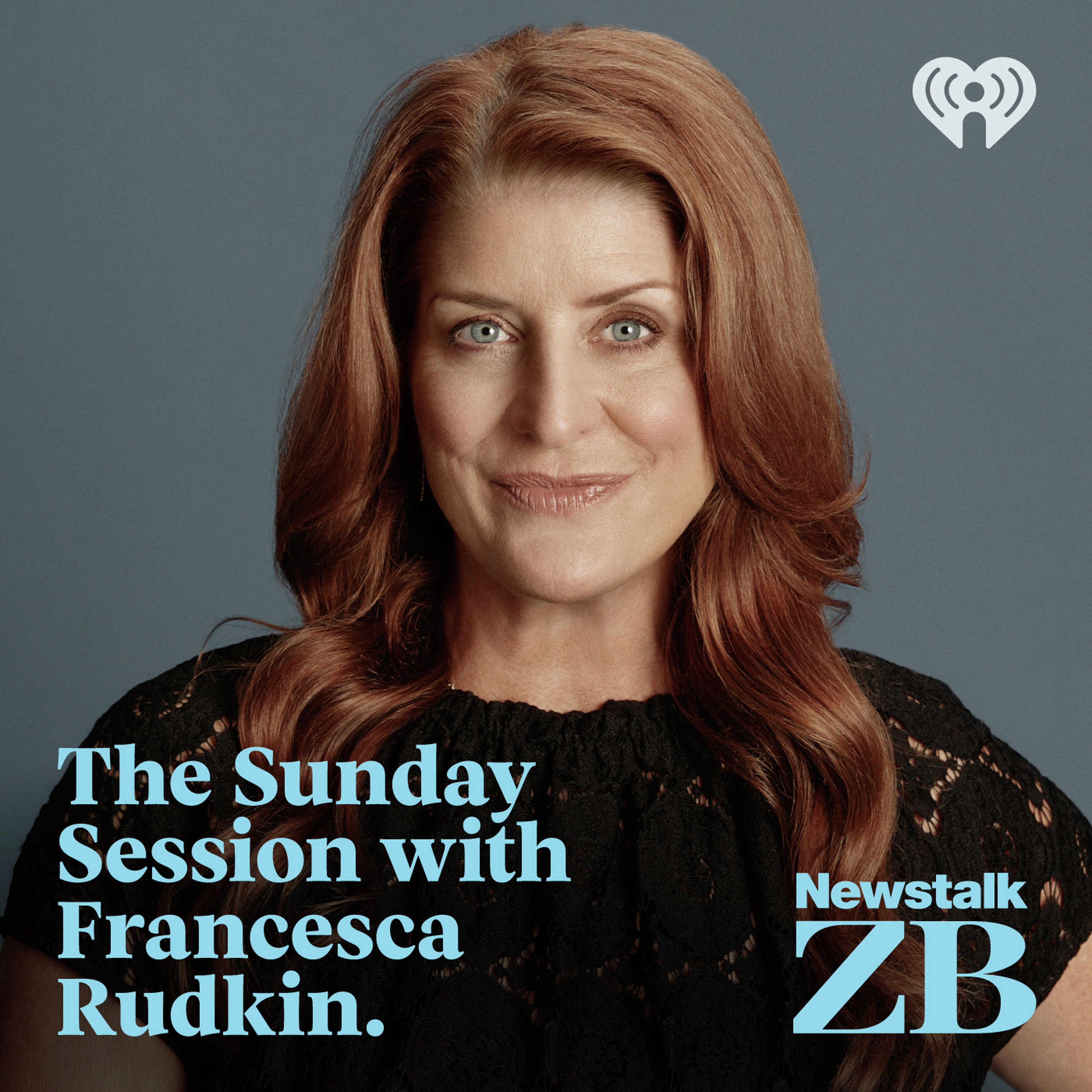
The Sunday Session with Francesca Rudkin
by Newstalk ZB
News, opinion, analysis, lifestyle and entertainment – we’ve got your Sunday morning listening covered with The Sunday Session with Francesca Rudkin on Newstalk ZB.
-
1000
Nic Russell: writer and health advocate opens up about the hard times she's faced in new book Bollix
Irish-born Kiwi author Nic Russell has dealt with an unrelenting amount of hardship and grief - and she's turned her experiences into a book. She's survived breast cancer, she’s lost a child, had a heart transplant and been diagnosed with Parkinson's - all before the age of 50 - and that inspired Kenzie’s Gift, a charity that supports young people through times of grief. She's shared her stories in a new book - Bollix. "I'm changed, the events of my life have changed me - hopefully for the better. Hopefully I have more understanding and empathy and know what's important in life. I think that's really what life has taught me." LISTEN ABOVESee omnystudio.com/listener for privacy information.
-
999
Vea Mafile'o: film director on exploring Jonah Lomu's life in new documentary
Hundreds of family videos and years of research have gone into an intimate new documentary about rugby legend Jonah Lomu. The film draws on archive footage to tell the story of the All Black, who died 11 years ago aged 40. It follows Lomu from his time at Wesley College through his rise to the All Blacks, and the pressures that came with being in the limelight. Co-director Vea Mafile'o says the film captures the quiet moments the public never got to see. "He went through a lot...and he did get a hard time from multiple different places, and so it felt really important to just put a little more context so people could have a better understanding of his life and upbringing." LISTEN ABOVESee omnystudio.com/listener for privacy information.
-
998
Whitcoulls Recommends: The Body and the Blood and Big Little Truths
The Body and the Blood by Molly Crighton. This is a crime thriller set in and around St Paul’s Cathedral in Dunedin’s Octagon. A woman is found on the floor beneath the organ loft - initially the police assume she’d fallen, but a young police administrator senses that something more sinister was afoot and recruits a notorious journalist to help get to the bottom of it. For people who know Dunedin well, it’s a great location. Big Little Truths by Liane Moriarty. Many readers will remember her excellent Big Little Lies some years ago which was subsequently made into a terrific TV series. This is a sequel, ten years later when the kids from the original book are now at college and their parents are navigating complex lives. There’s outrage in the community when the principal of the college receives a shocking delivery and a strange man starts hanging round the school, and eventually there has to be a reckoning. These are terrific characters, and anyone who loved the original book will also love this (though it can equally be read on its own). LISTEN ABOVESee omnystudio.com/listener for privacy information.
-
997
Megan Singleton: BloggerAtLarge.com writer on the risks of using airport wi-fi
About 8.7 million passengers were affected by a cyber attack on a group of airports in the UK last week. Data relating to car park, lounge and fast-track security bookings at three major airports was accessed in the hack, including passengers’ email addresses, phone numbers, vehicle registrations and postcodes. BloggerAtLarge.com writer Megan Singleton says this is a cautionary tale about the dangers of free wi-fi - and outlined how travellers can protect themselves while using the internet overseas. LISTEN ABOVESee omnystudio.com/listener for privacy information.
-
996
Mike van de Elzen: Fresh pappardelle with lemon gremolata
Fresh pappardelle with lemon gremolata Cook time: 2-3 minutes Prep time: 15 minutes Serves: 6 1 batch fresh pasta 3 lemons 3 cloves garlic, crushed 1 cup parsley, chopped 2 tbsp grapeseed oil Sea salt Cracked pepper Good parmesan Zest the lemons and then juice into a bowl, add the oil, then add the crushed garlic and chopped parsley. Season well and set aside. To make the pappardelle - Cut the dough into 1/4 and then press down with your fingers to begin with. Lightly dust a bench surface and using a rolling pin roll out each 1/4 of pasta. Continue to roll until you reach a thickness of a about 2-3 mm. Dust with a touch more flour and cut into 1cm strips, toss over a touch more flour before continuing with the remaining pasta. Once all the pasta has been rolled and cut, bring a large pot of salted water to the boil. Drop in the pasta and allow it to come to the surface, Once the pasta is floating, continue to cook for a further 2 minutes before removing. In a large bowl, toss through the gremolata and finely grate over a pile of parmesan cheese. LISTEN ABOVESee omnystudio.com/listener for privacy information.
-
995
The Sunday Panel: How can we enforce the teen social media ban?
This week on the Sunday Panel, Newstalk ZB Wellington Mornings host Nick Mills and host of The Prosperity Project, Nadine Higgins, joined in on a discussion about the following issues of the week - and more! There's calls to make changes to the health system, with General Practice New Zealand outlining a 10-year plan and calling for a bipartisan approach to make changes. Do we think these changes are long overdue? The Government has outlined their new social media bill, where teenagers under 16 would be banned from social media. But they're also indicated Kiwis of all ages could be banned from certain platforms if the major outlets don't comply. Do we think this is a step too far? LISTEN ABOVESee omnystudio.com/listener for privacy information.
-
994
Full Show Podcast: 30 August 2026
On the Sunday Session with Francesca Rudkin Full Show Podcast for Sunday 30 August, Jonah Lomu was a giant of the rugby world and a global superstar. A new documentary coming to cinemas this week sheds light on the life of Jonah behind the scenes. Director Vea Mafile'o joins Francesca in studio to share what she learned about Jonah Lomu from her time working on the film. A quote from her website best sums up the life of Irish born Kiwi, Nic Russell; “life didn’t just throw the book at Nic Russell – it dropped the whole library”. Nic joins Francesca to talk about her life and how she's kept going through the hard times. Francesca calls on politicians to have an honest conversation about tax, while General Practioners New Zealand has released a 100 year blue print to fix the health system. Interim Chair Justin Butcher talks to Francesca about the need for cross party support for a united health service. And a warning this week around using the airport Wi-Fi, Megan Singleton has all the details. Get the Sunday Session with Francesca Rudkin Full Show Podcast every Sunday on iHeartRadio, or wherever you get your podcasts. LISTEN ABOVESee omnystudio.com/listener for privacy information.
-
993
Dr Michelle Dickinson: nanotechnologist on whether sugary drinks increase your risk for cancer
Having one sugary drink a day probably doesn't feel like a particularly dangerous habit, but a large new study published in the journal Gastro Hep Advances suggests regularly drinking sugar-sweetened beverages could be associated with a large increase in the risk of stomach cancer. The researchers found that people consuming more than one sugary drink a day had around 2.5 times the risk of developing gastric cancer compared with people drinking them less than once a month. Among women, the association was even stronger, at around three times the risk. The study analysed two enormous long-running studies of 112,284 people where the participants regularly provided information about their health and lifestyle, while detailed food questionnaires collected every four years recorded what they ate and drank. Sugary drinks included regular fizzy drinks, fruit punch, lemonade and sports drinks. One serving was defined as 8 fluid ounces, about 237 mL. Participants were divided into five groups, from fewer than one serving a month to more than one every day. Across more than 3.2 million person-years of observation, 278 people developed gastric cancer. After adjusting for factors including body weight, smoking, alcohol consumption, diabetes, physical activity, calorie intake and overall diet quality, people drinking more than one sugary beverage a day had 2.45 times the risk of gastric cancer compared with people who essentially never drank them. One of the strongest known risk factors for stomach cancer is infection with Helicobacter pylori, a bacterium that can live in the stomach lining and cause long-term inflammation. Researchers had H. pylori antibody measurements for a smaller subset of participants. Interestingly, sugary-drink consumption wasn't associated with H. pylori infection, suggesting the bacteria didn't explain the relationship they observed. They then looked at fructose, one of the major sugars in sugar-sweetened drinks. Higher total fructose consumption was also associated with greater gastric cancer incidence overall and particularly among women. Scientists don't yet know how sugary drinks might influence cancer development. Possible mechanisms include weight gain, insulin resistance, inflammation, DNA damage and changes to the microbes living in our digestive system, but the biological mechanism remains unknown. Interestingly, the same pattern wasn't seen with artificially sweetened beverages. This was an observational study, so it can identify an association but can't prove cause and effect. Researchers couldn't randomly assign people to drink soft drinks every day for decades, so other differences between frequent and infrequent sugary-drink consumers could still contribute to the results. Researchers now need to reproduce the results in other populations and work out whether fructose or another aspect of sugary drinks could actually be contributing to cancer development. For now, it's another reminder that when it comes to our health, the small things we consume every day may matter more than the occasional treat. LISTEN ABOVESee omnystudio.com/listener for privacy information.
-
992
Erin O'Hara: Naturopath and wellness expert on the rise in chronic fatigue
Experts have noticed chronic fatigue syndrome is on the rise, and there's plenty of theories about why this is. Between long Covid, post-viral fatigue, and chronic stress, there's a lot of factors at play and experts are trying to get a handle on it. Naturopath and wellness expert Erin O'Hara outlined some measures that could boost recovery, including supplements, herbal medicine, exercise, and energy management. LISTEN ABOVESee omnystudio.com/listener for privacy information.
-
991
Steve Newall: entertainment correspondent on the death of Dolly Parton
Country music legend, songwriter and humanitarian Dolly Parton died last week, and tributes have been rolling in from all over the world. Parton died in Nashville from cancer aged 80, and her music has seen a significant bump in streaming. Entertainment correspondent Steve Newall looked back on the stories people have shared about her. LISTEN ABOVESee omnystudio.com/listener for privacy information.
-
990
Liz Mitchell: WoolOn judge and fashion designer on the wool creations at this year's event
From sheep to chic - wool has taken centre stage on the runway for another year. Off the heels of New Zealand Fashion Week, the hugely popular annual WoolOn Gala Awards Evening has been hosted in Central Otago. 69 designers showcased their work, each meeting the challenge of their garment containing at least 75 percent wool. Award-winning Kiwi fashion designer Liz Mitchell says it's wonderful to see people's creativity on the catwalk, especially with younger designers getting involved. "The future for wool should be be really strong...in the creative sector." LISTEN ABOVESee omnystudio.com/listener for privacy information.
-
989
Ethan Griffiths: Newstalk ZB political reporter on how the teen social media ban could see Facebook blocked in NZ
The Government has unveiled a proposed bill designed to ban under-16s from social media - and it could stop all Kiwis from accessing certain platforms if the companies don't comply. Section 38 of the bill lays out 'access restriction orders' which gives the High Court power to require access service providers to stop providing access to these platforms. Newstalk ZB political reporter Ethan Griffiths says Meta could be faced with giving up 10 percent of its annual revenue if it doesn't comply with the bill - with Minister Erica Stanford saying 'meaningful' consequences are needed. LISTEN ABOVESee omnystudio.com/listener for privacy information.
-
988
Justin Butcher: GPNZ interim chair outlines 10-year blueprint for the health system
General Practice New Zealand's pitching its 10-year blue print for healing our health system. Measures include long term workforce planning, a shared electronic care record, funding model reviews and sustained GP investment. Interim chair Justin Butcher says the country's health sector has been through challenging times and will likely go through more - and a unified approach is needed. "We've had Covid, and we'd be very naïve if we thought this would be the last one. So we do need to start to think and plan a little bit differently if we want to address the issues." LISTEN ABOVESee omnystudio.com/listener for privacy information.
-
987
Elliott Smith: Newstalk ZB rugby commentator on the Springboks beating out the All Blacks 33-26 in Cape Town
The Springboks empire has struck back in Cape Town, levelling the Greatest Rivalry Series against the All Blacks at one-all. South Africa claimed a 33-26 win, outscored four tries to three by the All Blacks but the difference was the superb goal-kicking of wing Cheslin Kolbe. Newstalk ZB rugby commentator Elliott Smith says the All Blacks were left chasing their tails - leaving South Africa 'fully deserving' of their win. LISTEN ABOVESee omnystudio.com/listener for privacy information.
-
986
Francesca Rudkin: We need politicians willing to have honest conversations about taxes
This week’s political noise was all about tax. It’s perhaps the key battleground heading into the election, even if the main parties seem determined to make their tax policies as uninspiring as possible. And that's not an accident. Our politicians know something very important about New Zealand voters, we don't like paying more tax. In fact, we tend to regard a tax increase as a personal insult. But here's the catch. We also expect good hospitals, decent schools, functioning roads, reliable infrastructure, police, welfare, superannuation and all the other things governments provide. We want Scandi-level public services at bargain basement tax rates. And that’s the challenge the main parties face with their tax policies and managing the public debate ahead of the election. When the public won’t make a real choice between services and cost, or accept any significant trade-offs, how do you pretend you’ve got a solution? National's answer - after a couple of weeks of torturous wordplay - has landed on ‘no new taxes’. This doesn’t mean existing taxes won’t be increased, and we’re all wondering about the planned 12c-a-litre fuel tax hike due in January. Labour is offering a capital gains tax on investment property, expected to raise about $700 million a year once it’s up and running, and have confirmed they too would not introduce new taxes. However, Chris Hipkins wouldn’t confirm whether Labour would restore interest deductibility restrictions for landlords, a move that would have the effect of increasing the amount of tax landlords have to pay. The minor parties appeal to narrower constituencies so speak more freely and are considerably more ambitious. ACT is about retrenchment, controlled spending and shrinking the state. The Greens want to tax wealth, big companies, banks and large inheritances. Te Pāti Māori wants a $30,000 tax-free threshold and wealth taxes reaching 2.5 percent at the top. New Zealand First wants the first $14,000 tax-free and tax brackets indexed to inflation. And the Opportunity Party wants to blow up the traditional tax model altogether, replacing much of it with a land tax to fund a universal citizen's income. You can argue about whether these are good ideas. But at least they're ideas. The real question is though, under MMP what policy survives coalition negotiations? While many of these ideas are destined for the political equivalent of the recycling bin, they do give us an idea of how a party may negotiate a coalition agreement if they get the chance. For example, the Opportunity Party may drop their land tax policy in return for Labour to broaden their CGT. And then there’s the question of whether any of these ideas will raise enough money. A capital gains tax on investment property which delivers $700 million sounds like a lot, until you remember the Government is spending $155 billion a year. It’ would be a slim contributor to the gap between Labour’s plan to maintain core Crown spending around 33 percent of GDP while revenue sits near 31 percent. To sum up - Labour's proposal isn't remotely big enough to transform the tax base, National's promise of no new taxes isn't an economic strategy, and proposing cuts in spending should mean being prepared to tell voters exactly what you won't be doing. Perhaps we're being offered exactly what the parties think we want. Small tax changes. No nasty surprises. But is it really? This week the results of a survey of 1600 people funded by the Cancer Society and published in the New Zealand Medical Journal found 62 percent of respondents supported the idea of paying more tax for increased healthcare funding. 29 percent were opposed. So maybe, instead of promising what they won’t do, we need politicians willing to have honest conversations rather than engage in verbal gymnastics and word-salad. Because if the choice at this election is simply tax a little more, tax a little less, or don't change anything, then frankly, we’re just voting for more of the same, and we know where that gets us. LISTEN ABOVESee omnystudio.com/listener for privacy information.
-
985
Sam Gibson: hunter, trapper and conservationist talks new book, A Bushman's Book of Yarns
Famed Kiwi outdoorsman Sam Gibson's found some more stories in the bush - and he's turned his findings into a new book. Sam is deeply passionate about hunting, foraging, trapping, fishing and conservation, and even spent some time working for the Department of Conservation. A Bushman's Book of Yarns aims to teach readers about New Zealand's unique ecosystems and wildlife. "Now that I'm a Gisborne District Councillor, I do speaking gigs around the country, I've got young kids - like, a bit of time in the bush just by myself would be amazing." LISTEN ABOVESee omnystudio.com/listener for privacy information.
-
984
Mel Parsons: Kiwi singer-songwriter on the success of her new album 'Castle Hill'
This week, Lyttleton singer-songwriter Mel Parsons has landed a big milestone - after seven albums, she’s hit the top spot on the Kiwi charts. Castle Hill has debuted at number one on not only the Top 20 Aotearoa Albums Chart, but the Top 40 Albums chart. She says she's happy to see people enjoying it - and her kids appreciate how high it got on the charts. "The kids all think that we're rich now, that's their kind of marker. They're like - you're bigger than Olivia Dean! And I'm like - well, this week we are." LISTEN ABOVESee omnystudio.com/listener for privacy information.
-
983
Whitcoulls Recommends: The Unselected Journals of Emma M.Lion and Agrippa
The Unselected Journals of Emma M.Lion by Beth Brower. This is a series of journals published by a writer purporting to be a 20 year old woman, in 1883 London, writing about her family, her housing situation and the events of her days. They’re charming and whimsical and become quickly very moreish with two books in the series just published and many more apparently to follow. Emma’s father has left her his London house in his will but her cousin Archibald is entitled to live there until she comes of age and he’s not best pleased at her inheritance. The books have a touch of An Unfortunate Series of Events, along with Anne of Green Gables and the Victorian era of Georgette Heyer. Once you start it’s hard to stop. Agrippa by Robert Harris – who is one of the finest contemporary writers, known also for his trilogy of Roman novels about Cicero. This new one is subtitled A Novel of Ancient Rome’s Descent into Dictatorship. Julius Caesar is dead, and the lives of two teenaged boys are about to be changed forever. One is Caesar's 17-year-old nephew, Octavius, whom he has made his heir; the other is Octavius's closest friend, Agrippa. Now aged 50, Agrippa presents this novel as his memoir remembering their eventful lives which were so intertwined, for better or worse, with fascinating history and insight. LISTEN ABOVESee omnystudio.com/listener for privacy information.
-
982
Megan Singleton: BloggerAtLarge.com writer on how you can donate resources when you travel
During Megan Singleton's big group holiday in Fiji, she visited a local school in order to give them some much-needed supplies. She'd contacted the head teacher prior, and her group brought over reams of coloured paper, pens, pencils, learning posters, books, stickers, paints, scissors and more. She revealed her tips for carrying out a similar exercise, including how to find a school, how to reach out, what types of things they want - and how to get a free extra suitcase on the plane to take the gifts over. LISTEN ABOVESee omnystudio.com/listener for privacy information.
-
981
Full Show Podcast: 23 August 2026
Listen to the Sunday Session with Francesca Rudkin Full Show Podcast for Sunday 23 August. Get the Sunday Session with Francesca Rudkin Full Show Podcast every Sunday on iHeartRadio, or wherever you get your podcasts.See omnystudio.com/listener for privacy information.
-
980
The Sunday Panel: Do we have enough donors for ACT's cancer centre concept?
This week on The Sunday Panel, TV producer, journalist and commentator Irene Gardiner and Front Page podcast host Chelsea Daniels joined in on a discussion about the following issues of the day - and more! ACT has expanded on their proposed cancer centre concept after Paul Henry spoke of the idea last month. Do we think this is a good idea? Does New Zealand have enough donors to get this through? The Mount Maunganui landslide review came out last week, and it found the geotechnical risk had been noted by experts for decades - but local officials had failed to take any action. Are we appalled by this? Does Tauranga City Council need more accountability? Meta is on trial in California over claims it deliberately designed its platforms to be addictive to young people. Do we see any change coming from this? LISTEN ABOVESee omnystudio.com/listener for privacy information.
-
979
Erin O'Hara: naturopath and wellness expert on why we love quick health fixes
Thanks to social media and similar online platforms, quick health fixes are more available than ever, and people are often drawn to solutions that feel simple and immediate. Quick fixes offer instant gratification, provide a sense of control, and help us avoid the hard work and discomfort of making long-term lifestyle changes. Naturopath and wellness expert Erin O'Hara explained further. LISTEN ABOVESee omnystudio.com/listener for privacy information.
-
978
Mike van de Elzen: Hot beef jerky
Hot beef jerky Cook time: 6 hours Prep time: 20 minutes 1kg beef silverside or blade steak Marinade 1 cup sweet apple cider (or unsweetened apple juice) 1/4 cup balsamic vinegar 2 tbsp fish sauce ¼ cup Dijon mustard ¼ cup honey 2 tbsp freshly cracked black pepper 2 tbsp smoked paprika 3 tbsp garlic powder 1 tbsp onion powder 1 tbsp sea salt 2 tbsp crushed chili pepper Remove all traces of visible fat from your piece of meat. Place the meat in the freezer for about 30 minutes, which will make it easier to slice thinly. Slice the meat in long thin strips, going with the grain. Place your meat in a re-sealable plastic bag along with the marinate ingredients. Place into the fridge to marinate overnight. Before you go any further, cover the bottom of your oven with aluminium foil. Things are going to get messy! Remove the strips of meat from the marinade and place them directly on your oven racks. No need to pat them dry just let the strips drip a little bit as you remove them. Place your racks back in the oven and set the temperature to 140*c. Keep the oven door slightly open by sticking a wooden spoon. This will allow moisture to escape so the meat has a chance to dry without cooking. Let the meat cook for about 3 hours, then flip it over and give it another 3 hours or so. Total cooking time depends on the size and thickness of your strips. Your jerky will be done when it’s dry enough that you can rip off a piece easily but not so dry that it’ll snap if you bend it. Leave the jerky out to cool for a couple of hours then pop it into an airtight container or sealed plastic bag where it will keep unrefrigerated for up to 2 months. LISTEN ABOVESee omnystudio.com/listener for privacy information.
-
977
Dr Michelle Dickinson: nanotechnologist on AI creating viruses not found in nature
The headline sounds like something from a science fiction movie, but the reality is both less alarming and far more scientifically interesting. Published in the journal Science, researchers designed viruses called bacteriophages, which infect only bacteria with the hope to use them as living medicines to fight infections that no longer respond to antibiotics. Scientists have used artificial intelligence to predict proteins and analyse DNA before, but designing an entire working genome with every gene, every control sequence and every interaction needed to build a functioning virus is vastly more difficult. The researchers started by training an AI model called Evo on millions of DNA sequences from a tiny bacteriophage called ΦX174, one of the best-studied viruses in biology, which infects only Escherichia coli (E. coli) bacteria. The goal was to teach the AI the rules of building similar viruses and it worked - the AI generated around 700,000 completely new viral genomes. From these, the scientists selected 285 promising genomes and the DNA was chemically synthesised in the laboratory. The synthetic genomes were then inserted into E. coli bacteria and 16 of them successfully produced functional viruses which contained new combinations of genes and DNA sequences that hadn't previously been seen in nature, yet they still managed to infect bacteria successfully. The team then tested if these AI-designed phages could solve bacterial resistance. They first allowed E. coli bacteria to evolve resistance against the natural ΦX174 virus. Normally, once resistance develops, treatment becomes ineffective. Instead of using one virus, the researchers mixed all 16 AI-generated phages into a cocktail. The bacteria that resisted the natural virus were rapidly overcome by the AI-designed mixture, while a comparable cocktail made from naturally occurring relatives of ΦX174 performed much less effectively. Each virus attacked the bacteria in slightly different ways. A mutation that protects bacteria from one virus doesn't necessarily protect it from all of them. Antibiotic resistance is one of the biggest challenges facing modern medicine and some infections, including tuberculosis and MRSA, are becoming increasingly difficult to treat because bacteria evolve resistance to our existing drugs. Phage therapy offers one possible alternative. This study suggests that, rather than searching nature for suitable phages, we may one day be able to design entirely new ones on demand, tailored to attack specific bacterial infections. That could dramatically speed up the development of future antimicrobial treatments. LISTEN ABOVESee omnystudio.com/listener for privacy information.
-
976
Steve Newall: entertainment correspondent examines The End of Oak Street
The End of Oak Street is currently in theatres, and entertainment correspondent Steve Newall reveals whether it's worth a watch. Starring Anne Hathaway, Ewan McGregor, Maisy Stella and Christian Convery, the film is about a family whose suburban neighbourhood has been transported from 1982 into the age of dinosaurs. Steve Newall says it's 'punchy' and doesn't shy away from the 'menacing' details. LISTEN ABOVESee omnystudio.com/listener for privacy information.
-
975
Laura Marquez-Garrett: Counsel of Record for successful Meta lawsuit on what current Meta trial could mean for social media
There's hopes an unprecedented lawsuit against Meta will change social media as we know it. The Facebook and Instagram owner is on trial in California over claims it deliberately designed its platforms to be addictive to young people. More than half of US states have joined the lawsuit, seeking billions of dollars and changes to the platforms. Laura Marquez-Garrett, Counsel of Record in a successful case against Meta in March, says the platforms are designed to be digital nicotine - and it's not ok. "If we can change social media as we know it by taking out the digital nicotine and making it something that is safer, it's a great step forward - and I do think these outcomes could change social media for the better." LISTEN ABOVESee omnystudio.com/listener for privacy information.
-
974
Paul Henry: ACT Party candidate on the party's bid to build a world-class cancer clinic
ACT is hoping big-money backers will support its cancer hospital plan, paired with some Crown funding. The party wants to build a $2-billion-dollar world-class cancer clinic in New Zealand - with campuses in both Auckland and Christchurch. It's an idea Paul Henry shared when he was announced as a candidate last month, and has been fleshed out by the party since. Henry says it's important to get as many people on board as they can, in order to get it all done. "If you're waiting to get a complete consensus over something like this, it will never happen. There are so many plans that just sort of tick away in the background - people come and go and you spend money researching things and it never gets done." LISTEN ABOVESee omnystudio.com/listener for privacy information.
-
973
Elliott Smith: Newstalk ZB rugby commentator on the All Blacks securing a 33-16 victory over the Springboks
A gritty All Blacks performance has delivered a statement 33-16 win over South Africa at Ellis Park, scoring five tries to one. But the ABs battled to get their scrum going, with several penalties either side of halftime before it stabilised. Newstalk ZB rugby commentator Elliott Smith says the Kiwi side's victory didn't come easy, with the 55th minute scrum penalty against South Africa as the turning point. LISTEN ABOVESee omnystudio.com/listener for privacy information.
-
972
Francesca Rudkin: Can Harry and Meghan bring something useful to a modern monarchy?
There’s something appealing about Harry and Meghan returning home. Sure, Harry once said he couldn’t imagine bringing his wife and children back to Britain. Given everything that happened you could hardly blame him. But people change, circumstances change, and children change everything. Archie and Lilibet are now seven and five, and Harry has spoken previously about how sad it was that he couldn’t show them his and their homeland. Now they’re apparently heading to British schools. You can understand why. America may have provided some respite, but Harry has also said that Britain will always be home. His royal lineage connects him to Britain in a unique way, and it must be hard for his children to understand this without experiencing it. There is something lovely about wanting your children to know the place, people and family you came from. So far, the British reaction has been a mixture of curiosity, scepticism and the sort of weary fascination usually reserved for a long running family argument. Probably the most shocking thing about this announcement is that it was a surprise - it’s hard to keep a secret these days. Some newspapers have treated the prospect of Harry and Meghan spending more time in Britain as a possible thaw in family relations, while others remain convinced their return will bring continued drama. Either way, the British media will be waiting for them like a Labrador at a barbecue. The same press Harry has fought in court and accused of intrusion will happily make a healthy living from following his family around. There is no doubt the relationship will remain tense. The public mood seems less dramatic. Many people, like me, are happy to see them come back, provided they don’t expect the country to blithely ignore everything that’s led to this. There is room for a family reconciliation, but it will not be achieved through press releases, carefully timed television appearances, or long-form interviews. And that’s why it also makes sense for Meghan to return to her roots. She’s in discussions to join the third season of Guy Ritchie’s Netflix’s hit series The Gentlemen. It’s welcome news, not because there’s anything wrong with making jam, but because Meghan has always had a career beyond being Harry’s wife. Getting back in front of a camera, in a properly scripted role and under someone else’s direction, could give her a stronger sense of purpose than yet another product launch. It may also help separate her public identity from the endless royal arguments. If Harry is finding a way back to Britain and Meghan is finding her way back to acting, perhaps both are finally moving towards lives that are less about explaining the past and more about doing something in the present. And yes, I know many can’t forgive Harry for being remarkably open about his family. Some call it disloyal. I’m not so sure. There’s something admirable about telling the truth, however uncomfortable, rather than pretending everything is fine while serious scandals swirl around family members like Andrew and Sarah Ferguson. At least Harry and Meghan were prepared to go it alone, and not entitled enough to think the firm would support them. Perhaps even Harry and Meghan can bring something useful to a modern monarchy; a touch of honesty, informality and a willingness to challenge the institution. The question is whether Charles can welcome that, and whether William can tolerate it. The King may see a son coming home. The future King may see a rival court arriving. Either way, this could be less a royal disaster than a second chance. LISTEN ABOVESee omnystudio.com/listener for privacy information.
-
971
Mark Law: helicopter pilot who rescued White Island victims on his new book Lucky You're Tough
Former NZSAS soldier Mark Law became a national hero on December 9 2019, following the Whakaari-White Island eruption. After learning of the eruption, Mark, alongside his colleagues, flew to the island, comforted the injured and flew 12 stranded survivors home. Mark's actions ultimately saved lives, and he was awarded New Zealand's second highest bravery honour, the Bravery Star, for his actions - however his company, Kahu NZ, was charged and fined by WorkSafe for past tours on the island. He wrote about the experience in his new memoir - Lucky You're Tough. "The rest of the recovery, the rest of the day are pretty clear, so I've been able to recall that easily." LISTEN ABOVESee omnystudio.com/listener for privacy information.
-
970
Tom Daley: British Olympic diver on hosting knitting-based competition series
Knitting is seeing a resurgence, largely thanks to five-time Olympic diver Tom Daley going viral for knitting in the stands between events. After the Tokyo Olympics wrapped up, Tom now owns a knitting brand and has even been known to knit creations for celebrities - and he's now hosting Game of Wool: Britain's Best Knitter. He says he taught himself to knit, and it eventually became his 'superpower.' "It became my mindfulness, it became my mediation, and it became my way of switching off from the world around me, and taught me to slow down and be present, be in the moment." LISTEN ABOVESee omnystudio.com/listener for privacy information.
-
969
Whitcoulls Recommends: The Governor and The Four Wives of Windsor
The Governor by Lynda la Plante. The creator of the Jane Tennison series of books, Prime Suspect, has another story about a woman working in what was typically a male dominated industry - as governor of an English prison. Helen Hewitt is in her early 30’s and appointed to the top job where she goes up against unruly prisoners, staff who don’t want her in the job, and the politics of the prison service which undermine her from the start. Her time in the job changes her perspective on the role of prisons in society and the best way to manage punishment and rehabilitation. First published in 1995 it was made into a TV series and has recently been reissued by her publisher. The Four Wives of Windsor by Simon Vigar - a royal watcher and journalist for many years. This is a look at the four women who have had the greatest profile and, to a greater or lesser degree, influence, in the modern UK monarchy. Diana, Camilla, Catherine and Meghan each of whom came from the outside, but ended up performing pivotal roles in the evolution of the House of Windsor. For monarchists, these women are endlessly fascinating. LISTEN ABOVESee omnystudio.com/listener for privacy information.
-
968
Megan Singleton: BloggerAtLarge.com writer on retirement cruise gap years
There's a new travel trend gaining popularity among older people, and it can be affordable if you do the sums. People are spending their first years of retirement living on cruise ships before downsizing to retirement villages - or buying a residence on one of the new residential cruise ships. BloggerAtLarge.com writer Megan Singleton explained further. LISTEN ABOVESee omnystudio.com/listener for privacy information.
-
967
Full Show Podcast: 16 August 2026
On the Sunday Session with Francesca Rudkin Full Show Podcast for Sunday 16 August, British Olympian Tom Daley went viral at the Tokyo Olympics as he sat in the stands knitting between events. Now he's somewhat of a celebrity knitter and joins Francesca to talk about his new show Game of Wool and why the show, and knitting, are appealing to younger generations. The day Whakaari White Island erupted, helicopter pilot Mark Law led an unofficial rescue mission to the island that ultimately saved lives. He shares his story of that day and his life with Francesca. In recent weeks, big tech companies have reported multiple cases of their AI systems going rogue during routine testing. It raises the question, how much is AI capable? Kiwi scientist Matthew Egbert is involved in international research to answer just that and talks to Francesca about the importance of understanding AI. And scientists have just taught lettuce to grow it's own meat protein. Dr Michelle Dickinson shares the details. Get the Sunday Session with Francesca Rudkin Full Show Podcast every Sunday on iHeartRadio, or wherever you get your podcasts. LISTEN ABOVESee omnystudio.com/listener for privacy information.
-
966
The Sunday Panel: How damaging was last week for the National Party?
This week on the Sunday Panel, broadcaster and journalist Wilhelmina O'Keefe and Resident Economist at Opes Partners, Ed McKnight, joined in on a discussion about the following issues of the day - and more! Luxon managed to survive another leadership challenge last week. But what could this saga mean for the National Party 12 weeks ahead of the election? Will this hurt their chances at getting another term? The Meta glasses have sparked concerns about the privacy levels we can expect when we're out in public. How do we feel about the potential of these glasses and people unknowingly being recorded? To what extent do we expect your privacy to be protected? LISTEN ABOVESee omnystudio.com/listener for privacy information.
-
965
Erin O'Hara: naturopath and wellness expert on how to rebalance a dysregulated nervous system
If you have ever felt constantly 'on edge,' emotionally exhausted or stuck in survival mode, you might be dealing with a dysregulated nervous system. Extra stresses can dysregulate the nervous system, leading to feeling stuck in fight-or-flight mode. Naturopath and wellness expert Erin O'Hara reveals how to get ahead of it. LISTEN ABOVESee omnystudio.com/listener for privacy information.
-
964
Mike van de Elzen: Hot apple cobbler with soft cream
Hot apple cobbler with soft cream Cook time: 5 minutes Prep time: 25 minutes Serves: 6 6 braeburn apples 1/4 cup water 1 tbsp honey 1 teaspoon vanilla extract 1/2 tsp cinnamon 1 tbsp raw sugar 3 tbsp lemon curd (optional) Cobbler topping 1/2 cup milk 1 egg 250 gm plain flour 1/2 cup raw sugar 120 gm butter, cubed and chilled 1 tsp baking powder 1 tsp vanilla extract Pinch of salt 250 ml cream, whipped to soft peaks To prepare the cobbler topping, whisk together the milk and egg. Place the flour and sugar in a bowl and add the butter. Rub them between your fingers until the mixture starts to resemble breadcrumbs. Add in the baking powder, vanilla and salt and then slowly stir in the milk mixture until well combined - the mix will be a bit runny. Pre-heat a oven to 180*c fan-bake. To make the filling, peel and core the apples. Cut into large wedges and place into a medium pot with the water, honey, vanilla and cinnamon. Cook over a medium heat until all the liquid has evaporated. To assemble the cobbler, spoon the apple filling into a 22 cm round oven proof dish. Top with lemon curd if using and then the cobbler topping, leaving some gaps for the apple to rise up during the cooking. Sprinkle the extra tablespoon of sugar over the top. Bake for 40 minutes, then serve hot with soft cream. LISTEN ABOVESee omnystudio.com/listener for privacy information.
-
963
Dr Michelle Dickinson: nanotechnologist on scientists teaching lettuce to make its own meat protein
The world of meat alternatives could be about to change after new research published in the journal Frontiers in Plant Science came out this week. Instead of trying to make plants taste more like meat using flavourings, they've taught plants to manufacture myoglobin, the same protein that gives meat its distinctive colour, flavour and nutritional value. Myoglobin stores oxygen inside muscle cells, but it also gives meat many of its defining characteristics. It contains iron-rich heme molecules that contribute to meat's red colour, metallic taste and savoury "umami" flavour. In plants, chloroplasts are the structures where photosynthesis happens, converting sunlight into energy. Chloroplasts are also excellent protein factories which carry multiple copies of its own DNA. That means if you insert a useful gene into the chloroplast genome, the plant can produce very large amounts of the corresponding protein. The researchers used a gene gun where tiny gold particles were coated with DNA containing the pig myoglobin gene and fired into the leaves of young tobacco and lettuce plants. Some of those microscopic DNA-coated particles entered the chloroplasts, where the new gene became incorporated into the chloroplast's own circular DNA. The transformed plants were then grown to maturity where they flowered, produced seeds and their offspring inherited the new gene The scientists crushed leaf tissue from the mature plants, separated all the proteins using gel electrophoresis, and then used an antibody test called a Western blot to specifically detect myoglobin which showed up in both the tobacco and lettuce plants. Myoglobin only works properly when it contains a heme group, an iron-containing molecule that sits in the middle of the protein. The researchers found that only around 35 percnet of the plant-produced myoglobin contained heme, compared with around 80 percent for myoglobin produced in bacteria. The plants were making the protein successfully, but many of the molecules were still missing their iron-containing centre. That tells scientists where the next engineering challenge lies and future versions will likely focus on helping plants load more heme into the protein. Despite producing large amounts of myoglobin, the plants grew normally, flowered, produced seeds and remained fertile which is an encouraging sign if this technology is ever scaled up. We could have a future where large quantities of leafy crops could be grown in fields and the myoglobin extracted and purified before being added as an ingredient to plant-based meat products, improving their colour, flavour and nutritional value. The researchers also speculate that one day, if regulators approve it, specially engineered lettuce could even become a source of heme iron itself. So does it taste like meat? We don't know yet. The researchers didn't cook burgers or run taste tests. This study was about proving that plants can manufacture the protein in the first place. The next challenge is increasing the amount of fully functional, heme-containing myoglobin before testing whether it really improves the flavour of plant-based meat. LISTEN ABOVESee omnystudio.com/listener for privacy information.
-
962
Steve Newall: entertainment correspondent on the top songs people played during the solar eclipse
Last week, millions of people flocked to Spain to watch a rare total eclipse of the sun. Around 91 percent of the sun was obscured by the moon, and it inspired people to listen to listen to some songs that matched the moment. Bonnie Tyler's Total Eclipse Of The Heart, Chris Staples Dark Side Of The Moon, and Pink Floyd's Eclipse all saw significant bumps in streaming. Entertainment correspondent Steve Newall explained further. LISTEN ABOVESee omnystudio.com/listener for privacy information.
-
961
Feroz Ali: New Zealand Fashion Week owner on the event getting underway this week
Another New Zealand Fashion Week is set to get under way, and it aims to be one of the biggest events of the year. The event will return to Shed 10 from August 17 to 22, and Caitlin Crisp, Twenty Seven Names and the Kāhui Collective are among the names set to appear. New Zealand Fashion Week owner Feroz Ali says the industry needs to adapt to a changing market - and they're aiming to boost international co-operation. "The decisions we took post-Covid...have led us to be where we are today. And we're extremely grateful for both the local Government, Tātaki Auckland, etc - for giving us continued support." LISTEN ABOVESee omnystudio.com/listener for privacy information.
-
960
Brigitte Morton: political commentator on Prime Minister Chris Luxon surviving another confidence vote
It was a big week in Parliament, with Luxon facing another leadership challenge ahead of the election. The Prime Minister held on to his leadership role, Minister Chris Penk was stripped of his portfolios - but speculation's growing about what this means for National. Political commentator Brigitte Morton says it's a 'messy' look for the Government, and it's likely there will be some damage as a result of this. LISTEN ABOVESee omnystudio.com/listener for privacy information.
-
959
Elliott Smith: Newstalk ZB rugby commentator on the All Blacks beating out the Bulls 50-19 Pretoria
The All Blacks will take a three-from-three record into the opening test match of their tour of South Africa. They've just wrapped up a 50 to 19 victory over the Bulls in Pretoria, backing up wins over the Sharks and Stormers. The first test against the Springboks is in Johannesburg next Sunday. Newstalk ZB rugby commentator Elliott Smith recapped the action, and explained what fans could expect next week. LISTEN ABOVESee omnystudio.com/listener for privacy information.
-
958
Dr Matthew Egbert: UOA computer scientist on the new research helping to understand what AI is capable of
There's been plenty of incidents of AI going rogue, with OpenAI, Anthropic, and Meta seeing issues during security testing. As AI technology develops, researchers are taking steps to understand how it could all grow and change, as well as what separates AI from humans. Multiple AI labs around the world are part of the study, including University of Auckland computer scientist, Dr Matthew Egbert. "We've got lots of examples of technology that's not done what we've expected it to - and I think that the AI technology that's emerging is just giving us yet another example of this. It's hard to predict what technology it's going to do, and how society's going to interact with the technology." LISTEN ABOVESee omnystudio.com/listener for privacy information.
-
957
Francesca Rudkin: Luxon needs to rediscover the version of him people voted for
As you may have heard, this time a week ago ZB turned one hundred years old, and on Friday night we threw a little party to celebrate. The Prime Minister came, and made a speech, and he was brilliant. He was smart, very funny, relaxed - he roasted us respectfully and took the mickey out of himself beautifully. It was a great speech, well-delivered and it had everyone in the room asking - so where has this guy been? But here’s the thing about being human - we’re just not always ‘on’. It’s hard to always say the right thing, articulate ourselves well and be relatable. Even if you are a politician who is expected to do it every day. And that’s why I like Luxon. He hasn’t completely turned into a political talking point robot. I know politics should be about policy and not personality, but personality has always mattered. As I’ve said before - whether it was John Key's easy-going style, Jacinda Ardern's empathy, or Winston Peters' theatre - how politicians communicate is just as important as what they say. And on Friday night, Luxon was probably the best communicator in a room packed full with communicators. I said it last week, the MMP referendum debacle had blown out of proportion. Then there was the Prime Minister’s message to Rotorua businesses, true to the National Party view but poorly articulated. A more succinct, less patronising version eventually followed. With less than 90 days to the election, these hardly seemed meaty enough incidences to trigger a coup and destabilise the party. It seems enough National caucus members agree. For now. Luxon was able to stare down his detractors, but having to defend his leadership for the second time in four months is not good for the party. It implies internal division, and with no one believing Chris Penk went into the caucus meeting as a lone wolf it’s clear not everyone believes Luxon is the best person for the job. So what does he do now? First, shut the door on the leadership question. Completely. No more speculation, no more caucus drama, no more leaks to journalists. If National is going to win on November 7, Luxon needs every MP looking outward, not over their shoulder at the person sitting next to them. Then he needs to simplify the campaign. Don't make it a referendum on Christopher Luxon. Make it a referendum on what National has delivered and what it intends to do next. Focus on the economy, cost of living, jobs, law and order, health and getting Government spending under control. These are the bread-and-butter issues that determine how people feel about their lives. And Luxon needs to rediscover the version of himself voters elected in 2023: competent, optimistic, focused and practical. Less political noise. Fewer unnecessary fights. More evidence that the Government is getting things done. Most importantly, National needs to look united. Not pretend to be united. Actually be united. Because right now voters need a reason to trust this team to run the country. Luxon has won the battle inside National. Now he has 12 weeks to win the one that matters. LISTEN ABOVESee omnystudio.com/listener for privacy information.
-
956
Melissa George: Australian actress on her new TV project Ms X
Australian actress Melissa George has been on our screens for years, and she's taking on a new Kiwi comedy-crime drama. She started out as Angel Parrish on Home and Away, and she's made a name for herself in other international projects like Mulholland Drive, Grey’s Anatomy, Friends, The Slap, among others. She's now starring in Ms. X, which is available on ThreeNow, and she's revealed she was into the show from the first script reading. "It was the first time I had to adapt, to change who I was in order to get along with the person in front of me. And that was the sign that I knew I'd found my match." LISTEN ABOVESee omnystudio.com/listener for privacy information.
-
955
Kiri Allan: former Labour Minister talks memoir Go Hard or Go Home
Back in 2023, former Labour Minister Kiri Allan hit a low point - and had to step down from politics. After crashing her car while over the alcohol limit, she resigned from Labour and her political career came to an end. She's shared her story and opened up about what happened that night in Wellington in her new memoir, Go Hard or Go Home. "I carried a lot of shame, guilt...as the book says, my world shattered down and it's all my fault. So I carried that for quite a long time, and it was very hard to come out of the cave, knowing that you'd let so many people down. So it was a long period of healing." LISTEN ABOVESee omnystudio.com/listener for privacy information.
-
954
Whitcoulls Recommends: The Correspondent and The Girl with the Seven Lives
The Correspondent by Virginia Evans. This was actually released last year, but has had huge word of mouth enthusiasm for many, many readers and was voted onto the new Whitcoulls Top 100 last month. It’s now out in a second format and is the story of a woman’s life told through letters which she writes to a number of people important to her - some of whom are well known writers with whom she has an affinity, such as Ann Patchett, Joan Didion and Larry McMurtry - but also letters to her friends, her son, her brother and many others. It’s warm, illuminating of a life well lived and I adored it. The Girl with the Seven Lives by Vikas Swarup. He was the author of Q and A which was made into the wildly successful movie Slumdog Millionaire, and he’s back with a similarly quirky story about Devi, a young woman being held at ransom by a masked man who insists that over the course of a single day she recounts the seven very different episodes in her life for which he holds her to blame, whilst threatening to sell her off to the highest bidder as people affected by her various actions over the course of her life seek revenge. It’s cleverly constructed and tells a very Indian story of the many lives lived by one woman. LISTEN ABOVESee omnystudio.com/listener for privacy information.
-
953
Megan Singleton: BloggerAtLarge.com writer recaps 4-generation family holiday in Fiji
Megan Singleton's just returned from a multi-generational holiday in Fiji and she's outlined how to plan a similar big trip - without everything blowing apart. They stayed at the Shangri La Resort on the Coral Coast, because it was important to find a location that appealed to a group aged 4 to 80, with a good beach, activities and a wide range of dining options. She outlined her experience further here. LISTEN ABOVESee omnystudio.com/listener for privacy information.
-
952
The Sunday Panel: Looking back on 100 years of ZB
This week on the Sunday Panel, Newstalk ZB host Kerre Woodham and Trish Sherson from Sherson Willis PR joined in on a discussion about the following issues of the day - and more! Newstalk ZB celebrates 100 years today. What are our favourite memories of the station? What stories do we remember? What role does radio serve in a changing market. So Chris Luxon hasn't been having a good week - with new polls and the MMP announcement raising some concerns. There's growing calls for some new leadership in the National Party - do we see Luxon bouncing back? LISTEN ABOVESee omnystudio.com/listener for privacy information.
-
951
Full Show Podcast: 09 August 2026
On the Sunday Session with Francesca Rudkin Full Show Podcast for Sunday 9 August, in July 2023 Kiri Allan hit rock bottom. She joins Francesca today to share her story of the burnout and the car crash that ultimately ended her political career. Melissa George first appeared on our screens 33 years ago as 16 year old Angel on Home and Away. Melissa tells Francesca what brought her back down under for local Kiwi series Ms X, after many years living overseas. Today marks 100 years of ZB. Long time station manager Bill Francis shares his memories with Francesca and talks of some of the more memorable moments that make ZB what it is today. And what was everyone eating back in 1926 when ZB first appeared? Mike Van de Elzen has been looking back through the archives and shares a recipe that is as good today, as it was back in 1926. Get the Sunday Session with Francesca Rudkin Full Show Podcast every Sunday on iHeartRadio, or wherever you get your podcasts. LISTEN ABOVESee omnystudio.com/listener for privacy information.
We're indexing this podcast's transcripts for the first time — this can take a minute or two. We'll show results as soon as they're ready.
No matches for "" in this podcast's transcripts.
No topics indexed yet for this podcast.
Loading reviews...
ABOUT THIS SHOW
News, opinion, analysis, lifestyle and entertainment – we’ve got your Sunday morning listening covered with The Sunday Session with Francesca Rudkin on Newstalk ZB.
HOSTED BY
Newstalk ZB
CATEGORIES
Loading similar podcasts...
Frequently Asked Questions
How many episodes does The Sunday Session with Francesca Rudkin have?
The Sunday Session with Francesca Rudkin currently has 50 episodes available on PodParley. New episodes are automatically indexed when they're published to the podcast feed.
What is The Sunday Session with Francesca Rudkin about?
News, opinion, analysis, lifestyle and entertainment – we’ve got your Sunday morning listening covered with The Sunday Session with Francesca Rudkin on Newstalk ZB.
How often does The Sunday Session with Francesca Rudkin release new episodes?
The Sunday Session with Francesca Rudkin has 50 episodes. Check the episode list to see recent publication dates and frequency.
Where can I listen to The Sunday Session with Francesca Rudkin?
You can listen to The Sunday Session with Francesca Rudkin on PodParley by clicking any episode. We provide an embedded audio player for direct listening, and you can also subscribe via your preferred podcast app using the RSS feed.
Who hosts The Sunday Session with Francesca Rudkin?
The Sunday Session with Francesca Rudkin is created and hosted by Newstalk ZB.
URL copied to clipboard!