
PODCAST · society
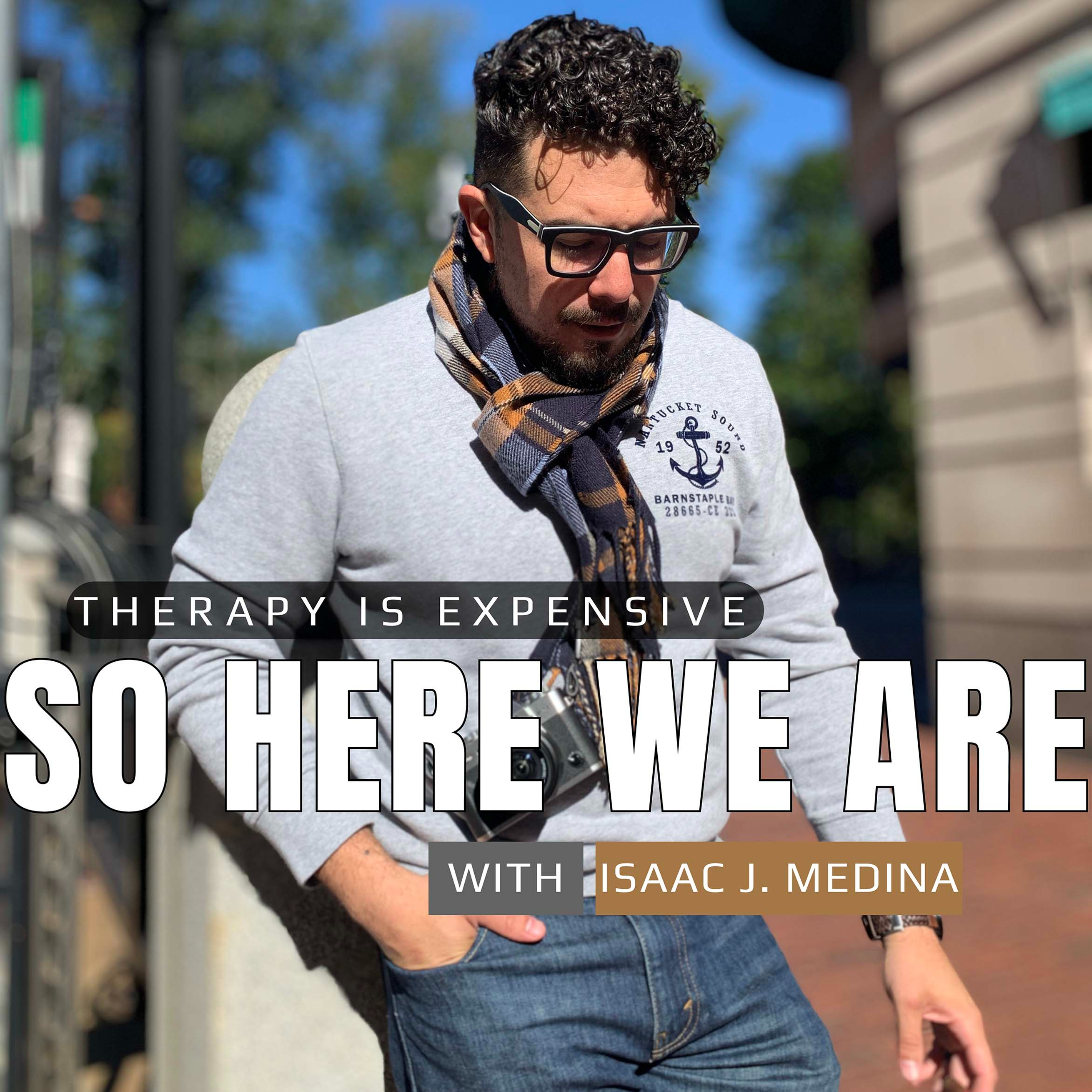
Therapy Is Expensive So Here We Are
by Isaac J. Medina
Being a teacher is basically group therapy… if group therapy included standardized testing, last-minute meetings, and kids who treat your profession like a suggestion. Therapy is Expensive, So Here We Are is the unfiltered, slightly sarcastic, but ultimately real podcast where we break down mental health, education, and parenting—without the hefty co-pay. Hosted Isaac J. Medina, this is your weekly dose of insight, humor, and just enough cynicism to keep you sane.
-
37
Episode #16 When Peacekeeping Becomes Self-Abandonment
(Blended Families × Boundaries × Spiritual Maturity)There’s a difference between creating peace and constantly avoiding conflict.But for many people, especially inside blended families, that line slowly becomes harder to recognize.In this episode, we explore the emotional cost of becoming the person who is always trying to keep everything stable. The one who absorbs tension quietly. The one who chooses patience over reaction, silence over confrontation, and emotional restraint over honesty in order to keep the household functioning.At first, peacekeeping can look like maturity.Like wisdom.Like love.You tell yourself you’re being understanding. You avoid unnecessary arguments. You stay calm for the sake of the children, the relationship, or the emotional atmosphere of the home.And sometimes, those instincts truly are healthy.But over time, constantly suppressing your own emotions to maintain stability can slowly turn into something else: self-abandonment.This episode unpacks how emotionally responsible people, especially parents and stepparents, can unintentionally lose touch with themselves while trying to protect everyone else from discomfort. We talk about what happens when emotional regulation becomes emotional suppression, and how years of “choosing your battles” can eventually leave someone disconnected from their own needs, voice, and identity.Blended families often create unique emotional pressures. Many people become hyper-aware of tone, timing, reactions, and underlying tension. They learn how to carefully manage emotional environments because conflict can feel especially disruptive in already complicated family systems.The problem is that constantly managing tension can slowly teach people that their own honesty is dangerous.So they stay quiet.They over-accommodate.They minimize their needs.They carry frustration privately.And eventually, they begin disappearing emotionally inside the very relationships they’re trying to protect.This conversation also explores the role faith can play in reinforcing these patterns. Many people are taught that being spiritually mature means always keeping harmony, staying quiet, endlessly sacrificing, and avoiding conflict whenever possible.But healthy peace and unhealthy peacekeeping are not the same thing.Real peace often requires truth.Boundaries.Difficult conversations.Honesty without cruelty.Peacekeeping, on the other hand, often depends on suppression, and suppression can look holy for a very long time, especially when everyone around you benefits from your silence.We also talk about the resentment and emotional numbness that can quietly build underneath chronic self-erasure. Not because someone is selfish or unloving, but because carrying emotional responsibility without space for your own humanity eventually takes a toll.At its core, this episode is about learning the difference between emotional maturity and emotional disappearance.Because being patient should not require losing your voice.Being loving should not require abandoning your needs.And keeping peace should not come at the cost of your identity.If you’ve spent years trying to stabilize relationships while quietly feeling disconnected from yourself…If your version of “being mature” has started feeling emotionally exhausting…If you’ve confused silence with wisdom because honesty felt too risky…This episode is for you.Because peace that requires your silence is not peace.And sometimes the healthiest thing emotionally responsible people can do is finally allow themselves to exist fully inside the relationships they’ve been trying so hard to protect.
-
36
Episode #15: Loving Children You Didn’t Choose
(Step parenting × Grace × Shadow Work)There’s an uncomfortable reality about blended families that many people are afraid to say out loud:Love doesn’t always arrive instantly.In this episode, we explore the emotional complexity of step parenting and what it means to intentionally love children you didn’t choose, in a family structure that often comes with grief, uncertainty, divided loyalties, and emotional pressure.Blended family conversations are often built around hopeful expectations. People talk about becoming “one big family,” about instant connection, about love naturally smoothing everything over with enough time and effort. But real relationships rarely develop that cleanly. Trust takes time. Emotional safety takes time. Attachment takes time.And when those things don’t happen immediately, many step parents quietly begin questioning themselves.Why does this feel harder than I expected?Why doesn’t connection always come naturally?Why do I feel guilty for struggling emotionally sometimes?This episode gives language to those questions without shame.Because step parenting requires a kind of emotional leadership that many people underestimate. It often means stepping into relationships that already carry history, wounds, routines, and loyalties you didn’t help create. And while there can be deep love inside those relationships, there can also be exhaustion, confusion, resentment, grief, and emotional distance that people rarely feel safe admitting openly.Not because they don’t care.But because they’re human.We talk honestly about the myth of the “instant family” and how unrealistic expectations can create emotional performance instead of authentic connection. We unpack the guilt many stepparents carry when bonding doesn’t feel automatic, and why emotional closeness cannot be forced through pressure, self-condemnation, or trying to perform perfect love.This episode also explores a quieter but important truth:Sometimes love is not immediate emotion.Sometimes love is consistency.It’s showing up repeatedly.Remaining patient during tension.Maintaining emotional steadiness when relationships still feel uncertain.Choosing care before comfort.And in many ways, intentional love may actually be one of the deepest forms of love there is.We also examine how faith conversations around family can unintentionally oversimplify emotional realities. Advice like “love covers all” or “treat them like your own” may come from good intentions, but they can leave stepparents feeling ashamed when complicated emotions still exist underneath the surface.Grace is not pretending difficult feelings don’t exist.Grace is learning how to navigate them honestly without abandoning people in the process.At its core, this conversation is about giving people permission to stop measuring their family against unrealistic emotional timelines. Healthy blended families are not built through forced closeness or constant emotional perfection. They are built gradually through trust, consistency, safety, patience, and time.If you’ve ever felt guilty for struggling emotionally inside a blended family…If you’ve questioned whether your love is “enough”…If you’ve been trying to lead with patience while quietly carrying complicated emotions yourself…This episode is for you.Because love inside blended families is often quieter than people expect.And sometimes the strongest form of love isn’t immediate emotional certainty, It’s the decision to keep showing up honestly while trust grows slowly over time.
-
35
Episode #14: The Loneliness of Being the Steady One
(Step parenting × Emotional Leadership × Faith)There’s a kind of loneliness that doesn’t come from being physically alone.It comes from being the emotionally steady one.The one who stays calm during conflict.The one who absorbs tension before it spreads.The one who regulates themselves so everyone else can feel safe.And over time, that role can become incredibly heavy—especially inside blended families where emotions, loyalties, routines, and histories are constantly intersecting beneath the surface.In this episode, we explore the invisible emotional labor that many stepparents and blended-family parents quietly carry every day.Stepparenting is often discussed in practical terms—discipline, routines, communication—but much less attention is given to the emotional leadership the role demands. Many stepparents find themselves acting as emotional shock absorbers inside their households, learning how to de-escalate conflict, choose their words carefully, remain patient under pressure, and maintain stability during emotionally tense moments.The difficult part is that this kind of leadership rarely gets acknowledged because it often works best when nobody notices it.Over time, emotional steadiness can stop feeling appreciated and start feeling expected.This episode talks honestly about the exhaustion that comes from constantly being “the calm one,” especially when your own emotional needs begin slipping further into the background. It explores the quiet resentment that can build when your patience becomes assumed, your effort goes unseen, and your emotional regulation is mistaken for endless capacity.We also unpack how faith can complicate this dynamic. Many caregivers and stepparents are taught that love means constant sacrifice, constant patience, and constant availability. While those values matter deeply, there’s a difference between Christlike love and emotional self-erasure.Jesus served people compassionately, but He also withdrew, rested, and set boundaries. Somewhere along the way, many people internalized a version of faith that glorifies emotional exhaustion as maturity. But burnout is not always holiness, and carrying everyone else emotionally does not make your own humanity less important.This conversation also gives language to something many stepparents feel guilty admitting: resentment. Not because they don’t love their families, but because leadership without recognition can slowly make someone feel emotionally invisible.You can deeply love your family and still feel overwhelmed by the responsibility of holding things together.You can care deeply and still need support.And you can be emotionally mature without disappearing entirely in the process.At its core, this episode is about recognizing that emotional leadership is still leadership—even when it’s quiet, unseen, and rarely acknowledged out loud.If you’ve ever felt like the emotional anchor in your household…If people depend on your steadiness but rarely ask what it costs you…If you’ve been carrying the invisible labor of maintaining peace while quietly feeling exhausted yourself…This conversation is for you.Because being the steady one does not mean you stop being human.And sometimes the strongest thing emotionally responsible people can do is finally tell the truth about how heavy it’s been carrying everyone else.
-
34
Episode #13 When Creativity Starts to Feel Like a Chore
Creativity is supposed to feel freeing.Like an outlet.Like a way to process the world, not escape from it.So what happens when the very thing that once gave you life… starts to feel heavy?In this episode, we explore the quiet, often unspoken reality of creative burnout, the moment when passion slowly turns into pressure, and expression begins to feel more like obligation than release.For many creatives, the beginning is simple. You create because something moved you. Because you saw something worth capturing. Because you needed to make sense of what you were feeling. There’s no audience to impress. No consistency to maintain. No expectation beyond the act itself.But over time, that changes.Creativity becomes something you have to keep up with. Something that needs to be consistent, visible, valuable. You start thinking about how your work is received, whether it’s good enough, whether it’s worth sharing, or whether it should become something more. And without realizing it, creativity shifts from expression to performance.This episode unpacks how that shift contributes to burnout, not just physically, but emotionally and mentally. Because when creativity becomes transactional, it loses the space it needs to breathe. And when life itself becomes overwhelming, through work, family, leadership, and everyday responsibilities, the creative part of you is often the first thing to go quiet.We also talk about the deeper layer beneath burnout: the grief that comes from not recognizing yourself creatively anymore. The disconnect from your ideas, your voice, your perspective. The subtle fear that maybe you’ve lost something you won’t get back.And for some, there’s an even quieter truth, sometimes we don’t just stop creating because we’re tired. Sometimes we stop because something has changed, and we’re not sure how to face it. The pressure of being seen again. The uncertainty of whether your work will still resonate. The realization that your voice might not sound the way it used to.This conversation doesn’t rush to fix that.Instead, it slows things down.Because creativity isn’t meant to be constant. It moves in cycles. There are seasons of output, and there are seasons of silence. But burnout has a way of distorting that rhythm, turning rest into guilt and quiet into failure.If creativity has started to feel like a chore…If the work you once loved now feels like pressure…If you’ve been carrying the weight of expectation instead of the freedom of expression…This episode is an invitation to step back without walking away.To release the need to perform.To create without proving anything.To reconnect with the part of you that noticed things before anyone else was watching.Because losing the desire to create doesn’t mean you’ve lost your creativity.It may just mean that the part of you that creates has been carrying more than it was meant to.And sometimes, the way back isn’t through discipline.It’s through permission.
-
33
Episode #12 Parenting Without the Script
Blended families are often described with hopeful language, words like healing, second chances, and fresh starts. But what people don’t talk about enough is the complexity that comes with building a family that didn’t begin together.In this episode, we explore what it really means to parent without a script.Most of us grow up with a simple idea of how family is supposed to work. Two parents. Clear authority. Shared expectations. A sense of stability that feels predictable. But blended families rarely follow that storyline. They introduce new dynamics, emotional loyalties, and responsibilities that don’t always come with clear guidance.Stepparents, in particular, often find themselves in one of the most complicated leadership roles inside a household. They’re expected to show up with love, patience, and consistency, but without always having the authority or clarity that typically comes with parenting. That creates a quiet tension many people carry but rarely discuss openly.This episode talks about the invisible leadership that happens in blended families. The emotional maturity required to navigate multiple relationships, histories, and expectations. And the pressure many people feel to always be “the bigger person,” even when the emotional cost begins to build.We also explore a reality that can be difficult to admit: you can deeply love your family and still grieve the version of parenting or family life you once imagined. That grief doesn’t make someone ungrateful or disloyal. It simply acknowledges that life didn’t follow the path we expected.When those feelings are ignored or suppressed, they often surface as resentment, exhaustion, or distance. But when they’re named honestly, they can create space for healthier communication, boundaries, and understanding within the family.The conversation also touches on how faith communities sometimes oversimplify family healing. Advice like “just pray together” or “put God at the center” can be well-intentioned, but it doesn’t remove the emotional complexity blended families face. Prayer matters. Faith matters. But healing relationships still require patience, maturity, and time.Not every family dynamic exists because someone failed or because something went wrong. Sometimes families are simply complex because life itself is complex. People change. Relationships evolve. Circumstances shift. And many families are doing their best to build something meaningful out of those realities.This episode is for anyone navigating the emotional terrain of blended families, especially those doing the quiet work of holding relationships together while trying to love people well.Parenting without a script doesn’t mean you’re doing it wrong. It means you’re navigating one of the more challenging versions of family life, one that requires resilience, humility, and a willingness to keep showing up even when the path isn’t clear.If you’ve ever felt like you’re carrying invisible labor inside your family, this conversation aims to put language to that experience and remind you that you’re not alone in it.For more information or to set up a possible speaking engagement, please visit my page with the link below."Therapy is expensive so here we are, Speaking"
-
32
Episode #11 “Calling It a "Calling" Nearly Broke Me”
(Education Burnout × Faith × Leadership)There’s a specific kind of exhaustion that comes from education.Not just long hours.Not just heavy workloads.It’s the kind of tired that follows you home. The kind that makes Sunday evenings feel heavier than Monday mornings. The kind that doesn’t go away with a weekend off.And somewhere along the way, many of us were taught to interpret that exhaustion as proof of purpose.In this episode, we’re talking directly about education burnout, what it is, how it happens, and why calling it a “calling” can sometimes make it worse.Education doesn’t just demand a lot from you. It moralizes your sacrifice. When you’re overwhelmed, you’re reminded to “remember your why.” When you’re under-supported, you’re told, “Do it for the kids.” When you start questioning sustainability, someone gently suggests, “It’s just a season.”None of those phrases are inherently wrong. But when they’re used to silence honest concerns about workload, compensation, trauma exposure, or systemic dysfunction, they stop being encouragement and start being containment.Burnout in education is rarely about a lack of passion. It’s often about the quiet pressure to absorb more than any one human should. More emotional labor. More administrative shifts. More behavioral intensity. More responsibility without authority. More expectations without structural support.And when it starts to break you, the question rarely becomes, “What is wrong with this system?”It becomes, “What is wrong with me?”This episode unpacks how vocational language, especially in education and ministry-adjacent spaces, can unintentionally sanctify exhaustion. How identity gets fused with occupation. How leaving or stepping back begins to feel like moral failure instead of self-preservation.We talk about the internal conflict teachers carry when their work feels meaningful, but their bodies and minds are deteriorating. The grief of realizing that something you once loved is now hurting you. The disorientation that hits when you don’t know who you are outside the classroom.And we say this clearly:You did not burn out because you lacked faith.You did not burn out because you stopped caring.You burned out because caring was never meant to be exploited.There is a difference between purpose and pressure.There is a difference between leadership and self-erasure.There is a difference between a hard season and a harmful system.If you are an educator quietly asking, “If this is my calling, why am I falling apart?”, this episode is for you.Rest is not betrayal.Boundaries are not a weakness.Stepping back does not mean you failed your students, your leadership, or God.Sometimes the most faithful thing you can do is tell the truth about what something is costing you.This conversation is not anti-education. It’s not anti-passion. It’s not anti-purpose.It is anti-exploitation.And if the language of calling nearly broke you, you’re not alone.You’re just awake.
-
31
Episode #10 When Growth Makes You Less Likeable
Growth is supposed to make your life better.More peaceful. More grounded. More whole.So why does it sometimes make relationships harder?In this episode, we talk about the quiet grief that comes with healing, the moment you realize that becoming healthier doesn’t always make you more likeable. Sometimes it does the opposite. It changes the dynamics. It shifts expectations. It exposes patterns that once thrived on your silence, flexibility, and emotional availability.This conversation explores the uncomfortable truth that much of our social approval was built on compliance. On being agreeable. On smoothing things over. On staying quiet to keep the peace. And when healing begins, when boundaries appear, when clarity replaces over-explaining, those old arrangements stop working.Not because you’ve become cruel.But because you’ve become clear.We unpack why boundaries often feel like rejection to others, especially in families, marriages, and long-standing relationships. Why saying “no” can sound like distance. Why emotional maturity can be mistaken for coldness. And why growth doesn’t always bring applause, it often brings suspicion.There’s psychology here, but it’s not clinical. It’s lived-in. We talk about resentment, not as bitterness, but as grief that finally has language. Grief for the version of yourself that stayed small to stay connected. Grief for relationships that only functioned when you were exhausted, accommodating, and emotionally overextended.This episode also sits honestly with the faith side of growth. Because even spiritually, healing has always been disruptive. Scripture is full of people who were misunderstood not because they were rebellious, but because they were becoming who they were called to be. Holiness has never been convenient. Growth has never been neutral.One of the hardest realizations in this process is recognizing that some relationships, however loving they felt, were partially transactional. They depended on your silence. Your availability. Your willingness to absorb discomfort so others wouldn’t have to. When that changes, not everyone stays.And that doesn’t mean you failed.Healing doesn’t isolate you; it exposes who benefited from your silence.This episode isn’t about cutting people off or becoming guarded. It’s about telling the truth: that growth has a cost, and sometimes that cost is familiarity. It’s about learning to grieve what you outgrow without turning back to old versions of yourself just to be understood again.If you’re in a season where growth feels lonely…If clarity has created distance…If doing the right thing feels heavier than staying the same…This episode is a reminder that you’re not broken, cold, or unloving. You’re just no longer surviving by shrinking.Growth doesn’t make you less loveable.It makes your love more honest.
-
30
Episode #9 Spiritual Bypassing is Still Avoidance
There’s a version of faith that looks peaceful on the outside, but functions like avoidance on the inside. It knows the language. It quotes the verses. It says “I’m healed,” “I’ve forgiven,” “I’m trusting God”, and yet nothing actually changes.In this episode, we talk about spiritual bypassing, the habit of using faith, prayer, or spiritual language to skip the hard, human work of healing. Not because we’re dishonest, but because we’re afraid. Afraid of slowing down. Afraid of what we might find if we stop moving long enough to feel what hasn’t been processed yet.This isn’t an attack on faith. It’s a defense of it.Because real faith doesn’t bypass pain, it enters it. It doesn’t rush grief. It doesn’t demand instant clarity or premature peace. It sits in the tension between belief and doubt, between prayer and honesty, between what we say we’ve surrendered and what we’re still holding in our bodies.In a culture that often rewards spiritual certainty and emotional composure, we explore how bypassing can masquerade as maturity. How phrases like “God’s got it” can become a way to avoid hard conversations. How forgiveness can be declared long before resentment has actually been faced. And how unprocessed pain doesn’t disappear in prayer, it simply relocates, leaking into our marriages, our parenting, our tone, our silence, and our burnout.This episode also examines how psychology and faith are not in competition, but in conversation. Therapy doesn’t replace God; it gives language to what faith is already inviting us to confront. Because healing doesn’t come from pretending we’re fine. It comes from being honest enough to admit we’re not.With a quiet, grounded intensity, this conversation leans into the shadow side of spirituality, the part that doesn’t post well, doesn’t sound impressive, and doesn’t resolve neatly. The part that asks whether we’ve been anointing wounds we’ve never cleaned, and whether our version of peace is actually just emotional numbing dressed up as holiness.If you’ve ever felt pressured to “be okay” before you were ready…If you’ve ever rushed forgiveness because sitting in anger felt unchristian…If you’ve ever used spiritual language to avoid naming what hurt you…This episode is an invitation to slow down. To stop bypassing. To let faith do what it was always meant to do, not shield us from pain, but walk with us through it.Because God doesn’t need you to be healed on demand. He doesn’t need polished answers or spiritual shortcuts. He meets you in honesty, not performance. And healing doesn’t happen when we avoid the dark; it happens when we’re willing to walk through it, with God beside us, not ahead of us, telling us to hurry up.
-
29
Episode #8 What We Mean When We Say ‘Holding Space’
There’s a phrase that floats around every conversation about healing, relationships, and empathy, “Holding space.” We say it like it’s simple. Like it’s something everyone just knows how to do. But if we’re honest… most of us don’t.In this episode, we dig into what it really means to hold space, for others, for our partners, for our kids, and maybe most importantly, for ourselves. Because holding space isn’t about silence or passivity. It’s about presence without agenda. Compassion without control. It’s about learning how to sit in the tension between wanting to fix and being willing to feel.From the teacher who carries everyone’s emotional weight until they’re running on fumes, to the parent in a blended family trying to navigate love and loyalty in equal measure, “holding space” becomes the quiet skill that determines whether relationships grow or quietly collapse.This episode unpacks how “holding space” shows up in faith, too. How God holds space for us, not by rushing our process, not by demanding instant healing, but by sitting in the garden with us when all we have left are tears and questions. Because sometimes holding space looks less like a hug and more like standing guard while someone fights their inner war.We’ll talk about the emotional cost of always being the “safe one,” the exhaustion that comes from being emotionally available in a world that rarely reciprocates, and how to know when “holding space” turns into self-erasure. You’ll hear reflections on how empathy can become a double-edged sword, how compassion can both connect and consume us if we’re not careful.There’s honesty here, the kind that doesn’t make you feel better immediately, but makes you feel seen. Because to hold space well, you have to first believe your space is worth holding.So this isn’t just another feel-good, self-help conversation. This is for the ones who are tired of surface-level healing, who know that empathy without boundaries is martyrdom, and who are ready to learn how to sit in the holy mess of being human.Whether you’re a teacher, a parent, a partner, or someone who’s just trying to stay soft in a hard world, this episode is a quiet reminder that healing isn’t about fixing everything. It’s about learning how to hold what hurts without losing who you are.
-
28
Episode #7 "Creating When You’re Emotionally Broke"
We talk a lot about creative burnout like it’s just a productivity issue.Like all you need is a better workflow, a prettier planner, or one more self-help podcast to “get your spark back.”But what about when you’re not just burned out — you’re emotionally broke?When the well you create from has run dry, not because you’re lazy or uninspired, but because life has just taken too much from you lately?This episode isn’t about chasing motivation. It’s about surviving the silence that comes after your creativity stops being fun — when every idea feels heavy, and even the things that used to give you life now just ask for more of what you don’t have.As someone who lives in the space between art and emotional honesty, I’ve learned that creativity has a cost — and sometimes, it’s your last bit of mental stability. And when you’re emotionally broke, even your best ideas come with interest you can’t afford to pay.We’ll talk about:What it means to show up creatively when your inner world feels hollow.How to give yourself permission to pause — without guilt.The difference between creating for healing and creating from pain.And how faith fits into it all — because sometimes, prayer is the only creative act left when words stop making sense.Because here’s the truth — when you’re emotionally broke, God doesn’t ask you to produce. He asks you to abide. You don’t need to create a masterpiece every time you feel lost. Sometimes, you just need to sit still long enough for the storm to settle and let your spirit breathe again.I’ll share how I’ve had to unlearn the hustle of “creating through it” — how sometimes the most spiritual, most creative thing you can do is rest. I’ll talk about what it means to create from scar tissue instead of open wounds, and how that shift can make your work more honest and sustainable.And we’ll be real about it — because yeah, it’s easy to post that “your pain has purpose” quote, but it’s harder when you’re sitting in front of a blank page, wondering if the purpose is ever going to show up.Faith, for me, is the only thing that steadies that hand.It’s what reminds me that creation itself was never about perfection — it was about breath. The same God who spoke galaxies into being also gave you permission to just be.So, if you’re an artist, a teacher, a parent, or just someone who’s tired of being told to “push through it” — this one’s for you. We’re gonna talk about what happens when you stop performing and start listening. When you stop trying to impress and start to heal.Because maybe the real art happens when we stop creating for validation and start creating for resurrection.And maybe being emotionally broke isn’t a creative death sentence.Maybe it’s just a holy pause — God’s way of teaching you to rebuild your art, and your heart, with Him this time.So, pull up a chair, breathe a little deeper, and let’s talk about how to make something honest when you feel like you’ve got nothing left to give.Because yeah — therapy is expensive.But so is pretending you’re okay enough to keep creating.
-
27
Episode #6 “Boundaries Are Expensive, Too.”
We like to talk about boundaries like they’re free. Like they’re a mental health coupon you can clip out of a self-help book and hand to the people who drain you: “Sorry, I’m setting a boundary now.”But the truth?Boundaries cost something.They cost comfort. They cost relationships. They cost reputation, and sometimes peace — the kind of peace you get from keeping the waters calm at the expense of your own sanity. Boundaries don’t come with applause. They come with silence, distance, and people who suddenly have “a problem with your tone.”In this episode, we’re unpacking the emotional invoice of growth — the part nobody posts about. Because every time you say no, you’re saying yes to something else — your health, your faith, your sanity — but it still hurts.I want to talk about what it feels like when you finally start choosing yourself, but it feels like losing everyone else. When protecting your peace looks a lot like isolation. When you start wondering if maybe you overdid it… or if the world just got too used to you saying yes.And here’s the twist — this isn’t just about psychology.Because therapy gives us tools, but faith gives us direction.You can know all the coping mechanisms in the world, but if you don’t bring God into the spaces you’re trying to heal, you’ll just keep rearranging the same pain with different language. Boundaries without discernment are just walls. Boundaries with prayer? Those are gates — meant to open and close with purpose.This episode walks that tightrope between emotional intelligence and spiritual obedience — where your therapist says, “protect your energy,” and God says, “protect your soul.”I’ll share what that looks like in marriage, in family dynamics, and in burnout — especially the kind that sneaks up on you when you’re the reliable one. When you’re the one who keeps showing up until you finally realize no one’s showing up for you.“Boundaries Are Expensive, Too” isn’t a rant — it’s a confession.It’s me admitting that saying no doesn’t make me holy or healed. It just makes me honest. And maybe honesty is the beginning of healing.We’ll talk about the guilt that follows the word no.The awkward silence that comes after you enforce it.And the sacred peace that eventually grows in the empty space that remains.Because sometimes God prunes you by people, not to punish you, but to teach you that not everyone deserves access to your process.So if you’ve ever felt like you’re drowning in everyone else’s expectations, if you’ve ever been told you’re “too distant” just because you started valuing your own time, if you’ve ever wondered why doing the right thing for your mental health feels so wrong… this episode is for you.We’ll laugh a little, probably sigh a lot, and sit in that weird in-between place where faith meets fatigue and where healing feels like grief.Because, yeah, therapy is expensive.But boundaries?They’ll cost you, too.And maybe that’s okay. Because not everything that costs you something is a loss. Sometimes it’s just the down payment on peace.
-
26
Episode #5 When You’re the Therapist Friend but You’re Also Not Okay
You’re the strong one. The calm one.The one everyone texts when they’re unraveling at 2 AM.You hold space, offer clarity,and give language to feelings people didn’t even know they had.You’re the therapist friend.But… who checks in on you?In this episode, we talk about the hidden cost of being the emotional support system for everyone else, while quietly breaking down yourself. This is for those who are fluent in other people’s pain but struggle to speak their truth. The ones who feel like they’re not allowed to fall apart because someone has to hold it together.We explore:How emotional labor becomes expected, not appreciatedWhy resentment grows in relationships where you’re always the giverThe loneliness that comes from never being asked, “How are you, really?”The shame spiral of needing help when you’re known for being the helperAnd the grief of feeling unseen in a role you didn’t choose, but can’t seem to step out ofWe also dive into a creative metaphor—how being the “lens” for everyone else’s emotions can make you feel invisible in your own story.This isn’t just a vent session. It’s a reclamation.A reminder that being intuitive, supportive, and emotionally available doesn’t mean you owe your energy to everyone.You’re allowed not to be okay.You’re allowed to pause.You’re allowed to stop carrying things just because you know how to.Therapy is Expensive So Here We Are is a solo podcast for the ones who are healing out loud—softly, creatively, and with full permission to be human.No perfect answers. No silver linings. Just the truth in real time.#TherapistFriend #EmotionalBurnout #HealingWhileHelping #BoundariesAreLove #TherapyIsExpensive #PodcastForFeelers #CreativeHealing #MentalHealthSoloPod
-
25
Episode #4.5 The Drop-in Episode
🎙 Episode Title: The Cost of Healing (When You’re Broke and Tired)Podcast: Therapy is Expensive, So Here We AreWhat does healing look like when your bank account is low, your energy is gone, and your emotions are hanging by a thread?In this micro episode, we explore the quiet, unglamorous version of healing—the kind that doesn’t show up in highlight reels or Pinterest boards. This is the version where rest is a rebellion, survival is sacred, and simply making it through the day is the win.Healing isn’t just about therapy appointments, vision boards, and deep journaling. Sometimes it’s about:Choosing not to spiral.Saying no even when you feel guilty.Making yourself a sandwich and calling it self-care.Going to bed before the shame hits.This short solo reflection is here for the days when you don’t feel like you’re doing enough, but you’re still doing something. We name the emotional labor of healing. We call out the hidden costs—time, energy, shame, grief. And we hold space for the truth that healing doesn’t always look like growth. Sometimes it just looks like not giving up yet.If you’re tired, this is for you.If you’re broke, this is for you.If you’re trying to heal in the middle of surviving—yeah… this is definitely for you.This is Therapy is Expensive So Here We Are—short, soulful, and honest reflections from the blurry spaces between burnout and breakthrough. Take what you need. Leave the rest.🎧 Listen now. Breathe deeper later. You’re not behind. You’re in it.#HealingWhileTired #TherapyIsExpensive #MicroPodcast #EmotionalLabor #CreativeHealing #PodcastDrop #BrokeButHealing #MentalHealthRealTalk
-
24
Episode #4 The Cost of Healing (When You’re Broke and Tired)
What does healing look like when you’re emotionally bankrupt and financially just… tired? When you’re barely making it through the week, let alone making it to therapy? This episode is about the version of healing no one glamorizes. The one that happens in between paycheck-to-paycheck survival and 2AM mental spirals. The one that doesn’t look like journaling in a linen robe with a matcha latte—but more like frozen dinners and emotional autopilot.In this solo reflection, we get into it.I talk about the real cost of healing—not just the financial part (though, let’s be honest, therapy ain’t cheap), but the emotional toll, the energy tax, and the shame spiral that comes when you feel like you’re falling behind on your healing just because life is life-ing. I unpack what it feels like to be too tired to do the work. Too broke to access the tools. Too overwhelmed to even feel your feelings, let alone fix them. And yet… we’re still trying.Because even in the exhaustion, the grief, the tight budgets and tight chests, we’re still showing up in small ways. And that counts.We talk about:The lie that healing is always accessibleWhy emotional labor is expensive in more ways than oneThe guilt of “not doing enough” when you’re survivingThe myth of productivity-based healingHow resting, saying no, or staying in bed can be sacredThis isn’t a self-help pep talk. This is a soul check-in. A digital exhale. A place to name the pressure, the burnout, and the invisible weight that comes with being the strong one, the cycle breaker, the emotionally aware person… when you’re already tired.If you’ve ever looked at your bank account and your emotional capacity and thought,“Yeah, I can’t afford to fall apart today,”this one’s for you.Frame of Mind (Photography Metaphor of the Week):This week, healing feels like shooting on manual focus—everything’s blurry, your hands are shaking, and you’re just trying to lock in on something. Or maybe it’s like an underexposed photo—dark, shadowed, not quite ready to be seen… but still real. Still there. Still worth developing later.Reflection Prompt:“If healing didn’t have to be perfect… or productive… what would it look like for you today?”Who this episode is for:People too emotionally exhausted to do shadow work this weekAnyone feeling guilt for not being “consistent” with their healingCreatives, caregivers, cycle-breakers, and burnt-out feelersListeners trying to grow while still working two jobs, raising kids, or surviving in silenceAnyone who feels behind in their healing and needs to hear: you’re not.This is Therapy is Expensive So Here We Are.It’s not polished. It’s not linear. It’s not always inspiring.But it’s honest. It’s heavy. It’s healing in progress.And it’s yours if you want it.🎧 Listen now if you need:Permission to restWords for the weight you’ve been carryingTo feel seen, not fixedA reminder that healing isn’t a luxury—it’s a right.But even rights come with real-world roadblocks.💬 Rate, review, share, or just sit with this one quietly. Either way… I’m glad you’re here.🎶 Music in this episode: Lo-fi ambient, warm tones, soft beats—meant to carry your thoughts without crowding your space.📲 TikTok & Visual Drops: @therapyisexpensivepod on TikTok and @imphotography915 on IG📸 Visual journal + companion content drops every month as part of the IMPHOTOGRAPHY ecosystem.
-
23
Episode # 3 Sasha Jurado
Let’s talk pageantry—the good, the bad, and the emotional rollercoaster that comes with it. Sure, pageants can help kids build confidence, public speaking skills, and grace under pressure, but they can also bring stress, self-doubt, and an unhealthy obsession with perfection. So, as parents, how do we make sure our kids come out of it stronger, not struggling? And how does all of this play into their social-emotional growth at home and in the classroom?In this episode, we’re getting real with Sasha Jurado about the mental health side of pageantry and what it means for our kids’ confidence, resilience, and sense of self. We’re diving into four big areas:✨ The Pressure to Be Perfect – From beauty standards to constant judgment, pageantry can shape the way kids see themselves—for better or worse. We’ll chat about how to spot perfectionism creeping in, why self-worth should go beyond appearance, and how to help kids feel confident no matter what.✨ Competition vs. Collaboration – Winning is great, but what happens when kids start tying their self-esteem to trophies and titles? We’ll break down how competition can impact behavior at home and in the classroom, and how to help kids balance ambition with emotional well-being.✨ Social Media and Self-Worth – Let’s be real—social media can amplify the pressure. The constant comparisons, the curated highlight reels, the need for validation—it’s a lot. We’re talking about how parents can help kids navigate the online world without letting it mess with their mental health.✨ Life After the Spotlight – What happens when the stage lights go off? How do we help kids see that they are more than their achievements? We’ll dig into ways to help them build a strong identity, embrace who they are, and develop social-emotional skills that carry into school, friendships, and life beyond the crown.Whether your kid is deep into the pageant scene or just navigating the everyday pressures of competition and self-worth, this episode is for you. Grab a coffee, get comfy, and let’s chat about how we can raise kids who feel good about themselves—on and off the stage.Big shout out to 787Coffee and letting us chat in their beautiful backyard area. Vibes were immaculate!Be sure to call in and leave messages for inclusion in future episodes and 🎧 tune in now!
-
22
Episode #2 Breanna
Today, I’m joined by a very special guest—my niece! We’re sitting down to talk about mental health, how the importance of school has shifted over the years, and why those so-called “big” generation gaps don’t actually feel that big when we break it down.We’re diving into:🧠 How mental health conversations have changed (or haven’t) between generations📚 Whether school still holds the same weight it did back in my day (spoiler: things have definitely changed)⏳ Why 10, 15, even 20 years apart doesn’t feel like the divide people make it out to beThis one’s full of real talk, laughs, and maybe even a few “back in my day” moments. Whether you're a parent, student, or just someone trying to make sense of the shifting world of education and mental health, you won’t want to miss this one!🎧 Tune in and let us know: Do you think school is as important as it used to be? Drop your thoughts in the DMs or tag us on social!
-
21
Episode #1 Reevaluation of Traditional Schooling, Asynchronous Learning Flexibility, and Parental Involvement in SEL
In this episode, we dive into how education is evolving in the wake of the pandemic and the trends shaping the future of learning. We explore the reevaluation of traditional schooling, examining how hybrid and personalized approaches are reshaping the classroom experience. Next, we discuss the rise of asynchronous learning and its flexibility, empowering students to take control of their education and meet diverse needs. Finally, we shine a spotlight on the growing importance of parental involvement in social-emotional learning (SEL), sharing strategies for fostering emotional growth at home and creating a consistent support system for children. Are you ready to help reimagine education? Tune in to hear actionable tips, inspiring insights, and practical advice to make a difference in your child’s academic and emotional development. Subscribe to our newsletter for weekly insights, exclusive resources, and strategies to help your child thrive emotionally and academically. Don’t forget to share this episode with a fellow parent or educator and leave a review to help us spread the word!
-
20
Season 2 Trailer
Welcome back! It feels good to be back behind the mic and ready to take on a whole new topic about something that gets very little attention these days... Teaching and Mental Health... My name is Isaac Medina and you may have heard my old stuff as Negative Possibilities. However, I've since decided to change my whole trajectory and talk about something that is a little closer to home, my time as a teacher and the things that we go through day in and day out. Its time that we have a platform and a way to speak our truths about the nature of teaching, what we all have experienced and how we deal with not only the mental stressors of teaching but also how it may impact our day to day lives.
-
19
Episode #23 Weed, Schizophrenia, and The Church (From The Dungeon)
This podcast episode examines the complex link between weed and schizophrenia, alongside its therapeutic uses. Experts discuss research showing potential mental health risks and benefits. Church leaders and ethicists explore the moral and ethical implications of weed use, balancing its accessibility and medicinal value. The episode offers guidance on pastoral care, advocating for informed, compassionate responses, and encouraging open conversations within the church community about responsible use and legal considerations.
-
18
Episode #22 Loneliness and the Church (From The Dungeon)
In this podcast episode, we explore how the church can support followers experiencing loneliness. We highlight successful church initiatives, such as small groups, mentoring programs, and social events designed to foster connections. The episode emphasizes the importance of creating an inclusive, caring church environment that encourages open dialogue and mutual support among members.
-
17
Episode #21 Christians and Climate Change (From The Dungeon)
This podcast episode explores how the church and Christians should view climate change. It begins with a theological foundation, emphasizing stewardship of God's creation as a biblical mandate. The episode highlights practical steps for churches, such as reducing carbon footprints, advocating for policy changes, and educating congregations on sustainable practices. It calls for a united Christian response to care for the Earth and future generations.
-
16
Episode #20 The Church and Mental Health (From The Dungeon)
In this podcast episode, we delve into the church's perspective on mental health, exploring its evolution over time and its current stance. We start by discussing traditional views, where mental health issues were often misunderstood or stigmatized within religious communities. The episode highlights the shift towards a more compassionate and informed approach, driven by theological reflections and increasing awareness of mental health science. The episode also addresses the challenges and resistance faced in this integration process. Ultimately, it emphasizes the church's growing role in advocating for mental health, promoting holistic well-being, and offering spiritual resources alongside professional care, fostering a more inclusive and supportive environment for all.
-
15
Episode #19 NGL Session 6 (From The Dungeon)
Traveling with my Daughter, My gym workout, Concerts...
-
14
Episode #18 NGL Session 5 (From The Dungeon)
People who cant hold on to a job, Faith in College...
-
13
Episode #17 NGL Session 4 (From The Dungeon)
Sports, Death, and Purpose...
-
12
Episode #16 NGL Session 3 (From The Dungeon)
Language, Baby Names, etc...
-
11
-
10
Episode #14 NGL Session 1 (From The Dungeon)
Throughout the next four episodes, I used the app "NGL" to stir the pot of questions and advice from some of my followers
-
9
Episode #13 DJ Snack (From The Dungeon)
I sit with a new friend and local DJ, DJ Snack. We talk about the world of DJs how it has evolved over time, how he got into it, and what the future is for this genre of music.
-
8
Episode #12 Brittaney Huskey (From The Dungeon)
I sat down with my good friend Brittaney and talked about all things dealing with relationships and how crazy they can get from time to time
-
7
Episode #11 Elizabeth Hernandez (From The Dungeon)
In this episode, I sat with my good friend Elizabeth Heflin, who lives in Denton Texas, and talked about Mental Health and Psychology, the raising of kids, and Dungeons and Dragons
-
6
Episode #10 Donte Nashiro (From The Dungeon)
My first intercontinental interview with my friend and colleague Donte Nashiro. We talked about Life in Japan as a Teacher, the difference in teaching modalities, and one day making my way over there to experience a whole other world.
-
5
Episode #9 Deborah Hill (From The Dungeon)
I sit down with my former student Deborah Hill who (since this recording) has graduated from UT Austin. We talked about how life has been since I left the School where we met and her journey through college and experienced some journalism along the way
-
4
Episode #8 Emma Alcantar (From The Dungeon)
In this episode, I sit with my good friend and colleague Emma Alcantar. We talk about life, and how the teacher's point of view is hardly, if ever, talked about in today's societal makeup.
-
3
Episode #7 John Vince (From The Dungeon)
In this insightful podcast interview with John Vince, we delved into his remarkable journey from educator to Worship Leader and Director. John shared candidly about the pivotal moments that led him to pursue his passion for music and ministry full-time. He reflected on how his background in teaching has shaped his approach to leading worship, emphasizing empathy and communication. Looking ahead, John expressed excitement about the upcoming year, discussing new musical projects, community outreach initiatives, and his aspirations for spiritual growth within the church. Listeners gained valuable insights into the intersection of vocation and faith, as John illuminated the joys and challenges of his dual roles. Overall, the interview resonated with themes of purpose, service, and the transformative power of music in worship.
-
2
Episode #6 Starting Over Again (From The Dungeon)
In this podcast episode, I delve into the transformative journey of starting over in various aspects of my life. I candidly discuss the challenges and joys of embarking on a new marriage, navigating the complexities of blending families, and reshaping my social circles. Sharing my experience of overcoming a devastating social media hack, I explore rebuilding trust and connections online. This episode captures the resilience and growth that come with embracing new beginnings, offering insights and lessons learned along the way.
-
1
Episode #5 Covid and Coffee Edition 2 (From The Dungeon)
Welcome to a special edition episode of "Covid and Coffee," where we delve into the emotional toll of the COVID-19 pandemic. This episode focuses on the widespread feelings of anxiety, loneliness, and grief experienced during these unprecedented times. We'll hear anecdotal stories of the brunt of isolation and uncertainty. Grab your coffee, and join us for an honest, heartfelt conversation about the challenges we've faced and the resilience we've discovered. Let's connect, reflect, and find hope together.
-
0
Episode #4 Covid and Coffee Edition 1 (From The Dungeon)
"Covid and Coffee" is a special edition podcast exploring the challenges and triumphs of teaching online during the COVID-19 pandemic. This engaging series delves into the personal and professional lives of educators who adapted to remote instruction, balancing work and home life in an unprecedented global crisis. This episode features heartfelt anecdotal stories discussing the emotional rollercoaster, technological hurdles, and innovative solutions that emerged. "Covid and Coffee" provides a reflective and inspiring look at resilience, community, and the transformative power of education in times of adversity, all shared over the comforting ritual of a morning coffee.
-
-1
Episode #3 Ambivalence & Resolving (From The Dungeon)
I focus on "Ambivalence and Resolving" after a divorce. Post-divorce, ambivalence often engulfs us—a mix of relief and regret, freedom and loneliness. We’ll explore why these conflicting feelings arise, drawing on personal stories. First, we'll unpack ambivalence, discussing its roots in the profound life changes and the mourning of lost futures. Then, we’ll move into the journey of resolving these feelings. We'll talk about the importance of self-compassion, the role of therapy, and how rebuilding your identity and new routines can help.
-
-2
Episode #2 Scanning (From The Dungeon)
I delve into the emotion of "Scanning"—that heightened state of vigilance where you find yourself constantly seeking signs of potential issues, validation, or change in your surroundings and relationships. After a divorce, scanning can become a habitual response to trauma, leaving you hyper-aware of social cues, financial stability, and personal safety. Tune in as we unpack this complex emotion, offering insights and coping mechanisms to help you navigate the path to healing and rediscovery. Remember, it's a journey, and you're not alone in it.
-
-3
Episode #1 Unpredictable Feelings (From The Dungeon)
In the rebroadcasted episode titled "Emotions During a Divorce, Unpredictable Feelings," the episode delves into the four complex emotional landscapes that accompany the end of a marriage, specifically the early onset of unpredictable emotions. This episode offers listeners a compassionate and insightful exploration of the feelings and actions that arise during this challenging life transition. It discusses common emotions such as grief, anger, and confusion, providing practical advice on how to navigate these intense experiences. Whether you're currently going through a divorce or supporting someone who is, "Emotions During a Divorce" offers valuable guidance and reassurance, helping listeners understand that they are not alone in their journey. Gain a deeper understanding of the emotional dynamics of divorce and discover ways to foster resilience and growth during this difficult time.
We're indexing this podcast's transcripts for the first time — this can take a minute or two. We'll show results as soon as they're ready.
No matches for "" in this podcast's transcripts.
No topics indexed yet for this podcast.
Loading reviews...
ABOUT THIS SHOW
Being a teacher is basically group therapy… if group therapy included standardized testing, last-minute meetings, and kids who treat your profession like a suggestion. Therapy is Expensive, So Here We Are is the unfiltered, slightly sarcastic, but ultimately real podcast where we break down mental health, education, and parenting—without the hefty co-pay. Hosted Isaac J. Medina, this is your weekly dose of insight, humor, and just enough cynicism to keep you sane.
HOSTED BY
Isaac J. Medina
Loading similar podcasts...
Frequently Asked Questions
How many episodes does Therapy Is Expensive So Here We Are have?
Therapy Is Expensive So Here We Are currently has 41 episodes available on PodParley. New episodes are automatically indexed when they're published to the podcast feed.
What is Therapy Is Expensive So Here We Are about?
Being a teacher is basically group therapy… if group therapy included standardized testing, last-minute meetings, and kids who treat your profession like a suggestion. Therapy is Expensive, So Here We Are is the unfiltered, slightly sarcastic, but ultimately real podcast where we break down mental...
How often does Therapy Is Expensive So Here We Are release new episodes?
Therapy Is Expensive So Here We Are has 41 episodes. Check the episode list to see recent publication dates and frequency.
Where can I listen to Therapy Is Expensive So Here We Are?
You can listen to Therapy Is Expensive So Here We Are on PodParley by clicking any episode. We provide an embedded audio player for direct listening, and you can also subscribe via your preferred podcast app using the RSS feed.
Who hosts Therapy Is Expensive So Here We Are?
Therapy Is Expensive So Here We Are is created and hosted by Isaac J. Medina.
URL copied to clipboard!