
PODCAST · health
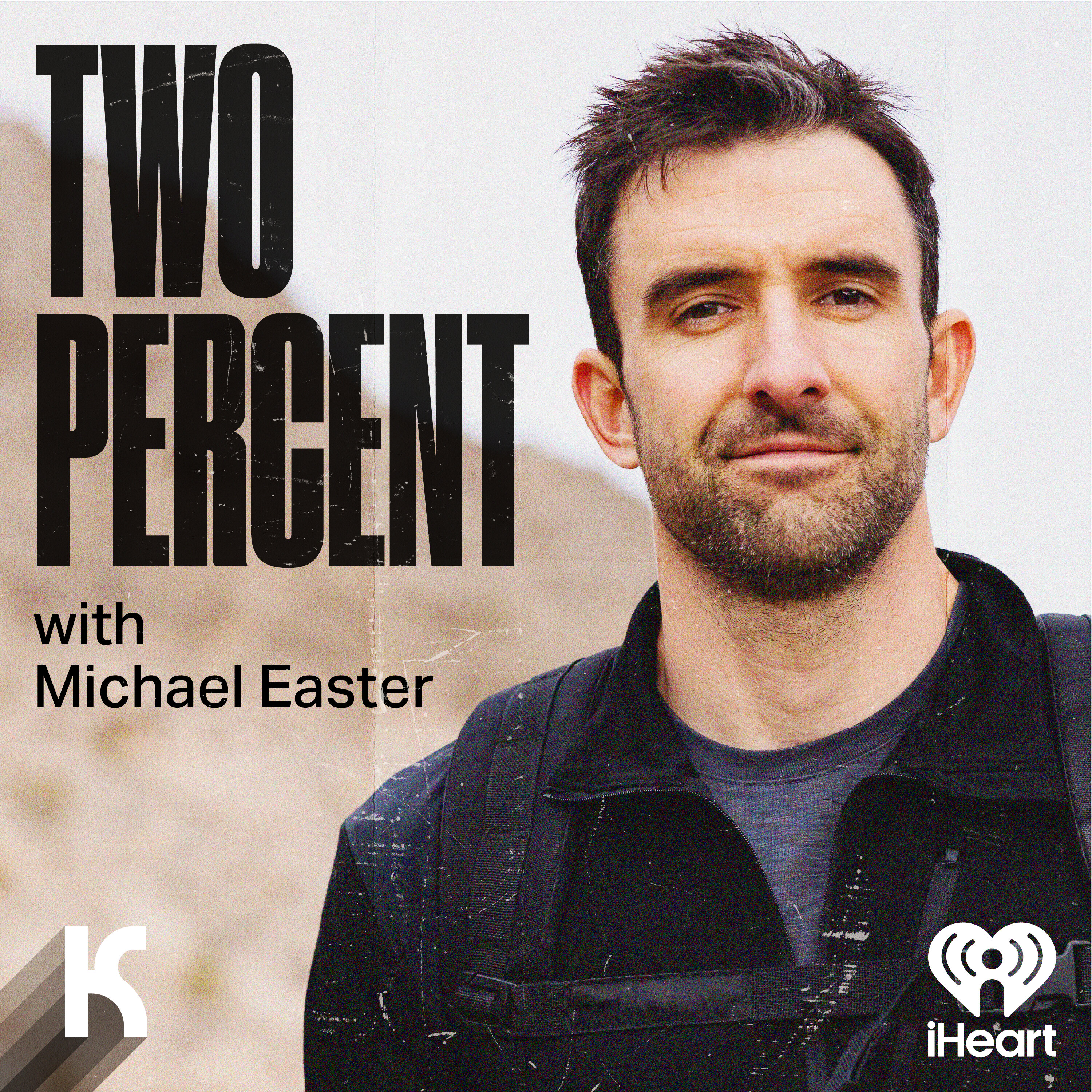
Two Percent with Michael Easter
by iHeartPodcasts
From New York Times bestselling author and journalist Michael Easter comes a twice-weekly deep dive into the science of living better by doing things the hard way. Building on the insights of his #1 Substack and acclaimed books, Easter balances rigorous evidence with a healthy dose of skepticism to cut through the noise of the modern wellness industry. Whether he’s interviewing elite explorers and Harvard biologists or deconstructing the truth about longevity and metabolic health, this isn't a show for "biohacking" perfectionists—it’s a grounded, often humorous guide for real people looking to build resilience and agency in an increasingly comfortable world. From ancient wisdom to cutting-edge research, listen to Two Percent to discover why the antidote to modern malaise is often found in the challenges we’ve been taught to avoid.
-
18
#46: How to Learn Faster and Remember More | Jim Kwik
Michael speaks with Jim Kwik, brain coach and author of the new book Limitless Daily, about how to learn faster, remember more, and use AI to get smarter instead of dumber. They discuss: (00:00) Cold open(01:30) Jim's early learning struggles(05:32) The question that changed Jim's approach to learning(17:30) Problems with school systems and tech use(23:00) Using AI to get smarter, not dumber with the BUILD framework(29:56) Memory, boredom, and why you need room to think(32:44) Improving reading speed and comprehension(41:03) Choosing what is worth learning(47:51) Daily practice and morning habits(52:32) Rapid fire: brain supplements and cognitive performance(57:49) Books and Limitless Daily Get Jim's book, Limitless Daily: https://www.penguinrandomhouse.com/books/761666/limitless-daily-by-jim-kwik/ Find Jim: https://jimkwik.com Download MacroFactor in the Apple or Google app store. Get 14 days free with code TWOPCT. Visit Two Percent, the #1 health and wellness Substack newsletter: https://www.twopct.com Host: Michael EasterExecutive Producer: Robbie HiserMusic: The Heater ManagerGraphics: Jackie Philips Follow Michael:https://twitter.com/Michael_Easterhttps://instagram.com/michael_easter/https://linkedin.com/in/michael-easter-b208848/https://www.facebook.com/twopcthttps://tiktok.com/@michael_easter6
-
17
#32: Art is the Missing Pillar of Your Health | Daisy Fancourt & Jesse Albrecht
Most people can name four pillars of health: diet, exercise, sleep, and stress. Daisy Fancourt, the researcher behind a 146-page World Health Organization report on art and health and the author of Art Cure, argues there is a fifth: the arts. The evidence she lays out is striking. Regular arts engagement is linked to about half the risk of developing depression over ten years, slower biological aging as measured by epigenetic clocks (how fast your cells are aging), and a longer time free from dementia through what researchers call cognitive reserve (the brain's buffer against decline). In studies of surgery patients, recorded music reduced anxiety more effectively than anti-anxiety medication. And yet only 1 in 20 American adults did any art yesterday, compared to 57% who ate vegetables. Then ceramic artist Jesse Albrecht tests the thesis from the inside. An Army medic in Mosul in the early Iraq War, he came home to a reintegration briefing that amounted to one VHS tape, spent years making dark, angry work about war, and learned the hard way that, in his words, we become what we focus on. A 2020 inpatient PTSD program at a Montana VA hospital turned his life and his work toward recovery and beauty. The episode closes with where to begin, and both guests agree on the answer: you start by starting. *This episode contains descriptions of war violence and trauma and may not be suitable for children. 00:00 Cold open 00:41 Who is Daisy Fancourt? 02:01 Art is 40,000 years old, maybe older than language 03:34 The WHO report on art and health 05:54 The physical benefits: singing, dance, frailty 07:59 Reading and crafts slow biological aging 08:52 Art as the fifth pillar of health 10:57 Make it or consume it? 12:12 Kids, teens, and granny hobbies 16:35 Art in hospitals: music against medication 19:45 The HIV quilt and singing for lung health 21:34 Cognitive reserve and delaying dementia 22:57 Music and sleep 26:56 Only 1 in 20 adults did any art yesterday 29:34 What counts as art 31:35 The one pound to eleven pounds return 36:22 Who is Jesse Albrecht? 38:33 Mosul: this is bananas 43:59 Coming home to a VHS tape 46:03 Finding other veterans in the art world 50:43 Disillusionment and the dark decade 53:57 Two months at the VA: the 2020 turn 58:02 Is art healing? Jesse pushes back 61:57 How to start: start by starting 64:30 His one big quote about art 66:40 Outro
-
16
#31: The Science of Muscle and Protein | Dr. Gabrielle Lyon
Most of us assume America's biggest health problem is obesity. Dr. Gabrielle Lyon, a physician for 20 years and the founder of Muscle-Centric Medicine, argues we have spent 50 years fighting the wrong problem. We are not over fat, we are under-muscled, and obesity is a symptom of unhealthy skeletal muscle. Michael pushes on where the argument is strongest and where it might miss. They get into whether you can have too much muscle, and why she believes GLP-1s could trade the obesity epidemic for a sarcopenia epidemic (too little muscle). They also cover the new dietary guidelines for protein, why your first meal of the day matters most, and the visceral "why" that keeps her Navy SEAL husband working 100-hour weeks. Her whole prescription fits in one sentence: lift hard, prioritize your protein, and get your mind right. Two Percent is hosted by Michael Easter. Today’s episode was produced by Joey Fischground, Robbie Hiser, Dana Brawer and Julia Nutter. From Kaleidoscope, our executive producers are Mangesh Hattikudur and Kate Osborn and Julia Nutter. From iHeart, our executive producers are Katrina Norvell and Nikki Ettore. Our Head of Video is Maria Paz Mendez Hodes. This episode was edited by Will Mayo. Our theme music is by the Heater Manager. GET A FREE GUIDE TO EXAMPLES OF MISOGI. GO TO https://www.twopct.com AND ENTER YOUR EMAIL. I share similar insights around health and wellness here:https://substack.com/@michaeleasterhttps://instagram.com/michael_easter/https://linkedin.com/in/michael-easter-b208848/https://facebook.com/easter.michaelhttps://tiktok.com/@michael_easter6https://x.com/Michael_Easter Chapters:00:00:00 - Cold open00:01:36 - Not overweight, under-muscled00:05:37 - How much muscle do you actually need?00:10:39 - What end-of-life care taught her about muscle00:15:12 - Never too late: building muscle after 6000:19:47 - How often should you strength train?00:19:56 - Get your mind right: friction and finding your real why00:27:51 - The new protein rules and your first meal00:36:17 - The protein-ification problem (and carb tolerance)00:39:53 - Her professional take on GLP-1s00:45:12 - The 30-second prescription
-
15
#24: Why Our Brains Lie About How Bad Things Are (and How to Stop It) | Cara Lai & Roy Baumeister
If you turn on the news right now, you'll be hit with a sea of negativity, and it can convince you the world is falling apart. It isn't. Host Michael Easter sits down with two guests to explain why our minds are literally built to outweigh the bad, and how you can bias yourself back toward the positive. First, meditation teacher Cara Lai offers a tip to instantly disarm anxiety: ask yourself "what if what's happening right now is exactly what's supposed to be happening?" She also shares what a year alone in the woods battling Lyme disease taught her about suffering. Then Roy Baumeister, one of the most cited psychologists alive and author of the landmark paper "Bad Is Stronger Than Good." joins to discuss the negativity bias. Why does one critique drown out a sea of compliments? Why do bad days carry over while good days don't? He explains the 5-to-1 ratio of positive experiences to negative experiences that predicts whether a relationship lasts, plus the evolutionary reason we're wired this way. And finally, the Boston Marathon study that will change how you watch the news for good. Two Percent is hosted by Michael Easter. Today’s episode was produced by Joey Fischground, Robbie Hiser, Dana Brawer and Julia Nutter. From Kaleidoscope, our executive producers are Mangesh Hattikudur and Kate Osborn and Julia Nutter. From iHeart, our executive producers are Katrina Norvell and Nikki Ettore. Our Head of Video is Maria Paz Mendez Hodes. This episode was edited by Will Mayo. Our theme music is by the Heater Manager. GET A FREE GUIDE TO EXAMPLES OF MISOGI. GO TO https://www.twopct.com AND ENTER YOUR EMAIL. I share similar insights around health and wellness here:https://substack.com/@michaeleasterhttps://instagram.com/michael_easter/https://linkedin.com/in/michael-easter-b208848/https://facebook.com/easter.michaelhttps://tiktok.com/@michael_easter6https://x.com/Michael_Easter Chapters: 00:00 — Cold open 00:47 — Why your mind is built to focus on the negative 02:55 — Kara Lai: "What if this is exactly what's supposed to happen?" 08:19 — The bubonic plague & the limits of our perspective 10:40 — Why letting go of control gives you real agency 13:38 — Catastrophizing the small stuff (the supermarket meltdown) 18:34 — "The worst thing that ever happened became the best" 20:28 — A year alone in the woods: Lyme disease & surrender 27:10 — Why the hardest moments are the most transformative 33:53 — What's really underneath your anger 37:37 — From an Adult Swim cartoon to meditation 42:05 — Barefoot running, polar plunges & "healthy addictions" 51:06 — How to actually start meditating 54:08 — Roy Baumeister: "Bad Is Stronger Than Good" 56:56 — Loss aversion & why one bad trait sinks an impression 59:25 — Why bad days carry over and good days don't 1:00:34 — Only 6% think the world is improving 1:01:07 — "If it bleeds, it leads" 1:02:30 — How one bad thing ruins a perfect night 1:03:34 — The Gottman 5-to-1 ratio 1:05:22 — Why one criticism drowns a sea of compliments 1:06:28 — "Don't read the comments" 1:09:28 — Why we evolved this way: "Life has to win every day" 1:12:15 — Las Vegas, gambling & losses disguised as wins 1:15:46 — What to do when life feels relentlessly bad 1:18:14 — The Boston Marathon study that changes everything
-
14
#23: Daily Habits to Keep Your Brain Sharp as You Age | Dr. Tommy Wood
Cognitive decline as you age is not inevitable — but whether you keep your edge depends almost entirely on what you do right now. Host Michael Easter sits down with Dr. Tommy Wood, a neuroscientist and performance consultant who works with Formula 1 teams. His book, The Stimulated Mind, changed how Michael thinks about staying mentally sharp. They get into why sleep may be the most important factor in preventing cognitive decline, why retirement may be the most dangerous thing you can do to your brain, and the science behind "super agers" who keep their 50s brains into their 80s. Then they confront the question of A.I.: is it quietly making us dumber? They also cover the surprising exercise that beats the gym for your mind: dancing. And finally, they explain why you should be willing to suck when trying new things. Two Percent is hosted by Michael Easter. Today’s episode was produced by Joey Fischground, Robbie Hiser, Dana Brawer and Julia Nutter. From Kaleidoscope, our executive producers are Mangesh Hattikudur and Kate Osborn and Julia Nutter. From iHeart, our executive producers are Katrina Norvell and Nikki Ettore. Our Head of Video is Maria Paz Mendez Hodes. This episode was edited by Will Mayo. Our theme music is by the Heater Manager. GET A FREE GUIDE TO EXAMPLES OF MISOGI. GO TO https://www.twopct.com AND ENTER YOUR EMAIL. I share similar insights around health and wellness here:https://substack.com/@michaeleasterhttps://instagram.com/michael_easter/https://linkedin.com/in/michael-easter-b208848/https://facebook.com/easter.michaelhttps://tiktok.com/@michael_easter6https://x.com/Michael_Easter Chapters: 00:00 — Cold open 00:45 — Why Michael had to read this book 02:06 — Lab science vs. the real world 04:05 — What F1 driving teaches about performance 06:50 — The one thing: you get stronger when you sleep 09:34 — The traffic-light system for busy seasons 12:48 — Cognitive decline isn't inevitable 13:14 — Super agers & the Seattle Longitudinal Study 16:26 — Michael's mom & the retirement trap 17:36 — Why retirement is the worst idea for your brain 20:52 — Information overload & the brain 21:33 — The Google effect 24:50 — AI: cognitive orthotic or prosthetic? 27:36 — How AI dropped one class's average from 80 to 60 30:43 — Why writing it down beats voice memos 31:50 — Dancing: the best exercise for your brain 34:41 — The activities your brain is wired for 36:08 — Nutrition, supplements & brain health 38:44 — B vitamins + omega-3: what actually works 41:20 — How much should you eat? 42:33 — The off-road Ironman & not quitting 45:42 — Neuroplasticity, explained 46:39 — Your brain is a prediction machine 48:47 — Be willing to suck 49:32 — Wrap
-
13
#22: Why Sports Fandom is Good for Us | Leander Schaerlaeckens & Dr. Daniel Wann
Every four years, Americans suddenly remember soccer exists. The World Cup is here and it may be the single biggest sporting event in human history: 48 teams, 104 games over 39 days, and a final that draws north of a billion viewers. Host Michael Easter sits down with two guests to make the case. First, soccer writer Leander Schaerlaeckens, author of The Long Game, on why this World Cup is bigger than ever. He also shares his take on if the USMNT can actually make a deep run, the players you need to know, and why America took so long to get good at the world's game. Then psychologist Dr. Daniel Wann, who has studied sports fans for 40 years, explains why caring about sports is one of the most underrated things you can do for your mental health. The World Cup and fandom might be exactly what a lonely, divided country (and world) needs right now. Two Percent is hosted by Michael Easter. Today’s episode was produced by Joey Fischground, Robbie Hiser, Dana Brawer and Julia Nutter. From Kaleidoscope, our executive producers are Mangesh Hattikudur and Kate Osborn and Julia Nutter. From iHeart, our executive producers are Katrina Norvell and Nikki Ettore. Our Head of Video is Maria Paz Mendez Hodes. This episode was edited by Will Mayo. Our theme music is by the Heater Manager. GET A FREE GUIDE TO EXAMPLES OF MISOGI. GO TO https://www.twopct.com AND ENTER YOUR EMAIL. I share similar insights around health and wellness here:https://substack.com/@michaeleasterhttps://instagram.com/michael_easter/https://linkedin.com/in/michael-easter-b208848/https://facebook.com/easter.michaelhttps://tiktok.com/@michael_easter6https://x.com/Michael_Easter Chapters:00:00 — Cold open01:39 — Why 2026 is the biggest World Cup ever03:55 — The case for Team USA06:49 — Team USA's real odds (and avoiding Argentina)07:44 — Why America took so long to get good at soccer10:36 — The players you need to know14:38 — Pay-to-play & Ricardo Pepi's backstory16:34 — How to fix U.S. soccer (Texas vs. Spain)19:24 — Which U.S. athletes would've been great at soccer21:09 — Who to root for ("bench Ronaldo")25:21 — From 1950 dishwashers to 2026: how programs rebuild27:09 — Prediction: who wins it all28:09 — Dr. Daniel Wann: the psychology of fandom33:34 — The four psychological needs fandom meets38:41 — "Watch football while I eat ice cream"42:09 — Do the connections have to be in person?45:08 — Why sport is unlike any other fandom47:42 — Collective effervescence & the Miracle on Ice51:37 — Why sports are the great unifier53:50 — Are stadiums secretly public health?1:00:17 — Can you overdo it?1:02:07 — How to become a fan1:04:35 — Wrap
-
12
#21: Why Health Became the New Religion | Alan Levinovitz
Why do people lose their minds over seed oils, raw milk, carnivore diets, and long Covid? Alan Levinovitz isn't a doctor or a health journalist — he's a religion scholar. And from that vantage point he noticed something you can't un-see: the way most of us think about health functions exactly like a religion, complete with ideas of purity, contamination, salvation, and tribes that turn on you the moment you question the doctrine. Michael Easter sits down with Alan to unpack his explosive WIRED piece on long Covid and the vicious backlash it triggered. They get into why so many of our fiercest health arguments aren't really about data at all — they're about identity. Alan shares more points to illustrate his thesis, like the “guru” who mailed strangers his own feces to prove a health theory, and how the term "natural" in wellness circles became a stand-in for "holy." Two Percent is hosted by Michael Easter. Today’s episode was produced by Joey Fischground, Robbie Hiser, Dana Brawer and Julia Nutter. From Kaleidoscope, our executive producers are Mangesh Hattikudur and Kate Osborn and Julia Nutter. From iHeart, our executive producers are Katrina Norvell and Nikki Ettore. Our Head of Video is Maria Paz Mendez Hodes. This episode was edited by Will Mayo. Our theme music is by the Heater Manager. GET A FREE GUIDE TO EXAMPLES OF MISOGI. GO TO https://www.twopct.com AND ENTER YOUR EMAIL. I share similar insights around health and wellness here:https://substack.com/@michaeleasterhttps://instagram.com/michael_easter/https://linkedin.com/in/michael-easter-b208848/https://facebook.com/easter.michaelhttps://tiktok.com/@michael_easter6https://x.com/Michael_Easter Chapters: 00:00 — Cold open 00:52 — Why we think about health like a religion 02:11 — The WIRED long-Covid piece and the backlash 03:57 — $2 billion, five years, and still no biomarker 09:07 — "Natural" is just a secular word for "holy" 10:31 — Why people really choose natural childbirth 14:44 — The man who mailed his poop (and RFK Jr.'s shirtless pushups) 16:27 — How to weigh evidence vs. personal experience 19:56 — Why one study means almost nothing 23:28 — Why people get so vehement about health 31:28 — A hunter-gatherer village gets electric light 35:02 — "A lot of caves with a lot of trolls in them" 42:14 — Fear, danger, and why CPS takes long-Covid kids 46:59 — How debilitating long Covid actually is 51:53 — The "web of belief": why raw milk leads to anti-vax 1:12:18 — 20 people "overdose" by touching nothing 1:15:50 — We called them lazy. Then came Ozempic.
-
11
#20: Why the Steroid Olympics Flopped and the Truth About Peptides | Chris Gayomali & Sam Eagan
What if you juiced a roster of athletes to the gills with performance-enhancing drugs and let them compete for a million-dollar prize? That's the Enhanced Games — the billionaire-backed "Steroid Olympics" held in Las Vegas — and the results were not what investors expected. Michael Easter sits down with journalists Chris Gayomali and Sam Eagan, hosts of the Superhuman podcast, who were embedded with the founders, athletes, and scientists during the games. Despite being hyped as the future of human performance, almost no world records actually fell. In many cases, non-enhanced athletes beat the juiced ones. Within about a day, it became clear the event was really a marketing engine for selling testosterone and peptides to the public, and a glimpse of how we're increasingly being sold a frictionless, "enhanced" version of ourselves, all with the swipe of a credit card. Two Percent is hosted by Michael Easter. Today’s episode was produced by Joey Fischground, Robbie Hiser, Dana Brawer and Julia Nutter. From Kaleidoscope, our executive producers are Mangesh Hattikudur and Kate Osborn and Julia Nutter. From iHeart, our executive producers are Katrina Norvell and Nikki Ettore. Our Head of Video is Maria Paz Mendez Hodes. This episode was edited by Joey Fischground. Our theme music is by the Heater Manager. GET A FREE GUIDE TO EXAMPLES OF MISOGI. GO TO https://www.twopct.com AND ENTER YOUR EMAIL. I share similar insights around health and wellness here:https://substack.com/@michaeleasterhttps://instagram.com/michael_easter/https://linkedin.com/in/michael-easter-b208848/https://facebook.com/easter.michaelhttps://tiktok.com/@michael_easter6https://x.com/Michael_Easter Chapters:00:00:00 - Intro 00:04:29 - What the Enhanced Games actually are (the "steroid Olympics") 00:07:00 - "It took me a full day to realize this is an ad" 00:08:00 - The real business model: Hims with a WWE marketing layer 00:13:13 - Peter Thiel, transhumanism, and how it started 00:16:17 - The "44% of Olympians dope" stat — and the cherry-pick 00:18:28 - Doped so much he got slower in the water 00:21:04 - Inside the "wellness Coachella" in the desert 00:23:48 - The money: $250K to win, $1M for a world record 00:28:03 - The event: almost no records, and the clean athletes won 00:31:16 - The banned super suit and the Barry Bonds problem 00:36:04 - The IOC's own-goal: "I don't believe in paying athletes" 00:38:07 - The stock crashes 75% — and the spin that followed 00:40:08 - What they actually sell you (peptides, testosterone, NAD+) 00:41:49 - Why the "study" proves almost nothing 00:51:00 - Is removing life's friction making us weaker? 01:00:06 - "$250 shoes are the testosterone for your feet"
-
10
#17: The Power of the Heat and Sauna | Ashley Paulson & Bill Gifford
When it gets hot, most of us hide indoors with the AC cranked, the workouts moved inside, and the thermostat parked at 72°F all summer long. But humans evolved in the heat, and the new science says we can still use it to get stronger, healthier, and (maybe most surprisingly) happier. In this episode, Michael Easter sits down with two of the best people in the world on the subject of heat. Ashley Paulson, the Badwater 135 course record holder (a 135 mile race through Death Valley), finished in 21 hours and 44 minutes, beating the old record by 2.5 hours. She shares what 120°F at 11 p.m. actually feels like and the mindset that lets her thrive in it. Then Bill Gifford, author of Hot Wired: How the Hidden Power of Heat Makes Us Stronger, talks about how your body adapts in 4 to 5 sessions of sauna treatment. Michael closes with a hydration playbook and the 1960s WHO research that nailed the perfect summer drink. Two Percent is hosted by Michael Easter. Today’s episode was produced by Joey Fischground, Robbie Hiser, Dana Brawer and Julia Nutter. From Kaleidoscope, our executive producers are Mangesh Hattikudur and Kate Osborn and Julia Nutter. From iHeart, our executive producers are Katrina Norvell and Nikki Ettore. Our Head of Video is Maria Paz Mendez Hodes. This episode was edited by Ryan Mulhern. Our theme music is by the Heater Manager. GET A FREE GUIDE TO EXAMPLES OF MISOGI. GO TO https://www.twopct.com AND ENTER YOUR EMAIL. I share similar insights around health and wellness here:https://substack.com/@michaeleasterhttps://instagram.com/michael_easter/https://linkedin.com/in/michael-easter-b208848/https://facebook.com/easter.michaelhttps://tiktok.com/@michael_easter6https://x.com/Michael_Easter Chapters:00:00 — Cold open: 11 p.m., 120°F, and the 40% depression stat00:54 — Welcome to 2% and what this episode is02:28 — Ashley Paulson and the Badwater 13504:41 — Starting a 135 mile race at 11 p.m. in 120°F05:13 — Breaking the course record by 2.5 hours06:34 — What running in 120°F actually feels like07:24 — How to heat-train (and why she trained in the sauna)11:11 — The all-liquid fuel plan (ketones, protein, 70 to 90g carbs an hour)13:36 — The pants confession16:31 — Cheating accusations and the camera that proved her record24:26 — Heat training advice for the rest of us28:50 — 100 miles on a treadmill in 12:4733:11 — Why you have to be willing to suck before you get great36:30 — Rapid fire: Alpha Flys, punk rock, and an ice table for dinner39:30 — Bill Gifford and *Hot Wired*40:25 — The Blister Boys in Tampere, Finland43:51 — The Las Vegas garage gym (and how heat adaptation works)47:25 — The 4 to 5 sessions that change your physiology48:44 — Hydration, thirst, and the 19 hour desert march study51:50 — The sauna study that cut depression by 40%54:01 — Dry sauna versus hot tub: there is no difference55:13 — The runner who used his car as a sauna56:32 — Why ice baths are mostly a fad59:17 — Stop drinking Gatorade Zero this summer
-
9
#16: Thinking Patterns of CEOs, Tech Founders, and the Top 0.01% | Dr. Julie Gurner
Dr. Julie Gurner has a two-year waiting list. The Wall Street Journal calls her the real-life Wendy Rhoades (the psychologist from the show Billions). Though her clients are CEOs, founders, billionaires, and elite operators, she actually started her career inside a supermax prison. In this episode, Michael Easter sits down with Dr. Julie Gurner to unpack what actually separates the top 0.01% from everyone else: audacity, what-if-it-goes-right thinking, and using anger as fuel. She also explains why "be humble" might be the worst career advice you have ever received. Two Percent is hosted by Michael Easter. Today’s episode was produced by Joey Fischground, Robbie Hiser, Dana Brawer and Julia Nutter. From Kaleidoscope, our executive producers are Mangesh Hattikudur and Kate Osborn and Julia Nutter. From iHeart, our executive producers are Katrina Norvell and Nikki Ettore. Our Head of Video is Maria Paz Mendez Hodes. This episode was edited by Ryan Mulhern. Our theme music is by the Heater Manager. GET A FREE GUIDE TO EXAMPLES OF MISOGI. GO TO https://www.twopct.com AND ENTER YOUR EMAIL. I share similar insights around health and wellness here:https://substack.com/@michaeleasterhttps://instagram.com/michael_easter/https://linkedin.com/in/michael-easter-b208848/https://facebook.com/easter.michaelhttps://tiktok.com/@michael_easter6https://x.com/Michael_Easter — CHAPTERS — 00:00:00 - Cold open & intro 00:01:47 - From Supermax Prison to billionaires: Julie's origin 00:08:49 - Audacity, imaginary rules, the side path 00:11:10 - What if it goes right? 00:14:11 - The repetitive reflex 00:19:06 - Haunting agitation: the whisper that becomes a scream 00:25:18 - Why money does buy happiness 00:27:57 - Survival mode and the J.K. Rowling story 00:30:59 - Helping people get out of their own way 00:33:28 - In defense of billionaires 00:35:49 - Stoicism's blind spot: anger as fuel 00:38:14 - Bezos got laughed at for wanting to go to space 00:40:13 - Losing a dog, loving fleeting things 00:42:57 - Why "be humble" is bad advice 00:45:36 - Reframe, lean into your quirky self 00:50:12 - Farmhouse in Amish country: the cognitive break 00:52:42 - The moment that unlocked Julie's range of vision 00:56:28 - The whole game is exposure 00:57:18 - Five years from now
-
8
#15: Dr. Andy Galpin Made Me His Lab Rat During an 850-Mile Hike | Dr. Andy Galpin
A year ago, Michael Easter walked 850 miles across southern Utah in 45 days — about a marathon every day. Dr. Andy Galpin turned him into a lab rat, studying his body before, during, and after his 45 days in the desert. What he found surprised both of them. In this episode, Michael sits down with Dr. Andy Galpin — the world’s top performance scientist and co-founder of Absolute Rest. He is the guy MVPs, Cy Young winners, and Hall of Famers call when something isn't working. They go deep on what 850 miles in 45 days actually does to a human body, what wearables get right and where they fail, and the 5-pillar exercise protocol that makes a body ready for anything. Two Percent is hosted by Michael Easter. Today’s episode was produced by Joey Fischground, Robbie Hiser, Dana Brawer and Julia Nutter. From Kaleidoscope, our executive producers are Mangesh Hattikudur and Kate Osborn and Julia Nutter. From iHeart, our executive producers are Katrina Norvell and Nikki Ettore. Our Head of Video is Maria Paz Mendez Hodes. This episode was edited by Joey Fischground. Our theme music is by the Heater Manager. GET A FREE GUIDE TO EXAMPLES OF MISOGI. GO TO https://www.twopct.com AND ENTER YOUR EMAIL. I share similar insights around health and wellness here:https://substack.com/@michaeleasterhttps://instagram.com/michael_easter/https://linkedin.com/in/michael-easter-b208848/https://facebook.com/easter.michaelhttps://tiktok.com/@michael_easter6https://x.com/Michael_Easter Chapters: 00:00:00 - Cold open 00:02:13 - Why Andy turned Michael into a lab rat 00:04:44 - What blood, urine, saliva, and stool tell you about a body 00:07:30 - The results: red blood cells up, metabolism down 00:12:10 - The testosterone crash: 750 to 650, free test cut in half 00:16:12 - Why hormones didn't recover even 45 days later 00:19:30 - The 80/20 of elite performance 00:25:15 - What wearables are actually good for 00:32:25 - Pro athletes vs. you 00:35:30 - The sleep apnea crisis nobody is talking about 00:40:50 - The didgeridoo study and the $20 device that fixes apnea 00:44:00 - The anti-Achilles exercise protocol 00:48:30 - The toughest athletes Andy has ever worked with 00:50:55 - Where to find more from Dr. Andy Galpin
-
7
#14: The Psychology of Adventure | Jay Carson & Sinhue Xavier
Adventure has been engineered out of modern life, and we're paying for it in ways we don't even realize. In this episode of Two Percent, Michael Easter sits down with two guests who have decentered optimization. First up: Jay Carson, a former Clinton communications director and Hollywood writer (House of Cards, The Morning Show). Jay signed up for a 14-day Boulder Outdoor Survival School course in the Utah desert after a Covid power outage made him realize he had no idea how to take care of himself. He's now an instructor at the school. He shares what happened when his house burned down in the January 2025 LA fires, and why the BOSS course is the reason he survived the hardest year of his life. Then: Sinhue Xavier an ex-North Face ski mountaineer mentored by Conrad Anker and Alex Lowe who recently sold his house to travel the American West out of a truck. He explains why the best journeys aren't on Instagram, why "the most efficient route" is almost always the wrong one, and how to find real adventure in your own backyard. Two Percent is hosted by Michael Easter. Today’s episode was produced by Joey Fischground, Robbie Hiser, Dana Brawer and Julia Nutter. From Kaleidoscope, our executive producers are Mangesh Hattikudur and Kate Osborn and Julia Nutter. From iHeart, our executive producers are Katrina Norvell and Nikki Ettore. Our Head of Video is Maria Paz Mendez Hodes. This episode was edited by Ryan Mulhern. Our theme music is by the Heater Manager. GET A FREE GUIDE TO EXAMPLES OF MISOGI. GO TO https://www.twopct.com AND ENTER YOUR EMAIL. I share similar insights around health and wellness here:https://substack.com/@michaeleasterhttps://instagram.com/michael_easter/https://linkedin.com/in/michael-easter-b208848/https://facebook.com/easter.michaelhttps://tiktok.com/@michael_easter6https://x.com/Michael_Easter
-
6
#13: How a Hollywood Legend Got Fit at 60 | Brian Koppelman
What does it take to get genuinely strong, healthy, and creatively alive in your late 50s — while having one of the most demanding jobs in Hollywood? Brian Koppelman is the writer behind Rounders, Ocean’s 13, and the seven-season hit show Billions. He also helped discover and promote the singer songwriter Tracy Chapman. At 57, he walked off a tennis court mid-match, certain he was about to faint, and decided to completely rebuild his body. Three years later he’s deadlifting 300 pounds, racing up seven flights of stairs with a weighted pack, and producing some of the sharpest creative work of his career. Two Percent is hosted by Michael Easter. Today’s episode was produced by Joey Fischground, Robbie Hiser, Dana Brawer and Julia Nutter. From Kaleidoscope, our executive producers are Mangesh Hattikudur and Kate Osborn and Julia Nutter. From iHeart, our executive producers are Katrina Norvell and Nikki Ettore. Our Head of Video is Maria Paz Mendez Hodes. This episode was edited by Ryan Mulhern. Our theme music is by the Heater Manager. Chapters:00:00 Cold Open02:39 Turning 60 and Racing Up 7 Flights With a Pack05:50 Tufts, Tracy Chapman, and Trusting Yourself Over Experts10:45 Poker, Harvard Kids, and Reading the Room15:55 Rounders Rejection and How to Be Wrong On Purpose20:05 Tribalism, the Turkish Get-Up, and Good-Faith Arguments25:44 Ocean’s 13, a 5% Shot, and How to Prepare Like You Mean It31:51 Writer’s Block, The Artist’s Way, and Beating Resistance38:00 ADHD, Adderall, and the Morality of Medication43:30 Screenwriter Overhears: Curiosity as a Creative System46:42 Billions, Hedge Funds, and Studying Worlds You Don’t Belong To50:46 The Polygamist Hitchhike and Finding Common Ground53:05 TM Meditation with Bob Roth57:12 The Tennis Court Crisis Point1:02:18 The Doctor Visit, GLP-1, and Committing to Lift Weights1:06:43 From 65 lb Deadlifts to 300 lbs at 601:09:46 Comfort Crisis, the Hailstorm Bike Ride, and Readiness1:13:29 Reaching Out, Generosity, and the Long Game1:16:50 Lightning Round1:20:31 Outro GET A FREE GUIDE TO EXAMPLES OF MISOGI. GO TO https://www.twopct.com AND ENTER YOUR EMAIL. I share similar insights around health and wellness here:https://substack.com/@michaeleasterhttps://instagram.com/michael_easter/https://linkedin.com/in/michael-easter-b208848/https://facebook.com/easter.michaelhttps://tiktok.com/@michael_easter6https://x.com/Michael_Easter
-
5
#12: How to Eat Healthy Without Going Broke | Dr. Nick Norwitz & George Kamel
What happens when you eat 8 cans of sardines everyday for 30 days? For one doctor, his omega-3 levels hit numbers usually only seen in dolphins, his body fat dropped below 7%, and a smell he couldn't shake put a strain on his relationship. Host Michael Easter sits down with Dr. Nick Norwitz (Oxford PhD, Harvard MD) to break down the science of the sardine diet. Then, George Kamel (Ramsey Network, author of Breaking Free from Broke) explains how he went from $40K in debt eating only Lean Cuisines to a paid-off mortgage in his early 30s, as well as the best grocery store to shop at in 2026 for healthy food on a budget. Spoiler Alert: it’s Costco, and it’s 21% cheaper than Walmart and 40% cheaper than Whole Foods. Two Percent is hosted by Michael Easter. Today’s episode was produced by Joey Fischground, Robbie Hiser, Dana Brawer and Julia Nutter. From Kaleidoscope, our executive producers are Mangesh Hattikudur and Kate Osborn and Julia Nutter. From iHeart, our executive producers are Katrina Norvell and Nikki Ettore. Our Head of Video is Maria Paz Mendez Hodes. This episode was edited by Will Mayo. Our theme music is by the Heater Manager. GET A FREE GUIDE TO EXAMPLES OF MISOGI. GO TO https://www.twopct.com AND ENTER YOUR EMAIL. I share similar insights around health and wellness here: https://substack.com/@michaeleaster https://instagram.com/michael_easter/ https://linkedin.com/in/michael-easter-b208848/ https://facebook.com/easter.michael https://tiktok.com/@michael_easter6 https://x.com/Michael_Easter Chapters: 00:00:00 — Cold open 00:01:18 — Intro: Two of America's most overlooked foods (and stores) 00:03:00 — Nick Norwitz on the 1,000-sardine month 00:09:00 — The two surprises: the smell and the cold resistance 00:16:00 — Dolphin-level omega-3s 00:21:00 — Sardines as a food: nutrition, mercury, BPA, supplements vs. real fish 00:38:00 — Practical takeaways and the 3-foods desert island answer 00:43:00 — George Kamel on the Costco crown (21.4% cheaper than Walmart) 00:48:00 — Inside the Costco brain: Kirkland, returns, scarcity scavenger hunt 00:59:00 — How Costco actually makes money 01:03:00 — George's $40K-to-millionaire arc on Lean Cuisines 01:12:00 — Rapid-fire: tipping, credit cards, BNPL 01:19:30 — Why Costco is a metaphor for a free life
-
4
#11: Why Most Habit Change Fails (And How to Get Good at Feeling Bad) | Ryan Soave
Sobriety isn't just "not drinking"—it's learning how to live without needing relief on demand. In this episode, Michael Easter sits down with therapist Ryan Soave (18+ years sober) for a sweeping conversation on why addiction often acts like a solution to deeper pain, how fear and shame quietly run the show, and what it takes to break the compulsion loop for good. They dig into habit change that actually sticks, how to rebuild identity and community, and practical ways to regulate your nervous system so you don't have to numb yourself. Ryan Soave is a licensed mental health counselor, transformational coach, and person in long-term recovery. He has spent nearly twenty years and over ten thousand clinical hours working with people navigating trauma, addiction, and the survival patterns that quietly run their lives. His approach brings together modern neuroscience, body-based therapies, and ancient wisdom traditions, all built around one idea: most of us confuse discomfort with threat and spend our lives reacting to things that aren't actually dangerous. Learning to feel bad is the first real step toward living well. Ryan has sat on both sides of the therapeutic relationship, which shapes everything about how he works. To go deeper with Ryan or learn more about his work: Website: ryansoave.com Free course: Sign up for "How to Feel Bad (and Love Your Life)" at ryansoave.com Book a one-on-one consultation: ryansoave.com Instagram: @Ryan.Soave YouTube: @rjsoave Two Percent is hosted by Michael Easter. Today’s episode was produced by Joey Fischground, Robbie Hiser, Dana Brawer and Julia Nutter. From Kaleidoscope, our executive producers are Mangesh Hattikudur and Kate Osborn and Julia Nutter. From iHeart, our executive producers are Katrina Norvell and Nikki Ettore. Our Head of Video is Maria Paz Mendez Hodes. This episode was edited by Ryan Mulhern. Our theme music is by the Heater Manager. GET A FREE GUIDE TO EXAMPLES OF MISOGI. GO TO https://www.twopct.com AND ENTER YOUR EMAIL. I share similar insights around health and wellness here: https://substack.com/@michaeleaster https://instagram.com/michael_easter/ https://linkedin.com/in/michael-easter-b208848/ https://facebook.com/easter.michael https://tiktok.com/@michael_easter6 https://x.com/Michael_Easter Chapters: 00:00:00 Cold open 00:02:11 Sober at Phish / fun without substances 00:03:47 Relearning fun + giving up one thing for everything 00:06:04 The order water moment (social anxiety + self-obsession) 00:07:22 Sober wedding story + being a model for others 00:11:00 Walk us up to your sobriety + early roots 00:20:24 Addiction is not the problem, it's the solution 00:25:33 What people do when they decide to get sober 00:33:04 Defining addiction + signs it's out of control 00:36:55 Fear, shame, and emotion-driven behaviors 00:39:39 Fixed beliefs and the Michael Jordan analogy 00:49:56 Where Ryan starts with a new client 00:52:18 Nervous system regulation + the space between stimulus and response 01:03:09 When healthy behaviors become compulsion (exercise / triathlon) 01:14:17 Process addictions (food, sex, money, gambling) 01:23:33 Michael Singer / falling in love as distraction 01:26:55 Social media, Pascal, and the Yoga Sutras 01:39:22 Good at feeling bad + how antidepressants get prescribed 01:44:04 Addiction redirected as a superpower 01:46:30 Purpose vs. what you do 01:48:23 Community, 9/11, Tribe, and the bar 01:55:27 Power greater than yourself 01:59:38 Final two questions (30-day stop test + dream live show) 02:04:13 Michael's outro
-
3
#10: Why Dogs Make Us Healthier & Happier | Sam Alaimo & Dr. Nancy Gee
Dogs don’t just make us happy—they change how we live. Michael Easter talks with former Navy SEAL and writer Sam Alaimo about why dogs pull us back into the present, create purpose, and help us rebuild after our toughest moments. Then researcher Dr. Nancy Gee (director of a human–animal interaction center) breaks down what the science actually says about how and why pet ownership contributes to our health and wellbeing. Two Percent is hosted by Michael Easter. Today’s episode was produced by Joey Fischground, Robbie Hiser, Dana Brawer and Julia Nutter. From Kaleidoscope, our executive producers are Mangesh Hattikudur and Kate Osborn and Julia Nutter. From iHeart, our executive producers are Katrina Norvell and Nikki Ettore. Our Head of Video is Maria Paz Mendez Hodes. This episode was edited by Joey Fischground. Our theme music is by the Heater Manager. GET A FREE GUIDE TO EXAMPLES OF MISOGI. GO TO https://www.twopct.com AND ENTER YOUR EMAIL. I share similar insights around health and wellness here: https://substack.com/@michaeleaster https://instagram.com/michael_easter/ https://linkedin.com/in/michael-easter-b208848/ https://facebook.com/easter.michael https://tiktok.com/@michael_easter6 https://x.com/Michael_Easter Chapters: 00:00:00 Dogs, Sobriety, and Purpose 00:15:00 Presence, Minimalism, and Choice 00:35:00 Loneliness, Health, and the Data 01:00:05 Heat, Hydration, and Safety
-
2
#9: The Power of Constraints & Why More Freedom Makes Us Miserable | David Epstein
What if everything you believe about freedom is wrong? Author David Epstein joins Michael Easter to break down why constraints — not freedom — drive better work, better wellness, and better creativity. Epstein is the bestselling author of Range and The Sports Gene, and his new book Inside the Box: How Constraints Make Us Better argues we have it backwards on freedom.They discuss why General Magic collapsed under unlimited possibility while Pixar dominated, why your brain is literally built to prevent you from thinking, and the simple sleep hack that made David a morning person for two years without an alarm clock. This is the playbook for thinking slow, acting fast, and finally figuring out what to stop doing.Two Percent is hosted by Michael Easter. Today’s episode was produced by Joey Fischground, Robbie Hiser, Dana Brawer and Julia Nutter. From Kaleidoscope, our executive producers are Mangesh Hattikudur and Kate Osborn and Julia Nutter. From iHeart, our executive producers are Katrina Norvell and Nikki Ettore. Our Head of Video is Maria Paz Mendez Hodes. This episode was edited by Ryan Mulhern. Our theme music is by the Heater Manager.GET A FREE GUIDE TO EXAMPLES OF MISOGI. GO TO https://www.twopct.com AND ENTER YOUR EMAIL.I share similar insights around health and wellness here:https://substack.com/@michaeleasterhttps://instagram.com/michael_easter/https://linkedin.com/in/michael-easter-b208848/https://facebook.com/easter.michaelhttps://tiktok.com/@michael_easter6https://x.com/Michael_EasterChapters:00:00:00 - Cold open00:01:35 - The General Magic disaster: a $200M company that built nothing00:06:32 - Tony Fadell, the iPod, and prototyping inside a literal box00:08:40 - Why Dr. Seuss wrote Green Eggs and Ham on a 50-word bet00:14:07 - What too many resources actually does to a team00:17:51 - Stop adding, start subtracting (the genetics lab post-it system)00:20:08 - The wellness mistake: foot on the brake, hammering the gas00:21:25 - The sleep-in-workout-clothes hack that killed David's alarm clock00:23:58 - Why managers matter (and Pixar's popsicle sticks)00:31:37 - Think slow, act fast: the 0.5% rule from 16,000 projects00:36:51 - Why "more freedom" is actually making people miserable00:41:53 - The year 2000 and why medicine "stopped working"00:46:55 - The Taylor Swift / Chiefs stat trap (and how to spot a fake fact)00:49:10 - The Sports Gene origin story and the Kalenjin runners00:54:08 - Roger vs. Tiger and the death of the 10,000-hour rule00:58:26 - Why hiring for breadth beats hiring for the perfect resume01:02:18 - The writer who blew David's mind (and inspired Inception)
-
1
#8: Subtraction Mindset: Get More By Doing Less | Leidy Klotz
A 3-year old beat a PhD engineer at an engineering problem while playing legos—and that single moment kicked off a decade of research that exposed one of the strongest, most underrated biases in the human brain: we almost never subtract.This week, Michael sits down with Dr. Leidy Klotz — University of Virginia engineering professor, former pro soccer player, and author of Subtract, which explored why your brain defaults to adding when removing is the better answer.His new book In a Good Place, unpacks why open offices steal your focus, the science of the “home field advantage” and why the spaces you live in might be quietly running your life (and even affecting your lifespan).Two Percent is hosted by Michael Easter. Today’s episode was produced by Joey Fischground, Robbie Hiser, Dana Brawer and Julia Nutter. From Kaleidoscope, our executive producers are Mangesh Hattikudur and Kate Osborn and Julia Nutter. From iHeart, our executive producers are Katrina Norvell and Nikki Ettore. Our Head of Video is Maria Paz Mendez Hodes. This episode was edited by Will Mayo. Our theme music is by the Heater Manager.GET A FREE GUIDE TO EXAMPLES OF MISOGI. GO TO https://www.twopct.com AND ENTER YOUR EMAIL.I share similar insights around health and wellness here:https://substack.com/@michaeleasterhttps://instagram.com/michael_easter/https://linkedin.com/in/michael-easter-b208848/https://facebook.com/easter.michaelhttps://tiktok.com/@michael_easter6https://x.com/Michael_Easter
We're indexing this podcast's transcripts for the first time — this can take a minute or two. We'll show results as soon as they're ready.
No matches for "" in this podcast's transcripts.
No topics indexed yet for this podcast.
Loading reviews...
ABOUT THIS SHOW
From New York Times bestselling author and journalist Michael Easter comes a twice-weekly deep dive into the science of living better by doing things the hard way. Building on the insights of his #1 Substack and acclaimed books, Easter balances rigorous evidence with a healthy dose of skepticism to cut through the noise of the modern wellness industry. Whether he’s interviewing elite explorers and Harvard biologists or deconstructing the truth about longevity and metabolic health, this isn't a show for "biohacking" perfectionists—it’s a grounded, often humorous guide for real people looking to build resilience and agency in an increasingly comfortable world. From ancient wisdom to cutting-edge research, listen to Two Percent to discover why the antidote to modern malaise is often found in the challenges we’ve been taught to avoid.
HOSTED BY
iHeartPodcasts
Loading similar podcasts...
Frequently Asked Questions
How many episodes does Two Percent with Michael Easter have?
Two Percent with Michael Easter currently has 18 episodes available on PodParley. New episodes are automatically indexed when they're published to the podcast feed.
What is Two Percent with Michael Easter about?
From New York Times bestselling author and journalist Michael Easter comes a twice-weekly deep dive into the science of living better by doing things the hard way. Building on the insights of his #1 Substack and acclaimed books, Easter balances rigorous evidence with a healthy dose of skepticism to...
How often does Two Percent with Michael Easter release new episodes?
Two Percent with Michael Easter has 18 episodes. Check the episode list to see recent publication dates and frequency.
Where can I listen to Two Percent with Michael Easter?
You can listen to Two Percent with Michael Easter on PodParley by clicking any episode. We provide an embedded audio player for direct listening, and you can also subscribe via your preferred podcast app using the RSS feed.
Who hosts Two Percent with Michael Easter?
Two Percent with Michael Easter is created and hosted by iHeartPodcasts.
URL copied to clipboard!