
PODCAST · arts
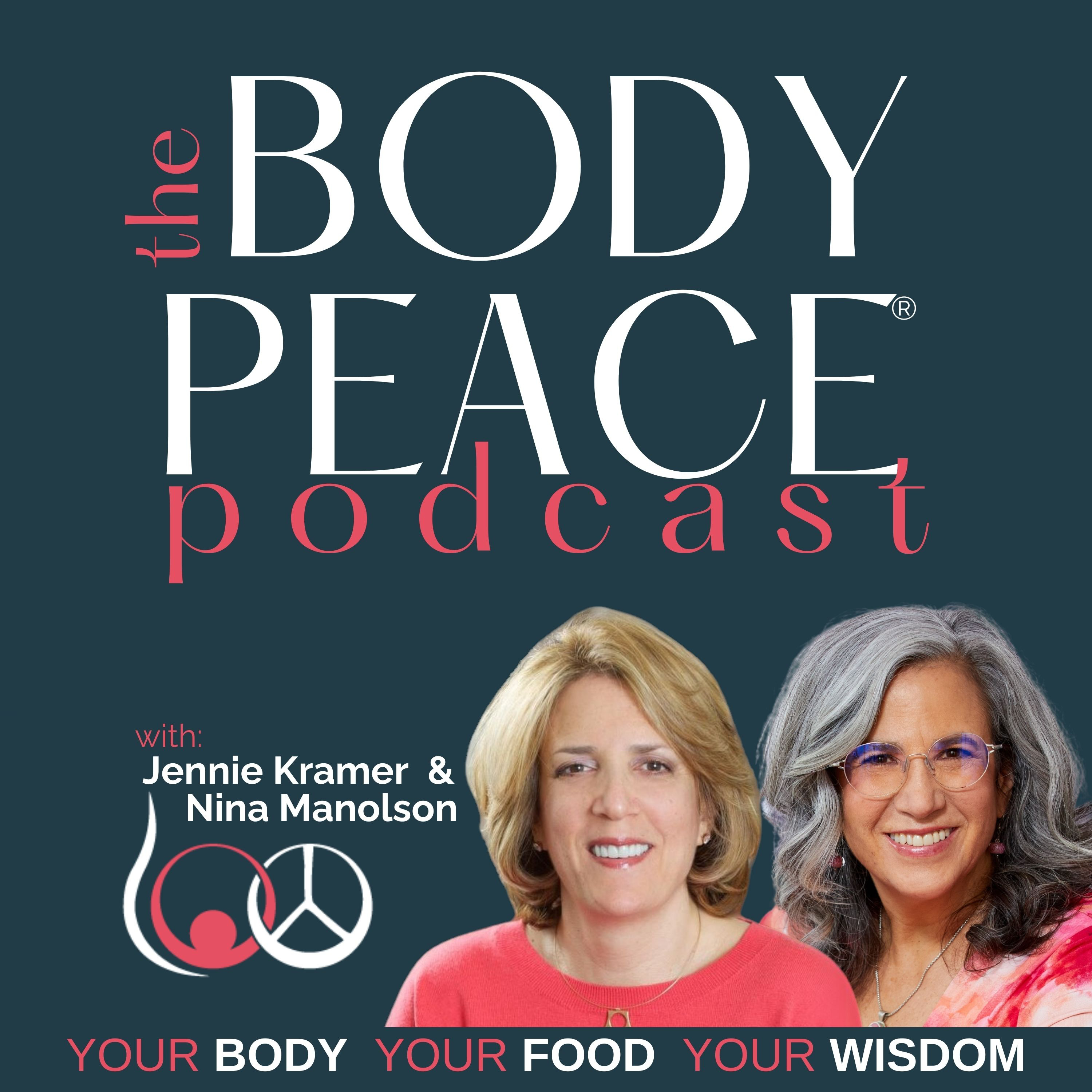
Body Peace Podcast with Jennie Kramer and Nina Manolson
by Jennie Kramer + Nina Manolson
Welcome to the Body Peace Podcast (formerly Herstory on a Plate). We are so excited to bring you the Body Peace Podcast—a space for deep, compassionate, real conversations about our relationships with our bodies, food, and the world around us. What began as Herstory on a Plate has grown into something deeper. As conversations evolved, so did our mission. Body Peace® is about stepping off the battlefield with yourself. It’s not about fixing, controlling, or striving for perfection—it’s about finding peace, reconnecting with your body, and learning to return to yourself again and again.
-
37
Beyond Hormone Therapy - Embracing Midlife as a New Beginning with Jen Salib Huber
We're so excited to hang out with Jenn Salib Huber. Jenn calls herself a "midlife feminist dietitian badass." We get real about the messy "crash landing" that often happens when perimenopause hits. Jen shares her own story of moving from disordered eating to finding true food peace during her midlife transition. We dive into why standard hormone therapy isn't a magic fix for everyone and why we need to listen to our own unique bodies instead. She explains her "undiating" process, which is all about unlearning those old diet culture rules to finally trust our bodies again. We also chat about decoding cravings as biological or emotional hunger rather than a lack of willpower. Jenn shows us that this "hormonal soup" of midlife is actually a great chance to start putting our own needs first. It’s a warm, honest guide to navigating body changes with more confidence and less shame.Key TakeawaysPermission is the essential path to finding true food peace and quiet.Midlife is a powerful evolution where we learn to prioritize ourselves first.Undiating is the necessary process of unlearning diet culture’s old mental code.Emotional hunger signals a deeper need for rest, connection, or simple pleasure.Menopause marks a vibrant new life transition and not the end of you.ResourcesEat to Thrive During Menopause by Jen Salib Huber https://a.co/d/02FIArz8Jenn’s show: The Midlife Feast Podcast https://podcasts.apple.com/ca/podcast/the-midlife-feast/id1589611177 The Midlife Feast Community: https://www.menopausenutritionist.ca/themidlifefeastcommunityNina Manolson M.A. Body-Peace® Founder & CoachStay connected & pick up your FREE Practicing Body-Peace Journal: https://ninamanolson.com/practicingbodypeace/Contact: [email protected]: https://www.instagram.com/bodypeacepodcastJennie Kramer LCSW-R,CEDSSubscribe to Jennie’s Newsletter & a complimentary 15min phone consult: https://mbhany.com/connect-with-jennie/Contact: [email protected] with Nina and Jennie:Connect: https://www.instagram.com/bodypeacepodcast
-
36
More Than Just Weight Loss - Finding Peace with Yourself with Mary Anne Cohen
We sit down with psychotherapist Mary Anne Cohen to explore the complex world of GLP-1 medications. In this episode, we dive into why weight loss isn't just about willpower but is deeply tied to our emotional histories. Mary Anne shares her nuanced perspective on the "Ozempic era," moving past the black-and-white marketing to see the shades of gray. We discuss the importance of "guardrails" like therapy and a supportive medical team when navigating these drugs. The conversation shifts from the simple desire for thinness to understanding "food noise" as a signal for undigested emotions or past trauma. Ultimately, Mary Anne reminds us that true peace comes from befriending our bodies rather than fighting them. We explore how to maintain our individual voices amidst a culture obsessed with shrinking, emphasizing that weight loss alone never solves life's deeper challenges.Key TakeawaysTrue healing requires looking at the emotional roots of our relationship with food today.GLP-1 medications are a tool, but they should never replace deep, compassionate psychological therapy."Food noise" often serves as a distraction from undigested emotions or underlying personal trauma.We must implement essential guardrails like a medical team to ensure a safe journey.Happiness is not a result of weight loss; true peace comes from befriending ourselves.ResourcesMary Anne Cohen’s website: https://www.emotionaleating.org/French Toast for Breakfast by Mary Anne Cohen https://a.co/d/01orbaZdDeclaring Peace with Emotional Eating by Mary Anne Cohen https://a.co/d/0503cPXJOzempic for Smarties: A Psychotherapist Tells the Straight Skinny by Mary Anne Cohen https://a.co/d/02c8yybFFat is a Family Affair by Judy Hollis https://a.co/d/04UfNq0iClear Step (Scale-less weighing tool)Nina Manolson M.A. Body-Peace® Founder & CoachStay connected & pick up your FREE Practicing Body-Peace Journal: https://ninamanolson.com/practicingbodypeace/Contact: [email protected]: https://www.instagram.com/bodypeacepodcastJennie Kramer LCSW-R,CEDSSubscribe to Jennie’s Newsletter & a complimentary 15min phone consult: https://mbhany.com/connect-with-jennie/Contact: [email protected] with Nina and Jennie:Connect: https://www.instagram.com/bodypeacepodcast
-
35
Reclaiming Your Body Autonomy and Peace with Stephanie Dodier
We are so happy to have Stephanie Dodier on the show to talk about how we can finally find peace with our bodies and food. Stephanie shares her own story of moving from a high-pressure corporate career where she tried to prove her worth to becoming a non-diet nutritionist. We explore the tricky world of diet culture and the new pressure from "wellness culture" and weight loss drugs. Stephanie explains how we can use cognitive behavioral coaching to look at why we want to change our bodies and how to reclaim our power. The big shift happens when we stop trying to control things we can't—like aging or menopause—and start focusing on our overall well-being. By moving toward radical self-acceptance and having our own backs, we can find a sense of safety within ourselves.True healing comes from an embodied sense of peace with food and with your body. Embrace that magnificent body that has produced miracles.When faced with being told treatment includes weight loss, ask your doctor for the same treatment plan they would give a thin person to combat weight bias..Wellness culture can often be just another way to sell the dream of anti-aging and thinness. Be discerning in your choices.Mindset work can be one tool that helps you challenge the beliefs that drive your relationship with food.Informed Consent for GLP-1 usehttps://sizeinclusivemedicine.org/wp-content/uploads/2023/11/MSSI-GLP1-Informed-Consent-1-1.pdfBeyond the Food Podcast https://podcasts.apple.com/us/podcast/its-beyond-the-food-the-non-diet-coaching-podcast/id1172102796 Non-Diet Coaching Certification https://www.stephaniedodier.com/non-diet-coaching-certification/ Stephanie Dodier’s Instagram: https://www.instagram.com/stephdodier/ Nina Manolson M.A. Body-Peace® Founder & CoachStay connected & pick up your FREE Practicing Body-Peace Journal: https://ninamanolson.com/practicingbodypeace/Contact: [email protected]: https://www.instagram.com/bodypeacepodcastJennie Kramer LCSW-R,CEDSSubscribe to Jennie’s Newsletter & a complimentary 15min phone consult: https://mbhany.com/connect-with-jennie/Contact: [email protected]
-
34
The Diet-Free Revolution - Finding Peace Beyond the Scale with Alexis Conason
In this episode, we welcome Dr. Alexis Conason to discuss the "diet-free revolution" and the power of radical self-acceptance. We discuss how diet culture often causes more harm than good, specifically through the physical risks of weight cycling and the mental burden of internalized stigma. She shares her journey from being a weight loss therapist to a fierce advocate for body liberation after discovering the Health at Every Size movement. We also address the complex impact of new medications on our relationship with food and the reality of how they can trigger eating disorders. Alexis explains why true mindful eating is about "embracing your yum" and finally tuning into what your body actually needs. By letting go of the dieting fantasy, we can finally treat ourselves with the compassion we deserve.Diets are not only ineffective for long-term weight loss but can actually cause physical harm.Health issues often linked to weight are frequently caused by chronic weight cycling and stigma.Radical self-acceptance means seeing yourself exactly as you are today with compassion and kindness.True mindful eating requires fully letting go of the diet mentality and its restrictive rules.Healing your own body image is the most powerful way to protect your children's health.The Diet-Free Revolution: 10 Steps to Free Yourself from the Diet Cycle with Mindful Eating and Radical Acceptance by Dr. Alexis Conason https://a.co/d/06bzkjDW The Anti-Diet Plan (Online mindful eating program) https://www.theantidietplan.com/Mindful Eating Toolkit https://drconason.com/mindful-eating/ Alexis Conason’s website: https://drconason.com/Nina Manolson M.A. Body-Peace® Founder & CoachStay connected & pick up your FREE Practicing Body-Peace Journal: https://ninamanolson.com/practicingbodypeace/Contact: [email protected]: https://www.instagram.com/bodypeacepodcastJennie Kramer LCSW-R,CEDSSubscribe to Jennie’s Newsletter & a complimentary 15min phone consult: https://mbhany.com/connect-with-jennie/Contact: [email protected] TakeawaysResourcesConnect with Nina and Jennie:Connect: https://www.instagram.com/bodypeacepodcast
-
33
What Biology and Temperament Teach Us About Eating and Body Image with guest Melainie Rogers
In this episode, we sit down with Melainie Rogers to explore the world of eating disorder recovery. She shares her personal journey from studying heart health to discovering her own struggles with food. We talk about how our genetics and personalities, like being a perfectionist, can actually help us heal if we learn to use them correctly. Melainie explains that our environment shapes us, just like an oak tree growing in the wind. We also dive into new weight loss drugs and how they affect our connection to our bodies. Key TakeawaysOur natural personality traits like perfectionism can become powerful tools for our recovery journey.Genetics provide our foundation while our environment shapes how our unique traits grow and manifest.True recovery is very difficult when using medications that force us to continue restricting food.Reaching for quick fixes can be a lost opportunity to build a deep internal connection.Diet culture often distracts us from using our voices to change the world around us.BALANCE eating disorder treatment center https://balancedtx.com/Fearing the Black Body by Sabrina Strings (referred to in the sources as "Sabrina String's amazing book") https://a.co/d/9nhyMiDMelainie Rogers’ Instagram: https://www.instagram.com/melainie_rogers_nutrition/Melainie Rogers’ LinkedIn: https://www.linkedin.com/in/melainie-rogers-1347b56/Connect with Nina and Jennie:Nina Manolson M.A. Body-Peace® Founder & CoachStay connected & pick up your FREE Practicing Body-Peace Journal: https://ninamanolson.com/practicingbodypeace/Contact: [email protected]: https://www.instagram.com/bodypeacepodcastJennie Kramer LCSW-R,CEDSSubscribe to Jennie’s Newsletter & a complimentary 15min phone consult: https://mbhany.com/connect-with-jennie/Contact: [email protected]: https://www.instagram.com/bodypeacepodcast
-
32
Anger, Emotional Eating, and Your Body: The Power of Owning Our Anger
Anger has a powerful connection to our relationship with food and our bodies. As women in our culture, we are often taught to suppress or squelch our anger, viewing it as unattractive or unacceptable "people pleasing behavior". But when we don't own our anger, we miss the vital message it carries about our needs and boundaries. We discuss how the unexpressed anger often turns inward, leading to feelings of being bad or wrong, resulting in body hatred and a "war on food" (emotional eating) as a way to numb the discomfort. We explore ways to let anger flow as an embodied experience, distinguishing it from uncontrollable rage. We must learn to express our anger actively, transforming it from a suppressed burden into a powerful tool for setting boundaries and seeking peace.Key TakeawaysAnger is a powerful emotion that serves as a special messenger, informing us about our crucial needs and boundaries.The lack of expressing anger actively will negatively impact our physical well-being and may lead to numbing behaviors.We can use techniques like "defend, distract, deepen" to set boundaries when conversations turn to body size or eating.Anger is distinguishable from rage; anger is an embodied feeling, while rage often feels out of body and uncontrollable.Expressing anger physically through methods like manual journaling, yelling, or movement helps cool the system down and prevents internalization.Connect with Nina and Jennie:Nina Manolson M.A. Body-Peace® Founder & CoachStay connected & pick up your FREE Practicing Body-Peace Journal: https://ninamanolson.com/practicingbodypeace/Contact: [email protected]: https://www.instagram.com/bodypeacepodcastJennie Kramer LCSW-R,CEDSSubscribe to Jennie’s Newsletter & a complimentary 15min phone consult: https://mbhany.com/connect-with-jennie/Contact: [email protected]: https://www.instagram.com/bodypeacepodcast
-
31
You’re Not Broken: Personalized Psychiatry with Rachel Egan
On this episode of The Body Peace Podcast, Jennie Kramer and Nina Manolson talk with Rachel Egan, RN, PMHNP-BC and founder of Harborside Psychiatrics, about what it means to truly understand your individual mental health needs.Together, they explore why so many people living with anxiety and depression feel like “nothing has ever worked,” and how tools like genetic testing can help with root-cause identification and offer clearer insight into which treatments may genuinely support their well-being. Rachel discusses the toll of trial-and-error approaches, the impact these experiences can have on a person’s trust in their own body, and why a comprehensive, whole-person model of care is essential for meaningful progress.If you—or someone you care about—has felt discouraged or overlooked in the mental health system, this conversation offers perspective, grounding, and a reminder that your needs are real, valid, and worth fully understanding.Connect with Jennie and Nina:https://bodypeacepodcast.com
-
30
Unpacking the Harm Behind Reality TV Weight Loss
On this episode of The Body Peace Podcast, Jennie Kramer and Nina Manolson unpack the documentary Fit for TV and its revealing look at the weight-loss culture shaped by shows like The Biggest Loser.Together, they explore how extreme dieting, public weigh-ins, and the spectacle of “transformation” shape our cultural perceptions of body size—and how these narratives can deeply harm physical health, mental well-being, and a person’s relationship with their own body.Jennie and Nina discuss the long-term impact of weight cycling on metabolism, the shame-based tactics used in reality TV, and the way these messages reinforce societal standards that marginalize people in larger bodies. They also offer a compassionate reframing: what it means to step out of the grind of dieting culture, rebuild trust with the body, and cultivate true self-acceptance.This conversation is a powerful reminder that your worth has nothing to do with your weight—and that healing comes from understanding, compassion, and reclaiming your own narrative.Connect with Jennie and Nina:https://bodypeacepodcast.com
-
29
The Courage to Be Seen: Hannah Carnat-Gronnerud on Body Truth and Love_
We recorded this conversation with Hannah before the heartbreaking loss of her husband, Ian. Our hearts are with Hannah as she navigates this profound grief. The love, trust, and mutual respect she speaks about so beautifully in this episode are now part of Ian’s enduring legacy. We share this episode in honor of that love, and in recognition of Hannah’s ongoing commitment to living—and loving—authentically, even in the face of life’s deepest challenges.In this deeply moving episode of the Body Peace Podcast, hosts Nina Manolson and Jennie Kramer sit down with writer and advocate Hannah Carnat-Gronnerud to explore the courage it takes to live authentically in our bodies—through change, vulnerability, and the complexities of love.Hannah shares how her social media presence began as a public journal during a season of healing, evolving into a community where conversations about body image, shame, and self-compassion flourish. She opens up about navigating significant weight changes, intimacy, and trust with her partner, the lessons she’s learned in couples therapy, and why she refuses to wait to “look different” before participating fully in life.Together, they unpack cultural beauty ideals, the protective function body size can play, and how to start cultivating a kinder, more truthful relationship with your body—one mirror moment, one conversation, one choice at a time.This is a conversation about strength, softness, and the power of telling your story, especially when life delivers both joy and heartbreak.Connect with Jennie and Nina:https://bodypeacepodcast.com
-
28
A Body Peace Conversation on Mothers, Daughters & Inherited Body Stories
In this powerful and deeply personal episode of the Body Peace Podcast, Nina Manolson and Jennie Kramer explore the emotional, cultural, and intergenerational dynamics between mothers and daughters—and how these relationships shape our body image and food beliefs.Drawing from their own stories, client experiences, and decades of clinical insight, Nina and Jennie invite listeners into a nuanced conversation. They dismantle simplistic narratives around “mom blame” and instead illuminate how mothers, too, have been shaped by a culture of body dissatisfaction, diet trends, and inherited trauma.They reflect on questions like:What happens when a mother’s love is filtered through fear of weight stigma?How can women take responsibility for healing their own body relationship without shaming their caregivers?What practical tools can help parents support their children without reinforcing harmful messages?Together, they offer a blend of validation, strategy, and radical compassion for anyone untangling their body story—whether as a daughter, a mother, or both.Connect with Nina and JennieLearn more about your ad choices. Visit ads.spotify.com.
-
27
Breaking Up with the Scale: A Path to Body Peace
What happens when your self-worth gets tied to a number? In this episode, Jennie Kramer and body relationship expert Nina Manolson dive into the emotional minefield of stepping on the scale. Together, they unpack the weight stigma embedded in medical settings, the subtle (and not-so-subtle) pressures of body checking, and the internalized beliefs that often drive disordered patterns. Through stories and clinical insight, they explore how individuals can reclaim body autonomy, challenge harmful narratives, and rebuild a relationship with food and self that’s rooted in trust and not fear. If you've ever felt reduced to a number or struggled with the silent grip of the scale, this conversation offers compassion, clarity, and a path forward.Key Takeaways:The scale can carry emotional weight beyond the number it shows.Medical settings often reinforce harmful weight stigma.Body autonomy means having the right to say “no” to being weighed.Body checking erodes self-trust and feeds shame cycles.Reframing goals beyond weight supports emotional and mental health.Slowing down while eating reconnects us with our body's cues.The journey to intuitive eating and body peace is deeply personal—and worth it.Connect with Jennie and Nina:https://bodypeacepodcast.comLearn more about your ad choices. Visit ads.spotify.com.
-
26
The Privilege of Growing Older with Jennie Kramer and Nina Manolson
We’ve been conditioned to fear aging—to see wrinkles as something to fight, signs of time as something to erase, and youth as the ultimate ideal. But what if everything we’ve been taught about aging is misguided? In this powerful episode of Body Peace Podcast, hosts Jennie Kramer and Nina Manolson explore the deeply ingrained beliefs that make us resist aging rather than embrace it.They dive into the $80 billion anti-aging industry, the glorification of youth in the media, and the relentless pressure to look younger at any cost. But beyond the surface, they uncover something even more important—how a pro-aging mindset doesn’t just change how we feel about our bodies, but can actually add years to our lives.Key HighlightsHow the $80 billion anti-aging industry fuels fear and insecurity about growing olderThe hidden toll of weight cycling and why body size isn’t the key to longevityThe role of social media in shaping our perception of aging and beautyHow chosen community and connection impact how we experience agingWith personal reflections and clinical insights, this episode offers a new way of thinking about aging—not as something to resist, but as an evolution to embrace. Tune in to the full conversation and explore more episodes at Body Peace Podcast.Connect with Nina and JennieLearn more about your ad choices. Visit ads.spotify.com.
-
25
Pleasure Without Pressure: Reclaiming Desire & Body Confidence with Dana D’Alessandro
Can I Allow Myself to Experience Pleasure?In this deeply insightful conversation, hosts Jennie Kramer and Nina Manolson sit down with certified sex therapist Dana D’Alessandro to explore the intersections of body image, sexuality, and pleasure. They discuss the pressures that women face—from societal expectations to self-judgment—and how these shape our sense of intimacy and self-connection. Dana shares her expertise on how our personal template for pleasure evolves, how desire changes with age, and why pleasure doesn’t have to be defined by outdated norms. The Erotic Template: How our experiences, upbringing, and body image shape our sexuality.Judgment & Shame: The internal and external expectations that impact self-worth and pleasure.Sex Isn’t a Checklist: Why treating intimacy as a task diminishes joy and connection.Cultural Pressures: How societal norms shape our expectations of sex and intimacy.The conversation challenges the myth that sexual pleasure has an expiration date and emphasizes the importance of self-exploration, self-acceptance, and cultivating body peace as a foundation for deeper connection and joy.Connect with Nina and JennieLearn more about your ad choices. Visit ads.spotify.com.
-
24
A Reflective Check-In on Navigating Uncertainty with Jennie & Nina
We are so excited to bring you the Body Peace Podcast—a space for deep, compassionate, and real conversations about our relationships with our bodies, food, and the world around us.For so many of us, the journey with our bodies and food feels like an endless cycle—moments of confidence and care followed by frustrating setbacks into familiar, painful patterns. We try so hard to be kind to ourselves, only to feel defeated when old thoughts or behaviors resurface.But what if the goal wasn’t perfection? What if the path forward wasn’t about fixing, controlling, or constantly striving—but about finding peace? Body Peace® is about stepping off the battlefield with yourself. This podcast is a space for deep, honest conversations about what it truly means to make peace with your body through stress, change, and the ups and downs of life. Because Body Peace® isn’t about getting everything ‘right.’ It’s about learning to come home to yourself again and again.To kick off our very first episode of this season, we’re doing a check-in. Right now, we are all living in a world that feels heavy, filled with uncertainty, stress, and change. How does this impact our bodies, our eating, and our sense of self? How do we take care of ourselves when everything feels overwhelming?Jennie Kramer and Nina Manolson dive into these questions, sharing personal stories, clinical insights, and practical strategies for navigating difficult times while maintaining a sense of grounding, connection, and self-kindness.Connect with Nina and JennieLearn more about your ad choices. Visit ads.spotify.com.
-
23
What Your Brain is Telling You: Listening, Learning, and Leading Your Cognitive Well-Being
What Your Brain is Telling You: Listening, Learning, and Leading Your Cognitive Well-Being with Lisa Feiner In this episode of Body Peace Podcast, hosts Jennie Kramer and Nina Manolson sit down with Lisa Feiner, co-founder of Sharp Again, to explore the evolving relationship we have with our brain health across the life spectrum. Rather than focusing on surface-level wellness checklists, this conversation invites us to gently explore the deeper work of understanding the root causes behind cognitive shifts, memory changes, and how we can care for our minds with curiosity and agency. Key Topics Discussed:Moving beyond fear: Understanding the role of genetics, toxins, and lifestyle factors without falling into pressure or perfectionismThe importance of agency: How having information about our bodies and minds can guide intentional choicesThe interplay between sleep, stress, and cognitive well-beingThe role of social connection and community in supporting brain healthAddressing common misconceptions: Why memory loss is not always an inevitable part of agingPractical steps for listeners: Tuning into personal needs, accessing support, and finding balance in making sustainable choicesThis is not about adding more tasks to your day—it’s about offering knowledge to help us better understand our unique genetic, environmental, and emotional stories. Together, they reflect on the ways lifestyle, environment, and connection influence cognition and discuss the sense of empowerment that grows from knowing ourselves more fully. Connect with Nina and JennieLearn more about your ad choices. Visit ads.spotify.com.
-
22
Unpacking Diet Culture and the Journey to Empowerment with Dr. Kim Daniels
Unpacking Diet Culture and the Journey to Empowerment with Dr. Kim DanielsIn this powerful conversation, clinical psychologist and host of the Emotional Eating and Everything Else podcast, Dr. Kim Daniels, joins Nina Manolson and Jennie Kramer to explore the intersections of therapy, diet culture, and healing. Dr. Daniels shares her personal and professional journey into therapy, emphasizing the pervasive cultural pressures that shape women’s relationships with food and body image. The discussion delves into the transformative approach of Internal Family Systems (IFS), highlighting the importance of understanding our internal parts and connecting with the core self in the healing process. Together, they unpack the challenges of unlearning diet culture narratives, witnessing trauma with compassion, and fostering a positive relationship with food and self.Key Discussion Points:Diet culture is a deeply ingrained cultural burden that disproportionately impacts women, shaping their self-worth and relationship with food.Empowerment stems from experiencing true agency and self-connection, not just talking about it.Children absorb messages about body image and food from a very young age, often internalizing harmful beliefs.Internal Family Systems (IFS) therapy offers a framework to understand our emotional responses by recognizing the different parts within us.Protective parts develop to shield us from exiled feelings of shame, grief, and trauma.The core self is inherently compassionate, and reconnecting with it is central to healing.Therapy supports individuals in witnessing their trauma, understanding their parts, and cultivating self-compassion.Cultural messages around food and body are often misleading and damaging; unlearning these narratives is an essential part of healing.Through Dr. Daniels’ expertise and the shared reflections from Nina and Jennie, listeners are encouraged to approach their own healing journey with curiosity and self-compassion. The conversation reminds us that while diet culture can feel overwhelming, reconnecting with our core self and working through our protective parts can lead to lasting empowerment and a healthier relationship with food and body.Join us as we continue to challenge the narratives around food, body, and culture—because every story on a plate is worth hearing. Connect with Nina and JennieLearn more about your ad choices. Visit ads.spotify.com.
-
21
Unburdened Eating with Jeanne Cantanzaro EP 19
Hosts Nina Manolson and Jennie Kramer dive into the transformative concept of Unburdened Eating with Dr. Jeanne Catanzaro. Dr. Catanzaro, a clinical psychologist specializing in eating disorders and trauma for over 25 years, and the author of the thought-provoking book, Unburdened Eating: Healing Your Relationship with Food and Your Body Using an Internal Family Systems (IFS) Approach.Dr. Catanzaro explains how Internal Family Systems (IFS) views our inner world as composed of "parts," each playing a distinct role in our thoughts and behaviors. Some parts may carry "burdens," or extreme beliefs and emotions, often stemming from trauma or societal pressures. In the model, IFS sees all of our different parts as integral to our daily functioning. When we’re developing, we experience trauma that impacts a part who we are. To cope, we take on a burden of shame, or fear, just two of many examples. Other parts of us step in to protect us, sometimes through extreme or unhelpful behaviors. Dr. Catanzaro explains that tapping into our internal wisdom can help us to heal. Often extreme behaviors can keep us from accessing that wisdom. One of the most empowering aspects of IFS is its emphasis on compassion for all parts, even those that might seem harmful or problematic, like the part driving binge eating. Every part of us has positive intentions, even the ones we want to get rid of. They’re trying to protect us in some way. This perspective encourages understanding rather than judgment, fostering a sense of curiosity about why certain behaviors occur.The discussion highlights two key types of protectors in IFS: managers and firefighters. Managers might keep us restricted and disciplined, while firefighters react in moments of stress or overwhelm, often through binge eating or other coping mechanisms.Together with Nina and Jennie, Dr. Catanzaro breaks down how different parts show up in a real-world example. They breakdown how to identify who is control, who is binging, who is the protector and how to be curious about their roles. .Dr. Catanzaro encourages listeners to cultivate curiosity about their inner world as a first step toward healing. By identifying and understanding their parts, individuals can create space for their "core self" to lead with clarity, compassion, and creativity.Dr. Catanzaro’s insights challenge traditional views on eating behaviors, replacing blame and guilt with compassion and understanding. By embracing the IFS model, individuals can move toward unburdening their relationship with food and their bodies.Explore FurtherUnburdened Eating: Healing Your Relationship with Food and Your Body Using an IFS ApproachNo Bad Parts by Richard Schwartz Internal Family Systems Skills Training Manual: Trauma Informed Treatment for Anxiety, Depression, PTSD, & Substance Abuse Dr. Jeanne Catanzaro Website Connect with Nina and JennieLearn more about your ad choices. Visit ads.spotify.com.
-
20
The Shirt Tug: Is Your Closet Yelling at You? EP 18
The podcast episode with Nina Manolson and Jennie Kramer dives deep into the emotional and cultural dynamics behind a seemingly small habit many women have—the "shirt tug." It’s not just about adjusting clothing; it’s about addressing the relationship we have with our bodies and the cultural messages that shape how we see ourselves.Nina and Jennie unpack how the shirt tug reflects deeper feelings of self-consciousness and body dissatisfaction. It's not just about fixing clothing; it’s a reaction to internalized weight stigma and societal pressures. Jennie aptly notes, "The shirt tug fundamentally says, 'I'm not okay the way I am.”The hosts discuss how diet culture perpetuates feelings of inadequacy, leading to behaviors like body checking. Jennie explains, “Body checking is an aggressive way of being in relationship with our body. It happens at home, on the street, or even when we catch ourselves in photos.”The discussion delves into how shame, comparison, and even past traumas affect our body image. Nina highlights a poignant moment with a client: “She realized that even though no one ever criticized her body, she absorbed her parents’ self-criticism—and it shaped how she saw herself.”Jennie reminds us that we all need to feel comfortable in our body. She explains an exercise she does with her clients who are asked to select photos of themselves over their lifetime. From those early toddler years up to the present, as a way of recognizing and embracing that you are the same person along that entire lifetime. You aren’t an age or a size, rather you are you; a person worthy of acceptance. What if we practiced self-compassion instead of bodychecking? Jennie and Nina outline how to address the “shirt-tug” in the moment to better understand the feelings behind the need to adjust. When you catch yourself bodychecking or tugging your shirt, pause and ask: what am I feeling right now? Reframe the moment. Instead of criticism choose kindness towards yourself. Allow for flexibility in how you think about your appearance or clothing as a way to start removing rigid thoughts and beliefs. Acceptance is not surrendering, giving in, resigning. Acceptance is about understanding that this is exactly who I am in this moment. I can't be any different than I am in this moment. And I am who I am right now, right here.You can start to make these shifts today, one small decision at a time. Practice self-compassion and give yourself permission to acknowledge all the parts of who you are. Connect with Nina and JennieLearn more about your ad choices. Visit ads.spotify.com.
-
19
Camera Shy? Why Women Dodge Photos EP 17
Embrace Your Authentic Self: The Power of Showing Up in PhotosIn a world driven by visual media, it's no surprise that many of us feel nervous or even avoid being in front of the camera. In a recent conversation between body image experts Jennie Kramer and Nina Manolson, they explored this common fear and shared powerful insights on how to embrace being seen, imperfections and all.The Pressure to Look PerfectJennie candidly admitted her own initial resistance to the idea of a photo shoot with Nina. "All you did was say that to me and I thought rather quietly, 'God,' I thought, 'God.' And then the next thought I had was, 'You're not allowed to think that. You do this for a living!'" This resonates with many who, despite their outward confidence, struggle with self-judgment when the camera comes out.Nina responded by breaking down the layers of self-criticism that surface in these moments. "I'm going be visible. I'm going be seen with every part of me... every wrinkle, every little bit of me that I may not think is up to snuff." Their discussion highlights how unrealistic beauty standards, often amplified by social media, shape our self-perception.The Shift to CompassionBoth women emphasize the importance of compassion over perfection. Nina beautifully captured this when she said, "I am taking a stand for being in the juiciness of a human body on a planet with gravity... illness, with injury, with all the things that happen to human beings, versus living in an alternate reality that looks airbrushed." Jennie reflected on the deeper value of photos as a way to memorialize life moments, not just appearances: "They are to memorialize an experience… When people look at them in your absence... all they see is the beauty and the essence." This is a powerful reminder to cherish the stories behind the photos, rather than focusing on fleeting imperfections.Embrace It AllNina and Jennie offer practical advice for anyone struggling with body image. Jennie shared a simple yet transformative morning practice: "Instead of looking in the mirror and saying, 'I have a lot to fix,' say, 'Good morning. What a great day ahead. Can't wait to spend it with you.'" This small shift in mindset can foster a more compassionate relationship with ourselves, and help us see the beauty that exists in all of who we are. Zoom out and see the big picture of life. As Nina wisely concluded, "Your world loves you exactly as you are. And if they don’t, they don’t deserve to be in your orbit.” Connect with Nina and JennieLearn more about your ad choices. Visit ads.spotify.com.
-
18
The Silent Struggle: Midlife Eating Disorders with Betsy Brenner EP 16
Journey of Recovery and Healing in MidlifeIn this episode, hosts Nina Manolson and Jennie Kramer talk with Betsy Brenner. She shares her deeply personal story of battling an eating disorder in midlife and the profound lessons she has learned through her recovery journey. Brenner’s 2021 memoir, The Longest Match: Rallying to Defeat an Eating Disorder in Midlife, details her experience of emotional trauma, anxiety, and depression, culminating in a late diagnosis of anorexia. While Brenner’s story is unique, it shines a light on the often-overlooked issue of eating disorders in women beyond their youth.It’s Never Too Late to HealBrenner’s message to women is powerful and clear: “It’s never too late to be a work in progress”. She emphasizes that healing is possible at any stage of life. Often, when people think of eating disorders, they imagine young women, but Brenner’s experience highlights that these struggles can affect women at any age. Her story resonates with those who have battled similar issues in silence, especially in a society where there is shame associated with vulnerability.Her story debunks the stereotype that eating disorders are exclusive to young women and reveals the depth of emotional pain that often goes unnoticed for years.Disordered Eating: It's Not About the FoodOne of the most impactful aspects of Brenner’s story is her realization that her eating disorder wasn’t really about food at all. This insight took years to uncover as she worked with her treatment team, who helped her understand that her behavior with food were symptoms of much deeper emotional struggles.Betsy shares that it was decades of internalizing all emotions that manifested in her unhealthy behaviors around food and exercise. The Perfect StormBrenner describes a “perfect storm” of life events that triggered the escalation of her disorder, including her diagnosis with asthma and a return to tennis, which reignited fears around weight and control."The eating disorder really took hold. I developed this intense fear of gaining weight and I felt so out of control with this chronic physical illness. I felt like a failure as a mother because I couldn’t be the on-the-go mother I was used to being." Her experience serves as a reminder that external stressors combined with deep-seated emotional struggles can be catalysts for disorders, particularly when left unaddressed for years.The Role of VulnerabilityBrenner admits that she didn’t know it was okay to be vulnerable. Growing up in an environment where vulnerability was seen as a weakness, she learned to suppress her feelings, which exacerbated her struggles. It wasn’t until she embraced vulnerability that she was able to begin her healing process.She explains that her family, who wanted to support her, was unable to understand what she was going through and didn’t know how to help at first. It led to some isolation until Betsy was able to be vulnerable. She credits writing her story as a step to freedom from the anxiety around her diagnosis. By sharing her story and opening up about her journey, Brenner has found a renewed sense of purpose in helping others who may be on similar paths.Betsy’s journey is an inspiring reminder that it’s never too late to begin healing. Through her memoir, she offers hope to women in midlife who may be struggling with eating disorders or emotional trauma. Her story encourages women to seek the help they need and deserve, no matter their age or stage in life. It’s a powerful message of resilience, vulnerability, and the possibility of transformation.Brenner’s words offer comfort to those struggling, providing a reminder that it’s never too late to start the journey toward healing and self-compassion.Resources: The Longest Match: Rallying to Defeat an Eating Disorder in Midlife Connect with Nina and JennieLearn more about your ad choices. Visit ads.spotify.com.
-
17
WHY DIETS DON'T WORK EP 15
Break Free from Diet Culture and Embrace Body AutonomyIn today’s episode, Jennie Kramer and Nina Manolson talk about the pitfalls of diet culture, the emotional toll of restrictive eating, and the path to reclaiming your body autonomy. Both Jennie and Nina share personal experiences and insights from working with clients who have struggled for years with the allure of diets, promising a quick fix for deeper issues.As they highlight, the dieting cycle is often rooted in societal pressures—especially around body image—and perpetuated by a multi-billion-dollar industry designed to exploit our insecurities. Nina notes that many of her clients have been on over 10 different diets, lured in by the promise of thinness, success, and acceptance. But as both women discuss, the real "win" never comes from external validation.The Allure of DietingDieting is sexy. Not because it’s healthy, but because it's marketed as the magic solution to all of life’s problems. Jennie underscores this point, noting that societal beliefs about thinner bodies being better accepted fuel our obsession with weight loss. She points out that this is especially prevalent in the medical field, where many physicians wrongly assume that weight loss will solve health issues like high cholesterol, perpetuating weight stigma.The Emotional Toll of RestrictionJennie prefers the term “deprivation” to describe what happens when we diet. While diets might promise physical transformation, they also lead to emotional and psychological deprivation. As Nina elaborates, this deprivation disconnects us from our natural hunger and satiety cues, creating a pattern of chronic dissatisfaction and body shame. "Eventually, our inner rebel shows up and says, ‘Don’t take that away from me!’” Nina explains. This often leads to overeating, followed by guilt and shame, trapping us in a vicious cycle.The Path to Body AutonomyRather than focusing on what to restrict, Nina encourages listeners to add in elements of self-care: sleep, hydration, variety, and pleasure. The goal is not to deprive yourself but to listen deeply to your body’s needs. Whether it’s respecting personal dietary triggers (like Nina’s experience with gluten) or giving yourself permission to enjoy food without guilt, the journey to body peace begins with understanding that you deserve nourishment.Breaking the CycleThey wrap up by examining the diet cycle’s inevitable fail. As Jennie eloquently puts it, "Dieting and restricting create a cycle of failure and shame, and the industry knows it. Every time you ‘fail,’ there’s a new diet waiting for you." Nina adds that real body autonomy comes from making thoughtful, educated decisions about your body—whether that’s trying a new plan or simply slowing down to enjoy your meals.In a world where diet culture is pervasive, Jennie and Nina’s conversation is a breath of fresh air, encouraging us to tune into our bodies and reject the notion that thinner is always better.This episode is a must-listen for anyone trapped in the cycle of dieting or looking to reclaim their relationship with food and their body. Connect with Nina and JennieLearn more about your ad choices. Visit ads.spotify.com.
-
16
Get Some Sleep! EP 14
The Critical Link Between Sleep and Your Relationship with FoodIn this episode hosts, Nina Manolson and Jennie Kramer discuss the importance of sleep and its profound connection to how we manage food, hunger, and overall well-being. Their conversation touches on the challenges that affect lots of women, from balancing busy schedules to managing the impacts of hormonal changes and menopause, all of which disrupt sleep patterns and influence eating behaviors.Sleep and Hunger SignalsFind out how sleep deprivation affects your body's hunger cues. Jennie explains how the body often confuses hunger, thirst, and fatigue, making it essential to pause and ask, "Am I hungry? Thirsty? Or just tired?" This check-in allows us to respond to our body's actual needs, instead of mistakenly reaching for food when rest is what’s truly required.“When we don’t get sleep, our hunger hormones, ghrelin and leptin, are out of balance, making it harder to know when we're full." — Nina ManolsonThe Psychological and Emotional ImpactNina highlights how a lack of sleep puts us into survival mode, impacting not only our cognitive functions but also how we interact with others. It becomes harder to be present, patient, and compassionate with ourselves and others when we're sleep-deprived. This creates a cycle where exhaustion drives us toward quick fixes, often in the form of unhealthy foods, to manage our energy and emotions.“When we don’t sleep, we’re in survival mode. We’re not at our most heart-wide open because we’re just trying to get through the day." — Nina ManolsonSleep as a Form of Self-CareThe conversation shifts to the broader theme of how sleep is an essential form of self-care. Jennie brought up a powerful reflection on how women tend to put everything and everyone else first, leaving no time for themselves to rest and recharge. Sleep becomes a casualty of this over-scheduling, contributing to burnout and emotional eating."We tend to fit it all in: our roles as professionals, parents, partners. Everything goes in the same pot, but we have to stop and say, ‘I need time for me.'" — Jennie KramerIf you’re struggling with your relationship to food, consider how much sleep you’re getting. Sleep deprivation disrupts hunger signals, reduces patience, and leads to emotional eating. By prioritizing rest, you're investing in your overall well-being—mentally, physically, and emotionally.Nina Manolson M.A. Body-Peace® Founder & CoachStay connected & pick up your FREE Practicing Body-Peace Journal: https://ninamanolson.com/practicingbodypeace/Contact: [email protected]: https://www.instagram.com/bodypeacepodcastJennie Kramer LCSW-R,CEDSSubscribe to Jennie’s Newsletter & a complimentary 15min phone consult: https://mbhany.com/connect-with-jennie/Contact: [email protected] with Nina and Jennie:Connect: https://www.instagram.com/bodypeacepodcast
-
15
Thriving Despite our Fat-Phobic World with Ragen Chastain EP13
Embracing Movement on Our Own TermsIn a recent enlightening discussion with hosts Nina Manolson and Jennie Kramer, guest RagenChastain shares her experience with the often-complex relationship with movement. This conversation sheds light on how societal pressures and diet culture have influenced our views on exercise and body movement.The Influence of Diet Culture on MovementRagen highlights the profound impact of diet culture on our perception of exercise. From a young age, we are taught to view movement as a preventative measure or punishment for weight gain, rather than a source of joy and well-being. She explains:“Diet culture starts so early... If from two years old you learn that movement isprevention of or punishment for being fat, there's no way to develop any kindof authentic relationship with fitness or movement" Shifting Perspectives on MovementBoth Nina and Ragen emphasize the need to redefine our approach to movement. Instead ofviewing it as a duty or punishment, they advocate for finding activities that genuinely bring pleasure and enhance our lives. Nina recounts an interaction with a client who was surprised by the idea that choosing enjoyable activities was an option to consider. Ragen adds thatmovement doesn’t need to be extensive or painful to be beneficial. Even small amounts of activity can have positive health effects, dispelling the myth that more intense exercise is always better.Health at Every Size and Medical AdvocacyRagen’s journey towards advocating for Health at Every Size (HAES) was driven by herrealization that long-term weight loss is rarely sustainable and often harmful. She stresses that health should not be seen as a moral obligation or a measure of worthiness, but as a personal and individualized goal. The conversation also touched on the importance of systemic change in healthcare toaccommodate all body sizes. Ragen points out the structural weight stigma in medical settings and stresses the need for inclusive healthcare practices. This shows up in all sorts of other parts of life as well. Jennie highlights this happens when we fly and the unkind way that things like smaller seats and seat-belt extenders impact us. Ragen explains how she handles that and highlights her privilege and shares why she chooses to be an advocate for herself and others.What can you do? Remember that movement should be enjoyable and tailored to individual preferences.Diet culture’s influence on exercise can be harmful and needs to be challenged.Health at Every Size promotes a weight-neutral approach to well-being.Systemic change is needed in healthcare to address structural weight stigma.· Be an advocate for yourself, ask for the support you need from your healthcarepractitioner.Resources: Connect with Ragan InstagramNewsletter – Weight and HealthcareMonthly Workshops and ArticlesHealth Sheet LibraryNina Manolson M.A. Body-Peace® Founder & CoachStay connected & pick up your FREE Practicing Body-Peace Journal: https://ninamanolson.com/practicingbodypeace/Contact: [email protected]: https://www.instagram.com/bodypeacepodcastJennie Kramer LCSW-R,CEDSSubscribe to Jennie’s Newsletter & a complimentary 15min phone consult: https://mbhany.com/connect-with-jennie/Contact: [email protected] with Nina and Jennie:Connect: https://www.instagram.com/bodypeacepodcast
-
14
Food Prep Made Easy! Reframe Your Relationship with Food and Cooking EP 12
This episode has co-host Jenny Kramer talking with co-host Nina Manolson about how she learned to cook. It also highlights our relationship to food and what that means to each of them. Together they explore the idea that cooking can be enjoyable and manageable for everyone, regardless of skill level or background. It challenges the notion that complex recipes and fancy presentations are essential for a successful kitchen experience.If you love cooking or if you find yourself feeling less-than-inspired to fix your own dinner, this episode will provide new insights that will have you looking at things in a new way. You’ll come away with a better understanding of why food can be self-care and what to do if you aren’t a “natural” in the kitchen.Find inspiration and new ways to think about food preparation, cooking, and what can work best for you:Cooking can be an act of self-care: Even if you're not a natural chef, preparing food for yourself can be a form of self-love and nourishment. It’s not just about following a recipe; it can also be about creating something you love.Focus on what you enjoy: Instead of getting overwhelmed by elaborate dishes, choose simple recipes or techniques you find pleasurable. Cooking isn’t a performance—it’s a creation—and it’s okay to do it your way.Embrace imperfection: Don't be afraid to experiment and make mistakes. The goal is to have fun and create something edible, not achieve culinary perfection. It’s also okay to do what Nina did and make the same thing that you know you like and you know will turn out well.Find your cooking style: There's no right or wrong way to cook. Whether you meticulously follow recipes or prefer to improvise, embrace your approach. Don’t feel restricted by rules if that bothers you, or follow a recipe to the letter if that means less stress while you’re in the kitchen.Make it personal: Use cooking as a way to connect with your heritage and cultural background. Food is often a part of our traditions and celebrations. What was the special dish that you had on your birthday or what’s the passed-down-through-the-generations recipe? Can you make that or make it your own?Even if you don’t want to cook very much (or ever), give yourself permission to have food that you enjoy at home. Allow yourself to eat intuitively so when your body wants a piece of fruit or a bit of granola, you can have an option that you enjoy at home. We all deserve to eat well, to be patient and curious, and have some fun making food that tastes good, provides nourishment, and makes us feel cared for.Give yourself permission.Connect with Nina and Jennie:Nina Manolson M.A. Body-Peace® Founder & CoachStay connected & pick up your FREE Practicing Body-Peace Journal: https://ninamanolson.com/practicingbodypeace/Contact: [email protected]: https://www.instagram.com/bodypeacepodcastJennie Kramer LCSW-R,CEDSSubscribe to Jennie’s Newsletter & a complimentary 15min phone consult: https://mbhany.com/connect-with-jennie/Contact: [email protected]: https://www.instagram.com/bodypeacepodcast
-
13
The Swimsuit Edition- At Every Size! With Manny Martins-Karman EP11
For too many women, what to wear, how to dress and all the decisions around fashion brings anxiety. It can be so stressful that many avoid thinking about how they really feel and what makes them happy. Today’s conversation is going to spark a welcome bit of joy around all things wardrobe related. In a captivating discussion with hosts Nina Manolson and Jennie Kramer, MannyMartins-Karman, an extraordinary artist and social media influencer, shared herjourney of self-acceptance and the transformative power of fashion. Manny’svibrant presence and unique style serve as an inspiration for women to embracetheir bodies and express themselves unapologetically.Fashion as a Form of Self-Love and ExpressionManny’s approach to fashion is deeply personal and joyful. She emphasizes theimportance of dressing in a way that makes you happy and projects your innerjoy to the world. “If you feel joy and are happy in what you wear, you willproject the same to those around you. Unapologetically dress for yourself”.This philosophy is at the heart of her influence, encouraging women tocelebrate their individuality through their clothing and style choices.Overcoming Body Image ChallengesManny candidly discussed her journey towards self-acceptance, acknowledging that it’s an ongoing process. She stressed the importance of representation and surrounding oneself with others who look similar to foster a sense of belonging. “When you see representation, you feel like you're not alone. You feel like, okay, I belong”. This sense of community has been crucial in helping her feel confident to embrace their bodies as they are. The Healing Power of Nature and EmbodimentManny finds solace and empowerment in nature, particularly the ocean and the sun, which help her reconnect with her body and appreciate its presence. “When I'm in the sun and I'm in the ocean, there's healing power in those things. And I find that everything else just melts away and it doesn't matter”. This connection with nature enhances her sense of embodiment and self-love. The Importance of Play and Creativity in FashionManny highlights the joy and creativity that fashion can bring into one’s life. Sheencourages women to experiment and play with their wardrobe, making choicesbased on what makes them feel good. “How am I going to be a little bit moreplayful, a little bit more joyful in something? But trust your gut when you seesomething you love”. This playful approach helps women rediscover the fun indressing up and expressing their true selves.These insights and experiences offer a refreshing perspective on fashion and self-love. By embracing joy, representation, nature, and playfulness, you can transform your relationship with your body and clothing, ultimately fostering a more positive and empowering self-image.We’d love to know what do you wear that makes you feel beautiful! Connect with MannyMartins-Karman Connect with Nina and JennieLearn more about your ad choices. Visit ads.spotify.com.
-
12
Oprah, Weight Loss Drugs & Food Noise EP10
Body Image, Weight Loss, and Food Noise: What You Need to KnowHosts Nina Manolson and Jennie Kramer unpack the cultural messages around weight loss and weight loss drugs, specifically the GLP-1 medications. They also delve into the concept of "food noise" – that constant chatter in our heads about food and body size.Oprah isn’t the only celebrity to use weight loss medication, but she may be the most visible in terms of messaging. She recently shared her experience using the GLP-1 drug and Jennie and Nina are talking about all of it on this episode. Before jumping into the points discussed, they remind you that there is no judgment here. Everyone has body autonomy, and they want listeners to know that means you get to decide what to do with and for your body and your health. A weekly injection may seem like a quick and easy way to silence the food noise in our brains, but is that what we want? Jennie asks if maybe that’s our body’s intuitive wisdom trying to get us to listen and pay attention to our bodies. They also discuss the implications of this option. It’s likely a life-long medication that will always be necessary, and it’s not known if that’s going to be safe. Jennie shares her take on Oprah’s comments about body-shame that she experienced for all of her life. Shame that was piled on because of her weight, her body size, her body shape. The message she heard was the way to eliminate her shame is to be in a thin body. That’s the legacy diet-culture message. Your body size and shape are wrong, so you must change. That’s what leads to restrictive eating, and dissatisfaction with our bodies. It’s why so many are willing to take medication that may be dangerous all in an effort to change our body image. What if instead of a new medication we try to have a conversation with our body? How good would it feel to be relaxed around food because we’ve listened to our body, and we know what makes us feel our best? Consider therapy approaches like Internal Family Systems (IFS) to understand and heal the parts of you that contribute to food noise. Take some time to focus on the inner self instead of trying to alter your body shape and size. We’re reminded to develop a gentler inner voice. Challenge the negative messages from diet culture and societal pressures. Practice gratitude for your body and what it allows you to do.Remember: There's no quick fix to food noise or body image issues. Listen to your body, develop self-compassion, and consider alternative solutions that address the root cause of the problem. Connect with Nina and JennieLeNina Manolson M.A. Body-Peace® Founder & CoachStay connected & pick up your FREE Practicing Body-Peace Journal: https://ninamanolson.com/practicingbodypeace/Contact: [email protected]: https://www.instagram.com/bodypeacepodcastJennie Kramer LCSW-R,CEDSSubscribe to Jennie’s Newsletter & a complimentary 15min phone consult: https://mbhany.com/connect-with-jennie/Contact: [email protected]
-
11
Compare & Despair with Jennie Kramer & Nina Manolson EP9
Co-hosts Nina Manolson and Jennie Kramer are back and todaythey’re talking about how we all compare ourselves to others and the negativeconsequences of this behavior.Imposter syndrome is real, for even the most accomplishedand confident among us. Hear how this has shown up for both Jennie and Nina and how they address it for themselves and how they help their clients with thisuniversal issue.Steps to combat negative comparisons:o Limit exposure to social media and other sources that promote unrealistic beauty standards.o Practice self-compassion and remind yourself of your own unique strengths and qualities.o Focus on the present moment and appreciate your body for what it can do.o Surround yourself with positive and supportive people.Connect with Nina and JennieLearn more about your ad choices. Visit ads.spotify.com.
-
10
What are you Grieving? EP8
Listen to this in-depth conversation between Nancy Loefflerand hosts Jennie Kramer and Nina Manolson about Nancy's journey through griefand her book, "The Alchemy of Grief: Your Journey to Wholeness."Nancy shares her personal story of loss, the process of excavating her life tofind meaning and purpose after her daughter's death, and the importance ofacknowledging and processing grief in its various forms.Connectwith NancyThe Alchemy of Grief: YourJourney to WholenessEmbracing Grief as a Transformative Journey: Griefcan be a catalyst for personal growth and transformation, leading individuals toward a deeper understanding of themselves and their purpose in life. Coping Strategies for Navigating Grief: Journaling,artwork, and other creative outlets can provide valuable ways to express and process emotions during the grieving process.Building Resilience Through Trust and Acceptance:Resilience develops as individuals learn to trust the process of grieving and embrace the full spectrum of emotions. Acceptance of daily griefs and self-compassion are essential components of this journey.Finding Meaning and Purpose After Loss: By excavatingtheir lives and engaging in inner work, individuals can find meaning and purpose even in the midst of grief and tragedy. Connect with Nina and JennieLearn more about your ad choices. Visit ads.spotify.com.
-
9
My Partner’s Weight Loss Journey: What to Expect and How to be Supportive EP7
When one partner embarks on a weightloss journey, it can have a significant impact on the other partner, even ifthey are not actively trying to lose weight themselves. This blog post exploresthe different ways this can happen, and offers tips for navigating thesechallenges.Key points:• Partners of people who are losing weight may experience envy, insecurity, and a feeling that their own body is being judged.• The way weight loss is achieved can also be a source of tension, especially if it involves quick fixes, surgery, or medications.• Social situations can be difficult for partners of people who are losing weight, as they may be bombarded with comments about their partner's appearance.• It's important to remember that body size is not the only thing that matters, and that compliments can be focused on other aspects of a person.Resources: Fat Talk: Parenting in the Age of Diet CultureConnect with Nina and JennieLearn more about your ad choices. Visit ads.spotify.com.
-
8
The "C" word: CONTROL with Jennie Kramer & Nina Manolson EP6
Jennie and Nina are talking about control today. We are living in a time where there’s a lot happening in the world that is out of our hands. Wars, climate disasters and political unrest are just a few things that leave us feeling out of control. We find ourselves feeling like we don’t have agency to make decisions. There are real things we can’t control, and there are imagined things that we like to think we can control and everything in between. What do humans want? They want to make adifference and we want to have some agency. Jennie KramerFor many people, it involves food. Jennie reminds us that when we do turn to comfort food, it’s okay. Use compassion and curiosity to understand why we’re looking for comfort in this way rather than blame or self-judgement. When we go to food, we’re often looking for a familiar feeling. – Nina ManolsonJennie shares how grounding can help interrupt that feeling of out of control. She provides 3 ways that you can hit the pause button. You don't have to do this on your own. There are people who can be there for you, who can provide help and support. If you’re feeling alone, out of control, or frustrated, help is here. Reach out to Jennie or Nina. They are here to engage and support you on this journey. Connect with Nina and Jennie:Nina Manolson M.A. Body-Peace® Founder & CoachStay connected & pick up your FREE Practicing Body-Peace Journal: https://ninamanolson.com/practicingbodypeace/Contact: [email protected]: https://www.instagram.com/bodypeacepodcastJennie Kramer LCSW-R,CEDSSubscribe to Jennie’s Newsletter & a complimentary 15min phone consult: https://mbhany.com/connect-with-jennie/Contact: [email protected]: https://www.instagram.com/bodypeacepodcast
-
7
Fabulous Clothes for the Body You Have with Guest Jenny Rushmore EP5
Jennie Kramer and Nina Manolson are talking to Jenny Rushmore, the founder of Cashmerette. She shares her inspiring journey of revolutionizing clothing patterns to fit women of all sizes and shapes. Having struggled with finding clothes that fit her own body, especially due to her larger bust size, Jenny embarked on a mission to create patterns that accommodate various body types. Jenny's story is one of resilience, creativity, and empowerment, showing how clothing can be a tool for self-expression and confidence-building. Through Cashmerette, she not only offers practical solutions for clothing fit but also challenges harmful societal norms, paving the way for a more inclusive and body-positive future. Connect with Jenny RushmoreCashmeretteConnect with Nina and Jennie:Nina Manolson M.A. Body-Peace® Founder & CoachStay connected & pick up your FREE Practicing Body-Peace Journal: https://ninamanolson.com/practicingbodypeace/Contact: [email protected]: https://www.instagram.com/bodypeacepodcastJennie Kramer LCSW-R,CEDSSubscribe to Jennie’s Newsletter & a complimentary 15min phone consult: https://mbhany.com/connect-with-jennie/Contact: [email protected]: https://www.instagram.com/bodypeacepodcastAheadof the Curve: Learn to Fit and Sew Amazing Clothes for Your Curves Connect with Nina and JennieLearn more about your ad choices. Visit ads.spotify.com.
-
6
Navigating Binge Eating Disorder and Embracing Body Autonomy: A Conversation with Amy Pershing and Chevice Turner EP4
Hosts Nina and Jennie are joined by guests Amy Pershing and Chevice Turner. Together they discuss the profound journey of recovery from Binge Eating Disorder (BED) and the importance of embracing body autonomy. Amy, the founding director of Bodywise, and Chevice, the founder of the Binge Eating Disorder Association, shared insights from their extensive experience in the field.Key Talking Points:Background and ExpertiseThe Book: Binge Eating Disorder, The Journey to Recover and Beyond Body Autonomy PhilosophyInfluence of Trauma on Binge Eating Internal Family systems (IFS) ApproachShame and Grief in RecoveryDiscussion on Weight Loss DrugsImportance of Body AutonomyThis conversation sheds light on the complexities of BEDrecovery, the influence of trauma, and the importance of body autonomy. Theirinsights inspire hope and encourage individuals to embrace their uniquejourneys toward a healthier relationship with food and body.Resources: BingeEating Disorder: The Journey to Recovery and BeyondBodywiseProgramConnect with Nina and Jennie:Nina Manolson M.A. Body-Peace® Founder & CoachStay connected & pick up your FREE Practicing Body-Peace Journal: https://ninamanolson.com/practicingbodypeace/Contact: [email protected]: https://www.instagram.com/bodypeacepodcastJennie Kramer LCSW-R,CEDSSubscribe to Jennie’s Newsletter & a complimentary 15min phone consult: https://mbhany.com/connect-with-jennie/Contact: [email protected]: https://www.instagram.com/bodypeacepodcast
-
5
Celebrities and Aging Bodies with Jennie Kramer & Nina Manolson EP3
The conversation revolves around the topic of aging and itscultural impact, focusing on how celebrities' aging is scrutinized and itsinfluence on regular individuals. Hosts, Nina Manolson and Jennie Kramer,discuss the privileges and challenges of aging, emphasizing the culturalconversation around it. They explore societal attitudes, the impact of media, andthe pressure to conform to youth and beauty standards. Billions of dollars arespent every year to deny, slow, or minimize the impact of aging, nearly all relatedto how we look. Culture matters too. Some societies revere elderly members, lookingto them for wisdom and guidance. In the US, we devalue aging, often making usfeel invisible. Next, they discuss the concept of "aging well" andchallenge conventional notions by highlighting the importance of confidence,vitality, and embracing individuality. They touch upon the influence of mediafigures like Jane Fonda, Martha Stewart, and Maggie Smith in challengingstereotypes related to aging.The hosts also discuss the role of plastic surgery, bodyautonomy, and the importance of understanding one's choices without judgment.Grief and acceptance of physical changes are explored, with an emphasis oncherishing memories and the wisdom gained through experiences. What is it to be “body current”? Nina breaks down how thisimpacts us now more than ever. As we all spend some part of our days looking atourselves on a Zoom call or a FaceTime chat, we are literally faced withaccepting how we are today, in this moment. The conversation concludes by highlighting the significanceof learning and evolving throughout life, with a focus on building wisdom andembracing one's authentic self amid societal expectations and changingperceptions of beauty and aging. As always, be kind to yourself because you are enough. Resources: The Miracle Club Wiser Than Me podcastConnect with Nina and JennieLearn more about your ad choices. Visit ads.spotify.com.
-
4
Grief, Love & Food: with Rachel Zimmerman EP2
Hosts Jennie and Nina are talking with Rachel Zimmerman, an award-winning journalist covering health and medicine for over two decades. Rachel is talking about her unique and up close perspective on loss and grief and trauma. She breaks down what current research is doing to understand how collective trauma as well as intergenerational trauma impact us today, as a society and as individuals. She also shares her very personal story of trauma around loss and grief. Her daughter’s father and her former husband committed suicide. At the time, Zimmerman explains she wasn’t sure how her life could go on. She couldn’t see a future where any of them would ever be happy again. Hers is a story of resilience. What is food trauma? Food and culture and trauma. It’s part of life that touches us all. Connect with Rachel Connect with Nina and JennieLearn more about your ad choices. Visit ads.spotify.com.
-
3
Fresh Starts or Desperate Measures EP 1
This timewill be different. Have you’ve said that to yourself? The new year brings pressure about all the things we need to change. The pressure of fixing things, especially changes in ourbodies, can be overwhelming leading to desperate measures because this time ishas to work. Hosts Jennie and Nina are talking about this timely topic on this inaugural episode of Body Peace Podcast. Making changes, wanting to evolve and grow is part of thehuman journey. Jennie points out that change doesn’t mean becoming a differentperson, and it surely doesn’t mean becoming a different size. What aredesperate measures? How to feelin charge without restrictions. What to doinstead of taking desperate measures. What isembodiment? What is attunement? Nina and Jennieexplain that the relationship we have with our bodies helps us understand howto be kind to ourselves. We’re often so hard on ourselves and say things aboutour bodies (internally) that we’d never say to someone else. How do weshift the conversation? Step into this place of kindness and compassion and deep caringand respect for your body and join us on the journey.The Body Keeps the Score (book referenced) Connect with Nina and JennieLearn more about your ad choices. Visit ads.spotify.com.
-
2
Body Peace Podcast
Welcome to the Body Peace Podcast (formerly Herstory on a Plate). We are so excited to bring you the Body Peace Podcast—a space for deep, compassionate, real conversations about our relationships with our bodies, food, and the world around us. What began as Herstory on a Plate has grown into something deeper. As conversations evolved, so did our mission. Body Peace® is about stepping off the battlefield with yourself. It’s not about fixing, controlling, or striving for perfection—it’s about finding peace, reconnecting with your body, and learning to return to yourself again and again.To learn more about this episode or to connect with Jennie and Nina, please visit: https://bodypeacepodcast.com.Connect with Nina and JennieLearn more about your ad choices. Visit ads.spotify.com.
We're indexing this podcast's transcripts for the first time — this can take a minute or two. We'll show results as soon as they're ready.
No matches for "" in this podcast's transcripts.
No topics indexed yet for this podcast.
Loading reviews...
ABOUT THIS SHOW
Welcome to the Body Peace Podcast (formerly Herstory on a Plate). We are so excited to bring you the Body Peace Podcast—a space for deep, compassionate, real conversations about our relationships with our bodies, food, and the world around us. What began as Herstory on a Plate has grown into something deeper. As conversations evolved, so did our mission. Body Peace® is about stepping off the battlefield with yourself. It’s not about fixing, controlling, or striving for perfection—it’s about finding peace, reconnecting with your body, and learning to return to yourself again and again.
HOSTED BY
Jennie Kramer + Nina Manolson
Loading similar podcasts...
Frequently Asked Questions
How many episodes does Body Peace Podcast with Jennie Kramer and Nina Manolson have?
Body Peace Podcast with Jennie Kramer and Nina Manolson currently has 36 episodes available on PodParley. New episodes are automatically indexed when they're published to the podcast feed.
What is Body Peace Podcast with Jennie Kramer and Nina Manolson about?
Welcome to the Body Peace Podcast (formerly Herstory on a Plate). We are so excited to bring you the Body Peace Podcast—a space for deep, compassionate, real conversations about our relationships with our bodies, food, and the world around us. What began as Herstory on a Plate has grown into...
How often does Body Peace Podcast with Jennie Kramer and Nina Manolson release new episodes?
Body Peace Podcast with Jennie Kramer and Nina Manolson has 36 episodes. Check the episode list to see recent publication dates and frequency.
Where can I listen to Body Peace Podcast with Jennie Kramer and Nina Manolson?
You can listen to Body Peace Podcast with Jennie Kramer and Nina Manolson on PodParley by clicking any episode. We provide an embedded audio player for direct listening, and you can also subscribe via your preferred podcast app using the RSS feed.
Who hosts Body Peace Podcast with Jennie Kramer and Nina Manolson?
Body Peace Podcast with Jennie Kramer and Nina Manolson is created and hosted by Jennie Kramer + Nina Manolson.
URL copied to clipboard!