
PODCAST · technology
Clearly Conspicuous
by Holland & Knight
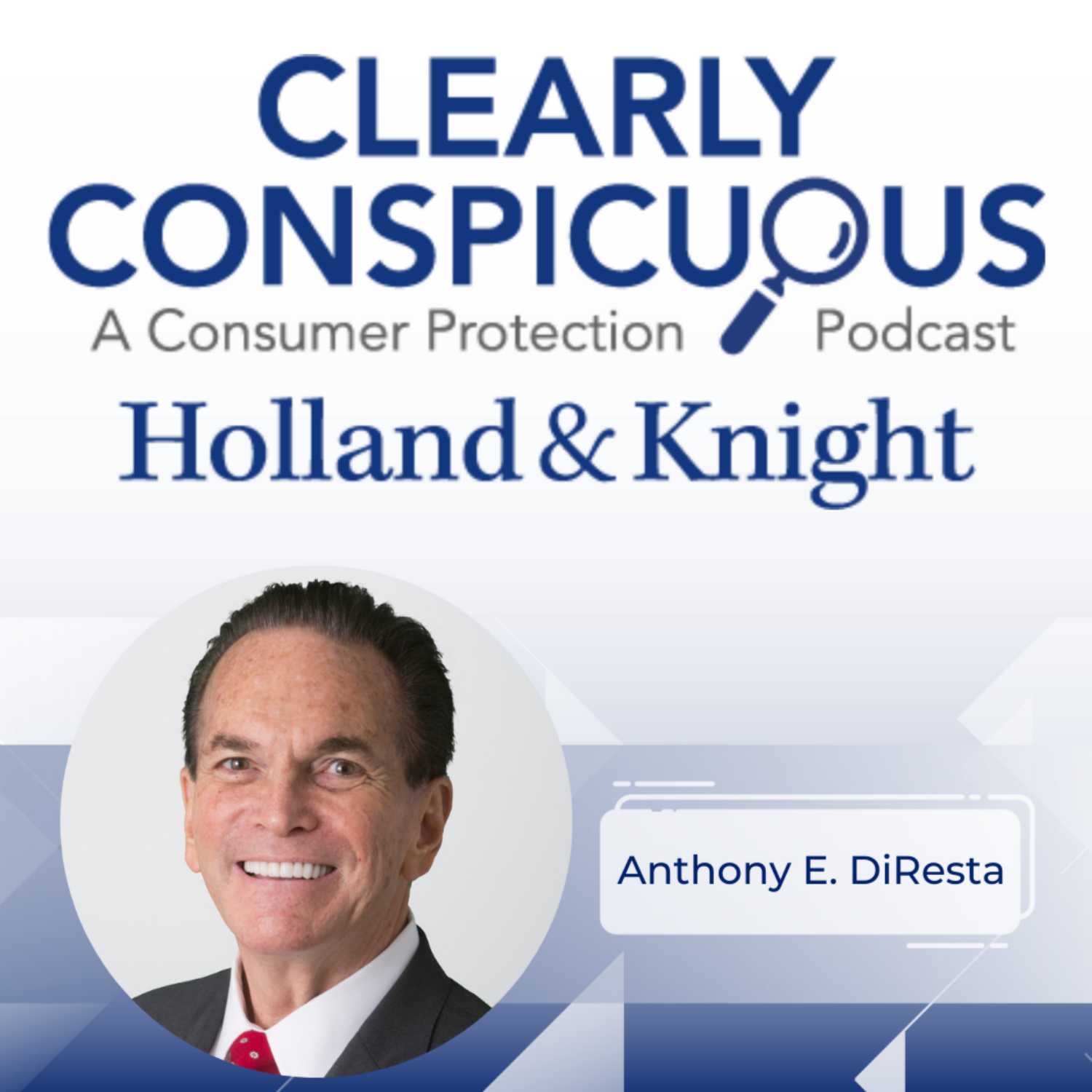
Clearly Conspicuous is a podcast series brought to you by Holland & Knight and hosted by consumer protection attorney Anthony DiResta. Here at Holland & Knight we have the working knowledge of how federal and state agencies operate and how courts address consumer protection issues. Consumer protection laws and regulations impact every dimension of business. Aggressive federal and state agencies are getting the attention of senior executives who are concerned about risk management, compliance challenges and high-profile governmental inquiries. Holland & Knight's Consumer Protection Defense and Compliance Team has the experience, knowledge, relationships and platform to effectively work with our clients to address these issues.
-
77
The Core Elements of an Effective Compliance Management System
In today's regulatory environment, one weak link in your compliance strategy can expose your business to serious legal, financial and reputational risk. In his latest podcast, consumer protection attorney Anthony DiResta delivers a clear, executive-level look at what it takes to build a compliance management system (CMS) that meets the expectations of regulators including the Federal Trade Commission, Federal Deposit Insurance Corp. and Consumer Financial Protection Bureau. He provides practical insight into the essential prongs of a CMS: board and management oversight, written policies and procedures, effective training, ongoing monitoring and audit, consumer complaint response, risk assessment and third-party oversight. With a strong emphasis on leadership, accountability and culture, this episode shows why compliance is not simply a legal obligation, but a core business function that protects the organization, strengthens decision-making and drives long-term success in the marketplace.
-
76
The FTC and Consumer Online Transactions
Online commerce may not be a new concept, but the laws governing it continue to evolve. In this episode of "Clearly Conspicuous," consumer protection attorney Anthony DiResta examines the history of the Federal Trade Commission's (FTC) enforcement in the e-commerce space, with a particular focus on negative option billing practices. A negative option is a billing arrangement in which silence or inaction is treated as acceptance of an offer. The FTC drafted a formal amendment to the Negative Option Rule, but it was struck down in July 2025. Despite that setback, the agency has continued to pursue enforcement actions involving false advertising, failure to disclose membership enrollment terms and unnecessarily difficult cancellation processes, all while signaling plans to revisit the rulemaking process. The agency has also emphasized that any platform providing enrollment options must also provide cancellation options that are equally easy to access and use. Mr. DiResta advises that consumers who wish to report fraud, scams or deceptive business practices can do so at reportfraud.ftc.gov.
-
75
Where the FTC Stands on AI: Evidence Over Speculation
As artificial intelligence (AI) becomes embedded in daily life, the Federal Trade Commission (FTC) has signaled it has no immediate plans to implement AI-specific rules. In this episode, consumer protection attorney Anthony DiResta analyzes recent statements by FTC Bureau of Consumer Protection Director Chris Mufarrige and compares the agency's current enforcement outlook with past regulatory actions. According to Mr. DiResta, the FTC appears focused on targeting bad actors, rather than the technology they are using, and avoiding the pursuit of rules that could slow AI industry growth. That shift is evident in the commission's case against AI writing assistant Rytr, which alleged review generation abuses but was set aside for lack of evidence of actual consumer harm. The outcome aligns with the White House AI Action Plan's emphasis on avoiding regulatory overreach. Overall, Mr. DiResta concludes, AI use that misleads consumers or violates existing laws will still draw federal scrutiny, but the FTC is signaling a more supportive posture toward technological innovation.
-
74
FTC Consumer Review Rule Warning Letters Target a Digital Marketplace Cornerstone
Online reviews are critical to developing consumer trust, and the Federal Trade Commission (FTC) has signaled it's ready to track down anyone trying to manipulate such reviews. Consumer protection attorney Anthony DiResta breaks down the FTC's latest warning letters targeting potential violations of the consumer review rule, an enforcement move that puts online reviews and testimonials at the center of attention. This episode also explains what the rule covers, from fake "verified" experiences and undisclosed insider reviews to incentivized ratings and suppression of negative feedback, and why the FTC is now shifting from education to action. With civil penalties up to $50,000 per violation and industries spanning e-commerce, hospitality, beauty, wellness and technology potentially exposed, Mr. DiResta recommends businesses and their advisors take proactive compliance steps now to avoid regulatory scrutiny later. This conversation is a timely road map for companies as they audit current marketing practices and tighten incentive programs to protect consumer trust and avert formal investigations or lawsuits.
-
73
Social Media Advertising and the FTC: Deception and the Architecture of Compliance
In this episode of "Clearly Conspicuous," consumer protection attorney Anthony DiResta breaks down why social media advertising has become a top Federal Trade Commission (FTC) priority for 2026 and how long‑standing consumer protection rules against deception and unfairness apply to today's influencer-heavy and algorithm-driven marketing. He explains how brands use social platforms to leverage trust, reduce consumer resistance to ads and benefit from algorithmic amplification while increasing legal risk when sponsorships aren't clearly disclosed or when responsibility is spread across brands, creators, agencies and platforms. Mr. DiResta also outlines the FTC's expectations for businesses utilizing online advertising, as put forth in its Endorsement Guides. He concludes by highlighting why companies must have a real social media compliance program with policies, training, monitoring and corrective action going into 2026.
-
72
Key Consumer Protection Issues in 2026
In this episode of "Clearly Conspicuous," consumer protection attorney Anthony DiResta previews the top Federal Trade Commission (FTC) and state attorney general enforcement priorities for 2026, stressing a shift from one-off misrepresentations to systematic enforcement focused on governance, design and individual accountability. He highlights key risk areas including privacy and data security, social media advertising, online consumer transactions and artificial intelligence. Overall, he says, companies should expect regulators to judge less what business say and more how their systems operate.
-
71
The FTC's Interest in Governance Matters: Board Oversight, Compliance and Awareness
In this episode of "Clearly Conspicuous," consumer protection attorney Anthony DiResta examines why board governance is under the Federal Trade Commission's (FTC) microscope and what directors must do to meet agency expectations. He begins by categorizing the main themes of regulatory focus: data security, antitrust and board composition, compliance and risk governance, and the emergence of artificial intelligence (AI) and algorithmic accountability. He then offers practical steps such as building regulatory literacy, establishing measurable risk reporting, structuring effective governance committees, testing resources and programs, documenting oversight in minutes and embedding ethics into culture—along with a checklist of specific governance risks to monitor.
-
70
The Digital Marketplace: The FTC's Focus on Fair Online Transactions
In this episode of "Clearly Conspicuous," consumer protection attorney Anthony DiResta provides an update on Federal Trade Commission (FTC) actions in the digital commerce space. Mr. DiResta discusses the FTC's core concerns with online transactions, including unclear or deceptive terms and conditions, insufficient privacy protections and failure to comply with the "Click to Cancel" rule. He then outlines a best practices framework for companies seeking to ensure compliance and build consumer trust. His final takeaway: Online commerce must be transparent, be fair and be consumer-centric.
-
69
The Future of the FTC: in the Hands of the Supreme Court
In this episode of "Clearly Conspicuous," consumer protection attorney Anthony DiResta unpacks a recent update in Trump v. Slaughter, in which the U.S. Supreme Court issued a stay allowing President Donald Trump's removal of Federal Trade Commission (FTC) Commissioner Rebecca Slaughter to stand while the case makes its way through the appeals process. He previews full arguments in December of this year that could revisit – and even overturn – Humphrey's Executor. Mr. DiResta explains the FTC's origins, structure and independence, as well as the 1935 precedent set in Humphrey's Executor limiting presidential removal of FTC commissioners. He additionally reviews Justice Elena Kagan's dissent in the court's order and analyzes how the move signals a potential recalibration of separation of powers. The episode outlines far-reaching implications if removal protections are narrowed: greater presidential control over independent agencies (FTC, National Labor Relations Board (NLRB), Federal Communications Commission (FCC), Consumer Product Safety Commission (CPSC) and Merit Systems Protection Board (MSPB)), reduced institutional independence, more litigation over "for cause" standards and broader precedent shifts affecting agency governance. The discussion closes with key questions for businesses and counsel to monitor as the future of the FTC, and independent commissions more broadly, may be shaped by the court's forthcoming decision.
-
68
A Roadmap for Emerging Consumer Protection Issues
In this episode of "Clearly Conspicuous," consumer protection attorney Anthony DiResta covers the emerging issues driving federal and state enforcement and private litigation. He highlights six themes shaping priorities: artificial intelligence (AI) and automation, advertising and marketing practices, privacy and data security, unfair and abusive practices, sector-specific scrutiny of financial services, health and environmental claims, and escalating coordination among enforcers. Mr. DiResta explains how agencies are intensifying oversight of AI transparency and bias, influencer and native advertising disclosures, data collection and breach response, "dark patterns," hidden fees and products targeting vulnerable consumers. He then describes practical steps to help mitigate unwanted attention from the government, from AI audits and human oversight to substantiation, social media policies, incident response plans and consumer-centric design. He concludes by highlighting how important it is to build trust through first instance compliance to reduce risk and position your business to thrive in a dynamic enforcement landscape.
-
67
Consumer Protection Investigations: What You Should Do
In this episode of "Clearly Conspicuous," consumer protection attorney Anthony DiResta discusses strategies and techniques for defending an investigation by a federal or state consumer protection agency in the current political landscape.He breaks the process into five phases:1. understanding the landscape 2. discovery and information gathering 3. communication and relationship building 4. controlling the narrative 5. strategic resolutionMr. DiResta emphasizes the importance of strategy, credibility and advocacy throughout the process, as well as securing counsel who will protect your interests while building rapport with government staff.
-
66
Tracking Trends in State-Level Consumer Protection Enforcement
In this episode of "Clearly Conspicuous," consumer protection attorney Anthony DiResta reviews recent trends in state-level consumer protection enforcement. He highlights notable actions by state attorneys general (AGs) across the U.S., from Florida's investigations into Roblox and Google's advertising practices, to multistate efforts against illegal electronic cigarettes, multimillion-dollar settlements in Illinois and California, and New Hampshire's lawsuit against Meta for addictive design features that allegedly harm teens. The discussion underscores how states are actively policing deceptive marketing, false advertising and emerging digital issues, often filling gaps left by waning federal enforcement. With investigations intensifying and priorities varying by state, businesses are advised to maintain high compliance standards and pursue transparent, ethical marketing to avoid legal risks and foster consumer trust in an evolving regulatory landscape.
-
65
An Overview of State Attorney General Consumer Protection Enforcement
In this episode of "Clearly Conspicuous," consumer protection attorney Anthony DiResta discusses recent actions taken by state attorneys general (AGs) in the enforcement of consumer protection laws and regulations. His overview covers enforcement actions regarding deceptive advertising and fees in industries including Big Tech, social media, health and consumer products. Mr. DiResta reminds his listeners that state-level protection laws help provide a foundation for regulatory oversight, despite the shifts in federal enforcement priorities that can occur during the transition to new political administrations, meaning companies still need to stay aware of changes in compliance requirements that may affect their operations.
-
64
Tips for Maintaining FTC Compliance When Using AI
In this episode of "Clearly Conspicuous," consumer protection attorney Anthony DiResta shares best practices for compliance with Federal Trade Commission (FTC) rules and regulations when using artificial intelligence (AI). Mr. DiResta's discussion outlines eight essential pillars for effective compliance management: governance, substantiated marketing, transparency, data integrity, security, staff training, continuous monitoring and special precautions for high-risk AI uses. He emphasizes the importance of truth in advertising, informed consent, ethical data handling and ongoing vigilance in adapting to regulatory changes when companies advertise or promote their AI services or products.
-
63
Legal Implications of the Supreme Court's Ruling on Universal Injunctions
In this episode of "Clearly Conspicuous," consumer protection attorney Anthony DiResta discusses the recent U.S. Supreme Court decision in Trump v. CASA, Inc., where the court ruled federal district courts generally cannot issue universal injunctions under the Judiciary Act of 1789. The decision, delivered on June 27, 2025, means that district courts can only grant injunctions that provide relief to plaintiffs with standing, not to those who are not parties to the case. Mr. DiResta examines possible significant implications for businesses and individuals subject to federal statutes or executive actions, as well as the other avenues that remain available for obtaining broad relief.
-
62
FTC to Focus on Deceptive AI Claims: Compliance Management Strategies
In this episode of "Clearly Conspicuous," consumer protection attorney Anthony DiResta explores the Federal Trade Commission's (FTC) increasing scrutiny of deceptive claims related to artificial intelligence (AI). He outlines the FTC's focus on exaggerated performance claims, misleading product labeling, opaque data practices and bias in AI-powered systems, highlighting recent enforcement actions for false or misleading representations. Mr. DiResta emphasizes that businesses must ensure their AI-related claims are accurate, transparent and comply with existing consumer protection regulations.
-
61
Compliance Needs are Alive and Well: FTC's Recent Enforcement Activity
In this episode of "Clearly Conspicuous," consumer protection attorney Anthony DiResta provides an early analysis of the Federal Trade Commission's (FTC) direction under Chair Andrew Ferguson, emphasizing that the agency is intensifying, not scaling back, its enforcement efforts despite broader deregulatory trends. Mr. DiResta examines recent FTC actions that span multiple sectors, including holding a workshop on the tech industry's impact on families, issuing new rules against deceptive pricing, targeting business scams and increasing scrutiny on artificial intelligence (AI) product claims. This episode highlights the FTC's multi-agency collaboration and suggests that, although enforcement may become more selective, the focus will be on precedent-setting cases. Mr. DiResta cautions companies to not interpret deregulatory rhetoric as a relaxation of compliance expectations and instead understand that the need for robust, well-documented and proactive compliance measures has never been greater.
-
60
New Guidance on Complying with FTC Rule on Deceptive and Unfair Fees
In this episode of "Clearly Conspicuous," consumer protection attorney Anthony DiResta breaks down the Federal Trade Commission's (FTC) Rule on Unfair or Deceptive Fees, focusing on recent FAQs that clarify its application and enforcement approach. Mr. DiResta examines how the rule targets businesses selling live-event tickets and short-term lodging, requiring them to clearly disclose total prices — including all mandatory fees — upfront, and applies to both direct sellers and intermediaries. This episode details what is covered by the FAQs, what must be disclosed to avoid misrepresentation and how businesses should handle different types of charges.
-
59
Looking into the Crystal Ball: The Future of Consumer Protection Law Enforcement
In this episode of "Clearly Conspicuous," consumer protection attorney Anthony DiResta delves into the shifting landscape of consumer protection regulation amid significant policy and administrative changes at federal agencies such as the Federal Trade Commission (FTC) and Consumer Financial Protection Bureau (CFPB). Mr. DiResta explores how these changes affect the enforcement of consumer protection laws and discusses the growing roles of state attorneys general and the media in shining a spotlight on corporate misconduct. Additionally, the podcast highlights the National Advertising Division (NAD) of the Better Business Bureau's role in overseeing deceptive advertising as businesses shift toward online marketing.
-
58
FTC Commissioner Dismissals: Background and Implications
In this episode of his "Clearly Conspicuous" podcast series, consumer protection attorney Anthony DiResta delves into recent leadership changes at the Federal Trade Commission (FTC). Mr. DiResta explores the legal implications of President Donald Trump's dismissals of Democratic Commissioners Alvaro Bedoya and Rebecca Kelly Slaughter, including statutes governing commissioner appointments and judicial decisions on the president's authority over them. The episode provides insights into the historical and legal context of FTC leadership changes and discusses how the two dismissals could affect the agency's functioning, given the new commissioner composition.
-
57
FTC Regulatory and Enforcement Shifts Under New Leadership
In this episode of his "Clearly Conspicuous" podcast series, consumer protection attorney Anthony DiResta discusses the direction of the Federal Trade Commission (FTC) under Chairman Andrew Ferguson. Ferguson is expected to adopt a less regulatory and more business-friendly agenda by interpreting existing statutes narrowly while also upholding the commission's core role in enforcement, especially concerning artificial intelligence (AI) and targeted advertising. This episode explores the new chairman's views on AI and his skepticism about the commission's recent notices for monetary penalties on advertisers, which Mr. DiResta says portends an overall shift in agency priorities.
-
56
Changes at the CFPB Under the Trump Administration
In this episode of his "Clearly Conspicuous" podcast series, consumer protection attorney Anthony DiResta explores the future of the Consumer Financial Protection Bureau (CFPB) under the Trump Administration. He discusses an email from acting director Russell Vought directing staff to halt enforcement activities, along with how employees responded to it. Mr. DiResta explains that though the director has the authority to freeze such activities, the CFPB itself cannot be closed without congressional action.
-
55
What to Expect from the New FTC Leadership
In this episode of his "Clearly Conspicuous" podcast series, "What to Expect from the New FTC Leadership," consumer protection attorney Anthony DiResta discusses a Jan. 22, 2025, press release from the Federal Trade Commission (FTC) outlining new agency priorities under the Trump Administration. The press release emphasizes the elimination of programs related to diversity, equity and inclusion (DEI) within the federal government, marking a shift in the philosophical direction of the FTC. This episode focuses on other potential changes in FTC operations under Chairman Andrew Ferguson and explores how these shifts will affect compliance and advocacy strategies for companies dealing with the FTC, including alternative approaches aligned with the administration's agenda.
-
54
The FTC Takes Action Against Grubhub
In the 54th episode of his "Clearly Conspicuous" podcast series, consumer protection attorney Anthony DiResta discusses significant regulatory actions taken against Grubhub by the Federal Trade Commission (FTC) and Illinois attorney general (AG). FTC and Illinois AG accused Grubhub of unlawful practices including fake restaurant affiliations, deceptive delivery cost practices and driver earnings misrepresentation, and the company will pay $25 million to settle the charges. Mr. DiResta notes that Grubhub reportedly received a warning letter in 2021 but did not change its practices, which he highlights as a prime example of how essential it is for businesses to "be very aware" of regulatory notices from federal enforcement authorities.
-
53
Hidden Fees in the Live-Event Ticketing and Short-Term Lodging Industries
In this episode of his "Clearly Conspicuous" podcast series, "Hidden Fees in the Live-Event Ticketing and Short-Term Lodging Industries," consumer protection attorney Anthony DiResta discusses the Federal Trade Commission's (FTC) new rule targeting mandatory hidden fees and enhanced transparency in pricing disclosures. The rule, finalized after significant public feedback, specifically addresses the live-event ticketing and short-term lodging sectors, requiring businesses to include all mandatory fees in the prominently displayed total price. Although certain fees, such as government-imposed taxes and optional amenities, can be excluded, they must be clearly disclosed before purchase. Mr. DiResta emphasizes that though the rule currently targets only two industries, it reflects the FTC's broader intent to tackle deceptive pricing practices across various sectors.
-
52
The CFPB Takes Action Against VyStar Credit Union
In this episode of his "Clearly Conspicuous" podcast series, "The CFPB Takes Action Against VyStar Credit Union," consumer protection attorney Anthony DiResta examines the Consumer Financial Protection Bureau's (CFPB) action against VyStar Credit Union ordering the company to pay $1.5 million for a failed online banking system rollout that left consumers unable to access their accounts. The CFPB found that VyStar violated the Consumer Financial Protection Act by ignoring red flags and rushing an untested platform, resulting in significant harm to its members. In this episode, Mr. DiResta highlights the CFPB's authority to take action against large credit unions and the importance of proper planning and testing when implementing new financial technology.
-
51
The CFPB Takes Action on a Toronto-Based Bank’s Consumer Credit Reports
In this episode of his "Clearly Conspicuous" podcast series, consumer protection attorney Anthony DiResta discusses the Consumer Financial Protection Bureau's (CFPB) new order requiring TD Bank to pay $28 million for breakdowns that allegedly tarnish consumer credit reports. Mr. DiResta provides a high-level overview and key takeaways regarding this investigation.
-
50
The Election's Impact on the FTC Will Bring Big Changes, But Being Vigilant Must Remain a Priority
In this episode of his "Clearly Conspicuous" podcast series, "The Election's Impact on the FTC Will Bring Big Changes, But Being Vigilant Must Remain a Priority," consumer protection attorney Anthony DiResta explores the potential changes at the Federal Trade Commission (FTC) following the recent election. Mr. DiResta is a former director at a regional office of the FTC who has defended companies in dozens of FTC investigations and who counsels companies in compliance management and risk assessments. He draws on this experience to examine how the FTC's structure and enforcement approach may evolve under the new administration. He also dives into a deep discussion on the role of state attorneys general in consumer protection and offers practical guidance for businesses navigating these changes as Republicans take control of both the White House and Congress. This insightful episode provides valuable perspective on the shifting landscape of consumer protection regulation and enforcement.
-
49
The CFPB Highlights Alleged Deceptive Debt Collection Practices
In this episode of his "Clearly Conspicuous" podcast series, "The CFPB Highlights Alleged Deceptive Debt Collection Practices," consumer protection attorney Anthony DiResta examines the Consumer Financial Protection Bureau's (CFPB) Summer 2024 Supervisory Highlights. The publication focuses on several areas of concern in consumer financial services, including auto and student loan servicing, debt collection practices, medical payment products and account freezes. In auto loan servicing, the CFPB identifies issues with inadequate notifications for final manual payments in auto-pay systems, while student loan servicers were found to have excessive barriers to assistance and inaccurate information about forbearance programs. Debt collectors were cited for disclosure violations, harassment and inconvenient communications. The report also notes concerns about medical credit cards and account freezes. Mr. DiResta explains that the CFPB's observations align with previously identified issues, particularly with regard to customer service levels and medical debt financing products.
-
48
The CFPB's Effort to Remove Medical Debt from Credit Reports
In this episode of his "Clearly Conspicuous" podcast series, consumer protection attorney Anthony DiResta discusses the Consumer Financial Protection Bureau's (CFPB) efforts to remove medical debt from credit reports. The CFPB believes the move will enhance consumer privacy, improve credit scores and end coercive debt collection practices. Mr. DiResta explores the potential benefits for both consumers and lenders, including potentially increasing the number of safe mortgage approvals.
-
47
Supreme Court Upholds CFPB Funding Structure
In this episode of his "Clearly Conspicuous" podcast series, "Supreme Court Upholds CFPB Funding Structure," consumer protection attorney Anthony DiResta discusses a U.S. Supreme Court decision affirming the Consumer Financial Protection Bureau's (CFPB) funding mechanism by a 7-2 vote. This episode unpacks the historical and legal significance of the court's decision that overturned a lower court's ruling finding the funding model was unconstitutional. Mr. DiResta examines the majority opinion, penned by Justice Clarence Thomas, which leans on both the text of the Constitution and historical practices. He also explores Justice Samuel Alito's dissenting view, which argues the decision grants the CFPB unchecked financial autonomy.
-
46
FTC and CFPB Focus on Medical, Rental Debt Collection Practices
In this episode of his "Clearly Conspicuous" podcast series, "FTC and CFPB Focus on Medical, Rental Debt Collection Practices," consumer protection attorney Anthony DiResta examines the Federal Trade Commission (FTC) and Consumer Financial Protection Bureau's (CFPB) recent efforts to protect consumers in the debt collection industry. Mr. DiResta discusses the agencies' annual reports, highlighting aggressive practices from medical and rental debt collection companies, including attempts to collect already-paid bills and improperly inflated rental debts. He also outlines the CFPB's enforcement actions, emphasizing the bureau's focus on ensuring debt collectors follow consumer protection laws and touching on issues such as unsubstantiated debt collection and illegal threats.For more, visit: https://www.hklaw.com/en/insights/media-entities/2024/10/podcast-ftc-and-cfpb-focus-on-medical-rental-debt-collection-practices
-
45
FTC Challenges H&R Block's Marketing and Data Practices
In this episode of his "Clearly Conspicuous" podcast series, "FTC Challenges H&R Block's Marketing and Data Practices," consumer protection attorney Anthony DiResta discusses the Federal Trade Commission's (FTC) actions against H&R Block for alleged deceptive practices, including deleting consumer data, making downgrades difficult and deceiving consumers about free tax preparation services. The administrative complaint filed by the FTC details H&R Block's purported strategies to compel consumers to buy pricier products, challenges encountered during product downgrades and deceptive offers featured in advertisements. Mr. DiResta highlights the FTC's strict stance on consumer protection and its heightened oversight of advertising practices, underscoring the importance of effective strategies for navigating these regulatory changes successfully.
-
44
CFPB Warns of Manipulation in Digital Comparison Shopping Tools
In this episode of his "Clearly Conspicuous" podcast series, "CFPB Warns of Manipulation and Dark Patterns in Digital Comparison Shopping Tools," consumer protection attorney Anthony DiResta discusses the Consumer Financial Protection Bureau's (CFPB) circular warning about comparison shopping operators potentially violating federal law. The CFPB's guidance explains how certain practices can deceive consumers who rely on these tools for unbiased information about financial products, particularly in the credit card and mortgage markets. He also notes that the CFPB's circular is part of broader efforts to level the playing field for consumers across various financial product and service industries.
-
43
Credit Card Late Fees Have the CFPB's Interest
In this episode of his "Clearly Conspicuous" podcast series, "Credit Card Late Fees Have the CFPB's Interest," consumer protection attorney Anthony DiResta examines the Consumer Financial Protection Bureau's (CFPB) propose rule that would significantly reduce the cost of late fees for credit cards and potentially save consumers hundreds of dollars each year. Mr. DiResta explores the CFPB's goal to address junk fees and market dominance by a few players, aiming to provide consumers with more meaningful choices in the credit card industry.Read more.
-
42
The FTC and Connecticut Join Forces for Action Against Nissan Dealer
In this episode of his "Clearly Conspicuous" podcast series, "The FTC and Connecticut Join Forces for Action Against Nissan Dealer," consumer protection attorney Anthony DiResta discusses a recent action taken by the Federal Trade Commission (FTC) and the state of Connecticut against Manchester City Nissan (MCN) for allegedly deceiving consumers and charging unauthorized fees. He examines the complaint's specific allegations, including tacking on certification charges for pre-certified vehicles, charging for bogus add-ons without consent and misrepresenting government-imposed taxes and fees. Mr. DiResta also emphasizes the importance of transparent pricing practices and warns that junk fees are currently a key focus of the FTC and the Biden Administration.
-
41
The FTC’s Proposed Rule Banning Deceptive Reviews and Testimonials
In this episode of his "Clearly Conspicuous" podcast series, "The FTC's Proposed Rule Banning Deceptive Reviews and Testimonials," consumer protection attorney Anthony DiResta examines a proposed rule from the Federal Trade Commission (FTC) aimed at banning fake reviews, suppressing of negative reviews and buying positive reviews. The proposed rule seeks to prevent marketers from engaging in deceptive practices that mislead consumers and disadvantage honest businesses. Mr. DiResta analyses specific prohibitions, including the creation or procurement of fake reviews, review hijacking, compensating for positive reviews and undisclosed insider reviews. Additionally, the rule addresses illegal review suppression and the sale of false social media influence indicators.
-
40
The CFPB and State AGs Act Jointly Against Online Educational Company
In this episode of his "Clearly Conspicuous" podcast series, "The CFPB and State AGs Act Jointly Against Online Educational Company," consumer protection attorney Anthony DiResta discusses a joint enforcement action taken by the Consumer Financial Protection Bureau (CFPB) and 11 state attorneys general against Prehired. Prehired was an online training programs for software sales positions. The CFPB accused the company of making false promises to borrowers, trapping students with illegal income share loans and engaging in abusive debt collection practices. The court-approved order requires Prehired to cease operations and void all outstanding loans, providing more than $30 in relief for student borrowers. Mr. DiResta explains how these actions highlight the significant consequences of joint federal and state enforcement actions in consumer protection.
-
39
The FTC Takes Action Against Old Southern Brass for False "Made in the USA" Claims
In this episode of his "Clearly Conspicuous" podcast series, "The FTC Takes Action Against Old Southern Brass for False 'Made in the USA' Claims," consumer protection attorney Anthony DiResta examines Federal Trade Commission (FTC) enforcement efforts regarding "Made in the USA" claims. The FTC recently took action against Old Southern Brass for falsely claiming its products were made in the United States, the company was veteran-operated and proceeds of sales were donated to military-focused charities. Mr. DiResta dives into the FTC's proposed order that prohibits the company from making deceptive claims, requires a $150,000 payment and outlines strict guidelines for future "Made in USA" claims. He highlights the FTC's current focus on "Made in USA" marketing, emphasizing the importance for companies to adhere closely to FTC guidelines when making such assertions.
-
38
Part 2: An FTC Official Speaks About the Regulation of AI Technology
In this episode of his "Clearly Conspicuous" podcast series, "Part 2: An FTC Official Speaks About the Regulation of AI Technology," consumer protection attorney Anthony DiResta continues his discussion on the Federal Trade Commission's (FTC) approach to regulating artificial intelligence (AI). The Biden Administration's executive order on AI directs the FTC to use its authority to protect consumers from bias and discrimination in AI technology. Mr. DiResta explains that companies may face liability for AI vendors and contractors, so they should implement compliance measures like pre-release assessments, transparency, vetting vendors, employee training and monitoring. He also shares that as AI regulation evolves, the FTC will continue using its unfair practices jurisdiction to prosecute harmful AI applications, while more comprehensive federal and state AI laws may emerge.
-
37
The U.S. Chamber of Commerce Sues the FTC Over Power Grab
In this episode of his "Clearly Conspicuous" podcast series, consumer protection attorney Anthony DiResta discusses the U.S. Chamber of Commerce's decision to sue the Federal Trade Commission (FTC) over its rule banning non-compete clauses in employment agreements. Mr. DiResta examines the Chamber's argument that the FTC overstepped its authority in issuing the rule and the key debate around whether non-competes protect businesses or suppress worker wages and mobility. He also explores if the FTC has clear legal authority to address non-competes.
-
36
The FTC Issued a New Rule to Ban All New Noncompete Agreements
In this episode of his "Clearly Conspicuous" podcast series, "The FTC Issued a New Rule to Ban All New Noncompete Agreements," consumer protection attorney Anthony DiResta examines the Federal Trade Commission's new rule banning non-compete agreements in employment contexts. He provides background on the rule, explaining its goals of promoting competition and worker mobility. Mr. DiResta also outlines what the rule entails for employers, including notification requirements, and addresses potential legal challenges to the rule's enforcement.
-
35
An FTC Official Speaks About the Regulation of AI Technology
In this episode of his "Clearly Conspicuous" podcast series, "An FTC Official Speaks About the Regulation of AI Technology," consumer protection attorney Anthony DiResta dives into insights from Michael Atleson, a senior attorney at the Federal Trade Commission (FTC), on the agency's approach to regulating artificial intelligence (AI). This episode examines how the FTC uses Section 5 of the FTC Act to prosecute unfair or deceptive practices involving AI technology, such as exaggerating AI capabilities or using AI for deception like deepfakes.
-
34
The CFPB's Rule to Remove Medical Debt from Credit Reports
In this episode of his "Clearly Conspicuous" podcast series, "The CFPB's Rule to Remove Medical Debt from Credit Reports," consumer protection attorney Anthony DiResta discusses the Consumer Financial Protection Bureau's (CFPB) new rulemaking process to remove medical bills from consumer credit reports. Mr. DiResta explains that the proposal aims to consider what would help families financially recover from medical crises, stop debt collectors from coercing people into paying bills they may not even owe and ensure that creditors are not relying on data that is inaccurate. He also notes that the CFPB has engaged with stakeholders on the issue through public hearings featuring complaints about illegal debt collection and credit reporting practices related to medical billing.
-
33
The FTC Takes Initiative to Stop Junk Fees
In this episode of his "Clearly Conspicuous" podcast series, "The FTC Takes Initiative to Stop Junk Fees," consumer protection attorney Anthony DiResta summarizes the FTC's proposed rule to prohibit junk fees. Mr. DiResta dives into the rule's provisions, including requiring disclosed prices to include all mandatory fees and prohibiting fee misrepresentation. He emphasizes junk fees as a top FTC priority and encourages continued strategic compliance in this evolving regulatory environment and how the proposed rule aims to ban hidden, bogus and misrepresented fees through enforcement and refunds.
-
32
The FTC Takes a Closer Look at Blurred Advertising to Children
In this episode of his "Clearly Conspicuous" podcast series, "The FTC Takes a Look at Blurred Advertising to Children," consumer protection attorney Anthony DiResta analyzes a new Federal Trade Commission (FTC) staff paper recommending that businesses, social media influencers and others that market or promote products online to children should avoid blurring advertising with other content. Mr. DiResta outlines harms like deception, financial losses from accidental purchases, and targeting of harmful products. He also summarizes five recommendations from an FTC workshop to mitigate these risks, such as clearly distinguishing advertising and using disclosure icons.
-
31
The FTC Enforces the Fair Credit Reporting Act
In this episode of his "Clearly Conspicuous" podcast series, "The FTC Enforces the Fair Credit Reporting Act," consumer protection attorney Anthony DiResta discusses the Federal Trade Commision's (FTC) recent actions against background check companies Truth Finder and Instant CheckMate. The FTC alleges the companies misrepresented criminal record information and violated the Fair Credit Reporting Act (FCRA) by failing to verify report accuracy. Under the proposed $5.8 million settlement order, Truth Finder and Instant CheckMate must implement monitoring, disclose material connections and permanently comply with all FCRA provisions if deemed a consumer reporting agency. Mr. DiResta emphasizes the FTC's robust enforcement of the FCRA and importance of properly evaluating regulatory obligations.
-
30
The FTC Acts Against Experian Customer Services
In this episode of his "Clearly Conspicuous" podcast series, "The FTC Acts Against Experian Customer Services," consumer protection attorney Anthony DiResta discusses the recent Federal Trade Commission (FTC) action requiring Experian to pay $650,000 for violations of the CAN-SPAM Act. Mr. DiResta delves into CAN-SPAM compliance, offering a comprehensive guide to avoid potential legal pitfalls in email marketing. He highlights the active enforcement of consumer protection laws and underscores the importance of adhering to legal standards to safeguard consumer rights and ensure business success.
-
29
The CFPB Targets Data Brokers with Latest Proposed Rule
In this episode of his "Clearly Conspicuous" podcast series, "The CFPB Targets Data Brokers with Latest Proposed Rule," consumer protection attorney Anthony DiResta shares his insight on the Consumer Financial Protection Bureau's (CFPB) proposed rules governing the practices of data brokers under the Fair Credit Reporting Act (FCRA). He outlines the comprehensive rules established by the FCRA that regulate consumer reporting agencies as well as the CFPB's previous studies regarding data brokers. Mr. DiResta explains that the key to staying on top of the current laws that deal with technological developments is to pay attention to the CFPB's initiatives that go beyond the financial services industry.
-
28
The Biden Administration's Push for Transparency in AI Technology
In this episode of his "Clearly Conspicuous" podcast series, "The Biden Administration's Push for Transparency in AI Technology," consumer protection attorney Anthony DiResta discusses the efforts of the Biden Administration to promote the transparent and secure development of artificial intelligence (AI) technology as well as initiatives that minimize AI-related harms. Mr. DiResta examines the White House's three principles that it deems fundamental to the future of AI: safety, security and trust. He explains that while the White House initiative lacks any enforcement mechanism, it can still take action to inform consumer protection agencies of appropriate regulatory structures around AI.
We're indexing this podcast's transcripts for the first time — this can take a minute or two. We'll show results as soon as they're ready.
No matches for "" in this podcast's transcripts.
No topics indexed yet for this podcast.
Loading reviews...
ABOUT THIS SHOW
Clearly Conspicuous is a podcast series brought to you by Holland & Knight and hosted by consumer protection attorney Anthony DiResta. Here at Holland & Knight we have the working knowledge of how federal and state agencies operate and how courts address consumer protection issues. Consumer protection laws and regulations impact every dimension of business. Aggressive federal and state agencies are getting the attention of senior executives who are concerned about risk management, compliance challenges and high-profile governmental inquiries. Holland & Knight's Consumer Protection Defense and Compliance Team has the experience, knowledge, relationships and platform to effectively work with our clients to address these issues.
HOSTED BY
Holland & Knight
CATEGORIES
Loading similar podcasts...
URL copied to clipboard!