
PODCAST · business
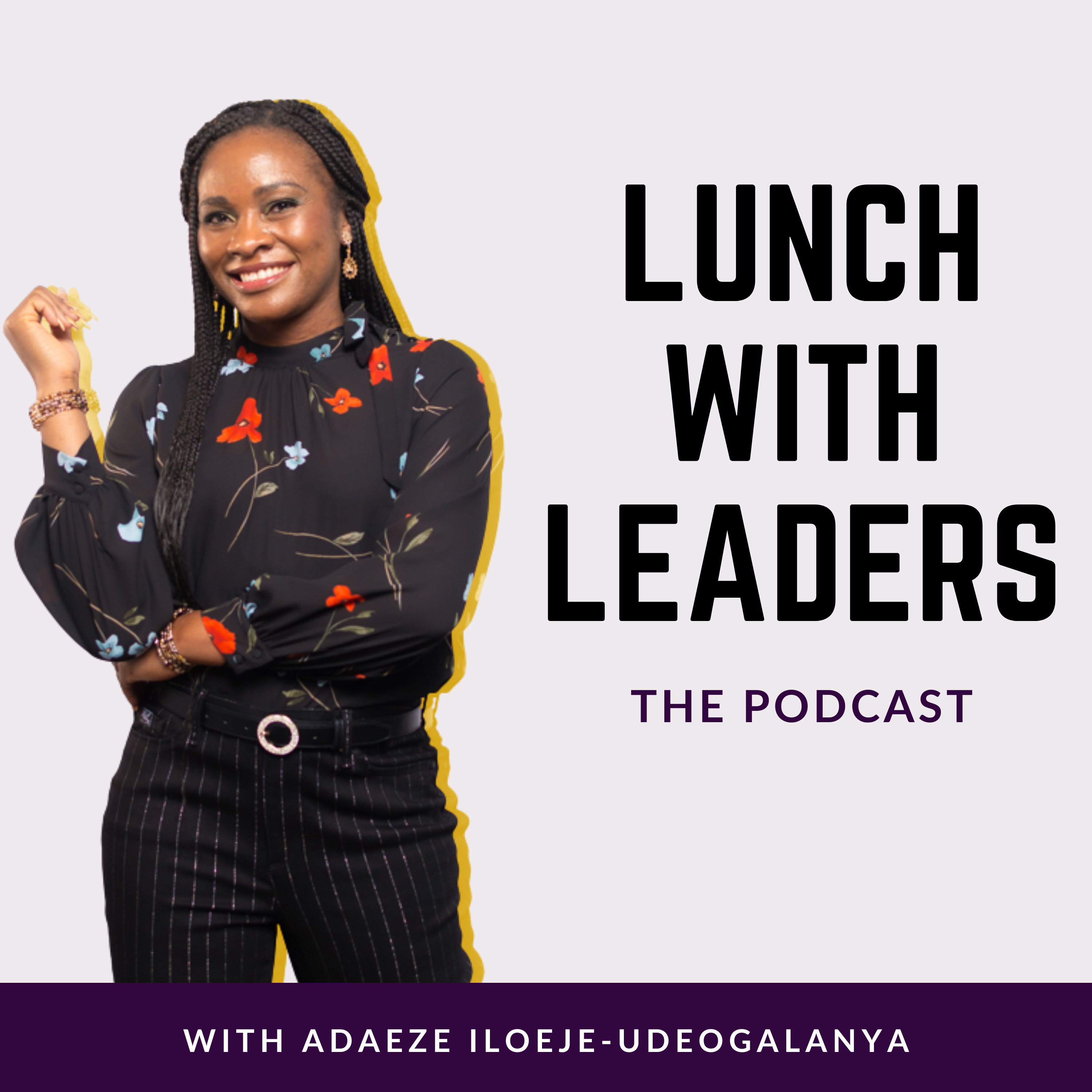
Lunch with Leaders: Influence Extraordinary Authentic Women in STEM Careers for Empowerment
by Adaeze Iloeje-Udeogalanya | Authentic Influencer for Women Empowerment Experts
The Lunch with Leaders podcast helps women in STEM lead with authenticity and growth, create impact, & expand their influence.Hosted by Adaeze Iloeje-Udeogalanya, TEDx speaker, leadership strategist, & Founder.Each week, Adaeze sits down with innovators, trailblazers, & leaders who are changing cultures and redefining leadership. Together, they share the stories, strategies, & mindsets that empower women in STEM to amplify their visibility, influence, and impact.If you are ready to lead boldly, elevate your influence, and join a global movement, this is your invitation… would you accept?
-
47
Erin Tracy: Practical Advice and Strategies for New Managers - 046
This episode with Erin Tracy and Adaeze Iloeje-Udeogalanya is for high-achieving professionals, leaders, and especially women in STEM who want to:Break away from burnout and over-responsibilityCultivate more effective, people-first leadership stylesNavigate generational dynamics at workHelp teams thrive through better communication and boundariesIt’s valuable for new and seasoned leaders, business owners, HR professionals, team leads, and anyone seeking sustainable success in fast-paced environments.Key Moments & TimestampsWhat High Performers Get Wrong About LeadershipErin Tracy describes the traps of over-responsibility for high achievers 03:06The pitfalls of "servant leadership" done wrong: bottlenecks, frustration, and pushing good people away 04:11Avoiding Burnout & Setting BoundariesAdejuda Galanya and Erin Tracy talk through community, self-awareness, and boundary-setting 05:35The "Post-it Note Challenge" as a practical tool for awareness and behavior change 07:13Generational Differences at WorkManaging four generations in a single workplace—for the first time in history 13:53Gen Z’s work values, boundary-setting, and what older generations could learn 15:28How parental expectations shape career mindsets 32:30Communication, Expectations & BoundariesHow to set boundaries through proactive and respectful communication rather than ultimatum 24:03The importance of micro-conversations for leadership pipeline, not just filling gaps in crisis 28:17Leadership Development MistakesPitfalls of promoting without training: 80% of first-time managers fail within 2 years 36:48Proactive cross-training and people-first development strategies 39:00People-First Leadership in PracticeShifting from task/process focus to people focus for stronger teams 49:07Why people-first workplaces lead to better customer and business outcomes 50:10Frequently Asked QuestionsQ: What is the biggest leadership trap for high performers?A: Taking on too much, becoming a bottleneck, and disempowering others instead of helping them grow.Q: How can I become more aware of harmful leadership habits?A: Use tools like the Post-it Note Challenge to track when you default to "I'll do it," and consciously redirect tasks back to your team for growth.Q: How do generational differences affect work and leadership?A: Different generations value time, boundaries, and work-life balance differently—misunderstandings are common unless there’s open, respectful dialogue.Q: Why do so many new managers fail?A: Lack of training and support—organizations often promote high performers without helping them build people management skills.Q: What is people-first leadership?A: Centering leadership around developing, listening to, and supporting team members, rather than just focusing on processes or products.Track Your "I'll Do It" Moments:Start a Post-it Note Challenge to increase self-awareness of when you take on too much.Delegate and Empower Intentionally:Ask your team, “How would you solve it?” to develop their problem-solving and autonomy.Practice Proactive Communication:When needing extra work or flexibility, give advance notice and show respect for personal schedules.Prioritize People Over Process:Check in with team members where they work; see their challenges firsthand before making changes.Commit to Micro-Conversations:Make daily small check-ins part of your routine to keep a pulse on engagement and potential leadership in your team.Advocate for Leadership Training:Don’t wait for a promotion—seek out training, mentorship, or coaching to grow as a leader.For more tips and insights, connect with Erin Tracy via her socials or weekly newsletter!
-
46
The Broken Rung: Visibility and Support for Women in STEM - 045
Adaeze Iloeje-Udeogalanya explores the systemic barriers that prevent women in STEM from advancing into leadership roles. Citing the 2025 McKinsey Women in the Workplace report, she highlights the "broken rung", a critical missed first step to management where only 93% of women (and 74% of women of color) are promoted for every 100 men. Adaeze actively disputes the report's suggestion of an "ambition gap," arguing instead that the root cause of this disparity is a lack of sponsorship and equal support. She also explains how women often carry an "invisible tax"—performing unrewarded, non-KPI-aligned work to hold teams together. To overcome these hurdles, she encourages listeners to stop relying on performance alone and instead focus on strategic visibility, finding sponsors, and building strong professional networks.Who is this for? This content is designed for women in STEM—especially those who feel stuck in their careers, are repeatedly passed over for promotions, or feel their hard work goes unrecognized. It is also highly relevant for anyone looking to build leadership visibility, secure career sponsorship, and take proactive control of their professional advancement.Key Moments & TimestampsThe Visibility Problem: Adaeze opens with an anecdote about a high-performing client who was repeatedly denied promotions due to a vague lack of "executive presence" and "visibility".The Data & The Broken Rung: She breaks down the 2025 McKinsey report, showing that women are underrepresented at every pipeline level because they are left behind at the very first managerial promotion.The Ambition Myth: Adaeze refutes the idea that women lack ambition, noting that when women receive equal sponsorship, the promotion gap completely disappears.The Invisible Tax: She details how women do unrecognized team-building and inclusion work that doesn't factor into official performance reviews.The Differentiator: Shifting the focus from just "doing excellent work" to ensuring the right decision-makers know your name and your impact.FAQsWhat is the "broken rung"? It refers to the missed first promotion to manager, which sets women behind early and causes the career gap to compound and widen over time.What is the difference between a mentor and a sponsor? A mentor gives you advice and talks to you, whereas a sponsor talks about you, using their political capital to advocate for your name in rooms where decisions are made.Why isn't hard work enough to get promoted? Your job isn't just doing the work; it is connecting your impact to the organization's priorities and ensuring the right people know about it. Leaders are differentiated by who knows them and advocates for them, not strictly by their performance.Action Steps for ListenersAudit your network: Honestly assess your current situation to see if you have at least two actual sponsors with the influence to create real opportunities for you.Make your impact visible: Frame your significant deliverables around outcomes leadership cares about, such as increased revenue or reduced expenses.Share your wins: Send brief accomplishment updates to senior leaders or make well-positioned, intentional comments in meetings to actively associate your name with your impact.ResourcesLeadership Edge DiagnosticBook a Strategy Call with Adaeze Iloeje-UdeogalanyaFollow Adaeze Iloeje-Udeogalanya on LinkedInFollow African Women in STEM on LinkedInFollow African Women in STEM on Instagram Join the African Women in STEM MembershipVisit the African Women in STEM Website Watch Adaeze Iloeje-Udeogalanya's TEDX Talk on YouTube
-
45
Rich Belsky: Humanity in Leadership and Bridging the Entrepreneurial Isolation Gap
In this episode of Lunch with Leaders, Adaeze Iloeje-Udeogalanya speaks with Rich Belsky, a five-time founder and executive coach, about the unspoken crisis of loneliness in entrepreneurship.They challenge the toxic "wartime CEO" mythology that forces leaders to hide their struggles to appease investors and teams. Rich highlights that 65% of startups fail within five years due to "human dynamics" issues, rather than business mechanics. Together, they explore practical methods for navigating high-pressure environments, emphasizing the importance of nervous system regulation, authentic communication, and building safe communities for founders.Who is this for?This conversation is designed for entrepreneurs, founders, investors, and corporate executives.It is especially valuable for high-performing leaders, including women in STEM, who are dealing with the hidden emotional tolls of leadership, such as isolation, high-stress decision-making, and burnout.Key Moments & Timestamps:Introduction: Adaeze introduces the podcast's mission and guest Rich Belsky.The True Cost of Leadership: Rich reveals that loneliness, not hard work, is the most shocking part of the entrepreneurial journey.Overcoming Fear: Discussion on finding peer groups and the "Lonely at the Top" methodology for safe sharing.The Response Gap: Rich explains how managing your nervous system between a stimulus and a response prevents destructive reactions.The 65% Failure Rate: The staggering statistic that human dynamic issues are the leading cause of startup failure.The Limits of AI: Why AI cannot replace the essential human empathy and lived experience required for strong leadership.Changing the Narrative: Rich's legacy goal to separate a founder's personal identity from their company's success.FAQsWhy is loneliness so prevalent among founders? Founders often feel they cannot share their struggles with investors (for fear of losing funding) or their teams (for fear of losing trust), leaving them isolated during high-pressure situations.What is the "Response Gap"? It is the mental and physiological space between a trigger (stimulus) and your reaction. Creating this space allows leaders to make thoughtful choices rather than reacting out of fear or high cortisol levels.Why do so many startups fail? According to Harvard Business School research cited in the episode, 65% of startups fail in their first five years due to human dynamics issues, such as co-founder conflicts, burnout, and anxiety.Is vulnerability a weakness in leadership? No, sharing struggles and developing a healthy leadership style is foundational for company growth and helps prevent catastrophic team rebellions or failures.Action Steps for LeadersBuild a Support Network: Find local startup groups, peer circles, or use methods like "Lonely at the Top" to connect with other founders who understand your lived experience.Regulate Your Nervous System: Incorporate small daily practices like breathwork or a simple three-minute meditation to help you move from a reactive, head-driven state to a grounded, heart-driven state.Foster Open Communication: Implement transparent communication systems within your team so employees feel seen, heard, and understood, which prevents resentment and cultural decay.Seek Experienced Guidance: Reach out to mentors, organizations like the Real Mental Health Foundation, or embedded coaches to proactively work on your human dynamics.
-
44
Breaking the AI Double Standard for Women in STEM - 043
Adaeze Iloeje-Udeogalanya addresses the double standard women in STEM face when adopting AI. While AI has the potential to be a great equalizer, research shows that women are penalized and judged as less competent for using the same AI tools that earn men praise. Adaeze encourages listeners to stop second-guessing themselves and instead use strategic framing to control the narrative. By tracking metrics, teaching AI to peers, and finding internal advocates, women can overcome deeply woven unconscious bias and position themselves as forward-thinking leaders.Who is this for? This episode is primarily for women in STEM, particularly senior leaders or those stepping into senior leadership, who want to overcome workplace bias, expand their influence, and confidently build their AI fluency.Key MomentsThe Unfair Reality: Adaeze shares a personal story of how her boss completely ignored an exceptional tool she created, yet heavily praised a male colleague's basic, low-impact tool.The Statistical Double Standard: She highlights a study showing that female engineers are rated 9% less competent when using AI to produce identical work to male peers. Furthermore, only 21% of entry-level women are encouraged to use AI by managers, compared to 33% of men.The Root Cause: Adaeze clarifies that this penalty has nothing to do with women's actual competence, but stems from deeply rooted unconscious bias in performance evaluations.FAQsQ: Is it wrong or "cheating" for me to use AI if it isn't explicitly approved for my role?A: No. You should ignore the unhelpful voice making you question yourself. Adaeze stresses that the double standard is the real enemy, and you should not shrink back or stop upskilling.Q: Why am I penalized while male colleagues are praised for identical work using AI?A: This happens because of unconscious bias that is deeply woven into how performance gets evaluated in STEM industries, not because of your actual capabilities.Q: What should I do if my manager doesn't encourage me to use AI?A: You are part of the 79% of women experiencing this. You need to actively initiate a conversation with your manager or another advocate to demonstrate your AI skills, the impact you're creating, and your potential.Action Steps from Adaeze Iloeje-UdeogalanyaUse AI Intentionally: Do not just use AI for the sake of it. Focus on high ROI and track clear metrics (like increased efficiency or reduced costs) to tell a strong, data-driven story of your value.Teach AI: One of the fastest ways to shift perception is to become an expert resource. Write internal notes or walk your team through an AI tool that is producing results.Find Your Advocate: Have a conversation with your manager or another key leader. Ensure the right people know what you are building and understand the impact of your AI skills.Take the Free Diagnostic: Use the "Leadership Edge Diagnostic" (linked in the show notes) to identify your "visibility gaps" and learn how to better show your organization what you bring to the table.Book a Strategy Call: Senior women in STEM are invited to book a complimentary "Authority Shift Strategy Call" with Adaeze to stop second-guessing and start strategizing their career growth.ResourcesLeadership Edge DiagnosticBook a Strategy Call with Adaeze Iloeje-UdeogalanyaFollow Adaeze Iloeje-Udeogalanya on LinkedInFollow African Women in STEM on LinkedInFollow African Women in STEM on Instagram Join the African Women in STEM MembershipVisit the African Women in STEM Website Watch Adaeze Iloeje-Udeogalanya's TEDX Talk on YouTube
-
43
Christelle Mombo-Zigah: Bridging the Gap, AI Governance and Cultural Representation - 042
Adaeze Iloeje-Udeogalanya hosts Christelle Mombo-Zigah, a global tech leader and AI founder, to discuss the intersection of artificial intelligence and cultural identity. Christelle shares how experiencing "digital colorism"—where AI collaboration tools erased her natural hair and AI headshot generators lightened her skin—propelled her from an AI user to an AI builder. She discusses co-founding FairScan AI to audit and mitigate bias in enterprise and healthcare systems, noting that AI bias in medical imaging is a life-or-death issue for darker-skinned patients. Christelle also highlights her consumer platform, Style My Crown, which celebrates Black hair and aims to reclaim ownership of Black beauty. Together, they emphasize the urgency for marginalized groups to stop waiting for a seat at the table and instead build their own solutions, leveraging AI as a strategic multiplier.Who is this for? This conversation is essential for Black women and women of color in STEM, tech professionals, entrepreneurs, and anyone passionate about AI governance, digital equity, and cultural representation. It is especially inspiring for those looking to transition from being passive consumers of technology to active builders of inclusive AI solutions.Key Moments & Chronological FlowThe Catalyst of Digital Colorism: Christelle explains how COVID-era collaboration tools erased her afro, sparking her awareness of AI bias.Transitioning to a Builder: Christelle realizes that optimizing other people's broken tools provides no real agency, prompting her to build based on her own cultural context.The Danger of Healthcare AI Bias: Discussion on Medgard AI and how a lack of diverse training data leads to misdiagnoses and preventable deaths in Black and brown communities.AI as a Strategic Multiplier: Christelle explains how women can use AI to build in public, outsource tasks, and gain market intelligence to bypass traditional credentialing.Raising Future Builders: Christelle shares how she encourages her daughters to build their own apps and publish books instead of passively consuming screen time.Launching Style My Crown: Christelle discusses launching a virtual try-on app during Black History Month to reclaim financial and cultural ownership of Black beauty.FAQsWhat is digital colorism?It refers to AI bias that distorts cultural and physical identity, such as algorithms automatically lightening skin tones, straightening kinky hair, or inexplicably altering body shapes.Why is AI governance currently failing?Christelle argues that the most dangerous gap in AI governance isn't technical, but experiential. The people writing safety policies have not lived through the harms those policies are meant to prevent.What is FairScan AI?It is a responsible AI governance platform co-founded by Christelle that operationalizes compliance and audits systems for bias before clinical or enterprise deployment.What is Style My Crown?A virtual try-on platform created by Christelle to celebrate Black identity in digital spaces, aiming to put financial ownership of the beauty market back into the hands of the Black community.Action StepsMove from User to Builder: Stop trying to fix tools that treat you as an afterthought; build solutions that reflect your lived experiences and cultural context.Leverage AI Strategically: Use AI not just for productivity, but to document your expertise in public, outsource tasks that don't require your judgment, and accelerate your market knowledge to earn a seat in rooms that usually require decades of credentialing.Lean on Community: Join coalitions like African Women in STEM to borrow courage, shorten your learning curve, share resources, and find potential co-founders.Guide the Next Generation: Limit children's passive screen consumption and teach them to use digital tools to build creations of their own, such as coding journaling apps or self-publishing stories.
-
42
Why are Women Adopting AI at Lower Rates than Men? - 041
Adaeze Iloeje-Udeogalanya explores the critical gender gap in Generative AI adoption. Citing research from Harvard Business School and the World Economic Forum, she reveals that women are adopting AI at 25% lower rates than men and hold only 26% of global AI-related jobs, despite facing higher risks of job automation. Adaeze unpacks the reasons behind this hesitation, such as concerns over AI ethics, responsible usage, and fears of being judged for "cheating".Emphasizing that AI is a "force multiplier" that cannot replace human leadership or domain expertise, she urges women to build their AI fluency and provides actionable strategies to secure high-visibility opportunities in the current tech revolution.Who is this for?This episode is specifically designed for senior women in STEM, female professionals, and aspiring leaders who want to up skill in Generative AI, boost their visibility, and ensure they are positioned to lead the future of work.Key Moments & Timestamps[Segment 1] The Speed of AI: Introduction to the podcast and how rapidly Generative AI (like Claude and ChatGPT) is changing the workplace.[Segment 2] The 25% Adoption Gap: Discussion of Harvard research revealing women's hesitation to use AI due to ethical concerns and the fear of judgment.[Segment 3] Economic Stakes & Workplace Bias: Exploration of why women hold only 26% of AI jobs. Adaeze highlights a systemic bias: men are promoted on their potential, while women are judged on their past performance.FAQsWhy are women adopting AI at lower rates than men? Women often hold back due to concerns about whether AI is ethical and responsible. Additionally, many fear they will be judged or even accused of "cheating" if they rely on AI tools for their work.Will AI replace my job? AI will not replace your humanity, deep domain knowledge, years of leadership experience, or stakeholder management skills. However, it is a powerful tool; failing to adopt it might leave you behind, while those who use it as a "force multiplier" will lead the future of work.Why are highly capable women being passed over for AI projects? Workplaces often judge men on their potential to lead, while women are judged strictly on their past performance. If women do not actively display AI fluency and "proof of work," leadership may assume they lack the necessary skills for high-visibility AI strategy roles.Action StepsGet uncomfortable on purpose: Choose one Generative AI tool (such as ChatGPT, Claude, Copilot, or Gemini) and use it consistently for the next 30 days. Apply it to work-related tasks—like drafting documents, preparing presentations, or summarizing reports—so you learn when to trust the AI and when to override it using your own leadership judgment.Find your AI community: Do not navigate the AI revolution alone. Connect with groups like the African Women in STEM network to share knowledge, learn best practices, and pool resources with other women actively building their AI skills.Take the Leadership Edge diagnostic: Spend 5 minutes completing this free assessment at link.africanwomeninstem.com/leadership. It will help you identify your visibility gaps and learn exactly how to position yourself as an impactful leader in the AI era.ResourcesLeadership Edge DiagnosticBook a Strategy Call with Adaeze Iloeje-UdeogalanyaFollow Adaeze Iloeje-Udeogalanya on LinkedInFollow African Women in STEM on LinkedInFollow African Women in STEM on Instagram Join the African Women in STEM MembershipVisit the African Women in STEM Website Watch Adaeze Iloeje-Udeogalanya's TEDX Talk on YouTube
-
41
Dwain Robinson: Bridging the Gap in Special Education - 040
Adaeze Iloeje-Udeogalanya speaks with Dwain Robinson, a senior software engineer and founder of GoalBridge. Dwain shares his journey from a small town in North Carolina to becoming a tech leader.He discusses how his experience as a father to an autistic son inspired him to build GoalBridge—a platform designed to improve communication between parents and educators. Dwain emphasizes using technology to solve real problems, the value of authentic mentorship, and why paying it forward requires empathy.Who is this for?Parents of children with special needs, educators, and technologists interested in how software solves real-world problems. It is especially valuable for anyone navigating Individualized Education Programs (IEPs) and seeking better communication with providers.Key Moments & Timestamps01:28 — Introduction of Dwain Robinson and his mission-driven platform, GoalBridge.03:28 — Dwain’s upbringing in a small town and his early curiosity about technology.45:16 — The true meaning of paying it forward: Why mentorship requires empathy and presence.50:50 — Dwain’s legacy: Creating safe spaces for people to show up authentically.55:21 — The vision for GoalBridge: Using data and analytics to track daily IEP activities and improve parent-teacher collaboration.FAQsQ: What is GoalBridge?A: GoalBridge is a mission-driven platform that helps families, educators, and providers collaborate around student goals and developmental support, focusing on tracking daily IEP activities.Q: How does Dwain define effective mentorship?A: Effective mentorship requires empathy and presence. It’s not just about giving advice; it’s about understanding what the mentee actually needs at that specific moment.Q: Why did Dwain create GoalBridge?A: As a father of an autistic son, Dwain experienced frustration with the lack of communication regarding his son's daily school experiences. He built GoalBridge to provide an analytical system of record to bridge the gap between parents and providers.Action StepsEmbrace Your Story: Own your background and experiences; they cultivate how you show up as a leader.Be Present in Mentorship: When paying it forward, ask questions to understand what the person truly needs before offering solutions.Build Community: Don't live in isolation. Connect with people who want to see you win and create safe spaces for authentic conversations.Use Tech to Solve Problems: Look for ways to use your skills to address real-world challenges in your community.Connect with Dwain: Follow Dwain on Instagram (@greatnessbyd) or LinkedIn to stay updated on GoalBridge.
-
40
The 10% Rule: Why Hard Work Alone Won't Get You Promoted in Leadership - 039
In this solo episode of Launch It Leaders, host Adaeze Iloeje-Udeogalanya challenges the deeply ingrained belief that talking about your work is arrogant or boastful. She explains that relying solely on hard work and hoping it speaks for itself is a flawed strategy, as actual productivity only accounts for about 10% of career success. Adaeze encourages women in STEM to reframe "self-promotion" as "positioning"—a necessary leadership skill that ensures decision-makers have the accurate information they need to advocate for your advancement. She provides actionable advice on how to track recent accomplishments, use empowering language (e.g., "I led" instead of "I managed"), and leverage AI tools to articulate value effectively.Who is this for?Women in STEM, corporate professionals, and emerging leaders who struggle with self-promotion. It's highly valuable for anyone who feels their hard work is going unnoticed, wants to overcome the fear of bragging, and is ready to strategically position themselves for career advancement and high-visibility projects.Key Moments & Timestamps00:05 — Intro: Why being invisible is not a virtue and how leaders position themselves for success.01:45 — The problem with deflecting praise and giving "five-word answers" about your work.03:37 — Unlearning the myth: Where did we learn that talking about ourselves is wrong?05:23 — The cost of staying quiet: Why decision-makers can't advocate for you if they don't know what you do.07:05 — Mindset shift: Replace the word "self-promotion" with "positioning."08:46 — The 10% Rule: Why your actual work and productivity only contribute to 10% of your career success.10:35 — Weekly Assignment: Write down three things you've delivered in the last 30-90 days.11:29 — Language matters: Shift from passive words ("I supported") to active leadership words ("I led," "I designed").11:54 — Resource highlight: Take the free 5-minute Leadership Edge Diagnostic.16:00 — Invitation: Book a complimentary Authority Shift strategy call with Adaeze.FAQsQ: Isn't talking about my work just bragging?A: No. Talking about your work is not bragging or arrogance; it is positioning. It is a leadership responsibility to ensure that the people making decisions about your career have an accurate picture of the value and impact you bring to the organization.Q: Will my hard work eventually speak for itself?A: Relying on your work to speak for itself is a risky strategy. Research shows that actual productivity and task completion only account for about 10% of your overall career success. Visibility and positioning make up the rest.Action StepsTrack Your Wins: Write down three significant things you have delivered or accomplished in the last 30 to 90 days.Upgrade Your Vocabulary: Review your list and replace passive words (e.g., "managed," "supported") with strong leadership verbs (e.g., "led," "designed").Leverage AI: Use tools like Gemini, ChatGPT, or Claude to help you refine how you talk about your accomplishments.Take the Diagnostic: Complete the free 5-minute Leadership Edge Diagnostic at link.africanwomeninstem.com/leadership to assess your visibility.Book a Strategy Call: If you're ready to stop being the best-kept secret, book a complimentary Authority Shift strategy call with Adaeze (link in show notes).ResourcesLeadership Edge DiagnosticBook a Strategy Call with Adaeze Iloeje-UdeogalanyaFollow Adaeze Iloeje-Udeogalanya on LinkedInFollow African Women in STEM on LinkedInFollow African Women in STEM on Instagram Join the African Women in STEM MembershipVisit the African Women in STEM Website Watch Adaeze Iloeje-Udeogalanya's TEDX Talk on YouTube
-
39
Michelle Hamilton: Human-First Leadership in AI Adoption (Building Influence and Impact) - 038
Adaeze Iloeje-Udeogalanya sits down with Michelle Hamilton, an AI adoption strategist and the new head of AI adoption and change management at AnswerRocket.Michelle discusses the critical gap between corporate AI investments and actual workforce adoption, advocating for a "human-first" approach. She shares practical tips for overcoming AI intimidation, such as naming your AI and using voice mode for conversational brainstorming. Drawing a fascinating parallel between her background as a glass sculptor and her work in AI strategy, Michelle explains how both require a clear vision, an understanding of technical constraints, and an iterative process. The episode empowers women to lean into their strengths as communicators and leaders in the AI space.Key Moments & Timestamps00:23 — Intro: Adaeze introduces the Launch It Leaders podcast and guest Michelle Hamilton.03:40 — The AI Adoption Gap: Why the biggest risk in AI is the gap between investment and workforce adoption.06:35 — Human-First AI: Moving away from IT-heavy rollouts to meeting employees where they are.08:12 — The Evolution of AI: "Today is the worst AI is ever going to be, and tomorrow it's going to be just a little bit better."20:49 — Practical AI Use: How Michelle uses AI voice mode while driving to brainstorm and research.23:01 — Homework #1: Why you should name your AI (meet "George") to make interactions more conversational.25:18 — The Glassblowing Metaphor: How the physics and vision of glass sculpting parallel AI strategy and implementation.43:32 — Overcoming AI Intimidation: Start by using AI for fun personal tasks (like pantry recipes) before applying it to business.47:48 — The Future of Leadership: Encouraging women to be the architects of their careers and lead the AI revolution.FAQsQ: What is the biggest challenge companies face with AI?A: The biggest challenge isn't the technology itself; it's the gap between the financial investment in AI tools and the actual adoption by the workforce, often caused by fear and poor change management.Q: How can I start using AI if I feel intimidated?A: Start with fun, personal tasks. Take a picture of your pantry and ask for recipes, or use it to plan a trip. Once you're comfortable, apply that same iterative process to your business tasks.Action StepsName Your AI: Go into your AI tool's settings (ChatGPT, Claude, etc.) and give it a name to personalize your interactions.Try Voice Mode: Use the conversational voice feature on your AI app to brainstorm or debrief after meetings while you're on the go.Start Small and Fun: Practice using AI for a low-stakes personal task, like generating a recipe from a photo of your fridge.Apply to Business: Take the skills you learned from personal AI use and apply them to a work task, such as drafting emails or analyzing a project photo.Guest Links:LinkedIn: Michelle HamiltonInstagram: @sparkaistrategyFacebook: Spark AI Strategy
-
38
The Comfort Trap: How Being "Too Valuable" Can Stall Your Leadership and Career Growth - 037
In this solo reflection episode of Launch It Leaders, host Adaeze Iloeje-Udeogalanya explores a common challenge faced by high-performing women in STEM: career stagnation despite exceptional work.Who is this for?For senior women in STEM, high-achievers, and professionals who feel stuck in their current roles despite excellent performance. Valuable for those looking to transition from technical experts to trusted leaders and seeking strategies for visibility and career advancement.Memorable Quotes with Timestamps:[02:21] "You're too vulnerable, and it's keeping you stuck, and you haven't figured out a way to show that you're capable of more."[03:51] "Being valuable gives you a level of comfort and made you believe that you're doing the right thing and you're on the right track."[04:23] "Comfort, as good as it feels, is the enemy of progress."[06:06] "Have you made the transition from expert, from high performer to trusted leader? If you haven't... then you have unintentionally set your career ceiling."[08:08] "They have no incentive to promote you if they can get your high-level work products from us. They have no incentive or reason to promote you if all they see is this high performer."[09:25] "Don't wait to be given the title and then grow into it. Challenge yourself to do the opposite, even if it means letting go of the things you're comfortable with."[09:51] "If you're not afraid to try something new because you don't want to fail, you also risk not growing. What got you here will not get you there."[10:15] "Productivity... only accounts for 10% of your success. The other 90% is focused on how you fully embrace building your personal brand, building relationships, seeking exposure and visibility."[11:56] "It's not just what you do, it's how you think, how you show and how others experience you. What gets you in the room?"The Danger of Comfort. Adaeze explains that many professionals build their careers on being exceptionally good at their jobs, becoming the go-to person for problem-solving. While this creates a sense of security and value, it also leads to a comfort zone that becomes the "enemy of progress." While you maintain the status quo, the requirements for advancement are changing.The "Too Valuable" Trap. A harsh reality discussed is that organizations have little incentive to promote someone who is perfectly executing their current tasks. If leadership only sees you as a high-producing expert rather than a strategic thinker, they will keep you where you are most useful to them, unintentionally stalling your career growth.Shifting from Expert to Leader. To break through the career ceiling, Adaeze emphasizes the need to transition from being a technical expert to a trusted leader. This requires shifting focus away from merely improving existing skills and instead demonstrating the capacity to operate at the next level—whether that's as a director or VP—before officially holding the title.The 90/10 Rule of Success. One of the most striking insights is that productivity and technical mastery only account for about 10% of career success at senior levels. The remaining 90% relies on building a personal brand, cultivating strategic relationships, and embracing visibility.ResourcesLeadership Edge DiagnosticBook a Strategy Call with Adaeze Iloeje-UdeogalanyaFollow Adaeze Iloeje-Udeogalanya on LinkedInFollow African Women in STEM on LinkedInFollow African Women in STEM on Instagram Join the African Women in STEM MembershipVisit the African Women in STEM Website Watch Adaeze Iloeje-Udeogalanya's TEDX Talk on YouTube
-
37
Dr. Mia Edgerton-Fulton: Building Influence in Biotech and The NeuroPlex Blueprint for Empowering Scholars - 036
Dr. Mia Edgerton-Fulton, a biomedical scientist, educator, and entrepreneur, joins Adaeze Iloeje-Udeogalanya to discuss her multifaceted career. Dr. Mia shares how she bridges the gap between complex research and real-world impact through her biotech venture, NeuroPlex, and her mentorship initiative, Scholarly Scouts.Who is this for?For women in STEM, aspiring biotech founders, graduate students, and educators wanting to expand their impact. Valuable for those interested in entrepreneurship, science communication, and mentorship.Memorable Quotes with Timestamps:[01:15] "It's going to be a lot of people that are going to say no starting out, but just because it's rejection doesn't mean it's over. Sometimes rejection is protection."[06:09] "This is where the real work happens when you truly help shape the trajectory of students because they're at a point where they're finding themselves."[12:59] "Sometimes everybody isn't going to give you 500 likes and that's okay. Regardless, someone sees it and it resonates with someone."[21:45] "I never saw a scientist, let alone one that looks like me. So I think right now, even more, it's empowering for people to see that science doesn't look like one broad thing."[28:35] "Always be willing to be open-minded and don't think that just because someone is not in your particular area or your space that they can't bring value to what you're trying to do."[39:20] "I say the way to do that is think big picture wise... connect with people in a way where they can resonate with the experience."[46:31] "Life is dynamic. It always changes. And it's all about us adjusting to what's going on in our lives."[47:48] "Authenticity leads the way. As long as you're authentic and you're genuine, the right opportunities will come to you."Key Takeaways:Expanding Beyond the Lab. Dr. Mia emphasizes that a career in science doesn't have to be confined to the laboratory. Driven by a desire to make a broader impact, she ventured into entrepreneurship and education. She realized her background could translate into creating natural medicinal solutions, founding NeuroPlex.The Power of Mentorship. Recognizing the lack of resources in her small-town upbringing, Dr. Mia founded Scholarly Scouts to guide students through the graduate school application process. She highlights mentorship in helping students craft CVs, write statements, and prepare for interviews.Building a Brand Authentically. Dr. Mia discusses the importance of visibility for women in STEM. She encourages professionals to share their journeys—both successes and failed experiments—to inspire others. She stresses that building a brand isn't about going viral; it's about authentic storytelling.Navigating the Biotech Space. Entering the biotech industry requires thick skin and resilience. Dr. Mia shares her experience of facing rejection, winning pitch competitions, and securing support from the National Science Foundation. She underscores seeking mentorship outside one's field for fresh perspectives.Mastering Science Communication. One of the most critical skills for a STEM founder is the ability to translate complex science for a lay audience or investors. Dr. Mia advises focusing on the "big picture" and the human impact. By connecting her research to relatable experiences, she communicates its value.Leaving a Legacy of Empowerment. Dr. Mia's goal is to foster safe environments where people feel valued and capable of growth. She wants her legacy to be one of hope, showing others that life is dynamic, pivots are possible, and authenticity attracts opportunities.Connect with Dr. Mia:LinkedIn: https://www.linkedin.com/in/mia-edgerton-fulton/Instagram: https://www.instagram.com/dr_miaedgertonfulton/Facebook: https://www.facebook.com/mia.edgerton/Website: www.scholarlyscouts.org
-
36
The Confidence Myth: Rethinking Leadership Mindset and Influence for Women in STEM - 035
In this solo reflection episode of Launch It Leaders, host Adaeze Iloeje-Udeogalanya tackles one of the most frustrating and overused pieces of feedback given to women in leadership: "Be more confident."Who is this for?This episode is for mid-career to senior women in STEM (Director, VP level, and above) tired of receiving vague feedback like "be more confident."It is for leaders ready to stop guessing, identify specific skill gaps, and take actionable steps to maximize their potential and take ownership of their careers.Memorable Quotes with Timestamps:[01:18] "There is one phrase that feels like advice but gives you nothing to walk with: 'be more confident.'"[03:23] "The reason that it keeps coming up is not because it is helpful, but because it's vague enough to mean everything and nothing at the same time."[04:04] "Confidence is not a thing that you either have or you don't have... It's not a personality trait that you were born with or that you missed out on."[04:40] "Confidence, real confidence, the kind that changes how a room receives you, is a byproduct of some kind of activity, of taking action on something."[05:25] "The villain is not anything else. It is the confidence myth... The idea that if you could just feel more sure of yourself, that everything will change. It will not."[08:06] "You see, none of these are confidence problems. They're specific. They're identifiable. They're solvable gaps between what the situation needed from you and what you gave it."[08:48] "Being more confident will not necessarily teach you how to slow down when everything in you wants to speed up."[11:58] "Stop asking, 'how do I become more confident?' and start asking 'what specifically do I need to work on to build my confidence?'"[13:12] "Awareness is the first and most important step to incredible transformation."Key Takeaways:The Problem with "Be More Confident." Adaeze explains this feedback is unhelpful because it lacks specificity. When managers use this phrase, they recognize a misalignment in how you're showing up, but lack the precision to tell you what needs fixing. It leaves you trying to fix a feeling rather than a skill.Confidence is a Byproduct. Confidence isn't something you're born with, nor is it built in isolation through positive thinking. Real confidence is the byproduct of taking action. It happens when your preparation, knowledge, and ability to read the room work together effectively.Identify the Real Skill Gaps. When you shrink in a room, talk too fast, or stumble over a question, it's not a lack of confidence. It's a specific, solvable skill gap. You might need to learn how to read the room, handle silence, deal with pushback, or utilize the power of the pause.Action Over Affirmations. While mindset matters, action matters more. You cannot positive-think your way into knowing how to handle pushback. You build confidence by identifying the specific skill you lack and intentionally practicing it until it becomes second nature.Next Steps for Leaders. Adaeze offers a free 5-minute "Leadership Edge" assessment to identify gaps. She invites mid-to-senior women in STEM to book an Authority Shift Strategy Call to create an actionable plan for their next career move.ResourcesLeadership Edge DiagnosticBook a Strategy Call with Adaeze Iloeje-UdeogalanyaFollow Adaeze Iloeje-Udeogalanya on LinkedInFollow African Women in STEM on LinkedInFollow African Women in STEM on Instagram Join the African Women in STEM MembershipVisit the African Women in STEM Website Watch Adaeze Iloeje-Udeogalanya's TEDX Talk on YouTube
-
35
Oluchi Ikechi-D'Amico: The Soft Skills Advantage for Women Leaders / Rising to the C-Suite with Influence - 034
Key Takeaways:Oluchi Ikechi-D'Amico, a former senior partner at EY Parthenon and Accenture, joins Adaeze Iloeje-Udeogalanya to share her journey from corporate powerhouse to the founder of Fully Bossed, a leadership development and AI transformation advisory.Memorable Quotes with Timestamps:[00:00] "What's your story? I say it every single time. What's your story? And I get blank faces."[05:14] "The success for me and the differentiator... actually came down to softer skills."[07:17] "A lot of the people who move on are also experts, technically. They've just learned how to read people, how to communicate effectively."[12:03] "It's your ability to sit on top of a particular goal and work backwards until it happens."[17:08] "Always consider how to make yourself indispensable... you always want to be in the position of 'I add value'."[18:51] "Try to do the right thing and don't always necessarily ask for permission."[28:01] "Fully Bossed is really the intersection between helping businesses transform and helping the leaders inside of them transform too."[34:02] "Behavioral friction is absolutely linked to the ability to actually create value."[38:40] "How am I going to introduce myself? That's how I work. I'm thinking six, nine months ahead."[41:44] "My legacy is now. Every day, I'm probably someone's dinner conversation... What do you do with it?"[43:29] "The legacy I want to leave there is that Fully Bossed becomes a verb that people use more in the workplace."The Soft Skills Differentiator. Oluchi emphasizes that while technical expertise gets you in the door, soft skills propel you to the highest levels of leadership. She breaks these down into four pillars: Mindset (self-awareness), Branding (knowing your story), Storytelling (making information influential), and Orchestration (coordinating people to achieve a goal).Navigating the Leadership Level. Once you reach a senior position, the "shelter" of lower levels is gone. To succeed, you must continuously prove your value and be creative in how you do business. Oluchi advises leaders to "do the right thing and don't always necessarily ask for permission," encouraging a proactive approach to creating value.The Birth of Fully Bossed. Driven by a passion to help underrepresented professionals succeed, Oluchi founded Fully Bossed while still in the corporate world. What started as a coaching business evolved into a global advisory firm that helps organizations navigate massive changes, like M&A and AI adoption, by focusing on the human element.Behavioral Friction and Business Value. Oluchi argues that enterprise transformation is impossible without leadership transformation. She notes that "behavioral friction" directly impacts a company's bottom line. By equipping leaders with the right soft skills, organizations can successfully navigate complex transitions and realize true financial value.Strategic Career Pivots. When transitioning to entrepreneurship, Oluchi stresses the importance of planning ahead. She spent months crafting her new narrative, ensuring she could clearly articulate the unique value Fully Bossed brings as a firm led by experienced business operators, not just theorists.Legacy is Now. For Oluchi, legacy isn't left behind after you're gone; it's created daily through your impact. Her goal is for "Fully Bossed" to become a verb synonymous with taking charge of one's career, and to establish a family foundation and VC fund to support underrepresented founders.
-
34
Ginikanwa Frank-Durugbor: A Crisis Communication & Personal Branding Masterclass - 033
Who is this for?This episode is for leaders at all levels, especially women in STEM, who want to elevate their impact through powerful communication. If you manage a diverse team, need to build trust, or want to craft a personal brand that reflects your true value, this conversation with corporate communications expert Ginikanwa Frank-Durugbor is packed with actionable insights.SummaryIn this special Women's History Month episode, Adaeze Iloeje-Udeogalanya sits down with Ginikanwa Frank-Durugbor, a 19-year veteran in corporate communications and Head of Communications, Brand and Events at Lafarge Africa PLC. Ginikanwa shares a masterclass on the art of leadership communication, emphasizing that storytelling is one of the most practical and impactful tools a leader can wield. It simplifies messages, builds emotional connection, and increases retention, whether you're setting a vision, driving change, or sharing achievements.Ginikanwa dives deep into strategies for building trust across diverse teams, highlighting the importance of clarity, transparency, consistency, and personalization. In an age of AI, she argues that authenticity is paramount—aligning your words with consistent action and daring to be vulnerable. The conversation also covers crisis communication strategies: preparedness, timeliness, empathy, and owning your mistakes. Finally, Ginikanwa offers powerful advice for women in STEM on building a personal brand through self-awareness, identifying your niche, and continuous learning, reminding listeners that as you rise, you must pull another woman up with you.Key Takeaways:Storytelling is a Leadership Superpower: Use stories to simplify complex messages, build emotional connection, and make your vision stick.Trust is Built on Consistency: To be seen as authentic, your words must consistently align with your actions. Be clear, transparent, and honest in all your communications.Prepare for Crisis in Peacetime: The best time to plan for a crisis is before it happens. Be prepared, and when a crisis hits, communicate quickly, show empathy, and own your mistakes.Personal Branding Starts with Self-Awareness: Before you can build a brand, you must know who you are, what you value, and who you want to serve.Memorable Quotes:"Leadership is a journey... you move from becoming a manager to being a leader, where you become responsible for others. It's no longer about you." [07:03]"Integrity is non-negotiable. And that comes with courage." [40:04]Timestamps:"As you're rising, you're dragging another woman up." [36:20][03:36] Why storytelling is a critical tool for impactful leadership.[11:17] Strategies for communicating effectively across diverse, global teams.[25:21] A leader's guide to navigating crisis communication.[30:33] How women in STEM can build a powerful and authentic personal brand.[47:55] The mission behind Ginika's "3 Minute Convos" YouTube channel.FAQs:How can I use storytelling if I'm not a "natural" storyteller? Start small. Think about a personal experience that taught you a lesson and share it when giving feedback or setting a vision. The goal is connection, not performance.My team is global. How do I ensure my message isn't lost in translation?Be intentional. Understand your audience and their cultural context. Use clear, simple language, and create opportunities for two-way feedback so your message lands as intended.Email: [email protected]
-
33
Stop Over-Explaining & Start Leading with Conviction: Embrace a Leadership Mindset - 032
Stop Over-Explaining & Start Leading with Conviction - Embrace a Leadership MindsetWho is this for?This episode is for experienced women in STEM—directors, VPs, and senior leaders—who find themselves stuck in the "expert" box. If you consistently get feedback that you're not quite "ready" for the next level, or you notice that you over-explain your work while others with less expertise advance, this solo reflection from Adaeze Iloeje-Udeogalanya is for you.Summary:In this powerful solo episode, Adaeze Iloeje-Udeogalanya tackles a critical career hurdle for many senior women in STEM: the habit of over-explaining. She explains that while showing your work was essential for proving you belong in the room, it becomes a liability when you need to lead the room. The episode contrasts two scenarios: one where a leader presents exhaustive data and options, only to have someone else make the final call, and another where the leader opens with a clear, concise recommendation, immediately establishing their authority and steering the conversation.Adaeze argues that over-explanation is not a knowledge problem but a trust problem—a lack of trust in your own conviction. At senior levels, your expertise is assumed; what decision-makers are evaluating is your ability to lead with conviction and set a clear direction. Every caveat you add is a crack in your authority, and every qualifier is a step back from your own recommendation. The episode provides a practical, actionable challenge: before your next meeting, write down your recommendation in a single sentence and lead with it. This shift from performing expertise to demonstrating leadership is the key to moving from a respected expert to an influential leader who gets chosen to lead.Key Takeaways:Belonging vs. Leading: Proving you belong in the room requires showing your work. Leading the room requires showing your conviction.Lead with Your Recommendation: Instead of walking through all your data and analysis first, open with your conclusion. It immediately establishes your authority.Conviction Over Knowledge: At senior levels, leaders are chosen for their conviction and ability to set a direction, not just for their expertise.Trust Yourself: Over-explaining signals a lack of trust in your own conclusions. Trust that your experience and knowledge are enough.Memorable Quotes:"Belonging to a room and leading the room are two completely different things." [01:58]"Every caveat is a crack in your authority." [06:20]"Leaders are not chosen for what they know. They're chosen for their conviction." [11:23]Timestamps:[01:23] The difference between proving you belong and leading the room.[02:52] Two scenarios: how you present your ideas matters.[06:43] Why over-explaining is a trust issue, not a knowledge issue.[09:29] The one-sentence challenge to build your authority.[11:33] Take the Leadership Edge Diagnostic.FAQs:Why do I over-explain if I'm the expert? It's often a learned habit from earlier in your career when you had to prove your competence. At senior levels, it signals a lack of trust in your own authority and can prevent others from seeing you as a leader.What's the first step I can take this week? Before your next high-stakes meeting, write down your recommendation in a single sentence. Practice saying it out loud, and open with it when it's your turn to speak.Connect with African Women in STEM on Social Media:Follow Adaeze Iloeje-Udeogalanya on LinkedInFollow African Women in STEM on LinkedInFollow African Women in STEM on Instagram Join the African Women in STEM MembershipVisit the African Women in STEM Website Watch Adaeze Iloeje-Udeogalanya's TEDX Talk on YouTubeLeadership Edge DiagnosticBook a strategy call
-
32
Dr. Lola Adeyemo: Thriving in Intersectionality; Leadership and Influence for Women in STEM - 031
Who is this for?This episode is for leaders, HR professionals, and women in STEM who want to build inclusive workplace cultures. If you are a multi-layered professional, an immigrant, or someone passionate about creating spaces where everyone can thrive, Dr. Lola provides the strategic insights you need.SummaryIn this insightful Women’s History Month conversation,Adaeze Iloeje-Udeogalanya is joined by Dr. Lola Adeyemo, a leadership strategist, author, and the founder of EQI Mindset. Dr. Lola, who also founded the nonprofit Immigrants Incorporate, shares her journey from growing up in Nigeria to becoming a leading voice on intersectionality and employee resource groups (ERGs) in the corporate world. She breaks down the crucial difference between representation (seeing what’s possible) and belonging (a personal feeling of being seen and valued for who you are).The discussion offers a masterclass on ERG strategy, highlighting common pitfalls like treating ERGs as underfunded side projects or creating them without a broader inclusion strategy. Dr. Lola emphasizes that to truly thrive, we must embrace our multi-layered identities and find communities that support each facet of who we are. She encourages listeners to move past imposter syndrome by embracing fear as a sign of growth and taking consistent steps toward their goals.Key Takeaways:Belonging is Personal: While organizations can foster representation, the feeling of belonging is a personal experience that leaders must create a safe space for.ERGs are Cultural Activators: Employee Resource Groups should be integrated into the company’s core strategy, not treated as siloed social clubs or DEI side projects.Embrace Your Multi-Layered Identity: Find different communities to support the different facets of your identity (e.g., as a professional, a parent, a person of faith). You don’t have to show up as everything, everywhere, but you can be your whole self.You Are Capable: Overcome the fear of not being good enough by taking small, consistent actions. Embrace fear as a sign that you are stepping out of your comfort zone.Memorable Quotes:"Belonging is personal... it’s not your role as a leader to tell me how to feel belonging." [19:27]"ERGs are not your DEI. ERGs are basically cultural activators." [25:03]"You are capable. You can do it. There is no perfect time, perfect qualifications that can help you move forward. Just believe in yourself and then take those steps." [45:15]Timestamps:[03:10] Dr. Lola’s work on leadership, identity, and belonging.[11:17] How to thrive in your intersectionality.[17:18] The difference between representation and belonging.[23:39] Common mistakes organizations make with ERG strategy.[39:03] Dr. Lola on legacy and the power of choice.FAQs:What is the difference between representation and belonging? Representation is seeing people like you in various roles, showing what is possible. Belonging is the personal feeling of being safe, seen, and valued for who you are.How can I start embracing my different identities at work? Find communities inside and outside of work that support each layer of your identity. Build confidence in each area separately, and over time they will come together.Connect with Dr. Lola:Guest: Dr. Lola AdeyemoLinkedIn: linkedin.com/in/drlolaadeyemo/Website: drlola-adeyemo.comInstagram: @adeyemololaTikTok: https://www.tiktok.com/@drlola.aFacebook: https://www.facebook.com/lola.adeyemo1Website: https://www.drlola-adeyemo.comEmail: [email protected]
-
31
Dr. Nikki Harris: Authentic Leadership, Overcoming Guilt & Charging Your Worth | Actionable Marketing Tactics - 030
Who is this for?This episode is for ambitious women leaders, especially those in STEM, who are navigating the complexities of leadership, family, and entrepreneurship. If you struggle with guilt, undercharging for your expertise, or feeling like you have to compartmentalize your life to succeed, Dr. Nikki Harris offers a powerful and integrated alternative.SummaryIn this powerful Women’s History Month episode, Adaeze Iloeje-Udeogalanya sits down with Dr. Nikki Harris, a 30-year veteran educator, author, and founder of a coaching firm for women leaders. Dr. Nikki shares her profound wisdom on leadership as an act of service and stewardship. She challenges the notion that leaders must be autocratic, instead offering a model of servant leadership that builds authority and influence through genuine connection and impact.The conversation dives deep into the real struggles women leaders face, from the pressure to be perfect to the guilt that comes with balancing a demanding career and family life. Dr. Nikki provides a game-changing perspective: stop compartmentalizing your life into different “hats” (mom, wife, executive) and instead see them as different “meetings” you attend as your whole, authentic self. She also delivers a powerful call to action for women to understand their value and “charge their worth, plus tax,” explaining that true service includes sustaining yourself so you can continue to make an impact.This episode is a masterclass in authentic leadership, resilience, and building a lasting legacy.Key Takeaways:Leadership is Stewardship: True leadership is about serving others and stewarding the influence you have, not about being served.Integrate, Don’t Compartmentalize: View your different life roles (work, family, etc.) as different meetings you attend as your whole self, rather than separate hats you have to switch between.Overcome Guilt by Respecting Seasons: Guilt often comes from measuring yourself against someone else’s timeline. Embrace the season you’re in and trust that what’s for you will come at the right time.Charge Your Worth, Plus Tax: Your experience and wisdom have a cost. To avoid burnout and serve your true audience, you must charge what you are worth.Memorable Quotes:"Leadership is stewardship. You’re stewarding the responsibility of being a leader." [04:26]"Guilt comes from you feeling like you’re not measuring up to somebody else’s measurements." [20:50]"Wisdom is not free. It comes at a cost. So if your wisdom comes at a cost, as should your service come at a cost." [44:25]Timestamps:[04:08] What is servant leadership?[11:59] The “meetings” analogy for balancing work and family.[20:15] How to overcome guilt by respecting your life’s seasons.[30:38] Why do you need to “charge your worth, plus tax.”[50:09] The importance of community and an accountability team.FAQs:How can I be a servant leader and still have authority? Dr. Nikki explains that serving well is what builds your authority and influence. They are interconnected.How do I stop feeling guilty about prioritizing my career or my family? Reframe your perspective. Recognize that life has seasons, and it’s okay to be fully present in the season you’re in without comparing yourself to others.Website: DrNikkiSpeaks.com
-
30
Unlocking Your Career Potential: From Expert to Leader with Essential Leadership Strategies - 029
Who is this episode for?This episode is for high-achieving women in STEM who feel stuck in their careers despite their deep technical expertise. If you’ve ever been passed over for a promotion you deserved, felt like your hard work isn’t paying off, or wondered why less qualified colleagues are moving up faster, this episode will provide the clarity and strategic shift you need.Summary:In this solo episode of Launch with Leaders, host Adaeze Iloeje-Udeogalanya dissects a common career roadblock for women in STEM: the “Expert Trap.” She explains how the very technical brilliance that gets you recognized early in your career can become the thing that holds you back from senior leadership. For years, you’ve been rewarded for being the go-to problem solver, the one with all the answers. But at a certain level, being indispensable in your role means there’s no incentive to promote you.The episode challenges listeners to shift their identity from “the expert who wants to lead” to “the leader who has expertise.” Adaeze makes a critical distinction: the expert solves the problems in front of them, while the leader decides which problems are worth solving. It’s a call to give yourself permission to step fully into leadership, not by abandoning your hard-won knowledge, but by positioning it differently. You'll walk away with a practical exercise to start shifting how you show up in meetings, moving from reacting and responding to actively shaping and directing the conversations that matter.Key Takeaways:The Expert Trap is Real: Being the indispensable technical expert can make you too valuable in your current role to be promoted.Shift Your Identity: Move from being the “expert who wants to lead” to the “leader who has expertise.” Your knowledge is your foundation, not your ceiling.Leaders Shape, Experts Answer: Leaders set direction and decide which problems are worth solving, while experts provide the answers to those problems.Be Intentional in Meetings: Pay attention to how you show up. Are you only responding, or are you actively shaping the conversation and offering a point of view?Memorable Quotes:"Your technical brilliance and expertise got you here. But right now, it may be the very thing slowing you down or keeping you stuck." [02:19]"The expert solves the problems in front of her, the leader decides which problems are worth solving." [08:03]"If you’re useful, if you’re indispensable, and that becomes your identity, there’s really no incentive to promote you." [05:43]Timestamps:[00:56] The frustrating question: “How do they have that title?”[02:19] How your expertise can become a career block.[06:36] The strategic shift: from expert to leader.[08:57] A practical action step for your next meeting.[10:02] The Leadership Edge Diagnostic: a tool for self-assessment.FAQs:How can my expertise be a bad thing? It’s not bad, but if it’s the only thing you’re known for, it can keep you pigeonholed in a technical role and prevent you from being seen as a leader.What’s the first step to shifting from expert to leader?Start by observing how you participate in meetings. Make a conscious effort to not just answer questions, but to also offer your own perspective and help set the direction of the conversation.Connect with African Women in STEM on Social Media:Follow Adaeze Iloeje-Udeogalanya on LinkedInFollow African Women in STEM on LinkedInFollow African Women in STEM on Instagram Join the African Women in STEM MembershipVisit the African Women in STEM Website Watch Adaeze Iloeje-Udeogalanya's TEDX Talk on YouTube Decision-Level Advisory Application | Fill this Form >>
-
29
Niouma Semega: Environmental Justice and Leadership for Empowering the Next Generation - 028
This podcast delves into Niouma's personal story, from her childhood in Mauritania to her current PhD studies in environmental health at Boston University.Her experiences as a Black woman in STEM, often being the only one in the room, fueled her passion to create change.The Mission of Semega Change: Niouma founded Semega Change to address the underrepresentation of women of color in STEM. The organization's mission is to empower these women with the resources, mentorship, and opportunities to become leaders and problem-solvers in their communities.A Multi-Faceted Approach to Empowerment: Semega Change operates on local, national, and global levels. Their programs include mentorship opportunities, leadership summits in countries like Nigeria and Tanzania, and the annual Semega Change Gala that celebrates the achievements of women of color in STEM.Community-Centric Solutions: A core theme of the conversation is the importance of community-driven solutions. Niouma emphasizes that those who have experienced the problems are often the best equipped to solve them, and Semega Change aims to empower them to do so.The Intersection of Environment, Justice, and Policy: The podcast explores the deep connections between environmental issues, social justice, and policy. Niouma's talk, "Racism Polluting the Water," is highlighted, and she discusses how environmental hazards disproportionately affect minority communities.A Call to Action: The episode concludes with a powerful call to action for listeners to support Semega Change. This includes following them on social media, donating to their cause, and spreading the word about their impactful work.Timestamps[04:19.4 - 04:22.3] "something I call workaholic, where I just cannot sit down."[09:22.6 - 09:29.0] "I was the only woman or the only woman of color or black woman in most of these rooms."[11:21.5 - 11:21.5] "racism pollutes the water. Tell us more."[16:06.2 - 16:11.7] "nimbyism or not in my backyard they're like don't put this mercury polluting building in my backyard put it over there"[32:34.5 - 32:43.5] "I was the first Black student in the department in five years or more"[35:35.7 - 35:39.5] "for us it's also important that we are the ones to create the solutions for our communities"[57:00.8 - 57:08.0] "So Make a Change actually stands for Science, Environment, Medicine for Girls Achieving Change. So, you know, it's also a play on my last name."[58:50.7 - 59:02.6] "A lot of the issues we have no longer exist, but for them to have the urge and the passion to continue the work if we haven't gotten to where we need to be because someone like me has started it or moved it along or to sustain it if we are in a position where things do get better."LinkedIn: https://www.linkedin.com/in/niouma-semega-3b6483205/Instagram: https://www.instagram.com/semegachange/Website https://www.semegachange.com/Donate here: https://link.africanwomeninstem.com/SemegaChangePublic Hearings: https://www.senate.gov/committees/how_to_committee_hearings.htm“Racism Polluting the Water” https://youtu.be/FiUGlGa_ouA?si=gDB098rYymTX52oC
-
28
Winning the Career Game: Building Influence and Leadership for Women in STEM with Adaeze Iloeje-Udeogalanya - 027
In this solo episode of Launch with Leaders, host Adaeze Iloeje-Udeogalanya tackles a critical issue facing many women in STEM: the feeling of being stuck and exhausted despite working tirelessly. She challenges the long-held belief that hard work alone leads to success, arguing that for women in STEM, this advice often leads to burnout and disappointment. The episode highlights the crucial distinction between performance and positioning, explaining that while performance gets you in the door, it’s strategic positioning that allows you to rise through the ranks.Adaeze shares a powerful story of a client who, despite going above and beyond in her work, was passed over for a VP role because she was so focused on executing that she wasn’t visible in the conversations that mattered. The episode serves as a wake-up call, urging listeners to recognize when the career game has shifted from “checkers to chess” and to develop the skills needed to play to win.It's a call to action for women to stop blaming themselves for a system not designed for their success and to start building the strategic relationships and visibility that will truly move the needle in their careers. She closes with a practical challenge: check your calendar for meetings with people who can impact your career.Key Takeaways:Performance vs. Positioning: Performance gets you noticed, but strategic positioning gets you promoted. At senior levels, who knows you and what they think of you is as important as the quality of your work.The Hard Work Trap: For women in STEM, simply working harder is often a failing strategy that leads to exhaustion and being overlooked.Visibility is Key: You can be the best at what you do, but if the right people don’t see you, your efforts won’t be rewarded. You must be present in the conversations that matter.The Game Changes: The strategies that got you to the mid-point of your career are not the same ones that will get you to the top. Recognize when the game has shifted and adapt your approach.Memorable Quotes:"Performance gets you in the door, but it’s positioning that gets you to rise through the ranks." [00:00]"You need to realize when the game has changed from checkers to chess and you need to brush up on the skills so that you can play to win." [06:37]"The most capable women I know are also the most exhausted and that’s because they’ve been pouring extraordinary energy into a strategy that does not work." [08:21]Timestamps:[01:24] The Sunday evening dread and the myth of hard work.[03:43] The critical difference between performance and positioning.[03:53] A client’s story: why being the best isn’t always enough.[06:49] Actionable steps to increase your visibility.[08:39] The Leadership Edge Diagnostic: a tool for clarity.FAQs:Why isn’t hard work enough for women in STEM? The system is often not structured for their success, and they have to work much harder for the same recognition. At senior levels, visibility and relationships become more important than just performance.What is the difference between performance and positioning? Performance is about the quality of your work. Positioning is about your visibility and influence with the people who make decisions.Connect with African Women in STEM on Social Media:Follow Adaeze Iloeje-Udeogalanya on LinkedInFollow African Women in STEM on LinkedInFollow African Women in STEM on Instagram Join the African Women in STEM MembershipVisit the African Women in STEM Website Watch Adaeze Iloeje-Udeogalanya's TEDX Talk on YouTube Decision-Level Advisory Application | Fill this Form >>
-
27
Courtney Quarterman: Architecting Influence; Building Leadership Legacy in STEM and AI Education - 026
Courtney Quarterman, a 20-year veteran in STEM education, PhD candidate in data science, and founder of the Sister Circle Collaborative, joins Adaeze Iloeje-Udeogalanya to discuss leadership, legacy, and navigating AI as a woman of color in STEM.Memorable Quotes with Timestamps:[05:10] "I really understood that strategic partnerships were key for workforce development."[09:12] "AI cannot replace us. We bring relational capacity."[12:38] "One of the hardest forms of bias to detect is replicability. People tend to promote people that look like them or sound like them."[13:45] "People will only keep you as long as they value you. So just increasing our value proposition."[14:55] "I don't want that to be my story—that I led others but struggled internally."[17:53] "Preparation plus opportunity meets success."[23:26] "Excellence just takes time."[29:03] "Let AI enhance your creative skillset. It's not a replacement. It's an enhancement."[30:51] "The magic is in us, because you can give two people the same tool and have completely different results."[31:12] "We are the secret sauce to everything, particularly as Black women in STEM."[38:48] "True leadership is not about the title. It really is having a heart."[42:56] "My legacy—I want it to be that she made the most of everything that she was given."[43:27] "The light that shines bright should be brightest to those that are closest to us."Key Takeaways:Strategic Partnerships Drive Impact.Courtney's career began as Director of an alternative school in Savannah, GA, where she raised graduation rates from 65% to 91% by building community partnerships. This experience cemented her belief that the "triangulation of community, institutions, and family support" is essential for meaningful workforce development outcomes.Computational Thinking Is a Leadership Skill.She breaks down its four pillars—decomposition, pattern recognition, algorithmic thinking, and abstraction—arguing these are not just technical skills but essential tools for strategic leadership and career advancement in any field.Humans Are the Secret Sauce in the AI Era.While AI tools are powerful, Courtney emphasizes that human capital—relational capacity, creativity, and strategic thinking—is what creates true differentiation. AI is an enhancement, not a replacement, and two people using the same tool will produce vastly different results based on what they uniquely bring to the table.Overcome Barriers by Building Value.She addresses both external barriers (unconscious bias, "replicability" in promotions) and internal ones, urging women to focus on deepening their expertise rather than chasing titles. She also stresses recognizing life's seasons and prioritizing self-care to sustain long-term leadership without burnout.Visibility Is Intentional.Courtney advises tracking accomplishments, building dashboards, scheduling quarterly stakeholder updates, and volunteering strategically to create career visibility. Her motto: "When you stay ready, you don't have to get ready."Legacy Is About Service.True leadership is not about titles but about serving others and building collaborative teams to carry a vision forward. Her personal legacy goal is both simple and profound: "She made the most of everything that she was given."Connect with Courtney:Find her on LinkedIn at Courtney Quarterman, join the Sister Circle Collaborative, and follow her work with the AUC Data Science Initiative and AI Workforce Development Corp.Social:Follow Courtney Quarterman on LinkedInEmail Courtney Quarterman Here
-
26
The Hidden Scorecard: Building Influence for Women Leaders Who Get Passed Over - 025
Adaeze Iloeje-Udeogalanya tackles a frustrating paradox for high-achieving women in STEM: why do they get passed over for leadership roles despite exceptional performance? She reveals that the very habits that build expertise—being thorough, showing your work, and letting data lead—can signal a lack of leadership to senior executives. They aren’t evaluating your expertise; they assume it. Instead, they are using a hidden scorecard to assess your judgment, conviction, and ownership. Key TakeawaysThis episode unpacks that scorecard and provides a crucial communication shift: stop informing and start leading.Vague Feedback is a Red Flag: Phrases like "you’re not quite ready" or "work on your executive presence" are often signs that leaders can't articulate the real issue: you are signaling yourself as an expert, not a leader.The Expert vs. Leader Mindset: As an expert, you show your work and present options. As a leader, you synthesize information, form a conviction, and own a decision. Senior roles require the latter.The Hidden Scorecard: Leaders are looking for specific signals: Do you have a point of view, or just options? Do you hold your position under pressure? Do you own the decision, or hand it back to the room?Inform Less, Lead More: The solution is to shift your communication. Instead of walking through all the data, lead with your conclusion. State your recommendation clearly and confidently.FAQsQ: I always get great performance reviews. Why am I still stuck?A: Excelling at your current role proves you are a great operator or expert. To advance, you must demonstrate the qualities of the next role. This involves signaling leadership through decisive communication, not just delivering more results.Q: Isn’t it irresponsible to make a recommendation without showing all the data first?A: It’s about focus, not omission. Your leaders trust you have done the analysis. They need your judgment to cut through the complexity. You can always provide the data if asked, but you must lead with your strategic conclusion.Q: What is one immediate action I can take?A: Before your next high-stakes meeting, write down the single sentence: "My recommendation is ______." Practice saying it. When it’s your turn to speak, lead with that statement to frame the conversation and signal ownership.Timestamps[00:55 - 02:43] The problem: Why high-performers get stuck with vague feedback.[02:52 - 05:14] Case Study: Nadia, the expert who wasn’t seen as a leader.[05:15 - 06:58] The rules that get you promoted (and why they change).[06:59 - 08:46] The crucial shift: From showing your work to owning your decisions.[08:47 - 10:39] Your one-thing action plan: "My recommendation is..."Connect with African Women in STEM on Social Media:Follow Adaeze Iloeje-Udeogalanya on LinkedInFollow African Women in STEM on LinkedInFollow African Women in STEM on Instagram Join the African Women in STEM MembershipVisit the African Women in STEM Website Watch Adaeze Iloeje-Udeogalanya's TEDX Talk on YouTube Decision-Level Advisory Application | Fill this Form >>
-
25
Chioma Aso: Systems Thinking for Building Influence and High-Performing Leadership Teams - 024
In this episode, Adaeze Iloeje-Udeogalanya talks with Chioma Aso, a systems engineer, entrepreneur, and founder of the nonprofit STEAM Divas. Chioma shares her unique perspective on how our diverse backgrounds, including cultural knowledge, are invaluable assets in the world of technology and AI!She introduces the concept of "systems thinking"—a holistic approach to problem-solving that considers how different parts of a system are interconnected. This mindset, she explains, has been the key to her successful career across multiple industries, from manufacturing and aerospace to gaming.Chioma also discusses her passion project, STEAM Divas, a nonprofit dedicated to empowering young girls by integrating the arts into STEM education. She believes that cutting off the artistic side of ourselves limits our potential and that true innovation comes from blending creativity with technical skills. Through hands-on activities like building with electronics and learning the chemistry behind everyday products, she watches young girls transform from curious participants into confident innovators. The conversation also delves into Chioma's upcoming book on "Productivity Personalities," a framework for understanding how different people contribute to projects. She identifies three key types: Early Starters who thrive on new projects, Deep Divers who specialize and go deep on one area, and Final Finishers who take projects across the finish line. Understanding these personalities, she argues, is essential for building stronger teams and preventing burnout.Key Takeaways:Embrace Your Unique Background: Your cultural knowledge and life experiences are valuable assets that can bring a unique perspective to any field.Adopt a Systems Thinking Mindset: Think holistically about how different parts of a system are interconnected to find innovative solutions.Integrate Arts with STEM (STEAM): Don't neglect your creative side. Blending arts and technology leads to more well-rounded and innovative outcomes.Understand Productivity Personalities: Recognize that people have different strengths and work styles (Early Starters, Deep Divers, Final Finishers) to build balanced and effective teams.Memorable Quotes:"When you bring in diverse talents, you are basically learning in a much broader field." [02:15]"The whole world itself is the systems, and everything we do is systems." [05:37]"I call myself the gateway drug to STEM. I'm hoping that I can trick them into looking at STEM differently." [53:05]Timestamps:[00:04] The value of cultural knowledge in tech.[04:30] Introduction to systems thinking.[11:00] The mission of STEAM Divas.[30:00] The Productivity Personalities framework.[40:00] Intellectual property: when to protect and when to share your ideas.[52:00] Chioma's vision for the next generation of women in STEAM.[61:00] Transitioning from corporate to entrepreneurship.FAQs:What is systems thinking? A holistic approach to problem-solving that considers how all parts of a system are interconnected.What are the three Productivity Personalities? Early Starters (ideators), Deep Divers (specialists), and Final Finishers (implementers).What is STEAM Divas? A nonprofit empowering young girls by integrating arts into STEM education through hands-on workshops and events.Connect with Chioma:Guest: Chioma Aso, Founder of STEAM Divas & Polymatrix EngineeringWebsite: steamdivas.orgSocial: @steamdivas on LinkedIn, Instagram, and Facebook
-
24
Natasha Henry: Tackling Uterine Fibroids and Advancing Women's Leadership in Health Equity with Myocurrent - 023
In this episode, Adaeze Iloeje-Udeogalanya talks with Natasha Henry, founder of the health tech company Myocurrent, about her journey from patient to pioneer. Natasha shares the harrowing personal health crisis that led her to pivot her career and dedicate her life to solving systemic issues in women's health. For years, her debilitating symptoms from uterine fibroids were dismissed by doctors as "normal," culminating in a terrifying collapse and hospitalization with a critically low hemoglobin level of 2.4. This traumatic experience became the catalyst for Myocurrent, a patent-pending, AI-powered solution integrating neuroscience to help women manage their conditions by translating complex patient data into an interpretable format.The conversation delves into the multifaceted nature of leadership and success. Natasha challenges traditional models of leadership, arguing that true leadership is about service. The discussion also explores the broader societal issues at play, from the historical dismissal of women's pain to the fact that uterine fibroids are a global issue affecting women of all races, a topic from Natasha's upcoming book. Natasha also speaks on the importance of self-awareness and finding your voice, and how intentional mentorship, not saviorism, is the key to meaningful professional relationships. This episode is a call to action for listeners to become advocates for their own health and support women-led innovation.Key Takeaways:Personal Crisis as a Catalyst: Natasha's life-threatening experience with uterine fibroids and the repeated dismissal of her pain by the medical system directly inspired her to create Myocurrent.The Power of the Patient-Researcher: By refusing to be sidelined and taking ownership of her health journey, Natasha embodies the "patient-researcher" ethos, using her lived experience to drive innovation.Leadership is Service: True leadership is not about command and control but about service, a quality Natasha argues women inherently possess.Intentional Mentorship Over Saviorism: Effective mentorship is a two-way street. Know what you need, offer value in return, and be intentional about who you invest time with.Memorable Quotes:"I think this objective about leadership that leadership is served. And if women, by default, we know how to serve... You have to stop modeling the men you see. You have to lead in your own way." [26:33]"Because something hasn't been done doesn't mean you can't do it, right?" [21:48]"I think when it comes to owning your power, it's getting to know who you are. Outside of what the world calls you..." [38:36]Timestamps:[04:39] Natasha shares the personal health crisis that led to the founding of Myocurrent.[08:43] The moment of validation after years of dismissal by the medical system.[16:35] The mission of Myocurrent: integrating neuroscience and AI for women's health.[31:29] Natasha discusses her upcoming book on the history of women's pain being dismissed.[37:57] Advice for women on owning their power and being curious.FAQs:What is Myocurrent? A health tech company developing a patent-pending AI solution that uses neuroscience to help individuals manage uterine fibroids.Are fibroids only a Black women's issue? No. In the episode, Natasha clarifies that her research shows it is a global issue affecting women of all races.Connect with Natasha:Guest: Natasha Henry, Founder of MyocurrentSocial: linkedin.com/in/natashahenryCompany: linkedin.com/company/myocurrentEmail: [email protected]
-
23
Owning Your Authority: How Senior Women in STEM Can Break Through Social Conditioning and Lead with Confidence - 022
In this powerful solo episode of the Lunch with Leaders podcast, host Adaeze Iloeje-Udeogalanya, a TEDx speaker, leadership strategist, and founder of African Women in STEM, delivers a deeply personal reflection on one of the most overlooked barriers to career advancement for senior women in STEM and corporate leadership: social conditioning. Adaeze uses this solo episode as a one-on-one conversation with her audience, creating an intimate space to explore a topic that many women recognize but rarely name.The episode opens with a scenario that will feel painfully familiar to many listeners. You are in the room, the room you worked over a decade to earn a seat in. Someone asks for your recommendation. You know the answer. But instead of stating it with clarity and conviction, you hesitate. You second-guess yourself. You mumble something vague, and the moment passes. Then someone else speaks up, the room nods in agreement, and everyone moves on. Everyone except you, because you know you just lost another opportunity to demonstrate your value.Adaeze traces this pattern back to its roots: social conditioning. From childhood, women are taught to be likable, to smile more, to not be too certain, and to never make anyone uncomfortable. These lessons are reinforced in school, at home, and especially in corporate environments where women, particularly women of color and African women in STEM, are often the only ones who look like them in the room. Over time, these survival strategies become deeply ingrained habits. They show up as over-explaining, apologizing before stating an opinion, polling the room for consensus before sharing a recommendation, and softening language to avoid appearing too assertive.Memorable Quotes"What got you into the room and helped you survive is now the very thing that is stopping you from getting to your next level. And no one is going to flag it for you, except me." — [06:52]"Every time you hold back, you're undermining your own authority to make others more comfortable and it's costing you." — [09:39]"This week, in your next meeting, say the thing. State the recommendation. And like I said earlier, pause. Don't explain. Don't scan people's faces for approval." — [09:52]"You're not unprepared, you're not unqualified, that's not it. But you've been conditioned for years to pause, to question, and ultimately to say nothing." — [01:50]"Say the thing. That's it. Say it. Own it. Don't overthink it. Don't hold back. Don't apologize for it." — [08:32]"At this level, the rules are different. Social conditioning in executive spaces is not quite correct." — [03:35]Connect with African Women in STEM on Social Media:Follow Adaeze Iloeje-Udeogalanya on LinkedInFollow African Women in STEM on LinkedInFollow African Women in STEM on Instagram Join the African Women in STEM MembershipVisit the African Women in STEM Website Watch Adaeze Iloeje-Udeogalanya's TEDX Talk on YouTube Decision-Level Advisory Application | Fill this Form >>
-
22
Charis Loveland: Navigating Career Transitions and Building AI Influence in STEM - 021
This episode of "Lunch with Leaders" features a compelling conversation between host Adaeze Iloeje-Udeogalanya and Charis Loveland, an expert at the intersection of emotional intelligence (EQ) and Artificial Intelligence (AI). They delve into the critical importance of a human-centered approach to technology, navigating career transitions in the age of AI, and the power of emotional intelligence in leadership. Charis shares her inspiring journey from an English literature major to a leader in the AI space, offering valuable insights for women in STEM and anyone looking to thrive in our rapidly changing world.Episode Key TakeawaysThe Intersection of AI and EQ: AI is a powerful tool, but it must be guided by emotional intelligence to serve humanity. Leaders must prioritize human well-being and ethical considerations in the design and implementation of AI.Navigating Career Transitions: Life is full of "disruptive events" or "life quakes." Embracing these transitions as opportunities for growth and self-discovery is crucial. Charis shares her personal experience with layoffs and how she navigated the "messy middle" to launch her own business.The Power of Emotional Intelligence: EQ is a critical skill for leaders and individuals. It encompasses self-awareness, self-management, social awareness, and people management. Developing EQ can lead to greater success and fulfillment in both personal and professional life.Human Connection in a Digital World: In an era of increasing automation and digital communication, genuine human connection is more important than ever. Leaders should foster environments that prioritize meaningful relationships and transparent communication.FAQs1. What is the difference between Artificial Intelligence (AI) and Emotional Intelligence (EQ)?AI is the application of statistical techniques to data to make predictions. EQ, on the other hand, is about understanding and managing your own emotions and the emotions of others. It consists of four quadrants: self-awareness, self-management, social awareness, and people management.2. How can we ensure AI is developed and used responsibly?To ensure responsible AI, we need to prioritize human rights, dignity, and well-being in the design process. This includes bias testing, transparency, and involving diverse communities in the development of AI systems.3. How can I navigate a career transition or a "messy middle" in my life?Embrace the transition as an opportunity for growth. Reflect on your values, skills, and what you want to achieve. Seek support from your community and be open to new possibilities. Remember that everyone, even experts, starts somewhere.Episode Timestamps[03:56] - Charis Loveland's career journey and the "messy middle."[15:33] - Defining Artificial Intelligence (AI) and Emotional Intelligence (EQ).[24:35] - Rethinking value creation in the AI-driven economy.[38:55] - The responsibility of leaders and women in STEM in shaping the future of AI.[49:30] - Charis Loveland on her legacy and bringing "charisma back with charisma intelligence.Follow Charis Loveland on Social:Charis Loveland LinkedIn: https://www.linkedin.com/in/charisloveland/ (LinkedIn)Booking link (Google Calendar appointments with Charis): https://calendar.app.google/ecgik1vFTb8GxpRB8 Coaching circle information page: https://mailchi.mp/7311fd8852e8/confident-connected-2026-coaching-circle (Mailchimp)Chris’s substack: https://helloadversity.substack.com/ AI for Human Flourishing (toolkit / framework site): https://www.aiforhumanflourishing.com/ (AI For Human Flourishing)
-
21
Stop Proving, Start Positioning: Building Influence with The Authority Code - 020
In this solo episode of "Lunch with Leaders," Adaeze Iloeje-Udeogalanya shares a pivotal career insight: the shift from proving your worth to positioning yourself for leadership. Drawing from her own experiences as a woman in STEM, she explains how the common drive to over-prepare and seek validation can paradoxically hinder career progression.Instead of constantly trying to prove you belong, she argues for a proactive approach of positioning, which involves shaping perceptions, asserting capability, and demonstrating readiness to lead. This episode is a guide for high-achievers, especially women in male-dominated fields, on how to build authority, own their decisions, and ultimately, secure their seat at the table.Key TakeawaysStop Proving, Start Positioning: Instead of over-explaining and seeking validation, focus on framing decisions, clarifying risks, and making clear recommendations. Proving says, "I deserve to be here," while positioning says, "I'm here to set the direction."Ownership Creates Authority: Taking ownership of your recommendations, trade-offs, and outcomes signals certainty and authority. Organizations elevate those who reduce uncertainty and see the bigger picture.Detach from Validation: At senior levels, decisiveness, especially in ambiguity, is valued over being right. Authority requires detachment from the need for approval. Seeking agreement erodes your authority.Likability vs. Influence: Prioritizing being liked can delay your career growth. To gain influence, you need authority, which sometimes means making unpopular but necessary decisions.FAQsQ: What is the "Authority Code"?A: The Authority Code is the mental and strategic shift from trying to prove your value to proactively positioning yourself as a leader. It's about owning your expertise and decisions rather than seeking external validation.Q: How can I tell if I'm "proving" instead of "positioning"?A: Signs of proving include over-preparing, over-explaining, hedging recommendations (e.g., saying "I think" instead of "I recommend"), and seeking constant agreement. Positioning, on the other hand, involves framing decisions, owning outcomes, and communicating with conviction.Q: Why is being a high-performer not enough for advancement?A: While high performance is essential, at senior levels, leadership is evaluated on the ability to be decisive, manage ambiguity, and demonstrate ownership. Simply being "right" or deserving is not enough; you must signal that you are ready to lead.Timestamps[00:00 - 00:55] Introduction to the episode's theme.[00:56 - 03:53] Personal story: The pitfalls of over-preparation and the need to prove oneself.[03:54 - 05:15] Introducing the concept of "Positioning" vs. "Proving."[05:16 - 09:12] The "Authority Code": Decisiveness, ownership, and detachment from validation.[09:13 - 11:12] Actionable advice and call to action: Shifting your strategy for senior leadership.Connect with African Women in STEM on Social Media:Follow Adaeze Iloeje-Udeogalanya on LinkedInFollow African Women in STEM on LinkedInFollow African Women in STEM on Instagram Join the African Women in STEM MembershipVisit the African Women in STEM Website Watch Adaeze Iloeje-Udeogalanya's TEDX Talk on YouTube Decision-Level Advisory Application | Fill this Form >>
-
20
Dr. Kim Nichols: What if Your True Calling is a Journey, Not a Destination? | Leadership Mindset & Career Growth - 019
In this episode of "Lunch with Leaders," host Adaeze Iloeje-Udeogalanya sits down with Dr. Kim Nichols, a physician executive, speaker, and coach. Dr. Nichols shares her inspiring journey of discovering her true calling in empowering professional women to cultivate their authentic leadership presence. The conversation delves into crucial topics such as the power of authenticity, the significance of mentorship and sponsorship, the art of setting boundaries, and the creation of psychologically safe work environments where individuals can thrive.Co-author in Chronicles of Women in White Coats - 4th edition | Buy Book Available on AmazonKey TakeawaysEmbrace the Journey of Self-Discovery: Your true calling isn't always a predetermined path. It can be a continuous journey of evolution and rediscovery.Lead with Authenticity: Authentic leadership is about showing up as your genuine self. This builds trust, fosters connection, and creates a more comfortable and productive environment for everyone.Asking for Help is a Strength: Don't be afraid to ask for help. It's a sign of self-awareness and strength, not weakness. It also provides an opportunity for others to share their expertise.The Power of Mentorship and Sponsorship: Mentorship provides guidance, while sponsorship actively advocates for your career advancement. Both are invaluable for professional growth.Set Boundaries for Well-being: Setting boundaries is not selfish; it's essential for your well-being and long-term effectiveness. It allows you to show up as your best self in all aspects of your life.Cultivate Psychological Safety: Leaders have a responsibility to create an environment where team members feel seen, heard, and valued. This psychological safety is the foundation of high-performing teams.Memorable Quotes"The best leaders develop other leaders and create spaces for others to be heard." - Dr. Kim Nichols"Asking for help is a sign of strength, actually, it's not a sign of weakness." - Dr. Kim Nichols"Logic can sometimes keep you exactly where you are instead of where you want to be." - Dr. Kim NicholsFAQsQ: How can I find my true calling?A: Dr. Nichols suggests that finding your true calling is a process of self-reflection and can change over time. It's about understanding your values and what truly fulfills you, rather than conforming to external expectations.Q: What is authentic leadership?A: Authentic leadership is about leading as your true self. It involves being genuine, transparent, and comfortable in your own skin, which in turn inspires trust and authenticity in others.Q: How can I overcome the fear of asking for help?A: Reframe asking for help as a sign of strength. It shows that you are self-aware and open to learning. It also empowers others by allowing them to contribute their skills and knowledge.Timestamps[03:39] Dr. Kim Nichols on discovering her true calling.[07:51] The importance of embracing imperfection and being a lifelong learner.[13:09] Defining and practicing authentic leadership.[16:34] The distinction between mentorship and sponsorship.[23:05] A powerful framework for setting boundaries without guilt.[26:23] How to foster psychological safety in the workplace.[38:55] Dr. Nichols' advice for those who feel stuck and want to move forward.LinkedIn: https://www.linkedin.com/company/level-up-with-drkimn/Facbook: https://www.facebook.com/profile.php?id=61564571362046Website: https://www.levelupwithdrkimn.com/Email: [email protected]
-
19
The Hidden Truth About Career Success for African Women in STEM - 018
In this powerful solo episode, Adaeze Iloeje-Udeogalanya challenges the pervasive belief that "no one is coming to save you" and reveals why this mindset is actually holding African women in STEM back from achieving their full career potential. As a TEDx speaker, leadership strategist, and founder of African Women in STEM, Adaeze unpacks the incomplete narrative of self-reliance and introduces the complete truth: while no one is coming to save you, many people are willing to help you.Through compelling statistics and real-world examples, Adaeze demonstrates that career success is never a solo journey. She reveals that only 1-2% of jobs come from job boards, while 85% are filled through networking, and 70% of jobs are never publicly advertised. Drawing parallels from team sports and individual athletics, she illustrates how even the most successful people rely on networks, coaches, and support systems to reach their goals.This episode is a wake-up call for high-achieving women who have internalized the belief that they must figure everything out alone. Adaeze provides practical insights on building genuine relationships, creating access and proximity to decision-makers, and positioning yourself strategically for opportunities. She emphasizes that relationships, proximity, and access matter more than productivity alone, and encourages listeners to shift from working in isolation to building intentional connections that can open doors and accelerate career growth.Frequently Asked Questions (FAQs)Q: What does Adaeze mean by "no one is coming to save you, but many are willing to help"?A: Adaeze explains that while you shouldn't wait for someone to rescue your career, many people are genuinely willing to support you. The key is to place yourself in the right environments, communicate what you're doing and why, and make it easy for others to see how they can help you. It's about shifting from isolation to strategic connection.Q: How can I start building the right network if I've been working in isolation?A: Start by having coffee chats with decision-makers, sharing your career goals with skip-level managers, and getting involved in conversations where strategy is discussed (not just task execution). Join communities like African Women in STEM where you can connect with like-minded professionals who understand your unique experience.Timestamps00:00 - Episode Introduction00:56 - The "No One Is Coming to Save You" Mindset01:56 - The Identity of Self-Reliance03:04 - The Limits of Solo Success04:26 - The Incomplete Phrase Revealed05:11 - Asking for Help Is a Strength06:03 - The Team Sport Analogy07:11 - The Job Market Reality08:11 - Relationships Matter More Than Productivity09:07 - Critical Questions for Self-Assessment10:19 - The Need for Centered Spaces11:04 - Event Announcement12:23 - Closing RemarksTarget Audience•African women working in STEM fields•Mid-career professionals feeling stuck despite high productivity•Women who have internalized the "figure it out alone" mindset•Professionals seeking to transition from effort-based to strategy-based career growth•Anyone interested in building strategic professional relationshipsEpisode Themes•Career Development & Strategy•Professional Networking•Leadership for Women in STEM•Overcoming Isolation in the Workplace•Diversity & Inclusion in STEM•Personal Branding & Visibility•Mentorship & SponsorshipConnect with African Women in STEM on Social Media:Follow Adaeze Iloeje-Udeogalanya on LinkedInFollow African Women in STEM on LinkedInFollow African Women in STEM on Instagram Join the African Women in STEM MembershipVisit the African Women in STEM Website Watch Adaeze Iloeje-Udeogalanya's TEDX Talk on YouTube Decision-Level Advisory Application | Fill this Form >>
-
18
Tamiko Nettles: From People-Centered Burnout to Breakthrough with Authentic Leadership - 017
In this powerful Black History Month episode, Tamiko Nettles shares her 20-year journey advocating for marginalized communities—leaders, educators, students of color, and individuals experiencing homelessness. As founder of Let Go Be Great, Tamiko reveals how she helps mission-driven leaders and teams thrive through empathy-based strategies, even in systems that don't prioritize emotional intelligence.Tamiko discusses her unique approach using short stories and children's books to teach empathy in organizational settings, allowing leaders to see themselves through fictional characters and identify blind spots. She emphasizes the importance of listening more than speaking, being vulnerable about struggles, and creating cultures where people feel safe to say "I'm not okay."The conversation explores leading during difficult times, the danger of pouring from an empty cup, and why rest is resistance. Tamiko shares personal experiences of being in food lines while professionally dressed, highlighting how she brings lived experience to her advocacy work. Her legacy goal is clear: ensure people don't lose sight of why they started their work and create spaces where those closest to the work are heard, valued, and supported.Key Episode Timestamps[00:00] Introduction & Opening Quote[01:40] Guest Introduction - Tamiko Nettles[04:05] What Led to Advocacy Work[09:55] Working with Organizations That Lack Empathy[14:49] Using Children's Books to Teach Empathy[18:40] Leading When You Don't Feel Like Leading[23:39] The Empty Cup Analogy[33:24] Defining Success & Legacy[37:37] Tamiko's Legacy Vision[42:20] Message to Women Leaders[49:00] Current Projects & Where to Find Tamiko[50:25] Closing & Call to ActionKey Takeaways1. Empathy Cannot Be Easily Taught - It requires intentional practice and creative approaches like storytelling to help leaders develop this critical skill.2. Vulnerability Is Leadership Strength - Leaders who share their struggles give permission for others to do the same, creating healthier team cultures.3. Listen, Then Respond - Hearing feedback isn't enough; leaders must act on what they hear or explain why they can't.4. Rest Is Not Optional - Burnout prevents leaders from fulfilling their purpose. Taking breaks models healthy behavior for teams.5. See People Beyond Titles - Understanding what people experience outside their roles creates more effective, compassionate leadership.6. Define Success for Yourself First - Write down your vision before others influence it with their limitations or expectations.FAQsQ: What led Tamiko to advocacy work?A: Her natural empathy and ability to observe what people aren't saying. She notices when individuals are overlooked, overwhelmed, or disconnected, and works to find solutions and resources to support them.Q: How does she teach empathy in organizations that don't prioritize it?A: Through short stories and children's books that allow leaders to see workplace dynamics through fictional characters, making it easier to identify issues in their own teams without defensiveness.Q: What's her advice for leading when you're exhausted?A: Be vulnerable and honest with your team. Share when you need a moment, take breaks without guilt, and model the behavior you want to see. This gives others permission to care for themselves too.Q: What does she want her legacy to be?A: For people to never lose sight of why they started their work, to create empathetic organizational cultures, and to ensure those closest to the work are heard and supported.Q: Where can people connect with Tamiko?A: Find her at @LetGoBeGreat on all platforms (Facebook, Instagram, LinkedIn).Visit www.letgo-begreat.com for her books, journals, and team resources.
-
17
Leadership Advancement and Empowerment for Women in STEM - 016
High performers, especially women in STEM, often stall not due to lack of skill, but because they keep playing the wrong game. TEDx speaker Adaeze Iloeje-Udeogalanya explains the unwritten rule: the criteria for promotion change at the senior level.The skills that got you here—technical excellence, hard work, perfect execution—are now just the baseline. To advance, you must master the new game:From Solver to Framers: Your value shifts from solving problems to framing them strategically. Context is more valuable than execution.From Output to Influence: Success is measured by your ability to influence outcomes and empower others, not by your personal task output.Advocacy over Activity: Your work doesn't speak for itself. Who speaks for you (advocacy) becomes more critical than the work you do.Trust is the Top Priority: As shown in a client crisis story, the leader who protects the relationship and manages trust wins over the one who just fixes the technical issue.Why You Feel Stuck: Positive performance reviews don't mean you're promotion-ready. Decision-makers are silently evaluating your ability to "read the room," set direction in ambiguity, and handle political dynamics—skills rarely on a review form.The key takeaway: If the goalposts seem to have moved, they have. This isn't a failure; it's a signal to evolve. Stop waiting for instructions. Start setting the direction, framing strategic problems, and building the advocacy that unlocks senior leadership.Episode Timestamps(00:00 - 01:01) Adaeze introduces the Launch Your Leaders podcast, framing this as a solo masterclass on unwritten promotion rules.(01:01 - 01:57) She opens with two critical questions: “If you were gone for a week, what stops?”and “Do you wait for instructions or set direction?” These frame the core problem.(01:57 - 04:53) Adaeze explains the critical shift: hard work stops being a differentiator. High-performers, especially women in STEM, are often trapped in a responsive mode, waiting for clarity instead of proactively framing problems.(04:53 - 06:06) A pivotal client crisis story illustrates the new rules. The professional who secured the promotion wasn’t the fastest technical solver, but the one who prioritized managing the client relationship and protecting trust.(06:06 - 09:41) The episode urges aligning effort with strategic impact. Decision-makers watch how you interpret situations, not just if you can solve them. They value leaders who “read the room, not just run the play.”(09:41 - 11:37) This explains the performance review disconnect. You’re told you’re doing great, yet passed over for promotion. Why? Because at senior levels, context-setting is more valuable than execution.(11:37 - 13:07) The defining trait of a senior leader is the ability to frame problems to empower others. If the goalposts feel like they’ve moved, you’re right. It’s not a personal failure—it’s a signal to evolve your operating model.Bottom Line: The skills that get you promoted to management (technical expertise, execution) are not the skills that get you to senior leadership (strategic framing, influence, advocacy). You must shift from solving assigned problems to defining what’s important.(13:07 - End) Adaeze concludes with a call to be deliberate in designing your career moves.Connect with African Women in STEM on Social Media:Follow Adaeze Iloeje-Udeogalanya on LinkedInFollow African Women in STEM on LinkedInFollow African Women in STEM on Instagram Join the African Women in STEM MembershipVisit the African Women in STEM Website Watch Adaeze Iloeje-Udeogalanya's TEDX Talk on YouTube Decision-Level Advisory Application | Fill this Form >>
-
16
Ranieka Weston: Unlock Your Leadership Potential with the Negotiator’s Mindset | Women Leadership Success Story - 015
In this powerful 42-minute conversation, host Adaeze Iloeje-Udeogalanya sits down with leadership expert Ranieka Weston to explore how professionals—especially high-performers—often hold themselves back through inherited narratives, fear of visibility, and poor negotiation skills.Ranieka Weston is a seasoned leadership expert and thinking partner with over 20 years of experience across commercial learning, talent management, and executive coaching. She has held pivotal roles from sales manager to VP of talent management and understands the corporate complexities that can hinder authentic growth. As a sought-after speaker and consultant, Ranieka specializes in guiding organizations through transformational change by leveraging the power of narrative. She is also a certified yoga instructor who integrates mindfulness and emotional regulation practices into her leadership work.Ranieka shares her Negotiator’s Mindset Framework—built on Clarity, Courage, and Consistency—and reframes negotiation as a daily practice that goes far beyond salary talks. She reveals how generational beliefs can limit growth, why emotional regulation starts with the breath, and how to know when to leave a job vs. when to stay.Listeners will walk away with practical tools to:Identify and rewrite limiting storiesSet boundaries without guiltUse breath and grounding to think clearlyBuild a legacy through intentional impactPerfect for leaders, coaches, and anyone ready to lead more authentically and negotiate for what they truly deserve.Follow Ranieka Weston on Social:LinkedIn: https://www.linkedin.com/in/raniekaweston/Website: https://www.yournexthought.comEmail: [email protected] with African Women in STEM on Social Media:Follow Adaeze Iloeje-Udeogalanya on LinkedInFollow African Women in STEM on LinkedInFollow African Women in STEM on Instagram Join the African Women in STEM MembershipVisit the African Women in STEM Website Watch Adaeze Iloeje-Udeogalanya's TEDX Talk on YouTube
-
15
Usefulness vs. Impact in Career Advancement: Leadership Insights for Women in STEM - 014
This solo reflection addresses career stagnation among high-performing women in STEM, where hard work and reliability no longer lead to advancement. Adaeze breaks down the critical difference between being “useful” and being “impactful,” and why optimizing for usefulness traps professionals in career plateaus.Episode Summary and Timestamps[00:00-02:00] – Introduction & The Story of SarahHost Adaeze introduces the episode as a practical reflection for leadership and career growth.Sarah’s story: A high-performing professional passed over for promotion three times, despite dedication. Her manager once dismissed her request for promotion without a raise, reflecting a common experience for women in STEM.[02:00-03:13] – The Pattern of Career StagnationHigh-performing women often reach a point where effort no longer yields career returns—not due to underperformance, but because “the rules have changed” without clear communication.Core thesis: Being useful is not the same as being impactful. Optimizing for usefulness will not advance your career.[03:13-05:28] – Root Cause: Misalignment & The Trap of UsefulnessStagnation is a misalignment problem: The system rewards impact, but many are trained to optimize for usefulness (e.g., work hard, be reliable, solve problems).Early career success with this formula leads to becoming “the fixer”—a role that serves the organization but not your advancement.At a certain level, competence is assumed. Usefulness stops being a differentiator and becomes a trap, leaving professionals “over-leveraged and under-positioned.”[05:28-06:06] – What Impact Actually Looks LikeImpact is not what you do, but what changes because of what you do. It includes:Connecting work to organizational priorities and outcomes.Making decisions that move initiatives forward.Reducing ambiguity so others can execute confidently.[06:06-07:43] – The Wrong Hill ProblemMany professionals “climb the wrong hill” by doubling down on strategies that no longer work.The key question: “What am I optimizing for?”—usefulness or impact?[07:43-09:24] – Call to Action & ClosingQuestioning your approach already puts you ahead. Taking intentional action helps design the career you want.Adaeze invites listeners to work with her (application in show notes) and emphasizes: “You’re ready for your work to create more impact—that is leadership.”Key TakeawaysUsefulness ≠ Impact. Being reliable and productive (useful) differs from creating change and shaping priorities (impact).The old career formula stops working. Hard work and excellence matter early on, but impact becomes the differentiator later.Stagnation is a misalignment problem, not a capability issue. The system rewards impact; many optimize for usefulness.Avoid the “fixer” trap. Serving as the go-to problem-solver often benefits the organization, not your career progression.Impact creates change. Focus on outcomes, decisions that advance initiatives, and reducing ambiguity for others.Ask: “What am I optimizing for?” Shift from “How can I do more?” to aligning with impact-driven goals.Awareness is leverage. Recognizing the misalignment lets you course-correct intentionally.Don’t climb the wrong hill. If current strategies aren’t working, change the formula instead of doubling down.Design your career intentionally. Advancement requires strategic positioning, not just hard work.Leadership is about impact. Transition from executing tasks to creating influence through strategic decisions.Connect with African Women in STEM on Social Media:Follow Adaeze Iloeje-Udeogalanya on LinkedInFollow African Women in STEM on LinkedInFollow African Women in STEM on Instagram Join the African Women in STEM MembershipVisit the African Women in STEM Website Watch Adaeze Iloeje-Udeogalanya's TEDX Talk on YouTube Decision-Level Advisory Application | Fill this Form >>
-
14
Sesha Woodard: Significance of Authenticity and Influence as Women in STEM Leadership Fields - 013
In this episode of "Lunch with Leaders," host Adaeze Iloeje-Udeogalanya sits down with the multi-talented Sesha Woodard, a STEAM industry leader who is also a scientist, author, entrepreneur, and licensed dance master.Sesha shares her inspiring journey of merging her passions for dance and science to establish her business, "Dropping Seeds in Motion." Through her innovative approach, she utilizes dance and movement to teach science to a wide range of students, from pre-K to college.The conversation delves into the significance of authenticity, the hurdles women encounter in STEM fields, the critical role of mentorship, and the profound impact of storytelling.Sesha also gives a sneak peek into her forthcoming book, "Seeds of Germination," an anthology that will feature the stories of women in STEAM.Key TakeawaysEmbrace All Your Talents: Don't shy away from blending your diverse passions and skills to forge a unique path.The Power of STEAM: Integrating the arts into STEM education can create a more engaging and effective learning experience.Action-Based Learning: Engaging both the mind and body in the learning process enhances memory and retention.Show Up Authentically: Be true to yourself and let your light shine without reservation.The Importance of Mentorship: Seek out individuals who can offer guidance and support throughout your personal and professional journey.Tell Your Story: Your experiences have the power to inspire and empower others, so share them.Community Over Competition: Foster collaboration with those who share your mission and purpose.Bridging the Academia-Workforce Gap: There is a pressing need to equip students with the practical skills necessary for the professional world.Episode Timestamps[01:35] - Introduction of the guest, Sesha Woodard.[03:41] - Sesha discusses how she ingeniously combined her talents in science, education, entrepreneurship, and dance.[05:14] - A deeper dive into the use of dance to teach science and its profound impact.[08:16] - A look back at the historical necessity for professionals in STEM to conceal their artistic talents.[10:00] - The discussion turns to the importance of showing up authentically in all aspects of life.[14:45] - The conversation addresses the challenges and obstacles that women often face in STEM fields.[21:05] - The vital role of mentorship and the concept of creating a personal "board of directors."[33:00] - Sesha announces her upcoming book, "Seeds of Germination."[39:08] - The importance of building a sense of community and fostering collaboration.[40:21] - An exploration of the disconnect between the academic world and the professional workforce.[52:11] - How to connect with Sesha Woodard and learn more about her work.Connect with Sesha WoodardLinkedIn: https://www.linkedin.com/in/sesha-woodard-mpa-rqap-glp-5a340710Instagram: https://www.instagram.com/dsimotionFacebook: https://www.facebook.com/DroppingSeedsinMotionWebsite: www.droppingseedsinmotion.comBook: https://link.africanwomeninstem.com/SeedsOfGerminationBookEmail: [email protected] with African Women in STEM on Social Media:Follow Adaeze Iloeje-Udeogalanya on LinkedInFollow African Women in STEM on LinkedInFollow African Women in STEM on Instagram Join the African Women in STEM MembershipVisit the African Women in STEM Website Watch Adaeze Iloeje-Udeogalanya's TEDX Talk on YouTube
-
13
Women Leadership Career Success Story: Optimizing for Impact Over Usefulness - 012
Adaeze Iloeje-Udeogalanya's Women Leadership Career Success Story podcast episode on Optimizing for Impact Over Usefulness explores a critical career insight that many high-performing women in STEM face: the difference between being useful and being impactful. Through a compelling story and practical wisdom, Adaeze reveals why career stagnation often isn't about capability—it's about misalignment between what the system rewards and what we've been trained to optimize for.This episode is essential listening for mid-career and senior women in STEM who are experiencing career plateaus despite exceptional performance. Adaeze offers a clear framework for understanding why the "work hard and be reliable" formula that once worked may now be holding you back, and what to focus on instead to advance your career.In this episode, you'll learn:[00:56] The story of Sarah, a high-performing professional who keeps getting blindsided by opportunities going to others.[01:53] Why high-performing women in STEM often find their efforts stop producing expected returns.[02:33] The critical insight: being useful is not the same as being impactful, and optimizing for usefulness will not advance your career.[02:59] Why career stagnation is not a capability problem, it's a misalignment problem.[03:11] The formula many of us were taught: work hard, be reliable, be the one they can count on, and you'll be recognized in due time.[04:15] The turning point: when usefulness stops being a differentiator in your career.[04:37] How usefulness can become a trap, making women "over leveraged and under positioned."[04:50] What impact actually looks like: connecting work to organizational priorities, making decisions that move initiatives forward, reducing ambiguity, and shaping how critical priorities are approached.[05:35] The concept of "climbing the wrong hill" in your career.[06:09] The critical question to ask yourself: What am I optimizing for, usefulness or impact?[06:28] Why awareness is leverage, not a setback.[07:15] The call to reevaluate how you're operating your career and make necessary changes.Thank you for listening to our episode today!Connect with African Women in STEM on Social Media:Follow Adaeze Iloeje-Udeogalanya on LinkedInFollow African Women in STEM on LinkedInFollow African Women in STEM on Instagram Join the African Women in STEM MembershipVisit the African Women in STEM Website Watch Adaeze Iloeje-Udeogalanya's TEDX Talk on YouTube Decision-Level Advisory Application | Fill this Form >>
-
12
Nmasichi Chukwuemeka: Taking Imperfect Action and Building a Business Empire - 011
In this episode of Lunch with Leaders, host Adaeze Iloeje-Udeogalanya sits down with the award-winning entrepreneur, storyteller, and community builder, Nmasichi Chukwuemeka.Nmasichi is the founder of Bertramson Inc., an ecosystem that houses Massive Brands, Tribes of History, and Bell Sisters.This episode is a must-listen for aspiring entrepreneurs, especially women in STEM and female founders of color. Nmasichi shares her incredible journey of starting and scaling three businesses, emphasizing the power of taking imperfect action and the importance of finding clarity through doing. She offers practical advice on overcoming the fear of starting, dealing with "analysis paralysis," and building confidence through preparation.In this episode, you will learn:[00:14] Why you should "just start" even if you don't have it all figured out.[01:03] How to overcome "analysis paralysis" and the fear of not being perfect.[03:27] How taking action, even small steps, can bring clarity to your goals.[04:01] About Nmasichi's current ventures: Massive Brands, Tribes of History, and Bell Sisters.[19:09] Nmasichi's entrepreneurial journey, from selling recharge cards as a child to leaving her corporate tech job.[24:37] The concept of "golden handcuffs" and how to break free to pursue your passion.[25:40] The importance of structure and discipline when you're your own boss.[29:40] How to build unshakable confidence through preparation.[29:24] How to lead with confidence, even when you're the youngest in the room.[35:21] The origin story of Bell Sisters, a community for female founders of color.Nmasichi Chukwuemeka's Social MediaFollow Nmasichi Chukwuemeka on LinkedInVisit Nmasichi Chukwuemeka's WebsiteEmail Nmasichi Chukwuemeka TodayConnect with African Women in STEM on Social Media:Follow Adaeze Iloeje-Udeogalanya on LinkedInFollow African Women in STEM on LinkedInFollow African Women in STEM on Instagram Join the African Women in STEM MembershipVisit the African Women in STEM Website Watch Adaeze Iloeje-Udeogalanya's TEDX Talk on YouTube
-
11
The Excellence Trap: Escaping Performance for Positioning - 010
In this solo episode of Lunch with Leaders, Adaeze Iloeje-Udeogalanya delivers a powerful reflection on a critical career inflection point: the moment when high performance stops leading to advancement and starts feeling like a trap. She calls this the "Excellence Trap", the paradox where being too indispensable in your current role prevents you from moving up. You become the reliable anchor who absorbs pressure, yet watches others advance.Adaeze argues that the solution isn't to work harder, but to shift your focus from pure performance (what you do) to strategic positioning (how your value is perceived). Advancement requires moving from simply being in the room where work happens to being on the stage where decisions are made.Episode Timestamps[00:00] IntroductionAdaeze Iloeje-Udeogalanya introduces the podcast's mission to help leaders learn, unlearn, and grow. This solo episode is a reflection on a pivotal career insight: the moment where excellence becomes a trap.[02:15] Identifying the "Excellence Trap"The "Excellence Trap" is defined as the career stage where high performance stops yielding returns. You become the trusted "fixer" for tough projects but see no progression in authority or role.[04:30] The Flawed Early-Career Belief SystemEarly success often comes from following three rules: work hard, stay prepared, and become indispensable. Adaeze explains how this successful belief system later becomes the very foundation of the trap that limits advancement.[06:50] The Turning Point: When "Reliable" Becomes a PrisonThis segment explores the painful realization that being labeled "reliable" is not a compliment but a container.[09:10] Why Most Leadership Advice Fails at This StageGeneric advice like "speak up more" fails here. The core issue is not your actions or output, but how you are fundamentally positioned within the organization's structure and perception.[11:00] The Single Most Important Word: Positioning"Positioning" is introduced as the critical concept. Your value is not determined by what you do, but by how others perceive what you do. "Your value is not based on what you do, but on how others perceive it."[12:45] The Critical Question Senior Leaders AskAt senior levels, the key question shifts from "Can you do the work?" to "What would it cost us if you're not here?" If you are seen only as a producer, you remain replaceable.[15:20] The Need for an Outside PerspectiveSome solutions cannot be found through self-help. Adaeze makes a case for seeking an external advisor who can reflect your blind spots and help navigate the unwritten rules of advancement.[17:30] Performance vs. PositioningA core dichotomy is explained: Performance keeps you valuable, but positioning makes you visible. As Adaeze puts it, "Performance keeps you in the room. Positioning puts you on stage."[19:00] The Modern Imperative of VisibilityIn today's professional world, visibility is mandatory. This requires a professional online presence, thought leadership, and strategic networking to ensure you are known by key decision-makers.[21:45] Final Encouragement: This is Growth, Not FailureThis challenge is reframed as a positive signal that you have outgrown old models. Adaeze encourages a strategic perspective shift, noting that what got you to this point will not get you to the next level.Connect with African Women in STEM on Social Media:Follow Adaeze Iloeje-Udeogalanya on LinkedInFollow African Women in STEM on LinkedInFollow African Women in STEM on Instagram Join the African Women in STEM MembershipVisit the African Women in STEM Website Watch Adaeze Iloeje-Udeogalanya's TEDX Talk on YouTube Decision-Level Advisory Application | Fill this Form >>
-
10
Achsah Jojo: Building a Future-Proof STEM Career / A Blueprint for Leading with AI and Human Skills - 009
In this insightful episode of Lunch with Leaders, host Adaeze Iloeje-Udeogalanya speaks with Achsah Jojo, a computer science student, researcher, and community builder. Achsah shares her transformative journey from an uninvolved freshman to a campus leader, offering a masterclass in turning curiosity into impact.The conversation delves into proactive career-building, innovating from personal experience, and the art of thoughtful leadership, including succession planning.From founding her university's first hackathon to creating a research tool that debugs AI-generated code, Achsah provides actionable strategies for amplifying visibility and influence in tech.Detailed Timestamps & Topics1. Introduction and Setting the Stage ([00:00:00])[00:00:00] Show opening and mission: empowering women in STEM to amplify their visibility, influence, and impact.[00:01:15] Introduction of guest Achsah Jojo, highlighting her roles as ChatGPT Ambassador (OpenAI), President of Women in Computer Science, Apple Innovation Scholar, and Bloomberg Tech Insight Scholar.2. The Journey into Leadership and Impact ([00:04:30])[00:04:30] Start with One Step: Achsah’s journey began when a professor advised her to get involved on campus. Joining the Women in Computer Science club was her first, pivotal step.[00:05:45] Finding community in WICS fueled her passion for building inclusive spaces.3. The Art of Transition and Self-Leadership ([00:12:30])[00:12:30] Conscious Decision to Step Down: Achsah strategically stepped down from the WICS presidency to focus on her career and self-care.4. Navigating Complex Leadership Dynamics ([00:18:00])[00:18:00] Challenges of leadership: managing conflicts and being on-call.[00:19:15] Balancing Leader and Friend: Maintaining professionalism with friends on the board by using formal communication channels.5. Building a Campus Tech Culture ([00:23:45])[00:23:45] Identifying a Need: Inspired by CalHacks, Achsah saw a need for an accessible hackathon at her university.6. Innovating in AI: From Personal Problem to Research Project ([00:31:00])[00:31:00] Innovate from Experience: Achsah's research was sparked by spending two days debugging an error from GitHub Copilot caused by two missing parentheses.[00:33:45] She applied last-minute to the Apple Innovation Scholars Program, which funded her research.7. The Role of Mentorship and Networking ([00:41:00])[00:41:00] Organic Mentorship: By being a visible leader, she naturally attracts peers seeking guidance.[00:46:40] Paying It Forward: Her mentorship is inspired by the guidance she received from her professor.[00:48:15] Network with Personality: At events, Achsah builds genuine connections by discussing non-technical interests, letting her personality shine.[00:52:30] Being personable is more memorable than reciting a technical script.8. Achsah's Legacy and Final Advice ([00:56:00])[00:56:00] Legacy of Proactivity: Achsah’s core philosophy is to ask and apply for opportunities, even against low odds.[00:59:45] Final Advice for Students:Start with one step.Build genuine networks.Innovate from your own experiences.Always plan for succession and sustainability.Social:https://www.linkedin.com/in/achsah-jojo-32066a245/Website: https://ajojo7.wixsite.com/achsahjojoEmail: [email protected] with African Women in STEM on Social Media:Adaeze Iloeje-Udeogalanya LinkedIn Profile: https://www.linkedin.com/in/adaeze-iloeje-udeogalanyaAfrican Women in STEM Company LinkedIn: https://www.linkedin.com/company/african-women-in-stem/Instagram: https://www.instagram.com/africanwomenin_stem/Join the Membership: https://link.africanwomeninstem.com/MEMBERSHIPWebsite: https://africanwomeninstem.com/Watch my TEDX Talk Here: https://youtu.be/xYcVJJKBQrY?si=KaTO5Qn19LSc-LfM
-
9
Power Networking: Moving Beyond Survival Mode in STEM 📚⚡️ - 008
This episode delivers a powerful dismantling of outdated career advice that keeps high-achieving women, particularly Black and African women in STEM, trapped in exhausting "survival mode." Host Adaeze Iloeje-Udeogalanya challenges the pervasive myth that hard work, humility, and expertise alone guarantee success [02:00]. She reveals this as a broken paradigm, arguing that in today’s professional landscape, true advancement is fueled by three critical elements: access, visibility, and strategic relationships.Drawing from her own 20-year journey of feeling invisible as the "only one" in the room [07:00], Adaeze details the steep cost of navigating a career in isolation [04:30]. This "toxic resilience" or "superhero syndrome"—the pressure to do it all alone—carries a quantifiable price: up to $1 million in lost lifetime earnings for Black women, depleted energy, compromised health, and irrecoverable time.The solution is a fundamental shift from isolation to community, sparked by a critical realization: the fastest advancement comes not from working harder, but from being better connected [10:00]. Adaeze presents a clear, three-stage framework for progression [15:30]: moving from ‘What you know’ (skills), to ‘Who you know’ (network), and most crucially, to ‘Who knows you’ (visibility and influence). It is in this final stage that advocacy happens and opportunities are brought to you.This insight led Adaeze to create African Women in STEM (AWIS), a lifetime membership community [19:00] designed as the definitive antidote to professional isolation and a powerful career accelerator [13:00]. Addressing common concerns [22:00-27:30], she positions AWIS as a permanent professional home built from lived experience and cultural understanding, creating a safe space to grow [27:30].The episode concludes with a compelling call to action [31:30], reframing the decision not as a cost but as an investment to avoid the far greater opportunity cost of inaction [29:00]: forfeiting millions in future earnings, impact, and influence. For those ready to transition from survival to strategic success, the invitation is to join the AWIS lifetime community before the deadline of January 12th, 2026.Connect with African Women in STEM on Social Media:Follow Adaeze Iloeje-Udeogalanya on LinkedInFollow African Women in STEM on LinkedInFollow African Women in STEM on Instagram Join the African Women in STEM MembershipVisit the African Women in STEM Website Watch Adaeze Iloeje-Udeogalanya's TEDX Talk on YouTube Decision-Level Advisory Application | Fill this Form >>
-
8
Veena Chugh: Authentic Leadership Through Mindful Living and Financial Freedom 💸 - 007
Welcome Veena Chugh, an HR leader, author, and financial strategist, to explore the intersections of authentic leadership and personal resilience. Veena shares her transition from a childhood marked by financial crisis and depression to a career focused on helping others align their money with meaning. The conversation highlights the transformative power of journaling and self-acceptance as essential tools for developing emotional intelligence and mental well-being. Additionally, Veena discusses her advocacy for mindful living and her upcoming book, which examines the complex dynamics of family structures serving as a guide for women in STEM and aspiring leaders to lead boldly by staying true to their personal values and experiences.Watch Veena Chugh's TEDx Talk here >>Episode Timestamps[00:00:00] IntroVeena Chugh is introduced as a TEDx Speaker, HR leader, CEO of Arthur Advisor, and author.[01:30:00] Childhood & PurposeHer teenage struggles with depression, heartbreak, and family poverty shaped her mission. A dark Diwali with no money led to a vow to never repeat that financial despair.[05:00:00] Staying True to YourselfAfter moving to the U.S., she made culturally unconventional parenting choices like co-sleeping and extended breastfeeding, finding peace by sticking to her values.[11:00:00] Journaling = ResilienceShe began journaling as a teen to cope with depression. It provides emotional release and self-connection, and is a foundational practice for wellness.[14:30:00] Her Company’s MissionArthur Advisor creates financial plans for families and offers them a path to a side income, aiming to replace financial desperation with freedom of choice.[18:30:00] Mental Health FrameworkHer three-step process: First, acknowledge you’re not okay. Second, reach out for help. Third, begin a healing journey. She shared how this allowed a relative to call her in crisis.[25:30:00] Storytelling & FamilyShe is contributing to a book, "The Family Puzzle," exploring the contrast between her joint family upbringing in India and her son's nuclear family life in the U.S.[29:30:00] Leadership = Self-AcceptanceThe core of authentic leadership is self-love and self-acceptance. She used karma philosophy to release guilt and journaling as a daily tool for this journey.[32:30:00] Closing & ConnectHer parting advice: "Dream big. Love yourself. Give yourself a second chance."Connect with African Women in STEM on Social Media:Adaeze Iloeje-Udeogalanya LinkedIn Profile: https://www.linkedin.com/in/adaeze-iloeje-udeogalanyaAfrican Women in STEM Company LinkedIn: https://www.linkedin.com/company/african-women-in-stem/Instagram: https://www.instagram.com/africanwomenin_stem/Join the Membership: https://link.africanwomeninstem.com/MEMBERSHIPWebsite: https://africanwomeninstem.com/Watch my TEDX Talk Here: https://youtu.be/xYcVJJKBQrY?si=KaTO5Qn19LSc-LfM
-
7
Why 'Staying the Course' is Your Most Powerful New Year's Strategy - 006
In this New Year episode, host Adaeze Iloeje-Udeogalanya challenges the "New Year, New You" pressure. She argues that true power lies not in starting over, but in deepening commitment to what's already working. Explore the hidden cost of resetting momentum and the liberating strategy of focused consistency for compounding results.Core Insights: Key TakeawaysThe Momentum Trap of "Starting Over": The "clean slate" resets progress, sabotaging the compounding results that come from sustained effort.Commitment as a Catalyst for Freedom: Firm decisions eliminate decision fatigue, freeing mental energy for execution and growth.Leadership Power of Fewer Priorities: Speed comes from choosing depth over breadth. Fewer priorities allow focused thinking for impactful outcomes.Redefining Growth as Patient Consistency: Evolution is often quiet. Real power is in the discipline of consistency, trusting the long-term process.Detailed Episode Breakdown[00:00:00] Introduction: Leading with IntentionAdaeze introduces the episode's mission: practical takeaways for real-life leadership.[00:02:15] The New Year's ParadoxPresents the core idea: Don’t start over, deepen your current path.[00:05:30] The "Clean Slate" FallacyExplains why restarting feels productive but resets momentum and prevents compounding effort.[00:08:00] The True Nature of CommitmentCommitment is liberating, not restrictive. It removes the drain of constantly re-deciding.[00:11:45] Releasing Limiting BeliefsLet go of: 1) New = better, 2) Reinvention = evolution, 3) Staying course = stagnation.[00:14:00] Patience, Consistency, and PowerGrowth can look like patience. Power is found in the discipline of consistency for the long-term outcome.[00:16:30] A New Year's DirectiveChoose depth and stability. Trust your existing knowledge: "You already have what you need."[00:19:00] Closing ReflectionFinal wish: Give your growth the time it deserves through patience and unwavering commitment.Connect with African Women in STEM on Social Media:Follow Adaeze Iloeje-Udeogalanya on LinkedInFollow African Women in STEM on LinkedInFollow African Women in STEM on Instagram Join the African Women in STEM MembershipVisit the African Women in STEM Website Watch Adaeze Iloeje-Udeogalanya's TEDX Talk on YouTube Decision-Level Advisory Application | Fill this Form >>
-
6
JP Dumas: Integrating Employee Satisfaction with Customer Service Strategies - 005
From Walkmans to The C-Suite: JP Dumas on CX, Leadership, and the Human Element in an AI WorldJP Dumas, a seasoned expert in customer experience (CX) and business growth, sharing his journey from a childhood salesman to a corporate leader at CX Growth Strategies.JP Dumas explains how integrating employee satisfaction with customer service strategies transforms support centers from cost burdens into revenue-generating engines. He emphasizes that AI should function as a tool like "Iron Man’s suit," augmenting human creativity rather than replacing it, to solve complex organizational frictions. The discussion highlights the importance of cross-functional communication and proactive leadership in building brand loyalty. JP Dumas also reflects on his personal branding, using his passion for sneaker culture to foster authentic connections and visibility in professional spaces. Ultimately, he introduces a guide for leaders to humanize technology and prioritize long-term customer retention.Episode Timestamps[00:00:00] Host Adaeze Iloeje-Udeogalanya introduces the podcast and guest JP Dumas.[00:02:45] JP Dumas shares his early sales lesson: selling is a "transfer of enthusiasm."[00:06:30] He recounts his first corporate job interview, highlighting the importance of presentation, enthusiasm, and follow-up.[00:11:15] JP Dumas discusses being passed over for promotion and learning that leadership is about inspiring others, and that your performance is always observed.[00:18:00] He explains his philosophy of shifting customer experience (CX) to a revenue driver, linking employee happiness to customer spending.[00:23:10] Using a personal story, he deconstructs how organizational silos break the customer experience.[00:30:50] JP Dumas provides a four-step playbook to fix systems: find the root cause, map the ideal journey, plan for recovery, and align all department metrics to CX.[00:38:15] He argues AI should be seen as an empowering tool ("Iron Man" suit) for humans, not a replacement ("Terminator").[00:46:00] Discussing entrepreneurship and legacy, he states a leader's true impact is measured by the people they develop.[00:51:30] JP Dumas shares how his sneakers serve as a cultural signifier and tool for connection.[00:57:45] Information on how to connect with JP Dumas is provided.[00:59:00] Final thoughts and closing remarks.Connect with African Women in STEM on Social Media:Adaeze Iloeje-Udeogalanya LinkedIn Profile: https://www.linkedin.com/in/adaeze-iloeje-udeogalanyaAfrican Women in STEM Company LinkedIn: https://www.linkedin.com/company/african-women-in-stem/Instagram: https://www.instagram.com/africanwomenin_stem/Join the Membership: https://link.africanwomeninstem.com/MEMBERSHIPWebsite: https://africanwomeninstem.com/Watch my TEDX Talk Here: https://youtu.be/xYcVJJKBQrY?si=KaTO5Qn19LSc-LfM
-
5
High-Achieving Women, You Have Permission to Pause! | Merry Christmas Special - 004
Merry Christmas 🎄🎁 Leaders!This episode challenges the cultural misconception that constant productivity defines a person's worth or leadership quality. She specifically addresses high-achieving women, urging them to deconstruct the belief that rest must be earned through exhaustion or the completion of goals. This frames intentional stillness not as a luxury, but as a critical leadership skill necessary for maintaining clarity, sound judgment, and long-term impact. By examining the roots of burnout, the host encourages listeners to stop viewing self-sacrifice as a badge of honor and instead embrace recovery as a vital part of their professional practice. Ultimately, the message serves as a formal permission to pause, emphasizing that stepping back to recalibrate prevents the erosion of one's strategic influence.Episode Timestamps[00:00] Welcome to Launch with Leaders & Today's Intention.[01:05] Five Provocative Questions About Your Relationship with Rest.[02:10] The Radical Permission to Pause on Christmas Day.[03:00] Deconstructing Why High Achievers Struggle to Rest.[04:15] The Fallacy of "I'll Rest When I Die": Why Rest Is Not a Reward.[04:50] Redefining Rest as a Critical Leadership Skill for Clarity and Judgment.[06:00] The High Costs of Not Resting: Eroding Your Impact.[06:45] The Specific Fears of High-Achieving Women: "Will I Be Forgotten?"[07:45] An Insight from Boston Consulting Group on the Value of Sabbaticals.[08:30] Three Harmful Beliefs About Rest We Must Unlearn Together.[09:15] The Real Cause of Burnout: It's Not Ambition, It's Lack of Recovery.[10:30] Actionable Steps: How to Practice Rest Today.[12:15] Final Thoughts: Preserving the Clarity Your Leadership Requires.[13:00] A Holiday Wish and How to Connect.Memorable QuotesHere are some of the most powerful and shareable quotes from this episode."Rest is not a reward for exhaustion. Knowing when to rest and how to rest is actually a leadership skill." – Adaeze Iloeje-Udeogalanya"Constant motion does not make you more effective. What it does is that it erodes your judgment, it weakens your strategic thinking, and it compromises your decision making." – Adaeze Iloeje-Udeogalanya"You're not less of a leader because you rest. Instead, you're preserving the clarity that your leadership requires." – Adaeze Iloeje-UdeogalanyaThank you for listening and have a Merry Christmas!Connect with African Women in STEM on Social Media:Follow Adaeze Iloeje-Udeogalanya on LinkedInFollow African Women in STEM on LinkedInFollow African Women in STEM on Instagram Join the African Women in STEM MembershipVisit the African Women in STEM Website Watch Adaeze Iloeje-Udeogalanya's TEDX Talk on YouTube Decision-Level Advisory Application | Fill this Form >>
-
4
Dr. Seema Handu: The Intersection of Science, Empathy, and Leadership - 003
Lunch with Leaders, host Adaeze Iloeje-Udeogalanya interviews Dr. Seema Handu, a global health strategist who explores the intersection of science, empathy, and leadership. Dr. Seema Handu shares her unconventional career path, from developing global data standards for the FDA to improving maternal health systems in India. She emphasizes that true transformation in STEM requires human connection and digital intelligence, which blends technical skill with ethical sensitivity. Throughout the conversation, she offers advice on overcoming self-doubt, navigating professional pivots, and the importance of mentorship for women. Ultimately, we highlight that impactful leadership is rooted in purpose, collaboration, and a commitment to lifting others as one climbs.Episode TimestampsThis guide helps you navigate directly to the parts of the conversation most relevant to your interests and challenges.[00:00] - Introduction: Host Adaeze Iloeje-Udeogalanya introduces the "Lunch with Leaders" podcast and today's guest, Dr. Seema Handu.[01:52] - The Guiding Question: Dr. Seema Handu reveals how the question "How can science and empathy work together to save lives?" has shaped her career.[04:45] - A Case Study in Systemic Change: The story of strengthening labor room practices in Bihar, India, and the realization that trust and dignity are central to success.[09:00] - The Power of Human Connection: Analyzing why co-creating solutions with local practitioners is more effective than top-down instruction.[10:30] - Sustaining Vision Across Career Pivots: Dr. Seema Handu shares her "three P's" for resilience: Purpose, Partnerships, and Perspective.[12:15] - Advice for Women in STEM: How to find your voice, create your own spaces of influence, and build community to shift systems.[15:45] - Defining Digital Intelligence: Dr. Seema Handu's perspective on using AI wisely, ethically, and as "empathy translated into the digital world."[18:30] - The Human Role in an AI World: Why human interpretation, emotional awareness, and supervision are critical when leveraging technology.[22:00] - Mentoring Insights: Overcoming Self-Doubt: Addressing the common question "Am I ready?" and the power of starting before you feel 100% prepared.[24:10] - Mentoring Insights: Navigating Mid-Career Transitions: Advice for professionals pivoting from "success to significance" and the irreplaceability of empathy.[27:00] - An Entrepreneurial Journey: The story of co-founding PharmaQuest and collaborating with the FDA to set new global data standards.[31:00] - Lessons from Entrepreneurship: How the mindset of embracing uncertainty, listening to customers, and iterating solutions applies to global health.[33:10] - The Role of Character and Resilience: Understanding that career pauses are "recalibrations" and how purpose, empathy, and strategy create a path through uncertainty.[37:55] - One Final Takeaway: Dr. Seema Handu's hope that listeners realize purpose doesn't require a perfect path.[38:45] - How to Connect: Dr. Seema Handu shares how listeners can find and connect with her online.Connect with African Women in STEM on Social Media:Adaeze Iloeje-Udeogalanya LinkedIn Profile: https://www.linkedin.com/in/adaeze-iloeje-udeogalanyaAfrican Women in STEM Company LinkedIn: https://www.linkedin.com/company/african-women-in-stem/Instagram: https://www.instagram.com/africanwomenin_stem/Join the Membership: https://link.africanwomeninstem.com/MEMBERSHIPWebsite: https://africanwomeninstem.com/Watch my TEDX Talk Here: https://youtu.be/xYcVJJKBQrY?si=KaTO5Qn19LSc-LfM
-
3
Redefining Leadership for Women: Why I Started Lunch With Leaders Podcast - 002
In this introductory podcast episode, Adaeze Iloeje-Udeogalanya launches a new platform dedicated to redefining leadership for women and minorities in the STEM fields. This features a blend of expert interviews and solo segments focused on career strategy, visibility, and the importance of taking immediate action. Adaeze emphasizes that leadership is not defined by corporate titles but by self-awareness, courage, and the unique power of one’s own cultural identity. She encourages you to dream boldly and seek out supportive communities to ensure long-term professional sustainability. Ultimately, this serves as an invitation for professionals to lead unapologetically while moving away from traditional, fear-based management styles.Hope you enjoy the episode!Connect with African Women in STEM on Social Media:Follow Adaeze Iloeje-Udeogalanya on LinkedInFollow African Women in STEM on LinkedInFollow African Women in STEM on Instagram Join the African Women in STEM MembershipVisit the African Women in STEM Website Watch Adaeze Iloeje-Udeogalanya's TEDX Talk on YouTube Decision-Level Advisory Application | Fill this Form >>
-
2
The Power of Storytelling and Visibility in Professional Growth with Patrick Hart - 001
This discussion explores Patrick Hart’s career journey with Adaeze Iloeje-Udeogalanya, covering his background as an Army veteran, his transition into the mobile home and healthcare technology industries, and the founding of his company, PDP Media.A key focus of the conversation is the power of storytelling and visibility in professional growth, with Hart emphasizing that modern "hustle" is about strategic alignment and creating opportunities, not just hard work. The interview also promotes Patrick Hart's book, Hustle to the Top: A Modern Guide to Scaling Your Career Growth, and offers advice for career acceleration, networking, and the importance of having a clear personal vision.Meet the Guest: Patrick HartPatrick Hart is an award-winning entrepreneur, media executive, and US Army veteran. As the founder and CEO of PDP Media, he leads a mission-driven organization that empowers professionals to elevate their visibility through strategic storytelling and leadership development. His dynamic journey from military service to the C-suite has established him as a respected national and global voice in healthcare leadership, digital branding, and career empowerment, where he focuses on educating and inspiring the next generation of leaders.Connect with Patrick Hart on Social:• PDP Media: Learn more about his mission-driven organization, PDP Media.• Book: Explore his career guide, Hustle to the Top: A Modern Guide to Scaling Your Career Growth, available on Amazon and the PDP Media website.• Podcast & YouTube: Listen to the Health Hustle Chronicles podcast and watch the From Broke to Boardroom YouTube series.• Social Media: Follow his journey as 'that healthcare guy' on LinkedIn.Patrick’s story is a masterclass in resilience and strategic reinvention, built upon several core philosophies.Connect with African Women in STEM on Social:LinkedIn: https://www.linkedin.com/in/adaeze-iloeje-udeogalanyaAdaeze Iloeje-Udeogalanya LinkedIn: https://www.linkedin.com/company/african-women-in-stem/Instagram: https://www.instagram.com/africanwomenin_stem/Join the Membership: https://link.africanwomeninstem.com/MEMBERSHIPWebsite: https://africanwomeninstem.com/Watch my TEDX Talk Here: https://youtu.be/xYcVJJKBQrY?si=KaTO5Qn19LSc-LfM
-
1
Lunch with Leaders Podcast Trailer with Adaeze Iloeje-Udeogalanya
Welcome to Lunch with Leaders podcast with the host, Adaeze Iloeje-Udeogalanya, a TEDx speaker, leadership strategist, and founder of African Women in STEM, introduces the show's focus on authentic leadership and challenging traditional norms.The podcast aims to empower listeners by sharing stories and strategies from global innovators, discussing topics like visibility, courage, and navigating setbacks. Listeners are encouraged to live boldly and join a movement redefining what it means to lead, with the host also providing information for connecting on social media, African Women in STEM community involvement, and opportunities for coaching or speaking engagements.Connect with African Women in STEM on Social Media:Follow Adaeze Iloeje-Udeogalanya on LinkedInFollow African Women in STEM on LinkedInFollow African Women in STEM on Instagram Join the African Women in STEM MembershipVisit the African Women in STEM Website Watch Adaeze Iloeje-Udeogalanya's TEDX Talk on YouTube Decision-Level Advisory Application | Fill this Form >>
No matches for "" in this podcast's transcripts.
No topics indexed yet for this podcast.
Loading reviews...
ABOUT THIS SHOW
The Lunch with Leaders podcast helps women in STEM lead with authenticity and growth, create impact, & expand their influence.Hosted by Adaeze Iloeje-Udeogalanya, TEDx speaker, leadership strategist, & Founder.Each week, Adaeze sits down with innovators, trailblazers, & leaders who are changing cultures and redefining leadership. Together, they share the stories, strategies, & mindsets that empower women in STEM to amplify their visibility, influence, and impact.If you are ready to lead boldly, elevate your influence, and join a global movement, this is your invitation… would you accept?
HOSTED BY
Adaeze Iloeje-Udeogalanya | Authentic Influencer for Women Empowerment Experts
Loading similar podcasts...
URL copied to clipboard!