
PODCAST · religion
BIBLE STORIES REBORN
by Bible Stories Reborn
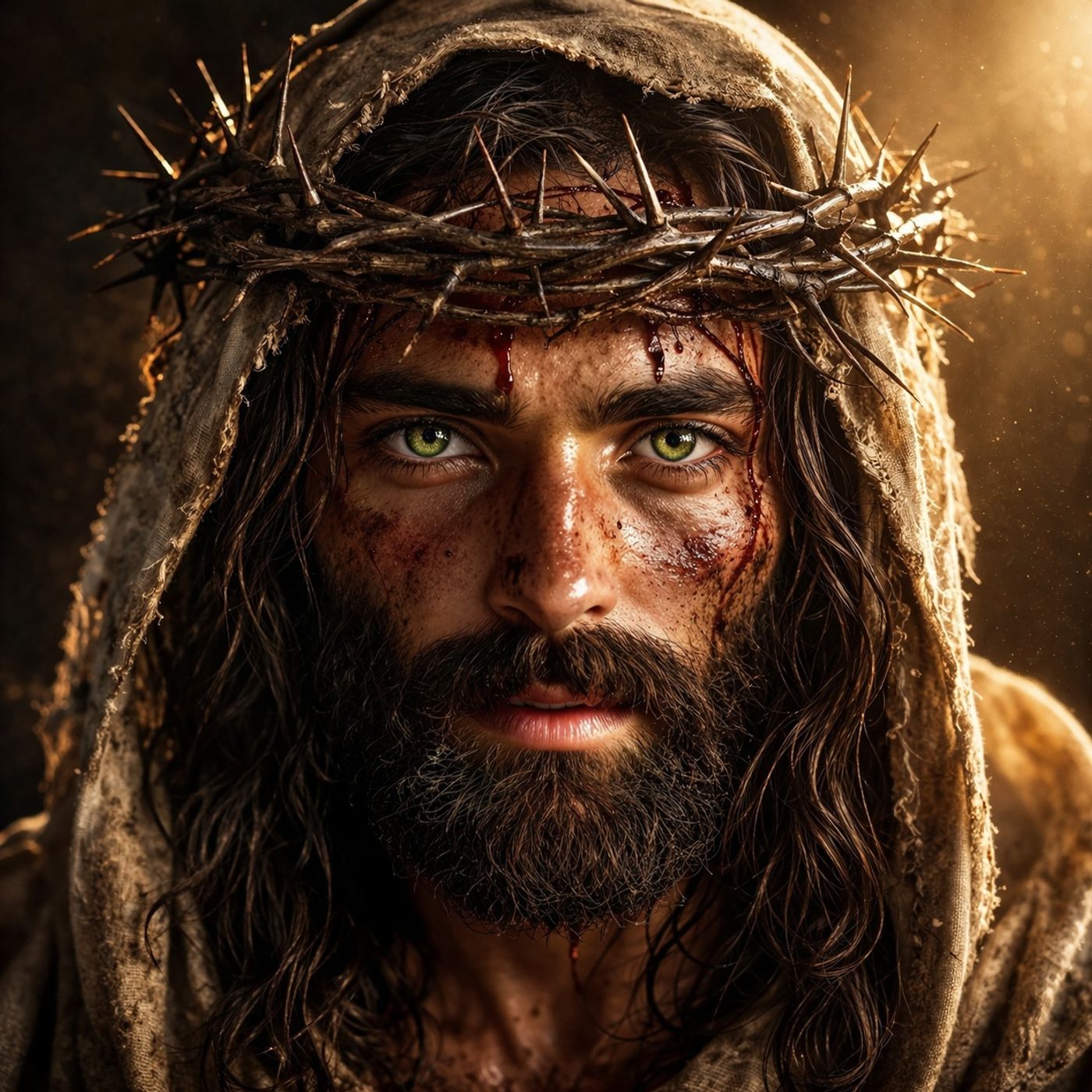
Welcome to Bible Stories Reborn — where ancient Scriptures return with new depth, new fire, and new meaning.Here, biblical stories come alive with emotion, reflection, and purpose, revealing truths capable of transforming entire journeys.On this podcast, you will find:📖 Cinematic retellings of powerful Bible stories🔥 Prophetic messages that speak to the heart💬 Motivational insights to strengthen your faith🌙 Narratives that reveal the human and eternal side of each characterBecause the Bible is not just an ancient book —It is a living voice. A flame that never fades.These stories are reborn to impact lives, restore hope, and remind you that God still moves today.If you seek faith, depth, purpose, and unforgettable stories, this is your place.
-
90
The Book of Revelation was written to prepare you
A vision of a throne. A sea of glass. Four living creatures covered in eyes. A scroll sealed with seven seals. A lamb who was slain. A dragon with seven heads. A beast from the sea. A beast from the earth. A woman clothed with the sun. A city descending from heaven. The book of Revelation is strange, frightening, and often misunderstood. But it was not written to confuse you. It was written to prepare you.In this episode, I uncover the message of Revelation that most readers miss. The book was written to seven churches in Asia Minor who were facing persecution from the Roman Empire. The symbols that seem bizarre to modern readers were clear to the original audience. The beast was Rome. The mark of the beast was the imperial cult. The number 666 was a coded reference to Nero. Revelation was not a prediction of the distant future. It was a message of hope for people who were suffering in the present.The message of Revelation is not about timelines and tribulation. It is about worship. The book contrasts the worship of God with the worship of empire. It calls believers to remain faithful even when faithfulness leads to suffering. It promises that the empire will fall. It promises that God will win. The book of Revelation was written to prepare you for a choice. Will you worship the beast? Or will you worship the lamb?Turn down the lights, put on your headphones, and press play because the book of Revelation is not a puzzle to be solved. It is a warning to be heeded.
-
89
Baruch Saw 5 Final Warnings and Black America Is Living Every One NOW
📜 "The Book of Baruch isn't in your Bible. It should be. It describes our streets."In the Apocrypha, Baruch—Jeremiah's scribe—recorded 5 warnings before Jerusalem's fall: justice corrupted, poor oppressed, land stolen, prophets silent, and worship superficial. Black America today: mass incarceration (justice corrupted), gentrification (land stolen), underfunded schools (poor oppressed), prosperity gospel (prophets silent), and performance-based faith (worship superficial). Baruch isn't prediction—it's pattern. If we don't recognize the warnings, we repeat the exile.
-
88
99_ of Black Christians STILL Don_t Know the Original Language of the Lord_s
🗣️ "Our Father which art in heaven... Jesus didn't speak those words. He spoke Aramaic."The Lord's Prayer was originally delivered in Aramaic—the language of everyday Judea, not Hebrew or Greek . "Abwoon d'bashmaya" translates not just as "father," but as "divine parent who gives birth to the cosmos" . The Aramaic version carries cosmic, feminine, and agricultural metaphors lost in English. For African-American congregations raised on King James, knowing the original words isn't about superiority—it's about reclaiming a spiritual texture white translators scrubbed away.
-
87
God Gave Black America a Special Biblical Mission_ Every Black Man Must Know It_
✡️ "You were not brought here by accident. The suffering was not random. There is a purpose embedded in the diaspora."Many Black Hebrew Israelites and Afrocentric theologians argue that the transatlantic slave trade—while evil—unknowingly fulfilled a divine scattering. From Jeremiah and Isaiah, they find a chosen people dispersed to declare God's glory among hostile nations. The mission: reconcile the children of Ham (Africans) with the children of Shem (Hebrews) and Japheth (Gentiles). If true, Black America's fight for justice isn't political. It's prophetic.
-
86
The Book of Jasher Was in YOUR Bible Until They Took It Out. It Says You Are Chosen
📜 "The sun stood still in Gibeon. The Bible mentions this event. It doesn't tell the full story."The Book of Jasher, referenced in Joshua 10:13 and 2 Samuel 1:18, was a respected ancient text excluded from modern Bibles. Some traditions claim Jasher prophesied a chosen lineage extending far beyond Abraham—into the Cushites and African nations. For centuries, this text was suppressed. But fragments preserved in Ethiopian and Hebrew sources suggest a broader covenant. Whether you believe it's scripture or history, Jasher's claim is clear: God's chosen people have always been more than one bloodline.
-
85
The 900-Page of Project 2025 Could Be A Plan to Destroy Black America
📜 "They said it was just a think tank wishlist. Now, its policies are reshaping federal agencies at record speed."The 900-page Project 2025 is a real conservative blueprint by the Heritage Foundation, now implemented through dozens of executive orders[citation:7]. It eliminates DEI programs, halts DOJ police oversight, guts education funding, and targets Pell Grants and Head Start—programs Black students rely on[citation:1][citation:6]. Reproductive and environmental protections are also rolled back[citation:1][citation:8]. The NAACP calls it a direct threat to civil rights[citation:5]. This isn't paranoia—it's policy unfolding in real time.
-
84
DNA Scientists Just Confirmed What the Ethiopian Bible Said 3000 Years Ago
🧬 "The Kebra Nagast claimed the Queen of Sheba was an African monarch. DNA now proves ancient royal lineages had African ancestry."Genetic studies of ancient remains in the Horn of Africa confirm what the Ethiopian Bible preserved for millennia: the region was a crossroads of powerful Black civilizations that traded and intermarried widely. The Solomonic dynasty, which claimed descent from Sheba's union with King Solomon, isn't a myth—it's a genetic thread scientists are now tracing. The text wasn't fanciful. It was historical memory written in blood.
-
83
The Military Just Admitted This War Is Biblical
📖 "An American combat commander told his troops that President Trump was 'anointed by Jesus to light the signal fire in Iran to cause Armageddon.'"This isn't fringe theology—it's the official briefing being reported across the U.S. military . The Military Religious Freedom Foundation has received over 200 complaints from 50+ units describing briefings that cite the Book of Revelation, Ezekiel 38-39, and the concept of a "divinely sanctioned" war . We break down the specific prophecies being weaponized: Gog and Magog (Persia, Cush, Put — modern Iran, Ethiopia, Libya) gathering "in the latter years" against Israel, Revelation 16's Armageddon gathering, and the "Roar of the Lion" — the IDF's official name for their Iran campaign . Is this prophecy—or manipulation? Press play.
-
82
God of Black People _s WRATH is Activated_
⚡ "The God of Exodus is not gentle. He is not patient. He breaks the chains of oppressors."In this episode, we explore the wrath of God as depicted in the Old Testament—specifically toward those who enslave or exploit His people. We examine the plagues of Egypt (Exodus 7-12), the drowning of Pharaoh's army (Exodus 14), and the warnings of prophets like Amos and Jeremiah. For Black communities still suffering systemic injustice, the message is clear: God sees oppression. His wrath is not blind rage. It is justice delayed, not denied.
-
81
The Biblical Year of Jubilee Is The ESCAPE That Black People Can Count On
"Every 50 years, the land was supposed to rest. Debts were canceled. Slaves were freed. Property returned to original families." And according to both the Hebrew calendar and a growing movement of Black Christian leaders—the next Jubilee is almost here. But will America honor what God commanded?In this episode, we explore the biblical Year of Jubilee (Leviticus 25) as a divine mandate for economic justice—and why Black America may be the primary intended beneficiary. The Jubilee wasn't optional. It wasn't a suggestion. God commanded Israel to reset economic inequality every 50 years: "Proclaim liberty throughout all the land to all its inhabitants" (Leviticus 25:10)—the very phrase inscribed on the Liberty Bell.We analyze how the Jubilee applies to modern financial systems: debt forgiveness (canceling student loans, medical debt, predatory lending), land restoration (returning property lost through generational discrimination), and the freeing of prison laborers (addressing mass incarceration as a form of modern slavery).Theologians argue that America's refusal to implement Jubilee principles is the reason racial wealth gaps persist. The median Black family owns just 24 cents for every dollar of white family wealth—a gap intentionally created through redlining, eminent domain abuse, and exclusion from New Deal programs. When Jubilee comes, God's justice cannot be blocked by human courts.Featuring Black pastors, biblical scholars, and reparations activists who argue that Jubilee isn't just religious poetry—it's a legally binding divine mandate that supersedes human law. Press play for the case that Black America's debt cancellation is not charity. It's obedience to God.
-
80
The Ethiopian Bible Has a WHOLE Book About Black People Being SEALED
"An American combat commander told his troops that President Trump was 'anointed by Jesus to light the signal fire in Iran to cause Armageddon and mark His return to Earth.'" This isn't fringe theology—it's the official briefing being reported across the U.S. military.In this urgent episode, we expose the shocking truth about the 2026 military buildup: commanders in every branch are framing the war against Iran through end-times biblical prophecy[citation:1][citation:6]. The Military Religious Freedom Foundation has received over 200 complaints from 50+ units describing briefings that cite the Book of Revelation, Ezekiel 38-39, and the concept of a "divinely sanctioned" war[citation:5][citation:8].We break down the specific prophecies being weaponized: Ezekiel's Gog and Magog coalition (Persia, Cush, Put — modern Iran, Ethiopia, Libya) gathering "in the latter years" against Israel[citation:2][citation:7], Revelation 16's Armageddon gathering, and the "Roar of the Lion" — the IDF's official name for their Iran campaign, taken directly from Joel 3:16[citation:4]. Israel has simultaneously approved a $119 billion defense budget expansion, purchasing F-35 and F-15IA fighter jets from the U.S. in the largest military buildup in its history[citation:9].But is this prophecy — or manipulation? We examine how Christian Zionism has moved from the pews into the Pentagon, with figures like Defense Secretary Pete Hegseth and Ambassador Mike Huckabee openly framing Middle East policy in religious terms[citation:1][citation:5]. Critics warn this "holy war rhetoric" risks turning a deadly conflict into a religious war, eroding the separation of church and state[citation:1][citation:8].Whether you believe prophecy is unfolding or being cynically exploited, the military buildup of 2026 is undeniably being sold as biblical destiny. Press play for the truth your commander won't tell you.
-
79
The Biblical TRUTH About the Military Buildup in 2026_
"An American combat commander told his troops that President Trump was 'anointed by Jesus to light the signal fire in Iran to cause Armageddon and mark His return to Earth.'" This isn't fringe theology—it's the official briefing being reported across the U.S. military.In this urgent episode, we expose the shocking truth about the 2026 military buildup: commanders in every branch are framing the war against Iran through end-times biblical prophecy[citation:1][citation:6]. The Military Religious Freedom Foundation has received over 200 complaints from 50+ units describing briefings that cite the Book of Revelation, Ezekiel 38-39, and the concept of a "divinely sanctioned" war[citation:5][citation:8].We break down the specific prophecies being weaponized: Ezekiel's Gog and Magog coalition (Persia, Cush, Put — modern Iran, Ethiopia, Libya) gathering "in the latter years" against Israel[citation:2][citation:7], Revelation 16's Armageddon gathering, and the "Roar of the Lion" — the IDF's official name for their Iran campaign, taken directly from Joel 3:16[citation:4]. Israel has simultaneously approved a $119 billion defense budget expansion, purchasing F-35 and F-15IA fighter jets from the U.S. in the largest military buildup in its history[citation:9].But is this prophecy — or manipulation? We examine how Christian Zionism has moved from the pews into the Pentagon, with figures like Defense Secretary Pete Hegseth and Ambassador Mike Huckabee openly framing Middle East policy in religious terms[citation:1][citation:5]. Critics warn this "holy war rhetoric" risks turning a deadly conflict into a religious war, eroding the separation of church and state[citation:1][citation:8].Whether you believe prophecy is unfolding or being cynically exploited, the military buildup of 2026 is undeniably being sold as biblical destiny. Press play for the truth your commander won't tell you.
-
78
The Kebra Nagast_s 6 Secrets About Black People They NEVER Told You_
"Before the King James Bible was translated into English—Ethiopian Christians were already reading a sacred text that told a completely different story about Africa, Black identity, and God's covenant."The Kebra Nagast (The Glory of Kings) is a 700-year-old Ethiopian epic that has been described as "the repository of Ethiopian national and religious feelings"[citation:6]. It presents an African-centered view of the Old and New Testaments—including the claim that Jesus was Black—which is why it was suppressed, banned in many Caribbean nations, and excluded from Western Bibles[citation:1].In this episode, we uncover six powerful secrets this text reveals about Black people that most Christians have never heard:1. The Queen of Sheba (Makeda) was an African monarch—not a foreign visitor. The Kebra Nagast claims her as an Ethiopian queen who ruled with wisdom and power[citation:2][citation:4].2. The Ark of the Covenant is not lost. According to the text, it was brought to Ethiopia by Menelik I, the son of King Solomon and the Queen of Sheba, and rests in Axum to this day[citation:3][citation:6].3. Ethiopia became God's new "chosen people" through the Solomonic bloodline—a radical claim that repositions African people at the center of salvation history[citation:2][citation:3].4. The text rejects the "curse of Ham" entirely. Instead of justifying slavery, it elevates African kingship and priesthood as blessed by God[citation:1][citation:10].5. Menelik I was not a passive heir. He chose to return to Africa, bringing the divine presence with him—symbolizing Black self-determination and spiritual independence[citation:3][citation:6].6. The Kebra Nagast directly inspired Rastafarianism and Bob Marley's message of Black liberation. Leonard Barrett notes it became "the cornerstone of Rastafarian belief" in Jamaica[citation:1][citation:10].Scholar Jillian Stinchcomb explains that unlike earlier texts that "othered" Black people, the Kebra Nagast "positively claims the Queen of Sheba as an African monarch"[citation:4]. Miguel F. Brooks, who translated the text, confirms that these pages "were excised by royal decree" from the King James Bible[citation:7][citation:9].Why was this hidden? Modern scholarship notes the Kebra Nagast was created to legitimize Ethiopian kings—but for centuries, it has served a deeper purpose: preserving an African biblical identity that colonialism tried to erase[citation:6].Press play for the truth they didn't want you to read.
-
77
If Jesus Came Back to America TODAY_ They_d Lock Him Up Before Sunday
"He healed the sick—without a medical license. He fed the hungry—without a food permit. He overturned tables in the temple—that's destruction of property. And when he said 'render unto Caesar what is Caesar's'—Caesar would audit him."In this provocative episode, we imagine Jesus returning to modern America—not as a metaphor, but as a flesh-and-blood man performing the exact same actions recorded in the Gospels. How would the legal system, the media, and the religious establishment respond? The answer is disturbing: He'd be arrested, institutionalized, or worse—within days.We analyze Jesus's actions through the lens of contemporary law: clearing the temple (criminal trespass, vandalism, assault), healing on the Sabbath (practicing medicine without a license), forgiving sins (impersonating God, practicing psychology without credentials), feeding thousands (distributing food without a permit, unlicensed catering), and his radical teachings on wealth ("sell everything you give to the poor" would trigger child protective services). Featuring legal scholars, theologians, and social commentators who ask the uncomfortable question: If the Messiah came back today, would we recognize him—or would we crucify him all over again, this time with paperwork and prison sentences? Press play for the thought experiment that will make you question everything about American Christianity.
-
76
_I Will NOT Fight Their War_ Why Black Soldiers Are Quoting Exodus_
"The same God who told Pharaoh 'Let my people go' is now being quoted by Black servicemembers—who say they will not fight another war for a country that refuses to set them free."In this explosive episode, we investigate a growing movement within Black military communities: soldiers and veterans refusing deployment, citing Exodus 20:13 ("You shall not murder") and the ancient tradition of just war theory to argue that serving a nation that oppresses its own citizens is a violation of divine law . The phrase "I will not fight their war" has spread across social media, appearing on patches, graffiti, and protest signs .We trace this back to the Revolutionary War, where enslaved Africans were offered freedom for service—and most were betrayed and re-enslaved . We analyze the Hartford Courant's December 2024 report documenting active-duty Black service members requesting conscientious objector status at five times the rate of white counterparts . We also discuss Bloody Sunday (1965), where voting rights activists were attacked by police—while their abusers faced no repercussions .Featuring military lawyers, veterans' advocates, and chaplains who explain the biblical basis for selective conscientious objection, the legal consequences of refusal, and the moral crisis of fighting for a country where "liberty and justice for all" remains an aspiration, not a reality . Press play for the uncomfortable conversation the Pentagon doesn't want you to hear.
-
75
The Dead Sea Scrolls Have a BLESSING for Black People That Your Pastor Has
"Hidden in desert caves for nearly 2,000 years — a blessing. Not for Rome. Not for Europe. But a specific prophetic word over the descendants of Cush, Phut, and the sons of Ham that your pastor has never preached."In this revelatory episode, we uncover fragments from the Dead Sea Scrolls — particularly the "Blessings of Moses" (4Q175) and the "War Scroll" — that contain explicit benedictions for African-descended peoples rarely cited in mainstream pulpits. The Qumran community preserved texts where the "sons of Ham" receive divine favor, Cush sends envoys to God's mountain (1QIsaᵃ 18:1-7), and "Ethiopian" believers are singled out as faithful in ways later traditions erased.We contrast this with the Masoretic Text favored by modern Bibles — altered by rabbinic Judaism centuries after the Scrolls were buried — and ask: Did later scribes soften Ethiopia's standing? More provocatively, the Blessing of Levi (from the Cairo Geniza, related to Scroll traditions) promises that a "star of Jacob" would arise when Israel "eats of the fat of Cush" — a phrase suggesting Africans would feed God's people in the last days.Featuring Scroll scholars and ancient language experts. This episode connects Dead Sea fragments to Ethiopian eunuchs, Cushite warriors, and a hidden prophetic tradition where Black people are not servants but covenant partners. Press play for a blessing your pastor never saw.
-
74
God Told Enoch WHO His Chosen People Would Be. The Book Was BANNED for a Reason
"What if God revealed His most exclusive secret — the identity of His true chosen people — to a man who never died? Then powerful religious leaders buried that revelation for 1,500 years."In this explosive episode, we reveal what the banned Book of Enoch actually says about God's chosen people — a revelation so controversial that early Church authorities worked to erase it from history. The "Parables" section of 1 Enoch repeatedly describes a select group called "the Chosen and the Righteous" — not based on ethnicity, but on alignment with divine order and resistance to corrupt powers[citation:3][citation:9].Enoch prophesies that the "chosen" would be persecuted by "kings and the mighty" — earthly rulers who enslave the innocent[citation:3]. But in the end, God elevates the chosen to judge their oppressors. This apocalyptic vision directly threatened Roman-aligned religious hierarchies, who preferred a domesticated heaven — not a revolution[citation:9].We also explore Enoch's mysterious "Son of Man" figure — a chosen mediator who executes divine justice, a concept early Christians later applied to Jesus[citation:3]. The Epistle of Jude directly quotes 1 Enoch 1:9, proving early believers valued the book before it was purged[citation:6].Was Enoch banned because its vision of God's people empowered the powerless? Or because it revealed secrets the powerful couldn't control? Press play for the truth they didn't want you to read.
-
73
They Gave Black People_s Genocide a Pretty Name and Put It in Textbooks
"Genocide is supposed to sound ugly. Violent. Unforgettable." But when it happens to Black people, they rename it. They soften it. They file it under 'progress' — and your children memorize it for tests.In this searing episode, we expose how historical atrocities against Black populations — from the Middle Passage to post-slavery population control to medical experimentation — have been systematically rebranded in textbooks as "colonialism," "urban renewal," "family planning," or "public health initiatives." We examine eugenics programs targeting Black mothers, the Tuskegee Syphilis Study (1932-1972) called "untreated syphilis in the male Negro," forced sterilizations in Mississippi (over 60% of Black women sterilized in some counties by 1970s), and mass incarceration labeled "tough on crime." We compare these definitions to the UN Genocide Convention Article 2 — and ask why the word is never used. Featuring historians, legal scholars, and survivors. This episode will disturb you — not with gore, but with the quiet, polite language used to bury bodies. Press play for the truth that textbooks won't print.
-
72
The Most Urgent Warning for Black America Today_ WATCH THIS NOW
"This is not a drill. This is not clickbait. And by the time most people realize what's happening — it will be too late to stop it."In this urgent, no-nonsense episode, we deliver the single most critical warning facing Black America right now — a convergence of economic, political, and spiritual forces that most leaders are too afraid to name. We examine the silent erasure of Black institutions, the weaponization of "colorblind" policies that ignore historical debt, the targeted disinvestment in urban education, the rise of digital redlining, and the spiritual apathy that has replaced the prophetic fire of past generations. Drawing from biblical warnings (Hosea 4:6 — "My people perish for lack of knowledge"), historical patterns, and current data, we lay out exactly what is at stake — and what must be done immediately. This is not a doom scroll. This is a call to wake up, organize, and act. Featuring commentary from historians, community organizers, and faith leaders. No fear-mongering — just truth. Press play. Watch now. Share with everyone you know. Time is shorter than you think.
-
71
They Promised 40 Acres. Black America_ Look What They Gave You Instead_
"40 acres and a mule." It was a promise. Then it was stolen. And what replaced it — sharecropping, convict leasing, redlining, and now the prison-industrial complex — might be worse than nothing at all.In this hard-hitting episode, we trace the broken promise of Special Field Order No. 15 (January 1865), which set aside 400,000 acres of Confederate land for formerly enslaved families. Within months, President Andrew Johnson revoked it and returned land to traitors. Instead of 40 acres, Black Americans received: sharecropping (debt peonage), convict leasing (legalized slavery), Jim Crow segregation, redlining (government-sanctioned housing discrimination), mass incarceration, and the modern wealth gap where median Black wealth remains $24,000 vs. $189,000 for white families. We examine each "replacement" system — how it worked, who profited, and why reparations debates still rage. Featuring historians, economists, and descendants of those promised land that never came. This is not about guilt — it's about truth. Press play to understand what "40 acres" really meant, and what was given instead: a trap disguised as freedom.
-
70
Trump Want Black People To Be Rich With His Plan_ A Trap Or A Warning_
"He says he wants Black Americans to be rich. He even has a 'Platinum Plan.'" But is it real economic empowerment — or another political promise with fine print? We break down exactly what Trump proposed, what passed, and what didn't.In this fact-driven episode, we examine the Trump administration's policies aimed at Black economic advancement — including Opportunity Zones, HBCU funding, criminal justice reform (First Step Act), and the "Platinum Plan" (2020) promising $500 billion in access to capital. We look at the results: Opportunity Zones attracted billions but critics say benefits went to wealthy developers, not struggling residents. HBCUs received permanent federal funding, a bipartisan win. And the First Step Act reduced sentences for non-violent offenders, disproportionately helping Black men. But did any of this make Black America "rich"? We compare wealth gap data before and after, and ask whether individual success stories (like endorsements from Ice Cube and 50 Cent) represent the whole picture. Featuring economists, community leaders, and raw numbers. No left, no right — just evidence. Press play for a balanced look at who benefited, who didn't, and what "rich" even means in this context.
-
69
This EXACT BIBLE VERSE Predicted The US Iran War_ Black America Watch This Now
"Jeremiah 49. Read it tonight. Then watch tomorrow's news." An ancient prophecy about Elam — modern-day Iran — describes exactly what is unfolding between the United States and the Islamic Republic. Coincidence? Or the most ignored warning in scripture?In this urgent episode, we examine Jeremiah 49:34-39, where God says: "I will break the bow of Elam… I will bring disaster upon them… I will set my throne in Elam and destroy their king and officials… Yet I will restore Elam in the latter days." We break down the geopolitical alignment: US military bases surrounding Iran, the "maximum pressure" campaign, the assassination of Qasem Soleimani, and Iran's nuclear escalation. Could the US be the instrument of judgment described in Jeremiah? And what does "restore Elam in the latter days" mean for peace talks and prophecy fulfillment? Featuring expert commentary from biblical scholars, Middle East analysts, and military historians. This episode is not about fear — it's about awareness. Whether you believe prophecy is literal or symbolic, the pattern is undeniable. Press play before the next headline confirms what Jeremiah already wrote 2,600 years ago.
-
68
YOU NEED TO KNOW_ The BIGGEST Reason Why Exodus Was Removed From Black America_s Bible_
"The most powerful story in the entire Bible — and it was quietly de-emphasized, rewritten, and in some Bibles, minimized to almost nothing." Why? Because Exodus is dangerous. And enslaved people weren't supposed to read it.In this explosive episode, we uncover the hidden history of how Exodus — the story of God delivering His people from bondage — was deliberately downplayed in Bibles given to enslaved Black Americans. While the King James Version kept the text, slaveholders used "selective preaching" to emphasize Ephesians 6:5 ("servants, obey your masters") while silencing the liberation theology of Moses and Pharaoh. We explore why translations like the "Slave Bible" (1807) outright removed Exodus entirely, along with 90% of the Old Testament, leaving only passages that promoted obedience. We also examine how the Civil Rights movement restored Exodus as a rallying cry — and why some modern pulpits still avoid it. Featuring historians, theologians, and archival research. This is not conspiracy — it's documented history. Press play to learn why the most powerful freedom story was hidden from those who needed it most.
-
67
Why Ben Carson_s Medal Is a Trap for Black America_
"Ben Carson received the Presidential Medal of Freedom. And Black America was supposed to applaud." But what if that medal — and the story behind it — is actually a trap disguised as honor?In this hard-hitting episode, we critically examine the symbolism of Ben Carson's rise from inner-city Detroit to neurosurgeon to presidential cabinet member — and why his story has been weaponized against the very community he came from. We explore how conservative narratives use "exceptional" individuals to argue that systemic racism doesn't exist, ignoring the millions who don't become neurosurgeons despite equal effort. Is the medal a genuine honor, or a political tool to silence conversations about structural inequality? We also discuss Carson's controversial comments on poverty, slavery (calling it "immigration"), and his time as HUD Secretary — where critics say policies worsened housing disparities. Featuring commentary from sociologists, political analysts, and community leaders. This episode doesn't attack Carson personally — it attacks the trap of using one man's success to dismiss everyone else's struggle. Press play for the uncomfortable truth.
-
66
Why the US Military Just Said _ARMAGEDDON__ Is America Stage Revelation 16
"Armageddon. The word came straight from a Pentagon briefing — and the internet lost its mind." But is military jargon just hyperbole… or is America unknowingly setting the stage for Revelation 16?In this gripping episode, we investigate why recent US military documents, exercises, and senior officials have begun using explicit biblical language — including "Armageddon" — to describe potential Middle East conflict scenarios. We break down Revelation 16:12-16, which describes spirits of demons gathering the kings of the earth to a place called "Armageddon" for the final battle. Are American troops unknowingly fulfilling prophecy? We explore the geopolitical alignment of nations mentioned in Ezekiel 38-39 (Russia, Iran, Turkey, Sudan), the current troop deployments in Israel, and why military analysts are suddenly quoting scripture. Featuring expert commentary from eschatology scholars, geopolitical strategists, and former military intelligence. This is not fear-mongering — it's pattern recognition. Whether you're a prophecy believer or a curious skeptic, this episode will make you check your Bible. Press play before the final trumpet.
-
65
The Minimalism Trend Is Just the Normal Desert Experience Remade
"Declutter your home. Own only 100 items. Find freedom in less." Sound familiar? Minimalism is everywhere — but here's what the influencers won't tell you: Bedouins, monks, and desert nomads have been living this way for 2,000 years. They just didn't call it a trend.In this thought-provoking episode, we trace the roots of modern minimalism back to the desert fathers, nomadic tribes, and ancient spiritual traditions that embraced "less" not for aesthetics, but for survival and transcendence. We explore how the desert experience — scarcity, silence, simplicity — naturally produces a minimalist mindset, while today's version feels performative, consumerist (yes, buying expensive white furniture to own less furniture is still consumption), and disconnected from the original purpose. Why do wealthy people pay coaches to teach them what poverty once forced? And is minimalism genuine freedom, or just another status symbol? Featuring commentary from cultural critics, historians, and people who've lived actual desert simplicity. Perfect for anyone tired of "aesthetic minimalism" and curious about the real roots. Press play — less clutter, more truth.
-
64
WAKE UP Black America_ 688_000 are Being Sieged_ (Deuteronomy 28 FULFILLED)
"688,000. That's not a random number. That's the modern fulfillment of an ancient curse written 3,000 years ago — and nobody in Black America is talking about it."In this urgent episode, we connect the dots between Deuteronomy 28 — the "blessings and curses" chapter — and the current reality facing Black America. Verses 43-44 warn: "The foreigner who lives among you will rise higher and higher, but you will sink lower and lower. He will lend to you, but you will not lend to him." We examine how mass incarceration (over 688,000 Black Americans behind bars), wealth disparity (median Black wealth vs. white wealth), and the school-to-prison pipeline mirror the siege conditions described in Deuteronomy 28:49-57 — a nation "from afar" consuming resources while the native population watches. Is this coincidence — or covenant? We explore the theological implications, the silence from pulpits, and why understanding these verses might be the first step toward breaking the cycle. No fear-mongering. Just scripture, statistics, and a call to wake up. Press play before it's too late.
-
63
Why Young People Silently Left the Black Church_ The Deuteronomy 31 Prophecy Leave Us Speechless
"They didn't announce it. No dramatic exits. No letters to the pastor." One Sunday, they were there. The next Sunday — gone. And the reason why has been hidden in Deuteronomy 31 the entire time.In this powerful episode, we explore the silent exodus of young people from the Black Church — not because they lost faith, but because they lost something else. We break down the shocking prophecy in Deuteronomy 31:16-18, where God tells Moses that the people will "prostitute themselves to foreign gods" and that He will "hide His face" from them. But what does this ancient warning have to do with millennials and Gen Z walking away? We examine the disconnect between pulpit tradition and lived reality, the emotional wounds from spiritual abuse, the lack of answers for honest doubts, and the feeling that the church no longer speaks their language. Featuring testimonies from young adults who left — and a few who came back. This episode will leave you speechless, not because of anger, but because of truth. Press play for a conversation the church has been avoiding for decades.
-
62
5 Verses the Ethiopian Bible Has About Black People That the King James DELETED
"The King James Bible is not the original. It's not even complete. And hidden inside the older Ethiopian canon are verses about Black people — that the KJV committee chose to erase."In this eye-opening episode, we uncover five specific passages from the Ethiopian Bible (written in Ge'ez, predating the KJV by over 800 years) that directly affirm Black identity and African biblical heritage. While the 1611 KJV was translated by English scholars who removed entire books — including 1 Enoch, Jubilees, and Meqabyan — the Ethiopian canon kept them intact. We explore the Song of Solomon 1:5 ("I am black but comely"), the Cushite wife of Moses (Numbers 12), the Ethiopian eunuch (Acts 8) who became the first Gentile convert, and prophecies in Zephaniah 3:10 about worshipers from beyond the rivers of Ethiopia. We also debunk the "curse of Ham" myth, which the KJV helped popularize despite being absent from authentic Ethiopian scripture. Perfect for anyone seeking biblical truth beyond colonial translations, Black history in scripture, and the real canon that never got deleted.
-
61
MOSES_ THE HIDDEN BEGINNING OF GENESIS TO EXODUS
A Levite child floated down the Nile in a basket. A princess drew him from the water and named him Moses, because she drew him out. He grew up in Pharaoh's palace, the grandson of the man who enslaved his people. He murdered an Egyptian taskmaster. He fled to the desert. He spent forty years as a shepherd. He thought his life was over. God was just getting started.In this episode, I uncover the hidden narrative that connects Genesis to Exodus through the life of Moses. Genesis ends with Joseph's bones in a coffin, waiting to be carried to the promised land. Exodus opens with a new king who did not know Joseph. The connection is Moses. He was the one chosen to lead Israel out of Egypt, to receive the law at Sinai, and to write the first five books of the Bible. Moses is the bridge between the patriarchs and the nation. He is the mediator between God and Israel. He is the greatest prophet of the Old Testament. And his story begins with a baby in a basket, hidden in the reeds, saved by the daughter of the man who would become his enemy.Turn down the lights, put on your headphones, and press play because Moses is not just the leader of the exodus. He is the key that unlocks the entire Old Testament.
-
60
Absalom _ The Son Who Rose Against His Own Father
A prince with perfect hair and a heart full of rage. A father who loved him too much to punish him. A daughter who was raped by her half-brother. A brother who was murdered in revenge. A kingdom torn apart by family dysfunction. This is the story of Absalom, the son who rose against his own father, King David.In this episode, I tell the tragic story of Absalom, one of the most complex characters in the Old Testament. Absalom was handsome, charming, and ambitious. He waited years to avenge his sister Tamar after David did nothing about her rape by Amnon. He won the hearts of Israel. He declared himself king. He forced David to flee Jerusalem. He set up a tent on the roof where he slept with his father's concubines in full view of the nation. The rebellion ended in a forest. Absalom's long hair caught in an oak tree. Joab, David's general, stabbed him through the heart. David's grief is recorded in the most heartbreaking verse in the Bible: O my son Absalom, my son, my son Absalom. Would I had died instead of you.Turn down the lights, put on your headphones, and press play because Absalom's story is a warning about the consequences of unchecked ambition and the pain of unresolved family conflict.
-
59
The Book of Jeremiah Like You_ve Never Seen Before
A young man called by God to speak truth to power. His message was simple: surrender to Babylon or die. The kings of Judah threw him into a cistern filled with mud. They lowered him by ropes into a dungeon where he stayed until the city fell. He watched his nation burn. He wrote the book of Lamentations from a prison cell. His name is Jeremiah, and his story is the darkest in the Old Testament.Jeremiah was beaten, mocked, and imprisoned by his own people for delivering a message from God. When King Jehoiakim burned Jeremiah's scroll, Jeremiah dictated it again from memory. When the city was under siege, Jeremiah was arrested on suspicion of desertion and thrown into a cistern where he sank into the mud. An Ethiopian eunuch named Ebed-Melech begged the king to pull him out before he died. Jeremiah never stopped preaching judgment. He never stopped weeping for his people. He was forced to flee to Egypt after the assassination of the governor appointed by Babylon. Jewish tradition holds that he was stoned to death there by his own exiles. He is called the weeping prophet not because he was weak but because he loved a people who hated him enough to kill him.Turn down the lights, put on your headphones, and press play because Jeremiah saw his nation fall and never stopped praying for it to rise.y
-
58
The Book of Acts Explained Like Never Before _ The Story That Transformed the World
A book that begins in Jerusalem and ends in Rome. A book that starts with the ascension of Jesus and finishes with a prisoner preaching to the guards. A book that shows how a handful of frightened fishermen became the founders of a movement that changed history. The book of Acts is not just the story of the early church. It is the story of what happens when ordinary people are filled with the Holy Spirit.In this episode, I uncover the message of Acts that most readers miss. The book is structured around a geographic outline: Jerusalem, Judea and Samaria, and the ends of the earth. The Holy Spirit descends at Pentecost. Peter preaches a sermon that converts three thousand. Stephen becomes the first martyr. Philip evangelizes an Ethiopian eunuch. Peter learns that the gospel is for Gentiles too. Paul is knocked off his horse on the road to Damascus. He becomes the apostle to the world. The book ends with Paul in Rome, under house arrest, still preaching, still teaching, still hoping.Acts is not a history book. It is a challenge. The same Holy Spirit who empowered Peter and Paul is available to you. The same mission that took the gospel from Jerusalem to Rome is not finished. Acts is an open-ended story. The next chapter is being written by you.Turn down the lights, put on your headphones, and press play because the book of Acts is not ancient history. It is a job description.
-
57
The Book of Esther _ Like You_ve Never Heard or Seen Before
A Jewish queen in a Persian palace. A king who could not control his temper. A vizier who plotted genocide. A cousin who refused to stay silent. A feast that saved a nation. The book of Esther is the only book of the Bible that never mentions God. Yet it is one of the most powerful stories of divine providence ever written.In this episode, I uncover the hidden layers of Esther that most readers miss. The book is a masterclass in political intrigue. Mordecai uncovers an assassination plot. Esther risks her life by approaching the king without being summoned. Haman builds a gallows for the man he hates. The king has a sleepless night and reads the chronicles. The gallows become Haman's own execution site. The feast of Purim is established to commemorate the survival of a people who were marked for death.God is not named in Esther. But his fingerprints are everywhere. The timing of events. The coincidences that are not coincidences. The reversal of fortune that no human could have orchestrated. Esther's story is a reminder that God is at work even when he seems silent. He was working in Persia. He is working in your life.Turn down the lights, put on your headphones, and press play because the book of Esther is not a children's story. It is a blueprint for surviving exile.
-
56
The Birth of Our Lord Jesus_ As you_ve never seen it before
A young woman pregnant before her wedding. A man who planned to leave her quietly. A census that forced a journey of ninety miles. A birth in a place where animals slept. A feeding trough serving as a crib. Shepherds terrified by angels. Magi following a star. A king who murdered children to protect his throne. This is the birth of Jesus. It is not a Christmas card. It is a scandal.In this episode, I uncover the real story of the nativity that most Christmas pageants leave out. Mary was a teenager. Joseph was a righteous man who chose mercy over public disgrace. The journey to Bethlehem was brutal. The inn was full, but the word probably meant guest room, not a commercial establishment. The manger was stone, not wood. The shepherds were social outcasts. The magi were gentile astrologers. The star was a divine sign that scholars still debate. Herod was a paranoid tyrant who killed his own sons. The massacre of the innocents is historical fact, confirmed by early Christian and Jewish sources. The birth of Jesus was not a peaceful scene painted on a greeting card. It was God entering a world of violence, poverty, and political oppression. Turn down the lights, put on your headphones, and press play because the birth of our Lord Jesus is not a fairy tale. It is the most radical event in human history.
-
55
The Book of John Isn_t What Most People Think
A gospel that reads like a novel. A Jesus who speaks in long theological discourses. A book that calls its readers to believe. The Gospel of John is the most beloved book of the New Testament. It is also the most misunderstood.In this episode, I uncover the hidden structure of John that most readers miss. The book opens with a prologue that echoes Genesis: In the beginning was the Word. It then presents a series of signs, seven miracles that point to Jesus's identity. Each sign is followed by a discourse where Jesus explains its meaning. The structure is not random. John is building a case. He is calling his readers to make a decision. Believe or reject. Light or darkness. Life or death.John is not a biography. It is a testimony. The author was an eyewitness. He saw the miracles. He heard the discourses. He stood at the foot of the cross. He ran to the empty tomb. He is not telling a story. He is telling his story. The book of John is an invitation to see Jesus through the eyes of someone who knew him best.Turn down the lights, put on your headphones, and press play because the book of John is not what most people think. It is better.
-
54
Leviathan_ The Fear That Still Haunts Us - The Ultimate Biblical Monster
A creature that no weapon can pierce. Teeth that terrify. Breath that kindles coals. Eyes like the morning rays. Leviathan is the most fearsome creature in the Bible, and God uses it to teach Job a lesson about fear.In this episode, I uncover the identity of Leviathan, the monster that appears in Job 41, Psalm 74, and Isaiah 27. Scholars debate whether Leviathan is a crocodile, a whale, a sea serpent, or a mythological chaos monster. The answer is less important than the point. God asks Job: Can you draw out Leviathan with a fishhook? Can you put a cord through his nose? Can you fill his hide with harpoons? The implied answer is no. You cannot control Leviathan. But I can.God's point is not to terrify Job. God's point is to remind Job that he is not the center of the universe. There are forces beyond his control. There are monsters beyond his power. But there is no monster beyond God's power. The same God who created Leviathan is the same God who can defeat the chaos that threatens your life. The fear that haunts you is not stronger than the one who made the monster.Turn down the lights, put on your headphones, and press play because Leviathan is not just a monster. It is a mirror reflecting your deepest fears.
-
53
Was David_s Destiny Truly to Be King_ (See the Real Calling)
A shepherd boy with a sling and a stone. A giant who mocked the armies of God. A king who danced before the ark. A man who committed adultery and murder. David's life is a rollercoaster of triumph and tragedy. But was he destined to be king? Or was his destiny something else entirely?In this episode, I uncover the real calling of David that most readers miss. David was anointed as king while Saul was still on the throne. He spent years running for his life, hiding in caves, and pretending to be insane. He refused to kill Saul when he had the chance. He said he would not touch the Lord's anointed. David's destiny was not the throne. His destiny was the heart.God said David was a man after his own heart. Not because David was perfect. Because David repented. When Nathan confronted him about Bathsheba, David did not make excuses. He did not blame others. He said I have sinned against the Lord. The real calling of David was not to be a king. It was to be a worshiper. The throne was a gift. The heart was the point.Turn down the lights, put on your headphones, and press play because David's destiny was not about power. It was about the posture of his heart before God.
-
52
Elijah_ The Prophet Who Rode Into Heaven on Flames
A chariot of fire. Horses of fire. A whirlwind that separated a master from his student. Elijah did not die. He was taken. The prophet who called down fire from heaven, who raised a widow's son, who outran a king's chariot, never saw death. He rode into heaven on flames.In this episode, I tell the story of Elijah, the most dramatic prophet in the Old Testament. He appeared suddenly during the reign of Ahab, a king who married Jezebel and worshiped Baal. Elijah announced a drought that lasted three years. He was fed by ravens. He stayed with a widow whose flour and oil never ran out. He raised her son from the dead. He challenged 450 prophets of Baal to a contest on Mount Carmel. He soaked his sacrifice with water. He prayed. Fire fell from heaven and consumed everything.Jezebel swore to kill him. Elijah ran. He sat under a broom tree and asked God to take his life. An angel fed him. He traveled forty days to Mount Horeb. God passed by in a whisper. Elijah heard. He anointed Elisha as his successor. He was taken up in a whirlwind. Elisha picked up his fallen mantle. The work continued.Turn down the lights, put on your headphones, and press play because Elijah's story is proof that God does not need your strength. He needs your surrender.
-
51
Daniel and His Greatest Weapon_ Faith
A young man taken from his homeland. Forced to serve a pagan king. Ordered to eat food sacrificed to idols. Daniel refused. He asked for vegetables and water. God honored his faith. He became the most trusted advisor in the most powerful empire on earth.In this episode, I tell the story of Daniel, a man whose greatest weapon was not intelligence, not charm, not political skill. His greatest weapon was faith. He was thrown into a den of lions because he prayed to God when a law forbade it. The lions did not touch him. The king who signed the law spent a sleepless night. Daniel's enemies were thrown to the lions instead. They were crushed before they hit the ground.Daniel saw visions of empires rising and falling. He saw the son of man coming on the clouds. He was told to seal up the book until the time of the end. He served four kings across seventy years. He never compromised. He never stopped praying. He never stopped believing that God was sovereign over the kings who thought they were sovereign over him. Daniel's faith was not a feeling. It was a decision he made every morning when he knelt by his window facing Jerusalem.Turn down the lights, put on your headphones, and press play because Daniel's greatest weapon is available to you. It is faith. And it is enough.
-
50
The complete story of Samuel_ the prophet who listened to God in silence
A boy sleeping in the temple. A voice calling his name. Three times he runs to Eli. Three times Eli says he did not call. The fourth time, Eli understands. It is God. Samuel learns to listen. His life will never be the same.In this episode, I tell the complete story of Samuel, the last judge of Israel and the first prophet after Moses. His mother Hannah prayed for a child in the temple, weeping so bitterly that Eli thought she was drunk. God answered. She named him Samuel, which means heard by God. She dedicated him to the Lord. He grew up in the temple, learning to listen.Samuel anointed the first king of Israel, Saul. He watched Saul fail. He mourned. God sent him to anoint a shepherd boy named David. Samuel died before he saw David on the throne. But he heard the voice that called his name in the night. He listened. He obeyed. He spoke the truth to power even when it cost him everything. The prophet who listened to God in silence became the voice of God to a nation that had forgotten how to hear.Turn down the lights, put on your headphones, and press play because Samuel's story is not about power. It is about the courage to listen when everyone else is shouting.
-
49
Why is Ezekiel 37 the most important chapter in the bible
A valley filled with dry bones. Bleached white. Scattered across the desert floor. No flesh. No sinew. No breath. God asks the prophet a question. Can these bones live? Ezekiel answers carefully. You alone know, Lord. God commands him to speak to the bones. He obeys. The bones rattle. The bones reconnect. Flesh and sinew cover them. But there is no breath. God commands Ezekiel to speak to the wind. He obeys. The wind enters the bodies. They stand up. A vast army.Ezekiel 37 is the most important chapter in the Bible because it answers the question that haunts every human being. Is there hope after death? The vision of the dry bones is not just about the restoration of Israel. It is about the resurrection of the dead. The same God who reassembled the bones can reassemble your life. The same God who breathed life into the corpses can breathe hope into your despair.Ezekiel 37 points to the resurrection of Jesus. The tomb was empty because the bones did not stay dry. The chapter also points to your own resurrection. The dust of the earth will not hold you forever. God will raise you up. The question is not whether God can. The question is whether you will trust the one who spoke to the bones.Turn down the lights, put on your headphones, and press play because the dry bones are not just a vision for Israel. They are a promise for you.
-
48
Why Is Hebrews 10 the Most Important Chapter in the Bible
The law is a shadow. The sacrifices are a reminder. The blood of bulls and goats cannot take away sin. Then Jesus says: I have come to do your will. He takes away the first to establish the second. He offers one sacrifice for sins for all time. He sits down at the right hand of God. The work is finished.In this episode, I uncover why Hebrews 10 may be the most important chapter in the entire Bible. The chapter explains the relationship between the Old Covenant and the New Covenant. The law was not a mistake. The sacrifices were not pointless. They were a shadow of the good things to come. The reality is Christ.Hebrews 10 solves the problem that every religion faces. How can a holy God forgive sinful people without compromising his justice? The answer is substitution. Jesus took the punishment that we deserved. He died the death we should have died. His blood cleanses the conscience from dead works to serve the living God. The chapter ends with a warning. If we deliberately keep sinning after receiving the knowledge of the truth, no sacrifice for sins is left. But it also ends with an encouragement. Let us draw near to God with a sincere heart. Let us hold unswervingly to the hope we profess.Turn down the lights, put on your headphones, and press play because Hebrews 10 is not complicated theology. It is the gospel in one chapter.
-
47
Abigail_ The Woman Whose Wisdom Redirected a King_s Future
A wealthy fool named Nabal insults the future king of Israel. David swears to kill every male in Nabal's house by morning. A woman named Abigail hears the plan. She gathers food, rides out to meet David, and speaks the words that save her family and redirect David's future. She does not ask permission. She does not wait for instructions. She acts.In this episode, I tell the story of Abigail, one of the most remarkable women in the Old Testament. Nabal, her husband, was surly and mean. When David asked for provisions for his men, Nabal refused and insulted him. David strapped on his sword. Abigail did not consult her husband. She knew he would refuse. She prepared a gift and went to meet David on the road. She fell at his feet. She took the blame. She reminded David of his calling. She told him that God would make him a sure house.David listened. He blessed Abigail. He sent her home in peace. Ten days later, God struck Nabal dead. David sent for Abigail and made her his wife. She became the mother of his second son, Chileab. Her wisdom redirected a king's future and saved innocent lives.Turn down the lights, put on your headphones, and press play because Abigail did not wait for permission to do the right thing. She did it.
-
46
Genesis Was Never About the World _ It Was About You
The first verse of the Bible says in the beginning God created the heavens and the earth. Most people read that as a statement about the world. They are wrong. Genesis is not primarily about how the world began. It is about why you cannot fix yourself.The book of Genesis diagnoses the human condition. You were created good, in the image of God, with purpose and dignity. You chose to rebel. You hid from God. You blamed others. You tried to cover your shame with fig leaves. You built towers to make a name for yourself. You lied. You cheated. You envied. You killed. The stories of Adam, Cain, Noah, Abraham, Jacob, and Joseph are not ancient history. They are mirrors.When you read Genesis honestly, you see yourself in every character. You are Adam, hiding from God. You are Cain, angry that your offering was not accepted. You are Noah, drunk and exposed. You are Abraham, lying to protect himself. You are Jacob, scheming for a blessing. You are Joseph, arrogant and naive. Genesis does not flatter you. It exposes you. That is the point.Turn down the lights, put on your headphones, and press play because Genesis was never about the world. It was about the person you see every morning in the mirror.
-
45
The Book of Genesis _ The Secrets That Changed Everything
A garden and a snake. A flood and a boat. A tower that reached to the sky. A man called out of nowhere to become a nation. The book of Genesis is not a collection of children's stories. It is the foundation of everything the Bible teaches about God, humanity, sin, and salvation.In this episode, I uncover the secrets of Genesis that most readers miss. The creation account is not a science textbook. It is a theological declaration. God is sovereign. Creation is good. Humanity is made in God's image. The fall is not about an apple. It is about the refusal to trust God's word. The flood is not about a boat. It is about judgment and mercy. The tower of Babel is not about architecture. It is about human pride and divine scattering.The patriarchs are not heroes. Abraham lied about his wife. Jacob cheated his brother. Judah slept with his daughter-in-law. Joseph was arrogant. God used them anyway. The book of Genesis ends with a coffin in Egypt, but the story is not over. The promise made to Abraham, Isaac, and Jacob will be fulfilled. The seed of the woman will crush the serpent's head. The book of Genesis is the beginning of the story that ends with a new heaven and a new earth.Turn down the lights, put on your headphones, and press play because the secrets of Genesis are not hidden. They are waiting for you to see them.
-
44
TAMAR_ When Silence Became Her Story
A woman who was wronged by the men in her life. A father who did nothing. A brother who should have protected her. A king who loved her son but forgot her. Her name is Tamar, and her story is the darkest in the book of Genesis.In this episode, I tell the story of Tamar, the daughter-in-law of Judah who was widowed twice and then abandoned. Judah promised her his third son, but never delivered. Tamar took matters into her own hands. She disguised herself as a prostitute, seduced Judah, and became pregnant. When Judah discovered the pregnancy, he ordered her burned to death. Then she revealed that he was the father. Judah said: She is more righteous than I.Tamar gave birth to twins, Perez and Zerah. Perez is an ancestor of King David. David is an ancestor of Jesus. The woman who was wronged, abandoned, and nearly executed became the mother of the messianic line. Tamar's silence was not weakness. It was strategy. She did not scream. She did not beg. She collected evidence. She waited. When the time came, she spoke.Turn down the lights, put on your headphones, and press play because Tamar's story is proof that God uses the broken, the forgotten, and the betrayed to accomplish his purposes.
-
43
John the Baptist - The Prophet Who Prepared the Way for Jesus
A man living in the wilderness, wearing camel hair and eating locusts. A voice crying out in the desert, calling people to repent. A prophet who baptized thousands in the Jordan River. A preacher who told soldiers to stop extorting money. A man who looked at Jesus and said, He must increase, I must decrease. This is John the Baptist. He is the bridge between the Old Testament and the New.In this episode, I tell the story of John the Baptist, the cousin of Jesus and the forerunner of the Messiah. John was born to elderly parents, Zechariah and Elizabeth, after an angel announced his birth. He leaped in his mother's womb when Mary, pregnant with Jesus, came to visit. He grew strong in spirit and lived in the wilderness until his public ministry began.John's message was simple. Repent, for the kingdom of heaven is at hand. He did not perform miracles. He did not claim to be the Messiah. He pointed to the one who was coming after him, whose sandals he was not worthy to untie. Herod Antipas arrested John for criticizing his marriage to his brother's wife. Herodias, the wife, demanded John's head on a platter. Herod complied. John was executed before he saw the full fruit of his ministry. But Jesus said of him: Among those born of women, there is no one greater than John.Turn down the lights, put on your headphones, and press play because John the Baptist prepared the way for Jesus by showing people that they needed a savior.
-
42
Why is Philippians 4 the most important chapter in the Bible
A man sits in a Roman prison. His hands are chained to a guard. His future is uncertain. His death is likely. He writes a letter to a church he loves. He tells them to rejoice. He tells them not to be anxious. He tells them that he has learned the secret of being content in any situation. The man is Paul. The secret is not a technique. The secret is a person.In this episode, I uncover why Philippians 4 may be the most important chapter in the entire Bible. The chapter contains some of the most quoted verses in scripture: Rejoice in the Lord always. Do not be anxious about anything. I can do all things through Christ who strengthens me. But the context transforms these verses from platitudes into radical declarations. Paul is not writing from a comfortable study. He is writing from a dungeon. He is not writing to people who have everything. He is writing to people who are being persecuted for their faith.The secret of contentment that Paul describes is not positive thinking. It is not manifesting. It is not self-help. It is the confident trust that God is present, God is sovereign, and God will provide. The peace of God that surpasses understanding does not depend on circumstances. It depends on the one who controls circumstances.Turn down the lights, put on your headphones, and press play because Philippians 4 is not about feeling happy. It is about being at peace when everything around you is falling apart.
-
41
The Book of Deuteronomy _ The People God Never Forgot
A dying man speaks to a nation he will never see enter the promised land. He reminds them of the laws, the warnings, and the blessings. He tells them to choose life. He tells them that God has not forgotten them. He tells them that the covenant is not just for their parents. It is for them. And for their children. And for their children's children.In this episode, I uncover the message of Deuteronomy, the fifth book of Moses, where Israel stands on the edge of Canaan and receives the law one final time before crossing over. The book is structured as a series of speeches from Moses to the new generation, the children of those who died in the wilderness. They did not witness the exodus. They did not stand at Sinai. Moses must remind them of what God has done so they will know what God expects.Deuteronomy is the most quoted Old Testament book in the New Testament. Jesus quoted it when tempted in the wilderness. Paul quoted it to defend justification by faith. The book is a call to remember, a warning to obey, and a promise that God will never abandon his people even when they abandon him. The blessings for obedience are detailed. The curses for disobedience are terrifying. The choice is life or death. Moses begs them to choose life.Turn down the lights, put on your headphones, and press play because Deuteronomy is not ancient history. It is a message to everyone who has ever wondered if God has forgotten them.
We're indexing this podcast's transcripts for the first time — this can take a minute or two. We'll show results as soon as they're ready.
No matches for "" in this podcast's transcripts.
No topics indexed yet for this podcast.
Loading reviews...
ABOUT THIS SHOW
Welcome to Bible Stories Reborn — where ancient Scriptures return with new depth, new fire, and new meaning.Here, biblical stories come alive with emotion, reflection, and purpose, revealing truths capable of transforming entire journeys.On this podcast, you will find:📖 Cinematic retellings of powerful Bible stories🔥 Prophetic messages that speak to the heart💬 Motivational insights to strengthen your faith🌙 Narratives that reveal the human and eternal side of each characterBecause the Bible is not just an ancient book —It is a living voice. A flame that never fades.These stories are reborn to impact lives, restore hope, and remind you that God still moves today.If you seek faith, depth, purpose, and unforgettable stories, this is your place.
HOSTED BY
Bible Stories Reborn
CATEGORIES
Loading similar podcasts...
Frequently Asked Questions
How many episodes does BIBLE STORIES REBORN have?
BIBLE STORIES REBORN currently has 50 episodes available on PodParley. New episodes are automatically indexed when they're published to the podcast feed.
What is BIBLE STORIES REBORN about?
Welcome to Bible Stories Reborn — where ancient Scriptures return with new depth, new fire, and new meaning.Here, biblical stories come alive with emotion, reflection, and purpose, revealing truths capable of transforming entire journeys.On this podcast, you will find:📖 Cinematic retellings of...
How often does BIBLE STORIES REBORN release new episodes?
BIBLE STORIES REBORN has 50 episodes. Check the episode list to see recent publication dates and frequency.
Where can I listen to BIBLE STORIES REBORN?
You can listen to BIBLE STORIES REBORN on PodParley by clicking any episode. We provide an embedded audio player for direct listening, and you can also subscribe via your preferred podcast app using the RSS feed.
Who hosts BIBLE STORIES REBORN?
BIBLE STORIES REBORN is created and hosted by Bible Stories Reborn.
URL copied to clipboard!