
PODCAST · education
DoubleVision Podcast (by DoubleVision Blog)
by DoubleVision Blog
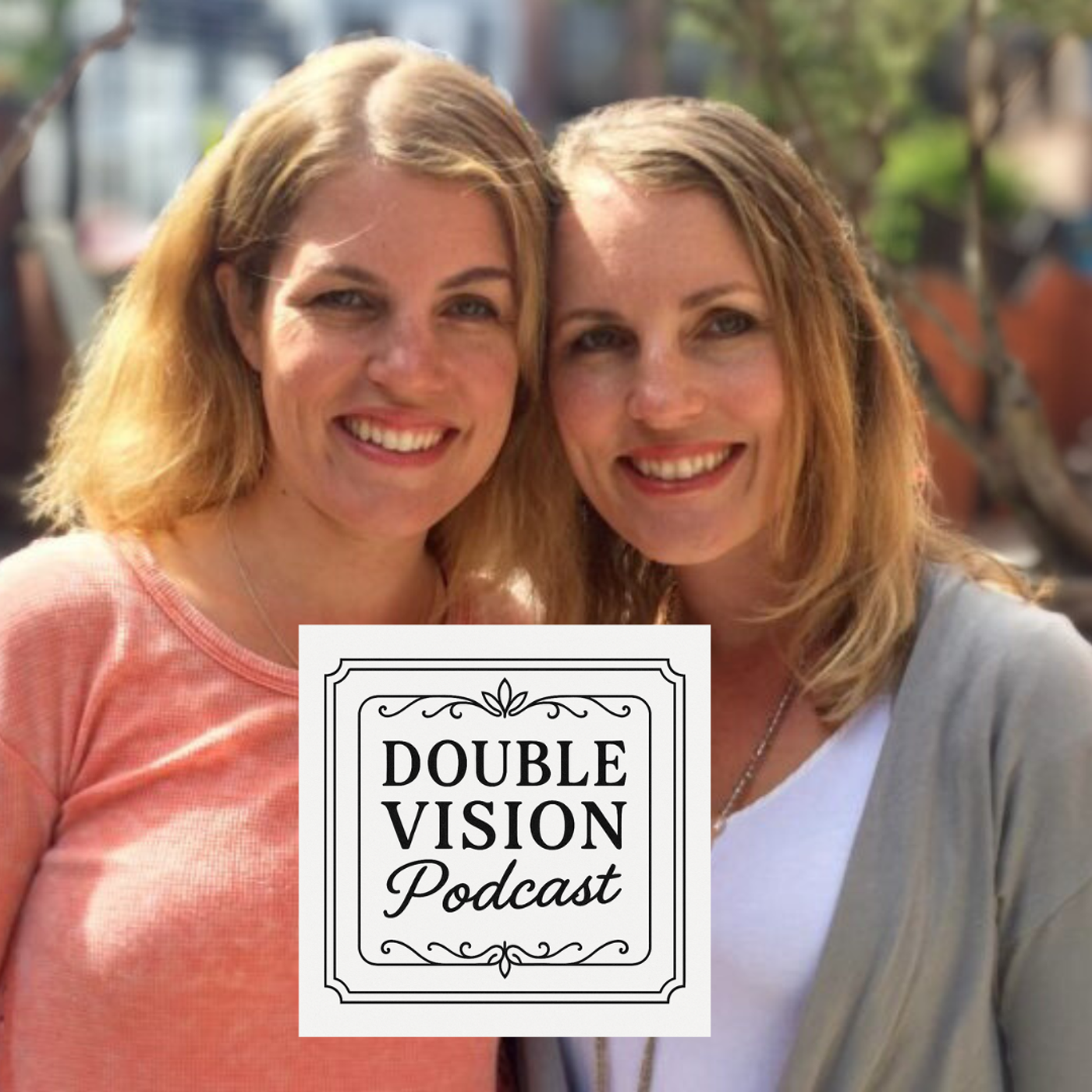
Identical twin sisters Jenelle and Joy grew up with Retinitis Pigmentosa, yet they’ve often seen blindness - and life - through different lenses. Jenelle brings her therapist’s heart for healing and resilience, while Joy adds an educator’s creative voice for making sense of life. Together they explore the social and emotional side of vision loss... the parts of the journey that never show up on eye charts - sharing stories, struggles, and laughter to remind us there’s no single way to navigate blindness.
-
18
Your Memory Is Real: Belonging, Identity, and the Stories We Carry
This is Part 2 of our conversation with Krishna Washburn, founder and artistic director of Dark Room Ballet. What begins as a conversation about dance becomes a much deeper exploration of memory, identity, belonging, and what it means to be fully seen.Joy and Jenelle talk with Krishna about the importance of trusting our own experiences and perceptions, especially when they don’t fit other people’s assumptions. Along the way, Krishna shares fascinating insights into the world of blind dance education, the rich oral traditions that have preserved knowledge across generations, and the ways art can help us heal, connect, and better understand ourselves.The conversation also takes an honest look at inclusion, challenging listeners to consider who gets welcomed into our communities, workplaces, and cultural spaces, and who is too often left on the margins. Whether you’re interested in dance or not, this episode offers a powerful reflection on the universal human desire to belong, to have our stories honored, and to contribute our gifts to the world.What You’ll Hear in This Episode• Reflections on memory, self-trust, and honoring our lived experiences• The connection between identity, belonging, and the stories we tell ourselves• How blind educators have preserved knowledge through oral tradition and innovative teaching methods• Why dance can be a powerful tool for healing, self-expression, and personal transformation• The emotional impact of being excluded from spaces where you know you belong• What true inclusion looks like, and practical ways we can all help create it• Why accessibility is about more than accommodation and is ultimately a matter of human dignityGuest: Krishna WashburnKrishna Washburn is a ballet educator, audio description specialist, and blind professional dancer. Through Dark Room Ballet, she has trained more than 1,500 dancers and developed tuition-free collegiate and pre-professional arts training opportunities for blind and visually impaired adults. She is also a contributor to the upcoming Oxford Handbook of Ballet Pedagogy.Links & ResourcesDark Room Ballethttps://darkroomballet.comDouble Vision Podcasthttps://www.doublevisionblog.comVoicemail Line949-414-8336
-
17
The Sound of Dance: Reimagining Accessibility in the Performing Arts with Krishna Washburn
This is Part 1 of a two-part conversation recorded in honor of Mental Health Awareness Month. Joy and Jenelle sit down with Krishna Washburn, founder and artistic director of Dark Room Ballet, for a fascinating deep dive into the world of audio description, blind-led arts, and what true accessibility in the performing arts really looks like.What You’ll Hear in This Episode• What audio description is, and why even sighted audience members often end up loving it• Krishna’s story of attending a live performance with audio description and realizing something fundamental was missing• Why audio description designed for television often fails when applied to live dance, and what needs to change• How Pacific Northwest Ballet is doing it right by integrating audio describers as full members of the production team• What to look for, and what to avoid, when buying tickets to an audio described performance• Krishna’s upcoming free 5-week Audio Description course beginning May 30th, open to everyone with no dance background requiredGuest: Krishna WashburnKrishna is a ballet educator, audio description specialist, and blind professional dancer. Through Dark Room Ballet, she has trained more than 1,500 dancers and developed tuition-free collegiate and pre-professional arts training for blind and visually impaired adults. She is also a contributor to the upcoming Oxford Handbook of Ballet Pedagogy.Links & ResourcesDark Room Ballethttps://darkroomballet.comEmail Dark Room [email protected] 5-Week Audio Description Coursehttps://darkroomballet.comJoy’s “Blind Dance Mom” postPacific Northwest Ballethttps://www.pnb.orgDouble Vision Bloghttps://www.doublevisionblog.comVoicemail Line949-414-8336
-
16
When Kindness Gets Complicated: A Conversation with Rebekah Taussig on Motherhood, Messiness & Magic
Expanding on a conversation Joy and Jenelle began in an earlier episode, “How to Handle Over-Helpers”, they are joined by one of their favorite authors, Rebekah Taussig, for her first appearance on the podcast.Together, they dig into surprisingly similar stories, from growing up with internalized shame around disability to the awkwardness of being prayed for in public to delicately navigating well-meaning people and organizations. Along the way, they unpack the layers inside stories that are sometimes uncomfortable, sometimes funny, and always deeply human.Rebekah Taussig is a writer, speaker, and author of the bestselling memoir Sitting Pretty and We Are the Scrappy Ones.Connect with Rebekah Taussig:InstagramSubstackWebsite
-
15
Beyond the Cure Question: Treatment, Identity, and the Future of Vision Care
Join us as Dr. Kierstyn Napier-Dovorany, an optometrist specializing in low vision rehabilitation, shares her journey into eye care, her work supporting individuals with vision impairment, and her insights into emerging treatments and clinical trials.With over 20 years of experience, Kierstyn brings a unique perspective as both a practitioner and a clinical researcher. She helps us explore the intersection of lived experience, mobility, and the evolving science of vision care, while also offering practical guidance for navigating resources and opportunities in the field.In this conversation, we dive into topics such as:* Why many people are not hearing about clinical trials from their eye doctors* How to find and evaluate clinical trials* The role of low vision rehabilitation in supporting independence and quality of life* The balance between identity, self-acceptance, and advancements in treatment* How Dr. Kierstyn approaches conversations with individuals who feel strongly connected to their blind identity and may not wish to pursue treatment* What’s on the horizon in research for genetic retinal conditionsThis episode weaves together science, accessibility, and real-world insight in a way that is both informative and deeply human.Resources Mentioned:* ClinicalTrials.gov: https://clinicaltrials.gov* Foundation Fighting Blindness: https://www.fightingblindness.org* Ray Therapeutics: https://raytherapeutics.comGuest:Dr. Kierstyn Napier-Dovorany is an optometrist who has practiced low vision rehabilitation for twenty years. She is a vision scientist specializing in vision impairment and mobility and currently works as a clinical researcher at Ray Therapeutics, a company developing treatments for genetic retinal diseases.
-
14
The Cure Question: Is It Okay To Want One... Or To Not Want One?
What would you do if someone offered you a cure tomorrow? For Joy and Jenelle, that question is anything but simple. In this episode, they explore the deeply personal tension between accepting who you are and wanting something more, unpacking cure culture, disability identity, and the vulnerability that comes with allowing yourself to hope. Plus, a sneak peek at their upcoming conversation with Dr. Kirstyn Dovorany.
-
13
How to Handle Overhelpers
We've all been there — someone swoops in to help before you've even asked, grabs something out of your hands, or insists on doing something for you when you were handling it just fine. It's well-meaning. It can also be exhausting.In this episode, Jenelle and Joy get into the messy, nuanced world of helping — when it's welcome, when it crosses a line, and how to handle it when it does. Drawing from their own lived experiences as people with disabilities, they unpack why our culture tends to put helpers on a pedestal, and what gets lost when the focus shifts from the person being helped to the person doing the helping.In this episode:Why everyone needs help sometimes — and why that's not a disability thing, it's a human thingHow apps like Be My Eyes flip the script on what "helping" can look like when it's actually mutualThe difference between helping someone and taking over for them (and why that distinction matters)Unsolicited touching, moved belongings, and other "helpful" behaviors that can feel anything butWhere the fear of being a burden comes from — and why it's worth examiningThe gap between good intentions and real impact, and how to have the repair conversation when harm happensPractical ways to set boundaries without feeling like you have to justify yourselfWhat it actually means to see someone as a whole person — not just their disabilityIf you've ever struggled to speak up when help crosses a line, or wondered how to offer support without overstepping, this one's for you.Resources: "How to Handle Overhelpers" on DoubleVisionBlog
-
12
Chicken Thunder: Advocacy and Storytelling with the ASPECT Program
Blind and unemployed is still the statistical norm in America.So what actually changes that?In this episode, we talk about the advocacy skills most blind and low-vision people are never formally taught, and why storytelling often moves policy faster than data ever could. We unpack the persistent employment gap, the power of learning how to speak your lived experience in professional spaces, and how programs like ASPECT are equipping blind advocates to influence real change.Joined by Janetta Price and Julie Grutzmacher from Prevent Blindness, the conversation explores the history behind the name, the tension between statistics and human stories, and what it takes to shift public perception.If you care about employment, equity, or learning how to advocate more effectively for yourself or others, this episode gets practical and personal.We close with a powerful spoken word piece from Janetta Price that reminds us why voice matters.For more info on the ASPECT program visit the Prevent Blindness website and their YouTube Channel.
-
11
What if the Story You’ve Been Telling Yourself Isn’t the Whole Truth?
Joy revisits a painful middle-school memory and reframes it decades later, while Jenelle explains how trauma lives not just in our minds, but in our bodies - shaping the stories we use to make sense of our lives. This conversation explores meaning-making, shame, resilience, anxiety, and the power of trusted support as we learn how to notice, question, and begin rewriting the stories that no longer serve us.Resources & Links:EMDR Therapy ExplanationRising Strong by Brené Brown
-
10
Identity, Leadership, and Yet Another Take on a Convoluted Word with Sylvia Stinson
In the third and final installment of the DoubleVision identity series, hosts Joy and Jenelle sit down with Sylvia Stinson Perez, a leader and advocate in the blindness field, for a conversation about identity, leadership, and navigating professional spaces as a blind woman. Together, they explore resilience, self-advocacy, burnout, and imposter syndrome, and they dig into the complicated role of the word “inspiration,” including the range of perspectives it can carry within the disability community.Sylvia's Website (and free download): www.TotalImpactPartners.comKindle option (99¢): Treading The Waters Of Life: A Guide To Self-Reflection And Action
-
9
Who Am I, Really? Identity, Grief, and Integration with Adam Mock
At the start of a new year, many of us find ourselves asking questions that feel both simple and unsettling: Who am I now? What still holds when parts of life change?This episode of the DoubleVison Podcast is Part 2 in a 3-part series exploring identity. If Part 1 focused on how and why we learn to protect parts of ourselves in order to belong and survive, this conversation turns toward what it can look like to integrate those parts when and if we feel ready.Joy and Jenelle are joined by leadership coach, keynote speaker, and author Adam Mock for a grounded conversation about identity beyond roles, labels, and circumstances. Drawing from Part One of his book Rescue Your Dreams, Adam invites listeners to consider identity not as something we construct through performance or achievement, but as something more durable and rooted beneath what we do.Topics CoveredIdentity beyond roles, labels, and circumstancesGrief, loss, and readiness to move forwardClearing false narratives about ourselvesCore identity, values, and strengthsBeing versus doingA guided identity exercise from Rescue Your DreamsAbout AdamAdam Mock is a leadership coaching specialist, keynote speaker, and the author of Rescue Your Dreams. With more than twenty-five years of experience, he has worked with individuals and organizations including Olympic athletes, Nike, PayPal, Jordan Brand, and Converse. His work centers on clarity, courageous conversations, and helping people live and lead from a grounded sense of identity.Learn more about Adam at adammock.com and buy Rescue Your Dreams here
-
8
Identity and Belonging: Why We Protect Parts of Who We Are
In this episode, Jenelle and Joy begin a two-part conversation on identity, grounded in their lived experiences of vision loss. Through stories from their childhood, they explore how early reactions from others taught them to protect certain parts of who they are. Those moments shaped instincts around when to explain, when to downplay, and when to keep parts of their identity private in order to feel safe or accepted.They explore the deeper reason humans learn to protect aspects of identity in the first place. The desire to belong is rooted in our need to survive within a community. When belonging feels uncertain, protection becomes a strategy. This shows up in especially layered ways for disabled people, who often have to assess when it feels safe to disclose parts of their identity, how much to share, and with whom.The conversation also touches on the medical model of disability and how it frames difference as something to fix, alongside the real and often unspoken paradox of feeling both proud of one’s identity and protective of it at the same time. By naming the moments that shaped these protective patterns, listeners are invited into the work of recognizing their own. This episode focuses on awareness as the first step toward integrating parts of identity that may have been hidden and creating more choice about how to move forward.Key TakeawaysHumans protect parts of their identity as a way to secure belonging and survival.Early responses from others often shape what feels safe to reveal or hide.Vision loss offers a specific lens, but identity protection is a universal experience.Disabled people often navigate ongoing decisions about disclosure and safety.Readiness and context matter when sharing personal aspects of identity.The medical model of disability can reinforce the idea that difference needs fixing.It is common to feel both pride and protectiveness around identity.Protection strategies formed early in life often persist without awareness.Naming these patterns helps loosen their hold.Integration creates space for growth, agency, and forward movement.Series ContextThis episode is Part 1 of a two-part series on identity. Part 1 focuses on early experiences and the ways we learn to protect parts of who we are. Part 2 will explore what it looks like to integrate those parts and move forward with greater clarity and freedom.Reflection Questions for ListenersCan you remember a moment when you learned to shrink or protect part of your identity based on someone else’s response?Where do you still notice that vulnerable, protective feeling showing up in your life today?Resources Mentioned During This EpisodeThe Country of the Blind by Andrew LelandThere Plant Eyes: A Personal and Cultural History of Blindness by M. Leona GodinWhat Does Grief Need? (DoubleVision Podcast)Access Intimacy (DoubleVision Podcast)
-
7
Cooking Up Belonging: A Conversation with Chef Debra
As the holidays approach, the kitchen can become a place of belonging uncertainty for people with vision loss, especially when traditions and expectations meet accessibility challenges. In this special Thanksgiving episode, Joy and Jenelle are joined by Chef Debra from The Blind Kitchen. They discuss the importance of creating inclusive kitchen spaces, and the value of universal culinary tools. Chef Deborah shares her journey from being the only blind student in culinary school to building a business that empowers people with vision loss to cook with confidence. The conversation highlights the significance of trust, community, and creativity in the kitchen.Check out Chef Debra’s work at https://theblindkitchen.com
-
6
Creating Spaces of Belonging
In this episode, Jenelle and Joy discuss their experiences growing up with retinitis pigmentosa, a degenerative eye condition. They explore the concept of 'belonging uncertainty' and how it affects individuals, especially those with vision loss. The twin sisters share personal stories and insights on creating inclusive environments and the importance of universal design in social gatherings. They also touch on the significance of audio descriptions in media and the impact of thoughtful hosting on fostering a sense of belonging.RESOURCES:The Art of Gathering: How We Meet and Why It Matters by Priya Parker - https://www.goodreads.com/book/show/37424706-the-art-of-gatheringBlind Dance Mom Blog Post - https://doublevisionblog.com/2023/03/01/blind-dance-mom-accessible-moments-matter/
-
5
What Does Grief Need?
In this episode of DoubleVision Podcast, hosts Jenelle and Joy explore the complex topic of grief, particularly in the context of progressive vision loss. They discuss the emotional journey of dealing with a degenerative eye condition, sharing personal stories and insights from their blog. The conversation delves into the stages of grief, common misconceptions, and the importance of acknowledging and witnessing grief. They also touch on the role of empathy and community support in navigating these emotions.Watch the video version of this podcast on YouTube at https://www.youtube.com/@DoubleVisionBlogHave an idea for a topic you'd like us to discuss? Leave us a voicemail at 949-414-8336 or send us an email at [email protected]:David Kessler - https://grief.com/Grief Gone Wild - https://doublevisionblog.com/2024/09/17/grief-gone-wild/The Lenses of Grief - https://doublevisionblog.com/2024/09/14/the-lenses-of-grief/
-
4
Cane-o-phobia
What does it mean to move forward with courage while still honoring where you are?This episode explores the balance between bravery and self-compassion as we step into greater visibility.Episode DescriptionIn this episode, Joy and Jenelle explore the complex emotions that come with vision loss and the layered process of learning to use mobility tools like the white cane. Joined by mental health counselor Melissa Taussig, they discuss the delicate balance between “finding your brave” and honoring where you are in the journey.Together, they unpack the stigma around cane use, the vulnerability of being seen, and the deep strength that comes from community connection.This conversation invites listeners to see cane use not as a single act of courage but as an ongoing practice of self-acceptance, growth, and belonging—especially meaningful as we recognize National White Cane Day on October 15th.CorrectionDuring the episode, we mentioned an incorrect website for Daring Sisters. The correct website is www.daringsisters.org.Resources in This Episode:• Daring Sisters – www.daringsisters.org• The Country of the Blind by Andrew Leland – Find the book here• Guide Dogs for the Blind O&M Immersion Program – Learn more here• National Federation of the Blind (NFB) — White Cane Day Free Cane Program – Learn more• American Council of the Blind (ACB) — White Cane Day – Learn moreIf you have an idea for a future episode or a story you’d like to share, please leave us a voice message at 949-414-8336 or email us at [email protected].
-
3
We’re in This Together: Exploring Access Intimacy
In this episode, Joy and Jenelle invite their husbands, Benjamin and Torrey, to join them in an insightful conversation about access intimacy... a term coined by disability justice advocate Mia Mingus. Together, they explore what it means to give and receive help in ways that honor autonomy, trust, and interdependence.The foursome reflects on how overhelping can stem from fear or anxiety, and how practicing attunement—being tuned in to someone’s needs—creates deeper connection. They share stories of laughter, vulnerability, and growth, showing how humor can ease hard moments and strengthen relationships.Drawing inspiration from Sitting Pretty: The View from My Ordinary Resilient Disabled Body by Rebekah Taussig (https://rebekahtaussig.com/sitting-pretty), the conversation touches on universal design, accessibility, and the creativity that disability invites. To learn more about the origins of access intimacy, visit Mia Mingus’s blog at https://leavingevidence.wordpress.comHave a question for us or a topic you'd like us to discuss? Leave us a voicemail at 949-414-8336Chapters00:00 Introduction to Access Intimacy02:44 Empathy and Anticipating Needs07:03 The Subtlety of Helping10:24 Awareness and Responsiveness in Public15:28 Navigating Partnership Dynamics21:33 The Quest for Accessibility Superpowers28:15 Finding Your Voice and Humor in Vulnerability
-
2
Who’s That Voice in My Glasses? - Exploring Interdependence with Be My Eyes and Meta Glasses
In the debut episode of the DoubleVision Podcast, hosts Jenelle and Joy introduce their new platform, transitioning from their blog to a podcast format. They discuss their experiences with vision loss, the use of Meta glasses, and the Be My Eyes app, highlighting the challenges and triumphs of navigating the world with these tools. The episode emphasizes the importance of interdependence and the unique experiences of traveling with a vision impairment.KeywordsDoubleVision Podcast, Meta glasses, Be My Eyes, vision loss, interdependence, debut episode, podcast, travel, accessibility, technology
-
1
DoubleVision Podcast Trailer
Identical twin sisters and the authors of DoubleVision Blog, Jenelle and Joy, grew up with Retinitis Pigmentosa, yet they’ve often seen blindness - and life - through different lenses. Jenelle brings her therapist’s heart for healing and resilience, while Joy adds an educator’s creative voice for making sense of life. Together they explore the social and emotional side of vision loss... the parts of the journey that never show up on eye charts - sharing stories, struggles, and laughter to remind us there’s no single way to navigate blindness.
We're indexing this podcast's transcripts for the first time — this can take a minute or two. We'll show results as soon as they're ready.
No matches for "" in this podcast's transcripts.
No topics indexed yet for this podcast.
Loading reviews...
ABOUT THIS SHOW
Identical twin sisters Jenelle and Joy grew up with Retinitis Pigmentosa, yet they’ve often seen blindness - and life - through different lenses. Jenelle brings her therapist’s heart for healing and resilience, while Joy adds an educator’s creative voice for making sense of life. Together they explore the social and emotional side of vision loss... the parts of the journey that never show up on eye charts - sharing stories, struggles, and laughter to remind us there’s no single way to navigate blindness.
HOSTED BY
DoubleVision Blog
CATEGORIES
Loading similar podcasts...
Frequently Asked Questions
How many episodes does DoubleVision Podcast (by DoubleVision Blog) have?
DoubleVision Podcast (by DoubleVision Blog) currently has 18 episodes available on PodParley. New episodes are automatically indexed when they're published to the podcast feed.
What is DoubleVision Podcast (by DoubleVision Blog) about?
Identical twin sisters Jenelle and Joy grew up with Retinitis Pigmentosa, yet they’ve often seen blindness - and life - through different lenses. Jenelle brings her therapist’s heart for healing and resilience, while Joy adds an educator’s creative voice for making sense of life. Together they...
How often does DoubleVision Podcast (by DoubleVision Blog) release new episodes?
DoubleVision Podcast (by DoubleVision Blog) has 18 episodes. Check the episode list to see recent publication dates and frequency.
Where can I listen to DoubleVision Podcast (by DoubleVision Blog)?
You can listen to DoubleVision Podcast (by DoubleVision Blog) on PodParley by clicking any episode. We provide an embedded audio player for direct listening, and you can also subscribe via your preferred podcast app using the RSS feed.
Who hosts DoubleVision Podcast (by DoubleVision Blog)?
DoubleVision Podcast (by DoubleVision Blog) is created and hosted by DoubleVision Blog.
URL copied to clipboard!