
PODCAST · health
Food Sleuth Radio
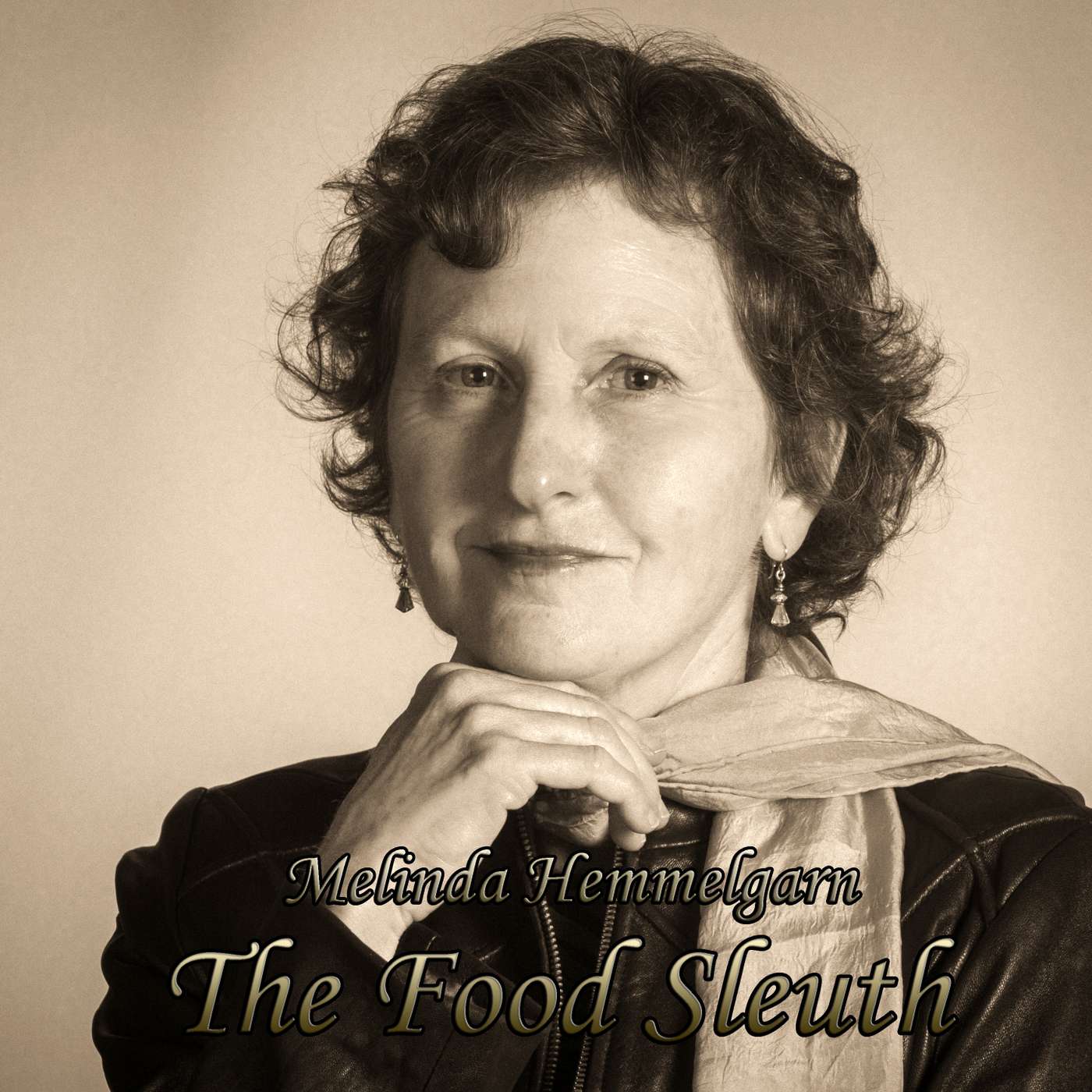
by Melinda Hemmelgarn
Dietitian Melinda Hemmelgarn helps listeners “think beyond their plates,” connect the dots between food, health and agriculture, and find food truth.
-
883
Fred Plotkin, discusses Italian food culture and Slow Food
Did you know that Slow Food is a global movement dedicated to promoting good, clean, and fair food for everyone? Join Food Sleuth Radio host and Registered Dietitian, Melinda Hemmelgarn for her conversation with Fred Plotkin, MS, author and expert on Italian food culture. Plotkin discusses his relationship with Carlo Petrini, father of the Slow Food movement, Italian culinary history, food culture, and his philosophy on eating and living as a “pleasure activist.” Related Websites: https://www.slowfood.com/
-
882
Susan Kaplan, JD, author of A Healthy Union: How States Can Lead on Environmental Health
Did you know that as national environmental agencies and regulations are whittled away, states may hold the key to protect public health? Join Food Sleuth Radio host and Registered Dietitian, Melinda Hemmelgarn for her conversation with Susan Kaplan, JD, Research Assistant Professor at the University of Illinois Chicago, and author of A Healthy Union: How States Can Lead on Environmental Health. Kaplan provides case studies of bi-partisan action where communities and states took the lead on protecting public health through environmental policies. She discusses how “making the invisible visible” is key to raising awareness about toxic chemical use. She also discusses the history of public health and why environmental health is not a strong component of medical education. Her book sprung from an earlier article: https://theconversation.com/which-state-you-live-in-matters-for-how-well-environmental-laws-protect-your-health-200393 Related Websites: Susan Kaplan's A Healthy Union: How States Can Lead on Environmental Health
-
881
Ari Bargil, senior attorney with the Institute for Justice discusses “Right to Garden” laws.
Did you know that some local governments make it illegal to have vegetable gardens or greenhouses on residential properties? Join Food Sleuth Radio host and Registered Dietitian, Melinda Hemmelgarn for her conversation with Ari Bargil, senior attorney with the Institute for Justice where he leads the Zoning Justice Project, and spearheaded Florida’s and Illinois’ passage of the Right to Garden Act —a reform that makes it unlawful for local governments to ban residential vegetable gardens. Related Websites: https://ij.org/legislation/vegetable-garden-protection-act/
-
880
Amanda Maria Edmonds, MS, University of Michigan, discusses the cyclospora outbreak.
Did you know that Michigan is “ground zero” for the cyclospora outbreak affecting multiple states in the U.S.? Join Food Sleuth Radio host and Registered Dietitian, Melinda Hemmelgarn for her conversation with Amanda Maria Edmonds, MS, sustainable food systems consultant and faculty member in the University of Michigan’s Program in the Environment. Edmonds discusses food system resilience in light of our industrial food system’s push for “efficiency” and resulting vulnerability. Edmonds invites us to join food system discussions as part of Food Literacy for All: https://sites.lsa.umich.edu/sustainablefoodsystems/foodliteracyforall/ Related Websites: https://www.linkedin.com/pulse/michiganders-case-investing-local-food-systems-amanda-maria-edmonds-cxlxc/
-
879
Don Schaffner, PhD, food safety microbiologist discusses cyclospora.
Did you know that we have a “cyclospora season” in the United States? Join Food Sleuth Radio host and Registered Dietitian, Melinda Hemmelgarn for her conversation with Don Schaffner, PhD, food safety microbiologist at Rutgers University. Schaffner discusses the nationwide cyclospora outbreak, cuts to the Centers for Disease Control and Prevention’s FoodNet, and what is likely multiple outbreaks of cyclospora. Schaffner has been widely interviewed and discusses the topic on his podcast, Risky or Not: https://www.riskyornot.co/ Related Websites: https://www.fda.gov/food/outbreaks-foodborne-illness/investigation-9-state-outbreak-cyclospora-illnesses-iceberg-lettuce-july-2026
-
878
Lauren Dinour, PhD, RD, professor of nutrition and lactation consultant.
Did you know that Arkansas is the only state that requires breastfeeding education in K-12 curriculum? Join Food Sleuth Radio host and Registered Dietitian, Melinda Hemmelgarn for her conversation with Lauren Dinour, PhD, RD, professor of nutrition, lactation consultant and advocate for “first food justice.” Dinour discusses the multiple benefits of breastfeeding, and her research looking at breastfeeding education in K—12 schools, breastfeeding images and how they inform cultural norms, and why and how workplace support of breastfeeding is critical to public health. They also discuss how breastfeeding is key to sustainability and resilience. In honor of National Breastfeeding Month (August) and World Breastfeeding Week (August 1-7), the two discuss how society supports or makes more difficult a mother’s ability to feed her infant human milk, and the multitude of benefits breastfeeding provides to infants, children, maternal and planetary health. See: https://worldbreastfeedingweek.org/ Related Websites: Breastfeeding Education in Kindergarten Through 12th Grade: A Content Analysis of United States Health Curriculum Standards: https://onlinelibrary.wiley.com/doi/full/10.1111/josh.70173
-
877
Jon Magee, Agricultural Justice Project
Did you know that the Agricultural Justice Project (AJP) has worked to promote farm and farm worker justice for nearly three decades? Join Food Sleuth Radio host and Registered Dietitian, Melinda Hemmelgarn for her conversation with Jon Magee, farmer, organizer, researcher and lead author of AJP’s sunsetting report, “A Season for Solidarity.” Magee shares key components and barriers related to farmer and farmworker justice. The Project will be closing, but their report and toolkit can carry their critical work forward. See: https://agriculturaljusticeproject.org/toolkit/ Related Websites: A Season for Solidarity Report: https://agriculturaljusticeproject.org/pdf/AJP-Season_For_Solidarity-web.pdf
-
876
Kelly Hunter Foster, JD, Senior Attorney, Waterkeeper Alliance, discusses data centers.
Did you know that AI data centers consume large volumes of water in their cooling systems and generate polluted waste water that requires treatment? Join Food Sleuth Radio host and Registered Dietitian, Melinda Hemmelgarn for her conversation with Kelly Hunter Foster, JD, Senior Attorney, Waterkeeper Alliance. Foster discusses water use, pollutants, and overall environmental and public health concerns from data centers. She also discusses externalized costs, the loss of agricultural land, critical protective policies, and discussion points to share with legislators and citizens faced with data center construction in their communities. For impact on rural communities, see the fact sheet produced by the MO Rural Crisis Center: Big Data Centers Make Bad Neighbors: https://save-our-farms.org/ and for the link between data center and PFAS compounds, see: Data Centers and PFAS: https://www.eesi.org/articles/view/data-centers-are-contributing-to-pfas-forever-chemical-pollution Related Websites: Invisible, Unbreakable, Unnatural: PFAS Contamination of U.S. Surface Waters: https://waterkeeper.org/wp-content/uploads/2022/10/Waterkeeper-Alliance-PFAS-Report-FINAL-10.14.22.pdf
-
875
Tristan Brandhorst, PhD, on the fungicide, fludioxonil.
Did you know that breakdown products of a widely used fungicide in the U.S. food system poses both environmental and public health risks? Join Food Sleuth Radio host and Registered Dietitian, Melinda Hemmelgarn for her conversation with Tristan Brandhorst, PhD, Senior Research Scientist, University of WI-Madison. Brandhorst discusses his research on fludioxonil, a widely used fungicide in agriculture which breaks down to form a PFAS compound, thereby posing harm to our environment and human health. Consumer Reports ranks fludioxonil one of the six most concerning pesticides on produce. Related Websites: Breakdown products of the fungicide Fludioxonil may account for observed environmental impact: potential implications for human health: https://pubmed.ncbi.nlm.nih.gov/42254677/
-
874
Marc Boom, Senior Director of Public Affairs, Environmental Protection Network.
Did you know that the majority of Americans believe the burden of pollution is being shifted onto families through medical bills and long-term health consequences, and that by a 7-to-1 margin, Americans favor strengthening or expanding the EPA rather than weakening it? (See: What Americans — including Trump Supporters — Actually Want from the EPA: https://substack.com/home/post/p-200483632) Join Food Sleuth Radio host and Registered Dietitian, Melinda Hemmelgarn for her conversation with Marc Boom, Senior Director of Public Affairs for the Environmental Protection Network, a non-partisan organization comprising more than 750 former EPA scientists, engineers and policy analysts. Boom discusses how EPA safeguards have been eroded, staff eliminated but still dedicated, and how citizens can get involved to restore regulations that save lives. He also describes EPN’s Safer, Not Sicker campaign: www.safernotsicker.org Related Websites: www.environmentalprotectionnetwork.org
-
873
Robin Mesnage, PhD, toxicologist, Scientific Director at the Buchinger Wilhelmi Therapeutic Fasting program in Uberlingen Germany
Did you know that there is a conceptual change in science that includes a broader understanding of how pollutants and our microbiome interact to impact the development of disease? Join Food Sleuth Radio host and Registered Dietitian, Melinda Hemmelgarn for her conversation with Robin Mesnage, PhD, toxicologist, Scientific Director at the Buchinger Wilhelmi Therapeutic Fasting program in Uberlingen Germany, and visiting research fellow in the dept. of Nutritional Sciences at King’s College, London. Mesnage spoke at the Glyphosate Symposium at the U. of WA-Seattle in March, 2026. He shares his insight into how glyphosate, and more specifically Round-up herbicide affects the liver and microbiome. He also discusses the challenges of living in a toxic environment, polluted with plastics and pesticides. Mesnage discusses how banning toxic substances (bis-phenol A, glyphosate) can lead to unfortunate substitutions with more toxic compounds. Finally, he speaks about the power of intermittent, and therapeutic fasting to combat common diseases that plague modern society. Related Websites: https://www.instagram.com/robin_mesnage/
-
872
Jessi Silverman, MPH, RD, Deputy Director in the Programs Department at the Center for Science in the Public Interest discusses the new report, “Private Food, Public Harm: Privatized Food Service in Prisons and Jails
Did you know that people who are incarcerated typically receive poor quality food that contributes to poor mental and physical health? Join Food Sleuth Radio host and Registered Dietitian, Melinda Hemmelgarn for her conversation with Jessi Silverman, MPH, RD, Deputy Director in the Programs Department at the Center for Science in the Public Interest. CSPI and the Carceral Nutrition Project produced a report and webinar which explore the consequences of private food service companies taking over food services at prisons and jails. This report specifically focuses on Aramark, which has the largest share (35 percent) of the US correctional food services market. Aramark has also been a party to litigation regarding carceral food conditions in more than 500 cases since 2000. These cases reveal widespread allegations of nutritionally inadequate, unsafe, and contaminated food. Most legal claims have been brought under the Eighth Amendment, arguing that inadequate or unsafe food constitutes cruel and unusual punishment. Related Websites: https://www.cspi.org/PrivateFoodPublicHarm-fullreport
-
871
Kendra Klein, PhD, Deputy Director of Science at Friends of the Earth, discusses the new report, “Regenerative Food Labels: What’s Behind the Claim?”
Did you know that there is no standard legal definition of “regenerative” food and agriculture? Join Food Sleuth Radio host and Registered Dietitian, Melinda Hemmelgarn for her conversation with Kendra Klein, PhD, Deputy Director of Science at Friends of the Earth, and co-author of “Regenerative Food Labels: What’s Behind the Claim?” Klein helps us navigate organic and regenerative food labels in the marketplace, the many benefits of organic food and farming, and communication and policy challenges. Klein references the report: “Merchants of Poison:” https://foe.org/resources/merchants-of-poison/ Related Websites: https://foe.org/resources/label-guide/
-
870
Andrew Flachs, PhD., Associate Professor of Anthropology at Purdue University, discusses his book, Feeding the World as If People Mattered: How Small Farms Produce Value Beyond Yields. (Part 2 of 2).
Did you know that agribusiness logic places emphasis on big yields while neglecting the value of small farms and gardens? Join Food Sleuth Radio host and Registered Dietitian, Melinda Hemmelgarn for her conversation with Andrew Flachs, PhD., Associate Professor of Anthropology at Purdue University, food and farming systems researcher, and author of Feeding the World as If People Mattered: How Small Farms Produce Value Beyond Yields. Flachs continues his conversation in the second of a two-part interview on the benefits of smaller scale farming and home and community gardens, especially in times of crisis. He discusses his research into Cleveland Ohio’s urban gardens, GMO vs. organic cotton in India, and home gardens in Bosnia. He is also the author of an Op-Ed in Civil Eats: “Facing Global Disruptions, Congress Should Invest in Local Food” https://civileats.com/2026/04/23/op-ed-facing-global-disruptions-congress-should-invest-in-local-food/ Related Websites: https://www.cla.purdue.edu/directory/profiles/andrew-flachs.html
-
869
Andrew Flachs, PhD., Associate Professor of Anthropology at Purdue University, and author of Feeding the World as If People Mattered: How Small Farms Produce Value Beyond Yields.
Did you know that the push towards efficiency is often a trap? Join Food Sleuth Radio host and Registered Dietitian, Melinda Hemmelgarn for her conversation with Andrew Flachs, PhD., Associate Professor of anthropology at Purdue University, and food and farming systems researcher. He discusses highlights from his new book, Feeding the World as If People Mattered: How Small Farms Produce Value Beyond Yields. To receive a discount, use the code AZFLR which gives 30% off from the press website (https://uapress.arizona.edu/book/feeding-the-world-as-if-people-mattered Related Websites: https://www.cla.purdue.edu/directory/profiles/andrew-flachs.html
-
868
Lianne Sheppard, PhD, Professor, University of WA-Seattle, discusses highlights from the Seattle Glyphosate Symposium
Did you know that glyphosate is the most commonly used herbicide in the world, and because of its ubiquitous use, glyphosate can be found in most of our bodies? Join Food Sleuth Radio host and Registered Dietitian, Melinda Hemmelgarn for her conversation with Lianne Sheppard, PhD, Professor in the Departments of Environmental and Occupational Health Sciences, and Biostatistics at the University of WA-Seattle. Sheppard discusses highlights and conclusions from the Seattle Glyphosate Symposium, and the risks from long term, low-level exposure. She also discusses why EPA registration of a pesticide does not mean that the pesticide is safe. To see the pesticides (insecticides, herbicides, fungicides and rodenticides) used in your part of the country, see the USGS maps of pesticide use: https://water.usgs.gov/nawqa/pnsp/usage/maps/compound_listing.php Related Websites: Glyphosate symposium: https://deohs.washington.edu/sgs/statement
-
867
Margaret Martin, physical therapist, shares her expertise in the treatment and prevention of osteoporosis.
Did you know that mechanical stimulation nourishes our bones? Join Food Sleuth Radio host and Registered Dietitian, Melinda Hemmelgarn for her conversation with Margaret Martin, physical therapist and expert on bone health. Martin explains why exercise and getting nutrients from foods is critical for promoting bone health, and preventing osteoporosis. Related Websites: www.melioguide.com
-
866
Meghan Davis, DVM, PhD MPH, Associate Professor at Johns Hopkins University, discusses “One Health,” and bird flu.
Did you know that 75 percent of immerging infectious diseases are zoonotic in origin? Join Food Sleuth Radio host and Registered Dietitian, Melinda Hemmelgarn for her conversation with Meghan Davis, DVM, PhD MPH, Associate Professor of Environmental Health and Engineering at Johns Hopkins University’s Center for a Livable Future. Davis discusses the concept of “One Health,” provides an update on the prevalence and spread of avian influenza (bird flu) to dairy cows and other animals, challenges related to vaccination, and the risks of raw milk. For a check list for One Health, see: Check list for One Health: https://www.sciencedirect.com/science/article/pii/S2352771417300022 Related Websites: Population Health Spotlight Series: One Health and the human/animal interface: https://www.youtube.com/watch?v=sHMtykPmJCQ
-
865
Ami Zota, ScD, Professor, Columbia University discusses phthalates and other endocrine disrupting chemicals in our food supply.
Did you know that fast food products and ultra processed foods that contain toxic compounds such as phthalates, are more heavily marketed to people of color? Join Food Sleuth Radio host and Registered Dietitian, Melinda Hemmelgarn for her conversation with Ami Zota, ScD, Professor in the Department of Environmental Health Sciences at Columbia University’s Mailman School of Public Health. Zota describes and discusses phthalates and other endocrine disrupting chemicals in our food supply through a health equity lens and discusses the disproportionate burden of toxic chemical exposures among communities of color. Related Websites: Project TENDR: https://projecttendr.org/
-
864
Shiloah Kviatkovsky, PhD, Assistant Professor, Department of Orthopedics, University of Arkansas for Medical Sciences discusses collagen.
Did you know that there is clinical evidence showing that collagen peptides may help support joint function, skin and bone health? Join Food Sleuth Radio host and Registered Dietitian, Melinda Hemmelgarn for her conversation with Shiloah Kviatkovsky, PhD, Assistant Professor, Department of Orthopedics, University of Arkansas for Medical Sciences. Kviatkovsky discusses collagen’s role in the body, dietary sources of collagen, and what the research shows re the benefits of collagen supplementation.Related Websites: https://ortho.uams.edu/shiloah-kviatkovsky-ph-d-cissn/
-
863
Jessica Lebovits, Registered Dietitian discusses celiac disease and gluten-related disorders.
Did you know that a gluten-free diet doesn’t have to limit your quality of life? Join Food Sleuth Radio host and Registered Dietitian, Melinda Hemmelgarn for her conversation with Jessica Lebovits, RD, Registered Dietitian with expertise in celiac disease and other gluten-related disorders. Lebovits discusses symptoms of celiac disease, and ways to navigate a gluten-free life, including strategies for grocery shopping, label reading, restaurant dining, parties and even kissing.Related Websites: Celiac Disease Center at Columbia University: https://celiacdiseasecenter.columbia.edu/
-
862
Stacy Malkan, co-founder, U.S. Right to Know, discusses agribusiness influence on policy in Washington, DC.
Did you know that according to a recent Pew survey, more than 70% of American adults are concerned about exposure to toxic chemicals in their food and drinking water? Join Food Sleuth Radio host and Registered Dietitian, Melinda Hemmelgarn for her conversation with Stacy Malkan, co-founder and editor at the nonprofit public health research group, U.S. Right to Know. Malkan describes how chemical industry lobbyists influence federal policy to favor profits over public health, and exposes the Trump administration’s relationships with Bayer/Monsanto.Related Websites: https://usrtk.org/pesticides/tracing-bayers-ties-to-power-in-trumps-washington/
-
861
Lee Evslin, MD, pediatrician, discusses the multiple health risks associated with the herbicide, glyphosate and how to avoid harm. (Part 2 of 2)
Did you know that glyphosate, the active ingredient in Monsanto/Bayer’s herbicide, Roundup, is an endocrine (hormone) disruptor, and antibiotic that negatively affects our gut microbes? Join Food Sleuth Radio host and Registered Dietitian, Melinda Hemmelgarn for her continued conversation with Lee Evslin, MD, FAAP, board-certified pediatrician, Fellow of the American Academy of Pediatrics, former hospital CEO, and author of Breakfast at Monsanto’s: Is Roundup in our food making us sicker, fatter, and sadder. Evslin reviews research on glyphosate, and how glyphosate gets into our food system, water, air and urine. The American Academy of Pediatrics reports that the presence of glyphosate and other toxic herbicides in food products is the main hazard to children’s health associated with the consumption of GMO-based foods. (Part 2 of 2)Related Websites: Retraction of Monsanto study: https://www.science.org/content/article/journal-retracts-weed-killer-study-backed-monsanto-citing-serious-ethical-concerns
-
860
Lee Evslin, MD, pediatrician, and author of Breakfast at Monsanto’s: Is Roundup in our food making us sicker, fatter, and sadder? (Part 1 of 2)
Did you know that even low-level exposures to commonly used pesticides pose harm to vulnerable populations such as pregnant women and children? Join Food Sleuth Radio host and Registered Dietitian, Melinda Hemmelgarn for her conversation with Lee Evslin, MD, FAAP, board-certified pediatrician, Fellow of the American Academy of Pediatrics, former hospital CEO, and author of Breakfast at Monsanto’s: Is Roundup in our food making us sicker, fatter, and sadder. Evslin discusses his work in Hawaii which spurred a state ban on the neurotoxic pesticide, chlorpyrifos, and how the chemical industry attempts to discredit even physicians. (Part 1 of 2)Related Websites: https://www.washington.edu/news/2012/12/19/american-academy-of-pediatrics-issues-policy-statement-on-pesticide-exposure-in-children/
-
859
Kelly Verel, Co-Executive Director at Project for Public Spaces, describes the impacts of SNAP cuts to farmers’ markets and public health. (Part 2 of 2)
Did you know that cuts to SNAP will affect farmers’ incomes, rural economies and the ability of underserved populations to access fresh, local food at farmers’ markets? Join Food Sleuth Radio host and Registered Dietitian, Melinda Hemmelgarn for her continuing conversation with Kelly Verel, Co-Executive Director at Project for Public Spaces, a non-profit organization dedicated to bringing public spaces to life through planning and design. Verel further describes assorted types of public markets and the ways markets boost economic resilience and public health. (Part 2 of 2)Related Websites: Benefits of public markets: https://www.pps.org/article/the-benefits-of-public-markets
-
858
Kelly Verel, Co-Executive Director at Project for Public Spaces, describes the multiple benefits of public markets. (Part 1 of 2)
Did you know that public market spaces, including farmers’ markets, are vital for regional economic resilience and public health? Join Food Sleuth Radio host and Registered Dietitian, Melinda Hemmelgarn for her conversation with Kelly Verel, Co-Executive Director at Project for Public Spaces, a non-profit organization dedicated to bringing public spaces to life through planning and design. Verel discusses the multiple benefits of public markets, market challenges and successful models. (Part 1 of 2)Related Websites: https://uwm.edu/architecture/marketplaces-where-food-access-health-and-economic-impacts-grow/
-
857
Melanie Betz, MS, RD, “The Kidney Dietitian” discusses how to prevent and treat kidney stones through diet.
Did you know that each year, more than 500,000 Americans visit the emergency room due to kidney stones; it’s estimated that approximately 1 in 10 people will develop a kidney stone in their lifetime? Join Food Sleuth Radio host and Registered Dietitian, Melinda Hemmelgarn for her conversation with Melanie Betz, MS, RD, “The Kidney Dietitian,” who will explain the reasons why the incidence of kidney stones is rising and discuss how to prevent and treat kidney stones through diet. She’ll also bust myths regarding traditional dietary approaches for preventing stone formation. She has written extensively on this topic: https://www.kidney.org/kidney-topics/six-easy-ways-to-prevent-kidney-stonesRelated Websites: https://www.thekidneydietitian.org/category/blog/kidney-stones/
-
856
Amanda Edmonds, MS, University of Michigan defines food systems and describes the free webinar series: “Food Literacy for All.”
Did you know that the U. of MI offers a free webinar series titled: “Food Literacy for All”? Join Food Sleuth Radio host and Registered Dietitian, Melinda Hemmelgarn for her conversation with Amanda Edmonds, MS, sustainable food systems consultant and instructor at the University of Michigan. Edmonds explains the scope of food systems, defines food literacy, and describes the objectives the U. of Michigan’s free webinar series, which is open to all, with access to webinar recordings. The webinar series is a community-academic partnership featuring an evening lecture series where weekly guest speakers address challenges and opportunities of diverse food systems.Related Websites: https://sites.lsa.umich.edu/sustainablefoodsystems/foodliteracyforall/
-
855
Alice Driver, PhD, author of Life and Death of the American Worker: The Immigrants Taking on America’s Largest Meatpacking Company, describes work inside Tyson meatpacking facilities.
Did you know that the Tyson meatpacking company reaps enormous profits on the backs of immigrant, prison, and in some cases even child labor? Join Food Sleuth Radio host and Registered Dietitian, Melinda Hemmelgarn for her conversation with James Beard award winning writer, Alice Driver, PhD, author of Life and Death of the American Worker: The Immigrants Taking on America’s Largest Meatpacking Company. Driver describes the life-threatening and thankless work inside Tyson facilities in Arkansas and beyond. She discuses unsafe working conditions, common injuries, lack of COVID protection, and more.Related Websites: https://www.alicedriver.com/Theme music: Kevin MacLeod
-
854
Christopher Gardner, Ph.D., Professor of Medicine and Nutrition Scientist at Stanford University discusses the Dietary Guidelines.
Did you know that cost, convenience and taste almost always beat out health when it comes to making food choices? Join Food Sleuth Radio host and Registered Dietitian, Melinda Hemmelgarn for her conversation with Christopher Gardner, Ph.D., Professor of Medicine and Nutrition Scientist at Stanford University. Gardner, who served on the 2025 U.S. Dietary Guidelines Advisory Committee, discusses the latest edition of our Dietary Guidelines, including the new confusing graphic of an upside-down pyramid. He explains the science behind protein requirements, and discusses dairy fat, seed oils, and how to make the best food choices to promote health while emphasizing the importance of enjoying delicious food. Related Websites: https://med.stanford.edu/nutrition/news/press/2025_2030_Dietary_Guidelines
-
853
Seth Itzkan, cofounder of Soil4Climate, discusses soil restoration through regenerative grazing.
Did you know that The United Nations has designated 2026 as the International Year of Volunteers for Sustainable Development (IVY 2026), the International Year of Rangelands and Pastoralists, and the International Year of the Woman Farmer? Join Food Sleuth Radio host and Registered Dietitian, Melinda Hemmelgarn for her conversation with Seth Itzkan, environmental futurist and cofounder of Soil4Climate, an international nongovernmental organization advancing the science, policy and practice of soil restoration through regenerative grazing and agroforestry practices as a climate solution. Itzkan discusses the role ruminants play in agriculture, soil restoration and sustainability. For state policies on soil health, see: https://nerdsforearth.com/state-healthy-soils-policy/ ; and for the Friends of the Earth report on the misconceptions on No-Till Farming, see: https://foe.org/resources/rethinking-no-till/Related Websites: www.soil4climate.org
-
852
Jill Nussinow, MS, RD, Registered Dietitian discusses ways to improve nutrition and lead a healthier life in the New Year.
Did you know that eating well doesn’t have to be time consuming or expensive? Join Food Sleuth Radio host and Registered Dietitian, Melinda Hemmelgarn for her conversation with Jill Nussinow, MS, RD, Registered Dietitian a.k.a. “The Veggie Queen.” Nussinow, an author, chef and culinary instructor, discusses ways to improve nutrition and lead a healthier, happier life. She provides specific information on mushrooms, fermented foods, fiber, gut and brain health. Note: for information on safe mushroom hunting, see the North American Mycological Association: https://namyco.org/Related Websites: https://www.theveggiequeen.com/
-
851
Mary Anne Cohen, Director of The New York Center for Eating Disorders. Part 2 of 2
Did you know that the new GLP-1 drugs may be helpful for overcoming certain eating disorders? Join Food Sleuth Radio host and Registered Dietitian, Melinda Hemmelgarn for her conversation with Mary Anne Cohen, LCSW, psychotherapist and Director of The New York Center for Eating Disorders. Cohen provides tips on overcoming emotional eating, and explains how GLP-1 drugs may help quiet “food noise.” She also addresses the role of social media in disordered eating and body image.Related Websites: www.emotionaleating.orgTheme music: Kevin MacLeod
-
850
Mary Anne Cohen, Director of The New York Center for Eating Disorders discusses why diets don’t work. Part 1 of 2
Did you know that weight loss is one of the most common resolutions for the New Year, but that restrictive dieting is a gateway to eating disorders? Join Food Sleuth Radio host and Registered Dietitian, Melinda Hemmelgarn for her conversation with Mary Anne Cohen, LCSW, psychotherapist and Director of The New York Center for Eating Disorders. Cohen, defines “emotional eating,” discusses why diets don’t work, and her latest book, Ozempic for Smarties: A Psychotherapist Tells the Straight Skinny. Part 1 of 2Related Websites: www.emotionaleating.org
-
849
Mark Winne, MS, discusses his latest book, The Road to a Hunger-Free America: Selected Writings of Mark Winne. (Part 2 of 2)
Did you know that as consumers, we are all stakeholders in our food system? Join Food Sleuth Radio host and Registered Dietitian, Melinda Hemmelgarn for her conversation with Mark Winne, MS, food policy expert, organizer and writer. The two will pick up their conversation from the week prior for a deeper dive into food justice and the importance of using our imagination to create a more just society, as told through stories from his latest book, The Road to a Hunger-Free America: Selected Writings of Mark Winne. (Part 2 of 2)Related Websites: www.markwinne.com
-
848
Mark Winne, MS, food justice advocate and author of The Road to a Hunger-Free America: Selected Writings of Mark Winne. (Part 1 of 2)
Did you know that our food system provides opportunities to promote economic, environmental and social justice? Join Food Sleuth Radio host and Registered Dietitian, Melinda Hemmelgarn for her conversation with Mark Winne, MS, non-profit food organization director, organizer, policy advocate and writer. The two will discuss Winne’s long career in food system justice and highlights from selected essays and articles from his latest book: The Road to a Hunger-Free America: Selected Writings of Mark Winne. (Part 1 of 2)Related Websites: www.markwinne.com
-
847
Hillary Wright, MEd, Registered Dietitian, and co-author of The Menopause Diet Plan: A Natural Guide to Managing Hormones, Health, and Happiness.
Did you know that menopause influences women’s metabolism? Join Food Sleuth Radio host and Registered Dietitian, Melinda Hemmelgarn for her conversation with Hillary Wright, MEd, Registered Dietitian, and co-author of The Menopause Diet Plan: A Natural Guide to Managing Hormones, Health, and Happiness. Wright explains the hormonal, metabolic, and bodily changes related to perimenopause and menopause, and offers dietary strategies for managing weight, blood sugar, and improving overall health and quality of life. Learn more about the SWAN Study: https://www.swanstudy.org/ and probiotic guide www.USProbioticguide.com mentioned during the interview.Related Websites: www.HillaryWright.com
-
846
Kamyar Enshayan, PhD, former Director of The Center for Energy & Environmental Education at the University of Northern Iowa discusses food system failures and solutions.
Did you know that food is more than medicine? Join Food Sleuth Radio host and Registered Dietitian, Melinda Hemmelgarn for her conversation with Kamyar Enshayan, PhD, former Director of The Center for Energy & Environmental Education at the University of Northern Iowa. Enshayan describes food system failures and solutions, and encourages us to treasure the farmers and those who produce our food in ways that protect public health and our environment. He advocates for reclaiming regional agriculture and food systems. Read a sample of his opinion editorials here: https://www.desmoinesregister.com/story/opinion/columnists/iowa-view/2025/10/04/iowa-cancer-carcinogens-take-action/86463061007/ ; https://www.thegazette.com/guest-columnists/immigrants-make-life-richer/Related Websites: https://ceee.uni.edu/
-
845
Debra Hendrickson, MD, author of The Air They Breathe: A Pediatrician on the Frontlines of Climate Change
Did you know that it’s impossible to separate children’s health from their environment? Join Food Sleuth Radio host and Registered Dietitian, Melinda Hemmelgarn for her conversation with Debra Hendrickson, MD, author of The Air They Breathe: A Pediatrician on the Frontlines of Climate Change. Hendrickson explains the unique physical and mental health challenges faced by children due to climate change, and offers collective, corrective actions and hope.Related Websites: https://debrahendrickson.com/
-
844
Coco Newton, RD, MPH, CNS, discusses how she applies functional medical nutrition therapy for those diagnosed with ALS (Amyotrophic Lateral Sclerosis).
Did you know that there is hope for patients diagnosed with ALS? Amyotrophic Lateral Sclerosis (ALS), the debilitating neurodegenerative disease commonly known as “Lou Gehrig’s Disease,” is influenced by genetics and environmental factors, including living near bodies of water frequently impacted by harmful algal blooms. Join Food Sleuth Radio host and Registered Dietitian, Melinda Hemmelgarn for her conversation with Coco Newton, RD, MPH, CNS, a registered dietitian and holistic practitioner with expertise in functional medical nutritional therapy for improving the diet quality and quality of life for those diagnosed with ALS. Newton has been involved with Healing ALS: www.healingALS.org. She references the ALS Clinic at Duke University: https://alsclinic.duke.edu/our-research/ and the international conference on ALS and Motor Neurone Disease will be held Dec 5-7 in San Diego, CA: https://symposium.mndassociation.org/programme/. To learn more about algal blooms and neurodegenerative disease, see: https://www.eurekalert.org/news-releases/1087706 Related Websites: https://www.coconewton.com/
-
843
John Cardina, PhD, author of Lives of Weeds: Opportunism, Resistance, Folly, discusses man’s futile attempts to control “weeds.”
Did you know that Emily Dickinson wrote 4 tributes to the dandelion? Join Food Sleuth Radio host and Registered Dietitian, Melinda Hemmelgarn for her conversation with John Cardina, PhD, Professor Emeritus in the Dept. of Horticulture and Crop Science at the Ohio State University, former USDA research agronomist and author of Lives of Weeds: Opportunism, Resistance, Folly. Cardina discusses man’s largely futile fight against “weeds” on farms, lawns and gardens, the value of biodiversity and small holder farms, and why we should rethink our attempts to eradicate “invasives.” Related Websites: https://www.cornellpress.cornell.edu/book/9781501758980/lives-of-weeds/
-
842
Glenn Davis Stone, PhD, author of The Agricultural Dilemma: How Not to Feed the World, discusses the legend and unintended consequences of the Green Revolution.
Did you know that the “Green Revolution” is a cultural narrative that is rarely questioned? Join Food Sleuth Radio host and Registered Dietitian, Melinda Hemmelgarn for her conversation with Glenn Davis Stone, PhD, anthropologist, environmental scientist, and author of The Agricultural Dilemma: How Not to Feed the World. Stone discusses the legend and unintended consequences of the Green Revolution and explains that the Green Revolution didn’t speed up food production, but it did fuel the growth of fertilizers and pesticides. Stone advocates for the benefits of non-industrial, small-holder agriculture and helps us rethink the rhetoric and propaganda behind industrialized agriculture. https://www.sup.org/books/anthropology/smallholders-householdersRelated Websites: https://www.wlu.edu/profile/stone-glenn
-
841
Daniel Costa, Director of Immigration Law and Policy Research at the Economic Policy institute, discusses immigration policy and our food system.
Did you know that immigrant labor is critical to our food system, and most of the food that gets to our plates was grown, harvested and processed by the hands of immigrants? Join Food Sleuth Radio host and Registered Dietitian, Melinda Hemmelgarn for her conversation with Daniel Costa, JD, attorney, and Director of Immigration Law and Policy Research at the Economic Policy institute. Costa explains details of immigration policy, our dependence on immigrants for economic growth, and policies that affect immigrants’ quality of life. Costa was featured on the Investigate Midwest webinar on immigrant labor in the food system:https://www.youtube.com/watch?v=fbqm6J1jAEA. If you’d like to comment on immigrant work visas, go to the Federal Register: https://www.federalregister.gov/documents/2025/09/10/2025-17390/agency-information-collection-activities-comment-request-revision-of-h-2a-temporary-agricultural, and if you’d like to better understand how Trump’s anti-immigrant policies could collapse the U.S. food industry, see this recent article: https://www.theguardian.com/environment/2025/jul/17/how-many-immigrants-food-industry-workersRelated Websites: https://www.epi.org/people/daniel-costa/
-
840
Leo Horrigan, Johns Hopkins Center for a Livable Future, and author of What if Soil Microbes Mattered? Our Health Depends on Them
Did you know that soil health is integral to life on earth? Join Food Sleuth Radio host and Registered Dietitian, Melinda Hemmelgarn for her conversation with Leo Horrigan, MS, Food System Correspondent for the Johns Hopkins Center for a Livable Future, and author of What if Soil Microbes Mattered? Our Health Depends on Them. Horrigan explains how and why successful farming starts below ground. He describes the symbiotic relationship between soil microbes and plants to support human and planetary health. He also explains how common practices used in conventional/chemical agriculture (synthetic pesticides, fertilizers and tillage) harm soil microbes. On a positive note, regenerative/organic agriculture offers great potential for a brighter farming future.Related Websites: https://clf.jhsph.edu/sites/default/files/2025-08/what-if-soil-microbes-mattered-1.pdf/
-
839
Mariana Chilton, PhD, MPH, author of The Painful Truth About Hunger In America: Why We Must Unlearn Everything We Think We Know -- and Start Again.
Did you know that the solution to hunger is solidarity, not charity? Join Food Sleuth Radio host and Registered Dietitian, Melinda Hemmelgarn for her conversation with Mariana Chilton, PhD, MPH, Professor, U. of Mass Amherst School of Public Health and Health Sciences, and author of The Painful Truth About Hunger in America: Why We Must Unlearn Everything We Think We Know and Start Again. (MIT, 2024). Chilton discusses the trauma of hunger, the structural issues that undergird hunger, the devastating impact of hunger on children, and who really benefits from keeping people in a state of precarity. She explains how the solutions to hunger lie far beyond food, and are based in compassion, empathy, solidarity and loving kindness.Related Websites: www.drmarianachilton.com
-
838
Charlotte Vallaeys, MS, discusses the multiple benefits of organic, and confusion over “regenerative agriculture.”
Did you know organic agriculture has a legal definition, but “regenerative” agriculture does not? Join Food Sleuth Radio host and Registered Dietitian, Melinda Hemmelgarn for her conversation with Charlotte Vallaeys, MS, independent consultant, advocate, and champion of organic agriculture. Board member of Organic Voices and the Organic Farming Research Foundation, Vallaeys discusses the definition of organic, its multiple benefits to health, environment and climate, and consumer confusion over the term “regenerative agriculture.” Related Websites: Real organic podcast: https://realorganicproject.org/charlotte-vallaeys-outcome-based-agriculture-pitfalls-episode-one-hundred-eight/
-
837
Heather Norman-Burgdolf, PhD, University of Kentucky, author of “Food Allergens: Alpha Gal.”
Did you know that the sugar responsible for alpha-gal allergy is widespread in processed food products, drugs and dietary supplements? Join Food Sleuth Radio host and Registered Dietitian, Melinda Hemmelgarn for her conversation with Heather Norman-Burgdolf, PhD, Associate Extension Professor in the Department of Dietetics and Human Nutrition at the University of Kentucky, and author of “Food Allergens: Alpha Gal.” Norman-Burgdolf discusses ways to navigate the alpha-gal allergy, which ranks as the tenth most prevalent food allergy in the United States.Related Websites: https://publications.ca.uky.edu/sites/publications.ca.uky.edu/files/FCS3646.pdf
-
836
Sharon Forsyth, patient advocate for the Alpha-gal syndrome community.
Did you know that a tick bite could lead to a food allergy? Join Food Sleuth Radio host and Registered Dietitian, Melinda Hemmelgarn for her conversation with Sharon Forsyth, conservationist and patient advocate for the alpha-gal syndrome community. Forsyth created Alpha-gal Information.org, a comprehensive informational resource on AGS. She discusses how to avoid tick bites and the challenges of living with alpha-gal food allergy (also known as mammalian meat allergy).Related Websites: https://alphagalaction.org/
-
835
Stephan van Vliet, PhD, Director of the Center for Nutrition Studies at Utah State University explains how farming practices impact nutrition quality of food.
Did you know that agricultural practices influence the nutritional quality of our food? Join Food Sleuth Radio host and Registered Dietitian, Melinda Hemmelgarn for her conversation with Stephen van Vliet, PhD, Assistant Professor and Director of the Center for Nutrition Studies at Utah State University. Van Vliet explains his investigation into how farming practices impact our environment, nutrient density, and nutritional quality of foods.Related Websites: https://stephanvanvliet.com/
-
834
Katherine Pryor, children’s book author, discusses her latest title: Attack of the Hangries
Did you know that being hungry can affect our mood and behaviors? Join Food Sleuth Radio host and Registered Dietitian, Melinda Hemmelgarn for her conversation with Katherine Pryor, award-winning children’s book author, and good food advocate, whose latest title: The Attack of the Hangries, helps parents, teachers and children understand what happens when our fuel supplies run low, and how to stay well nourished. Beyond education and entertainment, this book can be used to help support food assistance programs (which serve one out of every 5 children in the United States), universal school meals, and school food policies.Related Websites: www.katherinepryor.com
We're indexing this podcast's transcripts for the first time — this can take a minute or two. We'll show results as soon as they're ready.
No matches for "" in this podcast's transcripts.
No topics indexed yet for this podcast.
Loading reviews...
Loading similar podcasts...
Frequently Asked Questions
How many episodes does Food Sleuth Radio have?
Food Sleuth Radio currently has 50 episodes available on PodParley. New episodes are automatically indexed when they're published to the podcast feed.
What is Food Sleuth Radio about?
Dietitian Melinda Hemmelgarn helps listeners “think beyond their plates,” connect the dots between food, health and agriculture, and find food truth.
How often does Food Sleuth Radio release new episodes?
Food Sleuth Radio has 50 episodes. Check the episode list to see recent publication dates and frequency.
Where can I listen to Food Sleuth Radio?
You can listen to Food Sleuth Radio on PodParley by clicking any episode. We provide an embedded audio player for direct listening, and you can also subscribe via your preferred podcast app using the RSS feed.
Who hosts Food Sleuth Radio?
Food Sleuth Radio is created and hosted by Melinda Hemmelgarn.
URL copied to clipboard!