
PODCAST · science
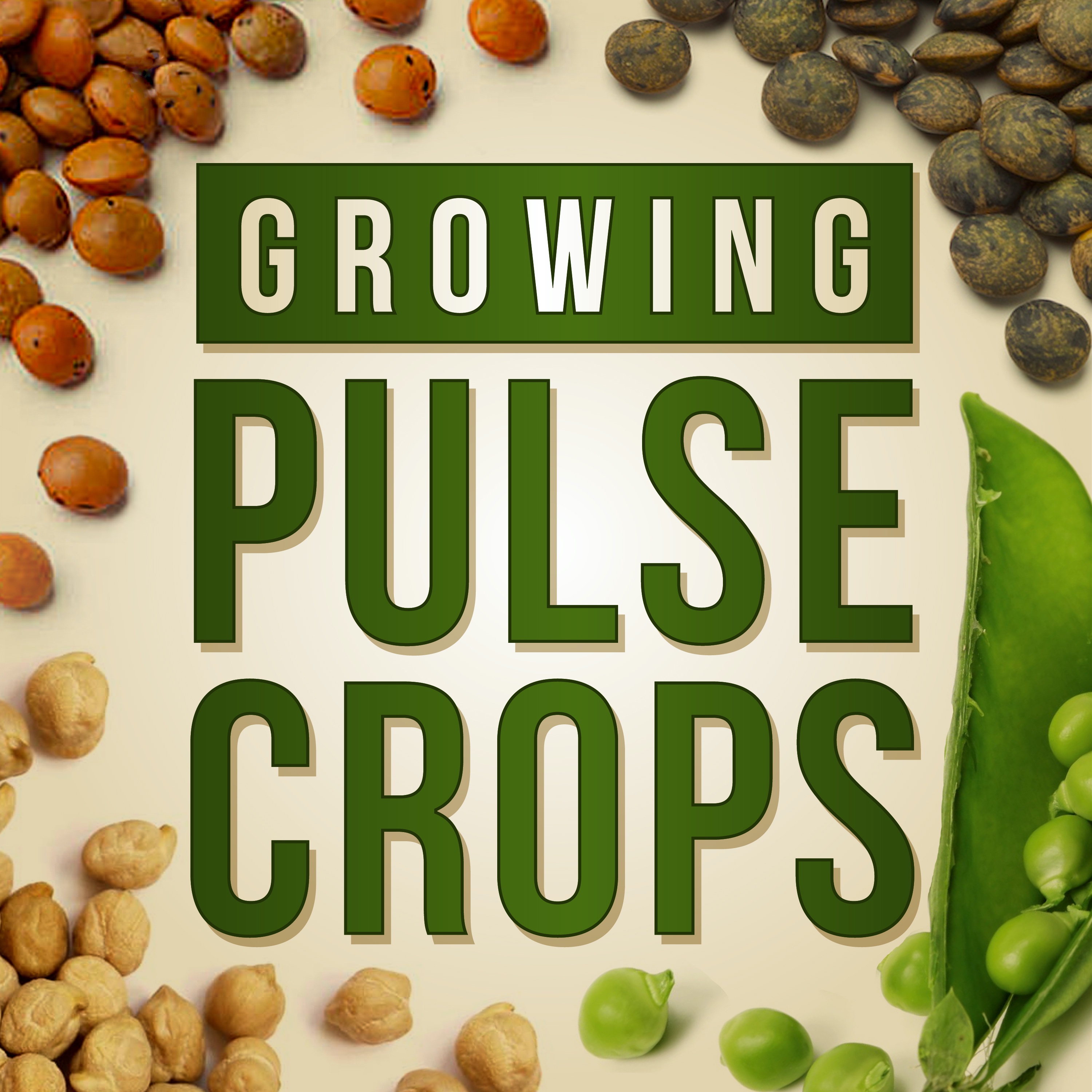
Growing Pulse Crops
by Pulse Crops Working Group
This show features the latest in research, agronomy, and economics of pulse crops (peas, chickpeas, lentils, etc.). Demand for these nutrient-dense, high-protein foods continues to grow. There is also interest from farmers to include more pulses into diverse rotations for benefits like nitrogen fixation and soil health. But the industry continues to face challenges, and we are eager to address these head on. So if you’re a pulse grower or in any way interested in these important crops, hit subscribe and stay tuned for future episodes. We’ll be back with plenty of information about challenges pulse farmers are facing throughout the U.S. and what solutions are working.Brought to you by the Pulse Crops Working Group with support from the Northern Pulse Growers Association
Episodes
-
Organic Pulse Production in the Palouse
Aaron Flansburg is a fifth generation farmer from Palouse, Washington. In this arid, hilly eastern part of the state, Aarong grows dryland crops like wheat, barley, canola, peas, lentils, chickpeas and some alfalfa. Aaron grew up on the farm, in fact he remembers getting his start in operating…
more -
Measuring the Health Impacts of Consuming Pulses
Dr. Morgan Chamberlin is a nutrition scientist and registered dietician who is currently a research scientist at Billings Clinic in Montana. Prior to that she worked as a Nutrition Researcher and Project Manager at Montana State University where she earned her Ph.D. in Nutrition and Exercise...
-
Replacing Fallow with Pulses in North Central Montana
Todd Hansen is a fourth generation farmer in Gildford, Montana. He’s been growing pulses since the 90s with a current rotation that includes winter wheat, spring wheat, durum, barley, yellow peas, chickpeas, lentils, canola, and mustard. Over the past several years, he has transitioned from a...
-
The Possibilities of Pulse Flours
Julianne Kellogg is the crop innovation program manager within the R&D function at Ardent Mills. A lot of people might know Ardent Mills for their flour milling, but as you’ll hear today, there is a lot of innovation happening in pulses as well, especially with chickpeas. In addition to pulses,...
-
Building a Pulse Processing Business
Kevin Haas is a 3rd generation farmer based on his family farm near Jamestown, North Dakota. He’s been planting pulses since the early 1990’s, and currently grows peas, lentils, edible beans, corn, soybeans, wheat, barley and oats. Haas has been a strong advocate for the pulse industry for many...
-
Risks and Rewards with Adjuvant Selection
Codee Lee is a technical specialist for CHS. Half of his job is research of their proprietary products like fertility products, biologicals, crop protection and adjuvants. The other half of his job is communicating about that research with customers and growers in general. Lee shares the purpose…
more -
Selecting Pulse Genetics to Build New Markets
Kurt Braunwart is the managing owner of Progene Plant Research, a genetic research-based company bringing new innovations and old uses to current varieties in the market. The company is known for their spring and winter pea program, as well as their work in oats and triticale. Braunwart discusses...
-
From Lentils to Lupins: Protecting Australia's Pulse Crops
Dr. Lars Kamphuis is an associate professor at Curtin University and the deputy director of the Center for Crop Disease Management where he focuses on crop diseases that impact Australian farmers. The center collaborates extensively with state departments and universities around the country to...
-
Getting Crop Protection Products Labeled for Pulses
Todd Scholz is vice president of research and member services for USA Pulses, which until last year was known as the USA Dry Pea and Lentil Council. This year Todd will retire after 26 years with the organization. He joins us today to talk about the industry’s work in getting more crop protection...
-
Utilizing Diagnostic Labs to Boost Pulse Productivity
Today’s episode goes behind the scenes of pulse crop disease diagnostics with Dr. Uta McKelvy, Dr. Raissa Moura and Erin Gunnink Troth. They explain how Montana State University’s Regional Pulse Crop Diagnostic Laboratory provides post-harvest seed testing for replanting and export phytosanitary...
-
Pulses in Pet Food with Shannah Peterson
Shannah Peterson has been a part of the procurement team at Anchor Ingredients for the past six years. She also works with their sustainability and regenerative programs. On today’s episode, Peterson discusses the demand drivers for pulses for pet food markets, how trends like sustainability and...
-
'A Legume A Day' with Chelsea Didinger, Ph.D.
Dr. Chelsea Didinger is the founder of the online platform "A Legume A Day.” Didinger uses her PhD in nutrition to share her passion for the benefits of beans and legumes. She highlights not just their health advantages but also their role in sustainable agriculture through her online platform…
more -
Herbicide-Resistant Weeds and Integrated Management with Charles Geddes, Ph.D.
Dr. Charles Geddes is a research scientist with Agriculture and Agri-Food Canada based out of Lethbridge, Alberta. His research program focuses primarily on herbicide resistant weeds, where he looks at the discovery of new types of herbicide resistance, characterizing those types of resistance…
more -
2026 Pulse Market Outlook
Marlene Boersch is the co-founder of Mercantile Consulting Venture based in Winnipeg, Canada. She founded the company about 22 years ago after spending over 20 years as a trader focused on Canadian pulse trading. Marlene and her team concentrate on providing market intelligence to farmers and...
-
U.S. Pulse Quality Survey
Dr. Clifford Hall is a professor in the dairy and food science department at South Dakota State University. He also oversees research on pulse quality and utilization of pulses in food systems. Over the years, Dr. Hall has mentored several students completing research on peas, lentils, and...
-
Faba Bean Production With Greg Stamp
Greg Stamp is the seed sales manager at Stamp Seeds, which he runs with his two brothers, Matthew and Nathan. Stamp Seeds grows and processes retail pedigreed seed for about 60 different crops based out of Enchant, Alberta. Included in that long list of crops are some pulses like peas, chickpeas,...
-
MRLs and Pre-Harvest Desiccation With Greg Bartley
Greg Bartley is the director of crop protection and crop quality at Pulse Canada. He’s an agronomist by training and a certified crop advisor who has been with Pulse Canada for over six years. Bartley discusses the Keep It Clean Program in Canada, the value and challenges associated with Maximum...
-
Managing Ascochyta Blight in Chickpea - Part Two
Dr. Michael Wunsch is a Plant Pathologist at the Carrington Research Extension Center at North Dakota State University. He holds a Ph.D. from Cornell University in 2010, and has worked for NDSU ever since, focused on disease management problems on a wide breadth of crops grown in North Dakota.…
more -
Managing Ascochyta Blight in Chickpea - Part One
Dr. Michael Wunsch is a Plant Pathologist at the Carrington Research Extension Center at North Dakota State University. He holds a Ph.D. from Cornell University in 2010, and has worked for NDSU ever since, focused on disease management problems on a wide breadth of crops grown in North Dakota. In...
-
Know Thy Enemy: Anthracnose and Stemphylium Blight of Lentil
Dr. Sabine Banniza is a professor of pulse crop pathology and a member of the Crop Development Centre (CDC) at the University of Saskatchewan. Her research program is focused on pulse crop pathology with particular emphasis on problems in Saskatchewan. The overarching theme of Dr. Banniza’s...
-
Managing Broadleaf Weeds in Peas and Chickpeas With Kyle Okke
Kyle Okke is an independent crop consultant in Dickinson, North Dakota with his own company, Agile Agronomy. Before starting Agile Agronomy three years ago, he had worked for several years as a regional agronomist in the area with Winfield United. Kyle deals with a wide variety of crops in his…
more -
Pulse Crop Breeding Program at Montana State University With Kevin McPhee, Ph.D.
Dr. Kevin McPhee is a pulse crop breeder at Montana State University. He’s been there for just over eight years after building a similar program in pulse crop breeding at North Dakota State University. Prior to that, he was working on pulse crops with the USDA ARS based in Pullman, Washington....
-
Seeding Rate and Fertility Research for Lentil and Peas With Chris Holzapfel of IHARF
Chris Holzapfel is the research manager at the Indian Head Agricultural Research Foundation (IHARF). IHARF is a producer-led not-for-profit organization based in Indian Head, Saskatchewan. Their mandate is to provide extension type work for agricultural research and demonstration, including a lot...
-
Weed Management in the Age of Herbicide Resistance With Brian Jenks, Ph.D.
Dr. Brian Jenks is a weed scientist at North Dakota State University based in Minot. Jenks has been in this role since 1997 and over that time he has seen an alarming rise in resistance to many of our herbicides from certain weeds, especially in kochia. In this episode, Jenks shares about the...
-
So We Have Root Rot - What Now?
After a tough year in 2023, agronomist Jeannie Rude and Northeast Montana farmer Blake Rasmussen were part of a project to create a video about their experiences with Real Ag Radio’s Shaun Haney. That video documented the far reaching impacts root rot can have on farmers and the local community....
-
Herbicide Carryover With Ian Burke, Ph.D.
Dr. Ian Burke is a weed scientist at Washington State University. His work focuses on weed biology and ecology, and he does a lot of work with herbicides. Dr. Burke discusses his research evaluating herbicides for use in peas, lentils and chickpeas and how to manage herbicide carry over issues…
more -
Crop Insurance Update for Pulse Crops
Paul Kanning is a farmer in Montana who grows mostly red lentils and yellow peas as well as wheat and canola. He also serves as the chairman of the USA Dry Pea and Lentil Council. Lewi Crow is a Risk Management Specialist with the USDA Risk Management Agency that services Wyoming, Montana and the...
-
Markets and Drivers of Supply and Demand in Pulses With Chuck Penner
Chuck Penner founded Leftfield Commodity Research in 2010. The company provides market analysis and economic research focused on the crops that are important to farmers in Western Canada and the northern parts of the US. Penner shares about the global marketplace for peas, chickpeas and lentils....
-
Fertility for Yield and Nitrogen Fixation With Clain Jones, Ph.D.
Dr. Clain Jones is Montana State University Extension’s soil fertility specialist. In this role he covers anything that has to do with fertilizer or nutrient cycling in both agriculture as well as home/garden systems. He started at MSU as a tenure track faculty member in 2006, and has ended up...
-
Adding Pulse Crops Into Diverse Rotations With Kim Saueressig
Kim Sauressig is a fourth generation farmer in Central North Dakota where he grows a wide range of crops including corn, wheat, durum, barley, soybeans, lentils, chickpeas and pinto beans. He also raised cattle until a few years ago when they decided to focus exclusively on crops. When not…
more -
Seed Certification With Steve Sebesta
At the time of this interview, Steve Sebesta was the director of the Foundation Seed Program at North Dakota State University and the Deputy Commissioner of the North Dakota State Seed Department. Steve has since retired from these positions, so we were very lucky to capture his years of…
more -
Pea Processing and Pulse Ingredients with Nicole Atchison of PURIS
Nicole Atchison is the CEO of PURIS Holdings, a vertically-integrated plant-based food company that operates from field to fork in primarily yellow peas. Nicole leads the agriculture side of the business, including contracting with growers, seed development and breeding, and innovation in product...
-
The Importance of Genetic Diversity With Eric von Wettberg, Ph.D.
Dr. Eric von Wettberg is a professor at the University of Vermont and the director of the Vermont Agriculture Experiment Station. His research program focuses on understanding crop domestication as a means to harness the diversity of crop wild relatives to breed crops with improved climate...
-
The Seed Business With Charlie Cahill
Charlie Cahill developed his knowledge of dryland farming during the 1990s, ultimately becoming what one nominator called “the go-to guy” for information on agronomic practices and seed genetics in the region. A graduate of Montana State University, Cahill has served on the board of the Montana...
-
A Mystery Disease in Chickpea with Dr. Michelle Hubbard
Dr. Michelle Hubbard leads a field, greenhouse, growth chamber and lab based research program at Agriculture and AgriFood Canada, a part of the Canadian federal government. Based in Swift Current, Saskatchewan, her work focuses on pulse pathology, including important diseases like ascochyta…
more -
Field Pea Genetics with Tom Warkentin, Ph.D.
Dr. Tom Warkentin is a professor at the University of Saskatchewan where he is part of a team at the Crop Development Center. He has been a pulse crop breeder for about 30 years, mostly focused on field peas. Warkentin discusses the progress of his pulse crop breeding program over the decades,...
-
DNA Testing For Herbicide Resistance With Zack Bateson of the National Ag Genotyping Center
Zack Bateson is the Research Manager at the National Ag Genotyping Center based in Fargo, North Dakota. You heard a little bit about the work the National Genotyping Center is doing in episode five with Dr. Brian Jenks. In this episode we dive deeper into the services they offer to provide DNA...
-
The Fight Against Resistant Weeds With Dr. Brian Jenks
Dr. Brian Jenks is a weed scientist at North Dakota State University based in Minot. He has been in this role since 1997 and over that time he has seen an alarming rise in resistance to many of our herbicides from certain weeds, especially in kochia. In this episode Jenks discusses the resistance...
-
Nitrogen Fixation and Field Pea Production in South Dakota with Dr. Christopher Graham
Dr. Chris Graham is an associate professor at South Dakota State University. He’s also the manager of the West River Research Farm near Sturgis, South Dakota. At that facility they focus a lot on regenerative agriculture, including doing a lot of work with peas and other pulses to extend crop...
-
Weed Seed Destruction Technology with Dr. Breanne Tidemann
Dr. Breanne Tidemann is a research scientist with Agriculture and Agri-Food Canada based in Lacombe, Alberta. As a weed scientist, her job is to explore new and novel ways to manage weeds. Her focus is to research applied management strategies, weed biology and ecology, and screening for…
more -
Bringing Pulse Crop Growers Together With Sam Arnson and Shannon Berndt of the Northern Pulse Growers Association
Farmer and Northern Pulse Growers Association president Sam Arnson and executive director Shannon Berndt join us to talk about their work at NPGA, the importance of bringing the industry together to fund research, marketing and education efforts, and how other pulse growers can get involved. They...
-
Sweet Lupins with Dr. Mike Ostlie
In this episode we’re looking at a new pulse crop: sweet white lupins. Dr. Mike Ostlie is the director of the Carrington Research Extension Center at North Dakota State University. In the early 2000s a private company that was developing lupin varieties had gone out of business and the germplasm...
-
The Diverse Opportunities in Pulse Crops with Steve Tucker and Dr. Bob Harveson
Take our audience survey and let us know your feedback about the Growing Pulse Crop Podcast! Whether you’re from Nebraska or elsewhere, this is a great episode about what’s possible for the future of pulse crops. We talk about peas and chickpeas, but we also get into other niche opportunities…
more -
Harvest Considerations with Montana Farmer Terry Angvick
Take our audience survey and let us know your feedback about the Growing Pulse Crop Podcast! Terry Angvick farms in Sheridan County, Montana which is in the extreme Northeastern corner of the state. He was born, raised there and came back after earning a plant and soil science degree from Montana...
-
Winter Peas with Dr. Steve Van Vleet
Take our audience survey and let us know your feedback about the Growing Pulse Crop Podcast! Dr. Steve Van Vleet spent about 18 years as a regional extension specialist for Washington State University, and today is a research agronomist with The McGregor Company. For most of his career, pulses…
more -
Pulse Flours and Ingredients with Eric Bartsch of AGT Foods
Eric Bartsch is the division head for global food ingredients at AGT Foods based in Bismarck, North Dakota. He’s been with the company for 16 years and through that time they have grown from just a couple factories to now over 45 facilities and $2B in sales. Processing peas, lentils, chickpeas,...
-
Soil Health with Abbey Wick, Ph.D.
At the time of this interview Dr. Abbey Wick was the associate professor and extension soil health specialist at North Dakota State University. She has since gone on to a new role after nearly 12 years at NDSU. She is now the Global Soil Health Education Program Lead at Syngenta. We talk about…
more -
Weed Management in Chickpeas with Dr. Drew Lyon
Dr. Drew Lyon is a Professor and the Endowed Chair of Small Grains Extension and Research for Weed Science at Washington State University in Pullman. Prior to moving to Washington in 2012, he spent 22 years as a Dryland Cropping Systems Specialist at the University of Nebraska at the Panhandle...
-
Grasshopper Management with Agronomist Jeannie Rude
Jeannie Rude is an agronomist at PRO Co-op in Northeast Montana. She manages part of the co-op’s business to help growers make decisions, solve agronomic problems, and provide inputs. Overall, Rude works with 13 different crops on an annual basis. She is acutely aware of how much her job and the...
-
Nodulation and Nitrogen Fixation with Barney Geddes, Ph.D.
Dr. Barney Geddes is an assistant professor at North Dakota State University in the Department of Microbiological Sciences. His work focuses on microbes with the goal of boosting crop yields for farmers. More specifically he studies rhizobia which form symbiotic relationships with legume crops…
more
We're indexing this podcast's transcripts for the first time — this can take a minute or two. We'll show results as soon as they're ready.
No matches for "" in this podcast's transcripts.
No topics indexed yet for this podcast.
Loading reviews...
ABOUT THIS SHOW
This show features the latest in research, agronomy, and economics of pulse crops (peas, chickpeas, lentils, etc.). Demand for these nutrient-dense, high-protein foods continues to grow. There is also interest from farmers to include more pulses into diverse rotations for benefits like nitrogen fixation and soil health. But the industry continues to face challenges, and we are eager to address these head on. So if you’re a pulse grower or in any way interested in these important crops, hit subscribe and stay tuned for future episodes. We’ll be back with plenty of information about challenges pulse farmers are facing throughout the U.S. and what solutions are working.Brought to you by the Pulse Crops Working Group with support from the Northern Pulse Growers Association
HOSTED BY
Pulse Crops Working Group
Loading similar podcasts...
Frequently Asked Questions
How many episodes does Growing Pulse Crops have?
Growing Pulse Crops currently has 106 episodes available on PodParley. New episodes are automatically indexed when they're published to the podcast feed.
What is Growing Pulse Crops about?
This show features the latest in research, agronomy, and economics of pulse crops (peas, chickpeas, lentils, etc.). Demand for these nutrient-dense, high-protein foods continues to grow. There is also interest from farmers to include more pulses into diverse rotations for benefits like nitrogen...
How often does Growing Pulse Crops release new episodes?
Growing Pulse Crops publishes regularly with 106 episodes available. Check the episode list for the typical release schedule.
Where can I listen to Growing Pulse Crops?
You can listen to Growing Pulse Crops on PodParley by clicking any episode. We provide an embedded audio player for direct listening, and you can also subscribe via your preferred podcast app using the RSS feed.
Who hosts Growing Pulse Crops?
Growing Pulse Crops is created and hosted by Pulse Crops Working Group.
URL copied to clipboard!