PODCAST · education
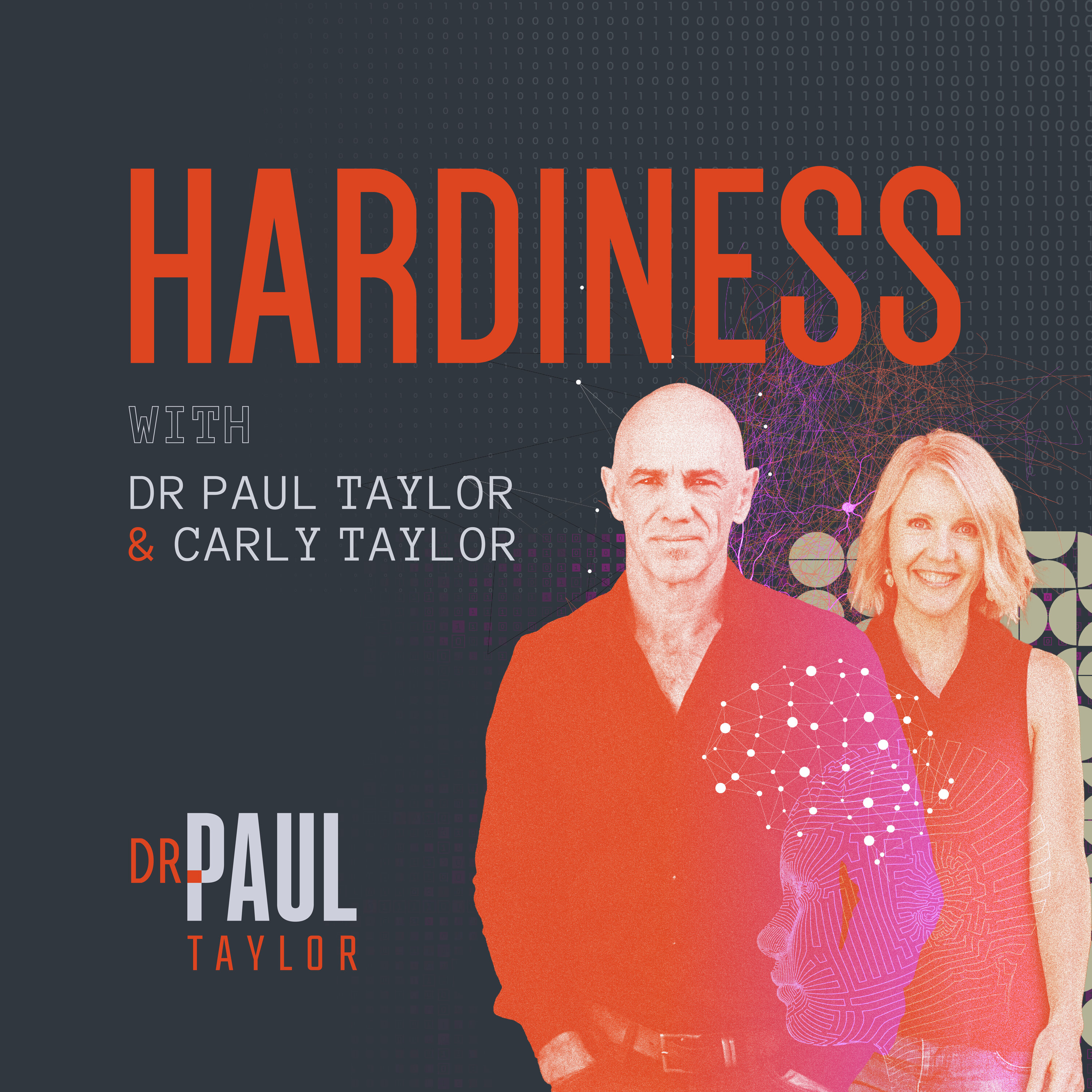
Hardiness with Dr Paul Taylor
by Paul Taylor
Host Dr Paul Taylor, a Psychophysiologist, Neuroscientist, Exercise Scientist, and Nutritionist interviews experts from around the world on cutting edge research and practices related to improving hardiness in your mind, body and brain to become your best self.
-
682
Self-focussed Friends: What's Actually Within Your Control With Carly Taylor
In today's world, it's easy to get caught up in labeling others as narcissists, but most of us are not qualified to diagnose. On today's Mojo Monday, Carly explores a more common phenomenon: friendships that are one-sided, where the other person consistently focuses on themselves and struggles to genuinely take an interest in yours. Carly delves into Stoic philosophy, drawing from the teachings of Marcus Aurelius and Epictetus, to offer practical advice on how to navigate these types of friendships so they don't drain your energy.See omnystudio.com/listener for privacy information.
-
681
The Hidden Power of Rhythms: How Small Daily Habits Can Transform Your Performance with Jess Spendlove
Unlock the secrets of elite performance and sustainable well-being in this deep dive with Jess Spendlove, a renowned high-performance coach with a remarkable background in sports nutrition, elite sport, and military consulting. Jess reveals how top athletes and leaders optimise energy without sacrificing their health, sharing proven frameworks you can implement today. If you're driven, ambitious, and tired of the endless hustle, this episode is your blueprint for thriving at work and in life. Most people underestimate the power of simple, rhythmic daily habits that harmonize your body’s natural cycles — and ignoring them sabotages your energy, focus, and sleep. Jess breaks down her "five rhythms": what to eat, how to move, manage stress, sleep, and connect authentically — and how aligning these with your circadian clock can elevate your performance effortlessly. You’ll discover why even peak performers—those training every day for Olympic gold or special ops—start with foundational daily rituals, not complex routines. Her insights show that high achievement doesn’t require extremes; what it demands is consistency, purpose, and smart recovery. Key Takeaways Key mental models for sustainable performance: the five rhythms—nutrition, movement, stress management, sleep, and connection to purpose and values. Practical nutrition strategies, including meal timing, the importance of consistent habits, and the myth of a one-size-fits-all diet. The significance of breakfast and meal rhythm in glucose control, focus, and energy levels. Recommended supplements for optimal health and performance, including fish oil, creatine, magnesium, and cycling protocols. How elite performers prioritise recovery through intentional, stimulant-free time, and the difference between recovery and relaxation. The importance of social connection and aligning daily actions with core values for longevity and happiness. Time Stamps 02:30 - Jess’ journey from elite swimmer to sports nutritionist11:13 - Insights into elite athlete routines and dedication12:20 - The five rhythms for sustainable high performance15:08 - Practical nutrition habits and meal timing strategies17:23 - The impact of breakfast on glucose and energy26:40 - Supplements for cognitive and physical health30:32 - The role of intentional recovery and rest36:52 - Building connection, purpose, and aligning values40:33 - Exercise routines for long-term health and strength Resources Jess’ Book: For The Long Run Website: https://jessicaspendlove.com/ LinkedIn: https://www.linkedin.com/in/jessicaspendlove/ Instagram: https://www.instagram.com/jess_spendlove_dietitian/ YouTube: https://www.youtube.com/@JessicaSpendlove Support the Podcast If you found this conversation valuable, consider subscribing and leaving a review on your preferred podcast platform. Your feedback helps us continue to bring you insightful discussions on important health topics.See omnystudio.com/listener for privacy information.
-
680
The biggest thing that is shrinking your brain, and how to combat it: Wisdom Wednesdays
See omnystudio.com/listener for privacy information.
-
679
A Japanese Concept to Calm Our Minds With Carly Taylor
See omnystudio.com/listener for privacy information.
-
678
Why your values are like fingerprints: The key to unlocking true purpose with the LegendaryDr John Demartini
Most of us are living on autopilot, distracted by social media, superficial pursuits, and fleeting pleasures, all while our true purpose and core values remain buried beneath the noise. What if uncovering your deepest values could be the key to transforming your life, boosting your energy, and aligning your daily actions with your authentic self? In this week's episode I chat with Dr. John Demartini, a human behavior expert and author who has dedicated decades to decoding what truly drives us. Discover how your unique hierarchy of values shapes your perception, decisions, and destiny — and learn the practical, science-backed process to clarify what's most important to you. From understanding the influence of space and time on your priorities to identifying the subtle cues in your environment that reveal your true motivations, Dr. Demartini reveals a powerful framework to reclaim your purpose. Key Takeaways Values are your neural blueprint for purpose and behavior - The hierarchy of your values filter’s perception, decision-making, and action, shaping your life's trajectory. When values shift or are unclear, your biology and psychology signal imbalance through stress or illness. External distractions hijack attention when internal priorities are unclear - Social media, entertainment, and consumer habits intensify when your subconscious values unacknowledged and unmet. These external stimuli serve as subliminal cues for what your mind craves but isn’t consciously aligned with. Living outside your highest values triggers biological and psychological stress responses - When actions deviate from core values, the amygdala perceives threat, activating stress mechanisms that impair mitochondrial energy and foster disease. Authenticity and purpose act as biological stabilisers. The process of discovering and living your highest values creates exponential growth in vitality and longevity - Living with purpose not only guides behavior but rewires neural pathways, extending telomeres, expanding consciousness, and lengthening lifespan. The key to sustainable fulfillment is mastery over passions and external influences - The Greeks viewed passions derived from suffering as distractions. Modern distractions amplify this, pulling people into impulsive behaviours that block higher purpose. Time Stamps 05:24 Why values shape behavior and destiny08:44 Finding your own values vs. inherited “shoulds”11:43 The first value determinant: what fills your space17:11 Social media, attention, and intentional living23:08 The second determinant: how you spend your time28:40 The values determination process30:24 Energy as a signal of what matters most32:04 Money, organisation, and priorities36:30 Values, meaning, stress, and relationships40:32 Why living by someone else’s values doesn’t last43:25 Seven questions for aligning life with your values47:05 Discipline, delegation, and self-actualisation50:23 Purpose versus modern distractions52:09 Stress, eating, and immediate gratification55:59 Stress as perception58:22 Moving from passion to mission59:38 Final takeaway: live by your highest priorities Resources Facebook: https://www.facebook.com/drjohndemartini Instagram: https://www.instagram.com/drjohndemartini/ YouTube: https://www.youtube.com/user/DrDemartini LinkedIn: https://www.linkedin.com/in/drjohndemartini/ Website: www.drdemartini.com Support the Podcast If you found this conversation valuable, consider subscribing and leaving a review on your preferred podcast platform. Your feedback helps us continue to bring you insightful discussions on important health topics. See omnystudio.com/listener for privacy information.
-
677
What type and amount of exercise (if any) should I do if I'm stressed - science has the answer: Wisdom Wednesdays
See omnystudio.com/listener for privacy information.
-
676
Phone Anxiety, Oxytocin and the Choice To Take The Call
Have you ever watched your phone ring, seen exactly who it is, and just let it go to voicemail? Not because you're busy, but because you didn't feel like talking? You're not alone, and there's a reason it's become so easy to avoid. This week Carly looks at why so many of us, young people especially, now reach for a text over a call, and what that shift might be costing us. It turns out hearing a familiar voice does something a text simply can't. Carly weaves together the research on phone anxiety, the physiology of the human voice, and the small daily choice we all face when the phone lights up, and makes the case that true connection has to be heard. If picking up still feels daunting, there's a less daunting first step in here too. Carly is a counsellor and coach who specialises in building psychological hardiness — the ability to navigate challenge, stay engaged, and take meaningful action under pressure. Her work integrates modern psychology with Eastern and Stoic approaches, helping people build resilience, live with purpose, and respond to life’s challenges with greater clarity, courage and steadiness. References and further reading: Seltzer, L.J., Prososki, A.R., Ziegler, T.E., & Pollak, S.D. (2012). Instant messages vs. speech: hormones and why we still need to hear each other. Evolution and Human Behavior, 33(1), 42–45. https://pmc.ncbi.nlm.nih.gov/articles/PMC3277914/ Seltzer, L.J., Ziegler, T.E., & Pollak, S.D. (2010). Social vocalizations can release oxytocin in humans. Proceedings of the Royal Society B, 277(1694), 2661–2666. https://pmc.ncbi.nlm.nih.gov/articles/PMC2982050/ Coan, J.A., Schaefer, H.S., & Davidson, R.J. (2006). Lending a hand: social regulation of the neural response to threat. Psychological Science, 17(12), 1032–1039. https://pubmed.ncbi.nlm.nih.gov/17201784/ Kumar, A., & Epley, N. (2021). It's surprisingly nice to hear you: misunderstanding the impact of communication media can lead to suboptimal choices. Journal of Experimental Psychology: General, 150(3), 595–607. https://static1.squarespace.com/static/5394dfa6e4b0d7fc44700a04/t/5f5a8bd2bec7a45b9db0d41c/1599769555766/Kumar+Epley+(in+press)+Its+surprisingly+nice+to+hear+you+JEPG.pdf Uswitch (2024). Call me maybe (not): a quarter of young people never answer the phone. https://www.uswitch.com/media-centre/2024/04/Call-me-maybe-quarter-young-people-never-answer-phone/See omnystudio.com/listener for privacy information.
-
675
The magic of sleep for your brain - and ways to improve it, with Dr Jemma King
In this fascinating episode, discover the science behind sleep’s alchemy: how your brain’s lymphatic system flushes out metabolic waste, and why missing just two hours of deep sleep can increase your risk of Alzheimer’s by up to 50%. We break down the impact of caffeine, alcohol, and sleep medications on healing cycles, revealing why many sleep aids are more harmful than helpful. Learn why maintaining a consistent sleep schedule, avoiding blue light, and creating a sleep sanctuary can save your brain and extend your life. Most people underestimate how sleep impacts every aspect of their health and miss the simple shift that can prevent neurodegeneration, boost performance, and transform wellbeing. If you think sleep is just rest, think again: it’s the brain’s nightly cleaning service, crucial for clearing toxins like beta amyloids linked to dementia and Alzheimer’s. Dr. Jemma King shares why deep slow wave sleep is a biological masterpiece and how lifestyle choices sabotage it, accelerating aging and disease. Key Takeaways Sleep is a brain detox powerhouseDeep slow-wave sleep helps clear waste like beta amyloids, which are linked to dementia and Alzheimer’s. Sleep quality matters more than just hoursThe order of sleep stages matters for memory, mood, learning, and physical recovery. Consistency is crucialA regular sleep schedule supports your circadian rhythm and improves long-term brain and body health. Caffeine can mask fatigue, not fix itIt blocks sleep pressure, which can hurt sleep quality if timed too late in the day. Alcohol and sleep meds can disrupt recoveryThey may make you sleepy, but they interfere with the restorative parts of sleep. Deep sleep happens earlyGetting to bed on time helps you get the most valuable brain-repair sleep first. Sleep is a longevity toolBetter sleep supports clearer thinking, better performance, and healthier aging. Time Stamps 02:50 Understanding Stress and Emotional Intelligence 06:13 The Science of Sleep: Importance and Mechanisms 09:08 Deep Sleep and Its Critical Role 11:57 The Impact of Sleep on Mental Health 15:13 The Role of REM Sleep in Emotional Processing 18:01 Effects of Alcohol and Other Substances on Sleep 20:53 The Stages of Sleep and Their Functions 24:13 Short-term vs. Long-term Sleep Deprivation Effects 27:02 Chronic Sleep Debt and Its Health Consequences 32:15 The Impact of Sleep on Health 36:08 Understanding Sleep Needs Across Lifespan 40:52 Practical Sleep Aids and Tips 49:28 The Role of Diet and Lifestyle in Sleep 57:00 Napping: Benefits and Best Practices 01:00:18 Cognitive Strategies for Insomnia Resources Dr Jemma King’s Book: Sleep First: Sleep Smarter, Think Sharper, Feel Better Website: https://jemmakingbio-pa.com.au/ LinkedIn: https://www.linkedin.com/in/dr-jemma-king-phd-76013328/ Instagram: https://www.instagram.com/dr.jemma.king/See omnystudio.com/listener for privacy information.
-
674
12 Thinking Traps that are sabotaging you
See omnystudio.com/listener for privacy information.
-
673
Preparing for Life's Uncertainties With Carly Taylor
You can't stop life surprising you, but you can train for it. This week: hardiness, hard winter training, and one small language shift you can use today. This week on Mojo Monday Carly is looking at something we all live with and rarely prepare for, which is the fact that life is uncertain. We're wired to crave certainty, and when life does the one thing it always does and surprises us, we can crumble, partly because so much of the advice we're given trains us for the good days and almost none of it trains us for the hard ones. Drawing on the Stoic philosopher Epictetus and his idea of hard winter training, along with the Challenge pillar of Paul work on psychological hardiness, Carly looks at what it means to expect life to be unpredictable without bracing for disaster, and to put our attention where it actually belongs, on how we respond rather than on what we can't control. She finishes with two simple practices you can start today, doing one hard thing on purpose each day, and swapping the word worry for the word concern. If you'd like to go deeper, Paul's book The Hardiness Effect explores all four pillars of hardiness in detail, and you can find it at paultaylor.biz. Carly is a counsellor and coach who specialises in building psychological hardiness — the ability to navigate challenge, stay engaged, and take meaningful action under pressure. Her work integrates modern psychology with Eastern and Stoic approaches, helping people build resilience, live with purpose, and respond to life’s challenges with greater clarity, courage and steadiness.See omnystudio.com/listener for privacy information.
-
672
The Surprising Connection Between Effort, Inconvenience, and Long-Term Happiness
Most of us chase fleeting moments of happiness only to realise they often come from quick dopamine hits rather than genuine well-being. But what if happiness isn't about constant joy or material success? What if it’s a nuanced, layered emotional umbrella that includes contentment, gratitude, curiosity, and purpose, all rooted in effort and connection? In this episode, famed happiness researcher Declan Edwards and I dismantle the myths surrounding happiness and reveal the science-backed truths that can truly elevate your life. You'll discover how Western society’s obsession with instant gratification distorts our understanding of happiness and how embracing effort, patience, and meaningful relationships can lead to a richer, more sustainable sense of well-being. From the ancient Greeks’ concepts of eudaimonia and hedonia, to modern neuroscience, this episode unpacks the science of human flourishing in practical terms. Key Takeaways Happiness is an umbrella, not a goal the idea that happiness is a fleeting emotion to chase is misleading. Instead, viewing it as a broad spectrum of emotions including contentment, gratitude, and calmness shifts the focus to cultivating a sustained sense of well-being. Effort and inconvenience are the foundations of long-term happiness society’s obsession with shortcutting effort diminishes the depth of sustained well-being. True happiness depends on deliberate effort, patience, and embracing inconvenience, which build resilience and connection. The physiology of well-being is often overlooked practical health like physical activity, diet, and gut health is essential for happiness. Our physical state directly influences brain function and emotional resilience, yet many ignore this link. Happiness is contagious and embedded in community our psychological and emotional states influence others through ripple effects; strong social bonds and communal activities amplify collective well-being. The narratives we tell about life's challenges shape our experience The meaning we assign to adversity influences whether we see obstacles as opportunities for growth or as insurmountable setbacks. Internal emotional awareness amplifies happiness the ability to recognise, name, and work with emotions developed through tools like emotional literacy creates a foundation for healthier mental states and better interpersonal connections. The pursuit of happiness is collective and requires systemic effort we are responsible for fostering environments workplaces, societies, families that support collective well-being, not just individual pursuits. Time Stamps 03:05 Understanding Happiness: Beyond Fleeting Emotions 06:08 Hedonic vs. Eudaimonic Happiness 09:02 Effort, Inconvenience, and Meaningful Connections 11:54 The Impact of social media on Happiness 15:08 Acceptance and the Stoic Philosophy 18:10 Finding Meaning in Challenges 21:04 Personal Anecdotes and Meaning-Making 24:32 Navigating Control in Uncertainty 25:50 The Role of Money in Happiness 29:11 Community and Collective Happiness 34:50 The Trade-offs of Material Gains 36:15 The Importance of Contributing to Society 40:26 Cultural Perspectives on Happiness 40:54 Expectations vs. Intentions: A Path to Happiness 43:29 The Role of Positivity Bias in Happiness 45:37 Increasing Your Surface Area for Luck and Happiness 48:40 Practical Steps to Enhance Emotional Awareness 52:09 The Power of Gratitude and Connection 56:31 The Interconnection of Physical and Mental Health Resources Declan’s Book: How To Be Happy Website: https://declanedwards.com.au LinkedIn: https://www.linkedin.com/in/declan-edwards-bu-happiness-college/ Instagram: https://www.instagram.com/declanedwards_bu/ TikTok: https://www.tiktok.com/@that.happiness.guy Support the Podcast If you found this conversation valuable, consider subscribing and leaving a review on your preferred podcast platform. Your feedback helps us continue to bring you insightful discussions on important health topics. See omnystudio.com/listener for privacy information.
-
671
Effective ways to prevent and treat depression: Wisdom Wednesdays
See omnystudio.com/listener for privacy information.
-
670
The Sweet Spot Of Your Strengths With Carly Taylor
This week Carly explores a more useful way to look at yourself, one that drops the language of strengths and weaknesses altogether. Drawing on the VIA Character Strengths and Ryan Niemiec's work on the golden mean, she looks at how every strength can be overused, underused, or used just right, and why the goal is never simply more of a good thing but the right amount in the right moment. If you'd like to discover your own twenty-four, the free VIA Character Strengths survey takes about ten minutes at viacharacter.org. Carly is a counsellor and coach who specialises in building psychological hardiness — the ability to navigate challenge, stay engaged, and take meaningful action under pressure. Her work integrates modern psychology with Eastern and Stoic approaches, helping people build resilience, live with purpose, and respond to life’s challenges with greater clarity, courage and steadiness.See omnystudio.com/listener for privacy information.
-
669
The Hidden Impact of Stress and Environmental Toxins on Your Hormones and Aging
In this episode, Dr. Mike Fortunato shares how hormonal dysfunction fuels everything from low energy and poor mood to physical decline and disease, revealing the hidden forces behind the modern health crisis. You’ll discover how chronic stress, toxic chemicals, and ultra-processed foods are silently hijacking your hormones, driving declines in testosterone, estrogen, thyroid function, and more. Mike breaks down the complex web of endocrine disruption and epigenetic inheritance, exposing how societal factors and environmental toxins are passing on damage to future generations. Get crucial insights into why conventional medicine often "misses the signs" and how a holistic, functional approach can restore vitality at any age. We break down specific strategies for men and women to rebalance hormones naturally covering bioidentical hormones, the importance of optimal vitamin D, the role of precursors like DHEA, and the power of peptides. Key Takeaways “Normal” labs can still mean dysfunction: Lab ranges often reflect an average population that is already unhealthy, so “normal” doesn’t always mean optimal. Stress, sleep loss, and toxins all suppress hormones: Chronic stress, poor sleep, ultra-processed food, and endocrine disruptors can all push hormones out of balance. Hormone health affects far more than energy: Hormones influence mood, motivation, weight, libido, brain health, cardiovascular risk, and disease prevention. Bioidentical hormones are not the same as synthetic ones: Bioidentical hormones behave differently in the body and are a major reason some older HRT fears need rethinking. Men and women need a whole-system approach: Thyroid, testosterone, progesterone, estrogen, DHEA, and vitamin D all interact, so treatment should look at the full picture. Symptoms matter more than a single lab number: The most effective treatment approach described is symptom-driven, not just based on whether a result falls inside a reference range. Time Stamps 05:26 Mike’s personal hormone health crash and why “normal labs” can miss real dysfunction 10:48 How stress, sleep, diet, and endocrine disruptors damage hormones 18:15 Epigenetics, inheritance, and how hormones affect mood, motivation, and weight 24:37 Why HRT has been misunderstood and the difference between sick care vs proactive care 27:47 Bioidentical vs synthetic hormones and why that distinction matters 30:47 Women’s hormone health, PCOS, progesterone, estrogen, testosterone, and insulin resistance 38:39 Metabolic dysfunction, menopause, and the role of oral hormone replacement 45:58 Estrogen, cardiovascular protection, men’s hormone decline, and falling sperm counts 52:28 Why symptoms matter more than lab ranges and how free vs bound testosterone works 59:46 Practical hormone replacement approach: testosterone, DHEA, thyroid, vitamin D 66:41 Growth hormone and why it matters for aging, bone, muscle, and cognition 68:51 Peptides, longevity medicine, and the future of preventative care Resources - www.optimizemd.health Instagram [email protected] Facebook - Optimizemd.Drmike Support the Podcast If you found this conversation valuable, consider subscribing and leaving a review on your preferred podcast platform. Your feedback helps us continue to bring you insightful discussions on important health topics. See omnystudio.com/listener for privacy information.
-
668
New research indicates the optimal combination of strength and cardiovascular training for optimal longevity: Wisdom Wednesdays
See omnystudio.com/listener for privacy information.
-
667
The Discipline Myth With Carly Taylor
We treat discipline and willpower like a magic potion we have to find before we're allowed to start and then we either spend our time reading and listening about the thing we're still not doing, or give up because we're sure we don't have it. But the people we call disciplined don't feel like it either; they've just learned to carry the discomfort and act on what matters anyway. This week, why the "willpower fuel tank" idea doesn't hold up, why some of us start with more of a head start than others, and why the skill underneath it all — psychological flexibility — is something you can train. Carly is a counsellor and coach who specialises in building psychological hardiness — the ability to navigate challenge, stay engaged, and take meaningful action under pressure. Her work integrates modern psychology with Eastern and Stoic approaches, helping people build resilience, live with purpose, and respond to life’s challenges with greater clarity, courage and steadiness.See omnystudio.com/listener for privacy information.
-
666
The Surprising Role of Carbon Sixty in Reversing Aging and Boosting Mitochondria wit Ken Swartz
In this episode I chat with Ken Swartz, a former radiation scientist turned wellness innovator, who shares insights about C60's unique ability to mimic natural antioxidants like superoxide dismutase and catalase enzymes your body produces less of as you age. Learn how C60 neutralises damaging radicals before they cause harm, helping to prevent chronic diseases, support cellular repair, and reverse age-related decline. We explore the fascinating mechanisms behind how C60 helps clear senescent cells, a key driver of aging and why it's considered a "radiator fluid" for your cells. This episode delves into the science of mitochondria, the "power plants" of your cells, revealing why their health is central to your vitality, brain function, and overall longevity. Key Takeaways The role of oxidative stress in aging and disease—and why balance, not elimination, is critical How modern toxins from pollution to processed foods overwhelm your body's defences The latest scientific studies showing C60 extends lifespan and improves cognitive resilience in animal models Practical insights on supplementing with C60, how it works at the cellular level, and what to look for in effective products The importance of genetic testing and personalised approaches for optimal mitochondrial health Time Stamps 01:12 Discovery of Carbon 60 (C60) and its effects 02:11 Overview of nuclear fusion reactor work 04:15 Explanation of oxidative stress and its role in aging 08:55 Importance of redox balance and antioxidants 12:08 Modern environmental stressors and their impact 16:09 Genetic factors and personalised health approaches 18:45 Introduction to Carbon 60 and its benefits 22:10 Mitochondrial dysfunction and its role in aging 25:18 How C60 mimics natural antioxidants 31:29 C60's role in cellular health and senescent cells 36:16 Supplementation and health maintenance 43:19 Health span vs. lifespan 52:39 Current state of human research on C60 Resources Website: https://shopc60.com/ Instagram: https://www.instagram.com/c60power TikTok: https://www.tiktok.com/@c60power YouTube: https://www.youtube.com/c/C60PurplePower More Research: https://whatisc60.org/ Support the Podcast If you found this conversation valuable, consider subscribing and leaving a review on your preferred podcast platform. Your feedback helps us continue to bring you insightful discussions on important health topics.See omnystudio.com/listener for privacy information.
-
665
Part 2 of all you need to know about omega 3 fatty acids: Wisdom Wednesdays
See omnystudio.com/listener for privacy information.
-
664
How to Manage Low Self esteem With Carly Taylor
This week's Mojo Monday is a thought-provoking exploration of self-esteem and how we can start living our best lives, even when we don't feel confident or worthy. Join Carly as she shares her insights and experiences, and discover a new way of thinking about self-esteem and living a life that reflects our true worth. Carly is a counsellor and coach who specialises in building psychological hardiness — the ability to navigate challenge, stay engaged, and take meaningful action under pressure. Her work integrates modern psychology with Eastern and Stoic approaches, helping people build resilience, live with purpose, and respond to life’s challenges with greater clarity, courage and steadiness. See omnystudio.com/listener for privacy information.
-
663
Redefining Education and Building Character Through Chess and Challenges with Kevin Cripe
In today’s episode I chat with Kevin Cripe, focusing on the transformative power of education and the challenges within the system. Kevin, a passionate educator with 27 years of experience, shares insights from his career, including the creation of a chess program for underprivileged children and his experiences with changing educational dynamics. The discussion delves into the impact of increased testing, shifts in parenting, and the importance of valuing effort over results. Kevin also highlights the role of chess in developing cognitive skills and self-efficacy among students. Discover how fostering challenge orientation and effort can close achievement gaps and shape resilient, confident individuals. Key Takeaways The evolution of teaching over 27 years: increased testing, reduced instructional days, and shifting parenting styles The importance of structure, rules, and the role of teachers as leaders, not friends The detrimental effects of over-assessment and the value of valuing effort over results Respect for teachers and societal respect deficits: how classroom tone influences student behavior Strategies to engage and motivate disadvantaged students, including challenging them with complex problems The science behind challenging students for better learning outcomes: cognitive architecture and transfer paradox The power of belief and high expectations: stories of students achieving beyond stereotypes The impact of self-efficacy and challenge orientation on student resilience and success Timestamps: 03:06 The Impact of Testing on Education 06:06 Respect and Authority in the Classroom 09:03 Valuing Effort Over Results 12:10 The Power of High Expectations 15:00 Teaching Chess to Disadvantaged Students 18:01 Cognitive Development Through Chess 21:00 Transformative Moments in Education 26:15 Empowering Children Through Challenges 29:49 Understanding the Achievement Gap 32:58 The Importance of Challenging Education 36:31 Writing for Change: Kevin's Books 41:21 Personal Insights on Race and Education 44:12 The Impact of Political Divisiveness on Education Resources & Links: Kevin Cripe Motivational Speaker Kevin’s Books Connect with Kevin Cripe: Website Twitter LinkedIn Support the Podcast If you found this conversation valuable, consider subscribing and leaving a review on your preferred podcast platform. Your feedback helps us continue to bring you insightful discussions on important health topics. See omnystudio.com/listener for privacy information.
-
662
All you need to know about omega 3 fatty acids, Part 1: Wisdom wednesdays
See omnystudio.com/listener for privacy information.
-
661
The View From Above: A Stoic Exercise for Perspective and Calm
In this week’s Mojo Monday, Carly explores the Stoic exercise known as The View from Above, a powerful practice for creating perspective when we feel caught in stress, worry or emotional overwhelm. Carly is a counsellor and coach who specialises in building psychological hardiness — the ability to navigate challenge, stay engaged, and take action under pressure. Her work integrates modern psychology with Eastern and Stoic approaches focusing on helping people live meaningful lives without needing to control their thoughts or emotions.See omnystudio.com/listener for privacy information.
-
660
How Embracing the Messy Middle Can Transform Your Life with Andrew Horsfield
Most of us are living well below our potential and often don’t even realise it. What if the secret to unlocking your best life isn’t some grand change, but small, strategic shifts that anyone can make? Andrew Horsfield, a seasoned expert in psychology, leadership, and human performance, reveals that the key lies in understanding how to navigate the “messy middle” of life, the space between where you are and where you want to be. This episode dives deep into the power of small steps, the importance of clarity, and mastering the art of character. Andrew shares practical frameworks like the “transition with intention,” illustrating how everyday moments hold the potential for profound growth, whether you’re aiming for career success, better relationships, or personal resilience. This episode will help you escape average, beat burnout, and unlock the full range of your potential. Key Takeaways The Messy Middle: Growth and progress are inherently uncomfortable. Embracing discomfort as a sign of movement shifts our mindset from avoiding pain to valuing progress. Recognising difficulty as a natural part of transformation empowers persistence through setbacks. Identity Formation: Small, definable moments create lasting change. Aligning everyday actions with the person we want to be solidifies habits into core aspects of our character. This makes change sustainable and integrated into our sense of self. Curiosity in Understanding: Extending curiosity beyond self-awareness to understanding others transforms reactive judgments into compassionate engagement. This fosters trust and influence, unlocking deeper connections. Overcoming Limiting Stories: Stories rooted in fear or past pain, not capability, often block potential. Challenging these narratives liberates us from subconscious barriers, making space for authentic performance. Small Achievable Goals: Breaking down ambitions into manageable steps maintains motivation and builds confidence. This approach counters paralysis from grand plans and promotes consistency over time. Pleasure vs. Contentment: Resilience hinges on accepting hardship. Contentment from handling challenges well provides sustainable satisfaction beyond transient pleasure. Memory Curve: Strategic follow-up and application in learning are necessary. Designing deliberate checkpoints ensures learning persists and translates into sustained behaviour change. Time Stamps 03:04 The Journey of Professional Cricket and Acceptance 06:11 Navigating the Messy Middle 09:10 The Importance of Achievable Goals 12:01 Identity and Character Development 14:58 Clarity and Transitioning with Intention 19:59 Living with Purpose and Engagement 23:52 Framing Life and Courageous Work 25:30 The Reality of Hard Work 27:28 Understanding Capability and Potential 29:23 Overcoming Personal Roadblocks 35:30 The Power of Curiosity and Reflection 43:37 Learning from Experience and the Forgetting Curve 45:26 Final Thoughts on Writing and Life Lessons Resources Andrew’s Book: Better: Escape Average, Beat Burnout, Own Your Life https://www.amazon.com.au/s?k=better+by+andrew+horsfield Web site: https://www.andrewhorsfield.com/ LinkedIn:https://www.linkedin.com/in/andrewhorsfield/ Instagram:https://www.instagram.com/andrewhorsfields Support the Podcast If you found this conversation valuable, consider subscribing and leaving a review on your preferred podcast platform. Your feedback helps us continue to bring you insightful discussions on important health topics.See omnystudio.com/listener for privacy information.
-
659
Why the 'reduce your salt intake' message is way too simple: Wisdom Wednesdays
See omnystudio.com/listener for privacy information.
-
658
Value Your Time With Carly Taylor
This week's Mojo Monday episode is a poignant reminder that life is short, and the way we spend our time is crucial. Carly shares a heartwarming story about a lunch date with their dad, who's 88 years young, and the wisdom he imparted to their 20-year-old daughter. This conversation sparks a reflection on how we often get caught up in the daily grind and forget to cherish the present moment. As we navigate our busy lives, it's easy to lose sight of what truly matters. Carly invites us to take a step back and consider how we're spending our time. This episode encourages us to take a closer look at our values and how they align with our daily habits. Carly also shares a powerful exercise that helps us reflect on our time usage and identify areas for improvement. Carly is a counsellor and coach who specialises in building psychological hardiness — the ability to navigate challenge, stay engaged, and take action under pressure. Her work integrates modern psychology with Eastern and Stoic approaches focusing on helping people live meaningful lives without needing to control their thoughts or emotions. See omnystudio.com/listener for privacy information.
-
657
Embracing the Experiment Mindset for Personal Growth
Are you stuck in a cycle of overthinking and information overload, unsure how to move forward? In this episode, I chat with Tamsin Simmons as she shares her journey from healthcare management to becoming a leadership coach and author, emphasising the power of the experiment mindset to create meaningful change. Discover how testing small, process-focused experiments can lead you toward your true goals and improve both personal and organisational performance. Key Takeaways The concept of the experiment mindset and its application across areas of life Imposter syndrome: transforming it into a growth opportunity rather than a barrier The importance of focusing on processes over outcomes in behaviour change The three levers of behavior change: environment, psychology, and physiology Practical strategies for designing and running personal experiments The pitfalls of information overload and the “procrastination tools” of consuming content without applying it How organisational incentives and environment influence behaviour, both positively and negatively The role of curiosity and a growth mindset in sustaining motivation and joy The universality of the experiment mindset beyond workplace leadership, including health and personal development Timestamps:04:44 - Imposter syndrome: from challenge to growth tool06:56 - How perceptions of imposter syndrome evolve with experience09:02 - Why the experiment mindset encourages resilience and growth11:03 - The motivation behind writing The Experiment Mindset13:09 - Changes in leadership and organisational behaviour over the last decade14:43 - The failures of piecemeal workplace wellness strategies16:15 - Moving from knowledge to action: tackling the knowing-doing gap18:42 - Why high-quality information can become a barrier when misused20:11 - The importance of treating yourself as your own experiment 22:40 - Real-world example: personal experimentation with diet and health26:11 - Understanding individual responses to health interventions28:37 - Limiting biases in personal experiments and avoiding confirmation bias30:36 - The three levers of behaviour change: environment, psychology, physiology32:24 - How incentives and environment influence organisational and personal behaviour34:43 - Rethinking outcome-based performance for better wellbeing and results36:26 - The role of physiology and physical capacity in high performance37:36 - The impact of environment on physiology and psychology39:17 - Simple nutritional strategies for sustained energy and performance41:16 - Designing meaningful experiments: aligning with your top-level goals43:04 - Managing big change by setting realistic, incremental goals45:06 - Focusing on process over outcome to foster resilience and curiosity47:35 - The power of curiosity and scientific thinking in everyday experiments48:04 - Applying the experiment mindset beyond work: health, relationships, and life49:46 - Overcoming information overload and “constipation” in decision-making Resources Tamsin’s book The Experiment Mindset Website: https://www.tamsinsimounds.com/ LinkedIn: https://www.linkedin.com/in/tamsinkate Instagram: https://www.instagram.com/tamsinsimounds Facebook: https://www.facebook.com/tamsinkatesimounds Support the Podcast If you found this conversation valuable, consider subscribing and leaving a review on your preferred podcast platform. Your feedback helps us continue to bring you insightful discussions on important health topics. See omnystudio.com/listener for privacy information.
-
656
The health metric that is most predictive of future disability risk - and it's not what you think.
See omnystudio.com/listener for privacy information.
-
655
If I Know What To Do .... Why Don't I do It? With Carly Taylor
Carly is a counsellor and coach who specialises in building psychological hardiness — the ability to navigate challenge, stay engaged, and take action under pressure. Her work integrates modern psychology with Eastern and Stoic approaches focusing on helping people live meaningful lives without needing to control their thoughts or emotions.See omnystudio.com/listener for privacy information.
-
654
Understanding Your True Identity with Dr Jeremy Thompson
In this episode, I chat with Dr. Jeremy Thompson as we delve into the complexities of identity and mental health. We explore how early life experiences shape our self-perception and the importance of understanding one's true self. Jeremy shares insights from his extensive experience in family medicine and psychological medicine, emphasising the need to separate negative self-perceptions from one's core identity. The conversation touches on the impact of societal labels, the role of upbringing in mental health, and practical approaches to fostering a positive self-image. Key Takeaways Self-identity as a dynamic, compartmentalised system People’s sense of self is best understood as a mix of core positives and externalised negatives, which should be separated rather than conflated. Childhood trauma’s impact is modifiable through focused reframing Traumatic childhood experiences leave lasting imprints, but their influence can be softened by actively re-examining and challenging negative beliefs formed early on. Authentic self-awareness guides positive choices over societal expectations Aligning daily actions with one’s true self and natural inclinations, rather than external pressures or shoulds, promotes genuine well-being. Labelling mental health issues risks entrenching identities over understanding Applying diagnostic labels too readily risks turning complex mental states into fixed identities, which can hinder recovery and self-growth. Cultivating inner energy through awareness enhances alignment with true self Attuning to moments of positive energy signals alignment with your authentic inclinations, serving as a compass for satisfying pursuits. The oversimplification of mental health through excessive diagnoses dilutes treatment efficacy The proliferation of mental health diagnoses, many wishy-washy and overlapping, obscures understanding and can lead to self-labelling that hampers progress. The balance of nurturing positive traits while managing negatives is central to resilient identity Strong resilience arises from affirming and cultivating your best qualities while consciously managing and externalising negative forces. Time Stamps 02:57 Understanding Mental Health and Chronic Stress 06:02 The Importance of Identity in Mental Health 08:53 The Impact of Adverse Childhood Experiences 12:08 The Mixed Bag Concept of Self-Identity 14:53 Building Positive Relationships and Resilience 18:00 The Role of Mental Health Professionals 21:08 Reflecting on Childhood Experiences 23:55 Values, Virtues, and the Real Self 28:46 Understanding Personal Desires vs. Societal Expectations 32:00 The Complexity of Human Nature and Selfishness 34:55 The Dangers of Labels and Identity 38:18 Finding Your True Self and Identity 42:31 Navigating Change and Personal Growth 46:59 The Role of Identity in Health and Well-being Resources Dr Jeremy Thompson’s new book: https://www.amazon.com.au/Understand-Your-Identity-Jeremy-Thompson/dp/1636986277/ Website - https://understandyourtrueidentity.com/ LinkedIn - https://www.linkedin.com/in/jeremy-thompson-41a47969/ YouTube - https://www.youtube.com/DrJeremyThompson Support the Podcast If you found this conversation valuable, consider subscribing and leaving a review on your preferred podcast platform. Your feedback helps us continue to bring you insightful discussions on important health topics.See omnystudio.com/listener for privacy information.
-
653
How Marcus Aurelius Managed His Mind And What We Can Learn From It by Carly Taylor
Marcus Aurelius was a Roman emperor living nearly 2,000 years ago, yet his private journal reads remarkably like modern psychological coaching. In this episode, Carly explores a powerful passage from Meditations and unpack what Stoicism, Acceptance and Commitment Therapy (ACT), and Morita Therapy can teach us about managing difficult thoughts and emotions. If you’ve ever felt hijacked by overthinking, caught in emotional spirals, or trapped in the stories your mind creates, this episode offers a practical, stoic framework for stepping back, seeing reality more clearly, and choosing your next move with intention.See omnystudio.com/listener for privacy information.
-
652
Unlocking Brain Chemistry: The Power of Dopamine, Oxytocin, Serotonin & Endorphins
In this episode with TJ Power, the discussion delves into the impact of modern lifestyle on mental health, focusing on conditions like mild anxiety and depression. TJ Power, a neuroscientist, shares insights from his book "The Dose Effect," which explores how dopamine, oxytocin, serotonin, and endorphins can be optimised to improve well-being. The conversation covers TJ's personal journey with dopamine addiction and how he developed a protocol to rebalance brain chemistry. We also discuss the importance of evolutionary biology, the role of technology in mental health, and practical steps to enhance connection and reduce stress in today's fast-paced world. Discover practical strategies to optimise brain chemistry, overcome modern lifestyle disorders, and foster deeper human connection. Key Takeaways Impact of modern lifestyle on mental health Role of dopamine in motivation and addiction Oxytocin and human connection Serotonin's influence on body-brain health Endorphins and stress relief through exercise Practical strategies for neurochemical balance The importance of behavioural first approaches The science of shared suffering and bonding Effects of technology and social media on dopamine Strategies for lifestyle changes to improve mental health Time Stamps 01:12 Modern Lifestyle Disorders and the Dose Effect 02:04 TJ Power's Journey and the DOSELAB 04:16 Research Challenges and Funding 06:05 In-Person vs. Online Interventions 08:02 Understanding Dopamine 10:01 Dopamine's Role in Motivation and Anticipation 11:58 The Impact of Modern Rewards on Dopamine 13:54 Fast vs. Slow Dopamine 16:05 The Consequences of Low Dopamine 18:02 Behavioural Approaches to Mental Health 20:00 The Importance of Action in Motivation 21:55 Practical Challenges for Dopamine Optimization 23:50 Phone Fasting and Digital Detox 25:36 Dopamine and ADHD 28:37 Understanding ADHD and Dopamine 31:59 The Role of Oxytocin in Human Connection 38:36 The Power of Connection in Adversity 46:37 Cultivating Oxytocin in Daily Life 48:43 Exploring Serotonin and Body-Brain Connection 01:01:24 The Impact of Endorphins on Well-being Resources Website: DOSELab The DOSE Effect: https://geni.us/UFOm – TJ Power’s book LinkedIn - https://www.linkedin.com/in/tjpowerneuroscience/ Instagram - https://www.instagram.com/tjpower/ Website: https://tjpower.co.uk/ Support the Podcast If you found this conversation valuable, consider subscribing and leaving a review on your preferred podcast platform. Your feedback helps us continue to bring you insightful discussions on important health topics.See omnystudio.com/listener for privacy information.
-
651
An eggcellent dietary habit to keep your brain healthy and help prevent Alzheimer's Disease
See omnystudio.com/listener for privacy information.
-
650
The Words You're Living By With Carly Taylor
This week on Mojo Monday, Carly explores the power of language in shaping our experiences. She delves into the concept of relational frame theory, which suggests that our minds create connections and meaning through language, influencing how we feel about our lives. Carly is a counsellor and coach who specialises in building psychological hardiness — the ability to navigate challenge, stay engaged, and take action under pressure. Her work integrates modern psychology with Eastern and Stoic approaches focusing on helping people live meaningful lives without needing to control their thoughts or emotions.See omnystudio.com/listener for privacy information.
-
649
Choose your hard: Science-backed strategies to thrive in a difficult world, with Emeritus Professor Grant Schofield
If you think ease and comfort are the keys to happiness, think again. This episode explores how deliberately embracing life's challenges—through movement, fasting, cold exposure, and mental resilience—can transform your health, happiness, and purpose. Grant Schofield, an esteemed researcher and author, reveals that life's true reward lies in choosing the hard path, strong in the knowledge that it leads to a more vibrant, resilient life. Choose your path, and in doing so, choose your future. And for those ready to take action, Grant’s new book Choose Your Hard distils these powerful principles into actionable step because the path to a better life is a deliberate choice. 00:00 The Role of an Emeritus Professor 02:57 The Academic Publishing Industry 05:54 Understanding Misogi and Personal Challenges 09:00 Fasting and Autophagy Explained 12:01 The Science of Metabolism and Immune Function 15:04 Psychological Aspects of Fasting 17:58 Preparing for a Fast: Strategies and Mindset 20:58 Physical Responses and Adaptations During Fasting 25:51 The Role of Stress in Health 27:28 Choosing Your Hard: Embracing Life's Challenges 35:19 Agency and Responsibility in Health 40:10 Movement: The Foundation of Health 46:43 Dopamine: The Devil's Seesaw 52:41 Hard vs. Soft Dopamine: Resetting the System 53:28 The Irony of Pleasure and Pain 55:24 Facing the Elements: Hot and Cold Exposure 01:01:38 Understanding Emotions and Their Ownership 01:05:18 Finding Meaning and Purpose in Life Resources Grant’s latest book – Choose Your Hard Available on Amazon Website -https://profgrantschofield.com/ LinkedIn - https://www.linkedin.com/in/grant-schofield-32512728/ X - https://x.com/grantsnz Facebook - https://www.facebook.com/Prof.Grant YouTube - https://www.youtube.com/@PREKURE Support the Podcast If you found this conversation valuable, consider subscribing and leaving a review on your preferred podcast platform. Your feedback helps us continue to bring you insightful discussions on important health topics.See omnystudio.com/listener for privacy information.
-
648
Magnesium - the critical roles it plays in your body and how to ensure you're getting enough:Wisdom Wednesdays
See omnystudio.com/listener for privacy information.
-
647
People Who Get Under Your Skin and What To Do About It With Carly Taylor
Carly is a counsellor and coach who specialises in building psychological hardiness — the ability to navigate challenge, stay engaged, and take action under pressure. Her work integrates modern psychology with Eastern and Stoic approaches focusing on helping people live meaningful lives without needing to control their thoughts or emotions.See omnystudio.com/listener for privacy information.
-
646
From Physio to Formula One: Kim Keedle’s Elite Performance Journey
In this episode of the Hardiness Podcast, Kim Keedle shares his fascinating journey from a physiotherapist in Melbourne to a performance coach in the high-octane world of Formula One. Kim discusses his passion for working with athletes, which led him to pursue a master's in strength and conditioning. His career took him to the UK, where he worked with Olympic athletes at the University of Leeds, and eventually into the fast-paced environment of Formula One with the Haas team. Kim reflects on the challenges and rewards of working in elite sports, emphasising the importance of focus, resilience, and continuous improvement. Key Takeaways High-performance habits are rooted in simplicity and consistency Elite performance technologies can be accessible and scalable Managing life’s complexity requires mental models that prioritise purpose Reflection and savouring amplify performance and well-being The discipline of visualisation prepares elite minds for unexpected scenarios The sacrifice of the elite is often misunderstood by outsiders Regulating self-talk by requesting honest feedback improves growth 00:00 Kim Keedle's Journey into Physiotherapy 02:54 Transition to Strength and Conditioning 06:00 Experience in Formula One 09:04 Life on the Road as a Performance Coach 11:54 Managing Jet Lag and Nutrition 15:02 Lessons from Elite Sports for Everyday Life 18:05 Visualisation Techniques for Stress Management 22:02 Functional Imagery Training and Its Everyday Applications 24:14 The Transition from Formula One to Personal Life 26:02 The Pressure of Performance in Sports 29:56 Lessons from Elite Athletes and Personal Growth 33:59 The Launch of Pocket Mentor: AI in Coaching Resources Pocket Mentor: https://pocketmentor.com/ https://www.linkedin.com/in/kimkeedle/ https://www.instagram.com/kimkeedle/ Support the Podcast If you found this conversation valuable, consider subscribing and leaving a review on your preferred podcast platform. Your feedback helps us continue to bring you insightful discussions on important health topics.See omnystudio.com/listener for privacy information.
-
645
Is it true that men and women respond differently to cold water immersion? Wisdom Wednesdays.
See omnystudio.com/listener for privacy information.
-
644
Mojo Mondays: Why You Need to Focus on Being Useful
A repeat episode from a couple of years ago.See omnystudio.com/listener for privacy information.
-
643
How To Get 'Unstuck' From Habits And Thinking Patterns That Are Not Serving You, and Much, Much More With Dr Sophie Mort
This was a fascinating, wide-ranging, amusing and highly useful conversation if you're a human being! Dr Sophie Mort, known as Dr Soph is a UK Sunday Times best selling author of the book "A Manual For Being Human' and in today's podcast we discuss the topic of her new book 'Unstuck', which is just brilliant. It's a wide-ranging conversation about habit formation, automations in our life, cognitive biases, drama triangles and much more. I guarantee there's be an enjoyable mix of nods of acknowledgement, laughter and aha moments as you listen to it. Dr Soph is a clinical psychologist with a Degree in Psychology, Masters Degree in Neuroscience and PhD in Psychology. She's also witty, engaging, insightful and a great communicator. What You'll Learn: The Art of Habit Formation: Dive into why over 40% of our daily behaviours are habits, running on autopilot without our conscious decision-making. Cue-Craving-Reward: Explore the science behind habits, including the crucial role cues play in triggering automatic behaviours. Willpower & Habit Change: Discover why willpower alone isn't enough and learn to leverage the power of time-of-day biology to change habits effectively. Understanding Heuristics: Get to know about mental shortcuts that heavily influence our decision-making processes. Combatting Hyperbolic Discounting: Learn why we often choose immediate rewards over future benefits and how it impacts our decision-making. Overcoming Self-Sabotage: Delve into the reasons behind self-sabotage and how we can overcome the hurdles that keep us from reaching our full potential. The Drama Triangle: Understand repeated roles we play in conflict situations and how to break free from them. Key Takeaways: Autopilot Awareness: Recognising that a significant portion of our day is driven by habit is the first step to change. Biology’s Role: Understanding the importance of timing and how our neurochemistry can be leveraged is crucial for effective habit change. Heuristics and Decision Making: These mental shortcuts explain many of our choices and behaviours, helping us understand and improve them. Be Your Own Motivation: Creating instigation habits and setting realistic goals can boost motivation and habit formation. Overcoming Cognitive Traps: Recognising and acknowledging mental traps like confirmation bias helps in making better decisions. Self-Worth and Community: Self-esteem is deeply tied to belonging and confidence – building these can improve overall well-being. Resources: Read "Unstuck": Dive into Dr. Moore's comprehensive guide on breaking free from habits. A Manual for Being Human: Explore more insights from Dr. Moore in her first acclaimed book. Connect with Dr. Sophie: Website: drsoph.com Instagram: @drsoph Support and Share: If you found value in this episode, please consider subscribing, rating, and leaving a review on your preferred podcast platform. Your support helps us reach more people with important insights like these. Share this episode with someone who might be battling with personal habits or looking to improve their mental well-being – this conversation could be the breakthrough they need. Thank you for exploring the paths to becoming unstuck and reshaping your habits with us!See omnystudio.com/listener for privacy information.
-
642
Life lessons from a 35th Generation Shaolin Monk, Master Shi Heng Yi
Master Shi Heng Yi has become no short of a sensation since I interviewed him back in 2021. This interview has had the highest listens on the podcast to date. If you missed it, it's a cracker! Here's the blurb: It’s not every day you get to interview a 35th generation Shaolin Master, and certainly not one with 2 University degrees, including an MBA! Master Shi Heng Yi has been studying Martial Arts since he was 4 years old and has been running the Shaolin Temple in Europe since 2010. He is a contemporary monk who carries a smartphone and is focused on the sustainable development and spreading of the Shaolin culture and philosophy and today's podcast has plenty of insights and guiding principles for us all, so please share this podcast with anyone who you think may benefit. You can find out more about Master Shi Heng Yi and Shaolin Philosophy in his Ted-X talk on the 5 hindrances to self-mastery Here is a link to the Shaolin Temple Europe, where Master Shi Heng Yi resides. Here is what we discuss and when: Start: The Shaolin Monk lineage system 3:50 - The process of becoming a Shaolin Monk 7:52 - The concepts of Chi and Qigong 14:35 - The importance of Qigong in physical development, focus and prowess 18:22 - The mental states that hold us back 26:02 - Master Shi Heng Yi's advice for achieving self-mastery 30:34 - The art of cultivating discipline 36:00 - The important combination of combined physical and mental training in Shaolin philosophy 42:20 - Philosophising vs doing 49:10 - Master Shi Heng Yi's view on happiness See omnystudio.com/listener for privacy information.
We're indexing this podcast's transcripts for the first time — this can take a minute or two. We'll show results as soon as they're ready.
No matches for "" in this podcast's transcripts.
No topics indexed yet for this podcast.
Loading reviews...
ABOUT THIS SHOW
Host Dr Paul Taylor, a Psychophysiologist, Neuroscientist, Exercise Scientist, and Nutritionist interviews experts from around the world on cutting edge research and practices related to improving hardiness in your mind, body and brain to become your best self.
HOSTED BY
Paul Taylor
CATEGORIES
Loading similar podcasts...