
PODCAST · education
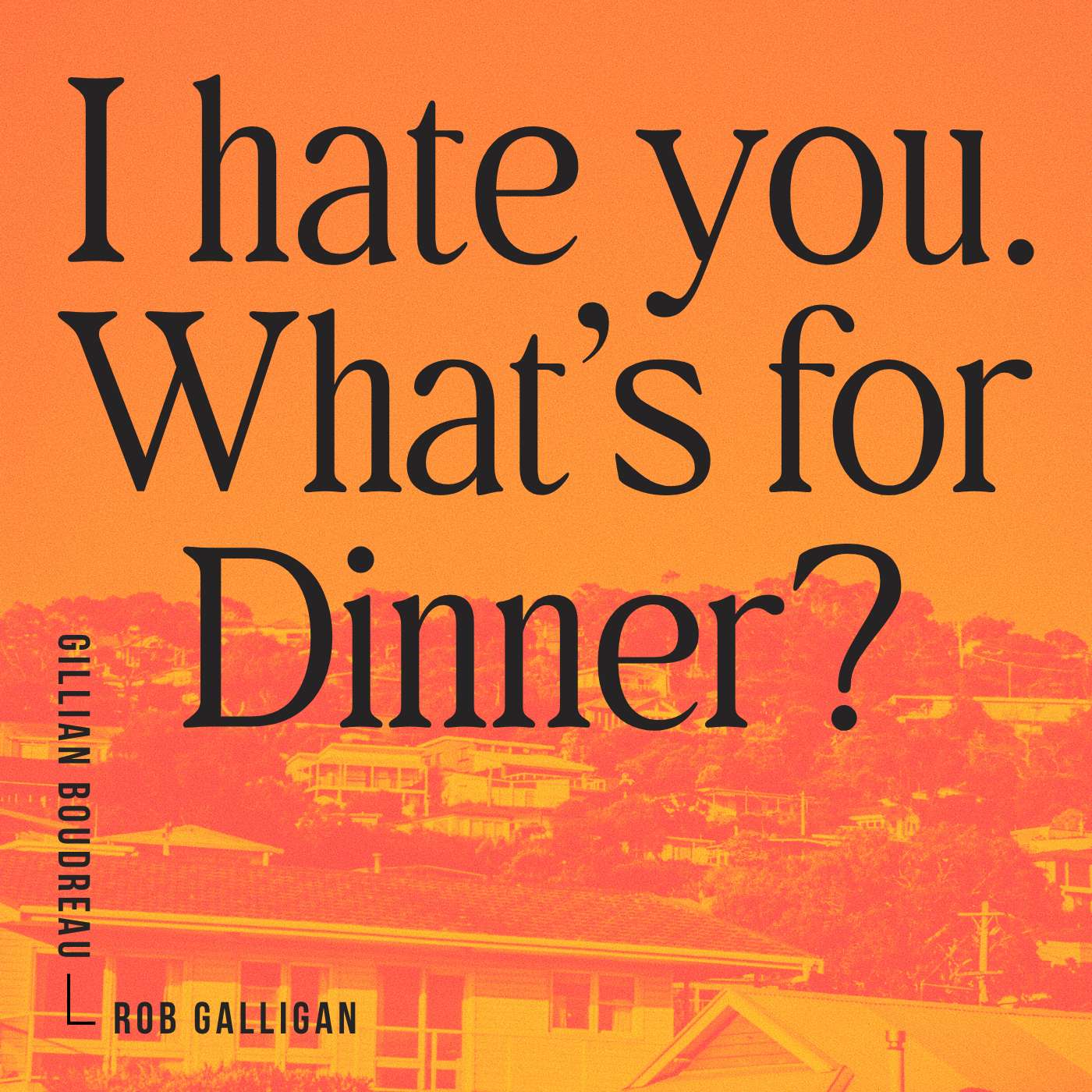
I Hate You. What's For Dinner?
by Gillian Boudreau & Rob Galligan
On I Hate You. What's For Dinner? we explore whether childhood explains everything. We'll ask our biggest questions about love and hate, rage and fear, and the awesome and mundane that all get smushed together when we're growing up.Tune in to make better sense of childhood, parenthood, and life in general.
-
13
Ep 15 - Grief, Relief, and Time to Reflect: The Gift of Endings
June is a time of transition for a lot of families. The end of the school year, graduations from one phase of schooling to the next –– endings and beginnings have a way of surfacing the feels.And no one likes to process endings more than psychoanalysts. So as we’re at the end of the school year, and Rob has a child who just graduated high school — how?! –– we decided to spend some time today talking about endings. Rob shares some wisdom from his son’s head of school, Gillian talks about navigating change for kids and adults in a household, and we break down how the John Denver/Peter, Paul, & Mary classic “Leaving on a Jet Plane” encapsulates the vulnerabilities and fantasies of saying goodbye.Listen to the full episode to hear:The way so much of parenting becomes maintenance and banality, interspersed with moments of magicHow the wider community begins to play a bigger developmental role in the transition from little kid to big kidNavigating adult transitional phases and relationships alongside your kiddos growingHow “Leaving on a Jet Plane” taps into the grief, love, and vulnerability of goodbyes of all kindsHow a child leaving the nest changes the center of gravity for the rest of the familyThe relatively unsung genius of 38 SpecialLearn more about I Hate You. What’s For Dinner?Learn more about Gillian Boudreau, PhD.:WebsiteInstagram @clearconnectionpsychologyLearn more about Rob Galligan, PhD.:Instagram @dr.robert.galliganResources:Ep 03 - “I’m Doing The Song!” Ash Diggs On Cat’s In The Cradle, Comedy, And FamilyEp 08 - Keeping It Authentic (And Surprising): Dr. Matt Morrison On Raising Kids And TherapistsHarry Stack SullivanLeaving on a Jet Plane - Peter, Paul, & MaryEp 09 - Fear, Resistance, And Flow: Paula Tursi On Letting Parenting HappenHold On Loosely - 38 SpecialEp 11 - Toward What Matters: Sarah Markowitz On CBT, Values, And Choice
-
12
Ep 14 - The Suicide Shroud: Dr. Alexis Tomarken on Silence, Blame, and Survival
In our society, we’re not good at openly talking about death. We’re even worse at speaking openly about death by suicide. The silence that so often accompanies suicide–what our guest calls “the shroud of suicide”–creates additional burdens for surviving family members, especially women who survive their spouses. The expectation to shield others from the full weight of the death, to even erase the facts of the experience, is an enormous pressure that has long-term consequences across generations.Today, we’re in conversation with our former classmate, Dr. Alexis Tomarken, talk about two of her papers that discuss intergenerational trauma and the heavy burden of our collective discomfort with suicide. Alexis movingly weaves together psychoanalytic theory, her work as a therapist, and personal experience to show that putting words to life’s most difficult experiences is not only vital to personal integration, but impacts future generations as well.Listen to the full episode to hear:How our society treats suicide as crime, blames surviving women, and actually increases riskWhy open discussion and processing is more effective at the prevention of “suicide contagion” than hiding from itWhy the goal, especially for a surviving parent, is to keep the door open to communication with children, not to seek resolutionHow therapists’ and clients’ lived experiences inevitably interact, even without therapist disclosureHow the blame and shame placed on women survivors is emblematic of gendered expectations of healing and caretakingLearn more about Dr. Alexis Tomarken:WebsiteConnect on LinkedInLearn more about I Hate You. What’s For Dinner?Learn more about Gillian Boudreau, PhD.:WebsiteInstagram @clearconnectionpsychologyLearn more about Rob Galligan, PhD.:Instagram @dr.robert.galliganResources:Can You Hear Me? Errands and Repair in the Analytic IdentityThe Shroud of Suicide: Misogyny, Abjection, and Transgenerational TraumaA Last-Minute Breakthrough, Muriel Dimen | The New York TimesThe Argonauts, Maggie NelsonDr. Dan SiegelJane Tillman, PhD, ABPPHow It Feels When a Parent Dies, Jill KrementzThomas Ogden
-
11
Ep 13 - As Always, Start with Yourself: Kirk Martin on Calmer Parenting
Everyone struggles sometimes when their kids have strong opinions or feelings and they need them to just do the thing already. And when frustrations are high, it can be easy to slip into the kind of old-school parenting a lot of us were raised with and that we might be trying not to replicate. Our guest today, Kirk Martin, host of the Calm Parenting Podcast, knows those struggles intimately. In our conversation, he shares his journey with his son, Casey, and how he came to realize that he needed to throw out the old-school parenting playbook and change his whole way of thinking about autonomy, respect, and collaboration with his child. We talk about why clinging to parental autonomy isn’t actually useful when you’re in a power struggle with your kid and what parents who might be at their wits’ end can do to shift those dynamics in a positive direction.Listen to the full episode to hear:How Kirk’s own oppositional tendencies gave him insight into the feelings and fears underneath the power strugglesStrategies for giving kids autonomy while maintaining boundaries and guardrailsWhy parents have to manage their feelings of embarrassment or shame when their kids don’t do things the “right” wayReframing disrespect and attitude as information that something’s up and an opportunity to connectNormalizing that things will go wrong and allowing yourself compassion Why Kirk encourages parents, and especially dads, to problem-solve with their kids like they would with their coworkers Learn more about Kirk Martin:Celebrate CalmCalm Parenting PodcastInstagram: @calmparentingpodcastLearn more about I Hate You. What’s For Dinner?Learn more about Gillian Boudreau, PhD.:WebsiteInstagram @clearconnectionpsychologyLearn more about Rob Galligan, PhD.:Instagram @dr.robert.galligan
-
10
Ep 12 - The Body Says NO: Casey Ehrlich on PDA (Pervasive Drive for Autonomy)
All of us have some level of innate desire for autonomy and equality. But for some, the need for autonomy and equality tangles with Survival Brain in ways that have major impacts on their well-being, even overriding basic survival needs like food, sleep, hygiene, or physical safety.Though it can sometimes look that way from the outside, PDA (Persistent Drive for Autonomy or Pathological Demand Avoidance) is not just a knee-jerk, “You can’t tell me what to do!” PDA causes outsized reactions to perceived threats–threats which can be invisible or confusing to parents, educators, and therapists. Today’s guest, PDA expert Casey Ehrlich, defines PDA as a nervous system disability that requires a holistic approach that goes beyond in-the-moment behavioral intervention. In our conversation, she movingly recounts how her personal experience raising children with PDA caused her to turn her research background to understanding what PDA is and developing and validating an approach to managing this challenging disorder. And we talk about PDA’s impacts on kids and families, what makes it so mind-bending for outsiders, and how sometimes disrupting and confronting systems can be a benefit of having a PDA brain.Listen to the full episode to hear:Why Casey defines PDA as a neurotype separate from other kinds of demand avoidance seen with autism, executive dysfunction, or anxietyFive common elements of PDA that can help parents identify and differentiate it from other concernsHow PDA-ers’ orientation toward autonomy, equality, and justice can become a source of personal and community strengthHow a drive for autonomy can show up with other neurotypes, and when it crosses into PDACasey’s experience navigating two very different presentations of PDA and burnout with her two kidsTools for parents to observe patterns and collect data, (mostly) keep their cool, leave space for their own feelings, and protect their boundaries and sense of selfLearn more about Casey Ehrlich, PhD:At Peace ParentsInstagram: @atpeaceparentsFacebook: @atpeaceparentsYouTube: @atpeaceparents At Peace Parents PodcastLearn more about I Hate You. What’s For Dinner?Learn more about Gillian Boudreau, PhD.:WebsiteInstagram @clearconnectionpsychologyLearn more about Rob Galligan, PhD.:Instagram @dr.robert.galliganResources:PDA North AmericaPDA SocietyRabbi ShoshanaAmanda Diekman | Low Demand ParentingWhat is DIRFloortime?
-
9
Ep 11 - Toward What Matters: Sarah Markowitz on CBT, Values, and Choice
There are many ways to do therapy, and many reasons why people gravitate to certain modalities, both as patients and practitioners. And while there are some who will insist that their way is the way, we’re happy to acknowledge where our preferred methods overlap and diverge with others, and how different therapies can help people arrive at the same place of better self-understanding and moving through the world with more ease. Today, we’re chatting with Gillian’s longtime friend and Cognitive Behavioral Therapist extraordinaire, Sarah Markowitz. We get into what’s similar in CBT and a psychodynamic approach, what’s different, and why these schools of therapy tend to appeal to certain people. We also talk about the tricky balancing act between direction and curiosity for therapists, educators, and parents when engaging kids on behavioral change.Listen to the full episode to hear:How Sarah investigates resistance to change from a stance that is both directive and client-centeredHow building experience as therapists leads to more overlap in our approaches than notThe layers of thoughts, rules, and core beliefs that CBT uncovers over timeHow both therapists and parenting advice have shifted to be more descriptive than directiveHow Sarah’s logical, but not rigid, household, along with swimming, summer camp, and horses, shaped her ability to self-regulate and her default state under stress Learn more about Sarah Markowitz:MindWell PsychologyLearn more about I Hate You. What’s For Dinner?Learn more about Gillian Boudreau, PhD.:WebsiteInstagram @clearconnectionpsychologyLearn more about Rob Galligan, PhD.:Instagram @dr.robert.galliganResources:EP 06 - Trickle Up!: Ron Williams On Purpose, Legacy, And Spreading AbundanceAcceptance and commitment therapyDialectical behavior therapyMarsha M. LinehanAaron BeckAdult Children of Emotionally Immature Parents: How to Heal from Distant, Rejecting, or Self-Involved Parents, Lindsay C. Gibson PsyD Dr. Ross GreeneEP 09 - Fear, Resistance, And Flow: Paula Tursi On Letting Parenting HappenEP 08 - Keeping It Authentic (And Surprising): Dr. Matt Morrison On Raising Kids And TherapistsDr. Russ Harris
-
8
Ep 10 - A Theory of Everything: The Primary Colors of Emotional Experience
It might sound silly, or even impossible, to have a theory of everything that might show up in our clinical work.And yet, when we’re sitting with people who are stuck or sitting with people that are suffering, so often it comes back to one of a few fundamental feelings, and all of the emotional gradations that come from them: safety, grief, and shame.Today, we’re digging into these emotional primary colors that are at the root of so much of what we see in our clinical practices, how they show up and shape family dynamics, and how our personal experiences shape the lens that we bring to our work and how we frame the world.Listen to the full episode to hear:The patterns of behavior shaped by safety and belonging that Gillian recognized in her clients as parallels from her childhoodWhy nurturing an environment that is consistently safe and loving is a lot harder than it soundsHow feelings of unsafety, grief, and shame show up for parents and kidsHow shame functions as a product of survival fear and also a measure of if we deserve to be seen and lovedWhy family and child counseling often needs to start with the parents and the family system Learn more about I Hate You. What’s For Dinner?Learn more about Gillian Boudreau, PhD.:WebsiteInstagram @clearconnectionpsychologyLearn more about Rob Galligan, PhD.:Instagram @dr.robert.galliganResources:Extreme - More Than WordsHurvich, Marvin. (2003). The Place of Annihilation Anxieties in Psychoanalytic Theory. Journal of the American Psychoanalytic Association. 51. 579-616. 10.1177/00030651030510020801. Winnicott, Donald W., 'Fear of Breakdown', in Lesley Caldwell, and Helen Taylor Robinson (eds), The Collected Works of D. W. Winnicott: Volume 6, 1960-1963 (New York, 2016Melanie KleinDonald WinnicottEp 09 - Fear, Resistance, and Flow: Paula Tursi on Letting Parenting HappenTrauma and Recovery The Aftermath of Violence–From Domestic Abuse to Political Terror, Judith L. Herman, MDThe Body Keeps the Score: Brain, Mind, and Body in the Healing of Trauma, Bessel van der Kolk, MDWilfred Bion
-
7
Ep 09 - Fear, Resistance, and Flow: Paula Tursi on Letting Parenting Happen
Fear has a way of obstructing our development as people, as parents, and partners and friends. Our anxieties make us grasp for control when what we really need to do is get out of the way and let things unfold.Easier said than done. Today, we have Gillian’s dear friend and “soul mother,” Paula Tursi, with us. Paula is a New York-based yoga and meditation teacher, spiritual guide, writer and thinker who is at once deeply spiritual and highly pragmatic. In our conversation, we talk about the role of fear in the challenges we face, how she transformed her relationship to fear, and how getting out of our own way can change our lives and our parenting. Listen to the full episode to hear:Defining the roots of fear through the lens of survival and internal resistanceHow the way we’re seen in childhood ripples through our lives, for good and illHow the way we assign meaning to our visceral feelings impacts how we live and parentBalancing parental guardrails and trusting kids to know themselves and what they needHow accepting where we are in the moment helps us move forward and live more fullyHow to show kids they’re loved, safe, and seen even at the hardest momentsLearn more about Paula Tursi:WebsiteInstagram: @paula_tursi_life_designLearn more about I Hate You. What’s For Dinner?Connect with Gillian Boudreau, PhD.:WebsiteInstagram @clearconnectionpsychologyConnect with Rob Galligan, PhD.:Instagram @dr.robert.galligan
-
6
Ep 08 - Keeping it Authentic (and Surprising): Dr. Matt Morrison on Raising Kids and Therapists
Establishing safety and trust is how we create connections and personal change, in therapy and in life. If we aren’t open to new experiences or perspectives, it’s a lot harder for any of us to get to all the good, gushy, connected stuff that helps us grow. Today, we're with our friend and colleague, Dr. Matt Morrison, who is the training director of Long Island University's Psychological Services Center. Matt brings his experience supervising student psychologists and joins us to talk about his work on the therapeutic stance (aka how to be as a therapist). We get into how discipline and discovery in the therapeutic relationship counteract anxiety and fear, how that connects with stepping out of self-fulfilling prophecies and allowing for surprise in parent-child relationships, and the advice we’d give to student and early-career therapists.Matt also shares his experiences of growing up with a depressed parent, how being the center of a parent’s world creates pressure and conflict, and how honesty and hanging in there together can bring healing to the relationship.Listen to the full episode to hear:The basics requirements of a therapeutic stance that promotes reflection, positive risk-taking, and changeWhy therapy and parenting require a capacity for surprise, along with discipline How anxiety blocks coming from a stance of curiosity as therapists and parentsThe challenge of balancing curiosity and honesty in relationshipsHow developing self-awareness of our internal competing interests builds agency to create changeHow Matt’s parents modeled honesty and willingness to engage in conflict, even at the toughest timesLearn more about Dr. Matt Morrison:Connect on LinkedInLearn more about I Hate You. What’s For Dinner?Connect with Gillian Boudreau, PhD.:WebsiteInstagram @clearconnectionpsychologyConnect with Rob Galligan, PhD.:Instagram @dr.robert.galligan
-
5
Ep 07 - Getting the Grown Ups to Listen: Bradley Tusk on What Really Matters in Parenting and Politics
Ask any activist or philanthropist why they do what they do, and they’ll likely have a story about why they care so deeply about their causes. Sometimes those stories go even deeper than they consciously realize.Today’s guest, Bradley Tusk, philanthropist, venture capitalist, author, and one of Rob’s dearest friends, is committed to ending childhood hunger and saving democracy through mobile voting. Our conversation delves into progressive politics and the tensions that can exist between implementing policy and lived realities, especially in schools. And while it does get heated, we ultimately uncover a deeper, more vulnerable understanding of the parts of Bradley’s story that motivate him to do this work. Per usual, it comes back to childhood. Listen to the full episode to hear:What working in city and state government in his 20s taught Bradley about tangible impacts and the psychology of politiciansHow social inadequacy, superiority, and othering show up across the political spectrumThe challenges Bradley sees to government that more effectively and equitably serves its constituentsThe tension between the needs of students and the needs of teachers and administrators in educational policy and fundingBreaking down the roots of Bradley’s intense motivation to put children first, politically and personally How mobile voting could bring real constituent accountability to politicsLearn more about Bradley Tusk:WebsiteSubstackConnect on LinkedInLearn more about I Hate You. What’s For Dinner?Connect with Gillian Boudreau, PhD.:WebsiteInstagram @clearconnectionpsychologyConnect with Rob Galligan, PhD.:Instagram @dr.robert.galliganResources:Solving HungerThe Mobile Voting Project
-
4
Ep 06 - Trickle Up! Ron Williams on Purpose, Legacy, and Spreading Abundance
Survival brain impacts the way we parent, and in many ways, it’s the bedrock of our cultural myths. A survival mindset frames the world as a zero-sum game where we have to fight each other for resources. In this model, individualism and pulling yourself up by your bootstraps are the only ways to succeed, and are equated with moral goodness.We see the impacts of survival-based thinking all around us. People seek external, material markers of status and success that have them always reaching for the next thing and, therefore, never reaching satisfaction. Our guest today is Ron Williams, a venture builder, systems thinker, and Gillian's bestie. Ron’s big idea – that there is enough for all of us and we’re in this together –asks us to rethink our metrics for success to create positive change for individuals and communities. We talk about evolutionary and psychological underpinnings of selfishness and empathy, and swapping out greed with social good.Listen to the full episode to hear:How zero-sum, short-term thinking contributes to social instability and unsatisfying lifestylesWhy leaning too hard on one survival strategy often backfires, whether in parenting or in business How the relentless pursuit of money, status, and power breaks down capacities for empathy and connectionWhat it takes to shift the narratives about wealth and status and inspire people to think collectivelyHow Ron’s early exposure to both possibility and inequality in America shaped the ways he questions our systems, and informs how he parentsLearn more about Ron Williams:Co-CreatedConnect on LinkedInLearn more about I Hate You. What’s For Dinner?Connect with Gillian Boudreau, PhD.:WebsiteInstagram @clearconnectionpsychologyConnect with Rob Galligan, PhD.:Instagram @dr.robert.galligan
-
3
Ep 05 - Connection Is Survival: Parenting for the Loneliness Epidemic with James Ellis
Human beings need connection. We’re social creatures. But we are increasingly isolated, lonely, and dissatisfied.Today, we’re joined by our friend and colleague James Ellis, who’s here to help us understand the deep cultural roots and uniquely modern influences of our modern loneliness epidemic. This one goes beyond parenting as we dig into the ways our culture narrows our view of who can meet our emotional needs and has us chasing perfection in those relationships. We also get into why social skills and adaptability are just as–and maybe more–important as good grades for our kids’ futures. We also discuss how loneliness begets violence against the self and others. And of course, we can’t talk about the loneliness epidemic without talking about social media and pop psychology’s impacts on how we relate to each other.Listen to the full episode to hear:Three major factors that have reshaped the social landscape Why we avoid seeking connection, even when we know we want and need itHow our modern illusion of infinite choice turns us into perfection-seekers in relationshipsWhy we have to learn to tolerate disappointment from our loved ones, and how cultivating more close relationships helpsWhy parents need to emphasize soft skills like flexibility, adaptability, and sociability in order to future-proof their kids How forging connections really does boil down to making the effort to show up, over and over againLearn more about James Ellis, PhD:The Loneliness DoctorInstagram: @lonelinessdoctorLearn more about I Hate You. What’s For Dinner?Connect with Gillian Boudreau, PhD.:WebsiteInstagram @clearconnectionpsychologyConnect with Rob Galligan, PhD.:Instagram @dr.robert.galliganResources:Melanie KleinDonald Winnicott
-
2
Ep 04 - There's a Place for Everyone: Lauren Hough Williams on Inclusion for all Neurotypes, Family, and Dignified Risk
How do you raise kids who approach the world with curiosity, compassion, and the drive to make their communities more supportive and inclusive?Today, we’re talking to Gillian’s dear friend Lauren Hough Williams about how her childhood shaped her into an expert in building systems where everyone has a place. In this episode, we dig into how Lauren’s position as the eldest of five siblings helped to create her community mindset. We discuss the role of privilege and its attendant sense of safety in facilitating risk-taking. And, we learn how Lauren’s mom crafted a happy, chaotic home, all the while imparting wisdom and sly humor in equal measures. We also learn how professional experts in childhood become “experts” in their own home, winning some and losing some as we try to parent well and bring our professional knowledge into our parenting our own kids.Listen to the full episode to hear:How volunteer basketball games helped teenage Lauren recognize that inclusive environments benefit everyoneHow Lauren’s family and early education modeled community orientation and compassion as core valuesHow Lauren’s parents created a supportive, safe environment inside the inherent chaos of a large familyWhat Lauren learned from her mom about letting go of perfectionism and urgency, and maintaining a sense of humor as a parentWhy Lauren’s professional life as an educator and coach doesn’t seamlessly integrate into her parentingLearn more about Lauren Hough Williams:Program for Inclusion and Neurodiversity EducationConnect on LinkedInLearn more about I Hate You. What’s For Dinner?Connect with Gillian Boudreau, PhD.:WebsiteInstagram @clearconnectionpsychologyConnect with Rob Galligan, PhD.:Instagram @dr.robert.galligan
-
1
Ep 03 - “I’m Doing the Song!” Ash Diggs on Cat’s in the Cradle, Comedy, and Family
Most parents set out with the best of intentions to prepare their children for the world. Of course, our actions and behaviors don’t always have the intended effect. Parenting is hard, and sometimes we screw up in ways that damage our kids and our relationships with them.So what do we do with our parenting regrets?Today, comedian Ash Diggs joins us to talk about the regret and repair in parent-child relationships, using the classic Harry Chapin tear-jerker “Cat’s in the Cradle” as our jumping-off point. We dig into why that song hits some of us so hard, how class and race impact parental survival brain, and the evolution of parent-child relationships when everyone is willing to look at themselves and try something new.Listen to the full episode to hear:How parents’ focus on achievement and stability can affect mental health and relationshipsWhy turning real-life pain into comedy can be a double-edged swordHow his parents’ willingness to engage in hard conversations has allowed their relationship to positively evolveThe not-so-simple relationship between material safety and psychological safetyLearn more about Ash Diggs:Instagram: @ashdiggs_Learn more about I Hate You. What’s For Dinner?Connect with Gillian Boudreau, PhD.:WebsiteInstagram @clearconnectionpsychologyConnect with Rob Galligan, PhD.:Instagram @dr.robert.galliganResources:Harry Chapin - Cat's In The CradleThe Autobiography of Malcolm X
-
0
Ep 02 - Help! My Survival Brain is Parenting My Kid
Survival brain is a universal feature of parenting. When our inner cave person is activated, fear dominates, as we worry about our kid’s ability to survive a dangerous world. When survival brain comes online, everything is an emergency, our ability to think rationally is short-circuited, and molehills become mountains. As our brains quickly spiral, we imagine that the kid who isn’t doing his homework tonight will be doomed to a lifetime of failure and destitution. While the threat-mitigation behavior coded in our DNA helps us protect our offspring from the most dire threats, it prevents us from accessing the patience and perspective we need for everyday kid problems. Survival brain eats up our mental resources when activated, and once it’s firing we can’t get to our wiser mind no matter how hard we try. So what is a modern parent with a cave person brain supposed to do? How do we quiet the huge reactions we have to family problems that are big, but not dire? How do we know when a threat actually is dangerous enough to warrant an emergency response? How do we tame the survival brain so it will leave enough juice to run our wisdom-centers? Today we’ll talk about how primal survival instincts operate for parents. We’ll talk about how survival brain drives parents’ actions and how kids’ mental health struggles are rooted in their need to feel safe. We will also discuss how therapy helps parents navigate through even the most difficult moments with their kids, including school refusal, substance abuse, and eating disorders.Listen to the full episode to hear:The way survival instincts block our ability to access higher-level thinkingHow survival brain distorts reality, causes disproportionate reactions, and spreads to othersA reframe for shifting perspective and limiting scope to right here, right nowHow therapy gives parents a space to speak the unspeakable, and how that disrupts unhealthy family dynamics The role of making sense of seemingly impossible situations, which enables new perspectives and opens up solutions to even the stickiest problems How talk therapy creates a foundation of safety and understanding that other modalities (like CBT and DBT) build on for comprehensive treatment plansWhat parents can do when things are stable to support family regulation and wellbeingLearn more about I Hate You. What’s For Dinner?Connect with Gillian Boudreau, PhD.:WebsiteInstagram @clearconnectionpsychologyConnect with Rob Galligan, PhD.:Instagram @dr.robert.galligan
-
-1
Ep 01 - Evolving Every Day: How Parenting Transforms Us
If you came into our therapy rooms, we definitely would be asking you about your family of origin. It’s where it all starts.As psychologists who work with families and who are currently raising kids, we’re obsessed with how childhood experiences impact caregiving, and how parenting transforms us. Where did our parents come from? How were they raised? How did they bring us up? And how do we parent our kids as a consequence of our family history? These are the questions that hold the key to what we do well and where we trip up as humans and as parents.In today’s episode, we’re talking about our experiences of being kids, how forces like career and financial stability impact raising kids, what our kids have taught us “on the job,” and the role of grandparent energy in parenting.Listen to the full episode to hear:How social and cultural environments influence parenting norms, implicitly and explicitlyOur very different takes on being only children, and a commonality that bonded usHow experiencing survival mode as adults brought new context to our relationships with our parentsWhy addressing the fears that activate survival brain is essential for being the kind of parents we want to beOur biggest unlocks as parents, and where we still struggle with the pressure to be perfectLearn more about I Hate You. What’s For Dinner?Connect with Gillian Boudreau, PhD.:WebsiteInstagram @clearconnectionpsychologyConnect with Rob Galligan, PhD.:Instagram @dr.robert.galliganResources:The Parent Whisperer https://theparentwhispererny.com/about-susan/How to Talk So Kids Will Listen & Listen So Kids Will Talk, Adele Faber, Elaine Mazlish
-
-2
Introducing I Hate You. What's For Dinner?
Your kid slams his bedroom door in your face, and five minutes later, he's giving you puppy eyes asking for a snack. Why is he like that?On I Hate You. What's For Dinner?, we explore whether childhood explains everything.We're Gillian Boudreau and Rob Galligan—two clinical psychologists in private practice who met in our psych PhD program a couple decades ago. Since then, we've been mulling over what hurts and what heals in people. As psychologists who work with kids and families, we're constantly mining childhoods past for memories and clues.We'll be featuring guests who are musicians, comedians, entrepreneurs, therapists, and writers. Each episode asks: Who were you when you were little, and how has that made you who you are now?The psychoanalytic theory, neuroscience, and developmental psychology we studied in grad school often feel like the secret decoder ring to people's toughest problems. These everyday struggles often come down to what we want the most and what we're most afraid of.We'll ask our biggest questions about the love and hate, the rage and fear, and the awesome and mundane that all get smushed together when we're growing up.Tune in to make better sense of childhood, parenthood, and life in general.***Follow or subscribe to I Hate You. What's For Dinner? wherever you get podcasts.
We're indexing this podcast's transcripts for the first time — this can take a minute or two. We'll show results as soon as they're ready.
No matches for "" in this podcast's transcripts.
No topics indexed yet for this podcast.
Loading reviews...
ABOUT THIS SHOW
On I Hate You. What's For Dinner? we explore whether childhood explains everything. We'll ask our biggest questions about love and hate, rage and fear, and the awesome and mundane that all get smushed together when we're growing up.Tune in to make better sense of childhood, parenthood, and life in general.
HOSTED BY
Gillian Boudreau & Rob Galligan
CATEGORIES
Loading similar podcasts...
Frequently Asked Questions
How many episodes does I Hate You. What's For Dinner? have?
I Hate You. What's For Dinner? currently has 16 episodes available on PodParley. New episodes are automatically indexed when they're published to the podcast feed.
What is I Hate You. What's For Dinner? about?
On I Hate You. What's For Dinner? we explore whether childhood explains everything. We'll ask our biggest questions about love and hate, rage and fear, and the awesome and mundane that all get smushed together when we're growing up.Tune in to make better sense of childhood, parenthood, and life in...
How often does I Hate You. What's For Dinner? release new episodes?
I Hate You. What's For Dinner? has 16 episodes. Check the episode list to see recent publication dates and frequency.
Where can I listen to I Hate You. What's For Dinner??
You can listen to I Hate You. What's For Dinner? on PodParley by clicking any episode. We provide an embedded audio player for direct listening, and you can also subscribe via your preferred podcast app using the RSS feed.
Who hosts I Hate You. What's For Dinner??
I Hate You. What's For Dinner? is created and hosted by Gillian Boudreau & Rob Galligan.
URL copied to clipboard!