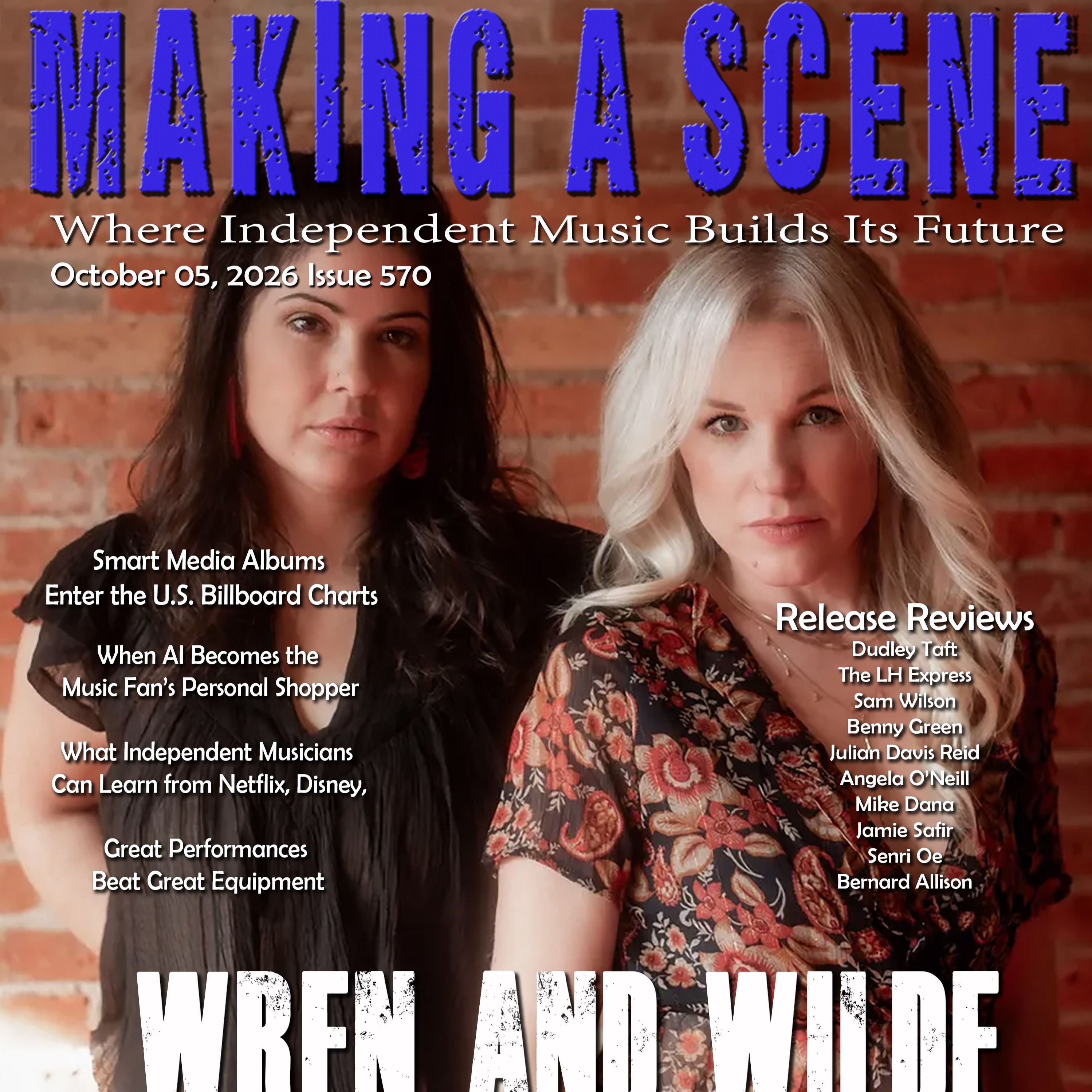
Making a Scene Presents podcast artwork

PODCAST · music

Making a Scene Presents

Making a Scene is the #1 Resource for the Indie Artist and the Fans that Love them! http://www.makingascene.org

Publisher-supplied feed metadata · PodParley refreshed Jun 13, 2026 · Source feed

  1. 600

    How AI Can Turn One Song Into a 30-Day Marketing Plan

    Making a Scene Presents - How AI Can Turn One Song Into a 30-Day Marketing Plan Your Song Is More Than One Release-Day Post Independent artists are often told that they need more content. More videos. More posts. More stories. More emails. More reels. More reasons to dance in front of a phone while pointing at words floating over their heads. The pressure never stops. The problem is not that artists have nothing to say. The problem is that most artists do not have a system for turning what they have already created into a steady flow of useful stories, fan conversations, and income opportunities. A song may take months to write, record, mix, master, and release. Then the artist posts the cover art, drops a streaming link, asks everyone to listen, and moves on three days later because the algorithm has already developed the attention span of a caffeinated squirrel. That is a terrible return on the time, money, and emotion that went into the music. One song can support a full month of marketing without the artist repeating the same sales pitch thirty times. The song contains lyrics, emotions, production choices, personal stories, visual ideas, fan questions, live-performance moments, merchandise ideas, video clips, and reasons for people to join the artist’s journey. Artificial intelligence can help uncover those pieces. It can organize them, rewrite them for different platforms, create variations, suggest visuals, draft emails, outline reels, and build a working calendar. But AI should not become the artist. The artist supplies the truth, personality, music, feelings, and point of view. AI helps turn that raw material into a usable plan. Think of it as a fast assistant who never gets tired, but occasionally says something ridiculous with complete confidence. You still need to be the boss. Most important, the goal of this campaign is not simply to create thirty days of social media activity. Social media should be the doorway. The artist’s own website, email list, store, fan community, and permission-based fan system should be the destination. A like is nice. A direct relationship is better. A view may disappear into a platform report. An email signup, direct purchase, ticket buyer, Fan Passport follow, or membership can become part of the artist’s real business. That is how one song starts doing more than collecting streams. It begins building the music industry middle class. http://www.makingascene.org

  2. 599

    Fan Data Is the New Currency of the Music Industry—and Why Are Artists Still Broke

    Making a Scene Presents - Fan Data Is the New Currency of the Music Industry—and Why Are Artists Still Broke The Gold Rush Nobody Told the Artist About Every time a fan streams a song, skips a song, saves an album, watches a video, buys a ticket, clicks an advertisement, follows an artist, visits a website, or abandons a shopping cart, something valuable is created. Data. That data may reveal where the fan lives, what music they enjoy, which device they use, when they listen, what they buy, how much they spend, which advertisement caught their attention, and what action they are likely to take next. The modern music industry runs on this information. Streaming services use it to recommend songs. Social networks use it to decide which posts appear in a feed. Advertisers use it to target possible customers. Ticketing companies use it to promote future events. Record labels use it to decide where to spend marketing money. Everyone appears to understand the value of fan data except the person who created the reason for that data to exist. http://www.makingascene.org

  3. 598

    The Breakthrough Myth Has a Cash-Flow Problem

    Making a Scene Presents - The Breakthrough Myth Has a Cash-Flow Problem A viral moment can make an artist look successful. A durable mix of shows, merch, direct sales, publishing, licensing, fan support, and useful technology can help an artist stay successful. Week One of The Artist-Owned Middle Class replaces the lottery-ticket version of the music business with a system working artists can actually build. The Music Business Still Sells Lottery Tickets The music business loves a breakthrough story. It is simple, dramatic, and easy to sell. An unknown artist uploads a song, the right person hears it, the algorithm catches fire, the crowd arrives, and life changes before lunch. Roll the credits. Somebody call the documentary crew. There is only one small problem with this story: it skips the part where a career has to pay its bills. Attention is not a checking account. A packed comment section cannot pay for a van repair. A playlist placement does not automatically create a merch customer. A huge view count may look wonderful in a screenshot while the artist is still moving money from a day job to cover rehearsal space. http://www.makingascene.org

  4. 597

    Interview with Brigitte Purdy

    Making a Scene Presents an Interview with Brigitte Purdy Brigitte Rios Purdy is a Los Angeles-born singer and songwriter whose voice carries the warmth of classic soul, the emotional depth of the blues, and the smooth elegance of R&B. From an early age, Purdy understood that singing was more than simply having a gifted voice. For her, music became a way to translate inner feeling into sound, turning personal emotion into songs that connect with listeners on a deeply human level. Raised in Los Angeles, Brigitte was drawn to the power and honesty of soul, blues, and rhythm and blues. Her pure, silky vocal tone quickly set her apart, earning her opportunities to perform alongside respected artists including Walter Trout, Sugaray Rayford, Tim Bogert, Dionne Warwick, and Dolly Parton. She has also contributed background vocals for major artists such as The Who and Paul Rodgers, experiences that placed her in the company of some of rock, soul, and blues music’s most recognizable names. http://www.makingascene.org

  5. 596

    Gerry Casey's Interview with Stone James of Hollis Dorian

    Making a Scene Presents Gerry Casey's Interview with Stone James of Hollis Dorian Hollis Dorian is an award-winning country singer-songwriter whose music blends country roots with rock and pop energy. His sound is built on strong hooks, honest storytelling, and a modern country edge that reflects the wide range of influences that shaped him. The title track from his debut EP, Country By Birthright, earned major recognition at the 2023 Josie Music Awards in Nashville, winning Country Song of the Year (Multiple Writers). Hollis accepted the award while standing inside the legendary Opry Circle at the Grand Ole Opry House, a milestone moment that marked an important step forward in his career. http://www.makingascene.org

  6. 595

    Using AI Tools to Improve Your Mix Without Letting AI Take Over

    Making a Scene Presents - Using AI Tools to Improve Your Mix Without Letting AI Take Over The New Home Studio Problem The home studio has changed everything for the independent artist. That little room in the house, the spare bedroom, the basement corner, the treated garage, or the desk with a laptop and a pair of headphones is no longer just a demo space. It is where songs are written, arranged, recorded, mixed, mastered, pitched, released, and sometimes turned into real income. That is powerful. It is also a lot of pressure. A working indie artist today is expected to be the songwriter, performer, producer, engineer, content creator, marketer, booking department, merch department, and sometimes the van driver. Somewhere in the middle of all that, they are also supposed to make a mix that sounds good on studio monitors, earbuds, car speakers, phones, laptops, club PAs, streaming platforms, radio shows, sync pitches, and the merch table after the gig. http://www.makingascene.org

  7. 594

    How To Use AI To Write Better Email Subject Lines For Fans

    Making a Scene Presents - How To Use AI To Write Better Email Subject Lines For Fans The First Line Is The Front Door Every indie artist knows the feeling. You have a show coming up, a new single dropping, a fresh batch of shirts on the merch table, or a membership offer you finally got the nerve to launch. You write the email. You care about the email. You know the people on that list are not strangers. They are fans, friends, buyers, believers, and maybe a few people who signed up three years ago at a gig and forgot they did. Then you get to the subject line and freeze. That tiny line suddenly feels bigger than the song. The subject line is not the whole email, but it is the front door. If it feels fake, fans walk past it. If it feels boring, they miss something they might have cared about. If it feels like a desperate ad, they delete it. If it sounds like you, gives them a real reason to open, and respects their time, you have a much better shot. http://www.makingascene.org

  8. 593

    How To Build A Simple Artist CRM (Customer Relationship Management) Without Getting Overwhelmed

    Making a Scene Presents - How To Build A Simple Artist CRM (Customer Relationship Management) Without Getting Overwhelmed The Fan List Is Not The Boring Part Somewhere along the way, independent artists were tricked into thinking the “business side” of music was a separate, joyless dungeon where creativity goes to die under a pile of spreadsheets. The myth says the real artist writes songs, plays shows, makes records, and posts into the algorithmic void while some mysterious business goblin with a laptop handles the rest. That myth has been very useful for platforms, labels, middlemen, and anyone else who benefits when artists stay disorganized. The truth is much simpler and much more dangerous to the old system. Your fan list is not the boring part. Your fan list is the beginning of your independent music business. http://www.makingascene.org

  9. 592

    Interview with The Silverteens

    Making a Scene Presents an Interview with The Silverteens The Silverteens are a Minneapolis band with deep roots in the city’s rock, punk, new wave, and power pop history. Long known for an eclectic live set that pulls from obscure 1960s garage rock, late 1970s punk, power pop, and other high-energy corners of rock and roll, the band brings together musicians who have been active in the local scene since the 1970s and 1980s. What gives The Silverteens their character is not just their song selection, but the history behind the players. Each member carries decades of experience from Minneapolis clubs, original bands, cover projects, and the underground music community that helped shape the city’s identity. Their sound reflects that background: raw but tuneful, loose in the right places, sharp when it counts, and rooted in the joy of playing songs that still have electricity in them. http://www.makingascene.org

  10. 591

    The Next Music Manager May Be A Workflow Designer

    Making a Scene Presents - The Next Music Manager May Be A Workflow Designer The Old Music Business Loved A Gatekeeper For a long time, the dream was simple. Find a manager who knew the right people, could get the right meetings, and maybe knew which hotel lobby to haunt during a conference. The manager was the person with access. They had the phone numbers, the relationships, the mystery spreadsheet, and the ability to say, “Let me make a call,” which always sounded like wizardry even when it meant leaving a voicemail. That version of management is not dead. Relationships still matter. A good manager can still open doors, negotiate deals, protect an artist from bad contracts, and keep the wheels on the van when the business starts moving faster than the band can think. But for most independent artists, the first manager they need today is not a gatekeeper. It is a system. More specifically, it is the ability to design workflows that turn attention into relationships, relationships into income, and income into a career that does not collapse every time an algorithm sneezes. http://www.makingascene.org

  11. 590

    Interview with Kaatwalk

    Making a Scene Presents an Interview with Kaatwalk Kaatwalk is a Twin Cities-based singer-songwriter whose music is rooted in quiet honesty, emotional presence, and the kind of storytelling that turns everyday moments into something deeply human. Inspired by artists such as Brandi Carlile, Phoebe Bridgers, and Joni Mitchell, she writes with a reflective voice that values truth over polish and connection over perfection. Her sound moves easily across folk, Americana, indie, and singer-songwriter traditions without being boxed into one genre. At the center of it all is the song: intimate lyrics, stripped-down arrangements, and performances that feel personal, lived-in, and real. Kaatwalk draws from shared experiences, small details, emotional undercurrents, and the moments people often carry quietly. Her music gives those feelings room to breathe. http://www.makingascene.org

  12. 589

    Gerry Casey's Interview with Trace Foster of Close Enemies

    Making a Scene Presents Gerry Casey's Interview with Trace Foster of Close Enemies Close Enemies is a rock band built on contrast: raw emotion and polished intensity, grit and melody, chaos and calm. Their sound blends hard-hitting guitar riffs, driving rhythms, atmospheric textures, and haunting vocals into music that feels both familiar and fresh. Rooted in the spirit of classic rock but shaped with a modern edge, Close Enemies creates songs that hit with power while still leaving room for mood, depth, and emotional weight. http://www.makingascene.org

  13. 588

    Understanding Loudness and LUFS

    Modern audio mastering has shifted from a focus on sheer volume to a nuanced understanding of loudness normalization across streaming platforms like Spotify and Apple Music. The provided text explains that LUFS (Loudness Units Full Scale) serves as a vital measurement tool for human perception of sound rather than a strict creative limit. Musicians are encouraged to prioritize mix density and dynamic balance over hitting specific numerical targets, as over-processing can lead to distorted or lifeless tracks. Key technical safeguards, such as maintaining true peak headroom, ensure that audio remains clear during digital conversion and encoding processes. Ultimately, successful mastering requires volume-matched referencing and a focus on how a song translates across various listening environments. The source emphasizes that the goal of the contemporary engineer is to achieve a professional sound that feels impactful and alive regardless of platform adjustments. http://www.makingascene.org

  14. 587

    Interview with Kyle LaLone

    Making a Scene Presents An Interview with Kyle LaLone Kyle LaLone is a roots-rock journeyman whose music lives at the crossroads of classic country, Americana, and heartland rock & roll. A guitarist, songwriter, and performer with deep roots in American music, LaLone writes songs built on grit, melody, and hard-earned truth. His sound nods to the guitar-playing storytellers who came before him, from Hank Williams to Tom Petty, while steadily carving out a road of his own. That road comes into sharper focus on Make My Own Way, an anthemic new record that finds LaLone stretching beyond the twang of his earlier releases and stepping into a tougher, more rock-driven sound. The album carries the honesty of country songwriting, the muscle of heartland rock, and the emotional weight of an artist who has lived through struggle and come out with something to say. http://www.makingascene.org

  15. 586

    The Indie Artist’s AI Content Calendar That Actually Leads Somewhere

    Making a Scene Presents - The Indie Artist’s AI Content Calendar That Actually Leads Somewhere Stop Feeding the Machine for Free Most indie artists do not need more content. That sounds wrong at first, because every platform tells artists the opposite. Instagram wants another reel. TikTok wants another clip. YouTube wants another short. Facebook wants another event post. Spotify wants another canvas, another artist pick, another profile update. The whole internet acts like your career will finally move if you can just post more, faster, louder, and with the right hook in the first three seconds. But that is not a business plan. That is treadmill work. The real problem is not that indie artists are lazy about content. Most working artists are already doing too much. They are writing songs, booking shows, loading gear, recording vocals, editing video, answering messages, chasing payments, shipping shirts, designing flyers, updating websites, pitching playlists, and trying to remember what city they are in next Friday. Then they are told they need to become full-time content creators on top of being full-time musicians. That is how the modern artist gets tricked. The platforms turn every artist into a free media worker, and then rent the attention back to them. http://www.makingascene.org

  16. 585

    The Artist Revenue Ladder: How Indie Artists Turn Free Fans Into Real Income Over Time

    Making a Scene Presents - The Artist Revenue Ladder: How Indie Artists Turn Free Fans Into Real Income Over Time There is a dangerous lie floating around the music business, and it has been sold to indie artists for years. The lie says that if enough people hear your music, the money will somehow show up later. Get more streams. Get more followers. Get more likes. Get more views. Feed the machine. Keep posting. Keep begging the algorithm to notice you. Keep hoping that one day a stranger in a boardroom or a playlist editor behind a locked digital curtain will point at your song and say, “This one.” That is not a business plan. That is a lottery ticket with a guitar strap. http://www.makingascene.org

  17. 584

    The Return Of The Regional Music Economy

    Making a Scene Presents - The Return Of The Regional Music Economy Why the Future of Independent Music May Be Closer to Home Than We Think There was a time when every serious artist was told the same story. Get out of town. Get in the van. Hit the road. Go national. Chase the playlist. Chase the press. Chase the algorithm. Chase the booking agent. Chase the big festival slot. Chase anything that looked bigger than the town you came from. The dream was always somewhere else. It was in another city. Another state. Another market. Another platform. Another gatekeeper’s office. Another playlist editor’s inbox. Another social media feed where the numbers looked big enough to feel like momentum. But the road has changed. http://www.makingascene.org

  18. 583

    Maura Dunst is Making a Scene

    Making a Scene Presents an Interview with Maura Dunst Maura is a Minnesota-based multi-instrumentalist, vocalist, and songwriter whose work moves with ease through bluegrass, Americana, roots, and folk. Known for her expressive fiddle and mandolin playing, strong harmony instincts, and sharp songwriting voice, she brings both fire and feel to every stage she steps onto. http://www.makingascene.org

  19. 582

    Gerry Casey's Interview with Ghalia Volt

    Making a Scene Presents Gerry Casey's Interview with Ghalia Volt No barriers. No boundaries. That has always been Ghalia Volt’s approach to American roots music. Born in Belgium and now based in New Orleans, Ghalia Volt is a blues-rock singer, guitarist, drummer, and songwriter whose music refuses to stay in one lane. Her sound reaches across borders, pulling from the flamenco and traditional Spanish music she heard through her grandparents, the punk, garage rock, and psychobilly that shaped her early taste, and the deep blues traditions of artists like Skip James, J.B. Lenoir, and John Lee Hooker. http://www.makingascene.org

  20. 581

    Interview with Kat Blue

    Making a Scene Presents an Interview with Kat Blue KAT Blue & The True Believers are a blues band built on fire, feel, and full-throttle conviction. Their new EP, Clock Strikes Blue, captures a group locked into what KAT calls an “all asides, all the time” spirit: no half-measures, no phoning it in, just hard-hitting blues played with purpose. http://www.makingascene.org

  21. 580

    Mixing Quietly: Why Lower Volume Makes Better Decisions

    Making a Scene Presents - Mixing Quietly: Why Lower Volume Makes Better Decisions There is one home studio habit that can improve almost every mix without costing a dime. It does not require a new interface, a new microphone, a new plug-in bundle, or some secret trick from a million-dollar control room. It is almost boring in how simple it is. Turn the monitors down. That’s it. Not forever. Not so low that you can barely hear the song. Not as a punishment. Not because loud music is bad. Music is supposed to move air. Music is supposed to hit you in the chest when the moment calls for it. But when you are making mix decisions, especially in a home studio, loud volume can lie to you. Low volume tells the truth more often. http://www.makingascene.org

  22. 579

    The Free Gateway To An Artist-Owned Music Economy

    Making a Scene Artist Fan Passport OS: The Free Gateway To An Artist-Owned Music Economy The Music Business Needs A Middle Class Again The music business has never had a talent problem. It has had an ownership problem. Every town has artists who can move a room. Every scene has songwriters, bands, producers, players, DJs, engineers, promoters, and music lovers who are doing the work without the safety net. These are not hobbyists pretending to be artists. These are working creators trying to build something real in a business that keeps asking them to chase attention instead of own relationships. That is the problem the Making a Scene Artist Fan Passport OS was built to solve. http://www.makingascene.org

  23. 578

    The Digital Campfire: How AI Can Create Community Instead of Content

    Making a Scene Presents - The Digital Campfire: How AI Can Create Community Instead of Content Somewhere along the way, independent artists were handed a job they never asked for. They were told to become content creators. Not songwriters. Not performers. Not recording artists. Not community builders. Not storytellers. Content creators. That phrase may sound harmless, but it changed the way artists think about their own careers. It turned the song into a post. It turned the fan into a metric. It turned the live show into a clip. It turned the artist’s life into raw material for a platform that always wants more. Post more. Film more. Share more. React faster. Go live. Make reels. Make shorts. Use the trend. Feed the algorithm. Do it again tomorrow. And if it does not work, the answer is always the same. Create more content. But here is the problem. Fans do not wake up in the morning hoping their favorite artist gives them more content. They want connection. They want meaning. They want a reason to care. They want to feel like they found something real in a digital world full of noise. http://www.makingascene.org

  24. 577

    The Indie Artist Playbook Is Being Rewritten in Real Time

    Making a Scene Presents - The Indie Artist Playbook Is Being Rewritten in Real Time The Old Rules Are Breaking While Everyone Is Still Using Them The indie artist playbook is being rewritten in real time, and a lot of artists are still trying to win with rules from a game that is already gone. For the last fifteen years, the music business sold independent artists a simple dream. Get on the platforms. Build your followers. Chase playlist placements. Feed the algorithm. Post every day. Go viral. Convert attention into success. That sounded good because it had just enough truth in it to be dangerous. http://www.makingascene.org

  25. 576

    Interview with Mare

    Making a Scene Presents an Interview with Mare With gospel roots, classical training, and a powerhouse voice, Mare creates intimate, modern R&B that feels both timeless and deeply personal. Her music carries the emotional weight of church harmonies, the discipline of classical study, and the smooth confidence of contemporary soul. It is a sound that has taken her around the world, from the churches of Philadelphia, where she first began singing as a toddler, to stages alongside Lauryn Hill, Sam Smith, Lizzo, and The Bacon Brothers. http://www.makingascene.org

  26. 575

    Gerry Casey's Interview with Vic Wayne of the Star Collector

    Making a Scene Presents Gerry Casey's Interview with Vic Wayne of the Star Collector Star Collector is a Vancouver, British Columbia rock & roll band with a long history, a loud heart, and a stubborn commitment to melody, guitars, and the glorious mess of being in a real band. Formed in Vancouver and seasoned through years of touring across Canada, the United States, and Europe, Star Collector has built a reputation as a group that understands both the craft of the song and the electricity of a live rock show. http://www.makingascene.org

  27. 574

    Interview with Ron Hendee

    Making a Scene Presents an Interview with Ron Hendee Ron Hendee has been playing trumpet professionally since the age of fourteen, building a lifelong career rooted in blues, soul, funk, and spiritual music. For more than four decades, he has been a permanent fixture in the Pacific Northwest music scene, performing with local, national, and international artists as both a musician and vocalist. http://www.makingascene.org

  28. 573

    Transient Shaping: Controlling Punch Without Compression

    Making a Scene Presents - Transient Shaping: Controlling Punch Without Compression There is a moment in almost every home studio mix where the artist reaches for a compressor because something does not hit hard enough. The snare feels soft. The kick feels buried. The acoustic guitar sounds flat. The electric guitar does not jump out of the speakers. The drums feel like they are sitting behind a blanket instead of driving the song forward. So the first instinct is to compress it. http://www.makingascene.org

  29. 572

    Fan Loyalty Is Becoming The New Currency of the Music Industry

    Making a Scene Presents - Fan Loyalty Is Becoming The New Currency of the Music Industry The Future of the Music Business Will Not Be Built on Likes For years, independent artists were told to chase attention as if attention alone was a business plan. Get more followers, get more likes, get more views, get more streams, post more videos, feed the machine, stay visible, and hope the algorithm decides to smile on you for a few minutes. That became the daily routine for thousands of artists who were already writing songs, recording music, booking shows, selling merch, and trying to keep their creative lives alive. http://www.makingascene.org

  30. 571

    Fender Studio Pro 8.1 Review: AI Finally Walks Into the DAW Without Kicking the Artist Out of the Room

    Making a Scene Presents - Fender Studio Pro 8.1 Review: AI Finally Walks Into the DAW Without Kicking the Artist Out of the Room There are updates that add a few fixes, polish a few menus, and quietly move the version number forward. Then there are updates that tell you where a company thinks music production is going. Fender Studio Pro 8.1 is the second kind. This is not just a maintenance release. This is Fender planting a flag in the ground and saying that the next version of the home studio is not only about tracks, plugins, and editing tools. It is about having a creative co-pilot inside the DAW, while still keeping the artist in charge. http://www.makingascene.org

  31. 570

    Why Ownership Is the Only Metric That Matters Anymore

    Making a Scene Presents - Why Ownership Is the Only Metric That Matters Anymore The New Scoreboard for Independent Music For most of the digital music era, artists were trained to chase numbers that looked impressive from the outside. Streams. Followers. Views. Likes. Shares. Monthly listeners. Playlist adds. Short-form video plays. The whole industry built a scoreboard around attention and then convinced artists that attention and success were the same thing. They are not. http://www.makingascene.org

  32. 569

    Interview with PK Mayo

    Making a Scene Brings you an Interview with PK Mayo PK Mayo is a native son of northern Minnesota, raised in the mining town of Eveleth, where music first found him through the airwaves of local college radio station KUMD. Born Paul Kennedy Mayasich, he absorbed a wide range of sounds as a young listener, later referring to those formative radio years as his real musical education. http://www.makingascene.org

  33. 568

    Gerry Casey's Interview with Ronan Gallagher

    Making a Scene Brings you Gerry Casey's Interview with Ronan Gallagher Ronan Gallagher is proof that it’s never too late to find your real voice. A true late starter, he didn’t learn to play guitar or sing until his mid-fifties. That was just over five years ago—and instead of easing into it, Ronan hit the ground running, making up for lost time with the drive of someone who knows exactly what he wants to say. http://www.makingascene.org

  34. 567

    Low-End Control: How to Get Tight Bass and Kick Without Mud

    Making a Scene Presents - Low-End Control: How to Get Tight Bass and Kick Without Mud Why the Bottom End Makes or Breaks the Mix Most beginner mixes do not fall apart because the vocal is terrible. They do not fall apart because the guitar tone is unusable. They usually fall apart because the low end turns into a swamp. The kick drum gets big, then the bass gets big, then somebody turns up the low knob because the speakers are not giving them enough chest punch, and suddenly the whole song sounds like it is wearing a winter coat indoors. http://www.makingascene.org

  35. 566

    Interview with Jump 66

    Making a Scene Presents an Interview with Jump 66 Jump 66 are a lively six-piece band built for movement, joy, and a seriously good night out. Blending classic rhythm and blues, retro soul, jumping swing, and feel-good ska, the band brings a vintage-inspired sound that is full of energy, groove, and personality. With thumping double bass, honking saxophone, swirling keys, sharp guitar, tight drums, and soulful vocals, Jump 66 have spent more than 15 years sharpening their sound on stages across London and beyond. Their performances are upbeat, danceable, and built around the kind of old-school musicianship that makes a room come alive. http://www.makingascene.org

  36. 565

    The Collapse of Gatekeepers: What Happens When Artists Own Everything

    Making a Scene Presents - The Collapse of Gatekeepers: What Happens When Artists Own Everything The Old Doors Are Still Standing, But the Locks Are Breaking For most of the modern music business, artists were trained to stand in line. Stand in line for the label. Stand in line for the radio programmer. Stand in line for the booking agent. Stand in line for the publicist. Stand in line for the playlist editor. Stand in line for the platform algorithm. Stand in line, wait your turn, be grateful, and maybe somebody with a desk, a budget, and a parking spot near the front of the building would decide your music was worth putting in front of people. That was the deal. The artist made the music. The gatekeeper owned the road. http://www.makingascene.org

  37. 564

    The Revenue Stack: How Indie Musicians Build Music Career One Layer at a Time

    Making a Scene Presents - The Revenue Stack: How Indie Musicians Build Music Career One Layer at a Time There was a time when the music business sold artists a very simple dream. Get discovered. Get signed. Get played on the radio. Get into the stores. Get on the charts. Then, if the machine liked you enough, maybe you could build a career. That system was never as fair as people pretend it was, but at least everyone understood the path. The gatekeepers owned the doors, and the artist stood outside hoping someone would let them in. http://www.makingascene.org

  38. 563

    The Tap Is the Door: How NFC Turns a Merch Table Into an Artist-Owned Revenue Machine

    Making a Scene Presents - The Tap Is the Door: How NFC Turns a Merch Table Into an Artist-Owned Revenue Machine There is a moment at every live show that most indie artists are letting slip right through their fingers. It does not happen onstage. It does not happen when the crowd cheers. It does not happen when someone posts a blurry video clip to Instagram and tags the band. It happens at the merch table, right after the show, when a real person is standing in front of you with a real emotional connection to what they just heard. http://www.makingascene.org

  39. 562

    Interview with Lance and Lea

    Making a Scene Presents an Interview with Lance and Lea Lance and Lea are Nashville’s definition of “two worlds collide”—and somehow it works so well it feels inevitable. Their story starts on opposite sides of the tracks: Lea grew up Amish, singing country and gospel hymns in church, while Lance came up as a rock musician in the gritty Texas club scene. They met in Nashville, booked a single songwriting session, and by the end of that first write the duo Lance and Lea was born. That contrast is the engine of their sound. Their music lives where old-school country meets rock, powered by Lance’s Texas blues guitar riffs and Lea’s pure, soothing lead voice and harmony instincts. Together they’ve built a creative partnership that’s relentlessly productive—writing over 1,000 songs—and the result is a catalog that feels both rooted and fresh. http://www.makingascene.org

  40. 561

    Gerry Casey's Interview with Chris Chalmers

    Making a Scene Presents Gerry Casey's Interview with Chris Chalmers Chris Chalmers is a Belfast-based singer and guitarist best known as the frontman of The 2:19, a blues-rooted band that earned a strong reputation on the Northern Irish scene and released three critically acclaimed albums before Chalmers began exploring a new chapter under his own name. That next chapter arrives as Chris Chalmers & The Souvenirs, a project built around Chalmers’ songwriting, voice, and lived-in feel for roots music. The band’s debut album, Way Back Home, was released May 1, 2026 and features 11 songs that lean into heartfelt, hooky Americana and blues-influenced storytelling. http://www.makingascene.org

  41. 560

    nterview with Spike and the Gandy Dancers

    Making a Scene Presents an Interview with Spike and the Gandy Dancers Peter VanDusartz (aka “Spike”) created The Gandy Dancers to bring the next chapter of his songwriting journey fully to life—louder, richer, and more expansive than a solo project could hold. Their debut album, What You Gonna Be?, is a dynamic set of 11 original songs written over many years and finally captured with the urgency and color they deserve. VanDusartz coined the project, co-produced the record, and released it as a limited-edition custom vinyl, complete with full gatefold artwork, giving the album a true “artifact” feel in an era of disposable streams. http://www.makingascene.org

  42. 559

    Using Saturation for Warmth: The Digital Trick That Feels Analog

    Making a Scene Presents - Using Saturation for Warmth: The Digital Trick That Feels Analog Why This Matters: Character Without Expensive Gear There is a funny lie that keeps floating around the home recording world. It says that if your mix does not sound warm, rich, and expensive, you must need better gear. A better microphone. A better preamp. A better interface. A better room. A better compressor. A rack full of vintage hardware that costs more than your car. The gear companies love that story because it keeps independent artists chasing the next shiny box instead of learning how sound actually works. Now, let’s be honest. Good gear is great. A nice preamp can be beautiful. A real tape machine can be magic. A great room can make recording easier. But none of that changes the truth that most indie artists are working in bedrooms, basements, spare rooms, garages, and small home studios. That is not a weakness. That is the new center of the music business. The home studio is where songs are written, demos become masters, artists build catalogs, and independent careers are built one track at a time. http://www.makingascene.org

  43. 558

    The Attention Harvest: Using AI to Capture Fans Before the Algorithm Takes Them Away

    Making a Scene Presents - The Attention Harvest: Using AI to Capture Fans Before the Algorithm Takes Them Away Most Artists Celebrate Views. Smart Artists Capture Relationships. There is a moment that happens every day in the life of an independent artist. A song clip starts moving. A short video gets more views than usual. A live performance reel catches fire. A comment section wakes up. A stranger writes, “Where can I hear more?” Another one says, “Come to my city.” Somebody shares the post. Somebody else saves it. The artist sees the number climb and feels that little rush we all understand. The views are going up. The algorithm is smiling. For a few hours, it feels like the door finally cracked open. Then the feed moves on. http://www.makingascene.org

  44. 557

    The Real Bottleneck in Music Isn’t Talent—It’s Attention

    Making a Scene Presents - The Real Bottleneck in Music Isn’t Talent—It’s Attention Why the Fight for an Indie Music Career Has Changed There was a time when the hardest part of building a music career was getting access. You needed access to a studio. You needed access to a producer. You needed access to a label. You needed access to radio. You needed access to a distributor, a publicist, a booking agent, a magazine, a record store, and somebody behind a desk who could either open the gate or slam it in your face. That world was brutal. It kept a lot of great artists out. But at least the enemy was easy to see. http://www.makingascene.org

  45. 556

    Stop Feeding the Algorithm: The Indie Artist Content Strategy That Brings Fans Home

    Making a Scene Presents - Stop Feeding the Algorithm: The Indie Artist Content Strategy That Brings Fans Home For years, indie artists have been told that the answer to every career problem is to post more content. If the song is not getting heard, post more. If the show is not selling tickets, post more. If the album is coming out, post more. If the merch is sitting in boxes, post more. The advice always sounds simple on the surface, but it often leaves artists trapped in a cycle where they are constantly creating for platforms instead of building a real music business for themselves. http://www.makingascene.org

  46. 555

    Interview with Stacy Mitchhart

    Making a Scene Presents an Interview with Stacy Mitchhart Stacy Mitchhart’s musical journey began in Cincinnati, Ohio, in a house where jazz guitar masters like Wes Montgomery and Johnny Smith were always spinning on the stereo. With that kind of soundtrack in the air, it was only natural that he gravitated toward the guitar. But it wasn’t just the notes that grabbed him early—it was the performance. As a kid, he saw Little Richard on television and couldn’t look away. Little Richard’s style, confidence, and larger-than-life showmanship opened Stacy’s eyes to a powerful idea: music isn’t only something you play—it’s something you deliver. That lesson became a lifelong part of Mitchhart’s identity, and today he’s known for a brand of showmanship that keeps audiences coming back night after night. http://www.makingascene.org

  47. 554

    Gerry Casey Interviews Grainne Duffy

    Making a Scene Presents Gerry Casey's Interview with Grainne Duffy Gráinne Duffy is an Irish singer, guitarist, and songwriter from Castleblayney, County Monaghan, who has built an international reputation through powerful live performances, soulful blues-rock songwriting, and relentless touring. Raised in a family of seven, she grew up singing in her local choir and performing in a family band with her sisters—an early foundation that shaped both her confidence on stage and her love of harmony. http://www.makingascene.org

  48. 553

    Interview with Sawtooth Witch

    Making a Scene Presents an Interview with Sawtooth Witch Sawtooth Witch was born out of restlessness and the open road. After years of crisscrossing the country with a string of bands, multi-instrumentalist and singer-songwriter Pat "Doc" Dougherty found himself chasing something he couldn't quite name — a sound that lived somewhere between the genres he'd spent a lifetime soaking in. He found the missing piece when he reconnected with old friend and collaborator Haley Fleming, whose fiddle playing carried the ghost of Appalachian hollers and the grit of a late-night juke joint in equal measure. Together, they started building something that didn't fit neatly into any box — and that was exactly the point. http://www.makingascene.org

  49. 552

    Bus Routing 101: How to Mix Like a Pro Without Overcomplicating It

    Making a Scene Presents - Bus Routing 101: How to Mix Like a Pro Without Overcomplicating It The Mix Is Not Just Sound. It Is Traffic Control. Most independent artists start mixing with one simple goal: make every track sound better. So they open the session, click on the kick drum, add an EQ. Then they move to the snare, add a compressor. Then the lead vocal needs help, so they add more EQ, maybe a de-esser, maybe a little reverb. Then the guitars feel too loud. The drums feel too small. The background vocals are jumping out. The bass is fighting the kick. Before long, the session looks like somebody spilled cables inside the computer. That is where bus routing comes in. http://www.makingascene.org

  50. 551

    TikTok Is Still Music Discovery, But the Money Is Moving Behind Closed Doors

    Making a Scene Presents - TikTok Is Still Music Discovery, But the Money Is Moving Behind Closed Doors TikTok Is Not Your Fanbase. It Is a Discovery Tollbooth. For the last few years, the music industry has sold artists a simple dream. Post the right clip on TikTok. Catch the algorithm at the right moment. Get a sound moving. Watch the streams roll in. Maybe a label calls. Maybe a playlist adds you. Maybe lightning hits. That dream was not fake. TikTok really did change music discovery. A song could come from a bedroom, a garage, a tiny studio, or a laptop on a kitchen table and suddenly land in the ears of millions. That was powerful. For independent artists, it felt like a crack in the old wall. You no longer had to beg radio programmers, label scouts, or magazine editors to let you into the room. You could kick the door open with a 20-second clip. But here is the part artists need to understand now. TikTok is still music discovery, but the money is moving behind closed doors. http://www.makingascene.org

Type above to search every episode's transcript for a word or phrase. Matches are scoped to this podcast.

Searching…

We're indexing this podcast's transcripts for the first time — this can take a minute or two. We'll show results as soon as they're ready.

No matches for "" in this podcast's transcripts.

Showing of matches

TOPICS IN THIS SHOW

Click any topic to search every transcript on PodParley for moments someone mentioned it.

Loading reviews...

ABOUT THIS SHOW

Making a Scene is the #1 Resource for the Indie Artist and the Fans that Love them! http://www.makingascene.org

HOSTED BY

Richard LHommedieu

Frequently Asked Questions

How many episodes does Making a Scene Presents have?

Making a Scene Presents currently has 50 episodes available on PodParley. New episodes are automatically indexed when they're published to the podcast feed.

What is Making a Scene Presents about?

Making a Scene is the #1 Resource for the Indie Artist and the Fans that Love them! http://www.makingascene.org

How often does Making a Scene Presents release new episodes?

Making a Scene Presents has 50 episodes. Check the episode list to see recent publication dates and frequency.

Where can I listen to Making a Scene Presents?

You can listen to Making a Scene Presents on PodParley by clicking any episode. We provide an embedded audio player for direct listening, and you can also subscribe via your preferred podcast app using the RSS feed.

Who hosts Making a Scene Presents?

Making a Scene Presents is created and hosted by Richard LHommedieu.
URL copied to clipboard!