
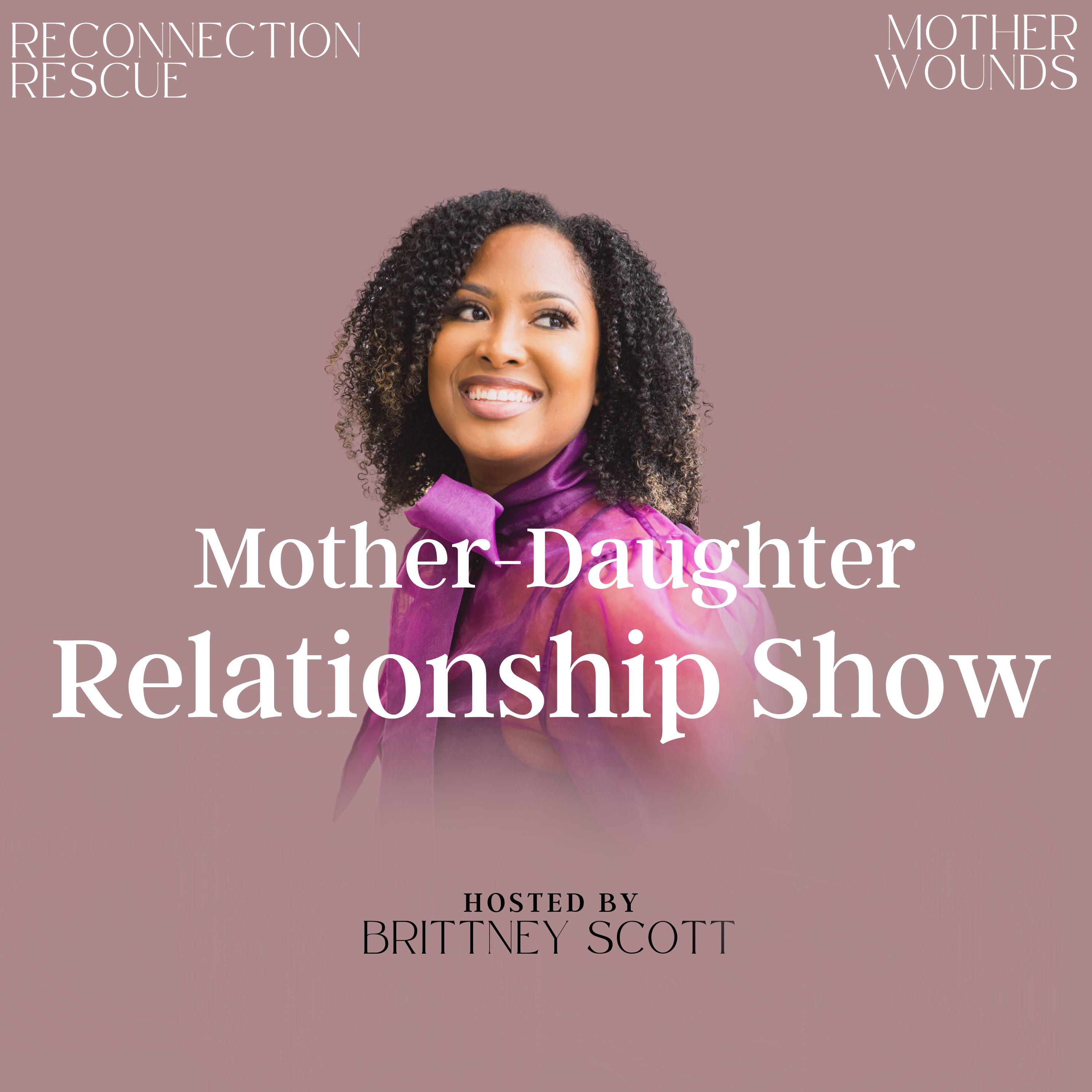
PODCAST · health
Mother Daughter Relationship Show
by Brittney Scott
Are you tired of trying to get your mom to understand your pain and apologize, just to be left feeling worse than when you started? I get it! What if I told you that you could heal your mother wound and your inner child, even if your mom wont take any accountability for her behavior or your childhood? Let's be real, it takes a self aware mother to acknowledge hurt done to her daughter. You’re healing should not rely on her being self aware. Welcome to the Mother Daughter Relationship Show, the go to podcast for mother daughter relationships, mother wound healing, eldest daughters, and women learning to mother when they weren’t mothered. I’m your host, Brittney Scott - mother daughter therapist and coach, the eldest daughter and mom to a daughter, book nerd, scripted show over reality show person. I understand the position of the eldest daughter and I know what healthy relationships look and feel like. I’ve worked with women like you who want better relationships and want to stop t
-
72
Does Your Daughter Know You Like Her? Not Just Love Her? [Ep. 78]
What Every Daughter Wants (Plus a Special Guest Appearance from My 5-Year-Old)In this episode, I shift focus to moms raising daughters who are still minors, whether toddlers or teens approaching adulthood. I break down the three things every daughter needs to feel: loved, heard, and supported. Drawing from my years working with teenage girls in therapy, I share why they often believe their moms love them but don't actually like them, and how to close that gap. I introduce the "potted plant" technique for being a trusted, quiet presence when your daughter has friends over, explain why teenage girls want to talk more than they want to be talked to, and discuss the importance of letting her make safe mistakes rather than preventing every misstep. Plus, don't miss the adorable surprise guest appearance from my own five-year-old daughter!With this episode you'll be able to:Understand the three foundational needs every daughter has: love, being heard, and supportRecognize the difference between your daughter knowing you love her versus knowing you like herUse the "potted plant" approach to become a trusted, non-intrusive presence during her conversationsLearn why listening more than speaking builds trust with teenage daughtersAllow safe mistakes so she learns natural consequences rather than being told what will happenSupport the specific girl in front of you, not who you expected her to be or who you were at her ageShow genuine interest in her interests, even ones you don't personally enjoyDon't forget: teenage girls want to know their parents actually like them, not just love them out of obligation, so go learn about the band, the music, or whatever she's into right now!Connect with Brittney:Instagram: @theBrittneyScottWebsite: www.brittneymscott.comConsultation to work with BrittneyFree ResourcesMentioned resources:The "potted plant" technique for trusted, quiet presenceStrategies for allowing safe mistakes and natural consequencesIndividual coaching for moms navigating communication with young daughtersReconnection Rescue program for repairing adult mother-daughter relationshipsHelp me reach more mothers and daughters by following the show & leaving a rating or review on Apple & Spotify!Keyword tags:raising daughters, teenage girls, communication styles, potted plant technique, feeling heard, feeling supported, Brittney Scott, parenting teens, trust building, safe mistakes, mother daughter bond, listening skills
-
71
Communication, Boundaries, and Apologies: The Final Step in Mother-Daughter Repair [Ep. 77]
How to Rebuild a Healthy Mother-Daughter Relationship After Hurt Repairing a strained mother-daughter relationship doesn't end with difficult conversations, it continues by intentionally rebuilding trust. In this episode, I walk through the third step of my relationship repair framework: creating healthier communication, establishing meaningful boundaries, and developing a repair process for future conflict. Whether you're navigating estrangement, low contact, or simply hoping to strengthen your relationship, this episode offers practical tools to help both mothers and adult daughters reconnect in a healthier way. With this episode you’ll be able to:Why rebuilding is just as important as addressing past hurtHow effective communication creates emotional safetyThe difference between listening to understand vs. listening to respondWhy defensiveness blocks connectionHow to create healthy boundaries based on your personal needsExamples of financial, communication, visitation, and grandparent boundariesWhy boundaries are about your behavior and not controlling someone else'sHow to develop a repair process for future conflictWhat genuine apologies sound likeWhy healthy relationships still experience conflict—and how to move through itKey Takeaways:Listen to fully understand before responding.Validate emotions before defending your intentions.Healthy boundaries begin with identifying your needs.Boundaries define your limits, not another person's behavior.Conflict is normal, the ability to repair is what strengthens relationships.Every healthy relationship benefits from clear communication, mutual respect, and consistent repair.Connect with Brittney:Instagram: @theBrittneyScottWebsite: www.brittneymscott.comConsultation to work with BrittneyFree ResourcesMemorable Quotes"People are often listening to respond instead of listening to understand."Thank you for listening. Don't forget you can submit your question! And yes, I really am going to give you an answer in an upcoming podcast.and be sure to say hi on Instagram!Resources MentionedFree Boundaries GuideFree Consultation with Brittney ScottHelp me reach more service providers like you by following the show & leaving a rating or review on Apple & Spotify!Keyword tags:#MotherDaughterRelationship #HealthyBoundaries #CommunicationSkills #RelationshipHealing #FamilyRelationships #ConflictResolution #EmotionalHealing
-
70
The Repair Step Most Moms and Daughters Skip [Ep. 76]
Beyond the Apology - Why Talking About Your Grandmothers Rebuilds TrustContinuing from last week's episode on sitting through painful stories, I dive into what actually comes next in repairing a mother-daughter relationship: creating vulnerability by talking about the women who came before you. From understanding great-grandma's emotional expression to being honest about how she treated grandma, I explain why mothering never happens in a vacuum, patterns get passed down through generations whether we consciously teach them or not. I also address one of the most damaging cycles I see between moms and daughters trying to reconnect: getting stuck arguing about whose version of events is true. I explain why a parent-child relationship's inherent hierarchy means stories will rarely match, and why listening for emotion matters infinitely more than winning the truth debate.With this episode you'll be able to:Understand that repair requires more than apology, you have to build something new togetherCreate vulnerability by honestly discussing the women in your lineage, including their flawsRecognize why family secrets keep pain alive and honesty helps it dissipateIdentify what's specific to YOUR family patterns, not just universal generational cyclesStop the exhausting cycle of arguing over whose memory of events is correctLearn why listening for feelings matters more than validating exact details of a storyKnow when truth-seeking does matter (like in cases of assault) versus when it doesn'tDon't forget: if her emotions are safe with you, she is safe with you - that's ultimately what rebuilds trust and reconnects the relationship!Mentioned resources:Reconnection Rescue program for guided mom-daughter repair workFree, no pressure, consultation calls to discuss the programPrevious episode on sitting through the initial painful conversationsFramework for discussing family lineage and inherited patternsHelp me reach more mothers and daughters by following the show & leaving a rating or review on Apple & Spotify!Keyword tags: reconnection, family lineage, generational patterns, vulnerability, truth-seeking cycle, emotional safety, Reconnection Rescue, Brittney Scott, repair process, family secrets, listening for emotion, rebuilding trust
-
69
Facing The Past is Part of Healing The Relationship [Ep. 75]
The Hard Part Nobody Talks About - Why the First Sessions of Reconnection Hurt So MuchIn this raw, unscripted episode, I'm back after a month of guest hosts (and a chaotic cross-country move complete with an ER visit, broken AC, and a month-long wait for furniture!) to talk about the hardest part of reconnecting a mother-daughter relationship: the very beginning. Inside my Reconnection Rescue program, the first few sessions require both mom and daughter to share what broke the relationship, and it's rarely easy. I walk you through why some moms decide not to continue, why daughters are left devastated when that happens, and why you can't skip straight to healing without acknowledging the pain first. I also explain why open communication throughout childhood prevents this painful flood of memories later, and what daughters actually need to hear: not pretending nothing happened, but genuine acknowledgment, accountability, and a real apology.With this episode you'll be able to:Understand why the relationship with your healer or guide matters more than any techniqueRecognize why the first few sessions of reconnection work are the hardest and most likely to end thingsSee why you can't skip past acknowledging pain to get to a healed relationshipLearn the difference between pretending nothing happened and actually healing what didIdentify relationship dynamics that don't work, like fight-flight mismatches during conflictDiscover what genuine accountability sounds like versus empty apologiesFind motivation to try again if you've walked away from reconnection work beforeDon't forget: daughters never stop needing their moms, we just need them differently at each stage of life. If you want the relationship, you have to walk through the muddy waters until they get clear again!Connect with Brittney:Instagram: @theBrittneyScottWebsite: www.brittneymscott.comConsultation to work with BrittneyFree ResourcesMentioned resources:Reconnection Rescue program (12-session mom and daughter reconnection work)Repair language and conflict resolution skill buildingGuest episodes from June (interviews and guest hosts)Individual and joint coaching options for moms and daughtersHelp me reach more mothers and daughters by following the show & leaving a rating or review on Apple & Spotify!Keyword tags:reconnection, repair work, mother daughter healing, accountability, acknowledgment, Reconnection Rescue, Brittney Scott, difficult conversations, generational healing, relationship dynamics, conflict resolution, hard conversations, healing process
-
68
Coming Back to Life with Makena Interview [Ep. 74]
Coming Back to Life: Healing the Mother Wound with Makena & Gigi SageMakena had built a life that looked successful on paper (career, independence, and ambition) but underneath it all, she was struggling with anxiety, burnout, and a quiet sense that something was missing. In this deeply personal episode, McKenna sits down with her mother, Gigi Sage—a pioneering coach with over 40 years of experience—to share their powerful journey through breakdown, healing, and transformation. Together, they explore what it means to “lose your light,” how to find your way back to yourself, and the profound role their mother-daughter relationship played in that process.From navigating a shared “dark night of the soul” to healing the mother's wound and redefining their relationship beyond traditional roles, this conversation offers insight, honesty, and practical wisdom for anyone seeking deeper connection and aliveness in their life.What You’ll Learn in This Episode:What it means to “lose your light” and how it happensThe impact of childhood experiences and family challenges on identityHow burnout, anxiety, and misalignment show up—even in a “successful” lifeThe power of slowing down and reconnecting with what truly brings you aliveA simple but transformative question: What brings you vitality?How to navigate and heal the “mother wound”Why forgiveness is more about your freedom than the other personHow redefining roles (mother, daughter, mentor, partner) can deepen connectionThe importance of curiosity over assumptions in relationshipsKey Takeaways:Start noticing what energizes you vs. drains youCreate space to slow down, clarity doesn’t come from forceAsk yourself regularly: What brings me alive?Get curious about the people closest to you instead of assuming you know themHealing doesn’t require the other person’s participation—it starts with youPractical Thoughts:Healing, whether within yourself or in your relationships, isn’t about rewriting the past it’s about releasing its hold on you.Thank you for listening. Don't forget you can submit your question! And yes, I really am going to give you an answer in an upcoming podcast.and be sure to say hi on Instagram!Resources MentionedMakena's Book - The Wisdom That Raised Me: A Daughter's Journey into Wholeness, Wisdom and Womanhood (featuring exercises like “Charting Your Aliveness”)Coaching principles from Gigi Sage’s 40+ years of experienceHelp me reach more service providers like you by following the show & leaving a rating or review on Apple & Spotify!Keyword tags:Brittneyscott,#MotherDaughterRelationship #podcast #podcastclips #podcastlife #selfgrowth #personaldevelopment #healingjourney #innerhealing #motherwound #selfdiscovery #mindsetshift #emotionalhealing #anxietyrecovery #burnoutrecovery #womensupportingwomen #womenempowerment #relationshiphealing #familyhealing #forgivenessjourney #mentalwellness #liveyourtruth #findyourpurpose #authenticliving #growthmindset #selfawareness #healingtrauma #lifecoach #coachinglife #spiritualgrowth #wellnessjourney #empoweredwomen
-
67
Are We Really That Different From Our Mothers [Ep. 73]
Are We Really That Different From Our MothersBreaking the Cycle vs. Redirecting It In this guest episode, Dr. Imani Steele returns to explore one of the most complex and formative relationships in a woman’s life: the relationship between mothers and daughters.Through personal insight, research, and real-life examples, Dr. Steele challenges a common belief, that awareness alone is enough to break generational cycles. Instead, she invites listeners to consider a deeper truth: sometimes we’re not breaking patterns, we’re simply expressing them differently.This conversation dives into how maternal relationships shape identity, emotional patterns, self-perception, behavior, and what it actually takes to heal, grow, and show up differently for ourselves and the next generation.Key Topics Discussed:Why mother-daughter relationships are so formative and complexThe difference between awareness and transformationHow generational patterns show up (even when we try to avoid them)“Mirroring vs. inversion” — becoming like our mothers vs. reacting to themEmotional conditioning and learned behaviors in childhoodThe internalization of maternal criticism and its impact on self-worthReparenting, self-awareness, and identity rediscoveryThe role of community and support in healingKey Takeaways:Awareness does not automatically equal changeYou can reject your mother’s behavior and still be rooted in the same woundsNot all differences are healing, some are reactionsIf you don’t address patterns, you may internalize them instead of breaking themHealing requires both recognition and intentional interruptionYou may need to relearn who you are outside of survival patternsIf this episode resonated with you, share it with someone who may need it, and take a moment to reflect on your own patterns, healing journey, and what breaking the cycle truly means for you. Thank you for listening. Don't forget you can submit your question! And yes, I really am going to give you an answer in an upcoming podcast.and be sure to say hi on Instagram!Resources MentionedLink to purchase the bookhttps://bookshop.org/lists/mother-daughter-relationships-brittney-m-scottHelp me reach more service providers like you by following the show & leaving a rating or review on Apple & Spotify!Keyword tags:Brittneyscott,#MotherDaughterRelationship #healingjourney #selfgrowth #personaldevelopment #mentalhealthmatters #growthmindset #selfawareness #emotionalintelligence #innerwork #mindsetshift #traumahealing #reparenting #breakthecycle #healing #selflovejourney #deepconversations #podcastclips #womenempowerment #lifechanging #truthbomb #explorepage
-
66
Redefining the Mother-Daughter Relationship with Tes and Holly [Ep. 72]
Heart to Heart: Redefining the Mother-Daughter Relationship with Tes and HollyWhen Vulnerability Deepens the Mother-Daughter Bond In this honest and heartfelt guest-hosted episode, Tes and Holly Cohen explore the powerful intersection of vulnerability, boundaries, grief, and connection in adult mother-daughter relationships.Through personal storytelling and real-time reflection, they unpack how one emotionally charged moment during Tes’s egg-freezing journey transformed their relationship and inspired the creation of Heart-to-Heart Gatherings: intentional spaces where mothers and adult daughters can reconnect through courageous conversation.This episode is a moving reminder that healing often begins not when someone fixes our pain, but when they are willing to sit beside us in it.With this episode you’ll understand :How “toxic positivity” can unintentionally create emotional distanceThe vulnerable conversation that changed Tess and Holly’s relationshipThe lasting impact of grief, loss, and generational patternsNavigating changing family dynamics during new life chaptersWhy adult daughters and mothers often struggle with “burden” conversationsThe importance of reflective practice in relationshipsHow voice memos, spontaneous calls, and intentional check-ins strengthen connectionLearning to “be with” someone’s pain instead of trying to solve itKey Takeaways:Vulnerability Over FixingGenerational HealingGrief & Bittersweet JoyBoundaries & BurdensIntentional RelationshipsThank you for listening. Don't forget you can submit your question! And yes, I really am going to give you an answer in an upcoming podcast.and be sure to say hi on Instagram!Resources MentionedSign up for Heart-to-Heart newsletter hereOur contact info (we'd love to connect!): Tes' LinkedIn + [email protected], Holly's LinkedIn + [email protected] first podcast episode with Brittney, Overcoming Toxic Positivity: How Vulnerability Deepens Mother-Daughter BondsThe Bengson's Keep Going SongToxic Positivity BookHelp me reach more service providers like you by following the show & leaving a rating or review on Apple & Spotify!Keyword tags:Brittneyscott,#MotherDaughterRelationship#MotherDaughterRelationship #MotherDaughterBond #MotherDaughterHealing #Vulnerability #EmotionalHealing #HealthyRelationships #FamilyCommunication #GenerationalHealing #ToxicPositivity #EmotionalWellness #RelationshipPodcast #WomenSupportingWomen #AdultDaughter #HealingJourney #Boundaries #AuthenticConnection #IntentionalLiving #ReflectiveLeadership #WomenEmpowerment #GriefAndHealing #EggFreezingJourney #FertilityJourney #MentalHealthAwareness #SelfAwareness #PersonalGrowth #PodcastLife #HealingConversations #EmotionalIntelligence #FamilyHealing #HeartToHeart
-
65
Matrscence and The Mother Daughter Dynamic with Dr. Cecily Moore [Ep. 71]
Materscence and The Mother Daughter Dynamic with Dr. Cecily MooreWhen the Daughter Becomes the Mother with Dr. Cecily Moore In this guest-hosted episode of The Mother Daughter Relationship Show, Dr. Cecily Moore explores the powerful transformation that happens when a daughter becomes a mother. Through the lens of matrescence, the psychological and identity transition into motherhood, Dr. Moore discusses how motherhood reshapes our understanding of caregiving, sacrifice, emotional labor, and our relationship with our own mothers.Drawing from both personal experience and professional expertise, Dr. Moore shares how becoming a mother can bring compassion, clarity, grief, boundary-setting, and healing. She also dives into the impact of generational expectations placed on women (especially Black women) and the process of redefining motherhood on your own terms.This thoughtful conversation invites listeners to reflect on the cycles they want to continue, the patterns they want to break, and the values they want to pass forward.With this episode you’ll learn:What “matrescence” means and why it mattersThe emotional complexity of becoming a motherBreaking generational cycles and redefining caregivingEmotional labor and the “Strong Black Woman” narrativeQuestions every mother should ask herself about values and identityHow motherhood can become a healing journeyKey Takeaways:Motherhood is more than caring for a baby, it is a complete identity transformation.Becoming a mother often changes how we understand our own mothers.Matrescence can bring both healing and grief.Setting boundaries can be an important part of creating healthier generational patterns.Motherhood can become an opportunity to consciously rewrite family narratives.Memorable Quotes “Sometimes the most powerful part of becoming a mother is realizing that we now have the opportunity to rewrite the story.” Thank you for listening. Don't forget you can submit your question! And yes, I really am going to give you an answer in an upcoming podcast.and be sure to say hi on Instagram!Resources MentionedBe sure to connect with Dr. Cecily Moore using the links in the episode description and download her free Values Checklist.https://www.drcecilymoore.com/values-checklistIf this episode resonated with you, take a moment to reflect on the values shaping your motherhood journey. What are you carrying forward and what are you intentionally changing?Help me reach more service providers like you by following the show & leaving a rating or review on Apple & Spotify!Keyword tags:Brittneyscott,#MotherDaughterRelationship #Motherhood #Matrescence #MotherDaughterRelationship #GenerationalHealing #EmotionalLabor #ParentingPodcast #MentalHealth #BlackMotherhood #HealingJourney
-
64
Enmeshed Mother Daughter Relationships [Ep. 70]
Breaking Free from Mother-Daughter EnmeshmentWhy does prioritizing yourself feel like betraying your mother?In this episode, licensed therapist Brittney explores emotional enmeshment in mother-daughter relationships and the painful guilt many daughters experience when trying to become independent. She unpacks how emotionally dependent mothers can unintentionally use guilt, manipulation, and toxic loyalty to keep daughters emotionally responsible for their well-being.Brittney explains why boundaries often feel “wrong” to daughters raised in enmeshed dynamics, how the “good daughter” archetype fuels burnout and resentment, and what healing can look like for both mother and daughter. She also offers practical strategies for setting healthy boundaries, recognizing false guilt, and reclaiming autonomy without abandoning love.This conversation is a reminder that self-care is not betrayal, and that loving your mother should never require losing yourself.With this episode you’ll be able to learn:What emotional enmeshment looks like between mothers and daughtersWhy autonomy can feel like abandonment to an emotionally dependent parentThe “good daughter” archetype and societal pressureGuilt-tripping language emotionally dependent mothers may useHow childhood attachment patterns shape adult behaviorThe difference between real guilt and false guiltWhy boundaries feel so difficult in enmeshed relationshipsPractical examples of healthy boundariesHow to stop feeling responsible for your mother’s emotionsPreventing codependent patterns in future relationshipsConnect with Brittney:Instagram: @theBrittneyScottWebsite: www.brittneymscott.comConsultation to work with BrittneyFree ResourcesNotable Quotes:“Your self-care is not betrayal.”“Love does not have to mean self-sacrifice.”“Your mother’s emotional dependency has convinced you that your self-preservation is her destruction.”“You can love your mother without losing yourself.”“In an enmeshed relationship, ‘no’ gets interpreted as ‘I don’t love you.’”Thank you for listening. Don't forget you can submit your question! And yes, I really am going to give you an answer in an upcoming podcast.and be sure to say hi on Instagram!Resources MentionedFree Class (May 20th): Learn how to build a healthier, more connected relationship with your daughter. Register HereHelp me reach more service providers like you by following the show & leaving a rating or review on Apple & Spotify!Keyword tags:Brittneyscott,#MotherDaughterRelationship #emotionalmanipulation, #peoplepleasing, #familyenmeshment, #daughterguilt, #toxicfamilydynamics, #healingjourney #boundaries #codependency #mentalhealthpodcast Mentioned in this episode:Q2 '26 Ad
-
63
Trauma, ACEs, and Mother Wounds Talk [Ep. 69]
Trauma, ACEs, and Mother Wounds Talk:Is Everything a Trauma Response? Rethinking ACE Scores, Mother Wounds & Emotional Impact SummarySocial media has made it easy to label behaviors as “trauma responses,” but is it really that simple? In this episode, we unpack why human behavior can’t be reduced to blanket statements and explore the nuance behind trauma, ACE (Adverse Childhood Experiences) scores, and emotional impact.Drawing from personal experience as a therapist, we examine how context shapes our responses, why two people can experience the same event differently, and how this connects deeply to mother-daughter relationships. We also dive into the concept of the “mother wound,” what it actually means, and why believing people’s lived experiences is more important than trying to measure or minimize them.With this episode you’ll be able to:Why labeling behaviors as “trauma responses” can be misleadingWhat ACE scores are, and their limitationsHow the same experience can affect people in completely different waysThe true foundation of a “mother wound”Why emotional validation matters more than comparisonHow generational patterns and societal shifts impact family dynamicsWhy more daughters are choosing distance and what’s behind that shiftConnect with Brittney:Instagram: @theBrittneyScottWebsite: www.brittneymscott.comConsultation to work with BrittneyFree ResourcesA Reframe:Trauma isn’t one-size-fits-all. What matters most isn’t labeling experiences, but listening, validating, and responding with empathy. Especially in mother-daughter relationships, healing starts with belief and accountability. Thank you for listening. Don't forget you can submit your question! And yes, I really am going to give you an answer in an upcoming podcast.and be sure to say hi on Instagram!Resources Mentioned:ACE (Adverse Childhood Experiences) Questionnaire (search online: “ACE score test”)Free Class (May 20th): Learn how to build a healthier, more connected relationship with your daughter. Register HereHelp me reach more service providers like you by following the show & leaving a rating or review on Apple & Spotify!Keyword tags:Brittneyscott,#MotherDaughterRelationship #RelationshipGoals #HealthyBoundaries #MotherDaughterBond #parenting daughters #emotional safety #parenting advice #conscious parenting #motherhood podcast Mentioned in this episode:Q2 '26 Ad
-
62
2 Mothers and 2 Mother Wounds [Ep 68]
Two Mothers and Two Mother wounds In this deeply personal and emotional conversation, Desiree shares her journey of growing up between two mother figures, her biological mother and the great-aunt who raised her after she entered the foster system at age five. From early instability, abuse, and emotional parentification to navigating identity, race, and belonging in a predominantly white town, Desiree opens up about the lasting impact of her childhood experiences.Now a licensed professional counselor associate and a mother herself, she reflects on the complexity of forgiveness, the evolution of her relationship with her biological mom, and the boundaries she’s had to build with the family who raised her. This episode explores the “mother wound,” generational trauma, and what it means to break cycles while raising the next generation.With this episode you’ll be able to learn:Growing up with two maternal figures and navigating divided loyaltiesEntering foster care and being raised by extended familyExperiencing instability, abuse, and early emotional responsibilityThe impact of inconsistent parenting and “walking on eggshells”Over-scheduling as a coping strategy and why it didn’t workIdentity, race, and isolation in a predominantly white environmentMental health struggles in adolescence, including disordered eating and hospitalizationThe long road to rebuilding a relationship with her biological motherSetting boundaries with caregivers who provided materially but lacked emotional connectionBreaking generational cycles as a parentConnect with Brittney:Instagram: @theBrittneyScottWebsite: www.brittneymscott.comConsultation to work with BrittneyFree ResourcesA Reframe:Desiree’s story is a powerful reminder that providing a “good life” materially doesn’t always meet a child’s emotional needs. Healing isn’t linear and sometimes growth means holding compassion and boundaries at the same time.Thank you for listening. Don't forget you can submit your question! And yes, I really am going to give you an answer in an upcoming podcast.and be sure to say hi on Instagram!Resources MentionedFree Class (May 20th): Learn how to build a healthier, more connected relationship with your daughter. Register HereHelp me reach more service providers like you by following the show & leaving a rating or review on Apple & Spotify!Keyword tags:Brittneyscott,#MotherDaughterRelationship #motherwound, #fostercare, #familytrauma, #emotionalneglect, #parentification, #identity, #therapyexperiences, #adolescentmentalhealth, #generationalhealing, #boundariesMentioned in this episode:Q2 '26 Ad
-
61
The Ripple Effects of Mother Wounds [Ep. 67]
The Ripple Effects of Mother Wounds.How the Mother Wound Impacts Every Relationship in Your Life The “mother wound” doesn’t stay confined to your relationship with your mom, it shapes how you show up in romantic relationships, friendships, parenting, and even your relationship with yourself. In this episode, Brittany Scott breaks down how early relational patterns formed in childhood continue to influence your behaviors, beliefs, and emotional responses as an adult.You’ll learn how these patterns show up in subtle (and not-so-subtle) ways, like people-pleasing, choosing unavailable partners, struggling with self-worth, and repeating generational cycles. Most importantly, Brittany shares what it actually takes to break these patterns and begin healing from the inside out.With this episode you’ll be able to learn:What the “mother wound” really is and why it affects all relationshipsHow childhood relational patterns get wired into your brainWhy you may be repeating unhealthy dynamics without realizing itThe connection between self-worth and early maternal relationshipsWhat it truly means to break generational patternsQuote:“You can’t break generational patterns by doing the opposite—you have to move through it.”Connect with Brittney:Instagram: @theBrittneyScottWebsite: www.brittneymscott.comConsultation to work with BrittneyFree ResourcesIf this episode resonated with you, share it with a mother or daughter who needs to hear it. Don’t forget to follow the show, leave a rating or review on Apple & Spotify! and take the next step in your healing journey. Thank you for listening. Don't forget you can submit your question! And yes, I really am going to give you an answer in an upcoming podcast.and be sure to say hi on Instagram!Resources MentionedFree Class (May 20th): Learn how to build a healthier, more connected relationship with your daughter. Register HereKeyword tags:Brittneyscott,#MotherDaughterRelationship #motherwound, #motherwoundhealing, #motherdaughterconflict, #healingchildhoodtrauma, #innerchildhealing, #generationaltrauma, #breakinggenerationalcycles,#trustissues #romanticrelationshippatterns,Mentioned in this episode:Q2 '26 Ad
-
60
What Your Daughter Needs From You [Ep. 66]
Why Loving Your Daughter “Your Way” Might Be Missing the Mark ? What your daughter needs from youYou’ve given your daughter everything you wish you had growing up, so why does it still feel like it’s not enough? In this episode, we unpack an often overlooked truth: loving your daughter the way you need isn’t the same as loving her the way she needs. When parenting is shaped by your own unmet needs, it can create a disconnect, no matter how good your intentions are. We explore why this mismatch happens, how generational differences play a role, and what daughters are truly asking for underneath the surface. You’ll walk away with a clearer understanding of how to build a deeper, more connected relationship—whether your daughter is a teen or an adult.With this episode you’ll be able to:1. Giving love in a way that makes sense to you doesn’t guarantee your daughter feels it. Like using the wrong currency in another country, your love may not “translate” unless you understand her emotional language.2. It’s easy to project your younger self onto your daughter, but real connection requires seeing her as a separate person with her own identity, needs, and experiences.3. What felt like love in your upbringing may not align with what your daughter needs today. Expectations evolve, and relationships need to evolve with the.A Powerful Reframe:You don’t have to get it perfect, you just have to be willing to repair. The strength of your relationship won’t come from never making mistakes, but from your willingness to own them, adjust, and show up differently.Thank you for listening. Don't forget you can submit your question! And yes, I really am going to give you an answer in an upcoming podcast.and be sure to say hi on Instagram!Connect with Brittney:Instagram: @theBrittneyScottWebsite: www.brittneymscott.comConsultation to work with BrittneyFree ResourcesResources MentionedFree Class (May 20th): Learn how to build a healthier, more connected relationship with your daughterRegister for the class hereHelp me reach more service providers like you by following the show & leaving a rating or review on Apple & Spotify!Keyword tags:Brittneyscott,#MotherDaughterRelationship #RelationshipGoals #HealthyBoundaries #MotherDaughterBond #parenting daughters #emotional safety #parenting advice #conscious parenting #motherhood podcast
-
59
Slow, Authentic Repair To The Mother Wound [Ep. 65]
Slow, Authentic Repair To The Mother WoundSocial media often portrays healing the mother's wound as a "glowy" moment of sudden forgiveness or a definitive "I chose me" caption. In reality, true healing is often quiet, unremarkable, and invisible to the outside world. This episode strips away the misconceptions of "pivotal breakthroughs" and explores how reclaiming your life is a layered, non-linear process of reducing the power the past has over your present.This episode explains:Why the "one-moment" breakthrough is a myth that creates unnecessary suffering.The invisible shift: How dropping your shoulders and standing straighter signals internal change.Redefining Power: How to stop organizing your entire life around an old wound.Concrete signs of progress: When a trigger that used to "take you out" for a week now only lasts an afternoon.The "Then vs. Now" Gap: Recognizing when you are reacting to your partner based on your childhood history.Why you can't "think" your way out of a mother wound: The necessity of corrective, safe relationships.Connect with Brittney:Instagram: @theBrittneyScottWebsite: www.brittneymscott.comConsultation to work with BrittneyFree ResourcesKey Takeaways:Healing is Not a Light Switch: It is a gradual, slow process—more like the sun coming up than a single "pivotal" therapy session or book.The "Slanted Line" Progress: Healing is non-linear. While you will still experience "valleys" and pain during holidays or triggers, those lows eventually become less intense than when you first started.Forgiveness is Optional: You do not have to forgive your mother or find excuses for her behavior to heal and reclaim your life.Reclaiming the "Flattened" Self: A core part of healing is rediscovering the parts of yourself—your voice, your needs, and your boundaries—that you may have suppressed to stay safe in childhood.Thank you for listening. Don't forget you can submit your question! And yes, I really am going to give you an answer in an upcoming podcast.and be sure to say hi on Instagram!Resources MentionedFree Live Class (May 20th): The Mother-Daughter Relationship Decoded—Breaking down the dynamics that fracture these bonds and how to jumpstart rebuilding.Register: https://www.brittneymscott.com/webinarSummer Therapeutic Groups:The Mother Wound Circle: For adult daughters healing together.Bridge Builders: For mothers of adult daughters looking to repair the relationship.Help me reach more service providers like you by following the show & leaving a rating or review on Apple & Spotify!Keyword tags:Brittneyscott,#MotherDaughterRelationship #Emotional Triggers, #Corrective Experiences, #Self-Reflection, # Internal Shifts. #Therapeutic Groups, #Sisterhood, #Community Healing, #Safe Relationships, #Non-linear Healing, #Forgiveness, #Reclaiming Self.Mentioned in this episode:Q2 '26 Ad
-
58
Your Teenagers Behavior Feels Like Rejection? [Ep. 64]
When Your Teenager Pulls Away: Individuation vs. The Mother WoundIs your teenager becoming prickly, private, or distant? While this "pulling away" is a healthy developmental milestone, for mothers with unhealed wounds, it can feel like a devastating personal rejection. In this episode, Brittney explores how to distinguish between normal teenage behavior and your own emotional triggers, providing a roadmap for breaking generational cycles and building a lasting adult connection with your daughter.Upcoming - Free Live Training: The Mother-Daughter Divide: What We Wish We Could Tell Each. May 20, 2026.With this episode you’ll be able to understand:Understanding why your teen’s new need for privacy feels so heavyWhat is "Normal". A checklist of healthy individuation, from closed doors to emotional volatility.How to tell if your reaction is proportional or if an old nerve is being hit.5 Common Patterns of the Unhealed Wound: Over-controlling, emotional withdrawal, taking independence personally, enmeshment, and seeking worth through your child.The Power of Repair: Why apologizing for overreacting or withdrawing is the key to teaching your daughter that relationships can be hard but healthy.Breaking the Cycle: Shifting from a "perfect" mother to a "willing-to-grow" mother.Connect with Brittney:Instagram: @theBrittneyScottWebsite: www.brittneymscott.comConsultation to work with BrittneyFree ResourcesKey Takeaways:Individuation is your teenager's job; she is supposed to become a separate person from you. If her distancing feels like an "attack" or "abandonment," you are likely reacting to an old "mother wound" rather than the present moment.Use the "Pause and Name" technique. When you feel a surge of intense emotion, pause and say internally, "This is my wound, not just my daughter". This creates the space needed to regulate before you react.The Surprise: The more a mother grips tightly out of fear of losing her daughter, the more the daughter feels suffocated and pulls away, creating the very abandonment the mother fears most.Thank you for listening. Don't forget you can submit your question! And yes, I really am going to give you an answer in an upcoming podcast.and be sure to say hi on Instagram!Help me reach more service providers like you by following the show & leaving a rating or review on Apple & Spotify!Keyword tags:Brittneyscott,#MotherDaughterRelationship #RecoveryJourney, #FamilyHealing, #Motherhood triggers, #Teenage rebellion, #Conscious parenting, #Emotional Regulation, #Healthy BoundariesMentioned in this episode:Q2 '26 Ad
-
57
Four Years No Contact: A Mother-Daughter Reconciliation Story [Ep. 63]
Four Years No Contact: A Mother-Daughter Reconciliation StoryIn this episode, we dive deep into the powerful and often complex world of mother-daughter relationships with bestselling authors Leslie and Lindsay Glass. After surviving a tumultuous history involving addiction, codependency, and a four-year period of complete "no contact," Leslie and Lindsay share the tools they used to reconcile and build a relationship based on respect and healthy boundaries. They discuss their journey from "killing people" in mystery novels to helping families heal through their Mother-Daughter Relationship Makeover series and their platform, Reach Out Recovery.With this episode you’ll be able to:Understanding your own history, your mother’s history, and the generational traits passed down to you.Recognizing the specific topics (like money, food, or appearance) that lead to repeated explosions.Learning to "get soft" and changing the language used during disagreements.Practicing forgiveness and nurturing yourself, regardless of whether the other person is ready to change.When first reconciling after years of silence, the duo focused on safe, neutral topics like weather, recipes, and pets rather than immediately diving into past traumas.A healthy relationship is built on mutual respect, which includes not calling names, not screaming, and knowing when to take a walk to de-escalate tension.In the repair process, focusing on "who is right" is less important than acknowledging the different emotional experiences each person had.Removing alcohol and mind-altering substances from the equation is a critical step in reducing family conflict and emotional "drama".Thank you for listening. Don't forget you can submit your question! And yes, I really am going to give you an answer in an upcoming podcast and be sure to say hi on Instagram and Threads!Connect with Brittney:Instagram: @theBrittneyScottWebsite: www.brittneymscott.comConsultation to work with BrittneyFree ResourcesResources MentionedReach Out Recovery: reachoutrecovery.com.Book Series: The Mother-Daughter Relationship Makeover.Support Groups: Al-Anon and AA.Help me reach more service providers like you by following the show & leaving a rating or review on Apple & Spotify!Keyword tags:Brittneyscott,#MotherDaughterRelationship #RecoveryJourney #FamilyHealing #ReachOutRecovery #RelationshipGoals #AddictionAwareness #HealingTrauma #HealthyBoundaries #MotherDaughterBond #SelfGrowth #LeslieGlass #LindsayGlass #RecoveryIsPossibleMentioned in this episode:Q2 '26 Ad
-
56
When your adult daughter pulls away: Estrangment from the mothers side [Ep. 62]
To the Mothers Whose Daughters Pulled Away: Understanding Ambiguous LossIn this compassionate yet accountable episode, I speak directly to mothers experiencing estrangement or distance from their adult daughters. I name what you're feeling, "ambiguous loss," and give you permission to grieve a relationship with someone who's still alive but no longer accessible to you. From the isolation of explaining why your daughter doesn't call, to the shame you carry at family gatherings, I validate the very real pain you're experiencing while also holding you responsible for examining your role. I break down the stories you might be telling yourself (she hates me, I failed, it's too late), explain why your daughter's distance is protection rather than punishment, and reveal why trying harder through more texts and unannounced visits only creates more distance. Most importantly, I show you what a different approach could look like and what work you can do whether your daughter participates or not.With this episode you'll be able to:Understand that ambiguous loss - grieving someone who's alive but inaccessible - is valid griefRecognize why comments like "what did you do?" compound your pain with shameSee that your daughter's distance is self-preservation, not hatred or punishmentIdentify how trying harder (more texts, showing up unannounced) actually creates more distanceLearn the difference between "I failed as a mother" and taking responsibility for specific behaviorsShift from "I miss you, why don't you call?" to respectful messages without pressureKnow what work you can do independently: therapy, examining patterns, regulating your emotionsDon't forget that intent and impact are different. You may not have intended to be critical, controlling, or dismissive, but examining where that impact occurred is where change begins!Mentioned resources:Individual therapy for examining your role in relationship breakdownUpcoming summer program for mothers (details coming soon)Work on identifying generational patterns you may have repeatedPractice in respecting boundaries even when you don't understand themConnect with Brittney:Instagram: @theBrittneyScottWebsite: www.brittneymscott.comConsultation to work with BrittneyFree ResourcesHelp me reach more mothers and daughters by following the show & leaving a rating or review on Apple & Spotify!Keyword tags: estrangement from mothers, ambiguous loss, mother grief, adult daughter distance, accountability, self-preservation, Brittney Scott, trying harder backfires, protection not punishment, boundary respect, pattern examination, mother shameMentioned in this episode:Q2 '26 Ad
-
55
When The Distance Becomes Estrangement: A Daughter's Side [Ep 61]
Understanding Why Daughters Choose Distance: The Truth About Detachment and Estrangement (Part 1)In this episode, I address the spectrum of detachment daughters create with their mothers (from minimal surface-level contact to complete estrangement) and dismantle the harsh cultural narratives that blame daughters for being "ungrateful" or "cruel." Distance is never a daughter's first choice; it's what happens after years of trying everything else (talking, boundaries, being smaller, being different) and still not feeling safe. I explain the skill gap most daughters face: they were never taught how to set boundaries without guilt, communicate needs clearly, manage emotional reactions, or stay connected to themselves when criticized. The unspoken messages beneath silence include "I don't know how to be okay and be with you," "I need you to be different but don't know how to ask," and "I'm not punishing you—I'm surviving." Through the example of Sarah who went low contact after her mother repeatedly dismissed her requests to stop commenting on her body, I show how defensiveness from mothers drives daughters away. This isn't about revenge or manipulation, it's protecting mental health when emotional safety became impossible inside the relationship.With this episode you'll be able to:Understand the spectrum of detachment from surface-level contact (everything's "fine") to complete estrangement with no contactRecognize that distance is never a first choice. Daughters try everything else before choosing to step back for self-protectionIdentify the skill gap: most daughters were never taught how to set boundaries, communicate needs, or stay safe while staying closeDecode the unspoken messages beneath silence including "I don't know how to be okay and be with you"Learn from Sarah's story how repeated dismissiveness drives daughters to choose distance when direct communication failsAccept that daughters can love their mothers and still need distance, carrying both relief and grief simultaneouslyConnect with Brittney:Instagram: @theBrittneyScottWebsite: www.brittneymscott.comConsultation to work with BrittneyFree ResourcesThis is Part 1 of a 2-part series. Next episode addresses mothers experiencing estrangement from their daughters.Help me reach more mothers and daughters by following the show & leaving a rating or review on Apple & Spotify!Keyword tags: Estrangement, low contact, daughter detachment, spectrum of distance, cultural narratives about estrangement, skill gap in relationships, emotional safety, unspoken messages, survival not punishment, defensiveness drives distance, relief and grief, protective distance, mother-daughter estrangement, communication breakdown, boundary setting skillsyPVXVtyQH5p62ICNM9gMMentioned in this episode:Q2 '26 Ad
-
54
She Waited for Me: A Mother-Daughter Reconciliation Before Death [Ep. 60]
When Your Mom Waited for You - Dr. Imani Steele on Jealousy, Addiction, and Final GoodbyesIn this interview, I sit down with Dr. Imani Steele, researcher and storyteller focused on Black mother-daughter relationships, who shares her story of being the child her mother didn't know how to handle. From embodying everything her mother never felt empowered to be, to watching addiction fracture their already strained relationship, Dr. Steele walks us through years of convincing herself she didn't need a mom - until she recognized her own patterns of hurting women and addictive tendencies mirroring her mother's. She reveals the maternal jealousy her mom finally admitted to her father, the brief reconnection that happened in the final 10 months of her mother's life, and the 45 minutes on Mother's Day 2022 that became their last meeting. Most remarkably, she shares how her mother waited two days after being taken off life support - waiting to hear her daughter's voice one final time.With this episode you'll be able to:Understand how mothers can struggle with daughters who embody what they never got to beRecognize that struggling to trust women is a common manifestation of mother woundsSee how addiction can transform across generations into different coping mechanismsLearn why your mother's story matters - even if you disagree with her behaviorAccept that repair doesn't require a "kumbaya moment" or explicit apologies to be meaningfulChallenge the cycle-breaker narrative by examining your specific family story, not generic patternsKnow that you are worthy and deserving of love and esteem regardless of your mother's limitationsIf you're breaking cycles, what specific story in YOUR family needs breaking, not just the universal patterns everyone talks about?Connect with Brittney:Instagram: @theBrittneyScottWebsite: www.brittneymscott.comConsultation to work with BrittneyFree ResourcesMentioned resources:Dr. Imani Steele's research on Black mother-daughter relationshipsForthcoming memoir on grief, reconciliation, and inherited patternsInterviews with family members to learn mother's storyValidation exercises: listing women who love you vs. women who hurt youHelp me reach more mothers and daughters by following the show & leaving a rating or review on Apple & Spotify!Keyword tags: Dr. Imani Steele, Black mother daughter relationships, maternal jealousy, addiction, cycle breaking, mother's story, wounded daughters, final goodbye, repair without apology, Brittney Scott, trusting women, generational patterns, specific family storiesMentioned in this episode:Q2 '26 Ad
-
53
I Don't Have a Mother Wound, But I Help Women Heal Theirs: My Story [Ep. 59]
My Story - How I Became a Mother-Daughter Therapist (And Why I Almost Didn't Share This)In this vulnerable episode, I share something I've kept hidden for years: I don't do mother-daughter work because I have a painful mother-daughter relationship. From wanting to be a doctor at Johns Hopkins to falling into clinical psychology almost by accident, I walk you through my unexpected journey into this field. I reveal how working with teen girls led me to discover that mom was always at the center of their struggles - and how frustrating it was to reach that point with clients but not know what to do next. Most importantly, I explain why I've been afraid to share that I have a good relationship with my mom, my belief that this work isn't about centering my story, and how understanding attachment and intergenerational trauma became my framework for helping mothers and daughters heal, reconnect, or break cycles.With this episode you'll be able to:Understand that therapists don't need personal pain to do meaningful healing workSee how clinical psychology can integrate science, people, and art into one fieldRecognize that all behavior makes sense when you understand the context and root causesLearn why mom is often at the center of struggles for teen girls and young womenDiscover how intergenerational trauma gets passed down through maternal lineagesAccept that healing work can come from genuine belief in the relationship's importance, not personal woundsKnow that this space welcomes all mother-daughter stories without centering my ownDon't forget to check out the resources mentioned: the Boundaries Guide, 7-Day Inner Child Healing Challenge, and Break the Cycle Workbook - all designed to help you heal and reconnect!Mentioned resources:Free Boundaries Guide for setting limits with your mom7-Day Inner Child Healing Email ChallengeBreak the Cycle Workbook (paid resource)Private one-on-one sessions and group healing programsResource library with free and paid productsConnect with Brittney:Instagram: @theBrittneyScottWebsite: www.brittneymscott.comConsultation to work with BrittneyFree ResourcesHelp me reach more mothers and daughters by following the show & leaving a rating or review on Apple & Spotify!Keyword tags: therapist story, mother daughter therapist, clinical psychology, teen girls, root work, attachment theory, intergenerational trauma, Brittney Scott, cycle breaking, healing framework, therapist journey, maternal lineageMentioned in this episode:Q2 '26 Ad
-
52
Grieving a Mother Who Was There, But Not There: Erin Gorrie's Story [Ep. 58]
Grieving a Mother Who's Still Alive - Erin Gorrie's Story of Loss, Healing, and Finding JoyIn this heartfelt interview, I sit down with Erin Gorrie, author of "We Have So Much In Common" and founder of Muskoka Puppy Yoga, to explore a type of grief many people don't recognize: losing your mother while she's still physically present. Erin shares how her mom's multiple sclerosis diagnosis at age 10 began a lifelong grieving process as the disease slowly took her mother's emotional presence away. From feeling invisible as a child to recognizing patterns of seeking approval throughout adulthood, Erin's story reveals how even unintentional neglect creates mother wounds. She also discusses how writing her memoir helped her trace everything back to that childhood loss, her experience with delayed grief after both her mother and sister passed, and the surprising healing she found through puppy yoga - which led her to create a wellness business helping others find joy again.With this episode you'll be able to:Understand that mother wounds don't require intentional abuse - absence of emotional support is enoughRecognize the validity of grieving a parent who's still alive but emotionally absentSee how delayed grief can compound when you don't allow yourself to process loss in real timeLearn about the therapeutic power of dictating your story instead of writing itDiscover how animal-assisted therapy and co-regulation can restore joy after years of griefAccept that your mother wound experience doesn't need to meet anyone else's standard of "enough"Find hope that difficult experiences can position you to help others in meaningful waysConnect with Brittney:Instagram: @theBrittneyScottWebsite: www.brittneymscott.comConsultation to work with BrittneyFree ResourcesConnect with Erin:Instagram: @egorrieDon't forget to check out Erin's book "We Have So Much In Common" available on Amazon, Barnes & Noble, Indigo, Waterstones, and bookshop.org - her honest storytelling gives permission for others to acknowledge their own hidden pain!Mentioned resources:"We Have So Much In Common" by Erin Gorrie (memoir)Muskoka Puppy Yoga (animal-assisted wellness)Voice dictation method for therapeutic writingVarious therapy modalities including talk therapy and psychedelic therapyHelp me reach more mothers and daughters by following the show & leaving a rating or review on Apple & Spotify!Keyword tags: grief, mother wound, chronic illness, multiple sclerosis, delayed grief, emotional absence, puppy yoga, animal therapy, co-regulation, Brittney Scott, Erin Gorrie, memoir, joy, healing modalitiesMentioned in this episode:Q2 '26 Ad
-
51
Your Mom Creates Drama in Public: How to Handle Mother-Daughter Conflict in Front of Others [Ep. 57]
When Your Mother Creates Conflict in Public: Why It's Different and What to DoIn this episode, I address the heartbreaking reality of mothers who create conflict, criticism, or drama in front of others—turning what should be joyful celebrations into displays of their need for attention and control. I open with a devastating wedding story where a mother made her living daughter's special day about herself by constantly bringing up her deceased daughter, exposing how public conflict carries shame, embarrassment, and exposure that private conflict doesn't. I break down four common scenarios: centering herself at your celebrations, criticizing you in front of your partner or friends, sharing your private information without permission, and undermining you in front of your children. The most important strategy when public conflict happens? Don't engage. I explain why silence is actually your power, how staying calm removes her fuel, and when you should simply leave. I also address the aftermath—dealing with witnesses, setting boundaries around social media (just block her), and accepting that repeated public humiliation fast-tracks estrangement. Your wellbeing matters more than keeping the peace or making others comfortable, and you don't have to keep showing up to places where you're being mistreated.With this episode you'll be able to:Understand why public conflict is more damaging than private conflict—it exposes your pain and dysfunction for others to witnessRecognize the four common scenarios: hijacking celebrations, criticizing in front of others, sharing private info, and undermining your parentingPractice the most powerful strategy when conflict happens: don't engage, stay silent, and remove yourself if possibleReassert your authority with your children when your mother undermines you by taking them aside and calmly reaffirming your rulesSet social media boundaries by blocking your mother if she violates your privacy or airs grievances onlineAccept that repeated public humiliation ruins trust and safety, and you have valid options including limiting contact or not attending eventsDon't forget you can submit your questions about mother-daughter relationships for me to answer in upcoming episodes!<<Check out the Break the Cycle workbook for boundary scripts and healing strategies.>>Mentioned resources:Break the Cycle: Healing Painful Mother-Daughter Dynamics workbookAvailable at breakthecycle.brittneymscott.com ($37, instant download)Connect with Brittney:Instagram: @theBrittneyScottWebsite: www.brittneymscott.comConsultation to work with BrittneyFree ResourcesHelp me reach more mothers and daughters by following the show & leaving a rating or review on Apple & Spotify!Keyword tags: Public conflict, mother-daughter conflict, public humiliation, boundary violations, don't engage strategy, family gatherings, celebration hijacking, undermining parenting, social media boundaries, estrangement fast-track, protecting yourself, family event anxiety, public criticism, anticipatory anxiety, witnessing dysfunctionMentioned in this episode:Q2 '26 Ad
-
50
When Mental Illness Broke Our Bond: A Mother-Daughter Reconnection Story [Ep. 56]
Reconnection and Loss: Genifer's Story of Mental Illness, Repair, and Saying GoodbyeIn this interview, I sit down with Genifer Salandy, school psychologist and founder of Rooted Joy Wellness, who shares her deeply personal story of estrangement, brief reconnection, and ultimate loss. From being parentified as a child by a mother struggling with undiagnosed bipolar disorder to navigating a crisis during the pandemic that led to complete estrangement, Genifer's story reveals the complexity of loving someone with serious mental illness. She walks us through the six-week period of harassment and social media attacks, her difficult decision to have her mother hospitalized, and the unexpected phone call that her mother was actively dying just as they were rebuilding their relationship. This isn't a traditional repair story - it's about honoring the ending you get, choosing love even when time is short, and recognizing your parent as fully human.With this episode you'll be able to:Understand how undiagnosed mental illness can create cycles of good and difficult periods in childhoodRecognize the signs of parentification and how it shows up in adult caretaking patternsNavigate the impossible decision of calling authorities when a parent is in crisisSet boundaries during reconnection to protect yourself while remaining openHonor a complicated ending and find peace in the love that was presentSee your parent as a complete person beyond their role as your motherAccept that not all repair stories end with years of healthy relationshipConnect with Brittney:Instagram: @theBrittneyScottWebsite: www.brittneymscott.comConsultation to work with BrittneyFree ResourcesDon't forget Genifer's wisdom: see your parent as the women they are, not just as your parent. We all fall short and sometimes honoring what you did have matters more than grieving what you didn't get.Mentioned resources:Adult protective services and mental health crisis navigationPalliative care and end-of-life decision-makingSupport for managing aging parents' healthcare from a distanceGrief resources for losing multiple parent figures quicklyHelp me reach more mothers and daughters by following the show & leaving a rating or review on Apple & Spotify!Keyword tags:mental illness, bipolar disorder, estrangement, reconnection, grief, parentification, palliative care, Brittney Scott, Jennifer Soland, complicated endings, mother daughter repair, caregiver stress, honoring loss, forgivenessMentioned in this episode:Q2 '26 Ad
-
49
Why Your Boundary Phrases Are Making Your Mom More Defensive [Ep. 55]
Why Popular Boundary Phrases Backfire With Your Mom (And What Actually Works)In this episode, I tackle the viral Instagram advice telling daughters exactly what to say to their "dysfunctional moms" when boundaries get challenged. Phrases like "I am not a child anymore and you don't get to control me with guilt" or "Your disappointment is not my responsibility to carry." The problem is these phrases might feel empowering, but they're guaranteed to put your mother on the defense, escalate conflict, and keep you trapped in the same exhausting cycle of arguments you're trying to escape. If your goal is estrangement, say whatever you want. But if you're trying to maintain even a small relationship with your mom while setting healthy boundaries, these attacking phrases won't get your needs met. I explain why popular boundary advice often backfires by creating defensiveness rather than understanding, and offer alternative phrasing that centers your emotions and needs without attacking your mother. I also break down the three valid lanes of mother wound healing: estrangement when necessary, limited relationship with strong boundaries, or full repair with accountability, and why your communication strategy should match the lane you're choosing.With this episode you'll be able to:Recognize why a phrase like "Your disappointment isn't my responsibility" escalates conflict instead of enforcing boundariesUnderstand that popular boundary advice often uplifts daughters but does nothing to create balanced, healthier relationshipsLearn alternative phrasing that centers your emotions and needs: "This is what I need for us to have a relationship" instead of attacking statementsIdentify which of the three valid healing lanes you're in: estrangement, limited relationship with boundaries, or full repair with accountabilityStop going in circles with the same arguments by using language that makes it harder for your mom to feel attackedAccept that wanting a relationship with your mom requires different communication than if estrangement is your goalConnect with Brittney:Instagram: @theBrittneyScottWebsite: www.brittneymscott.comConsultation to work with BrittneyFree ResourcesDon't forget you can submit your questions about mother-daughter relationships for me to answer in future episodes!Help me reach more mothers and daughters by following the show & leaving a rating or review on Apple & Spotify!Keyword tags: Boundary setting, mother-daughter communication, enforcing boundaries, popular boundary advice, defensive communication, conflict escalation, boundary phrases, effective boundaries, three lanes of healing, estrangement alternatives, maintaining relationships, communication strategies, mother-daughter conflict, non-defensive language, emotional centeringMentioned in this episode:Q2 '26 Ad
-
48
Stop Waiting for Your Mom to Change [Ep. 54]
Understanding the Mother Wound and How to Heal Without Your MomIn this episode, I break down what a mother wound actually is and provide a roadmap for healing without waiting for your mom to change, apologize, or acknowledge what happened. From understanding that mother wounds stem from attachment trauma and missing emotional support to recognizing that waiting for her to change is keeping you stuck, I guide you through concrete steps for reclaiming your healing journey. You'll learn why comparing your trauma to others' is holding you back, how to reconnect with your inner child at specific ages, and the importance of defining what you actually need across different areas of your life. I also address the three lanes of healing: reconnecting with your mom, going no contact, or staying in relationship with strong boundaries, and how to choose the right path for you.With this episode you'll be able to:Stop comparing your pain to others' and validate your own experienceWrite a letter to your younger self at a specific age to begin inner child healingIdentify what you need in friendships, romantic relationships, career, and daily lifeUnderstand why "doing the opposite" of your mom isn't enough for intentional parentingCreate and enforce healthy boundaries that allow for genuine connectionChoose between three healing lanes based on your specific situation and needsBreak generational patterns by reclaiming your authentic self and developing self-trustDon't forget to subscribe to the YouTube channel if you want to see more content and watch video versions of the podcast episodes!Connect with Brittney:Instagram: @theBrittneyScottWebsite: www.brittneymscott.comConsultation to work with BrittneyFree ResourcesMentioned resources:Break the Cycle workbook for mapping generational patternsInner child healing exercises and letter writingBoundary-setting guidance for different relationship contextsYouTube channel for additional content and video episodesHelp me reach more mothers and daughters by following the show & leaving a rating or review on Apple & Spotify!Keyword tags: mother wound healing, healing without mom, attachment trauma, inner child work, generational patterns, boundary setting, self trust, Brittney Scott, emotional support, three lanes of healing, no contact, reconnection, intentional parentingMentioned in this episode:Q2 '26 Ad
-
47
How to Stop Your Mother Wound from Becoming Your Daughter's [Ep 53]
How to Prevent Your Mother Wound from Becoming Your Daughter'sIn this episode, I explore how mother wounds get passed down through generations - not because you're a bad mother, but because patterns repeat until they're consciously broken. From the opening story of a mother who overcorrected her childhood invisibility by making her daughter's achievements into performances, I explain how emotional inheritance works through both repetition (doing exactly what your mother did) and overcorrection (swinging completely the opposite way). You'll learn to recognize when you're parenting from your own wound instead of responding to your daughter's actual needs, discover critical questions like "Is this because I didn't get it or because my daughter needs it?", and understand that awareness alone won't break cycles, behavior change is also required. I share why repair is always possible and what daughters actually want from their mothers: acknowledgement, not perfection.With this episode you'll be able to:Recognize the difference between parenting your daughter versus parenting yourself through herIdentify whether you're repeating patterns or overcorrecting from your childhoodAsk yourself critical questions before making parenting decisions based on fearUnderstand that connection must come before correction in preventing mother woundsLearn the five components of genuine repair conversations with your daughterKnow that mistakes don't create wounds (denial and dismissal do).Accept that perfection isn't required, but acknowledgement and behavior change areDon't forget that it's never too late to repair as long as your daughter is willing to engage. The mother who prevents wounds is the one who acknowledges mistakes, apologizes, and changes behavior.Mentioned resources:Individual therapy for mothers struggling to change patternsRepair conversation frameworks with specific componentsQuestions for getting to know your daughter at each life stageSupport for mothers working through their own healingHelp me reach more mothers and daughters by following the show & leaving a rating or review on Apple & Spotify!Keyword tags: generational trauma, emotional inheritance, mother wounds, parenting patterns, overcorrection, cycle breaking, repair conversations, conscious parenting, Brittney Scott, behavior change, acknowledgement, mother daughter healing, connection, intentional parentingMentioned in this episode:Q2 '26 Ad
-
46
Questions Your Daughter Wishes You Would Ask (At Every Age) [Ep. 52]
Questions Your Daughter Wishes You Would Ask: From Preteens to MotherhoodIn this comprehensive episode, I walk mothers through the questions daughters desperately wish they would ask at every life stage, and why most mothers miss the mark by asking surface-level surveillance questions instead of connection-building ones. From preteens who need "What makes you feel afraid?" instead of "Did you finish your homework?" to new mothers who need "How can I support your motherhood?" instead of criticism disguised as concern, the right questions communicate trust, respect, and genuine curiosity about who your daughter is becoming. I break down specific questions for preteens (8-12), teenagers (13-18), young adults (late teens through 30s), and daughters becoming mothers, plus the timing and tone that makes these conversations actually work. The episode culminates in repair questions—the hardest but most important ones that require vulnerability and accountability like "Did I hurt you when..." These aren't just conversation starters; they're invitations into your daughter's inner world that tell her "I see you, I want to know you, and your feelings matter to me." Download the free PDF of all questions in the show notes so you can reference them anytime.With this episode you'll be able to:Ask connection questions instead of surveillance questions that shut down communication with preteens and teensShift from parenting mode to partnership with teenagers by asking "Are there tough decisions you're making?" rather than interrogatingRespect your adult daughter's autonomy by asking "Do you need advice or are you just venting?" before offering unsolicited opinionsSupport your daughter's motherhood without criticism by centering her needs with "How can I support your motherhood?"Practice repair questions like "Did I hurt you when..." that require vulnerability and create space for healing old woundsDownload the free PDF with every question from this episode so you can start deepening connection todayClick this link download your FREE PDF with all the questions from this episode organized by life stage!Help me reach more mothers and daughters by following the show & leaving a rating or review on Apple & Spotify!Keyword tags: Mother-daughter questions, connection questions, parenting teenagers, emotional support, repair questions, young adult daughters, supporting new mothers, vulnerability in parenting, accountability, mother-daughter communication, partnership parenting, respecting autonomy, generational healing, surveillance vs connection, repair conversationsMentioned in this episode:Q2 '26 Ad
-
45
Family Roles That Create Mother Wounds: Which One Were You? [Ep. 51]
Did We Grow Up in the Same House? How Family Roles Shape Your Mother WoundIn this episode, I break down common roles children play in families and how each one creates a mother wound that follows you into adulthood. Whether you were the parentified daughter who became a mini-adult too soon, the golden child living on a pedestal, the scapegoat blamed for family dysfunction, or the invisible child overlooked for being "easy," none of these roles were your choice; you were a child surviving in an established system. I explain the difference between healthy responsibility and parentification, why scapegoats are often truth-tellers who leave first, how golden children struggle with conditional love based on performance, and why invisible children learned that asking for attention was a burden. These roles don't just stay in childhood, they shape how you show up in relationships, careers, and your own parenting. I address mothers who recognize these dynamics in their families with compassion, explaining that awareness is the first step and it's never too late to repair if your children are willing. The power you have now as an adult is choosing who you are outside of that assigned role.With this episode you'll be able to:Identify if you played one of these family roles (parentified child, golden child, scapegoat, or invisible child) and how it shaped your mother woundUnderstand why parentification is different from healthy responsibilityRecognize that scapegoats are often truth-tellers who had the courage to call out dysfunction and leave firstSee how being the "easy" invisible child meant emotional neglect, not that you didn't need attention and supportLearn how these childhood survival strategies show up in your adult relationships, career, and parenting patternsPractice stepping out of your assigned role by deciding who you want to be outside of family dynamicsConnect with Brittney:Instagram: @theBrittneyScottWebsite: www.brittneymscott.comConsultation to work with BrittneyFree ResourcesDon't forget you can submit your questions about mother-daughter relationships for me to answer in future episodes!Help me reach more mothers and daughters by following the show & leaving a rating or review on Apple & Spotify!Keyword tags: Family roles, parentified child, golden child, scapegoat, invisible child, sibling dynamics, mother wound, eldest daughter syndrome, emotional neglect, family dysfunction, truth tellers, conditional love, emotional support, family systems, breaking family patternsMentioned in this episode:Q2 '26 Ad
-
44
Healing Your Mother Wound While Raising Your Kids (Not After) [Ep. 50]
Why Your Mother Wound Gets Triggered When Raising Small Children: Introducing Safety in Sisterhood GroupIn this episode, I address mothers who've caught themselves sounding just like their own mothers and felt crushing guilt because they swore they'd never parent that way. I break down why motherhood activates mother wounds like nothing else: you're reliving your childhood in real time through each developmental stage, your stressed brain defaults to automatic patterns from your own upbringing, and the isolation of motherhood amplifies everything. I share my personal story of handling my daughter's tantrums during my husband's deployment, how sitting on the floor and offering a hug when she was ready changed everything for both of us. This episode explores why band-aid parenting solutions don't work when something in the middle is missing, why healing alone deepens shame spirals, and how community healing gives you permission to take care of yourself while breaking cycles in real time. I introduce Safety in Sisterhood, my 2026 group for mothers with young children who want to heal their mother wounds while actively parenting littles, not after they're grown.With this episode you'll be able to:Understand why each developmental stage your child goes through can trigger unresolved pain from that same age in your own childhoodRecognize automatic nervous system responses that revert to your mother's parenting style when you're stressed, tired, or overwhelmedLearn why band-aid parenting solutions fail when you're missing the connection between knowing what to do and actually implementing itSee how healing in community breaks shame, provides real examples of cycle-breaking, and validates that your needs matter tooDiscover the Safety in Sisterhood group for mothers with young children (birth through elementary) healing mother wounds while parenting littlesAccept that emotions are energy wanting to leave your body—let them out however they need to come rather than keeping them stuckClick the link in the show notes to visit brittneymscott.com, learn more about Safety in Sisterhood, and fill out the interest form. This group is for mothers ready to break cycles now, not after their kids are grown.Connect with Brittney:Instagram: @theBrittneyScottWebsite: www.brittneymscott.comConsultation to work with BrittneyFree ResourcesMentioned resources:Safety in Sisterhood group program (starting 2026)Interest form/waitlist available at brittneymscott.comHelp me reach more mothers and daughters by following the show & leaving a rating or review on Apple & Spotify!Keyword tags: Mother wound triggers, parenting young children, breaking generational cycles, mother wound healing, parenting littles, tantrums and triggers, nervous system parenting, community healing, mom guilt, Safety in Sisterhood, isolation in motherhood, automatic parenting patterns, self-care for moms, healing while parenting, cycle breaker momsMentioned in this episode:Q2 '26 Ad
-
43
Bridge Builders: Mothers and Estranged Daughters [Ep 49]
When Your Daughter Pulls Away: Introducing Bridge Builders Group for Mothers Facing EstrangementIn this honest and compassionate episode, I address mothers whose adult daughters have distanced themselves or cut off contact completely, a pain that's hard to explain to anyone who hasn't lived it. I break down why daughters pull away: accumulated unaddressed pain, different perspectives on the same childhood, boundary violations, or being the first in the family to break generational patterns. The hard truth is that partners, therapists, and friends aren't turning your daughter against you, they're giving her permission to do what she's already been feeling. I walk you through what you can and can't control during estrangement, how real apologies sound (hint: "I'm sorry you feel that way" doesn't cut it), and why doing this healing work alone keeps you stuck. This episode introduces Bridge Builders, my 2026 group program for mothers willing to examine their own patterns, take accountability, and find a path forward whether reconciliation happens or not. Because if you're questioning yourself this deeply, your daughter probably isn't pulling away for no reason, and there's work you can do.With this episode you'll be able to:Understand the common reasons daughters pull away including accumulated pain, perspective differences, boundary violations, and cycle-breakingDistinguish between what you can control (your behavior, accountability, healing) and what you can't (her timeline, feelings, or decisions)Learn what real apologies sound like by acknowledging specific harm without excuses like "I did my best"Recognize why doing this healing work alone through shame and isolation keeps you stuck in defense modeDiscover the Bridge Builders group program starting in 2026 for mothers seeking understanding, accountability, and a path toward reconciliationAccept that good mothers make mistakes—what matters is taking accountability and being willing to repair the relationshipClick the link in the show notes to visit brittneymscott.com, learn more about Bridge Builders, and fill out the interest form. This group is for mothers ready to do the hard work of understanding what happened and taking real steps toward healing.Mentioned resources:Bridge Builders group program (starting 2026)Reconnection Rescue program for mother-daughter pairsInterest form available at brittneymscott.comHelp me reach more mothers and daughters by following the show & leaving a rating or review on Apple & Spotify!Keyword tags: Mother-daughter estrangement, estranged daughters, low contact, adult daughters pulling away, accountability in parenting, mother-daughter reconciliation, Bridge Builders, estrangement grief, taking responsibility, perspective differences, boundary violations, cycle breaker daughters, mother support groups, healing estrangement, reconnecting with adult daughtersMentioned in this episode:Q2 '26 Ad
-
42
Why Healing Your Mother Wound in Community Changes Everything [Ep. 48]
Why You Don't Have to Heal Your Mother Wound Alone - Introducing The Mother Wound CircleYou've been doing the work: going to therapy, reading the books, doing the inner child exercises, but you still feel like you're healing in isolation. In this episode, I'm breaking down why community matters in mother wound healing, what changes when you're not doing it alone, and how I'm creating a specific space for exactly this kind of healing. Society tells us mothers are sacred, so admitting your mother hurt you feels taboo. The shame keeps you isolated and quiet, which stalls any real healing. You start to doubt your own reality when no one validates what you experienced. You need other people to say, "Yes, that was real, and it makes sense that it hurts." I'm sharing the five shifts that happen when you heal in community instead of alone, and I'm introducing The Mother Wound Circle, one of four groups I'm launching in 2026 specifically designed for women healing from painful relationships with their mothers. Whether you have kids or not, whether you're early in healing or years into it, whether your mother is living or has passed, whether you're estranged or in contact, this group is for women who are tired of trying to heal all of this by themselves.With this episode you'll be able to:Understand why healing mother wounds in isolation keeps you stuck and doubting your realityRecognize how societal taboos around mother-daughter pain create shame and silenceLearn the five ways healing in community differs from healing aloneDiscover how collective witnessing validates your pain in ways individual therapy sometimes can'tUnderstand the power of being needed, not just needy, in your healing journeyGet all the details about The Mother Wound Circle group launching in 2026Address common concerns about sharing your story and feeling safe in a group settingFind out how to join the interest list and get first access to group enrollmentDon't forget you can submit your questions about mother wound healing for me to answer in future episodes! Mentioned resources:The Mother Wound Circle group program (launching 2026)Interest form at brittneymscott.comAdditional group offerings coming in 2026Connect with Brittney:Instagram: @theBrittneyScottWebsite: www.brittneymscott.comConsultation to work with BrittneyFree ResourcesHelp me reach more daughters healing their mother wounds by following the show & leaving a rating or review on Apple & Spotify!Keyword tags: mother wound, community healing, support group, mother daughter relationship, healing circles, group therapy, mother wound healing, isolation, collective healing, women's support, safe space, accountability, boundaries, inner child work, psychoeducational groups, mother daughter pain, generational trauma, Brittney Scott, mother daughter podcast, group coaching, healing communityMentioned in this episode:Q2 '26 Ad
-
41
Test Prep and Teenage Daughters: Building Partnership Over Pressure [Ep. 47]
Partnership Over Pressure: Building Trust During Test Prep with Athena SavinoIn this unique episode, I interview Athena Savino, CEO of Top Marks Prep and longtime tutor, who has witnessed countless mother-daughter dynamics play out during the high stress world of standardized test preparation. Athena shares how well intentioned moms often become taskmasters—constantly asking about study hours and scores—which strains relationships and increases test anxiety rather than improving performance. She introduces the partnership model: sitting down with your daughter before prep even begins to set shared goals, co-create study plans, and establish buy in so she feels ownership over the process. We discuss how test anxiety is the number one thing hurting scores (not lack of knowledge), why validation and motivation matter more than teaching fractions, and how parents should react when scores come back, letting daughters respond first and celebrating effort over outcomes. This conversation reveals how the test prep journey offers lessons beyond the score: trust building, emotional regulation, and the powerful message that your daughter's worth isn't measured by a number. Whether facing SAT, ACT, or entrance exams, this episode shows mothers how to stay partners instead of becoming overseers.With this episode you'll be able to:Shift from taskmaster to partner by co-creating study plans and setting shared goals with your daughter before test prep beginsRecognize that test anxiety, not lack of knowledge, is the number one factor hurting scores and learn how emotional support reduces itProvide validation and motivation throughout the journey rather than micromanaging study hours or teaching contentReact appropriately when scores arrive by letting your daughter respond first and celebrating effort regardless of the numberUse car conversations and journaling to check in emotionally without creating pressure or awkward face-to-face confrontationsBuild trust by separating your daughter's identity from test performance and highlighting areas where she excels beyond academicsDon't forget you can submit your questions about mother-daughter relationships for me to answer in upcoming episodes! Connect with Athena Savino on LinkedIn or at [email protected] for test prep support.Connect with Brittney:Instagram: @theBrittneyScottWebsite: www.brittneymscott.comConsultation to work with BrittneyFree ResourcesMentioned resources:Top Marks Prep - adaptive learning platform for standardized test prepFree diagnostic tests available at Top Marks Prep websiteHelp me reach more mothers and daughters by following the show & leaving a rating or review on Apple & Spotify!Keyword tags: Test prep, standardized testing, mother-daughter partnership, test anxiety, SAT prep, ACT prep, parenting teenagers, academic pressure, emotional support, goal setting with teens, trust building, validating teenagers, test stress, mother-daughter communication, achievement anxietyMentioned in this episode:Q2 '26 Ad
-
40
Raising Teens Differently: A Group Program for Moms [Ep. 46]
Announcing Raising Teens Differently: A New Group Coaching Program for Mothers of Teen DaughtersIn this announcement episode, I'm introducing my first group coaching offering for 2026, "Raising Teens Differently," designed specifically for mothers navigating the push-pull dynamics of raising teenage daughters. If you're watching your daughter seek independence while struggling to keep connection strong, this 8-week closed group starting in February 2026 is for you. I break down why teenagers pull away (identity formation, brain development, social media pressure, school stress) while still desperately wanting connection beneath the eye rolls and attitude. This group will teach you how to maintain trust and communication during adolescence, set healthy boundaries while respecting her growing autonomy, pick your battles wisely, find common interests that strengthen your bond, and take care of yourself so you can fully show up for her emotional needs. You'll join a community of mothers in the same stage who understand the unique pressures of raising teens today, from COVID's social impact to social media's influence, creating the kind of support that feels like a hug when you need it most.With this episode you'll be able to:Understand why your teenage daughter pulls away while still craving connection, acceptance, and unconditional love from youRecognize the developmental reasons behind teenage behavior including brain development, identity formation, and independence-seekingLearn what the Raising Teens Differently group will cover: maintaining connection, building trust, managing independence battles, and self-care strategiesDiscover the power of community healing with other moms in the same stage who understand today's unique parenting challengesGet program details: 8-week closed group starting February 2026, weekly meetings, capped enrollment for intimate supportAccess the interest form through the show notes link to secure your spot before the group fillsLearn more about Raising Teens Differently, and fill out the interest form. Don't wait, enrollment is capped to ensure every member feels heard and supported!Connect with Brittney:Instagram: @theBrittneyScottWebsite: www.brittneymscott.comConsultation to work with BrittneyFree ResourcesHelp me reach more mothers and daughters by following the show & leaving a rating or review on Apple & Spotify!Keyword tags:Raising teenagers, teenage daughters, mother-daughter relationship, teen independence, parenting teens, maintaining connection with teens, group coaching, adolescent development, teen brain development, social media impact on teens, navigating conflict with teens, building trust with teenagers, mother-daughter groups, parenting support groups, teen rebellionMentioned in this episode:Q2 '26 Ad
-
39
Unlearning the Strong Black Woman Narrative: An Expert Interview [Ep. 45]
From Strong to Well: Unlearning the Strong Black Woman Narrative with Dr. Cecily MooreIn this episode, Dr. Cecily Moore, a licensed therapist, researcher, and self-proclaimed "recovering strong black woman,"shares her dissertation research on unlearning the Strong Black Woman narrative. After experiencing postpartum depression and realizing her mother and grandmother couldn't give what they didn't have, she discovered this trauma-rooted narrative passes through maternal lineages, teaching daughters strength without support and creating cycles of silent suffering. Dr. Moore breaks down the unlearning journey, introduces the shift from "strong" to "well-resourced" Black woman, and explains "seed planting," sharing your healing without forcing family to change. We discuss why this narrative starts in girlhood, creating homes demanding strength everywhere with softness nowhere, and explore practical ways to have vulnerable conversations with friends while protecting your peace.With this episode you'll be able to:Understand how the Strong Black Woman narrative originated in slavery and gets passed down as generational trauma through maternal lineagesRecognize the unlearning process: catalyst moments, letting go of indoctrination, self-discovery, self-investment, and boundary settingShift from "strong black woman" to "well-resourced black woman" by investing in accessible healing like reading and community supportPractice "seed planting" with family members, sharing your healing journey without taking responsibility for their outcomes or forcing changeNavigate the hardest places to unlearn (familial/intimate relationships and work) by prioritizing self-awareness and safetyHave vulnerable conversations with friends by asking for consent, checking capacity, and being the support you want to receiveConnect with Brittney:Instagram: @theBrittneyScottWebsite: www.brittneymscott.comConsultation to work with BrittneyFree ResourcesDon't forget you can submit your questions about mother-daughter relationships for me to answer in future episodes! Connect with Dr. Cecily Moore at drcecilymooore.com for free reading resources and newsletter updates.Mentioned resources:Dr. Cecily Moore's website: drcecilymooore.com (free reading resources and newsletter)Books by Audre Lorde and other Black authors on the Strong Black Woman narrativeDr. Moore's dissertation research on Black women unlearning the Strong Black Woman narrativeHelp me reach more mothers and daughters by following the show & leaving a rating or review on Apple & Spotify!Keyword tags:Strong Black Woman narrative, generational trauma, Black maternal mental health, postpartum depression, unlearning strength narratives, well-resourced Black women, seed planting healing, mother wound in Black families, asking for help, boundary setting, Black women's mental health, cycle breaking, recovering strong Black woman, emotional labor, Black daughter healingMentioned in this episode:Q2 '26 Ad
-
38
How Your Mother Wound Sabotages Your Romantic Relationships [Ep. 44]
How Your Mother Wound Shows Up in Your Romantic RelationshipsDo you keep attracting the same type of partner? Find yourself doing all the emotional work in relationships? Struggle with trust, intimacy, or constantly choosing people who can't meet your needs? Your mother wound might be running the show in your love life. Your relationship with your mother is your first relationship template, it's where you learned what love looks like, what connection feels like, and what you can expect from people who are supposed to care about you. Whether you're single and keep repeating painful patterns, or already in a relationship and realizing how your mother wound has shaped your dynamic, this episode will give you the awareness and tools you need to create the love you actually deserve.With this episode you'll be able to:Understand how your relationship with your mother became your first relationship templateIdentify specific ways your mother wound influences who you choose as a romantic partnerRecognize how childhood patterns create your attachment style and relationship behaviorsLearn why "chemistry" might actually be trauma recognition, not healthy attractionDiscover the seven practical steps to break painful relationship cyclesUnderstand what healthy love actually looks like and feels likeAssess whether your current relationship can heal and grow or needs to endPractice asking for what you need and creating new patterns with a willing partnerDon't forget you can submit your questions about mother wounds for me to answer in future episodes! Connect with Brittney:Instagram: @theBrittneyScottWebsite: www.brittneymscott.comConsultation to work with BrittneyFree ResourcesMentioned resources:The Mother-Daughter Relationship Show podcastMother wound healing therapy and coachingInner child work resourcesAttachment style therapy and supportHelp me reach more daughters healing their mother wounds by following the show & leaving a rating or review on Apple & Spotify!Keyword tags:mother wound, romantic relationships, dating patterns, attachment styles, mother daughter relationship, anxious attachment, avoidant attachment, partner selection, emotional unavailability, parentification, relationship patterns, childhood trauma, generational trauma, healing mother wound, healthy relationships, setting boundaries, inner child work, therapy, relationship coaching, Brittney Scott, mother daughter podcast, breaking cyclesMentioned in this episode:Q2 '26 Ad
-
37
Navigating The Holidays [Ep. 43]
Surviving the Holidays: Navigating Family Gatherings While Healing Your Mother WoundIn this episode, I address the knot in your stomach that appears every holiday season when you're in the middle of healing your mother wound. Family gatherings can feel like emotional minefields, filled with triggering comments, guilt trips, old dynamics that resurface, and the pressure to perform happiness while suppressing your authentic feelings. I walk you through the first decision: whether to attend at all, and give you permission to say no without explanation. If you do attend, I provide a comprehensive preparation plan including setting realistic expectations, planning responses ahead of time (and practicing them out loud), deciding on boundaries before you arrive, and always having an exit strategy. I share five specific boundary types with scripts for common holiday scenarios, from the Gray Rock Method to the Broken Record technique. This episode also covers what to do when things go sideways, how to handle family guilt and self-guilt, alternative celebration ideas like Friendsgiving or volunteer work, and the crucial importance of post gathering self-care. I close with cultural considerations, acknowledging that opting out may not work for everyone but boundaries can be adapted to honor your values while protecting your peace.With this episode you'll be able to:Decide whether attending family gatherings supports or hinders your healing journey using clear evaluation criteriaPrepare strategically for family events with realistic expectations, planned responses, pre-set boundaries, and exit strategiesUse five specific boundary types including topic redirects, the Gray Rock Method, physical removal, time limits, and the Broken Record techniqueNavigate common triggering situations with ready-to-use scripts for criticism, guilt trips, forced reconciliation, and victim playingRecognize family guilt as manipulation tactics and release self-guilt that tells you protecting your mental health is selfishCreate alternative holiday traditions like Friendsgiving, volunteering, or quiet celebrations that honor your healing journeyConnect with Brittney:Instagram: @theBrittneyScottWebsite: www.brittneymscott.comConsultation to work with BrittneyFree ResourcesDon't forget you can submit your questions about mother-daughter relationships for me to answer in future episodes!Help me reach more mothers and daughters by following the show & leaving a rating or review on Apple & Spotify!Keyword tags:Holiday boundaries, family gatherings, mother wound healing, holiday survival guide, toxic family dynamics, Gray Rock Method, holiday guilt, setting boundaries during holidays, Friendsgiving alternatives, family dysfunction, emotional protection, holiday triggers, choosing peace, breaking cycles, cultural boundaries during holidaysMentioned in this episode:Q2 '26 Ad
-
36
The 6 Stages of the Mother Daughter Relationship [Ep. 42]
The Six Stages of Mother-Daughter Relationships: How to Navigate Each TransitionThe 6 Stages of Mother-Daughter Relationships: A Guide to Healing and Growth BlogIn this episode, I break down the six stages that every mother-daughter relationship goes through and why understanding these stages is essential for maintaining connection and avoiding breakdown. From birth through adolescence, young adulthood, marriage and motherhood, midlife, and finally caring for an aging mother, each stage requires mothers to show up differently and daughters to have different needs met. I introduce the powerful rubber band metaphor for the teenage years, where mothers must remain stationary and present while allowing their daughters to stretch toward independence, knowing the rubber band will snap them back when they need support. The young adult stage emerges as the most common time for relationship breakdowns, when mothers struggle to shift from rule-setter to collaborative advisor walking alongside their daughters. This episode explores how boundaries must be redrawn in each stage, why conflict during adolescence isn't inherently bad, and includes a powerful journaling prompt to help you identify which stage your mother wound occurred in so you can target your healing work effectively.With this episode you'll be able to:Understand the six distinct stages of mother-daughter relationships and what each one requires for successUse the rubber band metaphor to navigate your daughter's teenage years without creating emotional distance or losing trustRecognize when it's time to shift from guiding parent to collaborative advisor in your daughter's young adult lifeIdentify which stage your mother-daughter relationship breakdown occurred and what you needed that you didn't receiveSee how forcing a relationship to stay the same across stages damages connection and prevents deeper friendship from formingLearn why the young adult stage is often when daughters finally recognize their relationship isn't healthy or safeConnect with Brittney:Instagram: @theBrittneyScottWebsite: www.brittneymscott.comConsultation to work with BrittneyFree ResourcesDon't forget you can submit your questions about mother-daughter relationships for me to answer in future episodes! The link is in the show notes.Help me reach more mothers and daughters by following the show & leaving a rating or review on Apple & Spotify!Keyword tags:Mother-daughter stages, relationship evolution, teenage daughters, rubber band metaphor, parenting teenagers, young adult relationships, mother-daughter boundaries, life transitions, parenting stages, adolescent development, collaborative parenting, inner child healing, relationship breakdown, generational patterns, mother-daughter friendshipMentioned in this episode:Q2 '26 Ad
-
35
Accepting the Mother You Got vs the Mother You Wanted [Ep. 41]
Accepting the Mother You Got: The Hardest Part of HealingIn this episode, I walk you through one of the most difficult yet essential steps in healing a mother wound, accepting the mother you actually received instead of continuing to long for the mother you wanted. We all carry an image of what a mother should be, how she should show up, and the ways she should love us. When our actual mothers fall short of these expectations, the gap between what we wanted and what we got creates a wound that follows us into adulthood. I guide you through a journaling exercise that helps you process this disappointment: writing out your expectations of motherhood, documenting the reality of the mother you received, and speaking to your inner child who still desperately wants what she didn't get. This episode explores why children struggle to see their parents as flawed and instead blame themselves, how that little girl inside you is still healing alongside adult you, and why acceptance doesn't mean making excuses for her behavior, it means seeing her clearly so you can finally move forward with your own life.With this episode you'll be able to:Understand why accepting the mother you received is the foundation of healing, not making excuses for her behaviorComplete a three-part journaling exercise to process the gap between your expectations and realityRecognize that your inner child is still seeking the mother she wanted and needs your compassion to healLearn why children blame themselves instead of seeing their parents as flawed and how this pattern continues into adulthoodSee your mother as a whole person with limitations rather than keeping her on a pedestal you have to constantly defend or attackDiscover how acceptance makes boundary-setting easier and frees you to live your life without waiting for her to changeDon't forget you can submit your questions for me to answer in future episodes!Connect with Brittney:Instagram: @theBrittneyScottWebsite: www.brittneymscott.comConsultation to work with BrittneyFree ResourcesHelp me reach more mothers and daughters by following the show & leaving a rating or review on Apple & Spotify!Keyword tags:Mother wound healing, accepting your mother, inner child work, mother-daughter expectations, healing disappointment, journaling prompts, emotional healing, childhood wounds, mother-daughter relationship, letting go of expectations, seeing parents clearly, boundary setting, generational healing, self-blame patterns, mother wound acceptanceMentioned in this episode:Q2 '26 Ad
-
34
Cultural Context Matters: Setting Boundaries Without Losing Your Community [Ep. 40]
Cultural Context Matters: Setting Boundaries Without Losing Your CommunityIn this episode, I respond to a social media post about how North American therapists often push boundary-setting without understanding the cultural consequences for children of immigrants and those from collectivist cultures. While setting boundaries is crucial for healthy relationships, the Western approach of individualism doesn't always translate to cultures where family connection and community are central to survival and identity. I break down the critical difference between setting boundaries and estrangement, offering practical examples of how you can protect your mental health and get your needs met without completely cutting off your family or losing your entire support system. From getting a hotel during the holidays to setting time limits on phone calls, I share flexible boundary strategies that honor both your wellbeing and your cultural values. This episode is essential listening for anyone navigating the tension between therapeutic advice and cultural expectations, and for therapists who want to provide more culturally competent care.With this episode you'll be able to:Understand the difference between individualistic and collectivist cultures and how this impacts boundary-setting approachesRecognize that boundaries exist on a spectrum, from small limits to estrangement, and you don't have to jump to the extremeLearn practical boundary examples that keep you safe while maintaining family connections (hotel stays during visits, time limits on calls, etc.)Reframe boundaries as "what needs to be in place for me to say yes" rather than walls that keep people outDiscover the importance of working with culturally competent therapists who understand your specific cultural contextSee how you can create healthier patterns for the next generation even if you can't change your current family dynamicsDon't forget you can submit your questions about mother-daughter relationships for me to answer in upcoming episodes! Connect with Brittney:Instagram: @theBrittneyScottWebsite: www.brittneymscott.comConsultation to work with BrittneyFree ResourcesHelp me reach more mothers and daughters by following the show & leaving a rating or review on Apple & Spotify!Keyword tags:Boundaries, cultural competency, immigrant families, collectivist culture, individualistic culture, estrangement alternatives, healthy boundaries, mother-daughter boundaries, cultural context in therapy, setting limits, family dynamics, generational healing, culturally sensitive therapy, boundary spectrum, holiday boundariesMentioned in this episode:Q2 '26 Ad
-
33
The Lies That Bind: An Author Interview on Breaking Mother Wound Cycles [Ep. 39]
Breaking Generational Patterns Through Storytelling - An Interview with Author K. J. RitchieIn this episode, I sit down with first-time author K. J. Richie to discuss her compelling novel "The Lies That Bind: Mothers and Daughters." Katja shares her journey of writing a book that follows three generations of women—Joyce, Vivian, and Rosemary—as they navigate the complex dynamics of mother wounds, control, and the desperate desire to break free from generational patterns. What started as a cathartic exercise turned into a beautifully written story that gives compassion and context to harmful maternal behaviors while showing the possibility of healing. Katja opens up about her own experience as a cycle breaker, why she chose not to become a traditional mother, and how writing this book helped her find peace with her own mother wound. This conversation explores why understanding the "why" behind behaviors doesn't excuse them but can lead to profound healing, and how female friendships become the lifeline for daughters breaking free from toxic family patterns.With this episode you'll be able to:Understand how generational patterns are passed down through mother-daughter relationships and why each generation may break some cycles but not allRecognize that motherhood doesn't happen in a vacuum—fathers and other family members play silent but significant roles in perpetuating or stopping dysfunctionSee how writing or creative expression can be a powerful tool for healing mother wounds and developing empathy for the women who came before youLearn why healing relational wounds cannot be done alone—it requires vulnerable connections with supportive friends and partnersDiscover the freedom in accepting the relationship you have with your mother rather than continuing to fight for what it should beRecognize that estrangement, while painful, can bring peace and that it's possible to have compassion for your mother without maintaining contactDon't forget you can submit your questions about mother-daughter relationships for me to answer in upcoming episodes! And if you read "The Lies That Bind," reach out to K. J. Ritchie through her website, she wants to hear from you.Mentioned resources:"The Lies That Bind: Mothers and Daughters" by K. J. Ritchie"Codependent No More" by Melody BeattieK. J. Ritchie's website (contact form available)Connect with Brittney:Instagram: @theBrittneyScottWebsite: www.brittneymscott.comConsultation to work with BrittneyFree ResourcesHelp me reach more mothers and daughters by following the show & leaving a rating or review on Apple & Spotify!Keyword tags:Mother wound, generational patterns, cycle breaker, mother-daughter estrangement, codependency, healing through writing, maternal jealousy, role reversal, female friendship, breaking generational curses, finding peace without apology, compassion for mothers, The Lies That Bind, Katja RichieMentioned in this episode:Q2 '26 Ad
-
32
Your Siblings Don't Believe Your Mother Wound Is Real [Ep. 38]
When Your Siblings Act Like You're Making Up Your Mother WoundAre you trying to heal from your mother wound while your siblings defend your mom and act like you're being dramatic? In this episode, I explore why siblings can grow up in the same house with the same mother yet have completely different experiences and relationships with her. From birth order and gender dynamics to family roles like scapegoat versus golden child, I break down six reasons siblings often have opposing perspectives on their mother. I spend extra time on the unique burden eldest daughters carry - being parentified, absorbing family dysfunction, and protecting younger siblings who now don't understand why you're "making such a big deal" about mom. You'll learn practical strategies for maintaining sibling relationships while protecting yourself from invalidation, plus guidance for siblings who want to support their sister's healing journey even if they don't share her experience.With this episode you'll be able to:Understand why siblings can have drastically different relationships with the same motherRecognize the unique burden eldest daughters carry as "guinea pigs" and family caretakersStop seeking validation from siblings who aren't ready or able to provide itSet boundaries around discussing your mother with invalidating siblingsAccept that both experiences can be true simultaneously without canceling each other outBuild sibling relationships on shared interests rather than painful childhood processingGrieve the supportive sibling relationship you wanted but may never haveDon't forget that your sibling's denial or different experience doesn't make your pain less real, you don't need their validation for your healing to be legitimate!Connect with Brittney:Instagram: @theBrittneyScottWebsite: www.brittneymscott.comConsultation to work with BrittneyFree ResourcesMentioned resources:Therapy support for processing sibling invalidationSupport groups for people with mother woundsOnline communities for eldest daughters and scapegoat childrenStrategies for managing family gatherings with conflicting perspectivesHelp me reach more mothers and daughters by following the show & leaving a rating or review on Apple & Spotify!Keyword tags:sibling invalidation, mother wound, eldest daughter syndrome, scapegoat child, golden child, birth order, family dynamics, sibling relationships, Brittney Scott, parentification, different experiences, family roles, validationMentioned in this episode:Q2 '26 Ad
-
31
When Your Mom Treats You Like Her Therapist [Ep 37]
When Your Mom Needs You to Emotionally Take Care of HerAre you constantly managing your mother's emotions, walking on eggshells to keep her stable, or feeling guilty for having your own life? In this episode, I examine the critical difference between healthy mutual support and unhealthy emotional dependence in mother-daughter relationships. From emotional parentification to inappropriate oversharing, I break down seven specific ways mothers inappropriately pull emotional support from their daughters - and how these patterns affect you well into adulthood. You'll learn to recognize signs like being called multiple times daily, feeling responsible for her happiness, or struggling with boundaries in all your relationships because you were trained that others' emotions are your responsibility. I provide concrete examples and practical strategies for setting boundaries without guilt, plus guidance for mothers who recognize these patterns in themselves.With this episode you'll be able to:Distinguish between healthy reciprocal support and unhealthy emotional dependenceRecognize seven specific patterns of inappropriate emotional reliance from mothersUnderstand why you might struggle with boundaries in all relationships after being parentifiedSet starter boundaries like "I can talk for 20 minutes, then I need to go"Redirect your mom to appropriate support without feeling guiltyWork through the belief that your worth comes from caretaking othersBreak generational cycles of emotional parentificationDon't forget that setting boundaries doesn't make you a bad daughter - it makes you a healthier daughter trying to build a relationship that works for both of you!Connect with Brittney:Instagram: @theBrittneyScottWebsite: www.brittneymscott.comConsultation to work with BrittneyFree ResourcesMentioned resources:Therapy support for processing guilt around boundary-settingCoaching for mothers recognizing these patterns in themselvesInner child healing work for daughters who were parentifiedSupport groups and friendship development for mothersHelp me reach more mothers and daughters by following the show & leaving a rating or review on Apple & Spotify!Keyword tags:emotional parentification, mother daughter boundaries, inappropriate emotional support, caretaker role, enmeshment, emotional dependence, walking on eggshells, Brittney Scott, parentification, unhealthy dynamics, boundary setting, generational patternsMentioned in this episode:Q2 '26 Ad
-
30
When Your Mom Says She'll Change But Her Actions Say Otherwise [Ep. 36]
When Your Mom Says All the Right Things But Does the OppositeDoes your mom say "I want us to be close" but then criticizes every decision you make? Or agree to therapy but cancel at the last minute? In this episode, I explore the frustrating pattern of mothers who say all the right things about wanting to repair relationships, but whose actions tell a completely different story. From understanding why this disconnect happens (fear of vulnerability, lack of self-awareness, defensiveness) to recognizing specific red flags, I help you navigate the exhausting hope-and-disappointment cycle. You'll learn practical strategies for focusing on actions over words, setting measurable expectations, and protecting yourself emotionally while deciding how much energy to invest in someone whose intentions don't match their follow-through. I also answer a listener's question about a mother who keeps promising therapy but never commits to scheduling it.With this episode you'll be able to:Recognize the difference between good intentions and actual behavioral changeIdentify specific red flags when words don't match actions in mother relationships Break free from the exhausting hope-and-disappointment cycleSet specific, measurable expectations instead of accepting vague promisesCreate appropriate consequences for broken commitments without being punitiveProtect yourself emotionally while still remaining open to genuine changeKnow when to keep trying versus when to take a step back for your own wellbeingDon't forget that your worth is never tied to her behaviors, and you can heal and build fulfilling relationships even if your mom never becomes the person her words suggest she wants to be.Mentioned resources:Individual therapy options for personal healingStrategies for setting measurable behavioral expectationsGuidance on protecting emotional energy during relationship repair attemptsSupport for navigating the grief process of accepting limitationsHelp me reach more mothers and daughters by following the show & leaving a rating or review on Apple & Spotify!Keyword tags:words vs actions, mother daughter relationships, false promises, hope and disappointment, mother wounds, accountability, behavioral change, emotional protection, Brittney Scott, relationship patterns, therapy resistance, broken commitmentsMentioned in this episode:Q2 '26 Ad
-
29
Mother Daughter Therapy vs Coaching: How to Choose What You Need [Ep. 35]
Therapy vs. Coaching - Which One Do You and Your Mom Need?In this Q&A episode, I tackle a listener's question about when to choose family therapy versus coaching for mother-daughter relationships. Many people feel confused about the difference between these approaches, and knowing which path to take can save you time, money, and frustration. I break down the fundamental difference: therapy looks backward to process trauma and understand triggers, while coaching looks forward to build new skills and create better relationships. I explain why family therapy requires both mother and daughter to be emotionally available for deep vulnerability, and how my Reconnection Rescue program takes a different approach by acknowledging hurt without camping out in it. You'll learn four key questions to help you decide which path is right for your situation, plus why finding someone you genuinely connect with matters more than their credentials alone.With this episode you'll be able to:Understand the core difference between therapy (backward-looking) and coaching (forward-looking)Assess whether your mother is emotionally available for deep therapeutic workRecognize when significant trauma requires individual therapy firstLearn why relationship healing happens best inside relationships with trusted professionalsEvaluate your ultimate goal: processing past hurt versus building future connectionUnderstand why some mothers shut down in therapy but thrive in coaching environmentsNavigate the decision between individual healing and joint relationship workDon't forget that you can schedule a free consultation call through my website if you want to explore whether therapy or coaching might be right for your specific situation.Connect with Brittney:Instagram: @theBrittneyScottWebsite: www.brittneymscott.comConsultation to work with BrittneyFree ResourcesMentioned resources:Reconnection Rescue coaching program (13 weeks, 90-minute sessions)Free consultation calls to discuss your specific needsIndividual therapy recommendations for significant traumaQuestion submission form for future podcast episodesHelp me reach more mothers and daughters by following the show & leaving a rating or review on Apple & Spotify!Keyword tags:therapy vs coaching, family therapy, mother daughter therapy, Reconnection Rescue, relationship coaching, trauma processing, mother wounds, healing approaches, Brittney Scott, emotional availability, therapeutic containers, mother daughter healingMentioned in this episode:Q2 '26 Ad
-
28
My Teenage Daughter Is Pushing Me Away: What's Really Happening [Ep. 34]
Navigating the Teenage Years - When Your Daughter Pushes You Away Is your teenage daughter pushing you away, and you're wondering where that close connection went? In this episode for moms of teenage daughters, I explore one of the most challenging seasons of the mother-daughter relationship. From understanding what's really happening beneath all that eye-rolling and door slamming to practical strategies for staying connected during this crucial developmental stage, this episode offers hope and guidance for maintaining your bond while respecting her growing need for independence. I share why her brain isn't fully developed until her mid-twenties, how social media and school pressures impact her behavior, and most importantly, that she still wants connection even when she doesn't act like it. You'll learn my "potted plant" and "rubber band" techniques for staying present without overwhelming her, plus nine actionable strategies for rebuilding connection during these turbulent years.With this episode you'll be able to:Understand what's developmentally happening in your teenager's brain and worldRecognize that pushing away is often a test of unconditional love, not rejectionPractice the "potted plant" technique to stay informed about her life without interruptingUse the "rubber band" method to remain steady while she stretches for independenceLearn why being a listener first and responder second builds stronger communicationImplement realistic expectations that meet her where she is, not where you wish she wereCreate low-pressure connection opportunities that feel natural to teenagersDon't forget to check out Episode 6 for more about the six stages of mother-daughter relationships, and remember - this phase is temporary but the trust you build now lasts forever!Connect with Brittney:Instagram: @theBrittneyScottWebsite: www.brittneymscott.comConsultation to work with BrittneyFree ResourcesMentioned resources:Episode 6: The Six Stages of Mother-Daughter RelationshipsIndividual coaching for mothers navigating teenage yearsSupport for healing your own mother wounds during this challenging seasonResources on teenage brain development and emotional regulationHelp me reach more mothers and daughters by following the show & leaving a rating or review on Apple & Spotify!Keyword tags:teenage daughters, mother daughter relationship, teenage years, adolescence, parenting teenagers, independence, identity formation, communication with teens, Brittney Scott, teenage behavior, mother daughter connection, parenting strategies, teenage developmentMentioned in this episode:Q2 '26 Ad
-
27
Live Coaching Session - Setting Boundaries with Your Mother (Real Session) [Ep. 33]
Live Coaching Session - Setting Boundaries with an Emotionally Unavailable MotherIn this special episode, you get to witness a real coaching session as I work with Shannon, a podcast listener who reached out for help with boundary setting. Shannon shares her journey from parenting her emotionally unavailable mother to slowly creating distance and protection for herself and her child. Through our session, you'll hear Shannon work through her triggers around her mother's lack of parenting (both in Shannon's childhood and now with her niece and nephew), her struggle with surface-level conversations feeling "fake," and her need to protect her sacred spaces from her mother's intrusion. We explore the difference between rigid boundaries and fluid ones, why letters often don't work in mother-daughter relationships, and how to reframe boundary-setting from "what do I need to say no to" to "what needs to be in place for me to say yes." Listen to Shannon's transformation as she realizes she's not being mean, she's protecting her safety.Connect with Brittney:Instagram: @theBrittneyScottWebsite: www.brittneymscott.comConsultation to work with BrittneyWith this episode you'll be able to:Understand how to identify what you need versus trying to control others' behaviorLearn the difference between "fake" conversations and protective surface-level interactionsPractice creating boundaries that meet your safety needs rather than rigid rulesRecognize that protecting your home and sacred spaces is a valid boundarySee how triggers from childhood show up in adult relationships with mothersLearn why "I need 48 hours to respond" can be a legitimate communication boundaryUnderstand that boundaries can be fluid and change as your needs evolveDon't forget to download the free Boundaries Guide mentioned at the beginning of the episode, and fill out the question form if you'd like your own situation addressed in a future episode!Mentioned resources:Free Boundaries Guide downloadQuestion submission form for future episodesIndividual coaching servicesHelp me reach more mothers and daughters by following the show & leaving a rating or review on Apple & Spotify!Keyword tags:live coaching session, boundary setting, emotionally unavailable mother, surface level conversations, protecting sacred spaces, mother daughter boundaries, triggers, safety needs, Brittney Scott, fluid boundaries, communication boundaries, parenting recoveryMentioned in this episode:Q2 '26 Ad
-
26
My "Unpopular" Opinions About Mother Wound Healing [Ep. 32]
Unpopular Opinions About Mother Wounds and HealingLet's get a little spicy? In this candid end-of-month episode, I share my most controversial opinions about the mother-daughter healing space. From pushing back on the idea that you don't need to know your mother's story to heal, to challenging the overuse of "narcissistic mom" when people really mean "abusive mom," I'm not holding back. I tackle why the phrase "you only get one mom" infuriates me (spoiler: it puts all the burden on daughters to accept harmful behavior), explain why most people who claim to have narcissistic mothers probably don't, and break down why "forgiveness is for you, not them" often feels dismissive to people who aren't ready. This episode might ruffle some feathers, but these are conversations we need to have about the difference between healing approaches that actually work versus popular phrases that sound good but don't serve people on their healing journey.With this episode you'll be able to:Understand why knowing your mother's full story is essential for breaking generational cyclesRecognize the difference between abusive behavior and actual narcissistic personality disorderChallenge the harmful "you only get one mom" narrative that excuses maternal dysfunctionSee why separating your mother from her mothering role helps you understand patternsQuestion whether popular healing phrases are actually helpful or dismissiveLearn why your brain needs specific information about patterns to change themUnderstand that healing and forgiveness are separate processesDon't forget that these are just my opinions based on years of working with mothers and daughters - you get to decide what resonates with your own healing journey!Connect with Brittney:Instagram: @theBrittneyScottWebsite: www.brittneymscott.comFree Call: Consultation to work with BrittneyFree ResourcesHelp me reach more mothers and daughters by following the show & leaving a rating or review on Apple & Spotify!Keyword tags:unpopular opinions, mother wound healing, narcissistic abuse, forgiveness, generational patterns, abusive mothers, healing journey, Brittney Scott, mother daughter relationships, controversial takes, healing myths, trauma recovery, family cyclesMentioned in this episode:Q2 '26 Ad
-
25
"You Have to Do the Work:" What That Really Means for Mother Wound Recovery [Ep. 31]
What Does "Doing the Work" Actually Mean?You've heard the phrase everywhere: "You have to do the work." But what does that actually mean? In this episode, I break down what "doing the work" looks like specifically when working with me as your therapist and coach. From understanding the underlying memories and triggers causing painful patterns today to healing mother wounds and breaking generational cycles, I walk you through exactly what healing entails. I explain my two main ways of working: individual one-on-one sessions for personal healing and my Reconnection Rescue program for mother-daughter pairs working together. You'll learn why the first half of relationship healing is often the most difficult (because we're talking about breakdown before we can rebuild), how I help clients move from reactive parenting to intentional choices, and why saying "I'll just do the opposite of my mom" isn't enough for your brain to actually change patterns.With this episode you'll be able to:Understand what "doing the work" means in terms of healing and personal growthLearn about the Reconnection Rescue program structure and why the first 6 sessions are hardestDiscover how individual coaching addresses mother wounds, parenting triggers, and traumaUnderstand why "doing the opposite" of your mother isn't an effective healing strategyLearn how to make intentional parenting choices rather than reactive onesSee why healing work requires specificity and can't rely on vague intentionsRecognize that different therapists and coaches will approach "the work" differentlyDon't forget to download the free Boundaries Guide or join the 7-day Heal Your Inner Child email challenge mentioned at the end - both are completely free ways to start doing the work on your own!Connect with Brittney:Instagram: @theBrittneyScottWebsite: www.brittneymscott.comConsultation to work with BrittneyFree ResourcesMentioned resources:Reconnection Rescue program for mother-daughter pairsIndividual one-on-one coaching sessionsFree Boundaries Guide download7-day Heal Your Inner Child email challengeVarious session lengths from 3 months to ongoing supportHelp me reach more mothers and daughters by following the show & leaving a rating or review on Apple & Spotify!Keyword tags:doing the work, mother wound healing, Reconnection Rescue, individual therapy, mother daughter coaching, generational patterns, intentional parenting, healing process, Brittney Scott, trauma recovery, communication patterns, boundary setting, inner child workMentioned in this episode:Q2 '26 Ad
-
24
Physical Signs of Mother Wound Trauma and How to Heal It [Ep. 30]
Physical Signs of Mother Wound Trauma and How to Heal It - How trauma lives in your bodyYour body remembers everything: every dismissal, every criticism, every moment when you needed comfort but didn't receive it. In this episode, I explore how childhood trauma and mother wounds manifest physically in your adult body. From chronic headaches and digestive issues to autoimmune conditions and sleep disturbances, I explain how your nervous system learned to stay on high alert and why that tightness in your chest or knot in your stomach isn't "all in your head." You'll discover how chronic stress in childhood rewires your body around trauma, making it incredibly efficient at spotting danger but forgetting how to relax. Most importantly, I share practical tools for helping your nervous system learn it's safe now, including breathing techniques that target your diaphragm, grounding methods beyond the standard 5-4-3-2-1, and ways to create environments that signal safety to your body.With this episode you'll be able to:Recognize how childhood trauma shows up physically in your adult bodyUnderstand why your nervous system stays stuck in high alert modeIdentify your body's early warning signals before your brain catches upPractice deep diaphragm breathing instead of shallow chest breathingUse natural self-soothing mechanisms like drinking from straws or gentle pressure pointsCreate calming environments that help your nervous system feel safeDevelop a new relationship with your body based on trust and collaboration instead of criticismConnect with Brittney:Instagram: @theBrittneyScottWebsite: www.brittneymscott.comConsultation to work with BrittneyFree Resources!Don't forget to journal about when your body feels safe versus when it goes into stress mode - this information is gold for understanding your triggers and healing patterns!Mentioned resources:Body awareness journaling techniquesProgressive muscle relaxation practicesTrauma-informed massage therapyProfessional support for trauma recoveryIndividual coaching for understanding mother wound body responsesHelp me reach more mothers and daughters by following the show & leaving a rating or review on Apple & Spotify!Keyword tags:trauma in the body, mother wound healing, nervous system regulation, body awareness, chronic stress, trauma recovery, physical symptoms, hypervigilance, body signals, Brittney Scott, somatic healing, nervous system healing, childhood trauma, stress response, body wisdomMentioned in this episode:Q2 '26 Ad
-
23
How to Mother When You Weren't Mothered: Breaking Cycles with Intention [Ep. 29]
How to Mother When You Weren't Mothered: Breaking Cycles with IntentionHow do you give what you never received? In this episode for mothers healing their own childhood wounds while raising children, I explore the challenging journey of conscious parenting when your own template for mothering was broken. From addressing the fear "What if I become like her?" to learning how to create secure attachment when you didn't experience it yourself, this episode offers hope and practical guidance for breaking generational patterns. I share how your hypervigilance about parenting is actually proof you're already different, why perfectionism isn't the goal, and how triggers are opportunities for modeling emotional regulation. Most importantly, I reveal how the act of giving your children what you needed heals your inner child too, creating a ripple effect that changes your entire family line forever.With this episode you'll be able to:Understand that your fear of repeating patterns is proof you're already breaking themLearn to create secure attachment even if you didn't experience it as a childRecognize and manage parenting triggers when they arise from your own woundsPractice emotional regulation techniques to model healthy responses for your childrenDistinguish between living vicariously through your children and healing while parentingBuild a support village of people who understand generational pattern breakingAccept that great mothers acknowledge mistakes, repair, and do better next timeDon't forget to check out the free Heal Your Inner Child Challenge mentioned in the episode - it's a 7-day email series designed to help you heal while becoming the mother you want to be!Connect with Brittney:Instagram: @theBrittneyScottWebsite: www.brittneymscott.comConsultation to work with BrittneyMentioned resources:Free Heal Your Inner Child Challenge (7-day email series)Individual therapy and coaching support for conscious parentingResources on child development and secure attachmentHelp me reach more mothers and daughters by following the show & leaving a rating or review on Apple & Spotify!Keyword tags:conscious parenting, mother wounds, breaking generational cycles, secure attachment, parenting triggers, emotional regulation, inner child healing, cycle breaking, Brittney Scott, mother wound healing, intentional parenting, generational trauma, conscious mothering, parenting supportMentioned in this episode:Q2 '26 Ad
We're indexing this podcast's transcripts for the first time — this can take a minute or two. We'll show results as soon as they're ready.
No matches for "" in this podcast's transcripts.
No topics indexed yet for this podcast.
Loading reviews...
ABOUT THIS SHOW
Are you tired of trying to get your mom to understand your pain and apologize, just to be left feeling worse than when you started? I get it! What if I told you that you could heal your mother wound and your inner child, even if your mom wont take any accountability for her behavior or your childhood? Let's be real, it takes a self aware mother to acknowledge hurt done to her daughter. You’re healing should not rely on her being self aware. Welcome to the Mother Daughter Relationship Show, the go to podcast for mother daughter relationships, mother wound healing, eldest daughters, and women learning to mother when they weren’t mothered. I’m your host, Brittney Scott - mother daughter therapist and coach, the eldest daughter and mom to a daughter, book nerd, scripted show over reality show person. I understand the position of the eldest daughter and I know what healthy relationships look and feel like. I’ve worked with women like you who want better relationships and want to stop t
HOSTED BY
Brittney Scott
CATEGORIES
Loading similar podcasts...
Frequently Asked Questions
How many episodes does Mother Daughter Relationship Show have?
Mother Daughter Relationship Show currently has 50 episodes available on PodParley. New episodes are automatically indexed when they're published to the podcast feed.
What is Mother Daughter Relationship Show about?
Are you tired of trying to get your mom to understand your pain and apologize, just to be left feeling worse than when you started? I get it! What if I told you that you could heal your mother wound and your inner child, even if your mom wont take any accountability for her behavior or your...
How often does Mother Daughter Relationship Show release new episodes?
Mother Daughter Relationship Show has 50 episodes. Check the episode list to see recent publication dates and frequency.
Where can I listen to Mother Daughter Relationship Show?
You can listen to Mother Daughter Relationship Show on PodParley by clicking any episode. We provide an embedded audio player for direct listening, and you can also subscribe via your preferred podcast app using the RSS feed.
Who hosts Mother Daughter Relationship Show?
Mother Daughter Relationship Show is created and hosted by Brittney Scott.
URL copied to clipboard!