
PODCAST · kids
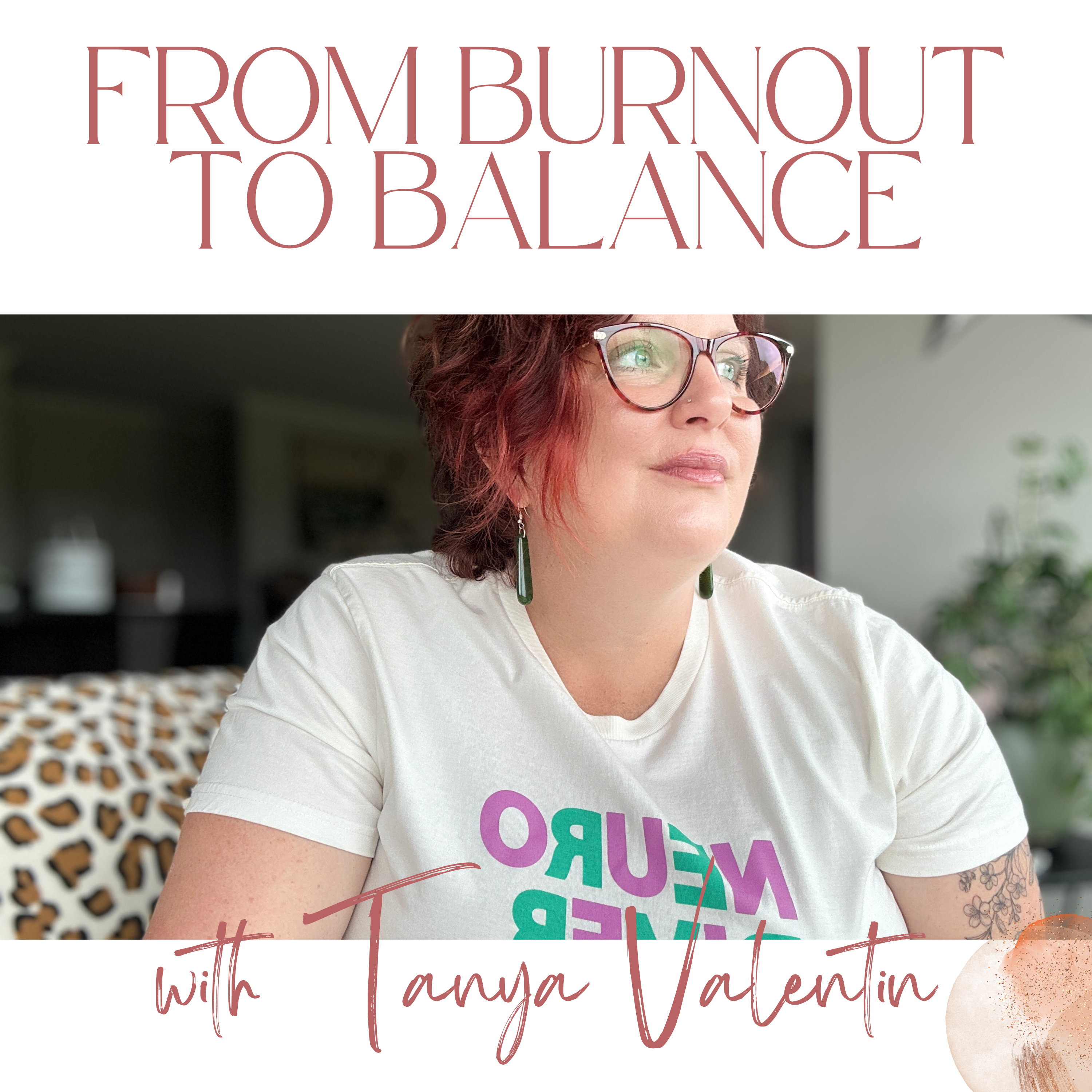
From Burnout to Balance - Helping Parents Find Balance on the Burnout Recovery Journey
by Tanya Valentin
Hosted by family coach Tanya Valentin, this compassionate space offers expert guidance, honest conversations, and practical tools to support both you and your child. Whether you're in the early stages or deep in recovery, you’re not alone. Tune in weekly for heartfelt stories, expert insights, and real-world strategies to move your family from burnout to balance.Join our From Burnout to Balance Parent Community
-
37
Update on the Show
After a quiet season of listening to my own nervous system, this episode is a gentle update from me to you.Toward the end of last year, I began to feel myself nearing burnout again. The end of the year can be a tender, intense time in our family, and I knew I needed to step back and honour what I teach so many parents inside From Burnout to Balance: safety first, capacity second, everything else can wait.During that pause, I asked myself a simple question:What would feel joyful… and truly supportive for parents right now?The answer surprised me in the best way.I realised how much I love collaboration, conversation, and community—the heart of everything we build together. So I reached out to my friend and fellow coach Emma Gilmour, another mum walking alongside women in midlife and mothers navigating big life transitions.Together, we’ve created something new.This episode is the final episode of From Burnout to Balance as a podcast—but it’s not goodbye.It’s a doorway.In 2026, Emma and I are launching a new collaborative podcast:Meltdowns, Menopause & Magic—a space for honest conversations about parenting neurodivergent kids, midlife identity shifts, burnout recovery, grief, humour, and the strange magic that appears when women gather in truth.If this podcast has been a soft place to land for you, I hope you’ll continue the journey with us there.Thank you for walking this road with me.You have never been alone—and you never will be.Links to follow the new show and learn more about Emma’s work are in the show notes.With love,Tanya.You can find out more about my new co-host Emma Gilmour in her Instagram @hoperisingcoachingFollow Menopause, Meltdowns &Magic
-
36
Navigating Screen Time: Insights from a Parent and Child
In this special episode of From Burnout to Balance, I sit down with my son Theo for an honest conversation about one of the biggest parenting stressors of our time: screen time.Together, they reflect on their family’s journey from strict screen limits to a more relaxed, trust-based approach, and Theo shares candid insights about what life online is really like for young people today. From gaming and streaming to online friendships, predator safety, and even the role screens play in mental health, Theo offers a perspective many parents rarely get to hear directly from their kids.You’ll hear about:🌿 Why limiting screens too tightly can sometimes isolate kids.🌿 The positives (and risks) of online communities and friendships.🌿 How gaming builds creativity, problem-solving, and even coding skills.🌿 Practical tips for helping kids transition off screens without battles.🌿 Theo’s personal journey as a streamer and what he’s learned along the way.This is a heartfelt, eye-opening episode that will help you see the online world through your child’s eyes—and maybe even ease some of your own anxieties about screen time.Join our online From Burnout to Balance CommunityYou can try Simply Nootropics hereUse the coupon code TANYAVALENTINNZ15 to get $15 off your first order.TakeawaysScreen time can serve as an escape for children.It's important to balance screen time with real-life interactions.Parents should check in on their children's mental health related to screen use.Online friendships can be as significant as real-life ones.Children can learn valuable skills through gaming.Parents should educate their kids about online safety and predator awareness.Streaming can boost a child's confidence and self-expression.It's crucial to monitor the content children consume online.Setting reasonable screen limits is better than strict restrictions.Open communication about online experiences fosters trust.
-
35
Making Hygiene Accessible for Neurodivergent Kids with Laura Hellfeld
Hygiene can feel simple to some, but for many neurodivergent children and teens, especially those in burnout, it can be one of the hardest daily tasks. In this episode of From Burnout to Balance, Tanya is joined again by Laura Hellfeld, a neurodivergent nurse and parent educator, to explore the layered challenges of hygiene and how parents can support their children with compassion, creativity, and flexibility.Together, we discuss:Why hygiene often becomes inaccessible during burnout.The role of interoception and sensory processing in everyday self-care.How trial-and-error, choice, and autonomy can make hygiene less overwhelming.Gentle, practical alternatives to showers and baths (like wipes, shower caps, and simple sensory tweaks).Navigating parental worries about social expectations and rejection.Why honouring autonomy and co-creating routines is key to building lifelong skills.This conversation is full of validation, real-life stories, and practical ideas to make hygiene less of a battle and more of a supportive, safe experience for your child.📌 Resources & Links:Follow Laura’s work and writing via Substack and her booksND Nurse Consulting WebpageLaura’s Newsletter & Articles on SubstackGabby’s Glimmers: An Affirming Story of an Autistic Child and their Favourite FoodCreating Safe Spaces for Autistic People, bookLinkedInFacebookInstagramBlueSkyExplore more support inside From Burnout to Balance, Tanya’s parent membership community.FREE Burnout 101 mini-course - tanyavalentin.co/101Explore the healthcare products mentioned in this show: Simply Nootropics - https://glnk.io/ovx5q/tanyavalentinnzTANYAVALENTINNZ15 to get an additional $15 off your first order
-
34
Finding Our Own Path: A Mother’s Story of Burnout, Love, and Radical Listening with Jade Thompson
In this heartfelt episode of From Burnout to Balance, I sit down with Jade Thompson, an everyday Australian mum with an extraordinary story.Jade opens up about her family’s journey through her son’s autistic burnout, the heartbreak of early school trauma, and the heavy weight of navigating broken systems. Instead of following conventional advice, Jade chose something different: to trust her intuition, listen deeply, and build a life centred on connection, love, and hope.Together, we talk about:What it looks like to walk beside your child in burnout recoveryThe grief, confusion, and courage parents often carryWhy the system—not the child—is what’s brokenHow radical honesty and love can create a new path forwardThis is a conversation for any parent who has felt alone, unseen, or unsure of how to keep going.Jade’s story is a reminder that you are not broken—and neither is your child.Resources & Links Mentioned in This Episode:✨ Free Grief Guide for Parents✨ Join From Burnout to Balance MembershipCheck out: Simply Nootropics - Use The Coupon Code: TANYAVALENTINNZ15 and get an additional $15 off your first order.https://glnk.io/ovx5q/tanyavalentinnz Connect with Me:Instagram: @tanyavalentinnzWebsite: tanyavalentin.co
-
33
Unmasking, Alcohol, and Advocacy: A Neurodivergent Parenting Conversation with Emma Gilmour
In this raw and deeply validating episode, I’m joined by Emma Gilmour, coach, counsellor, parent of two neurodivergent teens, and founder of Hope Rising Coaching. Together, we explore the invisible intersections between neurodivergence, alcohol, trauma, unmasking, and parenting through burnout.Emma shares her powerful journey of redefining her relationship with alcohol, discovering her own late-diagnosed neurodivergence, and parenting her children through autistic burnout. We unpack how masking, cultural conditioning, and shame impact our ability to advocate for ourselves and how choosing self-compassion over self-judgment can be a radical and life-saving act.This is an episode about being honest with ourselves. About acknowledging what we didn’t know, what we coped with the best we could, and how healing often begins in the places we’ve been told to hide.This conversation is both an invitation and a lifeline, especially for parents walking a similar path.Trigger Warning: This episode contains open and honest conversations about:Childhood trauma and emotional neglectAlcohol use as a coping mechanismSelf-harm and suicidal ideation (including among teens and women in midlife)Unsafe social situations and consentBurnout, shutdowns, and parent-child relational traumaPlease take care while listening. Press pause, come back later, or skip this episode entirely if needed. Your nervous system safety matters most.In this episode, we explore:Emma’s journey from corporate marketing to sobriety and coachingThe link between late-diagnosed neurodivergence and alcohol useHow alcohol often acts as a mask and survival tool for neurodivergent peopleParenting two PDA children through burnoutWhat it really means to support kids who can’t yet advocate for themselvesBreaking generational cycles around emotions, shame, and complianceHow grief, guilt, and growth coexist in parentingWhy awareness—not self-blame—is the first step to changeThe freedom that comes from seeing behaviour as data, not failure🔗 Resources & Links:Emma’s website & coachingEmma’s Awareness Worksheets on alcohol useJoin Emma's Free Live Webinar - Not That Bad, But Bad EnoughFollow Emma on InstagramJoin our parent community: From Burnout to Balance
-
32
From Pathology to Possibility: Neurodivergent Identity, Therapy & Community with Jade Farrington
In this rich and affirming conversation, Tanya sits down with UK-based neurodivergent therapist and community builder Jade Farrington to explore what truly neuroaffirming support looks like. Together, they unpack the harms of the pathology-based model still dominant in therapy and education, and how shifting toward a neurodiversity paradigm can transform identity, healing, and parenting.You'll hear about Jade’s journey as a late-identified neurodivergent person, the importance of creating spaces for diverse neurodivergent voices, and her incredible collection of free and low-cost resources that support individuals, families, and professionals alike.✨ Topics include:How to spot red flags (and green flags) in therapyThe power of identity-first languageResources for supporting positive autistic identity in young peopleWhy Jade’s monthly newsletter is a treasure trove of supportCreating community through collaboration, not compliance🔗 Resources mentioned:Jade’s Substack NewsletterHappy Neurodivergent Christmas GuideNeurodivergent Healthcare PassportGlimmers Resource (with Teo from Sendwise)Exploring Your Neurotype Starter GuideJade's website: https://jadefarrington.com/You can find these and more in Jade's SubstackFollow Jade on Facebook, Instagram and TikTokAdditional Resources:https://static1.squarespace.com/static/6486ea0c69b5b76396e7d5ca/t/6848339cd5b847639e5e4006/1749562268957/Is+your+provider+neurodiversity+affirming.pdfhttps://www.chronicresilienceot.com/blog/neurodiversity-affirming-practice-for-mental-healthhttps://divergentdialogues.substack.com/p/demystifying-therapy-a-neurodivergenthttps://www.facebook.com/100064806159710/posts/1116701613833367/https://nait.scot/wp-content/uploads/2025/05/NAIT-Key-Messages-for-Neuro-affirming-Health-Practitioners-Adults-2025.pdfKieran Rose: https://theautisticadvocate.com/Grove Autistic Community: https://www.gr0ve.org/Join our parent community: From Burnout to Balance
-
31
Understanding Limbic Utterances: When Your Child Says Hurtful Things in Meltdowns
In this episode of From Burnout to Balance, family coach Tanya Valentin dives deep into one of the most distressing experiences parents of neurodivergent children face: hearing their child say things like “I hate you,” “I hate myself,” or “I want to die” during meltdowns.These moments can feel shocking, hurtful, or even terrifying. But they’re not personal attacks—they're distress signals from an overwhelmed nervous system.Tanya explains what limbic utterances are, why they happen, and how parents can respond with empathy, understanding, and practical strategies to help their children (and themselves) feel safe.What are limbic utterances?Why kids say shocking, hurtful, or “rude” things in meltdown momentsThe role of the nervous system and Polyvagal TheoryThe limbic system: emotional brain basics The neurodivergent lens: why these responses can be more intenseInsights from Tanya’s work with families in burnout recoveryLaura Hellfeld’s insights on self-care demands and limbic utterancesPractical, compassionate strategies to support your childHow parents can care for their own nervous systemsIf you'd like more resources and support on parenting with a low-demand approach, understanding your child’s nervous system, and creating a compassionate home environment, check out Tanya’s parent membership From Burnout to Balance.Join our parent community: From Burnout to Balance Laura Hellfeld – Neurodivergent Nurse & ConsultantLaura’s Substack
-
30
What Actually Helps: 8 Protective Factors for Parents Navigating Burnout
In this tender and validating episode of From Burnout to Balance, host Tanya Valentin shares eight powerful, research-backed protective factors that support parent mental health, especially for those parenting neurodivergent children and teens in burnout.Drawing from lived experience and a neuro-affirming, trauma-informed lens, Tanya explores what helps and why these supports can feel complicated, inaccessible, or even unsafe, particularly for neurodivergent parents who’ve been dismissed, judged, or burned by support systems in the past.Inside this episode, you’ll hear about:Why self-compassion is a radical (and often difficult) practiceHow nervous system regulation starts with noticing, not perfectionThe grief of the community that never came, and the hope of finding a new kindThe healing power of meaning-making, validation, and reparentingWhy we need low-demand parenting for parents, tooThis episode is a soft place to land.A reminder that you're not alone — and you never were.✨ Join our parent community: From Burnout to Balance
-
29
Creating Safe Spaces For Neurodivergent Lived Experience With Teo Byrne From SENDwise Hub
In this episode, Tanya chats with Teo Byrne from SENDwise Hub. They discuss the challenges and triumphs of navigating neurodiversity as parents. Teo shares her personal journey as a late-diagnosed autistic and ADHD parent, emphasising the importance of creating safe spaces for neurodivergent individuals. They explore the significance of self-care for parents, the need for community support, and the delicate balance between providing support and allowing autonomy for children. The discussion highlights the importance of listening to children, understanding their unique experiences, and fostering a sense of belonging within the neurodivergent community.Connect with Teo:SubstackFacebookInstagramJoin our parent community: From Burnout to Balance
-
28
The Cost of “Just Be Happy”: How the Nervous System Holds Grief, Shame & Connection
What if the well-meaning wish, “I just want my child to be happy”, is quietly fuelling shame, disconnection, and burnout?In this heartfelt episode of From Burnout to Balance, Tanya unpacks how emotional suppression, rooted in generational trauma and cultural expectations, gets stored in the body, passed through parenting, and misunderstood as failure.You’ll explore:Why the nervous system reacts so strongly to your child’s big emotionsHow grief becomes shame, for both parent and childWhat nervous system safety really means (it’s not being calm all the time)Why reparenting yourself is the key to supporting your child’s emotional worldWhat it sounds like to co-regulate instead of controlHow grief, when welcomed, becomes the gateway to deeper trust and connectionThis is not easy work, but it’s sacred work. And you don’t have to do it alone.Join our parent community: From Burnout to Balance Download your FREE Guide to navigating grief
-
27
The 7 Pillars of Parenting Through Autistic Burnout: Lessons from Our Recovery Journey
In this episode, Tanya shares her journey of parenting through burnout, focusing on the challenges faced by neurodivergent children and the lessons learned along the way. She introduces the seven pillars that form the foundation of her work, emphasising the importance of nervous system safety, low-demand parenting, community support, reparenting, practical resources, repairing connections, and soul-level parenting. Tanya encourages parents to explore these pillars as a means of healing and support in their parenting journey.Join our parent community: From Burnout to Balance
-
26
Navigating the Inner Work of Parenting
In this episode of From Burnout to Balance, Tanya explores the often overlooked inner work of parenting, particularly in the context of children experiencing burnout. She emphasises the importance of emotional healing, reparenting, and understanding the resistance many parents feel towards addressing their own emotions. Tanya discusses how childhood experiences shape our responses to our children's emotions and the significance of creating a safe emotional environment for them. The conversation highlights the transformative power of self-awareness and compassion in breaking generational cycles of emotional neglect.Join our parent community: From Burnout to Balance Chapters:00:00 The Inner Work of Parenting02:27 Understanding Resistance to Emotional Work06:55 Healing Through Compassion and Connection10:32 Gentle Beginnings in Emotional Awareness
-
25
The Spiritual Awakening Inside the Breakdown: Parenting Through Burnout
In this episode, Tanya explores the profound impact of burnout on both children and parents, emphasising the spiritual awakening that often accompanies such experiences. She discusses the importance of soul care, the challenges of navigating identity and beliefs during difficult times, and the need for creating sacred spaces for healing and connection. Tanya shares her personal journey and insights on how to embrace the messiness of transformation and find deeper meaning in the process.Join our parent community: From Burnout to Balance Chapters00:00 Navigating Parental Burnout and Spiritual Awakening08:12 The Goo Stage: Embracing Transformation12:34 Creating Sacred Spaces for Healing14:54 B2B Outro.mp4
-
24
Why Demands Feel Unsafe — A Nervous System Lens on Demand Avoidance
In this episode of 'From Burnout to Balance', we explore the challenges faced by neurodivergent children regarding everyday demands and how these can feel overwhelming or unsafe. Tanya discusses the importance of understanding the nervous system's role in these experiences, the distinction between demand avoidance and pathological demand avoidance (PDA), and offers strategies for parents to support their children with compassion and awareness. The conversation emphasises the need for lowering demands, recognizing the cumulative effect of expectations, and fostering a safe environment for both children and parents.Join our parent community: From Burnout to Balance Chapters00:00 Understanding Demands and Neurodivergence05:20 Demand Avoidance vs. Pathological Demand Avoidance09:35 Supporting Children with Demand Avoidance12:13 The Role of Parents' Nervous Systems17:52 B2B Outro.mp4
-
23
Gardener Parenting in a Mechanic World: Supporting Burnout Without Breaking Trust
In this episode, Tanya explores the metaphor of gardener versus mechanic parenting, emphasising the importance of creating a supportive environment for children experiencing burnout. She discusses the pressures parents face in a behaviourist society that prioritises compliance over connection, and how this can lead to harmful parenting practices. Tanya advocates for a gardener approach, focusing on nurturing and understanding children's needs rather than trying to 'fix' them. The conversation highlights the significance of trust, safety, and compassion in the healing process for children.Join our parent community: From Burnout to Balance Comments, questions or want to be a guest on the show?📩 [email protected] and Facebook: @tanyavalentinnzChapters00:00 Gardener vs. Mechanic Parenting07:10 Understanding Burnout in Children13:30 The Pressure of Compliance20:25 Creating a Safe Environment for Healing
-
22
The Real Reason Why You Find It Hard To Change Your Parenting Approach
In this podcast episode, Tanya discusses the challenges and emotional discomfort that arise when parents attempt to change their parenting approaches. She shares personal experiences and insights into how our past experiences and emotional responses, influenced by neurotags, affect our parenting styles. Tanya emphasises the importance of understanding these dynamics, particularly in the context of gender roles and emotional expression. She offers practical grounding techniques to help parents navigate their nervous system responses and encourages open communication between co-parents to honour individual journeys in parenting.Join our parent community: From Burnout to Balance Chapters00:00 Navigating Parenting Changes03:10 Understanding Neurotags and Emotional Responses05:51 The Impact of Past Experiences on Parenting11:50 Gender Roles and Emotional Expression in Parenting17:56 Grounding Techniques for Nervous System Safety25:08 Honouring Individual Parenting Journeys
-
21
Ten Dark Thoughts Many Parents of Neurodivergent Kids in Burnout Have Had At Least Once
In this episode, Tanya discusses the dark thoughts and complex emotions parents face when navigating their child's burnout. She addresses feelings of guilt, grief, jealousy, fear, and isolation, emphasising the importance of self-compassion and acceptance. Tanya provides insights into the healing journey for both parents and children, encouraging listeners to embrace their struggles and seek community support.Would you like gentle guidance as you navigate this path to deeper acceptance? Subscribe to my email series - The Space Between Knowing and Letting GoJoin our parent community: From Burnout to Balance Chapters00:00 Navigating Parental Guilt and Shame03:04 Grieving Expectations and Acceptance05:59 Jealousy and Comparison in Parenting08:52 Fear of the Future and Identity Loss11:45 Understanding Recovery and Isolation15:00 Burnout and Self-Care Strategies17:49 Embracing Self-Compassion20:57 Radical Acceptance and Community Support
-
20
Understanding Your Child's Burnout Stages
In this conversation, Tanya discusses the Burnout Recovery Roadmap, emphasizing the importance of awareness in understanding the stages of burnout recovery for children, particularly those who are neurodivergent. She outlines the five distinct stages of burnout recovery, from daily burnout to the new normal, and highlights the emotional and practical challenges parents face during this journey. Tanya encourages parents to embrace the transformation process, recognizing that recovery is not linear and requires patience and understanding.CLICK HERE for your copy of my Burnout Recovery RoadmapJoin our parent community: From Burnout to Balance Chapters00:00 Understanding the Burnout Recovery Roadmap02:29 Daily Burnout: The Pressure Cooker Stage05:48 Breaking Point: Recognizing Burnout09:41 Chronic Burnout: The Empty Tank Stage13:17 Fragile Reset: Signs of Recovery16:20 Embracing the New Normal20:46 The Transformation Process: From Caterpillar to Butterfly
-
19
Navigating The Complexities of Autism Awareness
Summary:This episode delves into the complexities of parenting autistic children, particularly focusing on the challenges of burnout, the emotional toll on parents, and the need for greater awareness and understanding within the community. Tanya shares her personal experiences, highlighting the importance of recognizing burnout, navigating feelings of guilt and shame, and advocating for systemic change to better support neurodivergent families.Keep the conversation going, share your experience in the comments.Join our parent community: From Burnout to Balance
-
18
The Hidden Struggles of Parenting a Neurodivergent Child in Burnout
This conversation delves into the complexities of burnout in parenting, exploring the hidden barriers to recovery, the impact of parental pressure, and the importance of emotional health. Tanya emphasizes the need for self-care and compassion, providing practical strategies for parents to support both themselves and their children in the recovery process.Join our parent community: From Burnout to Balance
-
17
The Juggling Act of Parenting: Prioritizing Wellbeing
In this episode, Tanya discusses the often-overlooked issue of parent burnout, emphasizing the importance of self-care and mental health for parents. She introduces the concept of low-demand parenting, which involves reducing both parental and child demands to foster a healthier family dynamic. Tanya also explores the metaphor of juggling responsibilities, categorizing tasks into 'glass balls' and 'rubber balls' to help parents prioritize effectively. She provides practical strategies for creating a bare minimum plan to manage daily tasks while encouraging self-compassion and boundary-setting as essential components of parenting.Join our parent community: From Burnout to Balance Here's the link to Download Your Bare Minimum Plan
-
16
The Evolution of This Podcast
In this short episode, I share the new direction of this show and talk about why I decided to take this next step in the evolution of the podcast.Join our parent community: From Burnout to Balance
-
15
The Essential Guide to Swim Safety for Neurodivergent Children with Carrie Meadows
In this episode, Tanya speaks with Carrie Meadows, a swim instructor specializing in teaching neurodivergent children to swim. They discuss the importance of water acclimation, the unique needs of neurodivergent kids in swimming lessons, and the alarming statistics regarding drowning risks for these children. Carrie emphasizes the importance of finding the right swim instructor who is experienced in adaptive swim lessons and highlights swimming as a crucial life skill for all children.Join our parent community: From Burnout to Balance Chapters00:00 Introduction to Neurodivergent Swimming Instruction02:47 The Importance of Water Acclimation06:09 Understanding Neurodivergent Needs in Swimming08:59 Drowning Risks for Neurodivergent Children12:12 Finding the Right Swim Instructor14:55 The Lifelong Importance of Swimming Skills18:02 Connecting with Carrie MeadowsConnect with CarrieIG - @allkidsswimTik Tok - @allkidsswimWebsite - www.allkidsswim.com
-
14
Understanding The Impact of Burnout on Families
In this solo episode of Parenting Neurodivergent Kids Together, Tanya discusses the challenges of parenting neurodivergent children, particularly focusing on the concept of burnout. She shares her personal experiences and insights on how burnout affects both parents and children, the emotional journey involved, and the importance of community support. Tanya emphasizes the need for parents to prioritize their own healing while navigating the complexities of raising neurodivergent kids.CLICK HERE If you are interested in registering for my free masterclass Healing Together: Parenting Through BurnoutJoin our parent community: From Burnout to Balance Key Takeaways:Burnout can feel like a group PTSD experience for families.Many parents are unprepared for the reality of burnout.It's essential to re-evaluate priorities during times of crisis.Parents often seek answers outside themselves instead of tuning inwards.The emotional journey of parenting includes stages of grief.Isolation can occur even in the presence of others.Community support is crucial for healing.Parents need safe spaces to express their feelings.Healing takes time and requires patience.It's important to recognise one's own worthiness of healing.Chapters00:00 Introduction to Parenting Neurodivergent Kids03:27 Understanding Burnout in Parents and Children05:58 The Crisis Point: When Burnout Hits11:27 The Emotional Journey of Parenting Through Burnout16:52 Isolation and the Need for Community22:21 Healing Together: Support Systems for Parents
-
13
Understanding Interoception and Neuroception to Support Children with Elen Nathan
In this conversation, Tanya and Elen delve into the concepts of interoception and neuroception, exploring how these senses impact our understanding of bodily signals and emotional responses. They discuss the importance of recognizing and responding to internal cues for self-regulation, particularly in neurodivergent individuals. The conversation also highlights the significance of creating safe environments and understanding survival responses, such as fight, flight, freeze, and fawn. Finally, they emphasize the need to find glimmers of joy in everyday life to support emotional well-being and resilience.Interoception is our sense of what's happening inside our body.Neuroception is our sense of safety and danger.Everyone has sensory systems, and understanding them is crucial.Self-regulation starts with noticing internal sensations.Not everyone receives interoceptive messages reliably.Children may struggle with recognizing bodily cues due to various factors.Trauma can impact one's ability to sense internal messages.Finding glimmers of joy can enhance emotional resilience.Practicing self-regulation strategies when calm is more effective.Understanding survival responses helps in supporting children.Chapters:00:00 Introduction and Overview03:12 Understanding Interoception and Neuroception06:36 The Impact of Interoception on Daily Activities14:29 Challenges and Variations in Interoception19:13 Being Trauma-Informed in Interoception Work27:27 Strategies for Developing Interoception Awareness40:23 Supporting Children in Using Self-Regulation Strategies50:00 Understanding Neuroception: Our Sense of Safety and Danger55:41 The Different Threat Responses: Mobilization and Immobilization01:13:37 Signaling Safety to Children: Tuning into Glimmers and Moments of JoyYou can connect with Elen Nathan here:Website: https://theplayfulplace.co.nz/Facebook: https://www.facebook.com/ThePlayfulPlaceJoin our parent community: From Burnout to Balance If you would like to join the conversation by being a guest on the show, please email Tanya at [email protected].
-
12
Advocating For Inclusive Education With Aleesha White
Aleesha White, founder of Moody, shares her journey of supporting neurodivergent individuals and their families. She discusses the challenges she faced as a high school student with seizures and her subsequent passion for helping neurodivergent people. Aleesha emphasizes the importance of creating inclusive opportunities and supporting neurodivergent individuals outside of the traditional classroom environment. She also highlights the need for neuro-affirming strategies in education and offers advice for educators and parents. Moody aims to provide a supportive platform for teachers, students, and parents on their neurodiverse journey.What we chatted about on the show:Supporting neurodivergent students requires creating inclusive opportunities and focusing on their well-being and mental health.Neurodivergent students may face challenges in traditional classroom environments, and it is important to provide support outside of the curriculum.Teachers can make a positive impact by modifying and differentiating their teaching strategies to meet the needs of neurodivergent students.Parents can advocate for their neurodivergent children by establishing open communication with teachers and sharing concerns and successes.Moody aims to provide a supportive platform for teachers, students, and parents, offering resources and strategies for the neurodiverse community.Chapters:00:00 Introduction to Aleesha White and Moody01:27 Creating Inclusive Opportunities for Neurodivergent Individuals04:17 Supporting Neurodivergent Students Outside of the Classroom09:06 Neuro-Affirming Strategies for Educators16:10 Advocating for Neurodivergent Children: Tips for Parents22:47 Moody: A Supportive Platform for the Neurodiverse CommunityConnect with Aleesha:Free guide: empowering parents of neurodivergent children https://moody.myflodesk.comInstagram @themoodydifferenceThe full transcript for this episode is available HEREJoin our parent community: From Burnout to Balance
-
11
Changing Bedtime From Stress Filled To Connection Filled With Laura Hellfeld
For many parents of neurodivergent children, bedtime is one of the hardest and most stressful times of the day. If this is true for you and your family, you're not alone, as many neurodivergent individuals find sleep challenging. In this episode, I chat with Laura Hellfeld, neurodivergent nurse and sleep consultant.Here are some of the topics we discussed:Changing the paradigm from traditional parenting perspectives on sleep and bedtime to a more connection-oriented approach.Helpful insights to support parents at bedtime.Giving yourself permission to listen to your child and your intuition and take the road of least resistance at bedtime.To Follow Laura’s WorkFacebookInstagramLinkedInWebpageResourcesCreating Safe Spaces for Autistic People paperbackCreating Safe Spaces for Autistic People EbookAutistic Revolution online magazineJoin our parent community: From Burnout to Balance
-
10
Exploring ARFID with Elen Nathan from The Playful Place
Today, I am joined by Elen Nathan from The Playful Place to give us insight into ARFID (Avoidant Restrictive Food Intake Disorder).Here is what we chatted about:What is ARFID?What causes ARFID and how can we know if our child (or we) are affected by ARFID?What can we do as parents to support our children if they are affected by ARFID?If you missed Elen's other two episodes on Sensory Systems here are the links: https://spotifyanchor-web.app.link/e/78epUpjiXJbhttps://spotifyanchor-web.app.link/e/tG4jyrjiXJbYou can connect with Elen Nathan at:https://www.theplayfulplace.co.nzJoin our parent community: From Burnout to Balance If you would like to join the conversation by being a guest on the show, please email Tanya at [email protected].
-
9
Making Sense of Our Emotions
In this solo episode, I talk about a topic that is often shut down in parenting communities. The topic of experiencing grief for various aspects of our parenting journey.In our Instagram society, where we just see the highlights, the happy moments the joyful moments of parenting we can feel 'wrong', 'broken' and isolated because we aren't feeling or experiencing these things. There can be many times when we wish things were different. I have often felt like this but have not had the language to talk about my experience until I came across the Five Gates of Grief by Francis Weller.In this episode: I talk you through these five gates of grief and how they could relate to you. I share with you the three-step process I use when I am processing difficult emotions.If you experience grief over aspects of your parenting journey then I hope that you feel seen by what I share in this episode. Frances Weller’s deep and profound work can be accessed here: https://www.francisweller.net Join our parent community: From Burnout to Balance You can contact me on Instagram and Facebook @tanyavaletinnz to chat about the Neurodivergent Family Toolbox or the contents of this show
-
8
Supporting Your PDA Child With Kate Kleinau
Today on the show I chat with Kate Kleinau, who you may know from her Facebook and Instagram accounts as Raising PDA Kids.In this episode, Kate and I chat about:How her son's autistic burnout in his early childhood years led her to discover that he was PDA.The things she and her husband did to support her son's recovery from burnout.How embracing radical acceptance and adapting the way she parents her children has led to calmer, connected moments with her son.Her work supporting other PDA mums.Does this resonate for you?Do you think your child might be PDA? The PDA Society has some great resources: https://www.pdasociety.org.uk/You can find out more about Kate's work here: https://raisingpda.com/Connect with her on Facebook and Instagram atRaising PDA Kids- Kate Kleinau, OTJoin our parent community: From Burnout to Balance If you would like to join the conversation by being a guest on the show, please email Tanya at [email protected].
-
7
Enabling Your Good Life With Pip Brunn
Today on the show we chat with Pip Brun, a neurodivergent human, a mum of 6 and a passionate advocate for the rights of disabled people.Pip is a passionate member of the Enabling Good Lives mid-central leadership group in New Zealand.In this episode, we chat about:Pip's lived experience as a mum of 6 neurodivergent children (including her daughter Lucy who has a rare chromosome disorder).The Enabling Good Lives approach and its guiding principles and what these mean for us in our lives.How we can live these principles in our own lives and use this approach to empower us to advocate for ourselves and our loved ones.Additional information and resources for the Enabling Good Lives Approach:https://www.enablinggoodlives.co.nzGood Start To Life Practice Guidance: //www.hqsc.govt.nz/assets/Consumer-hub/Partners-in-Care/Publications-resources/Good-start-in-life-practice-guidance-Mar-2020.pdfhttps://www.msd.govt.nz/about-msd-and-our-work/publications-resources/monitoring/uncrochttps://www.enablinggoodlives.co.nz/system-transformation/mid-central-updates/midcentral-leadership-team/pip-brunn/Join our parent community: From Burnout to Balance If you would like to join the conversation by being a guest on the show, please email Tanya at [email protected].
-
6
The Eight Sensory Systems With Elen Nathan - Part Two
A funny thing happened when I sat down with Elen Nathan from the Playful Place for our first chat on the sensory systems. We just clicked and geeked out about the sensory systems and our neatly planned agenda for the episode went out of the window.After recording part one we immediately knew that we should do a follow-up. So Elen came back on a Sunday to record this episode with me and it is a real gem.In this episode:Elen unpacks the 8 sensory systems and the hyper (extremely sensitive ) and hypo (low sensitivity) of these.We also chat about rethinking children's so-called 'behaviour' from a sensory perspective and how we can use this lens to be more supportive parents.This is essential listening for all parents and educators.To get your free sensory system screening tools:https://sensationalbrain.com/free-resources/You can connect with Elen Nathan here:Website: https://theplayfulplace.co.nz/Facebook: https://www.facebook.com/ThePlayfulPlaceJoin our parent community: From Burnout to Balance If you would like to join the conversation by being a guest on the show, please email Tanya at [email protected].
-
5
The Nine Sensory Systems With OT Elen Nathan From The Playful Place - Part One
Today I am joined by occupational therapist and sensory integration practitioner, Elen Nathan. In this episode:Elen gives us an introduction to the nine sensory systems and why these are important for us as parents to be aware of.Elen and I chat about practical examples of what this could look like for our children, how we can be more aware of our child's sensory world and how this can contribute to their sense of safety.We chat about the importance of tuning into and trusting our intuition as parents when it comes to knowing what is right for our children.We talk about how we can change our parenting approach and provide accommodations to meet our children where they are to better support them.To get your free sensory system screening tools:https://sensationalbrain.com/free-resources/You can connect with Elen Nathan here:Website: https://theplayfulplace.co.nz/Facebook: https://www.facebook.com/ThePlayfulPlaceJoin our parent community: From Burnout to Balance If you would like to join the conversation by being a guest on the show, please email Tanya at [email protected].
-
4
Advocating For the Disabled Community's Rights With Emily Writes
Today on the podcast I sit down with three-time bestselling author, activist and mum of two disabled tamariki, Emily Writes to talk about the recent changes to the Whaikaha (The Ministry for Disabled People) purchasing guidelines.Some of the topics highlighted on the show:How the recent Whaikaha changes came about.How the changes affect disabled people and their families.What we can do to advocate for ourselves and others with the government to create change.Where we can go for answers to find out how these affect us or the disabled person we care for.Further resources and links:https://awhi.substack.com/p/the-real-impact-of-funding-changeshttps://emilywrites.substack.com/p/pedicures-and-massagesAwhi Ngā Mātua (awhingamatua.org.nz)Connect with Emily on Instagram @emilywritesnzJoin our parent community: From Burnout to Balance
-
3
Navigating Late Diagnosis In Mid-Life With Claire Fisher
On today's episode, we chat with Claire Fisher. Claire shares with us her journey after being diagnosed in her forties with ADHD and Autism.Here are some of what we chat about in this episode:What led her to seek an ADHD/Autism assessment for herself in midlife?What this process was like for her and how this led her to seek assessment and support for her children.Her lived experience with navigating the mental health system and support in New Zealand.Her advice for others who are navigating the system or contemplating assessment.Her wisdom about navigating the education system from her lived experience with her children and transitioning from parenting teens to young adults.It was an absolute pleasure to speak with Claire and we can all learn so much from her lived experience.Join our parent community: From Burnout to Balance If you would like to join the conversation by being a guest on the show, please email Tanya at [email protected].
-
2
Chronic Illness, Cycles and Rest With Rebecca Rae-Hodgson, The Chronically Resilient OT
Today on the show we sit down with Rebecca Rae-Hodgson who you might know as The Chronically Resilient OT.In this episode, we chat about:What it was like for her to discover that she was neurodivergent as an adult.Her journey with chronic illness.How neurodivergence, chronic illness, cycles, fertility and executive function all impact each other.How we can embrace the different types of rest we need as neurodivergent humans.Here are ways to work with Rebecca or access her blogs and resources:Website: https://www.chronicresilienceot.com/Facebook: https://www.facebook.com/thechronicallyresilientotJoin our parent community: From Burnout to Balance If you would like to join the conversation by being a guest on the show, please email Tanya at [email protected].
-
1
Let's Start This Journey Together
In this episode, Tanya Valentin shares her journey as a neurodivergent human raising other neurodivergent humans.Tanya shares why the inspiration behind creating the Parenting Neurodivergent Kids Together Podcast and what it is about.If you would like to join the conversation contact Tanya via email at [email protected] our parent community: From Burnout to Balance
We're indexing this podcast's transcripts for the first time — this can take a minute or two. We'll show results as soon as they're ready.
No matches for "" in this podcast's transcripts.
No topics indexed yet for this podcast.
Loading reviews...
ABOUT THIS SHOW
Hosted by family coach Tanya Valentin, this compassionate space offers expert guidance, honest conversations, and practical tools to support both you and your child. Whether you're in the early stages or deep in recovery, you’re not alone. Tune in weekly for heartfelt stories, expert insights, and real-world strategies to move your family from burnout to balance.Join our From Burnout to Balance Parent Community
HOSTED BY
Tanya Valentin
Loading similar podcasts...
Frequently Asked Questions
How many episodes does From Burnout to Balance - Helping Parents Find Balance on the Burnout Recovery Journey have?
From Burnout to Balance - Helping Parents Find Balance on the Burnout Recovery Journey currently has 37 episodes available on PodParley. New episodes are automatically indexed when they're published to the podcast feed.
What is From Burnout to Balance - Helping Parents Find Balance on the Burnout Recovery Journey about?
Hosted by family coach Tanya Valentin, this compassionate space offers expert guidance, honest conversations, and practical tools to support both you and your child. Whether you're in the early stages or deep in recovery, you’re not alone. Tune in weekly for heartfelt stories, expert insights, and...
How often does From Burnout to Balance - Helping Parents Find Balance on the Burnout Recovery Journey release new episodes?
From Burnout to Balance - Helping Parents Find Balance on the Burnout Recovery Journey has 37 episodes. Check the episode list to see recent publication dates and frequency.
Where can I listen to From Burnout to Balance - Helping Parents Find Balance on the Burnout Recovery Journey?
You can listen to From Burnout to Balance - Helping Parents Find Balance on the Burnout Recovery Journey on PodParley by clicking any episode. We provide an embedded audio player for direct listening, and you can also subscribe via your preferred podcast app using the RSS feed.
Who hosts From Burnout to Balance - Helping Parents Find Balance on the Burnout Recovery Journey?
From Burnout to Balance - Helping Parents Find Balance on the Burnout Recovery Journey is created and hosted by Tanya Valentin.
URL copied to clipboard!