
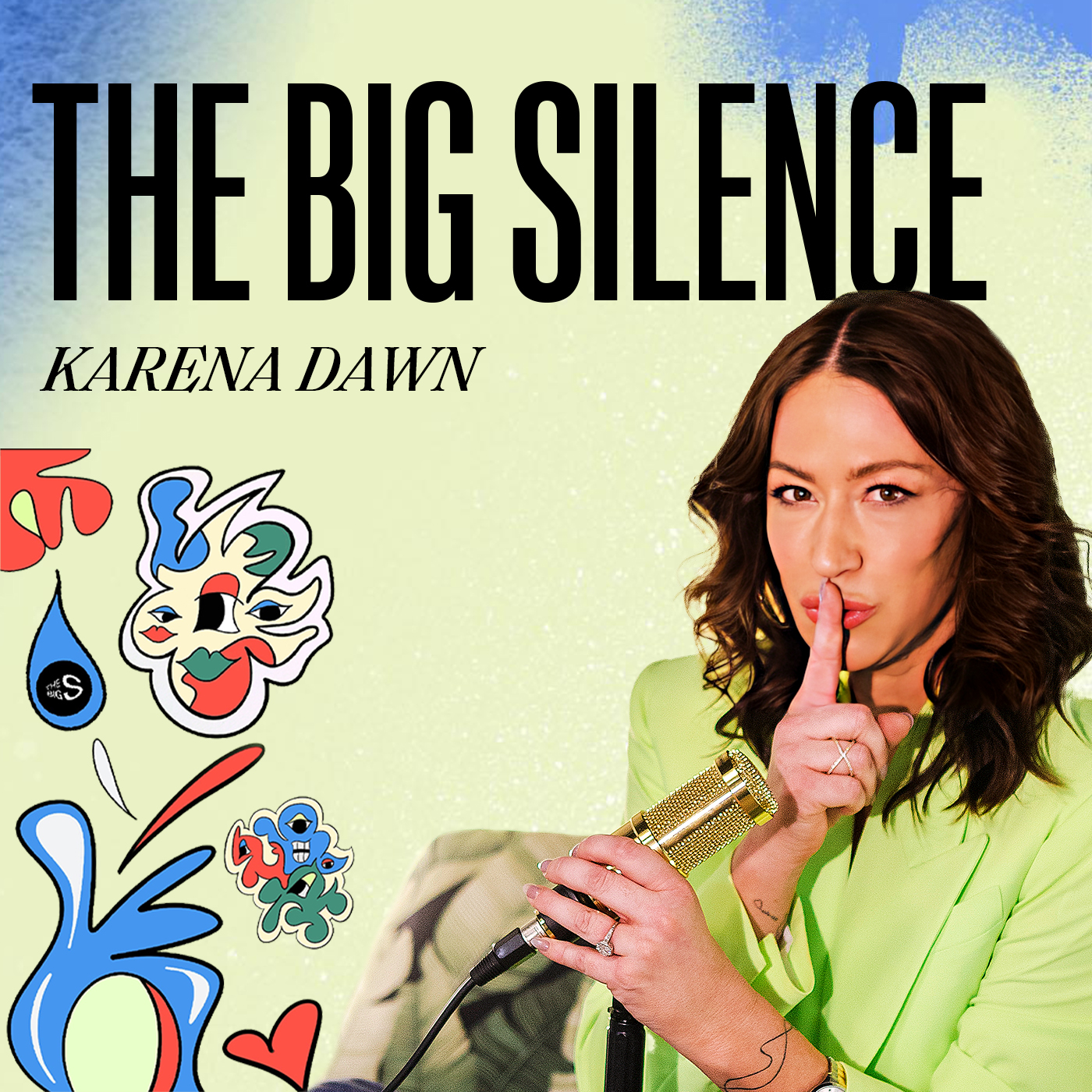
PODCAST · health
The Big Silence
by Karena Dawn
The Big Silence is a top-rated mental health and self-development podcast for anyone ready to build resilience, heal deeply, and grow with intention.Welcome to The Big Silence podcast. This is a space for real, honest conversations about mental health, resilience, and the things we’re all navigating but don’t always say out loud. I’m your host, Karena Dawn—mental health advocate, wellness entrepreneur, and owner and co-founder of Tone It Up—and each week I’m sitting down with psychologists, wellness experts, and people I deeply admire to talk about what healing actually looks like in real life. You’ll hear personal stories, expert insight, and simple, powerful tools you can apply to your own life. My hope is that you leave every episode feeling supported, understood, and more confident in your ability to move through whatever season you’re in.No more silence. Only healing.</
-
215
Celebrity Nutritionist Mona Sharma Breaks Down Ayurveda, Gut Health & Hustle Culture
Celebrity holistic nutritionist Mona Sharma, known for her work with Will Smith, Jay Shetty, and Julianne Hough, joins Karena Dawn to unpack the health crisis that changed her life. Mona shares her path from a high-pressure career in luxury beauty marketing through two heart surgeries and a PCOS diagnosis, to founding a holistic practice rooted in Ayurveda and nervous system healing. The conversation covers building daily wellness rituals at home, debunking common diet myths, hydration, and how to start reclaiming your health without a total life overhaul. How do you go from giving away all your control to a doctor's office to becoming your own healer? Mona Sharma's journey with years of unexplained anxiety taught her that healing isn't about finding the right prescription, it's about getting curious enough to ask what your body has been trying to tell you all along. [01:08] From Corporate Beauty to the Operating Table Two heart surgeries, wide awake, and a diagnosis that changed the direction of Mona’s life The Ayurvedic practitioner who looked at her as a "whole being," not just a set of symptoms [11:14] Building Your Ashram at Home Mona’s father's blunt saying about clutter, and why it's really about your nervous system The bedroom rule she gives every single client Why wellness feels so expensive, and her trick for doing it without breaking the bank [29:18] The Call That Changed Everything, and the Myths Mona is Begging You to Drop The phone call that landed Mona in the room with Will Smith and his family What she says is actually hiding in your Starbucks cup The diet myth she wants gone for good, and what she tells clients instead Her three-question framework for finally figuring out what's really going on in your body Guest Resources @monasharma on IG (https://www.instagram.com/monasharma/) Visit her website (https://www.monasharma.com/) Listen to Rooted in Wellness with Mona Sharma (https://podcasts.apple.com/us/podcast/rooted-in-wellness-with-mona-sharma/id1750133042) If this episode moved you, please consider supporting The Big Silence Foundation and exploring our resources: Connect with The Big Silence Community Order: The Big Silence Memoir audiobook (https://thebigsilence.com/pages/audiobook) Shop The Big Silence Self Love Collection (https://thebigsilence.com/collections/shop-all) Subscribe on YouTube (https://www.youtube.com/channel/UCaL3RrbvDLuTTGFN4VYzEpw) Donate to The Big Silence Foundation (https://thebigsilence.com/donate) The Big Silence Resource Guide (https://thebigsilence.com/pages/resources) Find exclusive offers from our supporters (https://thebigsilence.com/pages/our-podcast-partners) Show Resources: VISIT THE CHALLENGE PAGE (https://my.toneitup.com/pages/radiate-rise-2026-summer-challenge) THE BIG SILENCE PODCAST (https://podcasts.apple.com/us/podcast/the-big-silence/id1607181597) TONE IT DOWN PODCAST (https://my.toneitup.com/pages/tone-it-down-podcast) Tone It Up App (https://my.toneitup.com/pages/tone-it-up-app) Tone It Up YouTube (https://www.youtube.com/@toneitup/featured) Tone It Up Instagram (https://www.instagram.com/toneitup/?hl=en) Have a message for Karena? She'd love to hear from you and share your comment or question on air! Leave Karena a voicemail: https://www.speakpipe.com/KarenaDawn
-
214
Psychotherapist Terri Cole on Boundaries, Burnout, and the Cost of "I'm Fine"
Psychotherapist and boundary expert Terri Cole joins Karena Dawn to break down High Functioning Codependency (HFC): the pattern where over giving, over functioning, and chronic self sacrifice get mistaken for strength. Terri, author of Too Much: A Guide to Breaking the Cycle of High Functioning Codependency, explains how childhood conditioning shapes this behavior, the physical and emotional toll of always being "fine," and why the most capable people are often the least likely to recognize codependency in themselves. Karena shares her own experience navigating these patterns, and Terri offers concrete first steps toward recovery, boundaries, and self consideration. (01:03) The Real Definition of High Functioning Codependency Some of the most capable, high-achieving women reject the word "codependent" the moment it's suggested The subtle sign Terri looks for that has nothing to do with being an enabler or "codependent no more" Karena's gut reaction realizing she fits a pattern she never saw in herself (08:16) Caretaker or Codependent? Where to Draw the Line The uncomfortable question Terri asks clients before they take on anything for someone else Why Karena's childhood memory of her dad picking up hitchhikers says more about safety than kindness The real reason HFCs feel responsible for things that were never theirs to fix (22:07) The Cost Nobody Talks About The physical toll Terri has seen after nearly three decades of treating HFCs, and it's not just burnout Why "existential loneliness" can hit even when you're surrounded by people who love you The pendulum swing Terri sees play out in almost every client's cycle (37:05) Breaking the Pattern Without Losing Yourself The two questions to ask before saying yes to anything, straight from the book Why narcissists and high functioning codependents are drawn to each other like a hand and glove The line Karena's mother told her about receiving help that changed everything What's actually waiting on the other side of recovery, and why Terri calls it liberation Guest Resources Terri's Free High Functioning Codependency toolkit (https://www.terricole.com/hfc/) Follow Terri on Instagram (https://www.instagram.com/terricole/) Visit her website (https://terricole.com) Listen to The Terri Cole Show (https://terricole.com/itunes) If this episode moved you, please consider supporting The Big Silence Foundation and exploring our resources: Connect with The Big Silence Community Order: The Big Silence Memoir audiobook (https://thebigsilence.com/pages/audiobook) Shop The Big Silence Self Love Collection (https://thebigsilence.com/collections/shop-all) Subscribe on YouTube (https://www.youtube.com/channel/UCaL3RrbvDLuTTGFN4VYzEpw) Donate to The Big Silence Foundation (https://thebigsilence.com/donate) The Big Silence Resource Guide (https://thebigsilence.com/pages/resources) Find exclusive offers from our supporters (https://thebigsilence.com/pages/our-podcast-partners) Show Resources: VISIT THE CHALLENGE PAGE (https://my.toneitup.com/pages/radiate-rise-2026-summer-challenge) THE BIG SILENCE PODCAST (https://podcasts.apple.com/us/podcast/the-big-silence/id1607181597) TONE IT DOWN PODCAST (https://my.toneitup.com/pages/tone-it-down-podcast) Tone It Up App (https://my.toneitup.com/pages/tone-it-up-app) Tone It Up YouTube (https://www.youtube.com/@toneitup/featured) Tone It Up Instagram (https://www.instagram.com/toneitup/?hl=en) Have a message for Karena? She'd love to hear from you and share your comment or question on air! Leave Karena a voicemail: https://www.speakpipe.com/KarenaDawn
-
213
Commune CEO Jeff Krasno on Turning a Diabetes Diagnosis Into Good Stress
Jeff Krasno is the co-founder of Wanderlust, the founder and CEO of Commune, and the author of Good Stress: The Health Benefits of Doing Hard Things. In this episode, Jeff joins Karena Dawn to discuss his diabetes diagnosis at forty-nine and the intermittent fasting, cold water therapy, and resistance training protocols that helped him lose sixty pounds in three months. He also unpacks the science of circadian rhythm and sleep, the adaptive biology of stress, and his work building a women's health and longevity movement. What if the thing you've spent your life running from is exactly what your body needs to heal? Jeff Krasno's journey from a diabetes diagnosis to a full reversal within months reveals that discomfort, not comfort, might be the missing ingredient in modern wellness. Timestamped Highlights [11:59] The Diagnosis No One Saw Coming What happened the same year he sold his company that Jeff calls "candidly quite connected" The number on a continuous glucose monitor that finally sent him to the doctor The childhood pattern Jeff says built his empire and nearly broke him [19:52] Building Commune, Losing 60 Pounds & Rewriting the Rules of Wellness The humbling way Jeff pitched a global icon on the idea that became Commune Why Jeff says stress "needs a new PR agent," and the story that explains it The four-protocol stack Jeff says produced changes he could watch happen in real time [48:51] Good Stress, Sleep Science & Building a Women's Health Movement The doctors Jeff credits as more helpful than anyone else on his healing journey Why Jeff says most wellness events, even the biggest ones, are actually built for men Jeff's blunt take on why being in the same room as another person matters more than ever Guest Info & Resources: jeffkrasno.com @jeffkrasno on IG (https://www.instagram.com/jeffkrasno) If this episode moved you, please consider supporting The Big Silence Foundation and exploring our resources: Connect with The Big Silence Community Order: The Big Silence Memoir audiobook (https://thebigsilence.com/pages/audiobook) Shop The Big Silence Self Love Collection (https://thebigsilence.com/collections/shop-all) Subscribe on YouTube (https://www.youtube.com/channel/UCaL3RrbvDLuTTGFN4VYzEpw) Donate to The Big Silence Foundation (https://thebigsilence.com/donate) The Big Silence Resource Guide (https://thebigsilence.com/pages/resources) Find exclusive offers from our supporters (https://thebigsilence.com/pages/our-podcast-partners) Show Resources: VISIT THE CHALLENGE PAGE (https://my.toneitup.com/pages/radiate-rise-2026-summer-challenge) THE BIG SILENCE PODCAST (https://podcasts.apple.com/us/podcast/the-big-silence/id1607181597) TONE IT DOWN PODCAST (https://my.toneitup.com/pages/tone-it-down-podcast) Tone It Up App (https://my.toneitup.com/pages/tone-it-up-app) Tone It Up YouTube (https://www.youtube.com/@toneitup/featured) Tone It Up Instagram (https://www.instagram.com/toneitup/?hl=en) Have a message for Karena? She'd love to hear from you and share your comment or question on air! Leave Karena a voicemail: https://www.speakpipe.com/KarenaDawn
-
212
Filmmaker Kelly Noonan Gores on the Placebo Effect, Forgiveness & the Body's Hidden Wisdom
Kelly Noonan Gores is the writer, director, and producer of the documentary Heal, author of the companion book by the same name, and host of the Heal with Kelly podcast. In this conversation, Kelly and Karena Dawn explore the placebo and nocebo effects, why 95% of our behavior is run by subconscious programming formed in early childhood, the role of forgiveness in physical and emotional healing, generational trauma, plant medicine, and the gratitude practices Kelly credits with changing the course of her life. [04:44] The Placebo Effect Is Just the Beginning The surprising percentage of people who feel better from a sugar pill alone Why a doctor's words can be as powerful as any diagnosis, for better or worse The subconscious programs written into your brain before you turned seven What "the brain doesn't know the difference between real and imagined" actually means for how you heal [19:25] Trauma, Forgiveness & the Stuff We Avoid Kelly on believing she had a "normal" childhood, until she didn't The difference between "big T" and "little t" trauma, and why it matters Her honest answer to being called a "forgiveness factory" What ancient wisdom says about you breaking a pattern of generational trauma (37:39) Manifestation, Plant Medicine & What Actually Heals Kelly’s gratitude journaling trick that led to an unexpected six-figure job Why her first plant medicine journey went sideways, and what changed the second time Karena's own experiment with the "I remember when" practice The real difference between isolation and connection, and why it matters more than we think Guest Info & Resources: @kellygores on Instagram Listen to the Heal with Kelly podcast Watch the documentary HEAL If this episode moved you, please consider supporting The Big Silence Foundation and exploring our resources: Connect with The Big Silence Community Order: The Big Silence Memoir audiobook Shop The Big Silence Self Love Collection Subscribe on YouTube Donate to The Big Silence Foundation The Big Silence Resource Guide Find exclusive offers from our supporters Show Resources: VISIT THE CHALLENGE PAGE THE BIG SILENCE PODCAST TONE IT DOWN PODCAST Tone It Up App Tone It Up YouTube Tone It Up Instagram Have a message for Karena? She'd love to hear from you and share your comment or question on air! Leave Karena a voicemail: https://www.speakpipe.com/KarenaDawn
-
211
The Menopause Gaslighting Problem with Integrative Dietitian Esther Blum’s No BS Guide to Hormones
Karena Dawn is joined by Esther Blum, an integrative dietitian and menopause expert with nearly three decades of clinical experience, to break down what perimenopause and menopause actually look like, and why so much of mainstream medicine gets it wrong. Esther explains the real symptoms of perimenopause, how to advocate for hormone replacement therapy at the doctor's office, and the research behind HRT and cancer risk. The conversation covers vaginal and pelvic floor health, gut function, the muscle and protein connection, the truth behind the "menopot," and how alcohol and carbs affect hormones and sleep. Esther and Karena also discuss the link between unresolved trauma, cortisol, and hormonal health, plus practical tools for regulating the nervous system during this life stage. Why is menopause still treated like a footnote in modern medicine even when it affects more than 50% of the population? Esther Blum has spent nearly 30 years helping women get real answers instead of being handed a birth control prescription and sent home. This episode is the education so many of us never got. Timestamped Highlights The Menopause Gaslighting Problem (02:43) 02:43The real story of a doctor's outrageous response to a patient's perimenopause weight gain Exactly what to say to your doctor if you suspect you're in perimenopause and want to be taken seriously Why pelvic floor dysfunction is so normalized, and what almost nobody tells you about it after childbirth Food, Muscle & the Truth About the "Menopot" (18:51) The protein minimum most women are falling drastically short of and why it matters more now than ever Esther's blunt take on plant based versus animal protein for women in midlife Why she spends more time telling clients to eat more, not less, and what carbs at night actually do for you Trauma, Grief & the Nervous System (35:55) A striking mental health statistic tied to the perimenopausal years that doesn't get talked about enough Esther opens up about the connection between early trauma and hormonal health that surprised even her Her honest answer to whether you can slow down or interrupt perimenopause itself Guest Info & Resources: Esther Blum’s website Follow @gorgeousesther on Instagram Books by Esther Blum Listen to Esther Blum’s Midlife Realignment Podcast If this episode moved you, please consider supporting The Big Silence Foundation and exploring our resources: Connect with The Big Silence Community Order: The Big Silence Memoir audiobook Shop The Big Silence Self Love Collection Subscribe on YouTube Donate to The Big Silence Foundation The Big Silence Resource Guide Find exclusive offers from our supporters Show Resources: VISIT THE CHALLENGE PAGE THE BIG SILENCE PODCAST TONE IT DOWN PODCAST Tone It Up App Tone It Up YouTube Tone It Up Instagram Have a message for Karena? She'd love to hear from you and share your comment or question on air! Leave Karena a voicemail: https://www.speakpipe.com/KarenaDawn
-
210
Integrative Nutritionist Cara Clark Talks Disordered Eating, Faith & Ditching the Calorie Count
Integrative nutritionist, master blood chemistry practitioner, and author Cara Clark joins Karena Dawn to unpack the childhood pattern of performance-based love that shaped her adulthood and the faith-driven journey behind her book. Cara also shares her feel-good food philosophy, her take on protein needs for women over 40, and the daily nervous system practices that keep her grounded as a mother of four running her own business. The Big Question: How can women reclaim their health by tuning into their body, not society’s expectations? From Midwest Chaos to California Calling (00:00:51) Cara grew up as the oldest girl of eight siblings, describing her childhood as “chaos is normal.” Her early environment shaped her mindset—performing well earned love and attention. She reflects on moving from Indiana to California and the culture shock that transformed her health journey. Faith and family were early anchors, but the need for external validation lingered into adulthood. Performance-Based Love & Its Mental Health Cost (00:12:00) Cara discusses how love in her childhood felt conditional—earned through achievements. Therapy helped her realize she wasn’t broken in her marriage, but still healing from her upbringing. She opens up about marrying young, launching her business with her husband’s support, and finding her calling through her clients. Her story of realizing “rejection is protection” redefined her view of failure and success. Eating Disorders, Faith, and the Feel-Good Food Philosophy (00:17:10) After four kids in five years, Cara traded bootcamps for a sustainable nutrition business. Her food philosophy: eat within one hour of waking, all three macros every meal, five colors per day. She's passionate about regulating the nervous system as the foundation of healing. Her latest book blends recipes with prayer, morning rituals, and intuitive nourishment. Menopause, Macros & Meal Timing: Rethinking Women’s Nutrition (00:20:33) Cara busts myths about intermittent fasting and explains why it's often harmful for cycling women. She teaches why digestion is energy-intensive, and how eating earlier supports better sleep and hormone health. Her approach helps women transition through perimenopause and menopause without shame or confusion. “Protein doesn’t spike insulin”—a key tip for managing cortisol and energy in midlife. Healing Through Cooking and Connection (00:27:45) Cara believes you have to earn dessert—not by restriction, but by honoring the process and ingredients. Cooking is a daily meditation and a form of connection for her family. Her favorite part of each day? Building meals around cravings with intention, not guilt. Recipes are more than food—they’re rituals, reflections, and healing tools. This episode was Filmed at the Thompson Nashville. Guest Info & Resources: Order Cara Clark’s Cookbook Follow Cara Clark on Instagram If this episode moved you, please consider supporting The Big Silence Foundation and exploring our resources: Connect with The Big Silence Community Order: The Big Silence Memoir audiobook Shop The Big Silence Self Love Collection Subscribe on YouTube Donate to The Big Silence Foundation The Big Silence Resource Guide Find exclusive offers from our supporters Show Resources: VISIT THE CHALLENGE PAGE THE BIG SILENCE PODCAST TONE IT DOWN PODCAST Tone It Up App Tone It Up YouTube Tone It Up Instagram Have a message for Karena? She'd love to hear from you and share your comment or question on air! Leave Karena a voicemail: https://www.speakpipe.com/KarenaDawn
-
209
NAMI Chief Medical Officer Dr. Christine M. Crawford on AI, Kids' Mental Health & Perimenopause
In this episode of The Big Silence, Karena Dawn sits down with Dr. Christine M. Crawford, Chief Medical Officer of the National Alliance on Mental Illness (NAMI) and board-certified psychiatrist specializing in child and adolescent mental health. From the science behind why deep breathing actually works, to what it means when a teenager stops showing up for their own life, Dr. Crawford brings rare clarity to the conversations most of us have been too afraid, too ashamed, or too overwhelmed to start. How do you finally ask for help when the average person waits 11 years to do it? Closing the gap between the moment symptoms begin and the moment someone reaches out starts with understanding what those symptoms actually look like, and knowing that support is far closer than most people realize. (04:45) Anxiety: What It Actually Is and Why It's Getting Worse Why the word "anxiety" gets thrown around so much that most people don't recognize when they actually have it The physical symptoms of anxiety that go way beyond feeling worried Something Dr. Crawford says about our phones and our nervous systems that is hard to unhear (21:53) The 11-Year Gap: Depression, Kids & What Loved Ones Miss The NAMI data point Karena raises that Dr. Crawford confirms, and what it means specifically for children A shift in a teenager's social behavior that parents almost always explain away as a phase The comments kids sometimes make that are easy to dismiss but are actually red flags for depression (30:26) AI, 988 & the Tools That Actually Work at 3am Dr. Crawford's honest take on why people turn to AI for mental health support, and where she draws a firm line The three-digit number that exists for the exact moments when you don't know who else to call The hormonal changes that can bring on anxiety seemingly out of nowhere, and one supplement that could make a bigger difference than most women expect Guest Resources NAMI HelpLine (https://www.nami.org/nami-helpline/): The NAMI HelpLine is a free, confidential nationwide service that provides one-on-one emotional support, mental health information and resources needed to tackle tough challenges. You can reach the NAMI HelpLine by calling 1-800-950-NAMI (6264), texting “NAMI” to 62640, or emailing [email protected]. The HelpLine is available M-F, 10 AM – 10 PM EST. Resources for people living with a mental health condition (https://www.nami.org/living-with-a-mental-health-condition/) NAMI Family Caregiver HelpLine (https://www.nami.org/nami-helpline/family-caregiver-helpline/): The NAMI Family Caregiver HelpLine is a free, confidential service providing caregiver-led support, tools and strategies, trusted guidance, and connection at every stage of the caregiving journey. You can reach the Family Caregiver HelpLine by calling 1-800-950-NAMI (6264), texting “Family” to 62640, or emailing [email protected]. The Family Caregiver HelpLine is available Monday Through Friday, 10:00 AM – 10:00 PM ET. Resources for family members and caregivers (https://www.nami.org/family-members-and-caregivers/) You Are Not Alone For Parents and Caregivers: The NAMI Guide to Navigating Your Child’s Mental Health (https://www.nami.org/research/publications-reports/you-are-not-alone/) If this episode moved you, please consider supporting The Big Silence Foundation and exploring our resources: Connect with The Big Silence Community Order: The Big Silence Memoir audiobook (https://thebigsilence.com/pages/audiobook) Shop The Big Silence Self Love Collection (https://thebigsilence.com/collections/shop-all) Subscribe on YouTube (https://www.youtube.com/channel/UCaL3RrbvDLuTTGFN4VYzEpw) Donate to The Big Silence Foundation (https://thebigsilence.com/donate) The Big Silence Resource Guide (https://thebigsilence.com/pages/resources) Find exclusive offers from our supporters (https://thebigsilence.com/pages/our-podcast-partners) Show Resources: VISIT THE CHALLENGE PAGE (https://my.toneitup.com/pages/radiate-rise-2026-summer-challenge) THE BIG SILENCE PODCAST (https://podcasts.apple.com/us/podcast/the-big-silence/id1607181597) TONE IT DOWN PODCAST (https://my.toneitup.com/pages/tone-it-down-podcast) Tone It Up App (https://my.toneitup.com/pages/tone-it-up-app) Tone It Up YouTube (https://www.youtube.com/@toneitup/featured) Tone It Up Instagram (https://www.instagram.com/toneitup/?hl=en)
-
208
Body Positivity Pioneer Hayley Hasselhoff on Loss and Redefining Confidence
Actor, curve model pioneer, and longtime mental health advocate Hayley Hasselhoff joins Karena Dawn for an honest conversation about losing her mother and the year of transformation that followed. Hayley shares how grief reshaped her relationships, her career, and her sense of self, and walks through the personalized mental health toolbox she's relied on since childhood struggles with OCD and anxiety. She also reflects on becoming a curve modeling pioneer at 14, the confidence lessons she's learned along the way, and her ongoing work with Project Healthy Minds and NAMI. How do you find your worth again after losing the person who knew you best, and learn to become your own biggest cheerleader? Grief doesn't follow a rulebook. Rebuilding your sense of self after loss means learning to fill your own cup first. Timestamped Highlights (00:26) Grief, Loss, and Learning to Carry Her Mother With Her Hayley on why she'll always describe herself as "okay" rather than "good" What the year following her mother's passing taught her that grief itself didn't How she still feels her mother's presence guiding her decisions Why she refuses to live with regret during this season of her life (11:59) From 14 Year Old Curve Model to Body Positivity Pioneer How Hayley got signed at 14 and what it was like growing up in front of the camera The unexpected confidence boost that came from being surrounded by other curve models How her family's support shaped her ability to express herself through art What she'd tell a young girl struggling to find her own confidence today (32:16) Building a Mental Health Toolbox That Actually Works Hayley's long private struggle with OCD, anxiety, and panic attacks The moment that pushed her to finally speak publicly about her mental health How Redefine You and her partnership with Project Healthy Minds came to be Her one piece of advice for anyone questioning their own worth Guest Resources Follow Hayley on Instagram (https://www.instagram.com/hhasselhoff/) Visit her website (https://hhasselhoff.com/) Project Healthy Minds, Hayley's resource page (https://projecthealthyminds.com/hayley) If this episode moved you, please consider supporting The Big Silence Foundation and exploring our resources: Connect with The Big Silence Community Order: The Big Silence Memoir audiobook (https://thebigsilence.com/pages/audiobook) Shop The Big Silence Self Love Collection (https://thebigsilence.com/collections/shop-all) Subscribe on YouTube (https://www.youtube.com/channel/UCaL3RrbvDLuTTGFN4VYzEpw) Donate to The Big Silence Foundation (https://thebigsilence.com/donate) The Big Silence Resource Guide (https://thebigsilence.com/pages/resources) Find exclusive offers from our supporters (https://thebigsilence.com/pages/our-podcast-partners) Show Resources: VISIT THE CHALLENGE PAGE (https://my.toneitup.com/pages/radiate-rise-2026-summer-challenge) THE BIG SILENCE PODCAST (https://podcasts.apple.com/us/podcast/the-big-silence/id1607181597) TONE IT DOWN PODCAST (https://my.toneitup.com/pages/tone-it-down-podcast) Tone It Up App (https://my.toneitup.com/pages/tone-it-up-app) Tone It Up YouTube (https://www.youtube.com/@toneitup/featured) Tone It Up Instagram (https://www.instagram.com/toneitup/?hl=en) Have a message for Karena? She'd love to hear from you and share your comment or question on air! Leave Karena a voicemail: https://www.speakpipe.com/KarenaDawn
-
207
Death Doula Darnell Lamont Walker on Facing Mortality, Forgiveness & Why Love Is What We Never Forget
Darnell Walker is a death doula, children's television writer, and founder of the travel company Passport Required. In this episode, he joins Karena Dawn to talk about how a near-fatal blood clot diagnosis at 22 reshaped how he lives, why he believes you don't have to forgive someone to heal from what they did, the deathbed truth he's witnessed again and again about love and regret, and the 20-page worksheet he hands out to strangers to get people talking about death before the crisis hits. What If Talking About Death Is the Key to Living Fully? Darnell Walker shows that you don't need to wait for a diagnosis or a deathbed to start living with intention. Sometimes you just need to get honest about the conversations you've been avoiding. (00:00) What Is a Death Doula? From Children's TV to End-of-Life Work The real definition of a death doula, and why Darnell believes every doula brings their own gift to the work How writing for Sesame Workshop and children's television led him to also sit with the dying The childhood roots of his calling: helping someone die at 12, volunteering in hospice at 13, and holding grief circles in middle school (04:04) Facing Mortality at 22: Living With a Death Sentence The blood clot diagnosis at 22 that forced him to confront the question, "If I had a day to live, what would I do differently?" Why living with the constant threat of death has shaped how he chooses to live now His advice for anyone gripped by a fear of dying: find out where the fear actually comes from Why you don't have to think about death "all day, every day" to honor the moments when it shows up (07:01) Why Love Is the Only Thing We Never Forget The pattern he's seen again and again at the bedside: people forget names and details, but never forget love Why "home" at the end of life is almost never a place — it's a person The questions people really wrestle with as they die: "Did I love properly?" and "Who loved me?" His take on forgiveness: why he believes you can heal from what someone did to you without ever forgiving them (16:50) Breaking the Silence: How Talking About Death Sets Us Free Why society still doesn't talk about death enough and the family rifts that form when we don't The heartbreaking reality of dying alone, even when family lives right up the street Why he's been writing his own death plan since he was 18, long before he was ever faced with a diagnosis Inside the 20-page worksheet on his website that asks the questions we usually wait too long to answer Guest Resources Visit Darnell's website Follow Darnell on Instagram Darnell's 'Death Worksheet' Plan a secret adventure with Passport Required Get Darnell’s book If this episode moved you, please consider supporting The Big Silence Foundation and exploring our resources: Connect with The Big Silence Community Order: The Big Silence Memoir audiobook Shop The Big Silence Self Love Collection Subscribe on YouTube Donate to The Big Silence Foundation The Big Silence Resource Guide Find exclusive offers from our supporters Show Resources: VISIT THE CHALLENGE PAGE THE BIG SILENCE PODCAST TONE IT DOWN PODCAST Tone It Up App Tone It Up YouTube Tone It Up Instagram Have a message for Karena? She'd love to hear from you and share your comment or question on air! Leave Karena a voicemail: https://www.speakpipe.com/KarenaDawn
-
206
Dr. Michael Greger on Food, Longevity & Why Everything You've Been Told About Protein Is Wrong
Dr. Michael Greger is a physician, bestselling author of How Not to Die, and founder of nutritionfacts.org. In this episode, he joins Karena to break down the science of longevity — from why poor diet kills more Americans than cigarettes, to the truth about fasting, protein myths, and the three foods that could add years to your life. He also shares surprising research linking meat consumption to mood disorders and explains why just 21 days of dietary change can transform your body from the inside out. What if the food on your plate is either slowly stealing your life or quietly giving it back to you? Dr. Michael Greger makes one thing undeniably clear: you have far more power over your health destiny than anyone has ever told you. (03:26) You Have More Control Over Your Lifespan Than You Think The vast majority of premature death and disability is preventable through diet and lifestyle. Genetics only account for about 25% of the difference in lifespan between people. Minimizing processed foods, meat, dairy, sugar, and eggs while maximizing fruits, vegetables, whole grains, beans, and legumes is your clearest path to a longer life. Real food that grows out of the ground is your most powerful longevity tool — at every stage of life, and only more so as you age. (08:28) When You Eat Matters Just As Much As What You Eat If you're going to eat something indulgent, eat it in the morning. You'll experience a lower blood sugar spike and a lower triglyceride spike than if you ate it later in the day. Time-restricted feeding works best when you front-load your eating: make breakfast or lunch your biggest meal and stop eating before 7pm. Eating late at night and skipping the benefits of your morning physiology can actually make things worse, not better. (12:30) You Don't Have to Change Forever — Just Give It 21 Days Lifelong dietary change feels overwhelming, but you don't have to commit forever. Commit to three weeks and let your own body show you what's possible. Within 21 days, patients routinely experience better digestion, better sleep, more energy, and less pain without a doctor wagging a finger at them. The most powerful motivator isn't external pressure — it's the moment your own body says this is the way to go. (16:41) The Protein Myth That's Misleading Every Woman Over 40 The recommendation of one gram of protein per pound of body weight is, in Dr. Greger's words, "ridiculous." Adding extra protein to the diets of older men and women has been shown to have zero effect on muscle mass, muscle performance, or muscle strength — with or without resistance exercise. Anyone who doesn't know how to get enough protein on a plant-based diet, as Dr. Greger puts it, simply doesn't know beans. Guest Resources: nutritionfacts.org Books by Dr. Michael Greger If this episode moved you, please consider supporting The Big Silence Foundation and exploring our resources: Connect with The Big Silence Community Order: The Big Silence Memoir audiobook Shop The Big Silence Self Love Collection Subscribe on YouTube Donate to The Big Silence Foundation The Big Silence Resource Guide Find exclusive offers from our supporters Show Resources: VISIT THE CHALLENGE PAGE THE BIG SILENCE PODCAST TONE IT DOWN PODCAST Tone It Up App Tone It Up YouTube Tone It Up Instagram Have a message for Karena? She'd love to hear from you and share your comment or question on air! Leave Karena a voicemail: https://www.speakpipe.com/KarenaDawn
-
205
Sol Health Founder Melinda Gong on Grief, Access To Therapy & Building Beauty From Loss
Stanford grad Melinda Gong is the founder of Sol Health, a teletherapy company offering sessions starting at $30 — five to six times more affordable than private practice. Melinda lost her brother Tony to suicide at nineteen and channeled that grief into one of the most promising mental health startups in the country. In this episode, she joins Karena to talk about the loneliness epidemic, why 57% of therapists-in-training quit before they're licensed, her journey with EMDR, and why she believes therapy should be free for every person in America. What if the love, healing, and connection you've been searching for has been waiting for you to ask for help first? Melinda Gong proves that grief doesn't have to be the end of the story… it can be the very beginning of your purpose. (02:47) Soul Health & Why Affordable Therapy Isn't a Luxury — It's a Right Why the mental health system has a supply problem, not just a demand problem and how Sol Health is solving it from the inside out The massive gap between what therapists need to earn and what patients can afford and why closing it changes everything Why access alone isn't enough: the difference between having a therapist and having a quality therapist (06:15) Before Tony and After Tony: How Loss Became Her Life's Mission Melinda's story of losing her brother Tony to his mental health battle and the gut feeling she had the morning she got the call How growing up in a household where mental health was never discussed compounded Tony's suffering and her own (10:08) We Are the Anxious Generation — And Here's Why Why Melinda believes tech and AI have created a "veneer of connection" that is quietly eroding our ability to sit in real relationships How algorithmic sameness is atrophying our muscle for social discomfort and why that matters deeply for mental health The role of physical vitality, movement, and social belonging in a full-stack approach to mental wellness (18:24) Grief, EMDR & the Healing That Actually Worked She stopped drinking, stopped partying, and asked herself: how do I turn this into something meaningful? Why three months of EMDR did more for her than two years of CBT and what that means for how we think about therapy (43:15) Building Soul From Scratch at 21 With No Idea What They Were Doing How Soul Health was born in Stanford's Startup Garage Why Melinda calls their early days "hobby lobbying an arts and crafts project" and why naivete turned out to be her greatest strength To learn more about The Big Silence and Sol Health partnership visit: solhealth.co/thebigsilence Guest Resources Visit Sol Health: solhealth.co (https://www.solhealth.co/) Follow Sol Health on Instagram (https://www.instagram.com/solhealth.co/) If this episode moved you, please consider supporting The Big Silence Foundation and exploring our resources: Connect with The Big Silence Community Order: The Big Silence Memoir audiobook (https://thebigsilence.com/pages/audiobook) Shop The Big Silence Self Love Collection (https://thebigsilence.com/collections/shop-all) Subscribe on YouTube (https://www.youtube.com/channel/UCaL3RrbvDLuTTGFN4VYzEpw) Donate to The Big Silence Foundation (https://thebigsilence.com/donate) The Big Silence Resource Guide (https://thebigsilence.com/pages/resources) Find exclusive offers from our supporters (https://thebigsilence.com/pages/our-podcast-partners) Show Resources: VISIT THE CHALLENGE PAGE (https://my.toneitup.com/pages/radiate-rise-2026-summer-challenge) THE BIG SILENCE PODCAST (https://podcasts.apple.com/us/podcast/the-big-silence/id1607181597) TONE IT DOWN PODCAST (https://my.toneitup.com/pages/tone-it-down-podcast) Tone It Up App (https://my.toneitup.com/pages/tone-it-up-app) Tone It Up YouTube (https://www.youtube.com/@toneitup/featured) Tone It Up Instagram (https://www.instagram.com/toneitup/?hl=en) Have a message for Karena? She'd love to hear from you and share your comment or question on air! Leave Karena a voicemail: https://www.speakpipe.com/KarenaDawn
-
204
Mindfulness Expert Case Kenny on Optimism, Journaling for Joy & the Courage To Be Weird
Case Kenny is the host of New Minds on SiriusXM, author of Bold of You: How to Thrive as Your Most Vibrant, Weird and Real Self, and one of the most-shared wellness voices on social media. In this episode, he joins Karena Dawn to talk about how he traded a high-earning ad sales career for a life built on vulnerability and journaling, why mindfulness doesn't have to be mystical, his practical take on modern relationships and the "dependency paradox," and the simple mindset shift that turns two competing truths into a source of genuine joy. What if the bravest thing you can do is refuse to let other people's words become your identity? Case Kenny shows that you don't need a rock-bottom story to start over. Sometimes you just need to get honest about who you've been performing for. (00:00) From Ad Sales to Mindfulness: the Shift That Started It All Why Case felt like he was "copying and pasting" different versions of himself in his twenties and why that frustrated him enough to change How launching a solo podcast at 29 became his most practical mindfulness practice The real definition of mindfulness he lives by: not just listening to yourself, but learning to talk to yourself (11:11) Love, Independence & the Dependency Paradox The psychology concept from child development that Case believes should reshape how adults think about romantic relationships Why the point of a relationship is to amplify joy you've already built, not to create it for you How to stop self-sabotaging when independence is mistaken for distance (21:11) The Case for Being Intentionally Cringe Why Case, a self-described introvert, leads dance music meditation events in public, and why that discomfort is the whole point The "beautiful mess effect": the research-backed reason we love vulnerability in others but punish it in ourselves How he writes in "golden retriever language" and why stripping away therapy-speak actually helps more people (28:36) Bold of You — Reclaiming Your Identity from Other People's Labels Why "too dramatic," "too sensitive," and "too much" are other people's limits, not your identity The mindset shift behind his book: being stubborn about who you are is a bold act His daily writing practice, guided journaling events, and why community journaling is far more powerful than it sounds Guest Resources Follow Case on Instagram Visit his website Check out Case's work Listen to New Mindset, Who Dis? If this episode moved you, please consider supporting The Big Silence Foundation and exploring our resources: Connect with The Big Silence Community Order: The Big Silence Memoir audiobook Shop The Big Silence Self Love Collection Subscribe on YouTube Donate to The Big Silence Foundation The Big Silence Resource Guide Find exclusive offers from our supporters Show Resources: VISIT THE CHALLENGE PAGE THE BIG SILENCE PODCAST TONE IT DOWN PODCAST Tone It Up App Tone It Up YouTube Tone It Up Instagram Have a message for Karena? She'd love to hear from you and share your comment or question on air! Leave Karena a voicemail: https://www.speakpipe.com/KarenaDawn
-
203
Celebrating 200 Episodes: The Origin Story, Real Mental Health Stats & Karena's 5 Practices for Emotional Wellness
In Episode 200, host Karena Dawn pauses to celebrate five years of The Big Silence and over six million people reached through the podcast's mental health mission. She opens up about growing up with a mother diagnosed with paranoid schizophrenia, surviving teenage suicidal ideation, and why she built a foundation dedicated to making mental health support accessible to everyone. Karena shares five concrete tools for protecting your peace, including morning routines, boundary-setting, movement, sunlight, and therapy, along with the stats that remind us why this conversation cannot stop. What does it actually take to break the silence around mental health when the stigma runs this deep? It starts with one person raising their hand and saying they're not okay. Five years in, that simple act is still the most powerful thing we can do for each other. (01:37) Five Years, Six Million People: The Big Silence by the Numbers The podcast has reached over six million people through episodes, live events, and global awareness campaigns Ninety-six thousand people directly supported through mental health tools and the Therapy for All program Over one hundred thousand participants in the free seven-day mindset reset Why Karena finally stopped keeping her mother's diagnosis a secret (05:14) The Origin Story: Growing Up with a Mentally Ill Parent Karena's mother was diagnosed with paranoid schizophrenia in the nineties, before anyone was talking about mental health What it meant to grow up without language, resources, or anyone to talk to Her own decade of darkness and how she became a teenage suicide survivor The two statistics that still drive every episode: someone dies by suicide every 11 minutes, and it takes 11 years for the average person to ask for help (09:22) Five Things to Protect Your Peace Walk it off or dance it off: how movement clears anxious morning energy before it spirals Sunlight and red light therapy as accessible tools for depression and anxiety Why the first boundary you set is always the hardest, and what happens when you hold it The joy list: building a personal go-to for when you're in a slump Therapy is not just for crisis moments; it is maintenance for your mind Thanks for the support from our partners, including: If you’re struggling with your mental health, someone is waiting to help: If this episode moved you, please consider supporting The Big Silence Foundation and exploring our resources: Connect with The Big Silence Community Order: The Big Silence Memoir audiobook Shop The Big Silence Self Love Collection Subscribe on YouTube Donate to The Big Silence Foundation The Big Silence Resource Guide Find exclusive offers from our supporters Show Resources: VISIT THE CHALLENGE PAGE THE BIG SILENCE PODCAST TONE IT DOWN PODCAST Tone It Up App Tone It Up YouTube Tone It Up Instagram Have a message for Karena? She'd love to hear from you and share your comment or question on air! Leave Karena a voicemail: https://www.speakpipe.com/KarenaDawn
-
202
How Kathryn Nicolai's Bedtime Stories Reached 200 Million Downloads and Changed How the World Sleeps
Kathryn Nicolai is the creator of Nothing Much Happens, a bedtime story podcast with over 200 million downloads, a former yoga and meditation studio owner with 20 years of teaching experience, and the author of two books. In this episode, she joins Karena Dawn to explore the real relationship between sleep and mental health, why trying to fall asleep actually makes it harder, the ancient power of storytelling as a nervous system tool, and how to build a nighttime ritual that feels like self-care rather than another thing to optimize. What if the secret to better sleep has nothing to do with your room temperature, your wearable, or your bedtime? What if it has everything to do with where you put your mind? Your body already knows how to sleep. The real work is learning to remove whatever is blocking it. (01:37) The Bedtime Story That Became a Career - Why Kathryn started telling herself stories at age 4 and never stopped - The unexpected training ground that shaped everything she does now - The middle-of-the-night moment that launched the podcast - Why she is still not running out of things to write about after 400 episodes (08:41) Sleep, Mental Health, and the Loop Nobody Talks About - The research finding that flips the sleep-depression relationship on its head - Why the thing most people do to fall asleep is making it worse - What your brain is actually doing when the room goes quiet - The ancient reason why silence at night can feel unsettling (18:03) A Ritual That Feels Like Self-Love - The nightly routine Kathryn swears by and it has nothing to do with optimization - Her take on melatonin and sleep aids - Why making your bedtime ritual pleasurable is the whole point - The phone-in-the-bedroom debate and where she actually lands Thanks for the support from our partners, including: Guest Resources - Visit her website - Listen to the podcast: Nothing Much Happens: Bedtime Stories to Help You Sleep - Follow her on Instagram - Buy the Book: Nothing Much Happens If this episode moved you, please consider supporting The Big Silence Foundation and exploring our resources: Connect with The Big Silence Community - Order: The Big Silence Memoir audiobook - Shop The Big Silence Self Love Collection - Subscribe on YouTube - Donate to The Big Silence Foundation - The Big Silence Resource Guide - Find exclusive offers from our supporters Show Resources: - VISIT THE CHALLENGE PAGE - THE BIG SILENCE PODCAST - TONE IT DOWN PODCAST - Tone It Up App - Tone It Up YouTube - Tone It Up Instagram Have a message for Karena? She'd love to hear from you and share your comment or question on air! Leave Karena a voicemail: https://www.speakpipe.com/KarenaDawn
-
201
Kevin Hines: Surviving the Golden Gate Bridge, Living with Bipolar Disorder & Saving Lives
Best-selling author, keynote speaker, and Golden Gate Bridge suicide attempt survivor Kevin Hines joins Karena Dawn to talk about bipolar disorder, suicidal ideation, and the daily practices that keep him mentally well. Kevin opens up about the traumatic childhood that shaped his mental health, the instant regret he felt leaving the bridge rail, the sea lion and Coast Guard boat that saved his life, and the 15-year fight to install life-saving nets at the Golden Gate Bridge. He also shares the four words that have kept him alive through 25 years of suicidal ideation, and the science-backed wellness routines that support his brain health every single day. What does it take to survive the unthinkable and spend the rest of your life making sure others never have to? Kevin Hines proves that healing is not a destination but a daily practice, and that the simple words "I need help now" can make all the difference. (02:57) Born Into Crisis From abject poverty and neglect to a loving adoptive home, Kevin's path to the Hines family was anything but linear Why his gut health, brain chemistry, and mental illness were shaped before he could even speak The moment at 17 when his mind began to break, and why no one around him knew (13:11) The Words That Keep Him Here The mantra Kevin returns to every time suicidal thoughts arise, and why it works Four simple words he has taught thousands of people to say in their darkest moments Why sharing your pain with even one person creates real, physiological relief (21:51) Love, Loss, and the Fight for the Bridge Nets The wildly improbable love story that began in a psychiatric ward Why it took nearly two decades to get life-saving nets installed at the Golden Gate Bridge What to say when you see someone in visible pain and don't know how to start (28:58) Building a Life That's Worth Staying For Kevin's morning and evening routine for regulating his nervous system The 23-minute exercise rule backed by University of Georgia research Why his doctor reframed medication as a quality-of-life decision, not a weakness May is Mental Health Awareness Month—Get Involved through Action, not just awareness. Be a part of change with The Big Silence | Host a benefit with The Big Silence: https://thebigsilence.com/blogs/share-your-silence/the-big-silence-fundraiser-hosting-guide Guest Resources Follow Kevin on Instagram Explore his books Listen to the Hindsights Podcast If this episode moved you, please consider supporting The Big Silence Foundation and exploring our resources: Connect with The Big Silence Community Order: The Big Silence Memoir audiobook Shop The Big Silence Self Love Collection Subscribe on YouTube Donate to The Big Silence Foundation The Big Silence Resource Guide Find exclusive offers from our supporters Show Resources: VISIT THE CHALLENGE PAGE THE BIG SILENCE PODCAST TONE IT DOWN PODCAST Tone It Up App Tone It Up YouTube Tone It Up Instagram Have a message for Karena? She'd love to hear from you and share your comment or question on air! Leave Karena a voicemail: https://www.speakpipe.com/KarenaDawn
-
200
The Energy You Carry | Nervous System Regulation, Frequency & Healing with Heather Askinosie
In this episode of The Big Silence, Karena Dawn is joined by Heather Askinosie, energy architect, bestselling author of Crystal Muse, and founder of Energy Muse, where she has spent over three decades helping people use crystals and frequency technology to regulate their nervous systems and deepen their alignment. Heather breaks down how frequency devices work, explains the Tesla-inspired 3-6-9-12 manifestation practice, and offers a grounded look at why real change starts from the inside, from morning rituals to how you handle your hardest relationships. What if the energy you're projecting is the very thing shaping the reality you're living in? When we clear our internal frequency and stop outsourcing our power, we stop reacting to the world and start consciously creating it. (01:37) Crystals, Frequency & the Art of Getting Grounded Heather's 30-year journey into crystal energy and what led her to pair crystals with frequency devices Crystals as earth tools: how they anchor the mind and give the nervous system something to hold onto Recalibrating your energy field with the 7.83 Schumann resonance device Why frequency works on animals and babies faster than adults, and what that reveals about our own mental noise The key insight: it's about clearing the distortion (13:15) Your Animals Know More Than You Think Why Karena's Pomeranians get anxious when she leaves and what frequency tools can actually help How animals respond to sound frequencies Heather's case for communicating with your pets before you leave and why they understand more than we give them credit for The fastest way to calm anxious animals: regulate yourself first The 417 frequency device as "digital sage" for clearing shared spaces (28:57) Morning Rituals, Manifestation & Programming Your Subconscious Heather's non-negotiable: 20 minutes of meditation before touching her phone, every single morning The Tesla 3-6-9-12 method to reprogram your subconscious Why the moment you wake up is your single most powerful manifestation window Her night routine: reviewing wins, reframing the day, and visualizing situations resolving at their highest potential Why gratitude opens your energy field and how focusing on what's right makes you a magnet for more of it Thanks for the support from our partners, including: Guest Resources Follow Heather on Instagram Visit Energy Muse Read Heather's Substack Monthly frequency device classes available at energymuse.com If this episode moved you, please consider supporting The Big Silence Foundation and exploring our resources: Connect with The Big Silence Community Order: The Big Silence Memoir audiobook Shop The Big Silence Self Love Collection Subscribe on YouTube Donate to The Big Silence Foundation The Big Silence Resource Guide Find exclusive offers from our supporters Show Resources: VISIT THE CHALLENGE PAGE THE BIG SILENCE PODCAST TONE IT DOWN PODCAST Tone It Up App Tone It Up YouTube Tone It Up Instagram Have a message for Karena? She'd love to hear from you and share your comment or question on air! Leave Karena a voicemail: https://www.speakpipe.com/KarenaDawn
-
199
The Truth About Modern Dating, Marriage & Attraction with Relationship Coach Stephan Labossiere
Bestselling author and sought-after relationship coach Stephan Labossiere, also known as Stephan Speaks, joins Karena Dawn for an honest, spiritually grounded conversation on love, dating, and marriage. From decoding red flags to understanding why physical attraction matters more than most people admit, this episode is essential listening for anyone navigating modern relationships: single, dating, or partnered. How do you stop searching for love and start becoming it? Healing your past isn't just self-care. It's the foundation for every meaningful relationship you'll ever have. (01:37) What Real Love Actually Is Stephan defines love as spirit-to-spirit connection, not performance, chemistry, or circumstance Why you can't force two people to love each other simply by putting them together How Stephan went from IT professional and real estate investor to relationship coach through an unexpected spiritual journey What it really means to be "prepared" for love: healing past wounds, not just showing up (19:48) Dating, Marriage & the Attraction Nobody Talks About Red flags to watch: men who won't discuss feelings, men who say they're not serious, and the women who don't believe them The #1 issue Stephan sees in marriages: loss of physical attraction, and why no one wants to admit it Why attraction isn't just about looks. It's about effort, respect, and energy How low self-worth in one partner quietly dismantles intimacy for both (44:42) Being Love: The Foundation Everything Else Rests On Why the goal isn't to find love. It's to become it The emotional vs. physical disconnect that quietly breaks most marriages and how to bridge it Healing as the prerequisite: how unresolved pain sabotages every new relationship Practical ways to walk in love daily: rejecting negativity, caring for your health, starting with the people around you Thanks for the support from our partners, including: Guest Resources Visit his website: StephanSpeaks.com Follow him on Instagram Shop his Books If this episode moved you, please consider supporting The Big Silence Foundation and exploring our resources: Connect with The Big Silence Community Order: The Big Silence Memoir audiobook Shop The Big Silence Self Love Collection Subscribe on YouTube Donate to The Big Silence Foundation The Big Silence Resource Guide Find exclusive offers from our supporters Show Resources: VISIT THE CHALLENGE PAGE THE BIG SILENCE PODCAST TONE IT DOWN PODCAST Tone It Up App Tone It Up YouTube Tone It Up Instagram Have a message for Karena? She'd love to hear from you and share your comment or question on air! Leave Karena a voicemail: https://www.speakpipe.com/KarenaDawn
-
198
Dr. Eboni Cornish on Neuroinflammation, Gut Health & Why You're Still Not Getting Better
Dr. Eboni Cornish is the Associate Medical Director at Amen Clinics and president-elect of the International Lyme and Associated Diseases Society (ILADS), with 16+ years specializing in neuroinflammation, Lyme disease, mold illness, PANS/PANDAS, and long COVID. In this episode, she joins Karena to break down the overlooked root causes driving brain fog, anxiety, poor sleep, and chronic illness — making the case that most people suffering from mood and cognitive symptoms have an underlying physical cause that's going completely undetected. What if the anxiety, brain fog, and exhaustion you've been managing as mental health symptoms are actually your body flagging something physical — something that's never been investigated? When mental health is treated as brain health, the entire conversation changes. Dr. Eboni Cornish shows us what's possible when we stop medicating symptoms and start asking why. (02:15) Brain Health Is the Missing Piece of Longevity You can sauna, plunge, and lift — but if you're not sleeping, your brain can't heal Non-restorative sleep is the number one red flag your brain is under stress Hormones, cortisol, and fight-or-flight mode all disrupt sleep Supplements Dr. Cornish recommends: L-theanine, GABA, and magnesium (18:31) Mold, Environmental Toxins & Your Mood Mold toxins cause inflammation that mimics depression, anxiety, and even dementia Some patients' mood symptoms resolved entirely after leaving a water-damaged building HLA gene testing can reveal whether your body can clear mold toxins or retains them Brain fog is a symptom, not a diagnosis (33:49) Lyme Disease, Tick Bites & PANS/PANDAS in Kids and Adults Less than 50% of people with Lyme ever notice a tick bite or bullseye rash Lyme is a global disease, a "great imitator" that can present as depression, fatigue, or psychosis In kids, sudden personality changes after illness can signal PANS/PANDAS, an autoimmune neuropsychiatric response Thanks for the support from our partners, including: Guest Resources Visit Dr. Eboni Cornish's website (https://www.drebonicornish.com/) Follow her on Instagram (https://www.instagram.com/dr.ebonicornish/) Learn about Amen Clinics (https://www.amenclinics.com) Find an ILADS-trained physician (https://www.ilads.org) If this episode moved you, please consider supporting The Big Silence Foundation and exploring our resources: Connect with The Big Silence Community Order: The Big Silence Memoir audiobook (https://thebigsilence.com/pages/audiobook) Shop The Big Silence Self Love Collection (https://thebigsilence.com/collections/shop-all) Subscribe on YouTube (https://www.youtube.com/channel/UCaL3RrbvDLuTTGFN4VYzEpw) Donate to The Big Silence Foundation (https://thebigsilence.com/donate) The Big Silence Resource Guide (https://thebigsilence.com/pages/resources) Find exclusive offers from our supporters (https://thebigsilence.com/pages/our-podcast-partners) Show Resources: VISIT THE CHALLENGE PAGE (https://my.toneitup.com/pages/new-year-new-tiyou-challenge) THE BIG SILENCE PODCAST (https://podcasts.apple.com/us/podcast/the-big-silence/id1607181597) TONE IT DOWN PODCAST (https://my.toneitup.com/pages/tone-it-down-podcast) Tone It Up App (https://my.toneitup.com/pages/tone-it-up-app) Tone It Up YouTube (https://www.youtube.com/@toneitup/featured) Tone It Up Instagram (https://www.instagram.com/toneitup/?hl=en) Have a message for Karena? She'd love to hear from you and share your comment or question on air! Leave Karena a voicemail: https://www.speakpipe.com/KarenaDawn
-
197
Bob Saget's Widow Kelly Rizzo on Grief, Resilience & Loving Again
Kelly Rizzo is a food and travel creator, host of the Comfort Food podcast, and founder of the Comfort Club grief community. In this episode, she opens up about losing her husband Bob Saget, rebuilding her identity, and what surprised her most about grief. She and Karena also explore career reinvention at any age, learning to love without fear, and why sharing your story is one of the most powerful things you can do for yourself and others. What if the hardest chapter of your life turned out to be a helpful pathway for others? Kelly Rizzo didn't plan to become a voice for grief and resilience. But when she started sharing her healing journey after losing Bob Saget, the responses she received solidified her mission. (00:00) Resilience, Grief & Why It's Still Taboo Kelly and Karena connect over resilience as a shared foundation Why grief is still taboo — and why that needs to change (05:14) Reinvention at Any Age How a market crash, a divorce, and a dead end led Kelly to start over in her mid-30s From family real estate to food and travel vlogging before "influencer" was even a word (09:32) Bob Saget, Grief & What Losing Him Taught Her How Bob slid into her DMs and why she almost didn't give him a chance What grief actually feels like from the inside The detail that shocked her most (23:47) Love After Loss & Never Sweating the Small Stuff What it was like to open her heart again and why it scared her How her boyfriend Brecken embraced Bob as part of their life together Why grief completely changed the way she shows up in her relationship — and what that means for anyone starting over Thanks for the support from our partners, including: Guest Resources Instagram (https://urldefense.com/v3/__https:/www.instagram.com/kellyrizzo__;!!IjqdgNtW8d72VyZ5!JI-8y7XdQUobtOLvEqXeU4Ej3DLUTh76jENW-BWGww4R1EXJ32b5gq2RB8jIuAvFG1NF3COb3uxRdHmcnMhNdokUf01XtTXL$) TikTok (https://urldefense.com/v3/__https:/www.tiktok.com/@eattravelrock__;!!IjqdgNtW8d72VyZ5!JI-8y7XdQUobtOLvEqXeU4Ej3DLUTh76jENW-BWGww4R1EXJ32b5gq2RB8jIuAvFG1NF3COb3uxRdHmcnMhNdokUfwzrBQAB$) Eat Travel Rock (https://urldefense.com/v3/__http:/www.eattravelrock.com/__;!!IjqdgNtW8d72VyZ5!JI-8y7XdQUobtOLvEqXeU4Ej3DLUTh76jENW-BWGww4R1EXJ32b5gq2RB8jIuAvFG1NF3COb3uxRdHmcnMhNdokUf-AZ7ZxM$) Comfort Food with Kelly Rizzo Podcast (https://urldefense.com/v3/__https:/podcasts.apple.com/us/podcast/comfort-food-with-kelly-rizzo/id1716987177__;!!IjqdgNtW8d72VyZ5!JI-8y7XdQUobtOLvEqXeU4Ej3DLUTh76jENW-BWGww4R1EXJ32b5gq2RB8jIuAvFG1NF3COb3uxRdHmcnMhNdokUf1iR5719$) Comfort Club (https://urldefense.com/v3/__https:/www.comfortclubonline.com/__;!!IjqdgNtW8d72VyZ5!JI-8y7XdQUobtOLvEqXeU4Ej3DLUTh76jENW-BWGww4R1EXJ32b5gq2RB8jIuAvFG1NF3COb3uxRdHmcnMhNdokUf-LCFn0q$) If this episode moved you, please consider supporting The Big Silence Foundation and exploring our resources: Connect with The Big Silence Community Order: The Big Silence Memoir audiobook (https://thebigsilence.com/pages/audiobook) Shop The Big Silence Self Love Collection (https://thebigsilence.com/collections/shop-all) Subscribe on YouTube (https://www.youtube.com/channel/UCaL3RrbvDLuTTGFN4VYzEpw) Donate to The Big Silence Foundation (https://thebigsilence.com/donate) The Big Silence Resource Guide (https://thebigsilence.com/pages/resources) Find exclusive offers from our supporters (https://thebigsilence.com/pages/our-podcast-partners) Show Resources: VISIT THE CHALLENGE PAGE (https://my.toneitup.com/pages/new-year-new-tiyou-challenge) THE BIG SILENCE PODCAST (https://podcasts.apple.com/us/podcast/the-big-silence/id1607181597) TONE IT DOWN PODCAST (https://my.toneitup.com/pages/tone-it-down-podcast) Tone It Up App (https://my.toneitup.com/pages/tone-it-up-app) Tone It Up YouTube (https://www.youtube.com/@toneitup/featured) Tone It Up Instagram (https://www.instagram.com/toneitup/?hl=en) Have a message for Karena? She'd love to hear from you and share your comment or question on air! Leave Karena a voicemail: https://www.speakpipe.com/KarenaDawn
-
196
Randy Spelling: From Hollywood Royalty to Recovery & Helping Others Heal
In this conversation with Randy Spelling — life coach of 18 years, son of legendary TV producer Aaron Spelling, and co-host of the Oldish podcast — Karena explores how growing up with fame and fortune still left him empty. He shares how addiction nearly took his life and how he rebuilt himself through somatic therapy, EMDR, inner child work, and learning to trust his own intuition. You’ll gain practical tools for breaking negative self-talk, working with rumination, and taking the first steps toward real healing. What does real healing look like when you've already tried everything — and still hit rock bottom? Randy Spelling grew up inside one of Hollywood's most famous families, with every privilege imaginable — and still ended up at lost, searching for anything to dull the pain. In this deeply honest conversation, Randy walks Karena through the night that changed everything, the addiction that almost killed him, and the 18-year coaching practice he built on the other side of it. From inner child work to EMDR to rewiring negative self-talk, this episode is a masterclass in what it takes not just to survive, but to actually heal. (00:58) Presence Over Metrics: How Randy Coaches Today Most goals are placeholders for what people actually want to feel The vacation analogy: you can be on the beach at sunset and still be completely disconnected inside (07:14) Growing Up in Aaron Spelling's Shadow Despite enormous privilege, Randy never felt good enough or fulfilled Being highly empathic meant constantly reading the room to earn love and attention (13:22) Rehab, Relapse & the Decision That Actually Stuck His first rehab was someone else's choice- the second time, he chose it The time his heart stopped (22:27) EMDR, Somatic Therapy & the Healing That Goes Deeper Than Talk After years of traditional therapy, Randy felt he was going in circles — he needed something that moved what was stuck in his body He explored somatic therapy, Reiki, EMDR, and working with spiritual teachers (31:50) Inner Child Work, Negative Self-Talk & the Rumination Method Inner child visualization — seeing yourself at a specific age, making eye contact, and saying what that child always needed to hear For negative self-talk: write it down to get it outside your head, then alchemize it The rumination method: personify it, let it speak, take its notes, then consciously let it out of the car Thanks for the support from our partners, including: Guest Resources Visit Randy's website (https://www.randyspelling.com) Follow Randy on Instagram (https://www.instagram.com/randyspelling) Discounted offer to Randy's 'You 2.0' 14 Day program: YOU 2.0 (https://go.randyspelling.com/you-2-0) If this episode moved you, please consider supporting The Big Silence Foundation and exploring our resources: Connect with The Big Silence Community Order: The Big Silence Memoir audiobook (https://thebigsilence.com/pages/audiobook) Shop The Big Silence Self Love Collection (https://thebigsilence.com/collections/shop-all) Subscribe on YouTube (https://www.youtube.com/channel/UCaL3RrbvDLuTTGFN4VYzEpw) Donate to The Big Silence Foundation (https://thebigsilence.com/donate) The Big Silence Resource Guide (https://thebigsilence.com/pages/resources) Find exclusive offers from our supporters (https://thebigsilence.com/pages/our-podcast-partners) Show Resources: VISIT THE CHALLENGE PAGE (https://my.toneitup.com/pages/new-year-new-tiyou-challenge) THE BIG SILENCE PODCAST (https://podcasts.apple.com/us/podcast/the-big-silence/id1607181597) TONE IT DOWN PODCAST (https://my.toneitup.com/pages/tone-it-down-podcast) Tone It Up App (https://my.toneitup.com/pages/tone-it-up-app) Tone It Up YouTube (https://www.youtube.com/@toneitup/featured) Tone It Up Instagram (https://www.instagram.com/toneitup/?hl=en) Have a message for Karena? She'd love to hear from you and share your comment or question on air! Leave Karena a voicemail: https://www.speakpipe.com/KarenaDawn
-
195
How Creative Writing Heals: Allie Michelle on Journaling, Archetypes & Emotional Strength
In this conversation with Allie Michelle, poet, spoken word performer, and author of four poetry collections, she and Karena cover the healing power of journaling and radical honesty on the page. They discuss how EMDR therapy rewired her nervous system in just eight sessions, the difference between the Lover and Seeker archetypes, and why fluid identity beats fixed personality systems. Youo’ll hear why storytelling is one of the most powerful tools we have to expand empathy, and where she personally draws the line on AI in the creative process. Can writing become a form of therapy? Allie makes the case that it can. Whether you've never touched a journal or you've been writing for years, this conversation will change the way you think about creativity, honesty, and what it means to truly feel your feelings. Highlights: (00:52) From Library Kid to Poet: Finding Words That Held Her Allie ditched school to hide in the poetry section and found writing before she found herself Growing up shy, she used poetry to process emotions she couldn't speak out loud Working the Teen Line crisis hotline at 14 gave her emotional tools way beyond her years How slowing down in Hawaii finally made space for her voice (05:31) Journaling as a Lifeline: How to Get Radically Honest on the Page Why her journals are her favorite writing: stripped down, unperformed, completely true "We don't have as much negative space to process our feelings like we once did. Journaling is that space of just, how am I really feeling today?" For beginners: the prompted journal Becoming a Warrior as a diving board and the rule of big pen energy (11:52) AI, Authenticity & Where Allie Draws the Line "Integrity is not a line in the sand. It's a state of awareness." — the framework she uses to navigate AI ethics How fiction bridges empathy gaps and why that matters more than ever right now The difference between feedback from people you trust and the noise of the internet (22:41) Healing the Self: EMDR, Somatic Work & Coming Back Into Your Body Spending the first half of her life dissociated and what finally brought her back EMDR as a game-changer: eight sessions that completely altered her nervous system From craniosacral therapy to holotropic breathing- how she built a full toolkit for self-regulation "It's not about being perfect. It's just learning to be this really wonderful container for myself." (24:52) Archetypes, Identity & The Many Versions of You Why she loves archetypes and how they allow for fluidity, not fixed identity The Lover: tasting life fully, Eros, the sweetness of doing nothing, and its shadow of codependency The Seeker: obsessed with growth, the itch to stretch your spirit "Part of loving ourselves and also loving people really well is listening for which one is alive and present." Thanks for the support from our partners, including: Guest Resources Follow Allie Michelle on Instagram (https://www.instagram.com/alliemichellel) New Poetry Collection: Don't Wait to Light the Candles (https://www.harpercollins.com/products/dont-wait-to-light-the-candles-allie-michelle?variant=44262764806178) Fantasy Novel: Legends of Lemuria (https://shopcatalog.com/products/legends-of-lemuria) Resources Mentioned: Gabby Bernstein describes EMDR therapy (https://www.youtube.com/watch?v=SYI_0VDMVGk) If this episode moved you, please consider supporting The Big Silence Foundation and exploring our resources: Connect with The Big Silence Community Order: The Big Silence Memoir audiobook (https://thebigsilence.com/pages/audiobook) Shop The Big Silence Self Love Collection (https://thebigsilence.com/collections/shop-all) Subscribe on YouTube (https://www.youtube.com/channel/UCaL3RrbvDLuTTGFN4VYzEpw) Donate to The Big Silence Foundation (https://thebigsilence.com/donate) The Big Silence Resource Guide (https://thebigsilence.com/pages/resources) Find exclusive offers from our supporters (https://thebigsilence.com/pages/our-podcast-partners)
-
194
ADHD, Dopamine & Brain Fog: What Your Brain Is Trying to Tell You | Dr. Steven Storage
Dr. Steven Storage is a child, adolescent, and adult psychiatrist at Amen Clinics, where brain SPECT imaging is used to diagnose and treat conditions like ADHD at the neurological level. In this episode, he and Karena cover the four pillars of brain health, how social media hijacks your dopamine, why ADHD is both genetic and environmental, the seven subtypes of ADHD, what low dopamine actually feels like, and a simple cognitive technique to stop negative thoughts from running your day. What happens to your focus, your mood, and your sense of self when your brain isn't getting what it needs — and how do you even know? Dr. Storage breaks down the neuroscience in a way that's impossible to unhear, from why one bad night of sleep costs you 30% of your executive function to how your social media habit may be draining the same brain chemical you need to feel motivated. This is the brain health conversation that has been missing from the wellness space. (00:38) The Four Pillars of Brain Health Sleep, exercise, nutrition, and avoiding toxins — the foundation for a functioning brain 20 minutes of higher-intensity cardio every other day shown to be as powerful as antidepressant medication for the brain What the brain is actually doing while you sleep Food is fuel or garbage — why refined sugar and processed foods are inflammatory for the brain (07:07) Social Media, Dopamine & the Addiction Loop Social media is engineered to produce a dopamine spike, and the crash after is real Doom scrolling depletes the same chemical needed for focus, motivation, and productivity Why students who decompress with video games before homework are setting themselves up to struggle (11:59) ADHD Explained — Genetics, Perimenopause & What's Really Happening ADHD is one of the most genetic conditions in psychiatry ADHD as a supply-demand issue: blood flow to the prefrontal cortex vs. the demands placed on it Why perimenopause triggers ADHD-like symptoms The difference between brain fog from perimenopause and preexisting ADHD — and why one makes the other worse (21:04) ADHD as a Superpower — And Why Medication Isn't the Enemy Why traits coded as ADHD likely survived evolution Creativity, hyper-focus, intuition, outside-the-box thinking — the real strengths of an ADHD brain The mismatch between ADHD wiring and traditional classrooms: why Dr. Storage doesn't view ADHD as a disorder Stimulants vs. non-stimulants — what Adderall actually does to the prefrontal cortex The goal isn't to eliminate the superpower — it's to modulate the brain so you can access focus when you need it without losing creativity (32:35) Brain Development, Early Diagnosis & Rewiring Negative Thoughts The prefrontal cortex isn't fully developed until mid-to-late 20s — so how do you know when to treat? New MRI data: kids treated for ADHD before age 12 showed accelerated prefrontal cortex development Dr. Storage's three-step method for negative thought patterns Why meditation builds metacognitive awareness and helps thoughts pass like luggage on a conveyor belt Thanks for the support from our partners, including: Guest Resources Follow Dr. Steven Storage on Instagram (https://www.instagram.com/drstevenstorage/) Follow Dr. Steven Storage on TikTok (https://www.tiktok.com/discover/dr-steven-storage) Visit Amen Clinics (https://www.amenclinics.com) If this episode moved you, please consider supporting The Big Silence Foundation and exploring our resources: Connect with The Big Silence Community Order: The Big Silence Memoir audiobook (https://thebigsilence.com/pages/audiobook) Shop The Big Silence Self Love Collection (https://thebigsilence.com/collections/shop-all) Subscribe on YouTube (https://www.youtube.com/channel/UCaL3RrbvDLuTTGFN4VYzEpw) Donate to The Big Silence Foundation (https://thebigsilence.com/donate) The Big Silence Resource Guide (https://thebigsilence.com/pages/resources) Find exclusive offers from our supporters (https://thebigsilence.com/pages/our-podcast-partners)
-
193
Author & Executive Coach Amina AlTai on Burnout, Core Wounds & Escaping the Ambition Trap
Executive coach and bestselling author Amina AlTai joins Karena to unpack the hidden psychology behind burnout, overachievement, and what she calls the "ambition trap" — the exhausting space between feeling too much and never enough. After her own health crisis brought on by relentless overworking and undiagnosed autoimmune disease, Amina went back to study coaching, nutrition, and mindfulness, and built a practice helping high-achieving women reconnect with purposeful ambition. In this episode, they explore the five core childhood wounds that quietly shape our careers, how invisible labor fuels resentment, and the concrete steps to set boundaries, stop tolerating what's costing you, and find work that's truly yours. How do you stop building your ambition on a foundation of childhood wounds and start living from a place of purpose? Recognizing the core wounds quietly driving your hustle is the first step toward breaking free from the ambition trap and reclaiming a life that's actually yours. (00:16) The Burnout That Nearly Broke Her Amina's origin story: marketing career, immigrant family pressure, and the relentless pursuit of achievement How two autoimmune diseases became the catalyst for an entirely different life Why burnout isn't just exhaustion; it's what happens when achievement becomes identity (03:01) The Five Core Wounds Driving Your Ambition Amina's framework: abandonment, rejection, humiliation, betrayal, and injustice, and the masks we wear for each Why the control mask often leads directly to burnout Awareness is the first and most powerful step to breaking the pattern (10:44) How Core Wounds Show Up at Work The withdrawal mask: avoiding opportunity out of fear of rejection Masochism and martyrdom as the blueprint for burning out Perfectionism (the rigidity mask) and why waiting for 110% keeps you stuck The real cost of micromanagement and what it signals about the betrayal wound (16:07) Boundaries, Burnout & Invisible Labor The SBIS model (Situation, Behavior, Impact, Solution) for navigating hard workplace conversations Invisible labor = the unpaid, unseen work women carry at home and at the office How tolerations silently drain your energy and how to start raising the standard (31:13) Reinvention, Purpose & the Passion Myth Why the idea of one singular career no longer fits how long or how fully we live The crucial difference between passion and purpose Amina's five elements of purposeful work Joy sparkers vs. fire starters: a practical tool for building more of what lights you up into daily life Thanks for the support from our partners, including: Guest Resources Get the book: The Ambition Trap — How to Stop Chasing and Start Living Visit Amina's website Follow Amina on Instagram If this episode moved you, please consider supporting The Big Silence Foundation and exploring our resources: Connect with The Big Silence Community Order: The Big Silence Memoir audiobook Shop The Big Silence Self Love Collection Subscribe on YouTube Donate to The Big Silence Foundation The Big Silence Resource Guide Find exclusive offers from our supporters Show Resources: VISIT THE CHALLENGE PAGE THE BIG SILENCE PODCAST TONE IT DOWN PODCAST Tone It Up App Tone It Up YouTube Tone It Up Instagram Have a message for Karena? She'd love to hear from you and share your comment or question on air! Leave Karena a voicemail: https://www.speakpipe.com/KarenaDawn
-
192
How Fitness Saved His Life & Why Community Is the Most Underrated Health Tool
In this conversation with Kenny Santucci — personal trainer, entrepreneur, and founder of Strong New York — Karena explores how growing up broke in New Jersey shaped his relentless work ethic, why he lost millions and kept going, and how fitness became his anchor through canceled deals, failed businesses, and a suicidal crisis. Kenny also shares his philosophy on building real community through fitness, what the industry gets wrong, and why he believes a healthier city starts one workout at a time. How do you rebuild your life when every external win has been stripped away — and still choose to get up? Resilience isn't a personality trait. It's a decision you make in the dark, over and over again. (00:46) Jersey Roots, Zero Hand-Outs Growing up broke in Newark and learning early that work was the only way out Why Kenny's never taken investor money How coming from nothing shapes your hunger as an entrepreneur (03:15) The Fat Kid Who Became a Trainer Kenny's upbringing and the gym that changed everything How getting in shape shifted the way the world treated him — and what he actually thinks about that "If you want people to add to your cup, you need to give them some sort of value." (13:57) From the Docks to the Gym Floor From the Port Newark shipping yard to New York City What television taught him and why he walked away Why everyday clients, not celebrities, are the ones who make lasting changes (17:50) Getting Canceled and Going Broke Losing two gyms to bad partners Being canceled and the dark spiral that followed How he climbed out by chalking up wins, leaning on family, and just going for a run (32:57) What the Fitness Industry Gets Wrong Selling aesthetics over community is the industry's biggest disservice The "gateway drug" approach: try yoga, boxing, Pilates — and don't marry any of it Why you push 30–40% harder alongside other people (53:29) Strong New York, Plant Medicine & the Supplement Stack The mission behind Strong New York's September 26th event Kenny's take on psilocybin, microdosing, and the mental health case for plant medicine His actual supplement priority list: creatine, protein, nootropics Why a brain isn't a brain without other brains around — and what AI therapy is getting wrong Thanks for the support from our partners, including: Guest Resources: Follow Kenny on Instagram (https://www.instagram.com/kennysantucci) Follow Strong New York on Instagram (https://www.instagram.com/strongnewyork) Strong New York on YouTube (https://www.youtube.com/@StrongNewYork) If this episode moved you, please consider supporting The Big Silence Foundation and exploring our resources: Connect with The Big Silence Community: Order: The Big Silence Memoir audiobook (https://thebigsilence.com/pages/audiobook) Shop The Big Silence Self Love Collection (https://thebigsilence.com/collections/shop-all) Subscribe on YouTube (https://www.youtube.com/channel/UCaL3RrbvDLuTTGFN4VYzEpw) Donate to The Big Silence Foundation (https://thebigsilence.com/donate) The Big Silence Resource Guide (https://thebigsilence.com/pages/resources) Find exclusive offers from our supporters (https://thebigsilence.com/pages/our-podcast-partners) Show Resources: VISIT THE CHALLENGE PAGE (https://my.toneitup.com/pages/new-year-new-tiyou-challenge) THE BIG SILENCE PODCAST (https://podcasts.apple.com/us/podcast/the-big-silence/id1607181597) TONE IT DOWN PODCAST (https://my.toneitup.com/pages/tone-it-down-podcast) Tone It Up App (https://my.toneitup.com/pages/tone-it-up-app) Tone It Up YouTube (https://www.youtube.com/@toneitup/featured) Tone It Up Instagram (https://www.instagram.com/toneitup/?hl=en) Have a message for Karena? She'd love to hear from you and share your comment or question on air! Leave Karena a voicemail: https://www.speakpipe.com/KarenaDawn
-
191
How to Stop Repeating Your Parents' Patterns | Dr. Shefali Tsabary on Conscious Parenting
In this conversation with Dr. Shefali Tsabary, clinical psychologist and author of The Conscious Parent, Karena explores how unhealed childhood wounds get passed down through generations, why traditional discipline doesn't work, and how the three-step process of awareness, acceptance, and action can help you break toxic patterns — whether you're a parent or not.How do we stop unconsciously passing our unhealed wounds onto the people we love most?The path to conscious parenting begins not with your child — but with you.(00:23) From Psychologist to Conscious Parent: The Origin StoryWhy Dr. Shefali's work applies to anyone who has ever had a parentHer journey from clinical psychology to meditation to motherhoodHow unhealed childhood baggage gets projected onto the people we love most(06:55) Triggers, Boundaries & Breaking the CycleWhy nothing outside of you is truly the trigger, only the matchWhy real boundaries are internal actions, not instructions to other peopleThe three-step path forward: awareness, acceptance, action(11:12) Screens, Mental Health & the Disconnection Crisis“Screens are the worst thing to happen to children."Anxiety in girls has doubled; suicidality in boys is at an all-time highThe real culprit: Overstimulation and disconnection from the present momentConnection is the antidote to all emotional disease(15:10) Control, Happiness & the Wake-Up Call We're All AvoidingWhy the need to control comes from having been controlled in childhoodThe numbing epidemic: Netflix, dead-end relationshipsWhat it takes to honestly say "I don't like my life" How compliance in children (and adults) leads to eventual breakdown(23:11) Role Reversal, Self-Love & the Books That Can Change Your LifeA community question on growing up as the caretaker and what happens when you need careKarena shares her painful experience as her mother's caretaker in her final five yearsDr. Shefali's truth: "No one can love us the way we need — that's everyone's ultimate lesson."Thanks for the support from our partners, including: Guest ResourcesVisit Dr. Shefali's websiteGet a 30-day free pass to Dr. Shefali's community! Email her office and mention The Big SilenceOrder her booksFollow her on InstagramIf this episode moved you, please consider supporting The Big Silence Foundation and exploring our resources:Connect with The Big Silence CommunityOrder: The Big Silence Memoir audiobook<a href="https://thebigsilence.com/colle
-
190
Permission To Feel: Dr. Marc Brackett on Male Emotions, Grief & the Science of Regulation
In this conversation with Dr. Marc Brackett, founder and director of the Yale Center for Emotional Intelligence, Karena explores the science of emotional regulation, the RULER framework (Recognizing, Understanding, Labeling, Expressing, and Regulating emotions), and why traditional approaches to handling feelings often fail. Dr. Brackett shares his personal story of childhood trauma, discusses the unique challenges men face with emotional expression, and provides practical strategies for dealing with grief, anxiety, and everyday emotional overwhelm. How do you actually deal with your feelings instead of suppressing them—and why is emotional intelligence the key to better mental health, relationships, and longevity? Understanding how to regulate your emotions isn't about fixing or judging them—it's about building the vocabulary and tools to recognize, understand, and work with what you're feeling. (01:23) The RULER Framework & Navigating Grief Without Judgment How to be present for others during loss while protecting your own well-being Becoming an "emotion scientist vs. emotion judge" during difficult times Emotionally intelligent time travel: recognizing temporary circumstances and taking space when needed (07:18) Why Men Are Drowning in Suppressed Emotions & The Uncle Marvin Story Gender differences in emotional expression are socialized, not biological How "toughen up" culture teaches boys to deny and suppress feelings Dr. Brackett's childhood sexual abuse, bullying, and why suppression creates emotional debt (15:42) From Trauma to Yale: Building Emotional Vocabulary & Understanding Anxiety How childhood pain sparked Dr. Brackett's career researching emotional intelligence Why precise emotional vocabulary matters Building emotional granularity to better understand your internal state (27:35) Realistic Optimism, Toxic Positivity & Six Strategies for Dealing With Feelings Why "everything will be fine" is dangerous Learn to deactivate your nervous system through meditation and breathwork The biology of regulation: sleep, nutrition, and movement directly impact your ability to manage emotions (38:46) The Dealing With Feeling Wheel: Monthly Check-Ins for Emotional Health Monitoring self-talk, breathing practices, reflection, and social connection Assessing sleep quality, nutrition habits, and movement patterns Why all these elements work together for mental health and longevity Thanks for the support from our partners, including: Guest Resources
-
189
Why Eating Disorders Kill & How to Heal: Dr. Wendy Oliver-Pyatt Explains
In this conversation with Dr. Wendy Oliver-Pyatt, a board-certified psychiatrist specializing in eating disorders and founder of Within Health and Galen Hope treatment centers, Karena explores the life-threatening reality of eating disorders as serious mental illnesses that claim one life every 52 minutes in America. Dr. Oliver-Pyatt explains the biopsychosocial foundations of eating disorders, shares her personal journey from ballerina to eating disorder specialist, and discusses the warning signs in athletes and high achievers. She reveals the controversial truth about GLP-1 medications and eating disorder risk, and provides actionable tools for reframing your relationship with your body through self-compassion and intentional self-care practices. How do you stop fighting your body and start healing your relationship with food, weight, and self-worth? Understanding that weight stigma is trauma opens the door to compassion—and real recovery. (01:13) The Deadliest Mental Illness You've Never Heard Of Eating disorders kill one person every 52 minutes in America Why they aren't classified with "serious" mental illnesses despite being more lethal than many The confusion between societal pressure and actual mental illness diagnosis Understanding the biopsychosocial foundation: biological, psychological, social, and spiritual factors (04:47) From Ballerina to Eating Disorder Psychiatrist Growing up as the child of a Holocaust survivor with a mildly autistic mother How ballet and puberty collided to create impossible body standards The danger of narrow frameworks about what's "acceptable" in our bodies (18:32) Athletes, Perfectionism & the "Healthy" Eating Trap Why high-achieving athletes and fitness enthusiasts face elevated eating disorder risk The difference between disordered eating behaviors and diagnosable eating disorders How orthorexia disguises itself as "clean eating" or "wellness" Warning signs to watch for in competitive sports and fitness culture (32:47) What Real Treatment Looks Like The biopsychosocial-spiritual treatment model that addresses all aspects How nutritional rehabilitation and medical stabilization work together Family-based treatment approaches for adolescents and young adults (47:36) The GLP-1 Controversy: Ozempic, Wegovy & Eating Disorders "It's asinine there's no eating disorder warning" How rapid weight loss medications trigger and worsen eating disorders, especially in teens The danger
-
188
Your Brain Is Lying to You — Bizzie Gold on Childhood Trauma, Self-Deception & Brain Patterns
In this conversation with Bizzie Gold, founder of Break Method and creator of brain pattern mapping technology, Karena explores how childhood experiences create predictable patterns that shape your relationships, career, and mental health—and how understanding your source belief pattern can help you break free from self-deception and build a healthier life.How do you rewire the brain patterns formed in childhood that still control your life today?Understanding your source belief pattern is the first step toward breaking free from self-deception and building the life you actually want.(02:05) Brain Pattern Mapping & Bypassing Your StoryHow Bizzie created a predictive algorithm with 98.3% accuracyUnderstanding childhood experiences as a "distortion filter"Helping people see their own blind spots(06:16) The Sweet Spot of Trauma That Makes Great EntrepreneursWhy childhood instability creates self-trust and self-efficacyDeveloping situational awareness to stay safe and how it translates to businessBeing able to "think five rings down" when others can't see what's comingAttracting chaotic people because you have too much empathyWhy workaholism is easier than intimate relationships for abandonment patterns(13:47) Enmeshment Patterns & The Right Side of the SpectrumThe struggle with self-trust and decision-makingWhy enmeshed patterns need to learn to disappoint peopleUnderstanding why some people can't say no(27:18) Self-Deception & Why Your Brain Lies to YouHow childhood patterns create self-deception mechanismsWhy Bizzie keeps giving chances to people with bad intentionsThe lesson: don't let empathy destroy your business from the inside(40:33) Growing Up with Psychiatric Illness & Finding Your DriveBizzie's experience with an unstable, abusive childhoodActivities and achievement as a distraction from chaos at homeWhy self-preservation instincts don't come naturally for some patterns(49:08) Self-Care for Workaholics & Pattern OppositionWhy self-care is actually mental health work for go-go-go peopleDoing things that make you feel accomplished in self-careFor avoidant patterns: the opposition is to just...
-
187
The Power of Gratitude: A Guided Meditation to Create More of What You're Thankful For
What if gratitude isn't just something you feel, but something you create more of every time you practice it?In this grounding Mental Wellness Month meditation, Karena guides you through an 8-minute practice designed to help you reconnect with gratitude for your body, your breath, and your journey. Using breathwork, visualization, and mantras, this meditation invites you to pause and give thanks for all that has carried you to this moment. Perfect for finding beauty in the everyday, shifting your perspective, or simply celebrating all that you have and all that you are.How do you cultivate gratitude as a way of living, not just a fleeting feeling?Gratitude is a practice. And every time you acknowledge it, you create more of it.(00:00) Finding Your Peaceful Place & Connecting to BeautySettling into a quiet space, either indoors or in nature Recognizing that you are surrounded by beautyPausing to give thanks for all that you are and all that has carried you here(03:30) Bringing Gratitude to Mind & Holding It in Your HeartOne thing you're grateful for todayGratitude for your body, your breath, a loved one, a lesson you've learnedUnderstanding gratitude as a practice, a perspective, a way of living(06:00) Mantras & Radiating Gratitude Outward"I am grateful for my body. I am grateful for this breath. I am grateful for my journey."Letting your gratitude radiate outward into your life and everydayCelebrating all that you have If this episode moved you, please consider supporting The Big Silence Foundation and exploring our resources:Connect with The Big Silence CommunityOrder: The Big Silence Memoir audiobookShop The Big Silence Self Love CollectionSubscribe on YouTubeDonate to The Big Silence FoundationFind exclusive offers from our supporters: https://thebigsilence.com/pages/our-podcast-partnersShow Resources:VISIT THE CHALLENGE...
-
186
Dr. Will Cole on The Body-Brain Connection | Your Gut is Why You’re Anxious
What If Your Gut Could Heal Your Mind? In this deeply personal episode of The Big Silence, Karena sits down with functional medicine pioneer and bestselling author Dr. Will Cole. From growing up with a bodybuilding dad in the '80s to building the first functional medicine telehealth clinic, Dr. Cole shares his unconventional path to becoming one of the most trusted voices in holistic health. He opens up about the gut-brain connection, why psychiatry still ignores the organ it's treating, and how he practices what he preaches. If you've ever felt dismissed by traditional medicine, struggled with anxiety, or wondered why your mental health and digestive issues seem connected, this conversation will validate everything you've suspected and give you the tools to finally heal.Can you heal your mind by healing your gut? True healing requires looking at root causes, not just symptoms. Mental and physical health aren't separate—they're the same conversation.(00:00) From Bodybuilding to Functional Medicine PioneerGrowing up in the '80s with a Gold's Gym-owning bodybuilder dadHow his childhood of "crunchy granola" health became his life's workStarting the first functional medicine telehealth clinic 16 years ago(08:00) Why Doctors Told Karena They "Don't Deal With Mental Health"The devastating disconnect between mental and physical health in conventional medicineWhy psychiatry is the only field that doesn't test the organ it's treatingThe gut-brain connection: how inflammation, microbiome imbalance, and stress show up as anxiety and depressionBreaking down the stigma and siloed approach to healthcare(15:00) The Shame-Inflammation-Trauma Loop No One's Talking AboutHow toxic shame inflames your body and destroys gut healthThe science behind stress, trauma, and autoimmunityWhy unresolved emotional pain manifests as physical symptomsDr. Cole's personal struggle with anxiety and overthinkingThe tools that work: vagus nerve stimulation, peptides, nature, and movement(25:00) When Everything Hit at OnceHis father's sudden death The "Gwyneth bone broth" controversy Navigating professional chaos while grieving(33:00) The Real Tools for Anxiety, Stress & Staying GroundedTranscutaneous vagal nerve stimulation: what it is and why Dr. Cole wears it dailyThe role of peptides in healing and stress management
-
185
The 10-Minute Meditation Fix For Your Overthinking Brain
What if the answer to your racing thoughts isn't fighting them—but watching them float by?In this week's free meditation for Mental Wellness Month, Karena guides you through a powerful practice designed for anyone whose mind won't shut up. This session teaches you to observe your thoughts without getting swept away by them—whether it's worry, planning, or that relentless inner critic. If you've been feeling mentally overwhelmed or caught in cycles of rumination, this 10-minute practice will help you remember: you are not the noise in your head. You are the one witnessing it.How do you create peace when your mind feels like chaos?Peace doesn't come from silencing your mind. It comes from changing your relationship with it.(00:00) Setting the Intention: Mental Wellness Month & Weekly MeditationsCreating space for mindfulness, stress reduction, and mental well-beingPerfect for seasoned meditators and complete beginners alike(02:00) The Stream Visualization: Watching Your Thoughts Like Leaves on WaterFinding stillness in your body and releasing physical tensionThe powerful metaphor of sitting beside a streamLearning to notice thoughts (worry, planning, self-doubt) without catching or fixing themUnderstanding that you are the observer of your thoughts(06:00) Anchoring in Awareness: Returning to PresenceRepeating the mantra: "I am not my thoughts. I am the awareness behind them."Understanding that 80,000-100,000 thoughts per day is normalUsing breath as your anchorIf this episode moved you, please consider supporting The Big Silence Foundation and exploring our resources:Connect with The Big Silence CommunityOrder: The Big Silence Memoir audiobookShop The Big Silence Self Love CollectionSubscribe on YouTubeDonate to The Big Silence FoundationFind exclusive offers from our supporters: https://thebigsilence.com/pages/our-podcast-partnersShow Resources:
-
184
The Weight of Being the “Perfect Immigrant”: Dr. Joan Sung on Letting Go of Expectations
What if breaking your family’s silence was the first step to truly finding yourself?Author and educator, Dr. Joan Sung, joins Karena in Austin for a candid conversation about identity, intergenerational trauma, and what it really takes to prioritize mental health, especially within Asian American family systems. From the model minority myth to “tiger mom” dynamics, fetishization, and going “no contact”, Joan shares the tools, boundaries, and mindset shifts that helped her reclaim her story and raise her son with compassion and strength. She also opens up about therapy, inner-child work, and why an “emo tour” became her unexpected self-care.How do you heal when culture tells you to stay silent?Stripping away expectation starts with telling the truth about your past, your pain, and your needs, so you can build a life rooted in self-trust rather than approval.(1:25) Writing the Story That Wouldn’t Let GoTreat creative expression as catharsisExpect to re-encounter trauma Save old pages; fragments from earlier life chapters can become anchors Name your “why”: sharing openly helps others feel seen (and keeps you honest).(5:01) Dismantling the Model Minority MythLearn the history so you can spot manipulationReject perfectionism as belonging; create your own definition of “enough”Call out gendered stereotypes that penalize Asian women who self-advocatePractice bias disruption at work(10:49) When Silence Hurts: Stigma, History & Mental HealthReframing care as protecting the whole family lineIf talking feels foreign, blend modalities to ease inName intergenerational trauma so symptoms stop looking like “character flaws”Education heals: how learning context validates present pain(16:04) Tiger Mom, Pressure, and PerformanceSeparate love from achievement: high standards without shame build resilience, not anxietyChoose attunement over fearReplace internalized critics with compassionate coaching languageMeasure success by nervous-system safety(21:52) Boundaries that Break Cycles: Going No Contact“No contact” isn’t punishment; it’s acknowledging your capacity and choosing safetyExpect pushback; your healing doesn’t need consensusGrief comes with relief and tending to the inner child who still hopes
-
183
Rise Into Your Power: A Meditation to Remember Who You Really Are
What if the powerful version of you isn't something you need to become—but something you already are?In this empowering Mental Wellness Month meditation, Karena guides you through a 9-minute practice designed to help you reconnect with your inner strength and rise into your most confident self. Using breathwork, visualization, and affirmations, this meditation reminds you that you're not waiting to become someone else; you're remembering who you've always been. Perfect for moments when you need to tap into your power, trust yourself, or move through life with intention and clarity.How do you access the strength that's always been inside you?Your power isn't something you build from scratch. It's something you remember and reclaim.(00:00) Settling In & Breathing Into StrengthFinding a comfortable seated position with spine tall and shoulders backInhaling strength and power into your entire bodyExhaling doubt and anything holding you back(04:00) Visualizing Your Empowered Self & Calling It ForwardSeeing yourself standing tall, rooted, and readyVisualizing a version of you who walks with purpose and speaks with clarityYou're not becoming someone else, you're remembering who you've always been(06:30) Affirmations & Rising Into Your Power"I am powerful. I am grounded. I trust myself."Letting the feeling of empowerment fill you completelyBringing awareness back to your body and carrying this power forwardSubscribe to Karena’s NEW podcast! Tone It Down brings you real conversations about fitness, wellness, lifestyle, and more. If this episode moved you, please consider supporting The Big Silence Foundation and exploring our resources:Connect with The Big Silence CommunityOrder: The Big Silence Memoir audiobookShop The Big Silence Self Love CollectionSubscribe on YouTubeDonate to The Big Silence FoundationFind exclusive offers from our supporters:
-
182
Why You Can't Stop Self-Sabotaging: Therapist Kati Morton on Control, Patterns & How to Break Free
What if your need for control is actually what's keeping you stuck?In this revealing episode of The Big Silence, Karena sits down with licensed therapist, YouTuber, and bestselling author Kati Morton to dive into her most personal book yet: Why Do I Keep Doing This? From toxic independence to people-pleasing as manipulation, Kati unpacks the precarious relationship we have with control—and why trying to control what we can't is the root of so much unhappiness. She opens up about her own daddy issues, hyperindependence, and the patterns that kept her dating emotionally unavailable men. Whether you're a perfectionist, a people-pleaser, or someone who can't seem to stop repeating the same mistakes, this conversation will hit home. Hard.How do you break the toxic patterns that keep you trapped, and learn to let go of what you can't control?Understanding why we repeat destructive behaviors is the first step toward real change and healthier relationships.(00:00) Control, Perfectionism & People-PleasingThe thread that runs through everything: our relationship with controlWhy control can be both good and badPeople-pleasing as a form of manipulationWhy trying to control what's outside your "locus of control" only hurts you and others(09:24) The Blueprint: Daddy Issues, Emotional Unavailability & Running AwayGrowing up believing "I can only depend on me, I will save myself."How childhood patterns shape who you're attracted to as an adultDating emotionally unavailable men (17:48) Breaking the Pattern: Therapy, Self-Discovery & Learning to StayFiguring out what your "why" isThe importance of a therapist who challenges you, not just affirms youRewiring your nervous system and learning what safety actually feels likeSetting boundaries without being controlling or manipulativeHow to tell the difference between protecting yourself and pushing people away(26:12) Self-Care That Actually Works: Journaling, Movement & Showing Up for FriendshipsWhy journaling has been life-changing for Kati's mental healthThe power of morning pages and releasing control over a "perfect timeline"Why friendships matter more than we realize(33:35) YouTube Evolution, AI Therapy & Fighting the Loneliness EpidemicWhy personal experience changes minds more than DSM criteriaThe problem with AI therapy
-
181
Protect Your Peace: A 9-Minute Meditation to Release What You Can't Control
What if you could choose where your energy goes and protect what matters most?In this special Mental Wellness Month meditation, Karena guides you through a powerful practice designed to help you protect your peace and release what's not yours to carry. Using breathwork, visualization, and affirmations, this meditation creates a protective boundary around your energy and reminds you that not everything deserves your attention—and not everyone is owed access. Perfect for starting your day, resetting after stress, or finding your center when life pulls you in too many directions.How do you protect your peace in a world that constantly demands your energy?Learning to choose where your energy goes is an act of self-preservation and self-love.(00:00) Settling In & Releasing the DayBreathing exercise to release tension from shoulders and jawLetting go of the day and everything pulling at your mindBringing awareness to your body and the present moment(04:30) Visualizing Your Protective Light & Setting BoundariesCreating a soft light boundary around youGrounding into the truth: not everything deserves your attentionNot everyone is owed access to your spirit(07:00) Affirmations & Carrying Peace Forward"I choose peace. I release what is not mine to carry. I protect my energy."Bringing awareness back to your body and the room around youRemembering: your peace is yours, and it's not up for negotiationThis is part of our Mental Wellness Month series. Enjoy a new free meditation every week throughout January. For more guided meditations with Karena, download the Tone It Up app.If this episode moved you, please consider supporting The Big Silence Foundation and exploring our resources:Connect with The Big Silence CommunityOrder: The Big Silence Memoir audiobookShop The Big Silence Self Love CollectionSubscribe on YouTubeDonate to The Big Silence FoundationFind exclusive offers from our supporters: https://thebigsilence.com/pages/our-podcast-partnersHave a message for Karena? She'd love to hear from you and share your comment or question on air!Leave Karena a voicemail: https://www.speakpipe.com/KarenaDawn
-
180
Your Brain Is Lying to You: Jon Hershfield on Escaping OCD's Grip & Getting Your Life Back
Have a message for Karena? She'd love to hear from you and share your comment or question on air!Leave Karena a voicemail: https://www.speakpipe.com/KarenaDawnWhat if the thoughts that torment you don’t have to define you anymore?In this eye-opening episode of The Big Silence, Karena sits down with Jon Hershfield, MFT, director of the Center for OCD and Anxiety at Sheppard Pratt. From his own lived experience with OCD to becoming a leading voice in evidence-based treatment, Jon unpacks what OCD really is, looking beyond the stereotypes. He shares how obsessions and compulsions hijack your life, why diagnosis matters, and how exposure therapy and mindfulness can help you reclaim control. Whether you're struggling with intrusive thoughts, supporting someone with OCD, or just want to understand this widely misunderstood condition, Jon's wisdom offers clarity, hope, and a roadmap forward.How do you distinguish between quirky habits and a diagnosable condition, and what does true healing look like?Understanding the difference between personality and pathology is the first step toward compassionate, effective treatment.(00:00) From Lived Experience to Leading ExpertJon's 20-year battle with OCD Finding community in online support groups Why he decided to pursue a career helping others with OCDThe power of treating the whole person, not just compartmentalized diagnoses(08:00) What OCD Really Is: Beyond the StereotypeBreaking down the difference between being "quirky" and having a disorderObsessions: unwanted intrusive thoughts that violate your valuesCompulsions: ineffective strategies to relieve distress from obsessionsThe "psychic damage" of mental rituals: ruminating, analyzing, and seeking certaintyRecognizing when the "D" (disorder) part matters(16:00) Diagnosis, Identity & the Modern Mental Health LandscapeNavigating multiple diagnoses in a world of one-hour evaluationsThe danger of letting diagnoses become your identityHow OCD can coexist with other conditions like autism, ADHD, and personality disordersWhy specialization matters when seeking OCD treatment(25:00) ERP, Mindfulness & Doing the WorkWhy Exposure and Response Prevention (ERP) is the gold standard for OCD treatmentHow mindfulness helps you observe thoughts without attaching to themThe importance of homework in therapyFacing your fears until your brain realizes you can survive the uncertaintyMeditation and being present with discomfort(33:00) Finding Help, Resources & What Brings JoyWhere to start if you think you might have OCDWhy working with an OCD specialist is crucial for effective treatmentJon's upcoming book: Being a Parent with OCD (2026)The privilege of helping people expand their world when OCD has made it smallReconnect with yourself and your community: We start the New Year, New TI-YOU Challenge January 5th in the Tone It Up App. Just download the Tone It Up App at ToneItUp.com/app and we will see you January 5th! Episode ResourcesWatch The Big Silence...
-
179
Finding Good Grief: Tallulah Willis on Growing Up in Public, Redefining Loss & Trusting Yourself
Have a message for Karena? She'd love to hear from you and share your comment or question on air!Leave Karena a voicemail: https://www.speakpipe.com/KarenaDawnWhat if grief isn't just about what you've lost, but also about honoring who you were and how far you've come?In this raw and heartfelt episode of The Big Silence, Karena sits down with entrepreneur, artist, and mental health advocate Tallulah Willis. The youngest daughter of Bruce Willis and Demi Moore shares what it was like navigating life in one of Hollywood's most iconic families. We talk about confronting eating disorders, ADHD, autism, and her father's dementia journey, Tallulah opens up about the many forms grief can take. She shares how she's learned to embrace "good grief," build unshakeable self-trust, and find healing through creativity and vulnerability. Whether you're processing your own loss, struggling with identity, or searching for permission to feel it all, Tallulah's wisdom will reassure you that you're exactly where you need to be.How do you learn to trust yourself when life keeps throwing you into the unknown, and honor all the versions of yourself that got you here?True strength comes from acknowledging your feelings, giving yourself the dignity of your process, and knowing you can handle whatever comes your way.(00:00) Redefining Grief & The Power of "Yes, And"The concept of "Good Grief" and making space for celebration within the painHow DBT (dialectical behavior therapy) helps navigate the "yes, and" of complex emotions(3:30) High School: ADHD, Autism & Feeling InvisibleHer recent autism diagnosis and lifelong ADHD Believing she was unintelligent Feeling "mid" and overlooked by adults who should have seen her(06:02) Growing Up in the Spotlight: Life as Bruce and Demi's DaughterWhat it was like being raised by "the last era movie stars"Fielding paparazzi from a young age How early experiences shaped her adaptability(8:39) Eating Disorders, ARFID & Using Control to CopeHow her eating disorder became a catch-all for unprocessed emotionsLiving with ARFID (avoidant restrictive food intake disorder) her whole lifeThe journey to recovery and learning to nourish herself (20:57) Surrounding Yourself with People Who See YouGrieving relationships with people who didn't see herBeing surrounded by people whose reflection of her she lovesHer fiancé's recognition of her ability to adapt and roll with new situationsLearning what it means to be truly seen and valued(24:08) Her Father's Dementia, Love & Finding JoyNavigating Bruce Willis's FTD diagnosis and the family's decision to go publicWhy she initially avoided learning the clinical details Handling invasive questions with graceHow transparency opens doors for others to get checked and seek help(31:06) Self-Trust, Pausing & Acknowledging Your FeelingsThe power of naming what's realFocusing on her art practice: drawing, interior design, and creative expressionWhy she's leaning into discomfort and pushing herself into new spacesThe magic of curiosityReconnect with yourself and your community: We start the New Year, New TI-YOU Challenge January 5th in the Tone It Up App. Just download the Tone It Up App at...
-
178
The Sign That Saved Her Life: Actress and Producer Sarah Gilman on Survival & Breaking Silence
Have a message for Karena? She'd love to hear from you and share your comment or question on air!Leave Karena a voicemail: https://www.speakpipe.com/KarenaDawnWhat if the sign you needed appeared at your darkest moment—and changed everything?In this deeply moving episode of The Big Silence, Karena sits down with actress, producer, and mental health advocate Sarah Gilman. Best known for her starring role as Delia Delfano in Disney Channel's "I Didn't Do It," Sarah has built an impressive career in Hollywood. But behind the bright lights lies a powerful story of survival. From her first suicidal thoughts at age eight, Sarah's journey is one of raw honesty and radical hope. Now, as the founder of the DD Hirsch NextGen Advisory Council, she's dedicated her life to mental health advocacy, making sure no one feels alone. Whether you're struggling yourself, supporting someone you love, or working to understand mental health better, Sarah's courage will inspire you to keep going.How do you rebuild your sense of self after hitting rock bottom, and learn that asking for help isn't a weakness?Stripping away shame and finding community proves that healing isn't linear. It's about showing up for yourself, even when it's hard.(01:37) When the Darkness StartedSarah's first journal entries about suicide as a young childCoping mechanisms that became self-destructiveThe suicide attempt that made her realize she wanted to liveThat split-second moment of regret—and why survivors often feel the same way(05:34) The Roots of Mental Illness: Family, Genetics & EnvironmentGrowing up with threads of OCD, anxiety, and depression in Sarah's familyThe collision of genetics and lack of emotional educationShared experiences as suicide survivors(08:03) Rock Bottom, Therapy & The Fork in the RoadWhen friendships dissolved Her moment of reckoning: keep going and die, or ask tough questions and healDeep diving into psychology, sociology, philosophy, and neuroscienceLearning she's a "big feeler" who just needed healthier ways to express emotions(18:45) Finding Your People: Community, Connection & HealingHow sharing experiences becomes part of the healing processThe power of being seen in your struggleWhy normalizing mental health conversations changes everything(27:30) Breaking the Stigma: Advocacy, Education & Social MediaUsing personal stories to create change in mental health spacesHow younger generations are reshaping mental health conversationsNavigating social media as both a tool and a potential trigger(38:15) Body Image, Eating Disorders & What Really MattersSarah's experience with eating disorders and recoveryWhy she doesn't post body pictures on social media anymoreThe realization: "My body is the least interesting thing about me"(50:19) Live from Vegas: The Not Alone Summit & 98816.5 million people have used 988 since 2022How 988 works: call or text for immediate, anonymous supportDebunking myths: less than 1% of cases escalate to 911, over 90% are de-escalatedSpecialized support available for LGBTQIA+, veterans, and different languagesReconnect with yourself and your community: We start the New Year, New TI-YOU Challenge January 5th in the Tone It Up App....
-
177
Mike Majlak, Impaulsive Co-Host + YouTuber | No-BS Talk on Addiction, Anxiety & Mental Health
Have a message for Karena? She'd love to hear from you and share your comment or question on air!Leave Karena a voicemail: https://www.speakpipe.com/KarenaDawnWhat if the thing you're running from is the exact thing holding you back from everything you're meant to be?In this raw and powerful episode of The Big Silence, Karena sits down with podcast host, author, and co-host of Impaulsive, Mike Majlak. From 10 years lost to heroin and OxyContin to 15 years clean and helping millions navigate their own mental health journeys, Mike's story is one of brutal honesty and hard-won wisdom. He opens up about recognizing anxiety as a teenager, the probation officer who saved his life, and why the path to healing isn't always a straight line. Whether you're battling anxiety, supporting someone through addiction, or just trying to show up for yourself every day, Mike's no-BS approach will remind you that you have something, and you're still here for a reason.How do you rebuild your life after losing everything to addiction, and learn that taking care of yourself isn't selfish—it's survival?Going back to basics proves that healing doesn't require perfection. It's about sleep, movement, and treating yourself like you matter. Because you do.(02:39) Anxiety at Age 13Feeling like something was always "off"Constant questions: Why was I picked last? Do people not like me? Did I say something wrong?The onset of the opiate epidemic 10 years of addiction(04:56) His “Aha” MomentGetting clean from opiates The probation officer who wouldn't be finessedDetoxing from methanol, Xanax, heroin, and crack cocaine all at onceHow hurt became fuel(07:34) Managing AddictionThe new wave of recovery: showing the journey, the faults, the realityStill struggling with gambling and other addictionsLearning control tactics Being curious about mental health instead of seeing it as a detriment(12:01) Longevity, Biohacking & Why Basic Actually WorksWe're in an era obsessed with optimizationNail the basics: sleep, nutrition, movementHuberman talks about sleep constantly for a reason(12:45) Go Towards What Gives You ResistanceThat feeling is showing you where to goFirst episode of Impaulsive: Mike sweat so bad he had a panic attack and walked off setWhen your gut tells you "this isn't for me", it actually IS for you(13:37) Don't Burn Out: Your Mental Health Is Your Bottom LineThe most important thing to your EBITA, your ROI, is your own mental healthTake time for yourself to feel better, to get betterIt will make you a better business person, speaker, human—whatever you're trying to doRest isn't weakness; it's strategyReconnect with yourself and your community: We start the New Year, New TI-YOU Challenge January 5th in the Tone It Up App. Just download the Tone It Up App at ToneItUp.com/app and we will see you January 5th! Episode ResourcesWATCH:
-
176
Coming Home: Karena Dawn Re-Acquires Tone It Up | A New Era of Fitness, Empowerment & Community
Have a message for Karena? She'd love to hear from you and share your comment or question on air!Leave Karena a voicemail: https://www.speakpipe.com/KarenaDawnWhat happens when you fight for a year to reclaim the company you built—and finally win?In this raw, emotional solo episode of The Big Silence, Karena Dawn breaks her silence and shares the news her community has been waiting for: she's bought back Tone It Up. After founding the company in 2009 at age 27, taking on investors in 2018, navigating a complicated acquisition, and spending the last year in intense negotiations, Karena now owns 100% of Tone It Up—with no investors. She opens up about the highs and lows of private equity, the days she wanted to walk away, why she stayed, and what's coming next for the community. From bringing back fan-favorite trainers to launching the new "Tone It Down" podcast, this episode is both a celebration and a masterclass in resilience. If you've ever fought for something you believed in, rebuilt yourself, or wondered what it takes to start over at 44, this one's for you.How do you hold on when everything feels like it's falling apart—and what does it take to reclaim what's yours?Fighting through years of uncertainty, negotiation, and emotional exhaustion proves that resilience isn't about never wanting to quit. It's about staying when every part of you wants to walk away.(00:00) The Big AnnouncementWhy this moment is both exciting and nerve-wracking for herThe core mission behind Tone It Up: creating a safe, judgment-free community for womenWhat The Big Silence is really about: breaking stigmas around mental health and self-development(03:00) What Happened in 2018? The Investor Story & Growing PainsThe reality of working with investors: when good intentions don't lead to good relationshipsThe emotional toll of the past 7-8 years: days she wanted to walk away vs. days she knew she had to stayGrowing up with the community: from 27 to 44, supporting each other through motherhood, loss, marriage, divorce, and perimenopause(07:00) The Year-Long Fight to Get Tone It Up BackWhy Karena spent the last year behind the scenes in intense negotiationsThe intuition that kept telling her: "I just want it back, big or small."How she funded the buyback(09:30) What's Next: The Future of Tone It UpNew fitness challenge launching in the Tone It Up appThe big reunion: Chyna, Stef, and Tori are back and just filmed workouts in Austin, TexasNew content across all platforms: YouTube, TikTok, Pinterest, Instagram—all socials are backBuilding a home studio to create more fitness content for the community(12:00) Introducing "Tone It Down" Podcast & How to ParticipateA new podcast launching in January with episodes featuring Tori, Stef, and ChynaSolo episodes where Karena will answer community questionsHow to participate: leave voicemails at speakpipe.com/karinadawnThe Big Silence will focus on mental health and self-development; Tone It Down will be fitness, nutrition, and womanhoodReconnect with yourself and your community:We start the New Year, New TI-YOU Challenge January 5th in the Tone It Up App. Just download the Tone It Up App at ToneItUp.com/app and we will see you January 5th! If this episode moved you, please
-
175
Why Clean Air Matters | Jaspr’s Wes Greenwood on Mold Illness, Air Quality & Inflammation
Have a message for Karena? She'd love to hear from you and share your comment or question on air!Leave Karena a voicemail: https://www.speakpipe.com/KarenaDawnWhat if the invisible air around you was quietly impacting your sleep, your energy, and your overall health?In this eye-opening episode of The Big Silence, Karena sits down with Wes Greenwood, Wellness Director at Jaspr and a former firefighter-turned-air quality expert. From his decade as a first responder exposed to hazardous environments to his personal journey through mold illness and autoimmune challenges, Wes shares why clean air is just as essential as clean water and food. He breaks down the science of air quality, reveals surprising truths about what's floating in your home, and offers practical tools for better sleep, reduced inflammation, and improved mental clarity. Whether you're dealing with allergies, poor sleep, or just want to optimize your health, this conversation will change how you think about the air you breathe.How do you protect your health when the invisible toxins in your home could be affecting everything from your sleep to your cognitive function?Understanding air quality and taking control of your environment proves that wellness starts with the basics, including what you breathe.(05:00) Why Nobody's Talking About Indoor Air QualityBreaking down particulate matter: the invisible particles floating in your airWhy PM 2.5 (2.5 microns) is the most dangerous size for human healthThe link between these particles and inflammation throughout the bodyHow PM 2.5 affects cognitive decline and overall well-beingWhy people are oblivious to indoor air quality issues (10:00) Testing Air Quality: Inside vs. Outside Your HomeKarena's surprise: her outdoor air was worse than indoorWhy every house is different: size, HVAC systems, pets, and movement all matterHow pets affect air qualityHow Jaspr improves air quality (18:00) Sleep, Air Quality & The Inflammation ConnectionHow poor air quality causes runny noses, blocked airways, and disrupted sleepWhy you can't reach deep rest when your body is fighting airborne irritantsThe impact of clean air on sleep quality and recoveryWes's personal journey: mold illness and autoimmune recovery(28:00) Breathwork as Medicine: Practical Tools for Anxiety & StressSimple breathwork routines that actually workWhy controlling your breath is one of the most powerful tools you haveHow mold exposure affects the body's systems(38:00) Austin Air Quality: Cedar Allergies & Real SolutionsWhy Austin residents deal with constant allergiesThe habit of "prophylactic antihistamines" and why it's not idealHow Karena's body adapted over five years—and why she still needs supportPractical tips for anyone moving to or visiting AustinThe importance of having clean air in your bedroom(46:00) The Gratitude-Breathwork ConnectionBreathing particulate-free air as meditationHow to access gratitude even when it's hard The one-two combo: breathwork + gratitude as an anxiety antidoteKarena's ritual: cold plunge, pool time, and just being present(50:00) Prevention Over Treatment: Investing in Your Health NowWellness items can be pricey, but prevention saves money laterReal results:...
-
174
Designing Your World: Celebrity Intuit Laura Day on How to Create the Life You Want
Have a message for Karena? She'd love to hear from you and share your comment or question on air!Leave Karena a voicemail: https://www.speakpipe.com/KarenaDawnWhat if your intuition was the key to rewriting your story?In this illuminating episode of The Big Silence, Karena sits down with bestselling author and renowned intuitive Laura Day, whose new book The Prism: Seven Steps to Heal Your Past and Transform Your Future offers a groundbreaking roadmap for change. From a traumatic childhood and family loss to becoming a sought-after healer for global leaders and celebrities, Laura opens up about how she turned survival into spiritual alchemy, proving that transformation is not about escaping your past. It’s about learning to use it as your light source.How Do You Heal the Parts of You That Formed Before You Could Choose Them?Our early experiences shape us long before we’re aware of them. Laura shares how understanding the ego’s formation can help us rewrite our internal programming.(1:00) The Prism and the Power of the “I”The Prism is about reclaiming the much-maligned ego, the “machinery” that allows us to create our worldBy age seven, our ego is fully formed; from there, every challenge becomes a catalyst for change.Why change should be taught in second gradeThe ego isn’t the enemy of spirituality; it’s the structure that gives creation shape.(06:00) Breaking the Cycle of Trauma and the Parentified ChildBecoming the adult at age five for her younger siblingsThe difference between being a motherless child and a parentified child, and how early responsibility shapes identityNormalized a chaotic environment Building resilience through trauma, and observing life rather than collapsing into it(14:00) Intuition, Empathy, and Doing the WorkWhy empathy is “a psychiatric illness”True healing comes not from identifying with others’ pain but from finding solutions for them.“Understanding comes five years after you’ve solved the problem.”Small, tangible shifts, the “doing”, over endless introspection(21:00) Moving Through Pain: Tiny Goals and Practical HealingWhen life feels unbearable, start with small, manageable goals“Deal with the mammal first.” Care for your physical body before chasing spiritual breakthroughs.Hope doesn’t precede healing; it follows it. You don’t have to feel better to start acting better.“You won’t find hope in the depths of your misery. You’ll find it in movement.”(29:00) Love, Trust, and BoundariesLove is a choice, not blind faith: “Trust means belief without evidence. I have evidence of my love.”Learning boundaries later in life and how porosity versus structure is a lifelong balance.Avoid “magical thinking” in relationships. Build proof, not fantasy.The healthiest relationships are co-created and constantly evolving(31:00) Turning Intuition Into ImpactHow predicting major business outcomes and aiding in medical breakthroughs became her life’s workIntuition is not mystical — it’s mechanical: “We are machines in a mechanical world. Change how you operate, and your world changes.”The Prism offers practical exercises for identifying where you feel discomfort and taking one small, different action.You don’t need to understand your trauma to heal it. You just need to do something new.(48:00) Living What You TeachHow she
-
173
From Rock Bottom to Redemption: Chase McDaniel on Addiction, Anxiety, and Turning Trauma into Art
Have a message for Karena? She'd love to hear from you and share your comment or question on air!Leave Karena a voicemail: https://www.speakpipe.com/KarenaDawnWhat if your lowest moment became the foundation for your purpose?In this heartfelt episode of The Big Silence, Karena sits down with country music artist Chase McDaniel, who transformed generational trauma, addiction, and mental illness into powerful storytelling through his debut album Lost Ones. From growing up in rural Kentucky with an addicted father to facing panic attacks, suicidal thoughts, and the long road to self-love, Chase’s story is both devastating and deeply inspiring. He shares how music became his therapy, how faith reshaped his outlook, and how he learned to live and love again.How Do You Heal When Pain Feels Like the Only Thing You Know?Chase opens up about breaking generational trauma, finding purpose through art, and learning that strength isn’t about faking perfection; it’s more like honesty.(01:00) Growing Up in Chaos — Finding Strength in Small-Town KentuckyA childhood surrounded by addiction, violence, and uncertaintyHow he discovered stability and unconditional loveHis family’s gym became both a sanctuary and a symbol of survivalThat bond inspired “What I Didn’t Have”(10:00) Breaking the Cycle of Pain and AddictionMental illness and suicide ran deep, stories long kept silentThe moment he chose to live differently: “I don’t have to live as the victim.”How truth-telling frees families from generational traumaHealing begins when we stop protecting the lie(17:00) Panic Attacks, OCD, and the Search for ControlThe concussion that ended Chase’s athletic career and triggered relentless panic attacksYears of isolation led him to believe he was losing his mind“My dorm room felt like it was shrinking every day.”Learning to identify triggers, seek help, and rebuild trust in his mind became his turning point(24:00) Love, Faith, and Learning to StayLove once felt like a survival tactic—until he learned to receive it“Imagine a version of you that doesn’t feel this way anymore. That’s who you’re fighting for.”Now in a healthy, patient relationship, he calls love “an act of courage.”Faith re-entered his life while writing Lost Ones, reframing his survival as purpose.(33:00) Finding Purpose Through Music: The Making of Lost OnesChase wrote Lost Ones to process trauma and leave a legacy of hope.“Before I Let You Go” became a letter to his late father—and to himself.His favorite track, “What I Didn’t Have,” honors the grandparents who saved him“I was desperate to get this album out before I died. It’s my reason to live.”(43:00) Turning Pain into PurposeFans have shared how his songs saved their lives and, in turn, healed him.“You’re not alone” isn’t just a slogan; it’s lived experienceAuthenticity over image and purpose over fame“If I can make someone’s life a little easier, that’s the real mission.” Thanks for the support from our partners, including: Visit ForHers.com/BIGSILENCE to get your personalized perimenopause treatment plan today.Guest Resources
-
172
Stronger Every Day: Angelo Keely’s Science-Backed Guide to Protein, Recovery & Resilience
Have a message for Karena? She'd love to hear from you and share your comment or question on air!Leave Karena a voicemail: https://www.speakpipe.com/KarenaDawnWhat if one terrifying night became the catalyst for a lifetime of healing?In this powerhouse episode of The Big Silence, Karena sits down with Angelo Keely, co-founder and CEO of Kion, to unpack his extraordinary path—from a near-fatal stabbing at 16 to building a company rooted in simple, consistent habits that support both muscle and mood. Angelo breaks down protein (in plain English), and you’ll learn how small, repeatable choices can stack up into real change. He also explains why essential amino acids and creatine are especially impactful as we age. If you’ve wondered how to protect muscle, sharpen your mind, or support mental health without going “all or nothing,” this one’s for you.How Do We Build Muscle and Mood—At Any Age—With Protein, Aminos, Creatine, and Consistent Habits?Angelo shares the science and the systems that actually work, and how to choose one tiny action you can repeat every day for real impact.(00:01:00) What Kion Is—and Why Angelo Says You Don’t “Need” ItPrinciple first, product second: Food comes first; EAAs are a targeted way to stimulate muscle protein synthesis with fewer calories.Non-workout days matter: EAAs still drive protein synthesis—even on rest days.Consistency > intensity: Angelo takes EAAs every morning (often with creatine) to “tell” his body to rebuild.Better together: Taking EAAs before training leverages increased blood flow for greater impact.(00:05:30) From Bad Trip to Bigger Life: Trauma, Accountability, and 20 Years of IntegrationThe turning point: A severe LSD episode led to assault and multiple stab wounds—sparking a decades-long healing journey.Whole-person recovery: Talk therapy, meditation, yoga, acupuncture, movement, and study.Daily rhythm: 15k steps, basic strength work, slow “zone-2” runs, and short family meditations.One thing rule: Pick one change you’ll actually do every day; stack from there.(00:14:30) Protein 101: Why EAAs Can Beat Whey—and Whey Often Beats SteakEnergy vs. materials: Carbs/fats fuel; protein rebuilds tissues, enzymes, hormones, and neurotransmitters.Quality counts: Higher essential amino acid content + digestibility = stronger protein synthesis signal.Practical takeaway: EAAs can deliver the goal of protein (rebuild/retain muscle) with fewer calories—useful for fat loss without muscle loss.Aging advantage: As we age, we’re less sensitive to protein; powders and EAAs become more useful.(00:31:30) Creatine & Women: Strength, Cognition, and Mood—Minus the “Bloat” MythHow it works: Creatine saturates muscle (and brain) phosphocreatine stores, making reps and sprints feel slightly easier—strength builds over time.Brain benefits: Higher intakes in studies have shown improvements in memory/focus; emerging research suggests better depression outcomes.Myth-busting: Quality creatine monohydrate doesn’t cause true “bloat”; women tend to gain strength/endurance—not bulk.Dosage mindset: Daily use matters (not just on lift days). Pair with protein/EAAs and strength work for the compounding effect.(00:40:30) Weight Loss Without Muscle Loss: GLP-1s, Deficits & The Case for More Protein/EAAsThe risk: Calorie deficits (drug-assisted or not) can strip muscle unless protein/EAAs are substantially higher.Target outcome: Lose fat, keep muscle—use EAAs as a “cheat code” to shore up a...
-
171
From Hustle Culture to Human Be-ing: Israa Nasir on Anxiety, Boundaries & Dismantling Toxic Productivity
Have a message for Karena? She'd love to hear from you and share your comment or question on air!Leave Karena a voicemail: https://www.speakpipe.com/KarenaDawnWhat if redefining success started with your nervous system?In this powerful, live from New York conversation, Karena sits down with therapist and author Israa Nasir to unpack why achievement alone can still leave us feeling empty. You’ll learn how to rebuild self-worth and regulate anxiety in a content-saturated world, and how to set boundaries that deepen connection. From cultural myths about “hustle” to cognitive distortions, this is a grounded, practical path back to yourself.How do we reclaim self-worth beyond achievement in a content-saturated world?Stepping off the productivity hamster wheel shows that worth isn’t earned by output. It’s built through nervous-system safety, self-trust, and boundaries that honor your life.(00:59) Toxic productivity, defined- spot the driversNaming the emotions behind the urge to do more Ask: “What value am I sacrificing for this outcome?”Track when achievement ≠ fulfillment to find misalignmentSwap “more” for “meaning”: one priority per day(06:11) High-achiever mind traps + overcommitment fixesChallenging the idea “If I did it, it must’ve been easy—so it doesn’t count.”Log weekly wins before raising the bar againRecalibrate unrealistic timelines without self-shamingBuild buffer time into every “yes”(10:47) 7 types of rest & creative regulationThe 7 Types of Rest Dr. Saundra Dalton-SmithRotate rest: physical, mental, emotional, social, sensory, creative, spiritualEmotional rest = time you don’t process feelings—protect itTry “mediocre hobbies” for nervous-system careSchedule short, low-stakes creative breaks to prevent rumination(14:29) Anxiety in an info storm: design your media dietPractice monotasking to lower baseline arousalLong-form inputs lengthen dopamine loops and build patienceReduce tab clutter; batch-check news/social to curb hypervigilanceNotice fragmentation triggers and step away(25:41) Boundaries that deepen connection (and when to go firm)Lead with “I can/can’t…” vs. policing others—invite dialogueExpect pushback; validate feelings without abandoning limitsContext matters: choose low-drama exits on charged topicsDistinguishing privacy from secrecyThanks for the support from our partners, including: Guest ResourcesRead the Book: Toxic ProductivityExplore: The Well Guide Follow Israa on InstagramJOIN US: "Fall Into Motion" with Tone It Up! The Program begins October 20th, sign up now: https://my.toneitup.com/pages/fall-into-motionIf this episode moved you, please consider...
-
170
Surviving the Jump: Kevin Hines on Miracles, Mental Health & Finding Love Beyond the Pain
Have a message for Karena? She'd love to hear from you and share your comment or question on air!Leave Karena a voicemail: https://www.speakpipe.com/KarenaDawnWhat if the moment you thought would end your life became the start of a mission to save millions?In this extraordinary episode of The Big Silence, Karena sits down with suicide prevention advocate, storyteller, and best-selling author Kevin Hines. At 19, Kevin jumped from the Golden Gate Bridge — and lived to talk about it. Since then, his journey has become a beacon of hope, proving that resilience, love, and the right words at the right time can rewrite any story. From the sea lion that kept him afloat to the love story that began in a psych ward, Kevin shares the lessons he’s learned about staying, surviving, and thriving.How do you find the will to live when your own mind tells you otherwise?Kevin shows us that survival is not just possible. It can be the foundation for a life full of purpose, healing, and connection.(00:00) From Trauma to Adoption: The Early YearsKevin’s childhood of neglect, poverty, and losing his brother in foster careHow the Hines family gave him stability, love, and a new beginningHiding behind the mask of “everything’s fine”(07:57) Living With Bipolar Disorder & Suicidal IdeationWhy silence and shame keep so many from getting helpKevin’s mantra: “My thoughts do not have to become my actions”The four words that have kept him alive for 25 years(11:40) The Golden Gate Bridge Attempt & Miracles That FollowedThe instant regret that 19 survivors reported feelingThe sea lion that kept him afloat until the Coast Guard arrivedHow a stranger’s phone call set off a chain of lifesaving miracles(15:27) Turning Pain Into Purpose: Speaking, Writing & AdvocacyKevin’s mission to share his story His workbook The Art of Wellness and the daily practices he lives byHow routines like breathwork, exercise, and sleep protect his brain health(18:51) Love in the Psych Ward: Kevin & Margaret’s StoryMeeting his future wife during his third involuntary stayThe “worst first date ever” Why unconditional love and partnership became his ultimate source of strength(21:13) The Fight for Safety at the Golden Gate BridgeHow Kevin and his father co-founded the Bridge Rail FoundationThe long battle to install suicide prevention netsWhy saving lives matters more than “aesthetics” or money(23:58) How to Save a Life: What to Say When Someone’s in PainThe exact questions anyone can ask when they see someone strugglingWhy simply stopping and caring could make the differenceKevin’s reminder that suicide is never the solution; it’s the problem(25:58) Daily Mental Health Habits That WorkThe 23-minute rule for exercise and better moodUsing logic and support to combat paranoiaWhy therapy, meditation, and medication all play a role(31:01) Living Proof That Healing is PossibleHow Kevin’s work has reached over 3 billion viewers worldwideThe thousands of people who’ve written to say his story saved their livesHis message: every waking moment is a gift worth staying forGuest...
-
169
Turning Fear Into Creative Fuel: Josh Pais’ Secrets to Presence & Creativity
Have a message for Karena? She'd love to hear from you and share your comment or question on air!Leave Karena a voicemail: https://www.speakpipe.com/KarenaDawnWhat if fear wasn’t an enemy to conquer, but a source of fuel for creativity? In this powerful episode of The Big Silence, Karena sits down with actor, teacher, and Committed Impulse founder, Josh Pais. From growing up in New York’s gritty Alphabet City to starring in over 150 films and shows alongside legends like Robert De Niro, Meryl Streep, and Joaquin Phoenix, Josh’s story is one of resilience, presence, and creative freedom. He opens up about his new book, Lose Your Mind, how anxiety can become fuel instead of a roadblock, and why the unknown is the most powerful space for growth. Whether you’re an artist, entrepreneur, or simply trying to quiet the self-judgment in your head, Josh’s wisdom will shift the way you experience fear and creativity.How can we reframe fear as a source of creative energy?Josh reveals how fear, anxiety, and even sadness aren’t enemies to suppress but sensations to ride — opening the door to authentic expression, connection, and freedom.(00:01:00) From Ninja Turtles to NeuroscienceHow Josh’s father, a physicist who worked with Einstein, influenced his view of emotions as atomic vibrations.Early struggles with anxiety and why suppressing fear disconnects us from authenticity.How Committed Impulse grew from actor training into a tool for anyone stepping into the unknown.(00:11:30) The Four Access Points to PresenceJosh’s simple framework: “I’m back,” body awareness, breath, and environment.Why tuning into sensation creates connection, from courtroom lawyers to surgeons in the OR.How these tools help shift from self-judgment into creativity.(00:20:00) Feeling Without FixingWhy any sensation, even anxiety, shifts in 7–12 seconds when fully felt.Josh guides Karena through noticing “atomic” sensations in her body.Why honoring sadness, joy, and fear unlocks energy instead of draining it.(00:27:30) Growing Up in Alphabet CityJosh’s childhood surrounded by artists, danger, and addiction in Lower Manhattan.How play and imagination became his lifeline.The decision to step away from drugs and lean into creativity as a survival tool.(00:34:50) Lessons from LegendsStories from working with De Niro, Streep, Joaquin Phoenix, and more.Why the most powerful acting lesson he ever learned was simply: “Just talk to the person.”Josh’s mantra before every scene: “I don’t know what’s going to happen.”Guest ResourcesFollow Josh Pais on InstagramGet his new book Lose Your MindLearn more about Committed Impulse trainingIf this episode moved you, please consider supporting The Big Silence Foundation and exploring our resources:Connect with The Big Silence CommunityOrder: The Big Silence Memoir audiobook
-
168
Vanessa Rissetto: A CEO’s Honest Take on Nutrition, Mental Health, and Saying What You Mean is great
Have a message for Karena? She'd love to hear from you and share your comment or question on air!Leave Karena a voicemail: https://www.speakpipe.com/KarenaDawnWhat happens when a cancer diagnosis collides with raising $10 million in venture capital?On this episode of The Big Silence, Karena sits down with Vanessa Rissetto, registered dietitian, CEO and co-founder of Culina Health, and cancer survivor who’s redefining resilience. From growing up in a Haitian household to building the only nutrition company backed by a big insurance provider, Vanessa’s story is proof that success is about more than grit — it’s about honesty, boundaries, and balance. She opens up about her diagnosis, how entrepreneurship pushed her to the brink, and why learning to say “no” has become her ultimate health strategy.How Do We Redefine Health and Success Beyond Hustle Culture?Vanessa shares how her cancer journey shifted her perspective from chasing external validation to prioritizing joy, mental health, and self-care, while still leading a groundbreaking health-tech company.(00:01:00) From Dietitian to Tech CEO: Building Culina HealthWhy Vanessa decided to take insurance when most dietitians catered only to the eliteHow COVID opened doors for telehealth and scaled her business to $1M in under a yearThe bold move that got Blue Cross Blue Shield on her cap table — a first in the industryHer mindset shift: every investor “no” was just practice for the next “yes”(00:10:30) Cancer, Entrepreneurship, and the Cost of External ValidationThe overlooked symptom that led to Vanessa’s breast cancer diagnosisRaising $10M in venture funding while undergoing treatment — and why she now calls it “f***ing stupid”How avoidance, anxiety, and resentment crept in post-diagnosisThe power of saying “no” as a complete sentence(00:17:00) Back to Basics: Nutrition, Myths, and Mental HealthWhy she believes restrictive diets like keto miss the bigger pictureThe truth about protein, fasting, and why micro-counting often backfiresHow Vanessa balances Doritos, home-cooked meals, and plant-based principlesNutrition as behavior change, not just “eat more vegetables”(00:29:00) Therapy, Caregiving, and Whole-Person HealingHow Culina Health integrates with physicians and therapists for 360° careThe role of dietitians in eating disorder recovery and mental health supportWhy therapy for caregivers is just as important as therapy for patientsVanessa’s own two-therapist system: one for trauma, one for feelings(00:35:00) Menopause, Midlife, and Finding JoyHer experience with medically induced menopause and brain fog Why women need different strategies after 35 How AI is reshaping the future of nutrition and health-techThe freedom of midlife: smaller circles, more joy, and living on your own termsThanks for the support from our partners, including: Guest ResourcesFollow Vanessa on InstagramLearn more about Culina HealthFollow Culina Health on InstagramIf this episode moved you, please consider supporting The Big Silence Foundation and exploring our resources:Connect with The
-
167
Dr. Nadine Macaluso on Trauma Bonds: How to Spot Love-Bombing, Set Boundaries, and Heal
Have a message for Karena? She'd love to hear from you and share your comment or question on air!Leave Karena a voicemail: https://www.speakpipe.com/KarenaDawnWhat happens when the “perfect” relationship is powered by control, confusion, and intermittent kindness?In this powerful conversation, Dr. Nadine Macaluso, somatic psychologist and author of Run Like Hell, breaks down trauma bonds. She explains why love-bombing feels so intoxicating at first, and how to rebuild trust in yourself after leaving a toxic dynamic. We cover red flags, green flags, co-parenting with a difficult ex, and why “boring” can actually mean safe, steady, and good.How do you recognize when love turns into control, and find the courage to walk away from a trauma bond?Escaping toxic cycles isn’t just about leaving the situation. It’s about relearning safety, trusting your own signals, and choosing peace over chaos.(00:26) Origin Story & Reinvention at Any AgeGoing back to school at 39 and finishing a doctorate at 45 proves reinvention is possible at any ageHow early exposure to feelings and psychology sparked Nadine’s pathTherapy as a lifeline when chaos became overwhelming(04:03) Love-Bombing & Early Red FlagsThe intoxicating “soulmate” language and excessive attention of love-bombingWhy mismatched words and actions are an early signal to noticeTuning into your body’s warning signs when something feels off(07:09) What a Trauma Bond Really IsTwo defining conditions: intermittent abuse and a power imbalanceHow Nadine’s Trauma Bonds Assessment and the Big Five test can offer clarityWhy it’s critical to drop self-blame and focus on prevention(11:20) Healing Timeline, Boundaries & Green FlagsWhy healing from a trauma bond takes about two yearsThe relief of “I hear you” as a sign of safetyQuick red flags to avoid: boundary-plowing, sudden rage, and chronic inconsistency(21:50) Co-Parenting, Somatic Tools & Choosing PeaceCo-parenting from authenticity instead of rebellion or people-pleasingHow to track emotions somatically—where feelings live in the bodyReframing “boring” as safe, steady, and priceless for long-term peaceThanks for the support from our partners:Let our sponsor BetterHelp connect you to a therapist who can support you - all from the comfort of your own home. Visit https://betterhelp.com/thebigsilence and enjoy a special discount on your first month.If you have any questions about the brand relating to how the therapists are licensed, their privacy policy, or therapist compensation model, check out this FAQ: https://www.betterhelp.com/your-questions-answered/Guest ResourcesVisit Dr. Nae’s WebsiteFollow her on InstagramRead her book, Run Like Hell
-
166
From Panic to Peace: Gabby Bernstein’s Playbook for Healing, Reparenting & Real Talk on Meds
Have a message for Karena? She'd love to hear from you and share your comment or question on air!Leave Karena a voicemail: https://www.speakpipe.com/KarenaDawnWhat if the breakdown you feared was actually the doorway to your greatest sense of peace?In this transformative episode of The Big Silence, Karena sits down with #1 New York Times bestselling author, spiritual teacher, and Dear Gabby podcast host Gabby Bernstein. From uncovering repressed childhood trauma in her mid-30s to navigating postpartum depression with courage and honesty, Gabby shares the tools that helped her move from chaos to calm. She opens up about EMDR therapy, medication without shame, reparenting the inner child, and finding relief one step at a time. Whether you’re in the depths of anxiety, grieving a loss, or simply craving a gentler way to heal, Gabby’s wisdom offers both compassion and practical next steps.How do you combine spiritual tools and evidence-based therapy to heal trauma without shame, guilt, or overwhelm?Healing isn’t about being “fixed.” It’s about creating safety, awareness, and compassion so you can finally live in peace.(02:06) Naming the Why Behind PatternsSpirituality and sobriety can plant seeds, but trauma will still surface in anxiety, addiction, or control.Memory of trauma can return much later in life; healing doesn’t require forcing recall.Recognizing “what happened to me” instead of “what’s wrong with me” reframes the path forward.(05:09) EMDR, DemystifiedBilateral stimulation (eye movement, tapping, sounds) opens a safe “window of tolerance.”Starting with a present trigger often links back to earlier wounds.Small issues may shift quickly; deeper trauma requires more time but reduces triggers steadily.(09:02) Postpartum Depression: When Meditation Isn’t EnoughSigns include panic attacks, insomnia, and suicidal thoughts. This is biochemical, not a personal failing.Antidepressants can create a baseline of safety so therapy becomes effective.Meds are not a shortcut but a foundation; Gabby paired them with three therapy sessions a week.(14:37) Grief Without GuiltApproach grief in doses: feel some, then step back before re-engaging.Notice when numbing shows up; honor it as a protective strategy.Relief through TV, rest, or joy is part of healthy grieving, not a failure.(18:51) Getting Unstuck: The 3-Question InventoryAfter each trigger, ask: 1) What triggered me? 2) What do I feel? 3) How do I run from it?Recognize patterns as protective, not personality flaws.Writing it down builds compassion and creates room for change.(20:30) Reparenting Yourself with the 4 S’sSafe: Breathwork, sleep, and grounding to calm your nervous system.Seen: Validate your wins and speak to yourself with compassion.Soothed: Make therapy and support part of your routine.Secure: Consistency builds an inner foundation of trust and resilience.(24:54) Psychedelic-Assisted Therapy: Proceed with CareShould only be done with trained clinicians under clinical guidelines.Medication conflicts exist; research protocols carefully.Curiosity is valid, but sobriety and safety must guide decisions.(28:57) Resources & Next...
We're indexing this podcast's transcripts for the first time — this can take a minute or two. We'll show results as soon as they're ready.
No matches for "" in this podcast's transcripts.
No topics indexed yet for this podcast.
Loading reviews...
ABOUT THIS SHOW
The Big Silence is a top-rated mental health and self-development podcast for anyone ready to build resilience, heal deeply, and grow with intention.Welcome to The Big Silence podcast. This is a space for real, honest conversations about mental health, resilience, and the things we’re all navigating but don’t always say out loud. I’m your host, Karena Dawn—mental health advocate, wellness entrepreneur, and owner and co-founder of Tone It Up—and each week I’m sitting down with psychologists, wellness experts, and people I deeply admire to talk about what healing actually looks like in real life. You’ll hear personal stories, expert insight, and simple, powerful tools you can apply to your own life. My hope is that you leave every episode feeling supported, understood, and more confident in your ability to move through whatever season you’re in.No more silence. Only healing.</
HOSTED BY
Karena Dawn
CATEGORIES
Loading similar podcasts...
Frequently Asked Questions
How many episodes does The Big Silence have?
The Big Silence currently has 50 episodes available on PodParley. New episodes are automatically indexed when they're published to the podcast feed.
What is The Big Silence about?
The Big Silence is a top-rated mental health and self-development podcast for anyone ready to build resilience, heal deeply, and grow with intention.Welcome to The Big Silence podcast. This is a space for real, honest conversations about mental health, resilience, and the things we’re all...
How often does The Big Silence release new episodes?
The Big Silence has 50 episodes. Check the episode list to see recent publication dates and frequency.
Where can I listen to The Big Silence?
You can listen to The Big Silence on PodParley by clicking any episode. We provide an embedded audio player for direct listening, and you can also subscribe via your preferred podcast app using the RSS feed.
Who hosts The Big Silence?
The Big Silence is created and hosted by Karena Dawn.
URL copied to clipboard!