
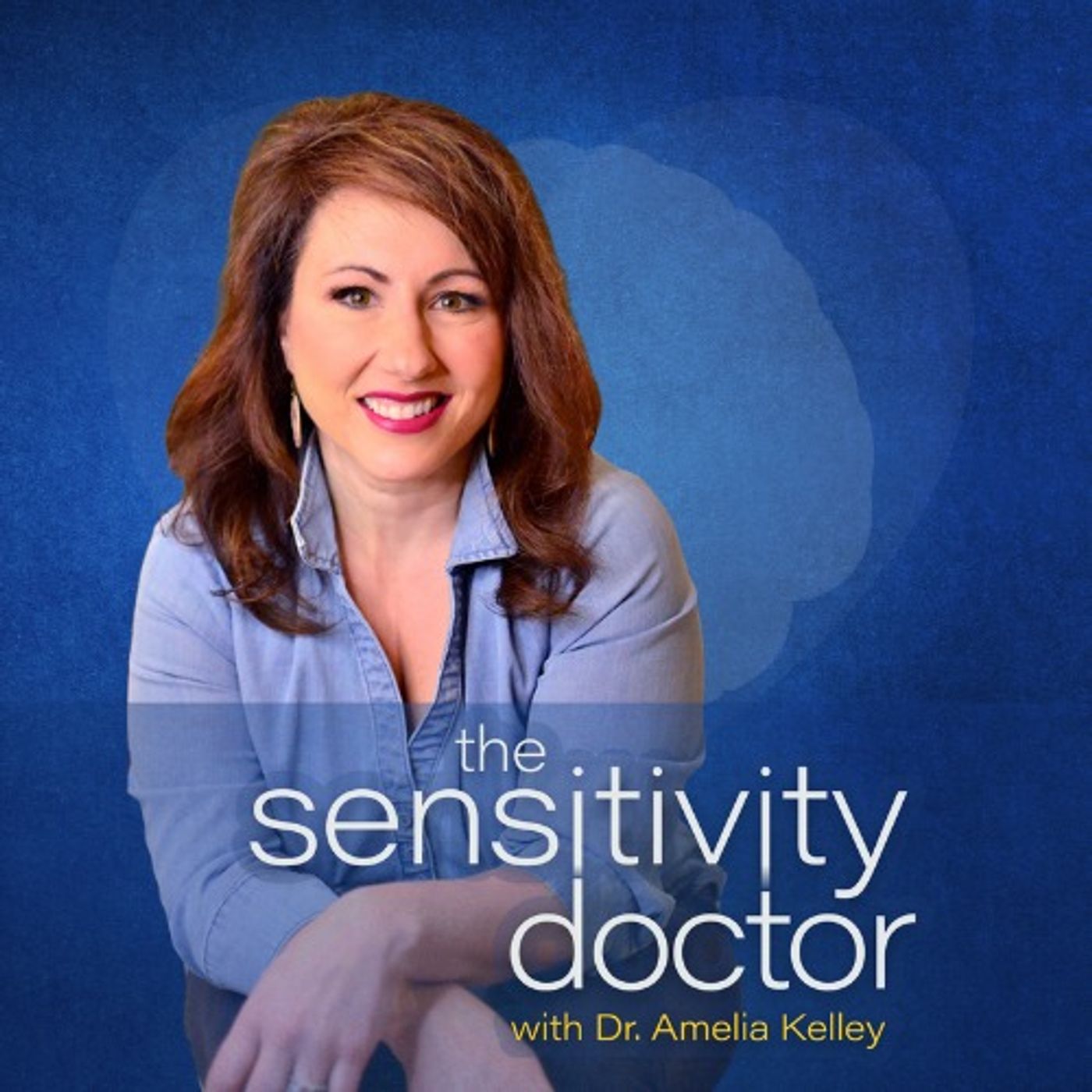
PODCAST · education
The Sensitivity Doctor
by Dr. Amelia Kelley
Dr. Amelia Kelley, trauma-informed therapist and author, explores healing, ADHD, relationships, and boundaries through the lens of sensitivity.The Sensitivity Doctor Podcast is your permission slip to own your sensitivity as your superpower.
-
165
Why You Avoid the Doctor: Medical Anxiety, ADHD and Trauma
What if you’re not avoiding the doctor because you don’t care, but because fear, trauma, or overwhelm makes the appointment feel impossible?In this episode of Wired and Worthy, Dr. Amelia Kelley and Dr. Amna Shabir explore medical anxiety, healthcare avoidance, and why neurodivergent and highly sensitive people may struggle to seek care. They discuss the difference between fearing a diagnosis and fearing the procedure itself, the impact of cognitive overload, and how trauma-informed care can help patients feel safer.They also share practical ways to reduce anxiety, advocate for yourself, rebuild trust with healthcare providers, and treat preventive care as an important form of self-care.Key Takeaways:Medical anxiety may come from fear of the diagnosis, the procedure, past trauma, or an overwhelming healthcare system.ADHD and cognitive overload can make scheduling and attending appointments much harder.Understanding each step of a procedure can reduce fear and avoidance.Trauma-informed care should prioritise trust, communication, choice, and autonomy.Believing your symptoms and seeking help are acts of self-care—not weakness.About the guest:Dr. Amna Shabbir, MD, is a dual board-certified physician, TEDx speaker, and certified health and wellness coach. With advanced training in integrative well-being, performance, and leadership development, she helps high achievers navigate perfectionism, workplace stress, and burnout. Through speaking, coaching, and consulting, she supports individuals and organisations in creating healthier, more sustainable approaches to success.Connect with Dr. Amna ShabbirWebsite: https://dramnashabbir.com/ Instagram: https://www.instagram.com/dr.amnashabbir/Listen to her podcast: https://dramnashabbir.com/podcasts/success-reimagined-with-amna-shabbir-md-exploring-the-crossroads-of-ambition-and-wellness/ Take her quiz: https://www.dramnashabbir.com/quiz Connect with Dr. Amelia Kelley:🌍 Website: https://www.ameliakelley.com📸 Instagram: https://www.instagram.com/drameliakelley/👩🏼💼 LinkedIn: https://www.linkedin.com/in/drameliakelley/
-
164
Gifted or ADHD? Understanding Twice Exceptionality with Julie Skolnick
What if the parts of you that seemed inconsistent, overly intense, distracted, or difficult were actually clues to how your brain works?In this episode of Wired & Worthy, Dr. Amelia Kelley speaks with Julie Skolnick, author of Gifted and Distractible, about twice exceptionality, also known as 2E. Julie explains why giftedness is about far more than intelligence and how it can coexist with ADHD, dyslexia, anxiety, sensory sensitivities, executive functioning challenges, and other learning differences.Together, they explore why highly capable children and adults are so often misunderstood, how shame develops when strengths hide real struggles, and what it takes to finally feel seen, supported, and safe enough to unmask.In this episode you’ll learn:Why giftedness is about more than being smart.How ADHD and giftedness can look very similar.Why highly capable people can still struggle with everyday tasks.How sensory needs, perfectionism, and anxiety can affect learning.Why some gifted children and adults are overlooked or misunderstood.How reframing behavior can reduce shame and build confidence.Why understanding how your brain works can make self-advocacy easier.About the guest:Julie Skolnick is the author of Gifted and Distractible and the founder of With Understanding Comes Calm. Her work focuses on supporting gifted and twice-exceptional children, adults, parents, educators, and clinicians.Through consultations, training, courses, and her Haystack community for 2E adults, Julie helps people better understand the overlap between giftedness, ADHD, learning differences, sensory needs, perfectionism, anxiety, and emotional intensity. Her approach centers on practical strategies, positive reframing, advocacy, and helping people understand how their brains work so they can feel supported rather than broken.Connect with Julie SkolnickWebsite: https://www.withunderstandingcomescalm.com/Instagram: https://www.instagram.com/julieskolnick/ LinkedIn: https://www.linkedin.com/in/julie-rosenbaum-skolnick-5b582351/ Connect with Dr. Amelia Kelley:🌍 Website: https://www.ameliakelley.com📸 Instagram: https://www.instagram.com/drameliakelley/👩🏼💼 LinkedIn: https://www.linkedin.com/in/drameliakelley/
-
163
Why Your ADHD Emotions Feel So Big with Dr. Tamara Rosier
Have you ever had one vague email, one “we need to talk,” or one small disagreement send your whole nervous system into overdrive? If you have ADHD, are highly sensitive, or feel emotions intensely, this episode will help you understand why your feelings can feel so urgent and convincing.Dr. Amelia Kelley talks with Dr. Tamara Rosier, author of Your Brain’s Not Broken and founder of the ADHD Center of West Michigan, about ADHD emotions, relationships, shame, trauma, self-trust, and emotional regulation. Through humor, real-life examples, and powerful metaphors, Tamara explains why emotions are “informants,” but not always reliable ones.You will walk away with a clearer way to understand your ADHD brain, separate emotion from truth, and see your sensitivity as part of your strength, not proof that you are broken.In this episode you’ll learn:Why ADHD emotions can jump from zero to ten so quickly.How working memory differences can create conflict in ADHD relationships.Why some arguments are not worth the nervous system crash.How humor and repair can help couples reconnect.Why ADHD shame can feel embarrassing, but does not define you.How to question intense emotions without dismissing yourself.Why ADHD and trauma are connected, but not the same thing.About the guest:Dr. Tamara Rosier is a leading voice in the ADHD and neurodiversity space, known for making complex brain science feel human, relatable, and deeply practical. With her signature mix of warmth, humor, and honesty, she helps people understand ADHD not as a character flaw, but as a different way of moving through the world.As the founder of the ADHD Center of West Michigan, Dr. Rosier has dedicated her work to helping individuals, families, couples, and organizations better understand the strengths and challenges of ADHD. Her background as a college administrator, professor, leadership consultant, high school teacher, business owner, and ADHD coach gives her a rich, real-world understanding of how ADHD shows up in everyday life, from relationships and emotional regulation to work, shame, and self-trust.Connect with Dr. Tamara RosierWebsite: https://www.tamararosier.com/ Instagram: https://www.instagram.com/dr.tamararosierConnect with Dr. Amelia Kelley:🌍 Website: https://www.ameliakelley.com📸 Instagram: https://www.instagram.com/drameliakelley/👩🏼💼 LinkedIn: https://www.linkedin.com/in/drameliakelley/
-
162
OCD Isn't What You Think with Dr. Michael Alcee
If you've ever been told you're too sensitive, too anxious, or too in your head, what if the truth is the opposite? What if the deep feeling you've spent years trying to manage is actually proof of how much you notice, how much you care, and how much you're capable of?This week, Dr. Amelia Kelley sits down with clinical psychologist Dr. Michael Alcée, author of The Upside of OCD: Flip the Script to Reclaim Your Life, for a conversation that completely reframes what OCD actually is. Together they trace the overlap between OCD, high sensitivity, autism, and ADHD, and challenge one of the most widely accepted treatments in the field.By the end of this episode, you'll understand why the people who struggle most with intrusive thoughts may also be the most empathic, perceptive, and emotionally attuned people in the room, and you'll have new language for a part of yourself that's never quite fit the clinical definitions.In this episode you'll learn:How OCD, autism, ADHD, and high sensitivity overlap and where they genuinely differWhy Dr. Alcée believes standard OCD treatment can unintentionally teach sensitive people to suppress their giftsThe difference between reassurance and what Dr. Alcée calls assurance, and why it mattersHow childhood environment shapes whether sensitivity turns into obsessive thinkingWhy people with OCD are often misdiagnosed, or mistaken for something else entirelyA new way to think about exposure therapy that honors emotional depth instead of overriding itAbout the guest:Dr. Michael Alcée grew up watching therapy and thriving go hand in hand. His mother, a social worker, ran her practice out of an office on the side of their house, and he'd often pass her clients on his way out the door, looking noticeably lighter than when they'd arrived. That early curiosity about the magic happening inside eventually became his career, alongside a lifelong love of music, with his piano practice famously drifting into his mother's sessions and becoming something her clients looked forward to.Michael holds a bachelor's degree from Williams College and a Ph.D. in clinical psychology from Fordham University, with over a decade in college counseling at Fordham, Vassar, Manhattanville, and Ramapo before moving into private practice. He now also serves as Mental Health Educator at Manhattan School of Music, is a TEDx speaker, and is the author of Therapeutic Improvisation and his newest book, The Upside of OCD: Flip the Script to Reclaim Your Life. Outside of sessions, he's usually playing classical or jazz piano, writing, or spending serious fun time with his family.Connect with Dr. Michael:Website: https://michaelalcee.com/Instagram: https://www.instagram.com/mike_drop_/Grab his book here: https://a.co/d/090zfE0vConnect with Dr. Amelia Kelley:🌍 Website: https://www.ameliakelley.com📸 Instagram: https://www.instagram.com/drameliakelley/👩🏼💼 LinkedIn: https://www.linkedin.com/in/drameliakelley/
-
161
The Boys We Silence Become the Men We Worry About
You were told you're too sensitive. Then you grew up, and somewhere along the way you either became someone who can't say "I'm sorry," or someone who's been managing everyone else's feelings except your own.In this episode, Dr. Amelia Kelley sits down with men's coach Alex Vigilante, founder of Vigilante Rising, to talk about what happens when boys are taught from a young age to compartmentalize who they are. They get into the viral bathroom story that sparked a national conversation about fathers and daughters, why anger is often the one emotion men are allowed to feel, and what it actually looks like to break a pattern instead of repeating it.If you've ever wondered what your dad needed to hear but never said, or what your own kids need to hear from you, this episode is for both of you.In this episode you'll learn:Why "wait till your father gets home" became a cultural script, and what it actually teaches kids about emotional safetyThe difference in how men and women are conditioned to people please, and why that distinction mattersWhy anger is often a mask for grief, fear, or shame, and what's actually underneath itThe full story behind Alex's viral video and the conversation it started about fathers, daughters, and public spacesTwo simple, body based practices that help men reconnect with themselves and show up more fully for their familiesAbout the guest:Alex Vigilante is a men's coach and the founder of Vigilante Rising, where he helps men reconnect with who they are underneath the roles of performer, achiever, and breadwinner. A former college athlete, Alex blends self inquiry, embodiment, and unlearning to help men break generational patterns and become more emotionally available fathers, partners, and friends. He is based in Charlotte, North Carolina, with his wife and two kids, and is currently working on his first book, As You Are.Instagram: https://www.instagram.com/vigilante_rising/ Website: https://vigilanterising.org/Connect with Dr. Amelia Kelley:🌍 Website: https://www.ameliakelley.com 📸 Instagram: https://www.instagram.com/drameliakelley/👩🏼💼 LinkedIn: https://www.linkedin.com/in/drameliakelley/
-
160
If Everyone Hates Their Body, It Can't Be About the Body | Teri Hofford
What if your body was never the problem?Too big. Too old. Too much. Not enough. We've all stood in front of a mirror and heard those words. But what if the mirror was lying the whole time? In this episode of Wired & Worthy, Dr. Amelia Kelley sits down with empowerment photographer and TEDx speaker Teri Hofford, whose viral talk "Five Reasons You Look Bad in Photos" changed how thousands of people see themselves. After photographing over a thousand clients, Teri noticed an undeniable pattern. It didn't matter what size, age, or shape someone was. Nearly everyone walked in hating something about their body. That's when she realized the issue was never the body. It was the story the mind had been told about it.Together, Teri and Dr. Kelley unpack body image, neurodivergence, identity, masking, and the nervous system's deep hunger to belong.In this episode, you’ll learn:• Why body image is rarely actually about the body• Fear-driven self-care vs. love-driven self-expression• How neurodivergent identity gets tangled up in performing for others• What going viral on the "wrong side of the internet" did to Teri's nervous system• The Ozempic conversation no one is having honestly• Teri's simple tool for combating shame spirals• The one-sentence script for reconnecting with someone from your past• The purple bedroom conversation that changed Teri's lifeAbout Teri HoffordTeri Hofford is an empowerment photographer, body image educator, and TEDx speaker based in Canada. After over a decade behind the lens, including years of boudoir photography, Teri noticed that virtually every client, regardless of size or shape, struggled to see themselves with kindness. That insight became the foundation of her TEDx talk, “Five Reasons You Look Bad in Photos,” and a body of work dedicated to helping people move from self-loathing to self-acceptance, not by changing how they look, but by changing how they see.Follow Teri on Instagram and find her work at https://terihofford.com/ Connect with Dr. Kelley:Visit her websiteFollow her on InstagramWatch the episodes on YouTube
-
159
Season Finale: How I Went From Masking to Fully Myself — And What's Next for The Sensitivity Doctor
We made it to the end of Season 1, and Dr. Amelia Kelley is getting real with you. In this solo finale, she pulls back the curtain on everything: the episodes you never heard, the guest she refused to platform, the physical toll of masking through a brand new medium, and the turning point that changed how she shows up for every conversation.This isn't just a wrap-up. It's a masterclass in what it actually looks like to unmask, even when the cameras are rolling.Key takeaways:Your body keeps score, even on camera.Masking isn't always conscious, but the cost is real.Integrity over virality.Depth of connection changes everything.Sensitivity isn't something to be sensitive about.Receiving healing is part of the work too.Grief is a superpower for sensitive people.Season 2 drops end-May, subscribe so you don't miss it.If this episode resonated, share it with someone who's ever been told they're "too sensitive." They need to hear this. 💙Connect with Dr. Amelia Kelley: About | Dr. Kelley's Books | InstagramSupport this podcast at — https://redcircle.com/the-sensitivity-doctor/exclusive-content
-
158
How to Stay Powerful Around Negative People with Debbie Lynn Grace
In this powerful and deeply validating episode, Dr. Amelia Kelley sits down with transformational leader and highly sensitive person (HSP) Debbie Lynn Grace to explore what it truly means to protect your energy in a world that often feels overwhelming. Debbie shares her journey from feeling “too sensitive” to discovering that sensitivity is actually a profound strength.Drawing from decades of experience in energy work and intuitive development, Debbie explains why highly sensitive individuals often absorb other people’s emotions and how this impacts their relationships and wellbeing. Together, they unpack what it really looks like to stay grounded, centred, and empowered even in the presence of negativity.Debbie also shares practical, actionable tools you can begin using right away, including grounding techniques, expanding your energy field, and her powerful “mine, not mine” practice. This episode is a must-listen for anyone ready to reclaim their energy, strengthen their boundaries, and step into their power.Key Takeaways:Sensitivity is a gift that offers intuition, empathy, and deep awarenessAbsorbing others’ emotions often comes from a contracted energy stateExpanding your energy field reduces emotional overwhelm and reactivityGrounding your body is essential to staying calm and presentStrong boundaries come from inner power, not control over othersSimple practices can help you release energy that is not yoursAbout the guest:Debbie Lynn Grace is a transformational leader, international speaker, and intuitive energy expert who helps highly sensitive people protect their energy and step into their power. With over 30 years of experience, she blends practical strategy with intuitive insight to support personal and professional growth.As an HSP and empath herself, Debbie has guided tens of thousands through her courses and workshops. She is also the creator of Sensitive Living Magazine, a platform dedicated to empowering highly sensitive individuals. Connect with Debbie Lynn Grace: Visit her website: debbielynngrace.comLearn more about Debbie here: Sensitive Living MagazineFollow her on Instagram: @debbielynngraceConnect with her on LinkedInConnect with Dr. Amelia Kelley: About | Dr. Kelley's Books | InstagramSupport this podcast at — https://redcircle.com/the-sensitivity-doctor/exclusive-content
-
157
From “I Do” to “We Do”: Navigating Marriage and Parenting with Eli Weinstein
In this insightful and refreshingly honest conversation, Dr. Amelia Kelley is joined by therapist, author, and host of The Dude Therapist Podcast, Eli Weinstein. Together, they explore the realities of navigating marriage during the parenting years, especially for highly sensitive and neurodivergent individuals.Eli shares powerful, practical tools from his new book From I Do to We Do, offering a roadmap for couples who feel overwhelmed, disconnected, or stuck in reactive patterns. From managing overstimulation and emotional reactivity to redefining teamwork in relationships, this episode dives deep into what it actually takes to build a supportive, resilient partnership while raising children.Through relatable stories, humor, and real-life strategies, this conversation highlights how couples can shift from blame and burnout to connection and collaboration, creating a home environment that supports both partners and their children.Key Takeaways:Strong partnerships require shifting from “me vs. you” to “us vs. the problem.”Overstimulation and reactivity can be managed with intentional communication tools.Humor can be a powerful regulator during parenting stress and chaos.Highly sensitive individuals benefit from separating empathy from over-identification.Small daily check-ins can prevent resentment and strengthen emotional connection.Creating a shared relationship bubble protects couples from external stressors. About the guest:Eli Weinstein is a licensed clinical social worker, therapist, and the host of The Dude Therapist Podcast. Known for his direct, relatable, and no-nonsense approach, Eli helps individuals and couples navigate relationships, parenting, and emotional wellbeing with practical, real-world tools. He is the author of From I Do to We Do: Navigating Marriage in the Parenting Years, where he combines his professional expertise and personal experience as a husband and father to support couples in building stronger, more connected partnerships.Connect with Eli WeinsteinListen to his Podcast – The Dude TherapistVisit his Website – https://eliweinsteinlcsw.comFollow him on Instagram – @eliweinstein_lcswConnect with Dr. Amelia Kelley: About | Dr. Kelley's Books | InstagramSupport this podcast at — https://redcircle.com/the-sensitivity-doctor/exclusive-content
-
156
ADHD-Friendly Home Organization That Actually Works with Maria Butler
In this episode, I sit down with professional organizer Maria Butler, founder of Clearly Organized, to talk about something so many of us quietly struggle with: the overwhelm of our living spaces. If you’ve ever felt like your home is closing in on you, or that no matter how hard you try, you just can’t stay organized, this conversation is for you.Maria brings a refreshing and compassionate perspective to organization, especially for those navigating ADHD, mental load, and busy family life. We explore why traditional “Pinterest-perfect” systems often fail and how creating personalized, flexible systems can make your home feel supportive instead of stressful. From the “Monica closet effect” to the reality of junk drawers, we normalize what so many people feel ashamed of and offer practical, doable shifts.We also dive into the emotional side of clutter, including perfectionism, anxiety, and the pressure to do things the “right way.” This episode is a reminder that organization isn’t about perfection, it’s about creating a space that works for your brain, your lifestyle, and your nervous system.Key takeaways:Too much stuff creates overwhelm, not safety or controlOrganization must match your habits, not fight against themVisibility matters, but can either help or overwhelmPerfectionism often blocks progress more than clutterSystems should support your real life, not an ideal versionCompassion, not shame, is what creates lasting change Connect with Maria ButlerWebsite: https://www.clearlyorganizednc.com Instagram: https://www.instagram.com/clearlyorganizedncFacebook: https://www.facebook.com/clearlyorganizednc TikTok: https://www.tiktok.com/@clearlyorganizednc Connect with Dr. Amelia Kelley: About | Dr. Kelley's Books | InstagramSupport this podcast at — https://redcircle.com/the-sensitivity-doctor/exclusive-content
-
155
How to Stop Overthinking Your Decisions and Finally Trust Yourself with Laurie Seymour
In this episode, Dr. Amelia Kelley sits down with consciousness researcher, psychotherapist, and founder of the Baca Institute, Laurie Seymour, for a grounding and deeply thoughtful conversation about how we can learn to trust ourselves. From navigating decision fatigue and analysis paralysis to understanding what your body is really telling you, this episode explores the quiet wisdom that lives inside all of us.Together they explore what it means to develop true discernment, not judgment, but a heart-centered capacity to know what is true for you. Laurie introduces her concept of the Creative Dreamer archetype, the challenge of being flooded with ideas, and why highly sensitive and neurodivergent individuals may be especially prone to decision overload.Laurie also opens up about her own journey, losing her father at age six, feeling separate from source for much of her early life, and the profound energetic experience that shifted everything. Through her work, her book, and her Baca Institute meditations, she has spent decades helping people reconnect with their inner guidance system and step into their full potential.Key takeaways:Discernment is not judgment it is the body’s ability to sense what is true.Sensitivity is a superpower, not a flaw, when you learn to work with it.Ideas that flood you may not all be meant for you some are meant to pass through.Perfectionism robs others of seeing what is possible through your imperfect attempts.Disconnection from source creates a scarcity mindset and fear of others.Just five minutes of quiet each day can begin to develop your inner language.Your breath has its own intelligence conscious breathing activates that wisdom.About the guest:Laurie Seymour is a consciousness researcher, psychotherapist, author, and the founder and CEO of the Baca Institute. She is the host of Wisdom Talk Radio and creator of the Quantum Connection Process, a system for helping individuals reconnect with their inner guidance and live from a place of discernment rather than default. Her book, Unconditional Remembrance: Connection to Source, explores the energetic truth of who we are and how to return to it. Laurie offers monthly meditation subscriptions, group sessions, and personal consultations through the Baca Institute.Connect with Laurie SeymourLinkedIn: Laurie SeymourInstagram: @laurie.seymourWebsite: thebacainstitute.comPodcast: Wisdom Talk RadioSupport this podcast at — https://redcircle.com/the-sensitivity-doctor/exclusive-content
-
154
Think You Lack Confidence? It Might Be Hypervigilance with Tara LaFon Gooch
In this episode, Dr. Amelia Kelley sits down with CEO, TEDx speaker, and confidence coach Tara Lafon Gooch for a thoughtful conversation about what confidence actually is and why so many of us struggle to feel it. Instead of the usual “just believe in yourself” advice, Tara shares a deeper approach rooted in gratitude, authenticity, and the courage to show up as you truly are.Together, they explore how sensitivity, trauma, and life experiences can shape our sense of self and our willingness to take risks. Amelia brings in the therapeutic lens, discussing how nervous system patterns, perfectionism, and fear of judgment can hold people back, especially for highly sensitive or neurodivergent individuals.Throughout the episode, Tara introduces her powerful three-layer gratitude practice: gratitude for who you were, who you are, and who you are becoming. Through stories, metaphors, and practical insights, this conversation invites listeners to rethink failure, embrace growth, and begin building confidence from the inside out.Key takeaways:Confidence is authentic courage, not perfection or proficiency.Your identity should not be tied to what you produce.Gratitude rewires your brain and builds lasting confidence.Your environment either grows you or holds you back.Self-esteem and confidence are not the same thing.Writing gratitude down makes it real and tangible.Courage comes first. You don’t have to feel ready.About the guest:Tara LaFon Gooch is a CEO, TEDx speaker, author, and confidence coach specializing in helping entrepreneurs, leaders, and high achievers unlock their authentic confidence through gratitude and mindset transformation. Her TEDx talk, Gratitude, the Foundation of Confidence, explores the science and practice behind her signature three-layer gratitude method. Tara also coaches TEDx speakers and works with clients to help them step courageously into the next version of themselves.Connect with Tara LaFon GoochInstagram: @taralafongoochWebsite: taralafongooch.comBusiness Website: Best Branding SolutionsConnect with Dr. Amelia Kelley: About | Dr. Kelley's Books | InstagramSupport this podcast at — https://redcircle.com/the-sensitivity-doctor/exclusive-content
-
153
The Cost of Sensitivity: What the Patriarchy Steals From Men, Women, and Everyone In Between
In this episode, Dr. Amelia Kelley sits down with one of her real-life circle-one friends, Dr. Jess Hayden, psychologist, school psychology veteran, fellow HSP, and rugby teammate turned kindred spirit. What unfolds feels less like a podcast and more like one of those kitchen table conversations you think about for days afterward.Together they dive deep into a topic Dr. Jess has been on a mission to unpack: the patriarchy, what it actually is, what it isn't, and why so many of us, men and women alike, have been swimming in it without even realizing. And before you scroll past thinking this isn't for you, this conversation is not about man-hating or pointing fingers. It's about understanding a system that has quietly shaped all of us, how we love, how we parent, how we feel safe, and how we show up in our relationships.They explore what shows up in the therapy room, the subtle moments that happen in our own homes, how consent was never modeled for most of us as children, and why emotionally suppressed men are actually one of the greatest casualties of this system. The conversation also ventures into scarcity mindset, community, longevity, and what it means to be a highly sensitive person navigating a world that was never really built for sensitivity, in any gender.This is an episode worth sharing, not to start a debate, but because awareness is where healing begins.Key takeaways:The patriarchy isn't about hating men, it's a system that harms everyone.Boys are punished for tenderness from a very young age.We were never taught consent, and that shaped how we understand power.Scarcity mindset is the engine that keeps control patterns running.You don't have to start a movement, just stay open.About the guest:Dr. Jessica Hayden is a licensed psychologist and the founder of Simply Centered Psychological Services in Raleigh, North Carolina. Specializing in Dialectical Behavior Therapy (DBT), Jess helps individuals and families find balance between acceptance and change. She’s also the creator and host of Simply Heard: The Space Between, a podcast where psychology meets the heart, exploring the tender, transformative spaces between love and fear, control and surrender, healing and being human.Connect with Dr. Jess HaydenInstagram: @dr.jesshaydenPodcast: Simply Heard: The Space BetweenConnect with Dr. Amelia Kelley: About | Dr. Kelley's Books | InstagramSupport this podcast at — https://redcircle.com/the-sensitivity-doctor/exclusive-content
-
152
DBT for ADHD, Autism & Highly Sensitive Nervous Systems: Skills That Actually Work with Emma Giordano
In this episode of The Sensitivity Doctor Podcast, Dr. Amelia Kelley sits down with Emma Giordano, LMHC, to explore how Dialectical Behavior Therapy, or DBT, can support neurodivergent and highly sensitive individuals struggling with emotional dysregulation, rumination, and even suicidal ideation.Originally developed to treat high risk behaviors, DBT has evolved into a powerful framework for building resilience, strengthening communication, and aligning life with personal values. Emma explains how skills like DEAR MAN, Coping Ahead, and the TIP skill can be adapted in neurodivergent friendly ways, including modifying expectations around eye contact and emphasizing somatic regulation.This conversation bridges empowerment and nervous system science. It offers practical tools for managing overwhelming emotions while reinforcing a core truth of Amelia’s work: sensitivity is not weakness. With the right skills, it becomes strength.Key Takeaways:Why emotional dysregulation can feel involuntary and what that means for shame and self compassion.What Dialectical Behavior Therapy actually teaches and how holding two truths at once reduces suffering.How the TIP skill can regulate acute distress and interrupt suicidal urges through nervous system reset.Why adapting DBT for neurodivergent individuals requires flexibility rather than forcing neurotypical standards.How aligning daily actions with personal values builds a life worth living and protects against hopelessness.About the guest:Emma Giordano, LMHC, is a person centered therapist who believes empowerment begins with uncovering the strengths that already exist within you. Her work is grounded in the belief that every individual holds the capacity for meaningful change, and her role is to help clients access and direct that inner power toward a more fulfilling life. Blending unconditional support with a strong Dialectical Behavior Therapy approach, Emma tailors each session to the unique needs of the person in front of her. She focuses on building self awareness, strengthening coping skills, and helping clients find balance between accepting what is outside their control and taking intentional action where they can. Above all, she creates a safe, nonjudgmental space where vulnerability is honored and growth feels possible.Connect with Emma Giordano, LMHCWebsite: https://eymtherapy.com/about/emma-giordano/Practice: Empower Your Mind TherapyConnect with Dr. Amelia Kelley: About | Dr. Kelley's Books | InstagramSupport this podcast at — https://redcircle.com/the-sensitivity-doctor/exclusive-content
-
151
Complex Trauma & Attachment Styles: Why We Crave Love but Push It Away with Dr. Danna Bodenheimer
Complex trauma is often reduced to repeated exposure to trauma. But that definition misses something essential.In this powerful and nuanced conversation, I’m joined by Dr. Danna Bodenheimer, therapist and practice owner, to explore what complex PTSD really is and what the mental health field may be misunderstanding about it.We dive into how early, ongoing trauma can fuse with identity, shaping attachment patterns, self-doubt, shame, and the difficulty of knowing who you are outside of your trauma story. We talk about insecure and avoidant attachment dynamics, repetition in relationships, and why the idea of “healing” from trauma may be more aspirational than realistic.Instead of focusing on curing or fixing, we explore something far more compassionate. Creating ease.This episode is for anyone navigating complex PTSD, insecure attachment, relational trauma, or the exhausting pressure to be “healed.”Key TakeawaysComplex trauma is not just repeated events. It is trauma that infiltrates identity.Insecure attachment and shame often develop to preserve early caregiver bonds.Avoidant and anxious attachment styles often regulate each other through projection.Therapy for C-PTSD is relational and often long-term, not a quick intervention.Healing may not mean erasing trauma, but building tools to live alongside it with more ease.Discomfort is part of growth. It is not something to eliminate entirely.You are not your trauma, even if it has shaped you deeply.Connect with Dr. Danna BodenheimerInstagram – Link in bio for her neurodivergence training and workbookWebsite – Visit for additional resources and offeringsConnect with Dr. Amelia Kelley: About | Dr. Kelley's Books | Instagram Support this podcast at — https://redcircle.com/the-sensitivity-doctor/exclusive-content
-
150
ADHD Gets Better With Age: Why It’s Never Too Late to Thrive with Judith Eve Rosen
In this episode of The Sensitivity Doctor, Dr. Amelia Kelley sits down with Judith Eve Rosen to explore a hopeful truth about ADHD: it is never too late to understand your brain, change direction, or find your calling. Together, they discuss late diagnosis, career reinvention, and how maturity and life experience can actually make ADHD more manageable over time.Judith shares how being diagnosed in adulthood reframed her struggles, reduced shame, and helped her build a career that truly fits her nervous system. This conversation challenges the idea that success must happen early and instead offers a powerful reframe: with ADHD, growth often accelerates once self-trust and strategy catch up to experience.Key Takeaways:ADHD is not a moral failing — it is a neurological difference that can be understood and supportedLate diagnosis can bring relief, clarity, and self-compassionADHD often becomes easier to manage with age due to experience and strategyMaturity can increase emotional regulation and self-trustIt is never too late to pivot, return to school, change careers, or follow your calling🔗 Resources & Links Mentioned🎓 Veterinary Social Work ProgramsUniversity of Tennessee at Knoxville (Veterinary Social Work Certificate Program)https://vetsocialwork.utk.eduThe Ohio State University (Veterinary Social Work Program)https://vet.osu.eduNew York University (NYU) – Veterinary Social Work initiativeshttps://socialwork.nyu.edu🐾 Pet Loss Support & AdvocacyAssociation for Pet Loss and Bereavement (APLB)https://www.aplb.org(Offers chat rooms, support groups, and resources)The Link (National Link Coalition) – Animal Abuse & Domestic Violence Advocacyhttps://nationallinkcoalition.org📚 Book by the GuestLife After Pet Loss: Daily Reflections for Working Through Grief👩⚕️ Connect with JudithWebsite: http://juditheverosen.comInstagram: https://www.instagram.com/mypetlosstherapistFacebook: https://www.facebook.com/JudithEveRosenLCSWSupport this podcast at — https://redcircle.com/the-sensitivity-doctor/exclusive-content
-
149
Held Together: Fertility Loss, Motherhood, and Healing Through Shared Stories with Rebecca N. Thompson, MD
In this deeply moving episode of The Sensitivity Doctor, Dr. Amelia Kelley sits down with physician and author Rebecca N. Thompson, MD, to explore the often-unspoken realities of fertility loss, complicated motherhood journeys, and the healing power of shared stories. Rebecca shares the inspiration behind her book Held Together, a collaborative memoir weaving her own experiences with those of 21 women navigating pregnancy loss, molar pregnancy, adoption, infertility, and nontraditional paths to family.Together, Amelia and Rebecca discuss how expectations around motherhood collide with lived experience, why ambiguous and disenfranchised grief can be so isolating, and how community, curiosity, and emotional expression support both nervous system regulation and long-term resilience. This conversation offers validation, language, and hope for anyone whose family-building journey didn’t follow a linear or socially recognized path.Key takeaways:Fertility loss, including molar pregnancy and infertility, often creates ambiguous grief that the nervous system struggles to resolve without shared understanding.Motherhood and family are not defined by biology alone; chosen family, adoption, teaching, caregiving, and community all carry profound maternal meaning.Holding grief in isolation can intensify emotional and physical distress, while storytelling helps reduce shame and restore connection.Persistence, rather than perfection or “resilience,” allows people to move forward even while feeling broken or uncertain.Healing happens through being witnessed, supported, and held together in community, not through fixing or minimizing pain.Connect with Rebecca N. Thompson, MDWebsite: rebeccanthompson.comInstagram: https://www.instagram.com/rebecca.n.thompson/Book: Held Together: A Shared Memoir of Motherhood, Medicine, and Imperfect LoveConnect with Dr. Amelia Kelley: About | Dr. Kelley's Books | Instagram Support this podcast at — https://redcircle.com/the-sensitivity-doctor/exclusive-content
-
148
How to Choose Love After Tragedy: Nervous System Safety, Healing, and Prevention in Schools
Have you ever wondered why punishment and crisis response alone fail to keep children safe?In this episode of The Sensitivity Doctor, Dr. Amelia Kelley is joined by Scarlett Lewis, the mother of six-year-old Jesse Lewis, who was killed in the Sandy Hook Elementary School tragedy. Scarlett shares how the message her son left behind, “nurturing, healing, love,” became the foundation of a global trauma-informed movement focused on prevention, nervous system regulation, and relational healing.Grounded in neuroscience and lived experience, this conversation explores how invisibility, hopelessness, and chronic nervous system threat contribute to violence and distress, and how trauma-informed education can support sensitive and neurodivergent children before crisis occurs.Key takeaways:Trauma-informed education helps prevent violence by addressing nervous system dysregulation early.Feeling unseen or unsafe at school increases risk for emotional distress and aggression.Nervous system regulation skills reduce bullying, reactivity, and chronic stress in children.Post-traumatic growth shows healing is possible after profound loss.School safety improves when prevention focuses on belonging, not punishment.Links and Resources:Choose Love Movement: https://chooselovemovement.orgHow We Can Finally Stop School Tragedies: A Critical Conversation with Mark HulsewéConnect with Dr. Amelia Kelley: About | Dr. Kelley's Books | Instagram Support this podcast at — https://redcircle.com/the-sensitivity-doctor/exclusive-content
-
147
From Survival Mode to Feeling Alive Again with Gina Cavalier
Have you ever felt disconnected from life, emotionally exhausted, or like you don’t quite belong anywhere? In this episode of The Sensitivity Doctor, Dr. Amelia Kelley is joined by Gina Cavalier to explore how trauma, chronic isolation, and prolonged survival mode impact the nervous system, physical health, and emotional regulation, sometimes contributing to suicidal ideation.Blending neuroscience, lived experience, and embodied healing, this conversation offers grounding and hope for highly sensitive and neurodivergent listeners who feel worn down by life. The episode closes with a gentle colour-based meditation designed to support nervous system regulation, restore energy, and reconnect you to a felt sense of safety and belonging.Content note: This episode includes discussion of suicidal ideation. While some themes are heavy, the focus is on healing, support, and hope.Key takeaways:Belonging is a biological nervous system need, and prolonged disconnection signals threat rather than personal failure.Suicidal ideation often emerges from chronic survival stress and thwarted belonging, not weakness or impulsivity.Trauma healing requires regulating the nervous system through embodied and relational safety, not insight alone.High sensitivity and neurodiversity can intensify the effects of relational trauma, especially when emotional needs are repeatedly dismissed.With safety, connection, and compassionate support, it is possible to move from survival mode into a life that feels meaningful and alive.Connect with Gina CavalierWebsite: https://ginacavalier.comInstagram: @gina_cavalierBook: Planet Walking: A Handbook for the LivingConnect with Dr. Amelia Kelley: About | Dr. Kelley's Books | Instagram Support this podcast at — https://redcircle.com/the-sensitivity-doctor/exclusive-content
-
146
How Trauma Impacts Women’s Hormones and Menopause — with Terry Tateossian
In this powerful episode of The Sensitivity Doctor, Dr. Amelia Kelley sits down with Terry Tateossian to explore how early trauma, immigration stress, and chronic survival mode can shape women’s hormonal health, emotional regulation, and midlife well-being. Terry shares her deeply personal story of escaping a communist country, navigating puberty in a refugee camp, and later reclaiming her body through mindful movement, nutrition, and self-compassion, offering hope and practical insight for anyone healing from trauma across the lifespan. Key takeaways:A trauma therapist’s lens helps explain how early survival stress can disrupt hormonal development and long-term nervous system regulation.Gaslighting recovery begins when women learn to trust their bodies instead of dismissing emotional or physical symptoms.Working with an HSP therapist can support sensitive nervous systems overwhelmed by chronic stress and hormonal shifts.An ADHD therapist for adults can help distinguish natural energy and curiosity from trauma-driven overworking patterns.Somatic therapy for trauma reconnects the body and emotions, allowing healing beyond willpower or logic.Connect with Terry TateossianWebsite: thehouseofrose.comInstagram @how.good.can.it.getMidlife Bestie: YouTube | TikTokConnect with Dr. Amelia Kelley: About | Dr. Kelley's Books | Instagram Support this podcast at — https://redcircle.com/the-sensitivity-doctor/exclusive-content
-
145
Parenting Without Disappearing: How to Stay You with Alessandra Torresani
In this powerful and deeply human conversation, Dr. Amelia Kelley is joined by actress, podcaster, and mental health advocate Alessandra Torresani for an honest exploration of motherhood, identity, and healing after birth trauma.Together, they unpack what it means to parent without disappearing. This includes caring deeply for your child while still staying connected to who you are. Alessandra shares her experience of traumatic postpartum complications, medical gaslighting, and the emotional toll of losing trust in her body. She opens up about how returning to dance, her first love, became a vital part of her healing. This was not as exercise or performance, but as a way to reconnect with her body and nervous system.This episode also dives into mom guilt, self care, community building, body image, screen time, and the powerful impact parents have when they model self respect, strength, and emotional regulation for their children.Whether you are a parent feeling stretched thin, someone healing from birth or medical trauma, or simply navigating how to stay connected to yourself while caring for others, this conversation offers validation, insight, and permission to take up space again.Key TakeawaysYou do not have to disappear to be a good parentTrauma lives in the body and healing often requires movement, not just talkingListening to your intuition with medical providers mattersModeling self care helps children feel safer, not abandonedThere is no timeline for reclaiming yourself and readiness is personalCommunity can be created, even when it is not inheritedConnect with Alessandra TorresaniPodcast: Emotional Support PodInstagram: @alessandratorresaniConnect with Dr. Amelia Kelley: About | Dr. Kelley's Books | Instagram Support this podcast at — https://redcircle.com/the-sensitivity-doctor/exclusive-content
-
144
No More Resolutions: The Two Things That Truly Change Your Life — with Gina Anderson
As we step into a new year, I’m joined by Dr. Gina Anderson, learning scientist, TEDx speaker, and founder of Luma Brighter Learning, for a conversation that will help you rethink everything you have ever believed about resolutions, self growth, and connection.Instead of chasing perfection or pressuring ourselves with rigid goals, Gina invites us into a gentler and scientifically grounded approach to change: one daily connection and one daily moment of learning.Together, we explore what connection actually looks like (and why it often needs to start with yourself), how to access your “true self” through quiet reflection, and why the brain lights up differently when we learn or feel seen in community. Gina also shares powerful insights on neuroplasticity, internal warmth as a signal of emotional safety, and why your breath is the one thing you can always return to.If you have ever struggled with resolutions, self esteem, nervous system regulation, or feeling disconnected after trauma, this episode offers a compassionate roadmap for rebuilding your inner world one small moment at a time.Key Takeaways:• Resolutions often set us up for self judgment. Replacing them with learning and connection creates sustainable growth.• Connection does not always require other people. One of the most powerful forms is connecting with your own mind.• Emotional “warmth” can be a real physiological signal that you are tapping into your true self.• Neuroplasticity shows that your brain can change, even after trauma, through intentional practice and connection.• Three simple practices can transform your year: connect with one person, get your body moving, and give yourself a daily “sunshine message.”Connect with Dr. Gina Anderson: TEDx Talk: The power of being presentWebsite: lumabrighterlearning.com Personal Website: learningwithgina.comSunshine Project: ripplesofsunshine.comInstagram: gina.anderson.ceoLinkedIn: Dr. Gina AndersonConnect with Dr. Amelia Kelley: About | Dr. Kelley's Books | Instagram Support this podcast at — https://redcircle.com/the-sensitivity-doctor/exclusive-content
-
143
The Neurobiology of Breakups: How to Move On & Go No Contact with Cole Zesiger
In this compassionate and eye-opening episode, Amelia sits down with breakup and relationship coach Cole Zesiger, who has helped millions online learn how to navigate heartbreak with clarity, emotional safety, and self-respect. Cole shares the deeply personal story of his early divorce, the patterns of anxious attachment that shaped his relationships, and the unexpected journey that led him to rebuild his life and help thousands do the same.Together, Amelia and Cole break down why breakups feel neurologically like withdrawal, what “euphoric recall” has to do with your ex, why the holidays intensify loneliness, and how to make the no-contact rule actually work without feeling like you are losing your mind. Cole also explains the biggest mistakes people make right after a breakup, the surprising science behind why your brain becomes obsessed with your ex, and how to rebuild a life that feels bigger, safer, and more meaningful than the one you are grieving.Whether you are in the early shock, the confusing in-between, or trying to stop the cycle of “one more text,” this episode offers compassionate insight, grounded strategies, and the hope you might not realize you need right now.Key Takeaways:Why your brain treats heartbreak like survival mode and how evolutionary wiring makes you want to chase your ex even when you logically know better.The real reason no-contact is so hard and how to create a plan that protects your emotional and neurological energy.What euphoric recall is and why your brain only replays the good memories plus how to ground yourself in the full truth of the relationship.How to rebuild your life after a breakup by focusing on the pillars that shape your sense of identity, connection, and purpose.Why the holidays intensify heartbreak and practical ways to lean on safe relationships, structure, and self-compassion to get through the season.Connect with Cole Zesiger:Website: coachcolezesiger.comInstagram: @coachcolezesigerTikTok: @colezesigerYouTube: Cole ZesigerBook: Exes & No’s - available for pre-order (bonus course included)Connect with Dr. Amelia Kelley: About | Dr. Kelley's Books | Instagram Support this podcast at — https://redcircle.com/the-sensitivity-doctor/exclusive-content
-
142
How We Can Finally Stop School Tragedies: A Critical Conversation with Mark Hulsewé
This week on The Sensitivity Doctor, Dr. Amelia Kelley sits down with TEDx speaker and filmmaker Mark Hulsewé for a courageous and necessary conversation about the root causes of school shootings and what must change if we want to protect our children.Mark’s work focuses on the emotional, social, and systemic breakdowns happening inside our schools, and how our long-standing “kids will be kids” mindset is allowing cycles of humiliation, abuse, and violence to escalate into tragedy. Together, Amelia and Mark dive into the uncomfortable realities of bullying, the unspoken social hierarchy within schools, and why traditional approaches to school safety completely miss the heart of the problem.This episode offers a rare blend of honesty, hope, and actionable solutions. Amelia challenges Mark’s ideas, Mark challenges the system, and both reveal complementary paths that can truly change the future. Whether you're a parent, educator, mental-health professional, or someone who cares deeply about the wellbeing of children, this conversation will reshape the way you think about school safety and mental health.Key Takeaways:Why “child on child abuse” is a more accurate term than bullying.How the unspoken social hierarchy inside schools fuels violence and despair.What alternative education models like Montessori, Waldorf, and RULER get right.How early emotional intelligence education can prevent long-term harm.Why simple, low-cost wellness screeners can identify struggling students before crisis.Connect with Mark Hulsewé:TEDx Talk: “Ending School Shootings”Connect with Dr. Amelia Kelley: About | Dr. Kelley's Books | Instagram Support this podcast at — https://redcircle.com/the-sensitivity-doctor/exclusive-content
-
141
Healing After Birth Trauma: What Every Mother Needs to Know with Teela Tomassetti
In this deeply validating and eye-opening episode, Dr. Amelia Kelley sits down with psychologist and birth trauma specialist Teela Tomassetti, founder of the Reproductive and Perinatal Trauma Center in Canada. Together, they bring long-overdue attention to an experience far more common than most people realize: birth trauma, which affects up to 45 percent of birthing parents.Teela shares her personal and professional journey into this work, including her own traumatic childbirth experience and the years-long process that followed. She breaks down what birth trauma really is, how to recognize it, and why so many women dismiss or minimize their own symptoms. Amelia also shares her own powerful birth stories, offering a rare, vulnerable look at how trauma can stay alive in the body long after delivery.Whether your childbirth was traumatic, complicated, confusing, or simply not what you expected, this episode gives you the language, validation, and tools to begin understanding and healing your story.This conversation is for mothers, partners, birth workers, medical professionals, and anyone who wants to better support the postpartum experience with compassion and truth.Key Takeaways:Birth trauma does not only happen during delivery. It can occur before, during, or long after childbirth.Trauma is subjective. Only you get to define whether your birth felt traumatic, regardless of medical outcomes or others’ opinions.Highly sensitive and neurodivergent mothers may experience birth environments more intensely, making compassionate care essential.The golden hour is a myth that pressures mothers. Bonding is not a moment. It is a relationship that forms over time.Postpartum is not six weeks. For many mothers, recovery emotional and physical can take one to two years.Birth debriefing is a powerful way to heal: through understanding, story sharing, and validation from supportive people or professionals.Birth trauma impacts the nervous system, identity, and attachment. But healing is absolutely possible.Connect with Teela Tomassetti: Instagram: @theteaonbirthtraumaPractice: Reproductive and Perinatal Trauma CenterInstagram Practice: @perinataltraumapracticeConnect with Dr. Amelia Kelley: About | Dr. Kelley's Books | Instagram Support this podcast at — https://redcircle.com/the-sensitivity-doctor/exclusive-content
-
140
Panic-Proofing the Highly Sensitive Mind: Calming Anxiety For Good with Dr. Nicole Cain
In this deeply grounding and eye-opening conversation, Dr. Amelia Kelley sits down with clinical psychologist, naturopathic physician, and author Dr. Nicole Cain, whose new book Panic Proof is helping thousands reframe anxiety as a source of wisdom rather than a flaw.Together, they explore the emotional world of highly sensitive people, why anxiety often shows up as a messenger, and the unexpected ways our childhood experiences shape our adult nervous system responses. Dr. Nicole guides Amelia through powerful somatic exercises, including havening and a body awareness practice, giving listeners a real-time experience of calming the mind and reconnecting with the body.Listeners will learn how to recognize early signs of activation, how to avoid jumping from “I am fine” to “I am in danger,” and how to rewire the brain through practical, accessible tools. This episode is an invitation to rethink panic, reclaim your sensitivity, and finally understand what your nervous system has been trying to tell you.Key Takeaways:Anxiety is not a malfunction. It is your body’s attempt to communicate what needs healing.Highly sensitive people often receive messages early in life that their emotions are “too much,” which shapes lifelong patterns of reactivity.Simple grounding exercises and havening can help create new pathways between emotional and logical parts of the brain.Panic proofing requires a four step approach that blends somatic grounding, cognitive engagement, body awareness, and intentional activation.Noticing subtle cues before they escalate is essential to preventing full blown panic and reconnecting with personal power.Connect with Dr. Nicole Cain:Website: https://drnicolecain.comInstagram: https://instagram.com/drnicolecainYouTube: https://www.youtube.com/@DrNicoleCainNDMABook: Panic ProofConnect with Dr. Amelia Kelley: About | Dr. Kelley's Books | Instagram Support this podcast at — https://redcircle.com/the-sensitivity-doctor/exclusive-content
-
139
Resilience Fatigue: When Strength Starts to Hurt with Dr. Marline C. Duroseau
What happens when “being strong” starts to hurt?In this deeply honest conversation, Dr. Amelia Kelley sits down with Dr. Marline C. Duroseau, resilience expert, author, TEDx speaker, and leadership executive, to explore a powerful and often overlooked concept: resilience fatigue.Together, they unpack how resilience can sometimes be weaponized when pushing through challenges becomes a mask we wear to survive rather than a tool for growth. Dr. Marline opens up about how to recognize when your strength is no longer serving you, how to take that mask off safely, and why learning to accept help can be the most radical act of resilience.This conversation is a reminder that resilience isn’t about perfection or constant productivity. It’s about knowing when to rest, receive support, and show up as your authentic self.Key Takeaways:Resilience fatigue happens when pushing through becomes a default mode, leading to exhaustion, tension, and emotional shutdown.You can’t heal behind a mask. True resilience requires authenticity and the courage to take off your “strong” face.Accepting help is a skill, and it can be one of the most powerful ways to recover from burnout.Perfectionism and people-pleasing often disguise themselves as strength. Your best is enough.Building healthy boundaries with yourself, including rest, is essential to sustainable resilience.Connect with Dr. Marline C. DuroseauWebsite: www.mcdbe.comInstagram: @mcdbeLinkedIn: Dr. Marline C. DuroseauConnect with Dr. Amelia Kelley: About | Dr. Kelley's Books | Instagram Support this podcast at — https://redcircle.com/the-sensitivity-doctor/exclusive-content
-
138
Why Cant We Just Get Along? with Greg Singleton
Why is it so hard to have a calm, productive conversation these days? In this insightful episode, Dr. Amelia Kelley sits down with communication strategist and TEDx speaker Greg Singleton to unpack why meaningful dialogue has become such a challenge and how we can bridge the growing divide in our relationships, communities, and workplaces.Greg shares a powerful framework for understanding the three types of conversations we all engage in: emotional, social, and practical, and how confusing them can quickly turn connection into conflict. He and Dr. Kelley explore how ego, emotional reactivity, and lack of self-awareness derail communication, and what it really takes to listen without judgment, speak with empathy, and repair trust even when you disagree.Whether you’re navigating tense political discussions, family disagreements, or workplace friction, this episode offers grounded tools to help you stay centered, curious, and connected even when things get heated.Key Takeaways:“You can’t influence anyone you’re not willing to connect with.”Emotional awareness helps you recognize whether a conversation is emotional, social, or practical and respond accordingly.Curiosity disarms defensiveness and opens the door to understanding.Accountability and empathy are essential for rebuilding communication in relationships and society.Healthy dialogue doesn’t mean agreement, it means mutual respect.Resources & Links:Watch Greg's TEDx Talk here: Unlocking Generational CommunicationFollow Greg on LinkedInConnect with Dr. Amelia Kelley: About | Dr. Kelley's Books | Instagram Support this podcast at — https://redcircle.com/the-sensitivity-doctor/exclusive-content
-
137
Breaking Free from Perfectionism: How to Let Go and Thrive with Amna Shabbir
In this heartfelt episode of The Sensitivity Doctor Podcast, Dr. Amelia Kelley is joined by physician and author Dr. Amna Shabbir for an honest and empowering conversation about perfectionism, what fuels it, how it shows up, and how to finally release its grip. Drawing from her personal journey through burnout, postpartum depression, and self-criticism, Dr. Amna shares how perfectionism often begins as a survival strategy and becomes a silent driver of stress, shame, and exhaustion.Together, they explore how cultural expectations, early experiences, and identity all shape our relationship with perfectionism, and how healing starts when we allow ourselves to be fully human, flaws, limits, and all. This conversation is a compassionate reminder that you can still be ambitious, driven, and successful without being perfect.Key TakeawaysPerfectionism is not a personality trait, it is a survival mechanism that begins with our need to belong.The body often mirrors emotional pressure, and stress, guilt, and unworthiness can show up physically.Being excellent and being perfect are not the same; one fuels growth, the other drains it.We can unlearn perfectionism through self-compassion, awareness, and radical humanity.Asking for help or setting boundaries does not make you less capable, it makes you more whole.Resources & MentionsLearn more about Dr. Amna Shabbir: https://www.dramnashabbir.com/ Listen to her podcast: Success Reimagined with Amna Shabbir, MD - Join the Unmasking Perfectionism community: https://www.dramnashabbir.com/perfectionismWatch her TEDx talk here: Perfectionism has a solution - It's not what you think - https://www.youtube.com/watch?v=oNIzzM4Vg3sConnect with Dr. Amelia Kelley: About | Dr. Kelley's Books | Instagram Support this podcast at — https://redcircle.com/the-sensitivity-doctor/exclusive-content
-
136
What We Are Getting All Wrong About Masculinity With Jacob Tobia
In this thought-provoking conversation, Dr. Amelia Kelley sits down with author, activist, and artist Jacob Tobia to challenge everything we think we know about masculinity. Jacob, known for their fearless writing and advocacy, dives into the myths that keep men trapped in cycles of silence, loneliness, and pain, and how both feminism and patriarchy have played a part in this misunderstanding.Together, Amelia and Jacob explore why most men aren’t beneficiaries of patriarchy but co-survivors of it, how cultural conditioning disconnects men from their emotions, and what happens when we start seeing gender as a choice, not a cage. They unpack why the term “toxic masculinity” has lost its power, the loneliness epidemic facing men today, and how healing masculinity could actually heal us all.This is a powerful and compassionate dialogue that bridges divides, offering a new path toward empathy, dignity, and freedom for all genders.Key Takeaways:Masculinity isn’t inherently toxic; it becomes harmful when it’s forced, not chosen.Most men are co-survivors of patriarchy, shaped by systems that teach them to suppress emotion and vulnerability.The term “toxic masculinity” may be doing more harm than good, reinforcing shame rather than healing.There’s a rising loneliness crisis among men, with millions reporting having no close friends or safe spaces for emotional honesty.True equality requires empathy. We can’t free non-binary or feminine people without freeing boys and men from emotional repression.Resources & LinksFollow Jacob on InstagramVisit his websiteGrab his book "Before They Were Men: Essays on Manhood, Compassion, and What Went Wrong"Connect with Dr. Amelia Kelley: About | Dr. Kelley's Books | Instagram Support this podcast at — https://redcircle.com/the-sensitivity-doctor/exclusive-content
-
135
How to Finally Feel Safe in Your Relationships with Jessica Baum
In this powerful conversation, Dr. Amelia Kelley welcomes back psychotherapist and author Jessica Baum to discuss her newest book, Safe: An Attachment-Informed Guide to Building Secure Relationships.Jessica, known for her best-selling book Anxiously Attached, dives deeper into attachment theory, exploring how our early experiences shape our nervous systems, relationship patterns, and sense of safety.Together, Amelia and Jessica unpack the wheel of attachment, discuss how attachment styles can shift in different relationships, and explore why neglect can be more damaging than abuse. They also talk about how empathy, sensitivity, and trauma intertwine, and what it takes to heal and cultivate secure, fulfilling relationships.Whether you identify as anxiously attached, avoidant, or disorganized, this episode offers compassionate guidance, science-backed insight, and hope for healing.Key Takeaways:Your attachment style is not fixed, it’s fluid and can change depending on the relationship and your healing journey.Neglect can be more damaging than abuse because it creates an internalized fear of nonexistence and disconnect.Safety in relationships comes from co-regulation and feeling “with” the other person on a nervous-system level.Healing attachment wounds involves understanding your nervous system, self-compassion, and connecting with safe, attuned people.Couples can repair anxious-avoidant dynamics through therapy modalities like Imago or Emotionally Focused Therapy (EFT).Highly sensitive people often developed heightened attunement as a survival mechanism in inconsistent environments.Empathy and narcissism both stem from early attachment experiences and whether we were adequately mirrored as children.Healing requires both boundaries and compassion, empathy without self-protection leads to burnout and codependency.Resources & LinksLearn more about Jessica’s book and redeem free incentives: https://www.jessicabaumlmhc.com/interviewFollow Jessica:FacebookInstagramLinkedInConnect with Dr. Amelia Kelley: About | Dr. Kelley's Books | Instagram Support this podcast at — https://redcircle.com/the-sensitivity-doctor/exclusive-content
-
134
When Gaslighting Goes Professional: Recognizing Subtle Abuse in the Workplace with Dr. Rita Renee
What happens when manipulation goes professional?In this episode of The Sensitivity Doctor, Dr. Amelia Kelley and Dr. Rita Renee explore the subtle and systemic ways gaslighting shows up in the workplace, from leaders denying conversations to colleagues rewriting history. Together, they discuss how women and sensitive professionals can protect their boundaries, document their truth, and lead with authenticity.Dr. Kelley also shares an important message for Domestic Violence Awareness Month, encouraging listeners to prioritize safety in every space, at work, at home, and within themselves.Whether you’ve felt dismissed, doubted, or devalued in your professional life, this episode offers practical steps to empower yourself and move toward a healthier environment.Key Takeaways:Gaslighting in the workplace can appear as denial, rewriting history, or minimizing your contributions, and can deeply impact confidence and mental health.Documentation is one of your strongest tools. Keep “receipts”, emails, meeting notes, or project summaries, to protect your narrative and boundaries.Respond with facts, not emotions. Gaslighters often feed off emotional reactions, so staying grounded protects your power.Emotional awareness is not a weakness, it’s a superpower when managed intentionally and used to navigate professional dynamics.Know when to stay and when to go: growth comes from challenges, but no one should remain in an emotionally unsafe workspace.If your workplace lacks HR or safety structures, seek external support, mentors, coaches, therapists, or regulatory boards.Awareness is power. Recognizing gaslighting is the first step toward reclaiming your voice, confidence, and self-worth.Connect with Dr. Rita Renee:Visit her websiteFollow her on InstagramConnect with Dr. Amelia Kelley: About | Dr. Kelley's Books | Instagram Support this podcast at — https://redcircle.com/the-sensitivity-doctor/exclusive-content
-
133
ADHD Explained: Diagnosis, Treatment & Links to Anxiety and Trauma with Dr. Amelia Kelley
In this episode, Dr. Amelia Kelley breaks down what ADHD really looks like, how it’s diagnosed, and why it’s often misunderstood, especially in women and girls. She shares how ADHD symptoms can overlap with anxiety and trauma, why masking makes detection difficult, and what treatment options (both medication and holistic approaches) can help.Amelia also explores the role of genetics, the impact of trauma, and why lifestyle factors like exercise, diet, and structure are key to thriving with ADHD.Whether you’re exploring a possible diagnosis, supporting a loved one, or curious about ADHD’s connection to mental health, this conversation offers clarity, compassion, and practical tools.Key Takeaways:ADHD diagnosis involves interviews, self-report scales, and sometimes brain imaging. there’s no single test.Women and girls often go undiagnosed due to masking and outdated research.ADHD and anxiety share symptoms, but their root causes differ.Trauma does not cause ADHD but can mimic or worsen symptoms.Treatment is highly individual: medication, exercise, diet, and external supports can all help.Links and Resources:Powered by ADHD: Strategies and Exercises for Women to Harness Their Untapped Gifts by Dr. Amelia KelleyThe Anxious Generation by Jonathan HaidtA Hunter in a Farmer’s World: ADHD and the Edison Gene by Thom HartmannConnect with Dr. Amelia Kelley: About | Dr. Kelley's Books | Instagram Support this podcast at — https://redcircle.com/the-sensitivity-doctor/exclusive-content
-
132
Thriving with Anxiety: A 4-Step Path to Turning Fear into Fuel with Dr. David Rosmarin
What if your anxiety wasn’t something to get rid of, but something you could use as fuel? In this inspiring conversation, Dr. Amelia Kelley sits down with Dr. David Rosmarin, Harvard Medical School faculty, founder of the Center for Anxiety, and author of Thriving with Anxiety, to explore his groundbreaking 4-step method: Identify, Share, Embrace, and Let Go.Dr. Rosmarin explains why anxiety is often misunderstood, how vulnerability builds stronger connections, and why learning to release control may be the hardest, but most freeing, step of all. Drawing from over two decades of clinical experience, he offers a practical, compassionate framework for transforming anxiety into resilience, purpose, and growth.Whether you’re struggling with daily stress, navigating imposter syndrome, or supporting a child with social anxiety, this episode will empower you to stop fighting your anxiety and start thriving with it.Key takeaways:The difference between clinical anxiety and everyday anxiety, and why that matters.The 4 steps to move through anxiety: Identify, Share, Embrace, and Let Go.Why human connection and vulnerability are essential for healing.How to help children face anxiety with courage and support.The surprising role anxiety plays in sharpening focus and driving growth.Resources & Support MentionedLearn more about Dr. David RosmarinHis book: Thriving with Anxiety EPISODE LINKSDr. Amelia Kelley: About | Dr. Kelley's Books | Instagram Support this podcast at — https://redcircle.com/the-sensitivity-doctor/exclusive-content
-
131
Beyond Addiction: Sobriety, Self-Acceptance, and True Recovery with Jason Shiers
In this deeply moving episode, Dr. Amelia Kelley is joined by psychotherapist and author Jason Shiers, who shares his raw and powerful journey from addiction, psychiatric wards, and endless seeking to a profound awakening of self-compassion and inner peace.Jason opens up about his experiences with escapism, 12-step programs, therapy, and the search for relief that never quite touched the root of his suffering. What ultimately transformed his life was the realization that he was never broken, and that true healing comes from reconnecting with the self, not endlessly trying to fix what isn’t damaged.Key takeaways:The hidden reasons behind addiction, self-medication, and escapism.The difference between white-knuckle sobriety and embodied healing.Why true recovery means going inward instead of chasing external solutions.How loved ones can create safety and connection for someone struggling with addiction.The radical shift from “what’s wrong with me?” to “what’s right with me?”The role of the body and nervous system in emotional healing.Jason also shares the essence of his book The Infinite Recovery Project and his mission to guide others toward seeing themselves as whole, even in the midst of struggle. His story offers hope, clarity, and a reminder that seeking is not failure, it’s the soul’s way of guiding us home.This episode is for anyone who has struggled with addiction, loves someone who has, or has ever felt broken beyond repair. Jason’s story is proof that transformation is possible, and Amelia’s insights ground the conversation in compassion and empowerment.Resources & Support MentionedGet the The Infinite Recovery Project Book here.EPISODE LINKSDr. Amelia Kelley: About | Dr. Kelley's Books | Instagram Support this podcast at — https://redcircle.com/the-sensitivity-doctor/exclusive-content
-
130
Exploding Head Syndrome, Sleep Paralysis, and the Hidden Psychology of Fear with Brian Sharpless
In this captivating episode, Dr. Amelia Kelley talks with Dr. Brian Sharpless, licensed clinical psychologist, researcher, and author who specializes in rare and unusual psychological disorders. Together, they dive deep into the strange and often frightening world of sleep phenomena—including exploding head syndrome, sleep paralysis, and REM sleep behavior disorder.Dr. Sharpless explains why these conditions occur, how trauma and neurodiversity can increase vulnerability, and the surprising ways genetics, stress, and lifestyle play a role. He also shares practical strategies to reduce episodes, from regulating sleep hygiene to shifting sleeping positions, and highlights why simply naming and understanding these experiences can often bring relief.This episode not only demystifies bizarre nighttime experiences but also shines a compassionate light on how our brains process fear, trauma, and memory through sleep.Key TakeawaysExploding head syndrome is a real but harmless sleep-related hallucination that feels like hearing a gunshot, explosion, or crashing sound while falling asleep.Sleep paralysis often brings vivid, terrifying hallucinations—yet no one has ever died from it, and knowing this can reduce its intensity.Trauma and acute stress disrupt memory consolidation during sleep, making it harder to rest until healing work begins in waking life.Highly sensitive people and those with ADHD may be more prone to disturbed sleep due to heightened nervous system activation.Regulating bedtime routines, avoiding back-sleeping, reducing stimulation before bed, and addressing underlying trauma can dramatically improve sleep quality.Resources & Links Mentioned:Learn more about Dr. Brian A. Sharpless Get his book: Monsters on the Couch: The Real Psychological Disorders Behind Your Favorite Horror MoviesEPISODE LINKSDr. Amelia Kelley: About | Dr. Kelley's Books | Instagram Support this podcast at — https://redcircle.com/the-sensitivity-doctor/exclusive-content
-
129
From Doubt to Confidence: Trusting Yourself and Avoiding Toxic Partners with Lindsay Abernathy (Part 2)
In this powerful continuation of her conversation with Lindsay Abernathy, Dr. Amelia Kelley dives deeper into the journey of rebuilding trust in yourself after toxic relationships. Lindsay shares raw and relatable insights on how to recognize red and green flags in dating, why "butterflies" aren’t always a good sign, and the importance of boundaries in protecting your well-being. They explore how unhealed wounds make us vulnerable to manipulation, how intuition speaks through the body, and why cultivating self-love and independence is the foundation of healthier relationships. Lindsay also opens up about her personal experiences with abusive relationships, dating apps, and how she ultimately found a supportive, equal partnership by doing the work of healing herself first. Whether you’re healing from heartbreak, navigating the dating world, or wanting to strengthen your self-trust, this conversation is filled with wisdom, humor, and encouragement.Key TakeawaysHealing past wounds is essential to avoid repeating toxic patterns.Your gut and nervous system often signal red flags before your mind does.Butterflies can mean dysregulation, while safety might initially feel “boring” but is actually healthy.Setting and flexing boundaries early reveals how someone respects (or disrespects) you.True love doesn’t complete you, it complements who you already are.Resources & Support MentionedBitch is a Bad Word Podcast: Available on Apple, Spotify, and all major platformsFollow Lindsay Abernathy:Instagram: @bitchisabadwordpodCommunity Line: Call or text 331-BITCHES to connect or share your storyEPISODE LINKSDr. Amelia Kelley: About | Dr. Kelley's Books | Instagram ----------------------Produced by: Camille C. Support this podcast at — https://redcircle.com/the-sensitivity-doctor/exclusive-content
-
128
Waking Up to Abuse: How to Recognize It and Begin Healing with Lindsay Abernathy (Part 1)
In this powerful episode Dr. Amelia Kelley is joined by Lindsay Abernathy, host of the Bitch is a Bad Word podcast, actor, survivor, and outspoken advocate for those navigating abusive relationships. Originally planning to discuss life and love after abuse, the conversation naturally shifted to something just as important: recognizing the signs of abuse while you’re still in it. Lindsay vulnerably shares her personal story, how love bombing, gaslighting, isolation, and manipulation became part of her daily life, and how difficult it was to see the cycle clearly while living through it. Together, Amelia and Lindsay unpack the “playbook” abusers follow, why it feels so confusing, and what survivors need to know about intermittent reinforcement, repair cycles, and reclaiming self-worth. If you or someone you love is unsure whether what they’re experiencing is abuse, this episode offers clarity, compassion, and encouragement. You’ll also hear about resources and communities ready to support you, because healing doesn’t have to happen alone.Key TakeawaysAbusive relationships often follow the same predictable cycle—love bombing, devaluation, isolation, and intermittent reinforcement.Survivors often stay not because they want the relationship to end, but because they desperately hope the abuse will stop.Even small “repairs” (like a crumb of kindness) can keep survivors hooked, similar to a slot machine’s intermittent rewards.Children benefit profoundly when even one parent provides a safe, secure, and loving environment—even if only part-time.Leaving abuse allows survivors to rebuild their identities, reconnect with their support networks, and show their children what safety looks like.Abusers often store survivors’ vulnerabilities in a “vault,” later weaponizing them—this is not a reflection of your worth but of their manipulation.Resources & Support MentionedNational Domestic Violence Hotline (U.S.): 800-799-7233If outside the U.S.: Search for your local domestic violence hotline. If you cannot find one, message Dr. Kelley via her website and she will help research for you.Bitch is a Bad Word Podcast: Available on Apple, Spotify, and all major platformsFollow Lindsay Abernathy:Instagram: @bitchisabadwordpodCommunity Line: Call or text 331-BITCHES to connect or share your story EPISODE LINKSDr. Amelia Kelley: About | Dr. Kelley's Books | Instagram Support this podcast at — https://redcircle.com/the-sensitivity-doctor/exclusive-content
-
127
When Calm Feels Dangerous: Understanding Rest Resistance with Annie Wright
Why does slowing down feel so uncomfortable for some of us? In this powerful episode, Dr. Amelia Kelley speaks with licensed psychotherapist and relational trauma recovery specialist Annie Wright about rest resistance, the anxiety, guilt, and discomfort that can arise when we try to pause.Annie explains how early life experiences, relational trauma, and high-achieving personalities can wire us to equate rest with danger and productivity with safety. They explore how to tell the difference between healthy drive and a compulsion to keep going, and how cultural pressures can reinforce burnout. Annie also offers practical, compassionate tools for making rest feel safe again, starting small, reframing guilt, and learning to “go slow to go fast.”Whether you’re a high achiever, a highly sensitive person, or someone who struggles to stop, this conversation offers the insight and strategies you need to create a sustainable, balanced life.Key Takeaways:Rest can feel unsafe when trauma has linked achievement to love or safety.The key difference between drive and compulsion is having true choice in when to stop.Burnout often starts with self-doubt, apathy, and resentment toward what you once loved.High sensitivity and sensation seeking can complicate rest needs.Small, consistent rest practices help your nervous system adapt to stillness.Guilt over rest can be reduced by understanding where it began.Relationships can either support or undermine healthy rest.“Go slow to go fast” ensures long-term energy and passion.Connect with Annie Wright:Visit her website hereFollow her on Instagram EPISODE LINKSDr. Amelia Kelley: About | Dr. Kelley's Books | Instagram Support this podcast at — https://redcircle.com/the-sensitivity-doctor/exclusive-content
-
126
More Than a Crisis: Transforming Your Pet’s Midlife into a Season of Connection with Dr. Kelly Fishman
Key Takeaways:Midlife in pets often starts earlier than owners realise, especially for larger breeds.Overweight pets are at a much higher risk of arthritis and mobility issues.Simple strength-building exercises like “dog pushups” and “dog squats” can maintain muscle and prevent frailty.Animal empaths should trust their instincts when they notice subtle changes—video evidence can be a powerful tool at the vet.Supplements like probiotics, Omega-3 fatty acids, and muscle-support formulas can extend mobility and quality of life.Resources & Links Mentioned:Follow Dr. Kelly Fishman on InstagramVisit her website for supplement recommendations and exercise demos EPISODE LINKSDr. Amelia Kelley: About | Dr. Kelley's Books | Instagram Support this podcast at — https://redcircle.com/the-sensitivity-doctor/exclusive-content
-
125
Van Gogh and the HSP Mind: Sensitivity, Struggle, and the Art of Feeling Deeply with John Zaller
Key TakeawaysVan Gogh’s legacy reveals how sensitivity and emotional depth can create timeless beauty even amidst pain and struggle.The immersive art experience provides a soothing and transformative space for highly sensitive people to connect deeply with creativity and history.Art can be a powerful trauma response, turning inner chaos into external healing.Letters to his brother Theo reveal Van Gogh’s introspective, deeply feeling nature and provide rare insight into his mental and emotional world.The design of immersive experiences takes into account sensory variety, emotional resonance, and the healing power of storytelling.Connect with John: 🌐 Website for Van Gogh: The Immersive Experience – www.vangoghexpo.com💼 LinkedIn – John Zaller EPISODE LINKSDr. Amelia Kelley: About | Dr. Kelley's Books | Instagram Support this podcast at — https://redcircle.com/the-sensitivity-doctor/exclusive-content
-
124
Breaking the Cycle: Dr. Amelia Kelley Answers Your Questions on Gaslighting & Healing
Key Takeaways:Sensitivity can be both innate and shaped by trauma; both can coexist.Highly sensitive people absorb their environment more deeply, making trauma and gaslighting more impactful.Gaslighting creates a destabilizing feeling; overthinking, while mentally exhausting, feels different and more internalized.Intermittent rewards and euphoric recall explain why we sometimes miss people who hurt us.HSPs and neurodivergent individuals may unintentionally attract narcissists due to their deep empathy and adaptability.Masking your sensitivity over time can lead to disconnection from your authentic self—Dr. Kelley shares how to reconnect.Healing from gaslighting starts with reconnecting to your voice through rest, play, and safe relationships.Sensitivity is not fragility—it’s a heightened awareness that can be a superpower when properly understood.Therapists should learn to differentiate between mental health diagnoses and sensitivity or neurodivergence for better treatment outcomes. EPISODE LINKSDr. Amelia Kelley: About | Dr. Kelley's Books | Instagram Support this podcast at — https://redcircle.com/the-sensitivity-doctor/exclusive-content
-
123
The Validation Trap: Neurodivergence, Social Media, and the Path to Real Connection with Alyssa Scarano
Key Takeaways:Dopamine traps often mask deeper unmet needs for connection, safety, and belonging.External validation can offer a temporary high, but often leaves us feeling more depleted in the long run.Highly sensitive people (HSPs) and neurodivergent individuals may experience micro-rejections more intensely, increasing their reliance on outside reassurance.Social media can be both a connection tool and a comparison minefield, recognizing the difference is key.Self-validation and cultivating awareness of your unique needs are essential to break free from harmful validation loops.Being selective about your environment, who and what you engage withmcan help create a life that supports rather than depletes your nervous system.Compassionate curiosity can help us notice our habits without shame and shift toward true connection.Connect with Alyssa Scarano:Alyssa’s website: https://www.collective-therapy.com EPISODE LINKSDr. Amelia Kelley: About | Dr. Kelley's Books | Instagram Support this podcast at — https://redcircle.com/the-sensitivity-doctor/exclusive-content
-
122
When Quitting Is the Bravest Thing: Listening to Your True Self with Jeanne-Mari Retief
Key Takeaways:Why Jeanne stepped away from the podcast—and what she’s gained sinceLearning to manage life and business as a highly sensitive entrepreneurHow grief manifests in the body and why it needs space to breatheThe challenge of letting go of perfectionism and redefining failureThe energetic cost of staying misaligned in your careerHow intuition and anxiety often go hand-in-handUnderstanding the emotional and physical impact of burnoutThe importance of listening to your body when making decisionsLaunching a new store in Scotland and finding purpose through alignmentLetting go of hustle culture and choosing healing instead EPISODE LINKSDr. Amelia Kelley: About | Dr. Kelley's Books | Instagram Support this podcast at — https://redcircle.com/the-sensitivity-doctor/exclusive-content
-
121
Perfection Is a Liar: And We’re Done Falling for It with Mary Marantz
Key TakeawaysFear is boring—it recycles the same script, keeping you stuck with the illusion that perfection will keep you safe.Perfectionism often hides in plain sight, rebranded as productivity or “being responsible,” but it’s still just fear in disguise.The achiever mindset can be a mask for deep wounds, often rooted in rejection, abandonment, or a need to prove worth.Neurodiverse thinkers, especially those with ADHD or HSP traits, often struggle with linear systems and benefit from reclaiming their creative, non-linear minds.The antidote to burnout isn’t working harder—it’s cultivating kindness, curiosity, and allowing yourself to grow at your own pace. EPISODE LINKSDr. Amelia Kelley: About | Dr. Kelley's Books | Instagram Support this podcast at — https://redcircle.com/the-sensitivity-doctor/exclusive-content
-
120
Stop “Being Fine”: Honoring Real Grief (and the Buckets That Help) with Rebecca Feinglos
Key Takeaways:Grief is not a linear process with tidy stages—it’s messy, lifelong, and uniquely personal.Our culture often fails to acknowledge non-death grief, such as breakups, divorce, and unfulfilled life paths.“Grief buckets” offer a helpful framework for grieving: solo time, movement, creativity, nature, and community.Rituals and community support (like Jewish traditions such as shiva) are essential but often inaccessible in times of crisis—like during COVID.It’s okay to laugh, cry, feel numb, or be joyful while grieving. Emotions don’t have to make sense to be valid.Grief support must go beyond therapy—it’s a societal responsibility to normalize and hold space for grief in daily life. EPISODE LINKSDr. Amelia Kelley: About | Dr. Kelley's Books | Instagram Support this podcast at — https://redcircle.com/the-sensitivity-doctor/exclusive-content
-
119
Align Your Mind: Embracing Your Inner Parts for Healing and Growth with Britt Frank
Key Takeaways:Healing begins with recognizing that all parts are good, even if not all behaviors are.Britt’s ALIGN acronym (Acknowledge, Listen, Investigate, Gratitude, Negotiate) offers a user-friendly model for navigating emotions and impulses.Your inner critic isn’t the enemy—it may just need retraining into a high-performance coach.Micro “yeses” can help you shift habits without overwhelming your nervous system.People-pleasing and impulsive parts often stem from past protective roles—getting curious about their needs is a first step toward freedom.Self-parenting is necessary for everyone, but reparenting becomes essential for those healing from trauma or dysfunctional upbringings.Shadow parts aren’t always negative—sometimes we disconnect from our gifts, joy, and creativity too.Resources & Connect with Britt Frank:Website - https://www.brittfrank.com/ Instagram - https://www.instagram.com/brittfrank/LinkedIn - https://www.linkedin.com/in/brittfrankmsw/Book: Align Your Mind by Britt FrankBook: The Science of Stuck by Britt Frank EPISODE LINKSDr. Amelia Kelley: About | Dr. Kelley's Books | Instagram Support this podcast at — https://redcircle.com/the-sensitivity-doctor/exclusive-content
-
118
The Mental and Physical Toll of Hiding Who You Are with Jessica Graham
Key Takeaways:What it means to live with both autism and ADHD (AuDHD)The hidden cost of masking and how it impacts the nervous systemHow to begin unmasking safely—in relationships, work, and daily lifeThe difference between trauma responses and neurodivergent traitsWhy self-compassion is essential when navigating a late diagnosisThe healing power of connecting with other neurodivergent individualsResources & Connect with Jessica:Website: www.yourwildawakening.comInstagram: @jessicaclarkgrahamBook: Good Sex: Getting Off Without Checking Out and Being (Sick) EnoughBook: Being (Sick) Enough EPISODE LINKSDr. Amelia Kelley: About | Dr. Kelley's Books | Instagram Support this podcast at — https://redcircle.com/the-sensitivity-doctor/exclusive-content
-
117
From Near Death to Generational Healing with Molly Duncan Part 2
Key TakeawaysGenerational trauma often persists because families avoid talking about pain—but healing begins with honesty.“Toxic resilience” can look like high-functioning busyness while masking unprocessed trauma.Self-care is more than bubble baths—it’s about regulation, awareness, and creating space to feel.Breaking generational cycles doesn’t mean being perfect—it means being real.Children don’t need protected perfection; they need modeled vulnerability and tools for emotional health.Resources & Connect with Molly:Visit her websiteFollow her on FacebookFollow her on InstagramBook: The Body Keeps the Score by Bessel van der KolkBook: What Happened to You? by Dr. Bruce Perry and Oprah WinfreyBook: Untamed by Glennon Doyle EPISODE LINKSDr. Amelia Kelley: About | Dr. Kelley's Books | Instagram Support this podcast at — https://redcircle.com/the-sensitivity-doctor/exclusive-content
-
116
Cutting Ties with Toxic Family: How to Do It, and Why You Might Need To with Dr. Sharon Martin
Key Takeaways:Cutting ties isn’t impulsive—it’s often the result of long-term patterns of abuse or dysfunction.“No contact” can take many forms and doesn’t look the same for everyone.Guilt, shame, and societal pressure often accompany estrangement and must be consciously unpacked.Grieving the idealized version of a parent is a necessary step toward healing.Creating a chosen family and redefining support through intentional relationships can offer a path forward.Resources MentionedCutting Ties With Your Parents by Dr. Sharon Martin – Available on AmazonWebsite: LiveWellWithSharonMartin.com – Free articles, newsletters, and estrangement resourcesSupport Group: Together EstrangedPodcast mentioned: Adult Child Podcast by Andrea Ashley EPISODE LINKSDr. Amelia Kelley: About | Dr. Kelley's Books | Instagram Support this podcast at — https://redcircle.com/the-sensitivity-doctor/exclusive-content
We're indexing this podcast's transcripts for the first time — this can take a minute or two. We'll show results as soon as they're ready.
No matches for "" in this podcast's transcripts.
No topics indexed yet for this podcast.
Loading reviews...
ABOUT THIS SHOW
Dr. Amelia Kelley, trauma-informed therapist and author, explores healing, ADHD, relationships, and boundaries through the lens of sensitivity.The Sensitivity Doctor Podcast is your permission slip to own your sensitivity as your superpower.
HOSTED BY
Dr. Amelia Kelley
Loading similar podcasts...
Frequently Asked Questions
How many episodes does The Sensitivity Doctor have?
The Sensitivity Doctor currently has 50 episodes available on PodParley. New episodes are automatically indexed when they're published to the podcast feed.
What is The Sensitivity Doctor about?
Dr. Amelia Kelley, trauma-informed therapist and author, explores healing, ADHD, relationships, and boundaries through the lens of sensitivity.The Sensitivity Doctor Podcast is your permission slip to own your sensitivity as your superpower.
How often does The Sensitivity Doctor release new episodes?
The Sensitivity Doctor has 50 episodes. Check the episode list to see recent publication dates and frequency.
Where can I listen to The Sensitivity Doctor?
You can listen to The Sensitivity Doctor on PodParley by clicking any episode. We provide an embedded audio player for direct listening, and you can also subscribe via your preferred podcast app using the RSS feed.
Who hosts The Sensitivity Doctor?
The Sensitivity Doctor is created and hosted by Dr. Amelia Kelley.
URL copied to clipboard!