
PODCAST · religion
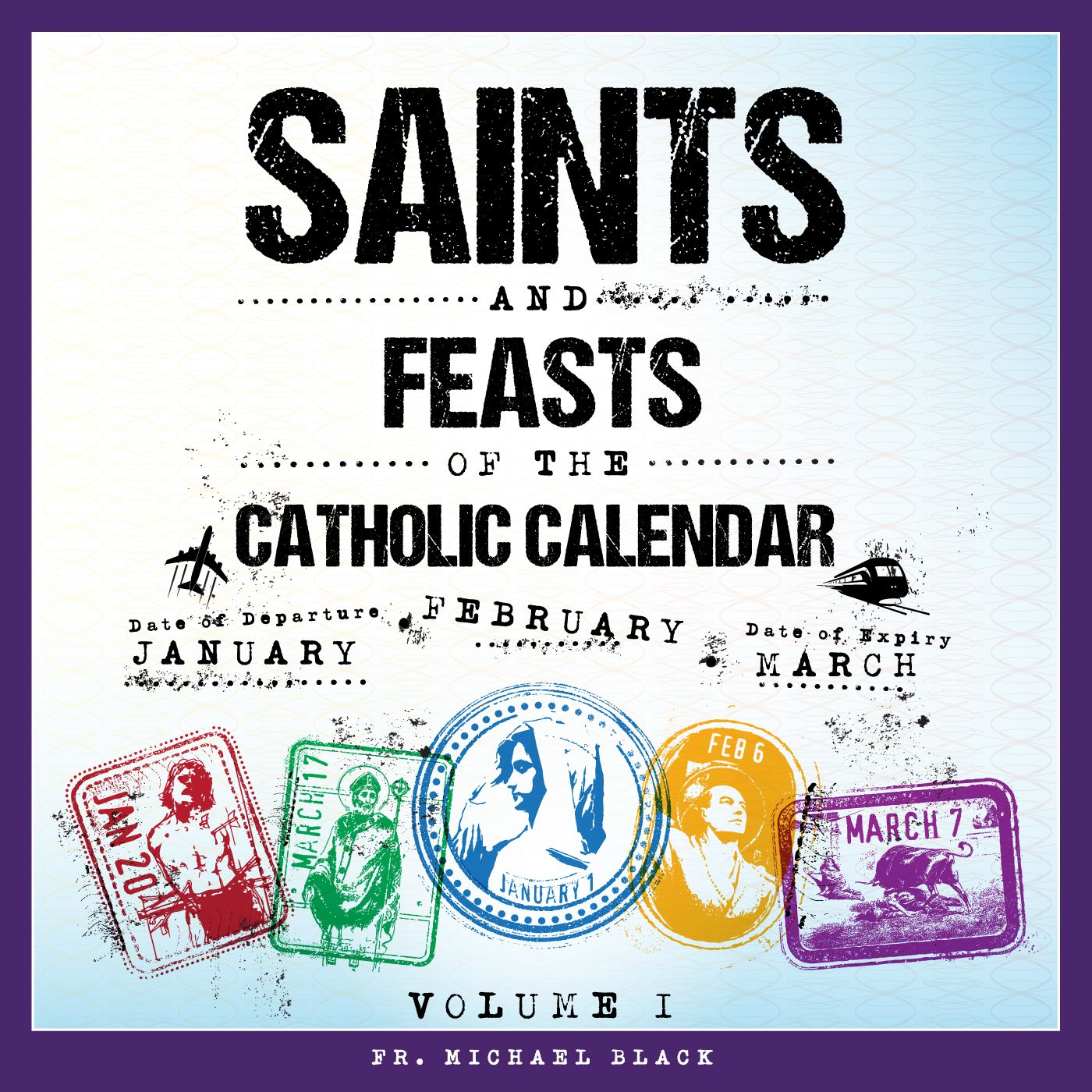
Catholic Saints & Feasts
by Fr. Michael Black
"Catholic Saints & Feasts" offers a dramatic reflection on each saint and feast day of the General Calendar of the Catholic Church. The reflections are taken from the four volume book series: "Saints & Feasts of the Catholic Calendar," written by Fr. Michael Black.These reflections profile the theological bone breakers, the verbal flame throwers, the ocean crossers, the heart-melters, and the sweet-chanting virgin-martyrs who populate the liturgical calendar of the Catholic Church.
-
267
May 2: Saint Athanasius, Bishop and Doctor
May 2: Saint Athanasius, Bishop & Doctor c. 295–373 Memorial; Liturgical Color: White Patron Saint of theologiansA fiery Egyptian saves the Trinity The First Sunday of Advent of 2011 introduced to the faithful a new liturgical translation of the Mass in many English-speaking countries. The new translation had been many years in the making and had gone through numerous drafts and revisions. Of the many noticeable changes, some of the most extensive were made to the Nicene Creed. The phrase “one in being with the Father” was changed to “consubstantial with the Father.” This caused confusion and discomfort for some, as “consubstantial” was not a familiar English word and sounded more appropriate to the realm of mathematics. But “consubstantial” had a long historical and theological pedigree supporting it. Its noticeable use in the newly translated Creed, and the curiosity it provoked, was also a distant homage to today’s saint, Athanasius. He fought for, and suffered for, this one word.Saint Athanasius was the sturdiest pillar of orthodoxy in the Patristic age. He was born to Christian parents in Egypt, raised in the faith, and mentored in his youth by the Bishop of Alexandria, whom he accompanied to the Council of Nicea. He later became the Bishop of Alexandria for forty-five contentious years and was exiled five times, some of them difficult, dangerous, and prolonged absences. He lived a colorful life at the very heart of the theological controversies of the fourth century. Athanasius, while still young, played an important role at the Council of Nicea in promoting the non-biblical, Greek word, homoousion, to describe Christ’s relationship with God the Father. The Western Church then translated homoousion as consubstantialis for its Latin Creed. Hence the English word “consubstantial.”To say that Christ is “consubstantial” with the Father is to say that He is not one in person, one in mind, or one in will with the Father. He is distinct from the Father in His personhood, His mind, and His will. But Christ is entirely united to the Father in His substance, or nature. That is, Christ is God from God in the same way that light is from light or, to use the probable original analogy from that pre-electrified era, Christ is God from God and flame from flame. A wick carries a new flame away from its source, to burn the same or hotter somewhere else, without diminishing its “parent” fire. One source, two flames, generating heat and light in different places for different people.Christ did not become God sometime after He was born of the Virgin Mary. He did not develop into God as a teenager. Nor was He bestowed with divine powers in some pivotal event. He was a baby God, a teen God, and an adult God because He was always God. Nor was His God nature a mere cloak under which was hidden a human self. Jesus Christ was fully human, of course, but also fully divine, and these two natures were united in one complex person. Most of the Church’s finer Christological definitions were destined to be clarified at later Councils. The first two Councils, Nicea (325 A.D) and Constantinople (381 A.D.) were concerned with understanding and defining the Trinity first. Once Trinitarian definitions were worked out, later fifth-century Councils would address more fully the nature of Christ Himself.Before delving into what Christ did, it was necessary to establish who He was. His being preceded His doing. Saint Athanasius’ theological contributions to defining, for ever and all time, the metaphysical significance of the Incarnation is now taken for granted. But without this correct understanding, Christmas would be just a historic anniversary of an important birth, like that of Julius Caesar or other greats of history. But Christmas is Christmas because Christ was God from the start. Theology is not just a pillow on which the Church rests, of course, so the theology of the Trinity and of Christ has been greatly enriched since the Patristic age, most notably by an emphasis on the Cross as the fullness of the self-emptying that began with the Incarnation. Saint Athanasius was without equal in defining and defending the Church’s dogma on the true nature of the Trinity. And for that immeasurable contribution he is owed an immense debt of gratitude by all the Church.Saint Athanasius, your perseverance in combating false teaching cost you comfort and security. May your example and intercession assist all teachers to lead others to reflect more fruitfully on the truths and mysteries of our Faith.
-
266
May 1: Saint Joseph the Worker
May 1: Saint Joseph the Worker Optional Memorial; Liturgical Color: White Patron Saint of workersGod wanted a working man to father JesusBesides the Virgin Mary, there are just two saints who have more than one feast day dedicated to their honor on the Church’s universal calendar: Saint John the Baptist and Saint Joseph. Pope Pius XII instituted today’s feast in 1955 in direct response to the surge of atheistic communism in the decades after World War II. Communism at that time was not so clearly understood as the dehumanizing, anti-man, politically corrupt, and economically anemic system that it later revealed itself to be. Communism, after all, had helped defeat fascism in Germany and Italy, so it was understood as a liberating force, not an oppressive one, in some countries. May 1, or May Day, was the day of the worker in communist lands: a day of rest, of triumphant militaristic parades, and of pride in all that communism had accomplished, supposedly, for the proletariat.Keen observers, including many Catholic intellectuals, Pope Pius XII, and one future Pope then serving as a priest in Poland, knew better. They had already, intellectually, torn the mask from the true face of communism. Part of the Church’s response to the communist appeal to workers was to exalt Saint Joseph the Worker on May 1 as a Catholic alternative to May Day. Not only was Saint Joseph to be understood, then, as the husband of Mary and the foster father of Jesus, but also as the patron of labor. He was the carpenter, the working man, who taught his God-Son how to swing a hammer and run a planer over a rugged plank.Pius XII’s exaltation of Saint Joseph the Worker was an attractive idea. Saint Joseph was a true icon of human labor in contrast to the rough factory worker in an industrial plant in Leningrad or the tanned farm hand threshing hay under the Ukrainian sun. Saint Joseph did not have his fist raised in anger at the capitalist oppressors of Nazareth. He was not leading a mob to burn down his boss’s house. Saint Joseph worked like a normal person worked. He was quiet about it. He did his duty. He provided his family with food and shelter. He didn’t see injustice lurking behind every corner. He most likely made excellent furniture and received a fair wage for his handiwork.Work, from a Catholic perspective, is a source of dignity. It has to be done. A life of pure leisure is no life at all. Work and want and trying times are required ingredients in the recipe for a mature, responsible adult. No work, no adult. Work itself is not pure punishment. The onerous nature of work is one of the effects of original sin, though it was not so in the beginning. Work became a burden due to the sin of our first parents. What is the theology behind this? God the Father worked and God the Son worked. When man works, then, he is participating in God’s own work. Subduing the earth is one of God’s original commandments to man. And subduing the earth cannot come about except through work of one kind or another.It has been observed that the dash (–) on a tombstone is far more important than the years that are on each side of it. What happened in the time of that dash is more important than one’s date of birth or death. For most people that dash denotes work. Mankind works. All the time. And the will of God for us cannot be found outside of what we spend most of our life doing. If that were the case, then we wouldn’t have much of a religion. God is found in our work. So if we do it well, we give him glory, and if we do it poorly, we offer him a shoddy sacrifice. The earth becomes our altar when our daily work is our daily offering. Constant, daily work was good enough for Saint Joseph and for the Son of God. So it is good enough for all of God’s children as well. Work is a pathway to holiness, and Saint Joseph the Worker stands by our side to encourage us toward the reward that our daily sweat and labor will earn.Saint Joseph the Worker, inspire all laborers of mind or body to work for their daily bread as much as for your glorification. May we work well to both perfect us and to make us participants in completing the creation begun in Genesis
-
265
January 2: Saints Basil the Great and Gregory Nazianzen, Bishops and Doctors
January 2: Saints Basil the Great and Gregory Nazianzen, Bishops and DoctorsSt. Basil: 329–379; St. Gregory: c. 329–390Memorial; Liturgical Color: WhitePatron Saints of Russia, monks, hospital administrators, and poetsObvious truths are hard to explain, but smart theologians can explain themThe persecution of the Church in the first few centuries, sometimes aggressive, more typically passive, starved her skinny biblical frame of nourishment. When the Emperor Constantine legalized Christianity in 313 A.D., the Church’s bones finally stretched, grew, and added muscle on muscle. Churches opened. Bishops preached. Schools taught. Theologians wrote. And, most significantly, Councils met. Three hundred years after Jesus Christ ascended into heaven, these large gatherings of bishops and theologians sought to end theological confusion, to settle thorny questions, and to establish a standard Christian doctrine. In the vast halls and churches of these councils, the great cast of theologians of the fourth century put their prodigious talents on full display. We commemorate two of the greatest of these bishops and theologians in today’s memorial.Saints Basil and Gregory lived so long ago, were so prolific, and played such crucial roles in so many areas of Church life, that they could each be remembered for any number of contributions to liturgy, theology, ecclesiology, Church history, monasticism, and even popular customs, especially in the Orthodox East. Yet perhaps their greatest contributions were as theologians who defined, fundamentally and decisively, what the word Trinity actually means; how Jesus is both fully God and fully man; and how the Holy Spirit is related to God the Father. Such definitions and distinctions may seem technical, abstract, or remote. But it is always the most obvious things—the most necessary things—that are the most difficult to explain. Why do things fall down instead of up? Why does the sun rise in the east instead of the west? Why are there seven days in a week instead of nine?The most fundamental doctrines of our faith, understood now as perennial, were not always perennial. They originated in the minds of certain people at certain times in certain places. To today’s saints we owe the decisive words that the Holy Spirit “proceeds” from the Father and the Son. These words fall simply and familiarly from our lips. But the word “proceeds” was the fruit of intense thought and prayer. The Father generated the Son, but the Holy Spirit “proceeds” from them both. Interesting. Dozens of millions of Catholics say reflexively every Sunday that the second Person of the Trinity is “consubstantial” with the Father. Not equal in origin. Not equal in role. But “consubstantial,” or equal in nature. Thank you, Saints Basil and Gregory! Thank you, great Bishops and Doctors of the early Church! Thank you for pulling aside the veil of mystery for a peek into the Godhead. Without the teachings of the fourth century on the Trinity and Christ, there would be no Christmas trees. Think about that. Why celebrate the Christ child if He were not God? But He is God. So carols are composed, mangers are set up, lights are hung, and gifts are exchanged. Culture happens, culture flourishes, when theology makes sense. Thank you, Saints Basil and Gregory, for… everything!O noble Bishops and Doctors Basil and Gregory, we ask for your continued intercession to enlighten our minds and to remove the dark shadows that cause confusion. Assist us to recognize that good theology understands God as He understands Himself. When you gave us good teaching, you gave us God. We seek nothing more.
-
264
June 30: First Martyrs of the Church of Rome
June 30: First Martyrs of the Church of Rome 64 Optional Memorial; Liturgical Color: Red or White A madman burns Christians like human torches Wave after wave of huge British and American bombers, pregnant with ordnance, opened their bays over Dresden, Germany, on February 13 and 14, 1945. Fire joined fire until the city itself was a raging, screaming bonfire. A tornado of flames hungered for oxygen, sucked all air from the atmosphere, and suffocated to death anyone caught in its vortex. The center of Dresden melted. Only some stone walls remained erect. Human skeletons were mixed into the rubble of a skeletal city. In the old town of Dresden today, a modest memorial marks a mass grave, the location where an unknown number of civilians’ scant remains were cremated shortly after the fire. It’s easy to walk by without noticing it. Any number of countries have similar memorials marking the mass graves of the victims of plane crashes, sunken ships, war atrocities, or natural disasters. Many countries also have a memorial to an unknown soldier. That unknown fighter represents all those drowned at sea, lost in the jungle canopy, eviscerated by enemy fire, or simply never recovered in the heat and sweat of battle. On civic feast days, presidents, governors, and mayors lay wreaths and flowers at the graves of the unknown. In honoring him, they honor all. A nation’s official remembering—in stone, statue, speech, or ceremony—preserves the past. A nation’s common memory is preserved by its government, which guards against national forgetting through official acts of national remembering. The Church’s liturgical calendar is a continual, public remembering of saints, feasts, and theology, by mankind’s most ancient source and carrier of institutional memory—the Catholic Church. Today’s feast day commemorating the First Martyrs of the Church of Rome did not exist prior to the liturgical reforms of the Second Vatican Council. Instead, the sanctoral calendar was crowded with various feast days to particular martyrs from this early Roman persecution. Apart from their centuries on the calendar, however, little else supported these particular martyrs’ existence. Today’s feast is a liturgical expression of the wreath-laying ceremony at the Tomb of the Unknown Soldier or the flowers left at a mass grave marker. This feast commemorates those unknown and unnamed men and women who were cruelly tortured and executed in the city of Rome in 64 A.D. But instead of meeting in a park to sing a patriotic hymn and to see an official lay a wreath, we do what Christians do to remember these martyrs. We meet as the faithful in a church, in front of an altar, to participate in the sacrifice of the Mass and to remember our remote ancestors in the faith who died so that the true faith would not. In 64 A.D. a huge fire of suspicious origins consumed large sections of Rome. A deranged emperor named The Black (Nero) blamed Christians for the conflagration and executed large numbers of them in retribution for their supposed treachery. A vivid description of the persecution survives from a Roman historian named Tacitus, who relates that some Christians were sewn into the skins of animals to be attacked and consumed by beasts. Other Christians were slathered with wax, tied to posts, and then burned alive, human torches whose glow illuminated Nero’s garden parties. Still others were crucified. This was not the barbarous hacking off of limbs and splitting of skulls later suffered by missionaries in the forests of Northern Europe. Nero’s madness was highly refined evil. Today, we commemorate these Christians in the same fashion in which they would have commemorated the Lord’s own death—by prayer and sacrifice. We are separated from 64 A.D. by many centuries, but we are united to 64 A.D. by our common faith. We remember because the Church remembers. Anonymous first martyrs of Rome, your blood is still wet, and your sufferings still felt, in the same Church of Christ to which you belonged through baptism. Through your intercession, help the baptized of today be as courageous as you in all things.
-
263
June 26: Saint Josemaria Escriva, Priest
June 26: Saint Josemaria Escriva, Priest 1902–1975 Optional Memorial; Liturgical Color: White (Saint Josemaria is not on the Church’s universal calendar but is included here) Patron Saint of diabetics Work is our sacrifice and the earth is our altar When today’s saint was a young priest, he was a rather well-known speaker in Madrid, Spain. Besides being an excellent homilist, he also preached retreats, gave parish missions, and taught classes. A young woman heard that Father Josemaria was scheduled to give some lectures nearby and, in light of his reputation, was eager to hear him. But first she went to one of his Masses. After that, the woman had no interest in hearing him lecture; instead she wanted to discover God’s will for her life. Saint Josemaria’s example of intense devotion and prayerfulness in saying Mass made her rethink her entire vocation. A good priest disappears into his vocation, submerges himself in Christ, and communicates a divine, not a personal, message. He makes people think of God, not him. At Mass the priest is not himself, yet is fully himself. He performs a sacrament because he is a sacrament. The Sacrament of Holy Orders is hidden behind the aspects of a man, similar to how the Holy Eucharist is hidden behind the aspects of bread and wine. It is the theology of the Church that every sacrament validly performed is efficacious, that it transmits sanctifying grace to the soul. But the fruitfulness of a sacrament for its recipient, either psychologically or spiritually, fluctuates. It can hinge on any number of factors, from the beauty of a Church, the quality of a homily, the sacredness of the music, or the intellectual preparation and ardor of the one receiving the sacrament. A holy, charitable, and educated priest infuses every sacrament he celebrates with a theological meaning that yields spiritual fruit that goes beyond efficaciousness. Saint Josemaria’s writings, preaching, lectures, and talks were so rich, so chock-full of practical purpose and high meaning, that a great international family gathered around him, harvesting from his sustained example and insights an abundant banquet for their spiritual table. Josemaria Escriva was born in a small town in rural Spain. He attended diocesan seminaries in the nearby city of Zaragoza and was ordained a priest in 1925. In 1928 he experienced a vision which spurred him to found Opus Dei, an institution that quickly spread to all the major Christian countries. Opus Dei consists primarily of married lay men and women, while some members are unmarried and consecrated celibates. A few members are priests. After two thousand years of Catholic spirituality, it might be asked what new insight warranted the foundation of a new Church institution? It is a sign of the Church’s theological and spiritual fecundity that Saint Josemaria did offer a new, innovative approach to living as a disciple of Christ nineteen hundred years after Christ returned to the Father. In a homily from 1967, Josemaria states his spirituality in clear terms: "...God is calling you to serve Him ‘in and from’ the ordinary, material, and secular activities of human life. He waits for us every day in the laboratory, in the operating room, in the army barracks, in the university, in the factory, in the workshop, in the fields, in the home and in the immense panorama of work. Understand this well: there is something holy, something divine hidden in the most ordinary situations, and it is up to each one of you to discover it." In other words, there is no need for a serious lay Catholic to abandon his work and routine, his family life, or his everyday relationships to fulfill God’s will. God is found in and through ordinary life. Cardinal Albino Luciani, later Pope John Paul I, perceptively noted that Saint Josemaria was not teaching a ‘spirituality for lay people,’ as Francis de Sales taught, but a 'lay spirituality.' It is not a question of praying the rosary while sweeping the floor, or contemplating scripture while driving. It is about “materializing” holiness by converting ordinary, well-done work into a sacrifice and prayer to God. Ordinary work, then, is not just the context, but the raw material, for lay holiness. All jobs are important. Daily life is not a distraction from God’s will for us. Daily life is God’s will for us. When we get to work, we get to God. Saint Josemaria, may your intercession help us to follow your teachings in making our daily labors divine labors. May our work, well done, mingle with Christ’s work and sacrifice to form one perfect offering of praise and thanksgiving to God the Father.
-
262
June 3: Saint Charles Lwanga and Companions, Martyrs
June 3: Saint Charles Lwanga and Companions, Martyrs 1860–1886 Memorial; Liturgical Color: Red Patron Saint of African youth Young African Christians die like the martyrs of old Many of the faces of the saints in heaven that shine with the light of God are dark faces. North Africa was one of the first regions to be evangelized and was home to a vibrant, diverse, and orthodox Church for over six hundred years. North Africa had over four hundred bishoprics and enriched the universal Church with a wealth of theologians, martyrs, and saints. That Catholic culture drowned under the crushing waves of Arab Muslim armies that inundated North Africa in the seventh century, altering its cultural and religious landscape. Small pockets of Christianity continued to exist in isolation for a few centuries more. But by 1830, when French colonists and missionaries settled in Tunisia and Algeria, local Christianity had totally disappeared. The Christian light had gone out in North Africa centuries before. Yet today’s saints are nineteenth-century African martyrs. While North Africa has remained in the tight grip of Islam, sub-Saharan Africa has lived a contrary reality. It has embraced Christianity. Throughout the nineteenth century, daring missionary priests and religious from various European countries penetrated deep into the towns, savannas, jungles, and river deltas of the “dark continent,” carrying the light of Christ. For the most part, they were well received and initiated the long and complex process of evangelization, inculturation, and education that has turned today’s sub-Saharan Africa into a largely Christian region.Charles Lwanga and his companions were all very young men, in their teens and twenties, when they were martyred. They ran afoul of their local ruler for one reason and one reason only—they were Christians and adhered to Christian morality. The ruler did not otherwise question their loyalty, devotion, or service to him. He was suspicious of the European priests who had brought the faith, wary of outside interference in his kingdom, and also eager to impress his subjects with a display of ruthlessness and power. He was also a sodomite who wanted these young men to engage in unholy sexual acts with him. For refusing to satisfy his disordered and abusive lust, they became victims of homsexual violence. The ruler and his court questioned the young males who served as their pages and assistants to discover if they were catechumens, had been baptized, or knew how to pray. Those who answered “Yes” were killed for it. One was stabbed through the neck with a spear and another’s arm was cut off before he was beheaded. But most were marched miles to an execution site, cruelly treated for a week, then wrapped in reed matts and placed over a fire until their feet were singed. They were then given one last chance to abjure their faith. None did. These tightly wrapped human candles were then thrown onto a huge pyre and reverted to the dust from whence they came. One of the executioners even killed his own son. The executioners and onlookers knew their victims had succumbed to the flames when they no longer heard them praying. The site where these Ugandan martyrs died is now a popular shrine and a source of pride dear to the heart of African Catholics. Charles Lwanga and his companions, though new to the faith, acted with the maturity of the wise and the aged, choosing to sacrifice lives full of promise rather than surrender the pearl of greatest price—their Catholic faith. Saint Charles Lwanga and companions, help us to be courageous in the face of threats, to stand tall for our beliefs, and to suffer ridicule and hatred rather than renounce or minimize our relationship with Christ and His truth.
No matches for "" in this podcast's transcripts.
No topics indexed yet for this podcast.
Loading reviews...
ABOUT THIS SHOW
"Catholic Saints & Feasts" offers a dramatic reflection on each saint and feast day of the General Calendar of the Catholic Church. The reflections are taken from the four volume book series: "Saints & Feasts of the Catholic Calendar," written by Fr. Michael Black.These reflections profile the theological bone breakers, the verbal flame throwers, the ocean crossers, the heart-melters, and the sweet-chanting virgin-martyrs who populate the liturgical calendar of the Catholic Church.
HOSTED BY
Fr. Michael Black
CATEGORIES
Loading similar podcasts...
URL copied to clipboard!