
PODCAST · religion
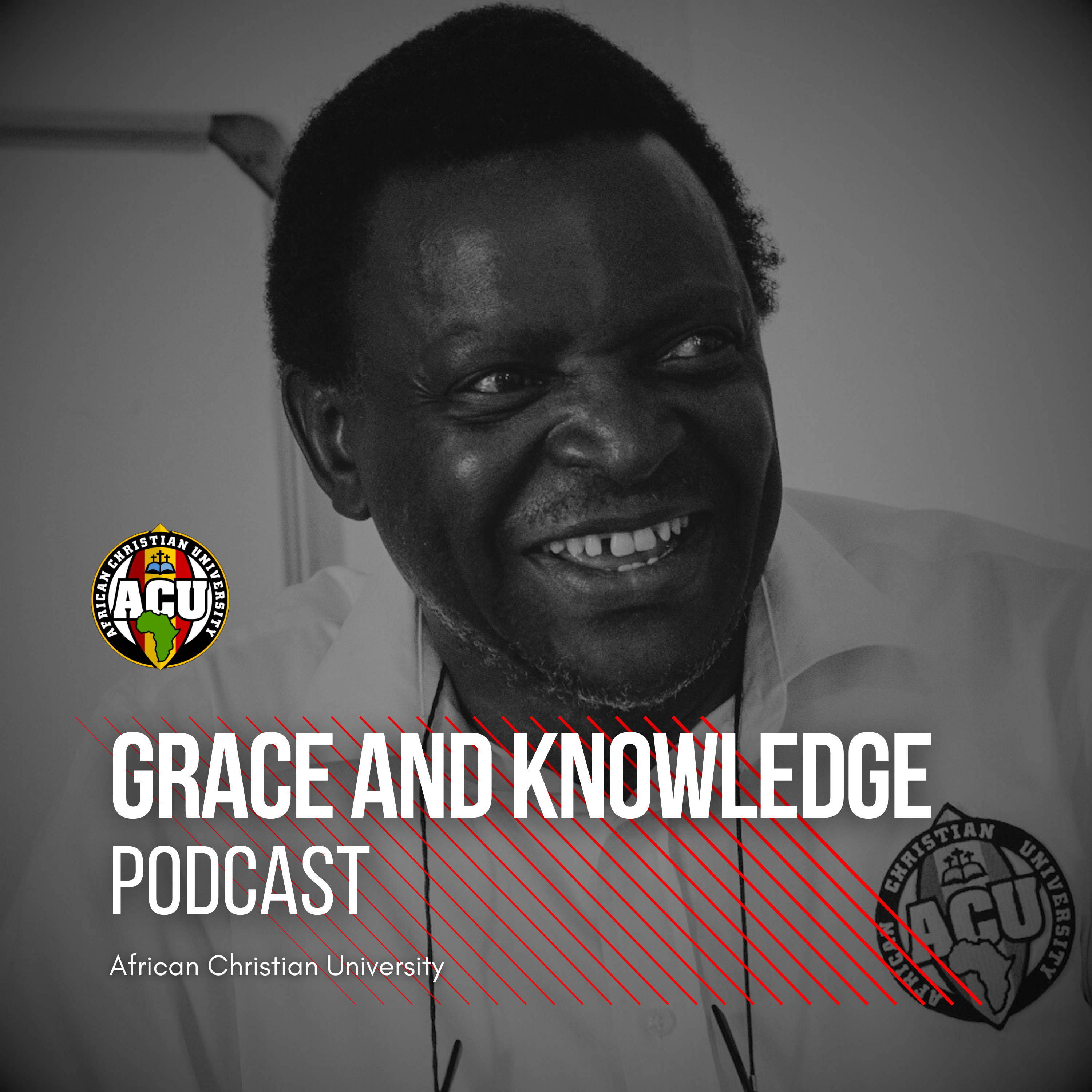
Grace and Knowledge Podcast
by ACU Media
ACU Vision The vision of ACU is to be an excellent tertiary educational institution that glorifies God through a biblical worldview-based, innovative, stewardship-oriented training and genuinely African. ACU Mission The mission of ACU is to educate students from the Christian worldview in the contemporary and historical bodies of truths through the classical liberal arts and sciences for all spheres of life and vocations by exercising students' discernment and holistic discipline and equipping them with practical skills.
-
77
What Is Financial Fitness? | Insights from ABC Asset Management Experts | Atlas Mara
ACU alumna Wankumbu Moonga, Client Portfolio Officer, together with Pauline Mushili, Client Portfolio Manager at ABC Asset Management, discuss what financial fitness truly means, why it matters, and how individuals can begin their journey towards financial stability today.Drawing from their professional experience, they share practical insights on managing finances wisely, building sustainable habits, and planning for the future.
-
76
The Resurrection – Jesus Lives! | Pr. Collins Sakalunda
As we come to the end of Term 1 and return from the Easter break, we may ask: was the resurrection a myth, or did it truly happen? Can it be proven as fact? Most importantly, what does the Bible say about Christ’s resurrection, and how should we respond?Find out as Pr Collins Sakalunda explains the truth and reliability of the resurrection from Mark 16:1–8.
-
75
The Cross – Jesus Gives His Life | Pr. Oswald Sichula
In Jesus’ time, the Jews expected the Messiah to solve their problems and defeat their enemies with mighty power. Yet Jesus accomplished this through the power of the cross. Many of us have heard about the cross or seen people wear crucifixes, yet carry on with little thought. We know Jesus died on the cross, but do we understand the access it gives us to God the Father?Find out as Pr. Oswald Sichula explains the power of the cross and the access it gives us to the Father from Mark 15:33–41.
-
74
The King Enters Jerusalem | Pr. Chipita Sibale
Pastor Chipita Sibale preached from Mark 11:1–11 on “The King Enters Jerusalem,” teaching that Jesus is the humble King whose kingship is spiritual rather than political, calling us to submit sincerely to His lordship in true worship.The sermon emphasised that believers must be willing to submit to the Lordship of Jesus Christ, and the passage was explained in three parts.First was sovereign preparation (verses 1–6), shows that Jesus deliberately prepared His entry into Jerusalem through command and obedience, leaving nothing to chance; the triumphal entry was fully planned, reflecting how every stage of Christ’s life—from His birth to His incarnation—unfolded under God’s sovereign authority, reminding us that nothing on earth happens by accident and that when God calls, we are to surrender everything because all things belong to Him.Second was the public celebration (verses 7–10), where the crowd’s actions fulfilled the prophecy of Zechariah 9:9 and honoured Jesus as King, demonstrating outward royal recognition. Third was the quiet divine examination (verse 11), where Jesus entered the temple and silently observed, revealing that many who praised Him publicly did not truly love Him, while Bethany represented genuine devotion. The sermon challenges us to consider what the King sees when He looks at our hearts and lives, reminding us that He is not deceived by outward appearances or religious activity, and that true submission goes beyond public praise to sincere inward devotion.
-
73
The King Over Storms | Pr. Kennedy Kawambale
Pastor Kennedy Kawambale preached from Mark 8:27–30 on “The True Confession,” teaching that Jesus is the Christ, the Son of the Living God, and that true discipleship begins with confessing Him as Lord and committing to follow Him. The sermon centred on the importance of the question, “Who do you say Jesus is?”, explaining that Christianity does not stand on opinion but on confession, and that the most important question in the world is what we believe about Jesus Christ. First, he spoke about an objective question, showing that Jesus’ identity is not shaped by personal comfort or preference but by how God has revealed Him, emphasising the exclusivity of Christ’s deity and pointing to 1 Timothy 2:5–6, reminding us that a Jesus who bends to our desires becomes an idol rather than the true Christ. Second, he explained that this is a question that divides, because admiration for Jesus is not the same as salvation; neutrality is impossible, and one may respect or admire Christ yet still completely miss Him. Third, he described Peter’s confession as a confession with depth, reminding us that Jesus did not die as a helpless victim and that the Christian life is a continual deepening in love and understanding, like longing for the bridegroom. Finally, he revealed the state of the human heart, explaining that humanity desires the crown without the cross, as Peter initially did, and challenged us to examine whether our hearts have truly bowed to Christ. The call was to make a true confession and live a life of genuine discipleship, recognising that until we can confidently answer who Jesus is, we cannot fully understand what it means to follow Him.
-
72
The Compassionate Saviour | Pr. Isaac Makashinyi
Pastor Isaac Makashinyi preached from Mark 6:30–44 on “The Compassionate Saviour’s Superabundant Provision,” teaching that Jesus provides abundantly for our needs and that His compassion reveals the heart of God, calling us to respond with gratitude and faith.He began by noting that a large crowd without leadership becomes chaotic, highlighting humanity’s need for true spiritual guidance.First, he spoke about compassion that sees our true condition, explaining that while God recognises our physical frailty, Jesus also sees our deeper spiritual need, which is salvation. Before feeding the crowd, Jesus taught them God’s Word, showing that our greatest need is not food but life through God’s Word, as man does not live by bread alone but by every word that comes from God. He reminded us that it is possible to be surrounded by Christians and still be like sheep without a shepherd, remaining far from God. Second, he emphasised that compassion feeds us first with the Word, as Jesus multiplied truth through His teaching, showing that a shepherd’s first gift is God’s Word; physical hunger is real, but spiritual hunger is ultimate, and without Christ we may have food yet still remain hungry. Finally, he explained that compassion provides abundantly, as Jesus’ miracle was not only provision for the crowd but also training for His disciples to grow in faith, teaching them to trust Christ’s sufficiency and recognise His care in every need.
-
71
Rejoicing in Trials | Pr. Mwindula Mbewe
Pastor Mwindula Mbewe preached from Mark 4:35–41 on “The King Over Storms,” teaching that Jesus has authority over nature and fear and that His power over creation proves His divine identity, calling us to trust Him through life’s storms. He began by sharing about a student's brother-in-law and how that situation redirected the direction of his sermon two weeks earlier. The first point was that Jesus cares even when He is silent, pointing to Mark 4:38 where Jesus was asleep in the boat and the disciples questioned whether He cared; he strongly challenged us to stop equating Jesus’ silence with a lack of love and to stop questioning God’s heart, reminding us that sometimes He is doing something we do not understand. The second point was that at times His lack of intervention is to build our faith, referencing James 1:2–3, teaching that trials are not to be celebrated for the loss itself but because they produce perseverance; when storms come, our focus must be our faith, not our circumstances, because the real battle is not the storm but what happens in our hearts. He referred to Adam and Eve, showing how they believed the lie that God was withholding good from them, and reminded us through Ephesians 6:10–20 that spiritual warfare is real, so we must know who God is before the storm comes, not begin learning about Him in the middle of it. Who we believe Jesus is determines how we endure trials, and even if He does not rescue us in the way we expect, we must continue trusting Him. Finally, he emphasised that Jesus is the God-man; when He calmed the storm and the disciples asked, “Who then is this?”, it revealed that He is not merely a teacher or an angel but truly God, because if Jesus is not God, we lose our salvation. The most important faith we must have is not simply that God is good, but that Jesus came, died for our sins, paid the debt we could not pay, and gives us life when we put our faith in Him.
-
70
The Friend of Sinners | Pr. Joseph Chisola
Pastor Joseph Chisola’s sermon from Mark 2:13–17 focused on “The Friend of Sinners,” showing that Jesus welcomes the outcasts and that the gospel is for sinners, not the self-righteous, revealing Christ’s heart for the broken. He explained that although there was a crowd, Jesus had a particular reason for being there because He was looking for one man, showing that Jesus seeks individuals and meets them at their point of need. Jesus is truly a friend of sinners, and in calling Levi, He showed the gracious call of Christ, seeing his need and calling him to follow. When Christ calls us, we must let go of what has been holding us back, and He opens our eyes to recognise those things. This challenges us to ask whether Jesus is someone we are constantly following. Jesus not only calls sinners but also communes with them, teaching that the circles we are in are our mission field. The sermon also highlighted the gracious explanation of Christ, that He calls us to leave everything and trust Him fully. In conclusion, Jesus is ready to receive us just as we are, and we do not need to perfect ourselves before coming to Him.
-
69
The Power to Heal and Forgive | Dr. Paul Kayumba
Rev. Dr. Paul Kayumba’s sermon from Mark 2:1–12 focused on “The Power to Heal and Forgive,” showing that Jesus heals both the body and the soul and that His authority reveals divine power and mercy, reminding us that forgiveness is our deepest need. The context of the passage shows Jesus’ authority being established, the beginning of conflict narratives, and the truth that forgiveness belongs to God alone (Isaiah 43:25). The big idea was that Jesus does what can be seen to confirm what cannot be seen.First, we see a desperate faith when four unnamed friends refused to be blocked by the crowd and brought the paralysed man to Jesus, showing that faith overcomes obstacles and sometimes looks like borrowed legs, reminding us that we can help carry others who are weak or have given up.Jesus saw their faith, teaching that even if we are not recognised, what we do is not insignificant, and challenging us to ask whether our lifestyles act as barriers preventing others from reaching Christ. Second, Jesus made a shocking declaration when He said, “Son, your sins are forgiven,” addressing the man’s deepest need rather than just his visible condition, showing that the most obvious problem is not always the most serious one, as Jesus deals with the root before the symptoms and calls us to examine our standing before God.Third, Jesus asked a crucial question, “Which is easier to say?” highlighting that forgiveness is invisible while healing requires public proof.Finally, the visible miracle, when the man rose, took his mat, and walked, served as public verification of God’s forgiveness, showing that the miracle was not the goal but a sign of the forgiveness of sins. The irony of the gospel is that healing costs power, and forgiveness costs the blood of the Son of God, pointing to the cross behind the miracle. The man entered paralysed and left forgiven, reminding us that our deepest need is forgiveness before God, that we should remove every barrier so grace may enter, and that Jesus still makes the invisible visible, forgiveness still walks into rooms, and nothing remains the same.
-
68
The Call To Follow Christ | Pr. Francis Kaunda
Pastor Francis Kaunda’s sermon from Mark 1:14–20 focused on “The Call to Follow Christ,” emphasising that Jesus calls ordinary people to follow Him and that the kingdom of God demands repentance and faith. He stressed that before talking about Christianity, one must first be a Christian, as there are non-negotiables to following Christ, beginning with knowing Jesus personally and having a real relationship with Him. The sermon reminded us of who Jesus is and His saving purpose, showing that His coming fulfills what was spoken in Luke 4 and reveals God’s clear agenda for humanity, which is salvation through knowing Christ. Because Jesus is King, the proper response is to repent and believe, turning away from sin and stopping reliance on oneself. Christ’s call is deeply personal, and it is impossible to follow Him without knowing Him; when He calls, He also promises to make His followers fishers of people, sending them out as seen in John 20:21. Pastor Kaunda noted that keeping Christ central may not result in a large church, but it will produce true followers of Jesus Christ. The call of the gospel is not an invitation to improve one’s life, but a call to submit fully to Christ and follow Him, recognising that discipleship begins with grace and is never cheap, and that Christ continues to call ordinary people today.
-
67
The Beginning of the Gospel | Pr. Collins Sakalunda
The first chapel of the term focused on the Gospel of Mark, specifically Mark 1:1–13, under the theme “Jesus, the Son of God, enters human history.” Pastor Collins Sakalunda explained that the gospel is not the beginning of a religion but God’s good news, and that this good news begins with a person—Jesus. Mark opens his gospel by showing that this message has a divine origin and that it inaugurates a new timeline in history. The gospel, as Mark presents it, is a royal proclamation; in his day the word gospel was used for imperial announcements, not good advice or simply a way to go to heaven. By using this language, Mark is intentionally confronting Rome and declaring that Jesus, not Caesar, is King, making the gospel a cosmic inversion. The subject of this message is Jesus Christ, the Son of God, who is both divine and the long-awaited Messiah, a truth that becomes clear as the gospel unfolds and reaches a turning point in Mark 8:29. If the Messiah is the Son of God, then God truly dwelt among us. Practically and ethically, this calls us to faith and intellectual submission, reminding us that if Jesus is truly the anointed King, then He is Lord over every part of life, including the academic institution, affirming that all truth is God’s truth.
-
66
Kuyperian Homemaking | CSW 2024
The final CSW session features three women discussing Kuperian Homemaking. Abigail Kilian, the first speaker, addresses the high calling of homemaking and the joy women should have in doing it. Faith Madsen, the second speaker, continues the discussion by explaining the beauty of homemaking and the lies of feminism. Simbi Kalifungwa, the last speaker, closes by explaining God's design of the family and home, and how every woman can do homemaking wherever they are.The African Christian University, founded by the Reformed Baptist Church Association of Zambia, aims to glorify God in the pursuit of truth. Through this mission, they inspire students to use their talents and education to transform their communities and foster cultural renewal in Africa.
-
65
Christian Education & Creation Stewardship | Dr. Isaac Madsen | CSW 2024
In the eighth CSW session, Dr. Isaac Madsen discusses the significance of Christian education and stewardship, emphasizing the creation attitude in stewardship.The African Christian University, founded by the Reformed Baptist Church Association of Zambia, aims to glorify God in the pursuit of truth. Through this mission, they inspire students to use their talents and education to transform their communities and foster cultural renewal in Africa.
-
64
Calvinism & Work | Dr. Isaac Madsen | CSW 2024
In the seventh CSW session, Dr. Isaac Madsen discusses Calvinism and work. He discusses the Theology the Reformers had towards work. He highlights Biblical Theology's significance on work and how our knowledge of God affects how we do work.The African Christian University, founded by the Reformed Baptist Church Association of Zambia, aims to glorify God in the pursuit of truth. Through this mission, they inspire students to use their talents and education to transform their communities and foster cultural renewal in Africa.
-
63
What An Excellent Wife Looks Like
Dr. Conrad Mbewe, preaching from Proverbs 31:10–31 under the theme “A Woman Who Fears the Lord,” concluded the final Chapel session of the year by highlighting the beauty and strength of godly womanhood. Throughout Proverbs, women are mentioned, but the book closes by celebrating the excellent woman—one who fears the Lord and brings honour to her household. Dr. Mbewe explained that this passage focuses greatly on her industrious nature: she works hard, thinks wisely, plans for the long term, and approaches labour as an act of worship to God. Her diligence and intelligence make her both productive and dependable. He also noted that she is generous and caring, extending her hands to the poor while faithfully caring for her family. She supports her husband, manages her home with wisdom and kindness, and ensures her household is secure in both the present and the future. Her children call her blessed, and her husband praises her because her godly character enriches everyone around her. Dr. Mbewe concluded by reminding men to seek women who fear the Lord, and women to seek the Lord above all else, for it is Christ who gives both men and women the wisdom and priorities needed to live a godly life.The African Christian University, founded by the Reformed Baptist Church Association of Zambia, aims to glorify God in the pursuit of truth. Through this mission, they inspire students to use their talents and education to transform their communities and foster cultural renewal in Africa.
-
62
The Church's Role in Society | Dr. Voddie Baucham | CSW 2024
In the sixth CSW session, Dr. Voddie Baucham discusses the church's role in society. He discusses some of the church creeds and confessions and the sections that deal with state affairs. He highlights their significance in the role the church should play in society.
-
61
Your Words Matter
Pastor Mwindula Mbewe, preaching from Proverbs 15:1–4 under the theme “Godly Speech – The Power of Words to Build or Destroy,” reminded the congregation that while the world teaches us to “speak things into existence,” only God has the true power to do so. Quoting Isaiah 46:9–11, he emphasised that believing otherwise borders on blasphemy, as it assumes divine authority. He explained that the power of the tongue is natural, not supernatural—our words carry real consequences that can shape relationships, families, and communities. Like a steering wheel, words direct the course of our lives. Pastor Mbewe highlighted three key truths: first, words have the power to ease tension, as a gentle answer can calm anger and bring peace; second, words have the power to enlighten when used to speak truth with wisdom and humility; and third, words have the power to inspire, serving as a tree of life that builds others up and even saves lives through the gospel. He concluded by urging believers to examine their speech, reminding them that “from the abundance of the heart, the mouth speaks.”The African Christian University, founded by the Reformed Baptist Church Association of Zambia, aims to glorify God in the pursuit of truth. Through this mission, they inspire students to use their talents and education to transform their communities and foster cultural renewal in Africa.
-
60
Pursuing Christian Excellence | Dr. Ben Kilian | CSW 2024
In the fifth CSW session, Dr. Ben Kilian discusses pursuing Christian excellence. In this session, he discusses Christian excellence and how to pursue it. He mentions the importance of glorifying God in all we do as Christians.The African Christian University, founded by the Reformed Baptist Church Association of Zambia, aims to glorify God in the pursuit of truth. Through this mission, they inspire students to use their talents and education to transform their communities and foster cultural renewal in Africa.
-
59
How To Choose Wise Friends
Pastor Collins Sakalunda, preaching from Proverbs 13:20 under the theme “The Value of Friendship – Choosing Wise Companions,” reminded the congregation that friendship is not a social luxury but a spiritual necessity. The people we walk with shape who we are becoming, either drawing us closer to God or leading us away from Him. He explained that those who walk with the wise become wise because wisdom is contagious and grows through godly companionship. Walking with wise people means sharing values, purpose, and a fear of the Lord, placing ourselves in an environment where His grace can work through others to build our character. In contrast, walking with fools brings harm, spiritual dullness, and misplaced priorities. Foolish companions take sin lightly, corrupt our hearts, and make us value acceptance over holiness—you can’t soar with eagles but run with chickens. Pastor Sakalunda emphasised that Jesus Christ is the perfect model of true friendship: faithful, honest, sacrificial, and devoted to helping us grow in godliness. A wise friend doesn’t just make you laugh; a wise friend asks wise questions and points you to the cross. He urged believers to evaluate their friendships and ask whether their circles lead them towards holiness or sin, to be the kind of friend they want to have by reflecting the fruit of the Spirit, and to intentionally build spiritual communities that encourage growth in Christ. He concluded by reminding everyone that friendships built on Christ are a means of grace and a reflection of godly wisdom, shaping us into the people God desires us to be.The African Christian University, founded by the Reformed Baptist Church Association of Zambia, aims to glorify God in the pursuit of truth. Through this mission, they inspire students to use their talents and education to transform their communities and foster cultural renewal in Africa.
-
58
The Life & Influence of Abraham Kuyper | Dr. Conrad Mbewe | CSW 2024
In the fourth CSW session, Dr. Conrad Mbewe discusses the life and influence of Abraham Kuyper. In this session, he discusses Kuyper's life history and endeavours. He mentions Kuyper's preaching ministry and political aspirations.The African Christian University, founded by the Reformed Baptist Church Association of Zambia, aims to glorify God in the pursuit of truth. Through this mission, they inspire students to use their talents and education to transform their communities and foster cultural renewal in Africa.
-
57
Your WARNING to FLEE Sexual Sin!
Mr. Kunda Kalifungwa, preaching from Proverbs 5:1–23 under the theme “Sexual Purity – Fleeing the Path of the Sexually Immoral,” delivered a powerful call to live wisely and pursue holiness in a world filled with temptation. He began with the father’s plea to listen to wisdom, explaining that Solomon, endowed with great wisdom, urged his son to store God’s truth in his heart and mind, for those who listen to wisdom avoid the path of folly. Secondly, he highlighted the father’s plea to flee from the forbidden woman, describing her as one who lives outside God’s covenant. Though her words may seem sweet like honey, they lead to bitterness and destruction. The devil uses such temptation to draw believers away from righteousness—today often disguised through social media, pornography, and sexualised media that enslave many young people and lead to spiritual death. He warned that indulging in pornography distorts reality, fuels violence, and causes people to view others as mere objects. Thirdly, he spoke of the father’s plea to keep far from temptation, urging believers to flee from sin, not flirt with it. Proverbs 5:9 warns of the regret that follows when we give ourselves away to immorality. Finally, he reminded listeners of the father’s plea to rejoice in covenant love, celebrating the purity and joy of sex within marriage. Marriage, he said, is God’s design—a gift where love and faithfulness flourish. He encouraged singles to rely on God amidst their passions, to desire marriage honourably, and not to delay it for trivial reasons. Mr. Kalifungwa concluded by reminding all that God sees everything done in private and will hold each person accountable, calling everyone to pursue truth, wisdom, and sexual purity.The African Christian University, founded by the Reformed Baptist Church Association of Zambia, aims to glorify God in the pursuit of truth. Through this mission, they inspire students to use their talents and education to transform their communities and foster cultural renewal in Africa.
-
56
Calvinism & The State | Dr. Voddie Baucham | CSW 2024
In the third CSW session, Dr. Voddie Baucham discusses Calvinism and the State. In this session, he discusses the impact Calvinism has on the state. He mentions the roles of the church and state and the importance of these spheres maintaining their boundaries.The African Christian University, founded by the Reformed Baptist Church Association of Zambia, aims to glorify God in the pursuit of truth. Through this mission, they inspire students to use their talents and education to transform their communities and foster cultural renewal in Africa.
-
55
The Warning To Those Who Don't Work Diligently
Pastor Francis Kaunda, preaching from Proverbs 6:6–11 under the theme “A Call to a Diligent Life – God’s Call to Hard Work and Integrity,” reminded us that diligence means hard work, persistence, and integrity. Addressing the “son” as the listener, he drew lessons first from the ant, which God designed to display wisdom through foresight and effort. Just as the ant fulfils its God-given purpose, we are also called to reflect God’s wisdom through responsible stewardship (Genesis 1:28; 2:15). Laziness, by contrast, is rebellion against God because it rejects this mandate. Secondly, he showed the lesson of loss: laziness leads to poor time management, procrastination, self-indulgence, and the pursuit of immediate pleasure—“little foxes” that spoil what could have been fruitful. Ultimately, laziness stands in direct opposition to righteousness and carries spiritual consequences, as highlighted in Matthew 25:5–13. Pastor Kaunda closed with a challenge for self-reflection: to examine what we are holding onto, and whether our lives are preparing us to meet the Master with diligence, faithfulness, and integrity.The African Christian University, founded by the Reformed Baptist Church Association of Zambia, aims to glorify God in the pursuit of truth. Through this mission, they inspire students to use their talents and education to transform their communities and foster cultural renewal in Africa.
-
54
Calvinism & The Family | Dr. Conrad Mbewe | CSW 2024
In the second CSW session, Dr. Conrad Mbewe discusses Calvinism and the family. In this discussion, he presents God's blueprint for social order that starts with the family. He mentions the roles of the family and state and the importance of these spheres maintaining their boundaries.The African Christian University, founded by the Reformed Baptist Church Association of Zambia, aims to glorify God in the pursuit of truth. Through this mission, they inspire students to use their talents and education to transform their communities and foster cultural renewal in Africa.
-
53
Are You Truly Guarding Your Heart?
We carefully protect valuable possessions such as our phones, homes and wealth so they aren’t lost or damaged. Yet our spiritual hearts are far more precious and need even greater protection from the snares of this world.What does it mean to guard your heart, why is it so vital, and how can you do it? Pr Joseph Chisola explores Proverbs 4:23 to answer these crucial questions.The African Christian University, founded by the Reformed Baptist Church Association of Zambia, aims to glorify God in the pursuit of truth. Through this mission, they inspire students to use their talents and education to transform their communities and foster cultural renewal in Africa.
-
52
The Influence of Calvinism on The World | Dr. Voddie Baucham | CSW 2024
In the first CSW session, Dr. Voddie Baucham explores the far-reaching influence of Calvinism on the world. He provides an overview of the Reformation's history and its profound impact on society. Dr. Baucham also delves into the life and work of John Calvin and examines his significant contributions to Reformed theology.The African Christian University, founded by the Reformed Baptist Church Association of Zambia, aims to glorify God in the pursuit of truth. Through this mission, they inspire students to use their talents and education to transform their communities and foster cultural renewal in Africa.
-
51
Why Despising Discipline Only Leads To Downfall
Discipline is often seen as harsh or negative, yet for Christians it is a vital part of spiritual growth. When received rightly, it brings lasting change and maturity.What is true discipline, why is it so important, and how should we respond to it? Pr Ronald Kalifungwa explores Proverbs 3:11–12 to answer these key questions.
-
50
What You Miss Out From Not Investing in Agroforestry
Zambia has about 75 million hectares of land, 51% of which is covered by forest. Yet, for nearly a decade, the country has faced a wood supply deficit—currently importing about 60% of its timber from neighbouring countries like Tanzania, Malawi, and Zimbabwe. A major reason for the hesitation to invest locally has been the long maturity period for most trees, typically 20 to 30 years.So how can Zambia turn the tide on its wood supply deficit? What role can agroforestry play in transforming both the economy and the lives of ordinary Zambians?Find out from global health professional and agroforester Josephat Kakoma, as he explains why investing in agroforestry is not just about trees—it’s about creating jobs, conserving the environment, and building a more sustainable future for Zambia.The African Christian University, founded by the Reformed Baptist Church Association of Zambia, aims to glorify God in the pursuit of truth. Through this mission, they inspire students to use their talents and education to transform their communities and foster cultural renewal in Africa.
-
49
How Should You Honour God With Your Wealth?
Pastor Isaac Makashinyi, preaching on “Financial Faithfulness – Honouring God with Our Wealth” from Proverbs 3:9-10 (ESV), reminded us that how we use our resources is one of the clearest reflections of how we honour God. He explained that Proverbs offers wisdom for living fully in God, and this verse calls us to acknowledge His rightful place in our lives by putting Him first, not giving Him leftovers. Honouring God with our wealth isn’t about treating Him like an insurance company, expecting blessings in return, nor is it about pursuing material riches or buying into the prosperity gospel. Instead, it is about worship, gratitude, and thankfulness – recognising that everything we have comes from Him and offering it back as an act of love and devotion. Pastor Makashinyi stressed that our motive must not be a rush to verse 10 and its promise of full barns, but a heart that gives because God has already given us everything, including salvation. The blessing, then, is not merely material, but a life rightly ordered under God’s wisdom and provision. He encouraged us to budget with God in mind, always asking, “How will this honour the Lord?” because God never gives leftovers, and neither should we.The African Christian University, founded by the Reformed Baptist Church Association of Zambia, aims to glorify God in the pursuit of truth. Through this mission, they inspire students to use their talents and education to transform their communities and foster cultural renewal in Africa.
-
48
What C.S. Lewis’ Mere Christianity Tells Us about The Law of Human Nature
We live in a world filled with moral relativism, where excuses for not keeping the Law of Human Nature are all too common. But what exactly is this law according to C.S. Lewis in Mere Christianity? Our Scholars Programme student, Bona-Luse, dives deep into this thought-provoking topic in her declamation—listen now!The African Christian University, founded by the Reformed Baptist Church Association of Zambia, aims to glorify God in the pursuit of truth. Through this mission, they inspire students to use their talents and education to transform their communities and foster cultural renewal in Africa.
-
47
What Does It Mean To Trust God Daily?
Dr Paul Kayumba, in his sermon “Straight Paths in a Crooked World” based on Proverbs 3:5–6, delivered at the third Chapel of the term, reminded the congregation that a straight path in biblical times was a matter of survival, not luxury, and that Solomon makes it clear: if we trust God, our lives will not be wasted, for He will make our way clear. He outlined three key truths. First, the call to trust: to trust is to place one’s full weight on something, resting one’s entire life on God with confidence that He will not let us fall. Trusting Him involves our whole heart – our minds, wills and affections – for the heart, like a steering wheel, directs the course of life, and God must shape our thinking in every area. Secondly, the danger of self-reliance: we are warned not to lean on our own understanding, human reasoning or intellect, for the heart can mislead us. While wisdom and reasoning have their place, they must never become the foundation of our trust. Thirdly, the promise of God’s direction: when we acknowledge Him in all areas of life – friendships, marriage, relationships, finances and every decision – He makes our paths straight, clear and purposeful. Though we may wrestle with questions, God knows why He has placed us where we are and is faithfully guiding our way. Dr Kayumba concluded by urging believers to trust God wholeheartedly without divided loyalties, to reject self-reliance by surrendering all to Him, and to walk with assurance by acknowledging Him daily.The African Christian University, founded by the Reformed Baptist Church Association of Zambia, aims to glorify God in the pursuit of truth. Through this mission, they inspire students to use their talents and education to transform their communities and foster cultural renewal in Africa.
-
46
The Power of Words & The Wonder of God
Do words really have power—or are they just words? And what does God have to do with the way we speak? Find out from our Scholars Programme student Grace Chiwala shares her thoughts!The African Christian University, founded by the Reformed Baptist Church Association of Zambia, aims to glorify God in the pursuit of truth. Through this mission, they inspire students to use their talents and education to transform their communities and foster cultural renewal in Africa.
-
45
How to Walk in Wisdom?
Pastor Oswald Sichula, in his sermon “Walking in Wisdom: Pursuing God in a Foolish World” based on Proverbs 2:1–22, taught that the book of Proverbs is about the art of godly living, a skill that enables us to live according to God’s will. He highlighted three key truths. First, the pursuit of wisdom is a treasure worth seeking (verses 1–4). Wisdom is not optional but a necessity for life; it must be pursued with prayer, effort and intentionality, like silver mined from the earth. True wisdom begins with the fear of the Lord, and without it spiritual growth cannot be sustained. Secondly, the protection of wisdom guards our hearts in a twisted world (verses 10–11). Wisdom delivers us from profanity, from deceptive men and seductive women, and it transforms our desires by reshaping our hearts to love what is right. Finally, the path of wisdom is about choosing life in a world of death. To walk in wisdom is to pursue a life that pleases God, and when we seek wisdom, folly cannot follow us. Pastor Sichula stressed that Proverbs 2 is, in essence, a gospel invitation, calling us to walk with God in a foolish world so that we may receive the wisdom that only He can give. He closed by asking the searching question: Do you have the wisdom of God in your life?The African Christian University, founded by the Reformed Baptist Church Association of Zambia, aims to glorify God in the pursuit of truth. Through this mission, they inspire students to use their talents and education to transform their communities and foster cultural renewal in Africa.
-
44
What is ACU’s Course Structure?
Curious about ACU’s Core Structure? Dr. Isaac Madsen, our Agriculture lecturer, breaks it down and shares what makes our liberal arts approach so unique and impactful.The African Christian University, founded by the Reformed Baptist Church Association of Zambia, aims to glorify God in the pursuit of truth. Through this mission, they inspire students to use their talents and education to transform their communities and foster cultural renewal in Africa.
-
43
The Foundation of Godly Living
Pastor Collins Sakalunda, in his introductory sermon “The Foundation of Godly Living” based on Proverbs 1:1–7, welcomed everyone to the third term of Chapel under the theme “The Skill of Godly Living.” He explained that Proverbs, written by Solomon son of David, King of Israel, is one of the most practical books in the Bible, containing God’s inspired wisdom for everyday life. Solomon, endowed with extraordinary wisdom from God – not human intellect – wrote with the purpose of shaping godly character and guiding people to live as God intended. The book’s objectives include imparting wisdom, understanding, prudence, discernment and insight to all – whether simple, young, or already wise – reminding us that true wisdom begins with the fear of the Lord, which is standing in awe of Him. Pastor Collins outlined six key truths: the practical substance of Proverbs; its divine authorship; its objectives for godly conduct; its broad audience; its central recommendation to fear the Lord; and its caution against the folly of rejecting God’s knowledge. He concluded with practical applications: in our personal lives, cultivate humility before God; in academics, let His fear guide our studies; in relationships, act with justice and fairness; in our vocations, work with integrity as unto the Lord; and in our witness, let our lives be living proverbs for others to read. Ultimately, he urged believers to resolve that their future and life be built on the unshakable wisdom of God.The African Christian University, founded by the Reformed Baptist Church Association of Zambia, aims to glorify God in the pursuit of truth. Through this mission, they inspire students to use their talents and education to transform their communities and foster cultural renewal in Africa.
-
42
What Makes the ACU Core Curriculum Unique?
Curious about ACU’s Core Curriculum? Our Head of Christian Ethos, Pastor Isaac Makashinyi, explains what sets it apart. He highlights its uniqueness, how our core values are integrated into it, and why it stands out. The African Christian University, founded by the Reformed Baptist Church Association of Zambia, aims to glorify God in the pursuit of truth. Through this mission, they inspire students to use their talents and education to transform their communities and foster cultural renewal in Africa.
-
41
Substituting Wheat With Locally Produced Materials | Dr. Henry Silungwe | CSW 2025
Wheat is costly and challenging to grow in less suitable areas. So how can farmers reduce their wheat usage—and what alternatives can they turn to?Find out from Dr. Henry Silungwe, a seasoned academic, researcher, and consultant in food science and post-harvest technology, as he shares practical solutions for reducing wheat dependence.This was all part of our annual Christian Scholars Week, held from 18th to 20th June 2025, under the theme: “Post-Harvest Loss: Stewarding Zambia’s Abundance.”The African Christian University, founded by the Reformed Baptist Church Association of Zambia, aims to glorify God in the pursuit of truth. Through this mission, they inspire students to use their talents and education to transform their communities and foster cultural renewal in Africa.
-
40
Farmer Training on Food Loss Reduction Interventions | Dr. Henry Silungwe | CSW 2025
To increase food security in lower to middle-income countries, reducing post-production food losses is key. How can Zambian farmers tackle this challenge and boost food security?Find out from Dr. Henry Silungwe—a seasoned academic, researcher, and consultant in food science and post-harvest technology—as he shares practical training methods and techniques that farmers can use to reduce food losses after harvest.This was all part of our annual Christian Scholars Week, held from 18th to 20th June 2025, under the theme: “Post-Harvest Loss: Stewarding Zambia’s Abundance.”The African Christian University, founded by the Reformed Baptist Church Association of Zambia, aims to glorify God in the pursuit of truth. Through this mission, they inspire students to use their talents and education to transform their communities and foster cultural renewal in Africa.
-
39
Sweet Potato’s Value Chain in Zambia | Dr. Kalenga Banda | CSW 2025
Sweet potato is often labelled a “poor man’s crop” in Zambia—but is that really the case? Could cultural practices, inadequate storage methods, or limited education on post-harvest loss prevention be holding it back from becoming one of the country’s top-selling crops?Find out from Dr. Kalenga Banda, lecturer and researcher in the Department of Plant Sciences at the University of Zambia, as he explores cultural practices, storage techniques, and the perceived causes of on-farm post-harvest losses in sweet potato production.This was all part of our annual Christian Scholars Week, held from 18th to 20th June 2025, under the theme: “Post-Harvest Loss: Stewarding Zambia’s Abundance.”The African Christian University, founded by the Reformed Baptist Church Association of Zambia, aims to glorify God in the pursuit of truth. Through this mission, they inspire students to use their talents and education to transform their communities and foster cultural renewal in Africa.
-
38
What is Post Harvest Technology? | Dr. Henry Silungwe | CSW 2025
Zambia and many other developing nations are estimated to lose between 35% to 50% of their food during the post-harvest process—an alarming figure that deprives millions of access to quality, nutritious food. But what exactly is Post-Harvest Technology? Why does it matter? And how can Zambia use it to reduce these massive losses? Find out from Dr. Henry Silungwe as he unpacks these vital questions.This was all part of our annual Christian Scholars Week, held from 18th to 20th June 2025, under the theme: “Post-Harvest Loss: Stewarding Zambia’s Abundance.”The African Christian University, founded by the Reformed Baptist Church Association of Zambia, aims to glorify God in the pursuit of truth. Through this mission, they inspire students to use their talents and education to transform their communities and foster cultural renewal in Africa.
-
37
The Prayer of Faith: Its Effectiveness
In the final chapel of the term, Pastor Isaac Makashinyi preached on "The Prayer of Faith: Its Effectiveness" from James 5:13–20 (ESV). James closes his letter with practical instructions, calling believers to a life anchored in prayer—whether in suffering or rejoicing. He emphasises the need for mutual care through confession, restoration, and a commitment to one another. This passage reflects James' broader message of a living, active faith demonstrated in daily life. Believers are reminded that the prayer of the righteous is powerful and effective. Faithful, practical Christianity, according to James, involves worship in all seasons, the pursuit of healing and wholeness, and the ministry of restoring those who stray. The message concluded with a call for the church to be a true community—one that welcomes confession, upholds the power of prayer, walks together in faith, and reflects Christ in its fellowship.The African Christian University, founded by the Reformed Baptist Church Association of Zambia, aims to glorify God in the pursuit of truth. Through this mission, they inspire students to use their talents and education to transform their communities and foster cultural renewal in Africa.
-
36
The Uncertainty of Tomorrow: Never Boast About Tomorrow
We often find ourselves thinking about the future—what tomorrow holds, what to study, or when to retire. These are normal concerns, but what does God say about planning and the uncertainty of tomorrow? Find out as Pr Chipita Sibale unpacks this important message.The African Christian University, founded by the Reformed Baptist Church Association of Zambia, aims to glorify God in the pursuit of truth. Through this mission, they inspire students to use their talents and education to transform their communities and foster cultural renewal in Africa.
-
35
Friendship with the World: A Dangerous Alliance
In his sermon on James 4:1–12, Dr. Kayumba explores the theme “Friendship with the World: A Dangerous Alliance”. He begins by highlighting the root of conflict, describing it as an inner war driven by selfish desires and hostility, particularly among believers. These desires—such as greed, control, and a longing for worldly gain—lead to spiritual adultery, which James describes as enmity with God. Becoming a friend of the world is not a trivial matter; it places one in opposition to God. Dr Kayumba emphasises that the Christian must respond by submitting to God, resisting the devil, and drawing near to Him through humility and truth. He urges believers to build a community marked by grace, to examine themselves before blaming others, and to maintain humility in all pursuits—academic and spiritual. He concludes that resisting worldliness is only possible through a deep and continual closeness to God.The African Christian University, founded by the Reformed Baptist Church Association of Zambia, aims to glorify God in the pursuit of truth. Through this mission, they inspire students to use their talents and education to transform their communities and foster cultural renewal in Africa.
-
34
The Invitation To Petition God
Pastor Sakalunda, preaching from Matthew 7:7–11 (ESV), spoke on the theme “The invitation to petition God and the assurance of receiving from Him.” He highlighted that Jesus Christ extends a clear invitation to His followers to ask, seek, and knock in prayer. This invitation is especially relevant for those who lack wisdom, as they are encouraged to turn to God. The reason for this petition lies in the assurance that God hears and answers prayers — He is present, attentive, and willing to respond. However, there are conditions for petitioning God: one must ask in faith, in the name of Jesus (in alignment with His will and character), abide in Christ, and remain within the boundaries of God’s will. Pastor Sakalunda also drew an analogy between earthly fathers and God, demonstrating that if human parents can give good gifts, how much more will God do for His children. In conclusion, believers are encouraged to cultivate a lifestyle of prayer, to look to God as the model of a perfect Father, and to trust in His faithfulness.The African Christian University, founded by the Reformed Baptist Church Association of Zambia, aims to glorify God in the pursuit of truth. Through this mission, they inspire students to use their talents and education to transform their communities and foster cultural renewal in Africa.
-
33
The Royal Law Loving Our Neighbours
Pastor Ronald Kalifungwa’s sermon, "The Royal Law: Loving Our Neighbours," based on James 2:1-13 (NKJV), emphasises that works are evidence of true faith. James urges believers to demonstrate their faith through actions, highlighting the importance of two key attitudes. First, the attitude of the Lord of glory—Jesus loved all and promised blessings to all. Second, the attitude toward the law—James refers to loving one's neighbour as oneself as the "royal law" because it belongs to the sovereign God and is given to loyal believers to guide them in following Christ. The law serves as a map, providing direction and establishing a divine standard. James warns against partiality and discrimination, encouraging believers not to despise the poor or favour those who appear better. He calls for genuine love that mirrors Christ’s own love, fulfilling His law and reflecting the heart of true faith.The African Christian University, founded by the Reformed Baptist Church Association of Zambia, aims to glorify God in the pursuit of truth. Through this mission, they inspire students to use their talents and education to transform their communities and foster cultural renewal in Africa.
-
32
Faith and Works: The Sign of Living Faith
At times, we show favouritism—perhaps based on status or appearance—treating some with respect while ignoring others. For a Christian, this is a clear contradiction of what God expects from His people.How does God call us to treat others, and why is it vital to show respect to everyone? Find out as Dr Conrad Mbewe answers these important questions.The African Christian University, founded by the Reformed Baptist Church Association of Zambia, aims to glorify God in the pursuit of truth. Through this mission, they inspire students to use their talents and education to transform their communities and foster cultural renewal in Africa.
-
31
Hearing & Doing the Word: The Blessing of Obedience
We are truly blessed to live in a time rich with daily gospel preaching and teaching. Yet, many of us still harden our hearts after hearing God’s truth. Some may even think that simply listening is enough, without the need to obey. Why should we long to hear God’s word, and how should we respond to its truth? Listen as Kunda Kalifungwa tackles these crucial questions. The African Christian University, founded by the Reformed Baptist Church Association of Zambia, aims to glorify God in the pursuit of truth. Through this mission, they inspire students to use their talents and education to transform their communities and foster cultural renewal in Africa.
-
30
Tackling Temptation: Facts About Temptation
During the third chapel service of the term, Pastor Oswald Sichula delivered a powerful message on “Tackling Temptation: Facts About Temptation”, drawing from James 1:12-18 (ESV). He emphasized that temptation is an inevitable reality for all believers, particularly young Christians, as it seeks to pull them into sin. However, scripture serves as a guide, helping believers navigate and overcome temptation. He outlined three key truths: first, temptation is a test, but those who endure receive blessings and grow in spiritual strength (v.12). Second, temptation arises from within, stemming from fleshly desires and deceptive appearances (v.13-14), making it crucial to guard one's heart and be mindful of its influence. Lastly, though yielding to temptation leads to sin, God remains faithful, offering good and perfect gifts, demonstrating that He is greater than any temptation. In his conclusion, Pastor Sichula encouraged believers to stay rooted in God's word, avoid temptation triggers, pray for strength, seek accountability, and trust in God's goodness. Temptation, though dangerous, is not undefeatable, and through vigilance and a pursuit of righteousness, believers can overcome its pull and remain steadfast in their faith.The African Christian University, founded by the Reformed Baptist Church Association of Zambia, aims to glorify God in the pursuit of truth. Through this mission, they inspire students to use their talents and education to transform their communities and foster cultural renewal in Africa.
-
29
Our Help in Times of Trials
Pastor Francis Kaunda’s sermon on Wisdom, Our Help in Times of Trial emphasised that wisdom, as described in James 1:5-8 (NASB), is practical and allows believers to see trials as opportunities for spiritual growth. He explained that Jesus Christ is the true source of wisdom (1 Corinthians 1:30; Colossians 2:3) and that asking for wisdom is essential to navigating hardships without wasting their lessons. Wisdom helps us endure suffering with joy, trusting that trials are for our good and God’s glory. To seek wisdom, believers must ask in faith, without doubt, while studying scripture and seeking guidance from mature Christians. In conclusion, he urged listeners to approach the cross, evaluate the foundation of their faith, and rely on God’s mercy for true wisdom.The African Christian University, founded by the Reformed Baptist Church Association of Zambia, aims to glorify God in the pursuit of truth. Through this mission, they inspire students to use their talents and education to transform their communities and foster cultural renewal in Africa.
-
28
Trials and Temptations: Responding with Faith
Pastor Sakalunda introduces the term’s study on the Epistle of James with the theme “Trials and Temptations: Responding with Faith” (James 1:1-4, ESV). The sermon emphasizes that faith is more than belief—it is demonstrated through actions. James calls believers to rejoice in trials, not in bitterness, but in joy and gladness through the Holy Spirit. Trials serve as tests of faith and opportunities for spiritual growth, leading to steadfastness, maturity, and completeness. The message concludes by affirming God’s sovereignty over suffering—He knows and allows it for a purpose. Believers must trust, submit, and remain faithful in their walk with Christ.The African Christian University, founded by the Reformed Baptist Church Association of Zambia, aims to glorify God in the pursuit of truth. Through this mission, they inspire students to use their talents and education to transform their communities and foster cultural renewal in Africa.
We're indexing this podcast's transcripts for the first time — this can take a minute or two. We'll show results as soon as they're ready.
No matches for "" in this podcast's transcripts.
No topics indexed yet for this podcast.
Loading reviews...
ABOUT THIS SHOW
ACU Vision The vision of ACU is to be an excellent tertiary educational institution that glorifies God through a biblical worldview-based, innovative, stewardship-oriented training and genuinely African. ACU Mission The mission of ACU is to educate students from the Christian worldview in the contemporary and historical bodies of truths through the classical liberal arts and sciences for all spheres of life and vocations by exercising students' discernment and holistic discipline and equipping them with practical skills.
HOSTED BY
ACU Media
CATEGORIES
Loading similar podcasts...
URL copied to clipboard!