
PODCAST · religion
Young Urban Zen SF
by San Francisco Zen Center
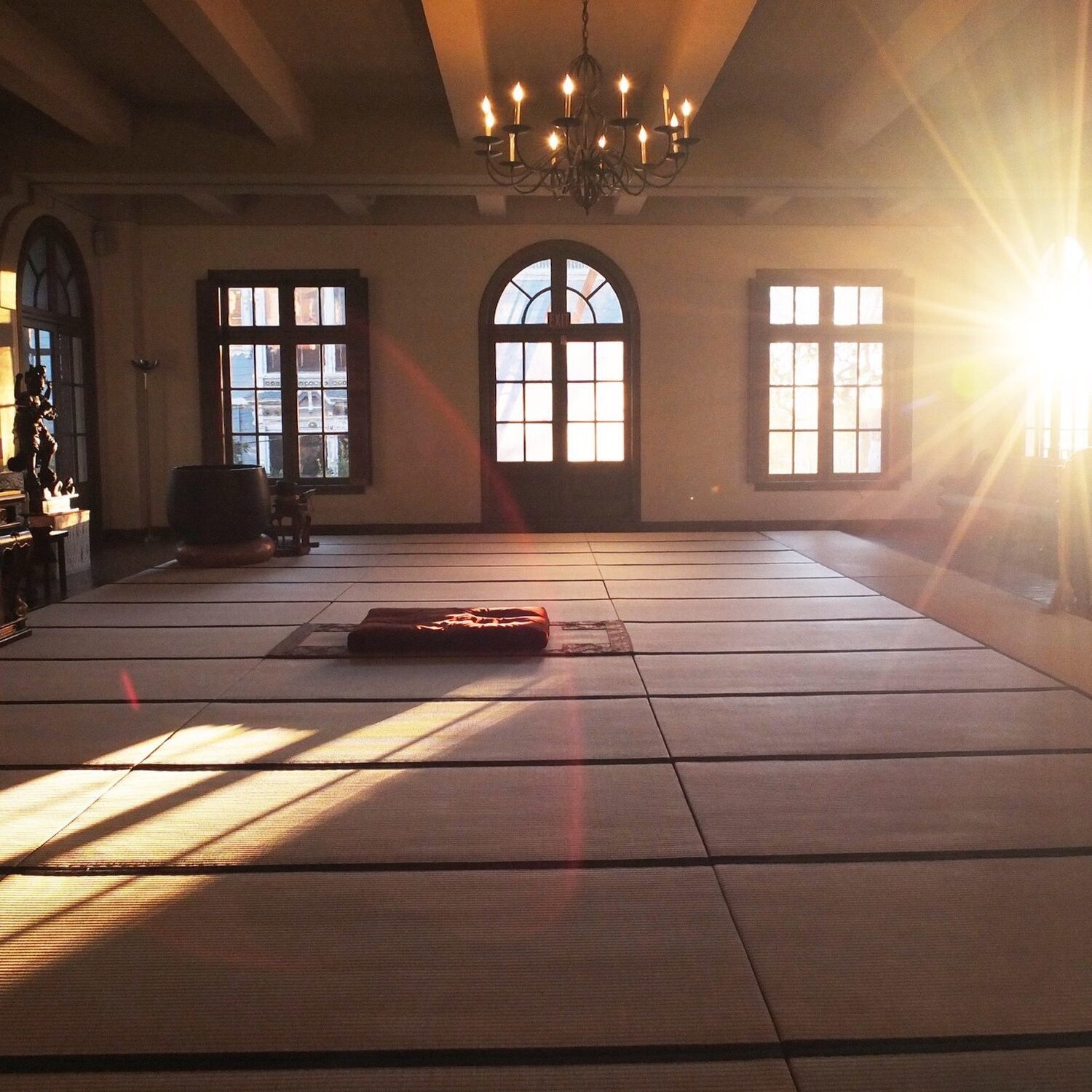
Young Urban Zen is a group under the auspices of the San Francisco Zen Center, with a particular focus on those between 20 and 40. It meets on Tuesday evenings for meditation and discussion about Zen practice. People of all experience levels are welcome.
-
100
Right Livelihood
In today’s talk Michael will be continuing our series on the 8 Fold Noble Path that we started a few weeks ago. This week it will be on "Right Livelihood". We spend much of our life working. How do we determine if how we are spending our time is in alignment with our values in regards to how we support ourselves, pay our bills and save for the future?Please come and turn this subject over in this podcast!
-
99
Right Samadhi
Kodo Conlin guides us through the topic of Right Samādhi: Sitting Buddha. We explore samādhi/concentration as part of Zen's rich heritage. This final factor of the Eightfold Path can be understood as the fruit of our wholehearted presence.
-
98
Right Effort
This week’s theme is Right Effort — Not Getting Anything, Not Causing Harm.We’ll touch on the simple but challenging guidelines of do no harm, do all good, and how our actions through body, speech, and mind shape our experience and those around us.
-
97
Right Mindfulness
Tonight Eli continues in the series on the 8 Fold Path. Tonight we will practice and talk about Right Mindfulness.
-
96
The Four Noble Truths - Right Speech & Right Action - Tim Wicks
Tim Wicks leads this weekly YUZ talk with an overview of The Four Noble Truths and a further focus on 2 folds of The Eight Fold Path: Right Speech & Right Action. Unfortunately, a fire occurred in late March which burned down the Zendo at Tassajara Zen Mountain Center. No one was injured, but the damage is extensive. See below link for more details about donating and also another link about the latest info on the matter:Tassajara Fire DonationTassajara Fire blog Content Link Block Select a page and create a visual link to it. Learn more Blog
-
95
Bramaviharas - part 2 (empathetic joy and equanimity)
As many of you may have heard, we did have a fire at our Tassajara monastery, and the meditation hall burned down. I'll talk a little bit about what's going on there at the beginning of the meeting tonight. Thankfully, no one was hurt, and the fire was contained and did not spread beyond the meditation hall. Tonight's topic will be the second half of the Brahma Viharas: empathetic joy and equanimity.Tassajara Zendo Fire Late at night on March 26, a fire broke out in the Tassajara zendo. While no one was hurt, the entire building burned to the ground. To help keep the community informed, a blog post was created as a central source for information on the fire and where we are going from here. It will be updated with new information as it becomes available, including the impact on the Summer Guest Season and Summer Student Program. Deep bows of appreciation to all who have sent in their heartfelt condolences, memories, and donations. Visit the Tassajara Zendo Fire Blog Updates. Fire Donation
-
94
The Four Brahmavihārās - pt 1 (of 2) - Loving Kindness & Compassion
Michael McCord leads tonight’s talk about The Four Brahmavihārās. This is part 1 of a 2 part series which focuses on the Brahmavihārās “Loving Kindness” & “Compassion.” In a world that can be aggressive, combative, competitive, how do these traits work not only with those we love and trust but towards the world in general? And how do they manifest in us, through a decision? Cultivation? Simple awareness?
-
93
Relationship with Work
In Zen and traditional Buddhism there are a number of tools that can be cultivated to help us in these relationships and some of you may have wisdom to share in the practice of relationships and work.
-
92
Relationships Series Talk 3: "People We Don't Like"
Eli opens a conversation on how to be in relationship with “people we don’t like”. He discusses how sitting zazen might help us practice with unpleasant feelings that come up in conflict—anger, frustration, judgement, resentment, and so on. What if we looked at relationships with “people we don’t like” not as imperfections in practice but as the practice itself?
-
91
Relationships Series Talk 2: Intimacy with Self
Kōgetsu talks about Intimacy with the Self. We live in a world that constantly tells us we need to improve—to become better, more optimized versions of ourselves. Checklists, standards, performance reviews: we might even find ourselves trying to optimize our meditation practice. What would it mean to be truly intimate with ourselves—especially with our fear, shame, envy, anger, and the parts we’d rather not highlight—without letting the parts define us or control how we act? Buddhist teaching offers a different view. What we call the self is not a fixed thing, but a changing process built moment-by-moment from sensation, story, and habit. Much of our suffering comes not from having thoughts and feelings, but from becoming fused with them. We discuss how a meditation practice helps us stay close to our experience without being overtaken by it. How we can meet life’s ups and downs with greater steadiness, vulnerability, and presence, without believing every story the mind tells?
-
90
Relationships Series Talk 1: Family
Hiro Ikushima gives a talk about Relationships. This is part 1 of a series. This talk focused on family. Ram Dass once said, “If you think you are enlightened, go spend a week with your family.” Many of us recognize the truth in that. Family can be both our deepest source of love and our greatest challenge.Hiro guides us on how explore remaining steady and compassionate in the midst of family dynamics, and how we might begin to see our family members as part of our spiritual path.
-
89
Six Paramitas Talk 6: Wisdom (Prajñā)
In our final paramita talk, Kristen Diggs leads a talk regarding the Paramita of Wisdom. What is complete and perfect wisdom? How can we look to find it?
-
88
Six Paramitas Talk 5: Concentration (Samadhi)
Tim Wicks leads a talk regarding the Paramitas (aka crossing over) focusing on Concentration. Why do we meditate, and what is it that we are trying to do facing the wall? Working with the mind and our thoughts is central to Zen practice and, for many of us, the most difficult part. “We are trying to cross over away from the distractions and delusions that prevent us from full awareness.”
-
87
Six Paramitas Talk 4: Vīrya
How do we keep showing up in our work, relationships, and the world without exhausting ourselves or betraying what matters most to us?Eli discusses joyful effort (virya): an approach to effort that isn’t about grinding harder, chasing outcomes, or measuring worth through productivity. Drawing on Zen practice and lived experience, we unpack questions many of us carry quietly: Am I doing enough? What does sustainable commitment look like? How do I stay engaged when trust is low and fatigue is high?
-
86
Six Paramitas Talk 3: Generosity (dana)
In this talk, Kōgetsu discusses generosity also known as Dana. Buddhist practice invites us to look more deeply at how we can meet the roots of suffering. We will explore how generosity includes how we relate to ourselves and others, how we listen, how we repair, how we set limits, and how wisdom guides what actually helps rather than what simply feels good in the moment. Zazen trains us to meet generosity with clarity rather than compulsion.
-
85
Six Paramitas Talk 2: Sila (ethical conduct)
In this talk, Mei discusses the paramita of ethical conduct. Sīla (ethical conduct) is one of the six paramitas (perfections) that develops a practitioner on the path of freedom, while simultaneously manifesting awakened activity. Though most Westerners don't initially delight in the topic of ethical behavior, Mei explains that virtue is one of the most beautiful expressions of the awakened mind.
-
84
Six Paramitas Talk 1: Patience
This talk is the beginning of a series on the paramitas which are the fruits of living the precepts of Buddhism. Michael will be discussing the paramita of patience in this talk. Paramitas are viewed as perfections to be addressed directly as a way of working with one's practice. Please come and turn over not only this paramita but how it relates to our everyday life, no matter where we spend our day (in the monastery, out in the world, in the home...).
-
83
Renunciation
Tim Wicks closes out the year (2025) with a talk about Renunciation, letting go.He speaks about the grasping at the root of our suffering, our conditioning as "graspers," and how we help each other in learning to let go.
-
82
The Gift of Nothing
As the year comes to a close, Young Urban Zen invites you into The Gift of Nothing: a talk and experiential practice on generosity without striving. Eli Brown-Stevenson leads us together through an exploration on what it means to give, receive, and belong when we release the need to add, fix, or improve anything.
-
81
When I want something out of my practice
When practice starts to feel frustrating, like why am I not feeling a certain way by now, or when we wonder if we’re “doing it right”—it can quietly turn into a kind of transaction. We’ll explore this train of thought with some lightness and curiosity, and look at how practice can become less about getting somewhere and more about meeting ourselves where we are with compassion.
-
80
What Zen principles apply to staying grounded in the midst of change
Many of you may be traveling this year or at least experiencing a different schedule (some may take time off; some may work more due to the rest of the team taking time off... etc.) than how things usually unfold for you.How will you stay grounded in the midst of large meals, or extra time or family interactions, or increased solitude?In this talk, Michael discusses what Zen principles apply to staying grounded in the midst of change.
-
79
Hindrances
Tim Wicks leads a talk looking at the many obstacles that we face on our path to awakening. By focusing on the hindrances and how we work with them, we see that there is a way forward to address the feelings of separation and isolation by cultivating wisdom through intimate practice that leads us to the truth of interconnection.
-
78
Working with Subtle Frustrations
Hiro Ikushima explores “Working with Subtle Frustrations”, the quiet sense that something is missing, and the low-level dissatisfaction that follows us through the day. In Zen, these small irritations become important teachers when we meet them directly rather than trying to fix or avoid them.
-
77
not believing all your thoughts
In this talk, Kōgetsu Mok ponders the idea of “not believing all your thoughts”. How can our zazen practice help us to quiet unrest, dis-ease, stress, and pain? How can we cultivate discernment in practice?
-
76
Not Harboring Ill Will
Michael McCord prompts us with a few questions before diving into the concept of harboring ill will. What is forgiveness in the Buddhist practice? How do we work with long standing grievances and short term frustrations?
-
75
Being Complete in Each Moment
Rev. Kristin Diggs discusses how in the Soto Zen tradition we emphasize careful attention to the details immediately at hand, and doing one thing at a time, doing one thing completely. What does it mean, and how is it relevant in our fast-paced digital age? It couldn't be more relevant.
-
74
Establishing the Path of Practice
Ryushin Paul Haller, long-time resident senior teacher and former Abbot, discusses the deepening of awareness and noticing how it affects how we respond to self and others; as we learn to see how we respond to our experiences, we see how we cause suffering for ourselves and others. This talk was streamed live for this fall’s second EPP (Establishing the Path of Practice) course. Learn more about EPP here.
-
73
Knowing and Not-Knowing
There’s an obvious and vital reason why we humans are so attached to our convictions, and the evidence for this attachment is written all over our history, from the earliest written records to this morning's edition of whatever news media we happen to be consuming now. It is also is the subject of the very first chapter of the very first published koan collection. Referring to the exchange between Emperor Wu of Liang and the great master Bodhidharma in the aforementioned chapter, Anshi Zachary Smith develops a perspective, informed by zen teachings, on knowing and not-knowing.
-
72
Relationships with Technology
We wouldn't enter into a romantic or business relationship without shared agreements, some established boundaries, and emphasis on acceptable communication; however, it is quite common for us to have entrenched relationships with technology that have never been examined as to their overall net effect on us. In this talk, Michael examines technology using some of the principles we use in Zen practice to navigate relationships.
-
71
True Person
Rev. Kristin Diggs speaks about meeting zen's "True Person"—an engagement that requires looking directly at what it is you are actually seeking.
-
70
Bubbles and Impermanence
Impermanence is one of the Three Marks of Existence, yet often the most difficult to accept in our daily lives. Whether it’s the changing of the seasons, a shift in career, or the realities of aging, sickness, and death, change is constant. In this talk we’ll practice how to meet impermanence not as an abstract concept, but as a lived experience, through the simple, fleeting beauty of bubbles.
-
69
“Do Not Be Angry”
Tonight’s talk was about a chapter from the recently published book of Suzuki Roshi’s teachings, "Becoming Yourself". The chapter is titled “Do Not Be Angry.”Kōgetsu takes a look at how this fits with our practice of the Bodhisattva precepts and how we can live with more groundedness, connection, and clarity, even when we're angry.
-
68
I Vow to Refrain from Intoxicants
In this episode, Michael discusses the precept, “I Vow to Refrain from Intoxicants”. This vow is one that is often misunderstood in its scope and purpose. How is this core vow in Buddhism practiced in our everyday lives?
-
67
Letting Go of Resistance
Hiro offers a short talk on Letting Go of Resistance. Often what weighs on us most is not the situation itself, but our resistance to it. Resistance is not something we need to fight, but something we can meet with awareness and compassion. The aim is not to manipulate experience, but to access a dimension of being where resistance is already absent.
-
66
Liberative Constraints
The theme for this talk is Liberative Constraints. This is a topic Eli brought up at this year’s Young Urban Zen retreat at Tassajara. In a world shaped by constant choice and digital customization, Zen practice offers a radically different kind of freedom, the kind that arises from structure, rhythm, and restraint. We discuss the liberating power of intentional constraints, and how forms like zazen, silence, and schedule can support presence, belonging, and internal spaciousness. Eli reflects on what it means to live unedited.
-
65
Taking the Monastery Home
The theme for this talk is Taking the Monastery Home. First, what brings us to the temple and to practice? What kind of experiences can we have at the temple that can help us in our lives? If we get the opportunity to visit and stay at a monastery, what do we take with us? If not, can we build a sacred space within ourselves and in our homes?Kōgetsu Mok discusses the various ancient forms practiced in the temples that have real practical meaning and can be a frame for our home practice.
-
64
Taking What Is Not Given
Michael McCord discusses ‘taking what is not given’, essentially, the precept around stealing. However, just like all the precepts, this one goes quite deep in regards to relationships and our expectations/ demands for how we want others to show up for us and the capacities we expect. And like all the precepts, the antidote is what we focus on most of the time. For not stealing, the antidote is generosity and not acting from a stance of scarcity. Michael looks at behaviors that support this way of going through the world as well as habits, mentalities, and outlooks that can work against it.
-
63
On Becoming Yourself
Hiro Ikushima explores Becoming Yourself, a newly published book of Shunryu Suzuki Roshi’s talks. He reads and reflects on a few selections that center on themes such as zazen, self and no-self, and how Zen meets everyday life. These timeless teachings offer both clarity and encouragement for practice in the midst of our busy modern lives.
-
62
No More Words
Zach discusses the long-standing debate about the utility of the written and spoken Dharma in the context of a practice that claims to go beyond words and concepts. People have literally been arguing about this for millennia; we take it up as well.
-
61
Virya
It sometimes seems like the world is falling apart and we can feel overwhelmed and isolated and sapped of energy. In this talk, Tim discusses strategies for building energy, Virya in Sanskrit, and how to work with it as one of the central elements in our Zen practice.
-
60
No One to Be, Nowhere to Go
What if there’s nothing to fix, improve, or figure out? What if this moment, just as it is, is enough? In the preceeding session, Hiro explored the conceptual foundation of self and no-self—how our sense of “I” is formed and sustained. Building on that understanding, we shift into direct, experiential practice, allowing presence to reveal itself through shikantaza and mindfulness-based meditation. This talk about living with presence is centered more around guided and silent meditation, with less emphasis on talking.
-
59
Awakening from the Dream of Self
Hiro speaks about the notion of awakening from the dream of self. Much of our suffering arises from clinging to a fixed sense of self—a mental construct shaped by memory, identity, and striving. When we begin to see through this illusion, we may discover a quiet, open presence that has always been here.
-
58
Self, One Self, Not-Self
It sure seems like I have a self—an agent of action, one who makes choices, does work, gives gifts, harms others, apologizes... So what do we make of this teaching of No Self of not-self? If Zen says I don't have a self, how could my life possibly work out? Kodo takes a clear-eyed look at some teachings on not-self to bring this liberating view to life, without the confusion.
-
57
How The Somatics of Meditation Practice Can Help Us
Rev. Shosan Victor Austin, a senior priest at City Center, speaks about how the somatics of meditation practice can help us in our stressful busy lives.
-
56
Note to Self
On an anniversary of when he first came to practice, Eli Brown-Stevenson shares some of the choices he made—and a few things he wishes he had paid closer attention to—in a reflection for his younger self and, maybe, for anyone else finding their way into practice too.
-
55
Mistakes
Kōgetsu Mok talks about the koan of our lives as we meet impossible situations, difficult conversations, the mountains of uncertainty, and challenging times. How can Zen practice help train us to meet these moments with better self-awareness, skillful action, grace, and integrity? Can we be kind to ourselves in the process, forgive the mistakes of others and ourselves, and see that the mess is beautiful and wholly included in practice?
-
54
Pain is inevitable; suffering is optional
Michael McCord references a quote by Japanese writer Haruki Murakami: Pain is inevitable; suffering is optional.This is very much in alignment with the basic noble truths of Zen and yet can be so elusive in the moments we inhabit.How do we live into a future where we hold the discomforts, annoyances, turmoil and pain of our existence in altogether different way? What can I do today or tomorrow?
-
53
Way Seeking Mind Talk
Tim Wicks, the City Center Head of Practice, gives a brief way seeking mind talk telling the story of how he came to practice Zen. He also speaks about three basic tenets of Buddhism and how they are practiced in community.
-
52
Kindness
Kōgetsu Mok discusses Suzuki Roshi's "Not Always So"—Be Kind with Yourself.Our practice has an emphasis on warm heart and warm zazen. This kind of practice shows us how to take care of ourselves, our lives and others. When we're kind with our breathing, true practice can emerge as we learn to manage our impulses and busy lives.
-
51
Pausing
Hiro Ikushima speaks on the theme of pausing.In a world that moves swiftly and often without mercy, the simple act of pausing can feel revolutionary. A single breath, a quiet moment of stopping, can open a doorway back to our own hearts. We explore how pausing allows us to meet life with greater tenderness, clarity, and courage — how it invites us to respond rather than react and move through the world with more spaciousness and care.
No matches for "" in this podcast's transcripts.
No topics indexed yet for this podcast.
Loading reviews...
ABOUT THIS SHOW
Young Urban Zen is a group under the auspices of the San Francisco Zen Center, with a particular focus on those between 20 and 40. It meets on Tuesday evenings for meditation and discussion about Zen practice. People of all experience levels are welcome.
HOSTED BY
San Francisco Zen Center
CATEGORIES
Loading similar podcasts...
URL copied to clipboard!