
PODCAST · business
The Food Chain
by metrofarm
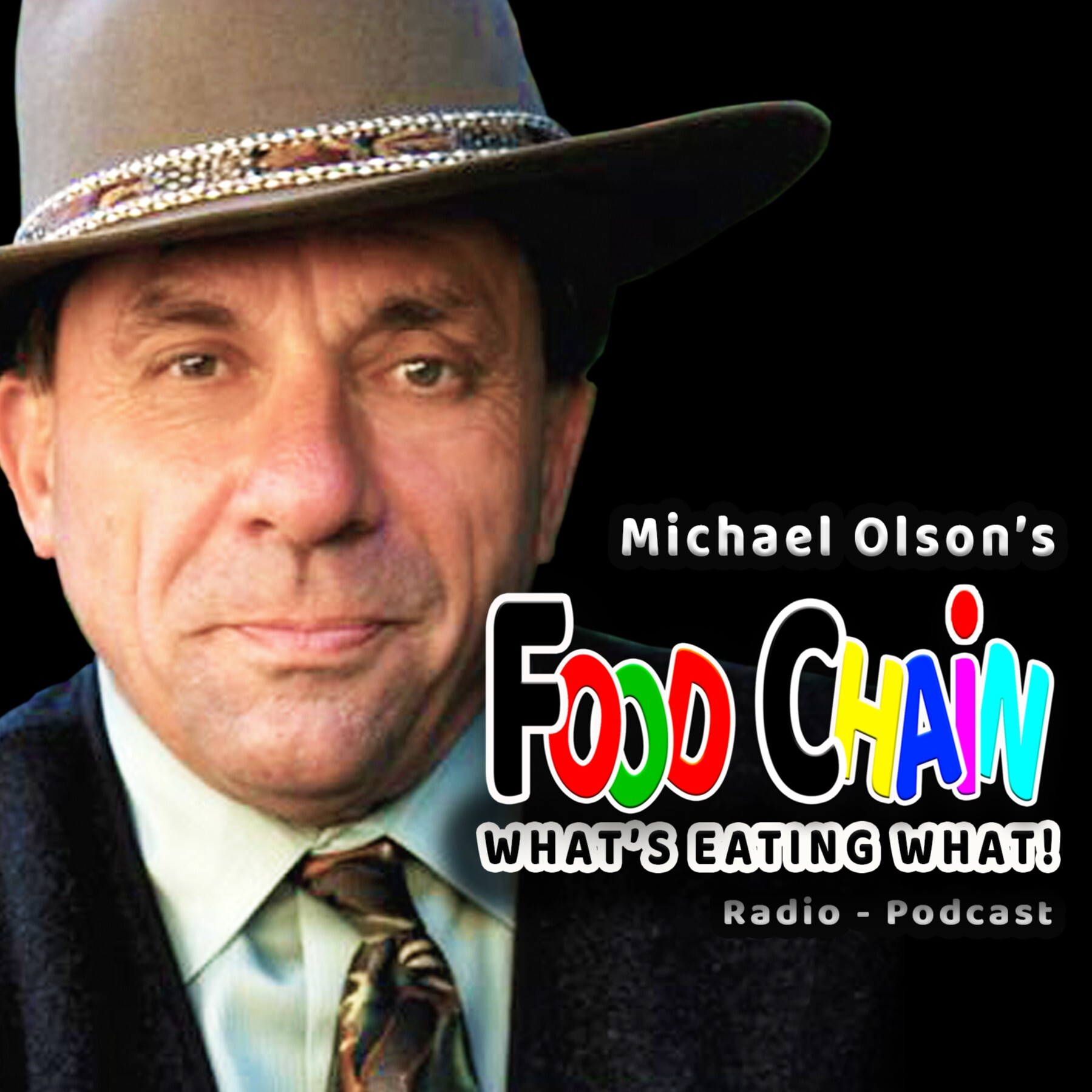
It’s a fact! 100% of men, women and children eat food, and 97.5% of must buy their food from others who bring it from an average of 2,000 miles away. And so the hungry ask:”What’s in this tomato? Who planted that broccoli? Is it safe to eat genetically engineered corn? Why are they irradiating meat? Are we running short of water? Why is China growing our apples? What will happen to us if we can no longer farm? How safe is our food chain?”The Food Chain is an audience-interactive syndicated newstalk radio program and podcast broadcasting weekly on radio stations and streaming on demand on the internet. The Food Chain, which has been named the Ag/News Show of the Year by California’s legislature, is hosted by Michael Olson, author of the Ben Franklin Book of the Year award-winning MetroFarm, a 576-page guide to metropolitan agriculture.The Food Chain is available live via GCN Starguide GE 8 and delayed via MP3/FTP. For clearance and/or technical information, please call Michael Olson
-
100
Ep 1428 Mamdani’s Great Leap Forward Markets
New York City Mayor Zohran Mamdani plans to build 5 government-owned supermarkets for the 5 boroughs of his city, and charge 30% less for food. In the late 1950’s, during China’s Great Leap Forward, the Chinese Communist Party set up free communal canteens across the country. Families, children and adults were given three meals a day in the commune’s “big socialist food hall.” The canteens were symbols of Chairman Mao’s promise of equality and the end of scarcity under socialism. In the beginning, 80% of the food for the canteens was produced on private farms. But then those farms were collectivized, and while the canteens initially served good food, and lots of it, the quality and quantity quickly deteriorated. The combination of collectivization, unrealistic production goals, and poor distribution soon lead to the transformation of Mao’s Great Leap Forward into “Mao’s Great Famine.” During this time, the Chinese people resorted to eating raw seeds, tree bark, dirt, and in some cases, each other. Many tens of millions starved to death. Today, as we look across the five bouroughs of New York City, we wonder: Can Mayor Mamdani succeed where Chairman Mao failed?
-
99
Ep 1426 Big Cities V Small Farms
Stephanie Rocha, Owner, Nest Box Farm, San Martin, CA It is a fact! Cities grow best, where farms grow best, and that is why some of the nation’s biggest cities are planted on some of the nation’s best farmland. This leads us to ask: Can farms survive their cities? Topics include how cities rezone land to maximize revenue; how farmers fight to survive against the pressure for cities to grow; and what the future might hold for what city people will have to eat. A few decades ago California’s Santa Clara Valley was called “The Valley of Hearts Delight” for the spectacular abundance of its tree fruit farms. Todxxday it is called “Silicon Valley” for the abundance of its digital technology companies. This transition from growing low value food to manufacturing high value digital information systems sets up a competition for resources between city and farm. Consider this: A single-family valley home in the valley recently sold for $4 million dollars. Well, it did have 4 bedrooms! Given the money this sale generated, and the property tax money it will generate in the future, this sale is exactly what the city fathers and mothers want to see more of. How to make that happen? What Santa Clara County is trying to do, is what most cities do when they need to more money – rezone the agriculture lands on the fringes of the metropolitan area into commercial and manufacturing… thus chasing out the rural folks and replacing them with big money folks. This never ending competition between city and farm leads us to ask: Can farms survive their cities?
-
98
California's Plunder Coast
Michael Olson hosts Joe Oglivy, Author of Tin Can Coast for a conversation about the commercialization of California's marine life: It is an ocean current that flows south along the coast from Canada to Baja, and it brought to the people who would come to live along this coast unbelievable living treasures to plunder. And plunder they did! And so today we pause to ask: Do you think we can learn how to preserve the fish in our sea?
-
97
Ep 1424 GLP 1s: Too Good to be True?
Michael Olson hosts. Dr. Keith Kantor, Trichologist and Author What Matters Diabetes costs the United States $640 billion a year. What if we could take a pill, lose the weight, then put all that diabetes money into the bank. Topics include how prescription GLP-1s work to help people lose weight; whether GLP-1s might be an effective way for the U.S. to reduce the number of its obese and the cost of its diabetes; and a look at the potential side-effects of using GLP-1s. Consider some very big numbers: 42.7% of those who live in the United States are obese, and 15% have diabetes. The diabetes number grows, because there is a very strong correlation between body mass index and propensity to develop diabetes. According to the Center for Disease Control, the total estimated cost of diagnosed diabetes was $640 billion per year in medical costs and lost productivity. That is nearly two-thirds of a trillion dollars per year – Gone! In 2005, GLP-1s hit the market, and the weight began peeling off the body politic. The cost for this prescription medication starts at around $39 per month, which given the cost of diabetes, would seem to be a very good deal. But then the hair started falling out, the muscles weakened, and the gut complained. Given the strange side-effects, some began to ask: Are GLP-1s too good to be true?
-
96
1423 The Oyster Cult
#1423 Michael Olson host Virginia Shaffer, Host of Lady Oyster Blog and Author, Oyster Society: Adventures with the Shellfishly Motivated I remember the moment I was induced to slurp down a freshly-shucked oyster. That so many of us remember that moment leads us to ask: What is it about the oyster that leads us to become its cultists? Topics include a look at the history of the U.S. oyster business; a “taste” of different oyster varieties; and how the oyster spawned its cult of people.
-
95
Ep 1422 - Beyond Alcohol: Functional Drinking
Function Drinking - Beyond Alcohol Michael Olson with Autumn Shelton, Formulator and CEO of the start-up functional drink company TruBond. Topics include the growing trend of functional foods; the functions targeted in the formulating of TruBond drinks; and the process of taking TruBond from concept, to packaged product, to the marketplace.
-
94
Ep 1422
The idea is to turn away from highly stimulative drinks during the day, and the alcohol that follows at the end of the day, and turn instead to beverages formulated to provide clarity, focus and energy throughout the day. This leads us to ask: Can beverages be formulated to optimize the body’s daily functions? The 1422nd edition of the Food Chain Radio Podcast with Michael Olson hosts Autumn Shelton, Formulator and CEO of the start-up functional drink company TruBond. Topics include the growing trend of functional foods; the functions targeted in the formulating of TruBond drinks; and the process of taking TruBond from concept, to packaged product, to the marketplace.
-
93
Ep 1421 Start Up - Bread from Breadfruit?
When exploring the islands of Tahiti with Captain James Cook, botanist Sir Joseph Banks identified a carbohydrate-rich tropical fruit that, when cooked over an open fire, tasted like freshly-baked bread. Banks recommended that King George III adopt this energy-rich breadfruit as a food staple for the English plantations of the Caribbean. During a subsequent voyage to transport breadfruit trees from Tahiti to the Caribbean, Captain William Bly lost his ship, the Bounty, to mutineers, who tossed the prescious breadfruit trees over the side, along with Captain Bly, and then they disappeared into the vast waters of the Pacific Ocean. Today, breadfruit is getting a fresh look by the culinary world as a gluten-free, high-fiber, and environmentally-friendly alternative to refined flours. In fact, researchers at the University of British Columbia claim breadfruit is poised to become the next global superfood. A former chemistry professor and her team have combined their efforts to continue the mission of bringing tropical breadfruit to the world via their Amasar line of breadfruit baking mixes. Their efforts lead us to ask: Are we ready for bread made from breadfruit?
-
92
Ep 1420 Start-up Cookies - From Kitchen to Nation
Along the Food Chain with Michael Olson and ... Mandy Harper, Founder, CEO & Executive Chef, Wholesome Bakery /// At the Natural Products Expo its easy to see what is the latest trend in food. The last time I attended the Expo, which was a few years ago, the dominant trend among the 4,000 vendors was soy. It seemed like most every vendor of natural foods was infusing their natural foods with soy. This year it seemed that very few of the manufacturers of natural food products were adding soy. Gone!!! This year it seemed most all the manufacturers were adding protein – This with pea protein… that with hemp protein… and over there, whey protein… But as I cruised the exhibition halls, Wholesome Bakery of San Francisco caught my attention with a line of smartly packaged cookies. What caught my eye was Wholesome’s positioning statement: “What we leave out matters as much as we put in.”
-
91
Ep 1419 Cooperating to Compete
Along the Food Chain with Michael Olson and... Sabrina Servais, Farmer, Hamburg Hills Farm, Stoddard, WI, Member, Organic Vallely Farm Coopertive & Elizabeth McMullen, PR Program Manager, Organic Valley Farm Cooperative When farming alone for a distant market, farmers tend to be price takers. But when cooperating with other farmers, they may gain enough clout to become price makers. And so we ask: How do farmers cooperate to become price makers instead of price takers? My first MetroFarm speaking engagement was a three-day seminar for family-sized dairy farmers in Drummondville, Quebec. The farmers were facing a fundamental change in their dairy industry, which was then being funded via government subsidies, but that would soon be forced to compete in the open market of the North American Free Trade Agreement against the industrial giants in the U.S. The organizer of the event, which took place in the snow-white of winter, wanted me to help the farmers find a way to survive the change. After listening to their fears of having to compete, without support from government subsidies, I suggested they consider establishing a marketing cooperative to differentiate their Quebec milk from the commodity milk of the industrial giants. I said, “What you have is not a commodity, it is something that is truly special, but you have to sell the world on how special it is. If you don’t, all milk is white, and whoever can produce the most white milk for the least coast will likely win the consumer dollars. That is free trade.” Shortly thereafter, I met some folks at a farm conference in California who were doing what I advised the Quebec farmers, which was to cooperate with other farmers to gain some clout. They called themselves the Organic Valley Farm Cooperative, and they had something truly special to sell. Recently I ran across the Organic Valley folks at Natural Products West, and learned their coop now has over 1,800 family dairy farm members, with sales over a billion dollars per year. Today its time to ask…. How do farmers cooperate to become price makers instead of price takers?
-
90
Ep 1418 Perils of Protein Powders
Along the Food Chain with Michael Olson and... Sally Fallon Morell, Founding President, Weston A Price Foundation and Editor & Co-Author of Nourishing Traditions: The Cookbook that Challenges Politically Correct Nutrition and the Diet Dictocrats The food trend is obvious to anyone who attended the recent Natural Products Expo in Anaheim. Just add protein! This trend in natural foods leads us to ask: Do protein powders do a body good? I attended the recent Natural Products Expo in Anaheim to see what I could see about the trend in food, and of course, to find stories for the Food Chain Radio – Podcast. When I last attended the Expo, a few years ago, the dominant trend among the 4,000 vendors was soy. It seemed like every vendor of natural foods in the hall had somehow managed to infuse their natural food with soy. Soy was here… soy was there… soy was everywhere! This year I did not see a single mention of soy among the 4,000 vendors of natural food products. Gone!!! Most of what I did see, just about everywhere I looked, were “natural food” products that had been infused with added protein – This with pea protein… that with hemp protein… and over there, whey protein… Yes, it was pretty obvious to one and all that the dominant trend in natural foods is to… just add protein. That protein powders are now taking such a prominent role in the nation’s diet leads us to ask… Do protein powders do a body good?
-
89
Ep 1417 Guarantors of Farmers Market Authenticity
One of the most effective ways to get rid of pesky competitors is to establish laws and regulations that make it very difficult for competitors to operate. That leads us to ask: How did farmers regain the right to sell food directly to consumers? The 1417th edition of the Food Chain Radio Podcast with Michael Olson hosts David Sanford, Commissioner, Santa Cruz California Department of Agriculture, for a conversation about the partnership that guarantees the authenticity of Certified Farmers Markets and the foods thereof. Topics include how California’s small farmers won the right to sell their food directly to consumers; how the authenticity of farmers markets and the food thereof is guaranteed; and speculation as to what might be done to increase the awareness and utilization of Certified Farmers Markets.
-
88
Ep 1415 The Lipstick Farmer's Food Train to the Governor's Mansion
A FOOD CHAIN RELEASE FROM MICHAEL OLSON Those on both sides of the political spectrum look at what has become of the great State of California and wonder: ‘What happened?’ This leads us to ask: Did California eat too much nonsense? The 1415th edition of the Food Chain Radio Podcast with Michael Olson hosts Elaine Culloti, California’s “Lipstick Farmer,” for a conversation about food, trains, and her campaign to be California’s governor. Topics include speculation as to why California has become the nation’s “U-Haul-Ass” state; The Lipstick Farmer’s proposal to use trains to deliver food from farmers to California’s cities; and why a full audit of government is needed to determine what happened to California’s missing money. Show On-Demand Recording: #1415 The Lipstick Farmer’s California Food Train Archive Host: www.metrofarm.com
-
87
Appraising Farmland
In her novel The Good Earth, Pearl Buck wrote, “If roots are to bear fruit, they must be kept well in the soil of land.” Her thought leads us to ask: Which farmland is best for bearing one’s fruit? We have been hearing a lot about farmland recently. We’ve been hearing how very wealthy people like Jeff Bezos and Bill Gates have been using the millions and billions pouring into and out of their businesses to buy up vast tracks of America’s farmland; how mysterious entities from China are buying up farmland near America’s military bases; and how entrepreneurs have been buying up farmland covered in greenhouses for the purpose of growing America’s cannabis. The true value of all that farmland is determined by what someone is willing to pay for it. And there are a lot of reasons why people buy farmland. Today, we focus on those who want to obtain farmland to grow food, flowers and fiber as a business. And we are fortunate to have one who knows how to find the true value farmland for a business. Please welcome… Chuck Allen, Chuck Allen Properties, Watsonville, CA
-
86
Ep 1413 Feeding the Obstinate Child
Michael Olson hosts Danielle Flint - Danny the Nanny You would think a hungry child would want eat just about anything, but a lot of hungry children only eat what they want to eat. And so we ask: How do you get an obstinate child to eat what you want them to eat? The 1413th edition of the Food Chain Radio Podcast with Michael Olson hosts Danielle Flint, Maryland’s Danny the Nanny, for a conversation about feeding the obstinate child. Topics include the ways in which children express their obstinacy about eating what they are supposed to eat; ways in which adults try to manage their obstinate children; and how a nanny must somehow justify the demands of obstinate child and frustrated parents.
-
85
Ep 1412 Rocky Oaks Goats - Just Kidding!
No kidding! It's true. Having had to catch a plane and fly away, we missed kiddentine in California's great Central Valley. Our loss leads us to ask: Have you had the opportunity to play with the kids? The 1412th edition of the Food Chain Radio Podcast with Michael Olson hosts Margie Weber, Co-Owner, Rocky Oaks Goat Creamery, for a conversation about raising goats in a vertically integrated dairy. Topics include why goat dairy; the raising of goats in a semi-rural environment; and the selling of goat dairy products direct via farmers markets.
-
84
Ep 1411 The Snack Chips Man
Along the Food Chain with Michael Olson… #1411 The Snack Chips Man Jake Stenton, President Natural Bridges Company You stand in front of the grocer’s selection of snack chips and think, ‘A penny’s worth of potato in a bag that costs a buck!’ We Americans eat about $50 billion dollars worth of snack chips every year. That pencils out to about $167 per person per year. And the price of those bags of snack chips keeps going through the roof. According to the U.S. Bureau of Labor Statistics, a bag of chips that cost $6.75 in 1977 would cost $33.39 today! That so much money is spent on those bags of snack chips, leads us to wonder: What would it take to bag up some chips and sell them?
-
83
Episode 272 Hour One
China Now, 26.1.29, Hour 1 Gang of Two Nan Su & Michael Olson CCP Coup Attempt at Zhongnanhai / A Trap is Sprung
-
82
Episode 272
China Now 26.1.29 Hour 2 Gang of Two: Michael Olson & Nan Su CCP Coup Attempt at Zhanganhai, Xi gets away!
-
81
The Bee Strategy
The 1410th edition of the Food Chain Radio Podcast with Michael Olson Guest: Matt Mulica, Senior Project Director, Keystone Policy Center Imagine being in a business that loses 55 percent of its business in one year, and nearly that much in the previous year. Such is the state of the North American beekeeper. And so we ask: Is there a strategy to save the honey bee and its keepers? The 1410th edition of the Food Chain Radio Podcast with Michael Olson hosts Matt Mulica, Senior Project Director, Keystone Policy Center, for a conversation about saving the bee, bee keepers, and the domestic business of honey. Topics include why a strategy is needed to save the western honey bee; how the North American bee industry decided what that strategy would be; and how a coalition of industry groups was fashioned into a cohesive group to implement the strategy.
-
80
China Now 271 Hour One 25.1.22
Nan Su & Michael Olson President Donald Trump invades Davos and conquers Greenland.
-
79
China Now Hour 2 - 25.1.22
Michael Olson & Nan Su Which will Xi Jinping invade first: Taiwan or Siberia?
-
78
Ep 1409 Healing With Homeopathy
Michael Olson with Dr. Jeff Lester, Director, Trilogy Medical Center for Integrative Medicine Best laid plans! When the government threw its food plate out the door and turned its food pyramid upside down, I called my doctor for his opinion on how the new food recommendations will affect our health. Instead, Dr. Jeff Lester took me on a fascinating tour of healing with homeopathy. And so I asked, How does one heal the intractable diseases of modern times with homeopathy?
-
77
Ep 270 China Now with Nan Su & Michael Olson
*. Arrest of Trump changes Taiwan invasion plans * China stands to lose Billions on Venezuela *. What is next for Cuba, Venezuela, Iran, Russia and China
-
76
Ep 1408 Living the Restaurateur Dream
There are approximately 12.35 million people employed in the restaurant and food service industry. Chances are good most of them, at one time or another, dreamed of owning a successful restaurant. This “Restaurateur Dream” leads us to ask: Which is most important in determining the long-term viability of a restaurant: food, service or location? The 1408th edition of the Food Chain Radio Podcast with Michael Olson features Erick and Brian Johnson, the father & son owners of the Erik's DeliCafe franchise restaurant chain that serves the South San Francisco and Monterey Bay areas. Topics include how father Erik built a small sandwich shop into a successful restaurant business; how that restaurant grew into a family-owned franchise chain; and how son Brian is building out the Erik's DeliCafe chain throughout the region.
-
75
Ep 1407 Homes for Homeless Animals
When the daughter’s pet dog passed on after many years of friendship, she became very sad and teared up. Hoping to ease her pain at the passing of her good friend, I said, “Honey, life is a succession of good dogs!” Not too much longer, the daughter started pestering for a new dog. After an extended search, we were presented with a choice between two Cocker Spaniel puppies. One was black, the other was gold. As you might imagine, the wife wanted the black one, while the daughter wanted the gold one. Hoping to avoid having two puppies underfoot, I suggested a compromise. “Why don’t we take the black one home and call her Goldie?” It worked, and we had many good years of friendship with Goldie before she, too, passed on. But the compromise of that moment did not address the question of the day, which is, “Where should the family go to find its next good pet?”
-
74
Local Foods Act Legislation: Should government be forced to accomodate local food?
The label on the meat package reads, “Product of USA.” But the meat in the package could have come from Australia, Brazil or China, and be from one animal or hundreds of animals. This leads us to ask: Should government be forced to accommodate local food farms? The 1406th edition of the Food Chain Radio Podcast with Michael Olson features Judith McGeary, Founder and CEO, Farm and Ranch Freedom Alliance, for a conversation about the “Livestock Owned by Communities to Advance Local Foods Act” aka “Local Foods Act.” Topics include how the consolidation of the nation’s food supply chain has resulted in the diminishment of food quality and selection; why government supports the consolidation of food into ever fewer sources; and how government might be forced to accommodate local food farms.
-
73
Ep 1405: Nutritional Epigenetics & The Decline of Children's Brains
A recent review of U.S. special education data revealed a three-fold increase in autism and a four-fold increase in delayed development among public school children. That leads us to ask: Can bad food make good genes go bad? The 1405th edition of the Food Chain Radio Podcast with Michael Olson features Dr. Renee Dufault, Executive Director and Principal Investigator, Food Ingredient & Health Research Institute, whose research points to one of the reasons for the three-fold increase in autism and four-fold increase in delayed development among public school children. Topics include how Dr. Dufault’s research at the U.S. Food and Drug Administration led to her private research into the heavy metal contamination of ultra-processed foods; how nutritional epigenetics describes the deterioration of the brains of public school children; and how that mental deterioration is compounded through generations of people.
-
72
Ep 1404 House 453 - Immunity for Pesticide Manufacturers?
On August 10, 2018, a California jury awarded Benecia public school landscaper Dewayne Lee Johnson $289 million for the non-Hodgkin lymphoma he claimed was caused by exposure to Monsanto’s Roundup weedkiller. That award leads us to ask: Should manufacturers be held accountable for the consequences of their pesticides? The 1404the edition of the Food Chain Radio Podcast with Michael Olson features Attorney Brent Wisner, whose firm, Wisner Baum LLP, won the $289 million Monsanto Roundup lawsuit on behalf of public school landscaper Dewayne Lee Johnson. Topics include what Wisner told the jury that convinced them to believe Johnson instead of Monsanto; how the pesticide industry is fighting back with House Appropriation Bill 453 to grant pesticide manufacturers immunity from lawsuits; and whether manufacturers should be held accountable for the consequences of their pesticides.
-
71
Ep 1244 Fast Food - Weeds of the Food Chain
Michael Olson hoss Professor Catherine Keske, Ag Economist, University of California, Merced & Author, “Fast Food is Comforting, But…,” It does not take long for weeds to take over one’s garden. The same can be said for how quickly fast food can displace good food in one’s diet. And so we ask: How does fast food displace good food? Topics include the extent to which poor communities, like college students, rely on fast foods; how fast foods displace good foods; and what might be done to bring good foods back into the community’s diet.
-
70
Ep 1297 Pet Nation
Guest: Mark Cushing, CEO of Animal Policy Group and author of Pet Nation Twenty years ago, Duke the Dog lived out in the backyard. Now he lives in the house and sleeps in a bed. And so we ask: How did the United States become a Pet Nation? Topics include a look at how animals became pets that fly on planes with us; how the transformation from working animals to pets was made; and how pets are now transforming the nation’s economy.
-
69
Ep 1403 BABY'S HEAVY METAL FOOD
A decade-long study of baby food released by Healthy Babies – Bright Futures claims that 95% of commercial baby food contains heavy metals that can result in autism spectrum and attention-deficit disorders. And so we ask… Should grocers be allowed to sell baby foods that contain toxic heavy metals? Topics include how heavy metals like arsenic, cadmium, lead and mercury pollute 95% of the nation’s baby food; what government and industry are doing to reduce the heavy metal pollution in baby food; and how attorney groups are putting the red-hot poker of litigation to the efforts of government and industry to reduce the pollution.
-
68
Ep 1304 China: Eating Up America's Farmland?
Michael Olson with Washington State Congressman Dan Newhouse China is buying up America’s farmland… with the money we send it to manufacture stuff for us in their coal-burning factories. Some say this a good deal because we don’t have to work in those factories. Others say it’s a bad deal because we are selling out our future. And so we ask: Should China be allowed to buy up America’s best farmland? Topics include why China is having trouble feeding its people; how China is buying up America's farmland; and whether Congressman Dan Newhouse and fellow legislators can stop China from buying up America's farmland.
-
67
EP 1402 LOCALIZING - A GOOD FOOD PROJECT
Food Chain Radio Podcast with Michael Olson features Michele Thorne, Executive Director of The Good Meat Project Given the economies of consolidation, 99% of chickens, 98% of hogs and 70% of cows are now grown and processed on industrial-scaled farms, most all of which use antibiotics, pesticides and pharmaceuticals. Topics include how the production of meat has been consolidated into the hands of very few, very big businesses; the consequence of that consolidation on the quality of food and environment; and how one might localize one’s meat supply chain with ethical meat from ethical farmers. Have you ever purchased meat from its farmer?
-
66
Ep 1401 Horse: A Genetic Ride Back to the Beginning
Before the horse we walked everywhere, and it was a downright slog to get there. But 4,750 years ago, a mutant gene began working its way through the horse herds of the Eurasian Steppes. Then, about 800 years ago, Genghis Khan raced those horses throughout the World to conquer one and all. And so we ask: Have you ridden a horse? The Food Chain Radio Show - Podcast with Michael Olson hosts Ludovic Orlando, Molecular Archaeologist, Founder of Anthropology & Genomics Institute, and Author of Horses: A 4,000 Year Genetic Journey Across the World, for a conversation about the search for the World’s first horses. Topics include how the search for the World’s first horses was conducted; where the most likely birth place of the horse was found; and how the evolution of the horse was directed by the various needs of people.
-
65
Ep. 1400 HONEY BEES V. VAMPIRE MITES
The fight is on for one-third of the food we eat. On one side is a ferocious vampire mite, on the other side is human ingenuity. The battleground is Apis mellifera – the Western Honeybee. This fight leads us to ask: Can human ingenuity save the honey bee and our food?
-
64
Ep 1278 Eating out of Mental Dystopia
Michael Olson hosts Bonnie Kaplan, PhD, Co-Author, The Better Brain The Golden State of California appears to be losing its collective mind. You can see evidence of that loss on the streets of San Francisco, and that leads us to ask: Can we eat our way out of mental dystopia? Topics include how San Francisco uses bureacracy to care for people who can’t care for themselves; how the bureacracy’s efforts always seem to exacerbate the problem; and whether nutrition might prove to be the real solution to society’s mental dystopia.
-
63
Ep 1250
7-11 BEGETS TRADER JOE'S Michael Olson with Benjamin Lorr, Author, The Secret Life of Groceries It is a $700 billion dollar a year business, and Americans spend about 2% of their lives shopping in them. Their story leads us to ask: How did 7-Eleven give rise to Trader Joes? Topics include the transformation of food into Store Keeping Units (SKUs); the transformation of general stores into supermarkets; and the story of how 7-Eleven gave rise to Trader Joes. |
-
62
Ep 1322 Building a Better Bee
Caroline Yelle, Owner & Queen Bee, Pope Canyon Queens I happened to be watching a honey bee working over a lemon tree blossom on the 19th of July, when I realized that it was the first honey bee I have seen this year. That leads me to ask… Can we breed a bee that can survive us?
-
61
Nutrition for Dystopia
The Golden State of California appears to be losing its collective mind. You can see the evidence of that loss on the streets of San Francisco, and that City-by-the-Bay leads us to ask: Can we eat our way out of dystopia? Bonnie Kaplan, PhD, Co-Author, The Better Brain: Overcome Anxiety, Combat Depression, and Reduce ADHD and Stress with Nutrition
-
60
Ep 1398 Food Fight: Large Farms V. Small Farms
The Food Chain Radio Show - Podcast with Michael Olson hosts Richard J. Sexton, Professor Emeritus, Agriculture and Resource Economics, University of California Davis & Author of Food Fight: Misguided Policies, Supply Challenges, and the Impending Struggle to Feed a Hungry World In 1973, U.S. Secretary of Agriculture Earl Butz told the nation’s farmers to, ”Get big or get out!” Many farmers did get big or got out. That leads us to ask: Are the nation’s small farms worth saving? Topics include why Earl Butz, and most of the nation’s ag economists, would tell the nation’s farmers to get big or get out; how the economic principal of economies-of-scale provides the impetus for getting big or getting out; and whether the nation’s small farms are worth saving?
-
59
Ep. 242 Hr. 1. China Now 25.6.26
China Now: Friend or Foe? War or Peace? Hosts Michael Olson & Nan Su China tells Brazil Xi Jinping Will Miss Brics Summit in Rio Annual reshuffling of PLA Generals Putin will visit Beijing and join Xi Jinping for military marching on 9/3. CCP to curb fentanyl precursors Chinese gangsters arrested for shipping fentanyl precursors
-
58
Ep. 1397 Eating the Earth?
Michael Olson hosts Michael Grunwald, Author of "We Are Eating The Earth" Some say the big problem is not fossil foods, it’s the food we eat! If what they say is true, we simply must ask: Are we really eating up the earth? Topics include why author Grunwald would say, “We are eating the earth;” how the production of food causes so much of the greenhouse gases emitted into the atmosphere; whether agriculture can be made to reduce its pollution.
-
57
Recipe for Restaurateurs
Michael Olson hosts Bob Vergidis, Chief Visionary Officer, PointOfSale.Cloud When, of a sudden, the $10 restaurant burger became a $20 burger, the battle for the remaining burger customers across the land became intense. This leads us to ask: What is today's recipe for restaurateur survival? Topics include the ingredients needed to cook up a successful restaurant; how successful restaurants manage food trends; and the significance of information in providing restaurant diner satisfaction.
-
56
Ep 1394 Re-Seeding the Taste of City
Guests: Greg Peterson, Founder & CEO, Urban Farm.org & Belle Star, Co-Founder, SeedSchoolOnline In a deed, plant a seed, make a garden grow and transform the taste of city! And so we ask: Where can one obtain seeds to transform the taste of city? The Food Chain Radio Show - Podcast with Michael Olson hosts Greg Peterson, Founder & CEO of UrbanFarm.org and Belle Star, Co-Founder of SeedSchoolOnline, for a conversation about seeds and cities. Topics include how the commercial seed industry has been consolidated into the hands of a few large corporations; how individuals can select, collect, save, trade and plant their own seeds; and ways in which carefully selected seeds might change the taste of the city.
-
55
Staff of Life: Local Grocer V Corporate Giants
Michael Olson with Gary Bascou, Co-Founder, Staff of Life Natural Food Market Staff of Life is a locally-owned grocery store competing for consumer dollars in a market dominated by corporate giants. And so we ask: How does a local grocery store survive in a marketplace of corporate giants? Topics include the culture that gave rise to “natural” and “organic” food markets; how those foods gave rise to Staff of Life Natural Foods Market; and how Staff of Life survives 56 years of competition with corporate food giants.
-
54
Ep 1393 Regenerating Food & Agriculture with Software
There was a time farmers grew food with shovels, hoes and horses. As technology progressed, they used tractors, fertilizers and pesticides. Today, farmers grow food by stringing together binary digits of “Yes” and “No.” That leads us to ask: Can software sustain and regenerate agriculture? The Food Chain Radio Show - Podcast with Michael Olson hosts Dan Ryan, CEO of CIBO Technologies, for a conversation about how digital software is transforming food and agriculture. Topics include how technology made it possible to farm our way out of the dire predictions of 1968’s The Population Bomb; how today’s software technology may make it possible to farm our way out of today’s dire predictions for our future; and whether digital technologies might open the door to a new “Green Revolution” in food and agriculture.
-
53
Ep. 1392 The Magic Kingdom of Specialty Mushrooms
It lives alone, and mostly hidden, in its magic kingdom. Its members are said to include the largest living organism on earth. That so many down-to-earth people become its ardent devotees leads us to ask: What is the magic of mushrooms? The Food Chain Radio Show - Podcast with Michael Olson hosts Ian Garrone, CEO & Founder Far West Fungi, Moss Landing, CA, for a conversation about the magic kingdom of specialty mushrooms. Topics include a look into the variety of life in the kingdom of fungi; reasons why so many down-to-earth people become devotees of mushrooms; and how the Garrone Family built a specialty mushroom business by selling person-to-person at farmers markets.
-
52
Ep 1391 Up Against the Big Four Meat
The Food Chain Radio Show - Podcast with Michael Olson hosts Patrick Montgomery, CEO & Founder, KC Cattle Company & Valor Provisions Cooperative, for a conversation about finding real value when buying meat. Topics include how a small producer of meat competes against America’s Big Four producers; how a cooperative of like-minded producers can increase the ability of each to survive; and the value that may be found in grass-fed labeled beef.
-
51
Ep 1390 Cholesterol Conundrum?
Michael Olson hosts Tobias Yeh – Doctor of Pharmacy, Doctor of Medicine and Author of Clinical Truths: How to Not Be Misled by the FDA, Big Pharma & Your Doctor, for a conversation about the use of statin drugs to manage cholesterol. Cholesterol is the waxy stuff of life that floats through the rivers of our blood veins. To manage this flow of cholesterol, people take $16 billion of statin drugs every year. That leads us to ask: Should we take statin drugs to manage our cholesterol? Topics include why – upon doctors’ orders – 50% of men and 38% of women over 60 take statin drugs to control cholesterol; what is the net result of statin use on mortality; and what alternatives are there to statins.
We're indexing this podcast's transcripts for the first time — this can take a minute or two. We'll show results as soon as they're ready.
No matches for "" in this podcast's transcripts.
No topics indexed yet for this podcast.
Loading reviews...
ABOUT THIS SHOW
It’s a fact! 100% of men, women and children eat food, and 97.5% of must buy their food from others who bring it from an average of 2,000 miles away. And so the hungry ask:”What’s in this tomato? Who planted that broccoli? Is it safe to eat genetically engineered corn? Why are they irradiating meat? Are we running short of water? Why is China growing our apples? What will happen to us if we can no longer farm? How safe is our food chain?”The Food Chain is an audience-interactive syndicated newstalk radio program and podcast broadcasting weekly on radio stations and streaming on demand on the internet. The Food Chain, which has been named the Ag/News Show of the Year by California’s legislature, is hosted by Michael Olson, author of the Ben Franklin Book of the Year award-winning MetroFarm, a 576-page guide to metropolitan agriculture.The Food Chain is available live via GCN Starguide GE 8 and delayed via MP3/FTP. For clearance and/or technical information, please call Michael Olson
HOSTED BY
metrofarm
Loading similar podcasts...
Frequently Asked Questions
How many episodes does The Food Chain have?
The Food Chain currently has 50 episodes available on PodParley. New episodes are automatically indexed when they're published to the podcast feed.
What is The Food Chain about?
It’s a fact! 100% of men, women and children eat food, and 97.5% of must buy their food from others who bring it from an average of 2,000 miles away. And so the hungry ask:”What’s in this tomato? Who planted that broccoli? Is it safe to eat genetically engineered corn? Why are they irradiating...
How often does The Food Chain release new episodes?
The Food Chain has 50 episodes. Check the episode list to see recent publication dates and frequency.
Where can I listen to The Food Chain?
You can listen to The Food Chain on PodParley by clicking any episode. We provide an embedded audio player for direct listening, and you can also subscribe via your preferred podcast app using the RSS feed.
Who hosts The Food Chain?
The Food Chain is created and hosted by metrofarm.
URL copied to clipboard!