
PODCAST · business
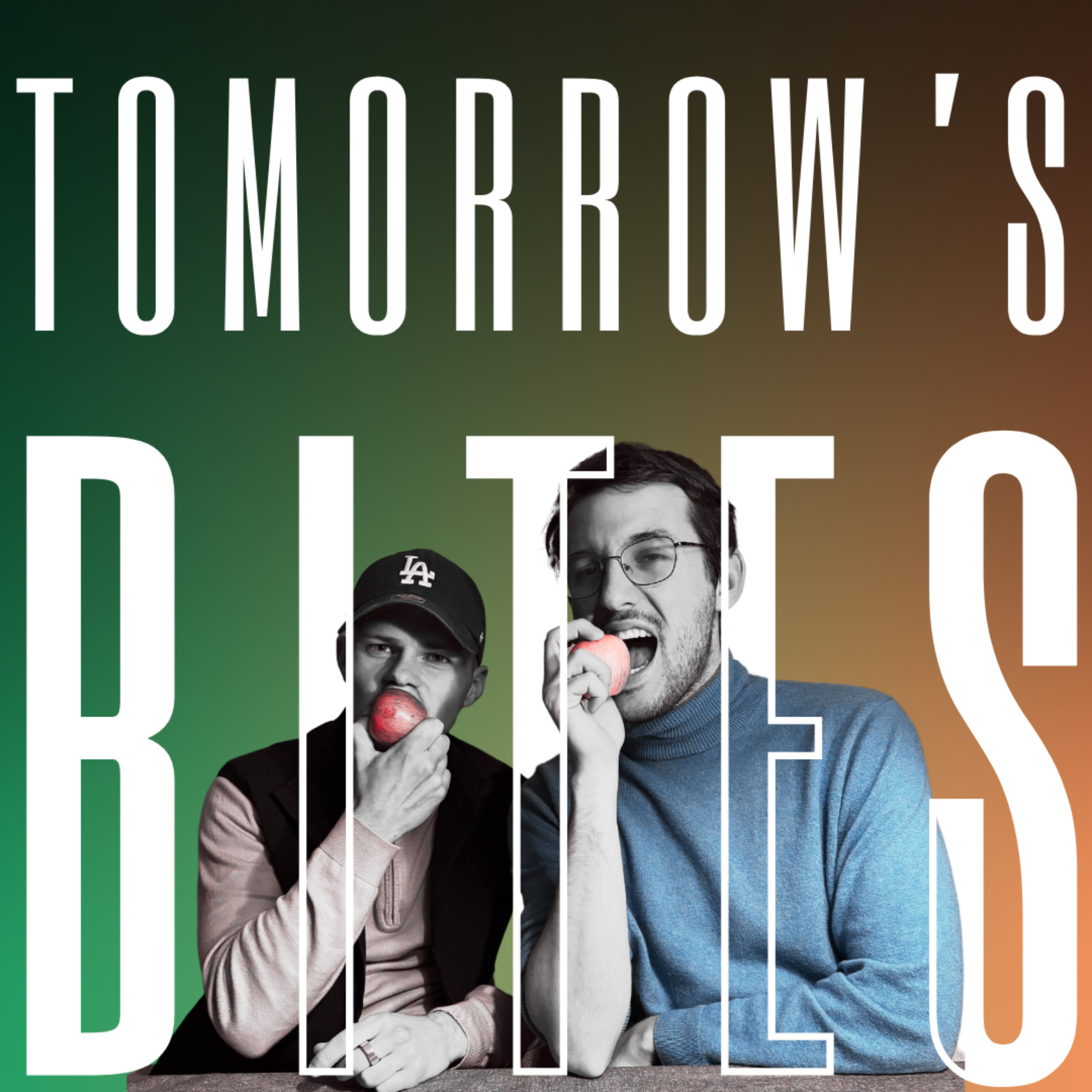
Tomorrow's Bites with Andrés and Sjacco
by Andrés and Sjacco
Food is a problem and this podcast is full of solutions.The food entrepreneurs fixing it are building the most interesting companies in the world. Tomorrow's Bites, hosted by Andrés and Sjacco, gets inside the playbooks of the founders, farmers, investors and operators scaling food businesses that actually matter, and shaping what ends up on tomorrow's plate.If you're building a food startup, working in the food industry, or just hungry to learn from the people reshaping it, this podcast is for you.
-
220
The Part Listeners Didn't Skip: Why This Food Founder Said No To Scaling Fast Her Beverage Brand - from our conversation with Kamogelo Thumankwe, Co-Founder of Tsarona
An investor called Tsarona the next Oatly, the next Matcha. For most founders that's the dream. Kamogelo Thumankwe said no. Scaling fast that way meant betraying the mission the beverage brand was built on. Her business partner wasn't happy. A mentor told her to just do the milk and scale it. She turned it down anyway. With Kamogelo, co-founder of Tsarona, we talk through the real cost of choosing mission over fast money, why fitting in wasted her time, and what listening to actual customers taught her. In 7 min you learn how a mission-driven food founder decides when growth is worth it and when it isn't.Listen to the full conversation here.
-
219
How Food Scanning Apps Are NOW Reshaping Retail and What This Means to Your Food Brand - with co-founder of FLTRD, Anke Kuik
Half of all Dutch citizens live with a chronic disease. Anke Kuik looked at that number, then looked at the supermarket, where more than 70% of the products are ultra processed, and asked the question nobody was acting on: if we know this is making us sick, why is it still the easy choice?In this episode of Tomorrow's Bites, we sit down with Anke Kuik, co-founder of FLTRD, to unpack what it takes to build a food app that scores products on how processed they are, and to challenge the way we've all been taught to read food labels.Anke didn't come from food. She built and sold a data and privacy company one year before GDPR went live, then combined that background in data and technology with a new obsession: why healthy choices are so hard to make. Her first version tried to do everything. Recipes, education, shopping lists, all outsourced to an external tech company, all too expensive to change. She stripped it down to one thing that actually worked.The result is the Pure Score, a zero to 100 system validated by the University of Applied Sciences in Amsterdam, built on more than 5,000 individually scored ingredients.In this conversation, Anke reveals:The three mechanisms that actually make ultra processed food bad for you, and why "more than five ingredients" is the wrong way to think about itWhy a fresh vegetable and a frozen one score exactly the same in her systemHow the same additive can score green in a tin of tomatoes and cost you points in a soft drinkWhy she won't give plus points for probiotics, even when the label brags about themWhat the Nutri-Score gets wrong, and why a red salmon score confuses everyoneWhy she's now licensing the score to the same supermarkets she started by scraping data fromThe uncomfortable trust problem waiting for her the day a supermarket becomes a partnerWhy 7,000 monthly users and a French app called Yuka convinced her the timing is finally rightThis is a conversation about focus, food literacy, and the messy reality of turning a health mission into a business people will pay for.If you build, brand, or sell anything people put in their mouths, this episode will change how you read the back of the packet.Share it with someone who scans labels and still isn't sure what they're looking at.🙏 LEAVE A REVIEW If you like our podcast please leave us a review on your favourite platform – even one sentence helps! Thank you for your support; it helps the show a lot and it helps others to discover the show! 👋 GET IN TOUCH WITH US👥 Linkedin📸 Instagram🌎 Website The Guest: Anke Kuik🌱 Look into the company: FLTRD
-
218
The Part Listener's Didn't Skip: How Your Starting Food Business Can Beat Multinationals (Just like Oatly) - from our conversation with Assistant Professor Wageningen University Caspar Krampe
Oatly was oats mixed with water and oil. No patent. No breakthrough technology. It still took share from a dairy industry a hundred times its size. Caspar Krampe, food researcher at Wageningen University and co-founder of VGreens, explains why that happened. Big food companies rarely innovate. They defend, using standards and lobbying to keep smaller brands out. Startups have two ways through. One is co-evolution, trading knowledge for resources with an incumbent. The other is what Oatly did: start with a niche that has no alternative, then build the brand fast enough that the giants can't respond. With Caspar, we cover why this works in food and almost never works the way it does in tech. In 11 min you learn which of the two paths fits your food business.Listen to the full episode here
-
217
Adam: How One Farmer Built 100 Products From One Crop, Without a Business Degree - With Adam Palmer Regenerative Farmer & Entrepreneur of the Honest Bean & more
What do you do when you realise at 19 years old that farming alone will never pay the bills and you have no business degree, no brand experience, and one crop to work with?In this episode of Tomorrow's Bites, we sit down with Adam Palmer, regenerative farmer and founder of Littleseed, Charlie & Ivy's, and The Honest Bean Company a man who built over 100 products from a single farm on the hills of the Yorkshire Wolds, entirely through trial, error, and the fearlessness of not knowing what he didn't know.Adam went fully regenerative in 2019, no pilot, no small trials, straight in. He stopped ploughing overnight, rebuilt his soil from scratch, and quietly became one of the last cold-press rapeseed oil producers standing in the UK after a market of 60 or 70 brands rose and collapsed around him. Along the way, he learned branding the hard way, watched a product fail because the label was dark blue, relaunched it and saw a 60% sales uplift without changing a single ingredient, and then turned a bucket of stolen fava beans from a neighbor's shed into a snack brand consumers genuinely love.We explore:Why Adam went fully regenerative overnight — no trials, no safety net — and what happened to his soil, his yields, and his billsHow farming taught him that soil is an asset, not a surface — and why most farmers around him still haven't made that shiftThe 66-bottle farmer's market moment that convinced him to build a food brand from scratchWhat a brand consultant standing in a Scottish farm shop aisle taught him about why good products failHow raw fava beans sent to locked-down strangers on the internet became the research behind The Honest Bean CompanyThis is a story about what happens when a farmer refuses to just be a commodity supplier and builds an entire ecosystem of value from a single piece of land.🙏 LEAVE A REVIEW If you like our podcast please leave us a review on your favourite platform – even one sentence helps! Thank you for your support; it helps the show a lot and it helps others to discover the show! 👋 GET IN TOUCH WITH US👥 Linkedin📸 Instagram🌎 Website😊 The Guest: Adam PalmerLook into Honest beans
-
216
Building in Public #9: How To Win Essential Partnerships With Retailers, Wholesalers and Farmers with Andres Jara Co-Founder of Favamole
What if the real reason your retail partnerships aren't converting has nothing to do with your product and everything to do with how you think about the word "sales"?In this episode of Building in public, we check back in with Andres Jara, founder of Favamole, for another building-in-public update, and this one goes deep on the thing that nobody in food business school teaches you: how to actually build relationships across an entire supply chain, without ever reducing people to the role they play in your revenue model.From farmers to wholesalers to restaurant chefs, Andres has been learning — often the hard way — that every link in the food supply chain runs on the same currency: trust. And trust, it turns out, follows seasons, requires patience, and has almost nothing to do with a cold email.We explore:Why the "valley of death" for food startups isn't about cash flow — it's about whether partners believe you'll still be there next yearHow Andres thinks about wholesalers not as logistics partners but as ecosystem players — and why that changes everything about how you show up in a meetingThe dinner that changed how he thinks about stakeholder relationships: inviting chefs, farmers, investors, and caterers to celebrate the supply chain itselfWhy the word "cold" in cold outreach is the real problem — and how reframing it shifts the energy of every message you sendHow timing within natural seasons should dictate when you talk to farmers, restaurants, and retailers — and why ignoring that rhythm costs you relationshipsWhat's coming after summer: a new retailer listing, a product rebrand, and a flavor born from subtraction, not addition🙏 LEAVE A REVIEW If you like our podcast please leave us a review on your favourite platform – even one sentence helps! Thank you for your support; it helps the show a lot and it helps others to discover the show! 👋 GET IN TOUCH WITH US👥 Linkedin📸 Instagram🌎 Website
-
215
Vincent: How to Build a Winning Food Brand in 2026: An Investor's Honest Take - with Founding Partner of Gota Ventures, Vincent Kuiper
In this episode of Tomorrow's Bites, we sit down with Vincent Kuiper, founding partner of Gota Ventures, to build what might be the most honest roadmap for launching a food brand in 2026. Vincent has now covered over a dozen case studies of breakout CPG brands. Graza, Chomps, Upfront, Good Girl Snacks... What he found across all of them isn't what most founders expect to hear.Vincent started investing at 16. His father gave him a brokerage account with 50 euros as a birthday present and said: just play with it. Fifteen years later, he co-founded an international angel syndicate of 55 investors from 15 countries, many of them former insiders at Cargill, Unilever, and major beverage companies, built specifically to open a food industry he calls a closed ecosystem.What he learned from the inside is this: most food startups don't fail because the product is bad. They fail because they try to change how people behave.In this conversation, Vincent breaks down the full journey from idea to shelf:Why the most overlooked categories in the supermarket are the most interesting ones to build in right nowThe one metric he checks before anything else when a food brand lands in his inboxWhy he would not invest in an electrolyte brand today, and what that says about copycat risk across the whole CPG spaceHow Chomps reached 900 million in revenue with two or three SKUs, and what most founders do insteadThe manufacturing decision that founders always get wrong in the first yearWhen D2C is a testing lab and when it becomes a crutchWhy retail velocity matters more than follower count when he's doing due diligenceWhat he thinks about Upfront's move into supermarkets, and why he's watching it closelyThis is a conversation about commercial reality, category timing, and the discipline it takes to build something that lasts beyond a trend cycle.If you are building a food brand or thinking about it, this is the episode to listen to before you make your next move.Share it with a founder who is about to scale before they are ready.GOT SOMEONE IN MIND? TELL US WHO WE SHOULD BRING NEXT.🙏 LEAVE A REVIEW If you like our podcast please leave us a review on your favourite platform – even one sentence helps! Thank you for your support; it helps the show a lot and it helps others to discover the show! 👋 GET IN TOUCH WITH US👥 Linkedin📸 Instagram🌎 Website😊 The Guest: Vincent KuiperLook into: Gota Ventures
-
214
The Part Listener's Didn't Skip: How This Regenerative Farmer Built A Brand That Is Selling Better Than Conventional - from our conversation with Farmer and Founder of Squeeze Citrus, Herb Young
Can a tiny farm out-earn a commodity grower? Herb Young proves it can. His neighbors thought he'd gone crazy: an organic hippie with 1,350 citrus trees. Then they saw his website: sold out, sold out, sold out. Now those same conventional farmers are calling him for advice. Herb built Squeeze Citrus as a commercial brand from day one, with professional branding, direct-to-consumer marketing, and a story rooted in nutrient density and regenerative farming. He found his customers in a health-conscious niche, not the supermarket next door. With Herb, we unpack how a food brand built on soil health and premium positioning can beat the commodity game. In 12 min you learn how regenerative agriculture, smart branding, and a clear market can turn a small farm into a sold-out food business.Listen to the full episode here
-
213
Bart: Inside the Venture Studio Turning 300 Applicants Into Food System Changers - With Bart van der Zande Director Fresh Ventures Studio
What if the missing ingredient in the food system isn't a better product, but a better way to build the people who build the products?In this episode of Tomorrow's Bites, we sit down with Bart van der Zande, Director of Fresh Ventures, a venture studio on a mission to transform the food system by doing something that accelerators and VCs largely don't: building companies from scratch, before the idea even exists, with founders who are selected not just for their skills but for their relationship with a problem.From 3,000 people reached to 300 applications to 25 carefully chosen founders per cohort, Fresh Ventures runs one of the most intentional company-building processes in the agri-food space. Bart has seen what separates the founders who break through from the ones who don’t, and it has very little to do with the technology they build.We explore:Why venture studios are fundamentally different from accelerators and VCs and why the food system specifically needs all threeHow Fresh Ventures selects founders before the solution exists and why "problem-founder fit" matters more than the pitchWhy deep domain experts are often the hardest people to get unstuck and how to coach them back to the problem they're actually best placed to solveThe red flags Bart watches for in founders: fixed mindsets, burning relationships, and falling in love with a solution instead of a problemHow the same venture building model is now being replicated in Uganda and Tanzania and why the approach has to be completely different And much more…This is a conversation about what it actually takes to build companies that don't just grow but change the system they operate in.GOT SOMEONE IN MIND? TELL US WHO WE SHOULD BRING NEXT.🙏 LEAVE A REVIEW If you like our podcast please leave us a review on your favourite platform – even one sentence helps! Thank you for your support; it helps the show a lot and it helps others to discover the show! 👋 GET IN TOUCH WITH US👥 Linkedin📸 Instagram🌎 Website😊 The Guest: Bart van der ZandeLook into: Fresh ventures Venturing Into Regenerative Food Systems for everyone that do not know where to start.
-
212
The Part Listeners Didn't Skip: How Food Startups Can Leverage Their Branding To Get Listed in Wholesalers - with Steve D. Sailopal, co-founder of Curry Smugglers
How can you position yourself when you don't have a distribution network or the necessary industry connections?Maybe everything you need to catch people attention is identity.Curry Smugglers didn't knock on wholesaler doors, the wholesaler called them. Steve D. Sailopal built a brand distinctive enough that Selfridges stocked it, Fortnum & Mason gave them a full window display on Piccadilly, and buyers came looking. The product started in focus groups in Margate, and from there the brand took it to London's most iconic shops. With Steve, we unpack how branding does the selling before your sales team exists. In 9 min you learn why standing out is the only distribution strategy that matters early on.
-
211
Neil: Why Blockchain Is Going To Change Agriculture and Food Businesses Forever - with Neil Smith, Co-Founder of Grow
The farmer knows more about your food than anyone. But he doesn't own a single byte of data about it. Someone else does and they're not sharing the value back.In this episode of Tomorrow's Bites, we sit down with Neil Smith, co-founder of Grow, to unpack one of the most counterintuitive arguments in food right now: that blockchain, the technology most people associate with crypto speculation, might be the most powerful tool farmers have ever been handed.Neil didn't come from tech. He grew up farming in Canada, barely scratching two pennies together in bad years, watching a market system that rewarded yield over nutrition and stripped farmers of any real voice. His youngest sister has stage four cancer, brought on by what he describes as the failures of our food system. That's not theory for him. It's personal.What he built with Grow isn't a crypto play. It's a ledger that nobody can manipulate, and the first blockchain built specifically around the utility of feeding people, not the speculation of trading tokens.In this conversation, Neil reveals:Why farmers are the most data-rich people in the food chain, and the least compensated for itHow Grow's first validation case was tracing regenerative food from a single farm to Amazon's Climate Pledge Arena, and why that changed everythingWhy the biggest obstacle to fixing the food system isn't consumer behavior, it's yield, and the entire economic model built around itHow a convertible blockchain token creates real utility without ever needing to flip back to fiat currencyWhy it's older farmers, not younger ones, who are the first to adopt what Grow is building, and what that says about the future of the family farmThe assumption that almost derailed the whole project: that change has to come from the ground upAnd why 20,000 community members in two years, 60% of them farmers, convinced him that the timing might finally be rightThis is a conversation about trust, data sovereignty, and what it actually takes to build technology that serves the people growing our food, not the companies selling it.If you work in food, agriculture, or impact investment and you've ever wondered whether blockchain is real or just noise, this episode will change how you think about it.GOT SOMEONE IN MIND? TELL US WHO WE SHOULD BRING NEXT.🙏 LEAVE A REVIEW If you like our podcast please leave us a review on your favourite platform – even one sentence helps! Thank you for your support; it helps the show a lot and it helps others to discover the show! 👋 GET IN TOUCH WITH US👥 Linkedin📸 Instagram🌎 Website😊 The Guest: Neil SmithThe company: GrowThe community: Grow Skool
-
210
Building in Public #8: How To Secure Funding As A Food Startup In Your First Year - With Andres Jara Co-Founder Of Favamole
Most food startups run out of money before they run out of ideas. The ones that don't share one thing in common: they started planting before they were hungry.In this Build in Public episode of Tomorrow's Bites, Andres Jara is back with a month that took him from securing funding in the Netherlands to speaking on stage at a regenerative agriculture summit in Colombia, and seeing his father for the first time in seventeen years.This episode goes deep on something most founders avoid talking about in public: the actual mechanics of funding a food startup without giving away equity, without accumulating debt you can't repay, and without signing something that ends your journey before it begins. Andres breaks down the exact funding construction Favamole used, combining a grant from Stichting DOEN, a co-financed arrangement with the Rabo Foundation, and a convertible grant structure most founders have never even heard of.But the real lesson isn't financial. It's about timing.In this conversation, Andres reveals:Why the biggest funding mistake founders make is starting to look when they're desperate, and what to do insteadHow a convertible grant works: you only pay it back if you succeed, and why that changes everything psychologicallyWhy Favamole split its funding plan across two organizations on purpose and what transparency had to do with itWhat Colombia's 53-year civil war accidentally protected, and why it makes it one of the most exciting food systems on the planet right nowWhy he went to a Latin American summit and refused to ask for anythingAnd what meeting his father after 17 years taught him about how to show up in a negotiation🙏 LEAVE A REVIEW If you like our podcast please leave us a review on your favourite platform – even one sentence helps! Thank you for your support; it helps the show a lot and it helps others to discover the show! 👋 GET IN TOUCH WITH US👥 Linkedin📸 Instagram🌎 Website
-
209
Innocent: He Went to Uganda's Villages And 500 Conversations Later, He Built a Business Farmers Actually Want with Innocent (Olur) Ociti founder Kicente EcoLogic
What if the only way to build a business farmers actually want is to shut up, sit down, and have 500 conversations first?In this episode of Tomorrow's Bites, we sit down with Innocent Ociti, founder of Kicente EcoLogic in Uganda a former humanitarian worker who left the offices of UNDP to go village by village, garden by garden, learning what smallholder farmers actually need. Not what they say in groups. Not what shows up in reports. What they reveal over a local brew when their guard finally comes down.What Innocent built is not a typical agri-input business. It's a farmer-led distribution network where communities appoint their own trusted experts, organic inputs are tested in demo gardens before they ever reach a field, and credit is extended so farmers can pay after harvest. It took counterfeit seeds wiping out two sub-counties' worth of maize to show him where to begin and 500 individual conversations to show him how.We explore:Why talking to farmer groups taught Innocent almost nothing and what changed the moment he walked into their gardensHow two entire seasons were lost selling the right inputs the wrong wayWhy farmers don't buy because of health benefits and what they actually care aboutHow communities, not founders, should choose who leads a farmer networkWhat it costs to build trust in a place where agriculture is still seen as the last resortWhy 500 one-on-one conversations is the bare minimum before you think you understand a marketThis is a story about deep listening as a business strategy and what happens when someone from the outside earns the right to belong.GOT SOMEONE IN MIND? TELL US WHO WE SHOULD BRING NEXT.🙏 LEAVE A REVIEW If you like our podcast please leave us a review on your favourite platform – even one sentence helps! Thank you for your support; it helps the show a lot and it helps others to discover the show! 👋 GET IN TOUCH WITH US👥 Linkedin📸 Instagram🌎 Website😊 The Guest: Innocent (Olur) Ociti
-
208
The Part Listeners Didn't Skip: The Food Content Strategy that got Wendy The Food Scientist +600K Followers - from our conversation with Wendy Luong
Seven months of daily posting lead her to a burnout for only 5,000 followers. Most people would quit. Wendy Luong didn't; she just stopped copying others and started being herself: A food scientist with a Chinese mom and a lab full of ideas. That shift changed everything. One video about boiling tofu, combining science and her mother's wisdom, brought her 100,000 followers overnight. With Wendy, we unpack the exact content strategy behind her growth, and why your expertise is already your biggest asset. In 12 min you learn how to stop guessing and start building a content strategy that actually works.
-
207
Honey and Bunny: How Food Designers Help Food Founders To Think Beyond The Ordinary— with Martin Hablesreiter and Sonja Stummerer, Food Designers.
Most food founders obsess over ingredients and market fit. But they barely wonder about why food looks the way it looks.In this episode of Tomorrow's Bites, we sit down with Martin Hablesreiter and Sonja Stummerer, the Austrian duo behind Honey and Bunny, to challenge everything food founders think they know about why people actually eat what they eat. They are architects turned food designers turned performance artists, and their work has been quietly dismantling the most rational assumptions in the food industry for over two decades.Martin and Sonja are specialists in provoking. They've hidden scientists in dinner audiences, made people dig food out of soil with their bare hands, filmed inside Queen Victoria's private toilet for a sandwich performance, and smashed a plate of leftovers onto the floor of a Milan department store to make food waste visible in a way no conference ever could.But behind the theater is a serious argument: food founders are thinking too rationally about a completely irrational world.In this conversation, they reveal:Why 200 shapes of pasta exist and what that exposes about the myth that design follows functionWhy lab-grown meat will never replace meat, but might succeed as something entirely newHow a room of 15 EU food scientists all agreed on the "most sustainable sandwich", and why that moment exposed the absurdity of one-size-fits-all food policyWhy is food the only material on earth that can make the most stressed person on the street stop and listenThe iron triangle of science, politics, and economy that quietly engineered today's industrial food system and why that also means we can change itAnd why the biggest barrier to sustainable eating isn't knowledge or willpower, it's that people think they're aloneIf you build, brand, or communicate anything in food, this episode will make you rethink where innovation actually starts.🙏 LEAVE A REVIEW If you like our podcast please leave us a review on your favourite platform – even one sentence helps! Thank you for your support; it helps the show a lot and it helps others to discover the show! 👋 GET IN TOUCH WITH US👥 Linkedin📸 Instagram😊 The guest: Martin Hablesreiter & Sonja Stummerer🌎 Website
-
206
The Part Listeners Didn't Skip: Why Your First Product Should Look Cheap and Ugly - from our conversation with the Co-Founder of Collie, Daniel Reisman
What if the ugliest product in the room turned out to be the most revolutionary? Most founders wait until things look polished before showing them to the world. Daniel Reisman did the opposite: he strapped a phone to a cow's neck, turned on vibration mode, and started a farming revolution. His co-founder Chris built a black box full of spaghetti wires, handed it to a skeptical farmer, and pushed a button. The cows stood up and walked to the barn. That was enough. With Daniel, co-founder of Collie, we explore why done and ugly beats perfect and invisible every time. In 14 min you learn why your first product just needs to work.Listen to the full episode here
-
205
Maarten: How Staying Small Can Change Everything, Maarten's Model for Local-First On A Global Scale with Maarten Klop from Grounded
What if the key to changing the global food system is refusing to think globally?In this episode of Tomorrow's Bites, we sit down with Maarten Klop, co-founder of Grounded & Amped and community organizer behind some of the most quietly radical food and regenerative projects in the Netherlands. Maarten doesn't build empires, he builds roots. Starting with a festival on a military fortress with zero budget and a WhatsApp group, he's spent seven years proving that real trust, real food, and real change can only be built at the local level and that staying small might actually be the most powerful strategy of all.We explore:Why local identity is a competitive advantage, not a limitation and how to scale without losing itHow Grounded delivered healthy food to 80,000 families during COVID in under a week because the network was already thereThe "game metaphor" for regional food collaboration: inventory, challenge rooms, and finding the right friends with the right toolsWhy the hardest part of building regenerative food systems is the work nobody pays forWhat mycelium, Minecraft, and bottom-up organizing all have in commonHow to build a movement when the global statistics are overwhelming and why a single apple is more powerful than an IPCC reportAnd much more...GOT SOMEONE IN MIND? TELL US WHO WE SHOULD BRING NEXT.🙏 LEAVE A REVIEW If you like our podcast please leave us a review on your favourite platform – even one sentence helps! Thank you for your support; it helps the show a lot and it helps others to discover the show! 👋 GET IN TOUCH WITH US👥 Linkedin📸 Instagram🌎 Website😊 The Guest: Maarten Klop
-
204
Build In Public #7: “Our Office Burned Down, Here's What It Really Means to FavaMole” With Andres Jara Co-Founder Of Favamole
What do you do when a fire burns down your office and takes your brand story with it?In this episode of Tomorrow's Bites, we check back in with Andres Jara, Co-founder of Favamole, for another raw and unfiltered building-in-public update. Just one day after our last recording, a fire tore through Kitchen Republic, the shared workspace where Andres and dozens of other founders were building their companies. What was lost? Marketing materials, labels, and the narrative Favamole had been printing on boxes for months. What was found? A blank canvas, and the courage to finally tell a different story.We explore:Why losing everything in a fire can give you as well new opportunities as a startup.How Andres turned a crisis into community, and why hundreds reached out to support him.The pivot Favamole is making: from "alternative to guacamole" to something far bigger.Why simplicity is the hardest thing to build into a mission-driven food company.The "Law of Zunzu”, and how to actually win at trade shows.What masculine and feminine energy have to do with building a regenerative business.This episode is about more than a fire. It's about what you rebuild when you no longer have an excuse to keep telling the wrong story.Share this with a founder who needs to hear it!!🙏 LEAVE A REVIEW If you like our podcast please leave us a review on your favourite platform – even one sentence helps! Thank you for your support; it helps the show a lot and it helps others to discover the show! 👋 GET IN TOUCH WITH US👥 Linkedin📸 Instagram🌎 WebsitePS: Here you can support Kitchen Republic.
-
203
Mustafa: How Forgotten Crops Could Fix the Food System & Why Nobody Is Growing Them Yet — with Mustafa Durgun, Founder of Sovereign Yields Initiative
We grow fewer than 20 crops to feed 8 billion people. Meanwhile, thousands of nutritious, climate-resilient crops are sitting in the ground: forgotten, stigmatized, and completely ignored by the market. Why?In this episode of Tomorrow's Bites, we sit down with Mustafa Durgun, founder of the Sovereign Yields Initiative, to expose one of the most overlooked blind spots in our food system: the crops we stopped growing not because they failed us, but because we built an entire industrial machine around the ones that did.Mustafa grew up in Istanbul, obsessed with what food represents culturally, historically, and politically. That obsession took him from selling potatoes in Germany to designing climate-resilient food projects in Angola, to now working on transforming his own family's stagnant goat farm in Turkey into a regenerative system. Along the way, he learned something most food system thinkers avoid saying out loud: farmers don't grow what's good for the planet. They grow what pays.In this conversation, Mustafa reveals:Why neglected crops carry a stigma of poverty and how that shame is the real barrier to adoptionHow to reintroduce forgotten crops without asking anyone to consciously choose themWhy the knowledge gap, the value chain gap, and the financial clarity gap are the three locks keeping these crops out of the marketWhat ready-to-use therapeutic foods could unlock for global nutrition, and why his best proposal never got fundedWhy "fully local food systems" may be more of a feel-good myth than a resilience strategyHow to navigate EU grant applications when you're working on crops nobody has researched yetAnd what food sovereignty actually means when you strip away the buzzwordsAnd much more...🙏 LEAVE A REVIEW If you like our podcast please leave us a review on your favourite platform – even one sentence helps! Thank you for your support; it helps the show a lot and it helps others to discover the show! 👋 GET IN TOUCH WITH US👥 Linkedin📸 Instagram🌎 Website😊 The Guest: Mustafa Durgun
-
202
The Part Listeners Didn't Skip: Why Thinking 1,000 Years Ahead Changes Everything in Farming - from our conversation with Initiator of the 1000 Years Vision Movement, Peter Michel Heilmann
What would change if farmers stopped planning for the next season and started planning for the next 1,000 years?Most agricultural systems are built around short-term yields, annual revenues, and immediate survival. But what if the real question is not how to grow more next year, but how to protect and regenerate land for generations to come?With Peter Michel Heilmann, initiator of the 1,000 Year Vision Movement, we explore a radically different approach to farming. One that starts with understanding where you are today, then builds a roadmap toward a long-term vision that outlives you.This is not just philosophy. It is structure.From creating nonprofit trusts that protect land and values, to unlocking new forms of capital like philanthropic funding and Earth certificates, the model redefines how farms can grow without losing their purpose.But the most powerful shift is human. Instead of chasing growth, Peter Michel shares a method based on listening, feeling the land, and building relationships that emerge naturally over time.In just 14 minutes, you will discover why thinking in centuries might be the most practical decision a farmer can make today.Listen to the whole conversation with Peter Michel here.
-
201
Hana: Why Most Health Food Brands Fail And What Greenhouse Did Differently With Hana James Co-Founder of Greenhouse
Most health brands don’t fail because they lack good intentions.They fail because good intentions aren’t enough.In this episode of Tomorrow’s Bites, we sit down with Hana James, co-founder of Greenhouse, to unpack what it really takes to build a health food brand that lasts more than a trend cycle.Hana didn’t start in business. She was on track to become a doctor. But during that journey, she realized something powerful: medicine is often reactive, while food can be proactive. That shift led her to build something different.From selling out on day one in freezing Toronto winters, to expanding into the U.S. market, Hana shares:Why product quality is non-negotiableHow branding evolves without losing identityThe uncomfortable truth about flops (yes, even garlic shots)Why storytelling matters more than ever in crowded marketsAnd what it takes to scale a mission-driven health brand without compromising your valuesThis is a conversation about resilience, iteration, ego checks, and long-term thinking.If you’re building in food, health, or consumer products, this episode is for you.🙏 LEAVE A REVIEW If you like our podcast please leave us a review on your favourite platform – even one sentence helps! Thank you for your support; it helps the show a lot and it helps others to discover the show! 👋 GET IN TOUCH WITH US👥 Linkedin📸 Instagram🌎 Website😊 The Guest: Hana JamesLook into the company Greenhouse
-
200
Build In Public #6: What Does Running the Company Alone for a Month Teach You About Your Co-Founder? - with Andres Jara Co-founder Favamole
GO FUND ME TO HELP FAVAMOLE AFTER THE FIRE: https://www.gofundme.com/f/from-fire-to-regeneration-support-favamole/cl/What if the best thing your co-founder ever did for your company was go on holiday?In this Build in Public episode of Tomorrow's Bites, Andres Jara returns with a month that threw everything at him at once: two accelerator demo days, new funding, a Finnish retailer landing in his inbox, a house move, and a co-founder on the other side of the world. The result? An accidental masterclass in what it actually means to build something bigger than yourself.Because here's what nobody tells you: the moment you have to do your co-founder's job, you stop taking it for granted.Andres shares what this month really looked like: the overwhelm, the role swap, and the unexpected appreciation that came from it:Why finishing second in a 30-company pitch competition can feel like winningHow LinkedIn visibility pulled a Finnish retailer straight to Favamole's door without a single cold emailWhat swapping roles with your co-founder teaches you that no meeting ever couldWhy saying yes to everything is a superpower that slowly becomes a liabilityThe honest cost of moving house, closing funding, and running solo operations simultaneouslyAnd why spring and the first real sprouts above the ground finally feel earnedThis is a conversation about overwhelm, gratitude, and the quiet confidence that comes when you realize the company can move without you holding everything together.If you're building with a co-founder, or wishing you had one, this episode will hit differently.Share this with a founder who needs to hear it.🙏 LEAVE A REVIEWIf you like our podcast please leave us a review on your favourite platform, even one sentence helps! Thank you for your support; it helps the show a lot and it helps others to discover the show!🙏 LEAVE A REVIEW If you like our podcast please leave us a review on your favourite platform – even one sentence helps! Thank you for your support; it helps the show a lot and it helps others to discover the show! 👋 GET IN TOUCH WITH US👥 Linkedin📸 Instagram🌎 Website
-
199
Nita: Why Kitchens Won't Buy Your Sustainable Vegetables & What Nimble Is Doing About It — with Co-Founder of Nimble, Nita van Dam
Most sustainable food startups think the hardest part is growing better vegetables. But you hit the real wall the moment you need to get those vegetables into kitchens.In this episode of Tomorrow's Bites, we sit down with Nita van Dam, co-founder of Nimble, to unpack why the gap between nature-inclusive farmers and professional kitchens is wider and stranger than most people think.Nita didn't start in business. Half Thai, half Dutch, raised on questions, she studied human ecology, spent time farming, and worked inside commercial kitchens. What she found was a broken middle: farmers growing exceptional, wonky, seasonal produce that the food industry simply wasn't built to receive. So she built Nimble a fair, flexible processing facility that transforms Dutch nature-inclusive vegetables into ready-to-use mixes for chefs, catering companies, and hospitals.But selling impact into institutional kitchens is a masterclass in friction. In this conversation, Nita reveals:Why "sustainable" vegetables don't sell themselves and what actually moves kitchens to switchHow seasonal supply, menu planning cycles, and centralized catering create invisible walls for food startupsWhy the wonky vegetables nobody else wants are actually Nimble's hidden advantageWhat it really feels like to push against a system that doesn't push backHow steward ownership shapes the kind of investors and mission you attractAnd why voting with your fork, even in a hospital, might be more powerful than any policyAnd much more...🙏 LEAVE A REVIEWIf you like our podcast please leave us a review on your favourite platform, even one sentence helps! Thank you for your support; it helps the show a lot and it helps others to discover the show!👋 GET IN TOUCH WITH US👥 Linkedin📸 Instagram🌎 Website😊 The Guest: Nita van Dam🌱 Look into the company: Nimble
-
198
The Part Listeners Didn't Skip: How One Honest Conversation Led to a €250K Investment - from our conversation with Co-Founder of Favamole, Andrés Jara
How do you actually find the right investor?Many founders believe it starts with the perfect pitch deck, the right numbers, and a polished presentation. But sometimes, the real connection happens somewhere else entirely.In this short episode, Andres Jara, co-founder of Favamole, shares how a simple and honest conversation at a regenerative agriculture conference led to a €250K investment.Instead of pitching metrics and projections, the conversation started with something much more human: the personal struggles behind building a startup.That moment of authenticity created alignment. And alignment created trust.The lesson is simple but powerful. Investors are not only looking for numbers. They are looking for people, values, and a clear reason why the work matters.In just 10 minutes, we explore why the best partnerships often start with honesty rather than a pitch.Listen to the whole conversation with Andrés here.
-
197
Jan Dirk: How One Farmer Built a Regenerative Cheese Empire with Jan Dirk van de Voort farmer Remeker
Jan Dirk did something almost unthinkable in Dutch agriculture: he stepped out of the conventional dairy system, reduced his herd, stopped using antibiotics, kept horns on his cows, rebuilt his barn, and committed to raw milk cheese, all while others scaled up.The result? An award-winning regenerative cheese brand built on soil health, biodiversity, and deep observation, not industrial efficiency.In this episode, Jan Dirk shares how he:Went from doubling his herd to cutting it backLost money for years before finding his pathBuilt a circular, low-input system where dung beetles, birds, and mycorrhiza do the workCreated a premium raw milk cheese brand (Remeker) that competes on taste, not volumeReduced external inputs while lowering costs and increasing resilienceWe go deep into regenerative dairy, horned cows, raw milk, soil fungi, grazing systems, and why “bigger and more efficient” may be the wrong KPI for the future of farming.For founders, farmers, and food innovators who believe taste, soil, and long-term thinking matter more than short-term yield, this conversation is a must-listen.If this episode shifts your perspective, share it with someone in agriculture or food who needs to hear it.🙏 LEAVE A REVIEW If you like our podcast please leave us a review on your favourite platform – even one sentence helps! Thank you for your support; it helps the show a lot and it helps others to discover the show! 👋 GET IN TOUCH WITH US👥 Linkedin📸 Instagram🌎 WebsiteLook into the farm Remeker
-
196
Build In Public #5: How to Avoid Burnout While Fundraising and Scaling with Andres Jara Co-founder Favamole
What happens when the dream you’re building starts building pressure back on you?In this raw and honest Build in Public episode, Andres shares what most founders don’t talk about: the silent stress of fundraising, due diligence, grant deadlines, sales targets, and scaling, all at the same time. From applying to a €3.9M subsidy to juggling investor conversations and major wholesaler pitches, the stakes are rising. And so is the cortisol.But here’s the uncomfortable truth: if you don’t manage your nervous system, your business will eventually manage you.We unpack what stress actually feels like in year two of building a food startup,the subtle shift from “I feel stressed” to “I am stressed,” the attachment to outcomes when the runway shortens, and the mental domino effect founders experience when everything suddenly feels urgent.At the same time, we dive into the practical realities of scaling:Why fundraising is a full-time jobWhat 50+ investor conversations teach you about money and powerHow small product tweaks (like reducing oil) can unlock major commercial breakthroughsWhy convenience and experience are key when selling into wholesalersHow bold iteration turned feedback into growthAnd much more...🙏 LEAVE A REVIEW If you like our podcast please leave us a review on your favourite platform – even one sentence helps! Thank you for your support; it helps the show a lot and it helps others to discover the show! 👋 GET IN TOUCH WITH US👥 Linkedin📸 Instagram🌎 Website
-
195
Elspeth Hay: What Is the Food System Story & Why Should We Eat More Trees?
What if the biggest food source in your neighborhood is literally falling on the ground, but you can't even see it?In this episode of Tomorrow’s Bites, we sit down with Elspeth Hay, author of Feed Us With Trees, to unpack one of the most overlooked truths in our food system: for thousands of years, humans across the Northern Hemisphere relied on nuts like acorns as staple foods, and then we stopped.Elspeth challenges the dominant story of modern agriculture. She exposes why monocultures are not “natural,” why the yield argument is deeply misleading, and how policy (not necessity) shaped today’s food landscape. We explore:Why 70 years of industrial farming reshaped ecosystems that were stable for 9,000 yearsHow government subsidies quietly dictate what ends up on your plateWhy the idea that “we must farm this way to feed the world” is a mythThe forgotten relationship between humans, fire, and oak forestsWhat entrepreneurs can learn from keystone species and ecological balance🙏 LEAVE A REVIEW If you like our podcast please leave us a review on your favourite platform – even one sentence helps! Thank you for your support; it helps the show a lot and it helps others to discover the show! 👋 GET IN TOUCH WITH US👥 Linkedin📸 Instagram🌎 Website😊 The Guest: Elspeth Hay📗The Book: Feed Us With Trees
-
194
The Part Listeners Didn't Skip: Why This Coffee Startup Failed in B2C but Won in B2B - from our conversation with CEO of Slow Coffee, Sebastian Nielsen
Why did selling sustainable coffee directly to consumers fall flat, while selling it to businesses unlocked real traction?This short dives into a hard lesson many impact startups learn too late. Good values do not automatically translate into consumer demand. Awareness does not equal willingness to pay.With Sebastian Nielsen from Slow Coffee, we unpack why the B2C story struggled. The education burden was too high, the margins too thin, and the decision-making too emotional and inconsistent.Then comes the pivot.By moving into B2B, everything changed. Businesses understood the value faster, decisions were clearer, volumes made sense, and sustainability became part of a system rather than a moral choice at the shelf.This is not a story about giving up on impact. It is a story about finding the right market to make an impact.In just 9 min, you get a clear and honest look at why B2B succeeded where consumer marketing failed, and what founders should learn before choosing their go to market strategy.Listen to the whole conversation with Sebastian here.
-
193
Evelien Moriau: Building a Habit-Changing App Fighting Food Waste & Crowdsourcing Supermarket Data - With Founder Ostras Evelien Moriau
What if the biggest reason we waste food isn’t laziness, but lack of transparency?In this episode of Tomorrow’s Bites, we sit down with Evelien Moriau, founder of Ostras, a startup that’s turning everyday grocery shopping into a data-powered tool to fight food waste, save money, and change consumer habits at scale.After years in consulting, Evelien made the leap into entrepreneurship with a simple but radical idea: if supermarkets won’t share real-time data about short shelf-life products, consumers can. Inspired by platforms like Waze, Ostras crowdsources supermarket data directly from shoppers—putting transparency and power back into the hands of the people.In this conversation, we unpack:Why sustainability alone doesn’t change behavior (and what does).How crowdsourcing can outperform top-down food waste solutions.The psychology behind habit change in grocery shoppingWhy food waste is a consumer problem as much as a supply-chain one.How incentives, not guilt, drive real impact.This is a grounded, honest look at what it takes to build a food tech startup that operates at the intersection of behaviour, data, and climate impact, without relying on idealism alone.🎧 Listen now to discover how small daily actions, multiplied by millions of people, could quietly reshape the food system.🙏 LEAVE A REVIEW If you like our podcast please leave us a review on your favourite platform – even one sentence helps! Thank you for your support; it helps the show a lot and it helps others to discover the show! 👋 GET IN TOUCH WITH US👥 Linkedin📸 Instagram🌎 Website😊 The Guest: Evelien Moriau
-
192
Build In Public #4: What Really Changes After You’ve “Made It Through” The First Year with Andres Jara Co-founder Favamole
"If you don’t sell, the mission dies."It’s a sentence most impact-driven founders avoid saying out loud, but year two has a way of forcing honesty.In this Build in Public episode of Tomorrow’s Bites, we sit down again with Andres Jara, co-founder of Favamole, to unpack the unfiltered reality of building a food startup beyond the hype of year one. The vision is still alive. The mission still matters. But this time, the focus is clear: sales, structure, and survival.We talk about what really changes after you’ve “made it through” the first year. Why delegating feels lighter than holding on. Why foundations matter more than visibility. And why many purpose-driven startups fail not because the idea is wrong, but because cash flow is ignored for too long.This is a conversation about:The uncomfortable shift from storytelling to sellingLetting go of control before you become the bottleneckWhy impact without revenue is just intentionHow year two separates belief from executionNo pitch decks. No polished lessons. Just the real trade-offs founders face when idealism meets reality.🎧 If you’re building something that’s meant to last, this episode will feel uncomfortably familiar, and deeply necessary.🙏 LEAVE A REVIEW If you like our podcast please leave us a review on your favourite platform – even one sentence helps! Thank you for your support; it helps the show a lot and it helps others to discover the show! 👋 GET IN TOUCH WITH US👥 Linkedin📸 Instagram🌎 Website
-
191
Rudolph: His Fight To Feed Lebanon, Reinventing The Cheese Industry with a Snack, and How To Launch 300+ Organic Products - with Founder of Agreen and 2XPND, Rudolph Elias
What do you build when your country collapses, and doing nothing isn’t an option?In this episode of Tomorrow’s Bites, we sit down with Rudolph Elias, founder of Agreen and 2XPND, to unpack one of the most intense and unconventional food entrepreneurship journeys we’ve ever recorded.When Lebanese farmers were throwing apples onto the streets because they couldn’t sell them, Rudolph started building an ecosystem. What followed was the launch of more than 300 organic products, spanning fruits, dairy, honey, olive oil, ready meals, and eventually a breakthrough cheese-snack technology that could reinvent how we think about protein, food waste, and shelf life.This conversation goes far beyond product innovation.We explore:Why farmers are paid cents while consumers pay premium pricesHow Lebanon’s crisis exposed the fragility of global food systemsWhy Rudolph believes organic only works if markets are guaranteedHow a cheese snack can replace junk food, whey protein, and popcornWhy taxing “poison” might be the fastest way to fix agricultureWhat it really means to build impact when institutions failAnd much more..👋 GET IN TOUCH WITH US👥 Linkedin📸 Instagram🌎 Website😊 The Guest: Rudolph EliasLook into the company: Agreen & 2XPND
-
190
The Part Listeners Didn't Skip: Why Plant-Based Marketing Failed and How This Startup Came Through It - from our conversation with Co-Founder of The Change Starts, Tim Dekens
What happens when the trends disappear?Tim Dekens, founder of The Change Starts, shares how his brand went from riding the peak of the plant-based wave to rebuilding its identity beyond labels. In the early days, bold content featuring elite plant-based athletes gave the brand rapid traction. But when public interest shifted, the message no longer landed.That’s when the real work began. Tim explains how they reframed the brand’s purpose, focused on performance and small shifts, and built trust with athletes (plant-based or not).It’s a story about letting go of hype to find a more honest and lasting impact.In just 8 minutes, we explore what founders can learn when trends lose their power.Listen to the whole conversation with Tim here
-
189
Sergey: How Do You Sell Ritual Tea in a World That Only Wants Convenience? with Sergey Shevelev, Founder Moychay International
How to sell ritual tea in a world that only wants convenience?In this episode of Tomorrow’s Bites, we sit down with Sergey, a curious nomad who went from underground DJ culture to building one of Europe’s most ambitious tea movements. After spending years traveling deep into China, learning the language, living with farmers, and sourcing from abandoned plantations and ancient wild tea trees, Sergey is now on a mission to bring real tea culture back to Europe.This is not a story about trends or convenience. It’s about obsession, patience, and starting over.We dive into:Why 95% of Chinese tea doesn’t meet EU standards, and how Sergey sources around itThe difference between wild, ancient, and plantation tea (and why it matters)How speaking Chinese unlocked trust, quality, and long-term farmer relationshipsThe brutal reality of starting from zero again after war and relocation.Why tea might be the healthiest replacement for alcohol, caffeine, and fast rituals.And much more...From scaling tea houses across countries to convincing farmers to stop fertilizing their land, Sergey’s journey reveals what it really takes to build a values-driven business in one of the world’s oldest supply chains.🙏 LEAVE A REVIEW If you like our podcast please leave us a review on your favourite platform – even one sentence helps! Thank you for your support; it helps the show a lot and it helps others to discover the show! 👋 GET IN TOUCH WITH US👥 Linkedin📸 Instagram🌎 Website😊 The Guest: Sergey Shevelev
-
188
New Year's Special: 12 Unique Lessons From a Year Talking With the People Reinventing AgriFood
What actually changes when you spend a full year talking to the people trying to fix the food system?In this New Year’s special episode of Tomorrow’s Bites, Andres and Sjacco sit down for their final conversation of the year to reflect, honestly and openly, on what 12 months of deep conversations with founders, farmers, scientists, and system-changers have taught them.This isn’t a highlight reel. It’s a distillation.Drawing from more than 30 long-form conversations, they each bring six lessons—twelve in total—that challenged their assumptions, reshaped their thinking, and revealed uncomfortable truths about food, startups, sustainability, and human behavior.They unpack questions like:Why solving food problems is more about systems than productsWhy regenerative agriculture might be the least risky optionWhy startups are pushed to scale in ways food never canWhy there is no such thing as a “perfect diet”Why adding value at origin may be the only future for farmersAnd why mission-driven founders must learn to say no, to survive.Listen now to start the new year with clarity, perspective, and hard-earned lessons from the frontlines of agri-food.If you’ve been part of this journey, thank you. And if you’re building what comes next, this episode is for you.🙏 LEAVE A REVIEW We know that hour-long conversations might be too long, so we have distilled a lesson from each conversation in 2025 and compiled them into an e-book for you. Download the e-book with 32 unique lessons here.👋 GET IN TOUCH WITH US👥 Linkedin📸 Instagram🌎 Website
-
187
Build In Public #3: What If Your Marketing Strategy Isn’t What Consumers Actually Want? - with Andres Jara Co-founder Favamole & Elise Bijkerk Marketing & Food Transition Expert
What if the biggest risk for your startup isn’t product, funding, or scaling, but talking about the wrong thing?In this Build in Public episode of Tomorrow’s Bites, we zoom in on one of the most uncomfortable (and crucial) questions founders avoid for too long:Are people actually waiting for what you’re building?To unpack this, we bring in Elise Bijkerk, a marketing and food transition expert with years of corporate and global experience, to sit down with Andres Jara, co-founder of Favamole. Together with Sjacco & Andrés, they dissect Favamole’s value proposition live, no pitch decks, no filters, no safe answers.This is not a branding theory episode. It’s a real-time founder intervention.We explore:Why marketing is not the final step, but the starting pointThe danger of trying to be “everything” and ending up as “nothing”Why purpose alone doesn’t make people change their behaviorHow emotional needs often matter more than functional benefitsWhat Andres will actually change in the next month as a founderIf you’re building a food startup, impact brand, or mission-driven product, and you’ve ever struggled to explain why someone should care, this episode will hit close to home.And if you want to know more around marketing, here is the episode with Elise Bijkerk itself. 🙏 LEAVE A REVIEW If you like our podcast please leave us a review on your favourite platform – even one sentence helps! Thank you for your support; it helps the show a lot and it helps others to discover the show! 👋 GET IN TOUCH WITH US👥 Linkedin📸 Instagram🌎 Website
-
186
Kamogelo Thumankwe: 75% of Crop Diversity Is Already Lost & This African Superfood Brand Wants To Stop it.
What if the real food crisis isn’t calories, but diversity?In just the last century, we’ve lost 75% of global crop diversity, and today 90% of our food comes from just 15 plants. The rest? Slowly disappearing from fields, diets, and cultures.In this episode of Tomorrow’s Bites, we sit down with Kamogelo Thumankwe, founder of Tsarona, an African superfood brand with a mission that goes far beyond nutrition. Born and raised in Botswana, Kamogelo shares how her personal roots, climate justice work, and lived experience led her to build a business that fights biodiversity loss, empowers smallholder farmers, and challenges the global food system’s obsession with trends and monocultures.We explore:Why indigenous crops like Bambara groundnuts and tiger nuts could be key to regenerative food systemsHow European consumer choices directly shape what farmers grow in the Global SouthWhy Tsarona is not trying to create the next “superfood hype”The tension between scaling a startup and staying true to your valuesWhat it means to build a food brand rooted in identity, culture, and justiceAnd much more...👋 GET IN TOUCH WITH US👥 Linkedin📸 Instagram🌎 Website😊 The Guest: Kamogelo ThumkaweLook into the company: Tsarona
-
185
The Part Listeners Didn't Skip: Why the Best Vanilla Might No Longer Come from Madagascar - from our conversation with Godfrey Kiwumulo
Vanilla is one of the most complex and labor-intensive crops on the planet.Each flower is pollinated by hand. Each pod takes months to cure. And for decades, Madagascar has dominated the market.But what if the best vanilla of tomorrow comes from somewhere else?In this short episode, we talk with Godfrey Kiwumulo, founder of Vanilla Point in Uganda, about why his country might be the next global hotspot for high-quality vanilla.We discuss:→ Why Uganda’s climate gives it an edge.→ How regenerative farming supports better flavor and soil health.→ The hidden labor and value behind a kilo of vanilla.In just 10 minutes, we challenge the story behind every spoonful of vanilla, and explore a new one growing in East Africa.
-
184
Dr. Caspar Krampe: The Complex Agrifood Systems & the War Between Goliaths and the Startups - with Assistant Professor Wageningen University & Co-founder VGreens Caspar Krampe
What if the real battle for our food future isn’t in the fields, but in the market system itself?In this episode of Tomorrow’s Bites, we sit down with Dr. Caspar Krampe, Assistant Professor at Wageningen University and co-founder of VGreens, to unpack the hidden dynamics shaping today’s agrifood industry. From the struggle between big corporations and startups, Caspar reveals why change in food systems is so complex, and why both Goliaths and Davids need each other more than they think.We explore:Why markets act more like ecosystems than machinesThe invisible power structures that keep small innovators from scaling and the enablers out there. How Corporations blocks disruption, and how startups can outsmart themWhy “technology” can be both an enabler and a weapon in food transitionsHow to turn market competition into true collaboration for sustainabilityThe Growth Journey of Caspar’s Own Startup VgreensAnd much more…🙏 LEAVE A REVIEW If you like our podcast please leave us a review on your favourite platform – even one sentence helps! Thank you for your support; it helps the show a lot and it helps others to discover the show! 👋 GET IN TOUCH WITH US👥 Linkedin📸 Instagram🌎 Website
-
183
The Part Listeners Didn´t Skip: What Food Impact Brands Get Wrong About Marketing - from our conversation with OlvLimits Co-Founder, Roos Roelofs
Many purpose-driven food brands are rich in values, but struggle to connect with customers.In this episode, Roos Roelofs, founder of OlvLimits and regenerative olive farmer, shares how she had to shift her communication approach.At first, she focused on scientific facts and sustainability data. But she quickly realized: data doesn’t sell olive oil. Emotions do.Now, Roos leads with storytelling.In this 10-minute segment from our original conversation, we talk about:Why logic isn’t enough to win heartsThe power of emotional connection in food brandingHow purpose-led founders can find their voiceA must-listen for any founder who wants to make people feel their mission and not just understand it.In 10 minutes, this might change how you speak to your audience.
-
182
Herb Young: Big Ag never told me this..- with Founder of Squeeze Citrus and Ex-Bayer, Herb Young
What if you spent 38 years developing pesticides, only to later realize the industry never told you the full story?That’s exactly what happened to Herb Young, a retired plant pathologist who spent nearly four decades in industrial agriculture before discovering the science Big Ag had ignored all along: soil health, microbes, and nutrient density.In this episode of Tomorrow’s Bites, Herb shares his eye-opening journey from the chemical labs of Big Ag to running his own regenerative citrus farm in Florida. He explains how understanding soil life transformed not only his farm but also his beliefs about food, farming, and health.You will find in this episode:Why the term “regenerative” was never once mentioned in his 38-year careerHow industrial farming practices quietly destroyed soil healthThe shocking difference in nutrient density between regenerative and conventional fruitHow microbes (not fertilizers) build flavor, resilience, and nutritionWhat happens when a lifelong scientist applies research rigor to regenerationAnd much more...👋 GET IN TOUCH WITH US👥 Linkedin📸 Instagram🌎 Website😊 The Guest: Herb YoungLook into the company Squeeze Citrus LLC
-
181
Build in Public #2: Did Favamole get listed in another wholesaler? – With Andres Jara, Co-Founder of Favamole
What if you could follow a startup’s evolution in real time, as it happens?Welcome back to Build in Public, the monthly Tomorrow’s Bites series where we sit down with Andres Jara, co-founder of Favamole, to document the highs, lows, and lessons of building a food startup from the ground up.In this second episode (recorded in Barcelona) Andres reflects on a month of tension, focus, and growth. From chasing listings and building social capital to confronting imposter syndrome, we get a raw look at what it really means to keep a mission-driven food company alive.We explore:Why founders must balance focus with perspectiveHow to turn “no” into momentum through long-term trust buildingThe surprising role of social capital in B2B salesHow to communicate differently with investors, farmers, and consumersHow can entrepreneurs face imposter syndrome?Listen now to join Favamole’s journey, month by month, challenge by challenge, and see what it really takes to build a regenerative food brand in public.🙏 LEAVE A REVIEW If you like our podcast please leave us a review on your favourite platform, even one sentence helps! Thank you for your support; it helps the show a lot and it helps others to discover the show! 👋 GET IN TOUCH WITH US👥 Linkedin📸 Instagram🌎 Website😊 The Guest: Andrés JaraLook into the company Favamole
-
180
He Made the First Alcohol-Free Beer in the UK And Now Reinvents Asian Snacks - With Steve D Sailopal Co-Founder Curry Smugglers #97
What do you do after creating the UK’s first alcohol-free beer?If you’re Steve, you take your creativity, your culture, and a few family recipes, and you turn them into the world’s first Asian snacks sold in beer cans.In this episode of Tomorrow’s Bites, we sit down with Steve, co-founder of Curry Smugglers, to explore his journey from the fashion industry to brewing and now to reinventing an entire snack category. From branding born out of a customs joke to packaging inspired by sustainability and nostalgia, this is a story about turning memories into movements.We unpack:How Steve created the UK’s first alcohol-free beer when no one believed in it.The moment his wife and daughter sparked the idea for Curry Smugglers.Why the snack industry needs a design revolution and how this should look like.The link between fast fashion and snacks, and what both can learn from each other.The business lessons from creating UK's first alcohol-free beer.🙏 LEAVE A REVIEW If you like our podcast please leave us a review on your favourite platform, even one sentence helps! Thank you for your support; it helps the show a lot and it helps others to discover the show! 👋 GET IN TOUCH WITH US👥 Linkedin📸 Instagram🌎 Website😊 The Guest: Steve D SailopalLook into the company Curry Smugglers
-
179
The Part Listeners Didn´t Skip: What AgTech Startups Get Wrong About Regenerative Agriculture - from our conversation with regenerative farmer Thomas Gent
Most agtech startups want to help farmers.But many miss a fundamental truth.Technology doesn’t move at the same pace as nature, and innovation that works in theory often fails in the field.In this short episode, Thomas Gent, regenerative farmer and founder of Gentle Farming, shares what most startups overlook when trying to support sustainable agriculture.→ The mismatch between tech expectations and seasonal farming→ Why soil and systems thinking can’t be rushed→ What it really takes to build trust with farmersAnd finally, what regenerative farming needs most from innovation partners.In 7 min, you’ll hear directly from someone who lives the complexity of farming change.Listen to the whole conversation here👋 GET IN TOUCH WITH US👥 Linkedin 📸 Instagram🌎Website
-
178
Food Scientist with +500K Followers Shares Her Most Impactful Personal Branding Lessons - with Wendy Luong (Wendy The Food Scientist)
What does it take to turn your expertise into influence, and your passion into a movement?In this episode of Tomorrow’s Bites, we sit down with Wendy, a food scientist turned content creator who’s built a community of over 500,000 followers by blending science, storytelling, and creativity. From developing plant-based baking mixes to going viral with tofu recipes, Wendy shares how she built a personal brand that educates, inspires, and empowers people to cook from scratch.We explore:How to grow your online presence as a food founder or expertWhy personal branding is the most underrated business tool in food innovationHow to create content that feels authentic and builds real trustLessons from burnout, virality, and staying consistent onlineWhy founders should build their brand before their productAnd much more...🙏 LEAVE A REVIEW If you like our podcast please leave us a review on your favourite platform – even one sentence helps! Thank you for your support; it helps the show a lot and it helps others to discover the show! 👋 GET IN TOUCH WITH US👥 Linkedin📸 Instagram🌎 Website😊 The Guest: Wendy The Food Scientist
-
177
Build in Public: What if you could follow a startup’s evolution? – With Andres Jara, Co-Founder of Favamole
What if you could follow a startup’s evolution, not through press releases, but in real time, as it happens?Welcome to Build in Public, a new series from Tomorrow’s Bites where we sit down every month with Andres Jara, co-founder of Favamole, to document what it really takes to grow a food startup from the inside out.In this first episode, Andres joins Sjacco and Andres to reflect on Favamole’s latest wins and setbacks: getting listed with major wholesalers, refining their messaging, and navigating the long road of scaling a regenerative food business.We unpack:The highs and lows of Favamole’s last monthWhy being present, and telling your story, is key to growthThe messy reality of B2B food sales and product positioningHow a strong mission attracts the right partners (and patience tests your limits)The founder mindset needed to ride the wave instead of chasing itListen now to follow Favamole’s journey as it unfolds, month by month, challenge by challenge, and discover what it really means to build a meaningful food startup in public.
-
176
How 5 Students Turned Seaweed Goo Into a Scalable Solution For Indoor Farming - With The Winners Of WUR Student Challenges The HAB Special Edition WUR
What if the next big climate solution didn’t come from a lab or a boardroom, but from a student space farming challenge?That’s exactly what happened to Morgan and Feodor, two students from Wageningen University who joined forces with others to rethink food for astronauts, and ended up creating a breakthrough that could change farming here on Earth.Their idea, AstroGel, is a biodegradable, seaweed-based hydrogel designed to replace peat, the world’s most widely used plant substrate, responsible for massive CO₂ emissions and soon to be banned in the EU. What started as a concept for Mars missions could now help greenhouses transition to more sustainable practices.In this special episode in collaboration with WUR, we explore:How a space challenge led to a carbon-negative farming innovationWhy peat is both essential and destructive in today’s food systemThe scrappy student journey from whiteboard sketches to industry testsWhat they learned about failure, prototypes, and pitching under pressureWhy curiosity and bold ideas might be the missing ingredient in climate solutions🙏 LEAVE A REVIEW If you like our podcast please leave us a review on your favourite platform – even one sentence helps! Thank you for your support; it helps the show a lot and it helps others to discover the show! 👋 GET IN TOUCH WITH US👥 Linkedin📸 Instagram🌎 Website😊 The Startup: The HABLook into WUR Student Challenges & Rethink Food Challenges
-
175
The Part Listeners Didn't Skip: What Every Startup Learns When Their First Business Model Doesn’t Scale - from our conversation with co-founder of Tälist, Pia Voltz
What if your first idea... isn't the right one?That’s exactly what happened to Tälist, the alt-protein recruitment company co-founded by Pia Voltz.After dozens of interviews with founders and ecosystem players, Pia and her team realized the real bottleneck in food innovation wasn’t product development—it was people.Tälist first launched as a boutique executive search firm.But it quickly hit a wall: the service wasn’t scalable or affordable for the very companies they wanted to serve.So they pivoted.In this short, Pia shares how they shifted from 1:1 recruitment to building a matchmaking platform—complete with AI tools, a job board, and a curated talent pool—to support startups at scale.She also opens up about what most hiring platforms get wrong, and how Tälist is rethinking recruitment to make it faster, more inclusive, and better for the planet.In 9 minutes, you’ll learn the power of listening, letting go, and designing for real needs.
-
174
What Can Space Farming Teach Us About Feeding People On Earth? - With Charlotte Pouwels from EUSPA & Bart van Meurs Division Q a Special WUR Edition
What if the innovations designed to feed astronauts on Mars could solve food security challenges here on Earth?In this special Tomorrow’s Bites episode, we sit down with Bart van Meurs, director of Division Q, and Charlotte Pouwels, analog astronaut and space mission leader, who both served as jury members for Wageningen University’s Student Challenges. Together, they reveal how the technologies tested for farming in space, like hydroponics, vertical farming, and AI-driven monitoring, are already shaping the future of horticulture and sustainable food systems on Earth.We explore:Why resource scarcity in space mirrors the challenges of urban food systemsHow vertical farming and hydroponics born from space research are revolutionizing citiesThe surprising psychological role plants play for astronauts, and what it means for usWhy water recycling in space could redefine how we handle wastewater on EarthThe startups that caught their attention with game-changing solutions🙏 LEAVE A REVIEW If you like our podcast please leave us a review on your favourite platform – even one sentence helps! Thank you for your support; it helps the show a lot and it helps others to discover the show! 👋 GET IN TOUCH WITH US👥 Linkedin📸 Instagram🌎 Website😊 The Guests: Look into WUR Student Challenges
-
173
The Part Listeners Didn't Skip -What Happens When Your Startup Grows Faster Than Your Mission? - from our conversation with the co-founder of Notpla, Rodrigo García
What happens when your startup grows faster than your mission?For Rodrigo García, co-founder of Notpla, the answer is not as simple as “scale faster.”When you’re trying to replace plastic with seaweed-based packaging, ambition isn’t enough.You need to reinvent entire systems, change how people think about waste, and balance speed with integrity.In this short episode, we explore the tension that every mission-led startup eventually faces:How do you stay true to your values while scaling impact?Rodrigo shares what they’ve learned along the way.From navigating investor expectations to redefining product success.In 8 minutes, we dive into the messy middle of building something that matters.Listen to the whole conversation with Rodrigo here.👋 GET IN TOUCH WITH US👥 Linkedin 📸 Instagram🌎Website
-
172
He Wanted to Start a Farm. Instead, He Builds a Tool to Transform 1,000 of Them - With co-founder of Collie, Daniel Reisman
To revolutionize farming we need a solution that will change the life of farmers.That’s exactly what Daniel Reisman set out to do. After leaving behind a career in sales and a plan to start his own farm, Daniel co-founded Collie, a startup that’s rethinking livestock management with virtual fencing technology. By replacing physical fences with sound and vibration signals, Collie helps farmers move cows with an app—saving hours of labor, improving soil health, and making regenerative practices more practical.In this episode of Tomorrow’s Bites, Daniel shares the story of Collie’s beginnings, from scrappy prototypes strapped to cows’ necks to convincing skeptical farmers that the system really works.We explore:Why Daniel traded his dream of farming for food system innovationHow virtual fencing saves farmers time and unlocks regenerative grazingThe biggest lessons (and mistakes) from building agri-tech hardwareWhy trust is the biggest barrier for farm adoptionHow Collie plans to expand from the Netherlands to farms across EuropeAnd much more...🙏 LEAVE A REVIEW If you like our podcast please leave us a review on your favourite platform – even one sentence helps! Thank you for your support; it helps the show a lot and it helps others to discover the show! 👋 GET IN TOUCH WITH US👥 Linkedin📸 Instagram🌎 Website😊 The Guest: Daniel Reisman✅ Their Work: Collie
-
171
The Part Listeners Didn't Skip: They Launched A Food App in 6 Months With Just a WhatsApp Group - from our conversation with Co-Founder of Olio App, Tessa Clarke
How do you validate a startup idea without spending a cent on tech?By being scrappy, fast, and obsessed with solving a real problem.In this 8-minute episode, we hear how Tessa Clarke and her co-founder tested Olio with just a WhatsApp group—and how a simple food share (a bag of shallots!) unlocked their conviction to go all in.Instead of raising capital for a perfect product, they built an MVP that was only slightly better than WhatsApp. But that was enough.What followed was a surprising twist: people loved the idea so much, they had no food to share.So they launched the Food Waste Heroes program. And now, 135,000+ trained volunteers are redistributing food across communities.From idea to impact, this is the mindset every founder should hear.In 8 minutes, you’ll see how the best startups begin. With simplicity, speed, and strangers.Listen to the whole conversation with Tessa here.👋 GET IN TOUCH WITH US👥 Linkedin 📸 Instagram🌎Website
We're indexing this podcast's transcripts for the first time — this can take a minute or two. We'll show results as soon as they're ready.
No matches for "" in this podcast's transcripts.
No topics indexed yet for this podcast.
Loading reviews...
ABOUT THIS SHOW
Food is a problem and this podcast is full of solutions.The food entrepreneurs fixing it are building the most interesting companies in the world. Tomorrow's Bites, hosted by Andrés and Sjacco, gets inside the playbooks of the founders, farmers, investors and operators scaling food businesses that actually matter, and shaping what ends up on tomorrow's plate.If you're building a food startup, working in the food industry, or just hungry to learn from the people reshaping it, this podcast is for you.
HOSTED BY
Andrés and Sjacco
CATEGORIES
Loading similar podcasts...
Frequently Asked Questions
How many episodes does Tomorrow's Bites with Andrés and Sjacco have?
Tomorrow's Bites with Andrés and Sjacco currently has 50 episodes available on PodParley. New episodes are automatically indexed when they're published to the podcast feed.
What is Tomorrow's Bites with Andrés and Sjacco about?
Food is a problem and this podcast is full of solutions.The food entrepreneurs fixing it are building the most interesting companies in the world. Tomorrow's Bites, hosted by Andrés and Sjacco, gets inside the playbooks of the founders, farmers, investors and operators scaling food businesses that...
How often does Tomorrow's Bites with Andrés and Sjacco release new episodes?
Tomorrow's Bites with Andrés and Sjacco has 50 episodes. Check the episode list to see recent publication dates and frequency.
Where can I listen to Tomorrow's Bites with Andrés and Sjacco?
You can listen to Tomorrow's Bites with Andrés and Sjacco on PodParley by clicking any episode. We provide an embedded audio player for direct listening, and you can also subscribe via your preferred podcast app using the RSS feed.
Who hosts Tomorrow's Bites with Andrés and Sjacco?
Tomorrow's Bites with Andrés and Sjacco is created and hosted by Andrés and Sjacco.
URL copied to clipboard!