
PODCAST · health
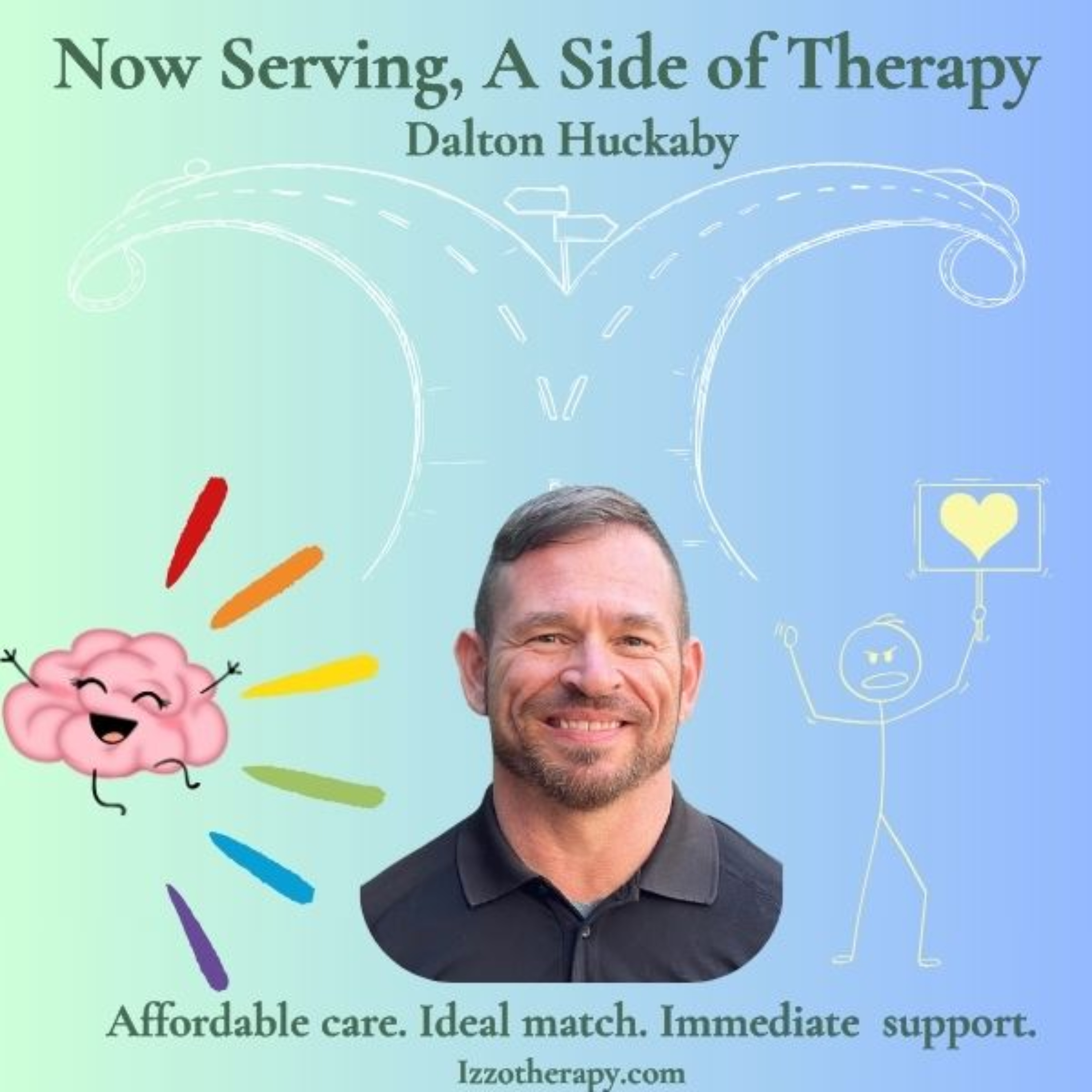
Now Serving.. A Side of Therapy
by Dalton Huckaby | Licensed Marriage and Family Therapist | # 146802
🎧 Now Serving.. A Side of Therapy brings real conversations from the heart of Izzo Therapy — a bilingual, culturally responsive practice based in San Mateo and San Carlos. Hosted by Dalton Huckaby, each episode explores ADHD, mental health, identity, relationships, parenting, and healing. Whether you’re starting therapy, navigating life transitions, or simply curious about what happens beyond the couch, you’ll find connection, insight, and a side of real talk.
-
41
LGBTQ+ Mental Health: Why Community Matters More Than You Think
Why Community Might Be Better Than Therapy (For Some People) | LGBTQ+ Mental HealthWhat if therapy isn’t the only answer to healing?In this episode, we explore why community, connection, and belonging may be just as important—if not more—for mental health. Featuring the San Mateo County Pride Center, this conversation breaks down how real support happens both inside and outside the therapy room.From free LGBTQ+ support groups to inclusive community events, you’ll learn how connection can reduce isolation, improve mental health, and create lasting change.If you’ve ever felt like therapy alone isn’t enough… this episode explains why.🌈 What You’ll Learn:• Why community is critical for mental health• LGBTQ+ mental health resources and support groups• How peer-led groups create real connection• The impact of loneliness and isolation on mental health• Events and safe spaces that foster belonging• How virtual support increases accessibility💬 Featured Organizations:San Mateo County Pride Center — LGBTQ+ community support, events, and mental health resourcesOutlet Redwood City — Supporting LGBTQ+ youth ages 10–25📅 Upcoming Event:San Mateo County Pride – June 13 🌈🔗 Watch & Resources:Full episode: https://drive.google.com/file/d/1nYDc2SLWGGkofmYRg3JhuwYdnejnc2sV/view?usp=sharingEpisode assets: https://drive.google.com/file/d/1eCj__3-5Gj_rI3_runHo8ogVnZRZaTNk/view?usp=sharing🎙 About the Podcast:Now Serving Therapy by Izzo Therapy brings real conversations about mental health, therapy, and community. Featuring licensed clinicians and local organizations, we make mental health more accessible, relatable, and human.🔍 Keywords (for SEO):LGBTQ mental health, community support mental health, San Mateo County Pride Center, LGBTQ support groups, queer mental health resources, therapy vs community, loneliness and mental health, LGBTQ youth support, peer support groups, Pride events California, inclusive therapy, mental health podcast, Izzo TherapyWhy Community Might Be Better Than Therapy (For Some People) | LGBTQ+ Mental HealthWhat if therapy isn’t the only answer to healing?In this episode, we explore why community, connection, and belonging may be just as important—if not more—for mental health. Featuring the San Mateo County Pride Center, this conversation breaks down how real support happens both inside and outside the therapy room.From free LGBTQ+ support groups to inclusive community events, you’ll learn how connection can reduce isolation, improve mental health, and create lasting change.If you’ve ever felt like therapy alone isn’t enough… this episode explains why.🌈 What You’ll Learn:• Why community is critical for mental health• LGBTQ+ mental health resources and support groups• How peer-led groups create real connection• The impact of loneliness and isolation on mental health• Events and safe spaces that foster belonging• How virtual support increases accessibility💬 Featured Organizations:San Mateo County Pride Center — LGBTQ+ community support, events, and mental health resourcesOutlet Redwood City — Supporting LGBTQ+ youth ages 10–25📅 Upcoming Event:San Mateo County Pride – June 13 🌈🔗 Watch & Resources:🎙 About the Podcast:Now Serving Therapy by Izzo Therapy brings real conversations about mental health, therapy, and community. Featuring licensed clinicians and local organizations, we make mental health more accessible, relatable, and human.🔍 Keywords (for SEO):LGBTQ mental health, community support mental health, San Mateo County Pride Center, LGBTQ support groups, queer mental health resources, therapy vs community, loneliness and mental health, LGBTQ youth support, peer support groups, Pride events California, inclusive therapy, mental health podcast, Izzo Therapy
-
40
Filling the Need and Encouraging Agency (Mental Health)
Filling the Need and Encouraging Agency” with Tyler ButtreyIn this episode of Now Serving: A Side of Therapy, we sit down with Tyler Buttrey to discuss the growing need for services supporting persons with IDDs and the aging population, while exploring the importance of autonomy, creativity, and community connection.Topics include:• Cultural components for persons with IDDs• Sharing success stories and lived experiences• Filling service gaps for the aging population• Encouraging independence and agency through the arts• Building meaningful and person-centered support systemsThis conversation highlights the importance of creating spaces where individuals feel empowered, heard, and supported throughout every stage of life.🎧 Listen now and join the conversation.#MentalHealth #IDD #AgingPopulation #TherapyPodcast #NowServingAsideofTherapy #CommunitySupport #Autonomy #PersonCenteredCare #IzzoTherapyTranscript
-
39
San Mateo Pride, Mental Health, and the Power of Community
What does LGBTQ+ support look like when it is rooted in community, advocacy, and real care?In this episode of Now Serving Therapy, hosted by Dalton Huckaby, Licensed Marriage and Family Therapist (LMFT #146802), in collaboration with San Mateo County Pride Center and Izzo Therapy, we sit down for an important conversation about mental health, resilience, and the realities of serving LGBTQ+ individuals across San Mateo County.We talk about the work being done to support transgender and non-binary community members, youth mental health, legal name and gender marker support, access to affirming resources, and the challenges of meeting growing needs in today’s political climate.This conversation also highlights something powerful: even amid uncertainty, community continues to show up.If you are looking for LGBTQ+ affirming therapy, mental health support, or resources in San Mateo County, this episode is for you.Listen now and learn more about the people doing vital work to create safety, belonging, and hope.💬 What does affirming community mean to you? Tell us below.#SanMateoCountyPrideCenter #IzzoTherapy #LGBTQMentalHealth #SanMateoTherapy #TransMentalHealth #QueerCommunity #GenderAffirmingCare #LGBTQSupport #MentalHealthAwareness #SanMateoCounty #TherapyPodcast #NowServingTherapy #CommunityCare #QueerJoy #LGBTQResources
-
38
What's Your "And Yet" Statement? Mental Health with Dalton and Dina
What if two things could be true at once?In this episode, we explore one of the most practical and powerful skills in Dialectical Behavior Therapy (DBT): the “And Yet” statement. This simple but profound tool helps us move beyond black-and-white thinking, hold two truths at once, and respond to life from wise mind instead of emotional reactivity.We discuss how “And Yet” can help with anxiety, depression, relationship conflict, self-doubt, overwhelm, and everyday stress. Whether you have found yourself thinking I’m hurt, so I have to pull away, or I’m exhausted, so I can’t move forward, this conversation offers another way:I’m hurt, and yet I can respond with intention.I’m tired, and yet I can take one next step.This episode also explores core DBT skills including:Wise Mind — learning to access the grounded, centered part of yourself that can hold both emotion and reason.Acting Opposite — using intentional action to disrupt emotional patterns and create flexibility when you feel stuck.Acting As If — practicing new behaviors before they feel natural, and allowing action to help shape confidence, self-worth, and change.Self-Compassion — replacing self-criticism with curiosity and understanding as you practice growth.Small Goals and Habit Change — breaking overwhelming change into manageable steps that build momentum over time.We also discuss why change can feel uncomfortable or “wonky” at first, how old neural pathways keep us repeating familiar patterns, and why practicing new ways of being often starts before it feels natural. Growth is not always dramatic. Sometimes it begins with one small shift, one intentional choice, or one new thought held alongside an old one.This conversation is for anyone interested in Dialectical Behavior Therapy, emotional regulation, mindfulness, trauma-informed therapy, personal growth, anxiety tools, coping skills, relationship health, and practical mental health strategies you can use in daily life.If you have been looking for therapy tools to help you regulate emotions, improve relationships, strengthen resilience, or better understand DBT skills in real-world practice, this episode offers a thoughtful and accessible place to begin.Because sometimes healing starts with one question:What’s your “And Yet” statement?
-
37
Create a Life Worth Living - Marriage and Family Therapy
In this episode of Now Serving Therapy, host Dalton Huckabe sits down with licensed marriage and family therapist Dena Castrio, owner of Good Roots Psychotherapy, to break down Dialectical Behavioral Therapy (DBT) in a way that actually makes sense in real life.Together, they explore how DBT helps individuals manage overwhelming emotions, reduce stress, and make more balanced decisions using what’s known as “Wise Mind.”Dena shares the foundation of DBT, originally developed by Marsha Linehan, and explains how it builds on Cognitive Behavioral Therapy by incorporating mindfulness and emotional awareness. The conversation walks through the internal tug-of-war between emotional thinking and logical thinking—and how learning to integrate both leads to more grounded, effective decision-making.This episode also introduces simple, practical DBT tools you can start using immediately. Dena explains concepts like the “French Fry Paradigm,” which shows how we constantly weigh emotional and logical input in everyday decisions, often without realizing it.You’ll also learn quick, accessible strategies to regulate your nervous system during moments of stress, anxiety, or panic. These include DBT-informed “TIP” skills such as using cold temperature to calm the body and engaging the senses with intense taste to shift mental focus.Whether you struggle with anxiety, emotional overwhelm, or just want better tools to navigate daily life, this episode offers practical insights you can apply right away.Stay tuned for Part 2, where Dalton and Dena will dive deeper into DBT skills like acting opposite to emotion, building mindfulness practices, and using SMART goals for lasting change.
-
36
The 3-Legged Stool of Recovery (What Actually Works)
In this episode of Now Serving .. A Side of Therapy, host Dalton Huckaby sits down with Joe Gutierrez, LMFT and supervisor at Izzo Therapy, to explore what actually works in substance use treatment and recovery.They break down the “3-legged stool” model of recovery — a balanced approach that includes community support, individual therapy, and medication-assisted treatment — and why relying on just one piece often isn’t enough for long-term change.The conversation also covers how substance use is assessed in therapy, why clients often underreport their use due to shame, and the importance of creating a safe, non-judgmental space. Joe shares insight into co-occurring mental health conditions like anxiety and depression, and how these impact treatment and risk.You’ll also hear about different recovery paths, including abstinence, formal programs, and harm reduction — emphasizing that change looks different for everyone. Plus, practical strategies for relapse prevention, the role of environment and behavior patterns, and how loved ones can support without enabling.If you or someone you love is navigating substance use, this episode offers a real, compassionate look at what helps people actually move forward.When you’re ready, we’re here to meet you where you are.Joe Gutierrez LMFT, Izzo Therapy, 3 legged stool recovery, addiction recovery, substance use disorder, therapy for addiction, harm reduction, relapse prevention, co-occurring disorders, anxiety and addiction, depression and substance use, mental health podcast, recovery support, naltrexone, vivitrol, therapist podcastJoe Gutierrez LMFT, Izzo Therapy, 3 legged stool recovery, addiction recovery, substance use disorder, therapy for addiction, harm reduction, relapse prevention, co-occurring disorders, anxiety and addiction, depression and substance use, mental health podcast, recovery support, naltrexone, vivitrol, therapist podcast
-
35
Understanding Substance Use Disorder
In this episode of Now Serving Therapy, host Dalton Huckaby sits down with licensed marriage and family therapist and Izzo Therapy supervisor Joe Gutierrez to explore the realities of substance use disorders.Together, they break down what substance use disorder actually means, why the language has shifted away from “addiction,” and how brain chemistry, environment, and genetics all play a role. Joe brings both clinical insight and his experience as a supervisor at Izzo Therapy, offering a deeper look into how these patterns show up in real therapeutic work.This conversation challenges common myths — including the idea that recovery requires hitting rock bottom or that substance use is simply a lack of willpower. They also discuss the growing dangers of fentanyl, how it is often unknowingly mixed into substances, and what preventative measures can help reduce harm.The episode highlights the importance of early intervention, integrated treatment for co-occurring disorders like anxiety, depression, and PTSD, and why individualized care is essential for long-term support.Whether you’re navigating this personally, supporting someone you care about, or looking to better understand, this episode offers grounded, compassionate insight into a topic that affects people across all walks of life.
-
34
Tending to Basics of Self Care
Self-care is often talked about like it’s something extra — something you get to after everything else is handled.But in reality, it’s the foundation that allows everything else to function.In this episode of Now Serving Therapy, Jessica Gonzalez, LMFT brings the conversation back to the basics — the kind of care that isn’t flashy, but deeply necessary. The kind that supports your nervous system, your emotional world, and your ability to keep showing up.We start with somatic awareness — learning how to notice what your body is already telling you.Stress doesn’t just live in your thoughts. It shows up physically: tight shoulders, a racing heart, disrupted sleep, a constant sense of tension. These signals aren’t random — they’re information. And when we begin to pay attention to them, we gain a window into what’s happening internally.From there, we explore sleep hygiene and tending to basic needs.Sleep isn’t a luxury — it’s one of the most essential forms of mental health care. When your sleep is off, everything else becomes harder: emotional regulation, focus, patience, resilience. Small shifts — like limiting scrolling before bed or creating a calmer nighttime environment — can make a real difference in how your nervous system resets.This episode also speaks to the importance of community and connection.When things feel overwhelming, it’s easy to withdraw. But healing often happens in safe, supportive spaces — through conversation, shared experiences, and being witnessed by others. Externalizing what you’re holding — whether through talking, writing, or simply being in nature — helps move emotions instead of letting them stay stuck.We also talk about energy and sustainability.You can’t pour into others, advocate, or stay engaged if your own basic needs aren’t being met. Rest, nourishment, and care aren’t selfish — they’re what make long-term involvement and impact possible.Another important piece is living in alignment with your values.Whether that’s showing up for your community, reducing stigma, or simply being more present in your own life — your values act as a guide. When your actions reflect what matters most to you, there’s a deeper sense of grounding and authenticity.And throughout it all, there’s a reminder:Healing is not immediate. It’s not one big breakthrough moment.It’s built through small, consistent choices —choosing to rest,choosing to notice,choosing to care for yourself in ways that feel manageable and real.Even the patterns that don’t serve us — like avoidance, numbing, or overworking — often come from a place of trying to cope with something overwhelming. Healing begins when we approach those patterns with curiosity instead of judgment, and start finding safer, more supportive ways to meet those needs.This episode is a return to what matters most:the basics, the body, and the small moments that build something bigger over time.🎧 Listen to Now Serving Therapy — Ep033: Tending to the Basics of Self Care🔗 Link in bio
-
33
Impact of Political Climate on Mental Health (Part 1) – with Jessica Gonzalez LMFT
In this episode, host Dalton Huckaby sits down with Jessica Gonzalez, LMFT, a trauma-informed, bilingual Licensed Marriage and Family Therapist, to explore how today’s political climate is affecting mental health.Jessica shares her perspective on therapy as a collaborative space for self-exploration and healing, explaining how trauma lives in the nervous system and why many people carry symptoms without realizing it. While experiencing trauma does not always lead to PTSD, ongoing stressors can activate dormant wounds — especially in today’s highly polarized environment.Together, they discuss how constant media exposure and “doomscrolling” keep the body in survival mode, creating a persistent sense of unsafety and emotional exhaustion.You’ll learn:• How trauma responses — fight, flight, freeze, and fawn — are natural survival mechanisms• Why people often judge their reactions and how therapy helps normalize them• The difference between natural emotions and manufactured emotions• Why shame and misplaced guilt are common but often undeserved• How “legacy parts” and generational trauma influence emotional patterns• Practical ways to reduce daily trauma activation from news and social media• How the Circles of Influence framework restores agency and controlIf you’ve been feeling overwhelmed, emotionally activated, or drained by the state of the world, this conversation offers clarity, validation, and grounded coping tools.
-
32
Don't Tell Me to Drink More Water
What happens when motherhood changes you in ways no one prepared you for?In Ep031, Dalton Huckabe sits down with Veronica to unpack the realities of maternal mental health beyond “just drink more water.” They explore generational parenting patterns, corporal punishment, emotional regulation, postpartum depression and anxiety, and the identity shifts that come with becoming a mother.Veronica shares her personal experience navigating postpartum depression and anxiety, the process of reclaiming her identity, and the importance of naming what feels lost — autonomy, boundaries, even simple pleasures. The conversation also addresses racial stressors, systemic oppression, and the unique mental load carried by Black mothers.This episode is about resilience, self-compassion, and the powerful reminder: You are not your performance.Topics covered:• Maternal mental health• Postpartum depression & anxiety• Emotional regulation in parenting• Reclaiming identity after motherhood• Boundaries & self-compassion• Race, resilience & generational trauma
-
31
Motherhood’s Not the Same for Everyone (Part 1) Podcast: Now Serving a Side of Therapy
Motherhood changes everything — but it doesn’t erase who you are.In Part 1 of this important conversation, Dalton Huckaby sits down with Dr. Veronica Eyo to unpack maternal mental health — a term that goes far beyond postpartum depression.Dr. Veronica, a licensed clinical social worker, professor, and mother of three, shares both her clinical expertise and her personal journey with postpartum depression. After having her first child, she realized she needed support but struggled to find a therapist — especially a woman of color — who could truly understand her experience. That moment shaped her career and commitment to supporting overwhelmed, high-achieving mothers navigating identity shifts, anxiety, depression, and emotional labor.In this episode, we explore:• What maternal mental health really includes (postpartum depression, anxiety, OCD, psychosis, and more)• The difference between baby blues and postpartum depression• Why maternal mental health is not limited to sadness• The identity shift and grief that comes with motherhood• Societal pressure to make motherhood your sole identity• The importance of individuation — you don’t stop being a person when you become a mother• Why a child’s well-being is closely tied to their mother’s well-being• The power of informed healthcare teams and non-judgmental support• Resources like Postpartum Support InternationalDr. Veronica reminds listeners that missing who you were before motherhood does not mean you love your children any less. That grief is valid. That identity shift is real. And support matters.This episode is for:✔️ New and expecting mothers✔️ High-achieving moms feeling overwhelmed✔️ Black mothers navigating systemic pressures✔️ Partners wanting to better support mothers✔️ Therapists working in perinatal mental healthMotherhood is one part of who you are — not your entire identity.Part 2 will explore reclaiming identity, self-compassion, adaptability, and rebuilding self-trust.
-
30
Representation Matters with Mateus LMFT part 2
Why does representation in mental health matter — especially for young athletes?In Part 2 of this conversation, Mateus expands on the deeper layers behind performance, identity, and emotional safety. We explore how visibility, cultural understanding, and lived experience impact whether someone feels safe enough to open up.This episode dives into:Why representation in therapy changes outcomesUnderstanding internal and external saboteursHow self-protection can look like resistanceVulnerability as a strength — not a weaknessThe importance of support systems in high-pressure environmentsHow young athletes (and adults) learn who they’re “allowed” to beWhen people don’t see themselves reflected in spaces of care, they may learn to stay silent. Representation creates safety. Safety creates honesty. Honesty creates healing.This conversation challenges outdated narratives about toughness and invites a more connected, culturally aware approach to mental health.If you care about youth sports, identity development, or breaking generational patterns — this episode is for you.🎙️ Now Serving Therapy
-
29
There’s No Correct Way to Grieve (Part 2)
Grief doesn’t follow a timeline.It doesn’t move in stages.And there is no “right” way to experience it.In Part 2 of this conversation, Dalton Huckaby continues his discussion with associate marriage and family therapist Lindsey Smith of Izzo Therapy, diving deeper into what it means to live with grief rather than trying to fix or outrun it.This episode focuses on how grief shows up over time — through memories, triggers, relationships, and moments of unexpected emotion — and how support systems play a critical role in helping people feel less alone in their experience. Lindsey reframes grief as something that can be befriended instead of resisted, offering a compassionate perspective that allows space for grief to evolve without judgment.Listeners are guided through practical and grounding concepts, including how to process triggers and memories when they arise, how to identify who can safely hold your grief, and how to build a personalized “grief kit” or emotional first-aid plan for moments when grief feels overwhelming. Rather than prescribing a one-size-fits-all approach, this episode emphasizes choice, self-awareness, and emotional regulation rooted in compassion.Part 2 reinforces a powerful truth: grief does not need to be rushed, minimized, or solved. It needs space, support, and tools that meet people where they are.This episode is for anyone navigating loss, supporting someone who is grieving, or wanting to better understand how grief can be carried with care over time.Why there is no “correct” way to grieveThe importance of support systems during griefProcessing triggers, memories, and remindersBefriending grief instead of fighting itCreating your own grief or emotional regulation kitAllowing grief to evolve over timeReducing shame and self-judgment around grief🎧 Now Serving TherapyHosted by Dalton Huckaby📅 Episode 027 — Recorded February 4Available on Spotify, Apple Podcasts, and YouTube.🧠 Topics Covered
-
28
🎙️ Suck It Up and Move On? LMFT Mateus Porter
What happens when young athletes are told to “tough it out”?In this episode, Mateus joins us to unpack the cultural pressure placed on athletic minors to suppress emotion, push through pain, and prioritize performance over mental health.We explore:The hidden emotional cost of “mental toughness”Supporting athletic minors in high-pressure environmentsHow family and coaching values shape behaviorThe difference between resilience and emotional suppressionHow identity gets tied to performanceWhat parents and coaches can do differentlyHow therapy can support young athletesSports can build discipline, confidence, and community — but when achievement becomes identity, young athletes can struggle silently.This episode challenges the “suck it up” mentality and invites a more balanced, emotionally informed approach to youth sports.If you’re a parent, coach, clinician, or former athlete — this conversation is for you.🎙️ Now Serving Therapy🔎 SEO Keywords (YouTube Description Add-On)youth sports mental healthsupporting athletic minorsteen athlete anxietysports performance pressuremental toughness vs emotional healththerapy for athletesparenting young athletesidentity and performance📱 Instagram CaptionEp028: Suck It Up and Move On?How many young athletes are taught to ignore their feelings in the name of performance?In this episode, Mateus talks about:⚽ Supporting athletic minors💭 How values shape behavior🏆 When performance becomes identity🧠 The mental health cost of “toughing it out”There’s a difference between resilience and emotional suppression — and that difference matters.If you’re raising, coaching, or working with young athletes, this one is important.🎧 Link in bio.#NowServingTherapy #YouthSports #TeenMentalHealth #ParentingAthletes #SportsPsychology #TherapyPodcast
-
27
26. Understanding Grief and Loss with Lindsey Smith AMFT | Izzo MFT, P.C. |
Defining Grief: Why Healing Is Non-LinearGrief is not something we “get over.” It is something we learn how to live with.In the Season 2 premiere of Now Serving Therapy, host Dalton Huckaby is joined by associate marriage and family therapist Lindsey Smith of Izzo Therapy for a thoughtful and compassionate conversation about grief, loss, and healing.This episode explores why grief is deeply personal and non-linear, and why the pressure to “move on” or follow a set timeline can make healing more difficult. Lindsey and Dalton challenge common misconceptions about grief stages, explain where those ideas came from, and clarify why grief does not unfold in a predictable order.Together, they discuss how grief lives not only in our emotions, but also in the body, relationships, identity, and sense of meaning. Lindsey emphasizes the importance of grounding and somatic practices to create safety before attempting to process grief, while Dalton reflects on how cultural expectations around productivity and performance often discourage people from slowing down and tending to emotional pain.The conversation also covers practical tools for coping with grief as it comes in waves. Lindsey shares supportive practices such as journaling, writing letters to loved ones who have passed, creating personal or family grief rituals, and building an individualized emotional regulation “first aid kit” to use during overwhelming moments. Listeners are encouraged to identify their own grief triggers and to practice self-compassion when grief resurfaces unexpectedly.Rather than viewing grief as something to overcome, this episode reframes grief as an experience that evolves over time — one that can be carried differently with support, awareness, and care. Lindsey also highlights the importance of seeking professional help sooner rather than later, noting that emotional pain deserves the same attention and care as physical injury.This episode is for anyone navigating loss, supporting someone who is grieving, or wanting to better understand the realities of grief before a loss occurs.What grief really is and how it shows upWhy grief is non-linear and unpredictableDebunking myths about grief stages and timelinesHow grief lives in the body (somatic responses)Grounding practices for emotional safetyJournaling, letter-writing, and grief ritualsUnderstanding grief as waves and identifying triggersEmotional regulation tools for overwhelming momentsSetting boundaries while grievingWhen and why to seek professional support🎧 Now Serving TherapyHosted by Dalton Huckaby📅 Season 2 Premiere — December 19, 2025Available on Spotify, Apple Podcasts, and YouTube.🧠 Topics Covered
-
26
25. CORA: More Support for Abuse Survivors
In Part 2 of our conversation with Elliana from CORA, we focus on what support can actually look like after abuse — centering choice, strengths, and resilience.This episode explores:• Resources and services available to survivors• Affirming and inclusive support for LGBTQ+ individuals• Strengths-based approaches to healing• The role of psychoeducation in recovery and empowermentThis conversation is for survivors, clinicians, loved ones, and anyone wanting to better understand how survivor-centered care shows up in real life.🎧 Listen now — link in bio▶️ Full episode + trailer available#NowServingTherapy #CORA #DomesticViolenceAwareness #SurvivorSupport #TraumaInformedCare #LGBTQAffirming #MentalHealthPodcast #HealingJourney #TherapyEducation #CommunityCare
-
25
Ep. 024 (Part 1): CORA — Supporting Those Impacted by Domestic Abuse
In this episode of Now Serving: A Side of Therapy, we’re joined by Elliana from CORA, an organization dedicated to supporting individuals and families impacted by domestic abuse.This conversation focuses on building understanding — not only of what domestic abuse looks like, but also how it affects people emotionally, relationally, and psychologically. We explore how abuse can show up in many forms, why it’s often misunderstood, and what meaningful support actually looks like for those experiencing it.Topics covered in this episode include:• Who CORA is and the services they provide• How domestic abuse is defined and recognized• Common myths and misconceptions about abuse• Why abuse is not always physical• The grief and loss that often accompany abusive experiences• How communities and support systems can respond with care and accountabilityThis episode is designed for clinicians, caregivers, loved ones, and anyone seeking to better understand domestic abuse and how to support those impacted by it with compassion and clarity.⚠️ Content note: This episode includes discussion of domestic abuse, grief, and loss. Listener discretion is advised.🎙️ Now Serving: A Side of Therapy is a mental health podcast focused on real conversations about therapy, healing, and human experience — created to help listeners feel informed, supported, and less alone.▶️ Part 2 of this conversation continues next episode.
-
24
023 | Child’s Play Therapy, Pt. 2: The Urn of Emotions (with Shivvy)
In Part 2 of our conversation on Child’s Play Therapy, Dalton sits down again with Shivvy to explore how humor, play, and creativity help kids make sense of big emotions.Shivvy breaks down practical tools like the Urn of Emotions, explains why misbehavior is often a symptom (not a choice), and introduces memorable concepts like the brain highway, catastrophizing cycles, and emotional personification. Through silliness, personas, and intentional play, he shows how therapists—and parents—can lower emotional walls and create safety, even during tough moments.This episode is a grounded, honest look at how play therapy works beneath the surface—and how adults can model vulnerability, flexibility, and connection to support kids’ emotional growth.
-
23
.022 | Child’s Play Therapy, Pt. 1 — Get Your Dad Jokes Here!
🎙 Featuring ShivvyIn this episode of Now Serving: A Side of Therapy, we sit down with Izzo clinician Shivvy to explore the power of play therapy and how children express emotions through art, creativity, and play.Children don’t always communicate their experiences with words — instead, they show us through movement, drawing, storytelling, and imaginative play. Shivvy shares what it’s like to witness that process in real time, guiding children from tentative beginnings to moments of confidence, insight, and growth.This conversation dives into:• Child-focused, multi-modality therapeutic approaches• Adapting play principles within a clinical setting• How art and play help children process trauma and big emotions• What therapists notice when healing starts to show up through creativity• Why play therapy creates safety, connection, and emotional growthWhether you’re a parent, clinician, or someone curious about how therapy looks for kids, this episode offers a meaningful look into how healing unfolds beyond traditional talk therapy.🎧 Episode 22, Part 1 is available now.
-
22
021. Can You Say No to Tea? | Teens & Sex, Pt. 2 | Sharon Egan
In this episode of Now Serving: A Side of Therapy, host Dalton Huckaby, Licensed Marriage and Family Therapist, continues his powerful conversation with Sharon Egan in Part 2 of Teens and Sex. With over 30 years of experience in the caring profession, Sharon has dedicated her career to supporting vulnerable children, adolescents, and families through child protection, foster care, youth homelessness, residential care, autism services, and rape crisis advocacy.This episode dives deeper into:Teens, sex, and the influence of social media and culture, dealing with peer pressure, parental support, and the overall impact on teen mental health.A central theme of this episode is the powerful concept introduced through the question:“Can you say no to tea?”This metaphor highlights one of the most critical elements of consent — the ability to say no without fear, pressure, or obligation. Sharon emphasizes that if a teen does not feel emotionally safe enough to say no, then they are not ready to say yes.This episode expands on the truth that sex is not only physical — it is deeply emotional, psychological, and relational, especially for teenagers whose brains, identities, and emotional regulation systems are still developing. Readiness is not defined by age alone. It is defined by a teen’s ability to:• Set boundaries• Communicate clearly• Handle emotional weight• Feel safe speaking up• And resist pressureA major focus of Part 2 is the influence of social media and culture on teen sexuality. Teens today are exposed to adult-level sexual content long before they are emotionally prepared to process it. Online validation, comparison, and digital pressure have dramatically reshaped how teens view relationships, intimacy, and self-worth. Sharon explains how this pressure affects both young females and males — from expectations to perform, to pressure to conform, to fear of being judged for waiting.The episode also explores peer pressure in today’s culture, which has intensified more than ever before. Teens are often pressured not only to engage in sex, but to appear experienced, desirable, and emotionally unaffected by it. Sharon stresses the importance of helping teens build resilience, self-trust, and internal confidence so they can make decisions based on readiness instead of fear of rejection.A critical part of this episode speaks directly to parents and caregivers. Sharon reinforces that protection does not come from control, surveillance, or fear-based parenting. It comes from:• Open communication• Emotional safety• Education without shame• And consistent, supportive presenceTeens who feel safe talking to their parents about sex are not more reckless — they are more protected. Silence does not create safety. Connection does.Throughout the episode, Sharon continues to ground the conversation in her decades of frontline work, reminding listeners that:• Consent requires emotional safety• Readiness is emotional before physical• Communication is protection• And teens need guidance, not fear🎧 Episode 021 – Part 2 with Sharon is now streaming. Recorded 12/10.
-
21
020. Defining Sex, Age, Identity & Mandated Reporting | Sharon | Part 1 – Now Serving: Therapy
In this powerful and necessary episode of Now Serving: A Side of Therapy, host Dalton Huckabe, Licensed Marriage and Family Therapist, sits down with Sharon Egan, a seasoned professional with over 30 years of experience in the caring profession, dedicated to supporting vulnerable children, adolescents, and families. Sharon’s career spans child protection, foster care, youth homelessness, residential care, autism services, and rape crisis advocacy, bringing a deeply informed, compassionate perspective to one of the most challenging conversations facing families and professionals today.This week’s discussion focuses on teenagers and sex, relationships, consent, peer pressure, and the legal ramifications that surround these topics. Sharon emphasizes the importance of open and honest communication with young people. When teens feel respected, included, and that their opinions matter, they are far more likely to come forward with questions, concerns, and experiences. The reality, as discussed in this episode, is that teenagers are going to explore sex — and the goal is not silence or fear, but education, safety, and informed decision-making.Sharon also breaks down what “sex” truly means, explaining that it is not limited to penetration. Any intimate sexual activity — including touching, oral sex, or full intercourse — falls within that definition. Educating young people on what consent looks like, how to say yes, how to say no, and understanding the steps leading up to sexual activity is critical to helping them protect themselves emotionally, physically, and legally.A major portion of this episode focuses on mandated reporting and legal parameters, which can vary widely depending on location. In the United States, these laws are state-specific. Using California as an example, Sharon explains the “21/16 rule,” where sexual activity between someone 21 or older and someone 16 or younger is considered statutory rape. If a 12-year-old is having sex with a 14-year-old, this requires a mandated report. The intent behind mandated reporting is not punishment — it is to protect the overall safety, wellness, and welfare of the child.Sharon also shares how these laws work differently in Ireland, where the legal age of consent is 17. Anyone under 17 is legally unable to consent to sex. The episode explains the “Romeo and Juliet” exception for 15- to 16-year-olds, where sexual activity may not require legal reporting if it is consensual, has no more than a two-year age gap, and does not involve coercion or an authority figure. However, two 14-year-olds engaging in sex is an automatic mandated report to TUSLA, Ireland’s child protection agency. A 16-year-old with an 18-year-old is a mandated report to the Garda (Irish police). Sharon emphasizes that professionals must be transparent with young people about these boundaries from the start to maintain trust and safety.The episode also tackles the growing intensity of peer pressure and sexualized culture. Over the past 30 years, Sharon has witnessed a dramatic shift: where teens were once pressured to avoid sex, many now feel intense pressure to engage in sex early and to have multiple partners. Teens who choose to wait may be ridiculed or labeled negatively. This pressure is coming from friends, social media, cultural expectations, and the constant sexualization found on platforms like Instagram. Young males face pressure to prove themselves sexually, while young females face pressure to comply to be accepted. Even more concerning, this pressure is now starting as young as 13 to 15 years old.Sharon stresses the need to build resilience in young people, empowering them with language, self-trust, and boundaries so they can respond to pressure without doing something they are not emotionally or developmentally ready for.🎧 Part 1 is now streaming. Part 2 coming soon.
-
20
19. Mental Health & Collaborative Care (Part 2 with Jody)
What if the right school environment could completely change your teen’s life?In Part 2 of our conversation with Jody from Fusion Academy, we dig into the surprising ways a personalized “One size fits ONE” model transforms student confidence, mental health, and academic success.This episode uncovers:🔥 Why some students thrive the moment they switch to a 1:1 learning model🔥 How schools, therapists, and families can work together to support mental health🔥 The student profiles Fusion serves best — from gifted and 2e learners to anxious, overwhelmed, or socially struggling teens🔥 The behind-the-scenes strategies Fusion uses to build social skills (yes, even in a 1:1 classroom!)If your child is struggling socially, emotionally, or academically, this episode might be the perspective shift you’ve been waiting for.EP019 — Mental Health & Collaborative Care (Part 2 with Jody)Out now on Spotify, Apple Podcasts, and YouTube.
-
19
18. School Can Build Confidence! (Part 1)
How can a one-to-one school model rebuild confidence, reduce anxiety, and help students rediscover their strengths?In this episode, Dalton sits down with Jody Adams Pellegrini, Lead Director of Admissions at Fusion Academy, to explore how personalized education transforms the lives of students who haven’t thrived in traditional classrooms.Jody breaks down:• What Fusion Academy is and how the 1:1 model works• Why students with ADHD, mild autism, or executive functioning challenges succeed here• How to support “twice-exceptional” students• What schools can do to prevent school refusal• How socialization works in a one-to-one environment• How assessments help identify learning gaps, strengths, and needs• Upcoming Fusion events, workshops, and family resourcesWhether you’re a parent, student, or educator, this episode offers real insight into what truly personalized learning can look like.🎙️ Host: Dalton Huckaby, LMFT📍 Recorded at Fusion Academy | Part 1🎧 New episodes weekly.#NowServingPodcast #IzzoTherapy #FusionAcademy #TeenMentalHealth #ADHD #PersonalizedLearning #EducationSupport #SchoolRefusal #BayAreaParents
-
18
17 | Mental Health and College Students (with Makiko from College of San Mateo) |
Why are so many college students struggling with their mental health today?In this week’s episode of Now Serving: A Side of Therapy, Makiko from College of San Mateo (CSM) joins us to unpack the unique mental-health challenges college students face — from academic pressure and burnout to identity exploration and cultural expectations.We explore:💬 How stress, transitions, and social comparison affect student wellbeing🤝 The importance of community and connection on campus🌏 What a culturally sensitive approach to therapy looks like in higher educationWhether you’re a student, educator, or parent, this conversation sheds light on how we can better support young adults during one of the most transformative times of their lives.🎧 Listen now on Spotify, Apple Podcasts, or YouTubeHosted by Dalton Huckaby, LMFTPresented by Izzo Marriage & Family Therapy📅 Release Date: November 12🌐 izzotherapy.com/podcast
-
17
16. Dance Movement Therapy with Nathaniel Silveira-Pyzik, LPCC, BC-DMT
🎙️ Now Serving: A Side of Therapy — Ep. 16Guest: Nathaniel Silveira-Pyzik, LPCC, BC-DMTTopic: Dance / Movement Therapy (DMT)*Premieres Wednesday @ 12 PM (PST)What if healing didn’t start with words —but with movement? 💭In this episode, host Dalton Huckaby (LMFT #146802) sits down with Dance Movement Therapist Nathaniel Silveira-Pyzik to explore how movement can help us process emotions, build self-awareness, and find healing through the mind-body connection. They dive into:🩰 What Dance/Movement Therapy (DMT) really is🧠 How our bodies hold stress and emotion💫 Ways DMT can help with trauma, anxiety, and self-expression🌿 Simple ways to start moving mindfully in your daily lifeWhether you’re a clinician, creative, or just curious about the healing power of movement, this conversation will make you think about therapy in a whole new way.🎧 Listen on Spotify + Apple Podcasts:👉 spotify.com/nowservingtherapy👉 apple.co/nowservingtherapy📺 Watch more episodes: / @nowservingtherapy 💬 Question of the Week:Do you feel more in tune with your emotions when you move your body? Tell us in the comments below!🕊️ Produced by: Izzo Therapy🌐 izzotherapy.com📍 San Mateo + San Carlos, CA#NowServingPodcast #DanceMovementTherapy #NathanielSilveiraPyzik #MindBodyConnection #TherapyInMotion #MentalHealthPodcast #NowServingTherapy #SelfCare #MovementHeals #IzzoTherapy #DaltonHuckaby #LMFT #DMT #ExpressiveTherapy
-
16
Ep 15 | ADD/ADHD: Boredom, Novelty & Hyperfocus — Oh My! | Sohavani | Now Serving Therapy Podcast
In this episode, Sohavani dives into the fascinating connection between ADHD, boredom, novelty-seeking, and hyperfocus. We explore what’s really happening in the ADHD brain, how dopamine drives behavior, and why structure and creativity can coexist.💡 Topics covered:• Developing habits and sustainable routines• Addressing common misconceptions about ADHD• Understanding symptoms from a strengths-based lens• Exploring medication, mindfulness, and self-awareness🎧 Listen for insights that help you understand ADHD beyond the stereotypes—for teens, parents, and anyone seeking balance and focus in daily life.🧠 Now Serving: A Side of Therapy — presented by Izzo Therapy in San Mateo and San Carlos, CA.We offer teen therapy, family therapy, marriage counseling, co-parenting counseling, telehealth sessions, and free therapy through HPSM for eligible families.👉 Subscribe for weekly episodes and real conversations about mental health, relationships, and healing.📍 Learn more: https://www.izzotherapy.com#ADHD #TeenTherapy #MentalHealthPodcast #FamilyTherapy #TherapyInSanMateo #ADHDHelp #Hyperfocus #ADHDLife #Neurodiversity #NowServingTherapy
-
15
014. | Sohavani Mand |Getting Rid of the “Shoulds” | ADHD, Hobbies, Systems & Mental Health (part 3)
In this episode of Now Serving: A Side of Therapy, Sohavani breaks down how letting go of “shoulds” can free you from guilt and burnout.✨ Topics include:Turning hobbies into strengthsCreating realistic systems for focus and organizationThe link between ADHD, anxiety, and depressionThe mind-body connection and how ADHD affects your healthIf you’ve ever felt like you “should be doing more,” this one’s for you.📍Izzo Therapy | Serving all of California#ADHD #MentalHealthPodcast #NowServingPodcast #IzzoTherapy
-
14
13. | Sohavani Mand | ADD/ADHD: Getting Rid of the "Shoulds"
Feeling weighed down by “shoulds”? In this episode, Sohavani explores how ADHD brains thrive when we focus on what works instead of what’s expected. She dives into hobbies as strengths, systems that actually help, and how ADHD often overlaps with anxiety and depression. A grounded, compassionate take on mental health and balance.🎙️ Now Serving: A Side of Therapy – Ep. 3: Getting Rid of the “Shoulds”
-
13
12. | Sohavani Mand | ADD/ADHD: You're Not Getting an F in Laundry |
Beyond Symptoms: How ADD/ADHD Shapes Work, Life & Strengths” | Now Serving: A Side of Therapy Podcast (Part 2)October is National Depression & Mental Health Screening Month 🍂🎃 — a reminder to check in with ourselves and our loved ones. To honor the month, we’re bringing you Part 2 of our ADD/ADHD series.Host Dalton Huckaby and Licensed Marriage & Family Therapist Sohavanni Mand explore how ADHD impacts every corner of life — and how those living with ADHD can recognize and embrace their strengths.In this episode:Work Life: productivity, focus, and career growthRelationships: communication, intimacy, and emotional regulationSocial Life: friendships, overstimulation, impulsivityFinances: budgeting pitfalls & planning strategiesStrengths of ADD/ADHD: creativity, hyperfocus, resilienceThis October, let’s reduce stigma, raise awareness, and celebrate the unique ways our minds work. 🌟Serving San Mateo and San Carlos, Izzo Therapy provides teen therapy, adolescent counseling, family therapy, co-parenting counseling, telehealth services, and free therapy through HPSM for qualified families.✅ Subscribe for weekly mental-health tips✅ Follow us on Instagram, TikTok & Spotify for new episodes#NationalDepressionAndMentalHealthScreeningMonth #MentalHealthAwareness #TherapyInSanMateo #TeenTherapy #FamilyTherapy #ADHD #ExecutiveFunctioning #ADHDStrengths #MentalHealthPodcast📄 Description (YouTube & Spotify)📲 Hashtags
-
12
011. | Sohavani Mand | ADD/ADHD: Enhancing Our Understanding | Part 1|
What is ADHD (formerly known as ADD) — and how does it really affect the brain? In this episode, licensed therapist Sohavanni Mand, LMFT explains ADHD and executive functioning in clear, practical terms. We cover how ADHD impacts the brain’s reward system, why motivation can feel inconsistent, and the connection between ADHD and emotional regulation challenges. Whether you’re a parent, teen, educator, or someone living with ADHD, this episode gives you tools to better understand focus, planning, and emotional balance.
-
11
010. | Marissa Soares | Hidden Wounds: More on Techniques | Part 3 |
Part 3: Research on RESET Techniques & Creating SafetyIn this episode, Marissa dives into the research behind RESET techniques and how they help regulate the nervous system. She shares practical ways to incorporate these mind-body strategies into daily life and explores the question: “What makes you feel safe?” Learn how intentional practices can reduce stress, improve emotional regulation, and create a sense of safety and calm in your body and mind.Whether you’re interested in mental health tools, mindfulness techniques, or building emotional resilience, Marissa breaks everything down into actionable steps you can start using right away. This episode is perfect for teens, parents, and anyone looking to feel grounded, secure, and more in control of their emotions.Listen in to discover how to:Understand the research behind RESET techniquesUse RESET strategies to calm your nervous systemIdentify what makes you feel safe and supportedApply mind-body practices for daily emotional regulationIf you want practical, science-backed ways to strengthen your mind-body connection and create emotional safety, this is a must-listen.
-
10
009. | Marrisa Soares | Hidden Wounds: Physiological Techniques | Part 2 |
Part 2: Physiological Techniques to Enhance the Mind-Body ConnectionIn this episode, Marissa takes us deeper into practical ways to strengthen the connection between your body and mind. She explains how Progressive Muscle Relaxation (PMR) can help release tension, reduce stress, and reset your nervous system after a long day. You’ll also learn simple RESET techniques and how to use your five senses as a powerful grounding tool for anxiety, overwhelm, and emotional regulation.Whether you’re interested in mental health tools, mindfulness techniques, or ways to improve your daily routine, Marissa breaks everything down into easy steps you can start practicing right away. This episode is perfect for teens, parents, and anyone looking to feel calmer, more present, and more in control of their emotions.Listen in to discover how to:Practice Progressive Muscle Relaxation (PMR) step-by-stepUse the 5 Senses grounding technique for immediate stress reliefCreate a RESET routine to support emotional balanceBuild a healthier mind-body connectionIf you’re looking for practical, science-backed ways to support your mental health and calm your body, this is a must-listen.
-
9
08. | Marissa Soares | Hidden Wounds; Kids Living with Trauma | Part 1|
Recognizing Trauma Symptoms & Risk Factors with Marissa LCSW | Trauma-Informed CareTrauma isn’t always easy to recognize. Many people think of trauma as the result of one major event, but the reality is that it can stem from a range of experiences—sometimes even ones we might label as “minor.” What may feel small on the surface can still have lasting effects on mental health, relationships, and overall well-being.In this episode, Marissa shares her insights on how to understand trauma through a trauma-informed care lens. She explains how risk factors that may appear subtle—like ongoing stress, family dynamics, or social pressures—can accumulate and contribute to trauma responses. By learning how to identify symptoms early, both clinicians and clients can work toward healing with greater awareness and compassion.✨ In this conversation, you’ll learn:The difference between “major” and “minor” trauma risk factorsCommon symptoms of trauma that often go unnoticedWhy recognizing trauma matters in everyday settings (not just therapy)How trauma-informed care supports healing and resiliencePractical ways to approach trauma with sensitivity and understandingTrauma-informed care isn’t just a clinical approach—it’s a mindset that prioritizes safety, awareness, and empowerment. Whether you’re a mental health professional, someone on your own healing journey, or simply interested in understanding trauma better, this episode will give you tools and perspectives to carry into your daily life.💡 About MarissaMarissa is a clinician at Izzo Therapy who is passionate about supporting individuals through compassionate, client-centered care. With training in trauma-informed practices, she brings clarity and empathy to complex topics, making them accessible and actionable for everyone.🔗 Connect with Izzo TherapyWe believe in creating spaces where healing feels possible. To learn more about our team, services, and resources, visit our website: IzzoTherapy.comTrauma, trauma-informed care, therapy, mental health awareness, trauma symptoms, risk factors, resilience, counseling, psychotherapy, healing, wellness, self-awareness, trauma recovery, recognizing trauma, therapy podcast, trauma education.
-
8
006. | Vita Born | Attachment Styles | Part 1
Episode 5: Exploring Attachment Styles with Vita BornThis week on Now Serving Therapy, we sit down with Vita Born to dive into the world of attachment styles.💡 Intro to Attachment Styles💡 What makes us tick?💡 How are attachment styles developed?Whether you’re curious about your own relationships or interested in how these patterns shape our lives, this conversation is full of insights you won’t want to miss.🔔 New episodes every Wednesday at 12 PM!👉 Don’t forget to like, comment, and subscribe for more conversations on therapy and mental health.#NowServingTherapy #AttachmentStyles #mentalhealthpodcast
-
7
007. | Vita Born | NVC | Part 2 |
In Part 2 of our conversation with Vita Born, AMFT, we dive into the world of Nonviolent Communication (NVC). 🌱Join us as we explore:What Nonviolent Communication really meansHow to put NVC into practice in everyday lifeThe role of NVC in building secure attachmentThis episode is an intro guide into the therapeutic world, offering tools you can start using today to strengthen your relationships and communication.✨ Hosted by Dalton Huckaby
-
6
005. | Jeff Watson | How to Tell if Therapy is Working |
In this episode, Jeff takes us on a thoughtful journey through the heart of the therapeutic process. From the role of curiosity, awe, and wonder in shaping meaningful connections, to the concept of the analytic third and its impact on the client–clinician relationship, Jeff explores the subtle yet powerful dynamics of therapy. He highlights the importance of identifying green flags in the healing process, shares practical ways to recognize when therapy is truly working, and reflects on the delicate dance between safety, vulnerability, and trust that creates a transformative space for growth.
-
5
004. | Suzy Dito | Reflect, Reinforce, Reward |
In Episode 003, Suzy Dito serves up practical insights for healthier relationships and personal growth. She discusses how to spot red flags, set and maintain healthy boundaries, and understand the importance of confidentiality in therapy and counseling. Suzy also shares the art of slowing down to boost mindfulness, plus her approach to reflect, reinforce, and reward positive behaviors for lasting change. Whether you’re looking for relationship advice, mental health tips, or self-growth tools, this episode is full of guidance you can apply right away.
-
4
003. | Yael Gonicman | LMFT | Finding the Right Fit in Therapy |
In this episode of Now Serving: A Side of Therapy, Dalton sits down with Yael Gonicman, Licensed Marriage & Family Therapist and Clinical Supervisor at Izzo Therapy, to talk about what really matters when starting therapy.Yael shares her insights on how to find a therapist who’s the right fit, what makes a strong client-therapist connection, and the elements that create a safe, affirming environment for healing. Whether you're starting therapy for the first time or exploring what it means to feel seen and supported in a session, Yael offers real, thoughtful guidance to help you navigate the process.💡 Topics in this episode:Things to consider when starting therapyHow to find a therapist that’s right for youWhat determines a strong client/therapist fitBuilding a safe and inclusive therapy space🌐 Learn more at izzotherapy.com🔔 Subscribe for more episodes featuring real therapists, real conversations, and real support.#TherapyJourney #FindingATherapist #MentalHealthMatters #ClientTherapistFit #SafeSpace #IzzoTherapy
-
3
002. | Rowan | Executive Admin | Behind the Scenes of the intake process |
🎙️ Now Serving: A Side of Therapy — Behind the Scenes with Rowan 🐝✨In this episode, Dalton sits down with Rowan, Executive Administrator at Izzo Therapy, to explore the heartbeat of our operations. Rowan has been with Izzo for nearly three years, playing a key role in referrals, team coordination, and making sure our systems run smoothly so that clinicians can focus on what they do best—providing care.From client placement to managing internal communications, Rowan shares what it takes to keep a growing mental health practice thriving.💬 Topics Covered:– The client referral process– Building efficient administrative systems– Supporting clinicians behind the scenes– Why communication matters in mental health care📍Need help finding the right clinician? Rowan’s your go-to.📞 Call (650) 223-5605 or email [email protected]🌐 Learn more: izzotherapy.com🔔 Subscribe to meet more of the team that makes Izzo Therapy what it is.#IzzoTherapy #MentalHealthSupport #TherapyAdmin #NowServingASideOfTherapy #ClientCare #BehindTheScenes
-
2
001. | Anna Izzo | CEO | Values and Attunement
In this premiere episode of Now Serving: A Side of Therapy, we sit down with Anna Izzo, LMFT and founder of Izzo Therapy, to explore the heart behind the practice. Anna shares her personal journey as a clinician, what inspired her to build a team rooted in community care, and how Izzo Therapy became a hub for culturally responsive, affirming, and accessible mental health services across San Mateo County and beyond.From her commitment to serving underinsured families to creating space for clinicians to grow and thrive—this episode sets the tone for everything Now Serving stands for.🫶 Mental Health Access | 💬 Leadership with Heart | 🌱 Building Community Through Therapy
-
1
Welcome to Now Serving, A Side of Therapy | Meet Dalton Huckaby |
Dalton Huckaby is a Licensed Marriage and Family Therapist at Izzo Therapy, specializing in working with teens, young adults, and LGBTQ+ populations.With a warm, grounded, and relational approach, Dalton helps clients navigate anxiety, identity exploration, life transitions, and emotional overwhelm. His sessions offer a judgment-free space where you can show up fully—no filter needed.Whether you're facing stress, family dynamics, or just need someone real to talk to, Dalton meets you where you are.🧠 Trauma-Informed | 💬 Culturally Responsive | 🏳️🌈 LGBTQ+ Affirming | 🤝 Real Talk Therapy📍 Based in San Mateo | 🌐 Virtual & In-Person | 🎙️ Host of Now Serving: A Side of Therapy
No matches for "" in this podcast's transcripts.
No topics indexed yet for this podcast.
Loading reviews...
ABOUT THIS SHOW
🎧 Now Serving.. A Side of Therapy brings real conversations from the heart of Izzo Therapy — a bilingual, culturally responsive practice based in San Mateo and San Carlos. Hosted by Dalton Huckaby, each episode explores ADHD, mental health, identity, relationships, parenting, and healing. Whether you’re starting therapy, navigating life transitions, or simply curious about what happens beyond the couch, you’ll find connection, insight, and a side of real talk.
HOSTED BY
Dalton Huckaby | Licensed Marriage and Family Therapist | # 146802
Loading similar podcasts...
URL copied to clipboard!