
PODCAST · arts
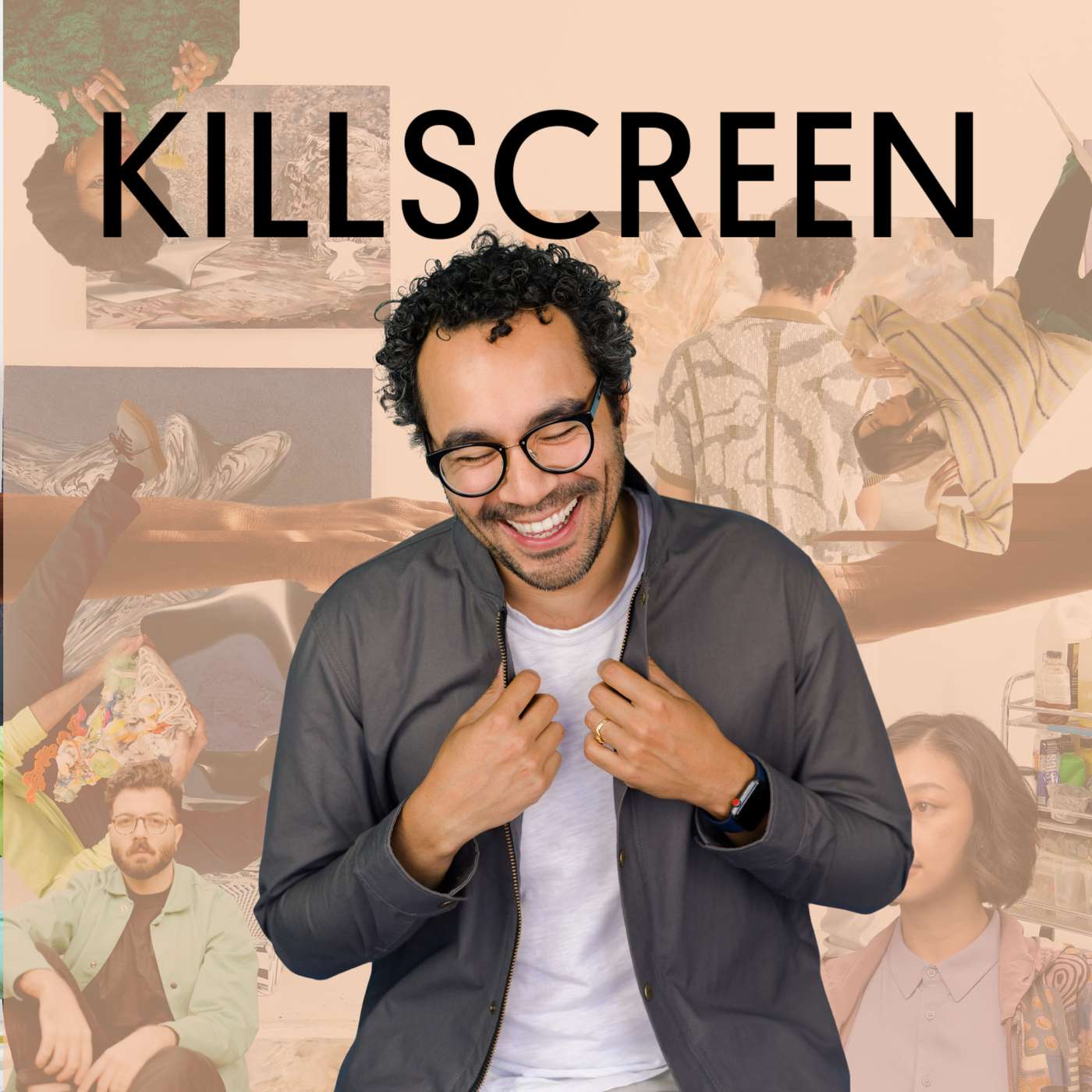
The Killscreen Podcast
by Jamin Warren
Join host Jamin Warren on conversations with someone of the most unique and experimental artists, designers, and thinkers in the worlds of games, play and cultureJamin Warren founded Killscreen and has produced events such as the Versions conference for VR arts and creativity, in partnership with NEW INC. Warren also programmed the first Tribeca Games Festival, the groundbreaking Arcade at the Museum of Modern Art, and the Kill Screen Festival, which Mashable called "the TED of videogames." Additionally, he has served as an advisor for the Museum of Modern Art's design department, acted as cluster chair for the Gaming category for the Webbys, and hosted Game/Show for PBS Digital Studios.
-
27
Can Art Fight Climate Change? Kara Stone & Joshua Dawson on Solar Servers, Degrowth, and Making Work in a Crisis
What does it cost—materially, ethically, psychologically—to make digital art about the climate crisis?I brought together two artists who are building things inside the very systems they're critiquing. Kara Stone is a game designer based in Calgary who runs Solar Server, a solar-powered web server hosting low-carbon games from her apartment balcony. Her latest game, Known Mysteries, is set in a near-future Alberta where oil and tech have fused into something indistinguishable. Joshua Ashish Dawson is a speculative designer and filmmaker who builds fictional climate futures from CGI and live action — ghost towns in the Atacama Desert, deregulated water systems, server farms built from the copper that destroyed the communities they replaced.In this conversation, we get into what geography gives you that abstraction doesn't, whether the medium is complicit in what it critiques, and how both of them stay sane while making work about catastrophe.(00:00) - Welcome and Format (00:51) - Tech Supply Chains and Climate (02:29) - Meet Kara and Her Path (05:08) - Solar Server Explained (09:15) - Designing Known Mysteries (15:59) - Aesthetics and Constraints (18:42) - Meet Joshua and Next Steps Hosted by Jamin Warren. Music by Nick Sylvester.Subscribe to Killscreen for unlimited access to Jamin's writing and the archive at killscreen.com, member-exclusive newsletters and events. I love hearing from you! Email your questions and thoughts to [email protected] Please consider supporting independent media! ★ Support this podcast ★
-
26
100 Strangers, One Controller: Making asses.masses with Patrick Blenkarn & Milton Lim
Patrick Blenkarn and Milton Lim are the Canadian theater-makers behind asses.masses — an eight-hour live RPG where an audience shares a single controller to guide a group of unemployed donkeys fighting to reclaim their labor from machines. It's toured from Helsinki to Los Angeles, and after 55 performances, no two shows have ever gone the same way.In this conversation, we talk about how they built the game from YouTube tutorials in a 300-seat theater with no budget, why donkeys became their central symbol (the answer involves a 15th-century woodcut, the global skin trade, and four years of development), and how they designed a game that assumes no single person holds all of the answers — on purpose.We also get into the political stakes of a work that keeps touring as the conversation around AI and labor keeps sharpening around it.Read my full piece on asses.masses at killscreen.com, and subscribe to the Killscreen newsletter for new writing on games and culture every Tuesday and Thursday.Hosted by Jamin Warren. Music by Nick Sylvester.Subscribe to Killscreen for unlimited access to Jamin's writing and the archive at killscreen.com, member-exclusive newsletters and events. I love hearing from you! Email your questions and thoughts to [email protected] Please consider supporting independent media! ★ Support this podcast ★
-
25
Vadim Nickel Is Waiting for Games to Hear Themselves
What does it mean to really listen to a game? Vadim Nickel is a researcher and game developer at Concordia University who studies exactly that question. His recent survey of sound-first games—titles where music and sound drive the action rather than just accompany it—turns up only 43 examples across nearly four decades of game history. That scarcity is itself the story. We talk about why the tools to make these games have only recently caught up to the ambition, what film sound theory can teach us about how players hear, and why the most interesting territory in game audio might not come from games at all—but from soundwalks, acoustic ecology, and the experimental music practices of R. Murray Schafer and Pauline Oliveros.Want the full conversation? Please consider supporting independent media! ★ Support this podcast ★ (00:00) - Listening to Games (00:54) - Vadim’s Origin Story (04:53) - Surveying Sound First Games (07:28) - Tech Barriers and Audio Tools (10:33) - Peripherals and Movement Hosted by Jamin Warren. Music by Nick Sylvester.Subscribe to Killscreen for unlimited access to Jamin's writing and the archive at killscreen.com, member-exclusive newsletters and events. I love hearing from you! Email your questions and thoughts to [email protected]
-
24
The Body Is the Controller: Symoné on Circus, Memory, and Live Play
Symoné is a British-American interdisciplinary artist working at the intersection of circus, dance, and game technologies. Her piece Nullspace Motel is a one-hour live performance where audience members are pulled from their seats to play a custom video game — and what they do shapes the story unfolding on stage in real time.In this conversation, we talk about how a childhood encounter with Katamari Damacy cracked open her sense of what games could be, why she designs explicitly for people who think games aren't for them, and what it means to put a spotlight on a single player in front of seventy strangers. We also get into the origins of Nullspace — a 60-page Google Doc called "Performance and Video Games" — and why she believes the most meaningful thing a game can do has nothing to do with winning.If you want the full conversation — including a deep dive into game time, duration, the politics of accessibility, and what Beau Ruberg's Video Games / Avant-Garde meant for this work — that's available for Killscreen members. Please consider supporting independent media! ★ Support this podcast ★ (00:00) - Meet Symoné and Nullspace Motel (01:24) - From Anthropology to Circus (06:24) - First Big Stage Rush (09:12) - Games That Changed Everything (16:28) - Designing Audience Play Hosted by Jamin Warren. Music by Nick Sylvester.Subscribe to Killscreen for unlimited access to Jamin's writing and the archive at killscreen.com, member-exclusive newsletters and events. I love hearing from you! Email your questions and thoughts to [email protected]
-
23
Dance Moms Trained a Generation to Perform for Algorithms
Competition dance trained young girls to hold their bodies in anticipation of judgment—to perform flawlessly, make difficulty look effortless, and measure themselves in real time against a crowd.TikTok rewarded all of that. This was not a coincidence.In this episode, I'm writing about Maya Man's StarQuest, a lecture-performance I saw at LA Dance Project—a work built from 111 AI-generated eight-second clips, each manually restaged from screenshots of Dance Moms episodes, generated using Google's Veo model, and shuffled endlessly by a custom app that never plays them in the same order twice.The piece traces a throughline from competition dance to the algorithmic logic of social media—and then turns the camera on the artist herself. When Man tried to generate a mixed-race dancer to represent her own body, the model couldn't do it. Through that failure, she found her real role in the work: not dancer, but coach. The same relationship she'd been examining in Abby Lee Miller. The same one running the internet.I also get into Ted Chiang's argument about AI consciousness and suffering, what it means to command something that performs on your behalf, and whether the act of prompting an AI model is, in some small way, a rehearsal of the same demanding absolutism the work sets out to critique. Also, exploding video game avatars.If this kind of cultural criticism is your thing, I write about it every week at Killscreen—experimental games, interactive art, and the questions interactive media is quietly raising about how we live. (00:00) - AI Consciousness Doubts (00:36) - Suffering and Moral Agency (01:22) - Seeing Star Quest Live (02:48) - Dance Moms to Data Bodies (03:54) - Building the AI Clip Machine (04:54) - Coaching the Uncanny Performers (06:18) - What We Owe Our Creations Hosted by Jamin Warren. Music by Nick Sylvester.Subscribe to Killscreen for unlimited access to Jamin's writing and the archive at killscreen.com, member-exclusive newsletters and events. I love hearing from you! Email your questions and thoughts to [email protected] Please consider supporting independent media! ★ Support this podcast ★
-
22
What If A Love Eternal's Story Doesn't Explain Itself?
Toby Alden is a game designer and DJ based in Los Angeles. Their platformer Love Eternal — released today — is an eight-year collaboration with their brother Sam that grew from an earlier, near-unbeatable freeware game called Love. In this conversation, Toby talks about making music and games in parallel, the surprising amount of work a single animation frame can do, why they let the story operate on dream logic, and what it feels like to hand a creative problem to someone you trust completely.(00:00) - Does the Story Have to Connect to the Mechanics? (01:55) - Cave Story, Solo Dev, and the Free-to-Play Asterisk (05:54) - DJing, Ambient Music, and Scoring Love Eternal with Emily Glass (15:17) - From Brutal Freeware to Family Drama: Building Love Eternal (22:58) - Making a Game With Your Brother for Eight Years (24:16) - Division of Labor and Improvising Scenes Together (25:21) - Why the Jump Feels Right: Animation, Physics, and Dream Logic (36:21) - Level Design by Instinct, Portland to LA, and Closing Hosted by Jamin Warren. Music by Nick Sylvester.Subscribe to Killscreen for unlimited access to Jamin's writing and the archive at killscreen.com, member-exclusive newsletters and events. I love hearing from you! Email your questions and thoughts to [email protected] Please consider supporting independent media! ★ Support this podcast ★
-
21
He Fed a Classic Anthropology Text To Make An AI Game. Here's What Happened.
In 1922, Bronislaw Malinowski’s Argonauts of the Western Pacific changed anthropology forever, introducing the world to "thick description" and the rigors of deep fieldwork. A century later, researcher Michael Hoffman is bringing that text into the future.In this episode, Jamin Warren sits down with Hoffman—a computer scientist and anthropologist at one of Germany’s premier supercomputing centers—to discuss his creation of the "Anthrogame." By feeding classic ethnographic texts into Large Language Models, Hoffman has built a playable Dungeon Master version of Trobriand society, where players navigate the complex social and economic rituals of the South Pacific.We explore the intersection of worldbuilding and fieldwork, the frustration of academic reach, and whether AI can turn dense monographs into "appetizers" that make us more curious about the real world. Is anthropology the original worldbuilding discipline? And why haven't game designers tapped into the "thick description" of real cultures?Host: Jamin Warren Guest: Michael Hoffman (Leibniz-Rechenzentrum)(00:00) - Introduction: The Decline of Reading (00:27) - Anthropology and AI: A New Frontier (01:27) - Michael Hoffman's Journey (02:40) - The Intersection of Anthropology and Game Design (28:57) - Cultural Representation in Pedagogy (29:33) - Malinowski and the Argonauts of the Western Pacific (34:47) - Developing an AI-Powered Text Adventure Game (46:22) - Challenges and Future of AI in Anthropology Hosted by Jamin Warren. Music by Nick Sylvester.Subscribe to Killscreen for unlimited access to Jamin's writing and the archive at killscreen.com, member-exclusive newsletters and events. I love hearing from you! Email your questions and thoughts to [email protected] Please consider supporting independent media! ★ Support this podcast ★
-
20
Doors That Don't Open: Simon Flesser on Constraint, Preservation, and Northern European Melancholy
Swedish studio Simogo spent their first five years making seven games—Year Walk, Device 6, Sailor's Dream—then two games over the next decade. Their new Legacy Collection preserves that early mobile work by recreating the iPhone itself inside modern platforms, complete with virtual gestures and motion controls. Simon Flesser talks about the decade-long conversation that led to preservation, the difference between remasters and ports, why doors that don't open are more interesting than the rooms behind them, and the specific Northern European melancholy that Americans mistake for horror. We discuss production constraints as creative fuel, the challenge of staying relevant across decades of game-making, and why no one would start a five-year project if they knew it would take five years.(00:00) - Introduction to Digital Preservation (00:33) - Samo's Legacy Collection and Preservation Challenges (05:25) - The Philosophy Behind Remasters and Ports (14:52) - Reflections on Time and Creative Evolution (28:09) - Production-Driven Game Development (29:16) - Architectural Influence in Game Design (35:08) - Intertextuality and Media Inspiration (44:23) - Creative Community and Future Plans ★ Support this podcast ★
-
19
Why This Game About the Haitian Revolution Has No Bullets
There's already a game about the Haitian Revolution. It's part of Assassin's Creed. You sneak around, you stab people, you "free the slaves"—and the game gives you an achievement notification.Dom Rabrun thinks that's bullshit.The Haitian-American painter and game designer is building Vèvè-Punk: Mind Singer, a game about the Haitian Revolution that refuses to let you pick up a weapon. Instead, you navigate Saint-Domingue's 16 racial classifications through dialogue trees, where saying the wrong thing to the wrong person can get you killed. Your protagonist isn't a soldier—she's a telepath and a singer. A free woman of color with zero strength, zero dexterity, and everything on the line.Dom's work sits at the intersection of Haitian Vodou symbolism, Basquiat's visual language, and the kind of thoughtful, conversation-driven game design you'd find in Disco Elysium. He's part of a generation of artists who grew up with games, studied painting, then realized that interactivity might be the best way to tell certain stories.But there's no lineage for what he's doing. Black filmmakers have Oscar Micheaux, Charles Burnett, Ava DuVernay. Black game designers? They're writing that history right now.In this conversation, we discuss why physical violence is the laziest choice in games, what it means to hold a controller and "control" someone, and how Basquiat's painting Glenn taught him to think about right-clicking on reality. We also tackle the deeper question: when you're making a game about historical trauma, about enslavement, about revolution—how do you do that without replicating the very dehumanization you're trying to critique?About Dom Rabrun: Dom's work merges technology, storytelling, and music into a cohesive creative system. Guided by his first-generation Haitian-American heritage, conservative Christian upbringing, and 15 years of experience in IT, he's developed a philosophy called "Vèvè-Punk," blending Haitian Vodou symbolism with futuristic Afro-Caribbean themes. In 2020, his video piece Dr. LaSalle, The Spider Queen, and Me earned first prize in a juried exhibition at the Phillips Collection. He was a 2022 fellow with Black Public Media, which is now executive producing his forthcoming video game. He lives and works in Hyattsville, Maryland.Killscreen treats games and interactive media as cultural artifacts worthy of the same analytical rigor as film, literature, and art. Subscribe wherever you get podcasts.Links: Dom Rabrun site and YouTube Read the full article.If you like what you're listening to, please consider becoming a member. ★ Support this podcast ★
-
18
Spending the Big Bucks
Big Buck Hunter made a quarter billion dollars by perfecting one thing: the tactile pleasure of pulling a trigger. This arcade shooter stripped hunting down to its essential tension—the moment before you fire, when your heart jumps and your hand trembles—then packaged it for drunk people in Brooklyn bars.We read Jason Fagone's 2010 profile of the game's creator George Petro, who understood that the gun itself had to be an object of desire, calibrated like an iPhone for immediate satisfaction. The piece examines how Buck Hunter became morally complex without trying to be: a game that presents animals as innocent, majestic creatures, then asks you to shoot them anyway while chatting with friends over beer. It's the gap between the act and the environment that creates its under-the-skin power.Fagone traces how an arcade game designed by non-hunters became the most lucrative shooter ever made, not through narrative sophistication but through understanding something older and weirder about human psychology. The sensation of shooting in Buck Hunter feels less like a video game and more like telling someone you love a lie—a tiny thrill followed by mostly subconscious regret, justified and moved past.Originally published in Kill Screen Issue #1, Spring 2010. Get a physical copy if you are so inspired!Music by Shiden Beats Music from PixabaySound Effect by Universfield from PixabaySound Effect by freesound_community from PixabaySound Effect by freesound_community from Pixabay ★ Support this podcast ★
-
17
The Dog, The War, & The Souls You Can't Save
War games let you be a hero. Alan Kwan's games make you helpless.In this conversation, we explore Scent—a 20-minute experience where you play a dog witnessing an unnamed war. No shooting. No saving. Just survival, souls, and the anxiety of watching violence you can't stop.Kwan spent seven years developing Scent with no budget, transforming it from a sci-fi project about his father losing vision into a meditation on human brutality from an animal's perspective. The result premiered at Tribeca Festival 2025 and earned an Honorary Mention at Prix Ars Electronica.But Scent is just the latest in a practice that's been questioning gaming's assumptions for over a decade. His previous game The Hallway sits in Hong Kong's M+ Museum permanent collection. Forgetter won multiple awards at international game festivals. His work has been exhibited everywhere from Ars Electronica to the Nam June Paik Art Museum.What we discuss:Growing up in Hong Kong game arcades without actually playing—just watching couples sit in racing games, viewing virtual Tokyo sunsets like they were on datesWhy he moved from filmmaking to experimental games and what cinema taught him about interactive storytellingThe design philosophy of "witness without power"—rejecting superhuman abilities and open worlds for fragile bodies and limited controlHow he creates psychological immersion through grass sounds and spatial audio instead of haptics and high-tech solutionsWorking on rails: why Scent is structured like a long cinematic take where you follow the dog's back through horrorThe philosophy of keeping violence off-screen—learning from Zone of Interest and the power of implied brutalityWhy he calls it an "interactive cinematic experience" more than a game, and what his Steam-native students think about that distinctionTeaching international students at SAIC who come from different gaming cultures—China's lack of console culture versus Western expectationsThe strange ethics of trigger boxes: if you don't start the game, the war won't happenHis interest in cloud streaming to remove Scent from Steam's expectations and make it browser-accessibleWhy short cinematic games should exist as a format—rejecting the assumption that meaningful experiences require 25+ hoursAlan Kwan is an artist working at the intersection of cinema and videogames. Originally from Hong Kong, he holds an MFA from MIT and currently teaches at the School of the Art Institute of Chicago. His experimental games and VR installations have been exhibited internationally and collected by major institutions including M+ Museum. His latest work, Scent, premiered at Tribeca Festival 2025.Mentioned in this episode:Scent (2025) - available at [link]Forgetter (2021) with Allison YangThe Hallway (M+ Museum collection)Bad Trip (2011-12) - his first lifelogging game projectZone of Interest (film)Prix Ars ElectronicaTribeca FestivalSchool of the Art Institute of Chicago (SAIC)Links:Alan's work: https://www.kwanalan.com/Killscreen newsletter: killscreen.com ★ Support this podcast ★
-
16
Why should we treat video games as archaeological sites?
What happens when you apply the "steely, assertive mind" of a professional archaeologist to the shifting digital landscapes of video games? In this episode, we sit down with Florence Smith Nicholls to discuss her transition from excavating Bronze Age Greece to conducting the first formal archaeological survey of Elden Ring.We explore the concept of inside-out research —diving deep into the "innards" of a game's server to map player traces—and discuss why the ephemeral nature of digital play requires a new movement called anticipatory archaeology.Key Discussion PointsFrom Fieldwork to Digital Spaces: Florence describes her journey from working on London construction sites as a heritage consultant to discovering the "archaeogaming" community on the Internet.The Elden Ring Survey: A deep dive into Florence’s "laborious" process of mapping the Church of Elleh using the player’s foot as a unit of measurement.Deciphering Player Traces: How bloodstains and messages left by "people who play videogames" serve as digital artifacts of human activity and server algorithms.Generative Archaeology Games: An exploration of procedural generation and games like Blue Prince and Outer Wilds that encourage players to role-play as interpreters of material culture.The Ethics of Recording: Why we must treat the "assemblage of play" (the player, hardware, and software) as a significant cultural form before it disappears into the ether.Mentioned in this EpisodeElden Ring (FromSoftware)Nothing Beside Remains (Florence Smith Nicholls)Blue Prince (Dogubomb)Curse of the Obra Dinn (Lucas Pope)The Assemblage of Play by T.L. TaylorNotable Quotes"I’m fascinated by how players can come up with emergent storytelling... mapping the digital landscape is a way to understand why these experiences were so important to us."Music by Nick Sylvester. Hosted by Jamin Warren.Please consider subscribing for more on the future of games, play, and culture. ★ Support this podcast ★
-
15
Silicon Valley in a Sand Trap with Sam Ghantous
The same silica that powers your GPU fills the sand traps at Augusta National. Artist Sam Ghantous joins us to discuss "your golf course made my GPU," his three-channel video installation that traces the geological origins of our digital obsessions.Ghantous admits he's afraid of hardware. Despite this—or because of it—he's spent the past year confronting the physical reality behind our screens. Using Unity and Unreal Engine not to make games but to interrogate them, he reveals how ultra-pure silica mined in North Carolina becomes both microchips and golf course sand. The work forces us to reckon with what he calls the "big sludge of media" that surrounds us—accessible on one hand, black-boxed on the other.We discuss his childhood moving between Oman, the Middle East, and North America, and how this itinerant experience shaped his understanding of sand's perpetual movement. He describes printing UV images onto silicon wafers—the raw material of microchips—creating what he calls "portals" framed by rings of sand scanned in his studio. Behind the cleared dust, ethereal reimaginings of Botticelli paintings emerge.The conversation toggles between pleasure and guilt, much like the two voices in his video work—a synthetic childlike inquisitor and the artist's own voice. We talk about Chinese sand dredgers "editing the map" at planetary scale, golfers trapped in bunkers, and future projects where "Hello World" might take millions of years to print in deep time computing."I'm not standing on some moral high ground," Ghantous tells us. "I'm struggling with the temptations, both for new things and for fascinating things, but also trying not to look at my phone more."Currently teaching at ETH Zürich, Ghantous hints at future works: games affecting one another across distances, sculptures bringing earthliness and computation together, seeking new languages for the consequences of our actions on other parts of the planet.This episode was hosted by Jamin Warren, founder of Killscreen. Music by Nick Sylvester.Thoughts? Guest suggestions? Email us at [email protected]. Killscreen is an arts and culture organization committed to advancing the practice of interdisciplinary play. Founded in 2010, we seek to drive the intersection of design, culture, and impact through cross-disciplinary collaboration to show the world why play matters. We want to break down the barriers that have traditionally segregated play and games from other creative disciplines and foster a diverse community of creators with ambassadorial relationships to the world around us.Sign up for our newsletter. ★ Support this podcast ★
-
14
Exploring the material culture of games with metalwork, jewelry, and a little bit of horror
Artist, jeweler, metalsmith, and art conservator Lauren Eckert shows us what it means to look at craftsmanship through a contemporary lens. Drawing from inspiration from the objects in video games, religious iconography, and classic science fiction VFX, Lauren’s work gives metals and jewelry a life on screen—and similarly, digital objects a physical life. Whether through wearable pieces or digital triptychs, Lauren’s projects make a space where past and future, alchemy and technology, collide. We had a great conversation with Lauren back in 2021 and have featured more of her work here.Photography by David Evan McDowell.This episode was hosted by Jamin Warren, founder of Killscreen. Music by Nick Sylvester.Thoughts? Guest suggestions? Email us at [email protected]. Killscreen is an arts and culture organization committed to advancing the practice of interdisciplinary play. Founded in 2010, we seek to drive the intersection of design, culture, and impact through cross-disciplinary collaboration to show the world why play matters. We want to break down the barriers that have traditionally segregated play and games from other creative disciplines and foster a diverse community of creators with ambassadorial relationships to the world around us.Sign up for our newsletter. ★ Support this podcast ★
-
13
How to design political games with a broken heart
Can games seep into life's political, social, and cultural realms? Across projects that fuse game development, filmmaking within game engines, LARP (live-action role play), and more, Mario Mu interrogates this question. The Croatian-born artist now lives in Berlin, where he researches games, labor, and memory. After a career illustrating for commercial brands such as Doodle Jump and publishing with Gestalten, Mario continues his independent creative practice, with all projects he thinks of as ‘extended gaming platforms.’In this talk, we spoke with Mario about his design process of games and live-action role-play experiences, how he incorporates research on politics and labor into his creative practice, and how he is shifting from commercial work to personal practice in the fine-art world.This episode was hosted by Jamin Warren, founder of Killscreen. Music by Nick Sylvester.Thoughts? Guest suggestions? Email us at [email protected]. Killscreen is an arts and culture organization committed to advancing the practice of interdisciplinary play. Founded in 2010, we seek to drive the intersection of design, culture, and impact through cross-disciplinary collaboration to show the world why play matters. We want to break down the barriers that have traditionally segregated play and games from other creative disciplines and foster a diverse community of creators with ambassadorial relationships to the world around us.Sign up for our newsletter. ★ Support this podcast ★
-
12
Sam and Andy Rolfes put the life in livesteam
Sam and Andy Rolfes self-describe their work as “overly navel-gazing, obsessed-with-layers, weird.” From visualizing songs by Lady Gaga and BLACKPINK to facilitating mind-bending, improvisational performances at MoMA, the duo are in a perpetual toggle between real life and the screen. Cleverly using VR, mixed reality, figurative animation, and motion capture tools to highlight the absurdity of life, dream up ironic characters, and make anti-capitalist statements, Sam and Andy discovered and perfected a digital fluency that's uniquely theirs. They also happen to be brothers. Sam and Andy sat down with us to speak about their 3D modeling software from childhood, why improv comedy is seminal for their practice, and the game they’re designing—fingers crossed, the first of many.
-
11
Danielle Brathwaite-Shirley creates game worlds from autonomous archives
What happens when games account for the players’ identities? Danielle Brathwaite-Shirley’s work does just this. Traversing game design, performance, and sound art, the London-born, Berlin-based artist constructs stratified game experiences that depend on the player’s privilege. Someone who identifies as Black and trans will have a distinct gameplay experience; someone who identifies as cis and white will have a different one. Being careful about access, Danielle tells us, helps keep the archive autonomous. Her work not only fills in the gaps and ruins in the current archive but builds an archive for the future—one that centers on the Black trans experience. Here, we speak with Danielle about the archive as an always-moving thing, why she’s attracted to low-fi aesthetics, and her new fascination with pirates.
-
10
Rachel Rossin creates entropy from infinity
How do we account for the tension between technology’s infinite, unrestricted promise and the impermanence of being human? Rachel Rossin interrogates this slippage. Floating between painting, VR worlds, holograms, and more, the Brooklyn-based artist carries with her the essence of what it means to be alive. Rossin’s work meditates on and pushes the boundaries of human perception, the tenderness, and the vulnerability of empirical experience. Here, she speaks with us on her childhood underwater, the illusory nature of immersive technology, and the need to return to entropy. Rachel’s new project, I’m my loving memory, is in Rhizome’s traveling show, World on a Wire.
-
9
Salome Asega on cultivating the ecosystem of art and technology
Embodied” may be the best word to describe the projects of artist, researcher, and educator Salome Asega. She has created VR experiences that evoke the channeling of diasporic spirits, a Kinect lesson that reinstates a dance form’s history, and a roulette wheel that sends participants to lesser-known corners of a world-famous museum. Experiences that physically engage the body are clearly at the heart of the artist, researcher, and educator’s work. Trained in creative technology and social practice, Salome’s work also centers the communities she is part of. Based in Brooklyn’s Bed-Stuy neighborhood, she’s a director at POWRPLNT, a digital art ‘collaboratory’ in neighboring Bushwick, where she also leads creative workshops. Salome told us about her hyper-real upbringing in Las Vegas, the trials of working within the uncharted territory of art and tech, and the power for participatory work to destabilize the long-held role of the artist.
-
8
Gayatri Kodikal excavates the ruins of history, time, and play
On a walk around Old Goa, artist Gayatri Kodikal chanced upon an archaeological dig in progress. Her curiosity swelling, she jumped over the fence to see what was on the other side: a mysterious severed hand thought to belong to an ancient Georgian queen. This object spearheaded a multi-year, multi-pronged project spanning research, storytelling, forensics, and game-making. The Travelling Hand, inspired by this archaeological mystery, takes players on a labyrinthine journey through time, space, and civilization, to unveil the story behind this ancient artifact. Part of an ongoing project, a meditation on the methodology of game-making in critical practice, The Travelling Hand offers a reminder to the struggle of holding onto heritage, identity, and ethnicity. Gayatri walked us through her immersive installation at TENT Rotterdam—the latest iteration of The Travelling Hand—which is on view until February 17th, 2021. Made up of a constellation of stories about religion, colonial/imperial power, archaeology, geopolitics, marginal histories, and resistance, the game board is set for three players. Each play is unique and lasts one hour, and there are multiple storylines to explore at the same time. Here, Gayatri speaks with us about the simultaneous specificity and freedom that comes with working in games, disrupting western notions of time and progression, and how the concept of shapeshifting guides her work.
-
7
Yasmin Elayat believes art drives innovation
Yasmin Elayat is a self-proclaimed ‘hybrid’—she’s a new-media documentarian, a creative technologist, a collaborative storyteller, and a spatial designer. She co-created #18DaysinEgypt, a collaborative documentary centered on the Egyptian revolution; co-directed an interactive documentary set within the New York City subway system, Blackout, and Zero Days, a VR film about cyber warfare that won an Emmy for Original Approach in Documentary. Along with James George and Alexander Porter, Yasmin is also the Co-Founder of Scatter, a New York-based entertainment studio that creates tools and collaborates with artists to ‘volumetric filmmaking:’ storytelling through immersive technologies. Scatter’s Depthkit allows its users to create accessible storytelling experiences through 3D capture. Here, Yasmin tells us about how working in a museum space led her to spatial and volumetric filmmaking, demystifying the role of creative technologist, and what it’s like to run a tech company fueled by creativity—one that continually redefines itself alongside its community.
-
6
Nicole He on talking to computers
Nicole He is a creative technologist whose work lives in the space between video games, physical computing, and witty conceptual art. With experience advising projects for Kickstarter and imagining projects for Google, she’s programmed AI to converse with Billie Eilish for Vogue, physical sensors that help users swipe on a dating app and a Twitter bot that regularly photographs her growing fig plant. As Nicole embarks on two long-term interactive projects—one is an arts-funded experimental game that uses voice technology, and the other is a commercial indie game—she finds herself more and more interested in immersing herself within the world of games. Here, we speak with Nicole about what distinguishes the industry of video games and that of creative technology, the particularities of one’s voice as a method to activate technology, and how behind every digital project is a living, breathing human.
-
5
Monument Valley's Lea Schönfelder on designing within constraints
When we look at our phone screens, we typically aren’t thinking about the borders. We don’t notice the edges of our phones and how those boundaries limit our experience. It’s no wonder Apple’s crowning achievement for the iPhone X was adding a teeeeny bit of space to the edge of the phone. But that little frame for designers is everything. Things you could do on a giant 4K screen in your living room, you simply can’t do on your mobile phone. ustwo games knows these boundaries intimately. They are a mobile games design studio housed inside of a larger global digital product studio called ustwo. The design shop ustwo is based in London and was initially known for their client work for folks like Google, Ford, Samsung and more. So when they started ustwo games six years ago, there was already a lot of accrued internal knowledge about how to work with small screens. ustwo games’ Monument Valley was a smash hit for a few reasons. It’s delightfully colored. It uses space in a novel way. And most importantly, it’s simple! That’s not a pejorative. It’s very easy to understand almost immediately. In Monument Valley, you’re a silent princess on a quest for forgiveness. In Monument Valley 2, you play as a mother and daughter on an adventure together. We spoke to Lea Schönfelder, a game designer on Monument Valley 2, about the differences between games and experiences, the difficulty of designing something easy, and how limits foster elegant design. -- Resources: + ustwo games + Monument Valley 1 & 2 Host: Jamin Warren (@jaminwarren) -- Credits: Anthony Martinez, producer Nick Sylvester, music -- About Killscreen Killscreen is an arts and culture organization committed to advancing the dialogue and practice of games and play. Founded in 2010, we seek to drive the intersection of games, play, and culture through cross-disciplinary collaboration to show the world why play matters. We want to break down the barriers that have traditionally segregated play and games from other creative disciplines and highlight creators with ambassadorial relationships to the world around us. Follow us: Website, Twitter, Instagram
-
4
Videogames, conspiracy theories and the American imagination
p>-- We recorded this long before QAnon took hold and the President of the United States was advising people to inject disinfectant into our veins. Since then the relevance of conspiracy theories has become more important. This was recorded live in 2016 at the Killscreen Festival. When I moved to California from New York a couple years ago, I’ll never forget driving through Texas. It was huge and expansive. It was quiet. It was dark. It was mysterious. And for anyone else who’s explored America, you know, it’s a really really weird place. For this podcast, I staged a conversation between two people who are making beautiful work at the intersection of magical realism and Americana: Jake Elliott of Cardboard Computer, the studio behind Kentucky Route Zero; and Joseph Fink, creator of the podcast Welcome To Night Vale. Jake’s approach to mystery made him a perfect pair for Joseph Fink, co-creator the podcast Welcome to Night Vale. It’s about a fictional radio broadcast reporting on the strange events that occur within it. It’s been describer as "caught somewhere between Weird Twitter and 'Tales of the Unexplained'.” -Jamin Warren For more, check us out at Killscreen.com -- Resources: Cardboard Computer | Kentucky Route Zero Welcome to Nightvale Number Stations Credits: Anthony Martinez, producer Nick Sylvester, music -- About Killscreen Killscreen is an arts and culture organization committed to advancing the dialogue and practice of games and play. Founded in 2010, we seek to drive the intersection of games, play, and culture through cross-disciplinary collaboration to show the world why play matters. We want to break down the barriers that have traditionally segregated play and games from other creative disciplines and highlight creators with ambassadorial relationships to the world around us. Follow us: Website, Twitter, Instagram
-
3
The Stanley Parable's Davey Wreden on breaking the fourth wall
When people ask what it means to make a game, they typically point to a standard set of devices: points, scores, levels, and so on. It’s rare that story makes the list. And yet, gamemaker Davey Wreden was able to move the medium to new heights with a deep exploration of story in his breakout freshman title The Stanley Parable, a tale of an office worker who veers from the script. With The Beginner’s Guide, Wreden flipped the post-modern switch with a fourth-wall breaking effort that evoked Cervantes and his favorite director Charlie Kaufman. We talked to Wreden about his design process, why games need an emotional core, and why film school isn’t for everybody. -- Resources: + The Stanley Parable + The Beginner's Guide Host: Jamin Warren (@jaminwarren) -- Credits: Anthony Martinez, producer Nick Sylvester, music -- About Killscreen Killscreen is an arts and culture organization committed to advancing the dialogue and practice of games and play. Founded in 2010, we seek to drive the intersection of games, play, and culture through cross-disciplinary collaboration to show the world why play matters. We want to break down the barriers that have traditionally segregated play and games from other creative disciplines and highlight creators with ambassadorial relationships to the world around us. Follow us: Website, Twitter, Instagram
-
2
MoMA's Paola Antonelli on thinking of games as design objects
Well, we know what videogames are, but what does it mean to be a videogame designer? I posed this question to Paola Antonelli, a force in the world of modern art. She is currently the Senior Curator of the Department of Architecture & Design as well as the Director of R&D at The Museum of Modern Art (MoMA) in New York City. What I love about Paola is how expansive her view of design is. She pushed the museum to expand design objects like Eames chairs into the digital domain. Under her guidance, they acquired everything from the @ symbol, and typefaces like Helvetica, to the original set of emoji released in Japan in 1999. In 2012, the museum did something different. They selected 14 videogames for their permanent collection. Some games you’ll know. The Sims. Pac-Man. Some games you might not. For example, Passage, Jason Rohrer’s game about life, death, and marriage. -Jamin Warren -- Resources: + Architecture and Design at MoMA + Applied Design exhibition Host: Jamin Warren (@jaminwarren) -- Credits: Anthony Martinez, producer Nick Sylvester, music -- About Killscreen Killscreen is an arts and culture organization committed to advancing the dialogue and practice of games and play. Founded in 2010, we seek to drive the intersection of games, play, and culture through cross-disciplinary collaboration to show the world why play matters. We want to break down the barriers that have traditionally segregated play and games from other creative disciplines and highlight creators with ambassadorial relationships to the world around us. Follow us: Website, Twitter, Instagram
No matches for "" in this podcast's transcripts.
No topics indexed yet for this podcast.
Loading reviews...
ABOUT THIS SHOW
Join host Jamin Warren on conversations with someone of the most unique and experimental artists, designers, and thinkers in the worlds of games, play and cultureJamin Warren founded Killscreen and has produced events such as the Versions conference for VR arts and creativity, in partnership with NEW INC. Warren also programmed the first Tribeca Games Festival, the groundbreaking Arcade at the Museum of Modern Art, and the Kill Screen Festival, which Mashable called "the TED of videogames." Additionally, he has served as an advisor for the Museum of Modern Art's design department, acted as cluster chair for the Gaming category for the Webbys, and hosted Game/Show for PBS Digital Studios.
HOSTED BY
Jamin Warren
CATEGORIES
Loading similar podcasts...
URL copied to clipboard!