
PODCAST · history
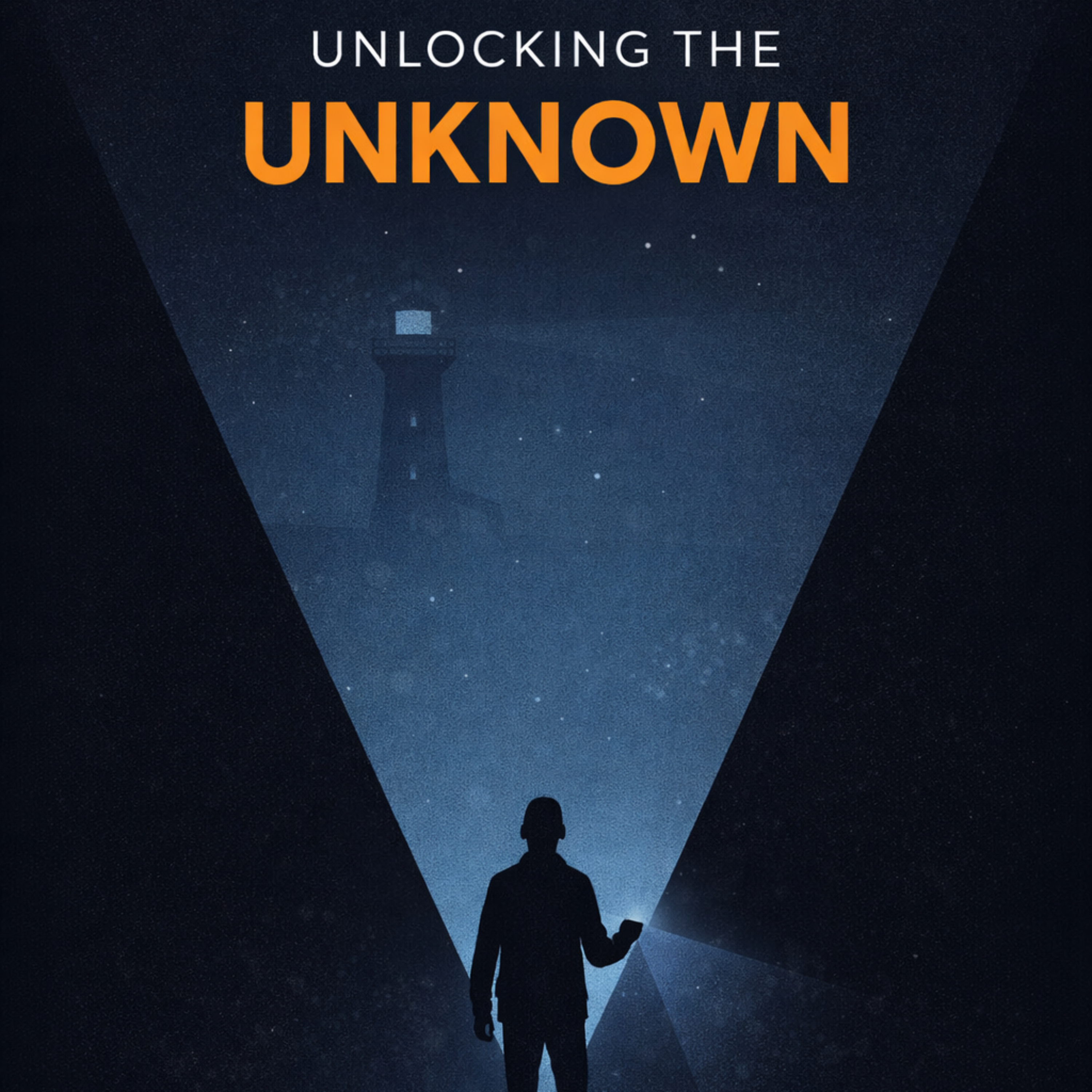
Unlocking the Unknown
by Atlas Gray
From vanished explorers and buried treasure to ancient legends and unexplained phenomena, each episode takes you deep into the world’s most compelling enigmas. We investigate the evidence, examine the theories, and follow the trails left behind by time.If you’re fascinated by lost civilizations, daring expeditions, unsolved disappearances, and the secrets history tried to forget — you’re in the right place.The truth is out there. Let’s go find it.
-
87
The Radioactive Water That Dissolved His Jaw
The 1932 Annual Report of the Federal Trade Commission provides a comprehensive summary of the agency’s regulatory activities and statutory duties during the fiscal year. As a quasi-judicial body, the Commission focused on preventing unfair competition and investigating potential antitrust violations across various industries, including power utilities and chain stores. The text details the inner workings of the organisation, highlighting its efforts to curb fraudulent advertising and oversee trade-practice conferences intended to elevate business standards. It also records specific investigations into the cottonseed, peanut, and cement industries, reflecting the economic pressures of the era. Furthermore, the report chronicles legal proceedings, personnel changes due to budget reductions, and the ongoing administration of the Clayton and Export Trade Acts. Notably, it emphasizes the Commission's role in protecting consumer interests by ensuring transparency and honesty in the national marketplace.
-
86
The Deadly 1919 Boston Molasses Flood
On 15 January 1919, the Great Boston Molasses Flood occurred when a massive industrial tank burst in the city's densely populated North End. These sources document the catastrophe, which released a 15-to-40-foot wave of sticky liquid that travelled at 35 miles per hour, killing 21 people and causing extensive destruction to buildings and infrastructure. Historical records and newspaper accounts detail the structural defects of the container and the unseasonably warm weather that contributed to the disaster. Modern scientific research explores the fluid dynamics and viscosity of the spill, while legal historians examine the landmark lawsuit that followed. This litigation highlighted critical issues regarding big business accountability, immigration, and the subsequent implementation of stricter industrial safety standards. Beyond the technical data, the documents preserve the personal histories of the victims, many of whom were working-class laborers and immigrants.
-
85
How the Great Stink built London's sewers
the history and engineering of the London sewerage system, focusing specifically on the Great Stink of 1858 and the subsequent construction of the Crossness Pumping Station. This environmental crisis, caused by the overwhelming scent of untreated waste in the River Thames, prompted Sir Joseph Bazalgette to design a revolutionary network of intercepting sewers to safeguard public health. A primary component of this system was the Crossness Pumping Station, a Victorian industrial masterpiece famed for its ornamental cast ironwork and massive steam-driven beam engines. Although decommissioned in the mid-20th century, the site has undergone extensive restoration and now serves as a museum highlighting the city's sanitary evolution. Together, these texts illustrate how Victorian civil engineering successfully eradicated cholera outbreaks and created a durable infrastructure that still supports modern London.
-
84
Surgical speed and the Norse collapse
the dramatic evolution of surgery during the 19th century, a period often referred to as the "age of agony". Initially, surgeons like Robert Liston were celebrated for their extreme speed and physical strength, traits necessitated by the absence of painkillers. However, this focus on velocity often led to grisly accidents and high mortality rates, as practitioners operated in unsterile environments with blood-stained tools. The narrative shifts with the pioneering work of Joseph Lister, who championed antiseptic techniques to combat the rampant infections that claimed many lives. Alongside the introduction of anaesthesia, these advancements transformed surgery from a hazardous public spectacle into a sophisticated medical discipline. The texts also highlight the heritage of the British Association of Urological Surgeons, which preserves the history of these medical milestones through its virtual museum.
-
83
The 15 Minute Solar Storm Warning
the Carrington Event, a pair of massive solar storms that struck Earth in late August and early September 1859. Triggered by a monumental solar flare observed by astronomer Richard Carrington, the disturbances induced powerful electrical currents that caused telegraph systems to malfunction, spark, and even catch fire. Despite these hazards, some operators discovered they could transmit messages using only the natural geomagnetic energy surging through the wires. The phenomenon also produced vivid, crimson auroras visible at tropical latitudes, which were so brilliant they illuminated the night sky like dawn. Modern scientific analysis of these primary accounts suggests that a similar geomagnetic superstorm today would cause trillions of pounds in damage to our global power grids and satellite networks. Together, these sources provide a comprehensive overview of the most significant space weather event in recorded history through both eyewitness testimony and academic study.
-
82
The Age of Agony: Surgery and Speed Before Anesthesia
the perilous landscape of 19th-century surgery, a period defined by extreme physical trauma and high mortality rates. Before the widespread adoption of anaesthesia and sterile techniques, surgeons like Robert Liston prioritised incredible speed to minimise patient agony, though this haste often resulted in gruesome accidents. The texts highlight the transformative impact of Joseph Lister’s germ theory, which replaced the era’s "bloody hands and dirty knives" with life-saving antiseptic and aseptic practices. Further advancements, such as the discovery of blood groups and the invention of the cystoscope, are credited with evolving medicine from a crude "butchering art" into a sophisticated science. Additionally, the archives from the British Association of Urological Surgeons offer a broader historical context, documenting the specific progression of urological tools and famous clinicians. Together, these documents illustrate how the resolution of pain, infection, and blood loss fundamentally revolutionised modern operative care.
-
81
The 1917 Halifax Harbour Explosion
The catastrophic 1917 Halifax Harbour Explosion and its place within the broader history of massive non-nuclear detonations. The primary texts describe how the collision of the SS Mont-Blanc and the SS Imo triggered a three-kiloton blast that devastated the city, claiming over 1,700 lives and leaving thousands homeless. Accompanying accounts highlight the extraordinary relief efforts from nearby communities and the city of Boston, which established a lasting international bond through medical and financial aid. Additionally, the collection includes a comprehensive list of other historical explosions caused by gunpowder, chemical accidents, and wartime sabotage across the globe. Together, these records provide a detailed overview of the humanitarian response, the social impact on diverse local communities, and the technical magnitude of one of the world's largest man-made disasters.
-
80
Why the Rosetta Stone outlasts the cloud
The Rosetta Stone, unearthed in 1799, served as the essential key for Thomas Young and Jean-François Champollion to finally decode ancient Egyptian hieroglyphs. By comparing the stone's Ancient Greek text with its Demotic and pictorial scripts, scholars transformed our understanding of a lost civilization. Today, this iconic artifact is at the centre of a heated repatriation debate as Egypt seeks its return from the British Museum. Beyond this historical conflict, modern researchers are exploring spectrograms and digital preservation to ensure that human languages and sounds do not face permanent extinction. These sources collectively highlight the fragile nature of cultural heritage and the persistent effort to keep the voices of the past alive through technology and linguistic study.
-
79
How rogue commanders stalled the Nazi invasion
These sources detail the 1940 German invasion of Norway and the pockets of local resistance that emerged during the initial chaos. A primary focus is the Battle of Drøbak Sound, where Colonel Birger Eriksen’s command of Oscarsborg Fortress led to the sinking of the cruiser Blücher, a victory that delayed the capture of Oslo and allowed the Norwegian government to escape. The texts also highlight less conventional efforts, such as Thor Olaf Hannevig organizing a volunteer regiment to conduct delaying actions and the 25-day defense maintained at Hegra Fortress. While these individual operations did not ultimately halt the German occupation, the sources emphasize their strategic importance in preserving national leadership and demonstrating the impact of decisive local command. Collectively, the records provide a historical overview of how independent military units utilized aging coastal defenses and guerrilla tactics to challenge a superior invading force.
-
78
The Carrington Event: The Solar Superstorm of 1859
the Carrington Event, a historic solar superstorm that occurred in late 1859 after astronomer Richard Carrington observed a massive solar flare. The documents describe how this phenomenon triggered intense geomagnetic disturbances, resulting in vivid auroras visible at tropical latitudes and causing significant failures in the telegraph networks of the era. Technical reports highlight that the storm induced its own electrical current in wires, allowing some operators to communicate without batteries while others faced equipment fires and electric shocks. Modern analysis within these texts warns that a similar space weather event today would be catastrophic for our technological infrastructure, potentially crippling satellite communications and global power grids. Experts estimate that such a disaster could result in economic losses reaching into the trillions of pounds and take months or even years to resolve.
-
77
Front Line Survival: Ben Major’s Ultimate Military Test
This text outlines a documentary series featuring Ben Major, a former soldier and survivalist who explores the incredible endurance of World War II heroes. Each episode depicts Major retracing the paths of legendary figures like Jan Baalsrud, who survived the freezing Arctic, and Alexey Maresyev, a pilot who crawled through the Russian taiga after being shot down. The series also highlights Hiroo Onoda, the Japanese officer who held out in the Philippine jungle for decades, and Freddie Spencer Chapman, a British guerrilla specialist in Malaya. By using historical re-enactments and practical demonstrations, Major illustrates the military tactics, primitive medicine, and psychological resilience required to survive in hostile environments. Ultimately, the sources serve as a tribute to the indomitable human spirit displayed by soldiers who faced extreme isolation and injury.
-
76
The Vemork Sabotage and the Quest for Heavy Water
These sources document the Allied sabotage operations in Nazi-occupied Norway aimed at preventing the development of a German nuclear weapon. The primary objective was the Vemork hydroelectric plant, which produced "heavy water," a substance essential for moderating nuclear fission in German reactor designs. Key missions included the tragic failure of Operation Freshman, where British gliders crashed, and the legendary success of Operation Gunnerside, led by Norwegian commandos like Joachim Rønneberg. Later efforts involved the strategic sinking of the ferry SF Hydro to destroy remaining stocks of the chemical being transported to Germany. Personal accounts from the saboteurs reveal that many were unaware of the atomic bomb’s existence during their mission, viewing the raid simply as a high-priority military necessity. Recent archaeological excavations and historical analyses further explore the physical remains of the plant and the true extent of the German nuclear threat.
-
75
The Deadly 1814 London Beer Flood
On 17 October 1814, the London Beer Flood occurred when a massive wooden vat at the Horse Shoe Brewery ruptured, releasing a wave of porter that stood up to 15 feet high. This torrent destroyed neighbouring buildings in the impoverished St Giles rookery, resulting in the deaths of eight people, several of whom were attending a funeral wake in a basement. Although the flood caused immense destruction, a jury eventually ruled the disaster an "act of God," which legally absolved the brewery of negligence. Consequently, the company escaped paying compensation and even received a tax refund from Parliament for the lost alcohol. Modern historians often highlight this event to debunk popular legends of mass drunkenness and to illustrate the lack of industrial safety regulations during the era. Following the tragedy, the brewing industry gradually replaced dangerous large-scale wooden barrels with more stable lined concrete tanks.
-
74
Norway as Hitler's zone of destiny
These sources examine the lives and legacies of prominent Norwegian resistance fighters during the German occupation in World War II. The biographies of Gunnar Sønsteby and Max Manus highlight their expertise in sabotage, undercover operations, and the high-level decorations they received for their bravery. Complementary records detail the vital role of the Milorg group’s secret radio network and the risks faced by its operators in maintaining communications. Beyond the battlefield, the texts discuss the post-war transitions of these figures into business and public life, where they worked to preserve historical memory. Finally, the inclusion of a digital prisoner archive underscores a broader effort to document the identities of those persecuted by the Nazi regime. Together, these materials provide a comprehensive look at the Norwegian home front through personal narratives and institutional record-keeping.
-
73
The Woman Who Smiled at Dive Bombers
These sources document the vital contributions and immense sacrifices of the Norwegian merchant fleet, known as Nortraship, during World War II. Following the 1940 German invasion, Norway’s government-in-exile requisitioned over 1,000 vessels, forming the world's largest shipping company to supply the Allies with essential oil and materials. The texts highlight the bravery of individual sailors like Margit Johnsen, who maintained morale under heavy fire during dangerous "death convoys" to Malta. Personal testimonies further detail the harrowing experiences of crew members surviving torpedo attacks, freezing lifeboats, and the psychological toll of the conflict. Collectively, the materials emphasize that the Allied victory, particularly in the Battle of Britain, depended heavily on the courage of these "war sailors." Historical research and modern media portrayals continue to honor this legacy, ensuring their proportional casualty rate, among the highest of the war, is not forgotten.
-
72
Why Britain Burned Neutral Copenhagen
In 1807, Great Britain launched a devastating pre-emptive strike against neutral Denmark-Norway to prevent its naval fleet from being seized by Napoleon's expanding French Empire.The British military besieged Copenhagen, utilizing terrifying new Congreve rockets and heavy artillery in an indiscriminate bombardment that killed hundreds of civilians and left much of the capital in ashes.Upon Denmark's surrender, the British confiscated their entire navy, which pushed the neutral twin realms into a formal alliance with France and triggered the years-long maritime conflict known as the Gunboat War.
-
71
From bacon sandwiches to the Double Cross
This notebook documents the Danish resistance's courageous sabotage campaigns and their remarkable rescue of nearly all Danish Jews to safety in neutral Sweden.It details the exploits of British intelligence officer George Alexander Hill, who undertook high-stakes operations in revolutionary Russia and later coordinated wartime sabotage and propaganda with the Soviet NKVD.Finally, it highlights Wulf Schmidt (Agent "Tate"), a pivotal double agent in the Double-Cross System who successfully deceived his German handlers about Allied minefields and D-Day plans.
-
70
How Denmark Outmaneuvered the Gestapo in 1943
In October 1943, ordinary Danish citizens and resistance networks spontaneously mobilized to hide and evacuate over 7,000 Jews to neutral Sweden after learning of an impending Gestapo roundup. While traditionally celebrated as a purely selfless rescue, modern scholarship highlights the active agency of the escaping Jews and the commercial reality of the crossings, which cost an estimated 20 million kroner. Despite the deep financial and emotional tolls, this collective defense of democratic values and human rights resulted in an extraordinary 98.5% survival rate for Denmark’s Jewish population.
-
69
The Polish Army That Enlisted a Bear
Following the 1939 Soviet invasion of Poland, hundreds of thousands of citizens were deported to labour camps before a 1941 amnesty allowed for their release and the formation of Anders' Army. This military force, known as the 2nd Polish Corps, fought with high distinction during the Italian Campaign, most notably securing victory at the Battle of Monte Cassino. After the war, many veterans were unable to return to their communist-occupied homeland and instead settled in Britain and Canada. In London, Ontario, these former combatants established the Polish Hall at 80 Ann Street to serve as a cultural anchor for their displaced community. Current efforts seek heritage designation for this building to preserve the legacy of the veterans and their difficult journey from the Gulags to Western exile. Other fragments within the text mention technical data regarding Soviet energy and power during the conflict.
-
68
The Danish secret army disguised as police
The collapse of the Danish cooperation policy in August 1943 led to a direct German military takeover, the deposition of the Danish government, and the systematic disarmament and internment of Denmark's regular army.Under Operation Möwe on 19 September 1944, German security forces arrested nearly 2,000 Danish police officers, deporting them under brutal winter conditions to Nazi concentration camps including Neuengamme and Buchenwald.Exiled refugees formed the Danish Brigade in Sweden (Danforce) to assist in the country's May 1945 liberation, subsequently returning to help reconstruct the Danish army and establish the voluntary Home Guard.
-
67
The Scuttled Navy and the Jewish Rescue
These sources chronicle the widespread service of thousands of Danish sailors and soldiers in Allied forces, ranging from merchant marine operations in Newcastle to specialized roles in the Royal Navy and U.S. military.They also detail pivotal acts of resistance within occupied Denmark, specifically the 1943 scuttling of the Danish fleet and the successful civilian-led rescue of over 7,000 Jews to neutral Sweden.The material concludes by honouring the heavy human cost of the conflict and the eventual official recognition of Danish contributions to major operations such as the Normandy landings.
-
66
How a Ghost Army Saved D-Day
During World War II, radio technology served as a critical instrument for both strategic military deception, such as the construction of fictional army groups through signals engineering, and as a clandestine lifeline for resistance movements.The airwaves became a primary front for psychological warfare, where official "white" broadcasts and deceptive "black" clandestine stations vied to control public narratives and erode enemy morale across occupied Europe.Beyond messaging, specialized radar beacons like Eureka-Rebecca facilitated secret supply drops, while the post-war transition to high-performance jet aircraft introduced significant new technical hurdles and safety risks for military aviators.
-
65
How Belgian Saboteurs Derailed Nazi Logistics
Belgian resistance fighters executed unprecedented acts of defiance, such as the April 1943 attack on the twentieth convoy, which remains the only documented mass breakout from a Holocaust train, and Baron Jean de Selys Longchamps’ forbidden strafing run on the Avenue Louise Gestapo headquarters that shattered Nazi morale in Brussels.Beyond direct combat, specialized sabotage involved Herman Bodson using his scientific background as a chemist to destroy military infrastructure and Henri Bosmans, a master clockmaker, who weaponized the railway's reliance on precision by gradually accelerating station clocks to engineer a catastrophic head-on collision between two German military trains.These high-profile operations were underpinned by a vast civilian infrastructure that managed escape and evasion lines for downed Allied airmen and employed tactical delays to prevent the deportation of over 1,500 prisoners on the "Nazi ghost train," ultimately demonstrating how ordinary citizens leveraged technical expertise to derail both the German war machine and the "Final Solution".
-
64
The Sledgehammer Raid on Amiens Prison
This collection provides a comprehensive look at the RAF career of Group Captain Percy Pickard, including his extensive flight logs and his reputation as a quiet, thoughtful, and highly motivating leader.It centers on the planning and execution of Operation Jericho, the 1944 low-level precision raid on Amiens Prison intended to liberate French Resistance fighters before their scheduled executions.The sources also feature multilingual historical records, specialized military history bibliographies, and modern community reports regarding memorials and commemorative services held in honor of Pickard and his crew.
-
63
The Shadow War Behind Swedish Neutrality
Traces the evolution of Swedish military intelligence from WWII-era C-byrån to the Cold War’s T-kontoret and its secret, often-infiltrated operations in the Soviet-occupied Baltics.Examines the "neutrality-industrial complex" and the deep, clandestine partnership between the intelligence community and the Wallenberg family’s dominant industrial and banking empire.Profiles the daring lives of individual operatives like Sonja Wigert and Carl Gustaf von Rosen, whose missions ranged from espionage in occupied Norway to humanitarian airlift operations
-
62
How Finland survived the Winter War
The sources recount Finland’s extraordinary resistance against the Soviet Union during the Winter War, specifically highlighting the Battle of Kollaa and the tactical leverage of the frozen landscape through "motti" maneuvers.They profile iconic warriors such as Simo Häyhä, history's deadliest sniper, and Aarne Juutilainen, the Foreign Legion veteran who inspired the legendary Finnish resolve known as the "Kollaa spirit".The material also explores unique accounts of Finnish "sisu," including Aimo Koivunen’s meth-fueled survival trek and Lauri Törni’s remarkable service across the Finnish, German, and U.S. militaries.
-
61
Schnapps, Inflatable Tanks and Dead Spies
They document elaborate WWII deception operations, specifically the American Ghost Army’s use of inflatable tanks and sound effects, and the British Operation Mincemeat, which used a decoy corpse to successfully divert German forces from the invasion of Sicily.They also recount bizarre historical maneuvers like the 1574 Siege of Leiden, where the Dutch flooded their own countryside to repel Spanish forces, and the 1788 Battle of Karansebes, a disastrous friendly-fire incident involving alcohol and miscommunication.Finally, the collection profiles unique military figures such as "Mad Jack" Churchill, who famously carried a longbow and bagpipes into WWII, and the Norwegian commandos who successfully sabotaged the Nazi nuclear program during Operation Gunnerside.
-
60
Stopping Hitler’s Atomic Bomb in Norway
During World War II, Norwegian resistance fighters and British commandos targeted the Vemork chemical plant to sabotage the production of heavy water, a rare substance the Nazis required as a neutron moderator for their secret atomic bomb project.Following the catastrophic failure of the glider-borne Operation Freshman, a small team of elite Norwegian skiers successfully executed Operation Gunnerside by scaling a steep ravine and infiltrating the facility to destroy its production line without a single shot being fired.The resistance concluded their campaign in February 1944 by sinking the ferry SF Hydro in the deepest part of Lake Tinn, effectively destroying the last of the Nazis' heavy water supplies and hindering the German nuclear program enough to prevent it from influencing the war's outcome.
-
59
High Stakes Cons of World War Two
This collection chronicles elaborate World War II deceptions and espionage, from "magicians" hiding major harbors to double agents feeding orchestrated false data to the German High Command. It also investigates the ongoing pursuit of fugitive war criminals, detailing the biographies of those who lived as quiet neighbors in exile and the persistent work of Nazi hunters. Furthermore, it explores the Danish experience of occupation, focusing on the heroic 1943 rescue of the Jewish population and the subsequent legal reckoning for notorious local collaborators.
-
58
Nazi gold hidden in sheet music
The "Marsch Impromptu" is a 19th-century musical score, attributed to composers such as Josef Löw or Gottfried Federlein, that allegedly contains a secret map to a lost Nazi fortune. Adolf Hitler's personal secretary, Martin Bormann, is said to have added handwritten annotations and runes to the sheet music to reveal the coordinates for 100 gold bars and Hitler’s personal diamonds, nicknamed the "Tears of the Wolf". Treasure hunters like Leon Giesen and Cyril Whistler believe these musical clues point to the Bavarian town of Mittenwald, specifically referencing local landmarks like the luthier Matthias Klotz and the town's railway tracks.
-
57
The $32 Million Ruby Slipper Heist
Dorothy’s iconic ruby slippers were stolen from the Judy Garland Museum in 2005 and recovered by the FBI in 2018, later authenticated by the Smithsonian as the mismatched "twins" to the pair in their own national collection.The thief, Terry Jon Martin, admitted to the heist thinking the sequins were genuine rubies but discarded the shoes after a "fence" informed him they were merely glass beads and sequins.Following a 2024 world tour, the slippers sold at Heritage Auctions for a record $32.5 million, officially becoming the most valuable piece of movie memorabilia ever sold at auction.
-
56
The bureaucratic laundering of Nazi gold
The sources investigate the "Alpine Fortress" and "Nazi gold train" as enduring myths that served as effective propaganda and continue to fuel modern treasure hunts despite being widely dismissed by historians.These legends contrast with the reality of vast, confirmed loot found in salt mines like Merkers and Altaussee, where the Nazis hid thousands of stolen European artworks and "victim gold" stripped from concentration camp prisoners.Additionally, the materials detail secret underground WMD facilities in Austria, such as the Bergkristall complex, where the SS utilized slave labor to develop advanced weaponry and explore nuclear potential in the war's final stages.
-
55
Viking Sunstones and the Floating Forest
The Mahogany Ship is a legendary shipwreck, first reported by whalers in 1836, believed to lie buried beneath the shifting sand dunes between Warrnambool and Port Fairy in southwest Victoria.While famously theorised by Kenneth McIntyre as a 16th-century Portuguese caravel that would rewrite Australian history, alternative research suggests it may instead be a crudely built 19th-century vessel or a ship constructed by escaped convicts.Despite numerous archaeological expeditions and significant public interest, the wreck remains an unsolved maritime mystery that has been completely obscured by coastal sands since the late 1880s.
-
54
Why Global Empires Failed in the Mud
These sources examine the maritime history of the Gulf Coast, ranging from colonial-era defense of minor ports to the industrial and commercial growth of Mobile and Pensacola. A central focus is the career of Jean Lafitte, documenting his smuggling activities in the Barataria region, his pivotal contribution to the War of 1812, and the enduring myths surrounding his lost gold. Additionally, the material highlights 20th-century maritime shifts, including the rise of the Tarpon Springs sponge industry, the underwater warfare of 1942, and the revolutionary landing craft developed by Andrew Jackson Higgins.
-
53
The Nazi Ratlines and the Eichmann Hunt
Following World War II, thousands of Nazi war criminals utilized "ratlines" to find refuge in Argentina, often with the support of Juan Perón’s regime and certain members of the clergy. While figures like Adolf Eichmann were eventually captured by Mossad, rumors of Adolf Hitler’s survival in remote Andean hideouts persist in popular culture despite forensic evidence confirming his 1945 death. Recent declassifications and financial probes into Nazi-linked bank accounts continue to uncover the extensive intelligence and economic networks that facilitated these escapes.
-
52
How Stucco Buried the Snake Kings
El Mirador was a massive Preclassic Maya metropolis and "superhighway" hub that formed the earliest well-defined political state in Mesoamerica.The powerful Snake Dynasty extended its regional hegemony through military conquest and the strategic marriages of influential "stranger queens," such as Lady K'abel and Lady Six Sky.The civilization eventually collapsed around A.D. 150 due to "conspicuous consumption," specifically extreme deforestation for lime stucco production which caused soil erosion that buried vital agricultural swamps.
-
51
Viking longships silver and the Kensington mystery
Keelness is the newly identified site of Thorvald Eriksson’s catastrophic shipwreck on the northern coast of Newfoundland, located approximately 14 miles west of the authenticated Norse settlement at L’Anse aux Meadows.The location matches the Greenlanders' Saga, which recounts how Thorvald shattered the ship's keel on a submerged rock and remained at the headland for extensive repairs before erecting the damaged timber as a namesake monument.Archaeological confirmation was achieved through satellite and drone imaging that revealed the "stocks," a support structure of parallel wooden beams used to stabilize the vessel during its intensive reconstruction.Would you like me to create a tailored report on the specific imaging technologies used to identify these underwater and ground features?
-
50
Why Egypt tried to erase female pharaohs
Hatshepsut, Nefertiti, and Cleopatra achieved rare authority in Ancient Egypt by mastering political alliances, state religion, and the strategic control of their public imagery to reinforce their legitimacy. While Hatshepsut and Nefertiti asserted power through divine birth myths and visual depictions of themselves performing kingly duties, Cleopatra VII skillfully utilized diplomacy with Roman leaders to maintain her kingdom’s independence. Although these queens left permanent marks on history, their successors frequently engaged in systematic campaigns of damnatio memoriae to erase their names and monuments from the official record.Should I create a set of flashcards for these three queens to help you review their key achievements?
-
49
Brother XII and the gold jam jars
Edward Arthur Wilson, known as Brother XII, was a charismatic mystic who founded the Aquarian Foundation in 1927, establishing a spiritual colony near Nanaimo as a refuge for a coming "Age of Aquarius".Despite attracting thousands of wealthy followers, the community collapsed under the weight of financial misappropriation, sexual scandals, and the tyrannical rule of Wilson’s mistress, Madame Z.After sabotaging the colony’s property in 1932, Wilson and Madame Z fled to Europe, reportedly carrying a fortune in gold coins hidden in jam jars and leaving behind a legacy of rumours regarding buried treasure.
-
48
The Golden Library Within Our DNA
Cueva de los Tayos in Ecuador and vast Mexican systems like Sotano de las Golondrinas represent the frontier of deep-cave exploration, blending rigorous scientific mapping with enduring legends of hidden treasures. Influential figures like Juan Moricz and Stan Hall fueled theories of a subterranean "Metal Library", yet major scientific expeditions involving Neil Armstrong concluded that the cave's rectangular passages were natural limestone formations. The legacy of these sites persists through the controversy of Father Crespi’s missing golden artifacts and ongoing expeditions into the Amazon, where geological architecture is often reinterpreted through the lens of alternative archaeological and ancient astronaut theories.
-
47
Butch Cassidy and the Surveillance State
Butch Cassidy was a charming Mormon-born outlaw who led the Wild Bunch gang in a series of daring bank and train robberies across the Western United States. Relentlessly pursued by the Pinkerton Detective Agency, he and the Sundance Kid fled to South America around 1901 to establish a ranch and attempt a new life in Argentina. While official records state he was killed in a 1908 shootout in Bolivia, persistent legends and family accounts suggest he survived and returned to the U.S. under the alias William Thadeus Phillips.Would you like me to find more sources regarding the specific evidence linking William Thadeus Phillips to Butch Cassidy?
-
46
DNA and sunken ruins upend ancient Britain
Advanced mapping and remote sensing have rediscovered the lost landscape of Doggerland beneath the North Sea and revealed hundreds of previously unknown ritual monuments surrounding Stonehenge, transforming our understanding of prehistoric Britain.Genetic and mineralogical analyses indicate that Stonehenge's builders were Neolithic farmers and suggest that some of the monument's bluestones may have been relocated from earlier sites like the Waun Mawn stone circle in Wales.Remarkable finds, such as an artificial Neolithic island in Scotland and a 7,000-year-old underwater stone wall in France, demonstrate that ancient coastal communities possessed sophisticated engineering skills and were connected by extensive maritime travel routes.Would you like me to create a tailored report summarizing the connections between these different Neolithic sites across Europe?
-
45
King Alaric's Billion Euro River Tomb
King Alaric I, the Visigoth leader who sacked Rome in 410 AD, is legendarily buried with a massive treasure hoard beneath the confluence of the Busento and Crathis rivers in Cosenza. Though famously sought by the Nazis and recently targeted by modern archaeological teams using advanced technology like ground-penetrating radar, the billion-euro treasure and the king's tomb remain hidden. Cosenza now leverages this mystery to define its cultural identity, commemorating the legend with a symbolic bronze monument and a multimedia museum designed to engage international tourists.Would you like me to create a quiz to test your knowledge of King Alaric's legend and the various attempts to find his treasure?
-
44
Viking DNA and the solar storm
The Viking maritime expansion (c. 750–1050 CE) created a widespread genomic diaspora with distinct Scandinavian lineages influencing regions from the British Isles to North America, often involving raiding parties comprised of both close kin and individuals of diverse ancestry.Recent analysis of tree rings containing radiocarbon spikes from a 993 CE solar storm precisely dates the Norse presence in Newfoundland to 1021 CE, establishing the earliest confirmed European settlement in the Americas and a definitive reference point for global human migration.The Norse colonies in Greenland eventually disappeared in the 15th century due to the combined pressures of the Little Ice Age, a destabilised economy resulting from plummeting walrus ivory prices, and the breakdown of vital trade links with mainland Europe.
-
43
How Vikings Built a Kingless Republic
Denmark's monarchy consolidated under Gorm the Old and Harald Bluetooth, whose Jelling Stones mark the nation's "birth certificate" and the official transition from Norse paganism to Christianity. Fleeing conflict in Scandinavia, Norse explorers settled Iceland starting in 874, an era of migration and land-taking recorded in the detailed genealogies and anecdotes of the Landnámabók. These settlers established the Althing in 930, a sophisticated proto-democratic parliament that utilized a decentralized system of chieftains and public courts to govern the Icelandic Commonwealth without a king.
-
42
How GPS caught the 1715 treasure thieves
The 1715 Spanish Treasure Fleet comprised eleven ships laden with New World gold and silver that were destroyed by a hurricane off the Florida coast. This catastrophe claimed over a thousand lives and ignited a surge in piracy as notorious figures like Henry Jennings raided Spanish salvage camps to steal recovered treasure. Modern explorers have since recovered millions of dollars in artifacts, though a significant portion of the fleet's vast fortune remains undiscovered on the seafloor.
-
41
Archaeological Evidence for the Submerged Dwarka
These sources document the marine archaeological discovery of submerged walls, anchors, and ancient seals off the coast of Gujarat that potentially link the modern town to the fabled city of Dwarka. They include scholarly research on shoreline shifts and protohistoric ceramics alongside reports of renewed Archaeological Survey of India (ASI) excavations planned for 2026 to further explore the site's antiquity using modern technology. The materials also explore Dwarka's cultural and historical legacy, comparing it to Atlantis and analyzing the Mahabharata through astronomical, genetic, and media perspectives such as the series Expedition Unknown.Would you like me to create a timeline of the various Dwarka excavations and discoveries?
-
40
Martin Bormann and the Nazi Corporate Heist
These sources investigate legendary lost World War II treasures, primarily the elusive "Rommel's Gold" consisting of gold bullion and jewels reportedly looted from North African Jews and hidden or sunken off the coast of Corsica. They detail Martin Bormann’s "flight capital" strategy, a massive clandestine operation that established 750 new corporations and a global financial web to ensure Germany’s economic resurgence after its military defeat. Modern research also examines mysterious underwater circular formations north of Corsica, hypothesizing that these "atolls" are actually anthropogenic scars from unexploded bombs jettisoned by Allied aircraft returning from raids.Would you like me to find additional sources regarding the coordinates found on Walter Kirner's family photograph?
-
39
The heist of King John's lost treasure
In October 1216, King John’s baggage train, reportedly carrying the English crown jewels and a vast treasury, was allegedly swallowed by the treacherous tides and whirlpools of the Wash estuary. While historical legends blame a tragic accident, alternative theories suggest a calculated conspiracy where the riches were stolen or hidden at a secure location, such as Wrangle Castle. Despite centuries of intensive archaeological searches and the use of modern technology like LiDAR, no trace of the treasure has been found, leaving its existence and ultimate fate a subject of intense debate.
-
38
Tracking the Ark of the Covenant
The Ark of the Covenant is a sacred gold-plated acacia wood chest commissioned by Moses to house the stone tablets of the Ten Commandments, serving both as a physical repository for the law and a symbolic footstool for God's earthly presence.Despite its historical residence in the Tabernacle at Shiloh and later Solomon's Temple, its modern whereabouts remain a profound mystery, with leading theories suggesting it is either hidden in a vault beneath the Temple Mount in Jerusalem or preserved within the Church of Our Lady Mary of Zion in Ethiopia.Beyond its theological roots, the Ark has evolved into a preeminent pop-culture icon, most famously portrayed in the Indiana Jones franchise as a formidable and dangerous archaeological prize possessing supernatural powers that continue to captivate the public imagination.
We're indexing this podcast's transcripts for the first time — this can take a minute or two. We'll show results as soon as they're ready.
No matches for "" in this podcast's transcripts.
No topics indexed yet for this podcast.
Loading reviews...
ABOUT THIS SHOW
From vanished explorers and buried treasure to ancient legends and unexplained phenomena, each episode takes you deep into the world’s most compelling enigmas. We investigate the evidence, examine the theories, and follow the trails left behind by time.If you’re fascinated by lost civilizations, daring expeditions, unsolved disappearances, and the secrets history tried to forget — you’re in the right place.The truth is out there. Let’s go find it.
HOSTED BY
Atlas Gray
CATEGORIES
Loading similar podcasts...
Frequently Asked Questions
How many episodes does Unlocking the Unknown have?
Unlocking the Unknown currently has 50 episodes available on PodParley. New episodes are automatically indexed when they're published to the podcast feed.
What is Unlocking the Unknown about?
From vanished explorers and buried treasure to ancient legends and unexplained phenomena, each episode takes you deep into the world’s most compelling enigmas. We investigate the evidence, examine the theories, and follow the trails left behind by time.If you’re fascinated by lost civilizations,...
How often does Unlocking the Unknown release new episodes?
Unlocking the Unknown has 50 episodes. Check the episode list to see recent publication dates and frequency.
Where can I listen to Unlocking the Unknown?
You can listen to Unlocking the Unknown on PodParley by clicking any episode. We provide an embedded audio player for direct listening, and you can also subscribe via your preferred podcast app using the RSS feed.
Who hosts Unlocking the Unknown?
Unlocking the Unknown is created and hosted by Atlas Gray.
URL copied to clipboard!