
PODCAST · religion
Young Urban Zen SF
by San Francisco Zen Center
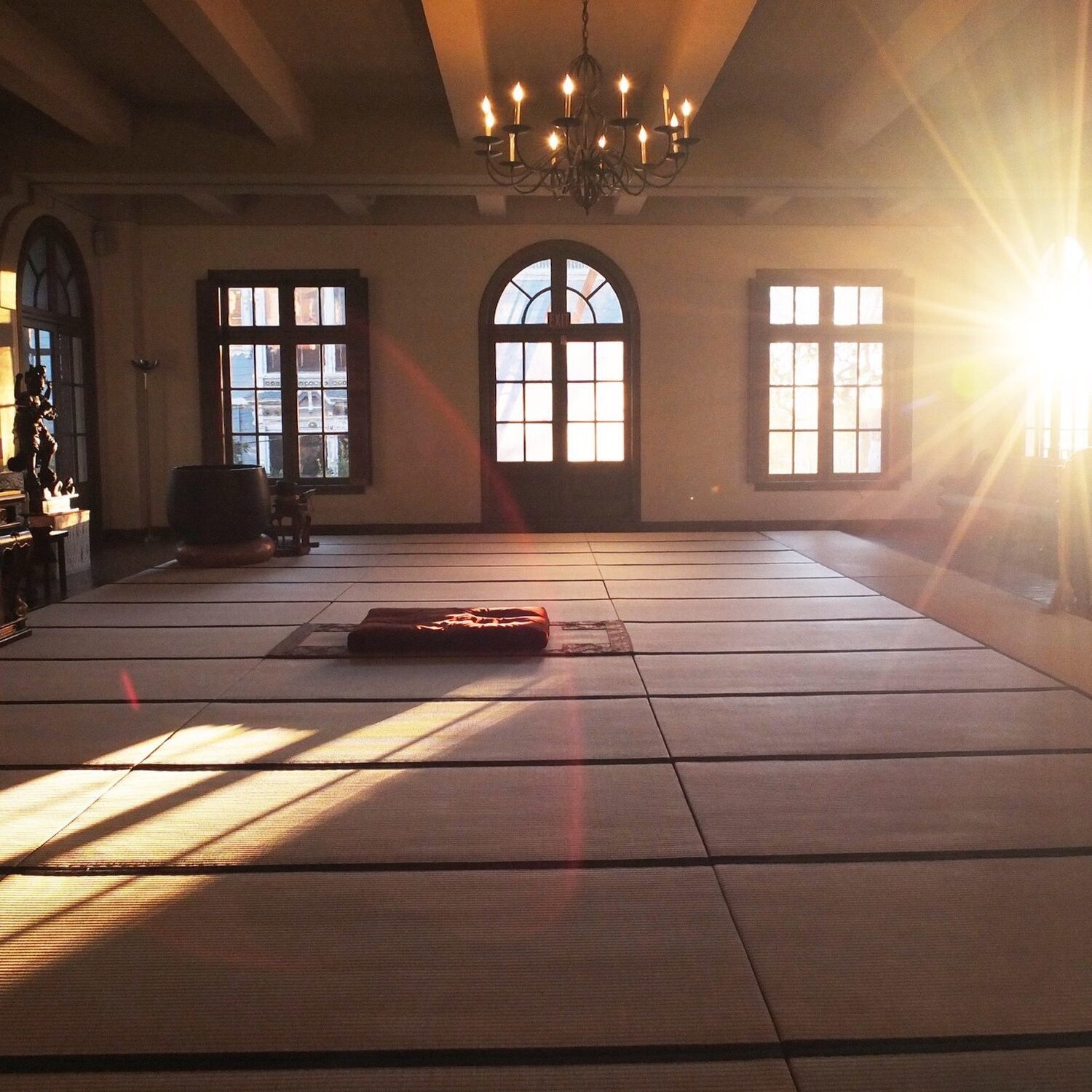
Young Urban Zen is a group under the auspices of the San Francisco Zen Center, with a particular focus on those between 20 and 40. It meets on Tuesday evenings for meditation and discussion about Zen practice. People of all experience levels are welcome.
Episodes
-
Flowers and Weeds: Preferences and Resistance
Hiro Ikushima discusses preferences and resistance through Dogen's teaching in Genjōkōan: "Yet in attachment blossoms fall, and in aversion weeds spread." We explore how Zen practice helps us recognize our preferences and resistances, allowing us to meet life more fully, just as it is. Flowers…
more -
Time and Money
The topic for the talk by Kogetsu will be an exploration of time, money, and the energy of this precious life. What does it mean to say, “I don’t have enough time” or “I don’t have enough money”? How much would actually be enough? We’ll look at some of Dōgen’s teachings on time and explore the...
-
Zen ritual in the modern workday
Michael reflects on the way that ancient practices immersed in Zen are not only still relevant in today's work life but are key tools to staying grounded and making practice a 24/7 event. Zen at Work Young Urban Zen
-
Art Night
In this short talk by Tim discusses Zen and art covering a little bit of history of the Zen tradition as well as the western tradition as a counter to this form. Art Night Young Urban Zen
-
Self Inquiry
Hiro Ikushima leads us through a simple form of self-inquiry: noticing the difference between what is happening and what our mind adds to it. What actually happened? What story am I telling myself about it? And what changes when I notice the difference? He explores how meditation can help us…
more -
Being Alive in the Midst of Bother
There are a lot of situations that we will not be able to solve by the end of the day, either with ourselves or with others. There will be a lot of things that we are not going to be able to solve by the end of the week in regard to our society, our environment, our family, our colleagues at…
more -
Mind Waves
These days, between work, crazy housing, dating and loneliness, AI changing the world faster than we can keep up with, the endless stream of news, and feeling like we're a self-improvement project, there really is plenty to feel anxious about. But what happens when the mind responds by working...
-
Refraining From False Speech
Michael McCord leads the YUZ Sangha through a talk about one of the ten grave precepts: “I vow to refrain from false speech.” This precept asks us to look closely at the space between what is true and what we say — not only outright falsehoods, but exaggeration, spin, flattery, and the small ways...
-
Being Human in the Age of AI (Reupload)
This is a reupload of Michael’s talk a couple weeks ago, both with improved quality and to let you know about his workshop happening this month on AI and what it means to be human. Please see below for the original description: Tomorrow evening I'll be leading the Young Urban Zen gathering, and…
more -
Attention in an Age of Distraction
Eli explores Attention in an Age of Distraction. Before asking what distracts us, we’ll look at what captures our attention in the first place particularly the subtle ways our preferences, what we like and don’t like, shape where our attention goes and how we experience the world. Attention in an...
-
Grandmotherly Mind
This week's theme is "The heart of Zen teachings - Grandmotherly Mind". Zen practice isn't about becoming a better version of yourself—it's about learning a radically different way of relating to the person you already are. This talk explores the Zen teaching of Grandmotherly Mind: a…
more -
Accumulation
Tonight Tim Wicks will speak about accumulation. We collect lots and lots of stuff. For some of us shopping can be an addiction. A lot of it gets thrown away. Greed is one of the three poisons that we work with in Zen, it is an obstacle to our awakening. Here we discuss… Accumulation Young Urban Zen
-
Being Human in the Age of AI
In a culture that often measures human worth by productivity and output, this talk explores what is distinctly and irreducibly human—our capacity for empathy, our unique perspective, our ability to be present with difficulty, and our power to connect. Drawing on Zen practice, neuroscience, and...
-
Life's a Mess, Now What?
Let's get real. Life can be messy. Relationships become complicated. Work is uncertain. We lose our way. Our bodies change. The people we love get older. We lose faith in everything. Sometimes everything seems to happen at once. Now what? Buddhism and meditation practice doesn't promise that life...
-
Origin of Conflict and Mindfulness of Mind
Heather Iarusso leads us through a talk on the "origin of conflict" and "mindfulness of mind." How does our thought-world affect how we think, act, and speak? How can we transform harmful "verbal action" into beneficial "internal speech"? The more we pay close attention to what arises in the…
more -
Romance, Relationship, and Sexuality
Kodo Conlin and Mei Elliott each reflect on the topic of romance, relationship, and sexuality. How can we be free in the midst of romance, dating, and attraction? What is the relationship between practice and sexuality? American culture has a notable lack of education about what authentic and…
more -
Four Foundations of Mindfulness: Mindfulness of Phenomena (dhammas)
Eli will conclude our exploration of the Four Foundations of Mindfulness with the Fourth Foundation: Mindfulness of Phenomena (dhammas). This foundation invites us to look beyond individual experiences and begin noticing the patterns and conditions that shape them. Rather than asking, “What’s…
more -
Four Foundations of Mindfulness: Mindfulness of Mind (citta)
Hiro Ikushima leads us through a talk about the 3rd foundation of Mindfulness: Mindfulness of Mind, or citta (Pāli). This practice invites us to notice the changing states of mind, such as calm or restless, contracted or open, clear or confused, without judgment. How can we meet the mind just as…
more -
Four Foundations of Mindfulness: Feelings
This podcast will be the second part in our series on the Four Foundations of Mindfulness: Feelings as told by Michael. By noticing how feelings arise and pass, practitioners learn that feelings themselves are not self and that attachment or aversion to them causes suffering. This awareness...
-
Four Foundations of Mindfulness: The Breath
Kōgetsu Mok leads us through a very powerful breakdown of the first of the Four Foundations of Mindfulness: the breath. How does breathing help us to come home to our bodies, our lives, and ourselves? We can maybe see how something as ordinary as the breath can become a doorway to intimacy,...
-
Right Intention
Tim Wicks concludes our series on the Noble Eight-Fold Path with Right Intention. How does our practice direct our intention on the spiritual path, and how does that intention direct the practice? Right Intention Young Urban Zen
-
Right View
This week's theme is "Right View" of the Eightfold Path. How do our views shape the way we meet ourselves, each other, and the world? Right View invites us to see suffering, its causes, and the possibility of freedom more clearly. Join us with Hiro in exploring these themes. Right View Young…
more -
Meditation instruction + a talk on Generosity / Dāna
This week’s Young Urban Zen broadcast is a little different than usual. Abbot David leads us through a meditation instruction, a short meditation, and finally a Dharma talk about Generosity (Dāna). “The path of true liberation begins with Generosity.” Generosity / Dāna Young Urban Zen
-
Right Livelihood
In today’s talk Michael will be continuing our series on the 8 Fold Noble Path that we started a few weeks ago. This week it will be on "Right Livelihood". We spend much of our life working. How do we determine if how we are spending our time is in alignment with our values in regards to how we...
-
Right Samadhi
Kodo Conlin guides us through the topic of Right Samādhi: Sitting Buddha. We explore samādhi/concentration as part of Zen's rich heritage. This final factor of the Eightfold Path can be understood as the fruit of our wholehearted presence. Right Samadhi Young Urban Zen
-
Right Effort
This week’s theme is Right Effort — Not Getting Anything, Not Causing Harm. We’ll touch on the simple but challenging guidelines of do no harm, do all good, and how our actions through body, speech, and mind shape our experience and those around us. Right Effort Young Urban Zen
-
Right Mindfulness
Tonight Eli continues in the series on the 8 Fold Path. Tonight we will practice and talk about Right Mindfulness. Right Mindfulness Young Urban Zen
-
The Four Noble Truths - Right Speech & Right Action - Tim Wicks
Tim Wicks leads this weekly YUZ talk with an overview of The Four Noble Truths and a further focus on 2 folds of The Eight Fold Path: Right Speech & Right Action. Unfortunately, a fire occurred in late March which burned down the Zendo at Tassajara Zen Mountain Center. No one was injured, but the...
-
Bramaviharas - part 2 (empathetic joy and equanimity)
As many of you may have heard, we did have a fire at our Tassajara monastery, and the meditation hall burned down. I'll talk a little bit about what's going on there at the beginning of the meeting tonight. Thankfully, no one was hurt, and the fire was contained and did not spread beyond the...
-
The Four Brahmavihārās - pt 1 (of 2) - Loving Kindness & Compassion
Michael McCord leads tonight’s talk about The Four Brahmavihārās. This is part 1 of a 2 part series which focuses on the Brahmavihārās “Loving Kindness” & “Compassion.” In a world that can be aggressive, combative, competitive, how do these traits work not only with those we love and trust but...
-
Relationship with Work
In Zen and traditional Buddhism there are a number of tools that can be cultivated to help us in these relationships and some of you may have wisdom to share in the practice of relationships and work. Relationship With Work Young Urban Zen
-
Relationships Series Talk 3: "People We Don't Like"
Eli opens a conversation on how to be in relationship with “people we don’t like”. He discusses how sitting zazen might help us practice with unpleasant feelings that come up in conflict—anger, frustration, judgement, resentment, and so on. What if we looked at relationships with “people we don’t...
-
Relationships Series Talk 2: Intimacy with Self
Kōgetsu talks about Intimacy with the Self. We live in a world that constantly tells us we need to improve—to become better, more optimized versions of ourselves. Checklists, standards, performance reviews: we might even find ourselves trying to optimize our meditation practice. What would it…
more -
Relationships Series Talk 1: Family
Hiro Ikushima gives a talk about Relationships. This is part 1 of a series. This talk focused on family. Ram Dass once said, “If you think you are enlightened, go spend a week with your family.” Many of us recognize the truth in that. Family can be both our deepest source of love and our greatest...
-
Six Paramitas Talk 6: Wisdom (Prajñā)
In our final paramita talk, Kristen Diggs leads a talk regarding the Paramita of Wisdom. What is complete and perfect wisdom? How can we look to find it? Six Paramitas Talk 6: Wisdom (Prajñā ) Young Urban Zen
-
Six Paramitas Talk 5: Concentration (Samadhi)
Tim Wicks leads a talk regarding the Paramitas (aka crossing over) focusing on Concentration. Why do we meditate, and what is it that we are trying to do facing the wall? Working with the mind and our thoughts is central to Zen practice and, for many of us, the most difficult part. “We are trying...
-
Six Paramitas Talk 4: Vīrya
How do we keep showing up in our work, relationships, and the world without exhausting ourselves or betraying what matters most to us? Eli discusses joyful effort (virya): an approach to effort that isn’t about grinding harder, chasing outcomes, or measuring worth through productivity. Drawing on...
-
Six Paramitas Talk 3: Generosity (dana)
In this talk, Kōgetsu discusses generosity also known as Dana. Buddhist practice invites us to look more deeply at how we can meet the roots of suffering. We will explore how generosity includes how we relate to ourselves and others, how we listen, how we repair, how we set limits, and how wisdom...
-
Six Paramitas Talk 2: Sila (ethical conduct)
In this talk, Mei discusses the paramita of ethical conduct. Sīla (ethical conduct) is one of the six paramitas (perfections) that develops a practitioner on the path of freedom, while simultaneously manifesting awakened activity. Though most Westerners don't initially delight in the topic of...
-
Six Paramitas Talk 1: Patience
This talk is the beginning of a series on the paramitas which are the fruits of living the precepts of Buddhism. Michael will be discussing the paramita of patience in this talk. Paramitas are viewed as perfections to be addressed directly as a way of working with one's practice. Please come and...
-
Renunciation
Tim Wicks closes out the year (2025) with a talk about Renunciation, letting go. He speaks about the grasping at the root of our suffering, our conditioning as "graspers," and how we help each other in learning to let go. Renunciation Young Urban Zen
-
The Gift of Nothing
As the year comes to a close, Young Urban Zen invites you into The Gift of Nothing: a talk and experiential practice on generosity without striving. Eli Brown-Stevenson leads us together through an exploration on what it means to give, receive, and belong when we release the need to add, fix, or...
-
When I want something out of my practice
When practice starts to feel frustrating, like why am I not feeling a certain way by now, or when we wonder if we’re “doing it right”—it can quietly turn into a kind of transaction. We’ll explore this train of thought with some lightness and curiosity, and look at how practice can become less…
more -
What Zen principles apply to staying grounded in the midst of change
Many of you may be traveling this year or at least experiencing a different schedule (some may take time off; some may work more due to the rest of the team taking time off... etc.) than how things usually unfold for you. How will you stay grounded in the midst of large meals, or extra time or...
-
Hindrances
Tim Wicks leads a talk looking at the many obstacles that we face on our path to awakening. By focusing on the hindrances and how we work with them, we see that there is a way forward to address the feelings of separation and isolation by cultivating wisdom through intimate practice that leads us...
-
Working with Subtle Frustrations
Hiro Ikushima explores “Working with Subtle Frustrations”, the quiet sense that something is missing, and the low-level dissatisfaction that follows us through the day. In Zen, these small irritations become important teachers when we meet them directly rather than trying to fix or avoid them....
-
not believing all your thoughts
In this talk, Kōgetsu Mok ponders the idea of “not believing all your thoughts”. How can our zazen practice help us to quiet unrest, dis-ease, stress, and pain? How can we cultivate discernment in practice? Not believing all your thoughts Young Urban Zen
-
Not Harboring Ill Will
Michael McCord prompts us with a few questions before diving into the concept of harboring ill will. What is forgiveness in the Buddhist practice? How do we work with long standing grievances and short term frustrations? Not Harboring Ill Will Young Urban Zen
-
Being Complete in Each Moment
Rev. Kristin Diggs discusses how in the Soto Zen tradition we emphasize careful attention to the details immediately at hand, and doing one thing at a time, doing one thing completely. What does it mean, and how is it relevant in our fast-paced digital age? It couldn't be more relevant. Being...
-
Establishing the Path of Practice
Ryushin Paul Haller, long-time resident senior teacher and former Abbot, discusses the deepening of awareness and noticing how it affects how we respond to self and others; as we learn to see how we respond to our experiences, we see how we cause suffering for ourselves and others. This talk was...
We're indexing this podcast's transcripts for the first time — this can take a minute or two. We'll show results as soon as they're ready.
No matches for "" in this podcast's transcripts.
No topics indexed yet for this podcast.
Loading reviews...
ABOUT THIS SHOW
Young Urban Zen is a group under the auspices of the San Francisco Zen Center, with a particular focus on those between 20 and 40. It meets on Tuesday evenings for meditation and discussion about Zen practice. People of all experience levels are welcome.
HOSTED BY
San Francisco Zen Center
CATEGORIES
Loading similar podcasts...
Frequently Asked Questions
How many episodes does Young Urban Zen SF have?
Young Urban Zen SF currently has 100 episodes available on PodParley. New episodes are automatically indexed when they're published to the podcast feed.
What is Young Urban Zen SF about?
Young Urban Zen is a group under the auspices of the San Francisco Zen Center, with a particular focus on those between 20 and 40. It meets on Tuesday evenings for meditation and discussion about Zen practice. People of all experience levels are welcome.
How often does Young Urban Zen SF release new episodes?
Young Urban Zen SF has 100 episodes. Check the episode list to see recent publication dates and frequency.
Where can I listen to Young Urban Zen SF?
You can listen to Young Urban Zen SF on PodParley by clicking any episode. We provide an embedded audio player for direct listening, and you can also subscribe via your preferred podcast app using the RSS feed.
Who hosts Young Urban Zen SF?
Young Urban Zen SF is created and hosted by San Francisco Zen Center.
URL copied to clipboard!