You know, here I am. They're like, here, you're in the pool and it's time to swim and you don't get floaties. And I said to Meg, I said, I finally understand what you're talking about. And she just smiled at me. You remember me from New Trier? I was in your journalism class. Walter Jacobson and Boyd looked at him and goes, oh, yeah, yeah. What are you doing now? Election night pizza. That's great. And when my wife comes home, I'll tell her what she'll say. What did you talk about? I'll say election night pizza. She'll know exactly what you were referring to. Testing one, two, three on my mic. Hey, everybody. Welcome to Talking Pictures Podcast. I'm Todd Meisner. This week's guest, Dave Maron.
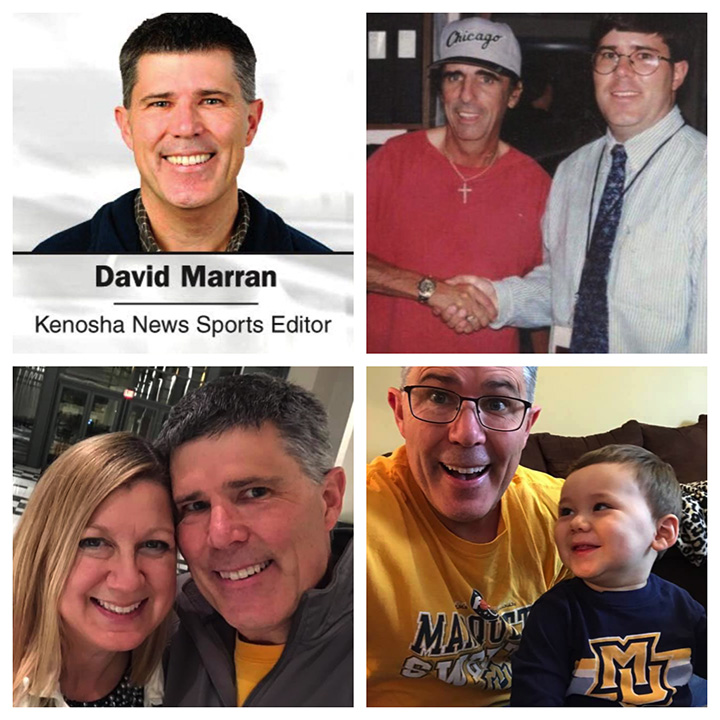
retired sports editor of the Kenosha News in Kenosha, Wisconsin, and an old high school friend of mine. And you're wondering, photographer friends, why is there a sports writer on this photo podcast? And I'm going to tell you why. The industry is shrinking. And Dave's transition story out of journalism into, for lack of a better term, real life is a really good story. It's inspirational. It'll make you feel good about what may come. The industry is shrinking. As I said, I had three friends of mine laid off in the last six months from photojournalism jobs. It wasn't because...
They were bad photojournalists. They're award-winning photojournalists. They were at the top of their game. It's just that the industry is shrinking and jobs are being eliminated. It's a fact of life. There's nothing we can do about it.
other than to keep doing good work and planning for the future. And so I want to interview a bunch of people who have made these kind of successful transitions out of journalism into something else. I think it's inspirational. I think it's informative. And I think it's important that we talk openly and honestly as photojournalists or journalists in general, that the day may come where we're not taking pictures for a living anymore. We're not writing sports stories for a living anymore. And we got to go do something else. And Dave's got a great story. And I wanted you to hear it. On with the show. Oh, sorry. Sorry. I had your volume turned down. That's okay. Okay. How are you?
Excellent. How are you? I'm good. I'm good. You know, to think back when we were at WNTH that I'd be sitting down in my basement with a board and a recorder, and I didn't have Dwayne Burkhardt running around fixing things, I would have told you that was not going to happen. It's crazy. I know. It's completely insane, and where this journey has taken us is just nuts. Yeah, and actually, before we go any further, I want to get your thoughts on what you're about to hear. Okay.
All right. Tell me about that. What do you think? What are your thoughts when you hear that? Back in the day when I thought I was going to be the voice of the Chicago Cubs or whatever, that's what I think there. And thinking like, you know, like how I evolved, we probably all have in terms of like what you thought you were going to do and then what you ended up doing. And I have a friend, you probably know him, John Suntris. He's in radio and we always used to argue like which industry was worse, radio or newspapers? And, you know.
I don't know. It just depends on what day it is, I guess. Well, in newspapers, they don't change the format on a Tuesday. No. Like, we're rock and roll. Okay, we're country now. I mean, newspapers don't, like, all of a sudden, like, I don't know. I don't know what the opposite of that would be. But anyway. I just remember, like, being so into radio back then and thinking, like, this was going to be my vocation. And then once I started looking into colleges, it was just like, and this is ironic, too. Like, journalism was the more.
steady, you know, feel. And then, you know, of course, you know, 35, 40 years later, it all blows up. But anyway, yeah, I still probably have that promo somewhere. I could probably, I know the first guys were from Nutria West. The second guy was, was me and Tim Monroe. And then the third one was me and Tim Monroe again. It was basketball, football, and baseball. Oh, those were some, those were some glory days. Those were some definite glory days. Well, you were good at it.
I loved it. I do love it. I did love it. That was my first love, play-by-play. I grew up listening to Red Rush on doing DePaul games and Jack Brookhouse and Harry Carey. Jim Durham was a big one for the Bulls. Oh, my God. Everyone wanted to be Jim Durham. We were so privileged.
Going to New Trier High School, I'm sure, and covering high schools where you work and here and stuff in Wisconsin. Oh, my gosh. The opportunity we had to live the life that we led at schools, it just opened up the door not only to you and me, but, my God, when you think about the Facebook and how we're just being reintroduced to our classmates from New Trier and just all the wonderful things that they're doing. I mean, New Trier was just a great place. It was a fantasy land in some respects, but, wow, what a great opportunity. I mean, that was a living, breathing.
radio station. I mean, it's 10 watts. I think it's 100 watts now. Oh, my God. My mom wouldn't have to stand out in the backyard with the radio to get it. Yeah, yeah. Don't quote me on that. But I know they've upped the wattage that they pumped into your cottage, as they say. But just that high school was just incredible. I mean, it was everything that was cracked up to be and more. So, yeah, those were some good times. You really brought a tear to my eye there, Todd.
So let's talk about where you came from. For those who are listening, Dave and I went to high school together, and we shared the absolute amazing experience of having Dr. Robert Boyle as our journalism teacher. And unfortunately, Dr. Boyle just recently passed away. And this is a photojournalism podcast, but it's really kind of going to need to morph into a journalism to tackle some issues in journalism today. And what I want to do is, as we move forward in the conversation, is that I look at you as a success story post-journalism.
And what I want to do is interview people who have successfully navigated the days after journalism. It's an abrupt stop. And what made me think of this is that because I switched jobs, I went from being a photojournalist every single day to, you know, I still consider myself a photojournalist even though my title has changed and I don't take pictures every day. But it feels like... The first step in the process of, of what it feels like to leave something you've loved for a very long time and having to deal with that. And so I have, I've found in the last four months that I'm much, I'm really interested in how people are navigating these, these troubled waters and coming out successful on the other end, because, you know, you dread at 27 or whatever. You're like, I can't imagine doing anything else, but writing sports or taking pictures. And then all of a sudden somebody makes a decision for you.
That that you're not you're not getting paid to do that anymore. And you've got to go find someplace and something to do with yourself that makes you feel good about yourself. Yeah. So that's why I wanted to talk to you. But let's start at the beginning and talk about how your journey from the second to back row of Dr. Boyle journalism class and then forward.
Well, Todd, I think you should go back further to Howard Junior High School where we first met. That was so long ago that the school was no longer there. Yeah, they tore it down. They left the tower, though. They did leave the tower, yeah. But actually, the roots of my journalism career were so there when I put out a newspaper, an underground newspaper with my friend David Rhodes. We called it The Defender because we were such badasses.
We didn't want to write for the school newspaper, so we put out three editions of our own. And then just moving forward from there, I went to New Trier, and I always wanted to be in media because I figured out I was never going to be centerfielder for the Cubs or the White Sox, and I wasn't going to be a starting point guard at New Trier and then move on to Northwestern. So it's so many of us failed athletes, or I wouldn't say failed, but realistic athletes. I like that term, realistic athletes. I like that. You turn to...
sports journalism and sports media. And that's where I was. I got the new Trier, and immediately I hooked on with the radio station. I was doing play-by-play, and then I became sports director my sophomore year. And, you know, this conversation has a little bit of a Glory Days feel to it, but when I think about it, and with Boyle dying...
You know, I've kind of gotten to get back into my roots and reconnecting with you has been fantastic. And just thinking about where I came from. And, you know, it all started back in high school and junior high. And this journey to where I arrived, where I'm at now, started there. And then, you know, in high school, I was, as we talked about earlier, how fortunate we were to go to the high school we did, where you just have these just opportunities after opportunity, radio stations, newspaper. There was TV there. There was yearbook, which was just a great creative outlet for people like for writers and designers and photographers.
And then I became station manager my senior year, and then I was a regular sports writer my senior year at New Trier. Then I went to Marquette, and I majored in journalism. I went to Milwaukee because the drinking age was 18. I mean, I went to Milwaukee because Marquette was a place where you could start writing right away. And drinking right away. Writing and drinking. Drinking right away, yeah. When I got to Marquette, I found out that you could start writing for the Marquette Tribune right away. Other schools like Missouri, you had to basically prove yourself for two years and be entered into the College of Journalism before you could write. Well, Marquette, it was right away. So I started writing at Marquette.
And then I majored in journalism. Do you think that degree is worth anything anymore, Todd? What do you think? I always tell people, I have a degree in journalism. I don't know how much it's worth anymore. I'll tell you, I go up and speak at the University of Iowa, and the energy level of the young people that are up there that still have that idealistic look in their eye, they're still excited about it. They're still excited about it. It's inspirational. I mean, I'm not their boss anymore, but I had two 27-year-old, or 24 and 27, I remember.
And man, their passion to tell stories is just remarkable. I heard that your first podcast that I listened to was just about your job change was just fantastic. That was really good. And I think everyone should listen to that who's in the industry because you're really paying a great and realistic picture. And it was very dramatic. I mean, I remember you and I talked a while ago when you were going through some things and I was going through some things. And the way you verbalized the drama with your latest change was just really good. And I could kind of relate to it except, you know, you had a different ending than I did. And we'll get to that.
So I went to Marquette. I was a sports – I was co-sports editor, and that's where I met my beautiful wife, Laura. And we got married in 1987, and I got a job at the Kenosha News right out of college. I became a state – the Kenosha News was seeking a – this sounds so foreign now. They had actually created a job opening, believe it or not, in newspapers because the Kenosha News was going to seven days a week. This was in 1987. They published every day, but back in the day, Saturday. So they added a Saturday.
post and they added a couple of people to each department and I got the job. And I remember thinking like this was the greatest job because I was in a union. My pace was very good. My benefits were really good. And I thought, Todd, you know, I'll be here what? Two, three years, right? I'm going to be here two, three years, get some good clips, some good experience. Then I'll move up to, I don't know.
you know, wherever, Ames, Iowa, or whatever, gradually increased my coverage until I, you know, fourth editor of the Chicago Tribune. While I'm standing in my house in Kenosha, Wisconsin in 2019, I never left. I became very entrenched in the newspaper culture in Kenosha. We bought a house here. We had two beautiful daughters.
here, and I became sports editor in 1995, and I'm really proud of the work that I did there. But as everyone knows, the newspaper industry evolved and changed in 2016. Actually, in 2012, the patriarch of the United Communications Corporation, Howard Brown, died, and that essentially set in motion the changes that took place at the Kenosha News, ultimately leading to what I like to call my retirement in 2016. And that, in a nutshell, is my newspaper career. It's over.
I don't think I'll ever work for a newspaper again. I don't think I'll ever write for a newspaper again. I'm still writing, but it was a great run. I appreciate it so much. A lot of what I have today, I made some beautiful friends. I'm still in touch with my staff, which was just the talent level. And I'm sure you've come across this too. Actually, I know you have by listening to your podcast. The talent level for the size of the market that you're in, that I'm in, was unbelievable. These guys made me look 10 times, 20 times better than what I was. And then it allowed me to do some other things that we can get into later in terms of freelancing and what I've done in my life post Kenosha News. I just was able to, basically the way I looked at it was I gave them a canvas.
with some directions, and then they did the rest. I was not a micromanager. It's a lesson I learned from my father and another fellow that I worked with at the Chicago White Sox, Jeff Chanel. I just let people do their thing, and it just worked out so beautifully for me. So in November of 2016, I entered into what they call the Voluntary Separation Plan, the VSP, the United Communications Corporation. I applied for it. I was accepted, and on December 6th, I walked out of the Kenosha News. After 29 and three-quarters years, I embarked on a new career, my daughter and her husband.
We're expecting the first child in June of 2017. She was a teacher. Once her maternity leave was up, I was happily volunteered to become a stay-at-home grandpa, which I've done for the last two-plus years. I just completed my second full school year as a stay-at-home grandpa, where I get up every day at 645, and I'm relieved at my 245 when Dad comes home from work. And I have really been blessed and fortunate to do that, and it has really changed me and made me what I think is a better person, and it's really allowed me a great perspective on things.
So that's where I am right now. I also do a lot of work for the Chicago White Sox. I'm a game employee in their scoreboard department. I'm a graphics coordinator. So when a guy comes up to bat, you see a stat up on the scoreboard. That's my work. Trivia, things like that. That's something that I actually started doing in 1984. Stopped it for two years when I thought I couldn't do it anymore. And then in 1990, the last year of the park, I came back. And I've been with the White Sox ever since. And I've been able to increase my workload there because I don't have to worry about being a member of the Kenosha News Sports Department anymore.
So that's where I am. It's just been a great run for me, and I'm in a beautiful spot right now. I'm very happy, and there is, as you put it, or we're going to maybe get to, there is happiness after journalism. First of all, why did you decide to enter into the voluntary separation program? Well, we had a change in management, and it was quite clear that they were going to reduce the newsroom. And I inquired as to what the newsroom would look like on December 7th, you know, the day after they decided who would be accepted in this voluntary separation plan. And they really couldn't give me any guarantees as to whether I would have a job or not.
or if anyone would have a job or not. So I figured I might as well take what they were offering. And because if I showed up on December 7th, they may have looked at me and said, hey, you know what? We tried. You're done.
So I did that. And, you know, to be honest with you, Todd, it was not a hard decision for me. I had the great support of my wife and my two daughters. It's 29 and three quarters years. It was time. You know, I had worked nights. I had worked weekends. I had worked holidays. I had worked doubles. I had worked, you know, during Super Bowls and, you know, all the things. And I felt I had done a really good job of maintaining a great domestic life while doing this, which I know is impossible. I know that, I mean, I'm not dumb to the realities of what this industry does to people. It shoots them up and spits them out. And I'm sure you know people.
you know, who struggled. But I was one of the lucky ones and I figured it was just time. I had gotten all that I had gotten out of the Kenosha news. I had a very good cushion that I built up over the years I worked my butt off for, and I figured it was time. I didn't really know what the newspaper was going to look like going forward. I didn't know who was going to be there with me. As I said, my staff and I were very tight, and it was obvious that there were cracks in that armor. So it was definitely time to go, and that's kind of how I felt. I felt our work was great. Our work was fantastic. We weren't sputtering. We weren't flailing. Our work was just as good as it had been. But there was obviously a change in management and management philosophy, and I felt.
It was time to go. And that day, I think I was one of about six people to accept it. And, you know, since then, you know, they've reduced the paper even more. So in hindsight, it was it was I felt completely comfortable with my decision at the time. I feel even more so now, and a lot of that's because of just the great support I've gotten from my wife, Laura, and my two kids who basically told me that if I didn't take this, they were going to beat me up. The threat of violence always makes things go easier. Yes, yes. I'll never forget where we were. We were out to dinner in Milwaukee, and our daughter had just gotten home from Minneapolis with our other daughter. I thought I'd have to rationalize and explain this, and they were just basically like, yes, do it, go for it. It's interesting. You have to explain it to different people. My parents were great, and my father was like, David, are you going to get another job?
I don't know. And even at age, whatever I was at the time, parents probably looked at me a little sideways that way. But it's worked out. It's worked out so great. And the benefit for me has been the time that I've been able to spend with Mike.
grandson james um you know every day just being a part of that i mean that was something that i had to fall back on and it's just been it's just been a joy it's been better than i ever could have imagined and it's just been so much fun and it's it's i just tell anyone if you've ever had the opportunity to do something like this stay at home grandpa do it because you will just you will become a better person you will it will expand your your mind and keeps you young and it's just you learn so much he's teaching me so much and it's just been that's just been great so and then you know i did have the white socks to fall back on which is a steady job in the summer. So I had that as well. It wasn't like I was going to be completely unemployed. Sounds to me like you had the perfect situation to pull the ripcord. But what I've been fascinated by, I shouldn't say but, and I'm fascinated by your documenting your, I quickly got my iPad here, looking at your last post on Facebook is retirement year two, day 195. Yeah. And these posts and keeping track of how long it's been since you were in the newsroom and being paid to be sports editor and having to make those decisions.
keeping track of the distance that you've traveled help the, the dealing with it. Yeah, for sure. I mean, you know, I started it, it was, I literally started on day one on Facebook and it was a couple of sentences and I just wanted to. I mean, I guess part of me wanted to keep writing and documenting. I'm a stat streak. I'm a number streak. So that's part of what this is. But it was just a way of documenting and probably reassuring myself or whatever, you know, that this was something that was going to be great and that I had time now and this is what I was going to do with this time. And the thing that I found the most unbelievable difference was.
And I hate to bring this up, Todd, but is that I have no stress anymore. My job was so stressful, even working at the Kenosha News. Now, a lot of that was self-induced stress because I was dealing with another job in Chicago, 63 miles away during the summer. So that was brought on by myself. But that meant a lot to me. But you know how stressful journalism can be. Yes. I was working on deadline every night and I was stubborn. I was going to do it my way and I was going to do it the way I wanted to. And I was just going to do it on my terms. And that led to a lot of stress, which was completely unhealthy. And I tell anyone if they have just if they could just.
deal with their stress, you know, somehow find a way to deal with your stress. With me, it was the White Sox job and the stats and the baseball and things like that. But documenting that was a way for me to just kind of, it was a deep breath at first, and then it just got going and going, and I just, I'm so happy. I was so happy at the time, so relieved. And I was one of the lucky ones because I did kind of leave on my own terms. I mean, I wasn't planning on retiring at age 51, but, you know, Laura and I always talk, and she's a newspaper veteran. She worked at the Milwaukee Sentinel, and then she worked for an entertainment magazine, and then she worked for the Kenosha News before she embarked.
on her teaching career after raising our our family she she knows we both said that hey this could they could pull the plug on this anytime and i could be just shown the door and um so that always kind of was something in the back of our minds that we knew that this day was coming but um i did kind of i did kind of get the perfect storm in terms of how it ended and the documenting of it is just it's a little bit of venting it's a little bit of just documenting so i know what i'm doing and it's just keeping myself active as a writer but it's also just I just want to show people that, you know, I work. I mean, when you think about it, I worked at the Kenosha News for twenty nine and three quarters a year. They didn't let me get third. I think I got the twenty nine and three quarters. And then May 8th came. I was associate editor. So I got the 30 years, but I didn't get it in the job I showed up in.
This was my whole life. And I was so ingrained in this. And it was just like, it was just, it just drove me every day. I mean, I, and social media was both a blessing and a curse because guess what that meant, Todd? I could work from home. I could post from Facebook on home. I could send audio clips from home. I could post pictures on Instagram. And I started a Twitter account and all that stuff. So the deeper I got into this, the more involved I got in it. And I just wanted to show people that there is a happy life after something like this. And I know it's been traumatic for a lot of people. Some of my colleagues just, I mean, they met a demise that I just never, you know, basically.
two o'clock in the afternoon on a Wednesday or a Thursday, come and see us in HR, and then they'll walk out the back door. I mean, that thankfully did not happen to me. But there wasn't a rough stop, and I just wanted to document, I wanted to show people that you can be happy, you can have peace of mind, and it is definitely possible no matter where you came from or how deeply ingrained you were in your job. I don't know if that makes sense. No, it makes a lot of sense. And the question that brings to mind as you were talking was, did you know it was going to turn out well when you signed the paperwork?
Yeah. You know what? I did. And this just, I mean, to be honest with you, I've led a life of privilege my whole life. I mean, it's not like your upbringing and my upbringing were very similar. My father was a teacher. You know, we had the one car and, you know, and everything. I did not live in Kenilworth. And, you know, you can explain to people what counts. Kenilworth is like the, I don't know, it's, there is, there aren't any shacks in Kenilworth. It's what was it? The highest income per capita of any suburb on the planet. We had, growing up in Wilmette, we had to walk through it or ride our bikes through it to get.
to the other wealthy suburb where our high school was located. And it's not like Wilmette was on the other side of the tracks. Literally, it was on the other side of the tracks. But, you know, I mean, Wilmette, there were a lot more regular people like our parents that lived in Wilmette that lived in Kenilworth. I don't think there are any regular people in Kenilworth. No. I mean, I was very grounded. But I grew up with a fence.
So secure that I knew everything, every day of my life, everything was going to be okay. And I don't take that for granted. I tell people I'm the most privileged, happiest person in the world. I basically tell people, Paul Horning said this once. He said, you know, I went through life on a scholarship. I kind of feel that way. So when I signed that paper, I knew everything was going to be all right. I knew that I had a lot to fall back on. I mean, it was tough. You know, there was parts of it where it was tough.
to go. Well, what was tough? Tell me about what was tough. Well, here was what was tough. I love my staff. I worked with a designer who basically was the best, was a state champion designer every year. He was great. I worked with the best sports writer the newspaper ever had. I worked with another, and then three other, four other people who were just so good at what their job was. And it was just great to come into work every day with them and just bang out a sports section that we knew was good, we knew it was representative, we knew it was local, and we knew it was well-written and well-packed. And there was a sense of creative satisfaction in doing that.
I really like that. I like the fact that we were branching out on Facebook and in videos. I think I had six or seven video platforms going when I left. I really like that, the idea that I could kind of just do, it was kind of like the Wild West. I could kind of just do whatever I wanted, and I wasn't really reined in. They were just happy that we were expanding on things. And I like the sources that we met. This is a nice town. It's a decent sports town. But, you know, the best part of the job was coming in at 4 o'clock and then leaving at 12 with a complete sports section finished, and it was something that you could be proud of and that you were happy to.
put out into the community. And the technology part of it was great. That kept me young. I'm sure you're finding the same thing. That was probably what I missed about it the most. And I did, I did like writing. I had a column and there were columns and things that I really enjoyed writing. So it was that, but when I find that paper and I, you know, I wake up every morning, I'm really lucky. I just, I just know everything's going to be okay. And that's because I had great parents, just like you did and great brothers and sisters. And just, you just, I had a foundation that was just so important. And that's something that I never take for granted and that I hope that others have.
tell people that that's really probably the most important thing you can have. We share a lot of the same building blocks. Allows me to have a sense of, I was going to say peace, but that's not quite it. a sense of confidence that no matter what situation I'm thrown into, I will figure out a way to not drown and then learn to swim and be successful at it. The switch to associate editor happened to be last night. You know, I sent you the note this morning, I'm going to take a nap. I took a nap because I worked till midnight and then I came home in the old days. I could flip that right around. But I got up to have breakfast with Lisa and, you know, hang out and discover the dog had an ear infection and whatnot and then took care of all that. And then I'm like, I need a nap.
So then I took a nap and I cut the lawn and I called you. But that was my first solo flight as the Sunday editor. And the way newspapers are designed today, you didn't have to go to a design center, right? You were designing in-house. Yeah, we did all of our design. So, you know, newspapers now are designed, you know, you book them, you budget them, and then you turn them over to somebody who's on the other line of a text line. You know, and it works. I mean, it does work, but I overthink it quite a bit. I'm told I overthink it because I'm a very precise person. That's completely, it's like meatball surgery.
Right. So I say that to the kids and they don't know what meatball surgery is because people don't watch mash at 1030. No, they don't. You know, watching mash at 1030 with a bowl of Rice Krispies with a lot of sugar while I was doing trying to get my homework done that I should have done a long time ago. But yeah, I mean, I powered through it and I got through it and it was completely different than anything.
You know, I'd always been in control of everything. And you're really giving up a lot of control when you're when you're doing the paper that way. Now, it works. I have no I mean, that's just the way the modern world is of journalism. So that's the way a lot of newspapers are laid out. That's just the reality of it all. But to go from being the director of photography to sitting at that desk, jabbering with the person who's got to fix my A5 or we need to replay A3 because I missed the typo in the cut line in the proof I printed. You know, it's six o'clock. Let's just replay it.
Uh, cause I really don't want to take the phone call from the superintendent. Yeah. You get it done. And I was done. And I was like, ah, how the hell did I do that? I have no idea. I have no clue, but it all worked out. And as you were talking about how everything's going to turn out. Okay. I was like, God, you know, he's right. It is going to turn out. Okay. It is. Um, yeah, because you have the training and the skills and the foundation. And that's kind of how I always, people always say like, oh, you're flying by the seat of your pants. Well, you're not really, you know, I mean, maybe there's some element to it, but you're just calling on your collective life experiences in, in journalism and outside of journalism. And that's kind of how.
you know, you kind of learn these things on the fly. Boy, you really, the picture you painted about your night last night really makes me glad that I did do that. I only have to do it every five weeks. You know, that was another thing that kind of, I saw the writing on the wall was that, and you sound very comfortable in what you're doing. I did not want to do something I didn't want to do. I did not want to be sports editor slash associate managing editor. I did not want to be a closer at night. I mean, I just wanted to be sports editor and I could really get no guarantees on anything.
that that was going to happen. So I'm very big into comfort zones. That was one of my management cornerstones, was keeping people in their comfort zone, not expecting people to do something they couldn't do or that they weren't comfortable with. And maybe I was a softie as a manager in that respect, but I look back thinking, I'm glad that I did it that way. So that was another thing that kind of helped grease the skits for me out of there. I just didn't want to do something I didn't want to do. You know, it's interesting that you say that because a couple years ago, three years ago, Meg, who's one of the fabulous photographers,
I was trying to convince her to do some more video. I said, you know, you gotta, I really like you to do some more video. And she was, you know, mastering each, she was a theater major for Christ's sake. So she went from being a theater manager to be an award-winning photojournalist in four and a half years. In the process of that, we were, I was trying to get her to try video storytelling or just a little bit of video. And she said something to me that I did not understand until they promoted me. I did not understand fully what it is she said to me in this meeting we were having. She said, I don't like to do things I'm not good at.
And I went, oh, how are you never going to, you know, my instant manager answer was, you don't know you're not good at it until you try it. You don't know, you know, that was me encouraging her to expand her horizons. And it was, you know, I was probably 50 at the time, maybe 49, encouraging this young 20-something kid to expand her horizons in storytelling. And then they promoted me and they're like, OK, now you have to do this stuff. You have to budget these pages and, you know, you have to do all this other stuff as opposed to working with reporters and and figure out coverage plans and whatever we were going to do that the things that go with the job. But this, you know, in the new world of journalism, you know, I like every Monday I have to get the feature section ready for Tuesday. So I've got to get the.
you know, all that material together, budgeted and sent to the design center. Every Friday I have to get set or Monday's feature section. That's just part of my job description. And this was a completely foreign concept to me to do this. I had done layout and design. I had laid out photo pages for years. I had used a pikeable. I had used paper and a pencil to lay out a page and estimate how long, how much, you know, copy we were going to need to run with these photos and have them arranged correctly. But this was something completely different. And I.
And it dawned on me that the reason why I was having such a problem at first kind of conceptualizing that this was part of my life was that I didn't like to do things I wasn't good at. And I was really good at all the other things I've been doing for a long time and made sure I was good at them, you know, trained myself to do something. If I was going to do video, I was going to be good at video. If I was going to storytell this way, I was going to be, if I needed a piece of equipment, I bought it so that would make the story better. you know, here I am. They're like, here, you're in the pool and it's time to swim and you don't get floaties. And I said to Meg, I said, I finally understand what you were talking about. And she just smiled at me. Um, she didn't say I told you so, which was kind of her, but, um, but it was those kinds of things that it's, that's so different if you don't adapt and in this industry.
Be it when we went from film to digital, you know, there were people who were like, oh, my God, I can't even imagine using one of those things, those digital camera things. I can't imagine life without one. I mean, I can't even imagine. You know, when we built this house that I'm in our basement and I thought even 20 years ago when we built this house, I thought, well, I could put a darkroom here. We probably won't need a bathroom down here, but we'll have them rough in the plumbing.
For if I ever want to put a darkroom down here. Yeah. Yeah. Well, needless to say, our deck furniture is over where the bathroom would be. That's right. And I'm too lazy to take it out and put it on the deck. And it's already June 24th.
I really, that first podcast that you posted that I listened to, I really admire you and your staff for the survivor mentality that you have. And I think that's what's, you know, you just described it there in terms of adapting and things like that. That's what's going to save us. That's what's going to save journalism was in terms of that and not people like me who, you know, I didn't want to do anything outside of sports. And you've really taken that next step. And that was, that's really, you're to be lauded for that. That's very courageous thing for you to do. And that was probably one of the reasons why I didn't want to stick around was because eventually down the line, I would probably have to take on some sort of.
managing editor uh type of news making decision and i just didn't want to do that i think i could do it i just didn't want to do it and i was 51 at the time and you know it was just that just i just didn't want to do it but i'm just so proud of you if i could say that and your staff or adapting like that and that's really been great and i i hope people appreciate that Well, that's right. That's right. You're very kind. I will say that last night I worked with my oldest, my longest standing coworker from the photo department, Gary Krambeck. He was a Sunday photographer and it was a very light news day. He went out and covered day two of the search for a drowning victim in the Mississippi river. We can't go a whole summer without having somebody fall in the river and die, which is depressing, but it's a truism. And we just started talking and I, about.
how things were different and, you know, and how he's just, he's just so good at going with the flow. I mean, Gary's been at the paper since God invented ink and he just, you know, he just, he gets along to get along and he's just easy going that way. And we were talking about how things were different. And the thing that I said to him was when you were, it made me, you made me think of it when you're talking about your staff was, but there was a, there was, there was a camaraderie in the photo department that I miss, you know, we were seven, then we were six, then we were five, then we were four. When we were in our old building.
we were in the old dark room area and we could close both doors and you could have a real conversation in the newsroom with someone about anything. I mean, in that, in our dark room where we called it the bullpen because no one could hear you. So you could be honest with someone about something and no one would hear, or people used to give me a hard time that when the doors were open and I wasn't trying to be quiet, my voice carries down the hallway and into the copy desk, but that's another story for another day. You know, that kind of. camaraderie that we had as photographers where you're, you know, like a story, reporters are writing a story. It takes a lot of effort for another reporter or editor to read an entire story. It's, you know, 35, 42 inches of story. You have to concentrate on each line or each word in each line to understand the complete story. You can't just glance at it and have a reaction to it. In the photo business, you can look at a picture and know if it works instantly. And it was that kind of instant.
gratification of editing with people like, Hey, what do you think of this? Oh, that sucks. Okay. What about this one? That's way better. And boom, you were done. You moved on. And it was, and you could have that. You could, there was a shorthand to it that I don't have, even though I sit 15 feet from them now, I don't have that because I'm not in that department anymore. And I, that's the one thing if somebody had to be like, do you miss going out and shooting drownings or whatever? No, I don't miss death and dismemberment. I do miss that kind of photo department camaraderie that we, I had for 30 years, be it in the old building or the new building. So that that's the, that's the.
that was what I had to kind of give up unknowingly. Like I didn't, I didn't really know that was coming. That would have been told me it would have been a surprise because I'm like, I'm just moving over 20 feet. But my attention is on my desk and the copy that's coming in and making decisions and taking phone calls and doing stuff that's, that I didn't have to do before. That's the, I agree with you on that, on the, on losing that camaraderie. And we had a, and we had a, we had a great up against the world, up against them mentality because as you know, probably all guys are arrogant jerks because, you know, we're doing everything that everyone else is doing, but we're expected to do it on deadline every night.
Yada, yada, yada. So that was both healthy and unhealthy. I think it was healthy in that it kept us all motivated and unhealthy because we had this hatred or not hatred, but just this disdain for the rest of the newsroom, which I'm probably exaggerating a little bit, but it was there. But yeah, the camaraderie and the us against them motivation are two things that definitely have, I don't have that anymore. Can you explain the sports department hatred for election night pizza? Oh my God. Wow.
That's a universal thing, by the way. Oh, my God. That's great. Yes, because every when election night came, the newsroom would roll up its sleeves and they all come in and work at night and they're all proud of themselves for coming in and working at night on deadlines. And then they order pizza and we would look at them and go, where's the pizza the rest of the night? Because this is what we do every single night. Every single night we do this. Where's our pizza? And it was obviously.
it was lost on these people because they didn't work at night and they didn't really understand, uh, or understood, you know, how we did our job. But wow. Election night pizza. Wow. That's, that's, uh, you just raised my stress level a little bit there, Todd. So thank you for that. But that is universal. And that is something that, yeah, man, everyone just, I don't know how your paper is on high school football Fridays, but man, that was like, it's huge, man. I mean, Friday night football is huge. And I, I love Friday night football from a, from a, as a photographer, I loved.
Like, oh, man, but you see, the digital era made it easier. But I always love the, hey, can you shoot two games tonight that aren't anywhere close to each other? And then get back, develop film and get it in the paper. No, that's not happening. We would always say, we always had a saying that these people, the people in the newsroom would last one day in the sports department based on just what we had, what was expected of us every day and what we expected from ourselves every day in terms of just grinding it out on deadline and taking results and writing stories and covering events and coming back. And yeah, I think that the election night pizza is a great way to really...
Really push a button or two of an old retired sports editor. So good work there. I didn't even have it in my notes. It just popped into my head. I didn't. Wow. Election night pizza. That's great. And when my wife comes home, I'll tell her what she'll say. What are you talking about? The election night pizza. She'll know exactly.
what you were referring to. Well, you know, I've listened to that exact argument from countless sports writers over the years. The technology of the job now is just so freeing to be able to, the fact that the iPhone that's sitting here that I'm using to talk to you with, the fact that I could go and at the very least take a picture of whatever was happening with the iPhone and send it into the newsroom so they could get it online. It's crazy just to think how far it's coming, but it's both a blessing and curse because you can literally work around the clock posting. keeping your website up. I mean, it's just, it's just, it can get, it can get crazy. Yeah. And I think that that's where the stress combines because if you have, if you work at, if you're used to working at a certain level of excellence, that just throwing it out there isn't an option. You want to make sure what you're producing and turning in or making public is at a high level. And so producing at a high level for a long time causes stress. Yeah. I always wonder how people who don't give a shit, how, what their stress level is. I know. I've often thought about that myself. Sometimes you think like, it must be nice, but you know, you don't want to compromise.
yourself or what you do. So you just, they're them and you're you. And you mentioned something before, and this has really been a big part of my life is just having peace of mind. And I've been so lucky to have peace of mind. And that's what I strive for every day. Part of what you just said in terms of producing your best work leads to my peace of mind. So, uh, that's, that's kind of how I deal with that. And, you know, others have to deal, others have to be themselves and they have to be satisfied with, with that work. So I say, keep that up, Todd, no matter how crazy you get.
So before we go, Dr. Boyle, tell our listeners about Dr. Robert Boyle. Dr. Robert Raymond Boyle, Nutra High School, English slash journalism slash drama teacher. He was...
My first contact with him, I'm told, was when he was directing a play that my sister was in at New Trier East back then, and I was not allowed to go into the play because it was an Edward Aldi play that was not appropriate for somebody who was 10 or 12 years old. And Boyle would always tell the story to me once or twice that the first time he met me was on the steps of the auditorium waiting for my sister to come out from this play that I couldn't go to. Again, that's just a product of New Trier High School in terms of just the excellence. people, teachers that you run into. And this guy was, this guy was, I mean, he was above and beyond in terms of just his knowledge and what I learned in that. And you and I had three, I remember you and I had three level English together as well as journalism. And I thought about that. I was shocked that Boyle would even teach a three level English course, but I'm glad that he did. And I learned so much in that, but really where I learned from Boyle and where Boyle just.
was the stuff that I learned in journalism. I used until the day that I walked out of the Kenosha News, the 30-word lead, the headline, the being concise, no BS, question everything, be consistent, be accurate, be factual. I mean, those are the things that I learned in the first year of junior year journalism class at Nutria East. No, sorry, not Nutria. And then I used it all the way until the day that I walked out of the Kenosha News. And I still use it today on Twitter and in my writing. And I worked for the scoreboard because Boyle was just classic.
concise, compact. And so I've benefited from that my entire life. And, you know, as I've gotten into this retirement thing, you think about those people that have impacted you. And he, he obviously was one of the, one of the biggest ones from a professional standpoint where he just, he gave you those tools and he wasn't afraid to tell you that you were bad. He was very fair, but he was very stern, but he was very, very knowledgeable. I just, you know, he's just one of those people that you look back and you go, I'm so thankful that this guy came into my life when he did. And I hit it off with him. I know you did. Not everyone did.
but I thought the guy was just a marvel. I was just, I was in awe of the guy and he was just so good. He was really good. And that's a product of, you know, where we came from and the fact that we're so fortunate to come from where we did. And the fact that that excellence is there and I'm sure it's still there, but I'm sure you'll agree. Yeah. I wonder, there'll never be another one like Boyle. No, there won't be. And I, and at his funeral or his memorial service, and I attended it with our friend, Pam, whose book I'm reading, by the way, did you read Pam's book? Three wishes. She and I were sitting there and it was just.
It was listening to the eulogies for him. We were kind of transported back to that classroom on the first floor. And all of the gifts that he gave us, be it leadership, how to lead, when to lead, what to expect from people, expect the best from them. And then when you needed to. For me, one of the things that I remember about him most would be, I think it was senior year, I was photo editor of the newspaper. I had printed my picture of the Who that I had snuck my camera equipment in to the show. And Willie Wagner had written a review. I came in and they were doing the paste up. And there was a different picture there that another photographer, who was a junior at the time, had taken and come in before me and said that this was the picture, which of course wasn't true. And I said, that's not the picture we're going to use. I'm like, oh, it's already pasted up. No, you're not listening to me. I said, it's a perfectly nice picture.
this is the picture we're going to use. I'm the photo editor. This is the decision that I'm making right now. We're going to switch out this picture. So we need to make sure this one gets in. I had no idea that Boyle was sitting in the corner of the room. You know, I didn't lose my temper. I didn't get mad. I just firmly said, this is what we're doing. This is a decision that I've made. They were like, well, they would be, whoever was in charge of pasting it up was being wishy-washy. And Boyle had gotten up, walked up behind me, stood next to me and said, he's the photo editor. He's made a decision, put his picture on the page. And they went, okay. I, you know, we walked out.
together essentially. And we're walking down that basement hallway and he, he turned and he stopped and turned and looked at me and said, you get one. Yeah. Yeah. And I, you know, I remember, I just have always remembered that. I just, you know, what's fair is fair. You couldn't expect him. He did not want me to expect him to come to my aid every time somebody disagreed with me and I was going to have to fend for myself from now on. But we saw that, you know, you get one. So that was the one. Do you remember this? Go ahead. I still have some of my papers from him from them. And just, you know, the amazing guidance that he gave on those papers was just phenomenal. Do I remember? Go ahead. Well, do you remember the steamboat story?
No. This is a story that I remember him telling about making sure you had a good vocabulary and that you understood words and that if you didn't understand a word while you were reading, go look it up. That he had some student at some point in his career that when she got to a word that she didn't understand in a book, she substituted the word steamboat as she read. And I always remembered that as just how could anyone be that dumb? I remember one English class where he brought up someone's paper, and it was a paper that had to be maybe 10 pages. Type double-spaced. Children, ask your parents what type mean. Exactly. It had to be 10, and I remember Boyle held up his paper, and it was a cover sheet, a blank sheet, like an index, and another cover sheet, and they counted that in the 10 pages. I remember him holding up that, and you're looking at me going, who would do that?
Yeah. Yeah. I don't I don't know. I don't. And one of the things that Pam and I said after listening to these these wonderful eulogies for him was that in 2019, he couldn't teach. His style would have gotten. And I learned a term the other day from my nephew's girlfriend, who is a third grade teacher. And I asked her we were having drinks and I said, what is I said, so how's teaching this year? And she's like, oh, well, we've moved on to the we've gone from helicopter parents to shovel parents, no shovel parents.
And I'm like, snow shovel parents. What are snow shovel parents? And she goes, they want to get everything out of the way of their child. They want everything moved. There's nothing in their path. That would have not bode well with Dr. Boyle. I mean, Dr. Boyle, to describe him, he was six, seven, something like that. He was a tall guy. A tall goatee. Very, I don't know. He looked British.
Yeah, he did. He looked British. He looked like the professor from a movie that had some heroic professor in it that was tall and smart. And anyway, he was just a very interesting guy. Wore tweed on occasion. Yeah, he did. He was fantastic. And Pam said, he was old when we had him.
You know, he seemed old, but he was probably only in his fifties when we had him. And so we were like, God, this guy is so old. My brother had him. And see, that was for me, the anticipation of, of having a, you know, I always tell people that the three greatest male influences, adult male influences in my life have been in order of meeting them. My dad, I should say four, because my brother has been of a great influence also, Boyle and my wife's father, Bob Wismer. Those are the four men that have helped shaped me into the leader and adult.
man, husband, person that I, that I am. But my brother had Boyle. My brother's eight years older than I am. So I would hear stories about Boyle for years and years and years. You know, when you get to New Troy, you're going to have Dr. Boyle or you want to be in Dr. Boyle's class. So I showed up a fan. Like I showed up ready to go, go to work. I mean, I was like, I do not want to disappoint this guy. I do not want to, you know, my brother was a very good student. I was a mediocre student, except in journalism, English and whatnot. Um, you know, math was not my thing though. You're a, you're a stats geek. Were you good at math? I was good at, uh,
getting it wrong a lot uh addition and subtract i could do the basics you know but i still i still suffer from that and history i'm i like history as well um i had a similar situation i trusted my sister my sister at boyle so i was very well aware of the legend of dr boyle when i got there and um you know she basically said there's some she wanted me to judge for myself on every teacher that i had she was very good about not um laying any groundwork and we had some very stern disagreements on some teachers but not him and uh you know he was he was great and when you talk about influences yeah i mean i would definitely put him in that category for me as well, especially reflecting on with his recent passing in terms of just what he did in terms of how he taught us in journalism. And a very underrated thing, Todd, was the in-class essay. That's why I brought up the three-level English. The three-level in-class essays. Remember those stupid blue books we used to have? Oh, yeah, yeah, yeah. He would make us write these 40 minutes or 50 minutes. We had to write an in-class essay on whatever we were, Death of a Salesman or whatever we were working on at that time, in 40 minutes. And that probably did as much to hold my skills as a journalist than anything.
was his in-class essays in English. So I probably still have a few of those somewhere in these dusty law books down in my basement. But yeah, I mean, he definitely would be right up there as one of my great influence as well. One of the things that came up at his funeral, not to drag this out too much longer, was that Tom Riley gave his eulogy for his students. And Tom, who's gay, talked about Boyle, who was gay. And it was so well done. It was just absolutely Tom's essay that he read and delivered was tremendous. But the one thing that has always escaped me is homophobia. And I've never quite understood it.
And I think back at... he was the first gay man that I knew. He's my favorite all-time teacher. I never thought of him as gay. We all knew he was gay, but he didn't talk about it. And the fact that that, that life lesson in and of itself is as valuable of the lesson of tolerance that he taught us without ever uttering a word about it was just amazing. And Tom spoke to that and it was very, it was very moving and touching. He was really good at his job. The idea of having to hide that you're, I don't know that he ever hit it, but it wasn't, it was an open secret.
But he was gay. It never came up. And you're exactly right in your point about that in terms of him being a role model. And it never came up. And it probably did a lot for a lot of people in terms of tolerance and accepting diversity. That's a great point.
I feel terrible for people who, well, especially the people of generations prior to the current one or whatever. I mean, Rock Island just had the, and a lot of places had their pride parades and their wonderful and great events. Having gone to school at the University of Iowa, which is a pretty tolerant place, but the idea that there were men and women that we went to high school with who we know are gay now, probably knew they were gay then. But we're unable to express themselves the way the two kids that I saw walking down my street the other day in their full pride regalia going someplace. And we haven't gone far enough, but we've come pretty far in the time that you and I have from high school to now. But I think that the idea of that I always can't wrap my head around.
that problem because and i credit boyle and my relationship with with boyle and the idea that it's just like it is just is it just is there is there's there's there's no other way to look at it and i this is not usually a topic on the talking pictures podcast um but that's what he gave he gave me so many life lessons that and that's just one of them and i didn't know i was getting it at the time until you know you just look around you and go what the hell is this guy's problem Well, that's what I was about to say. That's how great of a teacher he was. He was giving us that lesson and we didn't even know it. And it's paid off over and over over the years when you think about it. Just think about how far ahead of the curve he was in terms of that. It's mind-blowing. Yeah, absolutely. Well, Dave, you're the first sports writer. You're the first sports writer on this show. You're the first Nutri grad to be on the show. Walter Jackson was not available. Oh, God.
Skippy, Skippy, as Boyle called him. That's right. That's right. Another former student of Dr. Boyle, Skippy Jacobson. Boyle told a story one time where, you know, Walter was like number one in the ratings. He had a commentary. He was probably making a million a year, a lot of money. He ran into him at a restaurant. Jacobson flagged Boyle down and said, you remember me from New Trier? I was in your journalism class. Walter Jacobson. And Boyle looked at him and goes, oh, yeah, yeah. What are you doing now?
That's a really Chicago joke, folks. If you didn't grow up in Chicago in the era of Walter Jacobson, that's like, who? I don't get it. But yes, no, that's very funny. So my parting would be that there's happiness on the other side. It's just take advantage of your foundation and people you have around you. And if you're happy in your work, keep going. Thank you very much for being on the show. I really appreciate it.
Thank you, Todd. This has meant a lot to me, and I'm just very happy, and I wish happiness for all of the other people in our situation. All right. Thanks. I'll talk to you later. Don't hang up. I won't. You know, as a sports editor, you understand how to take direction, right? Thank you. The Talking Pictures podcast is produced by Todd Meisner with help from Todd Welvert, Meg McLaughlin, Jessica Gallagher, and Gary Crambeck, with a special thanks to Laura Frames and Laura Anderson-Shaw. The music was provided by Kevin MacLeod at www.incomputech.com.
To see some of the photos and videos discussed in our podcast, be sure to follow us on Facebook, Twitter, and our blog at talkingpicturespodcast.blogspot.com. Make sure you never miss a podcast by subscribing to the Talking Pictures podcast on iTunes, Podbean, or any place podcasts are distributed.