
PODCAST · health
From my Counselling years to your listening ears. Hello and welcome.
by Heidi Lester
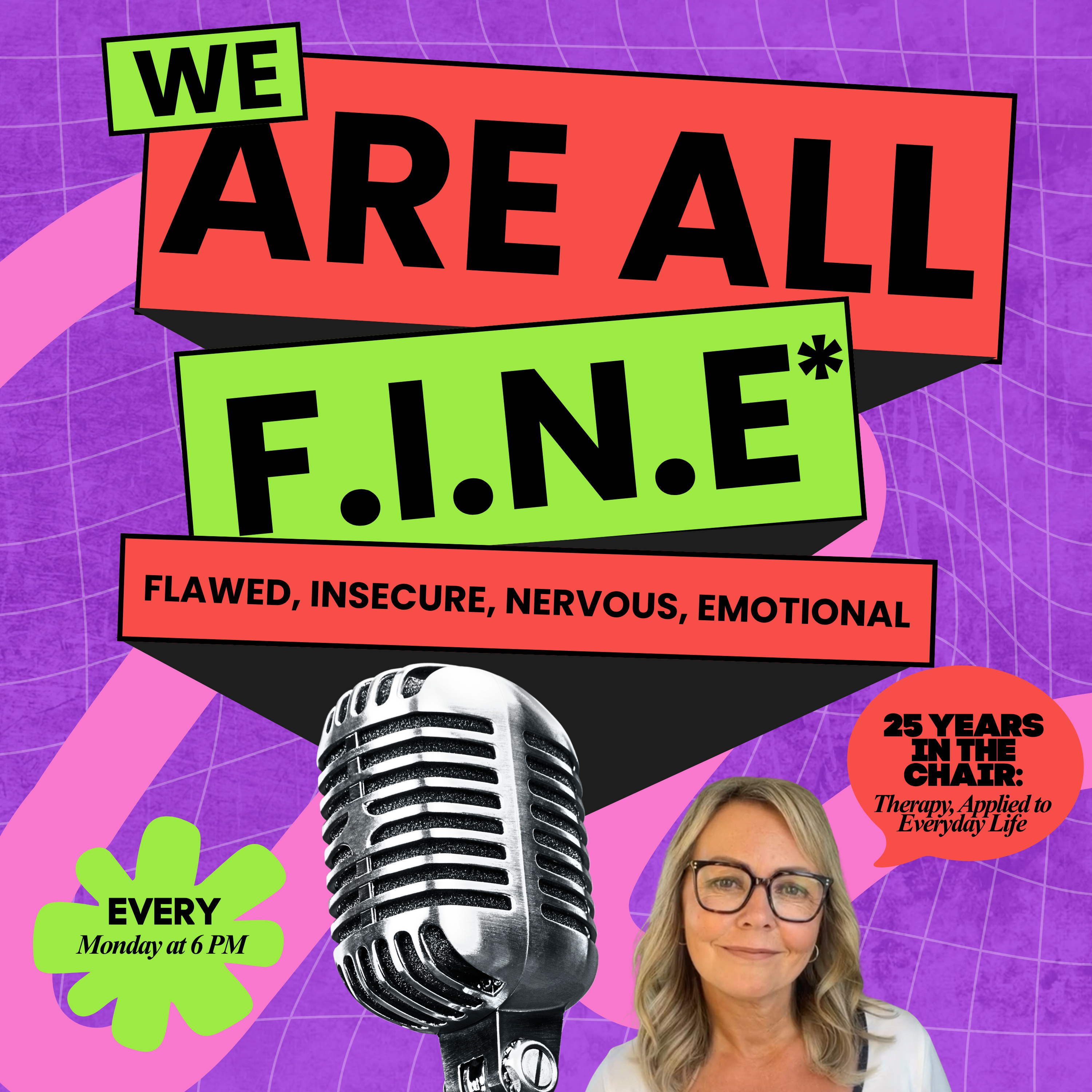
WE ARE ALL FINE – Flawed. Insecure. Nervous. Emotional – and if you are looking to know how to accept yourself knowing you are actually normal in this uncertain world, and want validation for how difficult life can be, then join me - Heidi Lester a counsellor and psychotherapist specialising in working with young people and young adults. Together, with my experience and knowledge and with your potential and hope you will learn to accept yourself and manage your emotions more comfortably whilst being more in control of your mental wellbeing. My message to you is simple. You are important, and you matter. Let me show you how to feel that. From my counselling years to your listening ears, join me every Monday, for supportive suggestions on how to manage your world, your way. I believe in you – and I know with my professional help – we are going to make an amazing team.
-
60
Why Guilt Controls Your Life (And How to Loosen Its Grip)
Episode Summary: Have you ever noticed that your most "selfish" moments are actually just the moments you decided to have a pulse of your own? In this episode, Heidi Lester dives into the "Invisible Anchor"—that heavy, suffocating guilt that appears the moment you try to set a boundary or say no. We explore why your brain treats self-care like a moral crime and how to move from feeling like a "bad person" to a person with healthy limits.Key Takeaways:• Guilt is Not Evidence: We often treat guilt as a "smoking gun" that we’ve done something wrong. In reality, it’s usually just a learned response to doing something unfamiliar.• The "Easy" Myth: Many of us were raised to believe that being "good" means being "easy" or accommodating. When we break this pattern, our nervous system reacts as if we are in danger.• The Physicality of Guilt: Guilt isn't just a thought; it's a sensation (tension, restlessness, the urge to "fix"). Recognising this helps you sit with the discomfort rather than reacting to it.• The Power Shift: You do not need to feel comfortable to make a healthy decision. You can feel guilt and still hold your boundary.Practical Tools:• Reframing the Feeling: Instead of seeing guilt as a signal that you are "bad," view it as the sound of an old, outdated habit grinding its gears as you change.• The "Slow" Approach: Start choosing what feels right for you in tiny, low-stakes ways to teach your system that you can be honest and still be okay.Resources & Connect:• Follow on Social Media: Get daily tips and behind-the-scenes insights at Therapy, Applied.• Direct Email: Have a question or a topic suggestion? Reach out to Heidi at [email protected] Up Next Week:When Family Feels Draining (And You Don’t Know Why) We’ll be looking at why certain family dynamics leave us empty and how to stay connected without losing your soul in the process.Disclaimer:This podcast is for educational and informational purposes only and is not a substitute for professional therapy, personal diagnosis, or medical advice. These opinions are personal and do not guarantee accuracy. Listening to this podcast does not create a counselling relationship; please always consult a qualified mental health professional with any concerns.
-
59
The Social Battery Audit: How to Stop Absorbing Everyone Else’s Energy
Have you ever walked into a room feeling fine and walked out an hour later carrying a heaviness that isn’t yours? If you identify as a 'people-pleaser,' an 'empath,' or if you just feel 'skinless' in social situations, your battery isn’t just draining—it’s being hijacked.Today, we’re moving from internal stress to relational stress. I’m getting honest about my own life as a therapist—why I often disappear on Friday nights, why being called 'aloof' is sometimes the price of peace, and how I’ve learned to sort through the energy I take in so I don't carry my office into my weekend. In this episode, we explore:• Emotional Contagion: The science of why you 'catch' other people's stress like a cold.• Observe vs. Absorb: The mental 'glass wall' technique to stay present without staying 'skinless.'• The Counselor’s Saturday: Heidi shares why she nourishes herself with silence and space, and why 'missing out' is a survival skill.• The 'Aloof' Reframe: Why protecting your peace isn't being miserable; it's being sustainable.• The Post-Social Reset: Physical ways to 'discharge' someone else's energy (shaking, cold water, and changing your clothes).Key Quote:"If you don’t take the time to sit in the quiet, you can’t do the work of 'sorting.' You need that space to figure out what belongs to you and what belongs to the room you just left." — Heidi LesterComing Next Week: The Friendship AuditEpisode Title: Your History is Not a Contract: Why Outgrowing a Friend is a Survival SkillNext Week's Summary: We talk about toxic partners, but we rarely talk about the heavy grief of outgrowing a friend. Next week, we’re diving into why friendship 'culls' hurt so much, how to know when the 'tally' of a relationship is in the red, and how to let go without the crushing guilt.Connect with Heidi• Email: Share your "Sponge" stories at [email protected].• Daily Tools: Follow Therapy, Applied on social media for daily practical skills.• Support the Show: If this episode helped you breathe easier, please Share, Review, and Save.Disclaimer: This podcast is for educational purposes only and is not a substitute for professional therapy or medical advice. Listening does not create a counselling relationship; please consult a qualified professional with any concerns.
-
58
The Micro-Stress Effect: Why You’re Exhausted (Even When You’ve "Done Nothing")
Episode Summary: We often wait fora "Big Bang" event to justify our stress—a crisis, a deadline, a life change. But what if the thing actually wearing out your nervous system is the thousand tiny, invisible pressures you’ve stopped noticing?In this episode, psychotherapist Heidi Lester dives into the world of Micro-Stress: the unanswered emails, the background noise, the constant "rushing" energy, and the "open tabs" in our minds. If you’ve ever felt on edge or drained without a "good reason," this episode is for you. Heidi breaks down why your nervous system responds to accumulated stress and shares her signature 1% Shifts—small, realistic adjustments to signal safety to your body and close the stress loop.In this episode, we explore:• The Accumulation Trap: Why hundreds of tiny "micro-demands" are heavier than one big crisis.• Nervous System Bracing: How to spot the physical "clench" you’re carrying through your day.• The 1% Shifts: Five practical, low-energy tools to interrupt the build-up of stress.• Completing the Cycle: Why finishing one tiny task is more regulating than a spa day.Heidi’s 1% Shifts for Today:1. The Body Audit: Notice where you are braced and gently soften (shoulders, jaw, breath).2. Micro-Slowing: Choose one mundane task to do 10% slower to signal "we aren't being chased."3. The Input Fast: Creating five-minute pockets of "less"—no phone, no noise, no data.4. Closing the Loop: Finishing one small, "open" task to give the brain a sense of completion.5. Supportive Language: Shifting from self-pressure to "No wonder I feel this way."Key Quote:"Your nervous system doesn’t need a completeoverhaul; it needs consistent, tiny signals of safety." — HeidiLesterComing Next Week: The Social Battery Audit: How to Stop Absorbing Everyone Else’s EnergyDo you walk into a room feeling fine and walk out feeling like you’ve inherited someone else’s bad mood? If you’re a "people-pleaser," an "empath," or just someone who feels "skinless" in social situations, your social battery isn't just draining—it’s being hijacked.Next week, we’re moving from internal stress to relational stress. Heidi breaks down why we "absorb" instead of "observe" and shares the exact mental scripts you need to protect your peace without shutting people out.Connect with the Show• Join the Community: If this episode gave you a moment of peace, please Share, Review, and Save the show.• Get Daily Tools: Follow Heidi on social media at Therapy, Applied for practical, real-world therapy skills.• Say Hi: Reach out to Heidi directly at [email protected].
-
57
The Panic Button: 5 Skills to Rewire Your Anxious Brain
Episode Summary: If your anxiety had a button, most of us would have worn it out by now.One small trigger, one stray thought, and suddenly your chest tightens, and your mind is racing. But here is the secret: Anxiety isn't a fixed part of who you are—it’s a well-practisedpattern your brain has learned. And anything learned can be unlearned.In this episode, psychotherapist Heidi Lester moves past the theory and into the "moment it matters." She shares 5 tangible, clinical skills to help you stop automatically pressing the panic button and start responding in a way that actually calms your nervous system down.In this episode, we cover:Neuroplasticity 101: Why your brain isn't "set in stone" and how you can reshape anxious patterns at any age.The Willingness Shift: Why the more you fight anxiety, the more dangerous your brain thinks it is.The "What Matters More" Filter: How to stop letting anxiety make your world smaller.Somatic Anchoring: Simple, physical ways to tell your brain you are safe when your thoughts are saying otherwise.The Power of Repetition: Why confidence is built after the action, not before it.The 5 Skills Shared in This Episode:1. Stop fighting, start allowing.2. Choose what matters more than the fear.3. Ground your body to calm your brain.4. Let go of "Perfect Handling."5. Challenge anxiety with small, consistent steps.Key Quote:"Resilience isn’t about being calm all the time. It’s about continuing—even when you’re not" — Heidi LesterConnect with the Show:Share the Peace: If this episode helped you find your feet today, please Share,Review, and Save the show. It helps us reach the people who feel stuck, overwhelmed, or alone in their anxiety.Daily Tools: Find Heidi on social media at Therapy, Applied for daily, practical therapy skills you can use in real life.Get in Touch: Have a question or a story to share? Email Heidi at [email protected] Next Week: Don’t miss our next episode on Micro-Stress. We’re looking at the tiny, 1% pressures—notifications, rushed mornings, and constant noise—that keep your nervoussystem on edge, and how to fix them with "The 1% Reset."Disclaimer: This podcast is for educational and informational purposes only and is not a substitute for professional therapy, personal diagnosis, or medical advice. These opinions arepersonal and do not guarantee accuracy. Listening to this podcast does not create a counselling relationship; please always consult a qualified mental health professional withany concerns.
-
56
Catastrophizing: Why We Imagine the Worst-Case Scenario
Episode Summary: Do you ever feel like your brain is a horror movie director, constantly casting you in worst-case scenarios? Whether it’s replaying a conversation from three years ago or "pre-feeling" the stress of a meeting that hasn’t happened yet, catastrophizing is an exhausting mental loop.In this episode, psychotherapist Heidi Lester explains why your brain isn't being "negative"—it’s actually trying to protect you. Drawing on over 25 years of clinical experience, Heidi breaks down the psychology of the "Childhood Detective," why we hold on to negative thoughts like Velcro, and most importantly, how to pivot from the terrifying "What If" to the grounded "What Is."In this episode, we explore:The Survival Script: Why your brain prioritises "threat" over "peace" (and why that's actually normal)The Childhood Detective: How unpredictable past environments created the habit of hyper-vigilance.The "What Is" Anchor: Three practical, therapist-approved steps to interrupt an anxiety spiral in real-time.Retraining the Habit: Moving from "this is just who I am" to "this is a habit I can change".Key Takeaway:"Your body isn’t reacting to what’s real; it’s reacting to what your mind is imagining. You’re suffering for a future that hasn't happened yet."Connect with Heidi:Email: I read every message. Share your "What Ifs" with me at [email protected] — your stories help shape this show.Social Media: Follow Therapy, Applied for daily, practical tools you can use to stay grounded.Support the Show: If this conversation helped you breathe a little easier, please Share, Review, or Save the episode. It’s the best way to help other "over-thinkers" find this space. Coming Next Week: Don't miss our deep dive: Rewiring the Brain — 5 Skills to Beat Anxiety Instantly. Heidi shares fast-acting clinical techniques to flip the switch on your nervous system the moment panic hits.Disclaimer: This podcast is for educational and informational purposes only and is not a substitute for professional therapy, personal diagnosis, or medical advice. These opinions are personal and do not guarantee accuracy. Listening to this podcast does not create a counselling relationship; please always consult a qualified mental health professional with any concerns.
-
55
5 Tips to Regulate the Emotions That Control You.
Episode Summary We’ve all been there: a moment where anxiety, shame, or anger takes the wheel, and suddenly you feel like a passenger in your own life. To celebrate one year of We Are All Fine, Heidi Lester moves from the "why" to the "how." In this episode, Heidi shares 5 tangible, clinical-grade somatic tools designed to help you reclaim the driver's seat. These aren't just "coping mechanisms"—they are physiological "hard resets" for your nervous system. Whether you're feeling "floaty" with anxiety or "hot" with rage, these techniques provide the emotional scaffolding you need to stay grounded when the storm hits. What’s Inside: • The One-Year Milestone: Heidi reflects on bringing "therapy skills to your ears" and the mission behind the podcast. • The Amygdala Hijack: Why we can’t "think" our way out of big emotions and why we must "body" our way out instead. • 5 Practical Regulation Tips: o Name to Tame: Creating the "Somatic Gap" between you and the feeling. o The Mammalian Dive Reflex: Using temperature to force a biological heart-rate reset. o Panoramic Vision: Shifting out of "threat-tunnelling" and into safety. o Proprioceptive Grounding: Using physical weight to exit the "mental story." o Parts Inquiry: Identifying the "age" of your emotion and putting your Adult self back in charge. Key Takeaways & Somatic Cues: • The 5-Second Press: When feeling ungrounded, press your feet into the floor for 5 seconds. Notice the sensation of the earth supporting you. • The Internal Dialogue: Try saying, "I am noticing a feeling of..." rather than "I am..." to remember that you are the sky, not the storm. "Being regulated doesn't mean the emotion goes away; it means you are the one holding the emotion, rather than the emotion holding you." — Heidi Lester Connect with Heidi: • Email: [email protected] — Send Heidi your questions, your "freeze" stories, and your ideas for future episodes! • Social Media: Follow Heidi for daily "Applied Therapy Skills" and bite-sized psycheducation. Support the Mission: If this episode helped you feel a little more in control today, please: 1. Share it with one person who might be struggling. 2. Review & Rate on Spotify or Apple Podcasts. 3. Save this episode so you can find these 5 tips the next time you feel a spiral coming on.
-
54
5 Signs You’re Suppressing Anger Somatically (And How to Stop)
Episode Summary: In this episode, Heidi Lester explores why we often fear anger and how"niceness" can sometimes be a sign of somatic shutdown. We dive into the nervous system's role in suppressing emotions and provide practical somatictools to help you reclaim your boundaries. Key Takeaways: · Anger as Protection: Understanding anger not as a"bad" emotion, but as a biological signal that a boundary has been crossed. · Somatic Shutdown: Identifying the physical signs ofsuppressed anger, such as sudden fatigue, brain fog, and "fawning" (over-agreeableness). · The Body-Mind Link: Why "storing" angerleads to resentment and emotional exhaustion. · The Wall Push Exercise: A simple somatic tool to releasethe physical "charge" of frustration safely. · Boundary Clarity: How acknowledging anger allows us tocommunicate our needs without aggression. Resources Mentioned: · Affect Labelling: The psychological practice ofnaming emotions to reduce amygdala activation. · Somatic Experiencing Principles: Understandingthwarted self-defence in the nervous system. Reflection Question: "Where in my life am I prioritising 'being nice' over being honest with my own boundaries?" Next Episode: Don't miss next week: 5 Tips to Regulate the Emotions That Control You.
-
53
Empathy vs. Overwhelm: Somatic Tools for the Highly Sensitive Person
Have you ever been told you’re "too sensitive" or "too dramatic"? Do you walk into a room and instantly soak up everyone else’s stress, anger, or sadness until you feel too heavy to move? In this episode, Heidi Lester rebrands the "sensitivity myth" and explains why being an emotional sponge isn't a personality flaw—it’s a lack of emotional scaffolding.Heidi breaks down the crucial difference between healthy empathy and emotional overwhelm (empathic distress). This is an invitation to stop apologising for feeling deeply and start building the somatic filters you need to stay compassionate without losing yourself in the process.In This Episode, We Cover:Empathy vs. Overwhelm: Why empathy is a bridge where you stay on your own ground, while overwhelm is a flood that collapses your boundaries.The "Somatic Mirror": Understanding emotional contagion—the ancient survival mechanism that causes us to "catch" other people’s moods like a cold.Recognising the Somatic "Tell": How to listen to your body’s signals—like a tight chest or a clenched jaw—to know when you’ve crossed the line into threat-state.The Primary School Teacher Trap: A real-world example of how "holding" collective anxiety leads to burnout, and why sensitivity without protection is exhausting.The Sensitivity Toolkit: Three practical ways to build your filter: The Visual Anchor: Using a "clear glass" visualisation to stay present but protected. Physical Discharge: How to use the "physiological sigh" to blow off someone else’s tension. The "Whose Is This?" Check: A simple mental boundary to stop claiming emotions that aren't yours. Key Takeaway Quote"Being a sensitive person is a superpower—it’s a high-resolution lens on the world. But a high-resolution lens needs a sturdy tripod. You can be a soft person in a hard world without letting the world's hardness live inside you." Join the ConversationI would love to hear your reflections on this episode. Have you ever felt like an "emotional sponge"? What does your body feel like when you’ve absorbed too much of someone else’s "water"?Email me: [email protected] Follow & Connect: Find me on Instagram, Facebook, TikTok, and YouTube at @TherapyAppliedComing Up Next Week: Join us as we dive into The Somatic Secret of Anger. We’ll explore why we are so afraid of this emotion and why your"niceness" might actually be a somatic shutdown in disguise.Disclaimer: This podcast is for educational and informational purposes only and is not a substitute for professional therapy, personal diagnosis, or medical advice. These opinions are personal and do not guarantee accuracy. Listening to this podcast does not create a counselling relationship; please always consult a qualified mental health professional with any concerns.
-
52
How to Detach from Overthinking (Anxiety, Hypervigilance & Childhood Roots Explained)
Why do we replay emails, dissect voice notes, and rehearse conversations that haven't even happened yet? In this episode, Heidi Lester explores overthinking—not as a personality flaw or "being too sensitive," but as a sophisticated safety strategy. Heidi explains the roots of hypervigilance and how our brains become "world-class detectives" when we grow up in unpredictable environments. This episode is an invitation to stop fighting your thoughts and start leading your nervous system back to the present moment. In This Episode, We Cover: The "Safety Strategy" of Spinning: Understanding why your brain scans for storms and how thinking became a shield in your childhood. The Roots of the Detective Brain: A reflection on how unpredictable moods or absence in early life teach us to read the "subtext" of silence to stay safe. Linear vs. Circular Thinking: How to identify when your mind is actually solving a problem versus when it’s just a car stuck in the mud. Cognitive Defusion: The simple, powerful shift from being the "actor" in your thoughts to being the "observer." Somatic Tools for Grounding: Why you can't talk a frightened nervous system out of fear, and how to "feel" your way out of a mental loop instead. Setting Cognitive Authority: Practical boundaries like the "Worry Window" to remind your anxiety that you are the CEO of your mind. Key Takeaway Quote "Thinking more doesn't make you safer; it just makes you tired. Resilience isn't about predicting every hard day perfectly—it’s about trusting that you can cope with whatever happens." Join the Conversation I would love to hear your reflections on this episode. What is the "puzzle" your brain usually tries to solve when you’re feeling unsafe? Email me: [email protected] Follow & Connect: Find me on Instagram, Facebook, TikTok, and YouTube at @heidilestermentalhealththerapist for therapy skills you can use every day. Coming Up Next Week Join us as we talk to the "emotional sponges"—the ones who have been told they are "too sensitive." We’ll explore why sensitivity is actually a high-resolution lens on the world and how to stop "catching" everyone else's mood.
-
51
Your Personality Might Be a Trauma Response (ACEs, Hyper-Independence & Healing)
Why do we over-perform, shut down, or struggle to trust even when we are safe? In this episode, Heidi Lester explores Adverse Childhood Experiences (ACEs)—not as a clinical checklist, but as the invisible blueprints that shape our adult lives. Heidi shares her own journey of growing up with an emotionally absent father and explains how "resilience" is often just a survival adaptation that we can finally choose to set down. This is an invitation to stop asking "What is wrong with me?" and start asking "What happened to me?" In This Episode, We Cover: • Defining ACEs in Human Terms: Moving beyond the acronym to understand how emotional neglect, instability, and conflict impact the developing brain. • The Survival Blueprint: How childhood adaptations (like being the "strong one" or the "invisible one") follow us into adulthood. • Heidi’s Personal Story: A reflection on abandonment, self-reliance, and the steady work of teaching a nervous system to trust again. • Recognising the Threads: How ACEs manifest in adulthood through overreacting, people-pleasing, or a relentless inner critic. • Practical Tools for Rewriting the Story: o Using body awareness to catch "activation" before it becomes an outburst. o The power of reflective journaling to create space between the trigger and the reaction. o Building "Internal Safety" through boundaries and self-compassion. Key Takeaway Quote "Adaptations that helped you survive at eight years old may not serve you at thirty-eight. Healing isn’t about rewriting history; it’s about gently teaching your nervous system that the present is not the past." Join the Conversation I would love to hear your reflections on this episode. What was the "role" you had to play as a child? • Email me: [email protected] • Follow & Connect: Find me on Instagram/Facebook/TikTok and YouTube at @heidilestermentalhealththerpaist for therapy skills you can use every day Coming Up Next Week Join us as we dive into Overthinking—why your mind spirals and how to gently step out of the loop by understanding your nervous system's need for "certainty." Disclaimer: This podcast is for educational purposes only and is not a substitute for professional therapy or medical advice. If you are struggling, please reach out to a qualified mental health professional.
-
50
Healing from Childhood ACEs — Rewriting Your Inner Story
Childhood experiences shape more than memories — they shape the way your nervous system responds to stress, relationships, and self-worth. In this episode of We Are All Fine, counsellor and psychotherapist Heidi Lester explores Adverse Childhood Experiences (ACEs) and how they quietly influence adult emotional patterns, self-talk, and relational behaviours. This episode isn’t about blame or reliving the past. It’s about understanding — and gently learning how to rewrite the inner story your childhood shaped. You’ll learn how ACEs affect the brain and nervous system, how they show up in adulthood, and how counselling-informed tools can help you respond to yourself with compassion, clarity, and choice. If you’ve ever wondered “Why do I react like this?” or “Why does this feel so hard for me?” — this episode offers grounding insight and hope. Email Heidi - [email protected] or connect with Heidi -@heidilestercounsellor on TikTok, Instagram, YouTube and Facebook
-
49
Ghosting, Connection Anxiety, and Modern Relationship Pain
In today’s world of texting, dating apps, and inconsistent communication, many people are experiencing a quiet but painful form of relational distress — ghosting, connection anxiety, and emotional uncertainty. In this episode of We Are All Fine, counsellor and psychotherapist Heidi Lester explores why modern relationship patterns can feel so destabilising, and why these experiences often hit deeper than we expect. You’ll learn how ghosting and inconsistent communication activate the nervous system, how attachment patterns influence anxiety and self-doubt, and why your reactions make sense — even when you feel like you’re “overreacting.” This episode is for anyone who has felt confused, anxious, or emotionally unsettled in modern relationships — and wants to understand themselves with more compassion, clarity, and emotional safety. You’re not too much. You’re responding to a system that learned to protect you. Email Heidi - [email protected] or connect with Heidi -@heidilestercounsellor on TikTok, Instagram, YouTube and Facebook
-
48
Inner Child Healing — What It Really Is (Not Cliché)
Discover the truth about inner child work. Heidi Lester, counsellor and psychotherapist, explores how early experiences shape your nervous system, influence your emotional patterns, and how you can respond with compassion, self-trust, and emotional integration. Move beyond clichés — and learn practical, therapeutic ways to reconnect with and support your inner self. Email Heidi - [email protected] or connect with Heidi -@heidilestercounsellor on TikTok, Instagram, YouTube and Facebook
-
47
Trauma Response vs. Overreaction — Understanding Your Alarm System
In this episode of We Are All Fine, Heidi explores one of the most misunderstood experiences in mental health: the difference between a trauma response and an overreaction. Many people judge themselves harshly for their emotional reactions — feeling “too much,” “too sensitive,” or “out of proportion.” But from a counselling and neuroscience perspective, these reactions often make complete sense. This episode gently unpacks how your nervous system works, why your body reacts before your mind can catch up, and how to respond to yourself with understanding instead of criticism. Email Heidi - [email protected] or connect with Heidi -@heidilestercounsellor on TikTok, Instagram, YouTube and Facebook.
-
46
Why Self-Care Isn’t Working — Using Counselling Skills to Support Yourself
Are you following self-care routines but still feeling drained, stressed, or emotionally off? In this episode, Heidi Lester, counsellor and psychotherapist, explores why traditional self-care often falls short — and how counselling skills can transform your daily practices into truly restorative experiences. This episode turns self-care from a checklist into a therapeutic conversation with yourself. Perfect for anyone looking to build self-trust, resilience, and genuine emotional nourishment. Email Heidi - [email protected] or connect with Heidi -@heidilestercounsellor on TikTok, Instagram, YouTube and Facebook.
-
45
Emotional Boundaries: How to protect yours without guilt
Emotional boundaries shape every relationship you have — yet many people struggle to set them without feeling guilty, selfish, or afraid of conflict. In this episode of We Are All Fine, counsellor and psychotherapist Heidi Lester explores what emotional boundaries really are, why they’re so difficult to maintain, and how they protect not just your wellbeing, but your relationships too. This is a gentle, therapeutic conversation about learning to honour your emotional limits, recognising when your boundaries are being crossed, and finding steadiness in saying no — without shutting others out. If you often feel emotionally drained, overwhelmed by others’ needs, or unsure where you end and someone else begins, this episode will help you reconnect with your own emotional space. Email Heidi - [email protected] or connect with Heidi -@heidilestercounsellor on TikTok, Instagram, YouTube and Facebook.
-
44
Emotional Boundaries — Understanding What Protects Your Peace, Energy & Wellbeing
In this therapeutic and reflective episode, Heidi explores the quiet power of emotional boundaries — the gentle limits that protect your energy, your emotional space, and your wellbeing. If you often feel drained, overwhelmed, guilty for saying no, or unsure how to express your needs without conflict… this episode will guide you back to clarity and self-respect. Learn how to recognise weak boundaries, why they’re so difficult to set, and the compassionate steps you can take to strengthen them. Email Heidi - [email protected] or connect with Heidi -@heidilestercounsellor on TikTok, Instagram, YouTube and Facebook.
-
43
Letting Go of Last Year: Closure, Compassion, and Moving Forward
The new year often arrives with pressure — to be better, to start fresh, to reinvent yourself overnight. But emotional growth doesn’t happen through force. It happens through reflection, gentleness, and compassion. In this grounding New Year episode, Heidi guides you through a calming, therapeutic process for releasing what last year left behind — without shame, self-criticism, or forced positivity. This isn’t about resolutions. It’s about relief. It’s about understanding your experiences, honouring how far you’ve come, and moving forward in a way that feels supportive, not overwhelming. Perfect for anyone craving a softer, steadier start to the year. Email Heidi - [email protected] or connect with Heidi -@heidilestercounsellor on TikTok, Instagram, YouTube and Facebook.
-
42
How to Look After Your Mental Health at Christmas
The festive season is often portrayed as joyful and magical — but underneath the surface, many people experience stress, grief, loneliness, pressure, and emotional overwhelm. In this episode, Heidi gently unpacks why Christmas is so challenging and offers practical, therapeutic ways to care for yourself throughout December. If you find the holidays difficult, you’re not alone, and this episode is here to support you. Email Heidi - [email protected] or connect with Heidi -@heidilestercounsellor on TikTok, Instagram, YouTube and Facebook.
-
41
Your Attachment Style Isn’t Your Destiny: How Therapy Helps You Relearn Connection
In this episode, Heidi explains how attachment patterns form, why they can feel so hard to change, and how therapy helps you build new, healthier ways of connecting. A gentle, therapeutic guide for anyone navigating relationship anxiety, avoidance, or self-protection. You’ll learn how early experiences shaped your internal template for closeness, why you react the way you do in relationships, and how new relational experiences create healing and change. This episode offers a grounded, compassionate look at how you can move toward a secure, steady connection no matter your starting point. Email Heidi - [email protected] or connect with Heidi -@heidilestercounsellor on TikTok, Instagram, YouTube and Facebook.
-
40
How to Hear Yourself: The Art of Emotional Self-Awareness
Struggle to understand your emotions or hear your inner voice? In this episode, Heidi, a Counsellor and psychotherapist, explores why emotional self-awareness can feel so difficult — and how to reconnect with yourself with clarity and compassion. Learn the signals your emotions send, how to recognise your internal cues, and simple daily practices to strengthen your emotional understanding. This episode is perfect for anyone navigating overwhelm, anxiety, self-doubt, or disconnect. Email Heidi - [email protected] or connect with Heidi -@heidilestercounsellor on TikTok, Instagram, YouTube and Facebook.
-
39
How to develop your own internal counsellor
Discover how to strengthen your “internal counsellor” — the compassionate, steady inner voice that helps you navigate emotions, decisions, and difficult moments. Heidi, counsellor and psychotherapist, guides you through practical, therapeutic steps to build emotional insight, soften self-criticism, and support yourself with more clarity and care. Perfect for anyone working on self-trust, healing, or personal growth. Email Heidi - [email protected] or connect with Heidi -@heidilestercounsellor on TikTok, Instagram, YouTube and Facebook.
-
38
5 Things You Need to Know Before Starting Counselling
Thinking about starting counselling? Starting counselling can feel daunting, but it doesn’t have to be. In this gentle and informative episode, your host, counsellor and psychotherapist Heidi Lester shares five essential things you should know before you begin. From managing nerves to understanding the importance of trust, this episode helps you approach therapy with clarity and confidence. Email Heidi - [email protected] or connect with Heidi - @heidilestercounsellor on TikTok, Instagram, YouTube and Facebook.
-
37
Letting Go of Perfection: How to Embrace Being Enough
Perfectionism promises control and security, but often leaves us feeling anxious, inadequate, and exhausted. In this gentle and therapeutic conversation, Heidi Lester guides you through understanding the deeper patterns behind perfectionism — from childhood experiences and critical environments to the quiet fears of not being enough. You’ll hear practical, reflective steps to begin letting go of unrealistic expectations, including how to: • Redefine what “enough” means in your daily life • Recognize and respond to your inner critic • Practice self-kindness instead of self-judgment • Value rest, effort, and progress equally • Allow yourself to be seen — imperfect, but real This episode is an invitation to slow down, soften your self-talk, and rebuild your sense of worth from within — one small, compassionate step at a time. Email: [email protected]
-
36
The Ultimate Guide to Self-Improvement: Becoming More You
In this episode of We Are All Fine (WAAF), counsellor and psychotherapist Heidi Lester shares a grounded, compassionate look at self-improvement — not as a way to fix what’s broken, but as a process of becoming more authentically you. Together, we explore common myths about personal growth, why perfection isn’t the goal, and how small, intentional actions build lasting change. You’ll learn gentle, practical ways to strengthen your self-trust, reconnect with your values, and celebrate your progress — one step at a time. If today’s episode resonated with you, please follow, rate, and share We Are All Fine (flawed, insecure, nervous and emotional) — it really helps the show grow. Email: [email protected] Socials: @heidilestercounsellor on Instagram, TikTok, Instagram & YouTube
-
35
Empathy vs. Sympathy: How to Connect Without Losing Yourself
Have you ever walked away from a conversation feeling completely emotionally exhausted — like you’ve taken on someone else’s pain? You may be practising sympathy instead of empathy. In this episode of We Are All Fine, your host, Heidi Lester, unpacks the difference between empathy and sympathy — and why understanding it can completely change how you connect with others. You’ll learn how to listen, care, and show up authentically without absorbing other people’s emotions or burning out. Heidi also explores: • The psychology behind empathy and why it’s so powerful in relationships • How sympathy can unintentionally create distance or pity • The link between empathy fatigue and poor boundaries • Simple ways to protect your energy while still being present and compassionate • How empathy can strengthen — not drain — your relationships If you’re someone who feels deeply, takes on others’ emotions, or struggles to separate your feelings from theirs, this episode is for you. You’ll leave with practical tools to connect with compassion and still stay grounded in yourself.
-
34
Looking Inward: Self-Reflection Tips for Personal Growth and Development
Looking Inward: Self-Reflection Tips for Personal Growth and Development In this episode of We Are All Fine, I explore the transformative power of self-reflection — what it really means, why it matters, and how to make it a daily practice for genuine personal growth. Self-reflection isn’t about overthinking or self-criticism — it’s about curious awareness. It helps you pause, notice your inner world, and make intentional choices instead of reacting automatically. Join me as I share simple, compassionate ways to reflect that strengthen your emotional awareness, confidence, and self-trust — all key ingredients in your personal development journey. Your takeaways from episode 34: • Self-reflection is not self-criticism — it’s an act of self-awareness and growth. • Awareness is the first step toward meaningful change. • Kind curiosity works better than harsh self-analysis. • Consistent reflection strengthens your self-trust and emotional intelligence. • The goal isn’t to get it “right” — it’s to understand yourself more deeply. If this episode resonated with you, follow We Are All Fine wherever you listen to podcasts, leave a rating, or share it with someone who might need a moment to pause and look inward. Email Heidi: [email protected] Socials: Find Heidimentalhealththerapist on TikTok, YouTube, Facebook, and Instagram.
-
33
Overcoming self doubt and second guessing
In this episode of We Are All Fine (W.A.A.F — Flawed, Insecure, Nervous, and Emotional), counsellor and psychotherapist Heidi Lester explores the roots of self-doubt — that quiet inner voice that questions your worth, your instincts, and your decisions. You’ll learn: • Why self-doubt shows up and how it keeps you stuck in overthinking • How it often hides beneath perfectionism, people-pleasing, and comparison • The subtle ways self-doubt appears in the counselling room • Where it really comes from — including early experiences, anxiety, and misunderstood interactions • Practical ways to start rebuilding self-trust and growing confidence through small, meaningful steps If you’ve ever caught yourself replaying conversations, hesitating to speak up, or seeking reassurance before making a move — this episode will help you quiet that inner critic and begin to trust your own voice again. I’d love to hear your thoughts about today’s episode — what resonated, what you’re practicing, or what self-trust means to you. Email me at [email protected] Follow along on social media: TikTok, YouTube, and Facebook - @heidilestercounsellor If this episode resonated, please follow the show, leave a review, and share it with someone who might need this gentle reminder that they’re not alone in their self-doubt.
-
32
The Art of Saying No Without Guilt - A Simple 3-Step Process to Say No Without Guilt
Quick question: how many times have you said “yes” this week when deep down you wanted to say “no”? In this episode, join me, your host Heidi Lester WAAF I explore why that two-letter word — no — feels so heavy, and how you can start saying it with clarity, confidence, and kindness. Saying no doesn’t mean you’re rude or selfish. In fact, a well-placed no protects your energy, your time, and your relationships. Every yes you give is also a no to something else — so today, we’ll look at how to make your no’s guilt-free and grounded in self-respect. I’d love to hear your thoughts on this episode and what “saying no without guilt” looks like in your own life. You can connect with me on social media for more reflections and tools between episodes — just search for We Are All Fine. Or, if you’d like to reach out directly, you can always email me at [email protected]. I read every message and love hearing from listeners. And if this episode resonated with you, don’t forget to follow the show, leave a rating or review, and share it with someone who might need this reminder today.
-
31
If you people please, here's how to stop
Do you ever find yourself saying yes when you really want to say no? Maybe you agree to extra work, attend an event you’re not excited about, or stay quiet when you’d rather speak up — all because you don’t want to upset anyone. That’s people-pleasing. In this episode, join me, Heidi Lester, counsellor and psychotherapist, as I break down what people-pleasing really is, why we fall into the habit, and how it quietly harms our self-worth and relationships. You’ll learn why it feels safe in the moment, but ultimately leads to exhaustion, loneliness, and resentment. Most importantly, I will share practical ways to stop people-pleasing without guilt — from practising small no’s to setting healthier boundaries and validating yourself instead of seeking approval. If you’ve ever wondered how to show up more authentically in your life and relationships, this conversation is for you. You don’t need to earn love or approval by constantly putting others first. Saying no with kindness and standing by your boundaries is not selfish — it’s an act of self-respect. And the more authentic you are, the more genuine your connections will become. Share this episode with a friend who struggles with saying no Try journaling: When do I say yes to avoid guilt, and when do I say yes out of choice? Follow me on TikTok, Instagram, YouTube and Facebook.
-
30
Rediscovering Yourself After Depression
In this episode of We Are All Fine, I explore the journey of rediscovering yourself after depression lifts. Even when the worst has passed, it’s common to feel disconnected from your interests, relationships, and sense of self. Join me as I explain why this happens, and I will offer practical strategies to reconnect with your emotions, hobbies, and authentic identity — gently and intentionally. If you’ve recently come out of depression and feel lost, disconnected, or unsure of yourself, this episode provides reassurance, perspective, and actionable strategies to help you gently rediscover your identity and reconnect with life. Follow me on TikTok, Instagram, YouTube, and Facebook for daily mental health tips. Contact me directly: [email protected] Check out other episodes on We Are All Fine, including topics like loneliness, people-pleasing, and self-compassion — all designed to help you navigate life’s challenges.
-
29
Loneliness – Why You Feel It & How to Manage It
Loneliness is a universal human experience — yet social media, external pressures, and the expectation to “fit in” can make it feel even more intense. In this episode, I will explore why we feel lonely, what triggers these feelings, and practical strategies to manage them. You’ll hear guidance from me, a counsellor and psychotherapist, on acknowledging loneliness without shame, connecting with others meaningfully, and practising self-compassion. If you’ve ever felt lonely, even in a crowd or online, this episode provides reassurance, perspective, and practical tools to help you navigate these emotions and build authentic connections. • Follow me on TikTok, Instagram, YouTube, and Facebook for daily mental health tips. • Contact me directly: [email protected] • Share this episode with someone who might need a reminder that they’re not alone.
-
28
Going to Uni – Leaving Home, Hopes & Fears
Leaving home and starting university is one of the biggest transitions in young adulthood. It’s exciting, scary, overwhelming, and hopeful — often all at once. In this episode, I talk about the emotional rollercoaster of moving away from home, why those feelings are completely normal, and practical ways to handle homesickness, social anxiety, academic pressure, and loneliness. You’ll also hear encouragement on how to make the most of this new chapter — from nurturing your hopes to practicing self-compassion when it feels tough. Let me share: • Why it’s normal to feel both excited and nervous about starting uni • How to manage homesickness without cutting yourself off from your new life • Small steps to ease social anxiety and make connections • Practical ways to deal with academic pressure and self-doubt • How to nurture your hopes while balancing your energy • Why self-compassion is your best tool during this transition If you’re about to start uni, already settling in, or supporting someone who is, this episode will give you comfort, reassurance, and practical steps to help you feel less alone in the process. • Follow Heidi on TikTok, Instagram, YouTube, and Facebook for daily mental health tips. • Contact Heidi directly: [email protected] • Share this episode with a friend starting uni this year!
-
27
Not Feeling Good Enough in Relationships: Why It Happens & How to Change It
Do you often feel like you’re not good enough in your relationships? You’re not alone. In this episode, I explore why these feelings arise, from early experiences and social comparisons to attachment styles and our inner critic. Most importantly, I share practical strategies to help you shift these patterns, build self-compassion, and create healthier, more secure connections with yourself and others. Understand the roots: Childhood experiences, social media comparisons, anxious attachment, and your inner critic all contribute to feeling “not enough. Challenge the inner story: Notice when your mind says “I’m not enough” and create distance by labelling it as a thought, not a fact Practice self-compassion: Speak to yourself as you would a close friend and use affirmations like “I deserve love just as I am. Look for evidence: Balance the negative story with real evidence that shows your worth Communicate with your partner: Sharing your feelings builds trust and safety Nurture self-identity: Ground yourself in hobbies, friendships, and personal goals outside the relationship. If you’ve ever doubted your worth in a relationship, this episode provides reassurance, understanding, and practical tools to start seeing yourself differently — and to build healthier, more balanced connections. Follow me on TikTok, Instagram, YouTube, and Facebook for daily tips Contact me directly: [email protected]
-
26
Overthinking: Why We Do It and How to Stop the Loop
Do you ever catch yourself replaying conversations, worrying about “what ifs,” or feeling stuck in endless loops of thought? You’re not alone. In today’s episode of We Are All Fine, I’m diving into the messy but totally normal habit of overthinking — why it happens, how it affects us, and most importantly, what you can do to break free. We’ll explore: Why our brains are wired to overthink The physical and emotional signs you might be caught in a thought loop 5 practical tools to calm your mind — including my favourite 321 STOP technique How self-compassion can quiet negative thoughts Overthinking doesn’t mean something is “wrong” with you — it’s a brain response, not a personal flaw. With awareness and small, practical steps, you can ease the pressure and make clearer, more confident decisions. If this episode resonates, share it with a friend who might need it too. And remember: your thoughts don’t define you! • Follow me on TikTok, Instagram, YouTube & Facebook for daily mental health tips • Listen to past episodes on mindfulness, grounding, and positive affirmations
-
25
Feeling Socially Anxious in New Places? Here’s How to Manage It
Feeling Socially Anxious in New Places? Here’s How to Manage It Walking into a new place can feel overwhelming — whether it’s a class, party, job, or café. Social anxiety is normal, but it doesn’t have to hold you back. In this episode, I share practical tips for managing social anxiety in new environments. I'm your host, Heidi Lester, a Counsellor and Psychotherapist with 25 years of experience working with young adults, and in today's episode, you’ll learn how to start small, ground yourself, shift your focus outward, practice self-compassion, and celebrate every step. This episode is all about giving you actionable strategies so you can feel calmer, more confident, and more connected. Key Takeaways: • Small interactions build confidence — start with tiny steps. • Grounding techniques help calm your nervous system and bring you back to the moment. • Focusing on others instead of yourself reduces anxiety. • Self-compassion is essential — anxiety doesn’t define your worth. • Celebrate every small win — progress matters more than perfection. Resources & Links: • Follow Heidi on TikTok, Instagram, YouTube, and Facebook for daily tips. • Contact Heidi directly: [email protected]
-
24
You need positive affirmations in your life - here's why!
Positive affirmations are everywhere — but do they really work? In this episode, we explore the science behind affirmations, why they sometimes feel awkward or fake, and how to create affirmations that truly help you build confidence and kindness toward yourself. You’ll learn: • What positive affirmations really are • Why your brain might resist them at first • How affirmations can rewire your brain over time • Tips to personalise affirmations that feel authentic • How to pair affirmations with real-life actions for best results Hi, I’m Heidi Lester, a Counsellor and Psychotherapist with 25 years of experience working with young people and young adults. This podcast is a space created just for you — a place where you can feel truly heard, seen, and valued. I share daily content on TikTok, Instagram, YouTube, and Facebook designed to help you navigate your mental health and make the most of being exactly who you are. I’d love to connect with you! Feel free to reach out to me through any of these channels, or contact me directly at [email protected].
-
23
Simple Ways to Break a Negative Thought Spiral
Welcome to episode 23 of WAAF – The Podcast Where You Feel Heard, Normal, Validated, and Understood. I’m your host, Heidi Lester, a Counsellor & Psychotherapist with 25 years’ experience supporting thousands of young people navigating life’s challenges. Today’s episode tackles one of the most common questions I hear: “How can I stop my negative thoughts?” If your mind has been spinning with anxious, critical, or overwhelming thoughts, this episode is for you. What You’ll Learn in This Episode: • Why you can’t completely stop negative thoughts—and why that’s okay • How your brain is wired to notice threats and why negative thinking happens • The power of managing your response to negative thoughts instead of fighting them • A gentle, 4-step technique to interrupt spiralling thoughts without judgment or pressure The 4 Steps to Break the Negative Thought Spiral: 1. Pause Stop and gently shift your focus to your surroundings and your senses. This helps you come back to the present moment without trying to fix anything. 2. Notice Observe your thoughts without judgment or self-criticism. Become a curious explorer of your inner experience and ask: o What is this thought trying to tell me? o When did it start? o How does it feel in my body? o Are there triggers or patterns? 3. Label Instead of fully believing a thought, try putting a little space between you and it by saying: “I’m having the thought that…” This reminds you that thoughts are temporary mental events, not absolute truths. 4. Choose After pausing, noticing, and labeling, decide your next step. It could be something small but meaningful like: o Getting up from your seat o Sending a text o Drinking water o Reminding yourself, “I’m still here” Negative thoughts are a natural part of being human—they don’t define you, and they don’t have to control your life. By practising these steps, you build a kinder, healthier relationship with your mind and start to regain control. Be patient with yourself. Change takes time, and every small effort counts. If you found this episode helpful, please share it with someone who might benefit too. Follow me, Heidi Lester, mental health therapist on TikTok, Instagram, YouTube and Facebook. Thanks for listening — I’m so glad you’re here. Until next time, take good care of yourself.
-
22
Dealing with emotionally unavailable people
Have you ever tried to open up to someone, only to feel ignored, shut down, or completely unseen? In this episode, we explore the frustrating and painful dynamic of emotionally unavailable people — the ones who seem close enough to keep you hanging on, but never truly let you in. We unpack: • What emotional unavailability actually looks like • Why it hurts so much to be on the receiving end • Why we stay (even when we know we’re not getting what we need) • And most importantly — how to stop chasing emotional breadcrumbs and start protecting your boundaries Whether it’s a partner, a friend, or a parent, this episode is here to validate what you’ve been feeling — and help you take your power back. If you want more support and words of encouragement, follow me Heidi Lester, on TikTok, Instagram, YouTube and Facebook. You can reach me on my email [email protected] I welcome your comments, feedback, questions for a counsellor and ideas for future shows.
-
21
Understanding your intrusive thoughts - we all think weird stuff!
Ever had a thought pop into your head that made you go, “Wait — what?! Where did that come from?” In this episode, we break down: • What intrusive thoughts actually are • Why they happen (even when you don’t want them to) • What makes them worse — and what can help you manage them Join me, Heidi Lester, your host. I've over 25 years of counselling experience working with young people just like you, and I know how bothersome intrusive thoughts can be. So let's spend time together talking about why the brain throws out random, unwanted thoughts and why trying to 'stop' them will actually make them worse for you. This episode is here to remind you: intrusive thoughts are common, treatable, and say nothing about your worth or identity. If you’ve been silently struggling with thoughts you don’t understand — you are not alone, and there is help. If this episode resonated with you, consider leaving a review or sharing it with someone who needs reassurance too. Follow me, Heidi Lester, on TikTok, Instagram, YouTube and Facebook.
-
20
HOW TO BE OK WITH NOT BEING OK
Welcome to We Are All Fine - I am a counsellor and psychotherapist, and in this episode, we get honest about something we all feel — but don’t always give ourselves permission to say out loud: “I’m not okay.” Whether you're feeling burnt out, sad for no clear reason, anxious in your own skin, or just... off, this episode reminds you that being human means being messy sometimes. You don’t need to be positive 24/7. You don’t need to fix everything immediately. And you definitely don’t need to pretend you’re fine when you're not. If you found this episode helpful, share it with a friend who might need it too. And if you're feeling generous, leave a review — it helps this show reach more people who need real, non-judgy conversations like this. Follow me, Heidi Lester, on TikTok, Instagram, YouTube and Facebook. You can reach me on my email [email protected]
-
19
Comparison Fatigue: Why You Feel So Tired of Measuring Up
Have you ever caught yourself endlessly scrolling, only to feel like you’re falling short of everyone else? Or exhausted from trying to keep up with what you think you should be doing? In this episode, we delve into comparison fatigue — the mental and emotional exhaustion that arises from constantly measuring yourself against others. We will be exploring the following together: Why your brain is wired to compare How social media fuels the comparison trap The hidden costs of always trying to measure up Practical strategies to step out of the endless race and reconnect with your own values If you’re tired of feeling like you never quite add up, this conversation is for you. After you listen, ask yourself: What really matters to me, apart from what others expect? Connect with me by following me on Instagram, TikTok, Facebook, and YouTube Please leave a review if this resonated with you — it helps so much! And please share with someone who might need this reminder today. You can contact me directly at [email protected].
-
18
The reset - A moment for you
You’ve made it through exams, deadlines, group chats, goodbyes, burnout, and a million decisions. And now everything’s... quiet. This is WE ARE ALL FINE — a podcast for young people, and here is episode 18 a reflective show to help you rest, make sense of the silence, and gently figure out what’s next. There’s a strange space between endings and beginnings. A kind of emotional waiting room. You’re not the person you were during exam season. But you don’t feel quite like the person you’re becoming yet. That’s okay. That in-between space — as weird as it feels — is where growth actually happens. You don’t have to have a plan. You don’t need to rush to the next big thing. Right now, your only job is to be here. To honour the pause. Join me, Heidi Lester, Counsellor and Psychotherapist, as I aim to meet you where you are at right now - the in-between part of your life. Whatever that means to you, whatever it looks like. Follow me on TikTok, YouTube, Facebook and Instagram. All feedback is welcome - [email protected]
-
17
How to handle rejection without falling apart
Rejection hurts. Whether it’s not getting the job, being ghosted, falling out with a friend, or feeling invisible at home, being told "no" can feel personal and painful. In this episode, we unpack the sting of rejection, why it hits so hard, and how you can face it without letting it define you. Learn tools to help build emotional resilience, challenge the stories rejection tells you about yourself, and move forward with more self-trust and clarity. As a counsellor and psychotherapist, rejection makes a regular visit in my therapy room, so let me normalise this emotion with you, and listen as I share with you how effective counselling can be to help you accept and manage your own experiences of rejection. Remember, when someone doesn’t choose you, it doesn’t mean you shouldn’t choose yourself. Contact me at [email protected] or follow me and connect on TikTok, Facebook, Instagram and YouTube.
-
16
How to worry in stages
Worrying is part of being human, but what if you could do it better? In this episode, I introduce the concept of "worrying in stages"—a mindful, structured approach to managing anxiety without being consumed by it. I'm your host, Counsellor and psychotherapist Heidi Lester. Join me as I walk you through a practical framework for dealing with uncertainty in steps, so that worry becomes a tool, not a trap. You are going to learn to recognise if the worries you have are unhelpful, and if they are (which they will be!), what you can do to lessen the anxiety and the fallout of having a brain stuck in worry mode. Follow me on TikTok, YouTube, Instagram and Facebook for more supportive tips to manage your mental health, your flaws, your insecurities, your nervousness and your emotions. Get in touch at [email protected] From my counselling years to your listening ears - all young people and adults have a space here.
-
15
Why does my family feel so hard?
An episode for anyone with family. Trying to be yourself and grow within a unit is hard. But it's part of where you are at. Join me today as we learn 7 ways you can make your way through family, with you intact. It's not easy, but it's possible. It's so important to acknowledge feelings around family dynamics that can often be painful and challenging. Follw me on Tik Tok, Facebook, Instagram and Youtube. Your comments are feedback are important to me, and I appreciate your feedback. Contact me at [email protected]
-
14
How to break up without breaking down
Breakups can feel like the end of the world, but they can also be the start of something new. In this episode, we dive deep into the emotional rollercoaster of heartbreak. Whether you’re fresh out of a relationship or still healing from one long past, this conversation offers tools and expert-backed advice to help you move forward with strength and self-compassion. I have a 10-point survival guide to help you survive then thrive your breakup. What You'll Learn: Practical ways to process grief and loss The do's and don'ts of post-breakup behaviour (hint: put the phone down) How to build a stronger relationship with yourself Tips for rediscovering joy, confidence, and clarity Follow me on TikTok, Instagram, Facebook and YouTube for more supportive and encouraging guidance. I am a counsellor and psychotherapist supporting people like you every day - so join me. #PodcastEpisode #NewPodcast #PodcastRecommendations #BreakupPodcast #SelfHelpPodcast #MentalHealthPodcast #BreakupRecovery #SurvivingABreakup #HeartbreakHealing #LettingGo #HealingJourney #EmotionalHealing #PostBreakupGlow #FromHeartbreakToHealing #SelfLoveAfterBreakup #MovingOn
-
13
5 helpful ways to build up your self respect
In this episode, we dive into five practical and powerful ways to build genuine self-respect. Whether you're rebuilding after a setback or just looking to strengthen your self-image, these strategies will help you stand taller, set better boundaries, and treat yourself with the dignity you deserve. I am a counsellor and psychotherapist with decades of experience working with and supporting young people like you. Follow me on all the usual social media platforms for more support, guidance and helpful ways to manage and accept your mental health. The key takeaways from today are: Self-respect is the foundation of confidence and personal power. Keeping small commitments to yourself boosts internal trust. Boundaries are not walls—they’re doors to mutual respect. Inner dialogue shapes your identity; choose your words with care. Respect breeds respect: who you spend time with matters. Living in alignment with your values prevents self-betrayal. Get in touch with me at [email protected]
-
12
8 science backed ways to improve your wellbeing today!
Mental health matters — especially during young adulthood, when you're juggling college, work, social pressure, and figuring out who you are. In this episode, we're breaking down 8 simple, science-backed strategies to boost your mental well-being. Whether you're feeling stressed, anxious, or just want to improve your mindset, these tips are doable, proven, and tailored to your life stage. From my years of experience working with young people, these are my go-to tips to help better the mental health of my clients - and the best thing!? You can do them TODAY. What are you waiting for??! 🧠 What You'll Learn: Move Your Body, Boost Your Mood Why regular exercise is one of the most effective antidepressants. Sleep = Mental Reset The link between quality sleep and emotional regulation. Fuel Your Brain How your diet affects mood, memory, and focus. Get out into nature Going outside improves your inside Mindfulness and Meditation Science says even 10 minutes a day can make a difference. Digital Detox Social media isn’t evil—but here's how to scroll smarter. Connect IRL Human connection is a mental health superpower. Gratitude Journaling A small daily habit that rewires your brain for positivity. “Mental health isn’t just about surviving—it’s about thriving.” “You don’t have to do everything to feel better. Just start with one thing.”
-
11
Exam season - YES! Exam stress - YES!
It's exam season, and I know that means exam stress for many of you. Exam stress is the feeling of anxiety or pressure that students experience before, during, or even after an exam. It happens when you're worried about doing well, feel unprepared, or fear failure. Let me help you work out what to do with the anxiety and stress you are feeling. It's all normal, but there are ways you can approach this time of your life with more confidence. I will share techniques to help you manage and ways of keeping calm when the pressure is on to pass the exam. You are capable and smart, let me remind you of that! Sit back, relax for about 15 minutes and together we can make you feel more comfortable and in control. Good luck! I know you will smash it!
No matches for "" in this podcast's transcripts.
No topics indexed yet for this podcast.
Loading reviews...
ABOUT THIS SHOW
WE ARE ALL FINE – Flawed. Insecure. Nervous. Emotional – and if you are looking to know how to accept yourself knowing you are actually normal in this uncertain world, and want validation for how difficult life can be, then join me - Heidi Lester a counsellor and psychotherapist specialising in working with young people and young adults. Together, with my experience and knowledge and with your potential and hope you will learn to accept yourself and manage your emotions more comfortably whilst being more in control of your mental wellbeing. My message to you is simple. You are important, and you matter. Let me show you how to feel that. From my counselling years to your listening ears, join me every Monday, for supportive suggestions on how to manage your world, your way. I believe in you – and I know with my professional help – we are going to make an amazing team.
HOSTED BY
Heidi Lester
Loading similar podcasts...
URL copied to clipboard!