
PODCAST · business
Supply Chain Moves (Official Move Supply Chain Podcast)
by Move Supply Chain
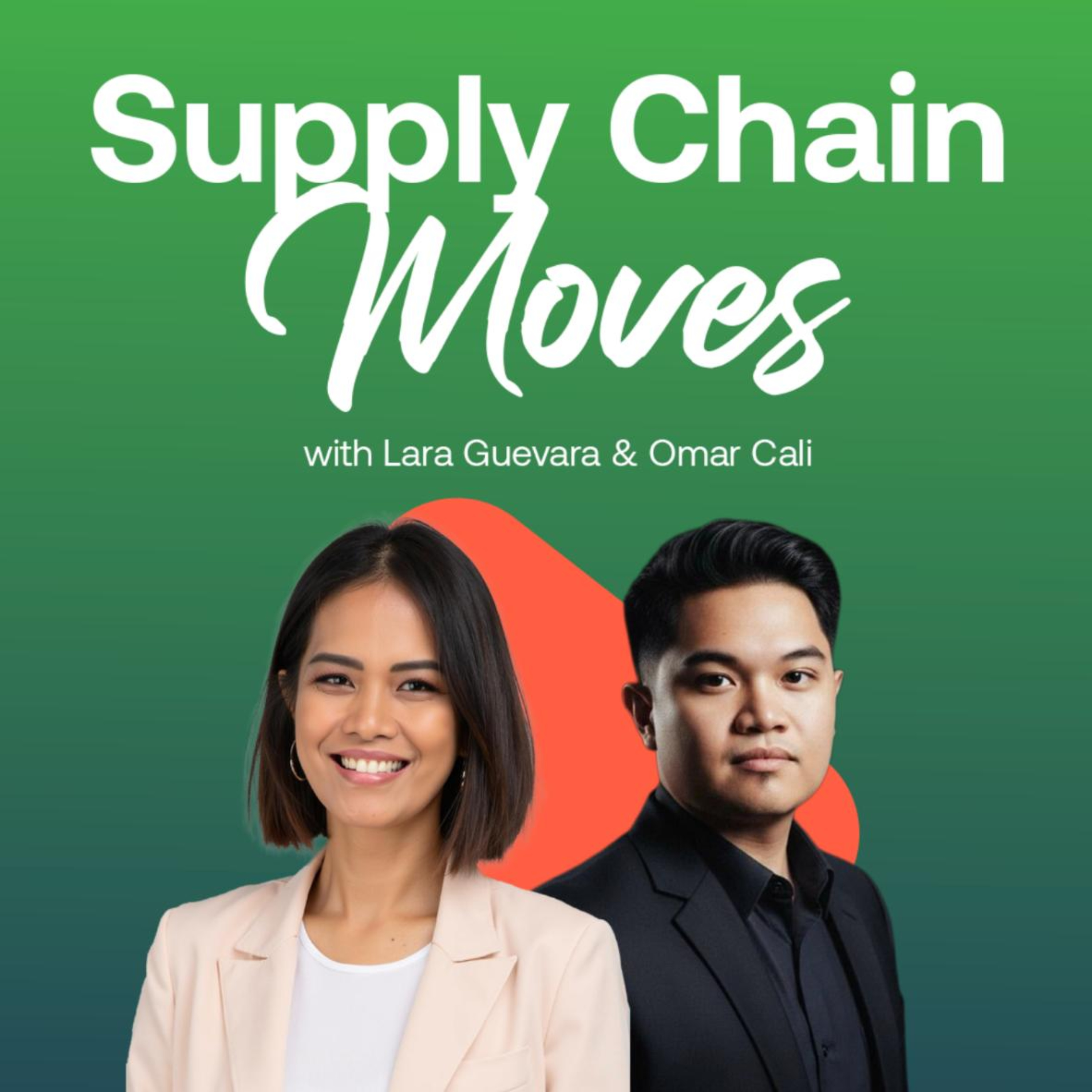
Supply Chain Moves gives DTC operators practical, no-fluff guidance, from product idea to on-time delivery, built on real numbers. Host Lara Guevara (CEO and Co-Founder, Move Supply Chain) turns vendor visits, factory audits, and live routing simulations into Monday-ready playbooks. This podcast also gives you ideas on how to have smarter China/Vietnam sourcing, logistics you can run on purpose, and tariff strategies that protect your margin. This one's for founders, COOs, and ops leads who want fewer surprises and better results. Subscribe now and listen to them all.
-
63
56 | The One With the Best Practices That Hurt Your Business
Everyone tells you to study successful brands.The problem? Most of the advice you're hearing was built for businesses 10, 50, or 100 times your size.In this Season 1 finale of Supply Chain Moves, we unpack one of the most expensive mistakes founders make: copying the operational playbooks of much larger brands. From hiring too early and implementing complex software to diversifying suppliers before you're ready, these "best practices" often create unnecessary costs, complexity, and cash flow problems.You'll hear the story of a growing pet brand that adopted a $40M company's supply chain strategy and ended up with tighter cash, lower margins, and more stockouts than before. Then we'll break down how simplifying the business helped restore profitability and momentum.If you've ever felt behind because you're still using spreadsheets, managing fulfillment yourself, or running a lean operation, this episode is your reminder that simplicity isn't a weakness. At the right stage, it's a competitive advantage.In This EpisodeWhy copying successful brands often backfiresThe hidden costs of importing "big company" infrastructure too earlyHow complexity compounds and drains cash flowWhy the scrappy phase teaches lessons software never canThe difference between copying tactics and understanding principlesHow to find advice that's actually relevant to your stage of growthThe real story of a founder who built a Ferrari pit crew for a go-kartWhy staying simple longer is often the smartest growth strategyKey TakeawayDon't copy the playbook. Understand the principle behind it.The tactics that help a $50M brand succeed can hurt a $500K brand. Instead of asking, "What are bigger brands doing?" ask, "What problem are they solving, and what's the simplest way to solve that problem at my stage?"If this episode helped make your supply chain a little less painful, share it with another founder because nobody deserves to learn these lessons the hard way. Follow Supply Chain Moves wherever you get your podcasts.Connect with Lara & Move Supply ChainWant to keep learning and connect with Lara and the Move Supply Chain community?Follow & Subscribe:LinkedIn – MoveLinkedIn – LaraX – MoveX – LaraFacebookInstagramYouTubeGet more insights:Unboxed Weekly – Lara’s newsletter on DTC supply chain movesLara’s AI Brain – Ask Lara’s AI anything about supply chainSC Lounge – Join Move Supply Chain's free Slack community for DTC founders
-
62
55 | The One With Turning Suppliers Into Strategic Partners
Treating suppliers as transactional vendors instead of long-term partners puts you at the back of their priority list — exactly when you can't afford to be there.Most early-stage founders manage supplier relationships purely transactionally — PO in, product out. In this episode, Lara makes the case that supplier partnership is one of the highest-leverage and lowest-cost investments an early brand can make, and breaks down exactly how to build those relationships from day one — even when you're small. For pre-revenue to $500K founders who want to be a priority client before they've earned it through volume.Key Takeaways:• Suppliers prioritize clients who treat them like partners, not purchase orders• Relationship capital translates into better pricing, preferential capacity, and early intelligence• Simple, consistent relational behaviors cost almost nothing and compound over timeIf this episode helped make your supply chain a little less painful, share it with another founder because nobody deserves to learn these lessons the hard way. Follow Supply Chain Moves wherever you get your podcasts.Connect with Lara & Move Supply ChainWant to keep learning and connect with Lara and the Move Supply Chain community?Follow & Subscribe:LinkedIn – MoveLinkedIn – LaraX – MoveX – LaraFacebookInstagramYouTubeGet more insights:Unboxed Weekly – Lara’s newsletter on DTC supply chain movesLara’s AI Brain – Ask Lara’s AI anything about supply chainSC Lounge – Join Move Supply Chain's free Slack community for DTC founders
-
61
54 | The One With the Growth Trap: Why Profitable Brands Still Run Out of Cash
You can have record revenue, healthy margins, and a business that looks like it's winning on paper... and still find yourself struggling to make payroll.In this episode of Supply Chain Moves, Omar breaks down one of the most overlooked metrics in DTC and product-based businesses: the cash conversion cycle.Learn why growth can actually create cash flow problems, how inventory ties up capital for months before it returns to your bank account, and why profitable brands can still run out of money. Through a real-world case study, Omar explains how founders accidentally fund their own growth into a corner and what they can do to avoid it.You'll learn:What the cash conversion cycle is and why it mattersWhy profit and cash flow are not the same thingHow rapid growth can increase cash pressureThe warning signs that your business is outgrowing its cash positionPractical ways to shorten your cash conversion cycleWhy every founder should build a 13-week cash flow forecastIf you've ever wondered why your bank account doesn't reflect your revenue numbers, this episode is for you. Follow Supply Chain Moves wherever you get your podcasts.Connect with Lara & Move Supply ChainWant to keep learning and connect with Lara and the Move Supply Chain community?Follow & Subscribe:LinkedIn – MoveLinkedIn – LaraX – MoveX – LaraFacebookInstagramYouTubeGet more insights:Unboxed Weekly – Lara’s newsletter on DTC supply chain movesLara’s AI Brain – Ask Lara’s AI anything about supply chainSC Lounge – Join Move Supply Chain's free Slack community for DTC founders
-
60
53 | The One With Hiring Too Soon: Why a Full-Time Supply Chain Manager Can Hurt Early-Stage Brands
One of the most common mistakes early-stage founders make is hiring a full-time supply chain manager too early.At first, it feels like the right move. Operations are messy, inventory feels unpredictable, and the supply chain starts becoming a black box the founder wants to escape from. So they hire someone senior to “take it over.”But in many cases, that hire creates more problems than it solves.In this episode of Supply Chain Moves, we break down why premature operations hires can drain cash, overcomplicate simple systems, and disconnect founders from the operational knowledge they actually need to build a resilient business.We unpack:Why a $65K to $85K supply chain salary is often the wrong investment for pre-revenue and early-stage brandsThe hidden risk of outsourcing operational understanding too earlyWhy senior operators struggle in low-complexity businessesHow over-engineering starts happening inside small brandsThe difference between strategic supply chain support and execution supportWhen fractional consulting makes more sense than a full-time hireWhy junior operations coordinators are often the better early-stage solutionThe revenue and operational milestones where a true supply chain manager becomes a “real unlock”If you're building a DTC brand and feeling overwhelmed operationally, this episode will help you understand what kind of support you actually need, and when.Connect with Lara & Move Supply ChainWant to keep learning and connect with Lara and the Move Supply Chain community?Follow & Subscribe:LinkedIn – MoveLinkedIn – LaraX – MoveX – LaraFacebookInstagramYouTubeGet more insights:Unboxed Weekly – Lara’s newsletter on DTC supply chain movesLara’s AI Brain – Ask Lara’s AI anything about supply chainSC Lounge – Join Move Supply Chain's free Slack community for DTC founders
-
59
52 | The One With Scaling Too Soon: When Optimism Outruns Product-Market Fit
Sales are picking up. The product is getting traction. And suddenly, it feels like you are ready to scale.This is exactly where many DTC founders go wrong.In this episode, we break down Mistake #8: building your supply chain for a version of the business that does not exist yet. What feels like smart preparation often turns into expensive overcommitment. More inventory, more SKUs, bigger orders, new suppliers. All based on early signals that have not fully proven themselves.We unpack the difference between real product-market fit and short-term demand spikes, and why that gap matters more than most founders think.You will learn:How early traction can create a false sense of predictabilityWhy inventory is not just product, but locked-in decisionsThe hidden cost of adding complexity too earlyA real example of how one brand scaled too fast and had to recoverA practical framework to separate proven products from experimentsHow to scale in layers without trapping cash or losing focusWe also talk about the role of optimism in growth. You need it. But without guardrails, it can quietly push you into decisions your business is not ready for.If you are in that in-between stage where things are starting to work but still uncertain, this episode will help you stay flexible, protect your cash, and scale from proof instead of hope.Question to think about: Are you scaling based on what the market has proven, or what you hope will happen next?If this episode helped make your supply chain a little less painful, share it with another founder because nobody deserves to learn these lessons the hard way. Follow Supply Chain Moves wherever you get your podcasts.Connect with Lara & Move Supply ChainWant to keep learning and connect with Lara and the Move Supply Chain community?Follow & Subscribe:LinkedIn – MoveLinkedIn – LaraX – MoveX – LaraFacebookInstagramYouTubeGet more insights:Unboxed Weekly – Lara’s newsletter on DTC supply chain movesLara’s AI Brain – Ask Lara’s AI anything about supply chainSC Lounge – Join Move Supply Chain's free Slack community for DTC founders
-
58
51 | The One With Cash Flow Blind Spots: Why Profit Doesn’t Equal Cash in DTC Brands (with Nate Littlewood of Future Ready CFO)
Fast growth feels like success. Sales are up, ads are working, and demand looks strong.So the instinct is simple: keep buying inventory, keep scaling, don’t lose momentum.In this episode, Nate Littlewood, Founder of Future Ready CFO, breaks down why that instinct can quietly break DTC brands. On the surface, everything looks healthy. But underneath, cash is getting trapped in inventory, timing gaps between payables and receivables are widening, and profitability starts to look very different from reality.He walks through how brands end up in this situation, not because they are “bad at finance,” but because supply chain, marketing, and finance are operating in separate lanes. Marketing optimizes for growth, supply chain optimizes for availability, and finance is left trying to make sense of the cash impact after decisions are already made.The result is a business that looks strong in reporting, but feels tight in the bank account.If you’ve ever wondered how a “profitable” brand still ends up cash constrained, this episode will make it very clear.What You’ll LearnWhy fast-growing brands can still run out of cashHow the Cash Conversion Cycle quietly determines your financial realityWhy inventory is really “frozen cash,” not just stock on a shelfHow siloed decisions between marketing and supply chain create cash blind spotsWhy over-ordering feels safe but slowly increases financial riskHow weak bookkeeping hides the real state of your cash flowWhat it looks like when finance actually acts as the conductor across the businessThe first steps to building clearer unit economics and a real cash flow forecastIf this episode helped make your supply chain a little less painful, share it with another founder because nobody deserves to learn these lessons the hard way. Follow Supply Chain Moves wherever you get your podcasts.Connect with Nate & Future Ready CFOLinkedIn - Nate LittlewoodWebsite - Future Ready CFO Podcast - Profits on Purporse Connect with Lara & Move Supply ChainWant to keep learning and connect with Lara and the Move Supply Chain community?Follow & Subscribe:LinkedIn – MoveLinkedIn – LaraX – MoveX – LaraFacebookInstagramYouTubeGet more insights:Unboxed Weekly – Lara’s newsletter on DTC supply chain movesLara’s AI Brain – Ask Lara’s AI anything about supply chainSC Lounge – Join Move Supply Chain's free Slack community for DTC founders
-
57
50 | The One With Overstocking That Feels Smart… Until It Isn’t
Stockouts are painful. So the instinct is simple: order more, just to be safe.In this episode, Omar breaks down why that instinct quietly creates a bigger problem. Over-ordering feels like protection, but it often comes from fear, not strategy. And while stockouts are loud and obvious, excess inventory builds slower, hides deeper issues, and ties up the one thing growing brands need most: cash.He walks through how “just in case” ordering turns into heavier operations, messier planning, and slower decision-making, plus what to do instead if you want a supply chain that actually scales with you.If you’ve ever increased your order size after getting burned once, this one will feel familiar.What You’ll LearnWhy over-ordering is usually driven by fear, not dataThe hidden costs of excess inventory (beyond storage)How too much stock creates less clarity, not moreThe difference between safety stock and panic stockWhy inventory stops being an asset when it doesn’t moveHow to separate real risk from emotional decision-makingIf this episode helped make your supply chain a little less painful, share it with another founder because nobody deserves to learn these lessons the hard way. Follow Supply Chain Moves wherever you get your podcasts.Connect with Lara & Move Supply ChainWant to keep learning and connect with Lara and the Move Supply Chain community?Follow & Subscribe:LinkedIn – MoveLinkedIn – LaraX – MoveX – LaraFacebookInstagramYouTubeGet more insights:Unboxed Weekly – Lara’s newsletter on DTC supply chain movesLara’s AI Brain – Ask Lara’s AI anything about supply chainSC Lounge – Join Move Supply Chain's free Slack community for DTC founders
-
56
49 | The One With the Cheapest Landed Cost That Cost You More
You found a lower landed cost. Better tariff exposure. Cleaner DDP quote. Cheaper freight.So why does everything feel harder?In this episode, Omar, Growth Partner at Move Supply Chain, breaks down one of the most common traps growing brands fall into: optimizing for the cheapest number on paper while ignoring the costs that actually show up later.Because landed cost tells you what it takes to get product into your warehouse. It does not tell you what it takes to run your business.Omar unpacks why obsessing over tariffs, DDP, and all-in cost feels like the “smart” move, and how it quietly introduces risk across your supply chain. From inconsistent suppliers to fragile operations, delayed timelines to emergency air freight, the real cost shows up when growth starts to put pressure on your system. If your backend can’t keep up, your margins will not matter.In this episode, you’ll learn:Why landed cost is only one piece of the decision, not the decisionThe hidden costs that do not show up in your supplier quotesHow DDP can simplify things and reduce visibility at the same timeWhy “cheaper” and “more efficient” are not the sameWhat to evaluate when choosing suppliers beyond priceWhere the bigger margin wins actually come fromHow to build a supply chain that supports growth, not just protects marginIf you have been chasing lower costs but feeling more operational friction, this episode will help you zoom out and make better decisions for the stage you are in.Because the goal is not the cheapest landed cost.It is a supply chain you can actually scale.Connect with Lara & Move Supply ChainWant to keep learning and connect with Lara and the Move Supply Chain community?Follow & Subscribe:LinkedIn – MoveLinkedIn – LaraX – MoveX – LaraFacebookInstagramYouTubeGet more insights:Unboxed Weekly – Lara’s newsletter on DTC supply chain movesLara’s AI Brain – Ask Lara’s AI anything about supply chainSC Lounge – Join Move Supply Chain's free Slack community for DTC founders
-
55
48 | The One With the MOQ Trap: Why Lower Isn’t Always Better
Most founders think negotiating a lower MOQ is a win. It’s not.In this episode, we break down why obsessing over Minimum Order Quantity can actually cost you more in the long run and how it quietly kills your leverage with suppliers.You’ll learn:• What MOQ really is and why manufacturers enforce it• The hidden cost of “winning” a lower MOQ• The 4 terms you should be negotiating instead (and why they matter more)• A real case study where skipping QC clauses led to a costly mistake• How to approach supplier negotiations strategically without burning goodwillIf this episode helped make your supply chain a little less painful, share it with another founder because nobody deserves to learn these lessons the hard way. Follow Supply Chain Moves wherever you get your podcasts.Connect with Lara & Move Supply ChainWant to keep learning and connect with Lara and the Move Supply Chain community?Follow & Subscribe:LinkedIn – MoveLinkedIn – LaraX – MoveX – LaraFacebookInstagramYouTubeGet more insights:Unboxed Weekly – Lara’s newsletter on DTC supply chain movesLara’s AI Brain – Ask Lara’s AI anything about supply chainSC Lounge – Join Move Supply Chain's free Slack community for DTC founders
-
54
47 | The One With Forecasting Without Data: How “Responsible” Planning Traps Your Cash
Forecasting sounds like a sign of operational maturity.But for many brands, forecasting isn’t actually based on data. It’s based on gut feel, optimism, and internal narratives.And when that happens, forecasting stops being planning and starts becoming a story that traps your cash.In this episode, we break down the hidden danger of “forecasting without data” and why it creates a predictable cycle inside growing DTC brands:• Stockouts on your best-selling products• Cash trapped in slow-moving inventory• Panic purchase orders and expedited shipping• Supplier friction and rising MOQs• Promotions just to clear excess stockLeft unchecked, this becomes what we call the inventory death cycle: stockouts of winners, overstock of slow movers, tighter cash flow, and more operational chaos.But there’s a better way.Instead of building forecasts around goals or guesswork, we walk through how to shift to a decision demand plan that protects cash and stabilizes operations.You’ll learn:• Why sales velocity matters more than ambitious targets• How to segment demand into baseline, marketing-driven, and event-driven sales• A simple way to forecast A SKUs individually while grouping long-tail products• How reorder point guardrails prevent panic ordering• Why assigning forecast confidence levels improves purchasing decisionsWe also cover what early-stage brands should ignore for now: advanced forecasting tools, daily planning, and complex seasonality models.Because the goal isn’t perfect forecasting. It’s building a planning rhythm where reality updates the plan quickly and cash stays protected.If this episode helped make your supply chain a little less painful, share it with another founder because nobody deserves to learn these lessons the hard way. Follow Supply Chain Moves wherever you get your podcasts.Connect with Lara & Move Supply ChainWant to keep learning and connect with Lara and the Move Supply Chain community?Follow & Subscribe:LinkedIn – MoveLinkedIn – LaraX – MoveX – LaraFacebookInstagramYouTubeGet more insights:Unboxed Weekly – Lara’s newsletter on DTC supply chain movesLara’s AI Brain – Ask Lara’s AI anything about supply chainSC Lounge – Join Move Supply Chain's free Slack community for DTC founders
-
53
46 | The One With the 3PL Trap: Why Early-Stage Brands Shouldn’t Outsource Fulfillment
Most DTC founders are told: “Get a 3PL so you can scale.”For brands doing $100K to $200K, that advice can quietly destroy margins, flexibility, and momentum.In this episode of Supply Chain Moves, Lara breaks down Mistake #1 of 12 supply chain mistakes: signing a 3PL contract before you’re ready.You’ll learn:The 4 traps of early 3PL adoption (minimums, lock-in, lost learning, and the wrong kind of scale)The story of Luna, a $120K skincare founder who felt stuck by $800KWhen you actually need a 3PLThe “Goldilocks” fulfillment setup for $100K to $500K brandsHow to systematize before you outsourceHow to transition to a 3PL without losing controlIf you’re packing boxes in your garage and wondering if it’s time to “level up,” this episode might save you six figures and a lot of regret.Mistakes planted at $120K become painful at $800K.If this episode helped make your supply chain a little less painful, share it with another founder because nobody deserves to learn these lessons the hard way. Follow Supply Chain Moves wherever you get your podcasts.Connect with Lara & Move Supply ChainWant to keep learning and connect with Lara and the Move Supply Chain community?Follow & Subscribe:LinkedIn – MoveLinkedIn – LaraX – MoveX – LaraFacebookInstagramYouTubeGet more insights:Unboxed Weekly – Lara’s newsletter on DTC supply chain movesLara’s AI Brain – Ask Lara’s AI anything about supply chainSC Lounge – Join Move Supply Chain's free Slack community for DTC founders
-
52
45 | The One With the $2M Brand That Cut 40% of Their SKUs (And Made 72% More Profit)
Two point one million in revenue.Twenty-three SKUs.One exhausted founder.Two point five percent net margin.Six months later:One point nine six million in revenue.Fourteen SKUs.Seventy-two percent more profit.Twenty fewer hours of work per week.This episode is the full case study.I’m walking you through exactly how Rachel, a $2M pet accessories founder, cut 40% of her catalog and rebuilt her business around contribution margin instead of revenue.We break down:• The spreadsheet that revealed her “hero” product was actually underwater• Why 9 SKUs were quietly draining $18,000 per year• The Kill, Fix, or Scale decisions that felt terrifying• What happened when revenue dropped 18% in month one• How profit increased even while sales declined• The exact numbers behind the 72% profit jump• The emotional reality of cutting products tied to your identityThis is not theory.It’s the real application of unit economics.Real contribution margin.Real operational decisions.Real panic.Real results.If you’ve ever thought, “Once I get bigger, the numbers will work,” this episode will challenge that belief.Because sometimes the path to more profit is fewer products.And sometimes your hero SKU is your villain.If this episode helped make your supply chain a little less painful, share it with another founder because nobody deserves to learn these lessons the hard way. Follow Supply Chain Moves wherever you get your podcasts.Connect with Lara & Move Supply ChainWant to keep learning and connect with Lara and the Move Supply Chain community?Follow & Subscribe:LinkedIn – MoveLinkedIn – LaraX – MoveX – LaraFacebookInstagramYouTubeGet more insights:Unboxed Weekly – Lara’s newsletter on DTC supply chain movesLara’s AI Brain – Ask Lara’s AI anything about supply chainSC Lounge – Join Move Supply Chain's free Slack community for DTC founders
-
51
44 | The One With the Hardest Decision You’ll Make This Year: Kill, Fix, or Scale
Last week, a founder showed me her numbers for the first time.Forty-three SKUs.Eleven were clearly profitable.Eight were clearly losing money.And twenty-four were stuck in the gray zone.Her question was simple:What do I actually do with this?Because knowing your numbers is only half the battle. The real challenge is deciding what to kill, what to fix, and what to scale. And most founders freeze when it’s time to make that call.In this episode, I walk you through the Kill-Fix-Scale framework. The exact system I use to help founders make clear, confident product decisions without guessing, hoping, or relying on gut instinct.You’ll learn:• How to categorize every product using contribution margin thresholds• Why products under 15% margin quietly destroy your growth• The five levers that can move a product from barely profitable to scalable• How to liquidate underperforming products cleanly and strategically• Why the best founders kill products faster, not slower• How to escape the gray zone where most businesses get stuckThis isn’t about cutting products randomly. It’s about reallocating your time, cash, and energy toward what actually builds profit.Because every product in your catalog is doing one of three things: building your business, draining it, or distracting you.Your job is to decide which is which.If this episode helped make your supply chain a little less painful, share it with another founder because nobody deserves to learn these lessons the hard way. Follow Supply Chain Moves wherever you get your podcasts.Connect with Lara & Move Supply ChainWant to keep learning and connect with Lara and the Move Supply Chain community?Follow & Subscribe:LinkedIn – MoveLinkedIn – LaraX – MoveX – LaraFacebookInstagramYouTubeGet more insights:Unboxed Weekly – Lara’s newsletter on DTC supply chain movesLara’s AI Brain – Ask Lara’s AI anything about supply chainSC Lounge – Join Move Supply Chain's free Slack community for DTC founders
-
50
43 | The One With the Invoice That Made a Founder Cry: A Line by Line Unit Economics Breakdown
She thought she had a 72 percent gross margin best seller.Two years later, it was barely breaking even.In this episode, Lara walks through the exact invoice and data set that stopped a fast-growing DTC founder in her tracks. What looked wildly profitable on paper collapsed to an 8 percent contribution margin once every hidden cost was accounted for.You’ll hear a full, line by line teardown of real unit economics, including the eight costs most founders underestimate, miscalculate, or completely ignore between the supplier invoice and actual profit. Freight, duties, fulfillment, shipping, returns, customer service, CAC and more.This is the math that turns “hero products” into silent cash drains. And it’s the framework Lara uses to help brands stop scaling busy businesses and start building profitable ones.By the end of this episode, you’ll know exactly where to find these numbers in your own systems and how to build a unit economics spreadsheet that tells the truth about every SKU you sell.If this episode helped make your supply chain a little less painful, share it with another founder because nobody deserves to learn these lessons the hard way. Follow Supply Chain Moves wherever you get your podcasts.Connect with Lara & Move Supply ChainWant to keep learning and connect with Lara and the Move Supply Chain community?Follow & Subscribe:LinkedIn – MoveLinkedIn – LaraX – MoveX – LaraFacebookInstagramYouTubeGet more insights:Unboxed Weekly – Lara’s newsletter on DTC supply chain movesLara’s AI Brain – Ask Lara’s AI anything about supply chainSC Lounge – Join Move Supply Chain's free Slack community for DTC founders
-
49
42 | The One With the Margin Lie: Why Your 65% Gross Margin Might Actually Be 12%
Most founders know their gross margin by heart.Sixty-five percent. Seventy percent. A number that sounds healthy and investor-ready.In this episode of Supply Chain Moves, Lara explains why that number is often lying to you.Gross margin only tells you what it costs to make a product. It says nothing about what it actually costs to sell it, ship it, return it, and acquire a customer for it. And at the $500K–$3M stage, that blind spot quietly destroys otherwise great brands.You will hear real examples of DTC founders scaling their “best sellers” straight into losses, including a hero SKU with a beautiful 68% gross margin and a negative contribution margin once the real costs were counted.By the end of this episode, you will know exactly how to calculate the one margin number that actually matters and how to use it to make better decisions across marketing, inventory, and product strategy.In this episode, we cover:Why gross margin is a vanity metric at the growth stageThe difference between gross margin and contribution margin by SKUA real example of a best-selling product losing money on every saleThe seven costs most founders forget to include in their margin mathWhy your “hero product” might actually be your biggest problemHow to build a simple contribution margin calculator in a spreadsheetWhat to do with products that have low or negative contribution marginHow to realign marketing, finance, and supply chain around one shared numberKey takeaway:Gross margin is for pitch decks.Contribution margin is for survival.If you are making decisions based on gross margin alone, you are flying blind.Action step:This week, calculate contribution margin for your top five SKUs.Just five. The results will probably surprise you and tell you exactly what needs to change next.If this episode helped make your supply chain a little less painful, share it with another founder because nobody deserves to learn these lessons the hard way. Follow Supply Chain Moves wherever you get your podcasts.Connect with Lara & Move Supply ChainWant to keep learning and connect with Lara and the Move Supply Chain community?Follow & Subscribe:LinkedIn – MoveLinkedIn – LaraX – MoveX – LaraFacebookInstagramYouTubeGet more insights:Unboxed Weekly – Lara’s newsletter on DTC supply chain movesLara’s AI Brain – Ask Lara’s AI anything about supply chainSC Lounge – Join Move Supply Chain's free Slack community for DTC founders
-
48
41 | The One With a Real Supplier Scorecard, Not Guesswork
“They seem fine” is not a supplier strategy.In the final episode of Supplier Power Month, Lara introduces the Supplier Scorecard, the system that turns vendor management from gut feel into data-backed decisions.If you’ve ever struggled to explain why inventory feels chaotic, margins are slipping, or suppliers keep disappointing you without anything “major” going wrong, this episode is for you.Lara breaks down the five metrics every DTC brand must track to understand supplier performance clearly, including exact formulas, realistic targets, and a Red, Yellow, Green framework that tells you when to invest, when to fix, and when to walk away.This episode goes beyond theory. You’ll hear real examples of how “fine” suppliers quietly cost brands tens of thousands of dollars, and you’ll get scripts you can use to have direct, professional conversations without damaging the relationship.In this episode, you’ll learn:The five Supplier Scorecard metrics that actually matterHow to calculate on-time delivery, defect rates, and true costWhy unit price alone is a misleading metricHow to use Red, Yellow, Green zones to make decisions without emotionScripts for introducing scorecards and addressing performance issuesHow to exit a supplier relationship without burning bridgesBy the end of the episode, you’ll have a scorecard template you can implement this week, not next quarter, and a clear system for managing suppliers like a real operator, not a hopeful one.This episode ties together everything from Supplier Power Month, from ranking and repositioning to negotiation and long-term leverage.If this episode helped make your supply chain a little less painful, share it with another founder because nobody deserves to learn these lessons the hard way. Follow Supply Chain Moves wherever you get your podcasts.Connect with Lara & Move Supply ChainWant to keep learning and connect with Lara and the Move Supply Chain community?Follow & Subscribe:LinkedIn – MoveLinkedIn – LaraX – MoveX – LaraFacebookInstagramYouTubeGet more insights:Unboxed Weekly – Lara’s newsletter on DTC supply chain movesLara’s AI Brain – Ask Lara’s AI anything about supply chainSC Lounge – Join Move Supply Chain's free Slack community for DTC founders
-
47
40 | The One With the Supplier Agreement That Saves You $50,000
Most DTC founders think supplier agreements are overkill. Until they’re staring at a warehouse full of unusable inventory and a supplier saying, “This is what you approved.”In this episode of Supply Chain Moves, Lara breaks down a real story of a $50,000 mistake that almost killed a growing skincare brand and exactly how it could have been prevented with one simple document.You’ll learn why trust alone is not a supply chain strategy and how vague specs, missing quality standards, and verbal agreements quietly destroy cash flow. Lara walks you through the eight non-negotiable sections every supplier agreement must include, using plain English and copy-paste language you can actually use this week.This is not a legal lecture or a 100-page contract. It’s a practical playbook designed for DTC founders who want clarity, leverage, and protection without slowing down growth.In this episode, you’ll learn:The real reason good supplier relationships still blow upThe eight sections every supplier agreement must includeHow to define quality so defects don’t become your problemHow unclear terms quietly drain cash flowRed flags that tell you a supplier is not worth the riskHow to introduce a written agreement without damaging the relationshipIf you’ve ever relied on WeChat messages, emails, or “we’ve always done it this way,” this episode is for you.By the end, you’ll know exactly how to draft a simple supplier agreement that protects your margins, your sanity, and your business before the next shipment goes wrong.If this episode helped make your supply chain a little less painful, share it with another founder because nobody deserves to learn these lessons the hard way. Follow Supply Chain Moves wherever you get your podcasts.Connect with Lara & Move Supply ChainWant to keep learning and connect with Lara and the Move Supply Chain community?Follow & Subscribe:LinkedIn – MoveLinkedIn – LaraX – MoveX – LaraFacebookInstagramYouTubeGet more insights:Unboxed Weekly – Lara’s newsletter on DTC supply chain movesLara’s AI Brain – Ask Lara’s AI anything about supply chainSC Lounge – Join Move Supply Chain's free Slack community for DTC founders
-
46
39 | The One With the 7 Supplier Negotiation Levers Most DTC Founders Miss
Most DTC founders think supplier negotiation starts and ends with price.It doesn’t.In this episode, Lara breaks down the seven things you can actually negotiate with suppliers, why price is often the weakest lever, and how to frame your asks so suppliers want to say yes instead of quietly deprioritizing you.This is a tactical, no-fluff playbook you can use on your very next PO.What you’ll learn in this episode:Why negotiating on price alone leaves money on the tableThe 7 supplier terms you can negotiate (and which matter most)Simple scripts that get better terms without damaging relationshipsHow suppliers actually think about your asksWhen to push, when to accept, and how Finance changes the gameIf this episode helped make your supply chain a little less painful, share it with another founder because nobody deserves to learn these lessons the hard way. Follow Supply Chain Moves wherever you get your podcasts.Connect with Lara & Move Supply ChainWant to keep learning and connect with Lara and the Move Supply Chain community?Follow & Subscribe:LinkedIn – MoveLinkedIn – LaraX – MoveX – LaraFacebookInstagramYouTubeGet more insights:Unboxed Weekly – Lara’s newsletter on DTC supply chain movesLara’s AI Brain – Ask Lara’s AI anything about supply chainSC Lounge – Join Move Supply Chain's free Slack community for DTC founders
-
45
38 | The One With the Supplier Ranking You’ve Never Seen (And Why It’s Costing You)
Episode SummaryMost DTC founders assume that being the customer automatically gives them leverage with suppliers. In this episode of Supply Chain Moves, Omar breaks down why that belief quietly costs brands money, time, and sanity.Suppliers rank their customers, even if they never tell you. That invisible ranking determines who gets prioritized when capacity is tight, delays hit, or problems arise. Drawing from real-world experience working with DTC brands, this episode unpacks the five factors suppliers actually care about, the warning signs that reveal where you truly stand, and a case study of a $3M brand that discovered their “bad supplier” was simply reacting to their behavior.You’ll also hear why finance decisions, especially payment timing, play a much bigger role in supplier relationships than most founders realize.Key Topics CoveredSupplier prioritization and invisible account rankingVolume consistency versus large but erratic ordersPayment reliability and its downstream impact on operationsOperational ease and why suppliers remember frictionGrowth trajectory and long-term supplier thinkingRelationship history and earned flexibilityThe finance and supply chain connection most brands missWho This Episode Is ForDTC and ecommerce founders frustrated by missed deadlines, slow replies, or inconsistent qualityBrand operators who feel “stuck” with a supplier but are not sure if switching is the right moveFounders who assume supplier issues are caused by size or lack of leverageFinance and operations leaders responsible for cash flow, payments, and supplier relationshipsGrowing brands that want better treatment from suppliers without constantly renegotiating priceIf this episode helped make your supply chain a little less painful, share it with another founder because nobody deserves to learn these lessons the hard way. Follow Supply Chain Moves wherever you get your podcasts.Connect with Lara & Move Supply ChainWant to keep learning and connect with Lara and the Move Supply Chain community?Follow & Subscribe:LinkedIn – MoveLinkedIn – LaraX – MoveX – LaraFacebookInstagramYouTubeGet more insights:Unboxed Weekly – Lara’s newsletter on DTC supply chain movesLara’s AI Brain – Ask Lara’s AI anything about supply chainSC Lounge – Join Move Supply Chain's free Slack community for DTC founders
-
44
37 | The One With the 2025 Sourcing Wake-Up Call and the Optionality Playbook for 2026
Episode SummaryIn this episode, Omar, Growth Partner at Move and sourcing specialist, breaks down what 2025 actually did to sourcing and inventory for DTC brands and why the cost of being wrong quietly skyrocketed.If 2025 exposed anything, it was how fragile most sourcing setups really were. Tariffs, trade friction, timing issues, and shrinking reaction windows forced founders to confront a hard truth. Sourcing is no longer a one-time purchasing decision. It is a core business model decision. This episode is a founder-friendly, no-fluff wrap-up of the biggest lessons from 2025 and a practical playbook for building optionality in 2026 so you are not trapped when things shift again.What You’ll Learn in This EpisodeWhy 2025 made supply chain lag painfully visible for DTC brandsThe hidden costs founders felt but rarely modeled, including decision lag, quality tax, cash timing tax, and switching taxWhat sourcing paralysis looks like and why “waiting for clarity” is still a decisionHow to shift from chasing certainty to building systems that work under uncertaintyThe Optionality Stack framework and how to actually build it without chaosHow inventory strategy needs to change based on demand confidenceWhere AI and tools actually help and where they do notA 7-day action plan to turn this episode into real operational progressWho This Episode Is ForDTC founders navigating supplier risk and cost volatilityOperators managing inventory, sourcing, or cash flowEcommerce teams preparing for 2026 planningBrands that felt exposed by tariffs, delays, or forecasting misses in 2025If this episode helped make your supply chain a little less painful, share it with another founder because nobody deserves to learn these lessons the hard way. Follow Supply Chain Moves wherever you get your podcasts.Connect with Lara & Move Supply ChainWant to keep learning and connect with Lara and the Move Supply Chain community?Follow & Subscribe:LinkedIn – MoveLinkedIn – LaraX – MoveX – LaraFacebookInstagramYouTubeGet more insights:Unboxed Weekly – Lara’s newsletter on DTC supply chain movesLara’s AI Brain – Ask Lara’s AI anything about supply chainSC Lounge – Join Move Supply Chain's free Slack community for DTC founders
-
43
36 | The One with Dip: Real Talk on Scaling From the Other Side of the World
In this special episode, Lara and Claude sit down with Charlie, Luke, and Daniel of Dip UK. It’s their first time in Manila, so we took the chance to dive into their story, their experience working with Filipino talent, and how they have scaled a modern UK brand through strong customer experience and dependable operations.They covered everything from their first impressions of the Philippines to the behind-the-scenes challenges of running a growing DTC brand. If you are building something global, this conversation will give you a real-world look at what it takes to scale with the right people, systems, and partners.Inside this episodeWhy their trip to the Philippines surprised them and what stood outHow Dip started, the philosophy behind the brand, and what people often misunderstand about their product until they try itTheir four-year experience working with a Move customer service talent and the unexpected impact on their communityThe customer service qualities that matter most in DTC and how these shape brand trustThe operational and supply chain challenges of running a UK brand and how Move helped simplify the hard partsThe roles and manpower they expect to be essential as Dip enters its next stage of growth, from logistics to marketing to more CS supportWhat is next for Dip and the exciting developments they are exploring for the coming yearIf this episode helped make your supply chain a little less painful, share it with another founder because nobody deserves to learn these lessons the hard way. Follow Supply Chain Moves wherever you get your podcasts.Get to know the brand behind the conversation: Dip UKConnect with Lara & Move Supply ChainWant to keep learning and connect with Lara and the Move Supply Chain community?Follow & Subscribe:LinkedIn – MoveLinkedIn – LaraX – MoveX – LaraFacebookInstagramYouTubeGet more insights:Unboxed Weekly – Lara’s newsletter on DTC supply chain movesLara’s AI Brain – Ask Lara’s AI anything about supply chainSC Lounge – Join Move Supply Chain's free Slack community for DTC founders
-
42
35 | The One With Speedfulfill: How to Scale Fast Without Fulfillment Fails
In this episode, Lara and Omar sit down with the team from Speedfulfill, Move Supply Chain’s newest partner, to dive into the inner workings of a 3PL built for fast-growing DTC brands. From organized warehouse operations to cutting-edge ERP systems, Speedfulfill shares how they help brands scale without bottlenecks and why quality, speed, and customer experience are never mutually exclusive.What You’ll Learn in This Episode:How dropshipping expertise shaped Speedfulfill’s warehouse operations.Why quality checks at the inbound stage make a huge difference for customers.How their ERP system gives clients a competitive edge over traditional 3PL setups.Real-world examples of reduced errors and faster fulfillment using their tools.Secrets to maintaining fast communication while supporting global brands.Aligning operations and support teams so clients always feel heard.Balancing speed and accuracy during high-volume seasons like BFCM.Helping brands scale confidently without fulfillment bottlenecks.How Speedfulfill is preparing for AI and automation in logistics.Tips for DTC brands looking for a reliable fulfillment partner in China.If this episode helped make your supply chain a little less painful, share it with another founder because nobody deserves to learn these lessons the hard way. Follow Supply Chain Moves wherever you get your podcasts.Connect with Speedfulfill: speedfulfill.com/[email protected] Connect with Lara & Move Supply ChainWant to keep learning and connect with Lara and the Move Supply Chain community?Follow & Subscribe:LinkedIn – MoveLinkedIn – LaraX – MoveX – LaraFacebookInstagramYouTubeGet more insights:Unboxed Weekly – Lara’s newsletter on DTC supply chain movesLara’s AI Brain – Ask Lara’s AI anything about supply chainSC Lounge – Join Move Supply Chain's free Slack community for DTC founders
-
41
34 | The One With Vietnam Sourcing Fair Insights: How Founders Can Source Smarter
In this episode, Lara sits down with Claude (Move’s Operations Director) and Gee (Supply Chain Manager) to unpack their recent visit to a Vietnam sourcing fair. They share what they learned about manufacturers, materials, and sourcing strategies that founders can apply today.You’ll learnHow to spot reliable manufacturers and avoid common sourcing pitfallsWhat product categories are thriving in Vietnam and why it matters for DTC brandsTips for negotiating better terms and lead times with overseas suppliersHow brands are reducing production risk by diversifying sourcing partnersInsider trends in Southeast Asia that could shape your next product launchKey takeawaySourcing smarter isn’t just about finding a factory — it’s about understanding the ecosystem, spotting opportunities early, and building relationships that last.If this episode gave you a clearer view of international sourcing, share it with another founder — nobody should guess their way through overseas manufacturing. Follow Supply Chain Moves wherever you get your podcasts.Connect with Lara & Move Supply ChainWant to keep learning and connect with Lara and the Move Supply Chain community?Follow & Subscribe:LinkedIn – MoveLinkedIn – LaraX – MoveX – LaraFacebookInstagramYouTubeGet more insights:Unboxed Weekly – Lara’s newsletter on DTC supply chain movesLara’s AI Brain – Ask Lara’s AI anything about supply chainSC Lounge – Join the private founder community
-
40
33 | The One With Warehouse & 3PL Basics: What Founders Need to Know (Part 2)
In Part 2 of our Warehouse & 3PL series, Lara dives into how founders can save money, improve warehouse performance, and get ready for what’s next in fulfillment.You’ll learn- How an apparel brand freed up $50K a year by moving dead stock out of their 3PL- How a supplement brand cut fulfillment fees by 12% through smarter rate negotiations- Simple tools to track warehouse performance (even with just Google Sheets)- How a shoe brand’s returns SOP saved weeks of inventory limbo- What’s next for 3PLs — distributed fulfillment and automation, and what founders can do now to prepareKey takeawayWarehouse savings aren’t just about cheaper rates — they come from knowing what to track, what to move, and when to renegotiate.If this episode helped make your supply chain a little less painful, share it with another founder because nobody deserves to learn these lessons the hard way. Follow Supply Chain Moves wherever you get your podcasts.Connect with Lara & Move Supply ChainWant to keep learning and connect with Lara and the Move Supply Chain community? Follow & Subscribe:LinkedIn – MoveLinkedIn – LaraX – MoveX – LaraFacebookInstagramYouTubeGet more insights:Unboxed Weekly – Lara’s newsletter on DTC supply chain movesLara’s AI Brain – Ask Lara’s AI anything about supply chainSC Lounge – Join the private founder community
-
39
32 | The One With Warehouse & 3PL Basics: What Founders Need to Know (Part 1)
In this first part of the Warehouse & 3PL series, Lara breaks down what founders really need to know before outsourcing fulfillment. From the moment to stop self-fulfilling, to choosing the right 3PL partner, to spotting hidden costs that quietly drain margin, this episode helps you get logistics in order before BFCM chaos arrives. If you are still packing boxes yourself, consider this your sanity check.What You’ll Learn- The real role of your warehouse or 3PL: It is not just storage. It is the foundation of your customer experience.- When to move from self-fulfillment to a 3PL: If you are packing 200 to 400 orders a month, start evaluating your options.- What founders often get wrong about 3PLs: 3PLs specialize. A generalist partner can be the wrong fit for apparel, cosmetics, or oversized goods.- Hidden costs to watch for: Watch storage models, minimum pick and pack fees, and returns handling so you do not bleed margin.- How to check if your warehouse is healthy: Track these KPIs: order accuracy > 98%, on-time shipping > 95%, storage < 15% of logistics spend.Real Brand Wins- A $3M skincare brand switched from self-fulfillment to a 3PL and doubled revenue in 12 months after focusing on growth instead of packing boxes.- Another brand cut storage costs by 50% by moving from pallet-based pricing to cubic-foot pricing.Key TakeawayThe right warehouse setup does more than move boxes. It protects margin, improves customer trust, and gives you back the time to grow your brand.If this episode helped make your supply chain a little less painful, share it with another founder because nobody deserves to learn these lessons the hard way. Follow Supply Chain Moves wherever you get your podcasts.Connect with Lara & Move Supply ChainWant to keep learning and connect with Lara and the Move Supply Chain community? Follow & Subscribe:LinkedIn – MoveLinkedIn – LaraX – MoveX – LaraFacebookInstagramYouTubeGet more insights:Unboxed Weekly – Lara’s newsletter on DTC supply chain movesLara’s AI Brain – Ask Lara’s AI anything about supply chainSC Lounge – Join the private founder community
-
38
31 | The One With the Holiday Chaos: Fix Your Supply Chain Before Your Support Team Breaks (Part 2)
In this episode, Lara dives into how DTC founders can turn their supply chains into a customer experience advantage — and even uncover hidden money in the process. From preventing wrong-item tickets to claiming refunds from vendors, she breaks down practical, real-world steps you can implement before Black Friday–Cyber Monday chaos hits.What You'll Learn- How to prep your warehouse for fewer support tickets → Double-check SKUs, product data, and barcodes to avoid “wrong item” issues.- How to reduce “where’s my order?” tickets → Use tools like AfterShip or automated SMS tracking to keep customers informed.- How to simplify and speed up returns → Build a clear, automated returns process to protect your CS team and improve resolution times.- How to get money back from your vendors → Use defect and returns data to file vendor chargebacks and recover costs.- How to turn CX + supply chain data into a growth advantage → Empower your support team with real supply chain visibility so they can respond with confidence and transparency.Real Brand Wins- A jewelry brand avoided 500+ wrong-item tickets with a pre-BFCM inventory audit.- A candle brand cut 40% of WISMO (“Where’s my order?”) tickets by automating SMS tracking.- An apparel brand reduced return resolution from 10 days to 3 using Google Sheets + Zapier.- A fitness brand recovered $15K in vendor refunds by tracking defect data.Key Takeaway Better visibility, cleaner data, and smarter processes don’t just make your supply chain smoother — they make your customers happier and your brand more profitable.Connect with Lara & Move Supply ChainWant to keep learning and connect with Lara and the Move Supply Chain community?Follow & Subscribe:LinkedIn – MoveLinkedIn – LaraX – MoveX – LaraFacebookInstagramYouTubeGet more insights:Unboxed Weekly – Lara’s newsletter on DTC/e-commerceLara’s AI Brain – Ask Lara’s AI anything about supply chainSC Lounge – Join the private founder community
-
37
30 | The One With the Holiday Chaos: Fix Your Supply Chain Before Your Support Team Breaks (Part 1)
In this episode of Supply Chain Moves, Lara breaks down one of the most overlooked connections in DTC operations: how customer service issues often start in the supply chain. As brands gear up for BFCM, Lara reveals why ticket volume spikes, the top three supply chain problems that drive those complaints, and how fixing warehouse accuracy alone can cut tickets by up to 40%.From delayed shipments and defective products to incorrect orders and costly returns, this episode shows how solving upstream inefficiencies can protect your brand’s margins and reputation, especially during the busiest time of the year.Listen in to learn:- Why 80% of customer service issues trace back to supply chain errors- How one DTC brand slashed support tickets by fixing warehouse accuracy- The hidden cost of not linking returns and defects to vendor claimsIf you’re preparing for peak season, this one’s a must-listen.Explore more and plug in:Supply Chain Moves podcast hub: movesupplychain.com/supply-chain-movesVendor Visits (China & Vietnam): vendorvisits.movesupplychain.comLara’s YouTube channel: youtube.com/@supplychainlaraSupply Chain Lounge (free Slack): tinyurl.com/move-supplychain-lounge
-
36
29 | The One Where You Build Your Supply Chain A-Team
You don’t need a massive ops team—but you do need the right roles.In this quick episode of Supply Chain Moves, host Lara Guevara breaks down the must-have players behind a smooth, scalable DTC supply chain.Whether you're flying solo or growing fast, this is your cheat sheet for who to hire, what they do, and how each role pays off in time, margin, and sanity.You’ll learn:✅ What a supply chain manager really does (spoiler: they end the chaos)✅ Why forecasters are the unsung heroes of cash and inventory health✅ How a logistics coordinator saves you from missed cutoffs and bloated freight bills✅ The game-changing magic of a strong procurement/NPD lead✅ When to hire these roles—and what happens if you don’tIf you’ve ever said “I’ll just handle ops myself a little longer,” this episode will change your mind. Because every delay, stockout, or freight fire drill has a root cause and usually, it’s a missing role.Explore more and plug in:Supply Chain Moves podcast hub: movesupplychain.com/supply-chain-movesVendor Visits (China & Vietnam): vendorvisits.movesupplychain.comLara’s YouTube channel: youtube.com/@supplychainlaraSupply Chain Lounge (free Slack): tinyurl.com/move-supplychain-loungeBecause the right team isn’t overhead—it’s your engine for growth.
-
35
28 | The One Where Finance Meets Supply Chain
Finance isn’t just bookkeeping—it’s oxygen for your supply chain.When the cash stops flowing, production stalls, warehouses choke, and ads can’t move inventory.In this episode of Supply Chain Moves, host Lara Guevara sits down with Judy, a controller who’s seen firsthand how missing financial visibility can quietly collapse even the strongest supply chain. Together they unpack the decisions that tie your numbers to your operations—forecasting, purchase timing, cash allocation, and the messy realities that make or break peak-season readiness.You’ll learn:✅ Why finance and supply chain aren’t separate worlds and what happens when they operate in silos✅ How weak cash-flow forecasting leads to delayed deposits, missed cutoffs, and “rush” freight that kills margin✅ The early-warning signs in your numbers that reveal brewing supply-chain problems✅ How to set optimal inventory levels without freezing cash or over-stocking slow movers✅ The bare-minimum dashboards every founder needs: real inventory balance, cash runway, and SKU-level margins✅ Why having “too much” money can be just as risky as not having enough and how to plan around bothReal examples include a founder who lost weeks of production waiting for budget approval, a team that paid for inventory but couldn’t afford the ads to sell it, and brands that scaled faster only after syncing their controllers with their supply-chain planners.Explore more and plug in:Supply Chain Moves podcast hub: movesupplychain.com/supply-chain-movesVendor Visits (China & Vietnam): vendorvisits.movesupplychain.comLara’s YouTube channel: youtube.com/@supplychainlaraSupply Chain Lounge (free Slack): tinyurl.com/move-supplychain-loungeIf you’ve ever treated “finance” as something separate from “ops,” this episode will change how you run your business.Because every supply-chain decision is a financial one and visibility is your real profit margin.
-
34
27 | The One With the Logistics Wake-Up Call (Part 2)
In Part 2 of our logistics mini-series, Lara gets tactical: how a simple carton optimization project can save ~$2/order, why 3PL SLA audits beat “surprise fees,” the no-bloat visibility stack (AfterShip + clean exports/Sheets), and the playbook for disruption-proof routing (split ports, split forwarders). We wrap with what’s next: nearshoring (MX/LatAm) and AI-driven logistics for predictive tracking and auto-rerouting. If you want faster, cheaper, calmer ops, start here. Explore more and plug in:Supply Chain Moves podcast hub: movesupplychain.com/supply-chain-moves Vendor Visits (China & Vietnam): vendorvisits.movesupplychain.com Lara’s YouTube channel: youtube.com/@supplychainlara Supply Chain Lounge (free Slack): tinyurl.com/move-supplychain-lounge If logistics has felt like a black box, this episode gives you the vocabulary, the gotchas, and the practical moves to run it on purpose, not by accident.
-
33
26 | The One With 10 Lessons From China and Vietnam (Part 2)
For this Supply Chain Moves episode, it emphasizes that real stories don’t just happen at the fair; they happen in factories. In this episode we’ll have China–Vietnam deep dive, where Lara shares field-tested lessons from supplier visits: why you never skip the factory tour, how polish often signals higher costs (and better standards), what hesitant body language reveals, why bringing your own interpreter matters, and how showing up with real numbers—not mood boards—moves MOQs. Meet the QC and R&D leads, ask for peak-season capacity plans, find a factory’s “hero” product, and don’t skip the dinner where deals close. Explore more and plug in:Supply Chain Moves podcast hub: movesupplychain.com/supply-chain-movesVendor Visits (China & Vietnam): vendorvisits.movesupplychain.comLara’s YouTube channel: youtube.com/@supplychainlaraSupply Chain Lounge (free Slack): tinyurl.com/move-supplychain-lounge
-
32
25 | The One With the Logistics Wake-Up Call (Part 1)
Shipping isn’t “set it and forget it.” It’s the bloodstream of your brand and when it clogs, margins bleed.In this episode of Supply Chain Moves, host Lara Guevara answers 10 core questions to demystify DTC logistics—from what “logistics” actually covers to the real-world mistakes that turn containers into cash drains. She breaks down how goods move factory → port → customs → warehouse → doorstep, why forwarders aren’t a magic switch, and the fees that blindside founders who don’t plan buffers.You’ll learn:✅ What logistics really means for a DTC brand (end-to-end flow, borders to doorstep)✅ The biggest misunderstanding: hiring a forwarder ≠ you can stop worrying✅ Hidden costs that crush margin (demurrage, detention) and how preventable paperwork delays trigger them✅ Air vs. sea vs. express: speed-cost tradeoffs + when LCL beats per-kilo express✅ Why the playbook moved from Just-In-Time to Just-In-Case—and how added days of inventory can protect revenueReal examples include a brand that missed BFCM by assuming transit times, a furniture company eaten by port fees over paperwork, a jewelry brand that cut landed cost ~35% by switching from all-express to LCL sea, and a home goods team that increased on-hand inventory to keep shelves full.Explore more and plug in:Supply Chain Moves podcast hub: movesupplychain.com/supply-chain-moves Vendor Visits (China & Vietnam): vendorvisits.movesupplychain.com Lara’s YouTube channel: youtube.com/@supplychainlara Supply Chain Lounge: tinyurl.com/move-supplychain-lounge If logistics has felt like a black box, this episode gives you the vocabulary, the gotchas, and the practical moves to run it on purpose—not by accident.
-
31
24 | The One With 10 Lessons From China and Vietnam (Part 1)
Bad sourcing trips don’t just waste time—they waste margins.In this episode of Supply Chain Moves, host Lara Guevara shares the 10 biggest lessons learned from recent sourcing trips to China and Vietnam—the good, the bad, and the costly mistakes founders can avoid.Together, we unpack:✅ The “confidence gap” between Chinese and Vietnamese suppliers—and how to use it to your advantage✅ Why factory vs. trading company isn’t always obvious (and the questions you should be asking)✅ The truth about MOQs: why they’re always negotiable with the right approach✅ How tariff strategies and country diversification protect your margins✅ Why real relationships—not catalogs—are the ultimate sourcing advantageWhether you’re sourcing your first product or scaling a multi-SKU brand, this episode will help you approach factories smarter, not just faster.And here’s the exciting part: Move is heading back to China and Vietnam this season, this time with clients alongside us. If you’ve ever wanted boots-on-the-ground support while navigating supplier selection, negotiations, and tariff strategies, now’s your chance to be part of the journey.Every move counts. Tune in now. Or learn more about it here: https://vendorvisits.movesupplychain.com/ Also, don’t forget to join our free Slack community, the Supply Chain Lounge, where operators, founders, and experts share real-time solutions to real-world challenges: https://tinyurl.com/move-supplychain-lounge And be sure to subscribe so you never miss an episode of Supply Chain Moves.
-
30
23 | The One With the $1M–$10M Supply Chain Wake-Up Call (Quick Take #1)
Most DTC brands hit a wall between $1M and $10M; not because of weak sales, but because their backend can’t keep up.In this Quick Take episode of Supply Chain Moves, host Lara Guevara breaks down why your supply chain—not your ads—is what’s holding your growth back.She unpacks:✅ The real role of supply chain in scaling a DTC brand✅ Why founders managing ops themselves become the bottleneck✅ How a fractional supply chain team can start showing ROI in 30–90 days✅ What great supply chain support actually looks like✅ The pros, cons, and must-haves when building offshore ops teamsIf you're still wearing all the hats—from inventory to supplier follow-ups—this episode will show you what it looks like to step back without losing control.Every move counts. Tune in now.Also, don't forget to join our free Slack community, the Supply Chain Lounge, where operators, founders, and experts share real-time solutions to real-world challenges: https://tinyurl.com/move-supplychain-loungeAnd don’t forget to subscribe so you never miss an episode of Supply Chain Moves.
-
29
22 | The One Reason Most DTC Product Launches Fail (and How to Avoid It)
Most DTC product launches don’t fail because of bad ideas—they fail because of bad process.In this episode of Supply Chain Moves, host Lara Guevara is joined by Move Supply Chain’s NPD experts Nea and Myrna, who have helped global and DTC brands alike bring ideas to market—profitably and on time.Together, they unpack:✅ The hidden pitfalls that derail most product launches✅ Why market validation matters more than founder “gut feel”✅ The five must-do’s and five never-do’s in NPD for DTC brands✅ Lessons from working with multinational giants like Nestlé and Unilever—and how to apply them to your scrappy DTC launch✅ Trends shaping the future of NPD: sustainability, personalization, and community-driven productsWhether you’re a founder prepping your first launch or an operator tired of costly missteps, this episode will give you a framework to launch products smarter—not just harder.Every move counts. Tune in now.Also, don't forget to join our free Slack community, the Supply Chain Lounge, where operators, founders, and experts share real-time solutions to real-world challenges: https://tinyurl.com/move-supplychain-lounge And don’t forget to subscribe so you never miss an episode of Supply Chain Moves.
-
28
21 | The One with the Supply Chain Mindset
Why do some brands thrive in uncertainty while others crumble?In this episode of Supply Chain Moves, host Lara Guevara sits down with Omar Cali to unpack what it really means to adopt a supply chain mindset and why it’s the difference between brands that stay resilient and those that get stuck in reaction mode.Drawing from Omar’s diverse background, running his own café, managing operations in construction, and now working hands-on with DTC brands—this conversation brings a fresh perspective to one of the most overlooked growth levers in business.Lara and Omar break down:1. How every business, big or small, already has a supply chain (whether you realize it or not)2. Lessons from running a café that apply directly to inventory planning and DTC operations3. Why founders can’t afford to treat supply chain as an afterthought4. The five mindsets that set resilient brands apart: problem-solving, end-to-end thinking, data-driven decisions, agility, and customer focus5. The role of mentorship, training, and continuous learning in building future-ready ops teamsIf you’ve ever thought of supply chain as “just logistics,” this episode will change the way you see it and help you reframe it as your brand’s ultimate competitive advantage.Join our free Slack community, the Supply Chain Lounge, where operators, founders, and experts share real-time solutions to real-world challenges: https://tinyurl.com/move-supplychain-lounge And don’t forget to subscribe so you never miss an episode of Supply Chain Moves.
-
27
20 | The One With the Inventory Mastery That Powers Profit
Why are you running out of money—even when you're making sales?In this episode of Supply Chain Moves, host Lara Guevara sits down with in-house inventory expert JM Olega to unpack the real numbers behind your shelves. Whether you're a founder, ops lead, or marketing manager, you'll walk away with practical insights on inventory planning that protects cash flow, supports marketing, and helps you scale smarter—especially before BFCM hits.JM shares hard-won lessons from working with fast-growing DTC brands and multinational giants like McDonald's, plus tactical advice on:- Inventory as a growth lever, not a cost center- Why sales ≠ profit (and what to do about it)- How to use ABC analysis to stop overstocking slow-movers- Building basic—but powerful—inventory tools with spreadsheets- Avoiding common forecasting mistakes before peak season- The weekly reports every founder should be reviewingIf you’ve ever felt overwhelmed by Excel sheets or unsure whether you’re ordering the right SKUs, this episode will give you clarity and control. Don’t forget to subscribe so you never miss an episode of Supply Chain Moves.Visit movesupplychain.com if you want to learn how we can help you with your supply chain needs.Then, join our free Slack community, the Supply Chain Lounge, where JM and other experts are ready to answer your toughest ops questions in real time: https://tinyurl.com/move-supplychain-lounge
-
26
19 | The One With the Real Shifts in Supply Chain
In this episode of Supply Chain Moves, Lara Guevara sits down with Claude Canta, Operations Director at Move Supply Chain, to unpack the real-world disruptions and lessons that shaped how DTC brands operate today. From COVID-era pivots to tariff challenges and the rise of logistics as a brand differentiator, they cover it all—from the warehouse floor to executive strategy.Claude shares her decade-long journey in supply chain across 3PLs and DTC ecosystems, the mindset shifts that helped brands adapt, and why relationships—not just systems—drive agility and resilience.If you're scaling a DTC brand, this episode is your behind-the-scenes roadmap to building smarter, faster, and more future-proof supply chains.
-
25
18 | The One About Tariffs, Margins, and Building Resilient DTC Brands
In this episode of Supply Chain Moves, host Lara Guevara sits down with Andrew Faris—founder of AJF Growth and longtime DTC strategist—for a deep dive into what resilience really looks like in 2025.From navigating tariff uncertainty to building his own brand, Andrew shares unfiltered insights on supply chain strategy, lean operations, and why most brands are still overhiring and under-optimizing. He breaks down the three levers every founder should be watching: COGS, Opex, and CAC—and how focusing on these can turn short-term chaos into long-term clarity.If you're a founder rethinking your supply chain or wondering how to grow lean without losing momentum, this conversation delivers sharp takes, real stories, and actionable takeaways.Connect with Us:Lara on X: @supplychainlaraAndrew on X: @andrewjfarisListen to Andrew's podcast: https://open.spotify.com/show/7ssrhISeeGHgCLpzZgrxuJWork with Move: movesupplychain.comHire offshore talent: morestaffing.co
-
24
17 | The One Where We Unlock Savings and Efficiency in DTC Logistics
In this episode of Supply Chain Moves, Lara Guevara speaks with Claude Lucasan-Canta, and they dive deeper into the complexities of logistics and warehousing for DTC brands. Together, they explore the significant cost drivers in logistics, effective demand forecasting, and inventory management strategies. Claude offers practical advice on optimizing third-party logistics (3PL) partnerships and how to manage warehouse efficiency while scaling your brand.Highlights:Cost Drivers in Logistics: Identifying key areas where DTC brands can cut costs.Demand Forecasting & Inventory Management: The importance of understanding your product demand and applying the 80-20 rule.Third-Party Logistics (3PL) Communication: How to build strong relationships and set clear expectations with logistics partners.Warehouse Efficiency: Strategies for streamlining order picking and optimizing shipping costs.In-House Warehousing vs. 3PL: When to consider transitioning and the financial implications.Quotes to Remember:"Logistics can feel like a necessary evil, but there are hidden savings waiting to be optimized." – Claude"Speed is the name of the game in today’s logistics." – Lara"Effective communication with your 3PL provider can make or break your operations." – Claude"Order picking is one of the largest costs in warehousing, but it's also where you can achieve big savings." – LaraConnect with Us:Lara on X: @supplychainlaraClaude on LI: https://www.linkedin.com/in/claudecanta Claude on FB: https://www.facebook.com/claudette.lucasan Claude on IG: https://www.instagram.com/mrscanta0618 This episode is a must-listen for DTC brand owners, logistics professionals, and anyone looking to optimize their supply chain operations for cost savings and efficiency.
-
23
16 | The One That Redefines DTC Brand Excellence
In this episode of Supply Chain Moves, Lara Guevara, continues the conversation from the last episode with Gregg Carey, CEO of Section 119. This time, Lara brings in the talented team behind Section 119 to explore the operational strategies that have positioned the brand as a leader in the DTC space. From fostering strong vendor relationships to maintaining flexibility in inventory and design, the team shares invaluable insights on thriving in the challenging 2024 market. Highlights: Vendor Relationship Mastery: Building trust and negotiating favorable payment terms for better cash flow. Inventory Flexibility: Responding quickly to market demands while minimizing risks. Commitment to Quality: Upholding exceptional standards in every product. Teamwork & Expertise: Leveraging a dedicated team for sustained success. Market Adaptability: Staying ahead of trends with low MOQs and innovative design solutions. Quotes to Remember: "Good vendor relationships are the backbone of flexibility." – Joanna "Flexibility is our superpower in an unpredictable market." – Aiza "We never compromise on quality, even when it’s costly." – Kathleen "Adaptability in design keeps us relevant and competitive." – Lette Connect with Us: Lara on X: @supplychainlara Section 119 on X: @section119 This episode is a must-listen for entrepreneurs, DTC leaders, and anyone looking to build resilience and adaptability into their business operations.
-
22
15| The One with Essential Strategies for BFCM Success
In this episode of Supply Chain Moves, host Lara Guevara welcomes Gregg Carey, CEO of Section 119, to break down the critical strategies every e-commerce brand needs for Black Friday and Cyber Monday (BFCM) success. From aligning your team for effective execution to anticipating inventory needs, Gregg shares hard-won insights on how brands can enter BFCM fully prepared, flexible, and ready to maximize profits. Highlights: Preparation for Agility: Discover how early planning enables real-time adjustments, keeping your team in control as sales roll in. Mastering Inventory Management: Learn the balance between avoiding overstock and preventing stockouts during high-demand periods. Smart Marketing Moves: Explore strategies for maximizing both customer retention and acquisition to optimize BFCM results. Building a Resilient Team: Hear about empowering your team with clarity, autonomy, and the tools needed to thrive during peak season. Quotes to Remember: “Preparedness puts you in the driver’s seat when it matters most.” – Gregg “Top-line sales are great, but focus on what’s truly profitable.” – Gregg Connect with Us: Lara on X: @supplychainlara Gregg on X: @greggcarey Section 119 on X: @section119 This episode is a must-listen for e-commerce leaders, DTC brands, and anyone ready to make this BFCM their most successful yet.
-
21
14| The One Where We Master Supply Chains: From Factory Floors to Vendor Deals at China’s Canton Fair
In this episode, host Lara Guevara and supply chain experts Glaiza Ilagan and April Loquillano unpack key lessons from Move Supply Chain’s recent trip to China. From high-impact vendor negotiations to sourcing innovations at the Canton Fair, they share actionable insights to elevate your global supply chain strategy. Highlights: Rapid Decision-Making: The team discusses the value of client presence for faster approvals and real-time adjustments, leading to immediate cost savings. Optimizing Vendor Relationships: Learn how distinguishing between traders and direct manufacturers can maximize value. Canton Fair Strategies: Insider tips on leveraging this global event to discover new products and broaden vendor networks. Firsthand Insights from MSC Team: Members from product sourcing, design, negotiation, and product development share powerful on-ground experiences. Quotes to Remember: "Meeting vendors face-to-face brings a whole new depth to negotiations." – Glaiza "Staying focused on goals ensures every minute counts." – April Connect with Us: Lara on X: @supplychainlara Glaiza on X: @glaizailagan MSC on X: @movesupplychain This episode is a must-listen for DTC leaders, supply chain pros, and anyone keen on maximizing their supply chain's potential.
-
20
13| The One Strategy for Strengthening Vendor Relationships in China
In this episode of Supply Chain Moves, host Lara sits down with Glaiza Ilagan, CEO of Move Supply Chain, and April Loquillano, an experienced supply chain manager, to share expert insights on preparing for a successful business trip to China. As they gear up for their upcoming visit, Glaiza and April break down everything you need to know about navigating China's manufacturing landscape, from attending the Canton Fair to building strong vendor relationships. This episode is packed with practical tips and strategies for making the most out of your supply chain visit, whether you're a first-timer or a seasoned traveler. The discussion covers essential topics, including the value of in-person supplier visits, the nuances of navigating the Canton Fair, cultural considerations when working with Chinese vendors, and overcoming common challenges encountered during international business trips. Lara, Glaiza, and April offer actionable advice on optimizing your approach to maximize the value of your visit and strengthen your global supply chain operations. Key Topics Covered: The benefits of visiting suppliers in China for improved cost optimization, quality control, and vendor relationships Practical tips for navigating the Canton Fair, from planning your day to organizing vendor visits Cultural awareness tips for conducting business with Chinese vendors Challenges and lessons learned from previous trips, including time management and staying organized Developing a post-visit action plan to document findings and align on next steps Memorable Quotes: "Seeing how products are made firsthand opens up so many opportunities for negotiation and cost savings." – Glaiza "In supply chain, preparation is everything. From comfortable shoes to the right data, being ready ensures your trip delivers real value." – April "When you visit vendors in person, you're not just inspecting products—you’re building relationships that will fuel your supply chain for years to come." – Lara Resources Mentioned: Move Supply Chain: Providing global supply chain solutions, including vendor management, product sourcing, and logistics support. Canton Fair: One of the largest trade fairs in the world, held biannually in Guangzhou, China, where businesses can explore extensive sourcing opportunities. Connect with Us: Lara on X: @supplychainlara Glaiza on X: @glaizailagan Guest Highlights:Glaiza Ilagan: CEO of Move Supply Chain with over 15 years of experience in supply chain management and vendor relations, sharing insights on international vendor visits and partnership building. April Loquillano: Supply chain manager specializing in product sourcing and inventory management, preparing for her first trip to China with a focus on strategic sourcing.
-
19
12| The One About Mastering New Product Development and Global Sourcing for DTC Brands
In this episode of Supply Chain Moves, Lara interviews Mary Manzaretto, a seasoned supply chain expert at Move Supply Chain. With over 10 years of experience in production planning, inventory management, and new product development (NPD), Mary shares how problem-solving is pivotal in supply chain management, especially for DTC (direct-to-consumer) brands. Lara and Mary go over the challenges and nuances of supply chain management in e-commerce and contrast it with traditional models. Mary also offers insights into how effective new product development strategies can drive e-commerce growth, reduce costs, and increase efficiency. Suppose you want to enhance your supply chain operations or streamline NPD processes. In that case, this episode offers actionable strategies and real-world examples to help your business thrive in a competitive market. Key Topics Covered: How e-commerce supply chains differ from traditional models The importance of problem-solving in day-to-day supply chain management Real-world examples of successful NPD strategies that reduce costs Aligning new product development with brand vision and market demands Best practices for e-commerce business owners to strengthen supply chain strategies Guest Highlights: Mary Manzaretto: A supply chain and NPD expert with a decade of experience in sourcing, logistics, and inventory management, currently supporting DTC brands at Move Supply Chain. Memorable Quotes: "Effective supply chain management is all about solving problems in real-time—it's where flexibility meets strategy." "Cutting corners in new product development doesn’t save you time or money in the long run. Thorough processes are key to success." Resources Mentioned: Move Supply Chain: movesupplychain.com – Offering fractional supply chain support for DTC brands. More Staffing: morestaffing.co – Remote staffing solutions for businesses. Connect with Us: Lara: LinkedIn: linkedin.com/in/laarniguevara Twitter: @supplychainlara Mary: LinkedIn: linkedin.com/in/marymanzaretto
-
18
11| The One With Revolutionizing DTC Logistics with Portless CEO Izzy Rosenzweig
In this episode of the Move Supply Chain podcast, host Lara Guevara sits down with Izzy Rosenzweig, CEO of Portless, to explore the innovative strategies that are transforming how direct-to-consumer (DTC) brands manage their logistics and supply chain operations. Izzy shares his journey from starting in the DTC space to leading Portless, a company known for its cutting-edge logistics solutions. They discuss the unique challenges DTC brands face, the importance of agile inventory management, and how Portless helps brands reduce lead times, improve cash flow, and expand globally. Key Topics Covered: Izzy’s Background and Journey: How Izzy started in the DTC industry and the evolution of his career leading to the creation of Portless. Overview of Portless: What makes Portless unique in the logistics space, including their direct-from-factory shipping model that drastically reduces lead times and improves inventory management. Success Stories: Real-life examples of how Portless has helped DTC brands increase revenue and efficiency by staying in stock and optimizing their supply chain. Global Reach: How Portless enables brands to ship products worldwide, including to Europe, Asia, and beyond, without the need for extra inventory. Advice for New Entrepreneurs: Izzy shares valuable insights and advice for those entering the DTC space, emphasizing the importance of patience and learning from failures. Tune In: Don’t miss this insightful conversation on how to revolutionize your DTC logistics strategy. Listen now and take the first step toward building a more efficient and scalable supply chain with Portless, brought to you by Move Supply Chain. Interested in learning more about how Portless can optimize your DTC brand's logistics and supply chain? Visit Portless.com to explore their services, watch a video tour of their facility, and get in touch. You can also connect directly with Izzy on LinkedIn or X (formerly Twitter) for more insights and to discuss how Portless can support your business: LinkedIn: https://www.linkedin.com/in/izzy-rosenzweig-13653846/ X: @IzzyRosenzweig For more great content like this, be sure to follow Move Supply Chain, the team behind this podcast. Connect with Us: Website: Move Supply Chain LinkedIn: https://www.linkedin.com/company/move-supplychain/ X: @movesupplychain
-
17
10| The One With Supply Chain Secrets Across Product Lines
In this episode, we dive deep into the intricacies of supply chain management across various product types, including food, formulated products, and finished goods. Join host Lara and our expert guests—Joanna Ngoh, a seasoned supply chain manager with 15 years of experience, Mary Jay Menzerato, a logistics and production planning expert, and Jay Marvin Bobier, a new product development lead—as they discuss the unique challenges and strategies involved in bringing different kinds of products to market. From the complexities of coordinating with R&D teams for formulated goods to the fast-paced demands of apparel production, our guests share their insights on how to navigate the challenges of product development, maintain quality assurance, and ensure timely delivery. Whether you're managing a supply chain or looking to optimize your product launches, this episode offers valuable lessons for anyone in the e-commerce space. Tune in to learn how to tailor your supply chain strategy to fit the specific needs of your products and how to turn potential obstacles into opportunities for growth.
-
16
9| The One Where We Unlock Supply Chain Success at the Canton Fair
Join Lara Guevara and Glaiza Ilagan, Managing Partners of Move Supply Chain, as they share their experiences at the Canton Fair. Discover the benefits of attending in-person events, the importance of third-party quality control with V-Trust, and the valuable lessons learned from a plant visit in China. Whether new to the supply chain industry or a seasoned professional, this episode offers actionable insights to enhance your supply chain strategies.
-
15
8| The One Where We Uncover the Secrets to efficiency of Freight Forwarding
In this episode, we sat down with Vic, a leading figure in logistics, known for his innovative approach with Falcon and TGB freight companies. Key highlights include: Introduction to Vic of Falcon and TGB Falcon's & TGB's comprehensive shipping solutions Strategic warehousing solutions Falcon's competitive advantage Importance of reliability and transparency with clients Vic's insights for 2024 and communication channels This episode is a must-listen for e-commerce enterprises, DTC brands, and individuals intrigued by the pivotal logistics underpinning global trade. Vic's proficiency not only sheds light on the operational facets of freight forwarding but also provides strategic perspectives for businesses striving to streamline logistics, cut expenses, and bolster reliability. Don't miss out on firsthand insights!
-
14
7| The One with the Ultimate Guide to Blanket Purchase Orders: Is It Right for Your Brand?
In this episode, Lara dives into open blanket purchase orders (POs), highlighting them as a versatile tool in supply chain management. Tune in to learn about: Contrasting features of blanket POs versus standard POs. The advantages and potential drawbacks associated with blanket POs. Best practices and practical examples illustrating the utilization of blanket POs in real-world scenarios. Links: twitter.com/supplychainwomn morenow.co
We're indexing this podcast's transcripts for the first time — this can take a minute or two. We'll show results as soon as they're ready.
No matches for "" in this podcast's transcripts.
No topics indexed yet for this podcast.
Loading reviews...
ABOUT THIS SHOW
Supply Chain Moves gives DTC operators practical, no-fluff guidance, from product idea to on-time delivery, built on real numbers. Host Lara Guevara (CEO and Co-Founder, Move Supply Chain) turns vendor visits, factory audits, and live routing simulations into Monday-ready playbooks. This podcast also gives you ideas on how to have smarter China/Vietnam sourcing, logistics you can run on purpose, and tariff strategies that protect your margin. This one's for founders, COOs, and ops leads who want fewer surprises and better results. Subscribe now and listen to them all.
HOSTED BY
Move Supply Chain
CATEGORIES
Loading similar podcasts...
Frequently Asked Questions
How many episodes does Supply Chain Moves (Official Move Supply Chain Podcast) have?
Supply Chain Moves (Official Move Supply Chain Podcast) currently has 50 episodes available on PodParley. New episodes are automatically indexed when they're published to the podcast feed.
What is Supply Chain Moves (Official Move Supply Chain Podcast) about?
Supply Chain Moves gives DTC operators practical, no-fluff guidance, from product idea to on-time delivery, built on real numbers. Host Lara Guevara (CEO and Co-Founder, Move Supply Chain) turns vendor visits, factory audits, and live routing simulations into Monday-ready playbooks. This podcast...
How often does Supply Chain Moves (Official Move Supply Chain Podcast) release new episodes?
Supply Chain Moves (Official Move Supply Chain Podcast) has 50 episodes. Check the episode list to see recent publication dates and frequency.
Where can I listen to Supply Chain Moves (Official Move Supply Chain Podcast)?
You can listen to Supply Chain Moves (Official Move Supply Chain Podcast) on PodParley by clicking any episode. We provide an embedded audio player for direct listening, and you can also subscribe via your preferred podcast app using the RSS feed.
Who hosts Supply Chain Moves (Official Move Supply Chain Podcast)?
Supply Chain Moves (Official Move Supply Chain Podcast) is created and hosted by Move Supply Chain.
URL copied to clipboard!